The Vestige is the first fruit of a new intergenerational collaboration between Giuseppe Ielasi, a quietly prolific key contributor to the European experimental music scene for over twenty years, and Jack Sheen, a young composer-conductor-sound artist from Manchester whose recent projects have seen him moving seamlessly from enigmatic chamber music composition and installations to conducting the London Symphony Orchestra. Their materials and working methods differ significantly, with Ielasi having focussed for many years on electro-acoustic techniques alongside his ongoing commitment to the guitar, and Sheen primarily composing for traditional instruments. More important, though, is what they share: a fascination with what Sheen calls “mysterious, liminal musical material,” using irregular repetition and cyclical forms to create structures at once alive with activity and almost static, as well as a rigorous exploration of spatial diffusion and the interaction of sound event and environment. Working individually with a library of acoustic instrument sounds from Sheen’s recent projects and Ielasi’s guitar, the pair eventually met for several days at Ielasi’s home studio in Monza, sculpting the fourteen pieces that make up The Vestige. Like Ielasi and Sheen’s solo works, the record shows an exquisite attention to details of sequencing and pacing, the sound palette and compositional approach consistent throughout while each piece asserts its own identity. The twenty-five seconds of the opening piece serve as an entrée into the record’s distinctive world of sound: repeated chirps fluctuate in volume as they move across the stereo spectrum, woven between strangled snatches of string glissando against a backdrop of percussive ticks, long tones, and white noise. Across the remaining thirteen pieces, Ielasi and Sheen sketch further dimensions of the ambiguous space, where distinctions between pitch and noise, repetition and irregularity, electronic and acoustic remain pointedly unclear. As the record’s title suggests, the origins of the sounds we hear have become remote: while at moments we get flashes of timbres and attacks that could come from wind instruments, bowed strings, or prepared guitar, these remain vestigial traces, glimpsed through a veil of shifting white noise textures. These textures are themselves difficult to trace, suggesting artefacts of the recording process, electronic synthesis, amplified room sound, rubbed instruments or objects. The Vestige shows an unusual degree of attention to frequency range as a compositional tool, something it shares with the hyper-subtle variations of Ielasi’s electroacoustic works and the deliberately ‘unbalanced’ midrange-heavy ensemble of Sheen’s Sub. Here, movement between episodes is as much about adding or removing a frequency band as it is about changes in density, harmonic content, or instrumental texture. Tracks are marked by the sudden appearance of subbass or exaggeration of high frequencies in otherwise similar material, contributing to our sense that these fourteen pieces are like different views on a scene that we can never quite see clearly. While calling up a range of past music, from the early works of Rolf Julius to Simha Arom’s recordings of layered polyrhythms embedded in the background sounds of central African villages to the temporal distortions and layered hiss of DJ Screw, the alluring and disconcerting world of The Vestige is entirely its own.
Cerca:dimension 6
John McLaughlin feiert sein Comeback mit "Live at Montreux Jazz Festival 2022". Dieses unverzichtbare Live-Album gibt den einzigartigen Auftritt von John und seiner langjährigen Band "The 4th Dimension" in Musik und Film wieder.
Am 11. Juli 2022 kehrten John und The 4th Dimension gemeinsam mit der preisgekrönten Künstlerin Jany McPherson, die den Auftritt mit ihrem Gesang und ihrer Klavierkunst bereicherte, zum Montreux Jazz Festival zurück. Zusammen boten sie dem Publikum im Stravinski Auditorium eine beeindruckende Show und spielten Fan-Favoriten wie "New Blues Old Bruise", "El Hombre Que Sabia" und Pharoah Sanders' "The Creator Has a Master Plan".
- A1: Into Abysmal Oblivion
- A2: Insomnia Nervosa
- A3: Aeons Adrift
- A4: Bleed With The Moon
- A5: Defiance Infernus
- B1: Provoking The Obscene
- B2: Disease Of The Soul
- B3: Feast Of Leeches
- B4: Return To The Unknown
- B5: Writhing Lunacy
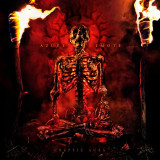
Auf "Cryptic Aura" rotiert der fette Wahnsinn! AZURE EMOTE laden mit ihrem vierten Album zu einer "Tour de Force" durch die äußeren stellaren Gefilde des Death Metal ein, wo die musikalischen Möglichkeiten gegen die Unendlichkeit konvergieren und sich in alle Richtungen und Dimensionen auszudehnen scheinen, bis die Gravitation ihres ultraschweren Sounds alles in den Schlund eines zermalmenden Ereignishorizonts zieht. Jeder Track auf "Cryptic Aura" ist in seiner eigenen abstrakten Verrücktheit einzigartig, aber sie sind dennoch allesamt durch eine Verschmelzung von verstörenden Atmosphären, rastloser Unruhe und trotziger Kreativität miteinander verbunden. AZURE EMOTE wurden im Jahr 2003 von Sänger und Keyboarder Mike Hrubovcak mit Unterstützung seines langjährigen Freundes, den Gitarristen Ryan Moll (TOTAL FUCKING DESTRUCTION), in Philadelphia, Pennsylvania gegründet. Sein Ziel war die Erschaffung eines experimentell-musikalischen Ventils, um persönliche Negativität auszudrücken. Alle willkürlichen Einschränkungen wie etwa Genregrenzen, die oft die extreme Metal-Szene prägen, lehnte Hrubovcak dagegen entschieden ab. Dieses Ziel wurde bereits mit dem Debüt "Chronicles of an Aging Mammal" (2007) erreicht. Obwohl das Album schnell Kultstatus erlangte, mussten AZURE EMOTE eine Pause einlegen, da sich Hrubovcak auf ausgiebige Tourneen mit seinen anderen Bands konzentrierte – insbesondere MONSTROSITY und VILE. Im Sommer 2011 wurden AZURE EMOTE gemeinsam mit dem FEAR FACTORY- und MALIGNANCY-Schlagzeuger Mike Heller wiederbelebt, was schließlich zur Veröffentlichung des zweiten Langspielers "The Gravity of Impermanence" im Jahr 2013 führte. Das Line-up besteht weiterhin aus Kelly Conlon, der auf DEATHs "Symbolic"-Meisterwerk den Bass spielte und u.a. auch Mitglied von MONSTROSITY war. Mit der Aufnahme der ehemaligen ELUVEITIE-Sängerin und Multi-Instrumentalistin Anna Murphy, jetzt CELLAR DARLING, sowie dem Violinisten Pete Johansen (ex-SIRENIA) haben AZURE EMOTE ihre beeindruckende musikalische Spannweite erneut ausgebaut. "Cryptic Aura" ist das in Töne gegossene Gedankenspiel, wie Death Metal klingen kann, wenn alle Überlegungen zu stilistischer "Reinheit" und musikalische Vorurteile über Bord geworfen werden. Dabei bleibt der brutale Kern des Genres unangetastet. AZURE EMOTE laden zu einem atemberaubenden Ritt in die Unendlichkeit des Death Metal ein.
- 1: Revealed In Reflection
- 2: I Know So Little (So Well)
- 3: Rejuvenate
- 4: Alone On My Birthday
- 5: Hated To Love
- 6: Refusal
- 7: Whole Wide World
- 1: Helpless
- 2: Beyond Planet Earth
- 3: Time’s Ticking Away
- 4: Man Or Beast
- 5: In Praise Of Others
- 6: Eleventh Day Of The Moon
Shelter is best known for its founder and frontman, Ray Cappo, who is considered as one of the most prominent representatives of the ‘krishnacore’ scene, which mixes the elements of hardcore
with a strong spiritual message. Formed in the early 90’s, Shelter was Cappo’s second band - previously he was the frontman of Youth of Today.
Originally released in 1997, their second album Beyond Planet Earth finds Shelter moving more in a “Pop-core” direction, with songs averaging 2-3 minutes. Some pretty catchy stuff can be found on this album.
Listen to tracks: “Alone on My Birthday”, “Refusal” and “Time is Ticking Away”.
If you appreciate hardcore’s energy, but feel that the music and lyrics are too one-dimensional for your taste, chances are you’ll find those missing elements in Shelter’s music.
Beyond Planet Earth is available as a limited edition of 1000 individually numbered copies on purple coloured vinyl and contains an insert.
- 1: Home Of The Brave
- 2: Georgia Song
- 3: Country Tune
- 4: Gossamer Wings
- 5: Our Lives Are Shaped By What We Love
- 6: Wondrous Castles
- 7: Battened Ships
- 8: Sunny California Woman
- 9: Black Top Island (Of The West)
- 10: Broken Road
Motown’s L.A.-based Mowest label lasted less than two years, but managed in that short time to release some of the most adventurous music the company ever put out. And probably the most intrepid—and nowadays, adored—Mowest release of them all was the 1992 self-titled release from Odyssey. This one-off brought elite West Coast sessionmen like Wrecking Crew mainstay Don Peake, one-time Chicago member Donnie Dacus, and arranger/orchestrator extraordinaire Gene Page together with a bunch of West Coast hippie rockers (as Peake says, “We were invited to lunch, introduced to some nice people and told we were going to form a band”).
The happy result was a record that has appeared on more deejay turntables than you can count, a one-of-a-kind blend of funky Motown bottom with a spacy sensibility and sound that fits right in next to, say, the latest Khruangbin album on your psychedelic chill playlist even as it activates your 5th Dimension sunshine pop endorphins. The single “Our Lives Are Shaped by What We Love” is probably the pick to click, but the whole album is a total vibe. We’re reissuing Odyssey for the first time ever in the U.S. (the Japanese have long been all over this album) in blue-green “ocean spray” vinyl, complete with original album art including the lyric insert. Remastered for the format by Mike Milchner at Sonic Vision, and pressed at Gotta Groove Records for superior sound. A must!
- A1: Umbra
- A2: Fallowfield Loops
- A3: Forgive The Damages (Feat. Daudi Matsiko)
- B1: What We Are And What We Are Meant To Be
- B2: Background Hiss Reminds Me Of Rain
- B3: The Turn Within
- C1: Living Bricks In Dead Mortar
- C2: Naga Ghost
- C3: Luminous Giants (Feat. Rakhi Singh And Manchester Collective)
- D1: Float (Loi Krathong, 2003)
- D2: State Of Flux (Feat. Manchester Collective)
- D3: Silence Speaks
Auf »Necessary Fictions« zeigt das Trio GoGo Penguin, das seit seiner Gründung Jazz, klassische Musik und elektronische Einflüsse miteinander verbindet, was es aktuell als seine »wesentlichen, authentischen Qualitäten empfindet«. Das führt zu einem verstärkten Einsatz modularer Synthesizer in seinem Sound.
GoGo Penguin, zu denen seit der Pandemie der Schlagzeuger Jon Scott gehört, luden erstmals einige Gastmusiker für ihr neues Albumprojekt dazu: das achtköpfige Streicherensemble Manchester Collective unter der Leitung der künstlerischen Direktorin und Geigerin Rakhi Singh sowie den Singer-Songwriter Daudi Matsiko.
»Necessary Fictions« wurde so ein Album voller ambitionierter neuer Entwicklungen – von einer Band, die vollkommen im Reinen mit sich selbst ist: selbstbewusst genug, um sich auf Zusammenarbeit einzulassen, gespannt darauf, wohin die Reise als Nächstes geht, und voller Lust, dabei auch Spaß zu haben. »Mir ist sehr bewusst aufgefallen, wie oft ich im Studio beim Aufnehmen gelächelt habe“, sagt Illingworth, „und ich lächle jetzt gerade, wenn ich nur daran denke. Ich hoffe, diese Energie überträgt sich auf die Menschen.«
Für »Necessary Fictions« konnten sie ihr eigenes Studio in Manchester in einen stimmungsvollen Treffpunkt verwandeln – einen angenehmen Ort, an dem man gerne Zeit verbringt, mit Kunstwerken, Fotografien und anderen Bildern an den Wänden, die als Anregung und Inspiration dienten. Illingworth und Blacka waren dort so gut wie jeden Tag über zwölf Monate hinweg im Jahr 2024; dann kam Scott, der in London lebt, nach Manchester, um mit den beiden festen Größen von GGP zu arbeiten, sobald sie bereit für seinen rhythmischen Input waren. Der Titel des Albums stammt aus dem Buch »The Middle Passage - From Misery to Meaning in Midlife« des Psychoanalytikers James Hollis, das, wie Nick sagt, »sehr jungsche Sachen über das Schatten-Ich und verborgene Persona präsentiert. Man fängt an zu denken, ‚Moment mal, da ist ein authentisches Ich, tief drinnen irgendwo!«. »Musikalisch«, ergänzt er, »war es der gleiche Prozess, die gleiche Reise, einige der Dinge abzulegen, an die wir uns gewöhnt hatten und die uns zurückhielten.«
Der gesamte Veränderungsprozess ihrer musikalischen Entwicklung wird von einem Track auf »Necessary Fictions« zusammengefasst, der bezeichnenderweise den Titel »What We Are And What We Are Meant To Be« trägt. »Es ist wirklich einfach, wirklich melodisch«, erklärt Nick. »Es ist kein Showoff, wie ‚Hey, schaut mal, was für Skills wir haben und wie großartig wir sind!‘ Es gibt nicht einmal Improvisation darin. Bassmäßig hat es einfach einen Bass-Synthesizer wie ein Dance-Track. Ein Teil von mir denkt immer noch: ‚Was werden die Leute denken?‘ Dann gibt es einen anderen Teil, der einfach denkt: ‚Was soll‘s, die können denken, was sie wollen! Das ist das, was wir gerade machen wollen, und es fühlt sich authentisch an.‘«
Für Chris Illingworth hingegen bestand ihre Reise darin, weiter in eine Welt vorzudringen, die ihn immer schon angezogen hat, nämlich Synthesizer. »Ich bin früher oft live zu Leuten gegangen, die auftraten, wie Underworld, The Prodigy, Orbital, sogar Nine Inch Nails, und ich habe all ihr Equipment auf der Bühne gesehen, und ein Teil von mir dachte: ‚Verdammt, das sieht nach Spaß aus!‘« Illingworth und Blacka blieben jedoch weiterhin äußerst vorsichtig, was das willkürliche Einfügen von schrillen Sounds betrifft. »Wir wollten nicht, dass es wie ein Gimmick wirkt«, erklärt Chris. »Es musste einen Grund geben – und für uns war das der Wunsch, an bestimmten Stellen den Charakter der Musik zu verändern.«
GoGo Penguin hatte schon immer einen erzählerischen, filmischen Ansatz in ihrer Musik – weit entfernt von simplen Strophe-Refrain-Strukturen, inspiriert von Debussys »Préludes« bis hin zu Underworlds »Pearl’s Girl«. Auf »Necessary Fictions« nimmt diese Klang-Erzählkunst nun deutlich größere Dimensionen an – mit spürbar mehr Raffinesse.
GoGo Penguin graben nun selbstbewusst tief in sich hinein, um ihr bestes Selbst hervorzubringen und andere Talente in ihre harmonische Klangwelt einzubeziehen. Mit »Necessary Fictions« bewegen sich die Drei auf neuen Pfaden – und ja, es ist völlig in Ordnung, dabei zu lächeln.
Roughly two years after the release of their initial statement of intent, debut single “Toutpartout PT2” with its hypnotic ripples, Andi Haberl and Florian Zimmer aka Bella Wakame have successfully channeled the magic of a 2024 live recording (captured at Berlin’s Donau115 & Silent Green) into their first proper studio offering. You can hear inspirations ranging from Bitchin Bajas, Jeremiah Chiu to Groupshow (Jelinek, Leichtmann, Pekler), the hypnotic, intricate battle between form and freedom (the fun of momentary formlessness) continues to unfold over the course of 10 new tracks, featuring album guest Indra Dunis (Peaking Lights). Their first single "Shadows of Nambei" was very much inspired by the wonderful band Spirit Fest and their song "Nambei".
You can either shorten the reins, or you can loosen them – and give things more slack. With Bella Wakame, it’s definitely the latter. Constantly challenging each other, they’re tapping a whole new energy. Tons of different energies.
Based on the impulsive, propulsive interplay between drums/sensory percussion (Andi Haberl) and modular synthesizer (Florian Zimmer), the frenzied, free-form results take listeners into completely new dimensions – sonic worlds that don’t really sound anything like their other musical outlets (The Notwist, SUN, Saroos, Driftmachine etc.).
Whereas most bands tend to notoriously overthink names/monikers, these guys obviously only care about the ecstatic push-and-pull that occurs once their instruments meet and overlap: it’s wildly explosive textures with a booming heart. Moving restlessly between motorik club, electro-acoustic jazz experiments, ambient excursions, and fast-paced instrumental anthems that seem to explode at the seams, one can immediately tell how much they enjoy the newfound freedom, the turbulent encounters born on the spur of the moment.
It’s all about a quick-paced exchange of friendly blows, a chasing of tails into ever-new musical terrains. Relying on just enough form for that wildness to blossom within, their just-in-time dashes continually unfold, refold, return, grow bigger – and leave you startled.
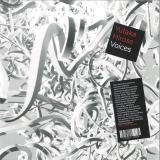
WRWTFWW Records is very excited to announce its third release from visionary Japanese ambient/experimental/environmental composer/producer Yutaka Hirose, this time with brand new album Voices, available on limited edition heavyweight-sleeved double LP as well as double CD, both with liner notes from the artist.
Voices finds Yutaka Hirose expanding his signature spatial layering into a three-dimensional videography of sound, blending field recordings, electronic manipulations, and abstract narratives. The 12-track album is a journey through a crumbling library where books whisper, history collides, and sonic textures weave new realities. Chaos, memory, and transformation – Hirose’s voices echo throughout the space, creating a fully immersive sonic experience.
The pioneering experimental and abstract electronic piece with deep hints of ambient and IDM is beautifully represented by the original artwork by Koji Shiroshita and Mifuku gracing the double LP and double digipack CD sleeves.
Voices marks Yutaka Hirose’s third full-length release on WRWTFWW Records, following his kankyõ ongaku classics Nova + 4 (an expanded version of his genre defining Soundscape 2: Nova album) and archival compilation TRACE: Sound Design Works 1986-1989, both available in vinyl, CD, and digital formats.
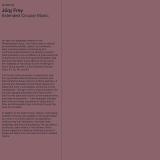
Since its founding back in 2014, Blume has carved a unique place in cultural landscape, issuing free-standing works, spanning the historical and contemporary, that represent singular gestures of creativity within the field of experimental sound. Joining their broad efforts in building networks of context and understanding that already includes the works by Werner Durand, Sarah Hennies, Bruce Nauman, John Butcher, Jocy de Oliveira, Mary Jane Leach, Valentina Magaletti, Alvin Curran, Julius Eastman, Alvin Lucier, and following the first ever vinyl release to attend to James Tenney's legendary Postal Pieces, the label now presents the first LP published by the visionary Swiss composer Jürg Frey. Drawing from the transformative power of breath and resonance, this release represents one of the most profound explorations of musical metamorphosis to emerge from the contemporary experimental landscape.
The completed work represents a "conjunction of these two artists" that has "activated a transformative form of experimentalism." These renderings "dance with an airy lightness, humour, and play, imbuing them with a beauty and emotiveness that can be rare within experimental music." They exist as "breaths, carrying the curiosities of life, belonging to no time and all time, to no one and everyone: a human music to be inhaled and pondered, for which the outcome remains unknown." In this liminal space between composition and interpretation, between breath and resonance, Zurria and Frey have created something that transcends the boundaries of experimental music itself, offering what might be called a metaphysical cartography of sound in its most essential form. As Bradford Bailey observes in his penetrating liner notes, "music is rarely a fixed entity," existing instead in a state of perpetual flux, "taking on the influences of its interpreters and performers." This fundamental truth finds its most eloquent expression in the transformative collaboration between Italian flutist Manuel Zurria and Frey, longtime member of the Wandelweiser Group. Where conventional recordings might preserve a definitive version, this release activates what Bailey calls "states of unknowing and continued experimentation," allowing Frey's compositions to evolve into entirely new dimensional territories. The original string quartet and piano works dissolve into breath-carried architectures of sound, where "the original remains in a constant dialogue with its transformation." This is not mere arrangement but ontological metamorphosis - an alchemical process through which crystalline harmonies are reborn as atmospheric phenomena.
The metaphysical dimensions of this transformation become clear through detailed analysis of the musical result. Where Frey's original compositions operate through what he calls "basic confidence in the clear and restricted material," Zurria's interpretation activates entirely new perceptual territories. Space holds almost atomic sense of weight against the airy punctuations of timbres, textures, and tones, creating "suspensions of time within which questions and identities posed by instrumentation fade." The Extended Circular Music pieces - each comprising "a small number of bars to be repeated an undetermined number of times" - become organizations of sound that defy being definitive or fixed. Originally scored for different combinations of violin, viola, cello, and piano, these works now exist as pure phenomena of breath and resonance, where "hanging, breath-length utterances dance and intertwine amongst complex harmonic clusters and conjunctions."
The philosophical implications of this transformation illuminate a lineage of composers who have moved "away from abstraction and responding to the need to create" something beyond mere technique. Drawing parallels to Morton Feldman's understanding of non-functional harmony, Zurria's approach represents "a transformative form of experimentalism" that activates what Frey calls the "thaumaturgic power" of music - its capacity to heal and transform consciousness itself. The result is "a radical reimagining of ambience: sprawling sonorities and resonances adrift in space, carrying the liberated traces of the work's former incarnations and their truths." In Zurria's interpretation, Frey's String Quartet n.3 becomes something approaching "an organ played in slow motion, its seals leaking," while the Extended Circular Music pieces transform into "glacial chords from a diverse palette of voicings, harmonies, timbres, and tones."
Performed by Manuel Zurria. Recorded and mixed by Zurria at BigCardo, Catania between 2022-2024, with mastering by Bruno Germano at Vacuumstudio, Bologna, this Blume release represents a profound exploration of musical transformation.
- 1: Press Play
- 2: Pop’s Love Suicide
- 3: Tumble In The Rough
- 4: Big Bang Baby
- 5: Lady Picture Show
- 6: And So I Know
- 7: Trippin’ On A Hole In A Paper Heart
- 8: Art School Girl
- 9: Adhesive
- 10: Ride The Cliché
- 11: Daisy
- 12: Seven Caged Tigers
Experience the Double-Platinum 1996 Album in Audiophile Sound for the First Time
Mobile Fidelity’s Numbered-Edition 180g 45RPM 2LP Set Is Sourced from the Original Analogue Tapes
1/2” / 30 IPS analogue master to DSD 256 to analogue console to lathe
If great art, as many believe, is inherently polarizing, then the Stone Temple Pilots’ Tiny Music… Songs from the Vatican Gift Shop easily ranks as the California-based band’s finest album. Simultaneously celebrated and castigated upon release in spring 1996, the group’s third full-length finds vocalist Scott Weiland and company expanding their “grunge” palette with a smart blend of glam rock, psychedelia, jangle pop, and other related styles. Having benefited from long-view reassessments that shed the biases and meanness of initial criticisms, the double-platinum effort is now largely and rightly seen as a creative masterwork. All the more reason why it deserves reference-grade production.
Overseen by producer Brendan O’Brien, Stone Temple Pilots used bedrooms, hallways, bathrooms, and the lawn to capture a broad blend of textures, spaciousness, and ambience that helped underline the group’s obvious (and somewhat unexpected) leap from normal “alternative” status to an artist whose aspirations went beyond that of many of its contemporaries. You can hear the multitude of details and tonalities with previously unattained clarity, presence, and scope on this fantastic reissue, which also delivers the impact and punch every rock record deserves. Another tremendous asset: The depth, grain, and pitch of Weiland’s voice.
For all the contagious choruses and glossy melodies that help make Tiny Music… Songs from the Vatican Gift Shop sparkle, the vocal performances of the late singer arguably rank as the best that the much-missed Weiland committed to tape. None other than the Smashing Pumpkins’ Billy Corgan — who, like many peers and critics, felt a pressing need to reevaluate the record as both time marched on and the self-importance attached to the “alternative” scene faded — praised Weiland’s efforts by noting: “Like Bowie can and does, it was Scott's phrasing that pushed his music into a unique, and hard to pin down, aesthetic sonicsphere.”
Smooth and diverse, those traits are everywhere on Tiny Music… Songs from the Vatican Gift Shop. From the clever combination of emotional closeness and distance he brings to the catchy albeit ultimately melancholic “Lady Picture Show”; to the lounge-fly balladeering that causes “And So I Know” to lightly swing akin to a bleary-eyed house band’s final number at a 4 A.M. bar; to the effortless cool and laissez-faire casualness he articulates on the grinding “Pop’s Love Suicide”; to the dimensional raspiness, defiant energy, and let-loose wail that sail through the crunchy “Big Bang Baby.”
The latter tune, the record’s first single and per Weiland a conscious attempt by the band to deconstruct its prior approaches, clearly borrows from the Rolling Stones’ “Jumpin’ Jack Flash.” Because of it, the song drew all kinds of barbs from naysayers. Their disdain extended to most material on Tiny Music… Songs from the Vatican Gift Shop, which indirectly references other prized acts such as the Beatles, Cheap Trick, T. Rex, and Lush. Those cynics failed to grasp that Stone Temple Pilots were paying homage and having a blast, with even Weiland, then battling serious substance-abuse and legal issues, getting in on the action.
Stone Temple Pilots’ skeptics also turned a deaf ear to the records’ stellar pop craftsmanship, sticky hooks, and sly commentary on music-industry machinations and fame. Not to mention the band’s intent, made clear from the outset. In an interview conducted in 1994, guitarist Robert DeLeo stated: “The last thing I wanted to do with this band was make everybody believe we invented something.”
Seen through that lens and the hindsight afforded history, and appreciated independent of the self-righteous authenticity standards of the day, Tiny Music… Songs from the Vatican Gift Shop sounds borderline fearless while authoritatively checking all the right boxes for fun, flavor, and finesse. Part winking send-up, part tribute to the glitter rock age, and part middle finger towards the hip crowd that didn’t know what they were missing, this mid-90s classic repeatedly invites you to drop the needle and press play.
- 1: Coyote
- 2: Amelia
- 3: Furry Sings The Blues
- 4: A Strange Boy
- 5: Hejira
- 6: Song For Sharon
- 7: Black Crow
- 8: Blue Motel Room
- 9: Refuge Of The Roads
Mobile Fidelity's UltraDisc One-Step 180g 45RPM 2LP Set Plays with Authoritative Tonality, Airiness, and Clarity:
Pressed on MoFi SuperVinyl and Strictly Limited to
3,000 Numbered Copies
1/4” / 15 IPS Dolby A analogue master to DSD 256 to analogue console to lathe
Joni Mitchell is the only artist who could’ve made Hejira. The legendary singer-songwriter said as much when discussing the album decades after its release. Yet that fact seemed obvious from the moment the gold-certified effort streeted in fall 1976. An adventurous travelogue, probing narrative, and offbeat homage to freedom, Hejira remains an inimitable entry in the catalog of recorded music — a spare, gorgeous, meditative series of sonic vignettes comprised of floating harmonic pop, cool jazz, soft rock, and sensitive vocal elements that beckon feelings of motion, discovery, and self-examination.
Sourced from the original analog master tapes, pressed at Fidelity Record Pressing on MoFi SuperVinyl, and strictly limited to 3,000 numbered copies, Mobile Fidelity's UltraDisc One-Step 180g 45RPM 2LP set presents the record ranked the 133rd Greatest of All Time by Rolling Stone with definitive detail, richness, accuracy, and directness. Marking the first time the revered LP has received audiophile treatment, it's one of six iconic 1970s Mitchell records Mobile Fidelity is reissuing on vinyl and SACD.
Playing with a virtually nonexistent noise floor, dead-quiet surfaces, and superior groove definition, this collectible reissue reproduces in enveloping fashion the tones, textures, and craftsmanship that help Hejira function as the equivalent of a liberating trip down an open road with nothing but blue sky, natural landscape, and fresh air in the immediate vicinity. Passages bloom, carry, decay as they do amid an acoustically optimized environment. Soundstages extend far, wide, and deep, with black backgrounds and pinpoint images adding to the realism.
The reference-grade immediacy, airiness, and presence put in transparent perspective Mitchell’s dense strings of words, stream-of-conscious-like phrasing, and unhurried albeit forward momentum. Likewise, the instrumental contributions of her A-list support musicians — a cast that includes L.A. Express members John Guerin, Max Bennett and Tom Scott, plus Neil Young, Victor Feldman, and Abe Most — emerges with breathtaking clarity and dimensionality.
While Mitchell, whose intimate vocals and abstract guitar parts center everything, Mobile Fidelity's restoration of Hejira further reveals the visionary breadth of guitarist Larry Carlton and bassist Jaco Pastorius. Though heard on only four tracks, Pastorius' fretless bass epitomizes the fluid, subtle, flexible, roomy, and shape-shifting characteristics of songs that often appear to transpire out of nowhere akin to the formation of a puffy cumulus cloud overhead. In sync with Mitchell’s voice, Pastorius’ fusion hovers and floats, suspended in a fog you want to deeply inhale. The "grace notes" Mitchell desired on Hejira can now be heard in full. Ditto the luxurious tapestries of alinear lines, fills, and supplements unreeled on Carlton’s six-string.
Visually, the packaging of this UD1S set complements its identity as the copy to own. Housed in a deluxe slipcase, the LPs come in foil-stamped jackets with faithful-to-the-original graphics. This version is for listeners who desire to become immersed in everything about Hejira, including the unforgettable album cover — a pastiche of 14 different photos Mitchell used a Camera Lucida to assemble into one image that’s anchored by a portrait of her in a stoic pose — and the interior shots of Mitchell skating on a frozen Wisconsin lake wearing a pair of black skates, black shirt, and fur cape.
The notion of skating, feeling an awakening wind whipping against your face, and losing yourself to the surroundings are extremely apt for Hejira, which Mitchell wrote after a sequence of trips and relationships prompted her to reflect on the complicated conflicts between independence and marriage, success and satisfaction, duty and desire — and, more specifically, “the cost of being a woman.” The Canadian native delved into such themes before. But never as she does on Hejira, whose liberating, running-away aura doubles as another of Mitchell’s rejections of tradition as well as a suggestion of a better alternative.
At once observational and personal, expansive and insular, cheerful and poignant, Hejira spans a sea of human conditions, emotions, and circumstances. It addresses drifting, isolation, pleasure, place, time, and surroundings with strikingly poetic discourse matched with music that, save for the crooned ballad “Blue Motel Room,” forgoes conventional structures and choruses.
The jazz-based arrangements, marked by scaled-down percussion and all manner of bent, rounded, and unsettled notes, hint that Mitchell has no exact destination in mind. Excursions such as the moody “Furry Sings the Blues,” funky “Coyote” and edgy “Black Crow” throw open previously locked doors to possibility and journey. They signal it’s time for a welcome departure from norms and the past, one that leads to a heightened sense of clarity and perspective. Or, as Mitchell said upon choosing the album title, it’s time for “leaving the dream, no blame.”
- A1: Chariot Sound – やさしさに包まれたなら ; Producer – Grey October Sound
- A2: To4Nori– 帰らざる日々; Producer – Grey October Sound
- A3: Judo125– あの夏へ; Producer – Grey October Sound
- A4: Baseline Lab– 海の見える街; Producer – Grey October Sound
- A5: Coco– 風のとおり道; Producer – Grey October Sound
- B1: Grey October Sound– ナウシカ・レクイエム; Producer – Grey October Sound
- B2: Achamico– もののけ姫; Producer – Grey October Sound
- B3: Adon (9)– アシタカせっ記; Producer – Grey October Sound
- B4: Judo125– 6番目の駅; Producer – Grey October Sound
- B5: Achamico– 君をのせて; Producer – Grey October Sound
Picture Vinyl[41,13 €]
Following the release of Ghibli Jazz and Ghibli Reggae comes a brand new compilation of Ghibli covers from underground hip-hop producer Grey October Sounds.
Lofi Ghibli is the definitive Ghibli cover album - a 10-track record containing covers of Carrying You (Castle in the Sky), a Town with an Ocean View (Kiki’s Delivery Service),
Yasashisa Ni Tsutsumareta Nara (Kiki’s Delivery Service), and other iconic Ghibli songs. Grey October Sounds’ deft production takes classic Ghibli melodies and melds them
with hip-hop instrumentation, adding an all new dimension of chill to Joe Hisaishi’s compositions. With homages to both Ghibli and the aesthetics of lo-fi hip-hop, the artwork
by illustrious illustrator Rika Nagatani is the cutest thing to ever grace P-VINE’s catalog! With one of our iconic obi-strips attached, this is sure to be one for the collectors!
So put this on your turntable, take a deep breath, and chill out.
SOULMEEX is excited to unveil Groovin’ High, the debut release on the label from emerging electronic artist Frederik Neu. With a fresh approach to house and disco, Frederik merges textured melodies and compelling rhythms to craft an immersive sonic experience that stands out in today’s dance music landscape.
The release gains extra dimension thanks to exclusive remixes by acclaimed producers Kasper Bjørke and Michael Lane. Kasper Bjørke’s reinterpretation infuses an acid and trippy vibe while Michael Lane adds his signature euphoric and hypnotic touch, offering fresh perspectives on Frederik’s originals.
This collaboration highlights SOULMEEX’s dedication to nurturing innovative talent and bridging the gap between established artists and newcomers. Frederik Neu’s Groovin’ High is a promising addition to the label roster, poised to captivate listeners and DJs alike with its emotional depth and dancefloor appeal.
Prepare to discover a new sound that balances nostalgia with forward-thinking production.
- Drumsong (One)
- Drumsong (Two)
- Drumsong (Three)
- Strumelody
- Drumelody (One)
- Drumelody (Two)
- Ydolemurd
- Hum Drum Dring (One)
- Hum Drum Dring (Two) The Freedrum Song
Strut present a new single vinyl reissue of Vambe"s sought-after privately pressed album from 1982, Drumland Dreamland. A self-taught drummer, inventor, and sonic experimentalist, Vambe holds a unique place in British music. The creator of his own instrument, the drumgita (pronounced "drumguitar") or string-drum, he aimed to create music that had never been previously made to pursue access to the fourth dimension and forge a radical new musical language - intuitive, polyrhythmic and metaphysical. Drumland Dreamland is deep and haunting; a dense tapestry of layered percussion, time-warped tape loops, and spiralling drumgita figures, all underpinned by hypnotic improvisations from Brazilian pianist Rafael Dos Santos. It is both ecstatic and unsettling, a landmark recording in black British experimental music.
- A1: Intro
- A2: Drumgita
- A3: Ancient Boogie (Mantra)
- A4: Artnam
- A5: Mantra
- A6: (One) Boogie Home Going
- B1: Going Home Boogie (One)
- B2: Un Minuto (One)
- B3: Un Minuto (Two)
- B4: Going Home Boogie (Two)
- B5: Going Home Boogie (Three)
Strut now present a new single vinyl reissue of Vambe"s privately pressed original album from 1982, Drumgita Solo. A self-taught drummer, inventor, and sonic experimentalist, Vambe is a unique figure in British music. The creator of his own instrument, the drumgita (pronounced "drum-guitar") or string-drum, Vambe intended to create a kind of music that had never been made in order to pursue access to the fourth dimension. The album plays with time, mixing hypnotic, trance-like drumgita pieces with the same segments played backwards. You can hear echoes of African drumming traditions, minimalist repetition, and tape-manipulated musique concrète - but ultimately, the album defies genre. It is a solitary voyage, spiritual and futuristic.
Bring the epic Starfleet adventures to a new dimension!
We are proud to present the exclusive colored vinyl release of
the thrilling original soundtrack of Star Trek: First Contact!
Take a deep dive into the world of Captain Picard and his
crew with a soundtrack that perfectly captures the thrilling
moments and dramatic climaxes of this intergalactic classic.
Erleben Sie das epische Abenteuer der Sternenflotte in einer
neuen Dimension!
Wir freuen uns, Ihnen das exklusive farbige Vinyl-Release
des mitreißenden Original Soundtracks zu Star Trek: First
Contact anzubieten! Tauchen Sie ein in die Welt von Captain
Picard und seiner Crew mit einem Soundtrack, der die
packenden Momente und dramatischen Höhepunkte dieses
intergalaktischen Klassikers perfekt einfängt.
What an amazing collab this is - you have the original East London rave don Ellis Dee teaming up with the boys Krome & Time for some jungle biz. What's not to like??? Released originally back in 1993 on New Dimension Records - the only release that came out on the label as it goes! We pressed this back in 2020 on orange vinyl and it sold out FAST!
- Live Forever
- Afterlife
- Idiot Box
- Trouble
- Indio
- I Can't Imagine (Why You Feel This Way)
- Somethin' Ain't Right
- Southern Life (What It Must Be Like)
- Fading Beauty
- I Want You Here
Protector Edition: Amethyst Swirl Vinyl. Mit "Sharon Van Etten & The Attachment Theory" präsentiert Sharon Van Etten eine aufregende neue Dimension ihres Sounds und Songwritings. Zum ersten Mal wurde das Album in völliger Zusammenarbeit mit ihrer Band - Jorge Balbi (Schlagzeug, Maschinen), Devra Hoff (Bass, Gesang) und Teeny Lieberson (Synthesizer, Klavier, Gitarre, Gesang) - geschrieben und aufgenommen, was Van Etten genau die Freiheit gab, die sich aus dem Loslassen ergeben hat. Die Themen sind zeitlos, klassisch Sharon, aber die Klänge sind neu, vollständig realisiert und scharf wie Glas. Diese neue Herangehensweise begann während der Proben in der Wüste für eine bevorstehende Tournee, als Van Etten ihre Band in den kreativen Prozess einbezog: "Zum ersten Mal in meinem Leben habe ich die Band gefragt, ob wir einfach jammen können. Worte, die nie aus meinem Mund kamen - niemals! Aber ich liebte alle Sounds, die wir bekamen. Ich war neugierig - was würde passieren?" Offenbar Magie. "In einer Stunde schrieben wir zwei Songs, aus denen schließlich "I Can't Imagine" und "Southern Life" wurden." Das Album wurde im ehemaligen Studio der Eurythmics, The Church, aufgenommen, das perfekt zu der mystischen Mischung aus Elektronik und analogen Texturen der Band passt. Die Produzentin Marta Salogni (Björk, Bon Iver, Animal Collective, Mica Levi) war sowohl als Bindeglied als auch als Produzentin unverzichtbar, da sie "die Synthesizer liebte und einen Sinn für Abenteuer hatte" und es verstand, "die Dunkelheit und die einzigartigen Klänge zu umarmen, die wir während des Schreibprozesses entwickelt hatten", so Van Etten. Über diese neue künstlerische Geisteshaltung und die Kunst des gemeinsamen Schreibens sinniert Van Etten: "Manchmal ist es aufregend, manchmal ist es beängstigend, manchmal fühlt man sich festgefahren. Jeder Tag fühlt sich ein wenig anders an - einfach in Frieden zu sein mit dem, was man fühlt und wer man ist und wie man in diesem Moment zu den Menschen steht. Wenn ich einfach offenbleiben kann und gleichzeitig weiß, dass sich meine Gefühle jeden Tag ändern, ist das alles, was ich im Moment tun kann. Das und versuchen, die beste Person zu sein, die ich sein kann, während ich andere Menschen so sein lasse, wie sie sind, und es nicht persönlich nehme und einfach nur bin. Ich bin noch nicht so weit, aber ich versuche, jeden Tag so weit zu sein." Mit "Sharon Van Etten & The Attachment Theory" vertieft Van Etten den Diskurs, der einen Großteil ihres Katalogs belebt, und erforscht, was es bedeutet, einfach nur ein Mensch zu sein. Das ist ihr Genie - schräg, aber auch relevant und persönlich.
Token presents the 6th chapter of the Fuga series. Challenging new faces to complete the label's sound, Fuga VI is another focused compilation that balances spatial detail and rhythmic bite.
Skipping any introduction to dive straight into the essence of the compilation, Skjöld portrays 'Forbidden City' as a tense aquatic exploration. With pressure in the low end, he keeps the record alive by conjuring obscure pads to give dimension and intrigue to an already nervous track. This persistence is quickly met with weight; Tapefeed's 'Residual Memory' follows up to tap into the label's more aggressive side. Riddled with mechanical sound design bordering on the industrial, the Tapefeed duo creates dancefloor dominating energy that sets them apart with an all-out approach. The density of this second track feeds smoothly into Stephen Disario's 'Out Of Tune' - a drum-forward record with dispersed texture. The LA based producer puts his hi hats brutally forward to cut through the space, finding a remarkable balance between its two sides and exploiting its confrontation. Returning to the label's recognizable resonance, Merino steps in with 'Memoria' - a manic 5 minute synth loop with minimal percussion. Dealing in restraint and dissonance, Merino naturally finds a home in Fuga VI with this track before heading back into the peak time paranoia of JSPRV35 in 'Question'. Pushing up the intensity and flicking through vintage percussion lines, 'Question' is an extraverted homage to the origins of techno that embodies flair. The track drives through the middle of Fuga with ease, bouncing rhythm off a sharp bassline with thundering claps and snares. 'Catch 22' by Terminus restores balance with minimalism but pace. A hypnotic break in the second half is sure to mesmerize dancers and home listeners alike. Stuttering hats shake throughout 'Catch 22' to push the track along, keeping the harmony low and maintaining focus on the movement. With a similar tempo, Sanna Mun follows up with 'Binary Systems'. A speedrun through an acid-like bassline, the track's rhythm is obsessive and persistent as we reach the conclusion of the compilation. Fuga VI comes full circle with a ghostly track by Mode_1 called 'Lifespan', stretching time and tunneling through with booming toms and shuffled hats. Keeping the pressure high and maintaining that never ending energy is the only way to wrap up such a high energy release and Mode_1 does just that.