After his exciting album Elasticity' on his own imprint Elastic Dreams, A Sagittariun delivers the equally fascinating three track Oxidize EP' for german label Couldn't Care More. While Heights' is a stripped-down basic-channelish techno ride, rough, edgy and with a hint of hypnotic melodies, the title track heads in a quite different direction: still it's raw expressionistic techno, but the flow is ever-changing, mesmerizingly shifting and twisting between hissing beats and enlightened synths. For the remix of Oxidize' Golden Pudel Club resident and odd-house virtuoso RVDS fires up the acid machine and does it Detroit style, warm and cold, uplifting and melancholic.
quête:direct beat
The warm dim light of the bedside lamp conjures up a kind of shadow theatre, sends the little stars on the ceiling into a spin, and fills the bedroom with a sense of profound peace. A small music box rounds out the evening atmosphere with soft little melodies. Perched at the side of his daughter's little bed, he watches over his little beat princess' slumber and her dreams, all while enjoying with satisfaction the unencumbered lightness of being at night...
The EP Hannah by the Leipzig-based beatmaker Duktus is a musical tribute to his three-year-old daughter and a personal instrumentalization of fatherhood.
A story told from Duktus' point of view in six different pieces, we can become part of little Hannah's world, as she plays in her room and runs around the playground, goes on adventures during the day and dreams at night.
In EP Hannah, Duktus casts his musical gaze backward in two different ways - both in terms of the experience of being a father and the moments, great and small, that this involves, as well as in terms of his musical influences over the past three years. This produces an atmosphere which, however, does not waver from Duktus' musical direction between uptempo broken beats and downbeat house grooves.
The EP Hannah cover was painted by Hannah herself at the age of two. And it is being produced in a complicated silk-screen process, printed in purple - Lila's favorite color! - on uncoated paper, making for a tactile homage to the little beat princess.
It is only a matter of time before Hannah discovers the record for herself as well. She already got her own record player as a present - from her dad, of course - and is a big fan of old fairy tale records. In the eyes and ears of a DJ and beatmaker, this is all a matter of early musical education.
- I dedicate this record to my daughter Hannah'
- Duktus -
- A1: Interview - Salut Des Salauds
- A2: Philippe Krootchey - Qu'est Ce Qu'il A (D'plus Que Moi Ce Négro-Là)
- A3: Gérard Vincent - Gérard Vincent Pas Gérard Vincent
- A4: Style - Playboy En Détresse
- B1: Pierre-Edouard - A Mon Age Déjà Fatigué
- B2: Casino - Pât Impérial
- B3: Bianca - La Fourmi
- B4: Trigo & Friends - La Dégaine
- B5: Hugues Hamilton - Je M'laisse Aller
- C1: Pascal Davoz - Cinéma
- C2: Anisette - Scratch Au Standard
- C3: Pilou - Ça Va
- C4: Henriette Coulouvrat - Miam Miam Goody
- D1: New Paradise - Easy Life
- D2: Gérard Vincent - Tas Qu'à Fermer Ta Gueule
- D3: Ich - Ma Vie Dans Un Bocal
- D4: Attaché Case - Les Crabes
- D5: Yannick Chevalier - Ecoute Le Son Du Soleilv
This is France in the Mitterrand years: fashions fleet as fast as governments. In the early eighties, the happy-go-lucky gather the nectar of each and every new release.
Believing in a bright future for videotex, and loosened up by the sexy talks broadcasted on the budding pirate radios, the new generation dreams of dance floors and holiday clubs. French Boogie, which preserves the spirit of these years of boodle and bunkum, is the ideal soundtrack to their dreams.
What the web now refers to as French Boogie is some synthetic funk reflecting the spirit of those days when nothing was impossible, or so it seemed. Its syncopated flow heralded the dawning of French rap. Often considered as some kind of post-disco, inspired as much by black music as by new wave, this carefree pop music with bawdy lyrics indulged in simple pleasures: holidays, swank and sun were recurrent themes. Totally in tune with its time, it incidentally glorified luxury, success, and a certain consumerism embodied, for instance, in Bernard Tapie.
In popular clubs such as La Main Bleue in Montreuil, or L'Echappatoire in Clichy-sous-Bois - where Micky Milan could be seen behind the decks - an enthusiastic audience discovered this new sonic wave, influenced as much by French pop as by Sugar Hill Gang or Kurtis Blow. The artists who first launched the movement engaged in it wholeheartedly, but as often the case with new music trends in France, humour and casualness quickly became a decoy to impose a new style. This explosive mixture, in which startling and typically Frenchy French lyrics go along New-York-style tunes, is sometimes reminiscent of the kinky comedies directed by Max Pécas or Claude Zidi. On this prolific scene, partly originating from the Jewish community, everybody was looking for success, trying to hit the jackpot with what was to hand. Famous media personalities, one-hit wonders or John Does in quest of fame, all had a go at French Boogie - more or less successfully. Apart from « Vacances j'oublie tout » by Elégance, « Un fait divers et rien de plus » by Le Club, or « Chacun fait ce qui lui plaît » by Chagrin d'amour (produced by Patrick Bruel), very few songs became hits: the story of funk in France is that of a half-baked robbery.
In this myriad of new musicians, the very young François Feldman and Phil Barney pioneered a fresh and hybrid style. Other well-known artists like Gérard Blanc from Martin Circus (Attaché Case), Richard de Bordeaux (Ich), or Jean-Pierre Massiera (Anisette, Pirate Scratch Band, Mandrake, Scratch Man...) added an eccentric touch to this sound-wave, making it often entertaining, and sometimes showy.
Capture d'écran 2015-10-26 à 12.55.43Singers like Agathe (the author of 'La Fourmi' and of the hit song 'Je ne veux pas rentrer chez moi seule') were far more than just window dressing. They even tried to give an ironic and subversive twist to this rather harmless genre. The very vindictive rebel Gérard Vincent shared in this spirit, but as a whole, French Boogie became associated with nonchalance and sauciness. Thus, Stéphane Collaro, Gérard Jugnot, Alain Gillot Pétré and other TV clowns would clumsily contribute to this French variation on funky sounds. In a few but intense years, French Boogie gave all the tips to party with style.
If some hits made it possible for the happy few to get a real house under truly exotic palm trees, the wave actually ebbed away very quickly, leaving quite a few musicians stranded on the shore. Whether they were sincerely motivated, or simply opportunistic, they had failed. In 1984, French Boogie was already breathless, and got merged with other genres: on the one hand, rap and breakdance adapted its flow to a more urban world, especially with Sydney's show, H.I.P.H.O.P, and Dee Nasty's broadcasts on Radio Nova; on the other, italo, new beat and house began to rule over dance floors, even more strongly asserting the will to develop music for clubs.
Squeezed in between the age of disco and that of modern electronic music, French Boogie was a transitional phase, but it remains an amazingly refreshing testimony to the intermingling of pop and underground cultures. The genre was hastily categorized as anecdotal in spite of its pioneering synthetic groove and matchless bass lines. An attentive ear will discover the poetry of the ephemeral beyond the eccentricities of the genre, as well as a certain unexpected avant-gardism. At the origin of major music trends, always cheerful and catchy, French Boogie is what you need to party.
Toby Tobias has been responsible for some fine quality music over the past 10 years with labels such as Rekids, Nang, Let's Play House and Quintessentials all dropping his unique brand of raw, analogue house and techno. A DJ's DJ who always seems to pull out a lesser known gem and make it sound like a classic, Toby knows his music as well as his studio, inside out. We've been proud to deliver three EP's from him on Delusions but we all felt the time was right for a full length, especially considering that 7 years have passed since his debut LP Space Shuffle on Rekids. Toby fully embraced the scope and breadth that an LP affords a producer, holing up in his Hackney studio and losing himself in his machines. Rising Son is the result of those sessions and it's brilliant!
From the opening machine funk of The Wonder featuring vocals from Atwell we can hear that Toby is quite sure about the direction he's taken for the LP. 808 beats bring vintage electro vibes whilst Atwell's vocal hints at the golden era of Chicago house, adding a soulful touch to the rigid groove. Love Affair continues the theme of off-world utopia where the droids have a heart and soul and sing torch songs of love lost, the Moroder-esque influences bringing a retro sheen to the LP. As we continue through tracks such as Sloflava and Sending Signals we find blissful, downtempo jams which perfectly soundtrack this imagined night time world which Toby seems so happy to immerse himself and his listeners in.
I Robot follows, providing the one cover version on the LP from the Alan Parsons Project as well as being an LP defining focal point. A track which shows that when the machines are working for you, it could just be a perfect world. But Broken Computer soon shows us what can happen when things go wrong. Incidentally, this is from a genuine computer crash which Toby managed to capture using his phone. A beautiful glitch in the system which spewed out such a mournful noise and a very happy accident that would be completely impossible to create if you set out to try.
As we continue we're treated to the likes of Friday Analogue Jam, Whisper It and Weird Danger, all echoing bleeps, squelching bass notes, heavenly pads and precision beats. In some ways we get a feeling of a land that time forgot, in others something of sublime beauty and futurism. That Toby can paint pictures with his music in this way speaks volumes, knowing instinctively when to draw out a mood or feeling or flip things on their head to command your attention and beg another listen. And another.....
- 1: Oblique Axis
- 2: Lets Go
- 3: Wholly Unaware
- 4: Champagne Walk
- 5: Rave Splurge Noise Fm
- 6: Improvisation #1
- 7: In The Air Today
- 8: Gas Attack
- 9: Interlude
- 10: Drive (Minimal)
- 11: Heavy Handed Sunset
- 12: Underwater Electronic Struggle
- 13: Confirmation Of Our Worst Fears
- 14: Hardwax Flashback
- 15: Broken Mantra
- 16: Extended Industry Knowledge (For Oscar)
- 17: Noise Rave
Repress!
As Sure As Night Follows Day is Russell Haswell's landmark second album for London's Diagonal Records. Consolidating a quarter-century at the coal face of extreme computer music, techno and death metal in 19 tracks and 49 minutes, it's Haswell's most coherent yet varied burst of activity to date — zigzagging from improvised n0!se outbursts and asphyxiated R&B to a brace of thundering acid bullets that positively froth for the 'floor.
The album was extracted over a fast-working period in late 2014, and is best perceived as a sort
of fractured regression to his formative influences: you can hear the picnoleptic recollections of
grindcore shows in the Black Country, the refracted shades of mega-raves at Coventry's Eclipse,
the conflating toxic texture-memories of early Japanese noise, and the incandescent stomp of
Mills and Hood in that early 90s phase.
Fortunately for the ravers, this album includes some of Haswell's most direct dance floor attacks to
date. 'Hardwax Flashback', for instance, finds him in pure tekno panik mode — a four-to-the-floor
wrecking ball groove that someone, somewhere, may even be able to mix. 'Gas Attack' distils his
penchant for all things Belgium into a vicious strain of New Beat lactic acid. Haswell then doffs his
cap to Detroit electro legends Drecxiya on 'Underwater Electronic
Struggle' — a story goes that he once thrashed a jet-ski all over the Mediterranean while listening
to 'Wave Jumper' in his 'phones — before he does the salty freestyle electro flex 'ting on 'Industry
Knowledge (For Oscar)' while reminding his trusty apprentice, Powell, that he still has a lot to
learn. In between these 'floor-flexers, we find more freakish disturbances and intrusive drum-box
improvisations: the modular mind-floss of 'Rave Splurge Noise' or 'Noise Rave', for instance, or the
self-explanatory 'Improvisation #1'. 'In The Air
Today' investigates warehouse-ready electro-acoustic percussion, while the chaotic clusters
of 'Interlude' swarm and invade your senses with psychoacoustic incision. This is Diagonal and
Russell at their most f**ked up and fizzy, and an important reminder of the artist's stream-of-
consciousness genius — and the pressing need for more chaos and unpredictability in electronic
music today.
Three mixes from the brand new Berlin based label/project 'In Love We Trust'.Classic New York house inspired for the A side opening tune, driven by an off partiture alto-sax unfolding over a throbbing bass, four to the floor beats and great message delivered by a strong male voice, followed by a slower tempo roller-skate, atmospheric, Garage inspired disco cut with a solid 80's style linn drum grove, catchy riffs and a powerful bass line.
Rougher beats and a more acidic vibe for the flip side, direct and effective floor stomper guaranteed to raise heartbeats.
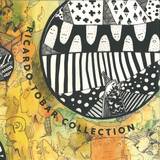
Let's focus on Ricardo Tobar: Born in Chile and now residing in France, Tobar picked the "creative border crossing" as the common thread for his album "Collection". Musical experimentation and crossing musical borders - Tobar refers here directly to the style and sound of the great new-wave-bands of the 80s and 90s. With the help and influence of their new electronic instruments (that often met classic rock guitars) the post-punk-electronic-movement turned almost everything upside down. No matter if the result was moody and mysterious or romantic and hedonistic, all sounded new and different back then and paved the musical path for a whole generation - the reverberations of that episode are noticeable until today.
Tobar plays with the musical approach of the post-punk-era, he mixes, merges and experiments fearless with styles and moods. He creates a wide range of "own styles" and even dives into abstract sound fields - listening electronic in best form! Ricardo Tobar breathes the air of his own musical universe and is not refering to the typical styles of this genre - you won't find any Detroit, Berlin or Sheffield reference here. Although produced in France, Tobar's album doesn't have anything of the sweet and lovely french listening touch. It also won't beam you into the north of England and the grey and cold Sheffield winter like so many other electronic albums try to do.
"Collection" contains full compositions, sound collages, experimental sounds and even proper beat based tunes. Tobar rather creates than produces and is presenting a bigger picture with his collection. Many electronic music artists are trying to do this however Tobar delivers a collection with an impressive range and it seems he did all this in an almost nonchalant way. He plays and combines his instruments and sounds at the same time very sensitive and harmonic but also brave and dissonant without risking to be inaudible at any point. He creates atmospheres by using electronic sounds and layers. Listening to the sound of "collection" almost appears like reading an acoustic book. This album is full of interesting sounds and ideas and is far from being boring or even too demanding.
Focusing on deep and raw vibes, strictly wax and classic beats, The "Montee Louis EP" has been directly imported from bellevue II, libreville gabon, africa & it has been produced by the great Bernard da smoove. MPC-filtered deep house with some darker & menacing rhythms, A1 "Hudson Budd" kicks off the A1 with a meaty 4/4 kick drum which slowly finds itself surrounded by ghostly pads and even more haunting synths. A2 'Thrawbock' mutates into a more light hearted house jam for the heads, with its vocal infectious sample. B1 "Strctly move" goes back into familiar, smooth deep house territories but still retains his magic touch, able to transform even the deepest of basslines into something both unusual and musical at the same time. B2 & B3 'Thrawbock 88' & 'Strctly move 88' are the 90's hip-hop (!!!) versions of the same tracks above : INSANE !!First time we heard it we thought, 'hell yeah, the production is just TERRIFIC' & indeed there's a timeless quality to the intricately programmed drum machine rhythms, the drifting chords, warm
FINA Records presents 'Tyranny of Fun', the debut EP from Slow Learner. The coining of the new alias 'Slow Learner', marks a new chapter and musical direction for an already established artist who is by no means new to the game. Preferring to start afresh and steer clear from associations, the somewhat reclusive figure from the South Coast is now focused instead on allowing his new output to speak solely for itself. And his debut release under his new pseudonym achieves just that. 'Tyranny of Fun' is an accomplished sonic offering that reveals a versatile sound characterized by original combinations of samples, depth and range. The EPs opener, 'The Skin Horse' is surely one for the after afters - a dark and off kilter growler of a track whose prevailing bassline and waltz time beat provide a brooding backdrop and relentless rolling nod to its intricate fusion of dissident chords, dusty synths and jazz stabs. On the flip side, an unpredictable 'Cupboard Love' starts muted and deep but soon surprises, opening out into a warm and progressive feel-good groove. Mixing things up again, Slow Learner impulsively cuts up the flow 4 minutes in with a funk-filled refrain, leaving the track dancing in and around dirtier disco territories. Last up, a made for vinyl 'Honey' goes deeper still; a delectably crafted down tempo offering whose syrupy vocals stir and evocative cross-rhythm synths, coupled with the vintage analogue percussion, ooze an unmistakable old 90's deep house sound.
This EP was made during a period where my whole outlook on everything was transforming. The Voidloss project started as an investigation, I was conducting a lot of research and study on the mind, the occult, on different thought modes, and the Voidloss project represented this. The idea was about a leap in to the void. A leap of abandonment into the dark, with total acceptance, total commitment. The idea was to lose myself to the void. This was mainly a spiritual journey for me, and could be best explained by 3 things, the void of Miyamoto Musashi from Go Rin No Sho, The concept of the Tao from the writings of Lao Tzu, and the concept of the abyss from the works of Aleister Crowley. Part of this journey deep inside the self was frightening and horrific, the total loss of self, of all identity and ego, and part of it was beautiful and enlightening. I wanted the music to reflect this, and I wanted the music to change as I changed, as I went to and through all these interesting places. In essence this was about freedom. So fast forward some years and I felt I had sharpened my mind quite effectively, the music had twisted and changed and flowed with me. At the point I began making the music for this EP, I had grown quite angry with the amount of conformity I was perceiving in life. Politically, socially, musically, there was this drive of conformity in the world. I think part of it, and only a part, comes from the prevalence of social media, the need to belong and to be liked, the idea of judging yourself and your works through the perception of others. Musically I felt that within techno there was a tendency for the music to fit within a set of confines dictated by fashion and hype, and this was reducing the diversity of the music, it seemed also that the practices of commercial music were seeping in to techno as the music became more popular. Hype and business driven decisions, brand building and so on. I always felt techno was more about art, and I began to get frustrated. Equally I felt that politically there was less and less choice, as all decisions seemed to lead to the same outcomes. I became more interested in the concept of anarchism, of the idea that government was no longer needed. I have always in my life had a drive to question everything. I've always been 'naughty' and rebellious and done things my way, to my advantage or my disadvantage, I could never accept being anything other than myself all the way. If everyone walks in one direction, I will walk the other way, even if it takes me over the edge of a precipice, just to see what is there. All this stuff influences my music, and during the period of making this EP I was angry, kicking against the things I no longer liked or wanted, screaming dissent. There is a lot of anger and rage, and of course rebellion. I wanted the music to capture that unbridled fury you have when you are in your late teens, when you just start learning about yourself and you start rebelling and questioning things around the time the world is really pushing you to conform. I was soundtracking my own philosophical riot. Previous to this my Voidloss stuff had been more introverted, more pensive and melancholy, more self destructive, more cerebral. For this new music I wanted something more immediate but without being too obvious. In terms of the choices I made I still leaned more towards broken rhythms for beat structure. I find it very difficult to do anything interesting with 4x4 kicks any more, it's too rigid for me, it limits my freedom. I like the looseness you get from more 'drummer' like beats, I guess probably because I have been playing drums all my life. The challenge is to get the same rolling power from broken rhythms as you get from 4 to the floor. It's not easy, there is a ridiculous amount of trial and error and the rejection percentage is high. I also was trying to use less 'synthy' sounds. I wanted to try to take a more acousmatic approach to sound design. With the current modular synth revival in techno I was hearing a lot of 'old' synth sounds re-emerging, and this didn't seem like a progression to me. I wanted to make sounds that were hard to source for the listener, where they weren't sure if it was synth or real world sample, digital or analogue. This involved a lot of experimentation. My process involved a lot of field recording, especially with contact microphones, which open up a whole new world of interesting sounds. You are effectively recording sounds through objects in the environment, 'hearing' the world as these objects hear them, I was using guitars, feedback loops, handmade instruments as well. So I was combining this with different synthesis, granular synthesis, sample synthesis, physical modelling, FM synthesis and of course analogue. Everything was reprocessed and re-synthesised, I tried hard to obscure the source and make something new as much as possible. The stuff on this EP was part of my live PA for some time, so as I learned how the music worked live I could go back and make changes, sometimes the environment I was playing in transformed the sound as well, and so I would try to go back an incorporate this in to the music. For remixes I wanted to choose artists that I respected for their vision as well as for their output, so my list of people I wanted was extremely short. Inigo Kennedy has always been an artist I have respected greatly. His music has always been unique to himself, he remains outside of fashions and trends even though his name has become very big recently. He takes risks with his work, experimenting and exploring, yet remaining relevant to the club, and just tirelessly forging ahead, seemingly for the sake of art above all else. And he's just a really nice guy to deal with. His remix is everything I expected it to be in that it is the unexpected. Regis is another artist who forges his own path in music, you cant really even begin to discuss the avantgarde in techno without including his name, he is one of the foundation stones for artistry and the outsider mentality in techno. His music is always unique to his own vision, and along with it comes an interesting artistic philosophy taking in situationism, post punk and industrial ideology and a good dose of tricksterism ala PT Barnum, all of which comes out in his music and the way it is presented. The man is a truly singular force and it is an honour to have him on this record. Overall the concept here is that of rebellion and dissent. Of asking questions, following your own path, of maintaining some place in yourself that burns like a forest fire.
Whether or not I have succeeded I guess is down to the listener, I'm never happy with my music, I keep wanting to move forwards, or somewhere else, and am constantly trying and failing to capture some essence of perfection. But like Bukowski said
'It's the only good fight there is'
The Viennese duo, otherwise known as Tosca, confound expectations on their new album, 'Outta Here'. The sonic collages and smooth downbeat jams with which they made their name are replaced with a soul/jazz/blues confection that's closer to a band like Brand New Heavies than anything else. 'It's called 'Outta Here' for a reason,' explains Rupert Huber. 'The title stands for change, a change to the concept we've had so far. It refers to a change in energy and dynamic. We've been know for an almost ambient sounds. The new songs are much more beatoriented and direct. Basically, it's just a lot more energetic.' it certainly is that. See tracks such as 'Crazy Love' for evidence. Built on a muscular bassline, it sees Rob Gallagher (ex-Galliano) doing his slinky, soulful thing, while keyboards and muted sound effects flare in the background. The rare groove revival starts here. 'Swimswimswim' reworks the same elements, with the addition of Cath Coffey (Stereo MCs) into a irresistible pulse of feel good vibes. Meanwhile, the title track, 'Outta Here', sounds like a lost gem from the early '90s acid jazz era. 'It was a natural evolution,' says Richard Dorfmeister. 'In the past, we were very focussed internally because we were in a studio on our own, working slowly making sonic collages. This time, because we were working more with singers the process was naturally quicker and the results more instant and upbeat. In that sense the title 'Outta Here' literally means that we got out of our studio.'
Do Tosca think the new sound will wrong foot their fans 'It's not completely different. It's still our style and mood, it's just more direct,' says Richard Dorfmeister. 'People always have a picture of you and it can take a long time to change that. You stand for something and that's how they see you. I think people see us in that laid-back and chilled kind of way. Over the last 20 years we've been described as lounge, chill out, downbeat. We always ignored it because we felt it was more about the music. We've always seen ourselves more in terms of being an alternative to commercial music. That's still what we're doing, just in a different, more direct kind of way.'
- A1: Revenge Of The Flying Cymballs-Bunny Striker Lee All Stars
- A2: Cool Operator-Delroy Wilson
- A3: The Gorgon-Cornell Campbell
- A4: Ripe Cherry-Dennis Al Capone
- A5: The Beatitude-The Uniques
- A6: You're No Good-Ken Boothe
- B1: Money Money-Horace Andy
- B2: Move Out Of Babylon Rastaman-Johnny Clarke
- B3: Labrish-The Upsetters And The Aggrovators
- B4: Two Faced People-Max Romeo
- B5: It's Reggae Time-Don Lee
- C1: Last Flight To Reggae City-Stranger Cole And Tommy Mc Cook
- C2: Jah Is Guiding Star-Tappa Zukie
- C3: Joyful Locks-U Roy
- C4: The Great Musical Battle-Derrick Morgan
- C5: The Clock-John Holt
- D1: Straight To Jazzbo's Head- I Roy
- D2: Straight To Roy's Head- Prince Jazzbo
- D3: The Killer-Jah Stitch
- D4: Cool Down Your Temper-Linval Thompson
- D5: Lazer Beam- Don Carlos
- D6: Jamaican Roots Dub- King Tubby &The Aggrovators
Bunny 'Striker' Lee's standing in the Jamaican recording business has remained unassailable for over four decades.Known by many aliases including 'Gorgon'.
The legend of the Gorgon originated in Greek mythology some three thousand years ago and has become a common image in art, literature and in Jamaica...Music.
The name actually derives from the ancient Greek word gorgos which means 'dreadful' ,appropriate when one considers that the avalanche of Gorgon inspired records came as a direct result of the influence of the Rastafarian movement on the Jamaican musical mainstream and the dread locked hair of the Rasta brethren was likened to that of the Gorgon sisters.
''About her shoulders she flung the tasselled aegis, fraught with terror...and therein is the head of the dread monster, the gorgon, dread,awful....'' Homer
From the ruins of the birthplace of techno ...
Detroit Underground returns with this, their twenty second release, in a catalogue that has come to define the outer limits of experimental electronics while still adhering to dance floor basics.
This edition sees DU label boss Kero return to the spotlight in collaboration with LA based sound designer and interactive director Drasko Vucevic, aka Drasko V of Los Angeles based DRASTIC Music + Technology. Drasko has recently created, among other things, sound design for a promotional featurette for the Academy Award nominated film Gravity.
Given the label's long time fascination with the intersections of music, art and technology the collaboration is as fitting as it is fruitful.
Side A ups the collaborative ante as this 12'' comes blasting out of the gate with two very strong remixes, Exponent is the subject of a relentless 4/4 treatment from LA techno exponents Drumcell while Superheavy gets an acid-style work out from Canadian producer Jesse Somfay's Borealis project.
It is not until the second side that we hear the original versions of Exponent and Superheavy, both of which reveal themselves to be undulating masses of hip hop tinged beats over dark, bass rich undertones, with the latter offering some brighter tones as well - in other words pretty much what you might expect out of a Drasko V and Kero collaboration.
Side B is further rounded out with a couple of remixes from England's Si Begg and Valance Drakes the former coming in with a super compressed, squelched out, electro inspired take on Exponent while Valance Drakes chills us back out with an impossibly mellowed out version of the same
6th Borough Project are back with the follow up to their 2011 debut One Night In The Borough. A hectic couple of years have been lived out by Graeme Clark and Craig Smith during the making of this LP with Graeme continuing to play week in and week out as Revenge and setting up his new imprint Roar Groove whilst Craig has established the brilliant Fifty Fathoms Deep label. Studio time has been tight to say the least but that
hasn't stopped the duo from pulling out all the stops and ensuring that this LP surpasses the already sky-high benchmark set by it's predecessor. Followers of 6th Borough Project will be pleased to hear that all the low-slung, loopy, hypnotic vibes we've come to
expect are present and correct whilst the duo have still made sure to push things forward with their sound, bringing a minimalist, housier edge to many tracks.
Things kick off with the Intro setting the mood, coming on like a bizarre dream that's over in a flash but seems to include an entire episode of your life and succeeds in encapsulating the sentiment of the entire LP in 40 seconds! Soul, Beach, City, Gig, Party,
Energy, Relaxation.... It's all here.
On Our Love we find a brilliantly lop-sided shuffling groove laying the foundation for some classic 6BP-style vocal chops, easing us in gently with the warm up vibes. Things take a slightly darker direction on U Know U with this heads-down track, a crisp, stripped-back beat being joined by filtering pads and a distant vocal for company. Think It Over and In Your Arms follow seeing the boys building things perfectly and increasing the party
atmosphere with two floor-friendly tracks which look set to be just a couple of the DJ's favorites from the LP. Dropping things down a notch we're treated to the beautiful slow-mo gem entitled Through The Night before heading deeper still on the tripped out, dark and dubby The Call Back.
Back 2 Black picks up the tempo again for a percussion heavy workout with just a hint of Africa emerging through the echoing stabs and sub bass. The party continues with Read
My Mind which brings us some brooding, up-tempo warehouse vibes to get immersed in before F.E.E.L and a brand new LP version of previous single The Vibes pushes further still in a darker, more abstract and clubby mood. Finally, we wind down with Walk Away, making the perfect close for a brilliant, fresh and original LP from a highly talented couple of producers whose passion and knowledge of music shines brightly here. Difficult
second LP clearly not an issue with 6th Borough Project!
'Many Things", released in 2008, and 'From Africa With Fury: Rise' in 2011, 'A Long Way To The Beginning' is the third album by Seun Anikulapo Kuti with Egypt 80, the 14 musicians big band he's been leading since the death of his father Fela Kuti in 1997. It's actually the third part of a triptych in which Fela's youngest son, direct descendant of the afrobeat music style created by his father at the end of the 60's, is back on the offensive regarding injustice in his country, Nigeria, where it still grows, with an intact anger and a music more powerful than ever. The ingredients that have contributed to the success of the first two albums are warring beats, triumphant brass sections and burning lyrics but 'A Long Way to The Beginning' is also distinguished by jazz pianist Robert Glasper's contribution as a producer. While opening the spectrum of the sound, Glasper has made the participation of guests from the conscious American rap scene such as M1 (Dead Prez) or Blitz The Ambassador, a Ghanaian in New York, possible. The voice of German-Nigerian singer Nneka can also be heard on the track 'Black Woman". Finally, the French vibraphonist David Neerman adds his personal touch on two tracks ("I.M.F.' and 'Black Woman"), enhancing his attention to details that, allied to its firepower, allows 'A Long Way To The Beginning' to be a sophisticated and strong album. The message of this record is political. Its mood is offensive. When asked about his commitment, Seun answers: 'Being African means being politically involved. From the moment he wakes up in the morning, an African has a political attitude as everything he'll be doing during the day will have something to do with survival.'
6th Borough Project are all set to release the follow up to their 2011 debut LP One Night In The Borough at the start of March. A hectic couple of years have been lived out by Graeme Clark and Craig Smith during the making of their Borough 2 Borough LP with Graeme continuing to play week in and week out as Revenge and setting up his new imprint Roar Groove whilst Craig has established the brilliant Fifty Fathoms Deep label. Studio time has been tight to say the least but that hasn't stopped the duo from pulling out all the stops and ensuring that this LP surpasses the already sky-high benchmark set by it's predecessor.
As a taster for the LP we present you with this sampler single containing three gems that'll whet your appetite and leave you gagging for more! Kicking off we have In Your Arms which sees the duo deliver some classic 6BP business with a party-starting house track laced with Philly strings and a heavy dose of soul. Next up things take a slightly darker direction on U Know U with this heads-down track incorporating a crisp, stripped-back beat joined by filtering pads and a distant vocal for company. Flip over for Read My Mind which brings some deep and brooding warehouse vibes to the table. This is the sound of 6th Borough Project doing techno with just a hint of 909 ride adding to the layers of bouncing stabs and off-kilter vocals.
Label boss Daniel Solar returns with a new EP and some helping hands from Stee Downes on the mic, Florian Kruse & Nils Nuernberg with the mixer and Berlin homie Mario Aureo on the composition.
The tracks are ranging from disco to house, from mild to wild and should keep the audience from start to finish.
A1 - Daniel Solar - Someday
Someday... somehow... it feels good! Does it point the direction to the promised land Or is it just the hope for a better sexual experience Send a mail to Doctor Solar. Meanwhile have fun on the floor with this peak time piano driver.
A2 - Daniel Solar - Someday (Kruse & Nürnberg Remix)
Pimp my car, pimp my track... More beats, more piano, more more. Try this for hot & spicy or go back to Daniel's version for the original taste.
B1 - Daniel Solar & Mario Aureo - I Do Believe (feat. Stee Downes)
This is the voice of planet... Stee Downes. Dikso couldn't resist and asked him to join them on stage. Together with longtime production partner Mario Aureo he completes a new dream team and with "I Do Believe" they couldn't have started better.
B2 - Daniel Solar - Cookie Dough
And what are we having for dessert A disco-infected mid-tempo groover called cookie dough Thank god you can dance the calories off with it.
Back in stock!
Some friends think that Shihab the man owes the balance of his soul to his beautiful Danish wife. They may be right; for Eros is the very essence of what Shihab plays.Yet Eros is a god with many a face. A tale of tender mournings Shihab's flute is telling in MAUVE - a piece that translates its title into delicately changing colors of sound. In UMA FITA DE TRES CORES he has his instrument wooing with the proud self-reliance of Latin grandezza. Calmly, softly, almost blandishly Shihab blows the solo flute in the Jimmy Woode composition MY KINDA WORLD. Serene and somewhat playful his own title ANOTHER SAMBA comes along - a most uncommon composition by the way: lasting for sixty bars as if growing independent out of itself, with solos that appear to be additional spinnings rather than improvised choruses; and yet; a perfect, self sustaining melody no element of which is superfluous. In the last of the pieces for flute, in Klook Clarke's THE WILD MAN, which is based on a flourish of trumpets, Shihab for the first time reminds of the sombre, the demon-like face of God Eros. He contrasts flawlessly intoned passages with challenging phrases, phrases raucously sung into the flute - really, he is a 'wild man' who is playing like that. This raucous challenging sound prevails throughout the four baritone-titles ('Shihab never withholds long to caress', Campi says). Shihab blows the instrument the same way he speaks: without any delay, directly coming to the point. And he treats it like a voice, not aiming at an artificially homogeneous sound in all the registers, but at their different modes of expression. In the high pitches the horn gains a brilliant tenor-like quality - for instance in PETER'S WALTZ, dedicated to Shihab's son Peter, and in Kenny Clarke's simple drum fills comprising theme JAY-JAY. In the deep register Shihab produces snotty sounds filling lady's ears with horrors like Pan - thus in JAY-JAY and in the boppy blues SET UP . Shihab's sense of a scurrilous humor breaks through in SEEDS (which reminds of the West-African heritage of jazz with its multiple rhythms and its renunciation of harmonious development - only the eight bars of the bridge base on a progression of chords): not only does he omit the notorious bombastic chord by the ensemble after his own final cadenza, he even ends with a minor second above the keynote. Seems as if Shihab now unrestrictedly conveys to his music all the experiences and emotions he formerly did not deal with in a musical way. Shihab the man need not be disturbed so that Shihab the musician may improvise passionate choruses. It would be unjust, however, to forget the choruses of the four other musicians for those by the 'born leader'. Francy Boland, taciturn and always introverted: he plays an extrovert, a masculine piano. Even with spare single note lines he produces a piercing and ringing sound that hitherto nobody except him has discovered, a bluesy sound bespeaking the very element of frustration that lies within the title of the trio number WHO'LL BUY MY DREAM. The unfailing feeling for rhythm the musicians of the CBBB praise with the arranger Boland, becomes manifest in the piano solo on SET UP. Francy's improvisation is rhythmically styled in a Monk-like manner, and yet no accent could be set differently. Maybe this is the secret of the Shihab-Combo. 'Rhythm is our business', this credo of Jimmy Lunceford could be the one of the five musicians as well. Sadi hits his vibes as dryly as if wanting to bring its ancestors to memory, the wooden chimes of West Africa's coastal tribes. To reach the fullest poignancy possible, he intentionally calms down even the resonance in MY KINDA WORLD. In UMA FITA DE TRES CORES Jimmy Woode bears out the crispy jazz beat against Sadi's Bongos and Klook's Latin-American percussion all by himself. Moreover - and that, too, is connected with the school of the Duke who was the first in the history of jazz to discover the instrument's potential as a melody instrument - Woode rips a marvelous counterpoint to the inventions of the other melody instruments, take for example PETER'S WALTZ. And then there is Kenny Clarke. Klook. On the entire record he only uses his brushes. Means by which different drummers only know to bring forward impressionistically blending noises: He drums a vigorous beat with them, fanciful fills, a solo, melodious and at once skillfully playing with cross rhythms in JAY-JAY. The 'born leader', the 'outstanding baritone saxophonist of modern jazz' (Joachim-Ernst Berendt), he could not wish himself different sidemen for this record overdue since some years.
Until now, David Mayer needs to be on every radar as a young producer, breathing new life into classic Techno-virtues. Within his productions it seems to be the men-machine pulling the strings. They are grooving through plant floors, they are pumping blood into boilers and with just subtle manoeuvres, they are altering the soil temperature from stonecold to sweat inducing, depending on the current requirements.
Mayers new offering is directly taking on those qualities, while entitling it 'Celsius'. It is indeed glowing floormaterial. It's taking a rampant Techhouse-beat into a well heated Techno-basement, to add more and more condensing arrangements and finally open up for the instantly catching synth-hook. While he's at it, Mayer controls a whole lot of scenes on the side. What he is offering here as particular finetunings and detailed soundmanipulations might lead into hourlong journeys under headphones. At the same time, the floor-efficiency of this tune couldn't be more in your face.
Then there's the synth-tool on the flipside, leaving the kickdrum's thickness behind, opening the door a bit more into the crystal clear synth-arrangements. Without a doubt, it'll equip you with a tool, that's letting the crowd feel save in the believe of having a little breather, to finally cook them in their own excitement in almost no time.
RAWAX IS PROUD TO WELCOME MR. K-ALEXI SHELBY TO THE FAMILY!
Mr. K Alexi Shelby
Like a moth drawn to a flame, there is something utterly infectious about the music of Mr.K Alexi Shelby, better known as K-Alexi one of the founding fathers of house music direct from his home city of Chicago. Since the late 1980s, he has pioneered the true house sound, leading to a DH and production career spanning over 20 years, including collaborations with artists ranging from The Pet Shop Boys to Derrick May and from Larry Heard and Felix da Housecat to Will Smith, as well as gigs across the globe.
An impressionable young teenager, Mr.K Alexi Shelby developed friendships with Frankie Knuckles and Ron Hardy whilst attending seminal venues like The Warehouse and The Music Box in the mid 1980s. Being here at this embryonic stage of dance music culture, there were no rules or precedents, so K Alexi drew on a rich musical heritage that had seen him grow up in the 70s and 80s listening to Stevie Wonder, Prince, Curtis Mayfield and David Huff. Those roots continue to influence his music to this day.
It was under the moniker Risque III that Essence Of A Dream was released in 1987, firmly establishing the name of Mr.K Alexi Shelby amongst the most prominent of all house producers at the time. Moreover, those early tracks are still recognized to be the quintessential Chicago house sound. The rumbling and dark bass, smooth strings, incredible percussion and the spoken word poetic and erotic lyrical flow became the trademark for classic Chicago house and the template for everything else that followed. To reiterate, there was no template before this. This was the beginning.
This initial success has lead to Mr.K Alexi Shelby working with the leading names across the electronic music world and beyond. Collaborations and remixes for Chicago peers like Mike Dunn, Mr. Lee and Marshall Jefferson merely served as the springboard for Alexi to work with the best in the electronic scene, from Derrick May to Paul Johnson ,Ron Trent Dave Angel to Felix ad House Kat. Furthermore, his talents have also lead to him working with The Pet Shop Boys and Will Smith.
On top of this, his tracks have appeared on compilations by artists varying from Laurent Garnier to DJ Hell, who used It's Me 2010 contribution to the Body Language series for Get Physical Music. Produced under the Club M.C.M. moniker, the 1991 EP It's Me/Club M.C.M. has been a frequent selection for compilations for 20 years and is rightly regarded as a true underground techno classic.
With Contemplative Figuration we see Broshuda pushing his amorphous, impossible-to-pin-down music in exciting new directions. Stitched together in various European cities over the last few years, it is the artist’s most dynamic and ambitious release thus far, drawing equally from musique concrete, beat research, ambient, tape collage, and spoken word. Episodic in nature, the collection functions well as a sort of impressionistic travelogue, with romantic, hazy atmospheres coaxed from borrowed equipment, serendipitous recording sessions with old friends, and even a drum sequence programmed with Mario Paint, among other curios and sleights of hand. Broshuda deftly wrings bonafide cohesion and balance from these disparate source materials, tools, and locations, as on opener “Kakigori,” which allows a snaking harmonic drone the space to evolve before exploding it into a sort of seething, dubbed out pointillism. Later, “Lied Für Hase” concocts a potent, humid atmosphere of beautifully evolving acoustic piano loops and elegant narration. Taken as a whole, Contemplative Figuration is a weightless, transportive record, one that is bursting at the seams with ideas, mischief, and a restless spirit.
Mastered by Helmut Erler at D&M, Artwork by Alex McCullough and Niall Wynne Lewis.