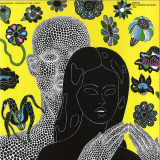
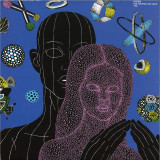
This is music by four strong individual players with room for eruptive solo-parts, but always held together by intense communication and beautiful interwoven melodies. The quartet's second album A History of Nothing (Trost records/TR170) got a huge number of excited reviews: A superb quartet outing. The music is all improvised, but it's firmly rooted in jazz, with superb interaction between all of the players, both on ripping, high-velocity blowouts and more delicate forays. (Peter Margasak, Chicago Reader) Freedom is clearly a responsibility as well as a joy, and it's emphasized here by the group's shared commitment: each musician is constantly working in two directions, stretching further and creating cohesion. The music is improvised with such an ear to complementary detail that it's literally being collectively composed. (Stuart Broomer, Free Jazz Collective) Together, this quartet is dynamite. It's exciting to hear a European musician along with three Americans, and notice that they communicate so well. (Jan Granlie, Salt Peanuts) Recorded by Klaus Hedegaard Nielsen at Jazzhouse, Copenhagen, March 2nd, 2017 Mixed by Joaquim Monte and Rodrigo Amado, CD Master by Simon Wadsworth / LP Master by Martin Siewert
Поиск:directions
Все
This is music by four strong individual players with room for eruptive solo-parts, but always held together by intense communication and beautiful interwoven melodies. The quartet's second album A History of Nothing (Trost records/TR170) got a huge number of excited reviews: A superb quartet outing. The music is all improvised, but it's firmly rooted in jazz, with superb interaction between all of the players, both on ripping, high-velocity blowouts and more delicate forays. (Peter Margasak, Chicago Reader) Freedom is clearly a responsibility as well as a joy, and it's emphasized here by the group's shared commitment: each musician is constantly working in two directions, stretching further and creating cohesion. The music is improvised with such an ear to complementary detail that it's literally being collectively composed. (Stuart Broomer, Free Jazz Collective) Together, this quartet is dynamite. It's exciting to hear a European musician along with three Americans, and notice that they communicate so well. (Jan Granlie, Salt Peanuts) Recorded by Klaus Hedegaard Nielsen at Jazzhouse, Copenhagen, March 2nd, 2017 Mixed by Joaquim Monte and Rodrigo Amado, CD Master by Simon Wadsworth / LP Master by Martin Siewert
Airplay from Mary Ann Hobbs, Liz Alker and Tom Ravenscroft and beyond
Reviews in Mojo, The Wire, Quietus, Uncut and more
On October 9ththe multi-instrumentalist Jack Wyllie (Portico Quartet/Szun Waves) presents his new project Paradise Cinema. It was recorded in Dakar, Senegal in collaboration with mbalax percussionists Khadim Mbaye (saba drums) and Tons Sambe (tama drums).
The impressionistic and dream-like quality of 'Paradise Cinema' is a stunningly effective realisation of Wyllie's experience, in ahypnagogic state of aural consciousness:
"I had a lot of nights in Dakar, when the music around the city would go on until 6am. I could hear this from my bed at night and it all blended together, in what felt like an early version of the record."
Atmospherically 'Paradise Cinema' is vaporous and enigmatic, but also percussive; existing in a paradoxical sound-space that's amorphous,yet still purposeful, serene, but propulsive and aesthetically sharp.
Khadim Mbaye and Tons Sambe, provide the rhythmic backbone of the record. There are traditional elements of mbalax rhythm, but it is often deconstructed or played at tempos outside of the tradition, so while it hints at a location it occupies a space outside of any specific region.
'Paradise Cinema' is also informed by notions of hauntology – a philosophical concept originating in the work of French philosopher Jacques Derrida– on possible futures that were never realised andhow directions taken in the past can haunt the present.
On the album's title Wyllie comments, "there are a handful of old cinemas in Dakar – these big modernist buildings dotted around the city built around independence. They're old and derelict now, but feel to me like monuments to that period, when the city was flooded with utopian ideas about its potential futures."
As such it sits closely to 4thworld music – situated in an imagined culture and time that never came to pass. And while it contains rhythmic references to Senegal it combines these elements with ambient and minimalist music to produce a sound that sits outside of any tradition.
Setting the tone for the long-player's themes is the optimism-driven, balmy beauty of 'Possible Futures', where rich-toned drums throb and levitate in a stratospheric ether.
Like a time-lapse video of plants in bloom, 'It Will Be Summer Soon' is the sound of anticipation and growth. Rhythmically it flickers and flutters, evoking rainfall, or the blurred wings of a bird in in flight.
Casamance moves through field recordings drifting in and out of focus, beats pitched-down low and unfurling saxophone, whilst the ambient 'Utopia' was made mainly with processed saxophone and suggests a longing for a perfect world.
Galloping percussion juxtaposes with a wistful mood on 'Liberté' – a title that referencesa derelict modernist cinema in Dakar of the same name– a hauntological landmark, made more poignant by the its name being part of the French national motto.
Tying into the cover artwork, Jack explains, "the 'Digital Palm is a telecommunications mast disguised as a palm tree in central Dakar. As a modern piece of technology that on first glance looks natural, it mirrors the combination of modern and acoustic elements."
Perhaps eliciting a time that never came, or maybe still in hope of it yet to come, 'Eternal Spring' concludes the LP's otherworldly beauty with hypnotic drums powering a subtly-building, sparkling and powerful crescendo.
Jack Wyllie is a musician, composer, electronic producer who draws on influences of jazz, ambient, and the trance-inducing repetition of minimalism.
Wyllie performs and records in Portico Quartet, Szun Waves (withLuke Abbott and Laurence Pike)and Xoros. He has also collaborated with Charles Hayward, Adrian Corker and Chris Sharkey and released on Ninja Tune, Babel, Leaf, Real World and Gondwana.
Khadim Mbaye and Toms Sambe play in various mbalax groups in Dakar. Khadim has also toured internationally with Cheikh Lo.
A producer with 20 years of experience perfecting his craft, we’re excited to welcome Ramon Tapia to Drumcode for his debut EP.
The artist previously contributed a pair of cuts to the A-Sides series in recent years with ‘Sonic Therapy’ and Drum Control’, while also playing the Drumcode stage at Tomorrowland in 2019. Elsewhere he’s dropped heat on Truesoul, led by the crisp groover ‘Manipulate’. His ascension to Drumcode for his first full-fledged solo EP release is richly deserved.
As with so many during the past year, Tapia’s taken his studio work in colourful and interesting directions. ‘The Future of Mankind’ is a multi-faceted beast. The title track is a straight-up weapon, driven by an ascendent riff that’s energetic and hopeful in equal doses. ‘Song of Sirens’ sees ambient pads and rolling percussion combine for a quality cut every DJ needs. ‘Screwdriver’ does what it promises on the tin; guttural and textured, it’s a necessary transitional tool for every techno set. ‘Hold On’ is the kind of emotion charged dance music that’ll make us go collectively weak at the knees when raving returns. We’re already excited to hear it rinsed at Drumcode Festival in Malta this September, when Tapia joins the party.
The System 108 anniversary record sums up the label's five-year work without words. The new collection is an impression of everything that the team has become during its existence. System 108 has matured nominally and stylistically, defining for itself three main directions: post-industrial, techno and break-beat, disco and house. Each of the three parts of the new collection reveals one of the musical trajectories of System 108 development: (Part 3) -- house with a touch of classics -- hear the echoes of Detroit and Chicago.
LP on white vinyl! What if a song was not a culmination but a singe, an imprint, or a crater left in the wake of creative process? On her new record "Jade", Pan Daijing composes at a different scale than that we've come to know. Since the release of her groundbreaking LP "Lack" in 2017, Daijing has expanded her operatic vision into a series of major commissioned exhibition-performances at institutions including the Tate Modern, Martin Gropius Bau, and the Haus der Kulturen der Welt. Developed for full casts of opera singers and dancers, and reaching for an all-encompassing durational experience of intensity for both performer and audience, the development of these works was for Daijing as emotionally disarming as it was thrilling. In order to continue accessing her own limits, Daijing had to develop a place of sanctuary within her own practice. Its nine tracks written and recorded over the last three years, "Jade" is the sound of solitary release and refuge, of creative self-sustenance. Written without the imperatives of direct address to performers or audience, "Jade" speaks inward, while inviting a kind of rhetorical listening. The artist draws on materials familiar from her previous work: namely, ascetic electronic textures that rumble and pierce, and voice bent in irreverent directions. In place of catharsis, however, her arrangements here linger in tension, extending curiosity towards the delicate void that nourishes extremes. They toy with the minor capacities of song: repetition, chant, observations that conclude without resolving. "Jade" comes from a vulnerable place, tender as in an undressed wound caught in the midst of healing over. Vocals, mostly Daijing's own, arrive as wordless sequences of notes soaring alongside a drone, or plain laughter, or in a few places spoken word. What is said or sung provides fragments of experience and reflection. In the process of piecing together these fragments, the listener is confronted with the tender parts of her own. "Solitude is like an immense lake you're swimming through," says Daijing of these songs. "Sometimes you dip your head in and sometimes you lift it above. On album centerpiece "Let," she speaks to us over the sound of rippling water, returning between anxious scenes to a refrain: "I take my bath in the ocean." We are not just consuming Daijing's story; we are being invited to join her in the water. The album is mixed and mastered by Rashad Becker, featuring artwork by Pan Daijing, cinematography by Dzhovani Gospodinov & design by NMR.
The System 108 anniversary record sums up the label's five-year work without words. The new collection is an impression of everything that the team has become during its existence. System 108 has matured nominally and stylistically, defining for itself three main directions: post-industrial, techno and break-beat, disco and house. Each of the three parts of the new collection reveals one of the musical trajectories of System 108 development: Part 1 is a dark story that covers the genres of new beat, EBM, acid, new wave, with a light touch in Goa trance by Mashkov.
Something wicked this way comes. Following singles 'Know The Future' b/w 'Digital Warfare' in 2019 and 'Hypersocial' b/w 'Safety Test' in 2020, ESP’s own Patrick Conway has now teamed up with the illustrious Appleblim (of Skull Disco and Apple Pips fame) for a meaty self-titled debut 2xLP under the new collaborative moniker, Trinity Carbon. There is something to be said for art created in the face of global unraveling, while mass transgression and the friction of culture shifting produce poignant commentary, but more often than not, it’s the personal coping mechanisms within our work that have the power to speak directly to the receiver. After a number of sessions resulting in wild imaginative beginnings, it was the untimely passing of Andrew Weatherall and a coming to terms with that loss that moved the two Brits-via-Berlin to herd their roaming sketches into a more narrative statement. In the uphill struggle to retain some sense of individualism, it’s always outsiders like Weatherall whose risks illuminate the roads of creativity less traveled, and when those beacons go dark there is a disorientation felt far and wide. Conway and Blim concede to the internal inquiry, “What would Weatherall do?” bringing to mind the man’s pervading morale, always soldiering onward through mediocrity, as it was undoubtedly an impetus for the duo growing steadfast and chiseling 'Trinity Carbon' into completion. While employing trusted machines in the bass department, they established a warm euphonic home base from which they could stray in a variety of tonal and rhythmic directions without straining a tether to the album’s core. However, as soon as any hint of familiarity may arise, or listeners begin to mentally assign stylistic epithets, the duo boldly change course to remind us that while the banal stay safely defined, it’s the iconoclasts, the outsiders who make us feel.
Jon Gravy - another important figure of the Viennese house music scene - returns to Fortunea Records this spring! 3 years after his stunning compilation opener ‚Soul Groove’ many fortunate events happened in his career.
After several releases on Rough Recordings, The Basement Discos, Pets Recordings and his own imprint Gravy Trax he managed to finish his debut album ‚X To Love’ in 2020. And shortly after this release he also had the honor to remix soul-singer Lou Asril for his recent single. Now Jon comes back with another worth hearing versatile record, called ‚Restless Soul‘.
The journey starts with ‚G Energy‘. This track tosses the listener up to the sky with its stomping house beats and hypnotic vocal groove in the background. The other 2 pieces that come right after go in different directions. While the title track is a homage to the elektro pioneers from Detroit, ‚The Reason For‘ revels in melancholy with eerie pads, full throttle drum patterns and a piano.
On the flip Jon brings us sunny vibes with the track ‚Can’t Believe‘. And the name is really on point, because we couldn’t believe at first how awesome this baseline is! Beautiful strings and a clever arrangement makes this B-side outstanding.
And last but not least, Jon’s track ‚Over Now‘ - which will come out soon in the near future - has been handled by UK based dj and producer Red Rack’em. The friendly scotsman, who lived many years in Berlin and now resides in Bristol, did something very special while working on that remix. He used elements from 3 Jon Gravy tracks and modified them to use it on this production. A „Threemix" so to say. A very interesting deep house experiment that you should definitely check out!
The Restless Soul EP will be available digital and on vinyl.
Limited to 300 copies. There will be no repress!
Mastering by Patrick Pulsinger
Support by Catz'n Dogz, Soul Clap, Jimpster, Black Loops, Roman Rauch, Rhode & Brown, youANDme, Milton Jackson, Dave Aju, Vince Watson, Tilman, Peletronic, Michel de Hey, Colin Dale, Ka§par, Replika, Dicky Trisco, Turbojazz, Cottam
Svart Records reissue of Morbus Chron’s game-changing atmospheric Death Metal album “Sweven”, together with the remastered ltd ed. EP “Saunter Through The Shroud”. Gatefold sleeve with original Sweven booklet included. Pressed on black vinyl and limited dark green vinyl (400 copies). On “Sweven”, Morbus Chron carved out their very own territory of unorthodox death metal, far beyond their raw and simple initial style, adding many uncanny acoustic parts to create a nightmare world of utter horror. Together with producer Fred Estby (ex- Dismember), the band found a warm, yet haunting sound to go with their vision. The resulting soundscapes spread out like a wasteland of death and terror, sending chills down the hardest of spines. Guitar and drum patterns flow in various directions, building cathedrals of darkness in which tormented vocals echo in agony. The EP ‘A Saunter through the Shroud’, was a revelation upon its release in July 2012, displaying tremendous progression from previous efforts. Instead of playing it safe, sticking to traditional death metal patterns, Morbus Chron had started to transcend the genre to incorporate elements of progressive rock as well as black metal. With patterns oozing of Voivod, Atheist and Darkthrone, as well as Death and Autopsy, Morbus Chron was on their way to something majestic. Possessing unrelenting integrity, the band shunned all trends to go further into the unknown with “Sweven”. Smell the coffin with these two pioneering recordings, available in one lush package for the first time! Morbus Chron’s idiosyncratic legacy has never sounded or looked finer.
Growing Bin switches back into reissue mode with an off-kilter obscurity from Austrian eccentrics Molto Brutto. Equal parts amateur funk, indie jangle, art rock and idiot pop, "2" is a real weird bastard with a whole lot of charm. As the Bin continues to grow in all directions, there's plenty of space for new sounds to take root. Alongside patches of Ambient, Balearic, Kosmische and Jazz, Hamburg's audio allotment now stretches to accommodate the strange waves of Molto Brutto.
Basso dug their first LP a decade back in Stuttgart's Second Hand Records, embracing their abrasive style of sandpaper sonics and experimental urges. Interest piqued, he made the journey through their DIY catalogue, capturing excellent collaborations under the Ganslinger alias before bumping into the second of their two LPs. Originally released on their Golfdish imprint in 1988, "2" walks into the pub with an air of accessibility, but quickly unravels into glorious chaos - pissing in the corner and passing out on the bar. Pop structures are suggested then subverted.
Pints of Paisley slosh out of a broken Glass, tape loops spool onto shabby Material, and indie janglers are just a couple of stamps short of a Postcard.
Turning you tipsy, this loveable rogue starts to tell you his life story, but you're going to have to fill in some blanks. They miss 'Blackie', but who is he - a dog? What happened on the 'Deadly Vacation'? Is that song really about a 'Goldfish', or did they find out the name of America's horse? Words repeat until they lose all meaning, awkward poetry masks a lost laureate and a drunken Wurlitzer sends the room into a spin.
The pubs are shut, so get happy drunk with Molto Brutto.
Patrick Ryder
Under his own name, Rossano Baldini has enjoyed a career as a renowned composer for film and television; a jazz pianist and keyboardist who has recorded with the likes of Gianluca Petrella, Michele Rabbia and Pierpaolo Ranieri; and a performer with the revered, Oscar-winning composer Nicola Piovani as well as the most esteemed orchestras in his native Italy. His latest project represents a rebirth of sorts, necessitating a new name: HUMANBEING.Establishing a wholly new persona as an electronic composer/performer, HUMANBEING finds Baldini reconnecting with his own, long-dormant vision while striking out in stunning new directions. His self-titled debut album, is a unique hybrid of the organic and the technological, delving deep into the composer's essential humanity by way of evocative synthetic soundscapes. It's a timely reinvention, occurring at a moment when we've all been starkly reminded of our biological natures at the same time as we're more interconnected than ever in the virtual realm.
Pure Donzin is the debut solo offering by Amsterdam - based Donald “Donny” Madjid - also known for his involvement in The Mauskovic Dance Band. On a pandemic - induced break from his usually busy tour ing schedule, Donny, armed with a 60’s drum machine and a few synths, made the most of his time off by experimenting with, and home - recording new sounds - resulting in a fully - fledged 9 - track album under the artist monicker Don Melody Club.
Whilst many of his local peers tend to turn to sounds further from home for inspiration, Madjid felt drawn to honour the literary and musical tradition of The Netherlands, following in the footsteps of classic and lesser known Dutch troubadours such as Ramses Shaffy (a cover of ‘Laat Me’ features on the album) and Ronald Langestraat. Don drew inspiration from bard - like storytelling and for the first time started writing in his native tongue, craftily forging lyrics that his rich tenor voice delivers with a sincerity that translates regardless of whether or not you understand Dutch. This intimacy is balanced evenly with synth and drum machine grooves, recalling Dutch New Wave legends Doe Maar - merging ear worm pop hooks and infectious danceable beats to these otherwise pe nsive ballads.
An ode to being immersed in the magic of the night in good company, an experience so lacking during the year in which the album was recorded, is the danceable Psychonauten. The track is a fine example of the glittering synthesis of infectio us musical atmosphere and lyrically rich straightforwardness Donny has mastered on the album.
The influence of The Mauskovic Dance Band, especially the bass driven, hypnotic groove - a signature sound Don guides in new directions - can be detected on Ver anderd. Somewhat of an anthem, it is laced with tones of 70’s West - African sounds, like fast percussive key arrangements and energetic backing vocals. An example of a more laid back tune on the record is Isabel, a cool nostalgic love song, a soother for a sentimental occasion.
Opening number Geen Nood (No Panic), lyrically nothing short of a ‘sign of the times’ track, paints a mindful setting of cycling past the Amsterdam canals, seeing the leaves in the water, and feeling your blood flow peacefully throu gh your veins - letting go of the need to be anywhere other than where you are. Be it through meditative observances, or hypnotic dance grooves, Pure Donzin is a record that tempts the listener to become just that: immersed in the moment.
- 1: Shelter Song
- 2: High & Hurt
- 3: Love Kills Slowly
- 4: Vendetta
- 5: Drink Rain
- 6: Gold City
- 7: Dear Saint Cecilia
- 8: The Wider Powder Blue
- 9: The Holding Hand
A decade on from their first record, Iceage continue to harness their lives together through music. This journey, in music and life, has never progressed in a linear fashion. Seek Shelter — Iceage’s fifth LP and first for Mexican Summer — is proof that their lives are still happening through their music, and that they remain determined to harness it. Enrolling Sonic Boom (Pete Kember of Spacemen 3) to produce, Seek Shelter sees Iceage’s propulsive momentum pushing them in new, expansive, ecstatic directions. The sound of an emotional core unwound, Seek Shelter radiates warmth and a profound desire for salvation in a world that’s spinning further and further out of control. In an extraordinary and unexpected run following the release of their debut LP, Iceage went from the fertile hyperlocal Copenhagen scene to stages all over the world. Their recordings reflect their journey: 2012’s You’re Nothing was hard, fast and raw, a bold doubling-down on the aggression of youth in the first record as well as the weight of expectation. Plowing Into the Field of Love (2014) and Beyondless (2018) saw a softening of the band’s hardest edges and the arrival of a certain world-weary vaudeville in the Iceage sound. The band’s past two records — all filtered twangy guitar riffs, sparse piano arrangements, and slinky, slow-moving rhythms — ventured into an intoxicated but knowing swirl, surveying the party at the end of the night. They’d seen it all, at least once, and their music rode the crest of that chaos. Seek Shelter, the band’s first record made with an outside producer, is the place they have been called to next. The LP was recorded at Namouche, a dilapidated wood-paneled Lisbon radio studio of 1960s vintage where the band set up for 12 days. It is the longest time they have spent recording a record. Steady rain dripped through the ceiling; they had to arrange their equipment around puddles and slowly-filling buckets covered in cloth so that the sound of droplets wouldn’t reach the mics. Sonic Boom arranged garden lamps from a nearby party store for mood lighting in the high-ceiling space. A choir, the Lisboa Gospel Collective, joined the band for two tracks on the final day in the studio providing a new scale to Rønnenfelt’s incantations. Singer and primary songwriter Elias Rønnenfelt casts their new producer as a sparring partner, another wayward mind to bounce ideas off of. “We wanted a partner that had some noise that we didn’t have, more a wizard than a producer. “When we started, I think we were just lashing out, completely blindfolded with no idea as to why and how we were doing anything. For Seek Shelter, we had a definite vision of how we wanted the album to be carved out, yet still the end result came as a surprise in terms of where we sonically were able to push our boundaries.” He’s speaking of the new record and also of their entire existence as a band, a travelogue that has catapulted these four friends far past the horizons of punk. “Some of that we wanted to remain intact. We try to keep the mystery. If there's no sense of mystery in it for us, then it's not fun.” Seek Shelter is a record that now exists at a moment of a collective unknown, when every beating heart wonders what will happens next.
On “Skeleton Elevator”, a hair-tingling, spine-popping, ribcage-rattling slab of twisted tundra boogie, Finland’s Cosmo Jones Beat Machine have their bony fingers on the global pulse of underground rock’n’roll, invoking the spirits of Beefheart, the Fall and Funkadelic. Cosmo Jones Beat Machine have a history that spans over two decades and starts in the woods and the wild in eastern Finland. Over the years the band have lived through five album releases, countless lineup changes and furious live appearances around Scandinavia and Europe that have brought the band a minor cult following. Skeleton Elevator is their sixth album altogether and the first in six years. The six years spent in cultivating the album now at hand have further tempered the band’s trademark sound, which is comprised of primitive but captivating rhythms and a terrifying racket. The vocalist Pharaoh Pirttikangas’ trademark raspy delivery, which has deepened over the years, weaves stories dug up from the Mississippi Delta in the pale moonlight and distilled through an eastern Finnish swamp. The new album’s Beefheartian clatter is at times spiced with influences from unexpected directions such as disco (Minimal Brain Dysfunction Generation) and Funkadelic-style space funk (Transformed). The band recorded the bulk of the album during a 24-hour session without sleep, which only adds to the record’s pleasantly unpolished, frantic edge.
A reliable traditionalist with a penchant for bittersweet songs of heartbreak and loss, Ashley Monroe pulled a complete 180 for her spectacular new album, Rosegold, riding the joyful emotional wave that followed the birth of her son to create her most ecstatic, blissed-out collection yet. Written and recorded over the past two years, the record finds the GRAMMY-nominated Nashville star pushing her sound in bold new directions, drawing on everything from Kanye West and Kid Cudi to Beck and The Beach Boys as she layers lush vocal harmonies atop dreamy, synthesized soundscapes and sensual, intoxicating beats. Monroe worked with a variety of producers on the album, letting the tracks dictate her direction rather than any arbitrary adherence to genre or tradition, and the result is a record as daring as it is rewarding, an ecstatic, revelatory meditation on happiness and gratitude that tosses expectation to the wind as it celebrates our endless capacity to love, and to be loved, even in the midst of chaos and tragedy.Born in Knoxville, TN, Monroe first began turning heads in Nashville as a teenager, when she arrived in town with a notebook full of mature, emotionally sophisticated songs that belied her young age. A jack-of-all-trades, she picked up work behind the scenes at first, singing on sessions at Jack White’s Third Man Studios and penning tunes that would appear on albums by the likes of Guy Clark, Carrie Underwood, Jason Aldean, and Miranda Lambert. Monroe and Lambert forged a close personal bond through their collaborations, and in 2011, they teamed up with fellow Nashville journey woman Angaleena Presley to launch the critically acclaimed trio Pistol Annies, which would go on to top the Country Album charts, crack the Top 5 on the Billboard 200, and earn a GRAMMY nomination for Best Country Album. Monroe’s solo output was equally lauded, with NPRhailing her work as “subtle and breathtaking” and Rolling Stone praising her writing as “riveting and sharp-witted.” Over the course of three studio albums, Monroe would land her own GRAMMY nomination for Best Country Album, share bills with the likes of Vince Gill and John Prine, and perform everywhere from The Tonight Show and Conan to Late Night and The View.
Clear Vinyl
Dj Luna-C makes a very rare and unusual appearance on a label other than Kniteforce with his “Fucking Grateful” Ep. New label “Second Drop Records” is the brainchild of The Lowercase and Paul Bradley - two regular Kniteforce artists who also help with the running fo Knitebreed and Remix Records. Luna-C has pulled out every stop possible and decided “no, no stops” with 3 manic tracks all leaning in opposite directions. Burn Inside is a smooth, classic styled piano tune, where Atomic Landslide is much more manic and distressed, leaving Good Time Rub-A-Dub to round off the EP in a jungle stylee….
Club / DJ Support
Billy Bunter, the Fat Controller, Glowkid, Slipmatt, Dj Jedi, Dj Luna-C, Dj Brisk, Clayfighter, Jimni Cricket, Bustin, Sc@r, Doughboy, Saiyan, Dave Skywalker, Ponder and many others
Reuben Sawyer is nothing if not prolific. He's also a man of many talents - his various projects have included the coldwave sounds of The Column, Hollow Sunshine's blown-out psych-noise, Anytime Cowboy's take on countrified weirdo-pop, and even ambient house courtesy of Rose. Oh, and he's a visual artist too, of course. Pfft, who needs an attention span anyway? One thing he's also dabbled in, however, is post-punk. Human Trophy is firmly in line with that tradition, but pulling from multiple directions at once - one minute this album rattles along like Big Black with the tempo down and the textures dialled up, the next we're firmly in Christian Death territory. The twisting guitar lines and pummelling bass of 'Forming Horrors' even call to mind his blackened punk project Dry Insides, but with less velocity and a helluva lot more menace. Is 'Corpse Dream' a goth record? Possibly. Whether goth is a lifestyle choice for Sawyer or not, he's certainly adept at immersing himself in sounds and making them feel like a comfortable fit. As with all his projects, it feels like another effortless facet of Reuben Sawyer - and in keeping with the rest of his output, it's absolutely packed with songs you'll wanna play again and again. Penultimate track 'The Roads' is built on a none-more gloomy pile-up of darkly portentous rhythms and a firm sense of disquiet, but once you're locked into its circular riffage you'll feel an urge to keep the loop going endlessly. Then there's the closer 'Blood Apex', a dual-vocal nightmare set to music which draws you back in even as it attempts to push you away. Yeah, it's pretty great.
They Say: “New directions in contemporary scoring”.
We say: Contempo is one of the best full album listens in the KPM 1000 library. Succinct smoking soul, super tight breaks and string-drenched sleaze composed by the library master, Keith Mansfield.
The creator of the romping tunes that became the iconic themes to the BBC’s Grandstand programme and their televised Wimbledon Tennis Championship coverage, Keith Mansfield was perhaps KPM’s most prolific artist from the mid 1960s right the way through the 1980s. As well as the sort of pop orchestral sound that is all over these classic library records, he could also turn his hand to raw, edgy rock and funk. Quentin Tarantino is a big fan, going as far as including some of Keith’s work on the soundtracks to Kill Bill and Grindhouse.
Many library records are a game of two halves and Contempo is certainly one of those. The first side cooks on a high funk breaks flame whilst the flip is something altogether more tranquil, yet no less groovy. It lays back with dreamier, post-coital grooves.
Rugged funk opener “The Fix” confidently displays its low slung languid grooves with heavy drums, horns and bass. Smokin’ in slow motion. The punchy “What’s Cooking” follows and has a lighter, more whimsical touch. But the drums still roll and the clavs wiggle in fascinating opposition to those horns. The dark and moody intro to “Cut To Music” gives way to a more inclusive, relaxed funk that’s all irresistible bass and stabbing horns. The mid-tempo “Man Alive” signals the time to really get down. A percussive monster jam. If you can’t strut to this then we really can’t help you! Closing out the A side, fresh guitar licks drip all over the slick drums of “Funky Footage”, with a New Orleans piano vibe coming on to really light a fire.
Whilst the dramatic crime funk of the A side is enough on its own to have earned this record its place in the great library record canon, it’s undoubtedly the more smoothed out B side for which Contempo is rightfully adored and celebrated. It’s so chilled and mellow, with beautifully arranged, sweeping strings, sax solos aplenty and a real 70s soundtrack feel. Think Love Boat, CTI label, Bob James, Grover Washington Jr.-type jams.
The super sleek and sexy jazz funk of “Breezin’” is as light and magical as you’d hope. An open-air masterpiece, its indulgent sound is just a taster of the sophisticated funk to follow. The elegant, romantic feels of “Good Vibrations” (used brilliantly by Odd Future’s Mike G for “Swiss Army”) is a string-drenched, wah-wah fuelled ode to living your best life. Nonchalantly. Whilst it keeps a very West Coast feel, the blaxploitation strut is certainly more Blackbyrds than Brian Wilson. “Sun Goddess” will blow your mind with the sensuous sound of glorious horns and beautiful keys. The luxurious “Love De Luxe” and its horizontal grooves have been much sampled, but here it proves that it doesn’t need any help to get you in an intimate mood. Closer “Snake Hips” is a cool mid-pace slouch. Just divine.
Originally released in 1976 but, like the very best KPM records, wonderfully timeless, Contempo is also no mere LP-length collection of loosely related tracks. This is a rare example of a library record that is a genuinely great listen from start to finish.
As with all of our KPM re-issues, the audio for Contempo comes from the original analogue tapes and has been remastered for vinyl by Be With regular Simon Francis. And as usual, the sleeve reproduction duties were handed over to Richard Robinson, the current custodian of KPM’s brand identity.
: Contempo (KPM) (LP)