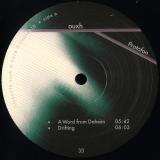
Ouxh returns with his first 12” on Felt Sense Recordings.
Protofon – a made up word and a nod to the minimalism that defined
the club sound at the turn of the millennium.
A hot tip for students of Timothy Leary and users of non racemic dissociative’s.
Psychedelic tech ov thee highest order.
out of Stock
Last delivered 60 days ago available to reorder, subject to availability
Boston’s Vermillion Sun Records has returned with its second offering, featuring Gummies Records boss and Steep co-founder Cutty (aka Cutwoes). As a child, Cutty was allergic to most common pets, prompting him to explore the world of amphibians, mainly…frogs. Each night as he dozed, his room was filled with the chirping of his slinking brothers and sisters. He has been immersed in sound ever since. Since traversing the deepest ravines of local music as a clubber, DJ, producer, label head and promoter, his productions, like his DJ sets, consistently bring unexpected twists and turns. Bouncy and psychedelic techy house goodness, beautiful ambient moments, downtempo groovers in the perfect time and place, breaks to make you dance and shake. VSR 002 encapsulates Cutty’s whole approach, delivering propulsive and tasteful tech house with ambient, dubby, tribal, and progressive influences.
Lillies in October sets the stage, book ended by gorgeous ambient waves before breaking into rolling tribal infused grooves. The Machine God delivers psychedelic wonk and circumstance providing the tech to soundtrack your deviousness. The B-side, Cutty provides a hypnotic and heady groove to sway away in Wooden Rollercoasters, while Wiersma delivers a remix full of funk and swing, showcasing how years on the dance floor can meld mind, movements and music. Whether as tools to assist the discerning DJ, or a journey for eyes closed and head down dancing, this is your gateway to hear what’s happening in the Boston underground.
out of Stock
Last delivered 60 days ago available to reorder, subject to availability
"aethermead", das neue und 20. Studioalbum von Of Montreal, lässt die Sounds der frühen Jahre wieder aufleben, während es gleichzeitig die künstlerischen Grenzen ihres unverkennbaren Indie-Pop/Rock-Stils erweitert. Frontmann & Songwriter Kevin Barnes, bekannt für seinen einzigartig-produktiven Output und großartigen Kollaborationen mit Künstlern wie Solange, Janelle Monáe und Jon Brion, nahm die LP mit Toningenieur Drew Vandenberg (Faye Webster, Toro y Moi) in seinem neuen Heimatort Brooklyn auf. Die Grundspuren wurden live mit Barnes’ langjähriger Live-Band auf einer 16-Spur-Bandmaschine eingespielt. Das Ergebnis schimmert mit Indie-Pop-Elementen ihres 2004er Albums "Satanic Panic In The Attic" sowie der rohen, energiegeladenen Live-Atmosphäre von "Lousy With Sylvianbriar" (2013). Wunderschön-melodische Akkordfolgen wechseln sich mit Rock'n'Roll-Krachern ab, auf eingängige Hymnen folgen surreal-experimentelle Klangwelten. Mit einer neuen Tour am Horizont (erstmal durch Nordamerika) feiern Of Montreal weiterhin ihr Vermächtnis und gehen gleichzeitig mutig in die Zukunft.
out of Stock
Last delivered 60 days ago available to reorder, subject to availability
Juicy Fruit is as succulent as the name suggests - a feast of flavour served up by Dutch masters Kraak & Smaak. Their fifth studio album is one that sees them sonically revisiting the roots of their first releases, producing an organic and warm electronic disco and funk album packed with hot property collaborators including Mayer Hawthorne, Eric Biddines of Golden Rules, Parcels, Gallowstreet and Cleopold to name a few.
Effortlessly flitting between outright dancefloor boogie and meditative mellow moments it's a record that captivates the listener from start to finish, blending the timeless appeal of disco and electro with the best in indie dance and electronica.
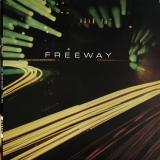
A serious private-press rarity gets its long-overdue reissue here for the first time ever. Formed in California in 1979, Freeway blended soulful grooves, jazz melodies and powerful horns into something that stood apart from the era's contemporary Christian scene. The cut just one self-released album in 1981 for New Born Records before disbanding. Originals now regularly fetch upwards of £400 on the resale market and this 45th Anniversary Edition marks a reissue that is going to fly off the shelves, complete with newly written liner notes and rare photographs telling the band's story. From funky jazz to boogie-inspired grooves, this is a previously hidden treasure now getting the light it deserves.
Severed Heads reattach themselves to Dark Entries for an expanded reissue of their 1991 opus Cuisine (With Piscatorial). As originary Aussie industrial legends – although founder Tom Ellard would balk at being branded as such – Severed Heads shaped the continental subcultural sound with their kitchen electronics, chaotic tape loops, and infectious nursery-rhyme-esque melodies. Cuisine (With Piscatorial) was the long-running project’s ninth album, and is a commentary on the state of music. Ellard explains: “The whole food joke is really about what music's about and how disposable it is; people have records like they have cups of coffee.” The album also presents a turn away from the dancefloor formalism of the era, which Ellard dismissed as already sufficiently explored. Cuisine brings us punchy pop kernels of the prime Heads variety, all clocking in around three minutes. Cuts like “Pilot in Hell” and “Ugly Twenties” rank among the band’s best through their deadly skewering of synth pop tropes. But the album also offers us a Piscatorial section, where Ellard felt free to “go fishing for ideas.” Here we get a taste of the project’s demented cut-up sensibilities, like on the “Quest for Oom Pa Pa” suite, where vintage jazz records are collaged into an angular nightmare. This double-LP reissue is the first time that Cuisine (With Piscatorial) will appear on vinyl, with a previously unreleased early version of “Seven of Oceans.” Also included is a 6-page booklet with liner notes, lyrics, and press clippings.
Auf der sechsten LP von Radiator Hospital, ,Distorting Time", spielt Sam Cook-Parrott nicht mit Nostalgie - er geht ihr aktiv aus dem Weg. Im Laufe von fünfzehn Jahren hat er RH von einem Solo-Projekt, das er in seinem Schlafzimmer aufnahm, zu einem vollwertigen Rock-'n'-Roll-Quartett ausgebaut, wobei er am Rande des Mainstream-Erfolgs blieb und sich gleichzeitig einen Ruf als echter Außenseiter der DIY-Szene erarbeitete. Die Veröffentlichung von ,Can't Make Any Promises" im Jahr 2023 brachte Sam an eine Art Scheideweg - doch er war entschlossen, keine Zeit mit Rückblicken zu verschwenden, sondern stattdessen nur auf das zu blicken, was vor ihm lag. Aus heiterem Himmel wurde Radiator Hospital Ende 2025 eine Tour angeboten, was Sam dazu veranlasste, seinen Ansatz zu überdenken und das Gewebe seiner bisherigen Arbeit in eine völlig neue Form zu verwandeln. ,Ich beschloss, etwas Neues live zu probieren, was ich noch nie zuvor gemacht hatte: Ich nahm meine Begleitmusik auf einem 4-Spur-Kassettenrekorder auf und sang dann einfach dazu", erklärt Cook-Parrott. ,Distorting Time" - seine erste Veröffentlichung bei Lame-O Records - besteht aus 13 Songs, die bei Sam zu Hause auf einem 4-Spur-Kassettenrekorder aufgenommen wurden, mit zusätzlichen Elementen, die im Uniform Recording Studio von Jeff Zeigler in Philadelphia eingefangen wurden. Die Songs wirken gleichzeitig sanft vertraut und doch auffallend eigenständig; sie nutzen die Grenzen des 4-Spur-Setups aus und lassen sich gleichzeitig von Bands wie Young Marble Giants und Tall Dwarfs inspirieren. Thematisch beschäftigen sich die Songs mit dem seltsamen Gefühl des Vergehens der Zeit, insbesondere aus der Perspektive eines Künstlers und seines Schaffens.
After Diogo’s hit record, we are following it up with another set of swinging dance floor detonators! Arriving directly from Brasil, Sérgio presents itself as another moniker from one of the greatest creative minds in all South America, Gabriel Guerra. With dozens of releases scattered over Future Times, Superconscious Records, LAMA, Got Tun, Balaclava Records, or his own 40% Foda/Maneiríssimo, he lands on our lap with a couple of highly effective, UK infused, and slightly nostalgic dance tracks. We’ve allways neutered a profound sense admiration for everything that Guerrinha was releasing under his 40% Foda/Maneiríssimo label, and had the feeling that his vibe was definitely one that we could relate to. Happy, a little wacky, and truly unpretentious dance floor madness! From acknowledging that, to reaching out was just a step. He was super available to work with us, and after the first talks he promptly provided us with a google drive folder with more of 100 unreleased tracks… Yes! You heard it! More than 100 gems of pure creativity ranging from all kinds of genres and across a fucking multiverse of alias and alter egos! So yes, that’s the kind of creative genius we are talking about… Moving from this “garagy” universe, Guerrinha presents us with a set of super fun tracks, which both leans over this infamous side of dance music, as well as it keeps an eye open for the most blatant forms of pop culture. Pure and simple dance floor tracks, to be enjoyed with a smile on your face.
"Is this the sound Sérgio?" or "Is this Sergio's sound?". The question of the questions seems silly, but it was postulated in 2019 to answer Guerrinha a new sound idea: A super appealing garage sound, so that any kind of doubt about the fact that Guerrinha's sets being fun, and that he himself would be able to mix swinging rhythms, would be eliminated. Sérgio is Guerrinha’s pseudonym for this, and since its first release in 2019 with the album “Utensílios” it has strangely become his most played alias, with a few small hits in the small Brazilian scene. After the pandemic drama, he returned in 2022 with the album "Mais Utensílios" and the single "Fantabobi / Riquititas", two releases that again grew the good problem of other djs constantly asking Guerrinha for these tracks. Now he releases the 12'' "Pelo da Churreia" via Discos Extendes, made in 2020 and containing small garage hits from that time. All this information raises the initial questions, since Sérgio is not just a pseudonym, but the curse that grew inside Guerrinha himself, sometimes it's in the appeal that “the bug catches on”.
out of Stock
Last delivered 3 years ago available to reorder, subject to availability
2026 Sakura Pink coloured vinyl, 2022 Abbey Road remaster, cut-out artwork! When the mysterious masked collective calling themselves Goat first emerged in 2012, armed with an incendiary debut album 'World Music' - there was, and there still isn't, anyone else on earth quite like them. With their enticing mythology, music full of sinuous grooves and manic explosions of fuzz, Goat were outliers from the very beginning. 'World Music', received an avalanche of acclaim with critics, psych heads, outernational crate diggers etc, all left enraptured by its thunderous intensity, conjured from a singular mix of sounds from across the globe. 'World Music' is brimming with tracks now seen as 'classic' Goat live favourites. Tracks that have been wowing audiences all over the world; the afrobeat stomp of 'Disco Fever', the fuzz abuse of 'Goathead', the post-punk groove of 'Let it Bleed', the sing-along repetitive pop of 'Run to your Mama'... From the first note to the last, 'World Music' oozes with a sonic confidence rarely seen on a debut album. What Goat have is unique - they've managed to create a sound unrestrained by genre or any other boundaries. So if you haven't done so already, then it is now time you joined the Goat commune. 300 ww copies only!
There is an ecstatic melancholy in Dent May’s music. The bedroom pop auteur’s songs are both bittersweet and exuberant, breaking your heart while you can’t help but sing along.
Over six albums, May has built a wildly diverse discography spanning 17 years. He has typically worked alone, assembling perfect pop gems on his laptop, playing nearly every instrument himself. But when he began preparations for his new album, May’s tried and true process suddenly felt stale.
The Big One brings together both the scrappy DIY ethos of Elephant 6 Collective and early The Magnetic Fields with May’s lifelong affinity for the great ’70s singer-songwriters like Harry Nilsson and Ram-era Paul McCartney. The songs balance a clear-eyed view of the world with a cautious optimism, looking at the everyday experiences of disappointment and heartbreak with a sense of possibility for the good that may still come. Things might seem bleak, May tells us, but that doesn’t mean we can’t be thankful for our brief time here on Planet Earth.
The title track is the beating heart of the record. Over a steady drumbeat, piano, and accordion, a melancholy May sings, “The big one’s coming, the big one’s on its way,” promising disaster. But May won’t wallow in the misery: “Thank the Lord for all my friends/We can make it ’til the end/No we can’t stop now/Who knows? Tomorrow it all could turn around.” For May, hope comes in the form of others.
It’s with this joyful melancholy Dent May draws in the world. Everything might be ending, the planet could be careening off into chaos, but tonight there’s a party down the block and you’re invited. Be sure and bring your friends.
Michaela Turcerová’s compositions unfold in slow motion. The saxophonist and composer’s glacial music zeroes in on the granularities of each note as it rings, soaking in every subtle shift in texture and pitch.
Šumum exemplifies this patient approach to writing music, branching out from themes of loss and togetherness into an intricate tapestry of introspective sound. These four pieces invite deep collaboration between performers, who together shape the music through the shared process of listening and interpreting Turcerová’s relatively open scores. And while these works often grow from long, stretched-out tones, they also foreground forward direction: no note stays in one place, no melody is without action. Instead, Šumum chronicles how the tiniest shifts can lead to major transformation.
Šumum builds from Turcerová’s longheld interests in place and minimalism. Many of the composer’s works explore perception: how a room can shape the music we hear, and how repetition alters a melody. Like the music of Éliane Radigue, Šumum embraces the rainbow of colors that appear when close listening with the wave-like flow of looped melodic and rhythmic patterns. All the album’s pieces observe the subtle changes that happen as music grows.
Group communication yields the constant evolution that defines Šumum. The album feels like a conversation, with each instrumentalist swapping phrases or trading places when the moment feels right. “Straty” builds from a series of strongly accented drones that appear as quickly as they fade away; underneath them is a perpetual rhythm that drives the color of each long held note, from melancholy into radiance and back again. With “Vlny,” pitch eventually disappears, leaving a delicate rhythm, and with “Masy,” a matrix of brassy tones link together and eventually burst. No matter where the music goes, one thing remains true: Šumum invites close listening, and in the process, reveals the beauty of continual motion.
After the wild Afro-jazz fusion of Trancedance (reissued as BT118) and the meditative solo Christer Bothén Donso n’goni (BT133), legendary Swedish multi-instrumentalist Christer Bothén returns to Black Truffle as part of a dream quartet completed by the three members of Ghosted: Oren Ambarchi (guitar), Johan Berthling (bass) and Andreas Werliin (drums). Recorded at a rustic studio built by Werliin and Hans Fredriksson in the sylvan surrounds of Hamburgsund, Sweden across a few days in September 2023, Serpentine offers up four generous slices of hypnotic repetition and shimmering resonance, cut through with wild bursts of Bothén’s bass clarinet.
The depth and ease of the quartet’s rapport is evident from the first moments of the opening title-track. Berthling’s resonant upright bass locks into a head-nodding ostinato that makes sensitive use of a prominent end-of-phrase rest, opening spaces through which Werliin’s continually shifting statements of the pulse shine through. Having worked together in various groups for many years, Berthling and Werliin are masters at playing subtle games of difference and repetition, creating a driving rhythmic flow animated by perpetually changing details: here, you can never step in the same groove twice. Weaving through it all is Ambarchi’s now-signature Leslie-cabinet guitar tone, sounding out long chords at times strikingly close to a Hammond, while also creating intricate cross-rhythms through the play of his tremolo modulations against the bass and drums. When Bothén enters five minutes in, the growl of his bass clarinet at first works deep in the collective brew, carving off brief staccato phrases and twisting them into fragmented melodies. As he moves into the instrument’s higher registers, Bothén’s playing becomes wilder, twinning with Ambarchi’s guitar in shimmering arcs like a 21st century update of the Garbarek-Rypdal pairing immortalised on Sart.
Each of the four pieces explore different possibilities of a shared language. On ‘Antigorite’, another hypnotic bass riff emerges gradually from an atmospheric haze, eventually developing into a frenetic rhythmic workout propelled by Werliin’s cowbell. Berthling sits out for ‘Lizardite’, while Bothén moves from bass clarinet to the Donso n’goni, the sacred Wassoulou hunter’s harp he has studied for half a century; the resulting performance streamlines the approach heard on other tracks into pure modal propulsion, sparkling with harp-like arpeggios from Ambarchi’s guitar. On the closing ‘Chrysotile’, the bottom drops out, leaving a swampy, churning mass of wavering organ-like chords, roaming bass runs, and distant toms, over which Bothén floats bass clarinet figures by turns bluesy and abstract, the whole thing landing somewhere between classic ECM and the most blasted freeform moments of early Amon Düül II. Bearing a delicate calligraphic abstraction by Bothén on its cover and beautiful documentation of the recording sessions on its inner sleeve, Serpentine is a powerful reminder of the magic that can happen when inventive musicians just get together and play.
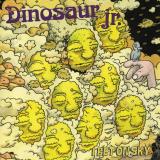
I Bet on Sky is the third Dinosaur Jr. album since the original trio – J Mascis, Lou Barlow and Murph – reformed in 2005. And, crazily, it marks the band’s 10th studio album since their debut on Homestead Records in 1985. Back in the ‘80s, if anyone has suggested that these guys would be performing and recording at such a high level 27 years later, they would have been laughed out of the tree fort.
The trio has taken everything they’ve learned from the various projects they tackled over the years, and poured it directly into their current mix. J’s guitar approaches some of its most unhinged playing here, but there’s a sense of instrumental control that matches the sweet murk of his vocals (not that he always remembers to exercise control on stage, but that’s another milieu). This is head-bobbing riff-romance at the apex. Lou’s basswork shows a lot more melodicism now as well, although his two songs on I Bet on Sky retain the jagged rhythmic edge that has so often marked his work. And Murph…well, he still pounds the drums as hard and as strong as a pro wrestler, with deceptively simple structures that manage to interweave themselves perfectly with his bandmates’ melodic explosions.
After submerging myself in I Bet on Sky, it’s clear that the album is a true and worthy addition to the Dinosaur Jr. discography. It hews close enough to rock formalism to please the squares. Yet it is brilliantly imprinted with the trio’s magical equation, which is a gift to the rest of us. For a combo that began as anomalous fusion of hardcore punk and pop influences, Dinosaur Jr. have proven themselves to be unlikely masters of the long game.
Kacper Krupa is one of the most distinctive saxophonists of the younger generation, a key collaborator of Skalpel and Łona x Konieczny x Krupa (whose album Taxi was certified Gold in Poland), and leader of Siema Ziemia, with whom he has performed at prestigious European festivals and concert venues such as the London Jazz Festival, Jazz Jamboree, Le Périscope, and Bimhuis.
SEKWA marks another important step in Kacper Krupa’s artistic journey. The album was created at the intersection of jazz, improvised music, contemporary chamber music, electronics, and ambient, forming a diverse yet coherent whole.
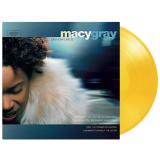
Macy Gray's debut album On How Life Is was released in 1999 and definitely could be called one of the most impressive R&B/Soul debuts. By selling seven million records worldwide it reached a wide audience and received airplay beyond the genre-specific stations. The single "I Try" became a massive hit and reached the number one spot in Australia, Ireland, and New Zealand.
The album was, besides a commercial success, also very popular among critics. It was mostly praised for its distinctive and outstanding style, which felt like a breath of fresh air in the genre. The song "I Try", eventually won the Grammy Award for Best Female Pop Vocal Performance in 2001.
On How Life Is is available as a limited edition of 3000 individually numbered copies on yellow vinyl and includes an insert.
* A UK Dub outing from 1996 from The Rootsman, originally appearing on his debut album on Third Eye Music - `In Dub We Trust’.
* A mid-paced steppers piece with more than enough weight to cause distress at any sound system gathering.
* This is the first time `African Style’ has been unleashed as a single.
out of Stock
Last delivered 4 years ago available to reorder, subject to availability
Scum rock low-lives Louse return with their Sophomore LP, Buyer’s Remorse - an unrefined but levelled-up dip back into the murk, keeping it in the family one more time on Riot Season records (a label which now, fittingly, features genre luminaries Brainbombs).
More cohesive, more negative but no less disgusting than debut record Creep Call, the band have further enhanced their pummelling, single-riff ritual M.O. with even more strop-razor guitars, crank-fuelled slide-bass, strangled sax and sinister missives from the void.
Buyer’s Remorse includes unspeakable meditations on an unmatched litany of losers, including: inept hitmen/serial killers, snuff-flick refund naivety, disturbing fellatio lessons, burying yourself alive to escape the law (“you’ll never get me in the slammer”) and having a damn good time being chopped into luncheon (take a ride on the meat slide!)
Snubbed from all but the best festivals, Louse continue to eke out a steady stream of shows, with highlights such as glorious sweat-boxes in our beloved Torino, Monza and beyond in the EU with BRAK, being the first band to play Mickey Zogg’s Basement in Bristol with Beau Wanzer and multiple distinguished appearances at Café Oto with legend and fellow RS label-mate Shit & Shine.
Right-thinking taste-makers have decreed that Louse “exist in an alternate reality where The Fall and The Birthday Party are one and the same band”, and that their songs are “all at once unsettling, loose, filthy, untamed, distorted and fucked up, but most of all rocking, creative and unique”.
Buyer’s Remorse is no exception, having been wrangled into perfection by long-time collaborator James Atkinson (The Stationhouse Studio) and none other than Rectal Hygienics’ Matt Ibarra (STR Mastering) this is truly scum rock at its finest - all at once punishing, ugly and brutal; but listen to that groove (oh my!)
Louse are
The Captain - Vocals, Septic Pete - Guitar, The King of Sting - Guitar , Uncle Brutus - Guitar Mister P. - Drums, Dieta Di Patate - Slide Bass
Roy Montgomery, a key figure in the experimental underground rock scene, lives in Christchurch, New Zealand, just a short drive from the sea. Avant-garde vocalist and songwriter Martha Skye Murphy is based in London. Though geographically worlds apart, the pair inhabit an intimate and almost tactile shared sonic world. Their collaboration feels transformative, like the gradual shifting spell from night to day.
What draws them together is the emotional force of each other’s music. Montgomery’s cyclical, decaying compositions are shaped through intricate guitar and piano work, blending post-rock, folk, and drone. Murphy, meanwhile, possesses a rare gift for transformation, from the intimate cracked whispers of 'At Dawn' to the hypnotic drift of 'The Play of Dark and Light'. On the latter, she evokes old maritime folk tales of fishermen lured into the darkness by the sea’s siren call. The song both seduces and warns, finding something magical and frightening in the temptation of drowning. Though her vocals often resemble fragments of words, consonants, or vowels, they frequently function as pure sound, drawing on glossolalia and prioritising feeling over any ‘learnt’ language.
Emotion and intuition are the driving forces behind Nebular, an album that oscillates between the intimate with the unknown. This spirit is reflected in its artwork. Murphy shared a painting by Irish artist Simon English depicting a solitary house bathed in dusky blue light, and the pair quickly settled on it as the cover image. Both were captivated by its atmosphere. Montgomery related it to the isolated, seemingly uninhabited houses he encounters while travelling through rural New Zealand—places that inspire a desire to knock on the door and discover what lies beyond. “Terra incognita springs to mind. A search into the unknown,” Murphy agrees.
The nocturnal and remote nature of the artwork mirrors the process of making Nebular. With Montgomery in New Zealand and Murphy in London, the album was created entirely through remote correspondence, with stems exchanged via email. Their messages were often written and read at different times of day, and, because of the time difference and the demands of daily life, replies usually were sent late at night and the music too often composed at nocturnal hours. Their exchanges took on the quality of pen pals sending letters across great distances. This suspended sense of time is echoed in Nebular’s sound, with its feeling of temporal drift and timelessness.
On Nebular, Montgomery and Murphy have harnessed raw emotion and launched it into a time capsule bound for the stars. It allows you to drift, to be present, and to feel; creating something timeless.
Classic Me First And The Gimme Gimmes reissued: The Gimmes roll into town for a 12-song shootout with Country & Western. These Blue-State bandits are gonna show Kenny Chesney how it's really done. But now the demanding bunch are back, and this time, it's country that gets a kicking. More C&W-styled numbers are easy targets, be it the ever popular "(Ghost) Riders in the Sky," which here gallops straight into hardcore, "Desperado," which will never escape this incendiary melodic punk rock arrangement, and "On the Road Again," which is delivered up in a similar sizzling style. "Jolene," having already suffered the indignities of a goth make-over, is now manhandled by the Gimmes, who storm Dollyland with utter abandon and a barrage of guitars and battering drums, all the better to keep their man -- hmm, shades of Brokeback Mountain. "Annie's Song" is dragged off of John Denver's country roads, and dumped center stage in the middle of a rock concert, which is just where it belongs. Hank Williams' "I'm So Lonesome I Could Cry" gets even more inspired treatment, including a bagpipe! Even a seemingly straightforward punk do-over like "Goodbye Earl" provides some scintillating moments, from the Rancid meets the Clash styling to the bright harmonies and soaring lead guitar licks. The musicianship really shines through on this set, the guitars blaze, the bass becomes assaultive, and the rolling drums sound like the thunder of mortar in the distance, while the production is equally notable. But hey, the Gimmes can play country, too -- well almost -- the first half of "Much Too Young (To Feel This Damn Old)" boasts some fine fingerpickin' guitar, although the country styling keeps sliding into surf: hey, your roots are showing, guys. Now this is country music everyone can enjoy, gimme more! The 20th anniversary edition comes in a yellowish, more brown Mustard colored vinyl.
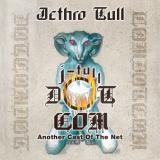
"J-Tull Dot Com: Another Cast Of The Net" wirft ein neues Licht auf das 1999 erschienene Album von Jethro Tull. Neu abgemischt von Bruce Soord (The Pineapple Thief), wird es als limitiertes 3CD+Blu-ray-Set erhältlich sein, das die Originalmischungen auf CD1, die Remixe von 2026 auf CD2 sowie eine dritte Disc mit Bonusmaterial enthält, darunter 6 völlig unveröffentlichte Studiotracks und 3 Live-Aufnahmen von der Tournee der Band im Jahr 2000. Die Blu-ray enthält Dolby Atmos, 5.1-Surround-Sound- und 24-Bit-Stereo-Mixe des Hauptalbums sowie 24-Bit-Stereo-Mixe des Bonusmaterials (ausgenommen Live-Tracks). Abgerundet wird das Paket durch ausführliche Liner Notes von Martin Webb.
Damit erscheint das Album zum ersten Mal auch auf Vinyl, als Gatefold-Edition mit 180 g 2LP + LP-Booklet, die den 2026er-Remix sowie ausgewähltes Bonusmaterial enthält.
Great Television unfolds as a loose, emotionally driven narrative about navigating love, identity, and self-destruction against a backdrop of memory, movement, and Southern imagery. It begins with “Sunset Promenade,” where a deep, possibly lifelong bond offers comfort amid internal turmoil, establishing a desire for connection strong enough to withstand a restless mind. This sense of identity expands in “Girls of Atomic City,” where independence and womanhood are celebrated, though tinged with performance and uncertainty.
As the story progresses, songs like “Okeechobee Mud” introduce instability and intensity, portraying relationships that are passionate but corrosive, where love becomes inseparable from pain. “Thiokol Tripwire” honors the lives lost in the 1971 Thiokol Chemical Explosion and those affected in the south Georgia community of Woodbine. “Razorwire Wall” reinforces this devotion to chaotic love, suggesting loyalty even in destructive circumstances. A turning point arrives with “The Easy Kind,” where Cook reflects on attempts at self-repair, acknowledging her contradictions and rejecting simplicity in favor of a more fractured self-understanding. This awareness deepens in “Caldonia and The Love Convoy” and “In Your Veins,” where freedom blurs into recklessness and love takes on addictive qualities, revealing her complicity in cycles of harm. “19th Nervous Breakdown” provides crucial context, tracing her instability back to a turbulent upbringing marked by neglect and emotional disorder. “Feverfew,” leaves the narrative unresolved, as she recognizes her repeated attraction to destructive paths yet continues to follow them. In contrast, the closing track “Lightly” offers a rare glimpse of pure, protective sisterly love. Altogether, the album portrays a cyclical journey of longing, damage, and partial self-awareness, where clarity emerges but transformation remains uncertain.
One of the early breed of US death metal acts, Autopsy formed in 1987 in San Francisco. Drummer/vocalist Chris Reifert had gained initial recognition with Floridian genre pioneers Death & his participation on the classic debut, ‘Scream Bloody Gore’ before this new morbid creation was birthed. Autopsy released 4 albums on Peaceville Records in the early part of their career - beginning with the legendary debut, ‘Severed Survival’, in 1989 - before disbanding in 1995, with members going on to become the stalwarts of sickodelia in Abscess.
Autopsy triumphantly & officially returned from the grave after a 15 year hiatus with the 2010 EP, ‘The Tomb Within’. This was followed by the release of the band’s fifth studio album, ‘Macabre Eternal’ in 2011, as the group celebrated a new era of popularity & creativity. This reverence continues to this day as Autopsy itself nears its 40th anniversary, & still features the longstanding core trio of Chris Reifert, Eric Cutler, & Danny Coralles.
‘Mental Funeral’ was Autopsy’s second studio album, originally released back in 1991, & is rightly hailed as one of the greatest death metal albums of all time with its unhinged & uncompromising collection of odes to brutality & depravity, wrapped up in its highly distinctive raw, organic production.
‘Mental Funeral’ was recorded at Different Fur Studios in late 1990, with engineering work conducted by Ron Rigler. The iconic artwork appeared courtesy of Kev Walker, who had already provided the (at the time) controversial cover for Autopsy’s debut, ‘Severed Survival’.
This special 35th anniversary pressing of ‘Mental Funeral’ is presented on a limited red/green ink spot vinyl, featuring newly remastered audio courtesy of current Autopsy bassist Greg Wilkinson at his Earhammer Studios.
Awake Children Under the Moon unfolds as a single cinematic arc, drifting through screamo, post-black metal, ambient, and shoegaze with a sense of nocturnal unease. Dedicated to anyone who learned how to endure the night before learning how to sleep, the EP captures moments spent awake beneath a distant moon. Built around a hazy blackgaze core, “water lily” seals unspoken emotions and inner conflict inside a quiet science-fiction narrative. The song introduces another lifeform encountered by a lone protagonist living on Mercury – a meeting suspended between hope and isolation. Whether the story resolves in tenderness or tragedy is left to the listener's interpretation.
Best known as a member of the electrifying 'Hagstone rock' four-piece The New Eves, Winder- Lind 's solo work channels the same raw intensity and liberatory spirit while revealing a more intimate, deeply personal side to her songwriting. Expanding on the world introduced through her 2023 EP The Spirit Is Carnal and first poetry collection Rod Ska Jag Leva (2025), Wild Love is an ambitious and emotionally expansive body of work from one of the most enthralling new voices in music today. Though connected to the fierce communal energy of The New Eves , Wild Love inhabits its own distinct emotional landscape. Across eleven songs, Winder- Lind brings together the wealth of her experiences and passions and reflects them back outwards, distilled with shimmering intensity. The album spells out a liberatory vision which she refuses to compromise, one rooted in emotional honesty, ecstatic expression and unfettered selfhood.
Released worldwide in 2001 as Twilight, the album introduced boa's distinctive blend of atmospheric alt-rock, melodic intensity, and emotional depth. It gained worldwide recognition through "Duvet," featured as the opening theme to cult Japanese anime Serial Experiments Lain, and has since found renewed global attention through a recent viral resurgence. The album explores themes of identity, longing, and connection, balancing introspective lyricism with driving guitars and immersive arrangements. This limited edition celebrates a landmark release that continues to resonate with both longtime fans and a new generation of listeners
Their music draws from the rich traditions of classic guitar pop while maintaining a distinctly contemporary voice. Packed with sharp hooks, jangling guitars, and the melodic urgency that has long defined the band's sound, 'Box' delivers a fresh collection of songs that balance classic power pop craftsmanship with restless modern energy. Across the album's running time, The Jacks channel the spirit of late-70s radio gold and underground college rock while sounding unmistakably like themselves. Recorded with an ear for immediacy and emotional punch, 'Box' moves confidently between driving anthems, bittersweet harmonies, and punchy guitar-pop excursions. The result is an album that feels both timeless and alive -- a record built equally for longtime devotees of the genre and new listeners discovering The Jacks for the first time.
Nollman and his cohort took a considered approach to developing sonic relationships with the orcas and other animals they encountered, always keeping a respectful distance as they found one another with their ears. Orcas' Greatest Hits collects hydrophone recordings drawn from over 60 hours of interspecies collaboration recorded between 1985 and 2002, showing the playful ways in which Nollman engaged the orcas from the portable studio floating above their home. What we hear is the focused listening by the cetaceans and humans as they search out sonic space among one another, finding in that dialogue potential common ground for deeper understanding.
Defined by complex rhythms, low-tuned guitars, and an intense live energy, the band pushes the boundaries of contemporary heavy music. The band features Emilia Moncayo (vocals, synths), Amadeus Galiano (guitar, bass), and Carlos Sanchez (drums), each bringing a distinct musical background that merges extreme metal with progressive and electronic influences. Their combined technical precision and creative approach shape MINIPONY's intricate compositions and evolving sonic identity. MINIPONY has performed across Latin America and Europe, sharing the stage with iconic acts such as Meshuggah and touring alongside Fear Factory. They have also appeared at major international festivals including 70,000 Tons of Metal and Hell and Heaven Fest, Summer Breeze building a strong reputation for their powerful and immersive live performances.
Defined by complex rhythms, low-tuned guitars, and an intense live energy, the band pushes the boundaries of contemporary heavy music. The band features Emilia Moncayo (vocals, synths), Amadeus Galiano (guitar, bass), and Carlos Sanchez (drums), each bringing a distinct musical background that merges extreme metal with progressive and electronic influences. Their combined technical precision and creative approach shape MINIPONY's intricate compositions and evolving sonic identity. MINIPONY has performed across Latin America and Europe, sharing the stage with iconic acts such as Meshuggah and touring alongside Fear Factory. They have also appeared at major international festivals including 70,000 Tons of Metal and Hell and Heaven Fest, Summer Breeze building a strong reputation for their powerful and immersive live performances.
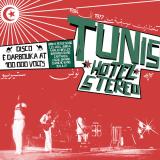
In the years after independence, Tunisia made an unlikely bet: tourism. Beach resorts rose along the coast, each one trying to outshine the next, and each one needing a band to entertain their guests. A whole generation of musicians grew up on those hotel stages - sharing bills with James Brown, Claude François and the Mingus Dynasty - and what came out of it was a small revolution. Funk played on Tunisian instruments. Disco with an oud in it. Reggae carried back from the island of Kerkennah. A "Third Language" the press didn't quite know what to do with.
Tunis Hotel Stereo gathers nine of those records. Most of them were pressed in tiny quantities, sold to tourists as souvenirs, censored before reaching the radio, or quietly slipped onto a 45 between two hotel sets. Some of these artists filled the Carthage amphitheatre. Some topped the Maghreb hit-parades. Most have been waiting, for forty years, for someone to play their music again.
This compilation is the result of years of work - collating memories, hunting down records, sitting with the artists who made them, and with the people who once danced to them. It is the third release on Shakshouka Records, and the first compilation of Tunisian music ever curated by Tunisians, in Tunisia.
SIDE A
The mysterious Les 4 Dés, who turned the national anthem into psychedelic pop on Ya Tounes - and then nearly vanished. Peace Band, hard rockers turned hotel professionals, recording as Omnya at Hammamet's legendary Topkapi club. Ridha Zalila, the eternal shape-shifter, in a rare instrumental of Tiou Tiou Tiou. And Sadok Gharbi's Noujoum - pulled from his sabotaged, near-lost masterpiece Souar.
SIDE B
Carthago, the impossible big band that married the elite of Tunisian jazz-rock with the stars of tourist entertainment, with the original Dhikrayet. Khaled Mellef, one of the great UFOs of his generation, with Wait Till the Morning Dew, recorded in the Netherlands. Marhaba Band's Baba Bahri, originally pressed only for hotel guests and now a cult artefact. Corniche Band's Dance, cut in Milan during a technical stop on a cruise ship. And Jomaa Bouzrara, the "Bob Marley of the Maghreb," with Now That, drawn from his landmark 1983 debut Sunset.
These weren't rebels without a cause. They were musicians who understood that modernity and heritage are not opposites - that a Tunisian could play funk and still be deeply, irreducibly Tunisian. They drew from every direction at once, and built something that belonged to none of those worlds entirely, and to all of them at the same time.
This compilation is one small act of remembering. The music does the rest.
There are two version of the LP - limited to 100 numbered copies with transparent wax and classic black wax edition. Both 180g with special OBI strip.
Maciej Envee Goliński is an artist who probably needs no introduction. He has been working with U Know Me practically since the label's inception. His last album ("Time & Light") made a huge impact worldwide, but we had to wait eight years for the next vinyl release. In the meantime, Maciej has certainly been busy – he has released numerous club singles under several aliases, and has helped record and mix numerous albums from the world of jazz, soul, and electronica. "Wyszymory" is a carefully crafted concept album, inspired by our roots. "Wyszymory" is an album on which every open-minded listener will find something that has been playing in their soul for a long time...
"Of all things visible and invisible, my life is most filled with music and a fascination with sound. It matters not whether they are natural or artificial, isolated or resonating through space. Sounds that evoke
memories, as well as those entirely new. Some of them have resonated unchanged for thousands of years. Certain resonances and rhythms have remained unaltered for generations so distant that they have left no other trace in human civilization.
This bond with our ancestors truly fascinates me. Ever since I realized it, I have become more attuned to inspiration. Listening to traditional and classical music, I kept finding new anchor points. I was constantly surprised by new invitations to ponder what connects – or divides – the pulse of our region’s traditional music with the rhythms of Africa, the tribes of the vast East, or the frozen North. My great authority, Tomasz Stańko, in interviews conducted by Tomek Michałowski, used beautiful parables of love and creativity to bring me closer to the Cro-Magnon cave artists. The Icelandic literary magician Andri Snær Magnason, in his book On Time and Water, captivated me with the fascinating observation that through emotional contact, words, ideas, or memory, we reach back and forward two or even three generations – spanning a period of about 270 years. Then there is Sam Kowalski, who with his wonderful obereks played on the gitalele, took me on a hypnotic journey, from which one returns with a deep admiration for the art of musical storytelling, passed down from generation to generation. Finally, my own children surprise me with talents, behaviors, and increasingly distinct features of those generations that now dwell only in my hazy memory and on old photographs.
I wanted the protagonists of this album to be the very phenomena that modern humans share with their ancestors, regardless of the level of civilization. Most vital among them is the relationship between humans, nature, and their own emotions. Wyszymory has nothing to do with an academic study, though I did delve into Slavic mythology, archaeology, and history in search of inspiration. Nor is it an album of traditional music, even if such music is present thanks to wonderful instrumentalists. I managed to invite artists who cross boundaries daily, working not only with Polish music but also with Hindu and African traditions, and even jazz, with its long history of blending influences. Naturally, the album became a kind of sonic comic book, where individual scenes and stories – the sounds, pulsations, and ideas on how to use them – came to me over time, often under unique circumstances and in inspiring contexts."
Envee
Gary Sullivan's Bodega Pop project returns to DINTE with a cassette-only collection of traditional sounds plucked from CDRs found in the night-markets of Savannakhet, Vientiane, and Luang Prabang.
"In Lao PDR, music was seemingly everywhere. Walking through an open field outside Savannakhet to the sound of someone playing a khaen on a distant porch, the bracing rush of electronic molam from of one of Vientiane’s many aging malls, the awkward blending of the blind so u player’s voice with the bustling sounds of Luang Prabang’s night market.
It was in that UNESCO World Heritage Site that I found most of the CDs and CD-Rs from which I’ve ripped the tracks for this compilation. I’m almost certain I picked up a thumb drive at the night market that held many hours of additional music that could have been included, but if so, I’ve misplaced it, lost it for good, or simply misremember purchasing it in the first place. What I do remember is that these discs were literally the last copies in the cafe, museum, bookstore, and night market where I bought them, and not all of them played all the way through without sonic deterioration.
The sounds compiled here play in stark contrast to the more contemporary recordings I found in Laos, most of which featured some form of upbeat digital workstation molam or children’s songs. In addition to the ever-present khaen, this collection includes recordings of the sanai, a single-reed instrument fashioned from a water buffalo horn, the ceremonial khong nyai gong, the pi and similar free-reeds, and at least a dozen more traditional instruments played by Lao and ethnic minority artists. While some of these tracks were laid down in Vientiane or Luang Prabang, most were recorded near where the artists lived, from the legendary Vat Phou in the far south to the former Pathet Lao capital Xam Neua in the northeast.
Unlike Laurent Jeanneau’s more focused Lao collections for Akuphone and Sublime Frequencies, which remain among my favorite albums of all time, the present cassette-only selection is literally all over the PDR map. The sequencing is entirely in response to rhythm and texture and includes recordings from the 1970s, 80s, 90s, and early aughts. This may frustrate those with more of an ethnomusicology bent, but my hope is that the listener experiences something akin to wandering for the first time through this majestic country, encountering the last copies of forgotten recordings one after another, and hearing in these remains fragments of the past and a living musical landscape."
The amount of quality music Burnski has produced, A&Red and released in recent years is off the charts. His labels are some of the most played in the underground right now, but that hasn't stopped him from starting another one here with Silhouette. Mundy is a new name to us, but has some serious chops on display here with six stylish cuts that explore the intersection of garage, tech and minimal. The synths are silky and the vocal samples are expertly placed to give each groove real character. 'Real Love' is deep and r&b tinged, 'Find You' has a dark low end and 'The Middle' is all about the filthy bass. Pure heaters.
out of Stock
Last delivered 19 days ago available to reorder, subject to availability
Born at the turning point between apartheid and democratic South Africa, the Xitsonga bubblegum-disco duo Chibuku embodies the energy of a time of change,as Nelson Mandela was released from prison and kwaito began to emerge. Althoughthey did not achieve the fame of figures such as Paul Ndlovu or Penny Penny, their only album Maxambe (1992) is now considered a precious time capsule, a raw disco treasure rediscovered by lovers of forgotten music. Behind the project is Dr Joe Shirimani, a guitarist, singer, composer and producer of genius from Tzaneen and Soshanguve, recognised as one of the major architects of South African disco and bubblegum. Long overlooked, Maxambe nevertheless bears witnessto an era and a social perspective: migration ("Lekomfere"), debt and economics ("Xikweleti"), and family relationships ("Mhamazala"). The music is festive in appearance, but deeply rooted in the reality of its time. Released on Tusk/Diamond Music, an iconic label of the 1980s and 1990s bought out by Gallo Record Company, Chibuku is now emerging as a diamond rediscovered from the archives of South African disco. Its name, borrowed from a millet beer popular in several southern African countries, sums up the spirit of the group: popular, sincere and deeply rooted in local culture.
out of Stock
Last delivered 65 days ago available to reorder, subject to availability
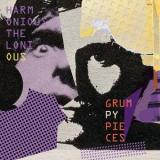
Mit Grumpy Pieces kehrt der Düsseldorfer Musiker Harmonious Thelonious alias Stefan Schwander mit einem Werk zurück, das seine langjährige Klangästhetik präzise destilliert und zugleich spürbar aufreibt. Wieder verbinden sich Pan-Afrikanische und Nahöstliche Rhythmuskonzepte, minimalistische Wiederholungsstrukturen und reduzierter Elektronik-Einsatz zu einem hypnotischen Sound - diesmal jedoch rauer, trockener und offener für Brüche als zuvor. Die acht Stücke wirken wie unter Spannung gesetzt: Melodien schaben über kantige Bassfundamente, scharfe Snare-Schläge durchschneiden das Gefüge, und trotz des klaren Groove-Fokus ist ständig ein nervöses Knistern präsent. Grumpy Pieces reflektiert eine Gegenwart voller politischer und gesellschaftlicher Reibung - ohne explizite Kommentare, aber mit einer Musik, die Reibung selbst zum Gestaltungsmittel macht. Während die A-Seite vergleichsweise direkt beginnt, öffnet sich die B-Seite zunehmend dem kontrollierten Zerfall, bis der finale Track "Dissolving" den Titel programmatisch umsetzt. Entstanden ist das Album in Schwanders Düsseldorfer Studio - intuitiv, unmittelbar, ohne große Bildschirm-Arrangements, eng verwoben mit seiner live-erprobten, tranceartigen Arbeitsweise. Grumpy Pieces ist kein Bruch, sondern eine Zuspitzung: ein kraftvoll verdichtetes, körperliches und zugleich unruhiges Album, das die charakteristische Handschrift von Harmonious Thelonious schärft. Tanzmusik mit Widerstand - und Biss.
out of Stock
Last delivered 65 days ago available to reorder, subject to availability
'Devotional music and its devotees all do a bit of "buying in"; that while one's on the ground reality may appear anything but celestial, through this music, one can reach ecstatic space, ecstatic peace. However, devotional music is not solely concerned with a skyward glance - what does it look like to raise up the rust, look upon fractured branches, gaze at the density of a low fog across a field? Instead of us looking up at the land, what if the land was looking back at us? Old Saw brings together a brigade of New England silt sifters to raise up the land not as excavators, but as preparators. Tending and caring for the simple mess that our world discards. Throughout Country Tropics four pieces, the crew stretches and bends chords to their resting place before setting forth towards a new one. Fiddle drone, wistful tape loops of pedal steel, pipe organ hums, and clattering bells call us to scenes of observation, a water tower, a mechanical bull rental agency, a back porch, a taxidermy shop, a local church choir, a garden with singing vines, voltage hum of the electric fence on Pulp mill bridge road.
'The funny thing about devotion is the absence of sight, of source. We place trust in the guide or guides to bring us to a place of seeing, feeling, and hearing. The music on Country Tropics calls out to those in search of such places, but also doesn't demand we conjure some fantastical, celestial vision of understanding. Rather, Old Saw points our gaze downward towards the terrafirma unconsidered, and guides our hands into the dirt.'
out of Stock
Last delivered 65 days ago available to reorder, subject to availability
Drone returns for his fourth release on his Evil Sky imprint with Normal Ways, a 4-track EP that further pushes the boundaries of bass-heavy music. The EP blends 2-step, breaks, and dubstep, showcasing Drone’s ever-evolving sound while staying true to his distinctive style.
Opening with Ralph’s Theme, a euphoric breaks-driven track, Drone explores a more melodic and emotional side of his production with soaring synths and vocal chops.
Blurred Vision follows, a bass-heavy 2-step anthem with powerful low-end and driving drums that capture Drone’s signature intensity.
Atom Bomb is a dubstep weapon, a club-focused track loaded with hard-hitting bass and all the weight you expect from Drone’s productions.
Closing out the EP is the title track, Normal Ways — a stripped-back, weighty cut with a deep sub, vocal chops, and grooving percussion, marking a return to a more minimalistic yet dynamic sound. Normal Ways sees Drone push forward into new sonic territories while maintaining his signature style, making this EP another standout release on Evil Sky.
out of Stock
Last delivered 66 days ago available to reorder, subject to availability
,Spaghetti Circus" ist die legendäre Dancefloor-Hymne aus dem Jahr 2009 des Produzentenduos Still Going (Olivier ,Liv" Spencer und Eric ,Dunks" Duncan), die auf dem legendären Label DFA Records erschienen ist. Die 12"-Vinyl-Veröffentlichung enthält außerdem den Balearic-Favoriten ,Untitled Love" mit Reggie Watts. Der ursprüngliche 8-minütige Track ist bekannt für seine elastische, gitarrengetriebene Disco-Energie und seine treibenden 127 BPM. ,,Spaghetti Circus` versetzt dich mit seiner Peak-Time-Dancefloor-Dynamik mitten ins Geschehen. Ein hypnotisch kraftvoller Groove, der dich mit seiner repetitiven Bassline in seinen Bann zieht - der Song ist ein treibender Sprung in einen dunklen Disco-Schacht, dessen tranceartige Wiederholungen absolut und dramatisch magnetisch wirken."
out of Stock
Last delivered 30 days ago available to reorder, subject to availability