LTD CRYSTAL CLEAR EDITION
Electronic pop quartet Ladytron announce their highly anticipated seventh studio album "Time"s Arrow". Crystalline melodies enveloped in icy textures and rippling arpeggios, shoegaze, disco, and industrial sounds that combine in their signature electro pop style. Forming in Liverpool in the late 90s, Ladytron"s debut album "604" was released a year ahead of 2002"s "Light & Magic in 2005 - "a quantum leap record" said Pitchfork. The group were lauded as leaders of the new electro pop and electroclash scenes then flourishing, and "Light & Magic" went on to be influential, for both independent and mainstream electronic pop music which followed.
Поиск:disc o magic
Все
- A1: Naomi Akimoto - Bewitched (Are You Leaving Soon) (Are You Leaving Soon)
- A2: Atsuko Nina - Tonkachi
- A3: Miho Fujiwara - Heartbeat
- A4: Miharu Koshi - Scandal Night
- B1: Chu Kosaka - Shirakechimauze
- B2: Teresa Noda - Tropical Love
- B3: Makoto Matsusa - Business Man (Part 1)
- B4: Susan - Ah! Soka
- C1: Yukako Hayase - Suiyoubi Madeni Shinitaino
- C2: Parachute - Kowloon Daily
- C3: Hiroyuki Namba - Tropical Exposition (Who Done It? Version)
- C4: Pizzicato Five - Boy Meets Girl
- D1: Mari Iijima - Love Sick
- D2: 1986 Omega Tribe - Cosmic Love
- D3: Osamu Shoji - Pub Casablanca
- D4: Chiemi Manabe - Untotooku
Light in the Attic’s Pacific Breeze series has supplied the world’s growing legions of Japanese music fans with an expertly curated selection of the most sought-after City Pop recordings—the mesmerizing and nebulous genre of Japanese bubble-era music of the ‘70s-’80s that encompasses AOR, R&B, jazz fusion, funk, boogie and disco. These familiar sounds are spun through the unique lens of optimistic, cosmopolitan fantasy colored by Japan’s affluence at the time. Much of the music has previously been nearly impossible to acquire outside of Japan and continues to captivate listeners with its unique blend of groove-laden escapism, even birthing wholly new genres such as Vaporwave.
Pacific Breeze 3: Japanese City Pop, AOR & Boogie 1975-1987 marks the latest chapter in the famed series and features holy grails plus under-the-radar rarities. The collection bursts at the seams to reveal some of the greatest Japanese tracks ever laid to tape, pushing towards the edge of City Pop to reveal glimmers of the next waves of styles to spring forth from the country’s creative minds. The appearance of Pizzicato Five hint at the emergence of Shibuya-kei while the influence of hip hop and electro as an emerging global trend are also evident here through the prevalence of heavier programmed drum beats on tracks such as “Heartbeat” by Miho Fujiwara.
This volume of Pacific Breeze, like its predecessors, is a female-forward offering with many tracks being voiced by women who would become household names in Japan as actresses and pop idols. Their songs here subvert the norm and brim with an innovative spirit that shatters gender roles in favor of sonic transcendence. Techno-pop classics from Susan, Miharu Koshi and Chiemi Manabe sit alongside sublime funk from Atsuko Nina and Naomi Akimoto while Teresa Noda slides into the mix with a sultry reggae jam. The genre span is stretched wider with hypnotic jazz fusion by Parachute and Hiroyuki Namba, a synthesizer fantasy from Osamu Shoji, and magnetic pop by Makoto Matsushita and Chu Kosaka.
Although not front and center, the visionary members of Yellow Magic Orchestra are still very present on Pacific Breeze 3, with Haruomi Hosono, Ryuichi Sakamoto, and Yukihiro Takahashi taking up producer and musician roles on many of these tracks. Pacific Breeze 3 serves up a captivating musical journey that adds an essential chapter to the iconic compilation series.
Tracklist:
Naomi Akimoto - Bewitched (Are You Leaving Soon), Atsuko Nina - Tonkachi, Miho Fujiwara - Heartbeat, Miharu Koshi - Scandal Night, Chu Kosaka - Shirakechimauze, Teresa Noda - Tropical Love, Makoto Matsushita - Business Man Pt. 1, Susan - Ah! Soka, Yukako Hayase - Suiyoubi Madeni Shinitaino, Parachute - Kowloon Daily, Hiroyuki Namba - Tropical Exposition (Who Done It? Version), Pizzicato Five - Boy Meets Girl, Mari Iijima - Love Sick, 1986 Omega Tribe - Cosmic Love, Osamu Shoji - Pub Casablanca, Chiemi Manabe - Untotooku
"Hungarian guitarist Gabor Szabo (1936-82) issued only three live recordings during his lifetime. Significantly, the first of these, The Sorcerer (1967), remains the most popular album in the guitarist’s all-too abbreviated discography. But there were also More Sorcery (1968) and Gabor Szabo Live with Charles Lloyd (1974), offering Szabo totally in his element and at his bewitching best.
Several more of Szabo’s concert recordings have surfaced in the intervening years, including this one, superbly captured for radio broadcast live in 1976 at the 600-seat Agora Ballroom in Cleveland, Ohio. It is a revelation. There is a sense here that concert patrons may have been hearing an altogether different Gabor Szabo than record buyers.
For one thing, Szabo is heard fronting what is likely his own group, rather than an army of studio musicians. In 1976, Szabo was leading a tremendous quartet with George Cables (or Joanne Grauer) on piano, Tony Dumas on bass and Sherman Ferguson on drums. Szabo had not had a band with this much jazz clout since his famed quartet with Jimmy Stewart in 1967-68 – and it is a union worth savoring: Szabo’s records during this period were light, at best, on jazz.
It’s unclear if any of these musicians are on the Agora date, but as Dumas’s “It Happens” opens the program, it’s a good bet, at least, that the bassist is on board here. But as Szabo’s ’76 quartet is not known to have recorded a studio record, Live in Cleveland is the closest thing to what a mid-seventies Szabo jazz album would sound like.
Gone, are the strings, vocals and concessions to commercial consideration so prevalent on so many of Szabo’s studio records at the time. What is present, though, is fine craftsmanship, tremendous interplay, and the exciting improvisation that good jazz always yields.
This particular concert was part of Sansui’s “New World of Jazz,” a series of 13 hour-long jazz concerts recorded at Cleveland’s iconic Agora Ballroom and broadcast over 40 FM radio stations. The series was sponsored by Sansui Electronics, a Japanese manufacturer of audio and video equipment, which previously sponsored a similar series of rock concerts recorded at the Agora as well.
Sansui was promoting its matrix QS 4-channel sound system – offering, what was considered at the time, superior diagonal separation and stereo compatibility. The firm, partnering with Agora Ballroom and Agency Recording Studio owner Hank LoConti (1929-2014), was looking to take advantage of what they rightly felt was the then-current jazz renaissance.
Each show’s 16-track master tape was mixed through the Sansui QS 4-channel encoder,” according to an August 1976 Billboard article detailing the arrangement, “for distribution to the 40 FM stations throughout the United States that bought the series” – allowing for three commercial spots for local dealers to advertise."
The recording is available for the first time on CD and VINYL. Mastering by grammy-nominated Jessica Thompson.
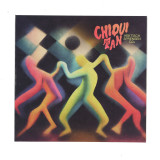
Terra Magica Rec. first 7’’ release „Chiqui Tan“ by the label heads Hektisch Sprengen DJs will be limited to 250 copies. The A-side hits the listener with some 1980s early Electronic-Downtempo-Cumbia-Colombian-Venezuelan-Tablemountain-Dub-Grooves. This reminiscence is leading to an extra full blown up 21st century Bass-Queen alert. And these HSDJ dials hit you into a stripped naked sample of Nigerian-Swedish DJ-dentist-mainstream-star Dr. Alban and his Eurotrash-90s-Pophouse-anthem “No Hash Hash, No Cocaine”. This is for sure no “Ottonormal”-90s-revival thing!
On the flip side Hektisch’s haptic wood razzle move covers the classic 1994-Liquid-Deep-Netherlands-Trance-House-Track “Paper Moon” by 51 Days which back then sampled the rare 1972-MPB-Funk-Cover-Version of Carol Kings “Corazón”. Guess what! It drops like a late 1990s-Ed-DMX-London-classic gone Electroboogie-Miamibass-Break with a SH101-baseline and Sprengen’s take on Spanish-90s-Trance-Vocals. Watch out 4 TERRAMs “Asi me gusta” title caps series as well! Trigger warning: That hidden Sequential Circuit Sixtrack loves you like a windy horse on Acid. Loads to experience on this little innocent wax disc!
Daddario debuts at Ragoo Records with the 'Quinto Quarto' EP, a record that fuses beatmaking attitude with funk, disco and electro vibes. 'Quinto Quarto', which means entrails in Italian, is the result of his deep research about roots. From the broken funk of 'Shift' to the heavy percussions of 'Space Lou', each track is full of grooves and details that showcase Daddario's skills on the MPC as well as on synthesizers. The project is enriched by collaborations with percussionist JZP, guitarist Lorenzo Mantovani, bassist Michele Freguglia, trumpeter Matteo Pontegavelli, and two remixes from Astratto and The Mechanical Man.
It's often a good sign when one of your favorite musicians steps out from beyond the studio walls and past the stage lights to fulfill their own inspired and creative intent. And Caíto Sánchez is not just a favorite musician, but as his lengthy resume as a sideman shows, he's also one of your favorite musicians' favorite musicians, constantly working without fanfare as an essential ingredient in a larger music feast. Sánchez earned his stripes in the 2000s and beyond as a key session player and an integral touring band member, a quiet standout even among many oversized personalities. A dedicated drummer born in Panama and living in New York, Sánchez is quite capable of keeping time for legends like Charles Bradley, Lee Fields, and Brian Jackson, as well as supporting eclectic outfits like the live groups of Quantic, Chico Mann and Midnight Magic. For all the players who have shared a stage or studio with him it comes as no real surprise, and frankly as a long overdue development, that such a unique artistic force is finally stepping into the spotlight.
With this debut single we get a glimpse into Sánchez's creative and artistic personal space, more precisely a multi-instrumental discipline of not only drums, but also bass, guitar and lead voice. It's an intensely intimate recording debut, a fantastic studio concoction born from the heart of its creator, and later fostered and mixed down by the talented hands of NYCT and Daptone veteran Victor Axelrod. The defining result on this initial 7-inch offering are two heavy psychedelic and moody nuggets of rock enespañol, a decidedly new wave of sounds and style that are quite capable of shining on their own.
The Man Called Love Drop is back with his highly anticipated 3rd release on his sell out series of rework disco rockets.
His deeply enchanted, almost spiritual form of mutant disco packed full of never ending grooves and heavy delays conjures up fond memories of early Moodymann jams. And his releases have attracted plays and support from discerning jocks around the globe such as Gilles Peterson, Art Of Tones, Horse Meat Disco, JKriv, Dicky Trisco and many many more.
A digger's desire for an original source blended together with a dancer's feel for the floor produces a powerful magic spell that is ready to be let loose on your dance floor.
So let's go!
This unique and unconventional set combines a 7“ single with two yet unreleased songs by NON BAND and a photo magazine, both of which provide essential evidence of the tsunami-like tidal wave of the Japanese post punk movement.
The two featured songs VIBRATION ARMY and SILENCE-HIGH-SPEED perfectly capture the charismatic formative years of NON BAND, with their sound emerging as an entirely unique mix of driving punk veering from No Wave and Folk into raw post punk mutations.
Both songs were committed to tape in 1981 at the legendary facilities of Mod Studio, Tokyo, by engineer Yasushi Konichi when the band recorded their eponymous debut album which was issued via Tokyo‘s Telegraph Records back in 1982. Although both songs were miraculously omitted from the final album. Like all of Non Band recordings they have withstood the test of time thanks to their mix of direct, experimental yet disciplined rawness and studio magick.
The magazine features a text and a careful selection of photos from the vast archives of photographer Yuichi Jibiki, who was also the man behind the label Telegraph Records. Since 1978 Yuichi Jibiki was intimately involved with the early Japanese punk scene as their photographer, manager and organizer. He could be found very much in the midst of all NON BAND live shows between 79-82 as well as pulling the strings behind the scenes.
After the reissue edition of NON BAND‘s debut album via Stefan Schneider‘ TAL imprint in 2017 the label is excited to be able to offer another key release showcasing the creative peak of Japanese Post Punk.
Music by Non Band. Recorded by Yasushi Konishi in 1981 at Mod Studio, Tokyo.
Mastering by Detlef Funder at Paraschall, Düsseldorf 2022
Photographs by Yuchi Jibiki 1979-82
There’s something almost magical about a great
collaboration. When two artists are able to
synchronize on an infinitesimal level, where each
note and breath and strum aligns to create a
perfect whole. The Colorist Orchestra know how to
do this - in fact, they’ve made it their speciality. Since 2013, the Belgian duo (comprised of multiinstrumentalists and long-time friends Aarich Jespers and Kobe Proesmans) have made a
career out of reimagining the discographies of a wide array of artists, using their background in
pop, electronic, and world music to transform the songs. Recently, they have reconnected with acclaimed
Icelandic singer-songwriter Emilíana Torrini, with whom they first collaborated in 2018, on the album, ‘The Colorist Orchestra & Emilíana Torrini’. This time, however, the project exceeded even
their own expectations. In 2023, The Colorist Orchestra and Emilíana
release ‘Racing The Storm’, a joint record tha takes both artists to towering new heights. An album of all original material, it melds The Colorist Orchestra’s classical chamber pop roots with the
power and fragility of Emilíana’s understated
songwriting. LP pressed on 140g white vinyl in 350gsm spined
sleeve on silver foil board with 200gsm reverse
board inner sleeve
With his new album, Gecko Turner confirms that he is a standout artist in the global groove scene, a must for the outernational sounds aficionados.
Somebody From Badajoz is the fifth studio album in his much lauded discography and his first in seven years, eagerly anticipated by both his fans and himself: "this business of dedicating yourself to music and making songs... it's a long game."
With the release of his first two, remarkable, albums, Guapapasea! (2003) and Chandalismo Ilustrado (2006), Gecko started cultivating what one astute journalist defined as Afro-maduran soul—the "maduran" bit referencing Extremadura, a region in central-western Spain.
Badajoz, Gecko's birthplace, is the biggest city in the area, on the border with Portugal, by the Guadiana River. It is a place that oozes history, where there is constant movement at the border, and people's character is friendly and open-minded with foreign habits.
Gecko's Afro-maduran soul isbuilt on Afro-American music and drenched in Brazilian, African, Latin American and Jamaican sounds. There are also echoes of a youth marked in equal parts by our man's admiration for the Beatles and the flamenco that could be heard everywhere in Badajoz in the seventies. It makes for a singular sound and a musical language of its own—spicy, succulent, full of nuances, but with a very personal flavour.
The album opens with the Nigerian talking drums of Twenty-twenty Vision, (neo) soul in a magical falsetto, carried by a sumptuous orchestral arrangement with a cinematic flavour: "I'd been thinking about doing something called 'Twenty-twenty Vision' for some time, making a play on words with the vision we have of the world after the year 2020 and the medical expression, which, in ophthalmological terms, means 'normal or complete vision.' Beyond that particular song, I think that's the mood of the album: a look at society in the twenties of the 21st century and the feelings and demons it produces."
It's followed by De Balde, a very special song born from a posthumously discovered lyric by the great writer Carlos Lencero, a regular collaborator of Camarón, Pata Negra, and Remedios Amaya, and also from Badajoz. While conceived as a fandango, Gecko has moulded it into his sound in such a seamless way it now seems as if the words could only have been written to be embraced by the percussion, brass, and backing vocals heard on the album. It's the only lyric on Somebody From Badajoz not written by Turner, still it sits rather comfortably with the rest, sharing the same emotivity and sensitivity, as well as the trademark humour and irony.
Other tracks see more protagonism for the rhythm.The beat-driven Ain't No Fun Preachin' to the Choir features Gecko's vocals walking the thin line between singing and talking over a phenomenal afro-disco-funk-infused trailblazer. In Am I Sad? it's impossible to not bob your head to the queen of Papatosina's mongrel rhythm, as close to the banks of the Guadiana river as it is to the shores of the Mississippi. Qué Siesta Tan Buena, He Babeao Y To! is an ode to the snooze in true Afro-Maduran fashion. And in Come And Try, the Caribbean influence is evident—lovers' rock that invites you to dance in good company.
In these songs, and throughout the album, for that matter, the musicians accompanying Gecko, who himself plays many of the instruments as well, shine brightly. All hailing from Extremadura, Javi Mojave (percussion), Álvaro Fdez 'Dr. Robelto' (bass), and Rafa Prieto (guitar) have been carrying him with delicate forcefulness since he started out as a solo artist. At the same time, the wonderful and essential voices of Deborah Ayo, Astrid Jones, Fani Ela Nsue, and Miriam Solís give the album a sunny variety of colours. And there are many more—a sensational group of musicians contributes dazzling harmonic bursts to many of the songs. The palette of sounds is very diverse and rich in textures and nuances, including, for example, the ngoni, bells, and various repurposed kitchen utensils.
The groove is always around, moving between the magical border sound of Everybody Knows Somebody From Badajoz and Little Dose, the silky soul of The Sibariteo Appreciation Society, and the exultant celebration of End Of The World (which surprisingly sees Gecko turning to the occasional use of autotune), a piece that could be used for the final credits of a Monty Python film and, in fact, closes the album.
Gecko Turner has done it again with Somebody From Badajoz, looking to the future without losing sight of the roots. In times of upheaval all over the globe, when people are looking for purity, he delivers a formidable piece of work: risky, optimistic in spite of everything, and with a decidedly bastard sound. Let's rejoice.
- 1: Bewitched (Are You Leaving Soon)
- 2: Tonkachi
- 3: Heartbeat
- 4: Scandal Night
- 5: Shirakechimauze
- 6: Tropical Love
- 7: Business Man Pt. 1
- 8: Ah! Soka
- 9: Suiyoubi Madeni Shinitaino
- 10: Kowloon Daily
- 11: Tropical Exposition (Who Done It? Version)
- 12: Boy Meets Girl
- 13: Love Sick
- 14: Cosmic Love
- 15: Pub Casablanca
- 16: Untotooku
Pink Vinyl[67,19 €]
- The third chapter in the acclaimed Pacific Breeze series! - Artwork by renowned illustrator Hiroshi Nagai - Compiled by Yosuke Kitazawa and Mark "Frosty" McNeill (dublab) - Newly remastered audio - 2xLP housed in a deluxe wide spine jacket with full color inner sleeves and custom die-cut OBI - Extensive artist bios by Yosuke Kitazawa // Light in the Attic's Pacific Breeze series has supplied the world's growing legions of Japanese music fans with an expertly curated selection of the most sought-after City Pop recordings-the mesmerizing and nebulous genre of Japanese bubble-era music of the '70s-'80s that encompasses AOR, R&B, jazz fusion, funk, boogie and disco. These familiar sounds are spun through the unique lens of optimistic, cosmopolitan fantasy colored by Japan's affluence at the time. Much of the music has previously been nearly impossible to acquire outside of Japan and continues to captivate listeners with its unique blend of groove-laden escapism, even birthing wholly new genres such as Vaporwave. Pacific Breeze 3: Japanese City Pop, AOR & Boogie 1975-1987 marks the latest chapter in the famed series and features holy grails plus under-the-radar rarities. The collection bursts at the seams to reveal some of the greatest Japanese tracks ever laid to tape, pushing towards the edge of City Pop to reveal glimmers of the next waves of styles to spring forth from the country's creative minds. The appearance of Pizzicato Five hint at the emergence of Shibuya-kei while the influence of hip hop and electro as an emerging global trend are also evident here through the prevalence of heavier programmed drum beats on tracks such as "Heartbeat" by Miho Fujiwara. This volume of Pacific Breeze, like its predecessors, is a female-forward offering with many tracks being voiced by women who would become household names in Japan as actresses and pop idols. Their songs here subvert the norm and brim with an innovative spirit that shatters gender roles in favor of sonic transcendence. Techno-pop classics from Susan, Miharu Koshi and Chiemi Manabe sit alongside sublime funk from Atsuko Nina and Naomi Akimoto while Teresa Noda slides into the mix with a sultry reggae jam. The genre span is stretched wider with hypnotic jazz fusion by Parachute and Hiroyuki Namba, a synthesizer fantasy from Osamu Shoji, and magnetic pop by Makoto Matsushita and Chu Kosaka. Although not front and center, the visionary members of Yellow Magic Orchestra are still very present on Pacific Breeze 3, with Haruomi Hosono, Ryuichi Sakamoto, and Yukihiro Takahashi taking up producer and musician roles on many of these tracks. Pacific Breeze 3 serves up a captivating musical journey that adds an essential chapter to the iconic compilation series.
- 1: Bewitched (Are You Leaving Soon)
- 2: Tonkachi
- 3: Heartbeat
- 4: Scandal Night
- 5: Shirakechimauze
- 6: Tropical Love
- 7: Business Man Pt. 1
- 8: Ah! Soka
- 9: Suiyoubi Madeni Shinitaino
- 10: Kowloon Daily
- 11: Tropical Exposition (Who Done It? Version)
- 12: Boy Meets Girl
- 13: Love Sick
- 14: Cosmic Love
- 15: Pub Casablanca
- 16: Untotooku
Black Vinyl[63,82 €]
- The third chapter in the acclaimed Pacific Breeze series! - Artwork by renowned illustrator Hiroshi Nagai - Compiled by Yosuke Kitazawa and Mark "Frosty" McNeill (dublab) - Newly remastered audio - 2xLP housed in a deluxe wide spine jacket with full color inner sleeves and custom die-cut OBI - Extensive artist bios by Yosuke Kitazawa // Light in the Attic's Pacific Breeze series has supplied the world's growing legions of Japanese music fans with an expertly curated selection of the most sought-after City Pop recordings-the mesmerizing and nebulous genre of Japanese bubble-era music of the '70s-'80s that encompasses AOR, R&B, jazz fusion, funk, boogie and disco. These familiar sounds are spun through the unique lens of optimistic, cosmopolitan fantasy colored by Japan's affluence at the time. Much of the music has previously been nearly impossible to acquire outside of Japan and continues to captivate listeners with its unique blend of groove-laden escapism, even birthing wholly new genres such as Vaporwave. Pacific Breeze 3: Japanese City Pop, AOR & Boogie 1975-1987 marks the latest chapter in the famed series and features holy grails plus under-the-radar rarities. The collection bursts at the seams to reveal some of the greatest Japanese tracks ever laid to tape, pushing towards the edge of City Pop to reveal glimmers of the next waves of styles to spring forth from the country's creative minds. The appearance of Pizzicato Five hint at the emergence of Shibuya-kei while the influence of hip hop and electro as an emerging global trend are also evident here through the prevalence of heavier programmed drum beats on tracks such as "Heartbeat" by Miho Fujiwara. This volume of Pacific Breeze, like its predecessors, is a female-forward offering with many tracks being voiced by women who would become household names in Japan as actresses and pop idols. Their songs here subvert the norm and brim with an innovative spirit that shatters gender roles in favor of sonic transcendence. Techno-pop classics from Susan, Miharu Koshi and Chiemi Manabe sit alongside sublime funk from Atsuko Nina and Naomi Akimoto while Teresa Noda slides into the mix with a sultry reggae jam. The genre span is stretched wider with hypnotic jazz fusion by Parachute and Hiroyuki Namba, a synthesizer fantasy from Osamu Shoji, and magnetic pop by Makoto Matsushita and Chu Kosaka. Although not front and center, the visionary members of Yellow Magic Orchestra are still very present on Pacific Breeze 3, with Haruomi Hosono, Ryuichi Sakamoto, and Yukihiro Takahashi taking up producer and musician roles on many of these tracks. Pacific Breeze 3 serves up a captivating musical journey that adds an essential chapter to the iconic compilation series.
- A1: Breezeplate (2022 Remaster) 03 44
- A2: Squarewave Colorwheel (2022 Remaster) 04 33
- A3: Toypieceplate (2022 Remaster) 03 33
- A4: Dodecatheon (2022 Remaster) 04 21
- A5: Sunsculpture One (2022 Remaster) 03 10
- B1: Sienna (2022 Remaster) 02 42
- B2: Kekker (2022 Remaster) 04 45
- B3: Gauss (2022 Remaster) 02 30
- B4: Billionwatt (2022 Remaster) 03 44
- B5: Continentsunderclouds (2022 Remaster) 03 08
- B6: Sunsculpture Two (2022 Remaster) 04 30
»Holo« by the US-American three-piece Kiln, first released in 1998, is one of those rare records that managed to carve out a niche of its own while also building bridges to variety of genres like Chicago-style post-rock, the ambient mysticism of projects like Rapoon or the music made at the intersection of shoegaze, and electronic music in the late 1990s. Lush textures, subtle rhythms, jazzy inflections and electronic experimentation seamlessly blend into each other over the course of the eleven tracks. This reissue through the German label Keplar makes the fully revised version, self-released by the group in 2007 under the name »Holo re/lux,« available on vinyl for the very first time. »Twenty-five years later this newly mastered vinyl edition is evidence that the sound of ›Holo‹ continues to attract like-minded listeners,« says member Clark Rehberg III. »Which on many levels means that our mission was successful.«
Rehberg had embarked on this mission together with Kevin Hayes and Kirk Marrison in 1993. They had first worked together under the name Fibreforms as a live trio that used treated guitars, kit drums, and tapes of found sound to explore the balance between band composition and recording experiments, while Marrison made heavy use of the Akai S612 sampler as a fabricating strategy with the project Waterwheel. »Kiln seemed to encapsulate the evolution and melding of those previous approaches to one that insisted on the continual opening up of the compositional process, allowing more of the mystery that can be discovered through studio experiments—and accidents—to become important elements of creating our music,« says Rehberg of the trio that is still going strong after three decades. »The word Kiln implies heat and transformation, an attitude that we apply to every sound we use—we begin with notes and performance and then mosaic with shape and colour.«
»Holo« followed up on the trio’s debut self-titled EP that had been recorded in the summer of 1996. »That same year, during a lull in our collabs, Kirk began building pieces on a low-memory Mac using an early 8-channel DAW,« explains Rehberg. Enchanted by the unprecedented fidelity and energy of those recordings, the three reconvened to build upon them and make more music in that manner. »I’d say our intention was no different than any other time: create something immersive and compelling: dense melodic blasts of uniquely constructed but ultimately accessible audio moments.« The group worked individually and in pairs for about 18 months while being spread across the United States. »We poured everything into it that we had at the time, working dead-end jobs by day and on audio in every other open moment. I remember the struggle of that process, but also the pure joy as we pulled down countless moments of magic while the pieces took shape.«
Rehberg says that he still hears »a time-stamp of those efforts and the belief that we were creating a special audio experience« when listening back to »Holo,« a record the band itself chose to revise almost a decade after its initial release. »Ultimately we just felt those pieces needed more impact and we had the tools and ability to make that happen,« he explains. 16 years after that and a quarter of a century after it first introduced Kiln as a force to be reckoned with, the remastered version feels indeed timeless. It is both a snapshot of the first extensive album project by a group whose bond is still »diamond strong,« as Rehberg puts it, and a record that continues to sound fresh, if not visionary also today.
All tracks composed and recorded by Kevin Hayes, Kirk Marrison, Clark Rehberg III.
Originally released on Thalassa in 1998.
Remaster by Stephan Mathieu. Vinyl cut by LUPO.
Cover art by Kirk Marrison & Clark Rehberg III.
Text by Kristoffer Cornils.
repress, blue marbled limited version
The label imprint of the beloved Berlin based club Paloma delivers its eighth release, and it was created by none other than a vogueing encyclopedia of musical and club culture knowledge (plus a cherished Paloma resident DJ). The disco professor: Daniel Wang.
It is his first original production under his own name in many years, and you can easily tell that this is not a tool to join in with dancefloor conformity (after all, his first album was called Idealism for a reason). Daniel Wang had already evolved from innocently enthusiastic sampling to synth wizardry during the heyday of his legendary Balihu label, and while studying the masters, he became one himself.
DSDN is an ode to nocturnal Berlin and its party community, a city that never left the centre of international attention for its vital and influential scene. Daniel Wang is a part of it since twenty years, and he was influenced by what he experienced as much as he left his mark on many nights, both as a DJ, and as a producer.
Of course, this release follows the traditional structure of a Disco EP by using a main tune DSDN with complementing dubs and instrumentals. Four to be exact, because four is the magic number with this format. DSDN reflects the internationality of the clubs across town in English and German words and pays homage to all the districts, and it effortlessly manages to unite sounds of both 80s NYC and Italo disco, 90s NYC and Italo house, synthpop and rap before it became too successful, balearic vibes before they became a mere excuse, and then it just majestically unfolds into both a charming summer hit and a complex opus magnum, but all an aural sunbeam that blows a kiss to those who emerge from recent sensations in clubs, bars, parks, and streets. Alone or together, happy or sad, resolute or irresolute, tired or energized, or all at once.
Light in the Attic’s Pacific Breeze series has supplied the world’s growing legions of Japanese music fans with an expertly curated selection of the most sought-after City Pop recordings—the mesmerizing and nebulous genre of Japanese bubble-era music of the ‘70s-’80s that encompasses AOR, R&B, jazz fusion, funk, boogie and disco. These familiar sounds are spun through the unique lens of optimistic, cosmopolitan fantasy colored by Japan’s affluence at the time. Much of the music has previously been nearly impossible to acquire outside of Japan and continues to captivate listeners with its unique blend of groove-laden escapism, even birthing wholly new genres such as Vaporwave.
Pacific Breeze 3: Japanese City Pop, AOR & Boogie 1975-1987 marks the latest chapter in the famed series and features holy grails plus under-the-radar rarities. The collection bursts at the seams to reveal some of the greatest Japanese tracks ever laid to tape, pushing towards the edge of City Pop to reveal glimmers of the next waves of styles to spring forth from the country’s creative minds. The appearance of Pizzicato Five hint at the emergence of Shibuya-kei while the influence of hip hop and electro as an emerging global trend are also evident here through the prevalence of heavier programmed drum beats on tracks such as “Heartbeat” by Miho Fujiwara.
This volume of Pacific Breeze, like its predecessors, is a female-forward offering with many tracks being voiced by women who would become household names in Japan as actresses and pop idols. Their songs here subvert the norm and brim with an innovative spirit that shatters gender roles in favor of sonic transcendence. Techno-pop classics from Susan, Miharu Koshi and Chiemi Manabe sit alongside sublime funk from Atsuko Nina and Naomi Akimoto while Teresa Noda slides into the mix with a sultry reggae jam. The genre span is stretched wider with hypnotic jazz fusion by Parachute and Hiroyuki Namba, a synthesizer fantasy from Osamu Shoji, and magnetic pop by Makoto Matsushita and Chu Kosaka.
Although not front and center, the visionary members of Yellow Magic Orchestra are still very present on Pacific Breeze 3, with Haruomi Hosono, Ryuichi Sakamoto, and Yukihiro Takahashi taking up producer and musician roles on many of these tracks. Pacific Breeze 3 serves up a captivating musical journey that adds an essential chapter to the iconic compilation series.
Tracklist:
Naomi Akimoto - Bewitched (Are You Leaving Soon), Atsuko Nina - Tonkachi, Miho Fujiwara - Heartbeat, Miharu Koshi - Scandal Night, Chu Kosaka - Shirakechimauze, Teresa Noda - Tropical Love, Makoto Matsushita - Business Man Pt. 1, Susan - Ah! Soka, Yukako Hayase - Suiyoubi Madeni Shinitaino, Parachute - Kowloon Daily, Hiroyuki Namba - Tropical Exposition (Who Done It? Version), Pizzicato Five - Boy Meets Girl, Mari Iijima - Love Sick, 1986 Omega Tribe - Cosmic Love, Osamu Shoji - Pub Casablanca, Chiemi Manabe - Untotooku
With his new album, Gecko Turner confirms that he is a standout artist in the global groove scene, a must for the outernational sounds aficionados.
Somebody From Badajoz is the fifth studio album in his much lauded discography and his first in seven years, eagerly anticipated by both his fans and himself: "this business of dedicating yourself to music and making songs... it's a long game."
With the release of his first two, remarkable, albums, Guapapasea! (2003) and Chandalismo Ilustrado (2006), Gecko started cultivating what one astute journalist defined as Afro-maduran soul—the "maduran" bit referencing Extremadura, a region in central-western Spain.
Badajoz, Gecko's birthplace, is the biggest city in the area, on the border with Portugal, by the Guadiana River. It is a place that oozes history, where there is constant movement at the border, and people's character is friendly and open-minded with foreign habits.
Gecko's Afro-maduran soul isbuilt on Afro-American music and drenched in Brazilian, African, Latin American and Jamaican sounds. There are also echoes of a youth marked in equal parts by our man's admiration for the Beatles and the flamenco that could be heard everywhere in Badajoz in the seventies. It makes for a singular sound and a musical language of its own—spicy, succulent, full of nuances, but with a very personal flavour.
The album opens with the Nigerian talking drums of Twenty-twenty Vision, (neo) soul in a magical falsetto, carried by a sumptuous orchestral arrangement with a cinematic flavour: "I'd been thinking about doing something called 'Twenty-twenty Vision' for some time, making a play on words with the vision we have of the world after the year 2020 and the medical expression, which, in ophthalmological terms, means 'normal or complete vision.' Beyond that particular song, I think that's the mood of the album: a look at society in the twenties of the 21st century and the feelings and demons it produces."
It's followed by De Balde, a very special song born from a posthumously discovered lyric by the great writer Carlos Lencero, a regular collaborator of Camarón, Pata Negra, and Remedios Amaya, and also from Badajoz. While conceived as a fandango, Gecko has moulded it into his sound in such a seamless way it now seems as if the words could only have been written to be embraced by the percussion, brass, and backing vocals heard on the album. It's the only lyric on Somebody From Badajoz not written by Turner, still it sits rather comfortably with the rest, sharing the same emotivity and sensitivity, as well as the trademark humour and irony.
Other tracks see more protagonism for the rhythm.The beat-driven Ain't No Fun Preachin' to the Choir features Gecko's vocals walking the thin line between singing and talking over a phenomenal afro-disco-funk-infused trailblazer. In Am I Sad? it's impossible to not bob your head to the queen of Papatosina's mongrel rhythm, as close to the banks of the Guadiana river as it is to the shores of the Mississippi. Qué Siesta Tan Buena, He Babeao Y To! is an ode to the snooze in true Afro-Maduran fashion. And in Come And Try, the Caribbean influence is evident—lovers' rock that invites you to dance in good company.
In these songs, and throughout the album, for that matter, the musicians accompanying Gecko, who himself plays many of the instruments as well, shine brightly. All hailing from Extremadura, Javi Mojave (percussion), Álvaro Fdez 'Dr. Robelto' (bass), and Rafa Prieto (guitar) have been carrying him with delicate forcefulness since he started out as a solo artist. At the same time, the wonderful and essential voices of Deborah Ayo, Astrid Jones, Fani Ela Nsue, and Miriam Solís give the album a sunny variety of colours. And there are many more—a sensational group of musicians contributes dazzling harmonic bursts to many of the songs. The palette of sounds is very diverse and rich in textures and nuances, including, for example, the ngoni, bells, and various repurposed kitchen utensils.
The groove is always around, moving between the magical border sound of Everybody Knows Somebody From Badajoz and Little Dose, the silky soul of The Sibariteo Appreciation Society, and the exultant celebration of End Of The World (which surprisingly sees Gecko turning to the occasional use of autotune), a piece that could be used for the final credits of a Monty Python film and, in fact, closes the album.
Gecko Turner has done it again with Somebody From Badajoz, looking to the future without losing sight of the roots. In times of upheaval all over the globe, when people are looking for purity, he delivers a formidable piece of work: risky, optimistic in spite of everything, and with a decidedly bastard sound. Let's rejoice.
BASSIST/COMPOSER PETROS KLAMPANIS LOOKS TO PAST AND FUTURE AS HE TRANSFORMS TRADITIONAL GREEK MUSIC WITH TORA COLLECTIVE
Unique instrumentation bridges Greek folkloric and modern jazz worlds, with Klampanis (bass, artistic direction), Areti Ketime (vocals), Thomas Konstantinou (oud, laouto), Giorgos Kotsinis (clarinet), Kristjan Randalu (piano), Ziv Ravitz (drums, electronics, co-production) and more.
Following up his acclaimed recent outings Rooftop Stories and Irrationalities, bassist and composer Petros Klampanis creates one of his most inventive musical settings to date with Tora Collective, his sixth album as a leader. For Klampanis, who grew up in Athens, Greece
surrounded by the confluence of Mediterranean and Balkan folk cultures, making music has always meant navigating cultural crossroads. With Tora Collective (“Tora”=“Now”) he puts traditional Greek music at the centre, even as he presents it from a bold new angle.
In addition to the two new originals “Disoriented” and “South By Southeast,” Klampanis and his compact hybrid jazz/Greek folk ensemble interpret popular Greek songs such as “Xehorismata,” “Sybethera,” “Hariklaki” and “Menexedes ke Zoumboulia.” These songs, Klampanis asserts, are “not just part of Greek cultural heritage or a fragment of the past, but also as part of the future: they live into the present, breathe into the ‘here and now,’ while constantly evolving in a dynamic state and in dialogue with contemporary music.”
“For me it’s a personal thing,” he says. “I want to reflect on what Greek music and culture offer the world. How can music from the Aegean to Epirus and from the Ionian Islands to Crete, meet and speak to the hearts and minds of musicians and audiences from different parts of the world, different traditions and backgrounds?”
To that end, Tora Collective draws on regional characteristics, as Klampanis explains: “Every region has a strong identity. In Epirus the clarinet is more prominent and the music has this slow, groovy, meditative vibe. The islands are lighter sounding, Macedonia is groovier, faster tempos and energetic dances. Music from Asia Minor or Istanbul is more sophisticated. Greeks often refer to Istanbul as ‘Poli,’ from Constantinopoli, so the songs from there are called ‘Politika.’”
There is magic in the clear and consistent voice of Areti Ketime throughout Tora Collective, as can also be said for the supremely voice-like articulation of Giorgos Kotsinis on clarinet. Ziv Ravitz, on drums and electronics, also plays a pivotal role as coproducer: “He added so much in the orchestration,” says Klampanis. “His knowledge of electronics, all these non-acoustic sounds and keyboards, treatments of the acoustic instruments, it’s all because of Ziv. He brought a new perspective on the whole thing.”
The string element in Tora Collective is also strong: in addition to Klampanis’ bass there is Thomas Konstantinou on oud and the traditional Greek laouto, as well as Kristjan Randalu (the pianist in Klampanis’ Irrationalities trio) providing an anchor and bringing Klampanis’ inventive arrangements into harmonic focus. Additional guests appear: Alexandros Arkadopoulos on clarinet for “Disoriented,” Laura Robles on percussion for “South by Southeast” and trumpeters Sebastian Studnitzky and Andreas Polyzogopoulos on “Milo Mou ke Mandarini” and “Hariklaki,” respectively. (“Milo Mou” is slated as a post-release bonus track.)
Using traditional Greek music to discover a common new voice, the project aims to build dialogue, spark creativity, cultivate respect for the past, pave a path forward, discover a new musical storytelling powerful enough to reach and touch audiences in many countries. This is an experiment that bridges worlds: the east and the west, the traditional and the modern, the nostalgic and the forward-looking, using the power of music and improvisation.
- A1: Back On The Road
- A2: Beats On A String
- A3: Come Down
- A4: Down Right Funk
- A5: Funky Magic
- A6: Back To The Ol Skool
- B1: My Streets On Fire
- B2: Ital Stew (Skeewiff Mix)
- B3: I Got U
- B4: Sunshine
- B5: Take It Back
- B6: We Love You Jb's
- C1: Ital Stew
- C2: Ancestors
- C3: Call Me
- C4: I Got U
- D1: New Day Comin
- D2: Sunshine 2K4
- D3: The Brothers
Green & Red Vinyl[33,15 €]
First time on vinyl, expanded version of Japan-only CD album from 2006! Now a double LP with unreleased tracks on audiophile grade colored vinyl (Disc 1: Opaque Baby Blue, Disc 2: Opaque Brown) The Jungle Bros embraced of a range of styles -- including house music, Afrocentric philosophy, a James Brown fixation, and of course, the use of jazz sample , on this reissue double LP Release on Colored Audiophile grade Vinyl , the I got U album is remastered and re-released with additional tracks .Michael Small (Mike Gee), Nathaniel Hall (Afrika Baby Bam), and Sammy Burwell (DJ Sammy B). Known as the pioneers of the fusion of jazz, hip-hop, and house music, they were the first hip-hop group to collaborate with a house-music producer. The trio released their debut album, Straight out the Jungle in July 1988. Their hip-house club hit single, "I'll House You" was added to the album in late-1988 reissues. Fostered by Kool DJ Red Alert, the Jungle Brothers success would pave the way for De La Soul, A Tribe Called Quest, and eventually the Native Tongues collective that they founded. Hip-Hop-House with a jazzy feel including "I Got U", a re-recorded "Sunshine" and four bonus tracks/versions. -- The Jungle Bros embrace of a range of styles -- including house music, Afrocentric philosophy, a James Brown fixation, and of course, the use of jazz samples -- _John Bush, All Music
Summertime sounds abound on the sixth Drum Chums disc, which comes lovingly dubbed and diced by our friendly Fruit Merchant Hidden Spheres.
Known globally for his free-flowing DJ sets, halcyon house hits and mastery of melody, Tom's been at the top of his game for time now - just check those releases on Rhythm Section and Scissor & Thread - and it's a pleasure to carry his drum sticks for this one. Cracking open his vault of top secret DJ tweaks, Spheres explores sweltering proto-house, tropical disco lilt and deepest waters across three floor-ready cuts.
The Fruit Merchant plucks something ripe from the Kalimba Tree on the A side, starting the party properly with joyous Afro-house jam 'Stolen'. Carnival-friendly drums and a Boyd Jarvis bassline wind up your waist while the call-and-response vocals and exuberant brass send hands and heads skywards before the track transitions into an utterly ecstatic sax-led breakdown. This is magic.
For the B-side, Hidden Spheres treats us to a couple of deep digs from his time in Australia, both originating in the Aboriginal community.
Emerging from the astral vibrations of a didgeri-drone, 'You Better Dance' casually locks into an irresistible 105bpm groove, strolling through the echo-laced dub space as its poetic vocal speaks to your soul.
Balearic-paced and cosmic-minded, this one plays perfectly next to those I-Level 12's.
For finale 'Together', Spheres shifts back into proto-house mode, locking a hypnotic piano riff into some militant snare rolls to lay the foundation for the impassioned vocal. Delivering the occasional diversion into more mournful territories, Spheres reminds us why deep house deity DJ Sprinkles always takes his calls.
100% Drum Fun Guaranteed.
Canto Ostinato is the new volume of classical minimalism from musician and producer Erik Hall. Written for four pianos in 1979 by Dutch composer Simeon ten Holt, the piece is freshly framed as an intimate, hour-long solo performance consisting of multitracked grand pianos, electric piano, and organ. Modern yet warm, ethereal yet tangible, Hall's Canto Ostinato expertly bridges a revered piece of meditative concert repertoire with a tactile and highly personal studio setting. Chicago-born and Michigan-based, Erik Hall is known as a multi-instrumental pillar for the groups NOMO, Wild Belle, and his own songwriting moniker In Tall Buildings. He has composed music for feature films, and as a producer/engineer he has shaped records for Natalie Bergman and Western Vinyl labelmates Lean Year. In a 2020 creative pivot, he chose to reinvent composer Steve Reich's monumental contemporary classical masterpiece Music for 18 Musicians as a solo undertaking, applying the piece's score to the familiar keyboards, guitars, and synthesizers in his studio. "At the time I think I was working through my identity as a musician and an artist," Hall explains, "and on a level there was some sort of exorcism of a long held pop spirit." The album was celebrated for being "freshly thrilling" and "legible in history but assertive of the moment" (Pitchfork) and "beguiling, meditational, and magical" (Electronic Sound). It won the 2021 Libera Award for Best Classical Record, and it quickly joined the canon of the piece's quintessential recordings. "There is a pseudo-meditational benefit to working on a longform piece that's built on repetition," Hall says. "Every stage- from internalizing the music, to executing the performance, to editing and mixing the record- requires deep and sustained presence of mind. I've always been drawn to a hallucinatory combination of harmony and repetition, and I found the entire process addictive." An apt second chapter, Canto Ostinato is inherently vast, and its score gives great creative license to the performer. Comprising 106 sections, complete freedom is given to repeat each one as many or as few times as desired. Additional leeway is given with regard to dynamics, articulation, and even instrumentation. On the heels of his previous, rather maximal arrangement, Hall chose to limit this album's palette to three foundational keyboards of his studio: a 1962 Hammond M-101 organ, a 1978 Rhodes Mark I electric piano, and his family-heirloom 1910 Steinway grand piano. "This particular piece brought the added challenge of rekindling my dexterity as a pianist, something I haven't maintained in earnest since I was a teenager," he admits. The ensuing five-note rhythmic motif- the piece's primary building block- is steady and workmanlike, forgoing virtuosic flare for depth, texture, and resonance, and eventually giving way to the stunning gratification of a gorgeously lyrical left turn. As with Music for 18 Musicians, Hall employed no loops nor quantization nor any programmed or sequenced instruments of any kind. Every part was performed live in a room and captured with microphones, one at a time, each informed by, and reacting to the last. In this way the record breathes with interplay and an organic humanity, complete with flaws, noise, and the faint sound of turning pages. The recording quality is nonetheless toneful and saturated, characteristic of Hall's production style and straying from the usual transparency of classical albums by using gear with tubes, transformers, and various stages of compression in the signal path. Always there is unmistakable realism and the feeling of being present in the room, sitting among the keys, hammers, and tines. Ten Holt said: "Time, patience and discipline are the prerequisites for making a genetic code productive." His landmark composition provides Hall once again with a wondrous space in which to reverently embody this sentiment and deftly convey the elegant beauty of this music.