Suche:disc o magic

Styles
Alle
Marxist Love Disco Ensemble - MLDE LP

Sounding simultaneously from the past, the present, and the future, the debut album 'MLDE' by Marxist Love Disco Ensemble seeks to eradicate both the trite from disco and the sobriety from political music. Half poetic, half tongue-in-cheek, this stunning compact eight-track album is influenced by Eastern European and Mediterranean 70s disco records. In the words of band member Paolo, ''it was written in response to hearing 'I love America' by Patrick Juvet. The song prompted the question: why does disco, a genre originally created by oppressed minorities, eventually become synonymous with American capitalist excess?" MLDE seeks to break this connection.

Merging disco, post-disco 80s pop, and boogie into the fold, 'MLDE' was recorded using only analogue instruments, giving it warmth and space. Recorded on cassette, ¼ and ½ inch tape, this gives moments of lo-fi abstraction between the beats of an aggressive, tight drum kit. Instruments used for this recording range from saxophone, trumpet, harpsichord, guitar, and rare analogue synthesisers. The bass sound is shaped by early 80s boogie records, whilst the influence of artists such as Hamlet Minassian can be heard in some of MLDE's more driving-disco outings, such as 'Hues of Red'. In the tradition of Soviet vocal group records, which the band has studied, some songs are sung by a vocal quartet in homage to this tradition.

Tracks such as '1905' and 'Brumaire' have a greater pop aesthetic, with Paolo's vocal style on these more pop-driven songs evoking early 80s bands such as Orange Juice and Chas Jankel.

The format and message of pop and disco are commonly viewed just to entertain and move bodies around a dancefloor; however, lyrically, the subjects range from dialectical and historical materialism, class struggle, Marxist theory and praxis, as well as the concept of Marxist disco music.

Adding the icing to the cake, mastering don Joker aka Liam McLean dusted the album with his magic, giving the songs space where the room is needed, as well as the kick and punch demanded by the modern dancefloor.

Yes, this is a press release, and they are always full of hype, but we were blown away when we heard this album, and we hope it enriches you too.

nicht am Lager

Bestelle jetzt und wir bestellen den Artikel für dich beim Lieferanten.

25,42

Last In: vor 3 Jahren
Marxist Love Disco Ensemble - MLDE LP

Sounding simultaneously from the past, the present, and the future, the debut album 'MLDE' by Marxist Love Disco Ensemble seeks to eradicate both the trite from disco and the sobriety from political music. Half poetic, half tongue-in-cheek, this stunning compact eight-track album is influenced by Eastern European and Mediterranean 70s disco records. In the words of band member Paolo, ''it was written in response to hearing 'I love America' by Patrick Juvet. The song prompted the question: why does disco, a genre originally created by oppressed minorities, eventually become synonymous with American capitalist excess?" MLDE seeks to break this connection.

Merging disco, post-disco 80s pop, and boogie into the fold, 'MLDE' was recorded using only analogue instruments, giving it warmth and space. Recorded on cassette, ¼ and ½ inch tape, this gives moments of lo-fi abstraction between the beats of an aggressive, tight drum kit. Instruments used for this recording range from saxophone, trumpet, harpsichord, guitar, and rare analogue synthesisers. The bass sound is shaped by early 80s boogie records, whilst the influence of artists such as Hamlet Minassian can be heard in some of MLDE's more driving-disco outings, such as 'Hues of Red'. In the tradition of Soviet vocal group records, which the band has studied, some songs are sung by a vocal quartet in homage to this tradition.

Tracks such as '1905' and 'Brumaire' have a greater pop aesthetic, with Paolo's vocal style on these more pop-driven songs evoking early 80s bands such as Orange Juice and Chas Jankel.

The format and message of pop and disco are commonly viewed just to entertain and move bodies around a dancefloor; however, lyrically, the subjects range from dialectical and historical materialism, class struggle, Marxist theory and praxis, as well as the concept of Marxist disco music.

Adding the icing to the cake, mastering don Joker aka Liam McLean dusted the album with his magic, giving the songs space where the room is needed, as well as the kick and punch demanded by the modern dancefloor.

Yes, this is a press release, and they are always full of hype, but we were blown away when we heard this album, and we hope it enriches you too.

nicht am Lager

Bestelle jetzt und wir bestellen den Artikel für dich beim Lieferanten.

24,58

Last In: vor 3 Jahren
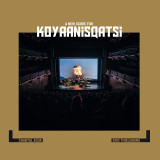
Chantal Acda & Eric Thielemans - Koyaanisqatsi

Dark-folk songwriter Chantal Acda and beyond drums-percussion musician extraordinaire Eric Thielemans propose a new score for Koyaanisqatsi, re-actualising the incredibly beautiful, raw, rhythmic and touching images of this 80-ties cinematographic masterpiece. Slow deep electric waves, lonely synths in sonic desert landscapes, rhythmic pulses, transporting drums and bells, and deeply longing sounds and voices make up the audible fundamentals of this imagined, neo shamanic, ritualistic music to accompany the Earth as it keeps on supporting our post human frenetics even today. This release contains a selection of the musical material scored for a live performance together with the screening of the movie. The live performance premiered on Film Festival Gent and Vooruit in the fall of 2022.

Currently based in Belgium, Dutch-born Chantal Acda (b. 1978) has worked under the Sleepingdog moniker since 2006, making three acclaimed albums that closed on the 'With Our Heads in the Clouds and Our Hearts in the Fields' (2010) album for which she collaborated with Adam Wiltzie (Stars of the Lid, A Winged Victory For The Sullen). They toured the UK and Benelux with Low in 2011. After all this, it was time for her first real solo record. Playing in various formations (Isbells, True Bypass, Marble Sounds) had made her conscious of the patterns that we all, as humans, share in. So, she sought out kindred spirits with whom she might record an album filled with freedom and intensity, and who were conscious of the patterns we so often fall back on. Nils Frahm was the first of these to cross her path. The inventive German pianist and producer is an intense and adventurous performer and was a perfect match for it. Acda also experienced a direct bond with Peter Broderick, a multi-instrumentalist known from his solo work (on labels such as Bella Union and Erased Tapes) and from his work with, among others, Efterklang. Cellist extraordinaire Gyda Valtysdottir from Icelandic group Múm had previously worked with Chantal as a member of the Sleepingdog live band. And lastly, Shahzad Ismaily stumbled into this picture by chance, but when Acda and he found themselves in the same room they formed an instant rapport. After this first record, 3 other solorecords followed. Chantal kept on searching for a deeper connection with the outside world and recorded "The Sparkle In Our Flaws" (2015) and "Bounce Back" (2017). She also released some live recordings with her band and also Bill Frisell, a highly respected jazz guitarist.(2018). These records were released on the German label Glitterhouse. Chantal and her band toured with these records in Europe. In 2019 Chantal created her first music/theatre performance P_wawau for Oerol Festival, The Netherlands. She worked with Valgeir Sigurdson (Björk, Bonnie Prince Billy,...) and singers from Het Nederlands Kamerkoor. As a result of this, she released the recorded music: Puwawau (2019). In 2021 Chantal released her most recent album Saturday Moon. (2021) For this album she worked with her band (Eric Thielemans, Alan Gevaert, Gaetan Vandewoude and Niels Van Heertum) but also with Bill Frisell, Shahzad Ismaily and Mimi and Alan Sparhawk (Low). Saturday Moon was very well received, internationally, by the press.

Eric Thielemans is a drummer and percussionist. Travelling across music scenes and disciplines, Thielemans navigates by means of his own compass. Most known for his resonant solo works like a Snare is a Bell, Sprang, Aural Mist and Bata Baba Loka and many collaborations with musicians in the experimental music scene, as well as the Jazz scene, and indie folk/pop/rock scenes Thielemans keeps on pushing the borders and expanding conscious aural spaces and territories. Recently, Thielemans has collaborated with PVT - a trio together with Mika Vainio & Charlemagne Palestine (album released April 2020) , PAT - a new trio together with Oren Ambarchi and Charlemagne Palestine, A new duo together with Oren Ambarchi, Billy Hart ("Talking about the Weather"), Chantal Acda ("The Sparkle in our Flaws", "Bounce Back", "Puwawau", "Saturday Moon"), Marshall Allen (Sun Ra), Tape Cuts Tape, Distance Light & Sky, Jozef Dumoulin, Trevor Dunn, Shahzad Ismaily, Vaast Colson, Nico Dockx, and many more. Currently Thielemans is working on r-e-s-o-n-a-n-c-e , a culminative work that encompasses and brings to the surface the underlying currents within his life in and with music. Withing r-e-s-o-n-a-n-c-e he investigates the everyday magic through conversations, writing and score writing to invite as many souls as possible to experience and co create the magic in the everyday.

vorbestellen16.09.2022

erscheint voraussichtlich am 16.09.2022

18,28
Location Services with Derek Hunter Wilson - Wake

Ryuichi Sakamoto, Daniel Lanois, Loscil, K Leimer, Deaf Center, Tangerine Dream, Arvo Pärt Wake is a distillation and reflection of the work of three Portland musicians thrown, like the rest of the world, into forced isolation by the continually-mutating curse of a natural world in disequilibrium. The product of involuntarily inward-looking emotional landscapes, Wake emerged sounding surprisingly expansive and confident. The trio uses a variety of instruments –including harp, fretless bass, piano, and a variety of synthesizers– to conjure sparkling panoramas of the imagination that are deep-pooled and impressionistic, bracing yet comforting. Mike Grabarak and Joshua Ward have performed together for years as a duo under the moniker of Location Services, while Derek Hunter Wilson has primarily worked as a solo composer in the classical realm. For the Points Of No Return compilation, Beacon Sound's 50th release and a benefit for the Beirut Musicians Fund, they recorded a collaborative piece entitled "Interdependence In Solitude" that was so promising the label offered to release an album if they continued down the path they had started upon. The resulting eight songs are simply mesmerizing. Made during a period of change and upheaval in the world and society where many people were disconnected from others, the album is the product of a collage-like dialogue built on trust and patience. While the musicians couldn’t physically be together for much of this time, they began sending musical ideas to one another in a conversational back-and-forth that acted as an anchor of stability – something they found they could turn to and depend on when things felt uncertain elsewhere. This comfort zone led to some transcendent moments of experimentation. “Delicate Need”, for example, features recordings of exaggerated pizzicato that were sampled and then run back through processing effects, which were then subsequently performed live over the original track. As things became less risky on the Covid front, they would occasionally meet for backyard rehearsals. Indeed, a recording of one of these rehearsals became the basis for the opening track “Photo Aware”. Wake will be available later this summer as a limited edition LP, with design work by Berlin-based Studio Bernhardt. The cover painting was created by Portland artist Nate Ethington. Highlights: – Derek was invited by the artist Gregory Euclide (Bon Iver, Erased Tapes) to participate in his label project, Thesis, along with artists such as Benoit Pioulard, Loscil, and Julianna Barwick. – Derek‘s first and second albums as a solo artist were released by Beacon Sound (Travelogue, 2017; Steel, Wood, & Air, 2019). – Location Services likewise released their 2019 album Reincorporate on the label. – The artists plan to tour together in 2023. Cascadia release shows TBA. Bios: Location Services is the Portland-based project of multi-instrumentalist Mike Grabarek (Magic Fades) and harpist Joshua Ward. They’ve released music on Beacon Sound and Beer On The Rug. They perform both written and improvised music. Derek Hunter Wilson is a composer and multi-instrumentalist based in Portland. He has released two solo albums on Beacon Sound and has also collaborated with visual artist Gregory Euclide for his Thesis Project label, resulting in a split 10" with Spanish musician Rauelsson. He has additionally collaborated with poets Zachary Schomburg and Brandi Katherine Herrera for several sound and performance pieces. He has performed live on the West Coast and in Berlin, sharing the stage with artists such as Colleen, Amulets, and Liima.

vorbestellen16.09.2022

erscheint voraussichtlich am 16.09.2022

27,31
Ihor Tsymbrovsky - Come, Angel LP 2x12"

"Kontakt Audio and Infinite Fog Productions proudly present the 25-th anniversary reissue of the one of most unique albums on avantgarde/neoclassic music – Ihor Tsymbrovsky – Come, Angel.

Recorded in 1995 in Ukraine and released in 1996 just as a small run on cassette on Polish label Koka Records, the album without any promotion little by little became legendary and madly wanted by many fans all around the world. And from the first seconds, you can hear why it is so. Pretty hard to explain what songs play Ihor, moreover that would be senseless. “Come, Angel” is one of those albums which are so unique that takes you in a vacuum of verbal forms in an attempt to describe the record. In a few words, this is definitely very intimate and deeply emotional music with an absolutely incredible voice. The first associations could forward you to Antony Hegarty from Antony And The Johnsons, Marc Almond, Arthur Russell, Baby Dee, Bjork. Experienced listener familiar with these great artist knows that all of them are inimitable and Ihor Tsymbrovsky is totally inimitable as well.

In 2016 well-known German label Offen Music published 3 tracks from the album “Come, Angel” which brought a lot of attention to Ihor’s music. This time we’re excited to announce the first full album reissue on CD, Double vinyl, and tapes. Beside the full version of the album, you’ll find an exclusive bonus song from the cult compilation “Music The World Does Not See” – Nefryt Records 2000.

~

“For me, music is a certain way of cultural survival. Here I do not set myself theoretical problems or experiments.
The connotations of life are important: rhythms, melodies, their connection with language, poetry, real life, virtual or imaginary space. It is very important to me how the recitation of work sounds, how consonant and vowel sounds dissolve in singing, how they combine musically. I understand sound space as a field of my interpretations, preferences, priorities, and I do not use direct imitation. If I hear a melody or a musical phrase, and it is fixed in my memory, later I extract it in my own interpretation, as already formed by this field. In art, the goal is in the work itself, not outside it. For me, the expression “To be is to create a new reality” is another winged reality.” – Ihor Tsymbrovsky

~~

“Tsymbrovsky – an architect, musician, a poet, an artist; one of the most underestimated musicians in Ukraine’s artistic world. Many critics pulled their hair out trying to get to the bottom of Tsymbrovsky’s music. It has been inspired by jazz, minimal, modern, ethnic, and meditation music. Tsymbrovsky is not a virtuoso, however, he creates whole worlds with his astonishing falsetto. Although Cymbrovsky’s music is simple it is made of many elements. Filled with magic and unusual sensitivity and warmth it can be therapeutic for the listener. This is that kind of music, which can be listened to many times – in a different way each time.” – Koka Records.

~~~

“Igor Tsymbrovsky’s only album “Come Angel” (1995) still remains perhaps the most bizarre phenomenon in Ukrainian music since independence. The story of its author is a vivid example of cultural amnesia. In the pre-Internet era, Tsymbrovsky was a prominent figure in the Ukrainian underground, performed on the “Red Route”, went on tour in Germany. However, he left a minimum of evidence of his activity and became a silent legend for a few. We talked to Igor to find out where he came from and where he was going.

The album “Come Angel” is eight compositions performed with a falsetto to the accompaniment of a piano. (Tsymbrovsky’s falsetto is a legacy of the Lviv Dudaryk choir, where he sang as a child.) It would seem that it could be easier. But, despite such ascetic tools, Tsymbrovsky managed to create a phenomenon unique to Ukrainian culture. Some people compare him to Benjamin Clementine and Anthony Hegarty, but no comparison will be exhaustive. The lyrics of the songs attract special attention: two of them were written by Tsymbrovsky himself, the others demonstrate his remarkable literary knowledge. Here and Guillaume Apollinaire, and Mikhaijl Semenko, and even less obvious poets, such as Mykola Vorobyov or Jozsef Attila.

The young performer’s first performance took place in 1987 in the club of the Forestry Institute. It is quite symbolic that this room used to be a Jesuit church because such a chamber environment suits his songs about angels much better than the noise of big festivals. However, there were also many festivals in Tsymbrovsky’s career: in 1989, Chorna Rada and Chervona Ruta, in 1991, Kharkiv’s Nova Scena and Ukrainian Nights in Gdansk, Alternativa in Lviv. Ihor calls his first performances musical performances and notes that they sounded completely different. Unfortunately, we will never know exactly how.” – Amnesia

~~~~

“The magicians at Dusseldorf’s Offen Music pluck a madly beguiling pearl of late-night songcraft by Ukraine’s Ihor Tsymbrovsky to follow their vital releases by Toresch and Rex Ilusivii. Come Angel was first recorded in Lviv, Ukraine, in 1995, and issued on cassette by Poland’s Koka Records in 1996. There appears to be no prior mention of the release or artist on the internet and quite how it came into of Offen Music possession is not disclosed, and that only ratchets the record’s enigma to astonishing degrees once you’ve heard the music. In a quivering, high register, androgynous trill, Ihor Tsymbrovsky beckons heavenly beings in the remarkable A-side Come, Angel against a swirling backdrop of phasing, subtly delayed organ. It was recorded in one take (this is the 2nd version), and, if we’re not mistaken, you can hear the keys being pressed rhythmically in the background, which seems to be the song’s only tangible connection to this mortal world as Ihor vaults octaves high and close-in-the-mix with the sort of alien, dreamlike vocal that requires pinching oneself to make sure you’re awake. Spellbinding is definitely the word. On the other side he (we’re assured it is a ‘he’ in the promo text) sets two poems by Mykola Vorobyov and Mykhal Semenko, respectively, to emphatic piano keys, this time more shy of FX save for some delay, placing that willowing, avian vocal at a dreamy arms reach in Roses for the Poet, and with a sort of liturgical dark jazz feel, sorta like Lewis repenting his sins as a castrato monk, in the spare atmosphere in By the Sea. This is gold-seal business, we tell ya. Clock the clips and clear some swooning room.” – Boomkat

credits:
Music By – Ihor Tsymbrovsky
Lyrics By: Ihor Tsymbrovsky (tracks: C2, D1)
Atilla Joszef (tracks: B1)
Mychajl Semenko (tracks: B2, C1,C3, D2)
Mykoła Worobjow (tracks: A1,A2)
Engineer – Edward Hryhorjew
Remastering – Ihor Tsymbrovsky"

nicht am Lager

Bestelle jetzt und wir bestellen den Artikel für dich beim Lieferanten.

36,93

Last In: vor 3 Jahren
Various - Too Slow to Disco Vol. 4 2x12"

LP ltd colored vinyl, 140 gram, gatefold, mp3 Download PostCard

After smooth detours into Soul covers, French Neo-Disco, modern Sunset Disco and Brazilian AOR, in 2022 DJ Supermarkt's Too Slow to Disco series makes a joyous return to its original Westcoast AOR/Yacht roots. Celebrating the 10th TSTD compilation. Who would have thought….
The Berlin curator releases a killer 4th edition of the original compilation art form, "Too Slow to Disco", featuring forgotten and overseen gems from the mid 70s to the early 80s from a global world of smooth, brilliant lost and overproduced tracks from Finland via London and L.A. to Trinidad and beyond.
The great 'un-vanisher' of lost lazy classics, DJ Supermarkt once again unearthed some incredible music that labels, publishers (in many cases also those, who actually own the rights to those tracks…) and streaming services have often long overlooked. You're welcome, world!

nicht am Lager

Bestelle jetzt und wir bestellen den Artikel für dich beim Lieferanten.

25,17

Last In: vor 3 Jahren
Nucleus - Under The Sun

Nucleus

Under The Sun

12inchBEWITH104LP
Be With Records
09.09.2022

Under The Sun is the follow-up to the astonishing Roots and contains yet more absolutely essential Nucleus material. Originally released on Vertigo in 1974, Under The Sun was never re-pressed and of course those original copies are now very tricky to score. Like all the Nucleus records, it’s aged ridiculously well and this Be With re-issue, re-mastered from the original analogue tapes, shows off just why this deserves to be back in press.

Genius trumpeter and visionary composer Ian Carr was one of the most respected British musicians of his era. He was a true pioneer and saw the potential in fusing the worlds of jazz with rock, just as Miles Davis and The Tony Williams Lifetime did in the US. In late 1969, following the demise of the Rendell-Carr quintet, and tiring of British jazz, Carr assembled the legendary Nucleus. Regarding music as a continuous process, Nucleus refused to “recognise rigid boundaries” and worked on delivering what they saw as a “total musical experience”. We can get behind that.

Under bandleader Carr, Nucleus existed as a fluid line-up of inventive, skilled musicians. This constant evolution and revolution was all part of the continuous musical exploration and discovery that took jazz to new levels. And the music has stayed relevant. To steal a line from a recent review of our re-issue of Roots, when it comes to anything Nucleus “it’s basically already hip-hop”.

Under The Sun opens with the crisp, medium tempo “In Procession”. It’s a typically inventive Carr track with layers of dramatic, riff-led themes and repeating brass blasts. Bryan Spring’s “The Addison Trip” is a moody funk piece, with Kieran White guesting on wordless vocals. Roger Sutton contributes some fine bass guitar on this track, particularly the great solo at around the two minute mark. The excellently-named cool, jazzy ballad “Pastoral Graffiti” paints bucolic pictures with its mellow sonics, plaintive horns and Bob Bertles’ flute.

Sutton’s superb, bass-driven “New Life” brings a different dynamic. Horns, guitar and electric piano swirl over the head-nod bass motif and a killer Ken Shaw guitar solo. A false fade out halfway through brings in a new bass riff that’s picked up by the whole ensemble as Carr wah-wah noodles over the top. It’s full-on. The gorgeous, laidback “A Taste of Sarsaparilla” is exactly that - closing out the first side with a cute blast of what is to come over on the killer flip.

The whole of Under The Sun’s second side is a suite of three “Themes” written by Ian Carr. The uptempo first theme “Sarsaparilla” is comfortably one of Nucleus’ best. What would’ve been a cluttered mess in the hands of most is instead an effortless lesson in clarity and zing. Between Geoff Castle’s electric piano solo, the relentless funky drumming and more wild wah-wah trumpet from Carr, Nucleus show you how it’s done.

The languid groove of second theme “Feast Alfresco” is much more typical of “classic” Nucleus and sounds like something that might’ve been on Roots. A Bertles baritone solo and a guitar solo from Shaw weave around the core, serpentine brass theme.

The darker “Rites of Man”, the third and final theme, is a slow build to a solid bass and electric piano riff, shored up by some tricky brass. Carr takes the theme even further and there’s still plenty of room for soloing from all corners of the Nucleus. As usual, the dynamic Sutton/Spring, bass/drums duo is holding down the rhythm for the rest to jam around.

This Be With edition of Under The Sun has been re-mastered from the original Vertigo master tapes, Simon Francis’ mastering working together with Pete Norman’s cut to weave their usual magic with these wonderful recordings. The bleak, rain-dappled cover matches the melancholic vibe of the record and has been restored as the finishing touch to this long overdue re-issue.

nicht am Lager

Bestelle jetzt und wir bestellen den Artikel für dich beim Lieferanten.

23,32

Last In: vor 3 Jahren
Ian Carr With Nucleus - Labyrinth

Labyrinth is dark, brooding, beat-heavy, melancholic mood music courtesy of Ian Carr and the Nucleus crew. A favourite of Madlib, it goes without saying that this is one magnificent record. Originally released on Vertigo in 1973, Labyrinth was never re-pressed and of course those original copies are now very tricky to score. Like all the Nucleus records, it’s aged ridiculously well and this Be With re-issue, re-mastered from the original analogue tapes, shows off just why this deserves to be back in press.

Genius trumpeter and visionary composer Ian Carr was one of the most respected British musicians of his era. He was a true pioneer and saw the potential in fusing the worlds of jazz with rock, just as Miles Davis and The Tony Williams Lifetime did in the US. In late 1969, following the demise of the Rendell-Carr quintet, and tiring of British jazz, Carr assembled the legendary Nucleus. Regarding music as a continuous process, Nucleus refused to “recognise rigid boundaries” and worked on delivering what they saw as a “total musical experience”. We can get behind that.

Under bandleader Carr, Nucleus existed as a fluid line-up of inventive, skilled musicians. This constant evolution and revolution was all part of the continuous musical exploration and discovery that took jazz to new levels. And the music has kept relevant. To steal a line from a recent review of our re-issue of Roots, when it comes to anything Nucleus “it’s basically already hip-hop”.

At this point Carr had parted ways with guitarist Alan Holdsworth and as a result the Nucleus sound found itself returning to the core elements of groove and melody. Carr had become bolder and more self-confident in his compositions and it shows in the sheer ambition of Labyrinth. Composed by Carr, and with lyrics written by his wife Sandy, Labyrinth was the result of a commission from the Park Lane Group and funded by the Arts Council of Great Britain. Originally a live performance by an augmented Nucleus, some of the expanded cast were brought back for the recording sessions, including vocalist Norma Winstone. So as the front cover of the finished album says, this is literally “Nucleus Plus”.

Labyrinth is presented as a suite, based on the ancient Greek legend of the Minotaur with musical instruments representing the various elements of the mythology. According to the LP’s original sleeve notes, the bass clarinet represents the tragic element, the trumpet represents the heroic element and the voice represents the human element. The rest of the musicians represent the two societies of Athens and Crete and their comments on the story as it unfolds.

The album opens with the experimental, sumptuously dissonant “Origins”. Teasing strands of atmospheric bass clarinet introduce the first theme before swiftly fading out with a startling blast of staccato fanfares and big drums. Heavy. The album soon finds its rhythm as it alights on the spell-binding and groove-friendly “Bull-Dance”, showing off the best Nucleus has to offer: subtle trumpet melodies, compelling rhythms, a psych-rock vibe and tight soloing. And of course there’s Norma Winstone’s stunning wordless vocals, that also take the lead in the next track “Ariadne”, a spacey-jazz song with beautiful piano, flute and clarinet, and the only recognisable lyrics on the album. You might recognise a snatch of it being looped by Madlib on Quasimoto’s “Astro Travellin”. The first part of the improvised “Arena” closes out the first side of the album, a short experimental piece with piano and horns.

Over on the flip-side, the powerful second part of “Arena” introduces a new theme. It swiftly builds, with vocal melodies, piano and horns all pronounced over the thick drums snapping your neck. It comes on like an alternate take on “Bull-Dance”, noisier, with a looser rhythm. The triumphant, shuffling Latin-jam “Exultation” leans on more scintillating vocals from Winstone, and a chunky counter melody from the rhythm section. It’ll get you moving.

The final track, the haunting, twelve minute “Naxos”, is an incredible way to close out this remarkable record. A circling bass guitar loop inspiring the group to a meditative psychedelic jazz rock improvisation in a silent, Miles kind of way, with a great flugelhorn solo from Carr and an ace synth climax.

This Be With edition of Labyrinth has been re-mastered from the original Vertigo master tapes, Simon Francis’ mastering working together with Pete Norman’s cut to weave their usual magic with these wonderful recordings. Another great Keith Davis sleeve has been restored in all its airbrushed Golden Age of comics, gatefold splendour. Complete with Minotaur of course.

nicht am Lager

Bestelle jetzt und wir bestellen den Artikel für dich beim Lieferanten.

26,85

Last In: vor 2 Jahren
Various - Minna Miteru 2 2x12"

Various

Minna Miteru 2 2x12"

2x12inchMORR187-2LP
Morr Music
02.09.2022
 
26

Following the »Minna Miteru« compilation, released in 2020, Morr Music announces a sequel, dedicated to Japanese indie music, overflowing with surprises and welcome discoveries. Like its predecessor, »Minna Miteru 2« is compiled by Saya of Tenniscoats, with the support of Markus Acher (The Notwist). It’s also another part of the Minna Miteru universe, alongside retrospective albums by The Andersens (»There Is A Sound«, 2020) and yumbo (»The Fruit Of Errata«, 2021). Taken together, these albums suggest a scene in rude health, sharing a unique vibration.

If its predecessor circled around Tenniscoats and their close friends, the second volume, though featuring a collaboration between Tenniscoats and Deerhoof as oneone, reaches far further afield, drawing from music old and new, far and wide. Consistent across »Minna Miteru 2« is a sense of wonder and a cheerful unpredictability: you never quite know what you’ll hear next. There are some gorgeous indie pop songs here, like Yuko Kono’s »Ginger« or HOSE’s »Baseball«, but there are other sounds too, like Kariu Kenji’s blue-hued electro-pop, or the wheezing pipe-organ ambient of FUJI||||||||||TA: »Minna Miteru 2« hints at new kinds of beauty.

Some of the more widely known names here contribute typically gorgeous melodies – Kama Aina’s »Wedding Song«, from 2005’s »Hawaii Hawaii« CD, is a reflective tune that combines a country-ish lilt with hints of slack-key guitar. Shugo Tokumaru’s »5 A.M.« is a delirious psychedelic pop mantra, drawn from his excellent 2005 album, »L.S.T.«. Many of the revelations, though, come from artists and groups relatively unknown outside Japan. The lovely, disorienting glitch-folk of Wasurerogusa features Aki Tsuyuko, perhaps best known for her albums on Thrill Jockey and Jim O’Rourke’s Moikai label, collaborating with psych-folk legends Eddie Marcon.

There’s also the delightful synth-pop of Jonathan Conditioner; the electronic dreamscape of Chaplin, whose opening »Out Cont« runs along several parallel paths at once; the twinkling, acoustic jangle at the heart of mmm’s luscious »Blue«; and a curious collection of miniatures, from acts like tenshinkun, Daisuke Tanabe and NNMIE, that embrace a childlike curiosity, essaying a kind of toytown pop-tronica.

The twenty-six songs on »Minna Miteru 2« repeatedly catch you unawares, upending your expectations and signaling both the breadth and depth of the Japanese indie underground. It’s a compilation of play and pleasure, but also of bold experiment smuggled into the everyday through pop music’s welcoming moods, magically creating a new world for the listener, spun out of the air and woven in between your ears.

vorbestellen02.09.2022

erscheint voraussichtlich am 02.09.2022

31,05
Guido Möbius - A Million Magnets

Much of a million magnets sounds as if Möbius has left the music to its own devices. As if he has given it space instead of closing it in and channelising. Little seems to be organised, reflected or calculated. Rather it booms and pulses and chugs and swells.

In 2015 Möbius invited the drummer Andrea Belfi to record with him for his album Batagur Baska (Shitkatapult 2016). They spent a whole day in the studio at Funkhaus Nalepastraße, Berlin. Belfi implemented ideas from Möbius for various pieces and contributed his own ideas. Everything was recorded although in the end only one hi-hat track was used. All the other recordings were left to snooze and be forgotten in a folder on the computer. Years later Möbius discovered them again by chance during a train journey. He decided to answer Belfi’s powerful and concentrated drumming.

If sound recordings are used on specific tracks they start to lead a life of their own. Möbius mostly left Belfi’s recordings unedited. He took them as a trigger for the structure and character of new tracks. So we get the opening track Abayanga with its stoic pulse and airy cymbals. Or Schlucht with such restless drums, fluttering feedback and the mantra-like spoken-song of Yuko Matsuyama. The magical How To Never Make Up is almost a song: feverish percussion (Andrea Belfi on rimshots, Ansgar Wilken on the table top), a rich bass and the other worldly singing by Jana Plewa.

The accordion on Windjammer seems to blow in all directions at the same time, propelled by Belfi’s hounding cymbal playing. Side B starts with a reflection of Windjammer: Discrete Wiring. Guitar riffs in endlessly circling movement and Yuko Matsuyama’s voice and all that it conjures up. Feed Me Fog freely improvised with on drums and feedback is simply complete as a self-contained piece. The singing on Chayyam comes from the Cambodian Prak Chum, who’s voice can also be heard on the title track of Batagur Baska.

vorbestellen02.09.2022

erscheint voraussichtlich am 02.09.2022

21,81
NOVIDADE - VOARIA EP

Originally released in 1990 ‘Voaria’ was written by Benjamin Nhassavele and produced & arranged by the late Tata Sibeko, the revered South African producer and member of Kabasa. Taken from the LP of the same name ‘Voaria’ was released at a time when early house music was emerging as a key influence in the South African musical landscape, an evolement of the Bubblegum pop sound that had fused disco and boogie with township funk. Characterised by Roland kick drums, Yamaha DX7s and Juno Synthesisers the Kwaito sound is the musical heartbeat of ‘Voaria’.

As well as being in Novidade, Benjamin toured the world extensively as part of Alec Kaholi’s Umoja and ‘Voaria’ is a song about his desire to go back to Maputo, his hometown in Zimbabwe. Featuring Benjamin on lead vocals ‘Voaria’ comes in 2 versions, a main House mix on the A side and the Clubhouse mix on the flip which switches up the arrangement placing more emphasis on the magical groove. The 12” is housed in a full sleeve jacket by Bradley Pinkerton based on the original release design.

nicht am Lager

Bestelle jetzt und wir bestellen den Artikel für dich beim Lieferanten.

12,40

Last In: vor 2 Jahren
Various - KATEBEGIAK LP (2x12")

Various

KATEBEGIAK LP (2x12")

2x12inchEL1007
elkar
26.08.2022

1972-1985 KATEBEGIAK - Prog-Rock, Psych-Folk & Jazz-Rock Music from the BASQUE COUNTRY. The album KATEBEGIAK, now published by ELKAR, contains 13 tunes on double LP gatefold edition from Haizea, Izukaitz, William S. Fischer, Magdalena, Enbor, Itoiz, Koska, Itziar, Errobi, Lisker, Amaia Zubiria & Pascal Gaigne, Gontzal Mendibil & Taldea and Urria, and the CD-Book edition adds an extra bonus track by the great unknown artist Juan Arkotxa. Complied by Mikel Unzurrunzaga Schmitz aka DJ Makala. Music produced in the 70's in the Basque Country got trapped between two earth shattering artistic currents; Ez Dok Amairu in the 60s and Basque Radical Rock in the 80's, and unfortunately, most of the lovely discs and tunes created at that magical time have been pushed to a remote (and sometimes even despised) corner of our collective memory. 60's and 80's music currents are almost opposite, and both work as magnetic poles with a very strong power of attraction, and maybe also as a burden for any of the later artistic currents. 60's generation of artists searched within their rich and ancient cultural roots to acknowledge and update them, in proud, hopeful and unforgettable folk songs. The 80's one on the other hand, worked in a flammable environment in constant social and political conflict and found in punk the perfect way to express their anger and weariness for so many unfulfilled promises and the lack of opportunities into short, noisy, direct and corrosive songs, technically sparse but full of energy and expressive power. Most of the "classic" names engraved in our memory come from one or the other like Benito Lertxundi, Mikel Laboa, Lourdes Iriondo and Xabier Lete or Kortatu, Hertzainak, Zarama, Las vulpes, Eskorbuto or Cicatriz. 70's generation and their music work somehow as the "missing link" ("katebegia" in Basque) between the two. They loved folky tunes and don't forget their ancient roots, but they also look outside for inspiration and experimentation. Just as the 80's boys and girls found punk the 70's guys found a completely different sonic and aesthetic landscape in the works of Grateful Dead, Fairport Convention, King Crimson, Soft Machine, Gong_ and worked closely with keen souls in other neighboring regions such as Maquina!, Pau Riba or Sisa in Catalonia or Smash and Triana in Andalusia. This resulted in more abstract and poetic lyrical content, much longer psych-folk-prog-jazz tunes, full of complex instrumental passages and mesmerizing structures of sheer ambition and masterful execution in many cases. But, most important of all, they found a voice of their own, rich, unique, and fascinating, and that's what makes them so valuable to us. Not only to us, but also to lots of vinyl collectors and crate-diggers around the world, who have in many cases paid fortunes for some of the original editions of LPs that are the source of tunes in this compilation. Mikel Unzurrunzaga Schmitz aka DJ Makala, DJ and producer of worldwide scope and wisdom, noticed this fact first and decided to pay homage to these wonderful tunes through this masterful and dedicated selection for your pleasure and as an open invitation to dig deeper into your adventures in the dark and hidden side of Basque popular music.

vorbestellen26.08.2022

erscheint voraussichtlich am 26.08.2022

38,19
Devil Dee featuring Joan Faulkner aka Dee-Vah - And The Beat Goes On

Retro house sounds from Italy on this release... tunes that still go down well with some of the big name festival dj's during their summer tour! A track that remained unpublished for 33 years until Devil Dee decided to make it public and bring his own voice to the spotlight joined by jazz-blues singer Joan Faulkner, (former supporting voice of Boney M and Milli Vanilli, also known by her stage name 'Dee-Vah'). Devil Dee is Davide Mancori - a cinematograph with a flattering career as a club-dj from 80s-90s onwards - who lovingly produced this release which differs from most of the releases on Best Record by its housey vibe. 'And The Beat Goes On', was written in Germany in 1989 by Leonie Gane and Ryan Paris. Laying the crucial foundations for an evolutionary step of the italian disco music. A step forward for the 'Italo' movement which at the end of the 80s was been considered obsolete and defunct. In fact, the track is also referring to the latest Italo-Disco which entirely covered the scene of the 1980s with furious activity, If the meeting between Devil Dee and the famous interpreter of 'Dolce Vita' - Mister Ryan Paris - creates the alchemy, the explosive mix is completed with the precious work of Marco Magrini. The arrangement by Pierluigi Cerin and the executive work of Claudio Casalini close the magic circle. Five friends and a great singer from Indiana to fill the dance floors all over Europe, while the images of the provocative and surreal video-clip capture the audience by splitting in two. There are those who do not want to see certain issues publicized and those who appreciate their cheekiness, such as Best Record which by publishing the vinyl printed at 180 grams celebrates the 40 years of activity.

nicht am Lager

Bestelle jetzt und wir bestellen den Artikel für dich beim Lieferanten.

15,08

Last In: vor 3 Jahren
Various - Satan In Love – Rare Finnish Synth-Pop & Disco 1979–1992 (2x12")
nicht am Lager

Bestelle jetzt und wir bestellen den Artikel für dich beim Lieferanten.

29,20

Last In: vor 3 Jahren
Gary Bartz & Maisha - Night Dreamer Direct​-​To​-​Disc Sessions

The third release from Night Dreamer’s essential “Direct-to-Disc” sessions sees an incredible meeting between legendary US saxophonist Gary Bartz and leading UK spiritual jazz ensemble, Maisha, featuring two Bartz classics and three brand new joint songs written by both Bartz & Maisha in close collaboration.

Having cut his teeth playing with the likes of Charles Mingus, Max Roach, Art Blakey and finally in 1970, Miles Davis at the peak of his electric period, Gary Bartz became a leading figure of the early-to-mid 70s spiritual jazz movement, releasing a string of ground-breaking albums on legendary NYC jazz label Prestige Records with his NTU Troop, featuring classics such as “Celestial Blues”, “Uhuru Dance” and “I’ve Known Rivers”, before collaborating on Blue Note Records with the Mizell Brothers on the anthemic jazz funk of “Music Is My Sanctuary”. An oeuvre much loved by soul jazzers and hip hop fans alike.

Led by drummer Jake Long, Maisha have been central to the UK’s jazz explosion, and have fast become the UK’s most exciting and in-demand young spiritual jazz ensemble, from steller shows at Jazz re:freshed, Total Refreshment Centre & Church of Sound and supporting the Sun Ra Arkestra, to releasing their critically acclaimed debut LP, ​“There Is A Place” ​on Gilles Peterson’s Brownswood Recordings in 2018. Theirs is an organic & explosive sound that blends influences from afrobeat and broken beat to Persian music, with a deep love and understanding of jazz, particularly the heritage of spiritual jazz led by titans such as Pharoah Sanders, Alice Coltrane and of course, Gary Bartz.

Which makes this collaboration even more special. Bartz was first invited to share a stage with Maisha by Gilles Peterson to headline the inaugural We Out Here festival. Their chemistry was rich and instantaneous, certainly a two-way street, with the young musicians reinvigorating the legend’s performance and wowing the intergenerational festival audience. A European tour followed, including a London Jazz Festival highlight at the Royal Festival Hall, celebrating the 50th anniversary of his album “Another Earth”, originally featuring fellow legends, Pharoah Sanders, Charles Tolliver, Stanley Cowell, and John Coltrane’s own bassist, Reggie Workman.


Now the relationship has evolved into a special straight-to-disc recording for Night Dreamer Records, that captures the vitality of their collaboration. Whilst Bartz and Maisha reinvent classic Bartz compositions “Uhuru Sasa” and “Dr Follows Dance”, extending the pieces into long piece improvised grooves, their recording session gave birth to three brand new joint compositions, written the very same day. These include the propulsive “Leta’s Dance” that magically combines the Bartz’ soulful musical lyricism with Maisha’s African-jazz influences, and the organic jazz

funk of “Harlem to Haarlem”, featuring a hot solo from guest trumpeter Axel Kaner-Lidstrom of Cykada & Levitation Orchestra fame.

Like previous Night Dreamer efforts from afrobeat star Seun Kuti & Egypt 80, and the beautiful collaboration between Brazilian stars Seu Jorge & Rogê, the album was recorded in Haarlem’s Artone Studio, a stones throw from Amsterdam, in just one-take, straight-to-disc, avoiding post-production embellishments and retaining the purity of the performance lost in modern recording techniques.

This record really is an event, in and of itself, a meeting of talents, minds, generations and zeitgeist moments, captured in a unique and pure manner. The music does not disappoint, as Maisha have been inspired to reach new heights whilst we find Bartz truly reinvigorated, and both artists in tune to the spirit of the other.

Recorded direct-to-disc @ Artone Studio, Haarlem, The Netherlands on Tuesday 29th Wednesday 30th October 2019

vorbestellen19.08.2022

erscheint voraussichtlich am 19.08.2022

29,20
ACID MOTHERS TEMPLE & THE MELTING PARAISO U.F.O. - Myth Of The Love Electrique 2x12"

Continuing the ‘first time on vinyl’ purge of the AMT archives. Here’s the band's classic 2006 album finally available on double vinyl for the first time. Housed in full colour gatefold sleeve.
‘Myth of the Love Electrique’ is another scorcher from these ridiculously prolific psych masters. This album is notable for being the debut of their newest band member: Kitagawa Hao. Kitagawa's presence doesn't dominate the recording by any means, but her contributions nicely complement the swirling chaos the group generates. Acid Mothers Temple always manages to find a breath of fresh air at the most opportune times, and this is no exception. While remaining a tight unit, bringing Kitagawa into the fold adds another dimension to their chaotic sprawl without having to sacrifice any of their strengths on this incendiary album.
“Comprised of four lengthy tracks, the album explodes with a start: "The Man from Giacobinid Meteor Comet." Kawabata Makoto's guitar quickly becomes a tangle of screams, a frenzied surge that drags the band along with it. The rhythm section is ferocious. Bassist Tsuyama Atsushi frequently ventures out to the stratosphere, but he also knows when to hold back or to provide a vaguely melodic foundation. Likewise, the amount of energy drummer Shimura Koji dedicates to his performance is a lesson in endurance. Divided into three movements, this track eventually cools down and then glides to a drone landing, alighting the listener breathlessly upon calmer ground.
Kitagawa's voice makes its first appearance on "Five Dimensional Nightmare," floating over a bouzouki arrangement that sounds like singing glass. This one is divided into three sections like the previous track, but starts airy and then goes into a drone as Tsuyama briefly takes over the vocals. From here, strings are tortured like fingernails on a blackboard before a guitar and Higashi Hiroshi’s water drop electronics restore balance.
As much as I loved the two previous tracks, the band forges ahead into something different on "Love Electrique." Kitagawa's presence is most felt on this track. Her voice streaks across the mix as blistering guitars and freaky electronics blast all over the place. Over the course of 20 minutes, it hits several different moods and textures on a truly transcendent journey.

Of the four tracks, only the live staple "Pink Lady Lemonade (May I Drink You Once Again?)" may seem a little redundant. Kitagawa, however, breathes new life into this standard by bringing her vocals to the fore over the entire track, as if restoring an element that previously had been missing. It's hard to call it a definitive version because so many other excellent versions already exist, but it is a great one in its own right. For fans who may be weary of this song after all of its appearances over the years, it is easy enough to stop the disc after gorging on the first hour of music, and it is still a welcome dessert if the mood should strike”

nicht am Lager

Bestelle jetzt und wir bestellen den Artikel für dich beim Lieferanten.

27,69

Last In: vor 3 Jahren
Gammelsæter & Marhaug - Higgs Boson

Runhild Gammelsæter and Lasse Marhaug are two Norwegian musicians/sound artists. Both started in the early 1990s music underground and have worked in many constellations with a wide range of collaborators.

Despite knowing each other for a long time, Gammelsæter and Marhaug’s first collaborative work was the “Quantum Entanglement” LP in 2014. The album ignited a collective spark that both wanted to pursue further. Still, other commitments got in the way, and the project lay dormant until Stephen O’Malley, and Greg Anderson invited them to open for Sunn O))) for a special gig in the St. James Church of Culture in Oslo in the autumn of 2019. The two gathered for a long series of rehearsals, and after the successful performance, it was clear that it was time to start working on new compositions and recordings. That process initiated in late 2019 and continued to early 2021, encompassing before and after the world went through the lockdown. The result of this long development to be heard accumulated upon their new album “Higgs Boson” on Ideologic Organ Music.

Throughout the profound process of creating “Higgs Boson”, Gammelsæter and Marhaug drew inspiration from various subjects and artists. For Marhaug, it was concepts informed by the structuralist experimental cinema of Japanese directors Takashi Ito and Toshio Matsumoto, futurist worlds of French comic book artists Philippe Druillet and Jean Moebius Giraud, landscape photography of Fay Godwin, Kåre Kivijärvi, and Tamiko Nishimura, amongst others.

It became a metaphysical juxtaposition involving Gammelsaeter’s research and lyrical ideas based on several seemingly unrelated principles. A process of association inspired by “the Glass Bead Game” by Herman Hesse. The discovery of the Higgs Boson as a confirmation of the physical universe. The work of Ernst Schrödinger on the uncertainty principle. The four forces of physics. The Force. Helplessness under armed forces - as the war sailors in World War II. The influence of magic as expressed in tarot.

Gammelsæter experiments with a boundary involving the thresholds amongst various states of focus and legibility by forensic experimentation with techniques such as exclusive expression of consonants, syllabic repetition, retrograde text vocalisations and multi-lingual layering. Her vocal inspirational sources include Sidsel Endresen, Diamanda Galas, Natacha Atlas, the choral works of Rachmaninov, and the bands Carcass and Grave.

Two worlds coming together, making the music special. Mixing hard facts with science fiction helps create a kaleidoscopic cross point between the complex realities of the past and a possible future.

“Quantum Entanglement” featured two long-form pieces centred around a prepared piano and layered voice, while “Higgs Boson” developed a much more elaborate and ambitious compositional work. Across eight parts, the two artists brought a broad palette of instrumentation and sound. Electronic and acoustic, objects and field recordings, and pipe organ define the structures of which the centre is Gammelsæter’s magnificent voice. She has become known for her legendary voice, with her vast and unique range of inflective techniques and affective colour through her 30 years creating music. In the mix, Lasse approached the instrumental elements like landscapes, then Runhild’s vocals as characters that inhabit those worlds. Often, Gammelsæter multiple characters fused with the landscape. Make them occupy space, sometimes blend into it, sometimes dominate it. Constructing and setting visual guidelines helps set focus and open possibilities.

As an album, “Higgs Boson” is direct and focused, drawing on song structures. Within these tracks are vast strata of sound, an immersive multi-dimensional depth of music. Creating a feeling of depth while working with a flat two-channel stereo format - and how dimensions of texture and distortion can help develop the illusion of a space. The album structure is a story-like arc, a malleable subjective path, set as the album traverses oblique and suggestive areas, opening the concepts for the listener to unpack as they like.

– exclusive consultation with Gammelsæter & Marhaug, edited by Stephen O’Malley, June 2022

vorbestellen19.08.2022

erscheint voraussichtlich am 19.08.2022

20,80
Nucleus - Alleycat LP

Nucleus

Alleycat LP

12inchBEWITH105LP
Be With Records
17.08.2022

Come for the leopard, stay for the stone cold jams. Yet another thrilling, funky-prog jazzy-rock fusion beauty from Ian Carr’s Nucleus. Originally released on Vertigo in 1975, Alleycat was never re-pressed so those original copies are now very tricky to score. Like all the Nucleus records, it’s aged ridiculously well and this Be With re-issue, re-mastered from the original analogue tapes, shows off just why this deserves to be back in press.

Genius trumpeter and visionary composer Ian Carr was one of the most respected British musicians of his era. He was a true pioneer and saw the potential in fusing the worlds of jazz with rock, just as Miles Davis and The Tony Williams Lifetime did in the US. In late 1969, following the demise of the Rendell-Carr quintet, and tiring of British jazz, Carr assembled the legendary Nucleus. Regarding music as a continuous process, Nucleus refused to “recognise rigid boundaries” and worked on delivering what they saw as a “total musical experience”. We can get behind that.

Under bandleader Carr, Nucleus existed as a fluid line-up of inventive, skilled musicians. This constant evolution and revolution was all part of the continuous musical exploration and discovery that took jazz to new levels. And the music has stayed relevant. To steal a line from a recent review of our re-issue of Roots, when it comes to anything Nucleus “it’s basically already hip-hop”.

Alleycat was the last Nucleus album recorded for the Vertigo label. Released in 1975, it was again meticulously produced by Jon Hiseman and is every bit as sinuous as anything else the group had recorded. As far as riff-laden accidental cop-funk goes, there’s so much energy coursing through the music that at times it sounds like a live recording. It’s pretty unbeatable.

Uptempo opener “Phaideaux Corner” is a funk-flavoured opus with a groove that simply swaggers. This trademark Roger Sutton piece benefits from Trevor Tomkins’s percussive expertise and some excellent sax and keyboard soloing. Check out Geoff Castle on squelchy, stabbing Moog duties. Ian Carr’s elegantly laidback title track is a lengthy suite of magisterial themes. Typically complex, it still gets you hooked and is just riddled with the funk. Carr builds up his initially “straight” trumpet solo with later use of echo to mesmeric effect. And there’s some excellent wah-wah guitar shredding by Ken Shaw too. Nice.

The second side opens with the killer “Splat” and finds Nucleus really ripping it up. A fat, funky bass guitar riff introduces us to the track and stays with us until the end. The often mangled bass groove is pushed along by rattling drums and percussion, dropping out for some restful moments of spacey calm, and along the way picking up some lengthy keyboard noodling by Castle. So so good.

The cool “You Can’t Be Sure” is a gentle jam with Shaw on 12-string acoustic guitar, together with Carr’s muted trumpet and some marvellous fretless work from Sutton for extra colour. The album closes with Bob Bertles’ galloping “Nosegay”, written perhaps as a response to some of the faster Mahavishnu Orchestra pieces. It’s an example of well crafted jazz-rock that doesn’t compromise any of its jazziness, yet it still very definitely rocks.

This Be With re-issue of Alleycat has been re-mastered from the original Vertigo master tapes, Simon Francis’ mastering working together with Pete Norman’s cut to weave their usual magic with these wonderful recordings. The cool AF cover - that leopard was just a cat before he heard Nucleus, you know - has been restored as the finishing touch to this long overdue re-issue.

nicht am Lager

Bestelle jetzt und wir bestellen den Artikel für dich beim Lieferanten.

23,32

Last In: vor 3 Jahren
Various - With Love: Volume 1 Compiled by Mich 2x12"

Here we are at the dawn of a new compilation series and we’re kicking things off with an absolute gem that features a selection of hard-to-find records (some impossible to find) and some that have been hiding in plain sight all along. They all share common qualities, being that they are beautiful, soul quenched songs that sing of love, peace and unity.

‘With Love: Volume 1’ has been compiled by Miche and presents a curated selection of rare Brazilian, gospel, modern soul and jazz-fusion fire. We have Brazilian rarities by Alcione and Quientaessencia, UFO gospel by Keith Chism & Light, the jazz-funk/AOR sounds of City Lites taken from a Radio Station album, and the anthemic feel-good emotional soul of Belita Woods to name but a few.

Tracking down artists and musicians from the past is an art form. Like a seagull swooping for treats, sometimes the prizes are easily found, and at other times, it’s the result of very late nights trolling through Facebook profiles, message boards, hitting dead ends and following red herrings, and yet still the search goes on. This compilation is a true labour of love with all the artists tracked down and licensed by Miche. It has long been an ambition of the London based musical connoisseur to compile an album, and like anything that requires craft, care, and knowledge - it takes time. There are many twists and turns in the hunt for those records that make your jaw drop.

In 2018, when just 24, Miche became a music programmer for London’s illustrious Spiritland group of venues. From this musical sanctuary, he was able to listen, learn and meet some of the best selectors from around the world. It was a musical education, and he was particularly drawn to the deep sessions by DJs such as Mark Taylor, George Arthur, Kev Beadle, Patrick Forge, Dr. Bob Jones, and Colin Curtis to name a few. He also used this time to begin running his re-issue label Discs of Fun and Love with co-owner and friend Frederika.

Sometimes the cynical knock compilations, there is certain snobbery amongst some about the original pressing, but music shouldn't just be about lucky collectors giving over large sums of money to record dealers. It's also about a bridge to the past, a celebration of the legacy of somebody’s art, and a second chance for initially overlooked work to shine. As with all the best compilations, it has been compiled with love…

nicht am Lager

Bestelle jetzt und wir bestellen den Artikel für dich beim Lieferanten.

30,67

Last In: vor 3 Jahren
Artikel pro Seite:
N/ABPM
Vinyl