
disponibile anche
Coloured[16,18 €]
Coloured[16,18 €]

Black[15,59 €]

Anamaría Oramas, a leading voice in Bogotá’s jazz scene, made history as the first Colombian jazz
artist to perform at Estéreo Picnic 2024. Her second album, Ramas Lejanas, explores Colombia’s wind
instrument traditions, blending gaita, flute, and percussion with jazz improvisation, evoking festive
pelayera bands, nostalgic gaita songs, and arrullador currulao.

Action Speaks Louder Than Words is the 1975 debut album by Chocolate Milk, a funk and soul band from New Orleans. The band emerged in the mid-1970s and quickly gained recognition for their unique sound that blended the rich musical traditions of their hometown with the influences of contemporary funk and soul. The band was discovered by producer Allen Toussaint, a legendary figure in New Orleans music, whose influence is evident in the polished arrangements and the band's tight, cohesive sound. The album's themes of social awareness and personal reflection, combined with its infectious grooves and skilled musicianship, have ensured its lasting appeal. Also due to the single and title track "Action Speaks Louder Than Words", which charted well and was later sampled by numerous artists, including Public Enemy, Eric B. & Rakim, Aaliyah, Neneh Cherry and Toni Braxton feat. The Notorious B.I.G & Puff Daddy, cementing its place in music history. Action Speaks Louder Than Words is available as a limited edition of 500 copies on blue coloured vinyl.

French singer, songwriter and producer Léa Sen’s debut album Levels, is a deeply immersive journey through memory, self-discovery, and emotional growth—imagined as a surreal, liminal hotel where each room holds a different chapter of her life.
Created in collaboration with her brother, Florian Fourlin, and inspired by Léa's own coming-of-age, Levels blends experimental pop with slinky R&B, woozy trip-hop, and warm, smudged guitars. The album plays with the tension between reality and dreamlike abstraction, examining the mysterious ups and downs of existence.

It’s time to celebrate an incredible decade in pop music – and with so many huge hits to choose from we had to make this a 100 track selection across 5 CDs – including more than 40 #1 singles… immerse yourself in rock, glam, disco, punk, new wave, soul, easy listening and pure pop gold … ‘NOW That’s What I Call The 70s’! Also available as 46 tracks on 3-LPs pressed in suitably 70s wallpaper favourite colours – one for each disc – orange, beige and brown – and including an amazing 20 #1 singles

Not much is known about De Frank Kakra - let alone his birth name or where he is today. A few liner notes scattered across his records give a glimpse of his career as a backing vocalist and percussionist on the Ghanaian highlife scene of the 1970s, notably with Vis-A-Vis, K. Frimpong's band (Cubano Fiestas). He later formed his own bands, The Professionals and The Diggit Ways, alongside Sammy Copper, recording throughout West Africa. His recordings have now been unearthed, remastered and compiled in a triple LP anthology of his musical works. Although much remains unknown, RastaPastaRecords' goal is to ascertain several discoveries made about his life during the production of this record and to continue the research. "Call Me Frank" is a funky take on 1970s highlife set to a vintage Afro - rock fusion that evokes a time when West African dance floors vibrated with raw energy and relentless groove. "Psychedelic Man" is a full dive into the De Frank Kakra sound. With its hypnotic guitar riffs, cosmic organs and head- nodding drum rhythms, this infectious anthem will plunge you into a state of nostalgic psychedelia.

After 45 years, Trigger’s never-released second album, Second Round, invites listeners to rediscover the hard rock sound that made the band a standout act of the 1970s. In early 1979, Trigger walked out of Electric Ladyland Studios with a completed second album. Mere months had passed since their self-titled debut came out on Casablanca Records, home to KISS and Parliament. The band had toured with Cheap Trick and The Godz, met Bruce Springsteen and Joni Mitchell, and things were looking bright. But Casablanca unexpectedly went bankrupt, and the label’s artists went into freefall. Trigger unsuccessfully sought interested parties, shelved the recordings and disbanded; a disappointing end for a band who dominated the Jersey Shore club scene on their way up with fiery, kick ass live shows. RIP Trigger: 1973-1979. Jump to 2024. Guitarist Richie House is living in Northern New Jersey with his wife, enjoying a relaxing afternoon at the community pool with neighbors. One of them, Andrew Wexler is shocked to discover his friend had a band in the ’70s. He listens to their recordings, and as an avid record collector, assumes the mission of getting that unheard second album released. He writes to Ba Da Bing, a label with Jersey roots. Much excitement ensues. Second Round’s long-awaited release will now be available. All original members—Derek Remington (vocals/drums), Jimmy Duggan (guitar/vocals), Tom Nigra (bass guitar/backing vocals), and Richie House (lead guitar/vocals)—are present on the recordings. Sadly, Duggan and Nigra have passed away, but Remington and House have overseen this reissue, with songs sourced directly from the analog masters.. The Trigger of today maintains a high level of quality, albeit with a bit less flair, and even less hair. And there’s more going on here than at first listen. While the band carries the earmarks of their era—melodic hard-rock fashioned for Saturday night parties—they override the cliché with incredibly catchy songs. How would a ripping song like “Back Talk” have been received in 1979? It’s a question we’ll never be able to answer, but the raw energy of the track spans generations. “One In A Million,” however, with its full harmonies and forceful chorus, could have easily made the soundtrack for Fast Times. Celebrate the discovery of this lost gem by giving it a listen. You’ll be Trigger happy…

Vita est Morte est Vita is the band’s debut full-length; recorded, mixed, and mastered by Wayne Adams at Bear Bites Horse Studio, London. The four tracks of the album are a dynamic and richly textured journey through the human psyche – inviting the listener to Discover, Enter, Understand, and Become.
In addition to the cover artwork by the band’s own Stuart Hodgkinson, each track is accompanied by individual artworks by Steve Burns, Justin Fink, Eduardo Canalejo, and Lauren McIvor.

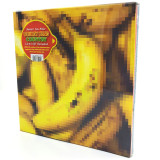
Musique Pour La Danse is proud to present the definitive edition of the highly acclaimed and globally beloved Donkey Kong Country soundtracks, meticulously recreated by composer and producer Jammin' Sam Miller. Released in 1994 for the Super Nintendo Entertainment System (SNES), Donkey Kong Country was celebrated not only for its groundbreaking quasi-3D graphics but also for its exceptional soundtrack.
The soundtrack featured a variety of compositions, and has been highly praised for its diverse and high-quality music, with tracks like "Aquatic Ambiance" and "Fear Factory" standing out as fan favorites. The influence of the Donkey Kong Country soundtrack extends beyond the gaming world, having inspired modern artists and changed the way video game music was perceived.
This limited edition boxset, limited to 500 copies, comes as a triple DLP set, containing Volumes 1, 2, and 3. Pressed on red, green, and blue marbled vinyl, it is housed in a hardboard slipcase featuring new and original artwork by Andrew Beltran.
Don't sleep on this ultimate release-the previous boxset edition has been sold out for a long time, and if you can find it, it's being sold for crazy money.
Using hex SPC data converted to MIDI, Jammin' Sam Miller painstakingly recreated the DKC soundtrack note by note, sourcing the original equipment used to create it. He then translated the MIDI into a modern studio context, incorporating keyboard samples, remixing the sounds with added effects, and mastering the tracks. To learn more about his process, watch the explanatory video here: cutt.ly/ulUHE6J.

The first in a proposed series of transmissions, Surface Detail's mystifying debut introduces an incorporeal body that exists only through sound and sensation, prompting listeners to discern a spiritual realm beyond the physical. Its surging electro-acoustic compositions push past the material world to plunge into deeper sonic dimensions, slowly revealing a philosophy borne of near-death and out-of-body experiences that challenges perception itself.
Overhauling vintage experimental techniques with their bespoke modern methodologies and processes, Surface Detail rearrange the musical timeline, merging vastly different concepts to hint at questions rather than provide solid answers. Their uniquely immersive soundscapes use texture, rhythm and tonality to help brush away the superficial and contemplate the unknown, approaching its delicate, controversial subject matter with sensitivity and sensuality. Not just an auditory experience, 'Surface Detail' tests the potential of sound itself, eliciting visceral physical reactions with its uncanny subtleties.
Those principles are divulged immediately on opening track 'Marée Noire', as breathy saxophone notes loops and swirl over cosmic oscillations and microtonally tuned drones. It's music that cracks open a passage that snakes through various genres, suggesting silhouettes rather than affirming banal musical preconceptions. Skeletal rhythms appear in the ether for only a moment, disappearing into the sonic landscape, and Surface Detail's bespoke instrumentation materializes just to bring out the cellular intricacy of the music, concentrating the gaze on microscopic textures and irregularities that discompose the senses. As the album drifts forward, it bends material reality even further: on 'Southern Breach', warm, lower-register organ tones intermingle with sinewy guitar twangs, evaporating into warped, hypnotic oscillations and eerie echoes; and by 'Superbook of the Dead', the conspicuous details have almost disappeared completely, replaced by subterranean clangs, industrial ambience and other-worldly electrical interference.
It's in this way that Surface Detail softly assert their convictions, insinuating a narrative that subliminally ushers listeners down an hypnagogic River Styx by removing all traces of the familiar. On closing track 'Broken Silicates', distant lullabies, dissociated stutters and ghostly woodwind sounds blot fractal patterns on the wide open space, reincarnating the album in a liminal zone that's not constrained by somatic logic. Whisper quiet and utterly beguiling, it transcends material existence, dissolving barriers between surface and depth.

Light Blue VInyl[27,52 €]
Proudly presenting Maravilhosamente Bem the powerful, female-centred third album by Brazilian singer, songwriter, actress, and creative director, Julia Mestre.
Alongside being a member of the Latin Grammy-winning Brazilian supergroup, Bala Desejo, Julia has been steadily building a solo career where her unique vision and alluring soft, sultry voice take centre stage. Drawing inspiration from ‘80s ballads, MPB, pop and disco productions, each song on this third album finds Julia creatively exploring different characters and tones.
A love-song-driven LP at its core, Maravilhosamente Bem holds a playful mirror up to blissful days gone by, artfully reimagined with Julia’s own modern twist. An album filled with love and nostalgia, it pays homage to her love of classic female disco divas such as Donna Summer, Sade, Alcione, Lady Zu, and the Brazilian rock queens Rita Lee and Marina Lima. Of that latter pairing, the late iconic Brazilian vocalist and musician Rita Lee (Os Mutantes) is referenced in the music video for the first single, ‘Sou Fera’, blessing Julia with a magical guitar. Marina Lima then provides guest vocals on the album’s closing track, ‘Marinou, Limou’, with her name transformed into a mantra by Julia.
Channelling a lo-fi ‘80s ballad aesthetic, Julia navigates a multitude of themes across the nine sublime tracks. From the sexy, whispered performances on vintage horror movie-inspired tunes ‘Vampira’ and ‘Pra Lua’ to the delicate, fragile love lullabies of ‘Sentimento Blues’ and ‘Cariñito’, and the seductive disco diva embodiment on dance tracks ‘Veneno de Serente’ and title track ‘Maravilhosamente Bem’. Another hidden highlight is the palette-cleansing mini-suite, ‘Interlúdio dos Amantes’. A luscious strings instrumental piece that lends to the beautiful Sade-esque ‘Seu Romance’.
Produced by Julia and longtime collaborators Gabriel Quirino, Gabriel Quinto, and João Moreira, Maravilhosamente Bem sees Julia embarking on a new era of her musical career. This sensational third album is a captivating showcase of the creative vision and versatility of one of Brazil’s finest stars.
Released on Mr. Bongo (ROW) and Altafonte (Brazil).
Margaux Gazur presents her debut album „Blurred Memories“ on Smallville- almost 70 minutes into a very special search for her musical origins.
Margaux Gazur is a French-Vietnamese composer, musician, producer and DJ, now based in Berlin. Having lived in Vietnam for 5 years from 2012, she found herself searching for the sounds of her roots, played-back in form of field-recordings combined with traditional instruments and the sounds of her blurred childhood memories.
The tracks of her debut-album unfold the magic in a very subtle way, filled with vivid rhythms of Hanoian street sounds, evolving layers of mesmerizing tones and organic textures to create an intimate and unique atmosphere. Each track offers yet another something to discover while listening- mysterious voices and fragile elements next to beautiful melodies and trippy glitches, organic grooves and hypnotic wonkiness- and a lot of magic moments implemented. Woozy pads meandering and moving along – there is so many things to discover within „Blurred Memories“.
Margaux released her first track on vinyl on Smallville 55 back in 2019 and she has played endless live-sets and DJ performances at amazing spaces like Panorama Bar/Berghain, Heideglühen, Club der Visionäre, Berlin, La Station, Paris, Giegling events, Smallville and Kann Parties as well as beautiful festivals such as Waking Life in Portugal, Fusion, Berlin Atonal, Meakusma Festival or Equation in Vietnam amongst others.
Smallville is extremely happy to present „Blurred Memories“, music to stay with you.
Bo Wosticz is a passionate music producer and DJ from the northern parts of Sweden. He has previously released own tracks as well as remixes under various names, but with this new project, he returns to his roots, creating music with a wonderful blend of electronic and acoustic elements, influenced by sounds, melodies, and rhythms from around the world, Suinga is a shuffling percussive kalimba led mellow house groove Jon Beltram delivers a subtly more energetic remix Return to Fender has an early evening rooftop feel electric pianos sit on a chugging baseline and light pads. Gnallbulver picks up the pace, just a little for the discoteque. Polished mid tempo Nordic Balearic goodness

Scruniversal's sub label Tunes Delivery invites Moscow scene veteran Leonid Lipelis to don his Beard In Dust moniker for their third instalment, one which dips into various different eras of dance history for inspiration. There's a distinctly late 80s feel to opening tune 'Music of the U', complete with sampled bell stabs and the kind of beats that wouldn't be out of place on an S'Express or early Coldcut house affair. 'The Armenian Break' and 'City of Love' look back even further, back to the female-fronted disco efforts of the 70s, the latter adding a touch of Balearic flourishes. 'Abstractish P' circles around some serene arpeggios, with rave whistles and, as it progresses, twisting guitar notes, lending it an individual air, while closer 'RoRyaRe' nods to ExCel-era 808 State with some nice bleepery before settling into more progressive headnodding territory and some distinctive synth play.

The record tells the story of the Jesus De La Cruz Conde, who embarks on an epic journey of self-discovery after witnessing his hometown get burned to the ground. The tracks that make up this record are the very repertoire of songs sung by De La Cruz to Mezcal-soaked patrons in haunted cantinas, as he drifts from pueblo to pueblo across a desolate landscape bristling with tumbleweed. Throughout La Muerte en Realidad no Existe, Clothing conjures De la Cruz through this vampire-cowboy alter-ego creating as much a Mexican Gothic as a Latin American Giallo - a phantasmagoric fever dream of love, loss and violence - painted in neon Technicolor.

Vinyl[22,27 €]
In the vibrant streets of Tembisa, South Africa, amidst the sprawling urbanity connecting Johannesburg and Pretoria, the story of Moskito began. Formed in 2001 by Mahlubi "Shadow" Radebe and the late Zwelakhe "Malemon" Mtshali, the group first emerged as a powerhouse of pantsula dancers. However, their undeniable passion for music soon led them down a new path_ one that would cement their place in kwaito history. Spending countless hours on the street corners of their township, where they were born and raised, Shadow and Malemon danced and sang with an infectious energy that attracted crowds. It wasn't long before the duo decided to channel their talents into a kwaito group, and after adding friends Patrick Lwane and Menzi Dlodlo, Moskito was born. (Pantsula dancing emerged in the 1950s among Black South Africans in townships and continually evolved until it became intertwined with kwaito music culture. The stylized, rapid foot movements and characteristic low-dancing became associated with kwaito as it took over South African urban culture into the early 2000s.) With limited resources, the group displayed immense creativity, recording demos using two cassette decks and instrumental tracks from other artists. They would rap and sing over an instrumental playing on one deck while the second deck records their performance. Their determination paid off when they submitted their demo to Tammy Music Publishers, who were captivated by Moskito's style. "Kwaito was the thing `in' at the time. If you did music you did kwaito. We wanted to fit in and actually it was easy," says Radebe. "We didn't have engineers in the group, so the first time in a real studio was with Percy and Thami to record Idolar." That same year, the group released their debut album, Idolar, under Tammy Music. The album was an undeniable success reaching gold status selling over 25,000 units and earning them a devoted fan base across South Africa and neighboring countries like Botswana, Swaziland, Namibia and Zimbabwe. Moskito collaborated with industry legends such as Chilly Mthiya Tshabalala, who was known for his work with Thiza and Spoke "H." They drew inspiration from Thami Mdluli a.k.a Professor Rhythm, who had dominated the disco scene back in the 80s and 90s. Mdluli helped with musical arrangements and executive produced the album and signed on producer-engineer Percy Mudau, while Shadow and Malemon took pride in composing most of their songs. Like many of the rising kwaito artists of the time, they didn't have music production or engineering backgrounds so they required support from engineers together their ideas down on tape. They were inspired from South African kwaito icons like Trompies, Mdu, Mandoza, and Arthur Mafokate, alongside international heavyweights like Snoop Doggy Dogg, Dr. Dre, 2Pac, and R. Kelly, Moskito created a sound that was uniquely theirs_a perfect blend of local flavor and global influence.

What We Have Now is a love-letter to New York City, written by a breaking heart weathering the deep indigo night of a soul realizing dawn will release it from the dried tears of youth. There is no brighter or harsher wasteland of self-discovery than the one in which we see that childhood is a dream and the now is something we will have to fabricate alone, from those broken mirror shards of memories in service to a world that does not seem to know how to care for us any longer. Full of feeling and shepherded by Clara's intensely honest vocals, these songs transcend place and time to share a universe of wonders beneath the hard-wrought questioning of the deeply human condition we are all living within. Clara Joy is a songwriter full of melody and vision. These home recordings were made by Clara in NYC between 2020 and 2024. The songs were then arranged, mixed & mastered by Kramer in December 2024 in his studio in the mountains of North Carolina. Clara is at the dawn of her career and Shimmy-Disc is proud to bring this amazing work to the world. This creation is a beacon on the murky horizon of this Pyrocene age landscape we find ourselves traversing.

Cindytalk is the mercurial, expressionist outlet of Scottish artist Cinder, inspired by the crossroads of exploratory UK post-punk and early European industrial. Her work thrives on chance and transformation, collaging elements of noise, balladry, soundtrack, catharsis, and improvisation. "We were trying to find our own space," says Cinder of the formative period Camouflage Heart emerged from, amidst a move from Edinburgh to London and Cinder's evolving exploration of gender identity, well before culture at large was equipped to understand. With contemporary discourse we see that the project manifested her transgender ideas as visceral music. The guttural, feral sound marked a notably darker turn from The Freeze's sixyear run on the fringes of punk. Changing the project's name became vital, not just because they kept hearing the former was already taken, but the desire to embody the spiritual and sonic shift, "to uncover new pathways_to feminize it," she says. Cinder, with bandmates David Clancy and John Byrne, arrived at Cindytalk, a winking nod to Sindy, the British fashion doll rival to Barbie known then for its pull-string talking mechanism. "The goal was to have a more interesting narrative, more interesting dialogue. Music was ultimately my only way of talking to people. That was my conversation with the world, an abstracted conversation_an attempt to make some kind of tiny, tiny mark, if possible, you hope somebody will notice." Over the years, Cinder has heard from fans who did pick up on the signals and find refuge in Camouflage Heart. Camouflage Heart plays with tension and pace, from creeping to feverish to claustrophobic. The percussion moves between restless marches and barely-there pulses; for some parts, they scratched and hit a tin bath, among other objects. Guitar lines vibrate and stab as Cinder contorts her voice freely. She pulls poetry from a cerebral abyss, like "make the snake in your eye, pierce the camouflage heart" on the slow-droning centerpiece "The Spirit Behind the Circus Dream." In that register is raw power, both vulnerable and menacing, an ability to locate something deep and emotionally charged within. "I still remember that person who was way too intense for their own good," Cinder reflects. "I couldn't make a record like that now, certainly not vocally, while that anger hasn't dissipated; there's still a kind of warrior." For all the destruction and disintegration of Camouflage Heart, Cinder maintains the objective was never full-on fatalistic; these songs seek not to destroy but to poke and provoke, to transform and heal, to find cracks of light in a crumbling world. She points to the last lines of the opening track, "It's Luxury": "Don't look down," the lyric pines through static and rhythm. Cinder extrapolates, "I'm essentially saying, just keep fucking going. As time went on, for me, that falling became flying. Camouflage Heart is the beginning of believing in flight."
