Wah Wah 45s present two very special cover versions from our beloved Afro-electronic duo, Raz & Afla, available on 12" vinyl for the very first time! Having recently released their sophomore LP, Echoes Of Resistance, to great acclaim and support ranging from Nick Grimshaw on BBC 6 Music to Tash LC on BBC Radio 1, and the follow up remix project Remixes Of Resistance, the pair offer up their unique takes on two very different slices of club culture on twelve inches of wax.
First up, the pair tackle Aphex Twin's sleazy and sinister turn-of-the-century dance floor bomb Windowlicker and take it somewhere completely unexpected, as Raz explains:
"We wanted to go to a different place from our influences for this one. When we told people we will cover this tune everyone said 'but how?!' In Raz & Afla style. We had an idea of what elements to recreate from the original and how we can reference it within our spectrum of sounds. It was so much fun to do and really kicks off at our live shows."
It's a heavily percussive reinterpretation, replete with spooky wordless vocals, funky guitars and spine tingling synths that builds into something of a future Afro-house anthem, whilst respecting the genius of the original recording.
On the flip, Going Back To My Roots has become a mainstay in Raz & Afla's live sets, and means a lot to them personally, as Raz once again explains:
"We love this song. The lyrics resonate with us, talking about the meaning of connection to a land and its people. The history of this song is also fascinating, from Hugh Masekela and Orlando Julius through Odyssey and Richie Havens. We wanted to give it our own flavour. You can't choose your heritage and where you are born. It is always a part of you and we like to celebrate that."
Written and first recorded by Lamont Dozier in 1977, Going Back To My Roots was famously covered by Richie Havens in 1980 before becoming a huge crossover hit when interpreted by disco outfit Odyssey in 1981. Raz & Afla very much give their version their own unique dance floor feeling. It's one which has received much support on BBC 6 Music.
Buscar:disco elements
Signals Aligned stands as a sonic testament to the intersection of science, spirituality, and the vast unknown. Inspired by pioneering theories on the nature of anomalous phenomena, viewing them not as extraterrestrial but as a complex, multidimensional enigma.
There’s a consistent theme of “discovery through distortion.” Truth is often obscured by layers of misinformation, disinformation, and misperception. The music plays with the concept of clarity and distortion, revealing hidden textures beneath shifting layers of sound.
The sound palette is vast and ethereal, incorporating elements of noise, shimmering synths, and organic textures. There’s a sense of both wonder and unease that mirrors theories on the strange and unexplainable.
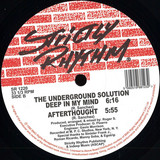
Absolutely ESSENTIAL record right here - The Underground Solution aka The 'S' Man aka the legendary Roger Sanchez is a name that you should all be familiar with by now, and his 1990 ANTHEM 'Luv Dancin' is an NYC deep house benchmark. That's right, this originally came out in 1990. That's a heck of a long time ago. Thing is, this record, when played at the right time will still cause maximum damage in the club. Riffing on disco classic 'Is it all over my face' and with elements of 'The bottle' interspersed with a deep, rolling garage bassline and dreamy keys and pads Sanchez crafted a solid gold cut, a timeless piece of dance music that still inspires today and is often imitated yet obviously never bettered! The flipside cuts 'Deep in my mind' and 'Afterthought' are also sublime exercises in the deepness, The 'S' Man's trademark eerie pads, bleeps and dope drum programming evident throughout, making these tracks huge hits from NYC to Sheffield and beyond! This whole EP is flawless and if you dig the deeper side of this stuff then you're in for a treat - Now's your chance to bag a bonafide, hands down classic record!
'Luv Dancin' has been skilfully remastered from all original master sources and fully licensed and reissued officially for 2017.
2025 Repress
Ash Ra Tempel is the eponymous debut studio album by the Krautrock band Ash Ra Tempel. It features guitarist Manuel Göttsching with drummer Klaus Schulze and bassist Hartmut Enke.
Engineered by Conny Plank it was recorded in March 1971 and released in June 1971 on Ohr Records.
This 50Th Anniversary Album will be Released in Memoriam of all the Musical Contributors to this Release and on Manuel Göttsching´s MG.ART label. It´s the fourth and headlining edition in this series and was finalised, carefully overseen by Manuel Göttsching himself in the late Autumn of 2022.
Much has been written about the record and band.
Having finished a first musical chapter with their Steeple Chase Bluesband and still at very young age of only 17 and 18 years old Manuel Göttsching and Hartmut Enke met Klaus Schulze. Together they started to write and and compose what, to many, became one the holy grails of Psychedelic Rock and early Electronic Music -
the German variant which was later also named "Krautrock":
Ash Ra Tempel´s self-titled first album "Ash Ra Tempel".
"The trio of Klaus Schulze, Manuel Göttsching and Hartmut Enke decided to abandon conventional composition and song writing, in favour of free-form improvising and developing a new musical language. As such, they became notorious for jams that could exceed 30 minutes." Says Discogs. "Some of these recordings can be found on Manuel Göttsching´s "The Private Tapes" releases", which will be re-released on MG.ART as well, following this edition.
"Krautrocksampler" author Julian Cope mentioned it to be "… one of the greatest rock 'n' roll LPs ever made." (Julian Cope Presents Head Heritage | Unsung | Reviews | Ash Ra Tempel - Ash Ra Tempel". 15 March 2000.)
AllMusic called the album "both astonishingly prescient and just flat out good, a logical extension of the space-jam-freakout ethos into rarified realms."
Here we would like the Band to be heard, for what can easily be said as the first time in 50+ years, with the exception of some early Journalists for whom the young Manuel Göttsching wrote a statement of intent (the original text can be found inside this edition) as following:
"Our musical concept is based on a combination of blues rock and delicate collages of electronic sound. These two elements should remain inseparable. And in their complex unity, the different musical philosophies of each musician find a common sweet spot. Our music is a permanently impulsive experience left to develop as it will, starting from a common fixed point of departure. This is where the difficulty of the music begins: No standardized formulation of our music can and should be possible. Only the constant reaction within the band can determine the musical result. And this requires constant listening with full concentration on the part of the creators. The idea of a particular musician will be - if flexible enough - absorbed by the others, transposed to their own instrument, and reflected back into the music as an individual contribution. This reciprocity within the band is then transferred over to the audience. And this process means that their reaction is not only a contribution to the end result; it actually makes them jointly responsible for the creation of the final musical product.
…
On our album, the track "Amboss" represents the first layer. Conventional instruments communicate familiar music which is in part expanded through electronic means. In the second track of the album - "Traummaschine" - the actual basic sound approach is dissolved into an electronic Nirvana which no longer allows the concrete identification of actual instruments. Innocent, virgin listening, free from any and every association, can finally begin - and the music can be absorbed and processed free from the limitations of categorization. That is the purpose of our music: To convey freedom without any predetermined criteria or traditions.
Thank you for your attention."
(Taken from the original A-R-T Bio 1970)
Hartmut Enke, Manuel Göttsching and Klaus Schulze aka. Ash Ra Tempel travelled to Hamburg in March 1971 to record their debut, with assistance of another Icon, legendary engineer Conny Plank.
The rest is history.
2025 Repress
Ash Ra Tempel is the eponymous debut studio album by the Krautrock band Ash Ra Tempel. It features guitarist Manuel Göttsching with drummer Klaus Schulze and bassist Hartmut Enke.
Engineered by Conny Plank it was recorded in March 1971 and released in June 1971 on Ohr Records.
This 50Th Anniversary Album will be Released in Memoriam of all the Musical Contributors to this Release and on Manuel Göttsching´s MG.ART label. It´s the fourth and headlining edition in this series and was finalised, carefully overseen by Manuel Göttsching himself in the late Autumn of 2022.
Much has been written about the record and band.
Having finished a first musical chapter with their Steeple Chase Bluesband and still at very young age of only 17 and 18 years old Manuel Göttsching and Hartmut Enke met Klaus Schulze. Together they started to write and and compose what, to many, became one the holy grails of Psychedelic Rock and early Electronic Music -
the German variant which was later also named "Krautrock":
Ash Ra Tempel´s self-titled first album "Ash Ra Tempel".
"The trio of Klaus Schulze, Manuel Göttsching and Hartmut Enke decided to abandon conventional composition and song writing, in favour of free-form improvising and developing a new musical language. As such, they became notorious for jams that could exceed 30 minutes." Says Discogs. "Some of these recordings can be found on Manuel Göttsching´s "The Private Tapes" releases", which will be re-released on MG.ART as well, following this edition.
"Krautrocksampler" author Julian Cope mentioned it to be "… one of the greatest rock 'n' roll LPs ever made." (Julian Cope Presents Head Heritage | Unsung | Reviews | Ash Ra Tempel - Ash Ra Tempel". 15 March 2000.)
AllMusic called the album "both astonishingly prescient and just flat out good, a logical extension of the space-jam-freakout ethos into rarified realms."
Here we would like the Band to be heard, for what can easily be said as the first time in 50+ years, with the exception of some early Journalists for whom the young Manuel Göttsching wrote a statement of intent (the original text can be found inside this edition) as following:
"Our musical concept is based on a combination of blues rock and delicate collages of electronic sound. These two elements should remain inseparable. And in their complex unity, the different musical philosophies of each musician find a common sweet spot. Our music is a permanently impulsive experience left to develop as it will, starting from a common fixed point of departure. This is where the difficulty of the music begins: No standardized formulation of our music can and should be possible. Only the constant reaction within the band can determine the musical result. And this requires constant listening with full concentration on the part of the creators. The idea of a particular musician will be - if flexible enough - absorbed by the others, transposed to their own instrument, and reflected back into the music as an individual contribution. This reciprocity within the band is then transferred over to the audience. And this process means that their reaction is not only a contribution to the end result; it actually makes them jointly responsible for the creation of the final musical product.
…
On our album, the track "Amboss" represents the first layer. Conventional instruments communicate familiar music which is in part expanded through electronic means. In the second track of the album - "Traummaschine" - the actual basic sound approach is dissolved into an electronic Nirvana which no longer allows the concrete identification of actual instruments. Innocent, virgin listening, free from any and every association, can finally begin - and the music can be absorbed and processed free from the limitations of categorization. That is the purpose of our music: To convey freedom without any predetermined criteria or traditions.
Thank you for your attention."
(Taken from the original A-R-T Bio 1970)
Hartmut Enke, Manuel Göttsching and Klaus Schulze aka. Ash Ra Tempel travelled to Hamburg in March 1971 to record their debut, with assistance of another Icon, legendary engineer Conny Plank.
The rest is history.
Planet Trip Records is pleased to present Aqua Terra, the latest EP release from Friedrich Trede and Stephan Braun, the respected Munich-based DJ and production duo better known as Rhode & Brown. Since 2010, they’ve racked up a slew of quality releases through Permanent Vacation, Public Possession, Shall Not Fade, and their own Slam City Jams imprint, while playing well-received DJ sets across Europe. Along the way, the two longtime friends have spent the last fifteen years incorporating influences from electro, italo, synth-pop, breakbeat trance, rave music, and ambient into their blend of uptempo house and techno productions.
Shifting gearspeed, Aqua Terra sees Rhode & Brown trying something completely new and unexpected from them: a record inspired by UK street soul, digi-dub, and transatlantic R&B and boogie from the 1980s and 1990s. Beginning with the Loose Ends slanted synthesiser chords and shuffling machine beat of ‘Heart Attack’ and the glossy new jack swing bounce of ‘Passion Sauce’ (both featuring sultry Berlin-based New York singer Marlena Dae), Aqua Terra quickly reveals itself as a treasure chest of heavy tunes. Steeped in love and lust, ‘Heart Attack’ and ‘Passion Sauce’ are essential sing-along numbers for the warm-up and the warm-down.
The exemplar of a groove that keeps on giving, ‘Aqua Terra (Acid Frog Mix)’ is a note-perfect example of digi-dub redone for the 2020s. Keeping us guessing, Rhode & Brown flip the script on ‘Longo Doggo’ by borrowing elements from sampledelic ‘90s turntablism and blending them with a post-disco/electro beat and a slinky bassline for the ages. From there, ‘Multiflora’ sees our protagonists back in a bassy digi-dub mode, before closing things out with an acid breakbeat slanted demo mix of the title track.
- Commemorative Coin
- Think Less
- No Respect For The Arts
- Two Hour Lunch
Leeds-based noise-rock band Thank drops their second EP Please. Coming out as a joint venture between Buzzhowl Records and Belgium's EXAG, Please is the follow-upto the group's debut EP, 2017's Sexghost Hellscape. While the tension in Please could be too much for some bands to hold, Thank sustainit expertly across the four tracks here. This is thanks in part to superbly-balanced production by Rob Slater and Jamie Lockhart (Greenmount Studios) as well as a meaty mastering job from Declared Sound's Dominic Clare. Furthermore, vocalist Freddy Vinehill-Cliffe (Beige Palace) acts as a lightning rod for both elements of Thank's sound. Vinehill-Cliffe's lyrics tackle by turns Catholic guilt, deaths in the family, his experiences in therapy, sex, loyalty and betrayal. Whatever the subject matter, every syllable of Please is delivered in a selfflagellatingyelp that is equal-parts Xiu Xiuand post-Nite Flights Scott Walker. Such a tragi-comic performance is the perfect focalpoint for Thank's harsh, powerful Please. "A brutally deranged band that mixes krautrock and experimental electronic music into their caterwauling punk, reforming noise rock with robotic grooves and manipulatedsynths." - Post Trash "Thank trade in groovily abrasive riffs, burbling synths, disco-punk drum patterns and high level ranter vocals." - The Quietus
Repress!
Ahead of a full-length album coming on Glitterbox Recordings, the king of disco re-edits Dr Packer presents the second instalment of this 12' series. 'Different Strokes Part 2' features four Dr Packer versions of soulful house favourites, giving a flavour of what's to come from the LP. Kicking off with a bonafide classic, Dr Packer's take on Soulsearcher's 'Can't Get Enough!' maintains all its most iconic elements, the euphoric vocals and timeless groove given a fresh-sounding elasticity. Next up is Dr Packer's remix of The Shapeshifter's evergreen 'Lola's Theme Recut' appearing for the first time on vinyl. An exclusive to this vinyl release, a remix of Johnny Corporate's 'Sunday Shoutin'' picks up the pace with a funking bassline to suit any dynamic disco set. Rounding off this foursome of impeccable remixes is Cleptomaniacs featuring Bryan Chambers 'All I Do', a vocal house classic from the early noughties, reinterpreted masterfully for today's Glitterbox dancefloor,r which was originally featured on the label's A Disco Hï compilation. Dr Packer has done it again, breathing new life into your most beloved dance records so you can fall in love with them all over again.
The incredible story that began with The Most Mysterious Song on the Internet (TMMS) now enters an exciting new chapter: Skyscraper, the debut album by FEX.
Skyscraper features ten original tracks recorded in the early to mid-1980s-carefully re-transferred, remastered, and brought back to life. The album cover, designed by Darius S., brings the story full circle. Darius is the very person who preserved the now-iconic track Subways of Your Mind by recording it from NDR radio in the mid-80s. Without him, FEX may never have been discovered.
FEX's debut opens with its namesake, Skyscraper-a brooding, previously unreleased track the band once described as part of their "psychedelic phase." With haunting synth-helicopter textures and deep guitar riffs, it immediately sets the tone and raises tension.
The release flows naturally into the energetic and fully remastered studio version of Subways of Your Mind. This version of the TMMS - re-discovered on the "yellow label tape" by Reddit user Marijn-was long believed to be from a smaller home studio, but was actually recorded in November 1984 at Hawkeye Studios in Ganderkesee, near Hamburg.
Goldrush, first teased in raw form on FEX's YouTube channel, bends toward mechanical rhythm and shimmering synths, a snapshot of the band's experiments with programmed drum machine sound. Rückwardt's lyrics point to greed and criticizes materialism, and while the music leans toward pop sensibilities, it carries a raw, fractured edge.
Heart in Danger and I've Got My Eyes On You offer contrasting experiences-one rooted in classic post-punk tension, the other floating in melodic synth layers. The latter in particular feels like a fragment from a parallel radio history: a precise and one of a kind synth pop love song with a progressive touch.
From a rehearsal tape comes Dirty Slapstick, its urgency intact. Missing keyboard parts were later reconstructed by Michael Hädrich using his original DX7 synthesizer-recovering lost elements without rewriting the past. The lyrics take a wry look at forced optimism. Also included are the songs Talking Hands, Jenny and Strange Feeling, the latter being a slower blues-tinged cut, revealing yet another facet of the band's reach and Rückwardt's songwriting diversity.
The album closes where the legend began-with the original radio recording of Subways of Your Mind from Darius' cassette. This version of The Most Mysterious Song features alternate vocal effects, contributing to the track's enigmatic aura. Digitally transferred using a high-end Revox machine and carefully remastered, it now has its long-deserved official release.
The cover features a photo of the Eichenberg Bunker in Kiel-one of FEX's original rehearsal spaces and a symbolic monument to their sonic legacy.
Chaz Bear (formerly Bundick) was a musician from birth. Growing up, it was normal to hear music across genres, from Michael Jackson to Elvis Costello to The Specials, in the Bundick household. These influences were quite unique for a biracial kid growing up in South Carolina, contributing to the complexity of Chaz’s self-understanding and expression through his own music.
Chaz began playing and recording original compositions in his preteen years, forming multiple indie bands starting in middle school and continuing until his personal project, Toro y Moi, was signed by Carpark Records in 2009. Before getting signed, he was already an incredibly prolific artist, having released over 10 Toro y Moi albums on his own (and undoubtedly retaining a vast compendium of unreleased songs). His personal work drew upon a vaster array of influences than did his full band. Early Toro work called upon Chaz’s childhood exposure to 80’s R&B, pop and electronic music, while also evolving with his discoveries of acts like My Bloody Valentine and J Dilla and his burgeoning interest in French house. Just before his graduation from the University of South Carolina, where he earned a degree in graphic design, Chaz caught the attention of music bloggers and record labels with his dreamy, bedroom recordings.
Outer Peace, was written and recorded in the Bay Area after Chaz’s return from a one year stint in Portland. It is somewhat of a homecoming celebration, filled with features by friends and saturated with a playfulness that had not previously been embraced in past Toro albums. Outer Peace stands in contrast to the more sparse and contemplative Boo Boo, an album recorded while in Portland in relative isolation. With Outer Peace, Chaz showcases his ability to remain on the cutting edge of music’s evolution while not taking himself too seriously. There are contemporary hip hop references mixed in with funk, Eurodance and ambient elements, all interwoven expertly and retaining that quintessential Toro y Moi aesthetic.
The discovery of Doris Dennison's score represents a genuine musicological breakthrough—what once would have been "a tree falling in the woods" thirty years ago now holds the potential to render "a thunderous clap in our minds." While researching Anna Halprin's lesser-known collaborators, scholar Tom Welsh uncovered the archives of AA Leath, one of Halprin's principal dancers. Buried within these materials was Dennison's handwritten score for Earth Interval, dated May 1956. Born in Saskatchewan, Canada, in 1908, and raised near Seattle, Dennison (1908-2009) encountered John Cage while teaching Dalcroze eurythmics at the Cornish College of the Arts. She joined Cage's earliest percussion quartet—alongside Margaret Jansen, the composer and his wife Xenia—in the group widely regarded as having performed the first complete concert of percussion music in the United States. This historic December 1938 concert was followed by tours and the landmark May 1941 performance at the California Club, comprising Cage and Lou Harrison's Double Music, the premiere of Cage's Third Construction, and Harrison's 13th Simfony.
As Bradford Bailey observes in his extensive liner notes, Earth Interval demonstrates "an extraordinary balance of elements that imbues the piece with a sense of clarity, directness, and constraint that is both distinct and ahead of its time." The work's most remarkable innovation lies in its approach to extended techniques, particularly Dennison's notation for the central movement: "In 2nd movement, 1st player lowers + raises a gong into a tub of water while beating." This technique, absorbed from Cage's experimental vocabulary, generates what Bailey describes as "fields of acoustic abstraction that bend and warp time through sustained resonances, beat, and space." The temporal sophistication of these manipulations anticipated Karlheinz Stockhausen's Mikrophonie I (1964) and Annea Lockwood's water-based sound investigations by over a decade. After joining Mills College as dance accompanist, Dennison maintained crucial connections to the Bay Area's experimental scene, collaborating with figures like Merce Cunningham and programming Cage's music throughout the 1950s.
Comprising three movements—Land Form, Air Tide, and Earth Play—Earth Interval is scored for recorder, drums, gongs, maracas, muted gongs, and bowl gongs. In total, the piece is just under eight minutes: "a fleeting glimmer of moment in time, a life spent at the cutting edge, and a singular creative vision that packs a powerful punch." When viewed in historical context, placed in contrast to roughly contemporaneous avant-garde percussion works by Cage, Harrison, Louis Thomas Hardin (Moondog), and Harry Partch, or important precursors like Edgard Varèse's Ionisation (1931) and Henry Cowell's Ostinato Pianissimo (1934), it's clear that Dennison was following her own path. Earth Interval is not derivative. It is a precursor to what was yet to come, alluding to developments of avant-garde and experimental music that wouldn't begin to appear on the cultural landscape until the 1970s and '80s, with the emergence of Post-Minimalism and more idiosyncratic artists and ensembles like Midori Takada, Ros Bandt, Peter Giger, Frank Perry, Christopher Tree, Michael Ranta, Gamelan Son of Lion, and Niagara.
This recording by Chicago's Third Coast Percussion, captured in March 2022, represents the first complete documentation of this pioneering work. The ensemble's interpretation reveals the piece's remarkable contemporaneity while maintaining its historical specificity. Where Cage, Harrison, and Partch employed "self-consciously off-kilter polyrhythms," Dennison's rhythmic sensibility anticipates minimalist developments by nearly a decade, yet integrates "forceful rests, as well as sharp shifts in sonic character, tempo, and meter, that break the momentum and breathe a sense of life into the piece's structure." This positions her work closer to Post-Minimalism decades before its emergence. The architectural approach demonstrates Dennison's understanding that "the composer almost entirely disappears" in favor of phenomenological listening experience, creating what might be called an egoless music that places its realities and meaning entirely in the ear of the beholder. The present recording, realized by Chicago's distinguished Third Coast Percussion ensemble, represents a significant achievement in experimental music scholarship and performance practice. As specialists in the Cage tradition and contemporary percussion repertoire, Third Coast Percussion approached Earth Interval with the historical sensitivity and technical precision required to illuminate Dennison's subtle compositional innovations. The March 2022 recording sessions, engineered by Colin Campbell, capture both the work's intimate chamber music qualities and its bold exploration of extended techniques. The ensemble's interpretation reveals the piece's remarkable contemporaneity—its ability to speak directly to current musical concerns while maintaining its historical specificity.
This recording serves multiple scholarly functions: it provides the first complete documentation of Dennison's compositional voice, offers insight into the broader network of experimental music practitioners surrounding Cage and Harrison, and demonstrates the sophisticated level of compositional thinking that was occurring within the Bay Area's dance-music collaborations of the 1950s. The work's emphasis on phenomenological listening—what might be called an "egoless" approach to musical experience—places it within a lineage of American experimental music that prioritizes perceptual process over compositional personality. The work's original obscurity—limited to AA Leath's performances at venues like the 1957 Pacific Coast Arts Festival at Reed College—paradoxically allowed it to remain "entirely on its own terms," free from the constraints of historical categorization. Drawing on Jacques Derrida's Archive Fever, the argument emerges that "the archive can acknowledge, celebrate, and resurrect" overlooked voices, transforming our understanding of experimental music history. The present Blume edition, featuring Third Coast Percussion's authoritative interpretation, includes a lavishly illustrated 16-page booklet designed by Bruno Stucchi / dinamomilano, containing complete scholarly apparatus, historical photographs, and detailed production notes. This recording enables "cross-temporal intersectionality," allowing Dennison to "belong to a newly formed and more dynamic understanding of the present and past," demonstrating how forgotten voices can reshape entire historical narratives when given proper scholarly attention and performance advocacy.
- 1: Coyote
- 2: Amelia
- 3: Furry Sings The Blues
- 4: A Strange Boy
- 5: Hejira
- 6: Song For Sharon
- 7: Black Crow
- 8: Blue Motel Room
- 9: Refuge Of The Roads
Mobile Fidelity's UltraDisc One-Step 180g 45RPM 2LP Set Plays with Authoritative Tonality, Airiness, and Clarity:
Pressed on MoFi SuperVinyl and Strictly Limited to
3,000 Numbered Copies
1/4” / 15 IPS Dolby A analogue master to DSD 256 to analogue console to lathe
Joni Mitchell is the only artist who could’ve made Hejira. The legendary singer-songwriter said as much when discussing the album decades after its release. Yet that fact seemed obvious from the moment the gold-certified effort streeted in fall 1976. An adventurous travelogue, probing narrative, and offbeat homage to freedom, Hejira remains an inimitable entry in the catalog of recorded music — a spare, gorgeous, meditative series of sonic vignettes comprised of floating harmonic pop, cool jazz, soft rock, and sensitive vocal elements that beckon feelings of motion, discovery, and self-examination.
Sourced from the original analog master tapes, pressed at Fidelity Record Pressing on MoFi SuperVinyl, and strictly limited to 3,000 numbered copies, Mobile Fidelity's UltraDisc One-Step 180g 45RPM 2LP set presents the record ranked the 133rd Greatest of All Time by Rolling Stone with definitive detail, richness, accuracy, and directness. Marking the first time the revered LP has received audiophile treatment, it's one of six iconic 1970s Mitchell records Mobile Fidelity is reissuing on vinyl and SACD.
Playing with a virtually nonexistent noise floor, dead-quiet surfaces, and superior groove definition, this collectible reissue reproduces in enveloping fashion the tones, textures, and craftsmanship that help Hejira function as the equivalent of a liberating trip down an open road with nothing but blue sky, natural landscape, and fresh air in the immediate vicinity. Passages bloom, carry, decay as they do amid an acoustically optimized environment. Soundstages extend far, wide, and deep, with black backgrounds and pinpoint images adding to the realism.
The reference-grade immediacy, airiness, and presence put in transparent perspective Mitchell’s dense strings of words, stream-of-conscious-like phrasing, and unhurried albeit forward momentum. Likewise, the instrumental contributions of her A-list support musicians — a cast that includes L.A. Express members John Guerin, Max Bennett and Tom Scott, plus Neil Young, Victor Feldman, and Abe Most — emerges with breathtaking clarity and dimensionality.
While Mitchell, whose intimate vocals and abstract guitar parts center everything, Mobile Fidelity's restoration of Hejira further reveals the visionary breadth of guitarist Larry Carlton and bassist Jaco Pastorius. Though heard on only four tracks, Pastorius' fretless bass epitomizes the fluid, subtle, flexible, roomy, and shape-shifting characteristics of songs that often appear to transpire out of nowhere akin to the formation of a puffy cumulus cloud overhead. In sync with Mitchell’s voice, Pastorius’ fusion hovers and floats, suspended in a fog you want to deeply inhale. The "grace notes" Mitchell desired on Hejira can now be heard in full. Ditto the luxurious tapestries of alinear lines, fills, and supplements unreeled on Carlton’s six-string.
Visually, the packaging of this UD1S set complements its identity as the copy to own. Housed in a deluxe slipcase, the LPs come in foil-stamped jackets with faithful-to-the-original graphics. This version is for listeners who desire to become immersed in everything about Hejira, including the unforgettable album cover — a pastiche of 14 different photos Mitchell used a Camera Lucida to assemble into one image that’s anchored by a portrait of her in a stoic pose — and the interior shots of Mitchell skating on a frozen Wisconsin lake wearing a pair of black skates, black shirt, and fur cape.
The notion of skating, feeling an awakening wind whipping against your face, and losing yourself to the surroundings are extremely apt for Hejira, which Mitchell wrote after a sequence of trips and relationships prompted her to reflect on the complicated conflicts between independence and marriage, success and satisfaction, duty and desire — and, more specifically, “the cost of being a woman.” The Canadian native delved into such themes before. But never as she does on Hejira, whose liberating, running-away aura doubles as another of Mitchell’s rejections of tradition as well as a suggestion of a better alternative.
At once observational and personal, expansive and insular, cheerful and poignant, Hejira spans a sea of human conditions, emotions, and circumstances. It addresses drifting, isolation, pleasure, place, time, and surroundings with strikingly poetic discourse matched with music that, save for the crooned ballad “Blue Motel Room,” forgoes conventional structures and choruses.
The jazz-based arrangements, marked by scaled-down percussion and all manner of bent, rounded, and unsettled notes, hint that Mitchell has no exact destination in mind. Excursions such as the moody “Furry Sings the Blues,” funky “Coyote” and edgy “Black Crow” throw open previously locked doors to possibility and journey. They signal it’s time for a welcome departure from norms and the past, one that leads to a heightened sense of clarity and perspective. Or, as Mitchell said upon choosing the album title, it’s time for “leaving the dream, no blame.”

- 1: Louhi (Part )
- 2: Louhi (Part )
In the world of Pharaoh Overlord, little is ever as it seems. This band is less comprised of tricksters or mischief makers than fearless obsessives whose musical instincts take twisted and wild pathways. Now, fresh from forays into Italo-disco and synth-pop, they have thrown another still more mighty statement of intent into the universe. Louhi is a thunderous and majestic epic of joyful repetition and earth shaking power. A two-track minimalist-rock monolith forged from guitars, synths and hurdy-gurdy, inspired by the band’s eternal touchstone influence Outside The Dream Syndicate by Tony Conrad and Faust, and constructed around a single riff and melodic idea, it builds and evolves to fearsome pinnacles of elemental intensity.Luminaries and constant compatriots in the Pharaoh Overlord
headspace were recruited for this voyage into the ether. Vocalist and longtime collaborator Aaron Turner (SUMAC, Isis, Old Man Gloom)and Tyneside maverick Richard Dawson were equally keen to get on board, the former taking a spontaneous and improvisatory approach to his vocal parts, and the latter largely playing a part consisting of one guitar chord. Yet whatever routes Pharaoh Overlord take to their destination, a common theme is the consciousness-warping singularity of the riff and the mantra, and the temporal disorientation this can provoke mirrors the broader designs of this record, which takes traditional folk elements and transports them in the band’s singular time machine. “It’s our 25th Anniversary this year, and from time to time we hear wishes that if just we could play more of the stuff that we did twenty or more years ago” relate Jussi and Tomi. “We totally understand this. You could say we used Louhi to reset ourselves to the past, to be able to continue again to the future.” Aaron puts it another way, evoking simplicity in the chaos – “The world of Pharaoh Overlord is a magical one - every album is an invitation to enter that place and rejoice in doing so…”
- A1: Sinfonia Al Sole Che Nasce
- A2: Miss Springtime (...Mia)
- A3: Non Una Corda Al Cuore
- A4: Lady Moon
- A5: La Ragazza Che Amava Il Mare E Il Vento
- B1: Disco Divina
- B2: Oasis
- B3: Immenso Mare, Immenso Amore
- B4: Zenith
- B5: Finale
The Time Capsule label unites record collectors and DJs of Brilliant Corners and Beauty & The Beat communities in London. For each release, Kay Suzuki works alongside one co-curator to reinstate and repackage the music they hold dear into perfectly restored historic artifacts.
For the first release, Brilliant Corners regular and Meda Fury signing Ryota OPP curates the reissue of Il Guardiano Del Faro’s 1978 album Oasis.
Born 1940 in Milan, Federico Monti Arduini was a child prodigy who studied piano and was already performing at concerts from the age of eight. He composed pop songs for other artists which sold millions of copies, but his own solo success came after he encountered synthesizers in the early 70s.
Viewed as a precursor of New Age sound art, Arduini was one of the first producers in Italy to use the Moog synthesizer and a meeting with Bob Moog in New York only added to this obsession. He was also an early adopter of the tradition among electronic producers to use a moniker to disguise his identity. Il Guardiano Del Faro (translated as “the guardian of lighthouse”) is a nod to the small Italian fishing town Porto Santo Stefano, where Arduini created his studio in the mid-70s.
He produced a number of albums from this seaside idyl of electronic instruments and tape recorders, but Oasis stands out from the pack. Released in 1978, it became a cult classic for its experimental sounds and emotional expressions. Spiritual synth sounds cover the album in a dreamy haze, oscillating between ambient and psychedelic. Sparing deployment of the Roland rhythm box gives dance floor favourites ‘Disco Divina’ and ‘Oasis’ touches of space disco and even teases proto-house elements like the great Sun Palace.
“The passionate, sweet and dramatic sound of Il Guardiano Del Faro made me fantasise about so many romantic aspects of Italian culture. Oasis is sonically more interesting than his other albums and these exotic, eccentric rhythms sound quite familiar to the modern music fans.” – Ryota OPP
Experience the magic of a timeless classic reborn: this exclusive 7" vinyl features a brand-new remake of the iconic "I Believe in Miracles", produced by French groove maestro MonsieurWilly and performed by the radiant soul vocalist Natalie Nova. With a perfect balance of vintage disco vibes and fresh production finesse, this release breathes new life into the legendary track, making it both nostalgic and clubready. Adding to its irresistible charm, the remake is infused with a Latin summerinspired rhythm—a driving, syncopated beat that designs the heartbeat of Latin music. Ment to be upbeat and danceable, the track incorporates percussive grooves, rhythmic guitars, and tasteful electronic elements to create a vibrant, sun-soaked atmosphere that feels right at home from beach bars to dancefloors. The collaboration between MonsieurWilly and Natalie Nova delivers a unique blend of soulful warmth, infectious energy, and rhythmic flair. Natalie Nova’s powerful vocals shine with emotion and style, while MonsieurWilly’s production wraps it all in a groove-heavy, analog-inspired soundscape. This 7" is pressed on high-quality vinyl and is ideal for collectors, DJs, and lovers of soul, disco, and feel-good summer anthems. Don't miss this limited edition release - proof that miracles still happen on wax.
- A 1: Scoop
- A2: I Never
- A3: Breakdown
- A4: Slap 5. Cue
- B 1: Semitones
- B2: Paycheck
- B3: They Go Wild
- B4: All I Need
“My hero’s back,” Madeline Kenney sings on the second track of her newest effort, Kiss from the Balcony. In a sense, she means herself; made with friends Ben Sloan and Stephen Patota across just a few in-person studio sessions in Oakland, these tracks represent a culmination of Madeline’s musings on growth and resilience reaching back years, brought to life through this generative and vibrant collaboration. Close listeners can hear the breadth of stylistic elements and themes carried through from various eras of her work, which all come together in a cohesive and timeless record.
In two week-long intensive sessions, the three collaborators grew these nine songs from fragments, sketches, and seeds. With a background in experimental percussion and sound design, Ben Sloan brings an electronic sound to Kenney’s writing; Stephen Patota provides ingenious guitar melodies throughout and grounds the project in acoustic elements. Kiss from the Balcony was originally intended to be an EP, but the sessions brought forth such fruitful ideation and play that the project was expanded to a full length album. It sits in Madeline’s discography as a thematic and musical progression that sees her iterate on ideas about love and explore new sonic motifs through her work with Patota and Sloan.
Much of Kiss from the Balcony is a meditation on modern relationships, a feminist and utterly human contemplation of power and who holds it. “Hereditary backward leaning,” she describes in ‘Slap,’ of the female condition; “But no-one ever likes to see the girls break down / So they keep it to the bathroom floor” she sings in the rapturous opener, ‘Scoop.’ While the songs are shrouded in metaphor, the ubiquity of heartbreak and resilience decode much of the internal conflict Kenney depicts. The album sees her recognize the precarity and peculiarity of life and take it by the horns, realizing she controls her own narrative:
She explores the relationships between joy and suffering, choosing to see them as inseparable, two sides of a single coin. “It’s never over / When will they love me?” Kenney asks on ‘They Go Wide,’ describing her positionality both as a woman in relationship and as an indie artist in the modern music industry.
A playful hopefulness pervades the record, providing a sense of revelation in the journey throughout, Kenney’s radical acceptance of life as it is like a lyrical tongue out at the absurd.
Dana Schechter: Lap Steel Guitar, Bass, Electronics. - Paul Wallfisch: Piano, Organ, SOMA Pipe, Guitaret. Music from the Vienna Volkstheater production of Wolfram Lotz's play "Die Politiker" directed by Kay Voges; performed live in the theatre, spring 2022. These 2 beautiful exiles travel limbic landscapes and underwater dreams with a map that disintegrates instantly when viewed. Their fractured sounds dissolve and reconfigure endlessly in our cochlea and infest our imaginations with spiked armies of ultra-vivid, sentient and carnivorous coral predators, atavistically intent on devouring the sweet meat hiding deep in the center of the amygdala. Michael Gira (SWANS). Wallfisch has played in bands like Firewater and Little Annie, while Schechter has logged time with American Music Club, Angels of Light and her own Insect Ark, among others; both spent time touring and recording with SWANS. They've been friends since meeting in New York in the 1990s. Years later they forged a stronger connection as bandmates in Botanica. They renewed their artistic partnership in 2021, when Paul invited Dana to Vienna to develop the music for a theatrical spectacle called Die Politiker written by Kleist prize winner Wolfram Lotz. The music from the production provides the foundation for the duo's first album, The Heart of A Whale. Across its six intense tracks one can detect a subtle homage to storied Berlin musical traditions, as the pair puts a raw, often brutal veneer on songs steeped in Weimar cabaret (a la Tom Waits) but updated with a visceral mixture of noise, post-punk, and industrial elements. Performed on a panoply of instruments from bass, organ and lap steel to SOMA Synths, Guitaret, a variety of electronics and a grand piano hammered with a shoe, the music reflects the New York- Berlin nexus they've both been part of for decades. Echoes of Swans, Einstürzende Neubauten and The Birthday Party, but also hints of Throbbing Gristle, Eno and even William Basinski and Michael Gordon. The music can't be contained by any single tradition, with a decidedly experimental bent that ruptures the fixed rhythm of rock for something more theatrical and emotionally harrowing.
- Under The Crescent
- Eyes Of The Sky
- Upon The
- Highest Mountain
- As Daylight Yields
- Greater Art
- Evil Inside
- Netherworld
- Tears
It was in such a dense and impenetrable darkness that Lake of Tears must have been
born.
And their debut album is immersed in this darkness. It was baptized "Greater Art" and
indeed the title sets the tone for what was to follow. Yes, it is a higher art, it was and is
something different. Although there are infuences from other Swedish bands of the
time, such as Tiamat, or even death metal elements, what is certain is that their doom
metal brought to the fore something new, fresh and completely innovative.
We won't go into the process of choosing any songs, as we've said it before, Lake of
Tears never included indifferent compositions on any album. However, we can't help
but make a small exception when talking about the magnifcent epic " Upon The
Highest Mountain ", which in itself would be an excellent reason to purchase the
album.
We are proud to release Lake of Tears ' debut on vinyl after 31 years. For the older
generation to remember and the younger generation to discover. Because what these
Swedes made here, three decades ago, stands as an immortal monument. Is it doom
metal? Does it have death metal infuences? Is it gothic metal? Yes, but it sounds a bit
different...Who really cares?
It was then that the magnifcent prologue was written, becoming the beginning of
everything that was to follow. And hold on... the epilogue hasn't been written yet...
Since being discovered by the Mainz-based lounge label “Wohnton” in 2003, Flashbaxx’s jazz and funky
beats have been featured on international compilations—including releases on Sony Music, EMI, and
Ministry of Sound. His productions appear alongside artists such as Moby, Jazzanova, Blank & Jones, Die
Fantastischen Vier and Bonobo and are regularly played by renowned DJs and tastemakers like Rainer
Tru by (Compost, DE), Robert Luis (Tru Thoughts, UK), and Mark Farina (OM Records, US).
His latest EP Take Care My Friend (NuNorthern Soul, UK / 2022) was enthusiastically received by the scene.
For the remix EP (NuNorthern Soul, UK / 2023), he brought on board renowned producers such as Atjazz
and Moods.
In his "feel-good" DJ sets, he effortlessly blends various styles, ranging from downbeat to house with
elements of disco, boogie, jazz and funk. Since 2024, Flashbaxx has been performing again as an electronic
live act, showcasing his unique mash-ups of disco and house classics. His high-energy performances have
already taken him to legendary clubs like the KitKat Club in Berlin. In June 2025 selected tracks from his live
set will be released as “Gazelle” EP on the newly founded label Groovers Trax (Leipzig), fulfilling his longheld
dream of creating an uncompromising house record with a disco twist.
Mexico City based "street jazz" maestro Soni Orbita is on a spiritual quest in sound. Jazz is what he uses to communicate messages of love and freedom, and this new album for Departamento does just that across 8 magnificent new tracks. They are brilliantly complex in their arrangements but also hugely accessible thanks to their universal grooves and emotions. Elements of house, funk and disco all feature with piano anchoring each piece. The result is a deeply personal and meditative body of work that invites introspection while moving the body and soul with endlessly rich harmonies. This is bold, brilliant jazz for anyone seeking a path to higher consciousness.
Pioneering British electronic musician Mark Van Hoen is set to release his latest solo album, The Eternal Present, on 23 May 2025 via Dell'Orso, a remarkable collection of tracks spanning nearly three decades of recordings from 1998 to 2024.
The Eternal Present embodies its philosophical title, inspired by Joseph Campbell's concept that "Eternity isn't some later time... Eternity is that dimension of here and now that all thinking in temporal terms cuts off." The album explores music as the ultimate expression of existing in the present moment, transcending time and creating a sonic experience that is simultaneously "spectral, ghostly, melodic, harmonic, and decayed."
An influential contemporary of Aphex Twin, Autechre, LFO and Boards of Canada, Van Hoen is best known for his solo work as Locust in the mid-'90s, which helped push post-rave electronic music into newly challenging realms. His extensive discography spans releases on influential labels including R&S, Touch, and Editions Mego. Van Hoen has worked on numerous collaborations throughout his career, including with Nick Holton and Neil Halstead of Slowdive under the moniker Black Hearted Brother—their album Stars Are Our Home was released in 2013.
The Eternal Present continues the lineage of Van Hoen's most significant works, with artwork by Ian Anderson (Designers Republic) reflecting the album's "eternal present" concept with a mysterious visual approach, allowing listeners to form their own imaginary landscapes. The mastering by Stefan Betke (Pole) enhances this document of the evolution of the artist over the years as he continues to hone his signature sound. Using a host of instruments including analogue synthesisers and employing various recording approaches, Van Hoen's equipment changed dramatically over the years—from early DSP processing used on his first solo record on Apollo ‘Playing With Time’ to various synthesisers, modular systems, tape machines, and digital workstations—contributing to the album's rich sonic diversity.
Throughout The Eternal Present, ideas are woven together through spoken word quotations and abstract vocals featuring notable collaborations from Rachel Goswell on the Slowdive cover "Shine" (from 1998), Megan Mitchell (Cruel Diagonals) on "Somewhere", and session vocalists Clare Dove and Dorothy Takev on "No-One Leave" and "It's Not You (In A Way)" respectively. The use of cleverly assembled vocal samples from an "undisclosed but very famous female vocalist" on "Multiplex" (2016) and the indistinct vocalisations on the Cabaret Voltaire-influenced "Only Me" (2017), constantly challenges and disorientates the listener through fluctuating, ever-changing musical elements.
The album was recorded across multiple locations including Somerset, London, Los Angeles, and New York—even beginning compositions during flights and in airport lounges—reflecting Van Hoen's changing personal circumstances, environments, and situations throughout the years.
Of Indian-Jamaican descent, Van Hoen was born and raised in England, absorbing diverse musical influences from his neighbors—African-Jamaican on one side and Punjabi Indian on the other. "Each family played their own music frequently, and I absorbed it." His musical foundations include Brian Eno, Kraftwerk, OMD, Tangerine Dream, Japan, Cabaret Voltaire, and Cocteau Twins, later finding inspiration in My Bloody Valentine, LFO, and '90s producers Robert Leiner and CJ Bolland.
These eclectic influences are evident on The Eternal Present, which contains snapshots of different periods in his life, with changing circumstances across decades creating a variety of textures and sounds. As Mark explains: "It holds the same sonic signature as many of my solo releases and early Locust albums. It's a natural development that has taken place in the last few decades. It's even related to the earliest music I made as a teenager, although perhaps more sophisticated."
“What a remarkably affecting, majestically broad and captivating work it is..what strikes you most is the album’s myriad diversity. Outstanding” (Electronic Sound)
“Whether channelling mid- 70’s Eno, early Aphex Twin or Neu! his vivid sounds shimmer with emotional weight” (Mojo 4*)
"Musically, Van Hoen belongs to a distinguished family tree. Originally influenced by the likes of Brian Eno and Tangerine Dream, and later presaging both Autechre's glitch and Boards of Canada's pastoral IDM." (Pitchfork)
This Chicago-based artist isn't just reconstructing soul music; they're reimagining it for a new generation. The album intertwines Soul Music’s rich history with contemporary production, creating a sound that's both familiar and fresh. St. James' unique vocals are rich and expressive -
soaring and soulful, conveying every emotion with raw intensity. But it's the songwriting that truly sets "Soul Nepotism" apart.
The album tackles weighty themes of personal struggles, family and heartbreak, but also celebrates the importance of freedom and self-confidence, all with a refreshing honesty and cleverness. Tracks like “Cocky (Can’t Tell Me Nothing” showcase St. James' sharp wit, while ballads (grooves) like “Saved By The Bell(s)” delve into the complexities of his past and self-discovery.
One of the most striking elements of "Soul Nepotism" is the use of vocal harmonies. Erthe doesn't just sing; he orchestrates a choir within the recording. The layers of harmonies are meticulously crafted and at times, swell like a full-fledged gospel choir, infusing the songs with an undeniable spiritual energy. This gospel influence adds another layer to Erthe's genre-bending mastery, creating a truly unique and unforgettable listening experience.
- A1: How About You
- A2: Once In A While
- A3: Chekeetah
- A4: Alone Together
- A5: Chet
- B1: Dinah
- B2: Tasty Pudding
- B3: Anticipated Blues
- B4: V Line
- B5: Exitus
This album released in 1957 showcases Chet Baker's trumpet skills alongside Bobby Jaspar on tenorsaxophone. The recordings for the album took place between October 25, 1955, and February 10, 1956, at Studio Pathe-Magellan in Paris and features a mix of cool jazz and bop styles with tracks like "How About You," "Once in a While," and "Alone Together." The ensemble of musicians on this album includes notable names such as Jean-Louis Viale on drums, and Benoit Quersin on bass; the album highlighting Baker's distinctive trumpet tone and his collaboration with talented European musicians: "I Get Chet" is a significant work in his discography and reflect his mastery in the cool jazz and bop genres. The tracks are characterized by its relaxed tempos and lighter tone, and bop, known for its complex rhythms and harmonies, it is praised for its lyrical and cool jazz elements. For this and other reasons and considered a gem from Chet Baker's Paris sessions, showcasing his talent during a pivotal time in his career.
Returning to the Bordello, and the seven-inch, is Real Velour. This secretive figure reappears with two tracks of indie dance that bend and re-shape elements of italo disco, minimal pop and synth wave to create an utterly unique experience. Sleazy basslines and tropical percussion give way to heavily vocodered words in “Lover”, machine amor breaking to spoken human voice as melodies twirl. The romance described is one of passion, of friendship and of fidelity; but, with a hint of control. Clever and addictive, the composition cherry-picks bittersweet sounds to depict this relationship. The flip, “Look What You’ve Done”, maintains the candystore keys of the A-Side; the tone shifting as lyrics adopt a brazen and fortified vigour. It appears maybe that the promises of “Lover” have been shattered. While the love story turns to hurt feelings and regret, Real Velour keep the energy high to revel in the final break-up.
The Magic Wand label casts another of its sonic spells with an anonymous artist at the helm. It's a knowing blend of many different influences all subtly distilled into a low-key classic. There are elements of yacht rock, Balearic, dub, funk and soul all to be found here. The bassline of 'Crossfire' is slight but funky, the drums sit low in the mix but soon sweep you away on a gentle breeze at sundown and the vocals are effortlessly cool and carefree but really cut through with a quiet charm. This bit of disco sorcery is a one-sided gem that is never going to leave your bag.
"The restorations of The Lost Recordings are worthy of those devoted to master paintings." — Le Journal du Dimanche
"We discovered these previously unpublished tapes in the archives of the RBB — the Berlin radio. This discovery is absolutely major because these two incredible musicians had recorded too little together and because this recording offers us the possibility to listen to them in works that were unpublished so far in their discography — notably an extraordinary sonata by Prokofiev! And what can we say about this Bach sonata, with an Andante that brought tears to the eyes of everyone present in the studio at the time." — Frédéric D'ORIA-NICOLAS, Musical treasure seeker
János Starker, cellist, and György Sebok, pianist, were both born in Hungary early in the 20th century. They were welcomed into the formidable Franz Liszt Academy of Music in Budapest, and emigrated to the USA, where they both held the title of Distinguished Professor at the Indiana University School of Music in Bloomington. Both heavy smokers and sometimes reputed — unjustly — to be harsh, austere and insensitive to trends, they were drawn to music in all its varieties and fascinated by its many colours. They had one aim only, one noble objective: to showcase the works all composers, as evidenced by this recording made in the legendary Studio 3 of Berlin Radio on 24 October 1963.
Starker and Sebok were fully imbued with the aesthetics that Prokofiev proclaimed: "I cultivate melody and strive to introduce feeling and emotion into my works. No matter that some call me a cubist, adding that I systematically avoid any emotional or romantic elements in my quest to reach only objectivity."
Next, and at the opposite end of the spectrum, is the Spanish passion of the two pieces by Granados and De Falla, pieces that nevertheless also convey melancholy. Starker and Sebok launch into the works with enthusiasm and intensity.
The last piece, Bach's Sonata in G Major, BWV 1027 for Viola da Gamba and Keyboard, is one of three he composed, probably in Köthen. Because they may have originally been written for other instruments, they can easily be transcribed for the cello and piano. They reveal the rich influences that pervaded the German region during the first half of the 18th century. The two musicians give us a sublime interpretation of the beauty of the counterpoint in this Sonata.
These recordings attest to the importance that the two superb musicians attached to working in the service of the composers. We wonder if, in that enchanted studio in Berlin in 1963, they knew how much further they went to bewitch us and touch us so profoundly.
- Les Maîtres Fous Part I
- Les Maîtres Fous Part Ii
LTD DIM GLEAM ED[24,79 €]
Haunting, discordant and deeply unsettling, `Les Maîtres Fous' (`The Mad Masters') was written by French post-metal collective Year of No Light in response to French filmmaker Jean Rouch's controversial 1950's docufiction of the same name. Commissioned by Musée Du Quai Branly in Paris for their 2012 `L'Invention Du Sauvage' exhibition, trance-metal pioneers Year of No Light approached the ritual practices of the Hauka movement as depicted in the film and responded with their uniquely hypnotic heaviness. Performed only twice, once at the exhibition on the 6th January, 2012 and again in Bordeaux on the 29th January, 2015; this release is a live recording of the second and final performance of `Les Maîtres Fous'. Whilst Year of No Light have a long history of collaboration with forward-thinking filmmakers and visual artists, the sensitivity of this documentary's problematic subject matter and the intensity of the band's performance made this performance both a physically and emotionally demanding experience; something that can be keenly felt upon listening. Founded in September 2001 by a collection of Bordeaux's heavy scene stalwarts as an ongoing side project encompassing elements of sludge metal and shoegaze, Year of No Light released their debut album, Nord, in 2006 to critical acclaim. The subsequent years however saw a significant lineup change with the band replacing their vocalist with a third guitarist to become a fully instrumental sextet incorporating aspects of black metal, drone electronica and dark ambient into their already formidable sound. 2010's four track epic Ausserwelt and the 2013 follow up Tocsin saw Year of No Light distilling their punishing sound even further; stalling the tempo to a glacial crawl and tuning guitars ever downwards to new uncharted depths. Consolamentum, the band's first full-length release in nine years and their first with Pelagic Records, brought the outfit's crushing double-drumming percussion to the fore as a masterclass in dynamic control saw Year of No Light embrace the highest highs and the lowest lows of the intervening years. Now approaching their 25th anniversary, `Les Maître Fous' is a pressing reminder that, despite the band's long and ongoing journey, Year of No Light have never been afraid to experiment, to take risks, to square up to life's ugliness and look it straight in the eye. FOR FANS OF Neurosis, Cult of Luna, SWANS, ISIS, Russian Circles, My Bloody Valentine, Chelsea Wolfe
Haunting, discordant and deeply unsettling, `Les Maîtres Fous' (`The Mad Masters') was written by French post-metal collective Year of No Light in response to French filmmaker Jean Rouch's controversial 1950's docufiction of the same name. Commissioned by Musée Du Quai Branly in Paris for their 2012 `L'Invention Du Sauvage' exhibition, trance-metal pioneers Year of No Light approached the ritual practices of the Hauka movement as depicted in the film and responded with their uniquely hypnotic heaviness. Performed only twice, once at the exhibition on the 6th January, 2012 and again in Bordeaux on the 29th January, 2015; this release is a live recording of the second and final performance of `Les Maîtres Fous'. Whilst Year of No Light have a long history of collaboration with forward-thinking filmmakers and visual artists, the sensitivity of this documentary's problematic subject matter and the intensity of the band's performance made this performance both a physically and emotionally demanding experience; something that can be keenly felt upon listening. Founded in September 2001 by a collection of Bordeaux's heavy scene stalwarts as an ongoing side project encompassing elements of sludge metal and shoegaze, Year of No Light released their debut album, Nord, in 2006 to critical acclaim. The subsequent years however saw a significant lineup change with the band replacing their vocalist with a third guitarist to become a fully instrumental sextet incorporating aspects of black metal, drone electronica and dark ambient into their already formidable sound. 2010's four track epic Ausserwelt and the 2013 follow up Tocsin saw Year of No Light distilling their punishing sound even further; stalling the tempo to a glacial crawl and tuning guitars ever downwards to new uncharted depths. Consolamentum, the band's first full-length release in nine years and their first with Pelagic Records, brought the outfit's crushing double-drumming percussion to the fore as a masterclass in dynamic control saw Year of No Light embrace the highest highs and the lowest lows of the intervening years. Now approaching their 25th anniversary, `Les Maître Fous' is a pressing reminder that, despite the band's long and ongoing journey, Year of No Light have never been afraid to experiment, to take risks, to square up to life's ugliness and look it straight in the eye. FOR FANS OF Neurosis, Cult of Luna, SWANS, ISIS, Russian Circles, My Bloody Valentine, Chelsea Wolfe. The Dim Gleam edition is kind of a beige vinyl colour
Iori Wakasa, one of the leading lights of the Tokyo club scene is set to release his second 12” from his own label, “BOTANICA” which he established to express his own primal sensibilities.
The Concept of the Label:
Tokyo-based DJ/producer, Iori Wakasa launched BOTANICA to assert that his label’s activities in itself is art and a palette for his creative, self-expression. It is also based on 2 main concepts: To integrate the sensibilities of both "nature" and “artificial and human activities" and to “contribute music that presents a scenery from the listener's point of view”.
For Iori, his label is an interface of some sort and is also a symbol of his own personal musical expectations.
Iori produced these 2 new tracks during the recent pandemic when the world was under severe restrictions. While taking into account and focusing on both 'his current outlook' and returning to “the roots of his own production aesthetic', he strived to produce something that would substitute it and as a result, created these two new tracks and the artwork that are presented in the label's second release, 'The Party Is Here EP’.
In this EP, he also attempts to express the sentiment that 'the experience that music provides to people is invaluably infinite' and that 'if you truly want to go out and party, it will happen, then and there!’.
About the tracks:
For the track, ’Bedroom Disco’, Iori tries to express his memories of 'a virtual night of partying’ that he experienced during Covid and created this track while being ‘in a state of wanting to break free from oppression’ and reminiscing about a party in a bedroom at night.
He also wanted to express the idea that no matter what situation or environment you are in, you can go to anywhere you want if you really want to and with that sentiment, he wanted to express a scenerio that transcends it and at the same time, he also wanted to convey his feelings of nostalgia for the past, rebellion against the environment and his feelings of desire.
For this track, Iori did not use any sampled voices or field recordings and created it by layering pure sonic imagery repeatedly folded and desolved which triggered the creation of new developments while imagining the thought that “a party actually begins when you step out” and the swaying of emotions that take place from it.
’Tropica' is a track that Iori produced by heavily mixing a utopian feel that people have inside of them with his own sensuality and is designed to ‘guide you to a tropical seaside', regardless of what the listener may have experienced in the past.
Unlike 'Bedroom Disco', this track uses a variety of samples and envisages "many elements intertwining with each other, working together to create this sound structure”. And it also expresses that equal opportunity exists for anyone who wants to visit an imaginary tropical land as well as the hope that even a brief break of the mind can be created by yourself and those close to you, if one pursues it.
About the artwork:
The cover of this new EP, the concept text 'Is your window open?', and the label's logo was designed by illustrator, HILOSHI SHINOZAKI who also worked on the first release, BOTANICA EP. For over 10 years, he has been a regular visitor of Hawaii, where he tries to cultivate his "true way of life” in his art.
And, artwork for the cover and label design of the EP is complemented by the label design and art direction of the record by hiro, a graphic designer who has been his partner and best friend since the first Botanica EP.
hiro expresses Bedroom Disco track's shifting compositional changes and its complex series of sound waves by creating an intricately multi-layered design that is a perfect representation of the way he sees it.
Also initially inspired by the fluctuations of waves, islands, sun, rays, sky and time, the artwork of Tropica also found inspiration from a drawing that made by Iori’s daughter who drew a picture of a scenery when she listened to the track. So through this design, one of the label’s concept of “the label’s activities is in itself art” was realised via the surprising contribution coming from his own family.
- 1: Don't Lie Back
- 2: (That's When) It's Worth It
- 3: Instant Touch
- 4: Sex Without Stress
- 5: Fiasco
- 6: Intact
- 7: Tongue In Cheek
- 8: Stepping Out Of Line
- 9: Shakedown
- 10: America
Sense and Sensuality (1982) was the second and final album by seminal British post-punk band The Au Pairs. The four-piece group from Birmingham were very much in tune with the early 80s growth pangs from the first punk explosion - stripping down their music from their debut LP to a funkier, more rhythmic essence, and shifting the focus of their lyrics to the personal rather than the political.
The addition of horns and imaginative synthesizers allowed for more satisfying sonic diversity, from the disco-informed dance-punk of “Instant Touch” to the cabaret swing of “Tongue in Cheek”. While “That’s When It’s Worth It” takes several elements of popular post-punk - looping auxiliary percussion rhythms and a sporadically used horn section - and crafts them into a wild sound that’s equal parts dance, psychedelia, punk and art pop.
Their distinctly punk take on sex and gender politics, meanwhile, was their strongest thematic strain - and that’s truly where Sense and Sensuality shined. Despite only reaching #79 in the UK when first released, it’s now widely seen as one of the best post-punk albums ever.
Sense and Sensuality is now available as a limited numbered edition of 750 copies on translucent magenta coloured vinyl and contains an insert.
Samosa Records comes at you with all the elements for Earth, Wind & Funk Vol. 2 – a succulent double slice of vinyl heaven!
DeGama unlocks his ReGroove toolkit for A1 – Leslie Lello’s house stomper ‘R U Doing’. The bass does all the talking before a glorious synth arrangement washes over your ears. The filtered, soaring, time stretched breakdown will have you in raptures. Pure late night dance floor territory, ‘R U Doing’ is simply relentless.
Frank Virgilio gets his ‘Juice’ flowing for track A2. A fusion of furious acid style synth bass, rolling beats, organ stabs and bongos, ‘Juice’ doesn’t waste any time at all in revealing all of its glory. There’s so much goodness going on in this track – no less than the glorious, uplifting tribal vocal that weaves its way in and out.
A3 gives a reprise of Leslie Lello’s ‘R U Doing’ with the original cut making a welcome appearance on the disc. All the ingredients are here – tight bongo led rhythm, gorgeous sequenced synth and driving bass. ‘R U Doing’ is one of those smile inducing tunes that lights up the floor, be that sunset or sunrise.
On the B-side of this Part.2 we return to the company of Dirtyelements & Drunkdrivers with ‘Hey You’ and another DeGama Re-Groove. Coming in at 124pm, ‘Hey You’ leads you up the piano dazzler path – a pounding, funk fuelled story set in the big city after midnight with no cabs home available.
On B2 Iberian groove master Javi Frias bakes all his funk in one big pie with ‘The Big Dance’. At a heady 128bpm, ‘The Big Dance’ wastes no time in setting its stall out. Javi’s recipe is electric, elaborate and fast-paced – oodles of bongos, laser beams and a disco bass to die for, ‘The Big Dance’ does exactly what it says on the tin.
In Earth, Wind & Funk Vol. 2 Samosa Records has produced a stunning double slab release, featuring a good mix of some of the label’s most prolific artists and some welcome newcomers.
DIG Curated is proud to announce its latest release: a jolting EP from Tbilisi's rising producer Uvall. This highly anticipated record is backed by Amsterdam's radiant force Marron, co-founder of the ever-evolving techno event Eerste Communie - a true rite of passage in the underground dancefloors.
Driven by a relentless passion for vinyl, and a vision for techno rooted in shared experiences, DIG Curated stands as a community-driven platform allowing emerging artists to be discovered through the endorsement of established diggers in the scene. Co-founded as a sub-label of DIG, by Berlin-based techno mainstays Olivia Mendez and Chami, the project is nurturing a future of vinyl curation shaped by credibility and collaboration.
For the third release on DIG Curated, Marron steps in to present a trailblazer in Tbilisi's underground scene - Irakli Bregvadze aka Uvall. He is known for groove-driven, high-energy techno, emerging from the heart of Georgia's electronic music movement, where the mantra "We dance together, we fight together" symbolises a commitment to unity and resistance. His production style - a potent fusion of hypnotic rhythms and raw intensity - is designed for big-room club spaces, capturing dancers in an immersive experience throughout. Uvall's magnetic sound lies in touching all elements while never failing to keep the minimalism as intriguing as it is mysterious. His undulating rhythms, draped with enigmatic synths, work seamlessly at both faster and slower tempos, keeping the tracks deeply captivating.
With Northern Lights' heavy pulsations that control and mold the listener, it becomes clear why Marron-who has been consistently curating the steamiest dancefloors-would choose to present Uvall's music as a precious discovery. Both artists seem to be born under similar stars, living and breathing the social movement that techno is, standing up for freedom of expression and border-transcending values.
Renowned for his deep-rooted dedication to the underground techno community, Marron lends his endorsement and artistic appreciation to the release. As a co-founder of Eerste Communie, Marron has consistently championed forward-thinking sounds and community-driven dancefloor experiences, making him the utlimate advocate for DIG Curated's mission. Always in competition with himself, Marron's fast-paced yet highly rhythmic selections are driven by his roots in African groove combined with a powerful, yet hypnotizing and atmospheric techno sound.
"With DIG Curated, we aim to harness the collective power of creativity and knowledge, and spotlight emerging artists. We want to collaborate with esteemed figures in the music scene, who have the credibility to endorse new names with distinct sounds." - Chami, co-founder of DIG Curated.
"As DIG continues to evolve and grow, we are committed to pushing the signature sound of techno that brought us together, and inspire a new movement in vinyl curation by launching DIG Curated." - Olivia Mendez, co-founder of DIG Curated.
DIG Curated 003 is a testament to the power of community, resilience, and the importance of music as an igniting tool to empower and connect dancers in times of polarisation and adversity.
Harri Pearson is referred to as 'the Most Balearic Man in The World' and goes someway to prove that here on Magic Wand. 'Sweet Machine' is a lively disco cut with plenty of raw machine sounds, elements of peak-time party flavours and fat synths. 'Drums Of Fire' flips the script with a much more chilled out and exotic downtempo offering and 'Acid Reign' is a real dreamy excursion on bongo-laced drums. 'Trash Dubbing' brings a little grit and sleaze to close.
Returning to an aphotic minefield of sound – Seismic Records is back with its third release, Drum Ring, crafted by Norwegian producer and Ute Records co-founder Ekkel. Emerging from the forests of Nordic electronic heritage, Teo Bachs – aka Ekkel – channels the raw energy of ’90s progressive sounds into his mind-bending productions. From the studio, his signature blend of breaks and intricate percussion create soundscapes that are as cerebral as they are propulsive. Titled Drum Ring, the EP captures the feeling of a complete mental trip through a narrative of tension, ancient textures, and enchanting melodies.
Poised with a sense of urgency, the A-side unfolds with a neatly rolling rhythm. Hradec Fog Fever builds a controlled frenzy of percussive elements, with layers stripping in and out, consistently driving the track forward. Slipping into A2, Owl Foot casts a sonic mist, a haze that tentatively creeps forward, flickering between atmospheric dips and shadowy contours. Vocal-cut whispers transcend through the soundscape, shy yet impactful, drawing you closer. It’s a tender introduction to a minimalist, dark progressive journey – a delicate balance of intrigue and mystery, where each sound lingers like a secret waiting to be discovered.
The B-Side strikes with poignant, powerful drum kicks that reverberate through layers of distortion. Drum Ring displays echoes of tension and unease, building a restless energy that urges deeper introspection. Ancient, enchanting tones weave through the chaos, grounding the frenetic soundwaves in something timeless and mystical. Sealing the EP, Endphase begins with faint, distant string notes that offer a fleeting, hopeful moment of rest. Growling chords and textures swirl, edging you to a meditation, only to be punctuated by sharp, deliberate drum patterns, adding a sense of momentum and purpose – a glimmer of light breaking through the mist. Experience the full cycle of a delicate trip as Ekkel guides you through Drum Ring – a precious and dark progressive journey.
Margaux Gazur presents her debut album „Blurred Memories“ on Smallville- almost 70 minutes into a very special search for her musical origins.
Margaux Gazur is a French-Vietnamese composer, musician, producer and DJ, now based in Berlin. Having lived in Vietnam for 5 years from 2012, she found herself searching for the sounds of her roots, played-back in form of field-recordings combined with traditional instruments and the sounds of her blurred childhood memories.
The tracks of her debut-album unfold the magic in a very subtle way, filled with vivid rhythms of Hanoian street sounds, evolving layers of mesmerizing tones and organic textures to create an intimate and unique atmosphere. Each track offers yet another something to discover while listening- mysterious voices and fragile elements next to beautiful melodies and trippy glitches, organic grooves and hypnotic wonkiness- and a lot of magic moments implemented. Woozy pads meandering and moving along – there is so many things to discover within „Blurred Memories“.
Margaux released her first track on vinyl on Smallville 55 back in 2019 and she has played endless live-sets and DJ performances at amazing spaces like Panorama Bar/Berghain, Heideglühen, Club der Visionäre, Berlin, La Station, Paris, Giegling events, Smallville and Kann Parties as well as beautiful festivals such as Waking Life in Portugal, Fusion, Berlin Atonal, Meakusma Festival or Equation in Vietnam amongst others.
Smallville is extremely happy to present „Blurred Memories“, music to stay with you.
Bo Wosticz is a passionate music producer and DJ from the northern parts of Sweden. He has previously released own tracks as well as remixes under various names, but with this new project, he returns to his roots, creating music with a wonderful blend of electronic and acoustic elements, influenced by sounds, melodies, and rhythms from around the world, Suinga is a shuffling percussive kalimba led mellow house groove Jon Beltram delivers a subtly more energetic remix Return to Fender has an early evening rooftop feel electric pianos sit on a chugging baseline and light pads. Gnallbulver picks up the pace, just a little for the discoteque. Polished mid tempo Nordic Balearic goodness
- It's Luxury
- Instinct (Backtosense)
- Under Glass
- Memories Of Skin And Snow
- The Spirit Behind The Circus Dream
- The Ghost Never Smiles
- A Second Breath
- Everybody Is Christ
- Disintegrate
Cindytalk is the mercurial, expressionist outlet of Scottish artist Cinder, inspired by the crossroads of exploratory UK post-punk and early European industrial. Her work thrives on chance and transformation, collaging elements of noise, balladry, soundtrack, catharsis, and improvisation. "We were trying to find our own space," says Cinder of the formative period Camouflage Heart emerged from, amidst a move from Edinburgh to London and Cinder's evolving exploration of gender identity, well before culture at large was equipped to understand. With contemporary discourse we see that the project manifested her transgender ideas as visceral music. The guttural, feral sound marked a notably darker turn from The Freeze's sixyear run on the fringes of punk. Changing the project's name became vital, not just because they kept hearing the former was already taken, but the desire to embody the spiritual and sonic shift, "to uncover new pathways_to feminize it," she says. Cinder, with bandmates David Clancy and John Byrne, arrived at Cindytalk, a winking nod to Sindy, the British fashion doll rival to Barbie known then for its pull-string talking mechanism. "The goal was to have a more interesting narrative, more interesting dialogue. Music was ultimately my only way of talking to people. That was my conversation with the world, an abstracted conversation_an attempt to make some kind of tiny, tiny mark, if possible, you hope somebody will notice." Over the years, Cinder has heard from fans who did pick up on the signals and find refuge in Camouflage Heart. Camouflage Heart plays with tension and pace, from creeping to feverish to claustrophobic. The percussion moves between restless marches and barely-there pulses; for some parts, they scratched and hit a tin bath, among other objects. Guitar lines vibrate and stab as Cinder contorts her voice freely. She pulls poetry from a cerebral abyss, like "make the snake in your eye, pierce the camouflage heart" on the slow-droning centerpiece "The Spirit Behind the Circus Dream." In that register is raw power, both vulnerable and menacing, an ability to locate something deep and emotionally charged within. "I still remember that person who was way too intense for their own good," Cinder reflects. "I couldn't make a record like that now, certainly not vocally, while that anger hasn't dissipated; there's still a kind of warrior." For all the destruction and disintegration of Camouflage Heart, Cinder maintains the objective was never full-on fatalistic; these songs seek not to destroy but to poke and provoke, to transform and heal, to find cracks of light in a crumbling world. She points to the last lines of the opening track, "It's Luxury": "Don't look down," the lyric pines through static and rhythm. Cinder extrapolates, "I'm essentially saying, just keep fucking going. As time went on, for me, that falling became flying. Camouflage Heart is the beginning of believing in flight."
Brooklyn-based musician and producer Eliot Lipp has spent the last two decades crafting a signature sound that fuses hip-hop, synthwave, glitch, and electro. His breakthrough came in 2004 when Prefuse 73 released his debut album on Eastern Developments, a then-subsidiary of Warp Records. Since then, he has built an extensive discography across influential independent labels like Hefty Records, Mush Records, Pretty Lights Music, Young Heavy Souls, and his own Old Tacoma Records. Lipp's music, described by Billboard as "funky and experimental, crunchy and distorted, romantic, thoughtful, and all around playful," blends vintage and modern influences, with Kaltblut Magazine noting his inspiration from "sci-fi soundtracks and '70s and BDs funk" to create "weird, high-definition, melodic beats." His work has been featured by Bandcamp, Magnetic, XLR8R, and major radio stations like BBC Radio 6, KEXP, and KCRW. A seasoned performer, Lipp has toured extensively for over 15 years, playing in cities like New York, Los Angeles, Seattle, and Denver, as well as major festivals such as Electric Forest, Forecastle, and SXSW. With a career rooted in both classic beat-making and forward-thinking electronic production, Eliot Lipp remains a vital force in the independent music scene.
On his first release with Bastard Jazz, veteran Brooklyn producer Eliot Lipp delivers Kona, a bright blend of guitar samples, breakbeats, and his signature Korg MS-20 synth lines, evoking the feeling of kicking back on a beach at sunset. The beat hits hard from the start, but as the track unfolds, it eases into a more laid-back, summery vibe. Lipp's signature fusion of retro synth textures and crisp modern rhythms shines through, capturing an effortless, sun-soaked energy perfect for a night drive or a rooftop party. The B-side, Silver Bass, takes a different approach—starting with live drums, electric bass, and a groovy guitar and piano arrangement before morphing into a futuristic, digitally sequenced version of itself. With dueling saxophone and Moog melodies weaving between organic and electronic elements, the track transforms into a breezy electro jam that feels both nostalgic and forward-thinking, solidifying Lipp's ability to craft timeless, genre-blending sounds.
The 1968 debut album from Norwegian guitar legend Terje Rypdal stands as a significant entry in the late 1960s jazz landscape, exemplifying the transition from psychedelic rock to a more intricate, freeform blend of jazz elements. Collaborating with legendary musicians like Jan Garbarek, Rypdal's work on this album showcases his innovative talent.
Recorded during three sessions in Oslo in 1968, Bleak House marks Rypdal’s departure from the psychedelic group The Dream as he ventured into new musical territories. He would go on to become one of the most recognizable instrumentalists in European jazz, with releases on the ECM label filled with his searing, evocative guitar sounds that evoke a future tundra.
Though only 21 at the time, Rypdal was already creating music that was incredibly mature, smooth, and sophisticated. While it undeniably captures the essence of the 60s, it remains enjoyable today. The album, originally released on Polydor, features slight Latin and blues influences, along with big-band arrangements that are both well-crafted and enchantingly loose.
The reissue of Bleak House offers much to unpack. Historically, it represents a bridge in the European transition from jazz-rock to a unique avant-garde/free jazz hybrid. Even at this early point in his career, Rypdal's ability to incorporate post-bop, fusion, and avant-garde elements into a cohesive album was an impressive feat of imagination. Rypdal has always been a bold composer, capable of weaving intoxicatingly discordant melodies, as exemplified in tracks like "Winter Serenade", or evoking an unearthly sadness in his more reflective pieces.
Bleak House is a timeless and important recording, and it is a pleasure to hear it in this 180g virgin vinyl format.
A must-listen for anyone interested in the evolution of modern jazz.
SAMOSA RECORDS EARTH, WIND & FUNK VOL.2 - Pt.1
Samosa Records comes at you with all the elements for Earth, Wind & Funk Vol. 2 – a succulent double slice of vinyl heaven!
On side A1 label favourites Dirty Elements & Drunkdrivers start the party with the knee-slapping treat ‘Koko’. A bouncing bassline and some sweet clavinet keys act as the starters to this trip around the discophere. Lush strings and sassy vocals provide a delicious cherry on top. Mesmerising stuff.
For A2, Macchianera undergoes a De Gama Re-Groove with ‘Gotta Dance’, a deceptive 115bpm chugger that could travel the tracks for an eternity. Deep, groovy bass and soulful vocals combine perfectly in the build-up to the brass-soaked chorus line. Oh, and you know that rhythm guitar is gonna get you.
Side B1 finds Niels F. ‘Trying To Love’ with a little help from some De Gama Re-Drums. ‘Trying To Love’ breaks out into its stride from the off. With an almost ‘2-step’ vibe at the intro, ‘Trying To Love’ nicely builds to a rag time jam of lush strings, smile-inducing brass and a wicked vocal – all applied perfectly and filtered expertly. Let the good times roll!
B2 brings the Afro inspired delights of MP Soundworks and ‘Gotta Get It’. There’s a tribal vibe in the air at this party, a hypnotic runaway train of a track that makes full use of filtered build ups, looped vocal samples and a wicked, wicked bassline. Bouncier than supper-concentrated Zectron.
In Earth, Wind & Funk Vol. 2 Samosa Records has produced a stunning double slab release, featuring a good mix of some of the label’s most prolific artists and some welcome newcomers.