A seminal album of the 1980s DC Punk sound, the album was the first to feature drummer Dave Grohl, who replaced Stax for the album, and stayed with the band until they disbanded in 1990. This was the first ever album the now world famous musician ever played on.
Since disbanding, several incarnations of Scream have reunited/resurfaced for tours and recordings since. Members of the band went on to form countless other influential acts, including Nirvana, The Foo Fighters, Wool, Queens of the Stone Age, Goatsnake, The Suspects, and others.
Southern Lord is proud to be chosen to reissue Scream's everlasting 'No More Censorship' album. The band found the original multi-track tapes and Southern Lord had them baked/prepped for a remix at Grohl's 606 Studio. The new mix sounds vital and intense; the entire packaging, layout, and design are completely different from the original, including unreleased photos of the band during that era.
Scream was formed in 1981 by vocalist Peter Stahl, and brother Franz Stahl on guitar, Skeeter Thompson on bass, and Kent Stax on drums. The next few years would see the addition of second guitarist Robert Lee Davidson and keyboard player Bobby Madden, following three LPs through Discord Records — "Still Screaming" (1983), "This Side Up" (1985) and "Banging the Drum" (1986) — Scream's 'No More Censorship' was released via reggae label RAS Records in August 1988.
Buscar:disco queen
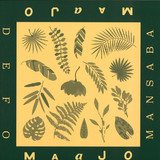
The Finnish tropical troupe Maajo is back with a two-track EP. In contrast to the Afro-Balearic sound of their 2016 debut Tropic of Tulli, the new Defo / Mansaba EP is a step in a deeper and sometimes darker direction.
Defo kicks off the EP with a driving 5/4 rhythm. Reminiscent of Mark Ernestus' Ndagga sounds, it is a tribal tune with Maajo's signature ethereal disco elements.
Trevor Deep Jr.'s version straightens out the original's unconventional time signature and focuses on a four-to-four beat and plenty of Berliner dub. The remix is a solid dancefloor tool, traversing the original like a train making its way through a dark rainforest.
The B-side is entirely covered by Mansaba, a 14-minute long journey into inwards. This studio jam, recorded largely live, is a wild mixture of polyrhythmic sequences, krautrock guitar licks, equatorial forest percussion and violin synths. The trip starts slow and soothing, sneakily picks up pace and keeps grow and growing, eventually exploding into a full-on tribal dance.
It is Melodies International's greatest pleasure to bring forth its latest reissue comprising two stripped-back, reflective pieces of US folk soul.
Largely forgotten for the past forty-odd years, Bobby Wright (now Abu Talib)'s "Blood Of An American" and "Everyone Should Have His Day" resurface as politically-infused works that shine bright and still hold meaning to this day.
The 60s and 70s constituted an exceptional era for its unique blend of popular culture and political radicalism. Household names such as Sly Stone, Marvin Gaye and Gil Scott-Heron used art to express their discontent with the current state of affairs, namely the US government's involvement in warfare and their inability to deal with critical social issues of the time. Though not a musician, Muhammad Ali (born Cassius Clay Jr) was advocating a similar anti-government stance in the boxing ring, and his objection to serving in the Vietnam War sealed his status as an icon for the wider counterculture generation.
Meanwhile in Queens, New York City, Abu used to work several jobs as a construction worker and cab driver - but still found time to play with his band in clubs for $100 a night to support his family. Against the backdrop of international conflict and violence, most of his surroundings failed to listen to how he felt. However, he considered music to be the greatest form of communication with the world and it was his belief that a positive message should be spread to future generations.
After one band member was killed in Vietnam and another went into the service, Abu resolved to pick up his guitar and record these songs as a duet in 1974 with his bassist - the only other remaining band member. Combining guitar, bass and a voice that quavers with emotion he self-released the record in 1974, one which holds its own alongside the all-time greats.
These songs of introspection remind us of the beauty there is in simplicity and how moving art can be when the feelings expressed come from the heart. MEL009 will be released in its original 7" format alongside a 16-page Melozine, featuring words from Abu Talib, social studies professor Paul Rekret and much more.
The Single > Side A 'PARALLEL UNIVERSE' is T.D.O.S. debut single featuring Thai rapper MC Sinnamon (Dujada-Dubway), is an cosmic trip between the heat of Chennai's bazars and Bangkok chaotic streets. Based on a rare indian library sample, Side B is 'WAT THAT TONG' featured samples of Thailand molam queen Yenjit Porntavi with modern dub beat and indian percussions. The Artist > The Dude Of Stratosphear aka T.D.O.S. is Jerome Doudet (Swiss/French artist and bass player based in Bangkok). DJ, vinyl collector, musician, graphic designer and East Asian music connoisseur, The Dude of Stratosphear was groomed in the vibrant alternative scene of the very international city of Geneva Switzerland. Growing up in a musical household (His father was a disco DJ), Growing up in a musical household (His father was a disco DJ), Jerome was exposed to a wide range of music at very early age, and started playing the 4 strings at the age of 10. Bass player in the swiss math-core bands Knut for a decade, he toured intensely all around Europe's biggest venues and festivals. He also joined the very underground american band Half Japanese for a couple of european tour and recorded the album Bone Head in 1997. And on top of the list was opening for the mighty KISS with the canadian band Bionic (CA) at Molson center in Monteal. Also member of various bands such as Imericani (SP/IT/CH), Intercostal (CH), Troll Patrol (CH), Bliscappen Van Maria (CH-IT), Edison (CH), Polar (CH-FR), Prejudice (CH-FR), Buz (CH), Void (CH), Ultra DB (CH), to name a few. Aside from the rock scene, he was also part of the multimedia team Ultra Pepita , developer of the today's world famous VJ software Modul8.
Having made her mark on Brazil's rich musical legacy with three best-selling albums to date, Rio's original nu-bossa queen returns with a tour de force of golden-era Brazilian soul music. From the spiritual swing of the early pioneers of modern Samba, to the dizzying hedonism of Brazil's eighties disco/boogie craze, Clareia is a life-affirming journey through the rich and varied sounds Sabrina Malheiros has been immersed in since she can remember. For her most up-lifting and danceable album to date, Sabrina has (as always) enlisted her father Alex Malheiros - bassist of samba jazz-funk legends Azymuth - and visionary London based producer Daniel Maunick (aka Dokta Venom), son of Incognito's Bluey.
Sabrina Malheiros' career has often been characterised by her place in the succession of those special Brazilian women who, with unmistakable talent and effortless grace, have encapsulated the magical energy of Brazil with their voices. Elis Regina, Astrud Gilberto, and Joyce all had it, and Sabrina Malheiros has it in spades.'(MOJO) With her debut album Equilibria in 2005, Sabrina arrived on a wave of instant acclaim, carving out her place as the pioneering voice of a new brand of Brazilian soul music, rooted in the traditions of samba and bossa, but with an edge of contemporary electronic sophistication. Sabrina's innovative nu-bossa sound would continue with the 2006 remix album 'Vibrasons' followed by sophomore 'New Morning' - declared the best album of summer 2008'(Evening Standard), before 2011's best-seller Dreaming.
Six years on, Sabrina returns with Clareia. Itmeans to clear, light, brighten or illuminate, which, after seeing Brazil and the rest of the world go through some very difficult times, is exactly what the writing of this album brought to my life.' All tracks are written by either Sabrina, or in collaboration with her father Alex Malheiros and producer Daniel Maunick. Written and recorded in Niteroi, Brazil, overlooking Gunabara Bay and Rio's beaches, mountains and forests, the music basks in its surroundings and sings of ecological beauty, peace and sanctuary. Echoing Sabrina's emphasis on clarity, Alex notes that the album's title represents an appeal to the minds of our civilization today, to clear our thoughts for good and for peace.'
This pursuit of clarity continued into the studio: It took a little longer than usual' notes Sabrina, which was good in way, as all my previous albums were recorded in rush and we usually had a week for pre-production and another week in the studio, which always gave me the feeling that I could do better. With this album it was different... we took our time.'
Sabrina's unmistakable voice has never sounded better. Packed out with high-octane swinging samba-soul, like the title-track and 'Salve O Mar', the album also features some bottom-heavy Brazilian boogie cuts, like rejoicing album opener 'Celebrar' which harks back to some of Marcos Valle's cult '80s disco output, and 'Sol Ceu E Mar' is a Tania Maria-esque future classic of scorching latin-funk. Mellower moments are found in 'Em Paz', on which Sabrina's beguiling harmonies find an anchor in the rhythmic acoustic guitar of Ze Carlos', who Sabrina heralds as being the best guitarist I have ever worked with'. Azymuth's keyboardist Kiko Continentino's deft Rhodes, piano, organ and synth playing, add ever more textures of distinctly Brazilian brilliance throughout, while tropical brass and flute arrangements on cool bossa-jazz movers 'Vai Maria' and 'Sandore', come from Brazilian saxophone legend Leo Gandleman, a man who has worked with everyone from Gal Costa to Gilberto Gil. The rhythm section combines Daniel Maunick's seamless drum programming and the organic polyrhythms of Brazilian percussion legend Jakare, all punctuated by Alex Malheiros' inimitable (occasionally slapped) jazz-funk bass, giving the album its irresistibly danceable pulse.
Set for release at the height of summer this year, Clareia is an intergenerational masterclass of Brazil's soulful spectrum, led by a pioneering voice of today's scene on the very top of her game. The up-lifting compositions, which take inspiration from the stunning natural beauty amongst which the album was made, and the call for the clarity of mind needed to preserve it, are enriched by this special team of some of Brazil's most established musicians. Like the sun breaking through tropical storm-clouds, Clareia is a vessel of joy, as Sabrina puts it simply, I hope Clareia brightens the soul of whoever listens to it. That's the spirit of this album.'
Beautiful Full Cover Art, Limited to 300 - Lumière Noire - The new label by Chloé!
Il Est Vilaine aren't from Brittany, but they sure are tricksters. The Francophiles among you might have caught on to the corny pun in their name (beating a certain presidential candidate to the punch all while turning the name of the pastoral Ile-et-Vilaine region into, literally, 'he's a nasty woman") but the real takeaway is that these born-and-bred Parisians don't take themselves too seriously - especially in an era in which there is much too much of that happening. It was in 2014 (and on Dialect Recordings) that Florent and Simon tossed their debut 12 into the ring, the rightfully named Scandale - a tight little bombshell released that roused the electronic music scene out of its complacent little catnap.So there we had it, two outcasts refusing to eat at the same table as the tech-house scene queens, serving up three whiplash-on-the-dancefloor cuts drenched in sweaty hedonistic disco and wrapped in a battered motorcycle jacket (with a gooey post-punk-pop core for good measure.) A clear mission statement right out of the gates, watermarked with mystical incantations and throbbing with rock 'n' roll's primitive drive. Everything and the kitchen sink, and a bag of chips - an invitation to just let lose that's even better than the sum of its parts. Moving on to this new platter. We set the scene: motorcycles blazing from the airport strip to the strip joint, our heroes traded their Oberkampf stomping grounds for a sleepless weekend of Spanish groupies, discount bikinis, whiskey and bukkake. And a creative spurt that left us with a mutant of a record, the sound of rock and techno crashing through a drum kit mid-coitus, interrupted by La French Chanson
Originally from Japan with a bi-cultural background, this Boston-based singer, song-writer, and DJ is known to her peers as the "Beantown Disco Queen". Saucy Lady, a character with an attitude of confidence and sensuality, she represents in her music what we've all admired about the disco era. Namely, the freedom of self-expression and experimentation. Saucy Lady brings back the eclectic, outrageous fashion and cultural diversity that composed the nightclub scenes in the 70s and 80s . With a touch of humor added to the equation, her popularity has been gaining steady momentum in the U.S. and overseas underground Disco scene
With their next carefully curated release, the Opilec Music label begins to shine a light on the roots of Italo with the reissue of an ultra rare and obscure synth Italo disco track by A. Avenue from 1984.
This is a special Record Store Day 2016 release and of course, Opilec Music has remastered the original vocal and instrumental versions and here include I-Robots reconstructions and two Flemming Dalum's reworks.
This is a track many labels wanted, but only Opilec Music have been granted official rights to this cult re-release. Originally released on Discover Records, this is the only EP
A. Avenue (aka Dario Ancona and F. Feleppa) ever put out and it now fetches high prices on Discogs. Once you hear the music, you can understand why: The lovably naive and innocent vocal version is seven minutes of cosmic and psychedelic grooves with perfectly retro melodies and pixelated chords that take you into outer space.
Mid tempo drums are full of funk and drive and the two part vocal—one crisp and clean, one filtered and dehumanised—really lend the whole thing a special robot feel that is second to none. As well as a stripped back instrumental, there is a fine I-Robots Reconstruction that is quicker and more driving.
The vocals are also more prominent, soaring up top above reflective synths and rainy xylophone style melodies. It is a real Italo disco gem that is followed by a spacious and tripped out version from Danish DJ and producer Flemming Dalum, who has been devoted to Italo all his life and works with labels like Mothball, Bordello A Parigi and Disco Modernism.
He also layers in more cowbells, punchy drums and claps that refresh it for a modern club, and buy the EP digitally and you will get a second Dalum edit that is the deepest of the lot - 100% true to the original.
This reissue will make many record collectors and Italo disco fans truly happy, and is just the start of some brilliant new projects to come.
Up and away / To your journey to the sun / Drink your rocket juice / Fly away (Hey, Shooter).
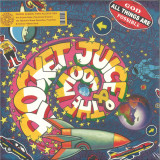
High up in the skies, amongst the clouds, Rocket Juice & The Moon was born. Literally. It happened back in 2008, when Damon Albarn, Flea and Tony Allen convened on the same Lagos flight, to play and exchange musical ideas in that city as part of the Africa Express collective. Relishing a shared enthusiasm for one another's work, and bonding immediately, there and then the triumvirate laid down the blueprint for Rocket Juice.
Still, more than a year passed before conditions were set for three weeks together at Albarn's West London studio, recording and refining two-dozen startlingly out and deeply funky instrumental grooves. The next stage was to invite onboard some extremely talented friends, with further sessions in Dallas, New York, Chicago and Paris... Erykah Badu, no less, queen of contemporary soul. Three companions from Africa Express: Malian singer Fatoumata Diawara, whose debut album has topped World Music charts since its release last Autumn; her multi-talented compatriot Cheick Tidiane Seck, whose prodigious keyboardism has lit up releases by artists ranging from Youssou N'Dour to Hank Jones; the young, Ghanaian rapper M.anifest, quizzically existential, switching seamlessly between Twi and English. And the Hypnotic Brass Ensemble, long-time stalwarts in the Honest Jon's set-up — since one of the team discovered them busking near the shop in Portobello Road, on his lunchbreak — with a second album for the label due in May... Finally, the tracks were dispatched for mixing to Berlin, to be meticulously honed, polished and envenomed by Mark Ernestus, one half of the legendary Basic Channel and Rhythm & Sound partnerships.
The result is Rocket Juice & The Moon — out March 26, 2012, on Honest Jon's Records — a triumphant exploration and proliferation of kinetic Afro-funk rhythms: organic, exuberant, communal music-making, evidenced by the project's live debut on stage as part of the Honest Jon's Chop Up in late 2011, which hit London, Marseille, Dublin, and Cork to such great acclaim (witness the flurry of smart-phone film-clips uploaded in the days thereafter).
From the inaugural bars — that absurdly funky slice of instructional timekeeping, 1-2-3-4-5-6 — the liquid pulse of Fela Kuti's classic recordings drives the action through a suite of 18 shape-shifting compositions. The greatest drummer in the world has never sounded so good as he does here. His intricate cross-patterns jostle and lock with Flea's nimble, rumbling bass riffs. Joined by Seck on There and Extinguished — 'when you dispose of something burning, be sure it's out' — Albarn's keyboards spray synth fusillades up top, over, and under... splicing into the mess of wires running between the freaked Afro-disco of William Onyeabor and the space-jazz-moog of Sun Ra. The HBE brings extra intensity and drama to Leave-Taking — likewise Flea's trumpet to Rotary Connection — teasing out the haunting melody coiled in the mix.
Where the best of vintage Afrobeat sides sustained their concentrated energies over the course of sprawling, marathon jams, RJ & TM manages something altogether different: the group bottles the idiom into capsules of funk... and real songs. Beautifully buoyed by Erykah Badu's unmistakable vocals, Hey, Shooter brilliantly traverses metaphysical spaceways sans any semblance of noodling. Lolo and Follow-Fashion — featuring the open-hearted sensuality of Diawara's singing, M.anifest's quick, brawny science, and more brass blasts — play like its musical cousins or codas. Indeed, the album's shrewd sequencing creates the composite effect of tracks working both individually or within the context of an extended song-cycle.
The lovely ballad, Poison, is bittersweet and ruminative: 'If you're looking for love, beware the signs / They will paralyze you one by one / Poison, it will only break your heart.' Down-tempo and dubby, Check Out and Worries amplify the range of styles and moods. And by the time of Fatherless — a chugging Afro blues that evokes John Lee Hooker lost in Lagos, one gets the sneaking suspicion there's very little outside the reach of this collective's inventive musical grasp.
There is, in fact, a palpable openness pervading Rocket Juice & The Moon — the sense of a limber willingness to follow creative impulse — right down to how the group acquired its name. When Ogunajo Ademola — the Lagotian commissioned to do the album's cover artwork — dubbed his submission 'Rocket Juice & The Moon', it quickly morphed into the formal name of the project, like trying to hold onto mercury.
Surely, the stars above also approved.