The Stars, where Milwaukee meets San Francisco. Cedrick Rupert was the guitarist for the band 'Impulse', a group who formed in the early 70's of Milwaukee and backed local soul outfit, The Quadraphonics, whom recorded the hit “Betcha If You Check It Out/Prove My Love To You”, which was released internationally on the Warner Brothers imprint.
In the mid-70s, Impulse relocated to Oakland, CA to work alongside another Milwaukee icon, Harvey Scales to record their self-titled album, Impulse, which was recorded at the Wally Heider’s Studio in San Francisco. Alongside these sessions, Scales & Rupert would work on various recording projects for different clients, including a group called 'The Stars', commissioned by the label, André.
Two tracks, '(We Are The) Stars', & 'Best Friend', provide the energetic flavour of the disco driven scene of what was happening at that time in the Bay Area.
Cerca:disco soul
Philly’s DJ JAZZY JEFF debuts on TERRY HUNTER’S MIRROR BALL RECORDINGS with the funky soul & disco drenched 7 inch “EVIL". The release is an amazing flip of EARTH WIND & FIRE’S 1973 release with JEFF’S swinging drums & piano melodies incorporated. Major support from dozens of deejays!
’Angelo lost his shit over it. Aaliyah’s 3rd favourite track of all time is on it. David Bowie rocked up with it to a TV interview, declaring it “the most exciting sound of contemporary soul music”.
In 1996, Lewis Taylor released his self-titled masterpiece. A true modern classic, it’s an album that was years ahead of its time. Forget 25 years ago, it could easily have been made in 2021. An effortless blend of neo-soul, sophisticated pop, smart grooves and laid-back white funk, it enjoyed rapturous reviews from critics and music legends alike. But the album never managed to make an impact and given what was likely a token vinyl release at the time, the original records have long since been near-impossible to find. Lewis Taylor’s Lewis Taylor remains a holy relic for some and criminally unknown to most.
Lewis Taylor’s impeccable influences created a dazzling sonic palette: the LP as a whole suggests the visionary brilliance of Prince; the vocal stylings evoke the yearning power of Marvin Gaye; the effortless guitar playing shares the virtuosity of Jimi Hendrix; the haunting tones conjure Tricky; the innovative production and engineering invite comparisons to studio mavericks like Todd Rundgren and Brian Eno; the multi-layered, complex harmonies flash on Pet Sounds-era Brian Wilson; the dark, drama is reminiscent of both Scott Walker and Stevie Wonder; the complex arrangements create textures and moods with the feel of Shuggie Otis on Inspiration Information; the bold experimentation is akin to progressive artists like Faust and Tangerine Dream; the atmosphere is in conversation with Jeff Buckley’s Grace… and we could go on. That might all sound like marketing hyperbole, but not as far as Be With is concerned. It is a genuine wonder how an album this good could’ve passed so many people by.
But despite all the reference points, the similarities are really only skin-deep because the album sounds truly original. It occupies its own distinct, strange universe that feels dark and brooding one moment, bright and joyous the next. Ultimately, Taylor sounds like Taylor.
Although you wouldn’t know it from the credits, the album wasn’t the work of Lewis alone. Sabina Smyth gets an executive producer credit on the original sleeve, but in fact she worked with Lewis on the production and arrangements, did a lot of the backing vocals and she co-wrote Track, Song, Lucky and Damn with Lewis.
Lewis clarified all this in a Soul Jones interview with Dan Dodds in 2016. He explains how not giving Sabina the credit she was due at the time was an unfortunate consequence of where his head was at and he’s now trying to set the record straight.
Together they created an exquisite and sensually-charged record, with a freshness to the writing that makes the songs catchy, melodic-yet-deep and sometimes even funky. The music is predominantly guitar-led and a mixture of organs and synths, live drum loops and electronic percussion make for a sort of modern soul backing orchestra.
On the surface the album is gorgeously laidback, but beneath the lush, sometimes slick, production there’s a murkiness in the seriously gritty funk/hip-hop instrumentation. Lewis Taylor can be a claustrophobic listen. Even its one-word, often seemingly throw-away track titles add to the sense of unease. In its most positive moments, there’s still a sense that things aren’t quite right. The magic comes from this compelling tension.
The languid, strutting “Lucky” is a sensational opening statement. Sinuous electric guitar winds around the shaking percussion with a killer bass line rattling your bones, and Lewis’s voice is sublime. Its six-and-a-half unhurried minutes manage to distill the work of Marvin, Al Green and Bobby Womack because yes, it’s *that* good. Up next is the tough, dusty drum and jazzy, unsettling psych-guitar workout of “Bittersweet”. Aaliyah described it the “perfect song”, which says it all. By turns loping and soaring, tightly coiled and blasting free, 25 years on its discordant, swaggering majesty still sounds like future R&B.
The swinging, blue-eyed funk of “Whoever” oozes sophisticated sunshine soul for hazy days before “Track” sweeps in. The music tries to lift us up, beyond the reach of the vocals trying to drag us back down as Taylor sings “my mood is black as the darkest cloud”. The spare, dubby electro-soul of “Song” closes out the first half of the album with barely contained dread as it creeps towards the lush, synth-heavy coda.
The smouldering “Betterlove” eases us into the second half, coming on like a languorous response to the call of “Brown Sugar”, before sliding into the shuffling, softly-rocking “How”. Somehow the remarkable “Right” manages to both warm things up and smooth things out even more. Taut yet luxurious, it’s definitely not wrong.
“Damn” was to have been the album’s title track and you might also be able to hear its influence on D’Angelo’s Voodoo, maybe most obviously in the chaotic closing moments of “Untitled (How Does It Feel)”. Building to a screeching wall of noise that suddenly cuts dead, “Damn” sounds like the natural end to the album, with the celestial a cappella “Spirit” serving as a heavenly reprise.
When it came to the sleeve, art director Cally Callomon heard Taylor’s music as “sideways off-camera glances at a plethora of influences he had” and wanted to interpret that visually: “I went off into night-time London to see if I could find his song titles in off-beam low-fidelity photographs. I even found a shop called Lewis Taylor”. With a slide for each of the album’s ten tracks, nine of them are on the inner sleeve and the slide for “Damn” makes the front cover. It should’ve been the album’s title, but concerns over distribution in the US scuppered this.
One of UK soul’s most fascinating artists, Andrew Lewis Taylor is an enigmatic figure and a hugely under-appreciated talent. A prodigious multi-instrumentalist who got his start touring with heavy blues/psych outfit the Edgar Broughton Band, he released two albums of psychedelic-rock as Sheriff Jack before Island signed him on the strength of a demo alone. But Taylor was destined to be one of those artists unable (or unwilling) to be pigeonholed and despite the best efforts of Island’s publicity department the music never sold in the quantities it needed to or deserved to. Island eventually let him go in the early 2000s and in June 2006, Lewis Taylor retired from music.
Typical for the mid-90s, this CD-length album was squeezed onto a single LP for its original vinyl release. Simon Francis’s fresh vinyl mastering now spreads out the ten tracks over a double LP so nothing is compromised. And as usual, the records have been cut by Pete Norman and pressed at Record Industry. The original artwork has been restored at Be With HQ and subtly re-worked to work as a double.
This sprawling psychedelic soul opus really is a forgotten should-be-classic. We know that there are those of you who know, and as for the rest of you, we’re a bit jealous that you’re getting to hear Lewis Taylor for the first time.
Louie Vega and Dave Lee remix Anané’s single ‘Tell Me That I’m Dreaming’ on Nervous Records this summer.
The powerful yet intimate voice of Anané Vega, owner of Nulu Music, radiates rhythm, soul and style. Billboard Magazine described Anané as “combining earthiness with glamour and roots-deep house music knowledge with pop wise diversity” - a quote that her music and fashion adhere to effortlessly.
‘Tell Me That I’m Dreaming’ sees Anané join the legendary NYC label's roster as she combines funky electronic, funk-infused grooves and a compelling voice that gracefully floats over Louie Vega’s sensual production. A leader in global dance music and Grammy Award Winner, Louie Vega has painted an award-winning career from a palette mixed with everything from house, salsa and afro-beat, to jazz, hip hop, gospel and soul. Vega continues to lay down genuinely timeless music, rightfully earning him the title as one of The Kings of House Music.
Renowned UK artist Dave Lee blends low-slung disco rhythms, irresistible slap bass and acid zaps in his remix that sits wonderfully above Anané’s vocals that inspire strength and pure love.
IZIPHO SOUL is thrilled to be commissioned by LEEE JOHN, on a special limited edition 7” single, in conjunction with his multi date THE ART OF LOVE 2020 tour. Before proceedings commence, here is your chance to own a copy! THE ART OF LOVE is a previously unreleased masterpiece (recorded in the mid-nineties) with two very distinct Parts: One, a melodic romantic builder with that unmistakable LEEE JOHN vocal; Part Two, a unique Disco infused workout, where horns and strings abound, and multi percussionist / master conguero SNOWBOY delivers his best shots!
Beautifully packaged in a picture sleeve with the label revealed by a circular cut-out, housed in a resealable bag.
Imbued with the grit of vintage country music and the grace of gospel, Leah Blevins’ debut album is a scrapbook of sorts, a collage of feelings and memories from a decade spent working in the big city of Nashville while missing the small town she left behind. “It’s a timestamp of my twenties,” says the Sandy Hook, Kentucky, native. “Here are all the stories and all the experiences from that decade. Here are all the mixed emotions I’ve felt about things I’ve gone through and people I’ve met along the way.” First Time Feeling turns tribulations into what Blevins calls “bundles of triumphs,” which lend weight to her well-observed lyrics and gravity to her soulful vocals. “It’s about coming into womanhood, but it’s more than just a coming-of-age story. It’s me discovering that I’m capable of writing a song on my own. I’m capable of staying sober. I’m capable of all these things that once felt so far out of reach. Within those walls these songs had to be unapologetically honest.” Or, as she puts it on the bluesy opener “Afraid,” “Have you ever been afraid, with nowhere to hide? Scared of nothing, but you’re running inside?”
. “I want people to find something relatable within these ten songs. But for me they’re a reminder that all the pain that I went through—which isn’t that different from the pain every human goes through—it’s all mine. By making this album, I’ve taken it, I’ve owned that pain, I’ve made it mine, and I’ve wrapped it up with a bow on top.”
The original Rio beach boy returns in style, with a new record of unabashedly feel-good Brazilian party music. Featuring Azymuth bassist Alex Malheiros (responsible for some of Brazil’s all-time funkiest low-end licks), a horn section including Valle’s go-to high-trumpeter Jesse Sadoc, and percussion master Armando Marcal, Sempre has all the masterful composition, exceptional musicality, and forward-thinking ideas you’d expect from the Brazilian titan, and it’s fresher than a fruity caipirinha in the Copacabana sunshine.
Updating Marcos Valle’s seminal boogie-era sound, Sempre spans ecstatic disco, cosmic samba, and late-night jazz-funk, drawing obvious comparisons to some of Valle’s late-seventies and early-eighties output. ‘Estrelar’ (1983), for example, an ode to the joy of exercise, has become one of the biggest Brazilian disco hits of all time. But lyrically the new album is more closely reminiscent of Valle’s progressive early seventies’ releases. Heralding love, tolerance and living in the present, while satirising political corruption, the new release recalls a time in which Valle, together with his brother Paulo Sergio, was writing subtly subversive lyrics in order to bypass the censorship imposed by the military dictatorship, which ruled over Brazil between 1964 and 1985.
The album marries compositional genius with pure pop perfection. From the blistering brass arrangements on up-tempo disco hit ‘Olha Quem ta Chegando’ and the infinitely classy ‘Vou Amanhã Saber’, to the nine-minute synth heavy instrumental funk stepper ‘Odisséia’, which gradually morphs into an interplanetary samba jam, the songs are tightened and given an extra coat of gloss, by London based producer Daniel Maunick (son of Incognito frontman Bluey). More moments of boogie delight come in the form of ‘Minha Roma’ (a musical nod to the famed ‘Estrelar’), and the sunshine anthem title-track ‘Sempre’.
Translating as ‘Ever’, Sempre is a testament to the continual drive for development and reinvention that has defined Marcos Valle’s astounding six-decade career. Ever changing, ever moving forward, he began as one of the second-wave of early bossa nova composers in the sixties, writing the world famous bossa standard ‘Summer Samba (So Nice)’ for his sophomore album ‘Samba 68’. After a brief stint in the States, Valle returned to Brazil, and the early ’70s saw the release of four ground-breaking Valle albums which incorporated progressive rock, psychedelic influences, pop, jazz, soul and cinematic arrangements. These albums would see Valle work alongside a number of hugely influential Brazilian bands, including Milton Nascimento’s backing band Som Imaginaro, the prog-rock band O Terco and jazz funk legends Azymuth. Returning back to the US in ‘75, Valle resided in LA, writing music for the likes of Eumir Deodato, Airto Moreira, Chicago, Sarah Vaughn and Leon Ware, before returning to Brazil once more, where after releasing a handful of hit pop records, he took a hiatus from recording.
Since the mid-nineties, Marcos Valle has been experiencing a renaissance with London based label Far Out Recordings, where his approach to music has remained, as always; decidedly open to new influences, possibilities and technologies. Sempre is Marcos Valle’s fifth album for the label, following 2010’s critically acclaimed Estatica.
Just in time for summer, Sempre is out on Vinyl LP/ CD on 28th June 2019 on Far Out Recordings, and Marcos Valle and band will be touring Europe in May /June (see below for dates).
The Forbidden Dance label is marking their first year of existence and with already top-notch names (Vick Lavender, Alton Miller, The Mechanical Man) with the first three releases, they are celebrating the one year mark with another global gem, disco and house finest - Ilija Rudman!
Where Wild Horses Go is conveying an unquestionable sense of 80's electro and synth boogie filled with smooth and heavily reverberated rhythmics drenched in strong snares. Aligned with catchy and spaced-out disco pads, the album is riddled with ever strong analogue elements processed in a light, quirky and summerish way but with enough groove in some tracks easily applicable on the dancefloors in the late hours.
Dead Horse Gang is a brainchild music band/brand by Ilija Rudman dedicated to cinematic dance concept laying on the Los Angeles funk attitude, Art Of Noise perception of sound and raw 12-bit grooves making a statement of mid 80's culture with surf vibe of California summer.
"Dead Horse Gang Music is more than music, it's a way of life, a way of thinking, a path to a maximum freedom of the one, who can accept it."
-Ilija Rudman
The latest installment of Four Flies' exclusive 12-inch vinyl series for DJs features Neapolitan-born producer pAd putting a dance-floor spin on "Manhattan" and "Philadelphia", both from Alessandro Alessandroni's soundtrack to Alfonso Brescia's Sangue di Sbirro (aka Knell, Bloody Avenger, 1976), a pulp/noir score that perfectly embodies Alessandroni's take on the Italian approach to blaxploitation (the main theme is clearly inspired by Isaac Hayes's music for Shaft).
pAd gives each Alessandroni original the double treatment, with a "daylight" and a "nightclub" version. His daylight "Manhattan" combines disco-funk with elements of 80s electro, while his nightclub one is more openly nu-disco/nu-soul and incorporates hip-hop and jazz-funk sounds. In its turn, "Philadelphia" is reworked into a delicate, soulful downtempo track (nightclub), as well as into a dub/leftfield & slow funk version with a sprinkling of Arab influences (daylight).
pAd's brilliant reworks fully respect the spirit of the originals while giving them new life in the present, where the music of a genius like Alessandroni is finally getting the recognition it deserves.
Adam Cook aka Tommy Rawson returns to Bergerac with another killer EP of uplifting, tropical deep house, broken beat and Brit funk vibes. Following on from 2018s Gilles Peterson hammered 'Deep Blue' EP, he returns to Red Rack'ems Bergerac label with an absolutely killer 3 tracker which showcases the Watford, England based producers world class musical chops. Surely a contender for THE summer record with a sun kissed Brit funk A side which is tailor made for the WWFM and We Out Here crew. A tropical house and broken beat burner make up an equally strong flip. We are very happy (and relieved) to be presenting to you an absolutely belting EP of UK soulful dance music.
It's nothing short of a miracle that the A side track 'Illusions' has ever made it on to vinyl. Jonna from City Fly remembers 'Adam had this on a CDR at Southport in 2008 and it became our official track of the festival as we all partied together the whole weekend it got played again and again back at our Chalet parties'. But then as these things often sadly go, the funk diamond was lost for a few years in the digital ether. Fast forward to 2014 and Danny Berman aka Red Rack'em is playing a 320 of 'Illusions' everywhere but alas it's just a demo and Adam can't locate the arrangement to complete the track as it's on a broken computer in his Mums attic.
Then finally this year, after many pleading emails and plenty of gentle cajoling, there's some amazing news! Adam has located the broken computer and after a day of digital open heart surgery, and then a re-edit over Zoom (no really) we finally had the killer, classic UK soulful anthem you're listening to today. A voice over from a disco documentary cleverly introduces each instrument on the intro before Tommy pushes the button marked 'biggest bassline of the year' and takes us into boogie heaven.
'Sound Crazy' on the flip is another one of those classic Afrobeat tinged Tommy rollers. Big room vibes but with a lot of soul. Rolling broken drums and a huge bassline combine with plenty of spicy, tropical atmosphere on top. The trademark Rawson uplifting chords begin after an anticipatory vibe filled breakdown, taking you to the stratosphere.
'Ads Mood' is the most 'classical' broken beat track on the record, but they are all playable in multiple environments and transcend mere genres. Heavy bass and extra funky syncopated beats climax into a beautiful almost orchestral feel to close off an exemplary EP of higher quality moods and emotions. Don't sleep.
Lande Hekt’s voice in music is one that’s socially aware yet often
introspective, drawing awareness to serious issues but at the same time
baring her soul.
Much of Hekt’s compositions act as a personal diary of what’s going on in her
life at any given time. This is evident in her discography with Muncie Girls, the
band which she formed in her hometown of Exeter as a teenager and have
released two critically acclaimed albums to date.
Private Space, the group's third album, is a previously untapped vibe at the heart of The Indications. Pushing beyond the boundaries of the funk and soul on their previous releases, Private Space unlocks the door to a wider range of sounds and launches boldly into a world of synthy modern soul and disco beats dotted with strings. It's an organic, timeless record that's as fresh as clean kicks and familiar as your favorite well-worn LP. Developed after being apart for much of the year, Private Space is creatively explosive and delights in upending expectations. Its 10 tracks are both an escapist fantasy and a much-needed recentering after a tumultuous 2020. Throughout, The Indications highlight a collective resiliency - as well as the power of a good song to be a light in the darkness. Durand Jones and The Indications have long provided the soulful soundtrack for such deep thoughts, both on stage and on your turntable. But as the world slowly resets from the chaos of the past year, Durand Jones and The Indications' Private Space is arriving at just the right time.
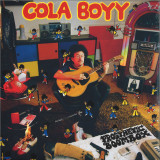
There’s liberation on the dance floor in the songs of Matthew Urango – glimpses of revolution that glimmer beneath the disco ball. “I want my music to bring people together,” says the Californian pop innovator, best known as Cola Boyy. “Because standing together is our best chance at fighting this shit show.” The shit show in question is a broken, brutal system the acclaimed multi-instrumentalist has witnessed up-close. Urango was born with spina bifida and scoliosis in Oxnard, California: a town in which almost 30,000 are estimated to live in poverty. Prosthetic Boombox, his eagerly awaited debut album, might at first glance seem a joyous confetti-burst of pop eclecticism, engineered to sound like “scanning between stations on a car radio, landing on all these different sounds and styles” as Urango puts it. Dig deeper, though, and you’ll discover a simmering sense of rebellion. “The working class are injured, struggling to pay rent and struggling to put food on the table,” he says. “I want to represent that.” Prosthetic Boombox
achieves that goal in a thrilling flurry of inventive indie, funk and soul: take Urango’s car radio analogy, place it in a time-travelling Delorean with Prince in the passenger seat, and you’re half-way there.
Look no closer than Prosthetic Boombox’s euphoric opener, the Avalanches-assisted ‘Don’t Forget Your Neighbourhood.’ The track – which Urango says mixes “the Beach Boys, French disco, house keys and ragtime piano, kinda like the Cheers soundtrack!” – ends with lyrics urging listeners to “fight for your town with your fist closed, strike it and make it more than just a memory.” It’s a reminder that the working classes need to “turn our fists against our oppressors instead of each other,” he explains. After that emphatic introduction comes a horn-laced funk wig-out titled ‘Mailbox’ – a song that gives Dua Lipa’s Future Nostalgia a run for its Studio 54-themed money, featuring rising Londoner JGrrey. Elsewhere, ‘Song for the Mister’ ventures into smooth R&B territory, before ‘Roses’ – a collaboration with Myd of Ed Banger fame – offers a bouquet of bustling disco guitars and infinite bisous of Connan Mockasin’s band drops in on the immaculate ‘Go the Mile’. Urango saves his most introspective moment for the album’s starry closer. ‘Kid Born in Space’, a cosmic collaboration with MGMT frontman Andrew VanWyngarden, sees the artist reflect on what he once had to overcome as a disabled person of colour. “I see them looking down on my dreams of being,” he sings tenderly. “I hear them making fun of my voice, but I keep on moving forward, I refuse to live in anyone else’s shadow.” Prosthetic Boombox, on this subject, is more than an album title – it’s a statement of intent.
“The message of my music is that our class is exploited, oppressed and murdered on the daily. That’s not right, and the system that enables that deserves to be wiped off the face of the earth,” he says. “The only way that happens is if we’re united. That’s the point of my music – to relate to people and unite them.” And what unites more than raucous, irresistibly danceable pop? Prosthetic Boombox is a riot of joyous grooves and catchy hooks for good reason. “I want to reach and spread my message to as many people as possible. You can’t do that if you’re some obscure motherfucker, you know?” he laughs. Don’t bet on him being an “obscure motherfucker” for long.
- A1: Soulful Distance
- A2: Discouraged
- A3: To Each His Own
- A4: Nothin' Really, Just Chillin
- B1: My Left Nut Itch
- B2: Just Ridin' By (Feat Big Pokey & Lil Keke)
- B3: You Got No Time To Play
- C1: He Don't Have To Know
- C2: Plansa
- C3: A Good Woman
- C4: High & Trippin' (Feat 14K)
- D1: Break-Fast
- D2: Live & Let Live (Feat Slim Thug & Scarface)
- D3: We Smokin' (Feat Odd Squad)
Devin The Dude is back with another classic. At 14 tracks, Soulful Distance plays on the current global scenario and oozes the familiar smooth sounds and cruising music that Devin is best known for. Keeping things local, the album features several notable Houston natives, including Scarface, Slim Thug, Big Pokey, & Lil Keke.
The debut album of the singer-composer Rita Ray from Estonia packs powerful, warm vocals and crisp production to go with it. "Old Love Will Rust" contributes 8 soul-heavy cuts to the current scene: it's got that slower, classic R&B side of affairs, as well as an uptempo disco delight, that keeps things tight. While miss Ray herself has credits in almost all aspects of the LP, it's a certified Solid Gold Production, led by Martin Laksberg of Lexsoul Dancemachine. Blue-eyed soul hasn't sounded so strong in ages! Rita Ray is a small-town girl whose vocal chords are hardened by a decade in choir singing, spirit toughened by the city life and a foundation built in jazz studies. She's the first contemporary soul diva to rise from the post-Soviet state. Her soul-stirring shows have yet to leave a heart cold - she'll have you in her palm to deliver tender melodies, irony-filled lyrics, catchy riffs and disco-stomping sessions.
Die weltbekannte Band aus Island ist mit ihrem elften Studioalbum, dem hoch emotionalen "Mobile Home", zurückgekehrt und veröffentlicht damit ihr erstes Album seit 2018. Das Kollektiv beweist einmal mehr die Meisterhaftigkeit, seine künstlerischen Grenzen zu erweitern, indem sie eines ihrer ambitioniertesten und kraftvollsten Alben seit Jahrzehnten veröffentlichen. Für ihr neuestes Album holten sich GusGus die VÖK-Sängerin Margrét Rán zur Hilfe, um ihren Stil zu erweitern und den Sound des Kollektivs so frisch wie immer zu halten. Das 9-Track-Album bietet eine Mischung aus elektronischem Rock, Ambient, Darkwave, Downtempo und Synthpop. GusGus besser denn je!
World-renowned group GusGus have returned with their 11th studio album, the highly emotive Mobile Home, marking their first album release since 2018. The collective once again prove their commitment to pushing their artistic boundaries as they release one of their most ambitious and powerful albums in decades. For their latest record, GusGus call on VÖK’s lead singer Margrét Rán to help expand their style, keeping the collective’s sound as fresh as ever. The 9-track album features a concoction of electronic rock, ambient, darkwave, downtempo, and synthpop.
After announcing a new album in October 2020, GusGus wowed fans with their first single “Higher,” offering a first taste of how VÖK’s impactful vocals mesh seamlessly with GusGus’ intelligent and powerful electronic production. “Higher” was soon followed up with the darker, downtempo “Stay The Ride” and the bright and energetic synth work on “Our World.” The three captivating singles each received equally remarkable music videos courtesy of founding members Arni & Kinski, the directing team known for working with the likes of Sigur Rós, Kiasmos, Ólafur Arnalds, Of Monsters and Men, and more.
Every track on Mobile Home doubles as a window into a futuristic dystopian world that has been overtaken by machines. A nod to the rise of technology and ever-growing uncertainty surrounding automation, the album explores themes of solitude, rebellion, science fiction, hedonism, pleasure, and anger. Swirling within this world is a disconnected, aching soul who is on the verge of slipping into complete dementia. Forgotten purpose and goals but continues to be driven by the hedonistic default program of material consciousness; sensually self-indulgent and engaged in the pursuit of pleasure alone. In Mobile Home, GusGus challenge themselves like never before, resulting in a wonderfully chaotic reflection of the ongoing war between soul and machine.
With Mobile Home, GusGus show the quality and sonic diversity of the singles pervades throughout the full LP, while preserving the melodramatic themes that tie its 9 tracks together. “Simple Tuesday” showcases the group’s aptitude for blending contemporary electronic production with pop sensibilities while keeping an optimistic tonality at the forefront. Meanwhile, “Love Is Alone” and “Original Heartbreak” offer a slower, more pensive take on synthpop, and evoke feelings of solitude and deep melancholia. “Silence” and “The Rink” boast some of GusGus’s more experimental production, each alternating between radio-ready vocal verses with inventive and exciting synth elements. GusGus closes Mobile Home with “Flush,” an instrumental score that leaves the listener riding high as they finish the LP.
- A1: A Great Combination
- A2: Lonliness
- A3: Space Boogie
- A4: Plain Insane
- B1: Be True To Yourself
- B2: All She Needs
- B3: St. Albans Strut
- B4: Midtown
- B5: Disco Boogie
• The Total Eclipse are a New York funk and soul eight piece originally from Jamaica
• 1976 album was released on the obscure Brunswick label BRC subsidiary
• This is the first time ‘A Great Combination’ has ever been reissued
• Pressed on 140g black vinyl with original artwork and printed inner sleeve
Emotional Rescue and HMV Record Shop (Japan) present Red Cloud and their roots disco rarity I Want To Be Free, with it's even scarcer dub version Freedom, together on 7" for the first time as part of the DISCO REGGAE LOVERS series.
This Brixton based band appeared on Emotional Rescue last summer with their Double Talk / Dubble Dub 12" (ERC102) rightly shining a light on their underrated output. Releasing on Tuff Gong, Red Stripe and Dancefloor the band released two albums and numerous singles of warm, rock-soul touched British roots sound system shakers.
I Want To Free / Freedom only appeared on the B-side of their super rare debut 12". While the A side's Double Talk was 'inna Lovers Disco style', here they keep the groove but explore the righteous stance of Pan African-Caribbean culture of the time, with a call for equality and fairness.
Centred around the writing of Keith Drummond and drummer / producer Specs Bifirimbi, plus support from founder Floyd Lloyd Seivright, it is in the dub version, Freedom, that the interplay of keys and drum and bass shine, a rock-reggae-disco bomb.
Emotional Rescue and HMV Record Shop (Japan) end their DISCO REGGAE LOVERS 7" series with reggae legend Sugar Minott and this utterly unique UK soul-boogie rarity, I Remember Mama.
Reggae star, vocalist, producer and sound system operator, Kingston JA born Minott released over 50 albums and hundreds of singles for the likes of Studio One, Wackies, Suffering Heights and his own Black Roots label.
His distinctive soulful voice pioneered the Dancehall style and following his UK hit "Hard Time Pressure" he moved to London in 1980, adopting the rising Lovers Rock sound. On a visit to Wackies' offices in Soho he met Steve Parr, who had recently opened a studio next door.
Keyboard player for the likes of Desmond Dekker and Geno Washington, Parr moved into composition, mixing, sound engineering and production, before setting up the Sound Design Studio in Dean Street.
Principally a studio, the meeting with Minott hatched the idea to create a label to showcase their capabilities. Produced by Parr, he played all the instruments except the distinctive sax by friend Andy MacDonald.
With Minott's heartfelt lyrics, this marriage created a one-off, a ground-breaking synthesised 4/4 rhythm track with funk groove and soulful vocals. Released on 7" and 12", the versions noticeably differ and is the perfect closing to the DISCO REGGAE LOVERS series.