Fates Warning’s ninth studio album, “Disconnected,” contain recurring images of separation and incompleteness reflective of the album’s title. “To do something similar to earlier release would have been an easy way out,” says guitarist Jim Matheos of the set. “The best thing for me to do, and the biggest inspiration, is to say, ‘Let’s do something different now and stretch ourselves in the other direction.’ ” Disconnected,” sees Fates Warning collaborate with ex-Dream Theater keyboardist Kevin Moore, as well Armored Saint’s Joey Vera on bass and backing vocals. Vocalist Ray Alder takes a more active role in the writing process for this album. Matheos, who writes the group’s music, has served as Fates Warning’s primary lyricist for years, but on “Disconnected” Alder pens the words to two songs, including the first single, “One.” Another “Disconnected” track, “Pieces Of Me,” is the first lyrical collaboration between Alder and Matheos. Throughout the band's career, Fates Warning has always cut a clear path, remaining steadfast in their vision to create inspired progressive metal. A must have for fans!
quête:disco stu
Die Apart Demos wurden zwischen 1980 und 1984 in verschiedenen Kellern und professionellen Studios in Chicago aufgenommen und dokumentieren 12 intime und reduzierte Skizzen, Demos und unveröffentlichte Tracks von Andre Gibson und der Universal Togetherness Band, als sie sich auf ihre Solokarrieren zubewegten. Von tief empfundenen Huldigungen an die Liebenden, die von einem seidigen Fender Rhodes verziert werden, bis hin zu Disco-Party-Startern über spirituelle Dankbarkeit - Andre Gibson lässt uns in sein Herz blicken und bringt am Ende alles zusammen. Die Universal Togetherness Band aus Chicago, verband in ihrem eklektischen Sound Funk-, Soul-, Disco-, Jazz-, Rock- und New-Wave-Einflüsse mit intelligenten und fantasievollen Texten. 1978 gegründet und geleitet von Andre Gibson, mit seinem Bruder Arnold Gibson (Schlagzeug, Bass), dem ehemaligen Colorvision-Mitglied Fred Misher (Bass, Hintergrundgesang) und Freds Bruder Leslie Misher (Leadgitarre), während Andre die Keyboards, das Vibraphon und den Leadgesang übernahm. Obwohl die Gruppe mehrere Jahre lang in den Clubs von Chicago auftrat und gelegentlich größere Auftritte absolvierte (vor allem als Vorgruppe von Peter Gabriel), hatte sie Mühe, ein größeres Publikum für ihre anspruchsvolle R&B-Melange zu finden. Zwischen 1979 und 1982 nahm die Band Dutzende von Sessions auf, die Gibsons weitreichende Vision als Komponist und Bandleader dokumentierten. Während Gibsons Zeit am Columbia College kamen Paul Hanover (Mundharmonika und Klavier) und Louis Sanford (Schlagzeug) zu den ursprünglichen vier Multiinstrumentalisten hinzu. Nachdem sich die ursprüngliche Besetzung der Universal Togetherness Band schließlich Mitte der 1980er auflöste, nahm Andre Gibson weiterhin mit einer Besetzung mit Frank Alexander (Schlagzeug), Allen Burroughs (Gitarre), Art Love (Bass) und Michael Young (Saxophon) auf. 2015 veröffentlichte Numero Group eine erste Zusammenstellung mit unveröffentlichten Aufnahmen mit dem schlichten Titel Universal Togetherness Band.
Valentine Lover Red Vinyl. Die Apart Demos wurden zwischen 1980 und 1984 in verschiedenen Kellern und professionellen Studios in Chicago aufgenommen und dokumentieren 12 intime und reduzierte Skizzen, Demos und unveröffentlichte Tracks von Andre Gibson und der Universal Togetherness Band, als sie sich auf ihre Solokarrieren zubewegten. Von tief empfundenen Huldigungen an die Liebenden, die von einem seidigen Fender Rhodes verziert werden, bis hin zu Disco-Party-Startern über spirituelle Dankbarkeit - Andre Gibson lässt uns in sein Herz blicken und bringt am Ende alles zusammen. Die Universal Togetherness Band aus Chicago, verband in ihrem eklektischen Sound Funk-, Soul-, Disco-, Jazz-, Rock- und New-Wave-Einflüsse mit intelligenten und fantasievollen Texten. 1978 gegründet und geleitet von Andre Gibson, mit seinem Bruder Arnold Gibson (Schlagzeug, Bass), dem ehemaligen Colorvision-Mitglied Fred Misher (Bass, Hintergrundgesang) und Freds Bruder Leslie Misher (Leadgitarre), während Andre die Keyboards, das Vibraphon und den Leadgesang übernahm. Obwohl die Gruppe mehrere Jahre lang in den Clubs von Chicago auftrat und gelegentlich größere Auftritte absolvierte (vor allem als Vorgruppe von Peter Gabriel), hatte sie Mühe, ein größeres Publikum für ihre anspruchsvolle R&B-Melange zu finden. Zwischen 1979 und 1982 nahm die Band Dutzende von Sessions auf, die Gibsons weitreichende Vision als Komponist und Bandleader dokumentierten. Während Gibsons Zeit am Columbia College kamen Paul Hanover (Mundharmonika und Klavier) und Louis Sanford (Schlagzeug) zu den ursprünglichen vier Multiinstrumentalisten hinzu. Nachdem sich die ursprüngliche Besetzung der Universal Togetherness Band schließlich Mitte der 1980er auflöste, nahm Andre Gibson weiterhin mit einer Besetzung mit Frank Alexander (Schlagzeug), Allen Burroughs (Gitarre), Art Love (Bass) und Michael Young (Saxophon) auf. 2015 veröffentlichte Numero Group eine erste Zusammenstellung mit unveröffentlichten Aufnahmen mit dem schlichten Titel Universal Togetherness Band.
- Moanin’ (Bobby Timmons)
- Superstition (Stevie Wonder)
- Iko Iko (James Crawford)
- Señor Blues (Horace Silver)
- When A Man Loves A Woman
- (C. Lewis & A. Wright)
- Freedom Jazz Dance (Eddie
- Harris)
- Sidewinder (Lee Morgan)
- Brother Where Are You?
- (Oscar Brown)
- Wade In The Water (Traditional)
- Work Song (Nat Adderley)
- Land Of 1.000 Dancers (Chris
- Kenner)
- Gimme Some Lovin’ (S
- Winwood & S. Davis)
- Motherless Child (Traditional)
- New Orleans Strutt (Jack
- Dejohnette)
- La Place Street (Stanley
- Turrentine)
- Amen (Traditional, Arr. By Bob
- Belden)
- Jubilation (Junior Mance)
- Joshua (Traditional)
- Mr. Magic (Ralph Macdonald &
- William Salter)
- Theme From Shaft (Isaac
- Hayes)
- Nobody Knows The Trouble
- I’ve Seen (Traditional)
Who did Aretha Franklin not want to miss out on when she recorded
her most inspiring albums in the early Seventies? Who gave Steely
Dan the beat? Who did Isaac Hayes, Donny Hathaway, BB King,
‘Sweet’ Lou Donaldson and Joe Cocker give the chair behind the
drums? No drummer has seen the inside of a studio as often as
Bernard ‘Pretty’ Purdie.
Not for nothing do colleagues attribute the ‘funkiest soul beat on the
scene’ to the drummer, and consequently, Purdie has never relied on
the genre of jazz alone, but rather curiously looked beyond the
borders. Sessions with The Rolling Stones, James Brown, Jimi
Hendrix or Tom Jones are no problem for him, whose precise and
sensitive playing is synonymous with drive and groove. This is
probably one of the reasons why his rhythms are still sampled by
many DJs today.
Released on CD back in 1996 and 1997 (and now out of print), the
two ‘Soul to Jazz’ recordings have a cult factor today and sound as
fresh as they did back then. Now both albums are released together
for the first time as a 3LP set.
These recordings are peppered with lots of prominent star guests
from jazz and soul, from Eddie Harris, Michael Brecker and Nils
Landgren to Hank Crawford, Stanley Turrentine and Cornell Dupree.
Purdie’s ‘Soul to Jazz’ project takes two different approaches: The
first part focuses on the renowned WDR Big Band led by Gil
Goldstein. Soul classics such as Stevie Wonder’s ‘Superstition’,
‘When a Man Loves a Woman’, Eddie Harris’s ‘Freedom Jazz Dance’
and Lee Morgan’s famous groove tune, ‘Sidewinder’, are interpreted
in large scale sound. One discovery of these recordings amidst all the
renowned guest soloists is the New York-born singer, Martin Moss.
The great success of this first album, released under ‘Soul to Jazz’,
led to ‘Soul to Jazz II’, a more intimate record, but one that picks up
where the first recording left off, by exploring similar themes. Again,
Purdie has called together a notable band of kindred spirits, including
saxophonists Hank Crawford (BB King, Ike and Tina Turner, Ray
Charles), Stanley Turrentine (Jimmy Smith, Shirley Scott) and Vincent
Herring, as well as guitarist Cornell Dupree (King Curtis) to pianists
Benny Green and Junior Mance.
Bernard Purdie’s ‘Soul to Jazz’ is a timeless classic and a blueprint of
the soul jazz genre in all its facets. Above all, it is a portrait of one of
the most influential and best drummers in the world, who made jazz
groove with his inimitable funky soul beat
- A1: The Carver Area High School Seniors - Get Live '83 (The Senior Rap)
- A2: Mike T - Do It Any Way You Wanna
- B1: Chapter Iii - Real Rocking Groove (Rap & Breaks)
- B2: Sinister Two - Rock It, Don't Stop It
- C1: Sangria - To The Beat Y'all
- C2: Funky Four Plus One More - Rappin' And Rocking The House
- C3: The Just Four - Girls Of The World (Genius Rap & Breaks)
- D1: Eye Beta Rock - Super Rock Body Shock
- D2: Funky Constellation - Street Talk (Madam Rapper)
- E1: Kool Kyle The Starchild - Do You Like That Funky Beat (Ahh Beat, Beat)
- E2: The Just Four - Jam To Remember
- F1: Grandmaster Flash And The Furious Five - Super Rappin' No 2
- F2: Silver Star - Eei Eei O
- A1: Magic's Trick - Magic's Rap - Mono (7")
- B1: Magic's Trick - Magic's Rap - Stereo (7")
Yo! Boombox is the new instalment of Soul Jazz Records’ Boombox series on the early days of hip-hop on vinyl and features some of the many innovative underground first-wave of early rap and disco rap records made in the USA in the period 1979-83.
The album includes the first releases of seminal groups such as Grandmaster Flash & The Furious Five and The Funky Four Plus One More through to a host of rarities and little-known obscurities such as the Carver Area High School band’s ‘Get Live 83’, an awesome record made at a Chicago high school.
The album is released as a deluxe triple LP complete with 3x full inner sleeves of extensive sleeve notes, exclusive photography and original label artwork. There is also a very-limited one-pressing only special deluxe version that comes with an extra bonus super-rare 7” single of ‘Magic’s Rap’ by Magic’s Trick, aka ex-marine Magic Fraga, a record that was only ever available on US military bases!
Yo! Boombox also features the stunning photography of Sophie Bramly, one of a very select group of photographers (alongside Henry Chalfant, Martha Cooper, and Joe Conzo) who were allowed full access to document the exciting early days of hip-hop in New York.
These first exuberant wave of innocent, upbeat, party-on-the-block rap records were the first to try and create the sounds heard in community centres, block parties and street jams that first took place in the Bronx in the mid-1970s. Where the first DJs – Flash, Kool Herc and Bambaataa – were back-spinning, mixing and scratching together now classic breakbeat records like The Incredible Bongo Band’s Apache or Babe Ruth’s The Mexican, these first pre-sampling rap records were all made using live bands, often replaying then current disco tunes.
As Chic’s ‘Good Times’ was to ‘Rappers’ Delight’, the songs here feature then-current dancefloor hits such as the Tom Tom Club’s ‘Genius of Love’, Cheryl Lynn’s ‘To Be Real’, MFSB’s ‘Love Is the Message’ while MCs rapped over the top, creating a unique new sound. In fact, the links between disco and rap date back earlier to the ‘party style’ MCing of figures such as the legendary DJ Hollywood or radio DJs like Frankie Crocker.
This new Soul Jazz Records collection
celebrates these first old-school rap
records, bringing together rare, classic
and obscure tracks released in the
early days of rap.
- A1: Claudette Mclean – Give Love Another Try
- A2: Jennifer Lara – My Man
- A3: The Soulettes – A Deh Pon Dem
- A4: Della Humphrey – Dream Land
- A5: Jennifer Lara – Consider Me
- B1: Denise Darlington – War No Right
- B2: Hortense Ellis – I'm Just A Girl
- B3: Angela Prince – No Bother With No Fuss
- C1: Jerry Jones – There's A Chance For Me
- C2: The Soulettes – King Street
- C3: Jennifer Lara – Tell Me Where
- C4: The Tonettes – I'll Give It To You
- D1: Marcia Griffiths – Tell Me Now
- D2: The Jay Tees – Come To Me
- D3: Angela Prince – You A Fool Boy
- D4: Jennifer Lara – I Am In Love
Repress!
Ska, rocksteady, funky reggae, roots, dub mixes, disco mixes, they're all here from the queens of the Jamaican music scene - Studio One Women features a wide mix of classics and obscurities from the finest female voices in reggae.
Until now most of these tracks have only ever been available as extremely hard to find Jamaican 7" and 12" singles and even if you were lucky enough to find them they'd cost you a small fortune
Marcia Griffiths and Rita Marley (here with her first group The Soulettes) are two of Jamaica's most famous female singers hugely popular today. Both these artists became internationally famous as The I – Threes (along with Judy Mowatt), Bob Marley's backing singers alongside The Wailers. Also featured are Hortense Ellis, sister of Alton who cut many smash hits on the island, and Jennifer Lara, a lady who had a long career with Studio One, singing on countless sides.
Studio One is the greatest label in the history of reggae and is the foundation of all reggae music. It's where virtually every world renowned Jamaican superstar started out, Bob Marley and The Wailers included. Under the guidance of the legendary Clement Coxsone Dodd the musicians at Studio One recorded hundreds of instrumental rhythms which still provide the backbone for many of the records made in Jamaica today.
- A1: Philippa - Chet’s Vibe
- A2: Hnqo - So Sure
- A3: The Revenge - Take Hold (Dub)
- B1: Intr0Beatz - While You’re Here
- B2: Ruff Stuff - Stab Culture
- B3: Baby Rollén - Study In Serenity
- C1: Scruscru & Aman Po-Kaifu - Camel Ride
- C2: Donald Dust – Aftercare
- C3: Demuir - Industry State
- D1: Kristy Harper - Out Of Character
- D2: Tiptoes - We On Dis Ting
- D3: Jive Talk - 4Eva 4C1D
We are super excited to present this third slice of exclusive and brand new music from friends and family of the label. We hope you love these big orange slabs of vinyl as much as we do.
Volume 3 takes another deep dive into the diverse range of styles that we love here at SB. Ranging from disco and soul tinged house, to some deeper goodness and on to raunchy acid and techy stompers. Everything you would expect to hear at any one of our parties.
As always a huge thank you to all the incredible artists who’ve contributed to this edition. These wouldn’t happen without you… Now grab your mates, stick these tunes on loud, and DANCE!
Circles is the sixth and final studio album by Mac Miller. Conceived as a sister album to 2018's full length Swimming, the album was completed with the assistance of Jon Brion, with whom Miller worked on Swimming and had been working together on Circles at the time of his passing. While sonically distinctly different than its predecessor, Circles features many of the hallmarks for which Swimming was critically-acclaimed upon its release -- Miller further realizing his singing voice in addition to rapping, live instrumentation and earnest, confessional lyrical content. Listeners will hear shades of some of the album's influences in its songs, from the T-Rex guitar tone of "Surf" to the Plastic Ono Band-era John Lennon feel of its production and the inspired cover of Arthur Lee's 1972 single "Everybody's Gotta Live." It's a momentous final entry into the discography of an artist that remains at the centre of reimagining the limits of rap.
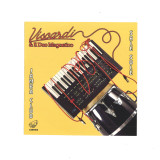
Viscardi & Il Duo Magnetico is the new collaborative project between italo-swiss DJ, producer and singer Pascal Viscardi,
Yavor Lilov and Alain Sandri, respectively drummer and percussionist of the swiss cult band L’Éclair.
The three musicians joined forces in Geneva and worked in the studio for the past two years with Viscardi as the main
vocalist, Lilov producing the tracks and playing drums, bass and keys, and Sandri on guitar, percussion, and backing vocals.
The result is a unique and contemporary version of italian pop, peppered with new-wave, boogie, disco and world music
references.
On Sale Sole Pascal's mellifluous lyrics float on a midtempo boogie groove, projecting visions of sun drenched cities and
summer sunsets. On the flip side Jamba Club is a reggae infused slow burner, reminiscent of night encounters and forgotten
love stories.
Sale Sole / Jamba Club marks the project’s debut release and serves as a sneak peek into the upcoming full-length album,
set to release on Cosmic Romance in fall 2023.
What’s happening in the streets? This right here, a celebrated engineer Yas Inoue and Dj Takaya Nagase come together in the studio and rework the Voltage Brothers rare groove jam “Happening In the Streets” with a cleverly put together edit with filters, effects and sonically tweaking it to perfection. They've created a perfect dance floor masterpiece already championed by Louie Vega, Joe Claussell, Spinna, Mike Dunn, and Rich Medina. This choon has everyone in anticipation for it’s release.
Japanese sound engineer Yas Inoue, based in New York began his career in the world renowned Maw Studios in the late 90s and has engineered for producers such as Masters At Work, Patrick Adams, Leroy Burgess, and Randy Muller contributing to the creation of various New York house and disco hits.
Takaya Nagase, a New York based Japanese Dj started as an A&R for Japanese record label Soundmen On Wax. He learned and studied under the great David Mancuso of the Loft Party NYC and later held his own Joy parties along with other Loft members. Having had regular gigs at Club Shelter from 2006 to 2007 and at Club Output from 2017 until the closing in 2019, he built his dj chops and now currently djs at New York City's top venues such as Le Bain, Good Room and Nowadays along with monthly shows on the famed Lot Radio in Brooklyn.
Together they are Domo Domo and with their first project on Vega Records they are on their way to becoming New York household names in the dance music industry. Look out for “Happening In The Streets” coming soon at all digital and streaming outlets with vinyl releases on 12” and 7”. Lookout everyone, this one’s a sure HIT!!!
- 1: Helplessly - Moment Of Truth
- 2: After You've Had Your Fling - The Intrepids
- 3: Welcome To The Club - Blue Magic
- 4: I Can't Move No Mountains - Margie Joseph
- 5: Supernatural Thing Part 1 - Ben E King
- 6: Mellow Me - Faith, Hope & Charity
- 7: Georgia's After Hours - Richard "Popcorn" Wylie
- 8: Date With The Rain - Eddie Kendricks
- 9: Just As Long As We're Together - Gloria Scott
- 10: Wendy Is Gone - Ronnie Mcneir
- 11: Got To Get You Back - Sons Of Robin Stone
- 12: Night Of The Wolf (Tema Del Lupo) - Ivano Fossati
- 13: Good Things Don't Last Forever – Ecstasy, Passion & Pain
- 14: Tell Me What You Want - Jimmy Ruffin
- 15: Keep It Up - Betty Everett
- 16: Free & Easy - Satyr
- 17: Each Morning I Wake Up - Major Harris
- 18: It's The Same Old Story - Act I
- 19: You Can't Hide Love - Creative Source
- 20: The Whole Damn World Is Going Crazy – John Gary Williams
- 21: If That's The Way You Feel - White Heat
- 22: Wake Up Everybody - Harold Melvin And The Bluenotes
Before there was Saturday Night Fever there was underground disco. DJs across America went out and found the music to play; dancers went out and found the clubs. At this point, in the early seventies, the disco was the venue and not a genre of music.
By the time Nik Cohn’s short story Tribal Rites of the New Saturday Night was published by New York magazine in June 1976, disco was the biggest genre of music on the charts and was about to get bigger still, becoming an all-enveloping cultural phenomenon. Cohn sold the film rights to Robert Stigwood, and his classic club yarn became Saturday Night Fever.
“Tribal Rites Of The New Saturday Night” is the soundtrack to Cohn’s story, where disco began; a 1975 score for the underground clubs of Brooklyn and Queens that played R&B, soul and Latin beats to people who lived for the weekend.
Bob Stanley has put this collection together, sourcing what was actually played in Brooklyn discos in 1974 and 1975. Only a few specific records were mentioned in Cohn’s feature, but two of them – Ben E King’s ‘Supernatural Thing Part 1’ and Harold Melvin’s ‘Wake Up Everybody’ - were cosmically great and both are included here, alongside underground favourites like Moment Of Truth’s Four Tops-like ‘Helplessly’ and Gloria Scott’s Barry White-produced modern soul classic ‘Just As Long As We’re Together’. Ivano Fossati’s incredible ‘Night Of The Wolf’ has fans in northern soul, disco and prog circles.
Without Cohn’s original story, it’s quite possible that disco would have remained an underground phenomenon – “Tribal Rites Of The New Saturday Night” paints a scene in full flower. Saturday Night Fever would eventually, if unintentionally, wreck the underground nature of this scene, and clubs like Studio 54 would destroy the democracy of the party, but for two or three years the scene was largely undocumented and magical. This album is the sound of disco before it was captured.
A wild and funky collection of Afro grooves that was ahead of its time in 1977 and has become a collector’s item in recent years, especially due to the growing international interest in Colombian picó sound system culture. Fruko and his studio bands Wganda Kenya and Kammpala Grupo treat us to a diverse set of African and Caribbean styles, laced with crazy synths, psychedelic guitar and infectious pan-African polyrhythms. By the time Discos Fuentes released the album “Wganda Kenya Kammpala Grupo” in 1977, Wganda Kenya’s discography was expanding with many 45 singles and appearances in various artists collections. The group’s 1975 debut record “África 5.000” was a full length LP in the U.S. and a various artists compilation in Colombia, which was followed by the self-titled long player the following year. However, Kammpala Grupo, which shared the album’s title and was credited to three songs on the record, had never appeared before, yet was basically the same studio group as Wganda Kenya. Most likely the creation of this short-lived studio band was just a ploy by the label to make it seem like there were more groups playing the type of exotic afro tracks favored by the picotero DJs of Colombia’s Caribbean coast (especially in Barranquilla and Cartagena). 1974 Discos Fuentes’ management had sent musician, band leader and producer Julio Ernesto “Fruko” Estrada to the coast on an A&R mission to discover what people were dancing to in the verbenas (communal open air neighborhood parties) run by the owners of picó sound systems (decorated mobile DJ rigs). Always game for an adventure, Fruko was tasked with bringing some popular examples of these esoteric, hard-to-find African, French and Dutch Antillean records back to Medellín to serve as inspiration (or to outright copy) so that the label could enter into the growing regional market and spread its popularity to the interior of Colombia and other Latin American countries via its own studio creation, Wganda Kenya. Fuentes was always returning to exploit the rich African-rooted culture of the coast as it had with the cumbia and other regional genres before, so in a way it was not surprising that they were attuned to this particular niche phenomenon from a marginalized sector of the population. The most popular genres with the champeta dancers in the 70’s and 80’s were styles like Congolese rumba, highlife, afrobeat, juju, mbaqanga and soukous as well as the music of Haiti, Guadeloupe, Martinique, Curaçao and Dominica, all of which were fiercely guarded by the DJs who had managed to acquire them often through extreme means of travel, barter and intense digging. The record kicks off with the joyful ‘El Gallo Africano’ which features exquisite interplay between Sepúlveda’s highlife style guitar and an authentic-sounding African style saxophone, perhaps played by Carlos Piña. In reality it was ‘Go Call Police Chief’ by prolific Nigerian highlife guitarist Chief Oliver Sunday Akanite, aka Oliver De Coque. Next up is Kammpala Grupo’s ‘La Yuca Rayá’ (‘Grated Yuca’), written by Isaac Villanueva in a style he termed son haitiano which sounds much more like Zimbabwe Shona mbira music. Wganda Kenya’s ‘Caimito’ (star apple, a type of tropical fruit), on the other hand, is actually a cover of a relatively well-known Haitian merengue song. Kammpala Grupo then takes us from the French Antilles to the multi-cultural discotheques of Paris, where a cover version of Black Soul’s Afro-boogie anthem ‘Black Soul Music’ is retooled and renamed ‘King Kong’, perhaps in a nod to the 1976 remake of the monster flick of the same name. Side two introduces us to the infectious merengue rebita of Angola via ‘La riphyta’ with “Paparí”, aka Mariano Sepúlveda, doing the vocals and faithfully replicating the Angolan guitar style. ‘La Trompeta Loca’ (‘The Crazy Trumpet’), probably the nuttiest track on the album, is an ingenious cover of ‘Ye Gbawa Oo Baba (Tribute To Nigeria)’ by Joe Mensah of Ghana. As with all their covers of African tunes, this rendition tightens up the original with some pop sheen, more consistent drumming and higher production values, remaking it into a powerful slow-burning dance floor filler. This is followed by one of the most powerfully original songs to come out of the entire Wganda Kenya project, Mike Char’s reggae anthem ‘El Nativo’ with Joe Arroyo on vocals. The record ends on a more authentically Caribbean sounding note with the instrumental ‘El testamento’, a cheerful islands banger with bright brass, syncopated calypso beats and chunky cuatro guitar (or ukulele). The original was in the mento genre and titled ‘Sweet meat’, written and recorded by Jamaican trumpeter Bobby Ellis. First time reissue. 180g vinyl.
Ghanas Linda Ayupuka spielt zeremonielle Fra Fra-Musik über schnelle Feuertempi und hypnotische Drumloops, die auf eine internationale Palette elektronischer Tanzstile verweisen, vom DJ-geführten Balani Show-Straßensound Malis über Electro-Acholi bis zu modernem Dancehall/R&B. Auf 'God Created Everything' fängt sie die Unmittelbarkeit früher Aufnahmen von Größen wie Oumou Sangaré und Rokia Traoré ein, um sich als neues westafrikanisches Gesangstalent zu präsentieren. Ihr Produzent Francis Ayamga (Top Link Studios), Live-Drummer von Ghanas King Ayisoba und Produzent der meisten Tracks auf dessen jüngstem Album für Glitterbeat, hebt Lindas Gesang mit seiner spielerischen Produktion von Laptop-DJ-Samples und abstürzenden Drum-Pads in den Himmel.
"(Linda) exists somewhere between the Malian singer Oumou Sangare´ and the lo-fi-to-the-future beats heard on the Nyege Nyege Tapes label." - NPR - All Songs Considered - Best Of 2022
"Combining traditional instrumentation and call-and-response vocals with sparkling synths, rapid-fire beats, and drum machine polyrhythms. Ayupuka achieves an electrifying syncretism on this album, giving Fra Fra gospel its rightful place on the global dance music stage." - BANDCAMP, Best Of 2022
"An uptempo blend of choral chants and sparkling, 80s electro synths." - THE GUARDIAN, Albums Of The Month
"Linda Ayupuka fait du gospel façon disco au Ghana et chante son amour de Dieu sur des synthés entêtants." - LE MONDE
"A mashup of gospel, disco and savannah sounds, produced with all the D.I.Y vim of Balani Show, Nyege Nyege Tapes and the Awesome Tapes roster." - PAN AFRICAN MUSIC - Best Of 2022
"Super interesting!" - GILLES PETERSON, BBC 6MUSIC
Brian Jonestown Massacre, Velvet Underground, TOY. “Upon the highways of Freedom, where Evil is like a Ferrari… “ Unbeknownst to its members, Index For Working Musik was born on an evening in late 2019 amidst the discovery of a collection of faded b&w photocopies that had been marinating on the floor of a urine-alley in the Gothic Quarter of Barcelona. An assortment of sacred and profane imagery were crumpled amongst an essay on early Christian hermits, entitled Men Possessed by God, the meaning of which was enticingly vague. Received together, they planted the seeds for a new endeavour. Though Max Oscarnold and Nathalia Bruno were already engaged in a creative ping-pong of sorts, the results to this point had only totaled a 30 min long ½ inch tape containing one track and four interludes. They needed a page and they needed ink, and they needed a place and it needed energy. Suddenly by chance or divine intervention, their experimental venture had been given form and direction. Back home in London’s cursed smog, they moved themselves and their 8-track studio into a basement in E8, where the project’s gravitational pull gained strength, quickly developing into an unexpected collective with the incorporation of drummer Bobby Voltaire, double bass player E. Smith and guitarist J. Loftus. As the world shifted around them and the Plague Years followed, it became increasingly clear that they were not going to leave that small basement room. The scarcity of light or outer world presence was less a limitation, instead the main tool at hand, allowing the recording to stretch for boundaryless days in architectural isolation, and forcing them to make straight forward free guitar music, adopting a ‘first thought, best thought’ approach. 35 minutes of repeat phrased guitars, slow-clipped drums and dulcet vocals where the recurring landscape is the desert. Reel-to reel-loops of Afghan music compete with the found sound overlays of voices recorded at the queue of the pharmacy and drum machines borrowed from Spanish heroes, channelling both far-off climes and snippets from a closer reality. It’s a strange psychic brew, built of imagined mysticism and domestic realities, of fever dreams and days that stretched into weeks of months. What was sparked by that discovery in the Gothic Quarter was actually a realisation that what they were looking for was with them all the while, buried as it was in piles of voice memos and recorded guitar feedback. Men Possessed By God they may be not: it was self-possession that was to guide their way in the end. “Life, despite all its destructive changes, remains indestructibly powerful and joyful
In the mid-'60s, Albert Ayler found himself at the center of major transformations within jazz. On his albums for ESP-Disk', his delivery was radically aggressive and his tone blistering – aiming for something beyond the New Thing. His music would be further energized when (at the behest of John Coltrane) Bob Thiele signed him to Impulse! As Ayler told The Plain Dealer at the time, "It's not about notes anymore. It's a sound – a feeling. The approach we're taking will discontinue the use of the word 'jazz.'"
In Greenwich Village, Ayler's first LP on Impulse!, perfectly captures the Cleveland-born saxophonist's radiant intensity. Sourced from a pair of live engagements – February '67 at the Village Theatre on New York's Lower East Side and December '66 at the Village Vanguard – these recordings show an improved clarity in production and performance.
Both sets feature two basses (including Alan Silva and Henry Grimes) which allowed the ensemble to go in different harmonic directions while maintaining an organic unity. Of particular interest are "For John Coltrane," a tribute to Ayler's mentor who would pass later that year, and "Truth Is Marching In" where trumpeter Donald Ayler joins his brother to celebrate and ultimately deconstruct several jazz traditions to stunning effect.
Vibrant in sound and vision, Albert Ayler's In Greenwich Village is a landmark statement in free jazz and a career high-point for this truly original artist. Superior Viaduct is honored to present this classic album on vinyl for the first time domestically in 30 years.
In the centre of deep space we tune in to the radio broadcasts from an old Class T interstellar spaceship. The emissions endlessly resonate the frequencies of the seventeenth release on the label HC Records by one of the titans of the Valencian scene, The Lost Boys, new pseudonym of the DJ and producer Raszia.
With releases on labels such as Bass Agenda, Subsist or Hxagrm Records, the artist mesmerises our senses with the Exiles of Mars Ep, available in both double vinyl and digital.
Syncopated rhythms are the protagonists across four original tracks together
with remixes by four electro legends: Boris Divider, Estrato Aurora, Dark Vektor, and Filmmaker.
The EP’s first cut is a remix of "Wall Of Bricks" by the legendary Boris Divider, which gives the track an air of crystalline, synthetic and cosmic sound, very much in line with his latest works on the Generative Operations series. Next, we find the original version, where the kick drums are heavier, the synths and basses more colourful and the acid sequences take centre stage in an odyssey of sidereal intensity.
On the record’s flip side, a feeling of overwhelming melancholy takes root in our soul. Valencian Estrato Aurora mentally transports us to the mysterious red sand of Mars in a precise exercise in symphonic minimalism with his remix of "Exiles of Mars", which mutates the original idea with velvety pads, synths and a slow and rapturous hypnotism that sinks us to unfathomable depths.
The Lost Boys' original concept on B2 is a combination of Miami Bass-style breaks and a demonic mantra-like main synth line, backed by what seems like an infinity of pearly effects and secondary melodies, pushing the track towards a crescendo punctuated by a dry and sharp snare.
The second disc’s opener "Bust My Moves" is a masterclass in deconstruction and reconstruction by Dark Vektor with his "Electro Escuadrón Remix”. The genius from Terrassa provides powerful lyrics loaded with a message about the modern rise of the 808 movement. We return to the original Lost Boys version on C2, a futuristic martial discourse takes shape with combating breaks combined with rave chords and brief episodes of respite, almost dreamlike, in the middle and end of the track’s exciting development.
On the D side, rough frequencies verging on distortion materialise through our ship's speakers as we pick up the Colombian Filmmaker’s remix of "Data Recovery For Brains". A psychotronic final appetiser that combines harshness and elegance in the use of the rolling kick drums and saturation of the sound, it is without a doubt the ideal soundtrack to narrate the collision of two galaxies. The closing of the EP features the original track, in which The Lost Boys show us his most mental and lysergic side as the track progresses along a slow and comforting broken rhythm, made dynamic by clever use of diverse acid sequences and clairvoyant stellar melodies.
The complete artistic experience is enhanced in all dimensions with accompanying artwork by
Daniel Requeni and videos elaborated by Frank-F.
Mastering as usual by Steve Voidloss at Black Monolith Studios in London (UK).
From Alehouse to Playhouse Bjarte Eike and his barnstorming Barokksolistene capture the vital spark of Restoration London’s entertainment scene with a captivating new recording for Rubicon Classics! The Playhouse Sessions will be released on 23 September 2022 to coincide with Barokksolistene’s concert double-bill at London’s Southbank Centre.
‘A smattering of Purcell, dances from Playford’s Dancing Master, shanties, reels and ballads succumb to a nine-piece ensemble drawing on Baroque, jazz and folk styles for a no holds barred hooley of riotous improvisatory give and take,’ (BBC Music Magazine review of The Alehouse Sessions, August 2019)
London’s musicians, pushed in the 1650s, to the margins of society by order of Oliver Cromwell, found room for new forms of entertainment in city-centre taverns and alehouses. They remained there long after the restoration of the monarchy, performing sets of dances, theatre songs and bawdy ballads to audiences glad to be free from Puritan constraints on pleasure.
Norwegian violinist Bjarte Eike and his Barokksolistene have restored the spirit and substance of those long-forgotten performances with their Alehouse Sessions, hailed by The Times as ‘irresistible’ and ‘fabulously unrestrained’ by The Guardian. Five years ago the Norwegian violinist and his band scored a best-selling album with The Alehouse Sessions on Rubicon Classics. They return to the label with another compelling collection of music and words of the kind on offer more than three centuries ago at Henry Purcell’s favourite Westminster watering holes. The Playhouse Sessions, set for release on Rubicon Classics on 23 September 2022, reflects the uplifting energy and engaging emotional contrasts of Barokksolistene’s Alehouse performances.
“The album contains a sort of inner narrative that runs through the recording,” says Bjarte Eike. “It has become like a play in its own right, with each track being a small tale within a larger story.” The recording’s tracklist includes Eike’s beguiling arrangements of music from Purcell’s semi-opera The Fairy Queen and his own original compositions on words from the play on which it is based, Shakespeare’s A Midsummer Night’s Dream; popular songs and ballads such as ‘The Irish Washerwoman’, ‘I often for my Jenny strove’ and ‘The Three Ravens’; tunes from Purcell’s welcome odes and stage shows, Come ye sons of art and Dido and Aeneas among them; the ‘Willow Song’ from Shakespeare’s Othello; Eike’s own voice in Puck’s monologue from Act 5 of A Midsummer Night’s Dream; and John Dowland’s sublime air ‘Can she excuse my wrongs’.
London’s theatres were closed at the start of the English Civil War in 1642 and remained shut until the Restoration. Alehouses offered redundant musicians, actors and dancers a place to scrape a precarious living and soon became their creative refuge. “Although a few surviving theatres reopened in 1660 with the return of Charles II, there was little money around to rebuild those that had been demolished,” observes Bjarte Eike. “And a generation of musicians had already found an audience in places like the Black Horse in Aldersgate Street. So popular were their alehouse sessions that Cromwell tried to abolish them! But they outlived him and became part of Restoration musical life.” The form of a Barokksolistene Alehouse, he adds, is like a creative room. “Within its framework I can frequently refurbish the show with new contents. The Playhouse project is likewise an extension of the ever-evolving Alehouse Sessions. Together they tell the story of music and theatre in London during Cromwell’s time and after the Restoration. Of course there’s an historical context to what we do. But there’s also the practical context – which is even more important to me – of connecting with a contemporary twenty-first century audience. An Alehouse / Playhouse performance is not something for the museum; it's about music made in the present moment, just as it was in the London alehouses of Purcell’s day -- with their playhouses annexed to the rear of the beer-drinking saloons. The encounter of musicians onstage and the audience in the hall is the real magic of it. We have to fuse the audience into the action of our performance!”
The Playhouse Sessions will be launched on Friday 23 September with a late-night concert at the Purcell Room and a post-concert Alehouse Session in the foyer of the Queen Elizabeth Hall. Soprano Mary Bevan is set to join Eike and his Alehouse Boys for the first half of their Southbank Centre double-bill, offering unique interpretations of songs from Purcell shows and other hits from the late seventeenth-century London stage. “The Southbank Centre is a direct descendant of concerts given in the 1650s in the alehouses of London,” notes Eike. “These alehouses after all staged some of the world’s first public concerts. Later, after the Restoration, it became common for promoters to advertise alehouse concerts in the press and offer subscription tickets. Purcell and his fellow musicians were thus just as at home performing there as they were in the chambers of the royal court or in London’s new theatres.”
Bjarte Eike launched his Alehouse Sessions in company with like-minded musicians 15 years ago. The ensemble comprises a core of regular performers, all of whom have committed to memory a huge setlist of up to four hours of music. Typically they meet a day or so before a concert tour to share a meal and make music together; then next day, re-grouping thirty minutes before the show, they discover Eike’s select-menu for the evening. “That ensures that every show is fresh,” he notes. “I make sure we never repeat the same programme twice. It’s therefore essential to work with people who share my outlook and dare to adventure. We’re into a high-risk sport, with lots of traps and places where the unexpected appears - for good or for ill. And so the audience knows we’re vulnerable. But our skill is seen in how we re-act on the hoof to the unpredictable. That’s authenticity and honesty - and above all it’s a performance that’s genuine.”
Armed with a classical training and a background in folk music and improvisation, Bjarte Eike was drawn naturally to Early Music in all its stylistic variety. “I never really felt at home with only one genre,” he recalls. “Early Music allowed me to study profound, complicated compositions, but performing it has also opened up the chance of rebellion and uproar! Early music offers wide, multi-faceted areas of musical exploration for me. You find, for instance, links to different types of music wherever you look in seventeenth-century English repertoire. And I am fascinated by all these connections. They offer a foundation for the Alehouse Sessions and for all Barokksolistene performance more generally. Every member of the group plays, sings, dances and improvises without limitation. We’re all interested in the many different fields of being a stage performer and pushing hard at the ‘normal’ boundaries of what it means to be a classical musician.”
Mike Viola is a producer, musician, songwriter and singer. Viola may be best known for his work with Panic! at the Disco, Andrew Bird, Ryan Adams, Jenny Lewis and Mandy Moore, but his solo career stands on its own starting with a number of acclaimed records as the leader of New York based cult favourite Candy Butchers and 7 critically adored Mike Viola records. His original music has been featured on soundtracks for movies such as That Thing You Do!, Walk Hard: The Dewey Cox Story and Get Him to the Greek. Decades into his career his music continues to resonate with and inspire new generations of musicians and music lovers. Viola is cranking out more music than ever including the fan favorites; “The American Egypt” from 2019 and “Godmuffin” from 2021. Paul McCarthy was recorded over the summer of 2022 on 1/2” tape at “Barebones”, Viola’s home studio in Los Angeles. Joined by his friends Jake Sinclair on bass and Brendon Urie on drums. Viola says, “I set out to make a sonic monster using the legs of James Gang Rides Again, the heart of Black Sabbath Paranoid, with my kid brain inside my greying middle aged head on top. I’ve hit a point in my life where instinct has taken the reins fully, logic now waits in the wings to sweep up the stage and pay the taxi fare home. This album is the result of committing to this path fully and laughing all the way.” Viola will support the album release with his first tour in over a decade with dates in Europe and the US in Winter/Spring 2023, and more dates to follow later in 2023.
Fourth release featuring Scott McCaughey (The Minus 5/Young Fresh Fellows), Steve Wynn (The Dream Syndicate), Peter Buck and Mike Mills (R.E.M.) and Linda Pitmon (Filthy Friends) Produced by Mitch Easter (R.E.M., Let’s Active) Featuring the singles “Journeyman” and the title track Available on CD, Digital, and as a double LP (with etched 4th side) On tour starting in August! In 2008 they busted out of the box and easily reached first with their Frozen Ropes And Dying Quails. The Baseball Project was on base and immediately posed a threat to go further. In 2011, they moved on to second with some wildness aptly called High And Inside. They were halfway home. Three years later in 2014, the quintet of Big Stars moved on down the line to the aptly titled 3rd, an epic double dip delight of craftsmanship and savvy. And there they stayed. For 9 long years at the hot corner, but we’re happy to say that The Baseball Project is finally coming home, scoring big and touching ‘em all with their fourth album Grand Salami Time!