‘Cataclysm’ is a poignant call for revolution of both politics and consciousness, conveyed through ten distinct songs written and produced by Zanias between 2020 and 2024. Each piece of music inhabits its own aesthetic universe and rhythm, featuring elemental fusions of coldwave, italo disco, witchhouse, trance, breakbeats, hyperpop and even a touch of drum and bass. The unique amalgamation is best described as post-industrial ethereal wave, of Zanias’s very own signature. The subject matter grapples with how to move forward through times when civilisation and the entire ecosystem of the planet feel like they are on the brink of total collapse, while gazing back over hundreds of thousands of years of human survival in total awe of how far we’ve come. The lyrics aim for a balance of vulnerability and poetic strength, as the audience is beckoned to “thread the power through the pain”. While darker atmospheres are conjured through the sound design and instrumentation, the album ultimately directs itself steadfast toward the glittering sheen of hope. As the tempo ascends through the course of the album’s tracklist, so too does Zanias’s deep attachment to our sacred humanity and refusal to give in to despair.
‘Cataclysm’ represents an ambitious defiance of genre tropes in pursuit of pure artistry, with a potent political message delivered with assertive fervour and playful sincerity. Additional production was contributed by mixing engineer Trey Frye, best known for his work in the band Korine, and the album was mastered by Alain Paul.
Cerca:disco trance
One of London’s underground dance music hero’s, founder of The Utopia Project and Love Fever Discotheque, Alex Bradley presents a fresh moniker, Dreamphaze, for People & Place’s 004. The ‘Glow EP’ is a four-track dive into the London-based artist’s psychedelic take on blissful house & techno, moving between trance-tinged dreamscapes and playful grooves to soundtrack the halcyon days of a summer gone by.
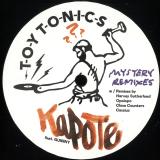
Big remix package for TOY TONICS'S boss KAPOTE. His song "Mystery" from the last album reworked by HARVEY SUTHERLAND, OPOLOPO, CLOSE COUNTERS with a bonus remix by french house master CASSIUS. Turning Kpaote's New school house anthem into super fresh jazz-funk disco, NYC 1990ies House hit and proto-dance bangers. There is no way there is not one version that every good DJ with an interesting fresh sound can't play.
It's 2025 and Toy Tonics one more time tries to define what are the perfect vibes for the "post-dark-electronic music age". Yes. After 10 years of explosion of hard techno, dark trance and fast race sounds Toy Tonics is trying every month to bring ideas for a more positive, high quality, forward-thinking dance music.
Opolopo: Opolopo brings his legendary touch to "Mystery." With a career spanning decades and a reputation for fusing boogie, funk, and broken beat, his remix promises a soulful journey. An artist who's famously remixed everyone from Gregory Porter to Stevie Wonder, Opolopo's version is pure, unadulterated groove.
Harvey Sutherland: Straight from the heart of Melbourne's electronic underground, Sutherland delivers his signature "Neurotic Funk." The celebrated synthesist and producer, known for his distinctive analog textures and a discography that's earned him ARIA Award nominations, is sure to inject his unique genre-bending energy into the track.
Close Counters: The duo from Melbourne, Close Counters, are set to turn "Mystery" into an electrifying fusion of house, soul, and jazz. Known for their dense synths and infectious energy, they have earned praise from tastemakers like Gilles Peterson and have wowed crowds at festivals like Splendour in the Grass.
Finally, the package features "Berlin Boogie Town" with a new interpretation from Parisian legend Cassius, adding some uplifting French Touch filter vibes.
Collectors have been asking and waiting for it a long time and now it is coming: a picture disc of MEMORIEZ to complete your collection. Enjoy this final tribute to MEMORIEZ and discover 4 top trance tracks made in Belgium.We go out with a bang! Spin that vinyl, baby! Forever yours, MEMORIEZ.
- A1: Malavoi - Te Traigo Guajira
- A2: Los Caraibes - Donde
- A3: Tropicana - Amor En Chachacha
- A4: Ryco Jazz - Wachi Wara
- A5: Eugene Balthazar - Dap Pignan
- A6: Roger Jaffort - Oye Mi Consejo
- A7: Les Kings - Oriza
- B1: Les Supers Jaguars - Tatalibaba
- B2: Super Combo De Pointe A Pitre - Serrana
- B3: L'ensemble Abricot - Se Quedo Boogaloo
- B4: Henri Guedon - Bilonga
- B5: Les Aiglons - Pensando En Ti
- B6: Los Martiniquenos - Caterate
In Guadeloupe, many people think that jazz and ka music are like a ring and a finger. To some extent, the same could be said about so called Latin music and the music played in the French West Indies.
Both aesthetics were born in the Caribbean and bear so many connections that they can easily be considered cousins. In constant dialogue, there are lots of examples of their fruitful alliance and have been for a while. The English country dance that used to be practiced in European lounges came to be called kadrille in Martinique and contradanza in Cuba. They both featured additional percussion instruments inherited from the transatlantic deportation. Drawing from shared feelings about the same traumatized identity – later to be creolized – it would be hard not to assume that they were meant to inspire each other. The golden age of the orchestras that graced the Pigalle nights during the interwar period further proves the point. As soon as the 1930s, Havana-born Don Barreto naturally mixed danzón and biguine music in a combo based at Melody's Bar. In the following decade, Félix Valvert, a conductor who was born and raised in Basse-Terre in Guadelupe, also worked wonders in Montparnasse with La Coupole, which was an orchestra made up of eclectic musicians. Afro- Caribbean performers of various origins were often hired on rhythm and brass sections in jazz bands, which used to enliven the typical French balls of the capital. In the 1930s and onwards, Rico’s Creole Band was one of them.
Martinican violinist-clarinettist Ernest Léardée, who would become the king of biguine music as well as the main figure of French Uncle Ben's TV commercials (a dark stigma of post-colonial stereotypes), had musicians from the whole Caribbean sphere play at his Bal Blomet – and they all enchanted "ces Zazous-là" (according the words of Léardée's biguine-calypso piece). In les Antilles (French for French West Indies), music history started to speed up in the 1950s, when trade expanded and radio stations grew bigger. The Guadelupean and Martiniquais youth tuned in their old galena radio sets to South American and Caribbean music. As for the women traders, les pacotilleuses, they bought and sold goods across different islands (the "passing of items through various hands" was thought to be most pleasurable) and brought back countless sounds in their luggage. Such was the case of Madame Balthazar, who once returned from Puerto Rico with the first 45rpm and 33rpm to ever enter Martinique.
Out of this adventure was created the famous Martinican label La Maison des Merengues, a music business she opened and undertook with her husband and which proved to be a major landmark. At the end of the 1950s, in Puerto Rico, Marius Cultier competed in the Piano International Contest playing a version of Monk's Round 'Midnight. He won the first prize and this distinction foreshadowed everything that was to come. Cultier, the heretic Monk of jazz, was quickly praised for writing superb melodies, always tinged with a twist that conferred a unique sound to his music. It didn't take long for the gifted self-taught musician to get to play with Los Cubanos, making a name for himself thanks to his impressive maestria on merengues.
The rest is history. Besides, in the late 1950s, Frantz Charles-Denis, born into the upper middle class in Saint-Pierre and better known by his first name Francisco, went back home after working at La Cabane Cubaine – a club located rue Fontaine where he had caught the Latin fever. Francisco's music was therefore heavily marked by his Cuban cousins' influence, which gave the combos he led a specific style and also led to renewal. Things were swinging hard in La Savane, located in the main square in Fort-de-France. He set up the Shango club close by and tested out the biguine lélé there, a new music formula spiced up with Latin rhythms. Soon afterwards, fate had him fly to Puerto Rico and Venezuela.
As for percussionist Henri Guédon (percussions were only a part of his many talents), he was born in Fort-de-France in May 22nd 1944, the day marking the celebration of the abolition of slavery. As an old man, he could remember that in " his father's Teppaz, a lot of hectic 6/8 music was constantly playing...". In the opening lines of his Lettre à Dizzy, a small illustrated collection of writings published by Del Arco, he highlighted the huge impact that cubop had on him as a teenage boy, around 1960. He eventually turned out to be the lider maximo in La Contesta, a big band steeped in Latin jazz. He was also the one who originated the word zouk to describe music which brought the sound of the New York barrio to Paris. It was the culmination of a journey that started in Sainte-Marie: "a mythical place for bélé, the equivalent of Cuban guaguancó". In the early 1960s, the tertiary economy developed to the detriment of agriculture. Yet rural life was where roots music emerged in Martinique and in Guadeloupe.
Record companies played a major part in the process of Latin versions sweeping across the islands – before reaching everywhere else. Producer Célini, boss of the great Aux Ondes label, and Marcel Mavounzy, both the head of Émeraude records - a firm which was founded in 1953 - as well as the brother of famous saxophonist Robert Mavounzy, were big names to bear in mind. Although there were many of them - all of whom are featured on this record - Henri Debs was definitely the major figure in the recording adventure. He proved to be so influential that he even got compared to Berry Gordy. In the mid 1950s, when he acquired his first Teppaz, he worked on his first compositions: a bolero and a chachacha. Then, he became the one man who made people discover Caribbean music, from calypso to merengue. He was among the first ones to rush out to San Juan, Puerto Rico, to buy records and distribute them through a store run by one of his brothers in Fort-de-France. He had members of the Fania All Star come and perform there, which he was madly proud about. He was also the first one to pay attention to Haitian music, such as compas direct and various other rhythms which would soon flood the market. As a result, many of the combos hitting his legendary studio would end up boosted by widespread "Afro-Latin" rhythms. However, he never denied his identity: gwo ka drums were given a major role, although they were instruments which had long been banned from the "official" music spheres. The present selection bears witness to such a creative swarming. Here are fourteen tracks of untimely yet unprecedented cross-fertilization: all types of music rooted in the Creole archipelago have found their way, whatsoever, to the tracklisting. Whether originating from the city or being more rural, they all go back to what Edouard Glissant, in an interview about the place of West Indian music in the Afro-American scope, called "the trace of singing, the one which got erased by slavery." "It is so in jazz, but also in reggae, calypso, biguine, salsa... This trace also manifests through the drums, whether Guadelupean, Dominican, Jamaican or Cuban... None of them being quite the same. They all point to the idea of a trace, seeking it out and connecting to each other through it. This is the hallmark of the African diaspora: its ability to create something new, in relation to itself, out of a trace. It may be the memory of a rhythm, the crafting of a drum, a means of expression which doesn't resort to an old language but to the modalities of it." The opening track features one of the emblematic orchestras of this aesthetic identity, criscrossing many music types from the archipelago. The 1974 Ray Barretto guajira – Ray Barretto was a major New York drummer influenced by Charlie Parker and Chano Pozzo – is magnificently performed by Malavoi, a legendary Fayolais group (i.e from Fort-de-France). Additionally, the compilation ends on a piece by Los Martiniqueños de Francisco. It symbolically closes the circle as it is a genuine potomitan of Martinique culture which also functions as a tireless campaigner for Afro-Caribbean music. Practicing the danmyé rounds (a kind of capoeiria) to the rhythm of the bèlè drum, it delivers a terrific Caterete, a kind of champeta of Afro- Colombian obedience which was originally composed by Colombian Fabián Ramón Veloz Fernández for the group Wgenda Kenya. The icing on the cake is Brazilian Marku Ribas, who found refuge in Martinique in the early 1970s, bringing his singing to the last trance-inducing track. These two "versions" convey the whole tone of a selection composed of rarities and classics of the tropicalized genre, swarming with tonic accents and convoluted rhythms. It is the sort of cocktail that the West Indians never failed to spice up with their own ingredients. For instance, the Los Caraïbes cover of Dónde, a famous Cuban theme composed by producer Ernesto Duarte Brito, has a typical violin and features renowned Martinique singer Joby Valente and his piquant voice.
The track used to be – or so we think – their only existing 45rpm. The meaningful Amor en chachachá by L'Ensemble Tropicana, a band which included Haitian musicians among whom was composer and leader Michel Desgrotte, also recalls how Latin music was pervasive in the tropics in the mid-1960s. They were the ones keeping people dancing at Le Cocoteraie in Guadelupe and La Bananeraie in Martinique. Around the same time, another "foreign" band, Congolese Freddy Mars N'Kounkou's Ryco Jazz, achieved some success on both islands by covering Latin jazz classics – such as their adaptation of Wachi Wara, a "soul sauce" by Dizzy Gillespie and Chano Pozo whose interweaving of strings and percussions can have anyone hit the dancefloor. How can you resist Dap Pinian indeed, a powerful guaguancó by Eugene Balthazar, performed by the Tropicana Orchestra and published by the Martinique-founded La Maison des Merengues? It also acts as a symbol of the maelstrom at work. Going by the name Paco et L'orchestre Cachunga, Roger Jaffory used to play guaguancó too: his Fania-inspired Oye mi consejo is one example of his style. Baila!!!!! Dancing was also one of the Kings' focus points. Oriza is a Puerto Rican bomba and a "classic" originally composed by Nuevayorquino trumpeter Ernie Agosto, which reserves major space for brasses, giving it a special sheen.
Emerging from the New York barrios crucible was also La Perfecta, a Martinique group originating from Trinidad, whose name directly references the totemic Eddie Palmieri figure as well as his own band, also called La Perfecta. Here they borrow Toumbadora from Colombian producer and composer Efraín Lancheros and interpret it by emphasizing percussions, which set fire to the track even more than the wind instruments. The same goes for Martinique's Super Jaguars, who use Tatalibaba – a composition by Cuban guitarist Florencio "Picolo" Santana which was made famous by Celia Cruz & La Sonora Matencera – as a pretext for sending their cadences into a frenzy. In a more typically salsa vein, the Super Combo, a famous Guadelupean orchestra from Pointe-Noire that was formed around the Desplan family and had Roger Plonquitte and Elie Bianay on board, adapt Serana, a theme by Roberto Angleró Pepín, a Puerto Rican composer, singer and musician also known for his song Soy Boricua. Here again, their vision comes close to surpassing the original. In the 1970s, L'Ensemble Abricot provided a handful of tracks of different syles, hence reaching the pinnacle of the art of achieving variety and giving pleasure. They played boleros, biguines, compas direct, guaguancó and even a good old boogaloo - the type they wanted to keep close to their hearts for ever, "pour toujours", as they sang along together in one of their songs. Léon Bertide's Martinican ensemble excelled at the boogaloo which had been composed by Puerto Rican saxophonist Hector Santos for the legendary El Gran Combo.
Three years later, in 1972, Henri Guédon, with the help of Paul Rosine on the vibraphone, tackled the Bilongo made famous by Eddie Palmieri. Such a classic!!!!! And so were the Aiglons, the band from Guadelupe: choosing to execute Pensando en tí, a composition by Dominican Aniceto Batista, on a cooler tempo than the original, they noticeably used a wonderfully (un)tuned keyboard in place of the accordion. On the high-value collectible single – the first one released by Les Aiglons under the Duli Disc label – there is a sticker classifying the track under the generic name "Afro". Now that is what we call a symbol. Jacques Denis
A Side: Er Mar (Submarine Mix) "Maracaibo, dance to the barracuda, yes but dance naked, zà zà! " So sang Maria Luisa Colombo, known to all of us as Lu Colombo. It was 1982, the meteoric song became and still is today a worldwide Hit that everyone has sung at least once in their life and almost never sober. Let's make a leap in time, we are in 1993 the track is taken up and remixed in several versions between Latin and Euro House, we have taken up the track Er Mar (Submarine Mix), dreamy, lustful, psychedelic, evocative, Summer in its purest form. To dance on the beach, preferably in company of Miguel and naked
B Side: FeelFly – Onda Erotica Remix A Cosmic sabba in the forest. You’ll get lost with this hypnotic sound and a minute later you’re ready for a proper trip into your hidden Erotic Dreams. With this almost ten minutes long and original version, Feel Fly delivers to all of us a signature track of the highest order. Feel Fly is an Italian electronic musician and DJ. Defined by Gerd Janson as a linchpin of the underground scene, he recently released some Balearic trance tracks on International Feel and Internasjonal by Prins Thomas, as well as transversal EPs on New Interplanetary Melodies and Hell Yeah.
Planet Trip Records is pleased to present Aqua Terra, the latest EP release from Friedrich Trede and Stephan Braun, the respected Munich-based DJ and production duo better known as Rhode & Brown. Since 2010, they’ve racked up a slew of quality releases through Permanent Vacation, Public Possession, Shall Not Fade, and their own Slam City Jams imprint, while playing well-received DJ sets across Europe. Along the way, the two longtime friends have spent the last fifteen years incorporating influences from electro, italo, synth-pop, breakbeat trance, rave music, and ambient into their blend of uptempo house and techno productions.
Shifting gearspeed, Aqua Terra sees Rhode & Brown trying something completely new and unexpected from them: a record inspired by UK street soul, digi-dub, and transatlantic R&B and boogie from the 1980s and 1990s. Beginning with the Loose Ends slanted synthesiser chords and shuffling machine beat of ‘Heart Attack’ and the glossy new jack swing bounce of ‘Passion Sauce’ (both featuring sultry Berlin-based New York singer Marlena Dae), Aqua Terra quickly reveals itself as a treasure chest of heavy tunes. Steeped in love and lust, ‘Heart Attack’ and ‘Passion Sauce’ are essential sing-along numbers for the warm-up and the warm-down.
The exemplar of a groove that keeps on giving, ‘Aqua Terra (Acid Frog Mix)’ is a note-perfect example of digi-dub redone for the 2020s. Keeping us guessing, Rhode & Brown flip the script on ‘Longo Doggo’ by borrowing elements from sampledelic ‘90s turntablism and blending them with a post-disco/electro beat and a slinky bassline for the ages. From there, ‘Multiflora’ sees our protagonists back in a bassy digi-dub mode, before closing things out with an acid breakbeat slanted demo mix of the title track.
Release 18 on Atom Trance Force, this time from label favourite Micropulse. Here they deliver three rip roaring hard trance tracks in the form of 'Ecco', 'Evil Twin' and title track 'Heaven's Gate' that take no prisoners, with an ode to yesteryear, just how we like it!
Heaven's Gate & Ecco channel classic hard trance energy with high pace and melodic. Evil Twin slows it down to 140 for a more serene yet driving take.
Support from:
Adam (Last Of The Mohicans) Apple FM, Ben Corner Love Summer Radio, DJ Panda, DJ Strahl Discover Trance Radio, DJs Present, Devastate Gabberhead / Uprising, Dimitri Kechagias, Giuseppe Ottaviani, Hellraiser, J.O.E Tomorrows World, J.O.E Tomorrows World, Jake Nicholls [Uprising], James Brolly, Loki [Terminal Trax], Louk / Hidden Identity, Matt Handy [Contact], Mind Control [Noise Pollution], Paul Nineham [Brisk], Paul-O [Uprising], Remnis, Renegade System, Rennz [Distorted Dreams], Rocco Jonsson [Collide / The Carnival Sweden], Spaceman [Tuned Flow], Tjerk Coers, TripleXL.
When the hypnotic groove of Berlin band Onom Agemo & The Disco Jumpers meets the pulsating riffs of Malian guitarist and singer Ahmed Ag Kaedy, new horizons open up.
At the centre of 'Common Stars' is Ahmed Ag Kaedy's distinctive vocals - always with poetic urgency. His lyrics, deeply rooted in the political and cultural realities of his homeland, deal with freedom, home and the search for identity. They deal with the ongoing conflict of the Tuareg in Mali, who are caught between the desire for cultural self-determination and political tensions with the central government. They also address the threat posed by Islamist groups, which have controlled parts of northern Mali and banned music since 2012. Ahmed Ag Kaedy had to flee his home country due to this repression. With his band Amanar, he shaped modern Tuareg rock and toured internationally. The collaboration with Onom Agemo began after he came to Berlin for the premiere of the film 'Mali Blues', in which he is one of the protagonists, and led to joint concerts throughout Europe.
'Common Stars' is a musical meeting of cultures that unites sounds from the Sahara to Berlin. Music that creates connections and makes different perspectives audible. The tracks are characterised by trance-like rhythms, hypnotic bass lines and shimmering saxophone and flute sounds. Pulsating synthesizers, dry-as-dust guitar riffs and improvisational outbursts interweave to create a soundscape that is sometimes driving, sometimes floating and creates a very unique, captivating atmosphere. Ahmed Ag Kaedy describes it aptly: 'Space jazz meets the rhythm of the camel.'
- Les Maîtres Fous Part I
- Les Maîtres Fous Part Ii
LTD DIM GLEAM ED[24,79 €]
Haunting, discordant and deeply unsettling, `Les Maîtres Fous' (`The Mad Masters') was written by French post-metal collective Year of No Light in response to French filmmaker Jean Rouch's controversial 1950's docufiction of the same name. Commissioned by Musée Du Quai Branly in Paris for their 2012 `L'Invention Du Sauvage' exhibition, trance-metal pioneers Year of No Light approached the ritual practices of the Hauka movement as depicted in the film and responded with their uniquely hypnotic heaviness. Performed only twice, once at the exhibition on the 6th January, 2012 and again in Bordeaux on the 29th January, 2015; this release is a live recording of the second and final performance of `Les Maîtres Fous'. Whilst Year of No Light have a long history of collaboration with forward-thinking filmmakers and visual artists, the sensitivity of this documentary's problematic subject matter and the intensity of the band's performance made this performance both a physically and emotionally demanding experience; something that can be keenly felt upon listening. Founded in September 2001 by a collection of Bordeaux's heavy scene stalwarts as an ongoing side project encompassing elements of sludge metal and shoegaze, Year of No Light released their debut album, Nord, in 2006 to critical acclaim. The subsequent years however saw a significant lineup change with the band replacing their vocalist with a third guitarist to become a fully instrumental sextet incorporating aspects of black metal, drone electronica and dark ambient into their already formidable sound. 2010's four track epic Ausserwelt and the 2013 follow up Tocsin saw Year of No Light distilling their punishing sound even further; stalling the tempo to a glacial crawl and tuning guitars ever downwards to new uncharted depths. Consolamentum, the band's first full-length release in nine years and their first with Pelagic Records, brought the outfit's crushing double-drumming percussion to the fore as a masterclass in dynamic control saw Year of No Light embrace the highest highs and the lowest lows of the intervening years. Now approaching their 25th anniversary, `Les Maître Fous' is a pressing reminder that, despite the band's long and ongoing journey, Year of No Light have never been afraid to experiment, to take risks, to square up to life's ugliness and look it straight in the eye. FOR FANS OF Neurosis, Cult of Luna, SWANS, ISIS, Russian Circles, My Bloody Valentine, Chelsea Wolfe
Haunting, discordant and deeply unsettling, `Les Maîtres Fous' (`The Mad Masters') was written by French post-metal collective Year of No Light in response to French filmmaker Jean Rouch's controversial 1950's docufiction of the same name. Commissioned by Musée Du Quai Branly in Paris for their 2012 `L'Invention Du Sauvage' exhibition, trance-metal pioneers Year of No Light approached the ritual practices of the Hauka movement as depicted in the film and responded with their uniquely hypnotic heaviness. Performed only twice, once at the exhibition on the 6th January, 2012 and again in Bordeaux on the 29th January, 2015; this release is a live recording of the second and final performance of `Les Maîtres Fous'. Whilst Year of No Light have a long history of collaboration with forward-thinking filmmakers and visual artists, the sensitivity of this documentary's problematic subject matter and the intensity of the band's performance made this performance both a physically and emotionally demanding experience; something that can be keenly felt upon listening. Founded in September 2001 by a collection of Bordeaux's heavy scene stalwarts as an ongoing side project encompassing elements of sludge metal and shoegaze, Year of No Light released their debut album, Nord, in 2006 to critical acclaim. The subsequent years however saw a significant lineup change with the band replacing their vocalist with a third guitarist to become a fully instrumental sextet incorporating aspects of black metal, drone electronica and dark ambient into their already formidable sound. 2010's four track epic Ausserwelt and the 2013 follow up Tocsin saw Year of No Light distilling their punishing sound even further; stalling the tempo to a glacial crawl and tuning guitars ever downwards to new uncharted depths. Consolamentum, the band's first full-length release in nine years and their first with Pelagic Records, brought the outfit's crushing double-drumming percussion to the fore as a masterclass in dynamic control saw Year of No Light embrace the highest highs and the lowest lows of the intervening years. Now approaching their 25th anniversary, `Les Maître Fous' is a pressing reminder that, despite the band's long and ongoing journey, Year of No Light have never been afraid to experiment, to take risks, to square up to life's ugliness and look it straight in the eye. FOR FANS OF Neurosis, Cult of Luna, SWANS, ISIS, Russian Circles, My Bloody Valentine, Chelsea Wolfe. The Dim Gleam edition is kind of a beige vinyl colour
Last Year at Marienbad proudly welcomes French producer DJ Psychiatre, aka Sylvain Creton, known for his dynamic and evolving approach to house music. His style blends acid-infused grooves, soft rhythmic atmospheres, and disco-driven energy, earning him releases on renowned labels like Whyte Numbers, Lost Palms, and Shall Not Fade.
His latest EP, Moving Into Jazz, showcases his signature sound with four diverse tracks. The title track starts with delicate keys before building into a rich, atmospheric house piece with acid elements. Those DJs follows with a stepping drum pattern, deep bass, and sweeping chords, reinforcing his intricate rhythmic focus. On the B-side, Iced Lemon introduces clean arpeggios and euphoric pads, culminating in a powerful progression. Closing the EP, A Trance to Remember delivers an uplifting, energetic groove with a deep bassline and engaging vocal snippets. This EP highlights DJ Psychiatre’s ability to craft immersive, melodically rich music that resonates beyond the dancefloor. Last Year at Marienbad is thrilled to share this release from a true master of the genre.
Germany's iconic deep funk collective digs into a new soundscape: "A Higher Frequency" was recorded with a nine-piece live to tape at legendary MPS studio in the Black Forest, adding an airy, jazzy flavour to their trademark raw and breaks-heavy funk. Ten tracks full of spiritual grooves, soulful themes, loose funkiness and organic interplay, captured with state-of-the-art 1960s gear in a super-vibey room - but the title A Higher Frequency is not just about the pristine analogue sound quality of the recording, it is also a reference to a trancendant wavelength where minds meet and music connects.
Together with long-time friends and collaborators Daniel Kimaz on flute and Guillame Métenier, who worked his magic on the studio's historic Bösendörfer grand piano and Hammond organ, the group spent a week in the Black Forest, with full focus on the mission to capture the live energy and togetherness of the ensemble.
The result is an album bursting with positive energy and power, rooted in a universal funk groove with excursions into many colourful branches like outernational, cinematic, soulful jazz, psychedelic & disco.
The common thread is a propulsive, driving-forward feel: "Open The Gate" welcomes us with hard-hitting breakbeats and dramatic crime brass, followed by the cool groovin' piano-led soul jazz of "Get Loose", while "Spinning" takes us on a ride through cinematic horn choruses and folky-psych flute and guitars. "Back And Better" is Nichola Richards' time to shine, laying her sweet vocals over the sparse hiphop-infused soul beat to tell a comeback story. "Sweet Company" is a lighthearted uptempo tune inspired by TV and library themes of the 1960s. The swampy groove of "Sparks Of Joy" best reflects the fun of the band playing together and "Phantom Power" combines a trademark Mocambo breakin' theme with an unusual instrument, an electric phin from Thailand – a nod to the many so-called "world music jazz" recordings that the MPS studio gave birth to. On "Can't Stop This Fire", soul singer Carlton Jumel Smith from New York City takes over the mic as a special guest and brings the house down with a heavy funk delivery. "When We Roll" builds another highlight where bouncy drums play off disco-jazz horn themes and finally, the gospel-flavoured cine-soul epic "Homebound" drives it all home.
The vinyl record comes in a limited first edition in hand-made tip-on sleeve.
The sign of a truly great artist is that you can put on one of their records from some 15 years ago, as well as one out next week, and not tell which is which. Mr Pittman is one of those - a Detroit flag bearer with a raw, otherworldly take on house and techno that always sounds futuristic. 'The Midwest Advocates Part One' first dropped back in 2007 and is being repressed now and is just as good as ever with ramshackle and dusty grooves, wonky synths and eerie textures all getting you into a trance and keeping you there. Both cuts on this are standouts in his impressive discography.
- Apartment Life
- The Machinist
- The Men Are Fighting
- Lakeland
- Seven And Seven
- Over & Over, Pt. 1
- Bells And Bells
Fit for Consequences: Original Recordings, 1984–1987 is the first ever archival release from Repetition Repetition, the “two-man electric minimalist band” consisting of Ruben Garcia and Steve Caton hailing from Los Angeles in the mid 1980’s. Repetition Repetition’s unique blend of cosmic art-rock minimalism / maximalism was self-released across a series of cassettes produced in micro editions, and while garnering the attention and participation of luminaries such as Harold Budd, remained under the radar during the band’s existence. Fit for Consequences: Original Recordings, 1984–1987 collects select material from across the duo’s catalog.
It was over a plate of Mexican breakfast food when Ruben Garcia and Steve Caton first told Harold Budd of Repetition Repetition and the worlds they intended to explore by respective way of synthesizers and guitars --- a rendezvous instigated by the former’s fan mail to the legendary composer. If the upstarts entered this restaurant from a one-way street of admiration, they would leave with not only Budd’s interest but, sometime later, a blessing in the wake of many hours shared by the three in Garcia’s Los Angeles home recording studio: “This is going to be difficult, but God help them, I think they’re great,” noted Budd in a USC lecture in 1985. Now several degrees removed from prior rock music aspirations, the real game was afoot.
Between 1984 and 1988, Repetition Repetition operated within something akin to the underground of the experimental underground, although even that designation perhaps overstates the case. The duo’s sparse output consisted of three cassettes self-released on Garcia’s Third Stone Music label: Repetition Repetition (1985), Lakeland (1987), and The Machinist (1987). Their songs would also be included during this period on Trance Port Tapes’ vital scene-scanning compilations assembled by A Produce. Live performances occurred with similar infrequency, but Garcia and Caton counted converts in quality over quantity, numbering among them the aforementioned Budd, a Chambers Brother, and, judging by a memorably drop-jawed reaction following a rare Repetition Repetition gig, Jackson Browne.
Likewise, critical support materialized in the form of KCRW deejays Brent Wilcox and Dean Suzuki, whose steady airplay positioned Repetition Repetition’s music amidst fearless company like Jon Hassell, Hiroshi Yoshimura, and Richard Horowitz. Yet, to hear fellow Trance Port featured players like Tom Recchion and Bruce Licher of Savage Republic tell it, Garcia and Caton moved as ghosts --- a notion more vexingly endorsed by the silence of record companies that failed to come knocking --- and therein lies an overarching truth to the work itself.
Journey to the heart of Repetition Repetition and one discovers a collective ear impossibly attuned to the hypnotic possibilities of stylistic convergence, the resulting music possessed of seamless multimodalities which beckon to a glimmering plane of the disembodied. Where Caton sought his artistic fixes at an intersection of popular genres, Garcia zoned in on the sonically spare, drawing from the same wellspring as the Enos and Rileys of his personal avant-garde pantheon, and in their coming together the two tapped into a deeper cosmic source. Synthetic walls of keyboard sound in forever states of reprise met waves of shimmering --- and at times even punishing --- guitar in reply, their soundscapes hovering convincingly between, as suggested in fittingly dualistic fashion in a press kit assembled by Garcia, such disparate sensations as bird flight in one song and oil drilling in the next.
But don’t call it a push-pull dynamic, as this was a creative partnership founded upon fluidity and organicism by way of, naturally, repetition. In contrast to, say, the Bressonian ideal of repetitive motion as a great stripping away, the concept in the hands of Garcia and Caton equated to ascendancy via continuous unfolding, a maximal route to minimalism. To be sure, their recording philosophy morphed over the course of the act’s short history, and what started as a process defined by consistent in-person interplay developed into a more isolated method formulated by Garcia, who eventually took to his own one-man bedroom-studio sessions in order to fully chart any and all potential ostinato-loaded paths which he could travel down, the Tascam-captured resonances subsequently provided to Caton as blueprints from which to take flight himself, adding layer upon layer of steel to the proceedings.
If the practice and execution changed, however, the evidence certainly didn’t rest in the results: The seamlessness remained, and, despite the brevity of their time together, so has Repetition Repetition. With this finely calibrated collection of songs in Fit for Consequences: Original Recordings, 1984–1987, Freedom To Spend sees to it that the private worlds of Garcia and Caton can now be visited by all rather than just the count-‘em-on-both-hands lucky few whose musical endeavors or collector vocations carried them into this once-distant dimension.
Repetition Repetition’s Fit for Consequences: Original Recordings, 1984–1987 will be released on Freedom To Spend in vinyl and digital editions on May 30, 2025. The collection includes extensive liner notes from Bill Perrine, and wil be offered alongside Over & Over, a supplemental collection of music available exclusively as a mail order cassette from Freedom To Spend and RVNG Intl.
- A1: Submarinobambino
- A2: Frontera Extraterrestre
- A3: Elafuhr Oliasson (Defog Remix)
- A4: Vltimodespiroriuita
- A5: Vltimodespiroriuita (The Exaltics Digital Zen Remix)
- B1: Submarinobambino (The Exaltics Double Groove Treatment - Slow) 04 48
- B2: Submarinobambino (The Exaltics Double Groove Treatment - Fast) 04 21
Many of the greatest artists of all time found inspiration in their dreams... and pdqb is known to be an absolute pro when it comes to creatively exploiting the REM cycles.
Recently, for example, he dreamed of Gunnar, who had witnessed the rise and fall of electronic dance music, which had once held simple-minded creatures in its thrall. The beats had a peculiar effect on them, drawing them into euphoric trances. But Gunnar, allergic to its hypnotic frequencies, stood apart, unaffected. However, eventually, in a hidden enclave in the highlands of Reykjavík, he met Dr. Amara El-Amin, a neuroscientist fascinated by his unique immunity. Together, they discovered that Gunnar's resistance was a gift, offering insights into human consciousness and the power of music. With this knowledge, Gunnar inspired a global movement celebrating frequencies that resonate...differently. Though EDM had become a relic, Gunnar Oliasson remained a legend - a bad taste survivor who embraced a symphony of pure electrical potential, a language of circuits and oscillations beyond sound.
He woke with a jolt, the phantom music still echoing in his mind. He scribbled furiously, equations and diagrams mixing with strange, abstract notations. The dream, he knew, was a glimpse into a world where his inventions would dance, not just function.
For Synaptic Cliffs, it is an extraordinary honor to be able to offer you, dear listeners, the soundtrack of pdqb's world-changing dream: Four beautiful genre-defining Electrocognition tracks, embracing the depths of the human wetware. And three jaw-dropping sonic remodels from a human-like being called The Exaltics.
LP + insert. A cosmically poetic duo playing Afro-Roots-Electro with a clear nod to spiritual jazz. Esinam Dogbatse (flute, synths, vocals, fx, percussion) | Sibusile Xaba (guitar, vocals, percussion).
ESINAM & Sibusile Xaba is a meeting of nomadic, wandering and kindred spirits in music. Both artists draw upon their ancestry: Belgian-Ghanaian(ESINAM) and Kwazulu Natal-South Africa (Sibusile Xaba) through a unique connection, a deep artistic and spiritual level, they use rhythms and grooves to translate stories to the audience. Their vocal chanting enhances trance to rhythmic patterns that grace us by melodies of the future and past.
On April 25th 2025, ESINAM & Sibsile Xaba will release their first joint album entitled 'Healing Voices'.
This album is a reflection of the kaleidoscopic multitude of musical inspirations running through the veins of two very talented solo artists. Both multi-instrumentalists, they provide many different layers to their music. Each track is a reflection of their cross-pollination. Musically inspired by Ghanaian Highlife and traditional songs from Zulu and Ewe culture, but with a distinct contemporary interpretation where their acoustic sound is enhanced by electronic gadgets.
As multi-instrumentalists, the two artists translate messages from their ancestors through rhythms and grooves. Their vocal chanting enhances trance to rhythmic patterns that grace us by melodies of the future and past.
Thanks to their Belgian-Ghanaian and South-African roots, they are unique in their being, strong in their union and connected on deep artistic and spiritual levels. The collaboration between ESINAM and Sibusile Xaba is bringing healing to body and soul.
In 2018 Esinam discovered Sibusile Xaba during his European (solo)tour. She was enchanted by his musical energy and craftsmanship and invited him as a vocal guest feature on the track 'Flowing River', from her debut album 'Shapes in Twilights of infinity'. When she was asked at the first edition of WOMAD Festival in South Africa if she wanted to collaborate with a 'local artist', she didn't have to think twice.
So in October 2022, Esinam and Sibusile seized this opportunity to dive into the rehearsal and recording studio, and discover and combine each other's musical universes to shape up new music together.
In May 2023 this collaboration continued with rehearsals, recordings and a first European tour with performances in Belgium, The Netherlands, France, Germany and Slovenia.
In March 2024 they released the first single 'Africa Wola' out of the fothcoming album. In November 2024, they released a remix of their first single by South-African DJ and producer DaCapo and played at Visa for Music in Morocco.
Cassette[15,08 €]
Lunchbox's legendary lost album "Evolver" is lost no more! Sparklingly remastered for the album’s twentieth (and a few!) anniversary and available on CD, cassette and (for the first time) vinyl, this psychedelic masterpiece fills a crucial hole in the band's discography. Recorded in the couple's 1990s Oakland basement between stays in Berlin, tour dates in London, and dreamy sojourns up the rugged Mendocino coastline, "Evolver" fuses jangle and jungle, ambient and dub into a striking pop statement.
Marrying refined songcraft to the serendipitous magic hidden in half-broken reel-to-reel tape decks and vintage synthesizers, the "Evolver" plants its pop flag on the terrain of magic and mystery. Dreamy jangle pop gems emerge seamlessly out of a sea of loops, drones, and dubbed-out horn fanfares, cascades of tape echo feedback and whispers from outer space providing a trance-inducing backdrop to the pop sensibility for which Lunchbox is well-known. Hook-filled and hypnotic, "Evolver" is a sublime slice of post-pop psychedelia that you won't want to miss.
For this special and long-overdue reissue we've raided the bands vaults for three previously unreleased tunes that add extra dimensions to the album's uniquely trippy flow. And for the vinyl heads we're pressing this as a double LP for maximum fidelity and playability, including a vinyl-only fourth side of beats, loops, interludes and puzzling aural ephemera, all taken directly from the original master tapes. Super cool!
2x12" Vinyl[32,98 €]
Lunchbox's legendary lost album "Evolver" is lost no more! Sparklingly remastered for the album’s twentieth (and a few!) anniversary and available on CD, cassette and (for the first time) vinyl, this psychedelic masterpiece fills a crucial hole in the band's discography. Recorded in the couple's 1990s Oakland basement between stays in Berlin, tour dates in London, and dreamy sojourns up the rugged Mendocino coastline, "Evolver" fuses jangle and jungle, ambient and dub into a striking pop statement.
Marrying refined songcraft to the serendipitous magic hidden in half-broken reel-to-reel tape decks and vintage synthesizers, the "Evolver" plants its pop flag on the terrain of magic and mystery. Dreamy jangle pop gems emerge seamlessly out of a sea of loops, drones, and dubbed-out horn fanfares, cascades of tape echo feedback and whispers from outer space providing a trance-inducing backdrop to the pop sensibility for which Lunchbox is well-known. Hook-filled and hypnotic, "Evolver" is a sublime slice of post-pop psychedelia that you won't want to miss.
For this special and long-overdue reissue we've raided the bands vaults for three previously unreleased tunes that add extra dimensions to the album's uniquely trippy flow. And for the vinyl heads we're pressing this as a double LP for maximum fidelity and playability, including a vinyl-only fourth side of beats, loops, interludes and puzzling aural ephemera, all taken directly from the original master tapes. Super cool!
- A1: Fujitronic (Flute Mix)
- A2: Money Palaver (Extra Warm Mix)
- A3: Jupiter Rising (Disco Dub)
- B1: Otto Part 1 (Synthethic Dub)
- B2: Artificial High (Rhythm Mix)
- B3: Artificial High (Vocal Mix)
- B4: Clave Song (Extra Dubbed Mix)
- B5: Anthem (Room Dub)
- C1: Musical Message (Disco Dub)
- C2: Otto Part 4 (909 Mix)
- C3: Message (Room Dub)
- C4: Tronic Rhythm (Flute Dub)
- D1: Ritm Dub (Piano Mix)
- D2: Kabu Anthem (Cosmic Dub)
"No Warranty Dubs" is made by a logic powerhouse combination, Jimi Tenor & Kabukabu meets DJ Sotofett, with most of what you can expect from all parts involved. You're served Afro Dub & Jazz in a bold and classic sonic execution. Through all 15 cuts the echoes are real and rhythms upfront, with proper extended Disco Dubs and versions of Afrobeat and Free Jazz contrasting body and soul. The album is tuneful and rugged, some cuts have vocals & synth swimming alone, while others glue the drummers groove to slick piano from beginning till end.
Followers of Jimi Tenor's life in music will be able to dive into his trademark song writing, signature flute breathing and indistinguishable style of saxophone playing, as well as his tender and electrifuingly psychedelic vocals known from early days of Puu/Sähkö and Warp releases. Kabukabu's heavyweight instrumental performance trancends regular studio recordings with joy and precision as a core element. Kabukabu's Ekow Alabi Savage aka Ekowmania (from last years "Dr.Afrodub" album) embeds deep rhythm knowledge throughout the entire musical landscape. Last in the chain is DJ Sotofett, producing and mixing his probably most classically crafted output to date. With silky gloves and clanking wrenches every element has been tweaked, re-mixed & dubbed excessively to justify a fully musical, psychedelic, warm and rhythmically rich experience.
"No Warranty Dubs" is as warm as the chords of "Money Palaver (Extra Warm Mix)", and as bombastic as opening track "Fujitronic (Flute Mix)". The album reaches it's most tender moments with the sweet "Musical Message (Disco Dub)" and dives straight into obscurity when guest drummer Ilmari Heikinheimo contributes to "Otto Part 4", a rare freejazz cut with TR-909 tickering from start til end. The simplicity of "Tronic Rhythms (Flute Dub)" is worthy a tear in an eye, while brittle souls can scatter to the thunderous horns and drenched rhythms of "Kabu Anthem (Cosmic Dub)".