Markantonio returns to vinyl with Radici, a bold statement that dives deep into his origins, both in name and sonic identity. This four-track EP marks a pivotal moment in his artistic journey, bridging the raw energy of early techno with his signature funky groove-driven approach.
A vital force in shaping the Neapolitan techno identity since 2001, AnalyticTrail now takes a new step in its evolution with the release of Radici. Markantonio, the label's founder and one of Italy's most influential techno figures, makes a striking return to the forefront. This release doesn't just mark his comeback to vinyl, it reflects a renewed connection to his roots and a forward-thinking vision that continues to drive the underground movement.
Opening with Welcome to Disco, the A-side sets the tone with an infectious rhythm, pulsating basslines, and shimmering synths that light up the floor with hypnotic flair. Rising Dutch talent Isaiah delivers a bold reinterpretation with his Rework, injecting a darker, more driving edge layered with brooding atmospheres and relentless percussion. On the B-side, the title track Radici dives deeper into tribal-infused territory, blending hypnotic loops with raw percussive energy, while Groover rounds out the EP with a stripped-back, minimalist roller designed for late-night momentum.
A must-have for techno lovers, Radici captures the essence of where it all began and where it's headed next.
Search:disco tribal
Samosa Records comes at you with all the elements for Earth, Wind & Funk Vol. 2 – a succulent double slice of vinyl heaven!
DeGama unlocks his ReGroove toolkit for A1 – Leslie Lello’s house stomper ‘R U Doing’. The bass does all the talking before a glorious synth arrangement washes over your ears. The filtered, soaring, time stretched breakdown will have you in raptures. Pure late night dance floor territory, ‘R U Doing’ is simply relentless.
Frank Virgilio gets his ‘Juice’ flowing for track A2. A fusion of furious acid style synth bass, rolling beats, organ stabs and bongos, ‘Juice’ doesn’t waste any time at all in revealing all of its glory. There’s so much goodness going on in this track – no less than the glorious, uplifting tribal vocal that weaves its way in and out.
A3 gives a reprise of Leslie Lello’s ‘R U Doing’ with the original cut making a welcome appearance on the disc. All the ingredients are here – tight bongo led rhythm, gorgeous sequenced synth and driving bass. ‘R U Doing’ is one of those smile inducing tunes that lights up the floor, be that sunset or sunrise.
On the B-side of this Part.2 we return to the company of Dirtyelements & Drunkdrivers with ‘Hey You’ and another DeGama Re-Groove. Coming in at 124pm, ‘Hey You’ leads you up the piano dazzler path – a pounding, funk fuelled story set in the big city after midnight with no cabs home available.
On B2 Iberian groove master Javi Frias bakes all his funk in one big pie with ‘The Big Dance’. At a heady 128bpm, ‘The Big Dance’ wastes no time in setting its stall out. Javi’s recipe is electric, elaborate and fast-paced – oodles of bongos, laser beams and a disco bass to die for, ‘The Big Dance’ does exactly what it says on the tin.
In Earth, Wind & Funk Vol. 2 Samosa Records has produced a stunning double slab release, featuring a good mix of some of the label’s most prolific artists and some welcome newcomers.
SAMOSA RECORDS EARTH, WIND & FUNK VOL.2 - Pt.1
Samosa Records comes at you with all the elements for Earth, Wind & Funk Vol. 2 – a succulent double slice of vinyl heaven!
On side A1 label favourites Dirty Elements & Drunkdrivers start the party with the knee-slapping treat ‘Koko’. A bouncing bassline and some sweet clavinet keys act as the starters to this trip around the discophere. Lush strings and sassy vocals provide a delicious cherry on top. Mesmerising stuff.
For A2, Macchianera undergoes a De Gama Re-Groove with ‘Gotta Dance’, a deceptive 115bpm chugger that could travel the tracks for an eternity. Deep, groovy bass and soulful vocals combine perfectly in the build-up to the brass-soaked chorus line. Oh, and you know that rhythm guitar is gonna get you.
Side B1 finds Niels F. ‘Trying To Love’ with a little help from some De Gama Re-Drums. ‘Trying To Love’ breaks out into its stride from the off. With an almost ‘2-step’ vibe at the intro, ‘Trying To Love’ nicely builds to a rag time jam of lush strings, smile-inducing brass and a wicked vocal – all applied perfectly and filtered expertly. Let the good times roll!
B2 brings the Afro inspired delights of MP Soundworks and ‘Gotta Get It’. There’s a tribal vibe in the air at this party, a hypnotic runaway train of a track that makes full use of filtered build ups, looped vocal samples and a wicked, wicked bassline. Bouncier than supper-concentrated Zectron.
In Earth, Wind & Funk Vol. 2 Samosa Records has produced a stunning double slab release, featuring a good mix of some of the label’s most prolific artists and some welcome newcomers.
- A1: Montego Bay - Everything (Paradise Mix) 04 59
- A2: Atelier - Got To Live Together (Club Mix) 06 06
- A3: Golem - Music Sensations 04 56
- B1: The True Underground Sound Of Rome Feat. Stefano Di Carlo - Gladiators 05 26
- B2: Eagle Parade - I Believe 04 26
- C1: Dj Le Roi - Bocachica (Detroit Version) 05 28
- C2: Green Baize - Synthetic Rhythm 01 41
- C3: M.c.j. Feat. Sima - Sexitivity (Deep Mix) 05 30
- D1: Kwanzaa Posse Feat. Funk Master Sweat - Wicked Funk (Afro Ambient Mix) 06 31
- D2: Progetto Tribale - The Bird Of Paradise 06 29
- D3: Mbg - The Quite 06 59
Vol 1[28,99 €]
Googling “paradise house”, the first results to pop up are an endless list of European b&b’s with whitewashed lime façades, all of them promising “…an unmatched travel experience a few steps from the sea”. Next, a little further down, are the institutional websites of a few select semi-luxury retirement homes (no photos shown, but lots of stock images of smiling nurses with reassuring looks). To find the “paradise house” we’re after, we have to scroll even further down. Much further down.
It feels like yesterday, and at the same time it seems like a million years ago. The Eighties had just ended, and it was still unclear what to expect from the Nineties. Mobile phones that were not the size of a briefcase and did not cost as much as a car? A frightening economic crisis? The guitar-rock revival?! Certainly, the best place to observe that moment of transition was the dancefloor. Truly epochal transformations were happening there. From America, within a short distance one from the other, two revolutionary new musical styles had arrived: the first one sounded a bit like an “on a budget” version of the best Seventies disco-music – Philly sound made with a set of piano-bar keyboards! – the other was even more sparse, futuristic and extraterrestrial. It was a music with a quite distinct “physical” component, which at the same time, to be fully grasped, seemed to call for the knotty theories of certain French post-modern philosophers: Gilles Deleuze, Félix Guattari, Paul Virilio... Both those genres – we would learn shortly after – were born in the black communities of Chicago and Detroit, although listening to those vinyl 12” (often wrapped in generic white covers, and with little indication in the label) you could not easily guess whether behind them there was a black boy from somewhere in the Usa, or a girl from Berlin, or a pale kid from a Cornish coastal town.
Quickly, similar sounds began to show up from all corners of Europe. A thousand variations of the same intuition: leaner, less lean, happier, slightly less intoxicated, more broken, slower, faster, much faster... Boom! From the dancefloors – the London ones at least, whose chronicles we eagerly read every month in the pages of The Face and i-D – came tales of a new generation of clubbers who had completely stopped “dressing up” to go dancing; of hot tempered hooligans bursting into tears and hugging everyone under the strobe lights as the notes of Strings of Life rose up through the fumes of dry ice (certain “smiling” pills were also involved, sure). At this point, however, we must move on to Switzerland.
In Switzerland, in the quiet and diligent town of Lugano, between the 1980s and 1990s there was a club called “Morandi”. Its hot night was on Wednesdays, when the audience also came from Milan, Como, Varese and Zurich. Legend goes that, one night, none less than Prince and Sheila E were spotted hiding among the sofas, on a day-off of the Italian dates of the Nude Tour… The Wednesday resident and superstar was an Italian dj with an exotic name: Don Carlos. The soundtrack he devised was a mixture of Chicago, Detroit, the most progressive R&B and certain forgotten classics of old disco music: practically, what the Paradise Garage in New York might have sounded like had it not closed in 1987. In between, Don Carlos also managed to squeeze in some tracks he had worked on in his studio on Lago Maggiore. One in particular: a track that was rather slow compared to the BPM in fashion at the time, but which was a perfect bridge between house and R&B. The title was Alone: Don Carlos would explain years later that it had to be intended both in the English meaning of “by itself” and like the Italian word meaning “halo”. That wasn’t the only double entendre about the song, anyway. Its own very deep nature was, indeed, double. On the one hand, Alone was built around an angelic keyboard pattern and a romantic piano riff that took you straight to heaven; on the other, it showcased enough electronic squelches (plus a sax part that sounded like it had been dissolved by acid rain) to pigeonhole the tune into the “junk modernity” section, aka the hallmark of all the most innovative sounds of the time: music that sounded like it was hand-crafted from the scraps of glittering overground pop.
No one knows who was the first to call it “paradise house”, nor when it happened. Alternative definitions on the same topic one happened to hear included “ambient house”, “dream house”, “Mediterranean progressive”… but of course none were as good (and alluring) as “paradise house”. What is certain is that such inclination for sounds that were in equal measure angelic and neurotic, romantic and unaffective, quickly became the trademark of the second generation of Italian house. Music that seemed shyly equidistant from all the rhythmic and electronic revolutions that had happened up to that moment (“Music perfectly adept at going nowhere slowly” as noted by English journalist Craig McLean in a legendary field report for Blah Blah Blah magazine). Music that to a inattentive ear might have sounded as anonymous as a snapshot of a random group of passers-by at 10AM in the centre of any major city, but perfectly described the (slow) awakening in the real world after the universal love binge of the so-called Second Summer of Love.
For a brief but unforgettable season, in Italy “paradise house” was the official soundtrack of interminable weekends spent inside the car, darting from one club to another, cutting the peninsula from North to centre, from East to West coast in pursuit of the latest after-hours disco, trading kilometres per hour with beats per minute: practically, a new New Year’s Eve every Friday and Saturday night. This too was no small transformation, as well as a shock for an adult Italy that was encountering for the first time – thanks to its sons and daughters – the wild side of industrial modernity. The clubbers of the so-called “fuoriorario” scene were the balls gone mad in the pinball machine most feared by newspapers, magazines and TV pundits. What they did each and every weekend, apart from going crazy to the sound of the current white labels, was linking distant geographical points and non-places (thank you Marc Augé!) – old dance halls, farmhouses and business centres – transformed for one night into house music heaven. As Marco D’Eramo wrote in his 1995 essay on Chicago, Il maiale e il grattacielo: “Four-wheeled capitalism distorts our age-old image of the city, it allows the suburbs to be connected to each other, whereas before they were connected only by the centre (…) It makes possible a metropolitan area without a metropolis, without a city centre, without downtown. The periphery is no longer a periphery of any centre, but is self-centred”.
“Paradise house” perfectly understood all of this and turned it into a sort of cyber-blues that didn’t even need words, and unexpectedly brought back a drop of melancholic (post?)-humanity within a world that by then – as we would wholly realise in the decades to come – was fully inhuman and heartless. A world where we were all alone, and surrounded by a sinister yellowish halo, like a neon at the end of its life cycle. But, for one night at least, happy."
Cosmic Voodoo is an immersive musical experience that combines the best of cosmic disco with the pulsating energy of contemporary electronica. Through alternating synthesizers and acoustic instruments, this project presents an irresistible arsenal of sounds.
This is the first of four volumes that will come together in a unique graphic artwork created by the acclaimed Aldo Drudi.
Written and produced by Daniele Baldelli, undisputed master of cosmic-disco, and Mattia “Matta” Dallara, sound explorer and producer of Cosmic Temple, this EP is a journey that evokes dreamy and nostalgic atmospheres, perfectly in line with disco roots.
The tracks unfold between enveloping grooves, spacey synthesizers and rhythms that pay homage to the 1980s, generating a sound that is both classic and innovative. An electronic tribal ritual, a dancing spell that can transport the listener to a parallel universe full of psychedelic sounds and magnetic beats.
Ideal for those who like to lose themselves in the depths of sound and be guided by vibrations that oscillate between past and future.
- A1: Yousui Inoue - Umi He Kinasai 5 29
- A2: Keiko Nosaka / George Murasaki - Oritatamu Umi 5 17
- A3: Higurashi - Natsuno Kowareru Koro 3 56
- B1: Blue - Mangrove 6 45
- B2: Rehabilual - Yaponesia Sakura 5 07
- B3: Sachiko Kanenobu - Asano Hitoshizuku 4 36
- C1: E S.island - Yumefurin 3 47
- C2: Akiko Kanazawa - Esashi Oiwake(Maeuta) (Virtual Reality Mix) 5 53
- C3: Voice From Asia - Sweet Ong Choh 4 43
- D1: Nami Hotatsu - Asa Hikari Ame Yume 1 53
- D2: Nav Katza - Heaven Electric 5 26
- D3: Naomi Akimoto - Tennessee Waltz 3 01
compiled by tsunaki kadowaki
artwork by yoshirotten
mastering by kuniyuki takahashi
Tsunaki Kadowaki, a staff member at Kyoto’s record store Meditations, the supervisor of "New Age Music Disc Guide", and the founder of Sad Disco, curates the fourth installment of "Midnight in Tokyo" themed around Ambient Kayō.
The Midnight in Tokyo series by Studio Mule focuses on Japanese music, serving as a soundtrack for Tokyo nights—whether for home listening, club play, or as a driving BGM, transcending location and space. After a six-year hiatus, the fourth volume takes "Ambient Kayō" as its new perspective, compiling genre-defying tracks released between 1977 and 1999 to explore the intersection of Japanese ambient and pop music.
For this long-awaited fourth installment, selections were made regardless of record label status (major or independent), era, format (vinyl or CD), original release price, or prior reissues. Instead, the focus was on music that deeply moves the listener, is open-minded and evocative, brims with inspiration and spiritual insight, and embodies the "utagokoro" (singing heart) of Japanese artists.
Opening the compilation is "Umi e Kinasai" by Yōsui Inoue, a legendary Japanese singer-songwriter whose works have recently gained renewed interest as hidden gems of Walearic and ambient pop
Composed and arranged by Katsu Hoshi—who is also known for his arrangements on Inoue’s masterpiece Ice World—the track features renowned players such as Masayoshi Takanaka, Hiroki Inui, and Shigeru Inoue. The song embodies a yearning for Balearic horizons, tinged with youthful vibrancy and sentimentality.
Next, "Oritatamu Umi", compiled from Keiko Nosaka, a 20-string koto player, and George Murasaki, a pioneer of Okinawan rock, is an instrumental track from their album "Niraikanai Requiem 1945". As the title suggests, it carries themes of requiem and remembrance, conveying poetic lyricism even without words. Blending Ryukyuan/Okinawan harmonies and indigenous elements, it unfolds as an intimate and nostalgic piece of progressive rock.
Also featured is "Natsu no Kowareru Koro" by Higurashi, a folk-rock band led by Seiichi Takeda, formerly a guitarist of The Remainders of The Clover, the predecessor of RC Succession. Like the opening track "Umi e Kinasai", this song was also produced by Katsu Hoshi. It stands as a folk/new music piece that takes a step into an "otherworldly" realm, recommended for fans of Twin Cosmos and Masumi Hara.
From the enigmatic Blue, the only work left by the mysterious composer S.R. Kinoshita, comes "Mangrove", a hidden treasure of Japan's ambient/new age scene from the CD era. With an oriental and enigmatic atmosphere, the track evokes a mystical world of deep, uncharted jungles, unfolding as an otherworldly New Age Kayō.
"Yaponesia Sakura", selected from Rehabilual’s sole album New Child, is a masterpiece of Japanese new age music. Produced by Swami Dhyan Akamo, a disciple of Indian meditation teacher Osho and a renowned balafon player, the track features Michio Ogawa (Chakra) and Atsuo Fujimoto (Colored Music). Their collective artistry creates an exquisite spiritual ambient pop sound.
"Asa no Hitoshizuku", the opening folk song from Sachiko Kanenobu’s album Sachiko, is also included. Known for her legendary folk album Misora, produced by Haruomi Hosono, Kanenobu’s fourth album after resuming her career was inspired by her experiences living in San Francisco and revolves around the theme of "love." This track carries the same intimate poetic world as Misora, imbued with a pure, crystalline innocence.
From the synth-pop band E.S. Island, known for the Haruomi Hosono-produced *Teku Teku Mami", comes "Yume Fūrin ", selected from their long-lost new age classic Nanpū from Hachijo. Created while the band’s core duo was living in Hachijō Island, the album aimed to sonically capture "the high and happy vibrations of everyday island life." This track offers a dynamic, tribal-infused New Age Kayō experience.
Dubbed "the world's first Min’yō House Mix" "Esashi Oiwake (Maeuta) " comes from Kanazawa Akiko HOUSE MIX Ⅰ, a collaboration between Japanese house music pioneer Soichi Terada and Akiko Kanazawa, a renowned min’yō singer. Through the prism of club music, Hokkaido's Esashi Oiwake, one of Japan’s most iconic folk songs, is transformed into a futuristic ambient pop piece with intricate sound design.
The compilation also includes "Sweet Ong Choh", a track from Voice From Asia, a group active between 1989 and 1992 featuring vocal artist Shizuru Ohtaka. Taken from their imaginative minimal work Voice From Asia, released under Aoyama Spiral’s music label Newsic, the song presents a tranquil, tribal-minimal soundscape enriched by ethnic instruments.
Hailed by Haruomi Hosono as having “a shaman residing in her voice,” singer-songwriter Nami Hōdatsu also appears in the selection. Known for her collaborations with Henry Kawahara, her debut album featured "Asa-Hikari-Ame-Yume", a track that now stands as a precursor to modern vocaloid/synthesized vocal music—a hidden gem of post-choir aesthetics that deserves rediscovery.
Likewise, "Tennessee Waltz", from Naomi Akimoto’s album One Night Stand, supported by members of Mariah, serves as another early prototype of vocaloid/synthesized vocal music. The track weaves fragmented vocal samples, pastoral yet sweetly minimal synth sounds, and mechanical beats into a strikingly unconventional piece in the history of Japanese music.
Closing the compilation is "Heaven Electric", a track from Nav Katze’s album Gentle & Elegance, which featured remixes by Autechre, Seefeel, and Sun Electric. Merging elements of IDM, ambient techno, and chillout, the song embodies an optimism reminiscent of space music while seamlessly blending a mystical Japanese aesthetic—an ambient pop masterpiece.
---
The album presents 12 exquisite pop tracks infused with an ambient feeling, resonating deeply with the evolving landscape of the mid-2020s—a time of post-hyperpop and Y2K revival.
Tsunaki Kadowaki (Compiler)
Born in 1993 in Yonago, Tottori, Tsunaki Kadowaki is a staff member and buyer at Kyoto’s Meditations record store. He is the editor of New Age Music Disc Guide (DU BOOKS) and a contributor to Music Magazine, Record Collectors' Magazine, ele-king, and more. Kadowaki has written liner notes for multiple Japanese releases (Brian Eno, Masahiro Sugaya etc.) and runs the Sad Disco music label under Disk Union. He also curates Spotify’s official New Age Music playlist and performed as a DJ at YCAM’s Audio Base Camp #3 in 2024.
In 2017, Matthias launched his record label named Superluminal, after the astronomic motion observed in 1902 by Jacobus Kapteyn in the ejecta of the nova GK Persei, which had exploded in 1901. His discovery was published in the German journal Astronomische Nachrichten, and received little attention from English-speaking astronomers until many decades later. It appears to travel faster than light, its existence could conceal the most inexplicable mysteries of our universe which gave birth to many of the secrets hidden in the path of mysticism and esotericism.
The label celebrates its 8th Anniversary with Matthias’s first self-released album. The instalment pays homage to the roots and influences the artist has genuinely embraced throughout the years. An immersive composition which summons a line from the sounds of the past to the present, designed meticulously and displayed within gatefold cover.
It certainly manifests a polyhedral vein with some very cerebral, experimental songs among more dancefloor oriented music. The artist delves into a self exploratory leap of synth-driving notes, striking chords of late decaying dub pianos. Certainly a journey that pairs conceptual alignment with more clubby-essential, stripped-down recordings.
The song’s progression evokes atmospheres from the far out worlds, carved into a space-echoing psychedelic trip with sinister tribal-percussive rhythm. The song’s arrangements are simple-complex drum’s versatile patterns, forged and elegantly blended into cinematic soundscapes.
This is a one way ride to the forest of mysteries, from which, there is no return. The time of the day between dusk and night, when it gets dark.
SPACE ECHO RETURNS WITH A DOUBLE FUNK-FUELED MESSAGE: ‘WHAT’S WRONG WITH YOUR MIND’ & AGOSTA’S REMIX OF ‘ECHOES OF AFRICA’
While awaiting the production of their new album The Invisible Session, Space Echo makes a bold return with the release of their new single ‘What’s Wrong With Your Mind’—a supercharged funk statement aimed at the war-driven forces that destabilize lives and communities.
Blending irresistible funk rhythms with downtempo grooves, ‘What’s Wrong with Your Mind’ is an invitation to reflect and introspect. The track’s infectious groove is elevated by the masterful trombone work of Gianluca Petrella, channeling a pure Fred Wesley-esque funk energy. Meanwhile, commanding choral arrangements in the spirit of 1970s funk bands drive the song’s message home, creating an immersive experience that stimulates both mind and body. This is more than just a song—it’s a call to shift perspectives and challenge the forces that divide us.
Alongside the single, Agosta presents a powerful remix of 'Mother Forgive Us' from The Invisible Session's previous album 'Echoes Of Africa', transforming the track into a futuristic electronic afro-funk odyssey. Infused with tribal percussion, pulsating electronic textures, and deep-rooted African musical influences, the remix is a high-energy fusion of past and future. Its hypnotic rhythm captivates the body and soul, while soaring synths and driving basslines create a dynamic interplay of tradition and innovation.
Lyrically, the remix carries a poignant message: ‘Mother Earth, forgive us for what we have not done and are not doing’. This plea underscores the urgency of climate action and the disconnection from nature that defines modern life. It’s both a lament and a rallying cry—an appeal for awareness and transformation.
- A1: Color Me Blu - Fields Of Laughter
- A2: Apple - Love Melody In E Minor
- A3: Tribal Sinfonia - Do You Want Me
- A4: Harve And Charee - New Me
- B1: Kwartet Frits Kaatee - Easy Evil
- B2: Ernie Scott Trio - Souled Out
- B3: Bunker Hill - Dionysis
- B4: San Diego - Sands Of Malibu
- C1: Synod - Sheryl Song Is Gonna Do My Dancing
- C2: Whiz Kids - Long Time Gone
- C3: Ross Miller - I Can Love Her Anyway
- C4: Thunderbolt The Wondercolt - Ragged Edge
- C5: Eyrle Oliver - Lovely Lady
- D1: Lisa Richards - A Day In The Life Of A Fool
- D2: Joe Bozzi Quintet - Masquerade
- D3: George Melvin Quintet - It ´S Good Not To Forget
Watch out! You are holding the 125th (one-hundred-and-twenty fifth!) album on Tramp Records in your hands! We are honored to celebrate this impressive anniversary with the tenth volume in the Praise Poems series. This time, too, we go on a journey to discover previously unheard regions of jazz, folk and AOR from the 1970s and 80s.
Praise Poems Vol.10 presents sixteen (almost) forgotten rare groove gems, all released between the years 1970 and 1984. One of the many highlights is the opening track: "Fields of Laughter" by Color Me Blu - originally released on an acetate only of which two copies exist worldwide. But there is much, much more to discover. This brandnew volume features a wide range of genres, from AOR (Whiz Kids, Ross Miller, and another previously unreleased track by Harve & Charee) to Latin-Rock a'la Santana (Color Me Blue, Tribal Sinfonia, and Apple) to Soul-Jazz (Ernie Lewis Trio, Joe Bozzi Quintet or Dutch saxophonist Frits Kaatee). Right at the end, one track in particular stands out: the wonderful "It's Good Not To Forget" by George Melvin and his quintet - a fabulously dreamy, thoughtful instrumental piece in the style of Ramsey Lewis with catchy tune potential.
Not many compilation series make it to a tenth edition. And if they do, then you often notice that the quality of the songs goes in the opposite direction to the increasing number of series: namely decreasing. Not so with Praise Poems Vol. 10, which the creators prove in an impressive new way. They have found tracks that were originally either a) pressed by the musicians themselves in very small editions or b) released by small, regional labels. It is understandable that neither the musicians nor these small labels had the necessary knowledge or budget to market their albums or singles professionally. The majority of the bands therefore did not manage to reach a large audience - although they certainly had the potential for the big stage.
"Praise Poems 10 - A journey into soulful jazz and funk from the 1970s" makes these almost 50-year-old treasures accessible to a new audience. We hope that you enjoy discovering your personal favorite song(s) and we are already looking forward to many more releases!
- A1: Progetto Tribale - The Sweep
- A2: Onirico - Echo Giomini
- A3: Open Spaces - Artist In Wonderland
- B1: Alex Neri – The Wizard (Hot Funky Version)
- B2: M C.j. Feat. Sima - To Yourself Be Free - Instrumental Mix Energy Prod
- B3: Mato Grosso - Titanic Expande
- C1: Dreamatic - I Can Feel It (Part 1)
- C2: Carol Bailey - Understand Me Free Your Mind (Dream Piano Remix)
- C3: The True Underground Sound Of Rome - Secret Doctrine
- D1: Don Carlos - Boy
- D2: Lazy Bird – Jazzy Doll (Odyssey Dub)
Vol 2[28,99 €]
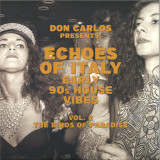
Volume 1 of this expertly curated project of 90s Italian House - put together by Don Carlos.
If Paradise was half as nice… by Fabio De Luca.
Googling “paradise house”, the first results to pop up are an endless list of European b&b’s with whitewashed lime façades, all of them promising “…an unmatched travel experience a few steps from the sea”. Next, a little further down, are the institutional websites of a few select semi-luxury retirement homes (no photos shown, but lots of stock images of smiling nurses with reassuring looks). To find the “paradise house” we’re after, we have to scroll even further down. Much further down.
It feels like yesterday, and at the same time it seems like a million years ago. The Eighties had just ended, and it was still unclear what to expect from the Nineties. Mobile phones that were not the size of a briefcase and did not cost as much as a car? A frightening economic crisis? The guitar-rock revival?! Certainly, the best place to observe that moment of transition was the dancefloor. Truly epochal transformations were happening there. From America, within a short distance one from the other, two revolutionary new musical styles had arrived: the first one sounded a bit like an “on a budget” version of the best Seventies disco-music – Philly sound made with a set of piano-bar keyboards! – the other was even more sparse, futuristic and extraterrestrial. It was a music with a quite distinct “physical” component, which at the same time, to be fully grasped, seemed to call for the knotty theories of certain French post-modern philosophers: Gilles Deleuze, Félix Guattari, Paul Virilio... Both those genres – we would learn shortly after – were born in the black communities of Chicago and Detroit, although listening to those vinyl 12” (often wrapped in generic white covers, and with little indication in the label) you could not easily guess whether behind them there was a black boy from somewhere in the Usa, or a girl from Berlin, or a pale kid from a Cornish coastal town.
Quickly, similar sounds began to show up from all corners of Europe. A thousand variations of the same intuition: leaner, less lean, happier, slightly less intoxicated, more broken, slower, faster, much faster... Boom! From the dancefloors – the London ones at least, whose chronicles we eagerly read every month in the pages of The Face and i-D – came tales of a new generation of clubbers who had completely stopped “dressing up” to go dancing; of hot tempered hooligans bursting into tears and hugging everyone under the strobe lights as the notes of Strings of Life rose up through the fumes of dry ice (certain “smiling” pills were also involved, sure). At this point, however, we must move on to Switzerland.
In Switzerland, in the quiet and diligent town of Lugano, between the 1980s and 1990s there was a club called “Morandi”. Its hot night was on Wednesdays, when the audience also came from Milan, Como, Varese and Zurich. Legend goes that, one night, none less than Prince and Sheila E were spotted hiding among the sofas, on a day-off of the Italian dates of the Nude Tour… The Wednesday resident and superstar was an Italian dj with an exotic name: Don Carlos. The soundtrack he devised was a mixture of Chicago, Detroit, the most progressive R&B and certain forgotten classics of old disco music: practically, what the Paradise Garage in New York might have sounded like had it not closed in 1987. In between, Don Carlos also managed to squeeze in some tracks he had worked on in his studio on Lago Maggiore. One in particular: a track that was rather slow compared to the BPM in fashion at the time, but which was a perfect bridge between house and R&B. The title was Alone: Don Carlos would explain years later that it had to be intended both in the English meaning of “by itself” and like the Italian word meaning “halo”. That wasn’t the only double entendre about the song, anyway. Its own very deep nature was, indeed, double. On the one hand, Alone was built around an angelic keyboard pattern and a romantic piano riff that took you straight to heaven; on the other, it showcased enough electronic squelches (plus a sax part that sounded like it had been dissolved by acid rain) to pigeonhole the tune into the “junk modernity” section, aka the hallmark of all the most innovative sounds of the time: music that sounded like it was hand-crafted from the scraps of glittering overground pop.
No one knows who was the first to call it “paradise house”, nor when it happened. Alternative definitions on the same topic one happened to hear included “ambient house”, “dream house”, “Mediterranean progressive”… but of course none were as good (and alluring) as “paradise house”. What is certain is that such inclination for sounds that were in equal measure angelic and neurotic, romantic and unaffective, quickly became the trademark of the second generation of Italian house. Music that seemed shyly equidistant from all the rhythmic and electronic revolutions that had happened up to that moment (“Music perfectly adept at going nowhere slowly” as noted by English journalist Craig McLean in a legendary field report for Blah Blah Blah magazine). Music that to a inattentive ear might have sounded as anonymous as a snapshot of a random group of passers-by at 10AM in the centre of any major city, but perfectly described the (slow) awakening in the real world after the universal love binge of the so-called Second Summer of Love.
For a brief but unforgettable season, in Italy “paradise house” was the official soundtrack of interminable weekends spent inside the car, darting from one club to another, cutting the peninsula from North to centre, from East to West coast in pursuit of the latest after-hours disco, trading kilometres per hour with beats per minute: practically, a new New Year’s Eve every Friday and Saturday night. This too was no small transformation, as well as a shock for an adult Italy that was encountering for the first time – thanks to its sons and daughters – the wild side of industrial modernity. The clubbers of the so-called “fuoriorario” scene were the balls gone mad in the pinball machine most feared by newspapers, magazines and TV pundits. What they did each and every weekend, apart from going crazy to the sound of the current white labels, was linking distant geographical points and non-places (thank you Marc Augé!) – old dance halls, farmhouses and business centres – transformed for one night into house music heaven. As Marco D’Eramo wrote in his 1995 essay on Chicago, Il maiale e il grattacielo: “Four-wheeled capitalism distorts our age-old image of the city, it allows the suburbs to be connected to each other, whereas before they were connected only by the centre (…) It makes possible a metropolitan area without a metropolis, without a city centre, without downtown. The periphery is no longer a periphery of any centre, but is self-centred”.
“Paradise house” perfectly understood all of this and turned it into a sort of cyber-blues that didn’t even need words, and unexpectedly brought back a drop of melancholic (post?)-humanity within a world that by then – as we would wholly realise in the decades to come – was fully inhuman and heartless. A world where we were all alone, and surrounded by a sinister yellowish halo, like a neon at the end of its life cycle. But, for one night at least, happy.
It starts of with jacking proto ACID house song called Delayed Attraction. A song that would have made the kids crazy at the Music Box in the mid 80's. And are still as uplifting for all us house heds. The second song Tear Gas takes us back to Europe, with a slow Belgian beat that moves like a train and hits you straight in the chest, and on top of this a monotom synth pad on top of that it gives the song a some what a scary dream feeling. The third song Nasjiga is taking us further in to the complex dream but packaged in a Detroit electro vibe with sounds that makes me think of a hospital hart beat monitor but then mixed up with bit-crushd lo-fi dragon covers in a dubby inferno that keeps on building up without coming to a climax (in a good way). The forth song Verfolgung is a 8 minute stomping song that's starts of in a Burzum sounding flute but the quickly goes over to a freaky baseline that's sounds like its made out of a congas patch and a detuned bass on top of that. On top of that they put a march bands drum pattern that gives this song a freaky tivoli vibe and would be such a banger a the right time of a DJ set. /Jens W Limited numbered to 200x * Delayed Attraction - With a bumpy baseline that grooves, hard hits on the drum machine, this is are both funky and hypnotic. * Tear-Gas - A mid-tempo acid journey that blends funky drum patterns with psychedelic trance strings. Typical FRAK's acid-outed sound, with a hypnotic and thumping beat and bassline. * Nasjiga - The B-side kicks off with a deeply dubby and tribal vibe, with splashing hi-hats and echoed percussions. like the heartbeat of an underground train going of the rails. * Verfolgung - This track kicks hard with a marching beat that builds into a funky disco. It's playful yet progressive energy leaves you with a smile on your face and your feet moving on the dance floor. Honk Honk! // Dj Jespha Galore
In making his long awaited return to Periodica, Milord steps away from the mysterious electro and new age mysticisms of past releases, and instead delivers the freaked out boogie funk free-for-alls brain-bending disco dubs, and summertime pop perfections of ‘Party Line’.
The club mix is an extended excursion through hypnotizing and ever-evolving club psychedelia, with wild phonecal detritus accenting a riffing and body-rocking banger led by svelte lyricisms, energized chants, and future gazing vocoder treatments. Elsewhere, the dub is a building body bomb of Afro-tribal grooves techno bass, echoing cascades of drum fx, and pianos soaked in interstellar aether. And for the ultra infectious radio mix, touches of Kraftwerk meet sunshine pop jam band as a molten bubblegum bass guitar bounces on an earworm drum groove, while all around, vocals soar and six-strings jangle through solar-soaked licks.
For Moxy Muzik’s 6th birthday, we’re excited to present Moxy Editions 008—a collection of tracks that perfectly encapsulates the label’s signature sound.
The first track comes from none other than Detroit techno pioneer Stacey Pullen. Darius Syrossian, Moxy's founder, has been a fan of Stacey since the '90s, and this track captures the essence of Moxy’s vibe: techno energy infused with disco and house influences. This track was a peak-time staple in Darius’s sets all summer, igniting dance floors from DC10 and Amnesia to festivals across the UK and Europe. The buzz is palpable, with daily requests flooding in for the track ID whenever a clip surfaces on Darius’s social media.
Next, Darius brings his own twist to Audiojack’s “Get Down,” capturing the spirit of DC10’s late 2000s terrace sound. Tribal percussion, a deep groove, and a massive drop make this remix a dance floor weapon. Videos of this track’s electric energy have surfaced from epic nights at KOKO London, Space Miami, and Solid Grooves DC10, showcasing its undeniable impact.
Kicking off the B side Vincent Caira contributes a refined US house and garage track that’s bound to resonate with purist house heads. This sophisticated production by the Canadian producer is as smooth as it is engaging—a true gem for those who appreciate the finer details of house music.
Rounding out the release is a track by Buckley, the legendary Back to Basics DJ from Leeds. This one’s a tribute to the old-school Todd Terry sound, perfect for fans of classic, raw house beats. If you’re into that vibe, this track is sure to hit the mark.
This collection brings together iconic artists and authentic sounds that will resonate with Moxy’s long-time fans and newcomers alike. Enjoy the journey!
Max Essa is a bonafide Balearic boss man and one of the regulars of the Is It Balearic? label. It is there that he returns now with 'I'm Homeward Bound' which is a textbook sound from the producer, with a hint of Tears For Fears. The pads are delightfully gooey and subtly uplifting over gently percussive and stuttering beats and the whole thing is rich in lazy poolside energy. Nathan Dawidowicz remixes into a percolating bit of deep and tribal disco, Secret Soul Society brings out the early evening house grooves ready for sunset sessions and the closing cut 'Chasing Horses' is a super sweet late night groove with heartfelt chords
2024 Reissue
The syndicate manifests its sonic potential in full glory. Giving rise to this collection of colossal heavyweights, Sentry demonstrates its spotless record of selecting certified heavyweights for the discography once again, twenty-fold. Stepping into the ring are some of the scene's most prolific artists alongside a plethora of promising, choice newcomers.
Boasting more than an hour of supercharged sound system pressure with names like Caspa, Truth, Bukez Finezt, Nomine and Youngsta himself on the controls - the subsequent inferno proves to be an authoritative display of quality bass music, that is sure to reach roaring stacks of speakers all around the globe for years to come."
"Vintage flavours transmute into fiery low-end excursions in 'Sun Ra' as Onhell reigns with fire and brimstone and makes way for what's to come. Rolling on, Taso lays waste with dimly lit half-time flows as we enter the smoke-filled mansion of Argo's meticulously crafted 'Since Then' - a prime cut of hip-hop infused breakbeats and bass.
Abstrakt Sonance & Substance set the heater into overdrive and blunts aflame as we proceed into the shelling of 207's 'Gypsy Dub' - then promptly being crunched to bits by 'Crocodile' - encapsulating Dayzero's cold-blooded dance floor armaments. Brace yourself for battle as we step to the drums of Caspa's tribal warfare, full-frontal assault engineered for the club.
Unrestrained power surges propelling us onwards in Coltcut & Ourman's decidedly high-grade collaboration as listeners march through Khiva's haunting sound system belter 'Teeth' and a zealous dosage of Dubstep as envisioned by Truth. Led through eerie alleys and pressure-ridden environments with LSN on the buttons, the onslaught proceeds with the relentlessly driving 'R U Broke' in Mr. K's signature style.
Opus merciless injects straight fury in an auditory form in the spiked 'Lime Pickle' - Bukez Finezt keeping pace with a murderous Cembalo-ridden thug anthem, lunacy! Minimal instrumentation to its fullest effect, Sukh Knight's 'Modulate' keeps it spicy - as does the claustrophobic sub-bass chiming by Leftlow. Thanom ignites what's left of the residual air in 'Tumble It' - dangerous goods.
The subsequent time bomb armed by A:Grade & Feonix, cast into the abyss that is Nomine's space-bending 'Judas' - big speaker business. The clock strikes its final hour - Youngsta & Cimm finish off the survivors with a no-holds-barred showdown, the 'Last Judgement' executing its massive verdict.
Coming together as Raz & Afla, Raz Olsher and Afla Sackey converge worlds through their dynamic fusion of electronic and traditional African rhythms, forging a path that is as bold as it is innovative. Rooted in their deep-seated passion for music and cultural exploration, they seamlessly blend their distinct musical backgrounds to create a unique sonic landscape that captivates audiences worldwide.
Raz Olsher is a visionary producer and composer known for his boundary-pushing electronic soundscapes, bringing his expertise in blending diverse musical elements to the duo. His meticulous attention to detail and penchant for experimentation form the foundation upon which Raz & Afla's sound thrives.
Already part of the Wah Wah 45s family with his band Afrik Bawantu, Afla Sackey is an esteemed percussionist and vocalist with roots tracing back to Ghana. He infuses the duo's music with rich traditional African rhythms and melodies. Afla's virtuosity on percussion instruments and his soulful vocals add a visceral, organic dimension to their compositions, creating a mesmerising auditory experience that transcends cultural boundaries.
Together, Raz & Afla defy genre limitations, seamlessly weaving together electronic beats, Afrobeat grooves, and intricate percussive textures. Their music resonates with a deep sense of cultural authenticity and a forward-thinking approach that pushes the boundaries of contemporary music.
Following on from their critically acclaimed full length debut The Cycle, and its subsequent remix project, their sophomore LP, Echoes Of Resistance, finds the duo remaining committed to exploring new sonic territories and creating music that speaks to the universal language of rhythm and melody. Once again, they invite listeners on a journey that celebrates the beauty of cultural exchange and the power of music to inspire and unite.
From more politically conscious cuts like the singles What's Going On? and We Taya, and On Da Phone, which deals with addiction to social media, to dealing with more personal and social issues on songs like ENo Be Me and Ano Be Mumu, Raz & Afla's music is something for the mind, body and spirit, as well as the feet.
There are moments of pure euphoria and unadulterated joy too though, as tracks like Mon Ni Fere, Voodoo Zeezee and Baby Moo inspire elated, tribal dance floor pleasure, and there's still time for a little, good old fashioned loving as Shikor Shikor conjures up the raw emotions of care and affection whilst delivering a hypnotic beat and instantly irresistible vocals from Afla Sackey.
With a growing discography that includes critically acclaimed releases and collaborations with musicians from around the globe, Raz & Afla continue to carve out their place in the international music scene. Their electrifying live performances are celebrated for their energy and the profound connection they forge with audiences, making every show a vibrant celebration of musical diversity and harmony.
DJ Support from Danny Howard, Annie Mac, Mistajam, Pete Tong, Charlie Hedges, Kraak & Smaak, Maxinne, Todd Terry, Alex Preston, Full Intention, GW Harrison, DJ Rae, Rudimental, Alaia & Gallo, Illyus & Barrientos, Johan S, David Penn, Sam Divine, Riva Starr, Claptone, Nice7, Dario D’Attis, Mousse T, SMan, Huxley, KC Lights, Friend Within, Dombresky, Gorgon City, Chris Lake, Format:B, Pirupa, TCTS, Alan Fitzpatrick, Low Steppa, Mat.Joe, Raumakustik, Eskuche
Kicking things off on Toolroom’s next 4-track vinyl sampler series is Mark Knight’s hugely successful rework of Groove Armada’s seminal classic ‘Get Down’. Considered one of the holy-grail records of their back catalogue so it’s an absolute honour for us, and Mark Knight, to be re-presenting this incredible record to a new audience. Fusing those unique vocals from Stush and classic Groove Armada synth line, coupled with the energy and insatiable groove of a Mark Knight record, this is a sure-fire dance floor weapon for 2024! Next up are a fan favourite of the label, the mighty duo Illyus & Barrientos who make their long overdue return with ‘When You Gonna’. Tracks such as ‘Shout’, ‘Promise’ and most famously, ‘So Serious’, propelled them to be one of the most exciting and sought after acts in the World. This record is trademark Illyus & Barrientos and reflects their personalities as artists perfectly. Think high energy house music filled with fun and peak-time dance floor vibes! Leading the charge on the b-side is an incredible collaboration from 2 heavyweight house artists, working together for the very first time! David Penn has a career spanning over 25 years. He was recently crowned the #1 house artist on Beatport and boasts over 1 million monthly listeners across leading streaming platforms. OFFAIAH appears on Toolroom for the first time in his career under this alias, although he was a firm part of the original Toolroom Family line up as Michael Woods. So this is a SPECIAL ONE! The record screams sun-drenched terraces, pool parties and chilled cocktails! A huge bass line, infectious tribal vocals and some lush house pianos for good measure. Last but not least, Long-standing Toolroom Family member and fan favourite, Ben Remember returns to the label with ‘Waiting 4 You’. As with all of Ben’s records, this is super creative and super original. Based around an infectious disco vocal sample and all created using out-board, analogue studio gear which gives the track a real gritty
undertone.
Countless radio plays on Radio 1 from Danny Howard, Sarah Storie, Pete Tong Other notable radio plays – Kiss FM, Toolroom Radio, Sirius XM, Data Transmission Radio, Radio 1 Dance Anthems, Radio 1 Party Anthems, Rinse FM, Select Radio, Tomorrowland Radio
Dame Area's highly anticipated fourth studio album, "Toda la verdad sobre Dame Area" ("The Whole Truth about Dame Area"), a collaboration with the renowned labels Mannequin Records and Humo Records.
Formed in 2017 within the vibrant underground scene of Barcelona's Màgia Roja club, Dame Area comprises the Italian-Catalan duo Silvia Konstance and Viktor Lux Crux. They fuse industrial-tribal polyrhythms with minimalist synth basslines, drawing profound inspiration from avant-garde masters such as Esplendor Geometrico, Throbbing Gristle, Suicide, Einstürzende Neubauten, Can, Coil, Swans, Big Black, and Wolf Eyes.
This record represents a new phase in Dame Area's discography. It's a big step up in terms of sound, composition and ideas. This record it's the perfect representation of what they have been playing live the last three years and what most people know them for. Also it serves as a companion piece to 2022’s Toda la mentira sobre Dame Area ("All The Lies About Dame Area"), which had a stronger focus on melody, while this latest record is more aggressive and industrial-influenced, with a greater emphasis on percussion.
Tracks like the Suicide-influenced "Si no es hoy cuando es" and "Sempre Cambiare" are an onslaught of industrialism and experimentalism—formidable, volatile, and unpredictable avant-garde subversion. Silvia explains, "One of our biggest influences is doing what our influences wouldn't do. We're more into dynamics and structures atypical of electronic music, with changes in time signatures, starts and stops, and dynamics more typical of rock music. We use any musical idea from any genre. Some songs on the album are based on flamenco rhythms, others influenced by '60s experimental pop, heavy metal, or contemporary electronic music."
The confrontational "Vengo dall'aldilà" accelerates with heavy percussion, while "Tu me hiciste creer" builds into a rhythmic, transcendent noise of yelled vocals and hypnotic beats. Viktor adds, "This song took us more time to complete than any other we have recorded. It was a very organic process, evolving slowly from some instrumental percussive stuff we were doing live. Then we started using feedback as a rhythmic element (through a metallic sheet), and this was the first song where we incorporated this element, typical of noise-rock and experimental rock."
Elsewhere, "Esto Es Nuestro Ruido" represents a manic, eclectic form of contemporary industrial music, post-punk, and EBM. Silvia notes, "It's the first album we recorded outside a studio. Although we've been playing live with metallic percussion and floor tom from the very start, in the studio, with some exceptions, it was mostly sample-based until now. On Toda la verdad sobre Dame Area, all drums and almost all metallic percussion have been recorded live."
With a growing reputation as one of the best live bands around since their inception, Dame Area has toured extensively across Europe, performing at renowned festivals like Atonal, CTM, Nuits Sonores, Dour, and Fusion, as well as legendary clubs such as Berghain, Tresor, Apolo, and Spook Factory.
Recorded at Sol de Sants Studios and Estudio Hermetic between August and November 2023
Silvia Konstance: vocals, synths, percussions, electronics, production
Viktor L. Crux: synths, drums, percussions, electronics, production
Mixing and additional production by Guillermo Sánchez Rojo
Mastering by Paul Mac at Hardgroove Mastering
Designed by Leo Sousa
Photography by Fabio Calabretta
Photo concept by Dame Area
DJ Support: DJ Sabo, Gordon Invisible Inc, Ground Chill Mountain, Roe Deers, Thomas Von Party, Vidis
Multi Culti serve up a full-length treat from Peruvian artist Aristidez. Cofounder of Lima-based party collective Casa Locasa and the non-profit label Behua Icara (translated as Healing Rhythms), in support of indigenous culture, Aristidez has recently relocated to Berlin. With releases on Calypso, Disque-Discos, and Kebrada, as well as remixes for Amplio Espectro, Ida Sound, Discos Aquelarre, Rotten City Files, and Playground Records, Aristidez has quietly made a name for himself with a growing catalog of low-key dance tracks that have been championed by the likes of Matias Aguayo, Andrew Weatherall (RIP), and Inigo Vontier, to name a few. With an emphasis on the hypnotic power of rhythm, Aristidez channels indigenous influences in subtle fashion, alluding to visionary experience without resorting to pastiche or obvious tropes. There are freaky tribal rhythms but no shaman samples, just expertly produced tracks than reveal an expansive set of electronic influences that range across tempos and decades, from breaky 90s rave, 80s proto-trance, cult dub, downtempo and more. It’s listenable, danceable, heady and kaleidoscopic stuff that should stand the test of time.
Dark Entries again shines a spotlight on bathhouse disco don Patrick Cowley with a newly remastered release of Kickin’ In. Although Cowley tragically passed from AIDS-related illness in 1982, he left an extensive archive of unreleased tapes, many of which Dark Entries has had the honor of releasing. While working as a lighting technician at The City, SF’s disco cabaret, Cowley saw rising star Frank Loverde perform. Cowley asked Loverde to contribute vocals to some material in progress, and Frank, Linda Imperial, and Peggy Gibbons joined Cowley in the studio. The resulting songs included “Kickin’ In,” a 9-minute cybernetic disco stormer that taps into the essence of Cowley’s hi-NRG sound: equal parts spaced out and zoned in on the dancefloor. In May 1978 Cowley joined Loverde on stage at The City to perform “Kickin’ In” as they opened for disco diva Sylvester.
“Kickin’ In” was initially released in 2015 via Honey Soundsystem who found the tapes in the basement of Megatone Records owner John Hedges. This newly remastered version was made possible due to the discovery of the original multi-track recordings of "Kickin’ In," allowing for a fresh mixdown by Jim Hopkins as well as the creation of a new instrumental version. Also included are two impeccably sleazy Cowley jams recorded in 1980, “Thief of Love” and “Make It Come Loose.” Cowley narrates excerpts from his erotic journals on these raunchy slow-burners, capturing the vibe of SF’s leather bars and backrooms. “Thief of Love” features frequent Cowley collaborator Paul Parker on background vocals. This reissue of Kickin’ In includes features an illustration by Gwenaël Rattke that originally appeared Cowley’s erotic journal, Mechanical Fantasy Box, as well as a postcard with lyrics. “Patrick parted the veil and entered a dark world of forbidden vices, wondrous musical panoramas and bold, strident, hopeful possibilities. Patrick brought the future to us and laid it at our feet.” – David Diebold, Tribal Rites