"After being praised as one of the best releases of 2025 by multiple platforms, the highly praised debut album from Obeka lands on vinyl via YUKU.
The rhythmic dynamics and emotive attitudes of A World No More captures the density of soundsystem culture in Obeka's ancestral roots. YUKU presents the Bermudians debut album capturing a Neo-Colonial dystopia, protest and Afro-Futurism hyperextended through decaying sonic structures of a dark past and its grievances which very much exist today.
Growing into adulthood within the walls of British and European Colonial systems meant the disconnection and lostness in a new country hid me from the world at a young age. Unlike London's vast and culturally engaging migrant communities, the industrial milling town of Stockport introduced a coldness towards people from other countries I experienced in my first year after relocating from Bermuda. I couldn't understand why. Whether cold words thrown towards me or actions upon other people who look like me, it has shown to be a dooming societal virus with no cure. The most comfort was found through what was familiar - drums and rhythmic spirituality of my homeland. It was a safe-haven, a place to empty the anger and confusion. It's been 15 years since relocating and as my sound evolved, it seems classism, racism, oppression and civil control of ethnic peoples has become worse - even now more legalised and normalised. Ogun (a powerful Yoruba deity associated with anger, justice and war) acts as the opening sequence of the record and its symbolism. Using distorted bass frequencies and dissected Regga-Dub immersed in live-sampled ghostly voices of the lost ones. This sonic exercising is also applied in Drillaman - a stampede of industrial framework and metallic instruments wielded over moody Dancehall MC'ing, magnifying two parallel worlds in cocooned evolution. The resurrection of Transatlantic African cultures and identity have never been silenced, rather carried elsewhere through trade routes of enslavement, which was pivotal when composing and completing the album upon returning home to the Caribbean for the first time ever. After reconnecting with my heritage my blurred vision of what's wrong in the world became so clear. Guidance in empty plains seek truth throughout the pain - A statement of finding oneself expressed on the poetic closing track A World No More.
On Fawohodie (A West African Adinkra symbol that represents independence, freedom, and emancipation stamped on the album cover) the motive and atmosphere begins to change. Afro-Caribbean idealism which refers to the philosophical concept that emphasizes the interconnectedness of individuals and the importance of community, often contrasting with Western individualism, begins to take shape in a new universe. We can co-exist. The track framework uses machine-led software forming frequencies we have no control over, then manipulated through decomposing soundscapes, scattered hand-drums and human-made weapons of control - exposing the hidden disparity that's been carried over generations whilst balancing hopeful and musical foundations towards equality and peace. On Pressure and Kuduro! the writing direction attempts to wake people up. Not settling for a composed approach like in past projects, quite the opposite. A call for native sonic awareness, dismantled vocals of protests, eroded percussion using chains, gears and motorised harmonies sculpted in challenging abstract behaviors far outside my comfort zone. A direct abrasiveness and weight I want people to feel, whilst finding hope and solace through enchanting choirs and hypnotic basslines in complete synchrony.
"Purity in sound manifests when you least expect it. The smallest memory or feeling grows from a seed into a sonic language that you, and only you can interpret and release back into the world." "
Поиск:disconnect head
Все
- 1
Franky Wah makes Crosstown Rebels debut with ‘Disconnect’ EP, featuring Kuuda. Out on 20th June 2025, the four-tracker sees the acclaimed UK producer make his first appearance on the revered imprint.
A producer known for balancing dancefloor energy with introspective songwriting, Franky Wah’s rise has been fuelled by a string of chart-topping singles, non-stop global club and festival appearances, and the launch of his own imprint and event brand, SHÈN. With musical influences stretching from trance and breakbeat to afro-house and techno, he now brings that rich sound palette to the Crosstown fold for the first time with a release that’s equal parts euphoric and deep as it is driving. Delivering a powerful and emotionally charged four-track release, 'Disconnect' showcases the Yorkshire-born artist’s blend of underground grit and melodic sophistication, featuring two standout collaborations with rising vocal trio Kuuda.
Opening the EP, the title track pairs swirling textures, brooding basslines and crisp percussion with commanding vocals, setting the tone for the journey ahead. The synergy continues on ‘Off The Wall’, a hazy, late-night jam elevated by Kuuda’s signature warped vox interjections. On the flip, ‘Desert Dance’ continues further into hypnotic territory with wicked bass licks and layered synth work, before closing track ‘Freak In The Sheets’ delivers another impactful, heads-down groove laced with attitude. Featured on two of the EP’s four cuts, Brighton-based trio Kuuda continue to emerge as a rapidly ascending vocal project within electronic music. Known for their genre-fluid songwriting and dynamic live presence, their collaborations with Hot Since 82, Yousef and Artche have earned them widespread support from the likes of Pete Tong, Danny Howard and RÜFÜS DU SOL. Blending emotional depth with club-ready impact, ‘Disconnect’ marks an inspired meeting point between Franky Wah’s expansive production style and the Crosstown Rebels spirit—one that looks set to soundtrack dancefloors throughout the summer and beyond.
- A1: Basement 5 - Silicon Chip
- A2: Disconnection - Bali Ha'i (Us Discomix)
- A3: A Certain Ratio - Shake Up
- A4: 23 Skidoo - Language
- B1: Pil - Home Is Where The Heart Is
- B2: Mark Stewart And The Maffia - Jerusalem
- B3: The Unknown Cases - Masimbabele (The Original Version)
- B4: Allez Allez - She's Stirring Up (Dub)
- C1: Animal Magic - Standard Man
- C2: Lifetones - Distance No Object
- C3: Snakefinger - I Gave Myself To You
- C4: Startled Insects - Overrzoom
- D1: Maximum Joy - Silent Street / Silent Dub
- D2: African Headcharge - Throw It Away
- D3: Ep-4 - Tide Gauge
- D4: 400 Blows - Declaration Of Intent
(incl 40p fanzine written by Matt Annis with photographs by Simon Pyke and Ian Brodie) Postpunk Theory is a meticulously curated compilation by the legendary Tony Thorpe, known for his work with The Moody Boys, 400 Blows, and The KLF. These classic tracks were played at parties by Thorpe at the time, making them his personal classics. The compilation features 16 rare and sought-after tracks from the post-punk era, including works by Mark Stewart and The Maffia, Basement 5, 23 Skidoo and more.
Defining post-punk is no easy task. While punk was defined by a raw, rebellious simplicity, post-punk (1978-1986) expanded into a diverse array of sounds and ideas. It maintained punk's independent spirit but embraced experimentation, incorporating influences from various musical and cultural traditions, resulting in a movement far more eclectic and fragmented than its predecessor.
At its core, post-punk broke away from traditional rock structures, blending genres like industrial, goth, and punk-funk with emerging dance music cultures. This era's spirit of innovation and defiance against musical norms continues to inspire, making post-punk a pivotal moment in music history that defies easy categorization.
Tony Thorpe presents Postpunk Theory - Alpha ? is a meticulously curated compilation by the legendary Tony Thorpe, known for his work with The Moody Boys, 400 Blows, and The KLF. These classic tracks were played at parties by Thorpe at the time, making them his personal classics. The compilation features 16 rare and sought-after tracks from the post-punk era, including works by Mark Stewart and The Maffia, Basement 5, 23 Skidoo, African Headcharge, and more.
Growing up in a vibrant musical environment in South London, Thorpe was deeply influenced by the eclectic sounds around him, from jazz-funk to Brit-Funk, and later, the post-punk records he discovered. As Thorpe recalls, "Post-punk was a mishmash of different cultures and ideas. Out of post-punk came dance music culture. That period was the most creative time because the culture was in its experimental phase." This compilation captures that innovative spirit, offering a glimpse into the era that shaped Thorpe's musical journey.
The album comes as a limited 2xLP set, accompanied by an extensive 40-page fanzine. The fanzine, written by Matt Annis (Join The Future), dives deep into the post-punk movement, offering insight and context enriched with striking photographs by Simon Pyke and Ian Brodie.
From his roots in House, Alex Finkin is a renowned producer and creative director. Working in his Paris studio he has developed numerous projects, notably his own (Roseaux), as well as commissions for radio and television. Meanwhile, with 30 years of production and DJing under his belt, Rocco Rodamaal belongs to the elite circle of House innovators who continue to influence the scene. He's played alongside some of the best in the industry showcasing his versatility and deep understanding of the genre, and remixed artists including Marshall Jefferson, Kerri Chandler, Louie Vega & Moodymann, Todd Terry, Barbara Tucker and Robert Owens to name just a few. Alex Finkin befriended Rocco Rodamaal, who he met via the soulful Parisian club Djoon, where Alex was resident from 2006 to 2014. They have since collaborated on a number of projects together, including "In Da Hood" released on COD3 QR in 2023. Kenny Dope's "O'Gutta" remixes are a series of house and club-focused reworks characterized by raw, gritty and often stripped-back percussion, which he now brings to "In Da Hood".
Ross McMillan, known professionally as Carlos Nilmmns, is a Scottish electronic music producer, DJ and composer originally from Glasgow. Over the years he has collaborated with a range of notable artists, including Grammy-nominated and Grammy-winning figures, including Kenny Dope, Carl Craig, Kevin Saunderson and Davina Bussey, plus respected artists like Niko Marks, Rolando, Laurent Garnier, Santiago Salazar, Hardrock Striker, Karl The Voice, Zadig, Ben Sims, Andrés (who worked with Jay Dilla and Moodymann), and YouANDme. His music has been released on Planet E, Trax, Cocoon, Ornaments, Circus, Virgin, Skylax/Universal Music France and more. His style draws from house, techno and jazz influences, often combining analogue and digital production methods. A returning regular and COD3 QR favourite, he's back with another stunner in "Latin Quarter".
K' Alexi Shelby is a prominent figure in electronic music and with a career spanning decades, he's established a significant influence on House and Techno. Throughout his career he's worked with many well-known artists and remixed tracks that are now key pieces. The cultivation of his massive musical catalogue has overflowed into albums and the three labels he heads. It's also led to legendary collaborations with artists such as The Pet Shop Boys, Robert Owens, Kenny Dixon, Roy Davis Jr., Maurice Joshua, Terry Hunter, Joe Smooth, Steve Silke Hurley, Tyree Cooper, Ron Trent, Glenn Underground, Larry Heard, DJ Pierre, Carl Craig, Felix da Housecat, Marshall Jefferson, Will Smith and countless others. Already respected around the world as a true underground House legend, he delivered "Flame" in 2025 for COD3 QR. Now he's back with "When I", another deep and sexy cut.
Benny Rodrigues a.k.a. ROD unveiled his new moniker, The Lost Souldancer when he dropped "No More Voices" for COD3 QR last year. In his own words, Benny says: "The Lost Souldancer is about coping with the loss of what once was. Finding comfort in the invisible rather than what can be seen. Disconnect to connect in order to be loved rather than liked." He continues this ethos with the delicate and melodic closing track "Life and Death".
Rave-o-lution - Teknology EP (HDK-3)is a manifesto disguised in project.
Forged in the raw energy of the underground, Rave-o-lution - Teknology EP explores the connection between machine, movement and collective consciousness. This is not nostalgia, it’s forward motion. Teknology as a tool, rave as a language, evolution as a necessity.
Across four different versions, the same core signal mutates and adapts, shifting pressure, tempo and density while staying locked to its original frequency. Each version is built for a different moment on the floor, from deep hypnosis to pure mechanical drive.
Sometimes a pad emerges in the break, a moment of suspension where emotion cuts through the structure. A brief opening. A breath inside the system. Proof that even the hardest teknology carries feeling beneath the steel.
HDK-3 is made for soundsystems at full power, bodies in sync, and minds ready to disconnect from the surface and dive deeper.
No compromise.
No decoration.
Just rave — evolved.
At 19, Helviofox adds his signature to the batida template that by now seems to have been in existence since forever. Such is the strength of this primordial fountain, a source of rejuvenation. Also within the literal family: Helvio cites brothers Dadifox and Erycox as main influences.
Curiosity for the sound made him go into production by the time he was 13. A couple of years later (2020) he became co-founder of TLS with E8Prod, Alberfox, DiionyG and other mates. His talent fully developed since then, opening a slight detour that became a new path parallel to the main road.
Lively basslines anchor the beat directly lifted from tradition and clearly channeled to the dancefloor. Strong, well rounded grooves, a spot-on sense of timing and tempo, elegant atmospheres, all part of Helvio's notion of arrangement and his perception of dance music boundaries, stretching them just enough to present a challenge but not as far as to disconnect head and feet and risk losing the floor.
This liminal space between experimentation and popularity is both dangerous and attractive. There is no one formula. Precisely why it still retains plenty of fuel for current and future generations to contribute personal visions.
Lisboa, 2025
- A1: The Whip Hand
- A2: Aegis
- A3: Dyslexicon
- B1: Empty Vessels Make The Loudest Sound
- B2: The Malkin Jewel
- B3: Lapochka
- C1: In Absentia
- C2: Imago
- C3: Molochwalker
- C4: Trinkets Pale Of Moon
- D1: Vedamalady
- D2: Noctourniquet
- D3: Zed And Two Naughts
Noctourniquet And then everything went black, at least for a while, at least for The Mars Volta. In the months and years following their fifth full-length, Octahedron, Omar kept on at his usual fearsome creative pace. In fact, he ramped up his output considerably, starting up his own Rodriguez Lopez Productions label and releasing a slew of solo albums. It was a practice he’d begun shortly after De-Loused’s release, with his solo debut A Manual Dexterity: Soundtrack Volume One, but as the decade reached its close, Omar grew to rely upon his solo recordings as an outlet for his prolific creativity, these albums often exploring musical pastures far beyond even The Mars Volta’s wide-ranging parameters. Before choosing to release music under his own name, Omar would always play it to Cedric first, to see if the frontman thought it had potential to become Mars Volta music. Shortly after Octahedron’s completion, Cedric flagged one batch of tracks Omar had cut with Deantoni Parks, a brilliant drummer and composer who’d briefly occupied the Mars Volta drumstool in-between Jon Theodore and Thomas Pridgen’s tenures, and whose volcanic creativity and unique, unpredictable approach to rhythm and composition had quickly made him one of Omar’s favourite artistic foils.
As with the music that made up Octahedron, the new tracks Cedric had optioned for The Mars Volta often veered far from the riotous, Grand Guignol visions of their earlier releases. It possessed the punchy, song-based focus of Octahedron, though this was a considerably darker, more menacing strain of pop, with synthesisers figuring heavily in the productions. Cedric took the tracks in 2009 and set about writing songs to the music. But no more new Mars Volta music would be heard until 2012. The years that passed in-between were nonetheless momentous, and busy, witnessing an unexpected reunion of the members of At The Drive-In, and Cedric joining his own side-project, Anywhere. But there wasn’t any sign of life within the Mars Volta until Omar, Cedric and their bandmates took to the road for a series of live shows in the spring of 2011, billed as The Omar Rodriguez-Lopez Group, debuting the songs that would become Noctourniquet. The album followed the next year, and it remains one of The Mars Volta’s finest, its electronic textures staking out unfamiliar but fertile new ground.
An unsettling, subtly turbulent listen, Noctourniquet found Cedric sketching out a story about “some sort of device that stops the darkness from bleeding”, drawing influence variously from the nursery rhyme Solomon Grundy, the Greek myth of Hyacinthus and the song Birth, School, Work, Death by British underground rockers The Godfathers. It was an album of dystopian futurism, signalled by the paranoid cyber-rock of opener The Whip Hand and its unnerving chorus, “That’s when I disconnect from you”. But it was also an album of inspired, unexpected moves and uncanny invention, like how Dyslexicon seemed to eerily evoke Blondie’s Rapture, before rushing headlong into its bruising chorus, tempos shifting restlessly throughout like quaking earth beneath the listener’s feet, or how Aegis put a brave new spin on The Mars Volta’s trademark rewiring of salsa’s overdriven passions, or how Cedric had never sounded as scary as he did on The Malkin Jewel’s mutant burlesque shuffle. Tracks like Molochwalker were sleek and concise in a way The Mars Volta had never really attempted before – which was all part of Omar’s plan.
“It had all been guitar, guitar, guitar, overdubs, everything fighting for space in the same frequency,” he explains. “So for Noctourniquet, it was all about subtracting elements, of sticking to how I made demos.” Deantoni’s presence helped revivify the group, playing against cliché and expectation, and taking each song in unexpected directions. “I’d beatbox a rhythm for him to play, to go with my guitar part, and he’d come back with three or four alternate options. It was so great.” Similarly, Cedric had never sung better than on Noctourniquet, staking out a fearsome spectrum from the chilling Tom Waitsian growl of The Malkin Jewel to the keening, beautiful vocalisation on Vedamalady, rising to match some of Omar’s most deft, most immediately effective and melodic songs yet. Indeed, Noctourniquet is the sound of a band discovering new ways to do familiar things, renewing their commitment to their mission, finding fresh inspiration a decade in, and shaking off any complacency that might have come with ten years of acclaim and success.
Soft Rock to Riches announces our first original songwriting winner: Jonathan Kirby from Winston-Salem, North Carolina! “This Is Your Song” is an evocative beat ballad dedicated to seemingly endless Southern summers, late night drives, and romantic realism. In the early morning hours of August 9th, 2018, Kirby layered the drum patterns, chords, and hushed harmonies through a Tascam four track while his dad slept in the next room. Written and recorded in just three hours, “This Is Your Song” fits comfortably alongside privately pressed electronic soul ballads from home recording’s heyday.
The Devin Dare Dusk Mix introduces Vivienne on Side B, adding a graceful harmony that champions Kirby’s pining refrain. The Dusk Mix flips Kirby’s ballad over a head nodding breakbeat with a hypnotic synthesizer line and light, airy brushes of strings and delay.
Jonathan Kirby is a musician and archivist known for his ambient jazz LPs Safe to Disconnect and Safe To Disconnect II, his writings for Wax Poetics, compilations for the Numero Group and his exhaustive archival research on the music of his native North Carolina.
Last summer, after living across the country from each other for several years, the four members of Anamanaguchi decided to try something new. Their label Polyvinyl had rescued the famed American Football house from potential destruction, so the band took the opportunity to move in and write together. Over the course of a month, Anamanaguchi – pioneers of hyper-melodic 8-bit rock, whose extraordinary ascent has led them to topping charts with virtual pop star Hatsune Miku and scoring Scott Pilgrim vs. the World: The Game and Netflix’s Scott Pilgrim Takes Off – flipped their typically meticulous digital process on its head. Anyway, the result, is the most personal record of their career. And it's a rock record for the ages.
Recorded straight to tape by Grammy-winning rock producer Dave Fridmann (The Flaming Lips, MGMT, Sleater-Kinney), Anyway united the members around live instruments and lyrics sung by everybody in the band. As Anamanaguchi has always been an instrumental band, the decision to sing suddenly confronted them with the question of what the band’s voice would ultimately be. They explore this newfound power in every song, making it their most emotionally resonant work yet.
Anyway captures a band creatively and personally energized by the experience of four best friends reviving their connection in a disconnected world. On “Rage (Kitchen Sink),” the band confront loneliness and boredom, two epidemics of the digital age that seem to be humanity’s only common bond. The power-pop ballad “Darcie” finds inspiration in small gestures from a local unsung hero, who brightens their lives and allows unforeseen amounts of fun to happen. Taut and dynamic, “Buckwild” is a rock sing-along that serves as the album’s genesis story: a band making an effort to do something new, while accepting the risks that may bring.
USA, Anamanaguchi’s critically-acclaimed second album and debut for Polyvinyl, anticipated a crucial cultural shift in moving from escapist, nostalgic fantasy to a more introspective exploration of digital identity. Described by Pitchfork as the band’s “most emotionally grounded record,” USA laid the foundation for the openness and honesty that defines Anyway. Where USA made sense of life online, their third album Anywayventures into the world outside the front door.
- A1: Do U Fm
- A2: Novelist Sad Face
- A3: Green Box
- A4: Dusty
- A5: The Linda Song
- A6: Dm Bf
- B1: I Tried
- B2: Melodies Like Mark
- B3: Wildcat
- B4: How U Remind Me
- B5: Pocky
- B6: Bon Tempiii
- B7: Pt Basement
- B8: Alberqurque Ii
- B9: Mary's
Yellow Coloured Vinyl[29,37 €]
Kneading dough is tricky – you should know how it’s supposed to feel. If you try too hard you could make it worse. It’s a beautiful practice – creation with a gentle touch, to work at something so it can be left alone. “If it’s too drawn out it’s awful. It’s easy to give too much.” Dance in the mirror. Contemplate your veiny hands. Who do they remind you of?
You begin by mixing flour and water. “What happens when your people die? Why’d they move the rock to the other side of Ulster Park?” Eliza Niemi asks two seemingly unrelated questions in a rising melody with guitar accompaniment, like fingers playing spider up to the nape of your neck. Gentle pressure. Strands of gluten form to bind the mix. A new question lingers in the binding. When she admits “but I don’t know how to tell if I’m feeling it or not,” that question surfaces through the text. It is reiterated throughout the album. When I’m working with dough I think the same thing to myself.
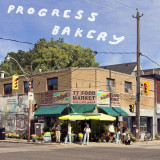
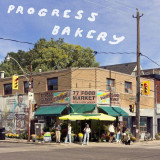
On Progress Bakery, her second album as a solo artist, Eliza knows to leave some questions alone – to let juxtaposition and tension be the proof. It doesn’t have to be hard. The feelings and revelations they provoke rise in the heat. The smell is sweet. Crispy on the outside and soft all the way through. She playfully slip-slides through words and sounds and images, delighting in surprise, skimming ideas like stones cast across clear water, touching down briefly with uncommon grace.
The question provoked between those opening lines resurfaces in the strands between songs – “Do U FM” is fully formed and beautifully layered, while “Novelist Sad Face” is a short, acapella rendering of gentle curiosity. What is holding these ideas together? Some songs demand more, seem to carry a whole load – eventually the skipping stone will halt to sink and resume its idle duty – while others drift in and out of focus, the way thoughts and dreams become interwoven before the mind is sunk into true sleep.
Music and words don’t always have to interact. Where she decides to keep them apart gives a new contour to where and how she puts them together. The kind of thing you’re supposed to take for granted with songs and their singers comes alive in Eliza’s hands – the little miracle of mixing, kneading, stretching, and stopping.
So often on Progress Bakery, Eliza teases out truth and meaning by asking questions. “Do I wanna be crying?” “Do you want me good or do you want me bad?” “Do I need an eye test?” “I’m writing songs in my head while you’re going over stuff with me — is that cruel??” In “Pocky” Eliza ends with a question that feels to me like the actual biography, succinct and revealing:
I don’t wanna be made to see
I just wanna ask “what’s that?”
Grace that ought to be rare, but in its care and precision is offered humbly, with great generosity, and without announcing itself. Eliza’s simple, miraculous music is given further form and shape by a group of collaborators – invaluable guest musicians Jeremy Ray, Evan Cartwright, Steven McPhail, Kenny Boothby, Ed Squires, Carolina Chauffe, Dorothea Paas, Louie Short, and Avalon Tassonyi. Together with Louie Short, who recorded, mixed, and produced the album along with Jeremy Ray and Lukas Cheung, Eliza has cultivated a richness in sound and texture that prods and provokes the ticklish ear. Barely audible guitar tinkering, a brief lo-fi field recording of trumpets, the harmonic clicking of a looped synthesizer, a flourish of reeds, a child’s conversation, each uncanny sound perfectly placed, rippling out under a soft breeze.
Lay in bed alone at night and ask aloud to the stillness,
“What were you doing at the Albuquerque Airport?
What were you doing there??”
And hear your question answered by a dream of swelling, undulating cellos. Try to grasp at the melody and structure. It’s not an answer (if there could be one), but it moves deeper, closer to the weird layer of fleeting moments and disconnected images, barely perceptible at its core. Wait for the dream reel to click into place.
Eliza took me for a ride in Nicole (her beloved Dodge Grand Caravan) and told me she’d been thinking of the album as an embodiment of transition – and I think every transition, known or unknown, carries the weight of new meaning, skittering off the surface tension of life as you know it, creating ripples, sometimes bouncing off and sometimes breaking through. There is a trick you can use to tell if a dough is glutinous enough. You’re supposed to stretch it out as thin as you can without breaking it and hold it up to the light. If you can see through, even if it renders the world murky and uncertain, you should leave it alone. I love this trick. It’s one that Eliza seems to know intuitively: work gently and ask questions and don’t always expect answers, and when you can, take a glimpse at something new, and then leave.
Kneading dough is tricky – you should know how it’s supposed to feel. If you try too hard you could make it worse. It’s a beautiful practice – creation with a gentle touch, to work at something so it can be left alone. “If it’s too drawn out it’s awful. It’s easy to give too much.” Dance in the mirror. Contemplate your veiny hands. Who do they remind you of?
You begin by mixing flour and water. “What happens when your people die? Why’d they move the rock to the other side of Ulster Park?” Eliza Niemi asks two seemingly unrelated questions in a rising melody with guitar accompaniment, like fingers playing spider up to the nape of your neck. Gentle pressure. Strands of gluten form to bind the mix. A new question lingers in the binding. When she admits “but I don’t know how to tell if I’m feeling it or not,” that question surfaces through the text. It is reiterated throughout the album. When I’m working with dough I think the same thing to myself.
On Progress Bakery, her second album as a solo artist, Eliza knows to leave some questions alone – to let juxtaposition and tension be the proof. It doesn’t have to be hard. The feelings and revelations they provoke rise in the heat. The smell is sweet. Crispy on the outside and soft all the way through. She playfully slip-slides through words and sounds and images, delighting in surprise, skimming ideas like stones cast across clear water, touching down briefly with uncommon grace.
The question provoked between those opening lines resurfaces in the strands between songs – “Do U FM” is fully formed and beautifully layered, while “Novelist Sad Face” is a short, acapella rendering of gentle curiosity. What is holding these ideas together? Some songs demand more, seem to carry a whole load – eventually the skipping stone will halt to sink and resume its idle duty – while others drift in and out of focus, the way thoughts and dreams become interwoven before the mind is sunk into true sleep.
Music and words don’t always have to interact. Where she decides to keep them apart gives a new contour to where and how she puts them together. The kind of thing you’re supposed to take for granted with songs and their singers comes alive in Eliza’s hands – the little miracle of mixing, kneading, stretching, and stopping.
So often on Progress Bakery, Eliza teases out truth and meaning by asking questions. “Do I wanna be crying?” “Do you want me good or do you want me bad?” “Do I need an eye test?” “I’m writing songs in my head while you’re going over stuff with me — is that cruel??” In “Pocky” Eliza ends with a question that feels to me like the actual biography, succinct and revealing:
I don’t wanna be made to see
I just wanna ask “what’s that?”
Grace that ought to be rare, but in its care and precision is offered humbly, with great generosity, and without announcing itself. Eliza’s simple, miraculous music is given further form and shape by a group of collaborators – invaluable guest musicians Jeremy Ray, Evan Cartwright, Steven McPhail, Kenny Boothby, Ed Squires, Carolina Chauffe, Dorothea Paas, Louie Short, and Avalon Tassonyi. Together with Louie Short, who recorded, mixed, and produced the album along with Jeremy Ray and Lukas Cheung, Eliza has cultivated a richness in sound and texture that prods and provokes the ticklish ear. Barely audible guitar tinkering, a brief lo-fi field recording of trumpets, the harmonic clicking of a looped synthesizer, a flourish of reeds, a child’s conversation, each uncanny sound perfectly placed, rippling out under a soft breeze.
Lay in bed alone at night and ask aloud to the stillness,
“What were you doing at the Albuquerque Airport?
What were you doing there??”
And hear your question answered by a dream of swelling, undulating cellos. Try to grasp at the melody and structure. It’s not an answer (if there could be one), but it moves deeper, closer to the weird layer of fleeting moments and disconnected images, barely perceptible at its core. Wait for the dream reel to click into place.
Eliza took me for a ride in Nicole (her beloved Dodge Grand Caravan) and told me she’d been thinking of the album as an embodiment of transition – and I think every transition, known or unknown, carries the weight of new meaning, skittering off the surface tension of life as you know it, creating ripples, sometimes bouncing off and sometimes breaking through. There is a trick you can use to tell if a dough is glutinous enough. You’re supposed to stretch it out as thin as you can without breaking it and hold it up to the light. If you can see through, even if it renders the world murky and uncertain, you should leave it alone. I love this trick. It’s one that Eliza seems to know intuitively: work gently and ask questions and don’t always expect answers, and when you can, take a glimpse at something new, and then leave.
- A1: Do U Fm
- A2: Novelist Sad Face
- A3: Green Box
- A4: Dusty
- A5: The Linda Song
- A6: Dm Bf
- B1: I Tried
- B2: Melodies Like Mark
- B3: Wildcat
- B4: How U Remind Me
- B5: Pocky
- B6: Bon Tempiii
- B7: Pt Basement
- B8: Alberqurque Ii
- B9: Mary's
Kneading dough is tricky – you should know how it’s supposed to feel. If you try too hard you could make it worse. It’s a beautiful practice – creation with a gentle touch, to work at something so it can be left alone. “If it’s too drawn out it’s awful. It’s easy to give too much.” Dance in the mirror. Contemplate your veiny hands. Who do they remind you of?
You begin by mixing flour and water. “What happens when your people die? Why’d they move the rock to the other side of Ulster Park?” Eliza Niemi asks two seemingly unrelated questions in a rising melody with guitar accompaniment, like fingers playing spider up to the nape of your neck. Gentle pressure. Strands of gluten form to bind the mix. A new question lingers in the binding. When she admits “but I don’t know how to tell if I’m feeling it or not,” that question surfaces through the text. It is reiterated throughout the album. When I’m working with dough I think the same thing to myself.
On Progress Bakery, her second album as a solo artist, Eliza knows to leave some questions alone – to let juxtaposition and tension be the proof. It doesn’t have to be hard. The feelings and revelations they provoke rise in the heat. The smell is sweet. Crispy on the outside and soft all the way through. She playfully slip-slides through words and sounds and images, delighting in surprise, skimming ideas like stones cast across clear water, touching down briefly with uncommon grace.
The question provoked between those opening lines resurfaces in the strands between songs – “Do U FM” is fully formed and beautifully layered, while “Novelist Sad Face” is a short, acapella rendering of gentle curiosity. What is holding these ideas together? Some songs demand more, seem to carry a whole load – eventually the skipping stone will halt to sink and resume its idle duty – while others drift in and out of focus, the way thoughts and dreams become interwoven before the mind is sunk into true sleep.
Music and words don’t always have to interact. Where she decides to keep them apart gives a new contour to where and how she puts them together. The kind of thing you’re supposed to take for granted with songs and their singers comes alive in Eliza’s hands – the little miracle of mixing, kneading, stretching, and stopping.
So often on Progress Bakery, Eliza teases out truth and meaning by asking questions. “Do I wanna be crying?” “Do you want me good or do you want me bad?” “Do I need an eye test?” “I’m writing songs in my head while you’re going over stuff with me — is that cruel??” In “Pocky” Eliza ends with a question that feels to me like the actual biography, succinct and revealing:
I don’t wanna be made to see
I just wanna ask “what’s that?”
Grace that ought to be rare, but in its care and precision is offered humbly, with great generosity, and without announcing itself. Eliza’s simple, miraculous music is given further form and shape by a group of collaborators – invaluable guest musicians Jeremy Ray, Evan Cartwright, Steven McPhail, Kenny Boothby, Ed Squires, Carolina Chauffe, Dorothea Paas, Louie Short, and Avalon Tassonyi. Together with Louie Short, who recorded, mixed, and produced the album along with Jeremy Ray and Lukas Cheung, Eliza has cultivated a richness in sound and texture that prods and provokes the ticklish ear. Barely audible guitar tinkering, a brief lo-fi field recording of trumpets, the harmonic clicking of a looped synthesizer, a flourish of reeds, a child’s conversation, each uncanny sound perfectly placed, rippling out under a soft breeze.
Lay in bed alone at night and ask aloud to the stillness,
“What were you doing at the Albuquerque Airport?
What were you doing there??”
And hear your question answered by a dream of swelling, undulating cellos. Try to grasp at the melody and structure. It’s not an answer (if there could be one), but it moves deeper, closer to the weird layer of fleeting moments and disconnected images, barely perceptible at its core. Wait for the dream reel to click into place.
Eliza took me for a ride in Nicole (her beloved Dodge Grand Caravan) and told me she’d been thinking of the album as an embodiment of transition – and I think every transition, known or unknown, carries the weight of new meaning, skittering off the surface tension of life as you know it, creating ripples, sometimes bouncing off and sometimes breaking through. There is a trick you can use to tell if a dough is glutinous enough. You’re supposed to stretch it out as thin as you can without breaking it and hold it up to the light. If you can see through, even if it renders the world murky and uncertain, you should leave it alone. I love this trick. It’s one that Eliza seems to know intuitively: work gently and ask questions and don’t always expect answers, and when you can, take a glimpse at something new, and then leave.
- A1: Bad Parts Are My Favourite
- A2: Scumbag
- A3: Hurricane - Feat. Leilah
- A4: You Snooze You Lose (Interlude) - Feat Chassol
- A5: Alone Tonight
- A6: Every Dog
- A7: Saint Or Sinner - Feat. Sainté
- B1: Deers In The Road
- B2: Love Songs
- B3: Disaster - Feat. Elijah Waters
- B4: Stuck On Loop - Feat. Leilah
- B5: Disconnect! - Feat. Fredwave, Louis Culture, J.caesar
- B6: Called Me Insane - Feat. Elijah Waters
- B7: Over You
Back in December 2016, Jeshi fell asleep whilst driving home from a party at 5am, and he crashed into a park car, only to be woken up by the airbag exploding in his face. This is the inspiration for album two. The new album is a statement of waking up and levelling up from the last period of his life. This is a new era, and full of energy.
SHORT BIOG
Jeshi doesn't run away from fire; he runs with it. The East London artist is on a quest to feel alive in every sense. To him, feeling alive means being present in each experience, no matter how challenging. For Jeshi - who has spent the last few years establishing himself as one of the most exciting voices of his generation - this is what life and art are all about. Chaos, then, is not something to shy away from, but where great ideas are born.
Jeshi's electrifying second album, AIRBAG WOKE ME UP is a collection of moment-capturing songs built to ignite reactions and start conversations. His scene-stealing jaunts to stages worldwide clearly influence its live-wire sound, as Jeshi and his cohorts smash through moods and tempos like kids let loose on funfair dodgems. "I want to make things that have intent and feel like statements," Jeshi declares. His versatile voice is the conductive thread that pulls everything together. "On Universal Credit, my voice was used in one way, whereas on this it's used in ten ways," he notes.
AIRBAG WOKE ME UP is an exploration into what happens when you emerge from tough times, and how they encourage you to view the world a little differently. It's bolder in ambition and built from renewed energy. Chaotic, but in the very best way. "In my head, this is the real arrival chapter," states Jeshi. "The 'I am here, I've arrived' moment."
The prolific, virtuosic original Bjarki Sigurðarson returns to the concept album format, with ‘A Guide To Hellthier Lifestyle’. It’s the first LP to be released on Differance.
‘A Guide To Hellthier Lifestyle’ explores the psychological landscape of contemporary social issues, offering a sideways rumination on lifestyle dilemmas and wellness obsessions, presenting itself as a response to the modern condition. It combines storytelling with innovative sound textures – encouraging listeners to pause and contemplate the absurdities of contemporary life. Neither a critique nor an endorsement, it represents an honest exploration of our world through Bjarki’s sonic lens, gleaming a heart of darkness, but eventually finding light.
The album utilises hyper-stereo techniques, soothing melodies, complex audio structures, AIgenerated voices and sampled vocals – influenced by Coil, Genesis P- Orridge, and Paul Lansky. Bjarki investigates how specific frequencies can impact consciousness, awareness, mood, and mental state, thereby influencing our perception of reality. His vaporous sound design provides a listening experience that bridges the physical and imaginative realms; sometimes placing the listener in contemplative sanctuary, and at others making them lost – somewhere strange, uneasy, disconnected.
Bjarki on his Guide To Hellthier Lifestyle
“This new album has been two years in the works. It’s sort of my take on all the social weirdness and wellness obsessions happening right now. It kicked off with a track I started in California – the story of a soul that got born into the wrong womb. During that time, I was noticing more and more of this whole ‘wellness religion’ everywhere – people trying to sell you ‘good vibes’ and random people offering you life coaching sessions on Instagram who maybe have less life experience than a houseplant. All these apps that track our every move; it’s like they’re repackaging control and calling it ‘self care’. Capitalism in yoga pants. Thats when I started putting ‘A Guide To Hellthier Lifestyle’ concept together. A never ending, self improvement rabbit hole. We are all being sold this idea that we are not quite enough and we need to buy our way out to being better.
At one point, I took a break from the album and started working on another album full of satirical speeches, AI generated voices, where I create my own voices and type in some ideas of speeches, taking the piss out of wellness gurus and life coaches. I messed a lot with these AI voice generators, creating these deep, faux serious monologues. Proper weird stuff, but it cracked me up. Reminded me of the early days, when I was 13, making tracks on Fruity Loops, mucking around with text-to- speech generators. After the break I came back to finish ‘The Guide’ on a much deeper level.
I moved part of my studio to Latvia and continued in the countryside for few months. I realised that I just wanted something beautiful. So, yeah, this album is all of that. It’s spiritual, bits and pieces from the past, all these weird cultural moments, and whatever strange places my head goes. It’s a reflection, a rebellion, a bit of a piss take. But mostly, it’s just me, doing what I do.” - Duncan Clark
The album will be released only in its entirety, December 13th digi, with no advance singles.
Aesthetically, Ed Schrader’s Music Beat hates to tread water. At the same time, the Baltimore-based two-piece of vocalist Ed Schrader and bassist Devlin Rice won’t force their songs to fit a preconceived style. “The next album’s always gotta be different from the last one. We’re different people from record to record. So, writing authentically to ourselves will always bring our work to a place that we haven’t been to yet,” Rice said. Schrader added, “We’re terrified of turning into AC/DC. We never want to be married to one scene or time or sound. We want to be the Boba Fett of bands! Constantly altering the way in which we make records has been pretty key in that process.”
For Orchestra Hits, the band’s latest, that alteration was welcoming longtime musical comrade Dylan Going into the fold as a co-writer and co-producer. A songwriter in his own right, a guitar sideman for ESMB on their last two tours, and a collaborator with Rice in the noise riffage band Mandate, Going had both a unique vision and an intimate familiarity with the ESMB vibe.
“Dylan came to every show we’ve ever played in New York—no matter how weird it was,” Schrader said. “He’d be standing there ready to move an amp or feed us barbecued cactus after the gig and toss on some Golden Girls so we could decompress. It felt like family as soon as we began working, but I honestly had no idea how damn good he was at tossing out these hooks.”
According to Schrader, the songs “just poured out of us” over the course of a highly caffeinated three-day weekend in a tiny room in Devlin’s house while his cat, Sandy Goose, screamed continually. “It was like three kids hiding from the world to get into some lovely mischief,” they said. The lack of external pressure in the process gives Orchestra Hits an almost paradoxical vibe. For all of the album’s layers, that mix live and sequenced instruments, it never loses the raw energy of a small handful of friends in the same room plugging in, cranking up, and playing until they pass out.
Lyrically, the album finds Schrader, now 45, meditating on experiences in their youth to make sense of the present moment. “We are not into the garden,” Schrader wails on the relentless “Roman Candle,” a song about the sad debacle of Woodstock ’99, and a direct response to Joni Mitchell’s “Woodstock,” a utopian ode to hippie idealism. A 19-year-old Schrader, having snuck into Woodstock ’99 through a hole in the fence, was there the night members of the crowd used candles intended for a vigil for victims of the Columbine High School massacre to set fires all over the grounds. Even before the fires, Schrader remembered feeling disconnected from the music, the nostalgic cash grab, and the meatheads in the crowd. After watching a press tower collapse, they boarded a random shuttle bus and were dropped off near a Denny’s. “It was a far cry from the Garden of Eden,” Schrader said. “That experience defined what I didn’t want to be a part of, and yet America is more like Woodstock ’99 than ever.”
With percolating synthesizer arpeggios, and climbing bass grooves, “IDKS” is the album’s dance-floor slapper. “’IDKS’ is a funny one,” Schrader said. “We already had a pretty satisfying suite of songs when Dylan was packing up to head back to New York, but he missed the train because of a freak snowstorm. Realizing he’d be stuck in town another day, he says to me, ‘Here’s this other weird thing I have.’ It was ‘IDKS.’ The hooks were so good I felt like Homer Simpson at a free donut convention. I just dove right in, and we cranked that baby out in like 20 minutes.”
Lyrically, “IDKS” is a letter from the true self to public-facing self. “It’s an angry song,” Schrader said. “Because the public-facing self is always looking for an easy escape, but it forces the true self into a cage. I honestly thought my lyrics were corny and was about to change them, but Dylan was digging it just the way it was. So that’s what you hear.”
With the soaring “Daylight Commander,” the band went against all of their musty-basement-bred instincts. “I went full High School Musical with the vocals,” Schrader said. “At first it felt almost embarrassing, but I remember reading somewhere that Bowie recommended always floating a little bit above your comfort zone, and that’s what we did here.” The song is part exercise in absurdity and part pop Trojan horse. “If ever we had a ‘Shiny Happy People’ moment, I guess this is it,” Schrader said.
Ontario-based metalcore heavyweights, Counterparts, are back with the release of their new live album, Live In Toronto, out via Pure Noise Records. The band released the colossal A Eulogy For Those Still Here in 2022 (drawing praise from the likes of Stereogum, Revolver Magazine, BrooklynVegan, Exclaim, and more), and have been touring nearly nonstop ever since. Now Live In Toronto captures Counterparts at the peak of their powers in that live element. "We hit record and played a show," laughs vocalist Brendan Murphy. "When we did this, it was our biggest headline show to date and that combined with the fact that it was so close to home, we wanted to document it in a cool way. Kyle killed the mix too. Probably the best we’ve ever sounded.”
Sechstes Album der norwegischen Prog-Rock-Meister um Multiinstrumentalist und Sänger Bjorn Riis.
Jeder Track zeigt die charakteristische Verschmelzung sanfter Selbstbeobachtung und dynamischer Energie, von den hypnotisierenden Tiefen von 'Dysphoria' bis zum eindringlichen Crescendo von 'Tyrants And Kings'. Die fünf Tracks bestechen durch unwiderstehliche Gesangseinlagen und virtuose Leadgitarrenarbeit, die zum Synonym für den Airbag-Sound geworden ist. Während sich das Album entfaltet, wird der Zuhörer auf eine Reise durch Selbstbeobachtung und Intensität mitgenommen, von der introspektiven Ballade 'Awakening' bis zu den erhabenen Tiefen der Single 'Erase'. Dieser Song weckt Anklänge an ihre gefeierte Arbeit auf dem Album 'Disconnected' und entwickelt sich von einer hypnotischen Basslinie zu einem Kraftpaket aus schweren Refrains, die den Grundstein für den epischen 15-minütigen Abschluss von 'Tear it Down' legen. Doch 'The Century of the Self' ist mehr als nur eine Klang-Odyssee - es ist ein Spiegelbild unseres modernen Zeitgeists. Das Album befasst sich mit Themen der Abbruchkultur sowie dem Umschreiben persönlicher Geschichten, und bietet einen ergreifenden Kommentar zu einer Welt voller Angst und Verurteilung.
Sechstes Album der norwegischen Prog-Rock-Meister um Multiinstrumentalist und Sänger Bjorn Riis.
Jeder Track zeigt die charakteristische Verschmelzung sanfter Selbstbeobachtung und dynamischer Energie, von den hypnotisierenden Tiefen von 'Dysphoria' bis zum eindringlichen Crescendo von 'Tyrants And Kings'. Die fünf Tracks bestechen durch unwiderstehliche Gesangseinlagen und virtuose Leadgitarrenarbeit, die zum Synonym für den Airbag-Sound geworden ist. Während sich das Album entfaltet, wird der Zuhörer auf eine Reise durch Selbstbeobachtung und Intensität mitgenommen, von der introspektiven Ballade 'Awakening' bis zu den erhabenen Tiefen der Single 'Erase'. Dieser Song weckt Anklänge an ihre gefeierte Arbeit auf dem Album 'Disconnected' und entwickelt sich von einer hypnotischen Basslinie zu einem Kraftpaket aus schweren Refrains, die den Grundstein für den epischen 15-minütigen Abschluss von 'Tear it Down' legen. Doch 'The Century of the Self' ist mehr als nur eine Klang-Odyssee - es ist ein Spiegelbild unseres modernen Zeitgeists. Das Album befasst sich mit Themen der Abbruchkultur sowie dem Umschreiben persönlicher Geschichten, und bietet einen ergreifenden Kommentar zu einer Welt voller Angst und Verurteilung.
Sechstes Album der norwegischen Prog-Rock-Meister um Multiinstrumentalist und Sänger Bjorn Riis.
Jeder Track zeigt die charakteristische Verschmelzung sanfter Selbstbeobachtung und dynamischer Energie, von den hypnotisierenden Tiefen von 'Dysphoria' bis zum eindringlichen Crescendo von 'Tyrants And Kings'. Die fünf Tracks bestechen durch unwiderstehliche Gesangseinlagen und virtuose Leadgitarrenarbeit, die zum Synonym für den Airbag-Sound geworden ist. Während sich das Album entfaltet, wird der Zuhörer auf eine Reise durch Selbstbeobachtung und Intensität mitgenommen, von der introspektiven Ballade 'Awakening' bis zu den erhabenen Tiefen der Single 'Erase'. Dieser Song weckt Anklänge an ihre gefeierte Arbeit auf dem Album 'Disconnected' und entwickelt sich von einer hypnotischen Basslinie zu einem Kraftpaket aus schweren Refrains, die den Grundstein für den epischen 15-minütigen Abschluss von 'Tear it Down' legen. Doch 'The Century of the Self' ist mehr als nur eine Klang-Odyssee - es ist ein Spiegelbild unseres modernen Zeitgeists. Das Album befasst sich mit Themen der Abbruchkultur sowie dem Umschreiben persönlicher Geschichten, und bietet einen ergreifenden Kommentar zu einer Welt voller Angst und Verurteilung.
Sometimes, a change of view can transform a person’s world. On ‘Don’t Come Down’, the artist formerly known as Matt Pond PA can be found with his “shoulder on the concrete” of a pavement, scoping out the world anew. This granular realignment of perspective serves as an open door to the debut album from The Natural Lines. At once clearly Pond’s work yet a huge leap forward in its measured songcraft, melodic immediacy, collaborative detail and wryly questioning lyrics, the result is a gorgeous album of intimate reflections from a relocated, renamed, revivified talent.
Recorded with close collaborators and friends over a period that saw Pond make vital adjustments to his life, its stealth emergence reflects his desire to set a fresh pace for himself and come from somewhere new, somewhere more open.
Now based in Kingston, New York, with his partner and wild dog Willa, Matt explains the album’s gestation thus. “It was something different from the start. I wanted to write as purely as I could. Instead of getting stuck in the ‘tour, write an album, release an album, tour’ cycle, which is not a natural way of writing or living, I wanted to write an album and when it was done I wanted to make sure it was done. I didn’t want this feeling of, ‘Oh, we didn’t have time’, or, ‘I don’t know whether I believe in the songs but it’s coming out anyway.’ I used to be always racing to the finish line, but I’m not anymore.”
For Matt, the call to ring the changes came with the recognition of “a certain nihilism or narcissism” involved in making music. “In some ways, you have to get in your own head and I think I went too far with that, with drinking and shutting people out. In something that I believe is collaborative, it’s not helpful.”
“I quit lying,” he adds. “I checked my harsher tones. I cut my drinking down. I went to therapy and figured out how to stop shouting at cars.”
Car troubles inspire ‘No More Tragedies’, the album’s standout second track, where he wryly details his desire to dampen his twinned impulses to take pictures of license plates blocking his parking space or take bricks to said car windshields. Warming melodies and harmonies soothe his rage, a balance maintained elsewhere on the album.
A need for connection underpins the lilting ‘Alex Bell’, where Matt’s lyrics playfully reference the inventor of the telephone over a plaintive cello and bubbling keyboards – evidence of the album’s carefully nurtured arrangements. With nimble sequencing, ‘My Answer’ follows with a question: do artists really need to get messed-up to create? Matt may not have the answer, he admits, but he articulates the question beautifully, channelling the influence of Blue Öyster Cult’s ‘Don’t Fear The Reaper’ into a song of fleet, melodic electric-folk drive.
Featuring 17-year-old MJ Murphy on misty backing vocals, the softly insistent ‘Don’t Come Down’ is an album centrepiece, detailing a need to see things anew. Like The Flaming Lips writing a classicist piano ballad, the twinkling ‘Artificial Moonlight’ finds Matt writing late at night, illuminated by the lights from streetlamps. Finally, ‘Mahwah’ closes the album on a note of arrival. While Matt Pond PA’s albums emerged from the disconnection of touring and living in vans, Pond is now happily – cruel winters aside – ensconced in Kingston. “I have found a place I love. Mercury Rev lives near here. It is a cool place to be, an artistic, mountainous, wild place to live. So – maybe this is it.”
In the case of The Natural Lines, a sense of arrival suggests itself. For Matt, the album follows two decades’ worth of Matt Pond PA records and soundtrack works. In a career he once described as “a series of benign mistakes,” Matt travelled far, moving from his band’s starting point in Philadelphia to Florida, Oakland and beyond while releasing 14 well-received albums. In 2017, he declared his intent to retire the Matt Pond PA name, though it lived on briefly in the reissue of The State Of Gold and EPs such as Free Fall, a tribute to Philadelphia.
Now, the name change honours his collaborators. Among a revolving cast, one constant presence in his work has been Chris Hansen, who plays guitar, bass, keys, saxophone and vocals on The Natural Lines’ debut. Matt’s partner, Anya Marina, contributes vocals. Other band members number Hilary James (cello/vocals), Kyle Kelly-Yahner (drums), Louie Lino (keys), Sarah Hansen (horns), Sean Hansen (drums/bass), Kat Murphy (vocals) and, also on vocals, MJ Murphy, for whom Matt brims with praise: “She can do anything she wants to musically.”
A heartening rebirth for Pond and his friends, the result also pays warming, witty, reflective and infectious testimony to the value of reconfiguring one’s outlook. “Once I took control of my mind, I could see what I wanted to say more clearly,” says Matt. “Instead of random floods of mania and panic, I felt like I was composed and composing. It has become as simple as reading the words of a sentence in the right order. As small as the pause before I hit ‘send’.” A development, you might say, conducted along the most natural of lines.
Issued by Leo Fegin's visionary record label in 1993, this refreshed and revised reissue collection of Hungarian composer Tibor Szemző's chamber pieces with spoken text – composed at 1980s for the legendary GROUP 180 – is unlike anything else of its kind.
No one has survived life. Everyone has died from it so far. Man must realize that He is responsible for His own life and fate and must insist upon this responsibility beyond all limits. And since Man has dissociated Himself from the sphere of irrationality, He has no way of getting in touch with death, or of establishing control over it. How we achieve the final result is merely of secondary importance. If the vision is clear to everyone, there is no need at all to look back. In a time of complete mental disturbance, only one chance remains to us: crystal-clear thinking. This leads us back to total mental disturbance, which everyone has died from so far. (Pavel Havliček – Miklós Erdély – Tibor Hajas)
Text and Music | Language and Speech | Sound and Music
The common basis of the three works by Tibor Szemző heard on this album is the inalienable relationship to text – as an a priori principle. Text and music: the formal attributes of significance, intentions, and levels of meaning inherent in verbal communication as it is transformed into audible code. Language and speech: the structural level of communication, where it becomes purposeful expression, acoustic statements of variable modality. Vocalization as sublimation. Sound and music: By becoming an auditory signal, communication is deprived of its sense and reduced to musical articulation and abstraction.
Skullbase Fracture: Shards of reality – senseless, disconnected fragments of recorded “living speech” – simultaneously disintegrate and merge to create meaning through the musical process, while it is degraded and stylized to represent a single layer of the ambient noise one would hear in a hospitality setting.
Optimistic Lecture: The theses – like a practical, everyday user’s manual to cognitive tendencies and aims as they apply to the entirety of existence – convey their meaning through simplified rhythmic speech, galvanized into commands. As a counterpoint to recited prayers, they comprise a uniform soundscape.
The Sex Appeal of Death: The head-on simplicity of communication creates such extremely reductive musical interrelations that they cannibalize themselves in a necessary and inevitable fashion. And, in this manner, the text as well
On 14 October 2022, wildly creative free-form songwriter Rachael Dadd is to release her brand new studio album 'Kaleidoscope' via Memphis Industries and follows 2019's 'Flux', which was released to much acclaim and which she was touring when the pandemic struck. Like so many people disconnected from their communities and struggling through the lockdowns, Rachael Dadd turned inwards, seeking escape through music and connection through song writing, and her hope is that when people listen to 'Kaleidoscope' "they will feel held and find space to breathe, grieve and celebrate." "This album is a lot more honest and personal than 'Flux'" she shares, "but I feel the songs are universal as they are largely rooted in truth and love. If I had to pick a favourite album it would be this one because of the magical rekindling of human connection when me and my band got back in a room together again. All that magic went into these songs." Co-produced "intuitively, boldly, and playfully" by Rachael and Rob Pemberton (The Staves, Emily Barker, Maja Lena), 'Kaleidoscope' includes musical collaborators such as Maja Lena (Low Chimes), long-time collaborator Emma Gatrill (Willy Mason), Alex Heane (bass), Charlotte West (synths), Alex Garden (strings) and 'Flux' producer Marcus Hamblett (Villagers, James Holden, The Staves), giving the record "just the right colour combination, just the right pattern of shapes, plenty of space where needed and finally landing in a sound world that feels fresh and open and true" reflects Rachael.
KORN changed the world with the release of their self-titled debut album. It was a record that would pioneer a genre, while the band’s enduring success points to a larger cultural moment. The FADER notes, “There was an unexpected opening in the pop landscape and KORN articulated a generational coming-of-angst for a claustrophobic, self-surveilled consciousness. KORN became the soundtrack for a generation’s arrival as a snarling, thrashing, systemically-restrained freak show.”
Since forming, KORN has sold 40 million albums worldwide, collected two GRAMMYS, toured the world countless times, and set many records in the process that will likely never be surpassed. Vocalist Jonathan Davis, guitarists James “Munky” Shaffer and Brian “Head” Welch, bassist Reginald “Fieldy” Arvizu, and drummer Ray Luzier, have continued to push the limits of the rock, alternative and metal genres, while remaining a pillar of influence for legions of fans and generations of artists around the globe.
The level of KORN’s reach transcends accolades and platinum certifications. They are “a genuine movement in a way bands cannot be now,” attests The Ringer. They represent a new archetype and radical innovation, their ability to transcend genre makes barriers seem irrelevant.
Mit der Veröffentlichung ihres selbstbetitelten Debütalbums veränderten KORN die Welt. Es war ein Album, das für ein ganzes Genre wegweisend war, und der anhaltende Erfolg der Band beweist, dass es nicht nur eine Momentaufnahme war. Seit ihrer Gründung haben KORN weltweit 40 Millionen Alben verkauft, zwei GRAMMYS erhalten, sind unzählige Male um die Welt getourt und haben dabei unzählige Rekorde aufgestellt, die wahrscheinlich nie mehr bertroffen werden.
Sänger Jonathan Davis, die Gitarristen James ”Munky” Shaffer und Brian ”Head” Welch, Bassist Reginald ”Fieldy” Arvizu und Schlagzeuger Ray Luzier haben die Grenzen des Rock-, Alternative- und Metal-Genres immer wieder neu ausgelotet und halten ihren
Einfluss auf ihre Fans und ganze Generationen von Künstlern rund um den Globus bis heute aufrecht.
Das vertritt auch ihr neues Album „Requiem“. Die Band setzt sich hier mit dem Loslassen alter Laster auseinander, dem Auferstehen aus der eigenen Krise und zerschmettert diese mit gewohnt harten Riffs und
Texten. Das dunkle Ablegen und ins Helle treten, sich aus der Krise bewegen und gestärkt heraustreten sind Motive, die wie Symbolbilder unserer gegenwärtigen Welt scheinen. Korn bietet einen unpathetischen Soundtrack für genau diese Zeit nach einer Krise, die uns alle kollektiv und individuell bewegt.
Slam collaborate with Hector Oaks, 999999999, Keith Tucker (AKA Optic Nerve), Amelie Lens, Rebekah, AnD & Perc, for a new five part Soma Records project LOUDER THAN CHAOS.
On March 2020 the world was abruptly thrown into collective disarray. The Pandemic stopped almost everything dead in its tracks. No social gatherings, self isolation, a sense of panic and bewilderment prevailed. An industry that had become so dependent on human connection and unity, was suddenly switched off and put on pause for an unforeseeable future.
It was in this climate that The Louder Than Chaos project was born, facilitated by Soma Records head honchos and techno protagonists Slam. A collaborative project with friends, colleagues and contemporaries normally only seen at airports, or events, now brought together under a completely different set of circumstances, allowing for a purposeful connection in a time of disconnect. The focus of the project is built on a powerful mutual participation, remotely constructed over time and fully intended for holding court on peak time dance floors when they inevitably return. That time has now finally come.
The Louder Than Chaos project is a series of 5 releases, on 12 vinyl" & Digital, to be released monthly via Soma Records. Featuring collaborations between Slam & Hector Oaks, Slam & 999999999 Slam & Keith Tucker (AKA Optic Nerve), + more to follow.
Each EP features specially commissioned artwork from German based artist PPP Panic, which consolidates into one constructive piece over the 5 releases.
Slam collaborate with Hector Oaks, 999999999, Keith Tucker (AKA Optic Nerve), Amelie Lens, Rebekah, AnD & Perc, for a new five part Soma Records project LOUDER THAN CHAOS.
On March 2020 the world was abruptly thrown into collective disarray. The Pandemic stopped almost everything dead in its tracks. No social gatherings, self isolation, a sense of panic and bewilderment prevailed. An industry that had become so dependent on human connection and unity, was suddenly switched off and put on pause for an unforeseeable future.
It was in this climate that The Louder Than Chaos project was born, facilitated by Soma Records head honchos and techno protagonists Slam. A collaborative project with friends, colleagues and contemporaries normally only seen at airports, or events, now brought together under a completely different set of circumstances, allowing for a purposeful connection in a time of disconnect. The focus of the project is built on a powerful mutual participation, remotely constructed over time and fully intended for holding court on peak time dance floors when they inevitably return. That time has now finally come.
The Louder Than Chaos project is a series of 5 releases, on 12 vinyl" & Digital, to be released monthly via Soma Records. Featuring collaborations between Slam & Hector Oaks, Slam & 999999999 Slam & Keith Tucker (AKA Optic Nerve), + more to follow.
Each EP features specially commissioned artwork from German based artist PPP Panic, which consolidates into one constructive piece over the 5 releases.
Slam collaborate with Hector Oaks, 999999999, Keith Tucker (AKA Optic Nerve), Amelie Lens, Rebekah, AnD & Perc, for a new five part Soma Records project LOUDER THAN CHAOS.
On March 2020 the world was abruptly thrown into collective disarray. The Pandemic stopped almost everything dead in its tracks. No social gatherings, self isolation, a sense of panic and bewilderment prevailed. An industry that had become so dependent on human connection and unity, was suddenly switched off and put on pause for an unforeseeable future.
It was in this climate that The Louder Than Chaos project was born, facilitated by Soma Records head honchos and techno protagonists Slam. A collaborative project with friends, colleagues and contemporaries normally only seen at airports, or events, now brought together under a completely different set of circumstances, allowing for a purposeful connection in a time of disconnect. The focus of the project is built on a powerful mutual participation, remotely constructed over time and fully intended for holding court on peak time dance floors when they inevitably return. That time has now finally come.
The Louder Than Chaos project is a series of 5 releases, on 12 vinyl" & Digital, to be released monthly via Soma Records. Featuring collaborations between Slam & Hector Oaks, Slam & 999999999 Slam & Keith Tucker (AKA Optic Nerve), + more to follow.
Each EP features specially commissioned artwork from German based artist PPP Panic, which consolidates into one constructive piece over the 5 releases.
Rising UK pop-rock/alternative five-piece Tigress return with their debut
album Pura Vida, following a series of EP releases with UK tastemaker UK
rock label Lab Records.
Bringing to mind the punky, scuzzy, low-frequency rock n roll of Royal Blood
and Slaves, singer Katy Jackson is the UK’s next superstar alt-rock frontwoman
in waiting, following in the footsteps of both YONAKA and VUKOVI.
Tigress’ primary coloured aesthetic and uniquely British sounding rock continues to set the band apart from their contemporaries, and a relentless work
ethic has seen the band set the UK and European touring scene alight, with
plans to perform at SXSW in 2022.
Tigress have already had press and radio coverage from the likes of Kerrang!,
Rock Sound, Alternative Press, Upset Magazine, Total Guitar, The Metro, BBC
Radio 1, BBC Radio 2, BBC Introducing, Radio X, Kerrang! FM, RTE 2XM, Triple
J and Planet Rock.
KEY MARKETING POINTS:
Late Summer/Autumn UK festivals + UK/EU headline tour in October 2021
Previous single ‘Paranoid’ used in marketing promo by Rock and Roll Hall of
Fame
Previous support slots include Green Day @ British Summer Time, Bring Me
The Horizon in mainland EU, and Billy Talent
Other festivals: Download, The Great Escape, Vans Warped Tour UK
Slam collaborate with Hector Oaks, 999999999, Keith Tucker (AKA Optic Nerve), Amelie Lens, Rebekah, AnD & Perc, for a new five part Soma Records project LOUDER THAN CHAOS.
On March 2020 the world was abruptly thrown into collective disarray. The Pandemic stopped almost everything dead in its tracks. No social gatherings, self isolation, a sense of panic and bewilderment prevailed. An industry that had become so dependent on human connection and unity, was suddenly switched off and put on pause for an unforeseeable future.
It was in this climate that The Louder Than Chaos project was born, facilitated by Soma Records head honchos and techno protagonists Slam. A collaborative project with friends, colleagues and contemporaries normally only seen at airports, or events, now brought together under a completely different set of circumstances, allowing for a purposeful connection in a time of disconnect. The focus of the project is built on a powerful mutual participation, remotely constructed over time and fully intended for holding court on peak time dance floors when they inevitably return. That time has now finally come.
The Louder Than Chaos project is a series of 5 releases, on 12 vinyl" & Digital, to be released monthly via Soma Records. Featuring collaborations between Slam & Hector Oaks, Slam & 999999999 Slam & Keith Tucker (AKA Optic Nerve), + more to follow.
Each EP features specially commissioned artwork from German based artist PPP Panic, which consolidates into one constructive piece over the 5 releases.
Locked in a 486 glow, lightblink machines nightlight, being enters lighttime limelight. The long nineties already distending, the Major midbloats, crowds throng superclubs- strobelit honeys on a podium in Ibiza already blasted a stratosphere away from mildewed badflats, emphysemic parlours, the fug of week old washing drying slowly on the rad. Ach we’ll hang it out in the morning fire another joint of badhash and turn that tape over. We are being Here. beings disconnected, shut ins, psychick worriers, long walks to and from clubs, mostly dark, always raining, or mizzling anyway, lug bigbrick machines into cabs and Venue, setup and playing live and right now from the lounge lobby at Sativa, down the stairs from the caustic, twitching thrashpit being sits, being works. Dole sludge, shirking class zeroes, scoff pizza rolls w salad cream, that headchef gaffer never reckoned you’d graft at the potwash, a slick fur of rotfood dish slop residue right to the elbow, absolutely bowfin. Rumours of other places, people, scenes, tapes sent and emissaries return, invites to get trains, overnightbus south to London. being brought water to the ‘wells in South London and monthly emissions snaked out into the world, into badflats elsewhere where gowched couch tatties sprawl and the being burrowed deep into memories.. Tea is toast and sandwich spread and endless crisps as the binbags pile high in the backyard, the being blinks, it’s a twilit morning and it’s time to go to bed.
- 1: Made Man
- 2: The Disconnected Citizen
- 3: The Batman Sees The Ball
- 4: Dirty Kid School
- 5: Trust Them Now
- 6: Lights Out In Memphis (Egypt)
- 7: Free Agents
- 8: Sunshine Girl Hello
- 9: Wave Starter
- 10: Any Repellent
- 11: Margaret Middle School
- 12: I Bet Hippy
- 13: Test Pilot
- 14: How Can A Plumb Be Perfected?
- 15: Child?S Play
Is it really a musical?! The 33rd Guided By Voices album, Earth
Man Blues, is a magical cinematic rock album, full of dramatic
and surreal twists and turns. Lyrics and liner notes trace the
growth of young Harold Admore Harold through a coming of age
and a reckoning with darkness. Vivid scenes appear: snapshots
of youth, fantastical nightmares, unknown worlds.
The music hasn’t softened a bit. One will hear the impossibly
perfect melodies and word play that you expect from Robert
Pollard, with the band playing at peak-heavy. “Trust Them Now”
rocks like an instant classic, “The Batman Sees The Ball” is lean,
mean rock muscle. Opener “Made Man” tears and slashes at the
ears and heart. Sweeping, colossal tracks like “Lights Out (In
Memphis, Egypt)” and “Dirty Kid School” stretch far beyond
the ordinary vocabulary of rock.
Doug Gillard’s brilliant guitar playing explodes out of
the speakers. The rhythm section of Kevin March and Mark
Shue, always strong and reliable, has grown into a breathing
composite organism. Along with Bobby Bare, Jr on rhythm
guitar, they drive the songs and make one’s head shake. Producer
Travis Harrison ties the talents of the band together, once again
recorded remotely and individually, pandemic-style. This group
brings to life the sounds in Pollard’s technicolor imagination.
British artist Robin Rimbaud (Scanner) traverses the experimental terrain between sound and space connecting a bewilderingly diverse array of genres. Since 1991 he has been intensely active in sonic art, producing concerts, installations and recordings, the albums Mass Observation (1994), Delivery (1997), and The Garden is Full of Metal (1998) hailed by critics innovative and inspirational works of contemporary electronic music. Committed to working with cutting edge practitioners he has collaborated with Bryan Ferry, Wayne McGregor, Mike Kelley, Carsten Nicolai, Michael Nyman, Steve McQueen, Laurie Anderson and Hussein Chalayan, amongst many others.
Rimbaud first met Belgian artist Hans Op de Beeck at Le Fresnoy Studio national des Arts Contemporains when they were both Visiting Professors in 2012. Op de Beeck lives and works in Brussels, Belgium and creates sculpture, installations, video, photography, animated films, drawing, painting, and writing. His various works show the viewer non-existent, but identifiable places, moments and characters that appear to have been taken from everyday life.
The artists found an immediate creative connection, and a year after meeting Staging Silence (2) was completed. In 2019, they returned to the theme and created Staging Silence (3).
Each of the films is realised through the same principles, as two pairs of anonymous hands construct and deconstruct fictional interiors and landscapes on a mini film set of just three-square metres in size. The films take the viewer on a visual journey through depopulated, enigmatic and often melancholic, but nonetheless playful, small-scaled places, which are built up and taken down before the eye of the camera.
Ranging from hyper-realistic fictional land and cityscapes to absurd, almost surreal, dreamscapes, the various locations are connected by the sense of mystery and melancholy that pervades them. And at every moment Rimbaud's score is amplifying and illustrating these moments, from tragedy to nostalgia, witty to optimistic.
Introspective and lyrical, Staging Silence offers us a world of mystery and intrigue, held together by nature and time. This is a very humane works experienced at a time when many of us feel disconnected from the world around us. The peculiar silence that permeates this hauntingly beautiful work is very much an illustration of our times, anticipating a future in the past. Staging Silence is an exquisite study in dreamlike abstract ambience, a kaleidoscope of sounds and tones that engage the head and the heart.
Paella Hair Sex is the beginning of a new chapter in Alexis Raphael’s musical story. The first two EPs will be from the label boss himself, kicking off with ‘Digital Music Almost Killed Me EP’. Then attention turns to new artists joining the PHS family - please email demos to paellahairsex
Alexis came to prominence in 2011 with his seminal track ‘Spaceship’ and followed with a series of lush, sexy and warm house records that gained universal praise and put Alexis’ sound all around the world with fans from Australia to Peru. As the music and scene evolved, so too did Alexis’ sound becoming somewhat harder whilst still retaining some of his signature elements; references to acid house, hardcore and jungle, deep pads and sweet vocals.
However, by 2016, Alexis had become somewhat disconnected with the path of the music and scene he was involved in. It took a long time to put together what was wrong, but what followed was a three year path to this point now of launching PHS.
A return to and playing vinyl at the end of 2016 was the first step to finding his love again and feeling good about the music. This was followed by a halt to gigs where the music expected from him was different from what he wanted to play and a feeling of disconnect from the crowd. Then came the gradual move away from constant social media output.
The final and most important part of this transition was going back to making music simply without any thought of where it can fit or who can play it, or what label it will go into. In essence this is a return to how Alexis started - making music solely from the feeling inside.
And so PHS returns to some of that more sexy, emotive house music that Alexis was originally known for, but with a fresh sound for the new decade.
Paella Hair Sex is set to be a representation of the music Alexis loves, both his own and other artists.
The first EP: PHS001 – Digital Music Nearly Killed Me kicks off with the main room groover ‘Respect & Belief’ . A jazz-infused bass line underpins chunky rolling beats, punctuated with vocal samples calling for unity and love and laden with floating classical pianos and warm pads. A definite party banger !
.
The second A side track “Sex Appeal” references back to Alexis’ original signature House sound. An emotive and sexy track bound to get temperatures rising on the dance floor .
Flip to the B-side and find the after party brother of Respect & Belief - ‘Liberty’. A seminal minute long speech paves the way to the single breakdown moment of the track when lush Jupiter-8 chords make way for an epic moment as the beats drop back in. A unique piece of minimalistic House music for the after hours .
The bonus track, House of Chorge. ends the EP with a bang. An upbeat cheeky groove that stays in your head long after the turntable stops spinning. But who is Chorge.?
Andras’Joyful is a cornucopic vision rooted in the decay of dance music from one of Australia’s most distinct yet understated voices. Cutting a path through an overgrowth of nostalgia around 70's acid folk and 90's acid house, Joyful is an invitation to till a n old garden in a glistening new light.
A thirteen year old Andrew Wilson sits in the back of his parents’ sedan, driving down the coast from Melbourne. Headphones covering his awkwardly aged ears and connected to a jam-packed mp3 player, he experiences an intense synchronicity when the car careens over a mountain crest in the Otway Ranges right as the track in his ears peaks. A momentary vision of a “first rave rush,” in which Australia’s lauded party history dances tellingly with this dreamer’s destiny.
Not so much later but perhaps more worldly and certainly more aware, Wilson returns home from touring, now a “veteran” of the dance world, to realize a different synchronicity in his record collection. Finding Ian Van Dahl nestled next to John Fahey, William Orbit spine-to-spine with Shira Small, the harmony between folk music of the early 70's and dance music from the 90s becomes perfectly audible in unimaginable ways.
Through an afterglow from both summers of love seeped in shared sonic soil, on Joyful, Wilson cultivates melodic drama and tenderness, memorable hooks and rapturous arpeggios; sentimental strings summon both joyful aspirations and the shadows of faded dreams. Using folk songs as fodder—lyrics, samples, note progressions—each entry of Wilson’s debut album under his Andras moniker is a return to a different springtime of the mind.
Many artists working in Australia can relate to the feeling of “not quite being there,” as Wilson describes it. Always a couple years behind trend. Turning up at the party as it’s winding down. Fearing that in many ways the culture is looking backwards, confirming the narrow outlook of a parochialism that many have worked tirelessly to disprove. Using this disconnect as an invitation to dream another dream, Joyful becomes the soundtrack of early teen Andrew’s fantasy of Utopic parties past, specifically the late discovery of a bygone warehouse rave scene, as well as a return to a guileless chapter of personal history as heard through plain, sane, and simple folk melodies. Joyful is a homecoming, a testament to the evolving euphoria of a flower garden rooted in earth’s tender rot, of birds and bees flying free but not without a changing landscape in sight.
Andras’Joyful is available on LP and digital formats on January 31, 2020 via Beats In Space. On behalf of Andras, a portion of proceeds from this release will benefit the Invasive Species Council on the recommendation of Tim Low, author of the book Feral Future and Where Song Began.
Debut album from Bay Area producer - 10 tracks spread across 2 slabs of vinyl and a bonus flexi disc.
Vin Sol is a third-generation San Franciscan of Salvadorean descent who has released on Unknown to the Unknown, Clone, Delft, Honey Soundsystem, and Ultramajic. His DJ sets expertly span the genres of house, electro, techno, italo, disco, soul, funk, and whatever other finds he digs up. He's also a musical partner of Matrixxman, AKA Charlie Duff, with whom he started the Soo Wavey label. His current focus is on the wild monthly party and label Club Lonely, which he runs with Primo Pitino and Jeremy Castillo. 'Planet Trash' consists of 10 tracks spread across 2 slabs of vinyl and a bonus flexi disc. Vin started working on the album in the winter of 2017 while taking a break from making club tracks. Simultaneously he also wanted to disconnect from the grip of the internet and 24 hour news cycle. Spending more time outside, he became entranced by the Bay Area fog. Sutro Tower wholly enveloped in mist is a view that inspired the ambient tracks on the album. You will also hear hints of the Latin freestyle and classic acid that informed Vin's youth. By spring of 2018 Vin headed to Berlin to finish the album and work on a collaboration with Matrixxman, an homage to SF musical institution Bottom of the Hill that kicks off side C. Vin's musical approach is honest, using the tools of the trade to both innovate upon and pay respect to classic forms. All songs have been mastered for vinyl by George Horn at Fantasy Studios in Berkeley. Each copy is housed in a jacket using photos by Vin Sol, and designed by Kevin McCaughey of Boot Boyz Biz. It includes a 4-color giant newsprint fold-out poster and golden flexi disc.
Life is all about rhythms. We don't know what we're dancing to until we're in so deep we can no longer control ourselves. The rhythm controls us.
Right now both Guti and the Martinez Brothers are dancing to the conga rhythm. Guti's third album, they've been dancing to it since the summer, teasing us with a whole slew of percussive new... And they'll continue throughout 2019. Chance are you will, too. Eventually the rhythm will control all of us. It's too infectious not to.
Here's the 411: 'The Year Of The Conga' is Guti's third and most rooted album to date. It came about through a personal request from brothers Chris & Steve Martinez. Both unapologetic Guti fans they wanted the very first album on their Cuttin' Headz label to be his. The result is a total reconnection back to his Argentinian foundations, his club roots and everything that first lured him to the dancefloor...
'I'm back to my roots and found my Latino groove again,' says Guti who wrote the album throughout 2018, starting it whilst bulleting through Japan by train, the majority crafted in the jungle of Dominican Republic, having collected and sampled native percussion instruments, and then finally mixing down on his return to Europe. 'Every song is full of rhythm and created to make you dance...'
He's not messing around; from the writhing snakelike percussion and rousing calls and cries of opener 'Aee' right through to the final mesmerising waves and farewell struts of finale 'Voladora' this an album is born both for and from the dancefloor. No overthinking, no purism, no exclusion; just unabashed physical hypnosis, fuelled for the floor, guided with gut instinct and years of groovecraft. It's the sound of an artist who's disconnected, explored and reconnected. He's older, he's wider and more in tune with his own pace and palette. One of the most diverse and explorative artists to come from Loco Dice's Desolat stable, this is Guti simplifying his passions down to an essence of everything that's magic about his roots and our shared dancefloor culture.
The highlights are in abundance; those hazy-but-persistent New Jersey organs on 'Telling The Truth', that wobbly sub on 'Red Eye', that shimmering sinewy acid line on 'Se Baila', the spicy pianos and wet horns of 'La Orchestra Fantasma', the list goes on. Each cut designed for deep mix pleasure, each cut rolling with a strong organic flavour and alluring percussive dynamics, each cut showing Guti at his most inspired, warmest, playful and ready to wrap you up so deep in a conga you'll soon lose yourself.
Cuttin Headz, cuttin straight to the chase but never cutting it fine... Let us be the first to wish you happy new year with the first ever album on the currently unstoppable label. We'll wish you a happy new conga, too. 2019's going to be a vintage and Guti and the Martinez Brothers are leading the charge.
Visible Cloaks' Reassemblage is a collection of delicately rendered passages of silence and sound that invokes - and invites - consciousness. The foundation of the duo's second album is gently poured upon the ground their musical predecessors explored, using the materials of chance operations, MIDI translation,' and other generative principles that favor inclusive musical environments over the narrowly constrained.
In 2010, Spencer Doran, one part of Visible Cloaks alongside Ryan Carlile, prepared the first volume of Fairlights, Mallets, and Bamboo, a mixtape indicated by Doran as an investigation into fourth-world undercurrents in Japanese ambient and pop music, years 1980 - 1986.' These mixes contextualized the outré orbit of Yellow Magic Orchestra-related solo projects and their abstract, radiant forays as forever futuristic modes of music.
Reassemblage evokes similar musical futures celebrated on the Fairlights mixes, but does so observantly rather than reverently. The title Reassemblage, for example, is taken from a film essay by Trinh T. Minh-ha, which explores the impossibility of ascribing meaning to ethnographic images. The author aims to speak nearby' rather than speak about.' In other words, to embrace lapses of understanding, and realize that the impulse to map direct meaning across a cultural gap often results in further disconnect.
In an effort to speak nearby' rather than speak about,' Visible Cloaks filters and forms source material to become young again. Often the duo strip tonal elements of their specificity or randomize melodies so they become stirring and lucid. Essential patterns emerge, conscious experience heightens. In these moments, the musical language of Reassemblage finds unlimited resonance and presents a path to uninhabited realities.
The origin of this language could be described as translingual or polyglottal, working within the eastern / western feedback loop of influence, Fourth World ambiguity, and the universality of human emotion. Incorporating an international array of virtual instruments to advance the idea of panglobalism through digital simulation, tones and colors cohere into a living, breathing pool of sensorial experience in Visible Cloaks' environs.
Beyond embracing the fluidity of worldly musical influences, Visible Cloaks works fluently between mediums. The contribution of stalwart digital and installation artist Brenna Murphy's dream dimensions to Reassemblage's cover artwork and surrounding videos extends the album's exploration of global headspace into a visual, visceral reality.
- 1


![VARIOUS - [QR]V.093.STTP!.26](https://www.deejay.de/images/l/8/2/1218782.jpg)