"Té De Flores Silvestres" is the result of the dialogue between the Belgium photographer Michael Roemers and the Argentinian musician Federico Durand initiated by IIKKI, between February 2023 and May 2024.
Federico Durand’s music is a weave of sound searching introspection and delight through simple melodies, made in the heart of Argentina. Federico likes music, gardens, John Keats’ poetry, collecting stamps and Earl Grey tea. Since 2010 he has been released on some labels such as 12k, Home Normal, IIKKI, Spekk, White Paddy Mountain, LAAPS and more.
Michael Roemers, a child of the borders, was born in 1987 in the Belgian village of Plombières, studying sound at the Institute of Broadcasting Arts in 2008. He discovered the power of the image, and became passionate about photography. He began his photographic career following Belgian underground music bands as they toured Europe, capturing crazy moments on stage and backstage. Then, he decided to devote himself to a personal project, to capture his native Wallonie region, highlighting the richness and a part of these Belgian traditions region while exploring the themes of identity, memory and membership.
Since 2021, Michael Roemers has added a new string to his bow by running the Vice Versa podcast with his partner Sébastien Van Malleghem. This podcast explores the themes of photography, art and culture by giving voice to renowned guests in these fields. Té De Flores Silvestres is his first book.
Fine Art Book, Ltd. to 400 copies:
Hardcover book printed on Glossy Modern Paper 170g/m2 // 80 pages, 19cm x 22.5cm, 50 photos // Front cover points and back cover logo embossed // Selective UV varnish // Hand-numbered.
Search:discover me
Wendel Harrison, whose style evolved with the times from "Tribe" to "Wenha," discovered a male soul singer in his hometown of Detroit, William Odell Hughes. This is the first album of William Odell Hughes (1981), a male soul singer discovered by Wendel Harrison in his hometown of Detroit, who evolved his style with the times from "Wenha" to "Wenha". The vocals are extended and sung with great grace from the high tones to the low back, and the mellow soul number "Where Am I" (M3) to the sticky 80's funk "Super-Funk-A-Ga-La-Listic-Freak" (M4) featuring synths, "Super-Funk-A-Ga-La-Listic-Freak" (M5), "Super-Funk-A-Ga-La-Listic-Freak" (M6), and "Super-Funk-A-Ga-La-Listic-Freak" (M7). (M4), and the disco-boogie killer tune "Cruisin'" (M1), the highlight of the album, all of them are full of floor-like sounds that concentrate the best parts of the early 80's! Of course, "Wendel Harrison" also provides full support as an executive producer and contributes a wide range of parts from songwriting to saxophone, flute, and chorus. This mega-rare album has been matured over 40 years and is finally being reissued for the first time in the world!
** warehouse find price ... nice!
The iconic digger's journal Wax Poetics returns in a beautiful, heavyweight format. Each issue features 148-pages of deep music insight, unique stories, lush photo spreads, and inspiration for your record collecting. The first issue in the relaunch features Motown stars Marvin Gaye on the front cover, and Tammi Terrell on the back cover. You'll also find articles on hip-hop ground zero Harlem World, Sergio Mendes, Herb Alpert, Cymande, Toots Hibbert, and much more within.
Also included with each purchase is three months of digital access to Wax Poetics. Expect weekly stories, music, insight, members-only offers, and more!
FULL CONTENTS
Re:Discovery: Timothy Leary & Ash Ra Tempel
Re:Discovery: Light of the World
Re:Discovery: Leon Huff
Re:Discovery: Superb DJ K-Nyce ft. Supreme Nyborn
Feature: High Art - Lee Quiñones
Feature: The Hip-Hop Shangri-La - Harlem World
Feature: Patta Cover Story - Steven Julien
Feature: See Me - Tammi Terrell
Feature: The Fire From Within - Marvin Gaye
Feature: The Maestro - Sergio Mendes
Feature: Beyond Boundaries - Herb Alpert
Feature: Native Sons - Redbone
Feature: Mighty Heavy Load - Cymande
Feature: Perpetual Glory - Toots Hibbert
Nearly a decade after their last album, Lilacs and Champagne picks up right where that record, Midnight Features Vol. 2: Made Flesh, left off. With bizarre excursions into pillowy, sentimental made-for-TV music - and children's choirs incanting the blackest dread-filled music the band has conjured to date - Fantasy World is both transcendent and traumatic. Despite sharing two founding members of Grails (multi-instrumentalists Emil Amos and Alex Hall) Fantasy World only peripherally resembles their core group. Lilacs & Champagne have exaggerated their early record's implications and accelerated their mercurial rearranging of music history by deftly incorporating live instrumentation and samples with equal amounts of deference and disregard. Previously existing primarily in a realm adjacent to instrumental hip-hop (J Dilla, Clams Casino, Madlib), Fantasy World exposes Lilacs & Champagne's deeper lineage as playful tape-collage culture jammers in the vein of legendary sound satirists, Negativland and Severed Heads. It embraces the effect of a child entering a dollar store: the immediate euphoria felt upon discovering the seemingly endless aisles piled impossibly high with novelty toys, utensils, party decorations, and toiletries eventually gives way to the overwhelming realization that they're actually just a tourist in a perilous mountain of colorful garbage. From those mountains, Lilacs & Champagne mold monuments to curiosity and confusion.
Cold is the self-titled debut studio album by Jacksonville-based rock band Cold and was originally released in 1998. Discovered by A&R man Fred Durst (from Limp Bizkit), Cold burst onto the scene with their self-titled album, a potent blend of raw emotion, haunting melodies, and powerful instrumentation. Led by vocalist Scoot Ward, the band quickly garnered attention for their introspective lyrics and intense live performances. The singles culled of the album ""Go Away"" and ""Give"" showcased Ward's ability to convey deep-seated emotions with raw honesty, while tracks like ""Confession"" and ""End of the World"" captivated listeners with elements of alternative rock, metal, and post-grunge into a cohesive sonic tapestry. Cold is available on vinyl for the first time and includes an insert.
Over atmospheric instrumentation expanded by cinematic structure and pacing, Pearlty presents Knifeplay somewhere between dream-pop influenced shoegaze and lofty slowcore, never fully committing to one or the other in its insistence on creating an immersive, organic world.
Originally released in 2019, Knifeplay’s vivid debut Pearlty documents songwriter Tj Strohmer’s expressions of early adulthood in what he describes as “the journey from innocence to experience.”
Written during a time of immense inspiration, Strohmer was able to peel himself away from detached nihilism, uncovering the physicality and therapeutic powers of songwriting. Newly emboldened by this discovery and the talented community surrounding him, Strohmer channeled this revelation into his work, taking Knifeplay from a bedroom experiment that merely wrote songs to a more substantial project with a purpose.
The label that ignited the Dutch post-punk scene! Homogeneity be damned, these early Plurex tracks are a head-turning snapshot of what was happening in the late ‘70s Netherlands underground! Includes an interview with Plurex founders and all of the singles from 1978-‘80! Some of the bands would never release another record, but for the label and many of the artists there was yet more history to be made, not least of which was Minny Pops’ ascendance to seminal status, and Plurex’s emergence at the center of the envelope-pushing Dutch music scene that came to be known as Ultra. “It’s extreme, that’s what that word stands for,” explains van Middendorp of the movement, “It stands for something that’s clearly outspoken, and that’s what we tried to do.” From the confrontational clang of their early punk releases to the electronic art attacks that arrived soon after, Plurex was about saying something new, loudly enough for all to hear. When those records were made,” says van Middendorp, “I never expected that we would have a conversation about them 40 years later if not longer. At the time nobody was even thinking for one minute that this might happen.... That so many years down the line there’s still people out there that will discover this music. And the great thing about The Plurex Story is that it’s also on a format that I’m a big fan of, because who gives a shit about the stream? It’s nice to have a physical album in your hands.”
- A1: The Sonics - Have Love Will Travel
- A2: Count Five - Psychotic Reaction
- A3: The Paragons - Abba
- A4: Kim Fowley - The Trip
- A5: The Preachers - Who Do You Love
- A6: The Strangeloves - Night Time
- A7: The Monks - Oh, How To Do Now
- A8: The Bogeymen - Electrocution
- B1: Harry Nilsson - Jump Into The Fire (Single Version)
- B2: The Eyes - When The Night Falls
- B3: 13Th Floor Elevators - Reverberation (Doubt)
- B4: The Poets - That’s The Way It’s Gotta Be
- B5: The Squires - Going All The Way
- B6: The Electric Prunes - I Had Too Much To Dream (Last Night)
- B7: The Chocolate Watch Band - I’m Not Like Everybody Else
- B8: Mc5 - Gotta Keep Movin’
- C1: The Stairs - Weed Bus
- C2: The Hives - Main Offender
- C3: Pond - Fantastic Explosion Of Time
- C4: Novella - Something Must Change
- C5: Thee Oh Sees - Web
- C6: Allah-Las - Catamaran
- D1: Moon Duo - Eye 2 Eye
- D2: White Hills, Gnod - Run-A-Round
- D3: Goat - Gathering Of Ancient Tribes
- D4: Tame Impala - Half Full Glass Of Wine
Two-Piers, the label that brought you ‘Pop Psychédélique (The Best of French Psychedelic Pop 1964-2019)’ brings you the second instalment in the series ‘Garage Psychédélique (The Best of Garage Psych and Pzyk Rock 1965-2019)’. A thrill-a-minute dive into the crazy awesome world of Garage Psychedelic Rock.
From the Psych sound explosion onto the underground club scene in the US and UK in the mid 1960s, to its discovery by a wider audience via the exceptional Nuggets and Pebbles compilation series in the 1970-1980s. Through its mainstream revival with the Garage sound of the late 1990 - early 2000s, to the current crop of exceptional bands flying the Garage Psych flag today, ‘Garage Psychédélique’ takes you on a journey and gives you a little taste of some of the finest music from the scene and the bands that blazed a trail for others to follow…..Sit back and enjoy the ride!
From the opening bars of The Sonics ‘Have love Will Travel’ through the Psych workout that is Count Five’s ‘Psychotic Reaction’ to the joys of ‘60s Beat Psych groups from the US such as The Paragons, The Preachers, The Strangeloves, The Squires, and the eccentric stylings of The Monks. The album careers along at a blistering pace of Garage Psych brilliance, jammed packed full of underground floor fillers a plenty.
US legendary underground acts such as The Electric Prunes, The Chocolate Watch Band and MC5 all deliver classic tracks for the cause, and singer-songwriter Harry Nilsson even makes a foray into the psych rock sound with ‘Jump into the Fire’.
In recent years such bands as Thee Oh Sees, Moon Duo and Allah-Las from the US have taken the Garage Psych influence and ‘60s sound and made it their own. A whole crop of bands such as White Hills, Gnod and Goat from the scene have evolved the music into a ‘Pzyk Rock’ feel with a darker and heavier vibe, but crucially still with the joyous undertones that the scene brings to its devotees.
The Garage Psych sound has influenced groups from around the globe with bands like Liverpool’s The Stairs ‘Weed Bus’, Scotland’s finest The Poets with ‘That’s the Way It’s Gotta Be’, The Bogeymen, a largely undiscovered ‘90s Psych Hammond band from France with ‘Electrocution’. Hailing from Sweden Goat bring us ‘Gathering of Ancient Tribes’ and The Hives their dancefloor anthem ‘Main Offender’. From Perth, Australia Pond’s Psych leanings on ‘Fantastic Explosion of Time’ are clear to see. Finally, Kevin Parker’s band Tame Impala were very influenced by the whole garage psych sound in their early band incarnation, as perfectly showcased here on the epic wig-out that is ‘Half Full Glass of Wine’ that closes the album.
This isn’t meant to be a ‘crate diggers’ album or a compilation of ‘obscure hard to find tracks’ to out-do your mates. It is quite simply a celebration of the Garage Psychédélique scene and a chance to revel in its brilliance and dance around your kitchen. If it means you go down a rabbit warren of discovery to unearth more gems and brilliant bands from the Garage Psych scene then job done!
- Main Titles
- Tracy S Table / Teaching
- Tracy Flick / Darkroom
- Maui Is For Lovers / In Love (Unused)
- Tracy On Mr. M
- Tracy Gets Harmonious And Productive / Jim Thinks
- Tracy Kills The Poster
- Didn T Bother Me At All
- Sometimes I Sit
- Hot Tub / Tammy Runs For President
- Fill Me Up
- Tracy And The New Software / Tracy Drives Her Dead Body
- Jim And Linda Tango
- Jim Thinks, Tracy Bubbles
- Pop Quiz Everybody / Jim S Pathetic Call From Motel
- Jim Leaves Motel Alone / Prayers
- Cupcakes / Voting / Big Box
- Not Now Paul
- Tracy Spies
- Fanfare
- Announcing Results / Discovered / Jim S Downfall
- Alleluya
- Tracy Finishes School / What Happens To A Man?
- Jim In D.c
- Jim Runs (Unused)
- God Whispers To Constantine
- Tracy S Table (Alternate With Castanet)
- Prayers (Alternate Guitar)
- Discovered (Alternate With Hits)
- Tracy Kills The Poster (Long Version)
"Enjoy The Ride Records in conjunction with Paramount Pictures proudly present Rolfe Kent's score to Election (Music From The Motion Picture).
Reese Witherspoon is Tracy Flick, a straight ""A"" go-getter who's determined to be president of Carver High's student body. But when popular teacher Jim McAllister (Matthew Broderick) observes the zealous political locomotive that is Tracy, he decides to derail her obsessive overachieving by recruiting an opposition candidate (Chris Klein) - with disastrous results! Here's a smart, witty, and hilarious jab at high school politics helmed by award-winning director Alexander Payne (The Holdovers, Sideways)."
HIGHLIGHTS Originally released in 1980, this was Stiv Bators' first solo album. Now reissued with 2 bonus tracks, not available on the original version, a slightly different picture on the cover (the actual unfiltered photo as used on the 1980 issue) and a booklet with extensive liner notes and photos. Bators was the man who destroyed Rocket from the Tombs, from which he hijacked half the members to found one of the most influential American punk bands to have existed, The Dead Boys. Stiv had turned in his broken teeth for a more power pop oriented solo career. This is not an album recorded by a has-been former punk idealist; instead it's a true step forward into another unknown arena packing all the glare and attitude that remained from the last. The music is more similar to 60's power pop than the vicious punk rock that Bators became known for originally, while a member of The Dead Boys. New generations continue to discover it. It still holds up very well and sounds as fresh and vibrant as ever. DESCRIPTION On August 11th of 1980, Stiv Bators, David Quinton Steinberg, George Cabaniss and Frank Secich flew to Vancouver, in British Columbia, Canada. They were there to do the West Coast leg of the "URGH! A Music War" tour. On the bill of the tour were Pere Ubu, Magazine, the Members, and they were billed as Stiv Bators and the Dead Boys or just the Dead Boys. After the tour they were supposed to embark on a 6-week tour of Australia, New Zealand, and the Far East. During the beginning of the Urgh Tour the Australian Tour was abruptly canceled. Greg Shaw who owned Bomp Records decided that since the band were already going to be in California that they should do Stiv's solo album which they had planned to do after returning from Down Under. So, Bators and the rest of the group set up camp at the infamous Tropicana Motel in West Hollywood and Greg booked them into Perspective Studios in Sun Valley, CA. Before going into Perspective, they went into Andy Chappel's Stone Fox rehearsal studio in North Hollywood, CA for a few days to rehearse the songs and arrange them for the album. "We had 'Evil Boy' (Zero-Secich), David Quinton's 'Make Up Your Mind' and my song 'A Million Miles Away'. We also rearranged mine and Stiv's 'The Last Year' changing the key from D to F# and making it much easier to sing in a power pop vein. In addition, we had 'Swinging A Go-Go' another great contribution by George Cabaniss. Stiv and I had written two more for the album 'Ready Anytime' and the album closer 'I Wanna Forget You (Just the Way You Are)'. We also had a moody dark instrumental (written by Cabaniss-Quinton-Secich) that we were playing around with for some time. Stiv was supposed to write lyrics for it, but he never got around to it, so we left it as an instrumental. It had a great vibe and reminded me of the John Cassavetes 1956 film "Crime in The Streets" and was thus christened that. The last song we picked for the LP was 'I Had Too Much To Dream (Last Night)' which was the one cover we did that suited Stiv's voice perfectly. After a few days of rehearsing at Stone Fox, we went into Perspective Studio in Sun Valley, California. Greg hired Thom Wilson (who would later become a famous punk rock producer of Offspring, Iggy Pop, Dead Kennedys, T.S.O.L., Bad Religion and many others). Stiv co-produced with Thom and Andy Chappel and Thom did the engineering." Frank Secich recalls. In September, after the "Disconnected" mixing sessions, Stiv went to Baltimore to film "Polyester" with Movie Director John Waters and actors Tab Hunter and Divine. Stiv then went to the UK to record with the Wanderers doing their LP "Only Lovers Left Alive". He wanted to have both bands going simultaneously but logistically and practically they all knew that could never work. The "Disconnected" Band would do one last tour to support the album release of "Disconnected". The LP was released by Bomp Records on Monday December 08th, 1980. Later that night, John Lennon was murdered in New York City. So many of the principal characters involved in the creation of "Disconnected" have passed on. Stiv Bators (June 3rd, 1990), Greg Shaw (October 2nd, 2004), Thom Wilson (February 8th, 2015), and George Cabaniss (July 17th, 2020). But "Disconnected" lives on and on and has left quite a legacy for itself. There have been over 100 cover versions internationally of the songs from "Disconnected" and it has been in print and reissued in various forms in many countries around the world. New generations continue to discover it. It still holds up very well and sounds as fresh and vibrant as ever.
- Azoka Eguna (Feat. Toots)
- Euskal Herria Jamaika Clash (Feat. U-Roy)
- Baxua Eta Lurra (Feat. I-Threes)
- Plastic Turkey
- Askatasun Parabolikoa (Feat. Luciano)
- Mongolian Barbacue
- La Fille Du Quartier Populaire (Feat. Lisa Dainjah)
- Yalah, Yalah, Ramallah! (Feat. Yacine Belahcene)
- La Línea Del Frente (Feat. Masta Blasta)
- Basque Xamuraia (Feat. I-Threes)
- Beamon Jauzia (Feat. Sorkun+Masta Blasta)
- Le Mouv'dub
- Azoka Eguna - Remixed By Xabi Pery
- Baxua Eta Lurra - Remixed By Rob Smith
- Plastic Turkey - Remixed By Neil Perch (Zion Train)
- Mongolian Barbacue - Remixed By Peter Rose
- Yalah, Yalah, Ramallah - Remixed By Dmd (Nebukhednezzar & Daniel Díaz)
Remastered edition on 180 grams double vinyl of 'Euskal Herria Jamaika Clash', released by Talka Records & Films in 2006. To the 12 tracks that appeared in the original CD edition we have added 5 remixes made by producers as renowned as Xabi Pery, Rob Smith, Neil Perch, Peter Rose or Nebukhednezzar and Daniel Díaz. DESCRIPTION "On the wall of the toilet a freshly made graffiti, "Get out of the ghetto, organize the hate", reminded me of the rage we owe to this society. However, I was also at ease, savoring our Original Soundtrack: "ROOTS, ROCK, RAP, REGGAE". This phrase belongs to the song "B.S.O." from the album "Gure Jarrera" by Negu Gorriak. For music fans, the real ones, the ones who spend their fingers searching for rare vinyls in second-hand shops, there are records that have a special meaning. That record has special meaning for me for several reasons, but one of them is singular: it has helped me to discover a multitude of music. It turns out that the credits of that album were full of fundamental names in rock, hardcore, funk, Hip Hop, soul, ska, Latin music... a good guide for the young man of musical discoveries that I was fifteen years ago. But there was also that song, "B.S.O.", with the word "REGGAE" at the end of the chorus. A genre that I had never paid much attention to and that since then, slowly, I have been tasting... from classic figures to new trends, from Jamaican reference records to admirable peninsular formations (Basque Dub Foundation, Lone Ark or The Starlites). A few years ago I had the opportunity to interview Fermín Muguruza and in one of his answers he said: "It's clear that the basis of reggae is going to remain firm, because it's been a constant since Kortatu's first album. Reggae will be there in any of its expressions or derivations, of which there are already many". And it's true. Going through Fermín Muguruza's discography, and his groups, forwards or backwards, we come across reggae in different doses, proportions and orientations, but it has been present in all his albums. And in his "solo" stage, in a more prominent way. Now he releases "Euskal Herria Jamaica Clash", a coherent link in his chain of albums, where he accentuates that proportion of reggae, looking more than ever at the classic conception of the genre, but with some mestizo nuances present (rock strength, some Hip Hop drums or the sound of the trikitixa). The album has been recorded in Jamaica and has featured some renowned figures from those lands: U-Roy, Luciano, Lisa Dainjah, Masta Blasta, Yacine, Toots and the I-Threes (the usual female vocal trio in Bob Marley's albums, to which Rita Marley belongs). The new album offers twelve tracks, where, apart from reggae, one can also feel the optimism of the new lights that illuminate the future of the Basque Country ("Euskal Herria Jamaika Clash")... an optimism that is intertwined with descriptions of local customs ("Azoka Eguna"), rebellious spirit ("Mongolian Barbecue", "Basque Xamuraia", "La Fille Du Quartier Populaire"), songs of hope ("Yalah Yalah Ramallah"), a snapshot of a symbolic triumph ("Beamon Jauzia"), criticisms of alienation ("Askatasun Parabolika"), to the dictatorship of the empire ("Plastic Turkey"), a poetic air of rest on music and feelings ("Baxua eta Lurra"), a final instrumental ("Le Mouv Dub") and a luminous and hopeful revision in reggae key of an old song by Kortatu ("La línea del frente"). "Euskal Herria Jamaika Clash. The soundtrack of the present: DREAMS, HOPE, ROOTS, REGGAE." FM-Hop (2006)
Having been ‘discovered’ working in Liverpool’s Probe
Records during the punk rock explosion of the late 1970s,
Pete Burns found himself fronting his own band,
Nightmares In Wax who mutated into the more familiar
Dead Or Alive, eventually bringing Pete into the UK pop
mainstream, and a star was born.
Bringing together two-self-released 1982 singles and a collection
of early versions of Hi-NRG tracks which would eventually find
their way onto the band’s debut album, ‘Let Them Drag My Soul
Away’ showcases the blossoming of one of the 80s pop scene’s
most colourful characters. Unapologetic, unfiltered, loud and
proud – Pete Burns singularly brought a punk rock mindset to the
pop paradigm, providing a much needed antidote to the sexless
Thatcherite stars beginning to dominate the UK pop charts
during the middle of the decade – this collection of recordings
captures something of that spirit and the energy of the driving
force behind it.
Pressed on deep red vinyl and housed in a cover photograph by
Dead Or Alive’s then manager Francesco Mellina, ‘Let Them
Drag My Soul Away’ presents a last glimpse at a pre-stardom
Pete, and a long overdue back story accompaniment for fans and
collectors alike.
Multidisciplinary artist Yannick Verhoeven, aka Ramses3000, is back with a new album called ‘Thalamus’. Earlier known from his electro-cha3bi outlet Cairo Liberation Front, Verhoeven decided to discover unknown musical territory as he was inspired by calming music and aimed to compose music that allows the listener to relax and process the stimuli of daily life. Earlier this year ‘Thalamus’ was showcased at prestigious art installations at Museum De Pont, Kunstinstituut Melly and Stedelijk Museum Breda and music festivals such as November Music and ADE. Crafting the album for two years resulted in a remarkable trip that sounds like a cross-pollination where the classical and digital worlds meet, incorporating influences from ambient, jazz, new age and psychedelic music
Chris Cohen was always a quiet kid. In fact, this introversion was one reason he began playing music as a toddler-to communicate without speaking, to identify with others without the direct representation of words. It has worked, too, with Cohen's terrific stint in the mighty Deerhoof and his own captivating art-rock act The Curtains, preceding production and session work for the likes of Weyes Blood, Kurt Vile, Le Ren, and Marina Allen. Somewhere along that long way, Cohen started writing lyrics. He found that, though it didn't come naturally, the process offered a new sense of self-discovery and reckoning, a way to see himself and the world from unexpected angles. His three twilit albums of casually complicated pop during the last decade radiated these epiphanies: handling family strife, navigating advancing age, and understanding social woes. But Cohen has never had as much to sing so directly as he does on Paint a Room, his first album in five years and his debut for Hardly Art. If Cohen's meanings have previously lurked inside the tessellated musical layers he built alone, they are newly clear and resonant here, animated and underscored for the first time by a band playing in real time. There is the endless miasma of state violence on the subversively melodious opener "Damage," the existential exhaustion of modernity on the horn-traced jangle "Laughing": this is Cohen communicating with friends not only through his deep understanding of groove, harmony, and hook but also with his listeners through songs that croon of our uneasy little era. On Paint a Room, Cohen's music feels like a warm spring breeze, easy to love and gentle to feel. But it's often carrying something heavy, as if blowing in from some unseen storm cloud. Paint a Room both reckons with reality and conjures an alternate one, where nighttime walks and a neighbor's wind chimes offer endless escapes for the imagination, space for the mind to roam. Sublime and sun-lit, these 10 songs consider dreamy new ways out of old predicaments, clearly stating the problem and dancing and singing their way somewhere new. Paint a Room features Jeff Parker contributing the fluttering horn arrangement on "Damage," and Parker collaborator Josh Johnson (who produced Meshell Ndegeocello's Grammy-Award-winning album The Omnichord Real Book) supplying flute, sax, and clarinet arrangements throughout the record.
A lost solo piano record from the Night Tripper! Originally put to tape in ‘82 & ‘83 for the Clean Cuts label, these tracks have remained unheard until now.
Two numbers feature the doc's raspy growl while his solo piano navigates us through the rest of the train ride, past touches of blues, jazz, and foot stompin’ boogie-woogie jive. It's the kind of magic that can only come from a dusty tape box.
In 1981, Dr. John began recording his first of two solo piano albums. The “new” performances featured on this release are of the same quality as the music on Dr. John Plays Mac Rebennack and The Brightest Smile In Town.
His left hand creates a three-note rhythmic pattern that forms the foundation for the performance while his right soulfully plays the melody and then builds off of it in the tradition of the New Orleans piano blues masters. In other songs, it begins as a nostalgic and heartfelt ballad, picking up steam during the performance and switching moods several times before returning to where it began.
While it is a real shame that he would never again record a full album of unaccompanied solos (Dr. John enjoyed leading a band too much), the release of Frankie & Johnny gives one an additional opportunity to discover just how brilliant and spirited a pianist Mac Rebennack was during his colorful career.
The first time we discovered Emanuel‘s voice was during the making of Pinnacle Sound‘s album Soul Medicine (BAT 007), it was in 2021. Some slaps leave a deep and indelible mark. We knew then that a new adventure was about to be born. Everything comes in time to those who wait, and what was supposed to happen happened: Emanuel contacted Bat Records for the realization of his new project. Nations Shall Know is the fruit of this meeting.
Emanuel & The Bionites are the many facets of one man. A diligent producer, it is with a selection of his best compositions that he knocks on the door of Bat Records to put his unique style on tape. The idea is clear, to produce a Showcase album: for each vocal, a dub mixed by the flagship duo Dub Shepherds. From a children’s song with soulful power in the introduction to “Arkitect“, to Africa as the central theme on “Imansion“, to the pure song of praise on “Jah Love“, through warm riddims carrying texts with apocalyptic resonances like on the title “Nations Shall Know”, there will be something for everyone.
And in discomix, ladies and gentlemen, following Emanuel‘s favourite format! Latest illustration of a rising figure of a certain Roots revival in Europe, this album will reconcile young zealous dubbers and old reggae backpackers.
a a1. Arkitect (Discomix) 8.25
[b] a2. Imansion (Discomix) [7.28]
[c] b1. Jah Love (Discomix) [8.26]
[7.42]
Girl On Fire features powerful anthems and intimate ballads, led by Keys' signature soulful voice and personable and relatable lyrics. Keys collaborated with acclaimed and emerging talents, including longtime song writing partner, Krucial, Grammy Award-winner Babyface, renowned writer and vocalist Jeff Bhasker, critically-acclaimed artist Gary Clarke Jr., up and comers, Pop and Oak, as well as emerging talent from the U.K., Emeli Sandé and Jamie XX, among others. The songs on Girl On Fire are anchored by Key's powerful vocals and trademark piano, but are sonically broadened by heavy drums, electric sounds, reggae and future soul, which gives the album an evolved, modern-day feel while simultaneously sounding like a classic body of timeless music. The album features an inspirational mix of the rich sounds Keys discovered while recording and travelling the world, particularly time she spent in London and Jamaica, layered within her New York City roots.
- A1: Jun Sato - Lorang
- A2: Fumihiro Murakami - Miko
- A3: Tadahiko Yokogawa - Stop Me
- A4: Love Peace Trance - Yeelen
- B1: Ichiko Hashimoto - Lete
- B2: Yosui Inoue - Pi Po Pa
- B3: Eiki Nonaka - Phlanged Vortex Clip
- C1: X Cara - Night In Aracaju
- C2: Poison Girl Friend - Nobody
- C3: Dream Dolphin - Take No Michi
- D1: Keisuke Sakurai - Harai Cd Version
- D2: Hiroki Ishiguro - Unity
- D3: Dido Shizuru Ohtaka Michiaki Kato - Mermaid
- D4: Keisuke Kikuchi - Retro Electric
2024 repress
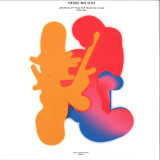
Music From Memory is excited to announce a special compilation that they’ve been working on for some time now; MFM053 – VA – Heisei No Oto – Japanese Left-field Pop From The CD Age (1989-1996). Compiled by long-time friends of the label, Eiji Taniguchi and Norio Sato, Heisei No Oto delves into a world of music released almost exclusively on CD and brings together a fascinating selection of discoveries from a little known and overlooked part of Japan’s musical history.
The last ten or so years have seen a global wave of interest in Japanese music encompassing ambient, jazz, new wave and pop records from the 1980s, some of which is increasingly considered the most innovative and visionary music of that time. Although some music from this period, in the form of ‘City Pop’ or ‘rare groove’ records, had been coveted by collectors and DJs for a number of years, most Japanese music from the time was little known outside and often even within Japan.
Sometime around the mid 2000s, two Osaka record store owners, Eiji Taniguchi of Revelation Time and Norio Sato of Rare Groove, along with a handful of deep Japanese diggers such as Chee Shimizu of Organic Music records in Tokyo, began to explore beyond the typical ‘grooves’ or ‘breaks’. Much like their counterparts in Europe and the US, they began delving into home-grown ambient, jazz, new wave and pop records, discovering visionary music, often driven by synthesizers or drum computers, that broke beyond the typical confines of their genres.
Spending tireless hours in local record stores and embarking on digging trips across the country, Eiji Taniguchi and Norio Sato, much like Chee Shimizu, have been at the forefront of unearthing and introducing many of the very Japanese records now loved and sought after around the world. Yet as YouTube algorithms and vinyl reissues would transport such music into the global consciousness and demand and therefore scarcity intensified for such records, so Eiji and Norio have recently begun to turn their attention to CDs.
The title of the compilation Heisei No Oto refers to the sound of the Heisei era, which began in 1989 and corresponds to the reign of Emperor Akihito until his abdication in 2019. Marking the culmination of one of the most rapid economic growths in Japanese history, 1989 also coincided with the music industry’s final shift away from vinyl in favour of CDs. And, although compact discs were first introduced seven years earlier it wasn’t until late into the ‘80s that, beyond dance music labels, CDs became the exclusive format for major and independent labels in Japan and throughout the world.
This however didn’t signal the end of the innovation in Japan. Many of those same musicians who have become known for their work in the ‘80s would continue to produce outstanding music well into the mid ‘90s, as greater innovation and advances in musical equipment allowed Japanese musicians and producers to refine and explore new sounds. While musicians such as the seminal Haruomi Hosono, whose productions feature on a number of tracks, would continue to push the boundaries of these new technologies, these technological advances also meant less established musicians were able to make use of increasingly affordable but state-of-the-art equipment.
Including music by Haruomi Hosono as well as Yasuaki Shimizu, Toshifumi Hinata and Ichiko Hashimoto who have become known and loved around the world in recent years, Hesei No Oto also features Japanese pop star Yosui Inoue, producers Jun Sato and Keisuke Kikuchi in aaddition to less established artists from the contemporary, jazz, new wave, pop and dance music scenes. Bringing together a selection of tracks that seem to define these specific genres and in fact move fluidly between a number of them, the music on the compilation is again underscored by experimentations with synthesizers and drum computers though with something of a gentle Pop sensibility. Reimagined here then under the encompassing term ‘Left-field Pop’, this is an exciting chapter in Japanese musical history that has only just begun to be fully explored.
VA - Heisei No Oto - Japanese Left-field Pop From The CD Age (1989-1996) is a 2xLP/2xCD that includes liner notes by Chee Shimizu and artwork by Hagihara Takuya and is released on February 28th.
Magic Combo is a vinyl-only label that specializes in limited edition edits of iconic original tracks, symbolizing the rich diversity of musical genres such as Afro, Funk, Jazz, Blues, R&B, and Classic House. This label is a melting pot of emotions, love, and musical improvisations, brought to you by a dynamic combination of emerging Italian and international musicians, DJs, and producers. Each release is a carefully curated selection that represents the soul of its genre, offering a unique listening experience that transcends the ordinary.
The Magic Combo label is not just about music; it’s about creating a connection between the listener and the sounds that have shaped generations. Our limited edition vinyl are a testament to the enduring power of music and the magic that happens when different cultures and sounds collide. It’s a celebration of the past, present, and future of music, encapsulating the essence of each genre while pushing the boundaries of what’s possible. Join us on a journey through sound with Magic Combo, where every record is a story, every beat a heartbeat, and every spin a new discovery. This is where the magic of vinyl comes alive, and where the love for music is immortalized in every groove.
Color Vinyl[24,58 €]
Valley of Rain was Tucson’s Giant Sand’s debut album recorded in 1983, and eventually released by 1985. It included Howe Gelb on vocals, guitar and Winston Watson on drums for most of it, Tommy Larkins on drums for some of it and Scott Garber on fretless bass for all of it. At the time of the recording, Howe was unacquainted with the possibilities of tube (valve) amps and had recorded most of the album with a Roland JC120 at the miraculous 8 track facilities of The Control Center in Korea Town, Los Angeles by Ricky “Mix” Novak. This impromptu recording had occurred because the band refused to cancel their first Los Angeles live gig, at Madame Wong’s, when the band (Giant Sandworms) had broken up days before in Tucson. Instead, Howe headed out anyway with Scott, the newest member who’d only been in the band for about a year, after band mainstays Billy Sed and Dave Seger reasonably decided ‘enough was enough’ following a rough and tenuous year spent in the lower east side of NYC attempting to further the band circa 1981/82. Tucsonan Winston Watson, (who would go on to tour with Bob Dylan in the 90s, as well as Alice Cooper, Warren Zevon etc ) was already living in Los Angeles and was brave/kind enough to jump in for the live date with no rehearsal. The result was so sparked with adrenalin, that the trio set up an impromptu studio session the next day to attempt to capture the sonic thrust on tape. The total cost of the day and a half recording was $400 including one 1” reel of 30 minute tape. When Enigma Records offered to release the album they requested another 15 minutes of music to make it a full LP. Ron Goudie was then called in to oversee the extra recordings at a Venice, CA studio called Mad Dog with Eric Westfall engineering. Tommy Larkins, who had been on the previous country punk album of Howe’s “The Band of ... Blacky Ranchette” came in to drum for those last 3 songs. It was there when Howe borrowed an amp that had been stored at the studio did he discover the bolster of a tube amp and his world changed. The amp was a slightly modified Fender Twin Reverb owned by Robbie Krieger of The Doors. 30 some years later, now that the band had been put to sleep indefinitely, those very first songs had begun creeping into the last Giant Sand tours. It somehow seemed appropriate to give them another shot with the proper amp just to see what they could’ve been. What made the idea more approachable was the availability of both original drummers living back in Tucson. The first attempt came last summer with both Winston & Tommy and Thøger Lund on bass, as well as the 2 newest members, 29 year old Gabriel Sullivan and 23 year old Annie Dolan on double neck guitars. The sound was insane. The funny part was Gabriel, who engineered and mixed the session, gave it an intentional 80s production sound. Howe later explained to Gabe he had been at war with that production trend since those first original recordings. So they all tried it again at Christmas time, this time with a newly discovered Fender 30 amp that had only been in production from 1980 – 1983. This new re-recording of that first album now sounds like it should’ve sounded. It was re-done for $400 and the same day and a half session time as the original. Scott Garber even drove up from Austin TX with his fretless to play so that the album is literally the originally line up for at least half of the songs. And yes, no pedal boards were used too. The band intends to tour this summer playing only those Valley of Rain songs. Giant Sand Returns To Valley Of Rain.