BMW – Music
Music is one of the deepest songs on the BMW album. Spherical synthies with a groovy breaky beat let this song rise to a timeless song that should never end. The message "Music" said everything about it, it's about music that doesn't need any big drops.
BMW – Music (Archie Hamilton Remix)
We are so proud to win one of the best House DJ and Producer in our scene for Muna Musik.
Archie Hamilton gives "Music" the special dancefloor drive without losing sight of the original. "That Record is Hot"...with this vocal he says it all. An outstanding remix by the London based dancefloor bomber.
BMW – Jump Around
Jump around is the main song from the BMW album and is so casually grooved that it invites you to dance so much. With its huge beat details it is very playful and you’ll discover a new elements every time. Sometimes it's so easy, jump and life is complete.
BMW – Jump Around (Cinthie Remix)
Cinthie is back on Muna Musik and we are more than proud of it! She brings the good 90´s house influences to her dancefloor remix. It reminds of the good old beginnings of our Muna where the nights became day and never ended. You don't need many elements to create a timeless catchy tune. WE LOVE IT
Buscar:discover me
Ever Crashing, the second LP by Kennedy Ashlyn aka SRSQ pronounced ‘seer-skew’, is the summation of a nearly three-year journey of soul searching, songwriting, and self-discovery: “I became myself in the process of making this record.” From the first choral swells of opener “It Always Rains,” it’s clear this collection exists on an ascendant plane, capturing an artist in super bloom. Every song hits like a single, heaving with guitar, synth, strings, live drums, and oceans of Ashlyn’s astounding voice, balletic and illuminated. The tracks gleam with detail, often assembled from as many as 100 separate tracks, all of which were written and played solely by Ashlyn – a feat of world-building as daunting as it is devastating.
For her, however, the process is intrinsic and intuitive – even a matter of survival. Her 2018 solo debut emerged in response to the tragic Ghost Ship fire in Oakland, which took the life of her bandmate and best friend Cash Askew. Similarly, Ever Crashing began materializing in the wake of an ADHD and bipolar disorder diagnosis, prompting a profound personal overhaul. Ashlyn cites such periods of turmoil as a muse of sorts, when “songs begin to echo within me,” gradually reverberating clearer and more vividly. As melodies and arrangements come into focus, the songs act like containers, vessels in which to externalize and exorcise tumultuous emotions, a transformation she memorializes in the climax of “Élan Vital:” “Reeling in and out of deep despair / I am saved by song.”
From swooning end credits balladry (“Dead Loss”) to orchestral slow-burn torch songs (“Abyss”) to dizzying shoegaze heavens (“Someday I Will Bask In The Sun”), the album exudes a sense of aching grandeur and bewildered joy, rich with triumphs hard won and lost loves never forgotten. Melodies pirouette and crescendo in dazzling, elevated acrobatics, somewhere between Kate Bush and The Sundays, threaded with ethereal undercurrents of shimmering shadow. Riffs brood and sparkle over crystalline synths, buoyant bass, and patient percussion, steadily building to holy moments of tidal power, finessed to perfection by producer Chris Coady (Beach House, Slowdive, Zola Jesus). Ashlyn’s is a dream-pop of questing catharsis, vulnerable but orchestral, as dense with hooks as heartbreak.
The album’s title refers to Ashlyn’s recurring sensation of being trapped in the crest of a wave, turned and churned in the surf, mirroring the cycles of self-flagellation and surrender that she battles being bipolar. But as the poetic raptures of these songs attest, her creative process thrives at transmuting trauma into potent music of arresting beauty and hidden divinity. Ever Crashing is an aching, rare work, shaded with gradients of reverie and regret, loss and letting go, “mourning the person I thought I should be, mourning the person I never was.” But even in its pain, Ashlyn’s voice exerts a redemptive gravity, yearning to transform and transcend: “Even on the inside / I’m bracing for impact / I’m waiting to destroy my life / To become sunlight.”
Ever Crashing, the second LP by Kennedy Ashlyn aka SRSQ pronounced ‘seer-skew’, is the summation of a nearly three-year journey of soul searching, songwriting, and self-discovery: “I became myself in the process of making this record.” From the first choral swells of opener “It Always Rains,” it’s clear this collection exists on an ascendant plane, capturing an artist in super bloom. Every song hits like a single, heaving with guitar, synth, strings, live drums, and oceans of Ashlyn’s astounding voice, balletic and illuminated. The tracks gleam with detail, often assembled from as many as 100 separate tracks, all of which were written and played solely by Ashlyn – a feat of world-building as daunting as it is devastating.
For her, however, the process is intrinsic and intuitive – even a matter of survival. Her 2018 solo debut emerged in response to the tragic Ghost Ship fire in Oakland, which took the life of her bandmate and best friend Cash Askew. Similarly, Ever Crashing began materializing in the wake of an ADHD and bipolar disorder diagnosis, prompting a profound personal overhaul. Ashlyn cites such periods of turmoil as a muse of sorts, when “songs begin to echo within me,” gradually reverberating clearer and more vividly. As melodies and arrangements come into focus, the songs act like containers, vessels in which to externalize and exorcise tumultuous emotions, a transformation she memorializes in the climax of “Élan Vital:” “Reeling in and out of deep despair / I am saved by song.”
From swooning end credits balladry (“Dead Loss”) to orchestral slow-burn torch songs (“Abyss”) to dizzying shoegaze heavens (“Someday I Will Bask In The Sun”), the album exudes a sense of aching grandeur and bewildered joy, rich with triumphs hard won and lost loves never forgotten. Melodies pirouette and crescendo in dazzling, elevated acrobatics, somewhere between Kate Bush and The Sundays, threaded with ethereal undercurrents of shimmering shadow. Riffs brood and sparkle over crystalline synths, buoyant bass, and patient percussion, steadily building to holy moments of tidal power, finessed to perfection by producer Chris Coady (Beach House, Slowdive, Zola Jesus). Ashlyn’s is a dream-pop of questing catharsis, vulnerable but orchestral, as dense with hooks as heartbreak.
The album’s title refers to Ashlyn’s recurring sensation of being trapped in the crest of a wave, turned and churned in the surf, mirroring the cycles of self-flagellation and surrender that she battles being bipolar. But as the poetic raptures of these songs attest, her creative process thrives at transmuting trauma into potent music of arresting beauty and hidden divinity. Ever Crashing is an aching, rare work, shaded with gradients of reverie and regret, loss and letting go, “mourning the person I thought I should be, mourning the person I never was.” But even in its pain, Ashlyn’s voice exerts a redemptive gravity, yearning to transform and transcend: “Even on the inside / I’m bracing for impact / I’m waiting to destroy my life / To become sunlight.”
Runhild Gammelsæter and Lasse Marhaug are two Norwegian musicians/sound artists. Both started in the early 1990s music underground and have worked in many constellations with a wide range of collaborators.
Despite knowing each other for a long time, Gammelsæter and Marhaug’s first collaborative work was the “Quantum Entanglement” LP in 2014. The album ignited a collective spark that both wanted to pursue further. Still, other commitments got in the way, and the project lay dormant until Stephen O’Malley, and Greg Anderson invited them to open for Sunn O))) for a special gig in the St. James Church of Culture in Oslo in the autumn of 2019. The two gathered for a long series of rehearsals, and after the successful performance, it was clear that it was time to start working on new compositions and recordings. That process initiated in late 2019 and continued to early 2021, encompassing before and after the world went through the lockdown. The result of this long development to be heard accumulated upon their new album “Higgs Boson” on Ideologic Organ Music.
Throughout the profound process of creating “Higgs Boson”, Gammelsæter and Marhaug drew inspiration from various subjects and artists. For Marhaug, it was concepts informed by the structuralist experimental cinema of Japanese directors Takashi Ito and Toshio Matsumoto, futurist worlds of French comic book artists Philippe Druillet and Jean Moebius Giraud, landscape photography of Fay Godwin, Kåre Kivijärvi, and Tamiko Nishimura, amongst others.
It became a metaphysical juxtaposition involving Gammelsaeter’s research and lyrical ideas based on several seemingly unrelated principles. A process of association inspired by “the Glass Bead Game” by Herman Hesse. The discovery of the Higgs Boson as a confirmation of the physical universe. The work of Ernst Schrödinger on the uncertainty principle. The four forces of physics. The Force. Helplessness under armed forces - as the war sailors in World War II. The influence of magic as expressed in tarot.
Gammelsæter experiments with a boundary involving the thresholds amongst various states of focus and legibility by forensic experimentation with techniques such as exclusive expression of consonants, syllabic repetition, retrograde text vocalisations and multi-lingual layering. Her vocal inspirational sources include Sidsel Endresen, Diamanda Galas, Natacha Atlas, the choral works of Rachmaninov, and the bands Carcass and Grave.
Two worlds coming together, making the music special. Mixing hard facts with science fiction helps create a kaleidoscopic cross point between the complex realities of the past and a possible future.
“Quantum Entanglement” featured two long-form pieces centred around a prepared piano and layered voice, while “Higgs Boson” developed a much more elaborate and ambitious compositional work. Across eight parts, the two artists brought a broad palette of instrumentation and sound. Electronic and acoustic, objects and field recordings, and pipe organ define the structures of which the centre is Gammelsæter’s magnificent voice. She has become known for her legendary voice, with her vast and unique range of inflective techniques and affective colour through her 30 years creating music. In the mix, Lasse approached the instrumental elements like landscapes, then Runhild’s vocals as characters that inhabit those worlds. Often, Gammelsæter multiple characters fused with the landscape. Make them occupy space, sometimes blend into it, sometimes dominate it. Constructing and setting visual guidelines helps set focus and open possibilities.
As an album, “Higgs Boson” is direct and focused, drawing on song structures. Within these tracks are vast strata of sound, an immersive multi-dimensional depth of music. Creating a feeling of depth while working with a flat two-channel stereo format - and how dimensions of texture and distortion can help develop the illusion of a space. The album structure is a story-like arc, a malleable subjective path, set as the album traverses oblique and suggestive areas, opening the concepts for the listener to unpack as they like.
– exclusive consultation with Gammelsæter & Marhaug, edited by Stephen O’Malley, June 2022
- A1: Raise Your Vibrations
- A2: Transcend
- A3: This Could Be (For The Travelling Soul)
- A4: In Orbit
- A5: No Escape From Bliss
- A6: The Right Time
- A7: A Call To The Ancestors
- A8: Meditations
- B1: We Can’t Breathe
- B2: It’s Gonna Be Alright
- B3: Because Of You
- B4: Real Episode
- B5: Love From The Sun (Feat. Dee Dee Bridgewater)
- B6: Changes
- B7: Rahspect (Amen)
• 180 GRAM AUDIOPHILE VINYL
• INCLUDES INSERT WITH LINERNOTES
• FEATURING DEE DEE BRIDGEWATER ON “LOVE FROM THE SUN”
• LIMITED EDITION OF 500 NUMBERED COPIES ON CRYSTAL CLEAR VINYL
Theodore Lee Croker is an American jazz trumpeter, composer, producer and vocalist. He is a Grammy Award nominee, three-time Echo Award nominee, as well as a Theodore Presser Award recipient.
As the grandson of trumpeter Doc Cheatham, Theo Croker has jazz music in his DNA. Escape Velocity is his fourth studio album, originally released in 2016. He was discovered by singer Dee Dee Bridgewater, who became his mentor and can also be heard on this album (“Love from the Sun”). Croker thinks big and plays big, along with his equally talented band. His songs are full of interesting twists and turns but remains very cohesive, ensuring that this album never gets boring.
Escape Velocity is available as a limited edition of 500 individually numbered copies on crystal clear vinyl and includes an insert with liner notes.
300 copies
BerettaMusic, known for discovering and developing Detroit talent and serving as a launching ground for several well known artists such as Seth Troxler, Ryan Crosson, Luke Hess and many others, exposes another great new talent in Detroit with his first vinyl release, Nic Joseph.
Nic is a rising star in the house music scene and has been honing his sound the past 10 years incorporating driving deep house and soulful Detroit techno elements. He has had some massive house releases this year on Simma Black, Too Many Rules & Origins and has made a
big splash in the UK. His last release, “On Me” peaked at #13 on the top 100 Beatport House chart amongst thousands of other tracks and was featured on Defected Radio’s show. His music is currently supported by the likes of Simon Dunmore (Defected), Sam Divine (Radio 1), Josh Butler, Mark Knight (Toolroom) and Kevin McKay. Nic delivers 3 of his signature style driving house tunes for the first time on vinyl and they are not to be missed!
Airport Society are the Detroit duo of Brian Kage and Ryan Sadorus who founded the label BerettaMusic together nearly 20 years ago. They are on remix duties serving up their signature deep, late night dark Detroit warehouse inspired sound. Drawing inspiration from Basic Channel, Echo Space and Terry Lee Brown Jr., this mix will fit great into those deep dark German style house sets.
In the musical universe of the Brazilian singer-songwriter Raphael Gimenes, wild landscapes are metaphors for unspoken feelings. The Copenhagen-based artist writes hauntingly visual, and poetically surrealistic stories, in which he can be hunted by sun-kissing jaguars, chased by thirsty horizons, become a kaleidoscope of butterflies, or turn into dream-singing birds. His 2016 debut album, "Raphael Gimenes & As Montanhas de Som", was elected the best Brazilian album of 2016 by the Dutch website Written in Music, received 5 stars on Jazzism, and was hailed as a "conceptual masterpiece" by the Japanese magazine Latina. His sophomore release, "A tongue full of suns", is co-produced by the Faroese singer-songwriter Teitur, who also features on synths. On this new album, Gimenes explores his non-Brazilian influences and his life outside of Brazil. The songs are sung in English, a language that he learned when he lived in the United States as a boy. The lyrics are inspired by the mountainous landscapes of Jotunheimen, Norway, where he goes trekking on a yearly basis. The production and the arrangements draw heavily on sounds he heard on vintage European prog rock bands, particularly Yes and PFM. The music itself does not stray far from the universe of his debut album, but the songs do take more symphonic, progressive forms, while the Brazilian rhythms are substituted by the more meditative, minimalistic tabla played by the German musician Jan Kadereit. "A tongue full of suns" also features two guitar virtuosos from Argentina and the Netherlands: Matias Arriazu and Tim Panman. The fictitious story behind the concept album is presented as a poetic short text written by Gimenes himself: "These are the last songs written by The Painter, a broken-hearted sorcerer who disappeared on a journey of self-discovery in the vast canvas of the great wild. They were found floating above the silence of an ageless rock, in a valley of slumbering glaciers. It is said that on his odyssey, he learned the hypnotic dialects of the trees, and deciphered the translucent poetry of the moon; that he unearthed ancient vestiges of rhymeless metaphors, and mastered the alchemy of cosmic verbs. It is believed that The Painter could enter the memories of rivers, interpret the dreams of birds, and that his sun-gilded tongue carried melodies that filled entire horizons. Legend says that he is now a wanderer of the infinite; a sacred secret, revealed only by the colors of the solstice alpenglow on inaccessible, rugged peaks."
Come for the leopard, stay for the stone cold jams. Yet another thrilling, funky-prog jazzy-rock fusion beauty from Ian Carr’s Nucleus. Originally released on Vertigo in 1975, Alleycat was never re-pressed so those original copies are now very tricky to score. Like all the Nucleus records, it’s aged ridiculously well and this Be With re-issue, re-mastered from the original analogue tapes, shows off just why this deserves to be back in press.
Genius trumpeter and visionary composer Ian Carr was one of the most respected British musicians of his era. He was a true pioneer and saw the potential in fusing the worlds of jazz with rock, just as Miles Davis and The Tony Williams Lifetime did in the US. In late 1969, following the demise of the Rendell-Carr quintet, and tiring of British jazz, Carr assembled the legendary Nucleus. Regarding music as a continuous process, Nucleus refused to “recognise rigid boundaries” and worked on delivering what they saw as a “total musical experience”. We can get behind that.
Under bandleader Carr, Nucleus existed as a fluid line-up of inventive, skilled musicians. This constant evolution and revolution was all part of the continuous musical exploration and discovery that took jazz to new levels. And the music has stayed relevant. To steal a line from a recent review of our re-issue of Roots, when it comes to anything Nucleus “it’s basically already hip-hop”.
Alleycat was the last Nucleus album recorded for the Vertigo label. Released in 1975, it was again meticulously produced by Jon Hiseman and is every bit as sinuous as anything else the group had recorded. As far as riff-laden accidental cop-funk goes, there’s so much energy coursing through the music that at times it sounds like a live recording. It’s pretty unbeatable.
Uptempo opener “Phaideaux Corner” is a funk-flavoured opus with a groove that simply swaggers. This trademark Roger Sutton piece benefits from Trevor Tomkins’s percussive expertise and some excellent sax and keyboard soloing. Check out Geoff Castle on squelchy, stabbing Moog duties. Ian Carr’s elegantly laidback title track is a lengthy suite of magisterial themes. Typically complex, it still gets you hooked and is just riddled with the funk. Carr builds up his initially “straight” trumpet solo with later use of echo to mesmeric effect. And there’s some excellent wah-wah guitar shredding by Ken Shaw too. Nice.
The second side opens with the killer “Splat” and finds Nucleus really ripping it up. A fat, funky bass guitar riff introduces us to the track and stays with us until the end. The often mangled bass groove is pushed along by rattling drums and percussion, dropping out for some restful moments of spacey calm, and along the way picking up some lengthy keyboard noodling by Castle. So so good.
The cool “You Can’t Be Sure” is a gentle jam with Shaw on 12-string acoustic guitar, together with Carr’s muted trumpet and some marvellous fretless work from Sutton for extra colour. The album closes with Bob Bertles’ galloping “Nosegay”, written perhaps as a response to some of the faster Mahavishnu Orchestra pieces. It’s an example of well crafted jazz-rock that doesn’t compromise any of its jazziness, yet it still very definitely rocks.
This Be With re-issue of Alleycat has been re-mastered from the original Vertigo master tapes, Simon Francis’ mastering working together with Pete Norman’s cut to weave their usual magic with these wonderful recordings. The cool AF cover - that leopard was just a cat before he heard Nucleus, you know - has been restored as the finishing touch to this long overdue re-issue.
Two amazing originally unissued Kent Soul discoveries that were featured on their Bill Haney’s Atlanta Soul Brotherhood CD from 1998.
The late great Bill Haney, unacknowledged genius of Southern Soul and owner of the revered Chant record label was interviewed by Rod Dearlove and published in Voices From The Shadows. It was recalled that Roy Hamilton came to town to work the clubs, Bill had the dramatic song ‘My Peaceful Forest’, and somehow got the ‘The Golden Voice’ to record it - what an epic production it turned out to be!
Similarly, The Drifter’s Charlie Thomas whilst in town to perform got to record ‘Don’t Let Me Know’, the recording comes in at just over two minutes, we have had an extended version cleared for this 7” release.
Originally released in July 2021 on blue vinyl – this is a yellow vinyl re-press – original notes below
During 2019, Blondie was invited to perform in Havana, Cuba as part of a cultural exchange through the Cuban Ministry of Culture. This was a 40 year ambition come especially for songwriter & guitarist Chris Stein, who had longed to visit Cuba for most of his life. Artist and director Rob Roth documented this special moment and career highlight by shooting a short film titled “BLONDIE: VIVIR EN LA HABANA”.
The film is broken up into 3 parts — Water, Fire and Air — and present a meditation on the experience as well as highlights from the two-night live musical performances with special guests Alain Perez, David Torrens and Cuban Fusion Pioneers Sintesís at Havana’s famous Teatro Mella.
With narration from Blondie founding members Debbie Harry, Chris Stein, and Clem Burke, providing a glimpse into the passion and beauty they discovered in Havana and the magic moments of performing alongside incredible Cuban artists. “BLONDIE: VIVIR EN LA HABANA” goes beyond the atypical short form film and live music documentary by presenting a portrait of the legendary band’s first experience in Havana and of the magical exchange between musicians from the two cities each call home and their intertwined influences.
The sound track for the film features Cuban musicians Carlos Alfonso, Ele Valdés, María del Carmen Ávila, Alejandro Delgado, Juan Carlos Marin, Jamil Schery, Degnis Bofill, Adel González
Released in July on limited edition pale blue vinyl to accompany the film which will feature throughout 2021 in many prominent Film Festivals inc the Tribeca Film Festival.
• 180 GRAM AUDIOPHILE VINYL
• FEATURING NO. 1 HIT “ONE WAY TICKET”
• PRODUCED BY FRANK FARIAN (FOUNDER OF MILLI VANILLI, LA BOUCHE AND
BONEY M.)
• LIMITED EDITION OF 750 INDIVIDUALLY NUMBERED COPIES ON LIGHT GREEN COLOURED VINYL
Formed in 1969 as Silent Eruption, their members hailed from Ghana, Curaçao, Guyana and Jamaica. Precious Wilson, who joined Eruption in 1974, added an element to the band’s sound that led to their international success. While on the road in Germany, they were discovered by talent scout and producer Frank Farian, who is also known as the founder of Boney M., Milli Vanilli and La Bouche.
In 1979 Eruption released their second studio album Leave A Light, which contained their characteristic funky euro-disco sound. The first single release was a cover of Caston & Majors’ “Leave A Light (I’ll Keep A Light In My Window)”. The second single was also a cover version, this time the Sixties hit “One Way Ticket” by Neil Sedaka. The single led Eruption to the top ten in the UK and all over Europe.
Leave A Light is available as a limited edition of 750 individually numbered copies on light green coloured vinyl.
New version on Solar Orange Vinyl. RIYL: Slowdive, DIIV, Electric Youth, The Cure, My Bloody Valentine. Solo project of Los Angeles based Matthew Doty (ex-Saxon Shore). For Matthew Doty, Deserta has always been about exploring a sonic universe that allows him to express a kaleidoscope of emotions, without having to say much at all. Through a patchwork of reverb-tinged textures – drone guitars, lingering synths and driving percussion – the Los Angeles-based singer/songwriter and multi-instrumentalist weaves together stories of care, frustration and catharsis that ultimately stretch to a gentle resolve. On new album Every Moment, Everything You Need, Doty chronicles the kind of year we all fear, full of uncertainty, tension and sustained pressure, and transforms it into a celebration of perseverance. It’s an essential reminder that we have the power to shape the stories we tell. The pandemic meant that Doty had to give up his studio and downsize a lot of his gear and instead, carve out a space in his two-bedroom apartment to craft the next chapter of Deserta. Sharing the space with his wife and son, Doty and his partner are also essential healthcare workers, which meant the couple would often have to tag-team childcare, along with 13-hour shifts in PPE and people constantly calling with questions about the ever changing guidelines and protocols. Once the blueprint for Every Moment, Everything You Need was set, Doty reached out to a number of collaborators to stitch together his vision for the sonic landscape. James McAlister (Sufjan Stevens, The National, Taylor Swift) came onboard to perform and record drums, while Caroline Lufkin (Mice Parade) wrote and performed vocals on the ethereal “Where Did You Go.” Elsewhere, the LP was mixed by Dave Fridmann (Tame Impala, Mogwai, Interpol), with Beach House and Slowdive producer Chris Coady engineering and co-producing, making this the first time Fridmann and Coady had worked together on a project. While the vocals are more prominent than Deserta’s previous albums, it’s their amalgamation with the instrumental aspects that secures Every Moment, Everything You Need as Deserta’s most confident and assured release to date. An affecting emotional candor teamed with persistent riffs and tenacious rhythms sees Doty unafraid to dive deeper; an unrestrained approach that ushers in a lustrous purging of agitation and anxiety. Showcasing those dark, exhaustive thoughts through crucial swells and looped, electronic soundscapes, it’s an LP that’s infinitely layered, with something new to discover with each and every enchanting listen.
Her debut LP, Banshee, was released on Wax Poetics. Has collaborated with MF Doom, Czarface, Ghostface Killah, Dennis Coffey, and more. Kendra Morris’s Nine Lives, to be released on Karma Chief Records (a division of Colemine Records) in early 2022, marks not only the culmination of the decade since the release of her first LP Banshee, but also a turning point in Kendra’s life. Nine Lives heralds the beginning of a new chapter; label, and an evolution to the next level of adulthood. This collection of her original songs encapsulates moments from what could be nine lifetimes. Kendra, while very much a New Yorker and veteran of almost 2 decades on the NYC scene, hails from Florida and aesthetically embodies the broader sense of American culture, bringing to her contemporary sound influences found in music and cinema dating back to the mid 20th century. Her music conjures imagery evocative of road trips to weird and wonderful places. Concurrently a visual artist, filmmaker and animator, Kendra harnesses the feline nine lives metaphor repeatedly. In the context of the chapters of her musical trajectory alone, we see at least 9 lives. From discovering multi-tracking on a karaoke machine as a child, to playing in bands in Florida, moving to NYC and creating music alone on an 8 track, releasing her first 2 LPs on Wax Poetics, releasing her 2016 EP Babble and collaborating with DJ Premier, 9th Wonder, MF Doom, Czarface, Ghostface Killah, Dennis Coffey, and David Sitek, to name a few. The life of this multi-disciplinarian artist contains units of time and story lines through which we can all relate to universal themes of love, loss and overcoming one's fears. Kendra, never ceasing to heed her spiritual calling to continue creating music and art, no matter what, has no plans of slowing down but a belief in only evolving, eager to begin experiencing her next nine lives.
The Belgians pimp their fourth album's psychedelic pop with disco funk and there fore groove somewhere between TAME IMPALA and PARCELS.On Movements, the Brussels-based rock quintet Great Mountain Fire lavishly enriches its infectious indie-pop songs with soul grooves. The lively sound and dexterous ensemble dance away our inarticulate sense of disquiet. The laidback funky rhythms, often combined with playful falsetto voices, bring out the dextrous ensemble as much as possible. The band discovered Sly & the Family Stone, Larry Graham. the afro rhythms David Byrne famously tried to embrace in his works, Marvin Gaye and "Strawberry Letter 23", a 1971 song by soul singer Shuggie Otis. Still it's an indie-guitar vibe that's ride GREAT MOUNTAIN FIRE.
Like the many Banded Stilts that spread across the cover of her newest album, ‘Flood’, Stella
Donnelly is wading into uncharted territory. Here, she finds herself discovering who she is as
an artist among the flock, and how abundant one individual can be.
‘Flood’ is Donnelly’s record of this rediscovery: the product of months of risky experimentation,
hard moments of introspection, and a lot of moving around.
Donnelly’s early reflections on the relationship between the individual and the many can be
traced back to her time in the rainforests of Bellingen, where she took to birdwatching as both a
hobby and an escape in a border-restricted world. By paying closer attention to the natural
world around her, Donnelly recalls “I was able to lose that feeling of anyone’s reaction to me. I
forgot who I was as a musician, which was a humbling experience of just being; being my small
self.”
Reconnecting with this ‘small self’ allowed Donnelly to tap into creative wells she didn’t know
existed. Soon songs were coming to her in a way she could not control and over the coming
months, Donnelly accumulated 43 tracks as she moved out of Bellingen and around the
country, often finding herself displaced due to border restrictions and a tough rental market.
Though the writing of ‘Flood’ was an intensely personal undertaking, Donnelly still saw the
recording process as one of her most collaborative projects yet. Along with her band members,
co-producing the record beside Anna Laverty and Methyl Ethyl’s Jake Webb helped to foster
an important spontaneity in the studio. With Webb, Donnelly could “dig in” and discover a
“forward-leaning sound” she’d been searching for, while Laverty’s ability to “capture the piano”
and discern the “perfect take” allowed the songwriter to take risks, many of which have clearly
paid off.
Looking back at the Banded Stilt, Donnelly ultimately appreciates how when “seen in a crowd
they create an optical illusion, but on its own it’s this singular piece of art.” While each song in
‘Flood’ is a singular artwork unto itself, the collective shares all of Stella Donnelly in abundance:
her inner child, her nurturing self, her nightmare self; all of herself has gone into the making of
this record and, although it would take an ocean to fathom everything she feels, it’s well worth
diving in
Like the many Banded Stilts that spread across the cover of her newest album, ‘Flood’, Stella
Donnelly is wading into uncharted territory. Here, she finds herself discovering who she is as
an artist among the flock, and how abundant one individual can be.
‘Flood’ is Donnelly’s record of this rediscovery: the product of months of risky experimentation,
hard moments of introspection, and a lot of moving around.
Donnelly’s early reflections on the relationship between the individual and the many can be
traced back to her time in the rainforests of Bellingen, where she took to birdwatching as both a
hobby and an escape in a border-restricted world. By paying closer attention to the natural
world around her, Donnelly recalls “I was able to lose that feeling of anyone’s reaction to me. I
forgot who I was as a musician, which was a humbling experience of just being; being my small
self.”
Reconnecting with this ‘small self’ allowed Donnelly to tap into creative wells she didn’t know
existed. Soon songs were coming to her in a way she could not control and over the coming
months, Donnelly accumulated 43 tracks as she moved out of Bellingen and around the
country, often finding herself displaced due to border restrictions and a tough rental market.
Though the writing of ‘Flood’ was an intensely personal undertaking, Donnelly still saw the
recording process as one of her most collaborative projects yet. Along with her band members,
co-producing the record beside Anna Laverty and Methyl Ethyl’s Jake Webb helped to foster
an important spontaneity in the studio. With Webb, Donnelly could “dig in” and discover a
“forward-leaning sound” she’d been searching for, while Laverty’s ability to “capture the piano”
and discern the “perfect take” allowed the songwriter to take risks, many of which have clearly
paid off.
Looking back at the Banded Stilt, Donnelly ultimately appreciates how when “seen in a crowd
they create an optical illusion, but on its own it’s this singular piece of art.” While each song in
‘Flood’ is a singular artwork unto itself, the collective shares all of Stella Donnelly in abundance:
her inner child, her nurturing self, her nightmare self; all of herself has gone into the making of
this record and, although it would take an ocean to fathom everything she feels, it’s well worth
diving in
Like the many Banded Stilts that spread across the cover of her newest album, ‘Flood’, Stella
Donnelly is wading into uncharted territory. Here, she finds herself discovering who she is as
an artist among the flock, and how abundant one individual can be.
‘Flood’ is Donnelly’s record of this rediscovery: the product of months of risky experimentation,
hard moments of introspection, and a lot of moving around.
Donnelly’s early reflections on the relationship between the individual and the many can be
traced back to her time in the rainforests of Bellingen, where she took to birdwatching as both a
hobby and an escape in a border-restricted world. By paying closer attention to the natural
world around her, Donnelly recalls “I was able to lose that feeling of anyone’s reaction to me. I
forgot who I was as a musician, which was a humbling experience of just being; being my small
self.”
Reconnecting with this ‘small self’ allowed Donnelly to tap into creative wells she didn’t know
existed. Soon songs were coming to her in a way she could not control and over the coming
months, Donnelly accumulated 43 tracks as she moved out of Bellingen and around the
country, often finding herself displaced due to border restrictions and a tough rental market.
Though the writing of ‘Flood’ was an intensely personal undertaking, Donnelly still saw the
recording process as one of her most collaborative projects yet. Along with her band members,
co-producing the record beside Anna Laverty and Methyl Ethyl’s Jake Webb helped to foster
an important spontaneity in the studio. With Webb, Donnelly could “dig in” and discover a
“forward-leaning sound” she’d been searching for, while Laverty’s ability to “capture the piano”
and discern the “perfect take” allowed the songwriter to take risks, many of which have clearly
paid off.
Looking back at the Banded Stilt, Donnelly ultimately appreciates how when “seen in a crowd
they create an optical illusion, but on its own it’s this singular piece of art.” While each song in
‘Flood’ is a singular artwork unto itself, the collective shares all of Stella Donnelly in abundance:
her inner child, her nurturing self, her nightmare self; all of herself has gone into the making of
this record and, although it would take an ocean to fathom everything she feels, it’s well worth
diving in
- A1: She Is Just A Playgirl
- A2: Just Because
- A3: Don't Believe In Him
- A4: Any Heart Can Be Broken
- A5: Beat Down Babylon
- A6: They Can't Stop Me
- A7: Here Come The Heartaches
- B1: Baby You Got What It Takes
- B2: It's Just Your Carelessness
- B3: Come Along With Me
- B4: Cheer Up
- B5: Loving You
- B6: Keep On Running
- B7: Don't Leave Me
Delroy Wilson was one of Jamaica's most soulful vocalists, and over a 40-year career the singer unleashed a flood of hits and a multitude of masterpieces. Born on October 5, 1948, in the Kingston neighborhood of Trenchtown, Wilson's phenomenal talent would be his ticket out of the ghetto, and his discovery by producer Coxsone Dodd in 1962 would change the path of Jamaican music. Released on Big Shot in 1973 and produced by Bunny Lee, 'Captivity' is one of the true classics from Delroy's discography, back on vinyl for the first time since its original release.
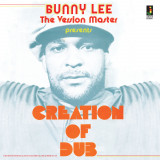
King Tubby and Producer Bunny ‘Striker’ Lee are intertwined in the birth of Dub Music. After discovering a mistake that made a ‘serious joke’ (more of which later...) they went on to release the first pressings of this new musical genre namely ‘Dub Music’. Tubby’s vast knowledge of electronics and Bunny’s vast catalogue of rhythms would lay the foundations of what today is taken as a standard... the Remix / Version cuts to an existing vocal tune.
Osbourne ‘King Tubby’ Ruddock was born in Kingston, Jamaica on 28th January 1941 and grew up in the High Holborn Street area of downtown Kingston. He studied electronics at Kingston’s National Technical College and also on two correspondence courses from the U.S.A... When he had qualified Tubby began repairing radios and other electrical appliances in a shack in the back yard of his mother’s home. His work in the early days included winding transformers and building amplifiers for Kingston’s Sound Systems. Tubby built his first Sound System in 1957 playing jazz and Rhythm & Blues at local weddings and birthday parties. His reputation as a man who knew and understood both electronics and music grew steadily and as the sixties drew to a close. Tubby purchased his own basic two track equipment. He installed this alongside his dub cutting machine, a homemade mixing console and his impressive collection of Jazz albums in the back bedroom of his home at 18 Dromilly Avenue which he christened his music room.
Tubby and Striker were at Treasure Isle Studio’s one day while Ruddy from Spanish Town was working with the engineer Byron Smith....
“Tubby and myself was talking when Ruddy was cutting some dub but Smithy (engineer) made a mistake through we were talking and forgot to put in the voice. It was two track recording in those days. Ruddy said ‘No Man! Make it stay! and so they cut the rhythm. When I went over to Ruddy’s that Saturday night a dance was in progress and when they played the vocal to the tune... then he said we’re going to play ‘Part Two’. They never called it ‘Version’..and then he played the rhythm track. The song was a catchy song and everybody started to sing along and the deejay started to toast so everything went down well. On Monday morning I went up and I said ‘Tubbs the mistake we made was a serious joke. It mash up Spanish Town! The people went wild. So you have to start to do that now ‘cause when the man put on the ‘Part Two’ everyone start singing this song. It played about twenty times. I said you try Tubbs!’...Well the next Saturday night now when Tubby strung up down the farm U Roy said he’s going to play ‘Part Two’ but Tubby did it different now. He started with the voice then dropped it out and let the rhythm run and then he brought in the voice in the middle and from there Tubby started to get really popular.’’
Bunny ‘Striker’ Lee
Dynamic Sounds upgraded to sixteen track recording in 1972 and Tubby purchased, again with the help of a deal brokered by Bunny Lee. The old four track equipment and the MCI console from their Studio B. The four tracks now gave him far wider scope to work with and he began to create a new musical form where the bass and drum parts were brought up while the faders allowed Tubby to ease the vocal and rhythm in and out of the mix. It was only a matter of time before Tubby’s dub plate experiments began to make it on to vinyl and the first ever long-playing King Tubby releases would feature a collection of his mixes to a selection of Strikers rhythms. So please sit back and enjoy this historic set of sounds, mixed by King Tubby and Mr Prince Phillip Smart and another set of scorcher Bunny Lee rhythms.
Reissue on vinyl for this classic album originally released in 1978 on Carib Gems. Arranged and produced by Bunny Lee. Delroy Wilson was one of Jamaica's most soulful vocalists, and over a 40-year career the singer unleashed a flood of hits and a multitude of masterpieces. Born in the Kingston neighborhood of Trenchtown, Wilson's phenomenal talent would be his ticket out of the ghetto, and his discovery by producer Coxsone Dodd in 1962 would change the path of Jamaican music.