
Поиск:dist urb
Стили
Все


7
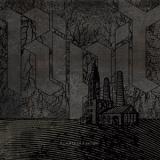
KITCHEN. LABEL is proud to present AGATE, the latest album by Japanese artist MEITEI, marking a deepening of the world he first shaped through his Kofū trilogy released between 2020 - 2023.
Named after the mineral agate, a stone formed through slow accumulation, pressure, and time, the album reflects MEITEI’s patient approach to sound. AGATE brings together extended and newly rearranged works from across the Kofū cycle alongside new compositions and passages, refining material developed through years of performance and sustained practice.
The album presents seven tracks:
HAŌ (Previously unreleased track)
SHIN-OIRAN (Remodeled from Oiran I, Kofū 2020)
SHIN-SADAYAKKO (Remodeled from Sadayakko, Kofū 2020)
SHIN-WAROSOKU (Remodeled from Wa-rōsoku, Kofū III 2023)
KYŪGEKI (Remodeled from Shinobi and Akira Kurosawa, Kofū II 2021)
SHIN-OIRAN II (Remodeled from Oiran II, Kofū 2020)
SHIN-EDOGAWARANPO (Remodeled from Edogawa Ranpo, Kofū III 2023)
Across these works, MEITEI expands the musical vocabulary first introduced in Kofū, a sound he once described as “lost Japanese mood.” While Kofū drew from fragments of folklore, theatre, ghost stories, and forgotten urban memory, it was never an act of historical reconstruction. Rather, it reflected a sensibility of the past observed from the present. With AGATE, this worldview is clarified as Shinpu, a process of discovery in which historical awareness becomes a foundation for contemporary creation rather than a constraint.
During five years of Kofū tours across Japan, Europe, and Asia, MEITEI performed this material in a wide range of spaces, from underground live houses and listening rooms to culturally significant sites. These environments influenced pacing, dynamics, and structure, shaping how the material evolved over time. AGATE is therefore not only a studio album, but the result of material refined through repeated performance.
If the Kofū albums were windows into forgotten eras, AGATE explores what lies beneath, sediment and strata formed through time and pressure. MEITEI’s approach to sound mirrors the nature of agate itself. Grains become texture. Texture becomes narrative. Voices drift through decaying layers of sound, while ancient instruments are used in non-traditional ways, forming distinctive percussive rhythms and melodies that appear and vanish without fixed resolution.
The album’s visual materials were developed under MEITEI’s direction through physical art-making processes. The cover artwork originates from a letterpress print created by Kamisoe, a Karakami atelier in Nishijin, Kyoto, using Kyo-karakami paper. The original artwork, produced through traditional woodblock techniques on handmade washi, was subsequently reproduced on print for the album edition. Kamisoe continues to reinterpret this historical Kyoto craft with a contemporary sensibility.
The title calligraphy was created by Bio Xie, whom MEITEI personally invited to participate in the project. During his performances abroad, MEITEI encountered in Taiwan a lingering atmosphere reminiscent of “Shitsunihon” — a sense of old Japanese memory that quietly endures beyond time. He was deeply drawn to Bio Xie’s distinctive use of Chinese characters, which resonated with this experience, and asked him to contribute to the visual expression of AGATE.
In parallel, MEITEI continues to reinterpret Japanese sensibility through his concept of “Shitsunihon,” presenting it as a contemporary musical language. The refined Kyoto motifs envisioned by Kamisoe and the distinctive calligraphic expression by Bio Xie intersect with MEITEI’s singular artistic direction, weaving together a newly articulated worldview.
The accompanying visual imagery, including the liner photographs, was created by photographer Hiroshi Okamoto, who was also responsible for the visual direction of MEITEI’s previous work, “Sen'nyū.” It draws from MEITEI’s lived experiences of winter seas, solitary cliffs, and breaking waves. These scenes symbolize the inner conflicts of the ten years he spent living in Hiroshima, and his confrontation with solitude and the sounds he creates.
AGATE will be released on 17 April 2025 via KITCHEN. LABEL on 180g vinyl, CD, and digital formats. The album is mastered by Kelly Hibbert, known for his work with Flying Lotus, Madlib, and J Dilla.
With AGATE, MEITEI returns to the material of Kofū with greater focus and discipline, continuing an ongoing process of working forward with inherited material.

8
“An irresistibly narcotic sonic palette… Low-lit sounds for blissed-out ravers.” FACT LA electronic artist Holodec debuts on Phantom Limb with hypnotic new album TRU FOLK, a subtle and environmentally sensitive documentation of everyday life for distant synthesis, interwoven field recordings, and urban haze. Described as “both a folk record and an audio document” by Holodec - aka West Coast producer Jieh - TRU FOLK draws from 15 years of field recordings that capture a range of environments from city life to the domestic everyday. These audio narratives form the foundation of the considerately textured representation of the same spaces that make up the record - full of earthen, grounding synthesis, semipresent melodies, and smogged-out tonal palettes. It occupies a zone somewhere between tangible and dreamlike, treating sound as evidence of living rather than an escape from it.
6
RIPIT is back with a new LP after 3 years spent mostly on the mesmerizing collaboration between THE ÅNGSTRÖMERS- his duo with FRÉDÉRIC ALSTADT -and the Haitian voodoo ensemble CHOUK BWA.
While Ripit is better known for his radical noisy breakbeat work, "A Church or a Factory" explores a more industrial, power electronic and noise ambient side of his synthesizer lust. The instruments abused on this record are: Serge modular, Knifonium and various eurorack modular. The A-side comes with 5 powerful synthetic industrial songs which feature each one a different guest vocalist. The B-side is a long ambient noise piece that will plunge the listener in an anxious meditation.
Ripit is the project of the French NICOLAS ESTERLE for almost 25 years. He explores electronic instruments thru distortion , ranging from industrial hardcore to breakcore, from doom hiphop to dusty dub. Beside his solo project, he's involved in various bands like SOLAR SKELETONS (with TZII), FUJAKO (with HHY) and more recently The Ångströmers.
On the guest side, there's a wild bunch of Nicolas' friends:
- PAUL-TERGEIST is the galactic moniker of PAUL BEAUCHAMP in his band SPACE ALIENS FROM OUTER SPACE;
- ANDREA EV is the lead member of 1997EV;
- ROBERT IMHUMAN and DIVTECH are members of the REALICIDE COLLECTIVE;
- TZII is a long-time road comrade of Nicolas and a touring freak spreading his music all over the world;
- ANDRÉ COELHO is known as METADEVICE and is the founder of the now-defunct SEKTOR 304.
The title "A Church or A Factory" refers to the Belgian countryside, wherever you are, you are at least surrounded by a church or a factory. As he just left the urban life of Brussels to escape to the French countryside, he is now lost enough not to have neither a factory nor a church in sight.

Mit Schemes präsentieren Kreidler ihr neuntes Album auf Bureau B - und öffnen dabei ein neues Kapitel ihres markanten elektronischen Kosmos. Die international renommierte Band aus Berlin/Düsseldorf setzt stärker auf atmosphärische Klangräume, bleibt jedoch ihrem charakteristischen, leichtfüßigen Groove treu. Feldaufnahmen und Outdoor-Sounds spielen eine größere Rolle als je zuvor; besonders eindrucksvoll ist der Gastbeitrag von Leo Garcia, der seine Vocals spontan über urbane Field Recordings improvisierte. Das Trio - Thomas Klein, Alexander Paulick und Andreas Reihse - nutzt auf Schemes den kreativen Zufall als Motor. Leicht skizzierte Strukturen, schwebende Texturen und subtil pulsierende Sequenzen formen ein Ambient-nahes Album, das dennoch ständig in Bewegung bleibt. Jede Komposition entfaltet ihre eigene kleine Welt, zwischen spielerischem Experiment, warmer Räumlichkeit und eleganter Präzision. On their ninth album for Bureau B, the internationally renowned Berlin/Düsseldorf-based outfit Kreidler focus on atmospheric soundscapes - of course maintaining their signature rhythmic groove, which on "Schemes" is simply more buoyant and less insistent. "Schemes" is also characterised by the more pronounced use of nature/outdoor recordings. The track featuring Leo Garcia as a guest vocalist is based on just such a field recording. With "Schemes", Kreidler step into a more ambient space of possibilities, crafting an album that feels both carefully considered and delightfully unguarded. Selling Points
i 1.9Fenix [with Leo Garcia]
[i] 9Fenix [with Leo Garcia]

- 1: Beads
- 2: Klove Twin
- 3: Snowflakes
- 4: Bellboy
- 5: The Distance Between You
- 6: Looming Large
- 7: Marble Upset
- 8: Via Da Me
- 9: Fenix
- 10: Tar
также имеющийся в продаже
CLEAR VINYL[24,79 €]
GER Mit Schemes präsentieren Kreidler ihr neuntes Album auf Bureau B - und öffnen dabei ein neues Kapitel ihres markanten elektronischen Kosmos. Die international renommierte Band aus Berlin/Düsseldorf setzt stärker auf atmosphärische Klangräume, bleibt jedoch ihrem charakteristischen, leichtfüßigen Groove treu. Feldaufnahmen und Outdoor-Sounds spielen eine größere Rolle als je zuvor; besonders eindrucksvoll ist der Gastbeitrag von Leo Garcia, der seine Vocals spontan über urbane Field Recordings improvisierte. Das Trio - Thomas Klein, Alexander Paulick und Andreas Reihse - nutzt auf Schemes den kreativen Zufall als Motor. Leicht skizzierte Strukturen, schwebende Texturen und subtil pulsierende Sequenzen formen ein Ambient-nahes Album, das dennoch ständig in Bewegung bleibt. Jede Komposition entfaltet ihre eigene kleine Welt, zwischen spielerischem Experiment, warmer Räumlichkeit und eleganter Präzision. On their ninth album for Bureau B, the internationally renowned Berlin/Düsseldorf-based outfit Kreidler focus on atmospheric soundscapes - of course maintaining their signature rhythmic groove, which on "Schemes" is simply more buoyant and less insistent. "Schemes" is also characterised by the more pronounced use of nature/outdoor recordings. The track featuring Leo Garcia as a guest vocalist is based on just such a field recording. With "Schemes", Kreidler step into a more ambient space of possibilities, crafting an album that feels both carefully considered and delightfully unguarded. Selling Points
i 1.9Fenix [with Leo Garcia]
[i] 9Fenix [with Leo Garcia]

12
In the rapidly shifting tectonic plates of the global Afrobeats scene, few arrivals have been as seismic as that of Ahmed Ololade—better known to the world as Asake. With his breakout project Mr. Money With The Vibe, the artist didn’t merely debut; he effectively recalibrated the tempo of the Nigerian pop soundscape. The EP functions as a masterclass in synthesis, pulling from the ornate, percussive history of Fuji music and grafting it onto the driving, bass-heavy architectures of contemporary Amapiano. It is a calculated, deeply rhythmic hybridization that manages to feel both nostalgic and jarringly modern.
From a critical vantage point, Mr. Money With The Vibe is defined by its brevity and density. Asake treats each track as a focused vignette, utilizing a vocal delivery that oscillates between a melodic, almost liturgical chant and the staccato urgency of a Lagos street orator. The production—characterized by sharp, frenetic percussion and deceptively simple melodic loops—creates a high-intensity atmosphere that mirrors the relentless pace of urban life. He avoids the pitfall of bloated experimentation; instead, he doubles down on a "street-pop" ethos, prioritizing accessibility without sacrificing the complex rhythmic interplay that gives the genre its distinctive texture.
Ultimately, Mr. Money With The Vibe stands as a pivotal document of the current era, capturing the transition of Afrobeats from a regional powerhouse to a dominant global force. By blending the aspirational "hustle culture" narrative with an increasingly sophisticated sonic palette, Asake established a blueprint that has since influenced a new wave of artists. The project is a testament to the idea that authenticity, when paired with relentless precision, remains the most effective currency in contemporary music.

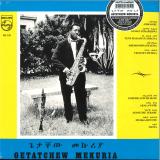
AFTER DARK is the latest project from French producer Onra, conceived as the soundtrack to an imagined late-night film. Entirely self-produced, the album continues the sophisticated R&B and Modern Soul direction explored since his 2010 classic Long Distance and 2018's accomplished Nobody Has To Know, focusing on late 80's / early 90's inspirations.
Structured like a film unfolding between dusk and dawn, After Dark moves through themes of intimacy, urban solitude, distance, and quiet indulgence. Analog synthesizers, tight drum programming, understated basslines, and selective live saxophone textures shape a cohesive body of work that favors mood and narrative over excess. The sequencing reinforces its cinematic intent, opening and closing with intro and outro pieces that frame the record as a cohesive night-time narrative album.
Over 20 years since emerging in the mid-2000s from the beat scene, Onra has steadily evolved from sample-based Hip-Hop production toward polished, song-oriented projects rooted in contemporary R&B and Funk. With After Dark, he delivers one of his most focused and refined statements to date: a mature, immersive album built for late hours, and attentive listening.
10

- 1: Lake Walk
- 2: Lazy Daisy
- 3: Ups & Downs
- 4: Silently
- 5: There Was A Nice Sunset
- 6: Somewhere Good
- 7: Slow Island
- 8: Movin’ On
If – in some parallel universe (or perhaps a not-so-distant-future version of the one we’re already sentenced to living in) – the evil overloads of artificial intelligence were actually successful in their attempts to create convincingly enjoyable “original music,” more specifically tasked with wholly encapsulating my own personal tastes by data-chugging some cocktail of – oh, I don’t know – the posters on my wall, the records in my “most listened to” pile, the mixtapes I made for others, intensive physical scans of my auditory cortex, amygdala, hippocampus, heart strings, whatever else they have splayed out on their autopsy table with the intention of generating one all-encompassing “perfect band” based on the fruitful sum of their findings – that band, for me, would be (or would at least sound exactly like) the Tara Clerkin Trio. It is, quite simply, without exception, the music I wish to hear.
Formed in Bristol UK (where none of them are from yet all of whom are deeply engrained) in 2020, the Tara Clerkin Trio – as it somewhat democratically exists today, despite the singular authority implied by its name – consists of the titular Tara Clerkin, her partner Sunny Joe Paradisos, and Sunny’s brother, Patrick Benjamin. I’ll confess, I don’t know what their respective roles are within the operation and there’s only a very small part of me that cares to learn, as one of my favorite qualities in an objective listening experience is the mystery of who is playing what, which sounds are “authentic” versus synthesized, which chunks are performed “live” in a room together versus meticulously Frankenstein’ed from measure to measure, or how exactly the overall sound is so (seemingly) effortlessly achieved. Though, I suspect, if and when I do witness a live performance by this band at any point, my enjoyment of the music will not be lost in my better understanding of it.
With two extraordinary mini-albums – In Spring (2021) and On The Turning Ground (2023) – making a splash on London’s formidable World of Echo label in wake of their self-titled 2020 debut, this upcoming Somewhere Good LP is, in many ways, the band’s most realised work. In running their usual gauntlet of idiosyncratic (*an overused adjective for which here there is regrettably no sufficient alternative) approaches, Clerkin & co. colour in and outside of compositional lines over the course of 40+ celebratory minutes - never wallowing, despite inherently somber subject matters of self-defeat, disease, displacement, restlessness, gentrification - allowing their arrangements and improvisations ample space and time to situate, stretch out, breathe, cross-pollinate, and ultimately take deeper hold on the listener’s imagination – all while somehow sounding more like themselves than ever before.
Of course, there are traceable influences herein, if one felt that such comparisons were necessary to properly examine and enjoy this music (they aren’t)… Being the big dumb American from the small boring town that I am, cornfed on ‘90s alternative radio with the enchantingly exotic sounds of Maxinquaye and Mezzanine emanating from my chunky tube television, I can’t help but to make a blatantly obvious reference to a “Bristol sound”, ie the whole trip-hop trip, the pastoral crooning over the suggestive urban grime of cracked electro/piano treatments, the digitally-yet-primitively reconstructed James Bond soundtrack string-beats, etc.. But the Tara Clerkin Trio is so infinitely much more than that. There are elements of avant-pop, modern classical, kraut-folk, audio verité, dare I say indie rock (and not of the beer guzzling, masturbatory fuzz-flex variety but perhaps more like a Trish Keenan-fronted Faust, Adrian Sherwood at the mixing desk of If You’re Feeling Sinister, or – in expanding on our alternate reality – a world in which High Llamas cut a full-length for Warp Records with Andrew Weatherall on coffee duty).
The hazy, unmappable skyline-mirage of droning harmonium, upright bass, peculiarly accentuated wind instruments, acoustic guitar, hushed yet literally mighty keys combine to hypnotizing effect. The band may make underlying nods to jazz, sure, but it’s not appropriation, it’s that they have the actual chops to build it out. Beneath the janky samples and oddball percussive embellishment lies actually great drumming. Beyond the manipulated vocal witchery and woefully reflective plain-spoke moments are Tara’s subtly inspired melodies, sung with what might honestly be the glue to the whole crazy equation. A calming consistency throughout the otherwise unpredictably dynamic, boldly intuitive, uniquely British exploration of this (their own) universe in song. – Ryan Davis (Chicago, February 2026)

- A1: Mr.noone Special
- A2: Low Cost, Low Price & High Return
- A3: Intermission #1
- A4: All You Need Is Word
- A5: Do You Believe In Magic?
- A6: Liar・Sadist・Coward
- B1: Hey, Leader!
- B2: Intermission #2
- B3: Highway Star, Speed Star
- B4: River Deep, Mountain High
- B5: (Inside Of Me)
- B6: Mr.noone Special (Reprise)
- B7: Good-Night
Cymbals' second album, ‘Mr. Noone Special’, released in 2000, makes its debut on vinyl.
Building on the pop sensibility of their first album, this record evolves into a more soulful and mature sound.
Featuring expressive vocals by Asako Toki and mellow, refined compositions by Reiji Okii, it includes classics like “Do You Believe In Magic” and “Highway Star,
Speed Star.”
A defining work from Cymbals' mid-period, distinguished by its sophisticated, urban sound and assured melodic sense.
This essential album for any discussion of Japanese pop from the 90s to the early 2000s finally gets its long-awaited first vinyl release.

6
Making his debut on Depth.Request, Duellist delivers Intensive Living - a fierce three-track statement inspired by the restless energy and chaos of modern city life. Reinforced by remixes from industrial heavyweights Orphx, Statiqbloom, and label co-founder G.xist, the EP captures the tension between control and collapse - where rhythm becomes ritual and distortion takes on a human pulse.
'Burn Your Way Out' opens with offbeat crunch and abrasive energy, setting a volatile tone. The title track 'Intensive Living' moves with rhythmic swagger and pounding drums, its momentum unwavering. 'Ritual Component' closes the originals with throbbing low-end pressure and hypnotic drive - the sound of machinery breathing.
On remix duty, Statiqbloom transforms 'Intensive Living' into a desolate, melodic descent, Orphx expand its framework into a widescreen rework charged with cinematic tension, and G.xist pushes 'Burn Your Way Out' into industrial hypnosis, fusing intensity and groove in equal measure.
Intensive Living stands as a hard-edged introduction to Duellist's world - precise, forceful, and fully alive in its urban grit.

5
Hasvat Informant's debut album, Pluripotent XII, is a 12-track journey that reads between the lines of psychedelic electronics and contemporary techno. From driving, precise grooves to slow, textured explorations, the album carries the organic resonance of Australian underground culture while threading sharp influences from Detroit and beyond into a singular, unmistakably distinctive sound.
On this dual release, Naarm-based artist alternates between his Hasvat and Intellegama personas, moving between them like a figure navigating parallel realities. Each track balances mechanical precision with expansive, trance-infused textures, creating a liminal space where urban and natural influences converge.
More than a display of technical skill, this debut conveys a sense of place, heritage, and lineage. Dwelling in both conflict and harmony, Pluripotent XII invites listeners into an otherworldly, lysergic landscape - complex, evolving, and fully realized.

3
Blazing onto ICONYC for its 21st release, Swiss sonic alchemist Shiffer makes a striking debut with the magnetic All I’ve Been EP. Celebrated for his emotional finesse and innate ability to connect with unexplored corners, Shiffer’s latest creation, including a lucious collaboration with Paul Brenning and capped off by Jonathan Kaspar’s trademark rework, is a tantalizing suite designed to echo in our timeless halls.
The journey begins with Shiffer & Paul Brenning’s opening manifesto, “All I’ve Been”, a track that unfurls with both confidence and caution, as if self-aware from its very first beat. Mechanical whirs and fractured frames give way to low-end swells that drive forward with an unrelenting undertow. Brenning’s unmistakable vocals start to break a warmer ground as they linger in the liminal space between today and tomorrow before slowly growing in gravitas. Suddenly, the piece begins to contort, drawing spellbinding figures as arresting arrangements and melodic flourishes allow for decompression. Imbued with a tantalizing breakdown that amplifies their exquisite use of negative space, “All I’ve Been” is a fascinating and intimate take that feels as expansive as it ever could.
The follow-up, “Urban Legends”, takes a bolder stance. Anchored by heavy drum programming that carves its place with deliberate force, the track is haunted by ghostlike vocal fragments that lend an unsettling, cinematic edge.. Out from the left field, Shiffer deploys undulating synthetics that intertwine with consummate ease as they glide under the spotlight. An alluring act that treads unhurried and unconcerned, “Urban Legends” operates at its own pace, far from the demands of a world lost in the metropolitan hustle, allowing us to bask in a lore of things that might or might never have happened.
Closing the release, ICONYC calls upon Cologne innovator Jonathan Kaspar, who delivers a singular reinterpretation of “All I’ve Been”. Immersed in iridescent textures, Kaspar layers lush, swelling pads over pulsing low frequencies, their ebb and flow punctured by flashes of distortion that spark like electric currents.. Reflective and equally immersive, Jonathan Kaspar’s take on “All I’ve Been” pushes the collaboration into a brash new terrain while retaining the spiritual ethos intact

6
La Rama’s club ready sub-label RamaJam is back after a long stretch with 6x new traxx for the dance. Introducing for the first time on record, two Montréal duos that have been rocking the city for the last few years.
The Wet Steppahz are Boogaloo Jones & Pitza Dave, young producers extraordinaire, engineers at local studio Breakglass, live PA performers and organizers of the 140/160 party series. You can also find Boogaloo every weekend laying it down with the Fella’s Q-Tips & Curls crews. Young guns on the come up, be sure to follow their label STEPPATRAXX for some hot fire.
DAPASHU? is the meeting of veteran producer Shash’U & long time local DJ, promoter and studio fiend Dapapa. A quick lookup on Shash’U will have you inundated with originals and versions for you to drop at any jam. A mainstay at dance competitions, a regular feature of institution Loop Sessions, and always ready to share a tip from his production tool kit. Dapapa gets busy on the regular at venues around the city & heads both the Ol’Jack Nu Jack organization and DASA (a Montréal production suite bridging local and international likeminded artists). A fellow who takes no tune for granted.
Musically we make it easy, 3 cuts per side, representing each crew’s essence. No need to describe each tune, listen in and take notes on the mood + we laced you with those BPMs on the label so you can throw them in to the mix at any moment, no stress!
Mastered and cut in the city by our man Cristobal Urbina. Pressed in Canada & distributed from our brick and mortar shop located at 77 rue Bernard O, Montréal QC, H2T 2J9.
PS Props: These tunes were selected from recordings of the Steppahz and DAPASHU? playing live for a Seer Records party at Osmo x Marusan in April 2024… Big shout out to Emiliano & Maximum Enemi <3

9
This limited edition of the album is on "galaxy" 180g vinyl and printed inner sleeve.
The third studio album from one of the most acclaimed electronic music projects in Poland.
The duo RYSY consists of Łukasz Stachurko (also known as Sonar Soul) and Wojtek Urbański. RYSY have been making music together since 2015, and the vinyl edition of 4GIVE marks exactly 10 years since the release of their debut LP, "Traveler."
The material encompasses genres such as techno, acid techno, trance, and tech house. Album is incredibly polished and full of danceable energy, satisfying the expectations of both fans of electronic sounds and enthusiasts of more melodic compositions.
The 4GIVE is released by Dyspensa Records with distribution support from U Know Me Records.

Fashion Flesh tears the fabric of space and time. This is his first offering for the ESP Institute. With side A’s 'Atoms Revolt', ESP cordially introduces Fashion Flesh, AKA John Talaga, to the deepest corners of your mind. Using largely homemade electronics, circuit-bent gadgets, and tape manipulation, John manages to tap into the innate character of these otherwise introverted machines, eavesdropping and documenting their buried inner dialogue. His command of distortion is multi-tiered. On a micro level, he induces happy accidents and shepherds stray elements. Zooming out a bit, we begin to understand the sonic meat grinder that equalizes his bag of disparate ingredients. And from a macro vantage point, we fully recognize the greater tool that sculpts all of the above into form. Side B’s 'New Freedom' conjures a specific dystopian image—the byproduct of an artist involuntarily conditioned by the commute between up-river Bay County, Michigan and the Detroit metropolitan area. Like cutting away at flesh and muscle, breaking through the bone to suck the marrow, John depicts both the contrast and parallels between two post-industrial urban landscapes, the banal trek across The Thumb between them, and the gradual disintegration of agriculture as one nears the Techno city. Voice fragments begin to stutter in syncopation like radio frequencies interfering with our psyche, Geiger counters wail and moan, untamed oscillations mimic caged primates rioting at the zoo, and a steady-firing piston of drums struggles to break through a dense harmonic soot. The depth of personality John extracts through his manipulation process is remarkable— a point-of-view that foreshadows humanity’s looming technological singularity while hinting that it may have always been here, hiding in plain sight, waiting to be given a voice. These two songs will trip your circuit breakers.

- A1: Patrick Bernard - Interieurs
- A2: Cecilia Angeles - Climax Our First Day Of Love Its A Love Day
- A3: Carla Music Orchestra - A Meet With Bond
- A4: Remy Boussengui - Coco Lando
- B1: Francisco Et Son Orchestre - Cafe Rete
- B2: Francis Bebey - Crocodile Crocodile Crocodile
- B3: Michel Lorentz - Zantye An Metro
- B4: Egide Sadey - High Emotion
- B5: Princess Erika - Trop De Bla Bla Dub Version
9
Isle of Jura teams up with French digger Switch Groove on the next compilation titled ‘Archipelago – Cosmic Fusion Gems from France (1978-1988)’.
Switch Groove explains the concept “When I seriously began to search for and collect records, I was mostly interested in sounds from african-american, afro-latin and UK contemporary scenes. Sounds from distant territories, faraway from my native Massif Central, a highland region in the middle of France. The grass is always greener, I guess however, as I was digging in fleamarkets in the early sunday morning light, as well as spending regular sessions in second hands record shops, I began to discover hidden treasures, underground gems and side-projects of an unknown French musical repertoire.
French music is often reduced to its most famous musical forms, characters and signatures : French songwriting and voices, 60s yéyé, prog rock concept albums and soundtrack explorations, 80’s indie rock scene or more recently electronic French touch. All these sounds have a common feature : a geographical link, forged on mainland French territory, following the contour of the so-called Hexagone, the border that shapes the grounds for an homogeneous cultural expression. But beyond this showcase lie more complex, hybrid and global French productions. From French Caribbean Antilles to Parisian suburbs - especially during the ‘Sono Mondiale’ era -, in French areas outside urban cultural centers, musicians have created fusion and cosmic musical expressions. As the mid-seventies meant a greater freedom to make and record music, a wider use of electronic instruments like synthesizers and drum machines helped to deliver some magical projects you could only find lost in the middle of cheap records during a sunny record digging session. I selected these tracks, in an attempt to shape an ARCHIPELAGO that highlights significative contributions of African diasporas and ultramarine territories into French musical borders. It is the map of a land I have gradually drawn, thanks to deep listening of amazing cosmic and fusion tunes. I hope you enjoy the journey.”

12
The album’s title deftly gestures to the sheer vastness of astronomical dimensions, while simultaneously capturing the musical breadth within, where the eight planets are imagined as the eight notes of an octave. The work draws inspiration not only from earlier compositions —most notably Gustav Holst’s The Planets—but also from the rich astronomical and cultural contexts surrounding these celestial bodies. Here, the focus transcends direct citation of melodic motifs, instead embracing an intriguing conceptual approach on a meta level, unfolding in a series of vividly contrasting soundscapes. These contrasts shape a sweeping sonic journey, one that fully embraces the album format with both arms, inviting the listener to venture into realms both strange and wondrous, feeling the immensity of the interstellar space that lies between them. Contrast, after all, is the brushstroke that enriches our world.
Embarking on an auditory voyage, "Astral Guide" establishes the sonic framework that propels us into the boundless expanses of the cosmos. Its ethereal tones evoke the vastness of space, crafting a mood ripe for exploration within the realms of sci-fi. The subsequent tracks unfold like constellations, weaving a rich tapestry of sound that seamlessly marries cinematic soundscapes with pulsating, club-oriented rhythms. This album invites listeners to traverse its immersive landscapes, whether nestled in the comfort of home or dancing under the starlit sky, each note a guide through the transcendent experience of a nocturnal journey.
"Solar Flares" draws its inspiration from the awe-inspiring expanse of solar phenomena, capturing the majestic power of the sun as it reaches into the cosmos. This track resonates with the idea that energy, while vital, can also be a force of destruction when unleashed with overwhelming intensity. The composition beautifully mirrors the sun’s duality, where brilliance and devastation coexist, inviting listeners to reflect on the delicate balance between creation and annihilation. Through its rich textures and dynamic shifts, "Solar Flares" serves as both a homage to the celestial and a poignant reminder of nature's formidable power.
"Mercury – The Winged Messenger" embodies a meticulously crafted soundscape where artistry meets astronomy. The tempo of 173.6 BPM, derived from precise astronomical data, propels the composition into a vibrant realm that resonates with cosmic energy. Synthwave sound design intertwines seamlessly with the fluid rhythms of Drum’n’Bass, imbuing the piece with an uplifting dynamism that evokes the ethereal grace of Mercury itself. In this sonic exploration, listeners are invited to ascend on wings of sound, navigating the celestial tapestry of the universe with each invigorating beat.
"Venus, The Bringer of Peace" strikes a decidedly cozy note, presenting a poignant contrast to the more tempestuous themes often found in cosmic narratives. This composition evokes a nostalgic vision of an optimistic era, one in which humanity transcended borders and embraced the infinite possibilities of space exploration, where no destination felt too distant. The dense, languid atmosphere envelops the listener, creating a tangible sense of serenity that unfolds gradually, allowing for a meditative journey through sound. Each note serves as an invitation to linger in this tranquil embrace, reflecting on the harmonious potential of our collective aspirations and the beauty of connection in a vast universe.
The central theme of „Gaia, The Bringer of Life“ —originally not part of the planetary cycle— is the profound enabler of life on Earth. The arrangement delicately mirrors the slow, tentative unfolding of this potential, marked by an initially sparse orchestration that gradually builds in momentum. This progression crescendos, embodying the explosive dynamism of the Cambrian burst of life, ultimately culminating in a euphoric fanfare—a triumphant, celebratory flourish echoing life’s victorious emergence.
"Blue Moon" unfolds as a contemplative reverie on the tranquil clarity of a night sky, now seldom glimpsed in its natural purity, unclouded by the relentless haze of urban light. The listener is drawn into the vast embrace of the star-strewn firmament, a journey that sways between euphoric awe at nature’s sublime beauty and a profound melancholy for its fragile and imperiled state. Musically, this duality finds expression in the delicate interplay of modal mixtures, while an ever-shifting triplet groove, poised at the intersection of Outrun and melodic house, lends a pulse that is both nostalgic and forward-looking—echoing the beauty and transience of a world on the brink.
Rather than replicating the original composition of „Mars, The Bringer of War“, this interpretation seeks to evoke its profound, foreboding atmosphere. Cyberpunk emerges here as an ideal genre, channeling the dark, relentless march synonymous with Mars, the ancient god of war. The piece reverberates with intensity, as distorted vocalizations rise, embodying the anguish and visceral torment that shadow war’s violent crescendo. This auditory descent into conflict captures the relentless pulse of warfare, where sound itself becomes an embodiment of suffering and fury.
Majestically, "Jupiter, the Bringer of Jollity" emerges on the celestial stage, sweeping away the somber tones with its radiant vigor. Drawing inspiration from the triumphant strains of the original, and borrowing a melodic motif in the refrain, the piece expresses joy and buoyancy through a shift to a major key and the lilting sway of a danceable 12/8 meter. Spirited and exuberant, it leaps boldly from major to minor and back again, playfully shifting time signatures to capture a mood of unbridled festivity and jollity.
Here, a more conciliatory concept is chosen than in the original inspiration. „Saturn“ aligns with the number six, being the sixth planet from the Sun and bearing the iconic hexagonal pattern at its northern pole. What, then, could be more fitting than to render this piece in a 6/8 time signature? The arrangement unfolds with a multifaceted richness, mirroring the countless stones and ice fragments that form the foundations of Saturn’s majestic rings.
„Uranus“ adopts the theme of a light-footed, dancing instrumentation, giving the impression of perpetual motion, never quite settling. This musical choice harmonizes with the planet’s own orbit, as it spins with breathtaking velocity, teetering and swaying, seemingly unable to attain rest or stability.
The chill and vastness of the cosmos find expression in „Neptune, The Mystic“. At its core, an electronic soundscape envelops a classical arrangement, its unreachability intensified by an ethereal, otherworldly choir. Hovering at the outermost boundaries of the solar system, where warmth is but a distant memory, the composition lingers in a slow, contemplative tempo, evoking a realm where space for speculation stretches wide and silence reigns supreme.
Though Pluto may have lost its planetary status, and its companion Charon never achieved one, this shift in classification subtly aligns with the cosmic scale invoked here—one that mirrors the musical tradition of an eight-note sequence. Fittingly, the album closes with „Kuiper Belt“, a composition emblematic of the turbulence and vitality of countless smaller
celestial bodies that, though diminutive, find their rightful place within the vast architecture of the solar system.
They say nature is the greatest composer, shaping the universe with a symphony of chaos and order, beauty and danger. It is this duality that fuels the artistic vision of Edictum—a producer who, armed with a doctorate in chemistry, delves as deeply into the mysteries of molecules as he does into the depths of sound. In the tension between the vastness of the cosmos and the microscopic processes that dictate life’s rhythm, Edictum creates sonic landscapes that dissolve the boundaries between science and art.
His music is a story of contrasts—a sonic tale where the raw forces of nature clash with the intricate structures of human culture. Opposites intertwine to form a harmonious whole: the primal rhythms of the earth meet the celestial melodies of the cosmos, the rigid laws of physics blend with the boundless freedom of art. Edictum explores these polarities with meticulous devotion, each composition an expedition into uncharted soundscapes—a quest to give voice to the unfathomable.
With over 20 years immersed in the realms of electronic music, Edictum has honed a keen sense for rhythm and movement. His driving beats compel both body and mind into a hypnotic flow. Yet beyond the pulse of dance lies a complex framework of conceptual thought. Today, his creative focus revolves around holistic album projects—self-contained worlds with overarching narratives that embrace contrast and complexity. Each track stands alone as a fragment of the whole, but together, they weave a cohesive tapestry, much like the chapters of a novel that guide the listener on an emotional and sonic journey.
Edictum’s distinctive musical signature has earned him international recognition. With over 150 releases, many on prestigious platforms like the iconic *NewRetroWave* label, and collaborations with artists such as Jan Johnston, Azumi Inoue, Powernerd, and Turbo Knight, he has solidified his place in the global electronic music scene. His latest work, *A Cosmic Scale*, marks his seventh vinyl album and is released under his own label, *Echoes of Expanse*. The label’s name is no coincidence—it captures the essence of his art: echoes of infinity, the vibrations of the universe distilled into a singular sonic experience that carries the listener ever further into the boundless expanse of sound and space.
