GER Jim Jarmusch und Carter Logan (Gründungsmitglieder von SQÜRL) kehren mit einer klanglichen Erkundung des filmischen Werks des dadaistischen Pioniers Man Ray zurück, einem fesselnden Projekt, das Musik und Film miteinander verschmilzt. In den vergangenen acht Jahren haben SQÜRL das Publikum mit ihrer Live-Vertonung von Man Rays Kurzfilmen in ausverkauften Konzerten an renommierten Orten wie dem Centre Pompidou in Paris, der Queen Elizabeth Hall in London und dem Art Institute of Chicago verzaubert. Der Höhepunkt ihrer Bemühungen fand im Frühjahr 2023 statt, zum 100. Jahrestag von Man Rays erstem Ausflug ins Filmemachen, als der neu restaurierte Film "Die Rückkehr zur Vernunft" bei den Filmfestspielen von Cannes seine Premiere feierte. Der von Womanray (Marieke Tricoire) und Cinenovo (Julie Viez) produzierte Film ist eine Anthologie mit vier Stummfilm-Kurzfilmen von Man Ray - Étoile de mer (1928), Emak bakia (1926), Le Retour á la Raison (1923) und Les Mysteres du Château de Dé. (1929) - jeweils gepaart mit einer Originalpartitur von SQÜRL. Jarmusch und Logan, zwei multidisziplinäre Künstler, die für ihre Experimentierfreudigkeit bekannt sind, wollten mit diesen Partituren einen ekstatischen Zustand schaffen, einen Raum zwischen Bewusstsein und Unterbewusstsein, Realität und Surrealem. Das daraus resultierende Album "Music for Man Ray", das aus einer Live-Aufnahme im Centre Pompidou in Paris im Februar 2023 hervorging, enthält verzerrte Gitarren, hypnotische Rückkopplungen, Loops und affektierte Synthesizer Logan: "Es ist eine Reise, auf die wir das Publikum mitnehmen wollen, indem wir Themen in diesen Filmen beleuchten. Sie sind eigenständig, aber es gibt auch wiederkehrende Anklänge im gesamten Programm." Jim Jarmusch fügt hinzu: "Wir sind sehr stolz darauf, die Begleitband von Man Ray zu sein." Nun erblicken sowohl der Film als auch die daraus resultierende Musik in Form von "Music for Man Ray" das Licht der Welt - beide stehen als Zeugnis für die kreative Synergie zwischen Man Rays bahnbrechendem Kino und der innovativen musikalischen Interpretation durch SQÜRL.
[ENG] Clear Vinyl. Jim Jarmusch and Carter Logan (founding members of SQÜRL) return with a sonic exploration of the cinematic works of Dadaist pioneer Man Ray, a captivating project that melds music and film. Over the past eight years, SQÜRL have been enchanting audiences with their live scores to Man Ray's short films across sold-out shows in prestigious venues like the Centre Pompidou in Paris, Queen Elizabeth Hall in London, and the Art Institute of Chicago. The culmination of their endeavor took place in the spring of 2023, on the 100th anniversary of Man Ray's inaugural foray into filmmaking, when the newly restored Return to Reason premiered at the Cannes Film Festival. Produced by Womanray (Marieke Tricoire) and Cinenovo (Julie Viez), Return to Reason unfolds as an anthology featuring four silent short films by Man Ray _ Étoile de mer (1928), Emak bakia (1926), Le Retour á la Raison (1923), and Les Mysteres du Château de Dé. (1929) _ each paired with an original score by SQÜRL. Jarmusch and Logan, two multi-disciplinary artists known for their experimental prowess, approached these scores as a way to create an ecstatic state, a space between consciousness and unconsciousness, reality, and the surreal. The resulting album, Music for Man Ray, born out of a live recording at the Centre Pompidou in Paris in February of 2023, features distorted guitars, hypnotic feedback, loops and affected synthesizers. In the words of Logan, "It's a journey we want to take the audience on, illuminating themes throughout these films. They are discrete, but there are also recurring echoes throughout the whole program." Jim Jarmusch adds, "We feel very proud to be Man Ray's backup band." Now both the film Return to Reason and the resulting music in the form of Music for Man Ray are seeing the light of day _ both stand as a testament to the creative synergy between Man Ray's groundbreaking cinema and the innovative musical interpretation by SQÜRL.
Поиск:distort
Все
Finally reissued on vinyl after many years out of print to coincide with KRIEGSHÖG’s new LP, their first in 14 years, to be released in May. Note new price. The New Wave of Brutality and Hardcore Massacre
has arrived. Tokyo punks KRIEGSHÖG are back with their first full length. After three 7”s that we love at LVEUM they finally went for the album. Thirteen tracks of extremely bass driven hardcore destruction.
he recording is relentless, full of energy and distorted
Significant Other unveils a new project: Pain Management. A new imprint presenting music and visual media across a variety of formats. The outlet launches with an original 4 track EP: When It Rains.
Christening the label with his first full length release since 2021, the subversive producer steps out from behind the curtain with a batch of tracks guaranteed to soothe psychic woes and challenge sound systems alike.
True to the name of the label, this debut release delivers a healthy dose of leftfield club weight. Tough and tender in equal measure, it’s a record that explores in-between zones. A fever dream of narrative experiments at the outer edges of club music, packing enough punch to shake a dancefloor, but enough delicacy to soundtrack the ride home. The final product is a meeting of outsider sonics and sleazy dance tropes, body music for restless minds.
The record begins with the lead single ‘RPG’ (A1). A smoked out, drug chug power ballad featuring fellow NYC underground alum James K. Anchored around a growling 4/4 battle beat, swells of dub and inchoate vocal cries rise intermittently from the haze. Within the fever dream fugue of thuggish sub weight and engine-room crud, a tender, sustained warmth shimmers.
A2’s ‘I Get Such Bad Headaches’ is a twisted club thumper built around a questioning vocal refrain. It’s a tongue in cheek nod to the label’s origins that takes shape in a sleazy beat track with some serious club weight. Slowed n’ chopped to the maximum, it’s a low slung sleeper-hit with attitude. DJ Screw meets Tylenol PM, a bass-boosted anthem for the neural punishment enjoyer.
The B-side opens with the title track, ‘When It Rains (It Pours)’, a droned out mess of distant voices and textural grit. Anchored around the titular looping axiom, the track has a deathly, abyssal weight to it. A claustrophobic hymn of surrender, faithful to its stark refrain.
‘Bad Blood’ wraps the record on a tender note. A sluggish heartbeat pumps beneath the fog of dub delays and distortion, propelling forward a lethargic rhythm. Out of nowhere a blissed out synth line pierces the tension. A sharp, emotive melody disrupting the paramnesia with something new. If the record’s title track suggests a downward spiral through some psychic storm, then ‘Bad Blood’ shows the outline of dry land coming slowly into focus.
Art Direction by Ciaran Birch
Luka Aron is a German musician and composer of electroacoustic and minimalist music based between Stockholm and Berlin. 'XV XXVII III XXI IX: Variations & Coda' is his debut vinyl release. Apart from his solo work, he is also a member of the trio Minua (signed to Nils Frahm's LEITER label) and the dream gaze band Roomer. His work was previously described as "thick, impasto layers of slow-moving sound that completely command your attention" in The Guardian.
'XV XXVII III XXI IX: Variations & Coda' is a four-part suite for an acoustic ensemble (bass clarinet, contrabass, euphonium, foghorn organ, harpsichord, serpent, shō, and trumpet) and analog as well digital synthesis. The result is an album of spiralling compositions which navigate labyrinthine structures of multiple closely related overtones and layers of heavy distortion based on Aron's research and observations of the physiology of hearing through minute listening tests. On the album, the composer collaborates with a number of notable musicians: Mattias Hållsten and Santos Silva (both members of the late CC Hennix' Kamigaku ensemble), just intonation contrabassist Vilhelm Bromander, or Amina Hocine, among others. The release was mastered by Stephan Mathieu at Schwebung Mastering.
Repress
Dry mix only single LP edition, reverb mix of 2LP edition excluded.
Issued in 1975, this is the articulation of Zambia’s Zamrock ethos. Its' musicians were anti-colonial freedom fighters, it envelops Zambian folk music traditions, and it rocks - hard. Amanaz were serious, and they made a serious stab at an album. They titled their album Africa, according to original band member Keith Kabwe, “because of how it was shared and how its inhabitants were butchered and enslaved, its resources stolen... all the atrocities slave drivers committed. “ Thus, their “Kale,” a blues sung in Nyanja, that traced the continent’s arc from slavery to Zambia’s independence closes the album. Kabwe and rhythm guitarist John Kanyepa have a winsome softness to their vocals, which sit politely aside the feral growl of drummer Watson Baldwin Lungu, bassist Jerry Mausala and bandleader/lead guitarist Isaac Mpofu. Africa’s vibe ranges from anxious (“Amanaz”) to escapist (“Easy Street”) to straight-up pissed-off. On the “History of Man,” his voice whiskey-burned, his distorted guitar buzzing like swarming hornets, Mpofu indicts his species. There’s a darkness to Africa not found on any other Zamrock records, and a melancholy drifts throughout, specifically on Mpofu’s more restrained “Khala My Friend,” which stands as an effective, bleak situation for the Zambian everyman, the average citizen of a struggling, new nation, who might have had relatives in conflict-torn countries on the horizon, who might have been struggling to find his next meal, who might have seen a bleaker future than his president promised. Then there’s the clear Velvet Underground-influence on the nostalgic “Sunday Morning,” which, as Kabwe recalls, was the first song written for the album, back in 1968, when Velvet Undergound and Nico was a new release - and the underground funk of “Making The Scene.” The album also tackles traditional Zambian music and early-‘60s rock – punctuated, of course by Kanyepa’s wah-wah and Mpofu’s fuzz guitars. But every time Amanaz get too deep, too violent, they come back with an accessible song and woo their listener back to the groove. “Green Apple” is a civil song, featuring Kanyepa’s sighing guitar.
The prolific and versatile Ian Martin arrives on Shipwrec with four tracks that make up Future Dawn. Cosmic Garden opens. A piece that blurs genre lines; soft synth-lines are coupled with ruffled rhythms that immerse the listener in gentle orchestral ebbs and flows. Sounds of isolation introduce Future Dawn, modulations reaching over an ever-widening expanse before strings descend. Drums arrive late in this atmospheric journey, one that pulses with a primal energy while conjuring vivid images. The ominously titled Dead Calm opens the flip. Soundtracks have always been an inspiration for Martin and the scores of the silver screen are at the forefront of this work. Brittle beat patterns are the bedrock on which melodies whirl - a bitter acid bass bubbling as tension builds to paranoic peaks. Darker skies loom with the marine chop of Phantom Machine finishing. A flotsam and jetsam of hi hats swirl in the liquid undulations of distorted bass and aquatic echoes, rougher rusted rhythms providing ballast to the eddies and maelstrom of Martin's machines.
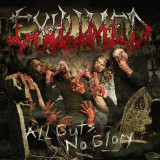
Goregrinding metal gods EXHUMED have awakened from their slumber and delivered unto us All Guts, No Glory, their first new record in almost eight years. All Guts, No Glory's 11 choice cuts of grinding death metal combine the raw ferocity of their legendary Slaughtercult album with the wild ambition of 2003's Anatomy Is Destiny. As crimson concertos such as "Dis-assembly Line", "As Hammer To Anvil", and "Funereality" illustrate, All Guts, No Glory is EXHUMED's finest moment yet!
2024 Repress
Clear Vinyl
This is the second installment of the Warm Up Bandcamp Vinyl series and comes again signed by label boss Oscar Mulero. Limited edition vinyl EP with three cuts of merciless techno designed to shake minds and feet.
"Gradual Blending" starts with the core elements up, distorted kicks, shuffled hats, resonant percussive components, super reverberated claps, density and obscurity aligned in an hypnotic structure.
"Evolutionary Decay" is elastic and physical, a solid subbass / kick / hat groove, phased synthetic layers, atmospheres and liquidness: Intelligent tool.
"Natural Resources" relies again on distorted drums, asymmetrical sinoidal sequences and Fm synths all designed in a wise arrangement.
Timeless, hard and mental for the real players out there.
- A1: Pikiran Dan Kepentingan (Thoughts And Concerns)
- A2: Fenomena Demi Fenomena (From Phenomena To Phe-Nomena)
- A3: Lubuk Yang Terdalam (The Depths Of The Depths)
- A4: Manusia Oh Manusia (Human, Oh Human)
- B1: Selalu Ada Jalan Keluar (There Is Always A Way Out)
- B2: Meyakini Sebuah Jawaban (Believe In An Answer)
- B3: Kepada Cahaya Yang Menerangi Jiwa (To The Light Which Illuminates The Soul)
Born in 1977, in Malang, East Java, Wukir Suryadi began playing music for theatre at the age of 12 with the Idiot The-ater Studio, and later with the Rendra Theater Workshop. In his solo work, and as a member of Senyawa, Error Scream, Bendera Hitam Setengah, Potro Joyo and other groups, Wukir breaks the boundaries of traditional music, death metal and avant-garde performance. On this new release, “Cycle and Prayer,” recorded in 2023, he expands the edges of his unique artistic world further, by digging in to meditative improvisation, art, and community building in his home workshop in the mountains of central Java. These recordings vibrate inwards, toward the microcosmic ecologies of forests and rivers; they distort outwards, resonating with global waves of apocalyptic change that are forcing all living beings to the edges of existence on earth. The result is a meditative poem that moves, as its titles an-nounce, from phenomena to phenomena, praying that humans find a way out from the depths of the depths to the light that illuminates the soul.
An essential mode of creative work for Wukir is the creation of unique instruments, using these sound sources as “bullets of expression.” In addition to the spear-like tube zither Bambu Wukir, he has created the Solet, Enthong, Garu, Luku, Arrows, and Industrial Mutant instruments, which in addition to being used in live performance, have been exhibited in the Instrument Builders Project and the 2017 Jakarta Biennale. In the past few years, Wukir has begun to collaborate with local guitar makers, carpenters, and suppliers of native endemic wood in the mountain region of Salatiga. Using earthen bricks along with local woods (suren, coconut, mindi, and waru lengis) as building materials, he constructed a new studio and workshop space in Tingkir, where this album was made. The trees, water and air of the local environment have exerted a powerful influence in Wukir’s documentations of instrumental sound. On this recording, he uses the simple Cetta guitar, an instrument designed in Bali and made for Indonesian children and local communities of folk and popular musicians, in order to explore the different sonic characteristics of a more “normal” instrument built from local wood.
The themes of the album -- cycle and prayer -- arise from a foreboding series of meta-events that shook Indonesia and the world over the past years, following one after the other: the COVID-19 pandemic, the Ukrainian-Russian war, the Kanjuruhan Stadium tragedy in which football supporters were gassed and killed by police, revelations of govern-ment failures and corruption, the rise of personal vehicles, the increasing disturbance of natural patterns of the rainy season and other ecological cycles. “In these waves of technology and narratives of truth made for certain interests, playing a sound at a certain frequency and repeating can try to bring images and feelings to a certain point of con-sciousness,” Wukir told me. “Sound is a prayer that creates a change, whether gradual or rapid, in the behaviour of living things, to face the demands of the time, as humans struggle to live according to what they believe.” The draw-ings and sketches used for the cover spontaneously emerged alongside the recordings, as an instinctive depiction of “time and sound, nature that is outside of oneself, and nature that is within.”
Drab Majesty's third album, Modern Mirror, is a journey of self-reflection, nostalgia, love, beauty, and heartbreak told across eight addictive and emotional synth pop anthems - a seemingly classic tale delivered unblinkingly through the frame of the modern world. Elements of classic tragedy weigh heavily in the reflection of Modern Mirror in songs like "The Other Side", possessing a fundamental sound that is energetic, luminous and hopeful. Fusing the sonic aesthetics of predecessors like New Order and The Cure within the cautious instruction of Greek mythology and modern science fiction, Drab Majesty has birthed a hybrid of dreamy malaise, captured for a future moment. The first single, "Ellipsis", romantically plays up the distorted concept of courting through modern technology in a world that has yet to adapt, while on "Long Division", Deb's resounding guitar cascades around the chorus shared with No Joy frontwoman Jasamine White-Gluz, wistfully warning us against our vanity and self-obsession. Even when hope for everlasting love peeks through in "Oxytocin", a sparkling and stoic track sung by Mona D., we are firmly reminded our fleeting existence. Produced by Josh Eustis (Telefon Tel Aviv) with appearances by Jasamine White-Gluz (No Joy) and Justin Meldal-Johnson (NIN, Beck, M83, Air).
London-based four-piece Adult Jazz announce their first full-length album in a decade, So Sorry So Slow, out 26 April 2024 via Spare Thought. Alongside the announcement comes lovesick new single ‘Suffer One’ featuring Owen Pallett, a cautious excavation of self and sexuality, clambering across a gorgeously shapeshifting, filmic five-minutes.
Containing some of the band’s most abrasive but gentle, beautiful and melismatic work to date, So Sorry So Slow has many defining characteristics: romance, panic, devotion and remorse, threaded together by an intentionally laser-focused love. It’s deeply personal, bruised and candid in its expressions of tenderness, and deeply pained in its concurrent reflections of ecological regret. Across its hour-long runtime, a delicate, frenetic energy and glacial heaviness coexist, the band pitting those paces against one another. In their richly experimental timbre, dancing strings and fluttering falsettos prang against a bed of brass drones like a wounded bird.
“We started writing in 2017 and began recording in 2018,” says vocalist Harry Burgess. “We genuinely thought it might be finished in 2018! But things kept developing and, having resolutely not struck while the iron was hot, there was no real external push to rush things after that, so we just kept letting things shift and unfold until it felt right. Listening back to my voice notes it’s nice to notice that there are fragments of ideas from the whole period 2017-2023 which have shaped the record.”
Recorded in bursts at studios across London and in the band members’ flats, at Konk, on the Isle of Wight and in Sussex, So Sorry is unambiguous in its evolution. Sonically, there are sparks of the arrhythmic brightness that afforded the band’s critically acclaimed debut album Gist Is its cult adoration, for fans of Arthur Russell and Meredith Monk, but with a blossoming, melancholic darkness often overhead. Piano sprees and luscious string sections appear like low-hanging stars on a night-time drive, whilst plunging vocal distortions and humming brass loops resurrect heavy limbs in a bad dream.
“I usually have objects as kind of totems for ideas,” explains Burgess. “The album initially started out to do with performance… the totem was a head mic, one of the subtle skin-tone ones, discreet on the forehead of a West End star. A number of the first songs in their original forms were almost musical theatre piano ballads. I think that was really a device to write about my life as the ‘main character’ (pre internet-speak reframing): regrets about romance, relationships - unsustainable relationships with the self and others.”
“However, once we started writing, the ideas about unsustainable personal relationships, loving unevenly and heartbreak conflated with a more expressly ecological regret. Like contending with big feelings of loss, endings, beauty, desolation, and with how much joy the earth contains in it. Feeling so much gratitude bound up in waves of sadness. Maybe witnessing a slow-motion goodbye to all that, or its last gasps. I love the earth and the life it supports so much. I love how ecosystems fit together - even the brutal stuff. It may be basic to say, but now is the time to be laser focused on that love. I was thinking about human centrality on earth, us as the ‘main character’, the way that is served by faith and romanticism, and the subsequent disingenuous understandings of our position in the ecosystem, as only stewards somehow, rather than subjects. The totems at this point: a herald’s horn, lorry inner tubes, archaeological tools. I guess from doom, industry, history respectively.”
“Now I would say the record is about gripping. Totems being: crampons, rope, drips, desalination equipment, accruing various survival tech. I think gripping sums up both of the threads. There’s the emotionally correct clinging to the earth that is the substrate of everything we value, or the delusional clinging to our imagined dominant position. But also the practical, technological aspects of creating a sustainable relationship, of remaining here. Then I think of romance again.”
So Sorry So Slow comes out 26th April 2024 on Spare Thought, mixed by Fabian Prynn at 4AD Studios and mastered by Alex Wharton at Abbey Road.
Adult Jazz is Harry Burgess, Tim Slater, Steven Wells and Tom Howe.
Repress of the 2020 album on aqua blue vinyl. The power of a Winter song is hard to describe, like how the delicate world building of a good book can be more compelling than real life. There's a make-believe, fairy tale surrealism that sets Winter's blend of shoegaze and psychedelia apart while existing in the same universe as the ethereal dream pop of Cocteau Twins and Melody's Echo Chamber. Samira Winter grew up in Curitiba, Brazil, where her Brazilian mother filled their home with the gentle melodies of MPB (música popular brasileira), and her father introduced her to the distorted sounds of American punk. At 18, she moved to Boston where she first released music as Winter, eventually moving to LA's Echo Park. Winter has built a cult following with a stream of bilingual releases and national tours supporting Boogarins, Broncho and Cherry Glazerr, not to mention dates in Mexico, South America and Europe. Three videos to promote album. First digital single premiering on Fader 4/17. Features guest vocalist Dinho Almeida from South American psych legends Boogarins. “Winter’s breathy voice is pretty magical.” Brooklyn Vegan // “Winter makes cosmic dream-pop fit for stargazing. The languid motion of their soaring tunes are filtered through fuzzy sounds of slowly writhing guitar work
LIMITED 200 COPIES CRYSTAL CLEAR 10" POSTER EDITION (stickers included)
Our third Trip 10" with two long storytelling acid tracks is from our resident artist SOUR, boss of the Warehouse303 club in Florence, Italy.
SOUR takes you on an acid journey with twisted basslines, deep and distorted sounds and trippy synths!
- 01: Make A Wish
- 02: Hollow Inside (Original Cassette Version)
- 03: Faded (Original Cassette Version)
- 04: Not Like I Was Doing Anything (Original Cassette Version)
- 05: Disappointed
- 06: I Wanted None Of This
- 07: Fire Damage
- 08: Halo
- 09: Aurora
- 10: It Might Never Happen
- 11: Nothing's Ever Quite That Simple
- 12: Brighter Star
- 13: The Phoebe I Know (Original Cassette Version)
- 14: Little And Small
- 15: Sleepyhead
- 16: Dust From A Memory
- 17: A 50S Ballad
- 18:
- 19: A Few Words
- 20:
- 21: From My Window
- 01: Third Floor Fire Escape View (Original Cassette Version)
- 02: You Left A Note On The Table (Original Cassette Version)
- 03: Short Sighted (Original Cassette Version)
- 06: Icecream
- 07: Saviours For The Hurrying Man
- 08: Ferry No. 6
- 09: Nothing New (Original Cassette Version)
- 10: Climb My Stairs (Original Cassette Version)
- 11: Autumn (Original Cassette Version)
- 12: I Really Don't Know (Original Cassette Version)
- 13: Sunday 14. Memphis 54
- 15: Walk On By
- 16: Georgie
- 04: I Hate Myself More Than You Do
- 05: Talking To Trees
The Cat's Miaow return to World Of Echo with Skipping Stones: The Cassette Years '92-'93, their second compilation for the imprint, and the fourth in a loosely defined series of reissues associated with the group (also including The Shapiros' Gone By Fall: The Collected Works of The Shapiros and Hydroplane's Selected Songs 1997-2003). It's a smart selection of songs by one of Australia's finest independent pop music groups, whose initial run, across the nineties, was as mysterious as it was bewitching. A generous double album featuring thirty-five songs drawn from The Cat's Miaow's history, Skipping Stones lets listeners in on a bunch more secrets. The four cassettes that Skipping Stones draws from - Little Baby Sour Puss, Pet Sounds (both 1992), From My Window, and How Did Everything Get So Fucked Up (both 1993) - were released or assisted by Toytown, a Melbourne cassette label of rare taste, savvy and intelligence. Diving into that two-year period, Skipping Stones is full of surprises, rich with unexpected and inspired detours, while reminding everyone just how clear and distinct The Cat's Miaow's music was from the very start. Looking in from the outside, they always felt like a group that knew just what they were doing, but intuitive as they are, they weren't forcing anything: these songs always sound exactly what they need to be, rough edges, playful moments and all. The Cat's Miaow may have been bedroom dreamers, but their songs were richly informed, with the sweetest of girl-pop moves sashaying into walls of tremolo-d and distorted guitar, jangling six strings tangling with melodic bass that's pure Peter Hook/Naomi Yang, while the gentle trickle of a drum machine or the earthy twitch of brushes on drum skins provided the spine for Kerrie's and Bart's lovely, unforced singing. This double LP on World Of Echo feels like the very core of the thing - some of the most heartbreakingly beautiful, effortlessly lush and deeply moving pop music you're likely to hear. RIYL: Hydroplane, The Cannanes, Magnetic Fields, Belle and Sebastian, Jesus and Mary Chain
Afro-Cuban star Daymé Arocena has announced her new album 'Al-Kemi' which will be released on February 23 via Brownswood Recordings. It is her first album since 'Sonocardiogram' in 2019.
Dayme's new single "American Boy" accompanies her album announcement. No other song on the album embodies Arocena’s artistic liberation like “American Boy” - an exhilarating, futuristic slice of progressive pop. “I wrote it ten years ago, but thought it was too much of a pop song,” Dayme reflects. “In an indirect way, the music industry had shown me that I wasn’t welcome in that world. There isn’t a Black woman like me who enjoys the kind of success usually reserved for Rosalía or KAROL G. The image of music genres like salsa or bachata has been painfully distorted throughout the years. You are supposed to clone and fuse yourself in order to conceal your Black or indigenous side. They told me I didn’t fit in that world, but I’m going to prove them wrong.”
When Daymé decided to switch gears and record her fourth studio album in Puerto Rico with the iconic producer Eduardo Cabra (Calle 13), she never imagined that she would end up moving there.
“From the moment I stepped foot on the island, I realized that I never wanted to leave,” says the 31 year-old Cuban singer/songwriter with a hearty laugh. “At the time, I had spent three years away from Cuba, living in Canada with my husband. I called and asked him to come over to Puerto Rico, and to please bring all my stuff. It wasn’t a conscious decision on my part. It was simply love at first sight.”
Relying on instinct and intuition is how Daymé has managed her career since she burst on the international scene with 'Nueva Era,' her prodigious debut album, in 2015. Now, she has fully reinvented her sound with 'Al-Kemi,' a revolutionary – and transformative – fusion of neo soul singing, Afro-Caribbean beats and slick new millennium pop.
The album is titled 'Al-Kemi' with the Yoruba word for alchemy. "It means the cosmovision of transformation," she explains. "It is mixing all the elements to achieve an unbeatable result, full of shine and light, like gold springing from the skin."
From the cosmopolitan smoothness of lead single “Suave y Pegao” – an effortless fusion of jazz, bossa nova and urbano stylings with reggaeton star Rafa Pabön on guest vocals – to the smoldering neo-soul of “A Fuego Lento,” with Dominican singer Vicente García, Daymé’s latest album relies on sacred formats of the past but rearranges them in a conscious quest to redraw the very definition of what Latin pop is supposed to sound like.
“It was definitely a team effort,” she reflects from her new home in San Juan. “Flexibility may well be my biggest virtue. I’m always open to every possible suggestion when it comes to making things better. My piano player, Jorge Luis "Yoyi" Lagarza, and I worked on the demos with the rest of my band. Then with Eduardo Cabra’s direction, we enlisted musicians from all over the Caribbean – Cuba, Puerto Rico, the Dominican Republic. Everybody added their energy and coloring.”
It was Daymé’s piano player who originally suggested she contact Eduardo Cabra known for combining commercial aptitude with a refined sense of craftsmanship. Not only did Cabra accept the singer’s offer, but he also invited her to stay at his home during the four months when they recorded 'Al-Kemi' in his Puerto Rico studio.
“I had no idea that he was familiar with my music,” she enthuses. “Eduardo has been in the industry for a long time, and he comes from a world that is more global and commercial than mine. He was the ideal candidate for this project, but I initially didn’t know if he would understand the social, psychological and personal complexities of the message that I wanted to express.”
“Daymé is one of the most talented musicians that I’ve ever worked with,” says Cabra. “Working together was a joy, because she knew exactly the kind of fusion that she was going for: a cross between her Afro-Cuban roots – which clearly are strong on this album – with the more contemporary vein of analogue synths, samples and a bit of electronica. We wanted both worlds to communicate, to be both respectful and disrespectful to the ancestral colors. I feel comfortable with both, and even Calle 13 walked the two paths. This is also the album where Daymé opened up to the Caribbean at large. Her understanding of harmony and her performance skills are out of this world.”
Born in Havana in 1992, Daymé grew up immersed in Afro-Cuban folk, but also listening to cassette tapes of Sade Adu, her father’s favorite singer. She was identified as a prodigious
talent at only 8 years old and soon started studying music. After studying at the prestigious Amadeo Roldán conservatory, she became co-founder and band member of the Cuban-Canadian jazz collective Maqueque in 2017. With the collective, she launched several international tours and earned a GRAMMY nomination.
“In Cuba, the emphasis on technique is exacerbated,” Daymé explains. "At the same time, opportunities are scarce on the island. A career in music provides a potential for escape, which is why the competitiveness is off the charts.”
This repress is exactly same as the original version... Except that it has been recut with massive sound ! ...In the 1995's was bringing his radio-emission into the free party. Direct transmission on waves of the sound of the Free bringing the Underground Jungle movement in France... Guiding people trying to reach the very spot !
2025 Repress
Following the success of last years Babe Roots EP, Echocord revisits the package with reworks from Forest Drive West, Mike Schommer, Felix K, DB1 and Babe Roots themself.
London’s DB1 leads the package with his take on ‘Work Hard’, a mostly beatless interpretation fuelled by oscillating white noise, winding dub chords and snippets of the original’s dub reggae vocals. Hidden Hawai’s Felix K then ups the energy levels with a high-octane take on ‘Sufferation Time’, driven by upfront, shuffled and distorted drums and unfaltering, tension building dub swells.
The hotly tipped Forest Drive West steps up next to remix ‘Jah Nuh Dead’, a typically classy reimagining from the Livity Sound artist, stipping things back to ethereal pads, off-kilter percussion and sporadic echoes of the original composition. Former Deepchord member Mike Schommer’s take on ‘Bless Me’ follows, the pioneer of contemporary dub techno delivers a cinematic rework employing sweeping voices, glitched out electronics and resonant swells alongside the bouncy dub reggae groove of the original.
Lastly Babe Roots revisit one of their own compositions, ‘Sufferation Time’, delivering a more refined feel this time round with more impetus on drums and dark, hypnotic synths to contrast the original’s more vocal focused feel.
After 20 years of living on the road in different places, Six Organs of Admittance had returned home to Humboldt County - a far country, to some, but still part of the world through which creatures of all kinds are moving through and contributing to. And some of them are human. Alone together - forming connection and exchange out of thought and expression - no different from the people on the other side of the Redwood Curtain. It was there, where Six Organs had long ago emerged, in the name of everything cycling, of circles that spiral concentrically and remain unbroken, the new music was conceived. In moments, it was as if the future had somehow wrapped around 360 degrees; elsewhere, the systems and patterns inside the writing and recording only became evident later - like a recognition that cumulus and nimbus clouds which passed through the sky the day before contained familiar shapes. Informing the songs accordingly as he went, Ben picked up on modes both musical and lyrical, threading backward through the time of Six Organs of Admittance. Almost marinating in it as a way of life. Working on the music and the vocals, then spending some time with them while stepping away from them. Walking the dog and coming back to them Time is Glass is made of that kind of time. Alone time. Recorded in the visceral environs of home, Time is Glass is sharply focused, even as misty impressionist mountains float through the background. Sweet and spiny, "The Mission" sings its purpose, before turning abruptly to the orchestral rumble of "Hephaestus": rural industrial psychedelia, ecosystem goth, synths arcing to lift a helplessly earthbound community into the firmament above. Winding almost imperceptibly back into song with "Slip Away", the time of the record becomes clear, moves fluidly, relaxed but aware, from event to event. People and things coming around again. The intuit, passing through wormholes and time, sounding deep then dissolving into the universal. The acoustic sounds ringing, layered suddenly, then clear again. Explosions of a new kind of distortion. Ecstatic melodies. Communing. The space of a day. The space of a season. Time is Glass, and Six Organs of Admittance is here and will be here, again.
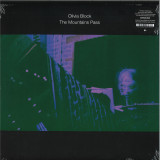
Black Truffle is pleased to announce The Mountains Pass, a major new work from Olivia Block. A key player in Chicago’s vibrant experimental music scene since the late 1990s, Block has developed an extensive body of work grounded in a personalised, at times emotive approach to the studio-based practices of the musique concrète tradition, while also encompassing improvisation, orchestral pieces, sound installations, and a sustained engagement with the piano. On The Mountains Pass, recorded by Greg Norman at Steve Albini’s Electrical Audio and meticulously edited and constructed over the course of three years, Block pushes into new terrain, introducing her singing voice and drums played by Jon Mueller into flowing assemblages that move seamlessly from ruminative organ tones and fragmented piano airs to explosions of sizzling synths and thundering percussion. Like many of Block’s past works, which include, for example, a sculptural installation using the sound of oyster beds, The Mountains Pass draws inspiration from nature and the animal world. Time spent in a particular mountain range in Northern New Mexico informs this suite of pieces, whose lyrics and titles refer particularly to animal life in the area. Beginning with bursts of white noise and delicate synthetic pops and squeaks, opener ‘Northward’ very soon reveals the special direction the album will take, as lyrical piano lines are joined by Block’s fragile voice, singing words written from the perspective of f2754, an endangered Mexican gray wolf who wandered more than five hundred miles from Arizona to New Mexico in 2022. The fragment of song quickly breaks off, leaving us with a ghostly electronic hum. ‘The Hermit’s Peak’ follows, one of two epic pieces at the album’s core. Beginning with chiming, almost harpsichord-like tones, it moves through episodes of spacious, ruminative piano, Jon Mueller’s sparkling cymbals, stuttering cut-up piano sounds, and a climax of keening organ and trumpet tones (performed by Thomas Madeja). Continuing the exploration of vintage keyboard and synth tones heard on Block’s Innocent Passage in the Territorial Sea (Room 40, 2021), the music sometimes suggests the great outer-limits works of 70s Italian prog figures like Franco Battiato or Arturo Stalteri in the languorous drift of synthesizer, organ, and piano tones and the meticulous yet organic flow of its construction. ‘Violet-Green’ opens the second side with another epic journey, its lyrical content concerning ‘a mysterious bird die-off and a forest fire’. Block’s crystalline voice and rich piano chords at times call up the restrained chamber songs of Janet Sherbourne, but fragmented and threaded through passages of woozy pitch-bent keyboards, hypnotic distant thuds, tinkling bells, and searing distorted synth tones. On ‘f2754’, the freedom of the roaming wolf surges through dense layers of rapid keyboard attacks and long organ tones over a propulsive drum performance straight out of Animal Magnetism-era Arnold Dreyblatt. This distinctive sound world is then reencountered in a darkened mirror image in the uneasy, metallic shimmer of the closing ‘Ungulates’, named in reference to a heard of elk roaming through the mountains. Like Battiato’s Clic or Gastr del Sol’s Upgrade & Afterlife, The Mountains Pass inhabits the underexplored terrain where the beauty of song coexists with a radical formal openness, illuminating the deep musicality and warmth that have been present in Block’s work all along.