Los York's became the epitome of Peruvian garage sound. 'Abrázame' features a beat-influenced go-go twang guitar garage psych tone throughout and the unique voice of the iconic frontman of the band resulting an irresistible Latin garage hipshaker! Set the dance floor on fire with this first time 45 reissue of the Latin garage anthem 'Abrázame'! Los York's became the epitome of Peruvian garage sound, and the kings of the multi-group concerts which teenagers flocked to on Saturday and Sunday mornings in Lima's main movie theaters. The group was in tune with the youth from popular districts who were gradually turning morning concerts into dynamic gigs as the fashion for solo rock-ballads waned and garage sounds by bands like Los Shain's, Los Derbys, Los Juniors, Los Flyers and, of course, Los York's took over. Their supportive fans would follow them to every gig. After releasing their three first singles on MAG, featuring covers of popular hits, it took them a year to turn their ideas into songs for their first LP that was successfully released at Christmas in 1967. The original version of 'Abrázame' was included in this album and also released as a single. Although clearly based on Don Covay & The Goodtimers' r&b classic 'Mercy Mercy', the recording features a beat influenced go-go twang guitar garage psych tone throughout and the unique voice of the iconic frontman of the band, Pablo Luna, resulting an irresistible Latin garage hipshaker! A rawer, fuzzier version of the same song was released one year later and renamed as 'Abrázame baby'. How cool and handy is to have both versions together on one single artifact? Set the dance floor on fire with this first time 45 reissue of the Latin garage anthem 'Abrázame'!
quête:district 1
FREQ Records is the record label accompanying the manga "FREQ," created by Nicola Kazimir, illustrated by goodnewsforbadguys, and written by the legendary Dai Sato, who has written scripts for Ergo Proxy, Eureka Seven, Cowboy Bebop, Samurai Champloo, among many others.
The setting of Freq's lore unfolds in a futuristic realm where the influence of sound frequencies governs all aspects of life. In this world, everything from traffic and AR visuals to electricity, warfare, and of course, music, is orchestrated through the manipulation and extraction of sound frequencies. The narrative unfolds within the sprawling expanse of Rephlex, a vast city featuring diverse districts, factions, and social classes.
FREQ001, called Super FREQ, is composed by none other than Machine Girl, known for their breakcore-inspired sonic adventures and highly energetic live shows. For this EP, we might get a compositional glimpse of how Machine Girl will sound in the future.
Late Night Load Out is the debut LP from Dublin five piece band Papa Romeo.
The release is a collection of work which catalogues their first two years of rehearsing and gigging together around Ireland, a process which has forged their sound. The tracks journey through sound palettes which variously touch on dreamy spaced out indie rock, moments of ambient contemporary jazz, and rougher post-punk influenced sounds.
The ‘Late Night Load Out’, became the term to describe loading gear out of venues late at night after a show, which is a moment to both dread and cherish, the (sometimes) hard work which follows elation.
Now primarily based in London, Papa Romeo’s music has connected with London based DJs and broadcasters. Their debut single ‘Yellow Magic Orchestra’ was supported by Flo on NTS, as well as Avalon Emerson, and appeared as the A1 on a vinyl compilation from All City Records Dublin. Singles from ‘Late Night Load Out’ have also gained early support on BBC 6 Music and from Ross Allen on NTS.
In the meantime the band have been busy on the Irish circuit with appearances at Cork Jazz Festival, Other Voices, All Together Now and Another Love Story, as well as repeat sold out shows at Dublin’s Sugar Club. They have built a reputation as a versatile band who can bring the energy to a packed room, and were named an Artist to Watch for 2024 by Hot Press Magazine.
‘Late Night Load Out’ will be released on digital and vinyl in May 2024.
Papa Romeo is Paddy Rogers, Mark Rogers, Dan Coyne, Rob de Boer and Chris Wong.
Radio Support:
Ross Allen - Soup to Nuts NTS
Colleen Cosmo Murphy - NTS
Lauren Laverne - BBC 6 Music
Esk - Rinse FM
District Magazine (Ireland)
Peter Curtin - RTE
New Music Fix on BBC 6Music
Bill Brewster
The music of Large Plants could be characterised as psych rock, with this outing having a folkier, proggier and more fantastic feel than the heavier biker-rock of the 2022 debut, The Carrier. The tracks on The Thorn also weave synths into the traditional four-piece sound palette.
The Thorn was partly recorded at the same time as the The Carrier, with more songs added subsequently. However, all tracks for both albums were recorded and performed entirely by Jack Sharp in a barn, since demolished. “It was a dirty, rusty, metal shack with no insulation or sound treatment, and it was full of junk, but it sounded weirdly great, and I loved it.” Sharp told Shindig magazine.
Warehouse Find!
Son Of Sound aka Henry Maldonado has been producing influential house music dating back right back to 1991.
He has released on Strictly Rhythm as House 2 House, Maxi Records as Deja Vu and MAW Records as Rhythm Section.
Son Of Sound has recently appeared on Tirk and Local Talk before dropping the bomb that is Jewel Eye Nights on Jus Ed's Underground Quality. He also has releases scheduled for later in the year on Razor n Tape and City Fly.
Currently working on a collaboration EP with Recloose for his own District 30 Label. Henry is also host of the highly regarded 'Hit It and Quit It' radio show on The Lot and East Village radio with Recloose and Private Panther.
The Morning Papers Have Given Us the Vapours was made with the black watch bandmates and producers/engineers Rob Campanella (Brian Jonestown Massacre, The Tyde, The Warlocks) and Andy Creighton (The World Record, Parson Red Heads). Ben Eshbach, formerly of The Sugarplastic, arranged the strings. Kesha Rose guests on lead vocals on the second single, Oh Do Shut Up. And the great Lindsay Murray once again lends her beautiful backing vox to a number of tracks.
the black watch songwriter/frontman John Andrew Fredrick wrote the ten songs on this, his Los Angeles-based band's latest album, entirely unselfconsciously, with no set goal in mind other than to revel in the joy of songwriting, and, eventually, the luxury of recording his music with his more-than-accomplished band. The Morning Papers Have Given Us the Vapours, produced separately and together by Rob Campanella and Andy Creighton evinces the black watch's often stunning ability to, as Andy Gill once observed in The Independent, "find chaos in the calm, melody in the miasma."
Fredrick, who has also published four comedic novels and a book on the early films of Wes Anderson, jovially describes himself as "a recovering Anglophile--one who'll never, one hopes, fully recover." From his home studio in the Angeleno Heights district of L.A., he waxes eloquent about how being branded, as it were, as a too-ardent lover of British music, film, and literature has left him as bemused as has the tag "prolific" that is often affixed to reviews of his work.
"I just don't think it's all that interesting to note that we've made so many records. Looked at one way, it's a sort of deflection from talking about the timbre if not the quality of the individual songs. Though I know it can be intimidating for fans who've just discovered us--a sort of 'My goodness, where do I start with this band that has put out LPs since 1988?' I get it. I do. I picture someone standing at our slot at a bin at a record store becoming overwhelmed at the prospect of picking the 'wrong' title. And then walking away and not picking up anything from us!" Fredrick laughs. "What can you do indeed?"
He started his career as a songwriter as a result of an American Football injury that left him bedridden in the home he grew up in in Santa Barbara, California. The year The Beatles immortal double-album came out at Christmastime he broke his leg so badly that he had to be home-schooled for an entire year. His parents, ex-teachers themselves, refused to let him watch telly for more than an hour a day. He propped a Silvertone acoustic on top of the massive cast that screamed all the way up to his thigh from his toes, and began to write little melodies and lyrics that, doubtless, did not in the least mask his love for the Fabs, The White Album in especial.
And he read and read and read--histories of the American Revolution and Civil War, mostly, and as many Dickens novels as his mum and dad could bring him. "That year," Fredrick observes, "surely made me who I am today. Proof that intensely unfortunate-seeming events can prove most fortunate. As a sport-mad kid, it made me absolutely mental that I was exiled from the activities I loved most and the school teams I played on. What a blessing undisguised that injury was! Not that I'd like to experience anything like it ever again, mind you."
Fredrick can even recall a few of the melodies he wrote as boy ("Utterly trite, of course, completely jejune"); and in a way, The Morning Papers Have Given Us the Vapours showcases a kind of get-back-to-where-you-once-belonged sensibility. "I didn't intend, this time, to make an album per se. I write both songs and fiction in order to find out what happens, to find out what I might want to say," he notes. "Rob often asks me what a particular song is about; and I often reply that I either don't know, or would prefer that others say. Same thing goes for when people ask me where they should start with our discography. I never know what to say. Our LP from 2011, Led Zeppelin Five (remastered in 2021 for its tenth anniversary), has been our best seller, I think--but that may be because some stoned Zepheads thought their gods had perhaps put out a record they'd missed!"
Despite being deadly serious about music-making, TBW's been known to either whimsically or perversely title their albums. Examples: Jiggery-Pokery (an allusion to John Lennon assessing George Martin's productions), After the Gold Room (a pun on the Neil Young classic plus a local eastside L.A. watering hole), Sugarplum Fairy, Sugarplum Fairy (echoing Lennon's famous count-off to A Day in the Life), Fromthing Somethat (a garbled spoonerism/lyric while doing a vocal), Brilliant Failures (the 2020 release that, along with Fromthing Somethat, was named Album of the Year by venerable indie rock magazine The Big Takeover), and the aforementioned LZ5.
For the new LP, the band recruited longtime friends and allies Ben Eshbach (the Emmy-Award-winning frontman of The Sugarplastic) and Lindsay Murray (Gretchens Wheel) to compose and arrange strings and sing heaps of lovely backing vocals, respectively.
And the result? A collection of songs that Fredrick, in his quite-but-not-quite self-deprecatory way, might call another set of brilliant failures. "Every song, every LP we do, is a failure of sorts--no matter how powerful or beautiful or pleasing-to-us it turns out," John concludes. "I have often said that my aim is to write songs as good as anything on The Beatles... and I will never achieve my goal. And thus I'll have to keep at it, keep trying. And chin-chin to that!"
And now your attention's been brought to a band (or you've heard of them or heard a track or two down the years) that has been pegged by The L.A. Weekly as "a national treasure" as well as "the most criminally-neglected indie pop group imaginable."
So here's to the prospect of that ostensible neglect becoming as much of a thing of the past as John Andrew Fredrick's year-long stint in bed.
Black[22,27 €]
Second in a series of reissues from Pierre Jaubert’s Parisound studio archive on Strut Record IS Lafayette Afro Rock Band's elusive funk/Afro original album, 'Soul Makossa' originally released in 1973. Transparent blue colored LP
In 1971, an undocumented seven-member Afro-American ensemble known as the Bobby Boyd Congress made a transformative journey from the United States to France. Bandleader Frank Abel recollects, "We sensed that the soul and funk market was saturated back home, and our original plan was a brief 6-month stint in Paris. Surprisingly, we ended up staying for a decade." Upon lead singer Bobby Boyd's return to the U.S., the group rebranded as Ice and crossed paths with independent producer Pierre Jaubert, a seasoned studio professional with credits on groundbreaking recordings alongside Charles Mingus, John Lee Hooker, and Archie Shepp, among others.
Drawing inspiration from Motown's work ethic, Jaubert initiated regular rehearsals with Ice. He recalled, "I didn't want to mimic Berry, but with seven talented musicians collaborating daily, something unique emerged." The band, residing in Paris and immersed in the African-dominated Barbesse district, began infusing African elements into their music frequently performing with Paris-dwelling Camaroonian and legendary composer Manu Dibango.
Rechristening themselves Lafayette Afro Rock Band, the group's musical direction shifted towards predominantly instrumental compositions, characterized by a weightier, more intricate Afro-funk sound. Their debut recording under this new moniker, 'Soul Makossa,' made a powerful impact with a dynamic rendition of Dibango's classic, coupled with the intense break of 'Hihache' and the contagious 'Nicky.' Initially released by Musidisc in France and later in the U.S. via Editions Makossa, the album omitted the title track due to publishing clearance issues.
Despite modest sales upon its initial release, the album's enduring influence became evident as hip-hop culture surged in the '80s, establishing it as a primary source for samples and riffs. The iconic 'Hihache' break found fame in Biz Markie's 'Nobody Beats The Biz,' and tracks from the album were lifted by LL Cool J, The Beatnuts, Kruder & Dorfmeister, and numerous others.
Black vinyl[22,27 €]
First in a series of reissues from Pierre Jaubert’s Parisound studio archive on Strut Record IS Lafayette Afro Rock Band's elusive funk/Afro original album, 'Malik,' originally released in 1974. Transparent blue colored LP
In 1971, an undocumented seven-member Afro-American ensemble known as the Bobby Boyd Congress made a transformative journey from the United States to France. Bandleader Frank Abel recollects, "We sensed that the soul and funk market was saturated back home, and our original plan was a brief 6-month stint in Paris. Surprisingly, we ended up staying for a decade." Upon lead singer Bobby Boyd's return to the U.S., the group rebranded as Ice and crossed paths with independent producer Pierre Jaubert, a seasoned studio professional with credits on groundbreaking recordings alongside Charles Mingus, John Lee Hooker, and Archie Shepp, among others.
Drawing inspiration from Motown's work ethic, Jaubert initiated regular rehearsals with Ice. He recalled, "I didn't want to mimic Berry, but with seven talented musicians collaborating daily, something unique emerged." The band, residing in Paris and immersed in the African-dominated Barbesse district, began infusing African elements into their music frequently performing with Paris-dwelling Camaroonian and legendary composer Manu Dibango.
Under the new moniker Lafayette Afro Rock Band, the group's music transitioned to predominantly instrumental compositions, featuring a denser Afro-funk sound. Their inaugural recording with the new name, 'Soul Makossa,' included a compelling rendition of Dibango's classic and the impactful break in 'Hihache.' The subsequent release a year later, 'Malik,' refined their sound with the percussive Afro party jam 'Conga,' the atmospheric vocoder and piano-led piece 'Djungi,' and the robust funk of 'Darkest Light.' Despite a limited impact upon its initial release, 'Malik' found appreciation as hip-hop culture flourished in the '80s, establishing itself as a rich source of samples and riffs. 'Conga' was featured in the 'Ultimate Breaks And Beats' series, while the opening horn line from 'Darkest Light' became a pivotal hip-hop motif, employed by Jay-Z, Public Enemy, Wreckx 'N' Effect, and many others
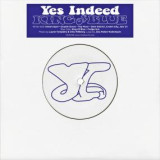
King Of Blue by Yes Indeed sees Laurie Tompkins and Otto Wilberg take their eclectic stance on cosmic jazz and electronics to further uncharted and dreamlike territory, encompassing a unique logic of what is harmoniously absurdist.
King of Blue by Yes Indeed sees members Laurie Tompkins and Otto Willberg further dive into their melismatic take on cosmic jazz and new electronics, by way of their highly eclectic and at times nonsensically sensical modus operandi. Their work is defined by an eloquent flurry of ideas, spheres, and signifiers, creating a musical universe of surprising longevity and depth. Treating musical convention with gentle disdain, Yes Indeed take on a variety of genres and moods and switch them around into a beautifully melismatic and dreamlike state of being. King Of Blue is a mini- album of fragmented beauty and warmth. It puts the illogical center stage and gives space to abruptly miniaturist musical ideas, allowing them to take on a meaning bigger than one would expect. It is cosmic music for modern times. A brazen descent into the execution of a fundamentally diversified musical stance.
'Yes Indeed' are Laurie Tompkins & Otto Willberg. Live, they play keys, bouncy bass and sing over tactile, emotive samples. Their music is epic and also somehow wrong, with space for delicacy, straight-up joy and soaring licks. Since 2022’s ‘Rotten Luck’ - their first proper album, on Bison - YI have played across the UK and Europe. Solo, Laurie co-ran the Slip label and has put out CDs on Entr’acte, 33-33 and Hyperdelia. Otto is a roaming bassist in groups like Historically Fucked and Abstract Concrete and his LP of “wildly singular, wickedly trippy and sensual set of fusion jams” (Boomkat) was recently out on Black Truffle.
Tyler Pope's latest EP is an absolute belter, and the primary concern these four tracks are asking of you is right up front: Pay Attention to the Bass. And, honestly, with a sense low-end like what's on display here, how could you not? This new release from Pope-a dance veteran who's also known as a full-time member of LCD Soundsystem as well as a collaborator with artists like Hercules & Love Affair and Pantha Du Prince-arrives on his always eclectic Interference Pattern label, an imprint that has previously spanned left-field electronic sounds, noise rock, and avant-R&B. As such, Pay Attention to the Bass is anything but straightforward, with ricocheting rhythms and alluring textures that are as easy to get lost in as they are to move your body to.
Listeners familiar with last year's Make Each Other Happy EP, which embraced dark disco grooves and crisp percussion, will be delighted at the new curveballs on display here: "Why Must I" euphorically merges the propulsive charge of UK funky with delicious piano-house stabs, while "OKay" anchors itself around a rubbery bass line like a lost cut from the Remain In Light sessions. The flip side gets dark and dank with it, as "Close the Door" echoes with spooky clatter and dubby wobbles before sprightly vibes break through-and the closing cut "Where r they Hiding" goes full-on tunnel techno with it, conjuring a mood that recalls the haunted house music of Sandwell District as well as the cold-sweat futuristic visions of jungle. With Pay Attention to the Bass, Pope expands his sound wider than ever, and it just so happens that it's an absolute blast to listen to as well.
Mr Lee Perry who in no uncertain terms defines the words musical genius, recorded some of the most inspiring, soulful, funny and weird / wild reggae music ever put down on tape. Working through all the manifestations of reggae from Ska to Roots and Dub, where his ground breaking 1973 ‘Blackboard Jungle’ LP, set the standards, he was an innovator. If this was not enough his recordings of THE WAILERS, many believe to be their finest work. Born Rainford Hugh Perry, 28 March 1936, Hanover, Jamaica. He began his career at the grand age of 16, working for Clement ‘Coxone’ Dodd’s sound system, rising quickly to the position of record scout and organising recording sessions during his 3 year period 1963-1966. Restlessness and unsatisfied with credit he felt due to him he moved on to work with Producers J.J. Johnson and Clancy Eccles, the later of which would help him set up his ‘Upsetter’ label in 1968,which would see his first of many recordings telling the injustices done to him by previous employees. ‘The Upsetter’ track itself pointed at Mr Dodd but reflected back to Perry when he inherited it as a nick name along side many others during the coarse of his career, including ‘Scratch’, again taken from one of his recordings ‘Chicken Scratch’ recorded in 1965/1966. Perry’s work in 1968 with producer Joe Gibbs was fruitful and resulted in many successfulreleases, but again lack of credit and itchy feet, it was time to move on. But not without leaving his trademark recording summing up his feelings at the time ‘People Funny Boy’ this time aimed at Mr Gibbs. Still not having a studio of his own, Perry recorded at the various Kingston establishments of the time, Randy’s Studio 17 on North Parade, Dynamics on Bell Road and Harry J’s on Roosevelt Avenue where the bulk of the aforementioned recordings with The Wailers were carried out. During this time and the years that followed Perry has built up a vast catalogue of backing tracks / instrumentals, he had cut over a 100 releases on his ‘Upsetter’ label alone. A library of music that he has an uncanny knack of reutilising to work into something new when put against a new song / singer. This collection of rare and unreleased dubs stems from his 1971-1974 period. We can here on tracks like ‘Perry’s Jump Up’ Ska-ish up tempo chopping guitar cuts leading through to organ laden tracks like ‘Roots Rock Dub’. The sound moving to a slowed down rhythm on ‘Perry in Dub’ which would predominate his sound, when in mid 1974 he’d open his own studio at his home in the Washington Gardens district of Kingston. We hope this selection of lost treasures will add to the jigsaw that makes Mr Perry’s output now spanning over 5 decades so remarkable.
RESPECT.... JAH FLOYD.
Stunning outernational funk for the psych breaks dancefloor featuring the mesmerizing vocals of Ukrainian jazz singer Mona. Sung in her mother language, "Moya Vode" is about the "ancient ritual to put a spell on water and remove all negativity through its power".
Mona and MC Fame, a well-known Ukrainian hiphop producer and activist, both left their hometown Kyiv last year and found a new home in the Hammerbrook district of Hamburg, Germany, where they quickly connected with the lively funk scene of the city. Together with the Mocambo crew they set off to work out some magic by combining universal funk grooves and Ukrainian folklore.
Mona's mystical soulful vocals are backed by the "Hammerbrook Sound Machine", a group featuring members of Bacao Rhythm & Steel Band and the Mighty Mocambos, with instruments like the Tsymbaly or Drymba added on top. The "folk-funk" continues more electronically on the instrumental flip side when MC Fame takes over the lead on Moog synthesizer. Dive into this spell!
- 1: Specht0' 55
- 2: Sonne' 10
- 3: Skulptur2' 12
- 4: Immenweide2' 06
- 5: Glaswände1' 03
- 6: Weidplan2' 07
- 7: An Der Mühlenau2' 46
- 8: Zement2' 12
- 9: Am Morgen2' 30
- 10: Pflugacker1' 34
- 11: Plattenladen1' 45
- 12: Sark1' 25
- 13: Wildacker2' 21
- 14: Magnolien2' 22
- 15: Zentimeter2' 02
- 16: Feldmark2' 25
- 17: An Der Kollau2' 18
- 18: Am Abend0' 56
Perifaerye is a multi-part work of art comprising of 18 soundscapes, 36 digital drawings and 24 writings. Perifaerye is at once a record release, a book, a website; in the autumn of 2023 a series of playlists were published on billboards, linking the online soundscapes to the real-life physical realm. This publication is an artistic hybrid: a vinyl record / book combining sound, image and text.
The 18 audio works condense the sounds of the urban periphery into a sonic cartography. In Hamburg-Eidelstedt, people live in smaller detached houses and in larger apartment blocks. New housing estates have been developed recently in direct neighbourhood to the motorway, and currently in the district centre; a district where post-war housing estates and architectural remnants from a village past co-exist. Even meadows and fields, surrounded by the noise of motorways and other traffic, aeroplanes (the airport is close by) and railways (passenger and und freight trains, long distance, regional and local services). This collection of soundscapes – each a short composition on its own – presents a sonic portrait of a contemporary urban area.
In spring 2023, Jorn Ebner recorded the urban spaces of the Hamburg district of Eidelstedt. For each audio piece there is an image. The artist’s writings reflect and accompany the creative process.
For this book and record, Sebastian Kokus and Thomas Korf created a very haptic design. Each part of the whole can be experienced as a single piece: the A2-sized poster is part of the outer sleeve; the booklet presents image and text (German only); the record is visible through the holes in the inner and outer sleeves and forms part of the cover.
Sublime Christian folk jazz from 1970s Norway. In the '60s and '70s churches throughout Europe had serious competition for the attention of its younger members. The ecclesiastical establishment was shocked to hear teenagers expressing 'Sympathy for the Devil' rather than sympathy for Christ and his teachings. In Norway at this time the same situation was prevalent as was happening across Europe; teenagers were turning their back on the church and embracing the temptations and pleasures of the flourishing new pop culture. Priest Olaf Hillestad was all to aware of what was going on, and instead of relying on the floundering traditional methods of rounding up his flock, he embraced the musical aspirations of his younger followers. In so doing he founded the Forum Experimentale in Oslo, an organisation that promised in its statutes to "boldly work for a renewal in service life, church music and church art". It was here in the late '60s where That's Why founder members Jan Simonsen and Per Arne Løvold became responsible for the jazz masses at Forum Experimentale's chapel. Together with some top-notch musicians from other Christian music centres around the Oslo district, they recorded two albums in 1970 and 1971 under the moniker That's Why. That's Why blended deep acoustic and electric jazz with elements of Norwegian folklore and Christianity. They also included interpretations of young and old transcendental Norwegian poets such as Sidsel Mørck Krogdahl, Alfred Hauge and Aslaug Vaa, as well as introducing English and Swedish songwriters such as Åke Rosenstrøm and Charles Wesley and even William Blake's "Children of the Future Age" into the mix. This highly original fusion of secular rhythmic music, jazz improvisation and a distinguished selection of transcendental lyrics is one of the standout qualities of That's Why, separating them from more programme-orientated Christian music. The unique mix leads the listener to think they are hearing among the record grooves the tightness of grey, sober Protestantism along with the ecstasy of a lay preacher. This listener, for one, has never heard anything quite like it.
A snapshot in time...Where all the madness began... Sandwell District. In the summer of 2004 David Sumner (Function), then living in his native New York City, was over in Europe playing some shows. When passing through Berlin to play the old Tresor location at Potsdamer Platz, he stayed with long term friend and collaborator, Karl O'Connor (Regis). One afternoon the two head over to Hardwax and T++ puts on a copy of Sleeparchive Elephant Island. After months of discussions regarding the flavor of the moment ''Minimal'', everything changed in that instant...They looked at each other and said ''now this changes everything!'' Finally, a way forward! Later that night at Tresor - as Function is playing, Regis is behind him organizing a mic...As Dave mixes Regis Guiltless with Elephant Island, Karl starts singing a punk cover version of Buddy Holly Peggy Sue over his set. It's all there in that one moment! Sandwell District. Dave goes back to New York inspired. He sees there's no information on the record apart from an email address. So, he gets in touch...He gets a reply from Roger, the two hit it off and organize the first ever Sleeparchive remix - Regis Asbestos (Sleeparchive Remix). On the B-side comes a cut-up version of Karl and Dave's Portion Reform classic Closing In, where they collaborate with Detroit Underground's Kero to form Re:Group. Adding deep 808 rhythms combined with Kero's signature Max MSP IDM madness, Left provides the perfect counterpart that made this EP the instant classic it became 18 years ago. Now, remastered in all its glory, sounding fresh, massive and better than ever - available on BandCamp for the first time - Infrastructure presents; Regis Asbestos (Sleeparchive Remix) b/w Re:Group Left.
FAT JON returns with the 2nd installation of "tephlon Funk". This 12 track LP serves as a soundtrack to the eponymous manga published by Dark Horse Comics and comes with a 12"x12" manga poster, with a full print jacket. A must have for fans of FAT JON's work as Five Deez and on the Samurai Champloo soundtrack.
Caribe, the third album by Cuban cellist and composer Ana Carla Maza, is a renewed declaration of love for Latin American music, already expressed in her previous work, Bahia Released in 2022, Bahia was followed by a tour of 150 concerts in 14 countries. At the crossroads of her travels, Ana Carla Maza has transformed the intimacy of the cello into a colorful, energetic and danceable Latin jazz sextet. Classically trained, Ana Carla takes her own liberties here in the Caribbean and beyond (Argentina, Brazil). The first of these is to impose her sensitivity and her voice as a woman. "I wrote Caribe while travelling the world. In a studio in Rome, on the shores of Lake Annecy, in a castle in Portugal, on a plane to Mexico... It was a kind of search for my identity, which started in Guanabacoa, the district of Havana where I grew up with my grandparents and which happens to be the epicenter of the "rumberos", the percussionists from the pure Afro- Caribbean tradition". Ana Carla Maza: cello & voice Arnaud Dolmen: drums Irving Acao: saxophone, flute Norman Peplow: piano & keyboards Luis Guerra: percussion Fidel Fourneyron: trombone Noe Clerc: accordion
Marjaa: The Battle of the Hotels” is a concept album born of the idea of merging singer & songwriter Mayssa Jallad’s two vocations: music and urban research/architectural history. Written in collaboration with producer Fadi Tabbal, the music builds upon Tabbal’s spatial approach to sound and Jallad’s research on Beirut’s Hotel District. The album is a reference to Jallad’s Historic Preservation master's thesis, in which she detailed the history of the “Battle of the Hotels”, a 5-months battle that took place in Beirut at the beginning of the Lebanese Civil War, from October 22nd, 1975 to March 29th, 1976. Jallad saw architecture as a main protagonist of the battle, as she discovered it was the first high rise urban battle in the world. The close of the battle resulted in the 15-year Green Line, an urban rift which split Beirut into “East and West”, restricting movement and communication and creating a violent divide that still resonates today. The album comprises two parts. Part A: Dahaliz, is a stroll in the city, where Jallad tries (and fails) to follow an old map. Musician Youmna Saba is a companion in this journey of remembering the once winding corridors (“Dahaliz”) of the city, destroyed by new developments since the 1960s. Empty skyscrapers propel her onto a past filled with the violence of snipers, and a present filled with the glamorous injustice of empty luxury real estate endorsed by powerful warlords-turned-politicians. In Part B: Maaraka, Jallad inhabits the building of the Battle of the Hotels, as its events unfold. She calls the fighting militias the Blues and Reds, respectively the Lebanese Front (Christian Nationalists) and the Lebanese National Movement (Pro-Palestinian leftists), leveling the playing field, and drawing a map of the battle through songwriting. Sary Moussa produces the conclusion of the battle in “Holiday Inn (March 21 to 29)”, which ends with the ultimate severance of the city of Beirut. The music caters to post-war youth who have never been taught this difficult history. Once we consider the “Battle of the Hotels” as our common heritage, it provides an opportunity to teach the value of civil peace. It is also a call to protest for the renewal, rather than the recycling of the political class that has once destroyed the country and holds us, to this day, hostage of its violence. Limited edition of 300 copies. 140gsm vinyl pressed at Microforum (Canada).
John Vincent III, ein 26-jähriger Americana-Künstler, intensivierte seine Liebe zur Musik 2014 in Houston,
TX. Inspiriert von einzigartigen Lyrikern wie Bon Iver, The Districts und The Doors, begann John Vincent
III mit der Kreation seiner eigenen Songs. John Vincent III verbindet mühelos folkige, rhythmische Gitarrenklänge mit gefühlvoller, verletzlicher Lyrik und schafft so die perfekte Mischung aus Indie-Folk-Pop.
John hat seine Singles, seine EP und sein von der Kritik gelobtes Album ”Songs from the Valley” selbst
geschrieben und produziert. Ein großer Teil von Johns musikalischem Erfolg kommt von der unbestreitbaren
Leidenschaft und den rohen persönlichen Erfahrungen, die in ihm leben.
Es ist an der Zeit, das zweite Album von John Vincent III, ”Songs For The Canyon”, der Welt zu präsentieren. Dieses Album wurde in Zusammenarbeit mit renommierten Produzenten wie Tom Elmhirst (Amy
Winehouse, James Bay, HAIM, Florence & The Machine, Mumford & Sons), Tony Berg (Phoebe Bridgers)
und Ryan Hadlock (Lumineers) geschaffen. Es ist Johns erste Veröffentlichung seit seinem 2019er Debütalbum ”Songs from the Valley” und zeigt seine Weiterentwicklung als Musiker und Songwriter im Indie-FolkGenre. Das Album verspricht eine fesselnde musikalische Reise, bei der John Vincent III seine künstlerische
Reife zum Ausdruck bringt.
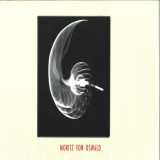
What are the differences and similarities between human and artificial sound, between oscillations generated by vocal cords and synthesizer voices, voltage amplified by speakers? On Silencio, his latest album for Tresor Records, Moritz von Oswald works with a 16-voice choir to explore this concept.
Drawing from the ensemble works of long-standing inspirations Edgard Varèse, György Ligeti and Iannis Xenakis, von Oswald and Vocalconsort Berlin delve into the space between sounds, creating a deeply textured collection that shifts between light & ethereal and
dark & dissonant.
As masterfully demonstrated in the early work of von Oswald and Mark Ernestus’ influential Basic Channel project, repetition and reduction are key elements here, much in the tradition of techno and minimalism. The vast dynamism of the human voice adds to the
profound weight of electronics while offering up a rhythmic source and sonic noise palette unexplored in von Oswald’s repertoire. In Silencio, von Oswald dredges a dank murk, pulling clouds over a distant pulse. It hangs, ready to take on new forms.
The compositions were written in von Oswald’s Berlin studio on classic synthesizers, such as the EMS VCS3 & AKS, Prophet V, Oberheim 4-Voice and the Moog Model 15. These abstract recordings were transcribed to sheet music for choir by Berlin-based Finnish composer and pianist, Jarkko Riihimäki and performed by Vocalconsort Berlin in Ölberg church in the city’s Kreuzberg district, only few metres down the road from where Dubplates & Mastering and Hard Wax opened their doors for music enthusiasts for many years so long. The recordings of the choral versions were then incorporated into the synthesized parts of the album and brought into anew electronic context; in Silencio, the focus is not on using one means to imitate the other, but to sonically discuss the tensions and harmonies between the two worlds and create a dialogue between them.
The relationship between von Oswald and Tresor Records goes back thirty years, all the way to Blake Baxter’s Dream Sequence in 1991 - which von Oswald engineered alongside Thomas Fehlmann. The collaboration with Fehlmann lived on, seeing the duo team up as 3MB with Eddie Fowlkes or Juan Atkins. More recently, the Detroit-Berlin connection continued as Juan Atkins & Moritz von Oswald present Borderland.
For von Oswald, Tresor Records and also the participating guest musicians of the choir, this release brings together audiences from other musical areas, cross-pollinating; Silencio is an album that stands for itself beyond the musical genre boundaries.