Pejzaz (aka Bartosz Kruczyski) returns with two captivating new collage albums. Divided into two records LIST I (which was released end of September this year) & LIST II - which premieres end of movember - delves into the realm of 90s/Y2K Eastern European CD releases. Employing hundreds of samples, Pejzaz sculpts a mesmerizing and distinctive body of work.
LIST II guides the listener into the night, combining trip hop and dub influences, dusty samples, wailing blues guitars, and cold-wave synthesizers. Its haunting soundscapes provide an apt soundtrack for winter in Eastern Europe.
Notably, this marks Pejzaz first foray into a fully instrumental album. Although devoid of lyrics, the bittersweet blend of samples infuses the music with a profoundly Polish essence, further enhancing its distinctive allure.
quête:divided
- A1: T Raumschmiere - Eterna 2
- A2: Mikkel Metal - Octarine
- A3: Yui Onodera - Cromo 7
- A4: Triola - Bergfreiheit Silbach, Glück Auf!
- A5: Thore Pfeiffer / Niko Tzoukmanis - Kontur
- A6: Joachim Spieth / Głós - Panta Rhei
- B1: Sono Kollektiv - Ever Last Thing
- B2: Blank Gloss The Replacement Wheel
- B3: Reich & Würden - Orbit (Feat Alex Linster; Joel Jaffe)
- B4: Segensklang - Bergfrieden
- B5: Ümit Han - Nirgends
Dear gourmets of audio-aesthetic rapture, dear sound poets, please welcome - Pop Ambient 2024. Twenty-four. Twenty-four can be divided by two, four, six, eight, twelve and itself. If something can be divided by itself, it is not really divisible. Truthfulness knows no formulas. Beauty knows no formulas. Beauty saves the world for no reason whatsoever. “Beauty is a promise that beyond mediocrity there is something where calmness reigns. Beauty calms the nerves. Beauty is not a good intention but a fact. Beauty is provocation, rigor, responsibility. And beauty has its price”.
In addition to the official version of Pop Ambient 2024, there will be an art/music edition limited to 10 pieces, consisting of an exclusive mini bonus album (vinyl dubplate) from Blank Gloss, in combination with 10 individual fine art print artworks by Veronika Unland. The edition will be available via kompakt.fm/art exclusively on November 24th, 2023.
Ladies and Gentlemen please welcome, Pop Ambient 2024
Liebe Gourmets audio-ästhetischer Verzückung, liebe Klang-Poeten, please welcome - Pop Ambient 2024. Vierundzwanzig. Vierundzwanzig lässt sich durch zwei, vier, sechs, acht, zwölf und sich selbst teilen. Wenn sich etwas durch sich selbst teilen lässt, ist es nicht wirklich teilbar. Wahrhaftigkeit kennt keine Formeln. Schönheit kennt keine Formeln. Schönheit rettet die Welt ohne jeden Grund. „Schönheit ist ein Versprechen, dass es jenseits der Mittelmäßigkeit etwas gibt, wo Ruhe herrscht. Schönheit besänftigt die Nerven. Schönheit ist keine gute Absicht, aber eine Tatsache. Schönheit ist Provokation, Strenge, Verantwortung. Und Schönheit hat ihren Preis“.
Neben der offiziellen Ausgabe von Pop Ambient 2024, wird es eine auf 10 Stück limitierte Kunst/Musik Edition geben, bestehend aus einem exklusiven Bonus Mini-Album (Vinyl Dubplate) von Blank Gloss, in Kombination mit 10 individuellen Fine-Art-Print Artworks von Veronika Unland. Die Edition wird am 24.11.2023 exklusiv über kompakt.fm/art erhältlich sein.
Ladies and Gentlemen please welcome, Pop Ambient 2024
2LP with poster + iron-on print, gatefold sleeve. On their 2015 self titled debut EP, Hällas lay the foundation of the saga bearing the same name as the protagonist crusader as well as the band themselves, which later grew into a trilogy composed of the two last songs on the aforementioned EP and the two following albums Excerpts from a Future Past and Conundrum. To celebrate the completion of the trilogy the band decided to do a one-off show in front of a seated audience at Cirkus, a classic venue in Stockholm. Due to worldwide restrictions the show had to be replanned and postponed several times until it finally happened on April 10th 2022. After more than two years on hiatus and with the exception of a minor festival gig the year before, this was the band's first performance during that whole period, and it was by far the longest set to date in the band's entire career. All first three releases of the band were to be performed from back to back divided into two acts. Act I consisted of Hällas and Excerpts from a Future Past while Conundrum and two songs from their newly released album Isle of Wisdom were performed in Act II. For the first time people were able to experience these new songs live. Some of the older songs such as Insomnia and Tale of a Tyrant had not been performed for several years. Strider and Blinded by the Emerald Mist had never even been played live before. So Hällas fans from all over the world attending the show were in for an unforgettable evening. With this record you get a slice of that pie in the comfort of your own living room. So please have a seat and enjoy this time capsule, as it is a very good representation of how this band sounded live back then.
- A1: Sciame (Adams Alpha Marimba)
- A2: Enigma (Adams Alpha Marimba)
- A3: Bosco (Adams Alpha Marimba)
- A4: Viaggio (Adams Alpha Marimba)
- A5: Corale (Adams Alpha Marimba)
- A6: Treno (Adams Alpha Marimba)
- A7: Sguardi (Adams Alpha Marimba)
- B1: Appuntamento (Adams Alpha Marimba)
- B2: Racconto (Adams Alpha Marimba)
- B3: Respiri (Vienna Symphonic Library Trumpet)
- B4: Ribattuti (Vienna Symphonic Library Trumpet)
- B5: Imperfezione (Vienna Symphonic Library Trumpet)
- B6: Atollo (Petrof Grand Piano)
Tape
Atollo« is the debut solo album of the Italian percussionist and composer Daniele Di Gregorio, a virtuoso of the marimba and the vibraphone who has worked with a large number of artists, including Donato Dozzy, Giorgio Gaslini, Tony Scott, Randy Becker, Luis Agudo, as well as Mina, Andrea Bocelli, Fabio Concato, Malika Ayane, and many others. He also has a long-standing collaboration with poet and composer Paolo Conte.
His latest work »Atollo« is divided into three very different sound paths. The first and most extended section is entirely played with the marimba, an instrument that is still fairly new and in full evolution. Some pieces have been performed using special gloves and see the over-layering of two marimbas, in order to build polyrhythmic designs and hypnotic sequences. Other marimba pieces have been performed in “solo” versions using soft, medium and hard mallets.
Secondly we encounter the trumpets of the Vienna Symphonic Library, which pieces after dissecting sound by sound build up the compositions with overlapping rhythmic and melodic loops. »Atollo« the piece that gives the title to this album is the closing track and is created with the Petrof Grand Piano, an evocative and hypnotic piece intended to describe the sound of the sea and the movement of its waves.
All the compositions are deliberately descriptive of the title they take, and are a sonic journey into the composer's past and present.
Composed and performed by Daniele Di Gregorio
Produced and mixed by Niccolò Di Gregorio
Mastered by Luca Sammartin
Original artwork and layout by Marco Ciceri
In a harmonious tale titled "The Dancer And The Bear," Joe McLeod bares his soul, embracing vulnerability and unearthing a profound honesty within himself. This, his second full-length album, unfolds like a duet of emotions, its first half dancing to upbeat pop rhythms while the latter sways to the introspective melodies of folk. Divided into two halves, The Dancer and The Bear embarks on a heartfelt journey, where Joe's breakup with a long-term partner ignites introspection on life's pursuits and the smallest details that weave the tapestry of happiness. Through melodies and lyrics, Joe paints
a canvas of raw emotions, inviting listeners to join him in a cathartic dance with the bear of truth.
Dagerlöff & Galner is a French duo that seeks to create its own vision of modern music, including elements of futuristic synths, Japanese video games, progressive jazz or epic and textured soundtracks. Their sound has a progressive touch that can recall the works of Aphex Twin or Oneohtrix Point Never. To be given the opportunity to set this masterpiece to music, the first cinematic venture into the occult, was a real treat for them. Presented in the style of a lecture, Häxan: Witchcraft Through The Ages is a Swedish silent documentary - horror film directed by Benjamin Christensen which was originally released in 1922 (in Sweden) and deals with witchcraft from antiquity to the film's contemporary period. The movie was released in the US in 1968. Witchcraft is carefully portrayed through illustrations from medieval books and audio-visual reconstructions. From the witches' sabbath to the interrogations of the Inquisition, the classical images come to life in disturbing spectral visions using all the special effects available at the time: overprints, models, jump cuts, stop motion, make-up and prosthetics. The film's soundtrack is divided in three parts, including the one by Dagerlöff & Galner. The duo enhances the heretical character of the work through dark pieces with constant intensity. This work of digital synthesis (choirs, orchestra, organ, analog modulars and tapes) allowed them to draw lines between tradition and modernity, like a film whose purpose remains as strong and relevant almost a century later. The film was re-released in a restored Blu-ray version by Potemkine in 2021, in a limited edition of 1666copies(sold out).
In our little history, the number 7, besides a kind of esoteric fascination, has marked important milestones in our evolutionary journey. This is why Raw Culture has decided to pay homage in grand style to its seventh year as an independent sound guarantor. To do so, it weaves a co-production with Oderso Rubini, historical memory of the Italian New Wave and head of Italian Records in the 80s. Out of this synergy comes our 24th release, Ping Pong, a dancefloor of dissonant bounces, where free-form suggestions, electronics and rhythmic improvisation find synthesis in a high-intensity competitive match. Starting from the sampling of Korean ping pong matches and the voices of the speakers, Renzini and Passini build a framework where the sound or voice of the electronically harmonised hoover amalgamates with powerful and syncopated drumming, a sound experiment poised between improvisational heavy jazz and Korean-style electronics.
The record is ideally divided into two converging visions highlighting the duplicity of the game, side A or Master Ping collects the first improvisations made by the duo in 2018 leaving almost unchanged the improvisational spirit close to a kind of degenerate free jazz. Side B or Master Pong made later explores more musical forms, with influences of the krautrock and electronic disco matrix, and sees the collaboration with other musicians from Bologna’s historic rock scene such as Gianluca Patini (Surprize, Slava Trudu, Volkwerk Folletto) on guitars, Giorgio Lavagna on vocals (Gaznevada, Stupid Set) and Enrico Serotti on electronic samples (Confusional Quartet, Stupid Set).
- A1: Hasvat Informant - Iridescence
- A2: Vost - Dela7
- B1: Uncrat - Numbers
- B2: Raël - Endgame
- B3: Dj Bazootka & Ryacet - Ghetto Girl
- C1: Cerrot - The Light
- C2: Werfol - De-Esser
- C3: Lacchesi - Jeopardizer
- D1: Gaston Fiore - Watch Me
- D2: David Löhlein - Facelift
- D3: Shaven - Forever
- E1: Benjamin Damage - Whaa
- E2: Tangerine - Luminescence
- F1: Pernox - Flexible Response
- F2: Zoë Mc Pherson - Ussy
- F3: Disjoli - Perseverance
- G1: Bxtr - D4Ncefloor Killer
- G2: Vel & Lds - Velds1
- H1: Boys Noize - Higherpvsh
- H2: A Strange Wedding - Temples Of Quantum (Straigth Backward Mix)
On October 20, 2023, Anetha will release her third tempetuous compilation on her label Mama told ya entitled MTY-AIR «Mille attaques, les vents contrèrent», just one year after MTY-TERRE «Contre tout, toutes et tous, la terre demeure» and two years after MTY-EAU «L’eau repousse les feux agressifs».
Through air element, the compilation comes up with the collaboration of 22 artists with 20 tracks, divided into 4 vinyls: Once again, Anetha carried away with her a generation of electronic artists from around the world to simply blow our mind.
------
ON AIR: After twelve successful releases on Mama told ya, Anetha paraglides in our skies with the stormful MTY-AIR, a volatile new compilation: 4 swirling vinyls, 20 aerodynamics tracks, 1 wind blowing perfume.
Entitled «Mille attaques, les vents contrèrent», it will be the third of a series around the four elements. Capricious yet vigorous, air sweeps out everything on its way. Nothing can save you when you’re in the eye of the cyclone: prepare to fly hard. Alongside our windbreaker artists, skydive into the celestial vastness of sound: Gusts of disturbed techno, squalls of groove, mental tornado, minimal bass hurricane, cloudburst of psytrance… Time to get some fresh air.
Piercing pampero, mad mistral, forceful cierzo are blowing, blazing khamsin, steady sirocco, sharp shamal, dank nor’wester are entwining… Techno winds from all around the world are joining the fight against humanity. This is « Endgame » (B2). Final chapter, twisters and typhoons are cleansing the surface of earth, overthrowing everything on their path. Poor soul, don’t try to confront air’s blast as it will « Facelift » (D2) the shit out of you in less than a second. Take shelter as air is untouchable, unpredictable, unstoppable. Or if you’re brave enough, you’ll jump into the sky, looking for the currents to carry you up, sailing whirlwinds, riding airwaves, on the road to the « Temples of Quantum » (H2). Now jump!
The artwork has been once again entrusted to visual artist Karin Kimel, who worked on MTY-EAU’s artwork. She delivers an aerial scenery where supernal wafts are swirling, embalming our air. Diplomatie Studio took care of the design, mastering was entrusted to Sixbitdeep. And for the second time, with a direct message from earth to Earth, we opted for recycled vinyls.
'In 1972, trumpeter Baikida Carroll and some of his colleagues from the Black Artists Group (more precisely saxophonist/flutist Oliver Lake, trombonist Joseph Bowie, drummer Charles "Bobo" Shaw and trumpeter Floyd LeFlore) took the advice of their friends in the Art Ensemble Of Chicago and left their native Missouri to come and discover the bright lights of Paris for themselves. The following year they would even get the chance to record their only album which would rapidly attain mythical status and a collector’s item: “In Paris, Aries 1973”.
Therefore, it was not surprising that they crossed paths with Jef Gilson in the capital. He was always on the lookout for new artists for his recently formed Palm label and had been active on many fronts in jazz since the end of the 50s. The French bandleader / pianist / composer / sound engineer had already recorded, in the preceding months other American musicians who would go on to have great careers: Byard Lancaster, Keno Speller, Clint Jackson III, Khan Jamal... Gilson therefore offered Baikida Carroll the chance to record his first album under his own name, which would be the 13th release on the label. Carroll logically asked Oliver Lake to join him. He also recruited Manuel Villaroel, a young Franco-Chilien pianist from the group Matchi-Oul, who had already released an album on Futura in 1971 and would release another on Palm in 1976. The group was completed with the addition of Brazilian percussionist Naná Vasconcelos, who had just released a well-received album on the Saravah label. They were ready to enter the studio for the 3rd, 4th and 5th June 1974.
The first side of the album is divided into two long tracks which send free jazz back to its long-lost African roots. The opener “Orange Fish Tears” indeed rolls out a jungle of percussion of all sorts and sizes -the whole group is involved- which weave and mix together reaching a point where all bearings are lost, lending a sense of wonder to the majestic entry of the brass and woodwinds, flying suddenly out from the undergrowth. “Forest Scorpion” (sic) is a real voodoo ceremony where a venomous percussive groove backs the fiery solos from keyboards and saxophone in a furious trance. A warning; after these two tracks listeners are physically and emotionally wiped out!
The other side is more introspective. Deliberately using dissonance and repetition, “Rue Roger” -the only composition by Oliver Lake- in a long dialogue between trumpet and saxophone, could almost remind us of Terry Riley in his favourite ballpark. “Porte D'Orléans”, the fourth and final track on the album, has the group back to their old tricks in a long hallucinatory jam which owes as much to the contemporary music of György Ligeti as to the most angst-ridden Jerry Goldsmith soundtrack music (remember the heavy chords which beat through “Planet of the Apes»).
With these two sides, and in under 45m, Baikida Carroll and his musicians show just what they can do, from cerebral to charnel without ever simplifying things. This is an essential album if you are a fan of free-wheeling avant-garde music from the Art Ensemble of Chicago to Sonic Youth and including Shabaka Hutchings and Rob Mazurek. For those with good taste, in other words.'
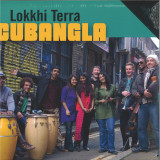
Funkiwala Records presents CUBANGLA - the sixth album by London fusionistas LoKkhi TeRra.
Following on from their hugely successful collaboration with UK afro-beat ambassador Dele Sosimi on 2018's "Cubafrobeat"(mixing afrobeat and Cuban Rumba/Timba), this album sees them return to their Bangla-Afro- Latin-Jazz-Roots.
8 tracks of 21st century London groove – from Sufi Samba to Baul Blues to Bengali folk-Son to Bangla Roots Reggae to London Descargas - recorded in between tours, sessions and collaborations – a true celebration of traditions taking on new forms as they travel and co-exist. In these divided times, their collective musical journey has never been so relevant.
Background
Kishon Khan's Lokkhi Terra have been blending the musical traditions that surround them in London, for many years now.
"Stunning Headliners... A majestic multi-cultural blend of sounds... effortlessly builds bridges between rolling Indian raga rhythms, Afro-Cuban grooves, Acid Jazz/funk and free flowing improvisation" (Timeout London).
The band is composed of musicians who take seriously the different languages of the different genres they mix. Each in their own right play with calibre purist outfits. Members have collaborated with the likes of Hugh Masekela, Tony Allen, Ibrahim Ferrer, Johnny Clarke, Orlando Poleo, Africa Express, Jazz Jamaica, Ska Cubano, Giles Peterson's Havana Cultura, Kyle Eastwood, Bellowhead, Akram Khan to name a very few.
The tracks on this album were gigged for a number of years before being recorded, with the exception of the last 2 tracks which were recorded in 2015 just before performing at Womad and Songlines Encounters.
With CUBANGLA the band has come round full circle – a journey that started a decade ago with their debut No Visa Required (2010). An urban London view on the musical world.
ORKA is a duo comprising Francine Perry from London and Jens L. Thomsen from the Faroe Islands. They crossed paths in the vibrant club scene of London, an immersive world that had a profound impact on their creative journey. ORKA's music draws inspiration from the Hardcore Continuum and UK sound system culture, blending it with elements of minimal techno, progressive electro, and ambient music, resulting in a diverse range of stylistic influences. Now ORKA emerges with their long-awaited new album. Once again, they greet us with their distinct blend of earthy tones and a bold, adventurous spirit, taking us to a realm bursting with neon-lit hues, pulsating club beats, and an abundance of sensory stimulation. Aptly named "All At Once," the album title provides a clue to the auditory and sensory experience that awaits the listener in this immersive record. ORKA has continuously evolved as a project over many years and iterations, embracing fluidity and a relentless quest for fresh sonic amalgamations. Their journey has been marked by a gradual refinement, stripping away layers to reach the core essentials. This transformative process has unfolded over the years, reaching from their site-specific, cowshed sampling and band-based expedition in "Livandi oyða" (2007) to the bold, innovative exploration of minimalist techno in "Vað" (2016). However, their latest release, "All At Once," signifies yet another remarkable leap forward in their artistic evolution. The seeds of this artistic progression were already planted in previous releases like the <13 EP (2017) and the hard-hitting techno single "Juno" (2018). However, it is with the arrival of the album "All At Once" that ORKA's vision fully blossoms, unveiling a vivid and expansive sonic landscape. This latest offering presents a glorious and vibrant tapestry, showcasing a maximalist approach to techno that pulsates with energy coupled with their signature meticulous attention to sound design, reflecting a deep awareness and intentionality in their creative process. If this album was to be thought of as a place, it would be a shimmering, futuristic, buzzing kind of city with vibrating night-time drizzle from above and endless glowing lights in the distance. Several of the tracks are built around cut-up vocal samples that are divided from their semiotic meanings and reconfigured as loops, and thus mined for their timbral and percussive qualities. Recurring collaborators South London duo LV (Hyperdub, Keysound, Brownswood) are featured on a handful of these tracks, mixing in their complex cocktail of grime and bliss. The result is a sort of queer erotic dance-floor mysticism, and the closest to a full-blown dance record that ORKA have ever made. There must be a club in that shimmering futurist city of the night.. and it is a collective, inclusive and alluring place. There is no need to fear any dancefloor exhaustion by listening to this album though, as there are also moments of floating cyber beauty and pure enveloping warmth to be found among its tracks. As always, following the artistic journey of ORKA is a joyous experience, filled with unexpected twists and turns that keep us captivated.
Following nearly 20 years of working together as a trio, and numerous cross-collaborations in different configuration between them, Ideologic Organ presents Placelessness, the debut full-length by Chris Abrahams, Oren Ambarchi, and Robbie Avenaim, comprising two long-form works at juncture of ambient music, minimalism, rigorous experimentalism and improvisation, and machine music. Having carved distinct pathways across a diverse number of musical idioms for decades, Chris Abrahams, Oren Ambarchi, and Robbie Avenaim are each, respectively, among the most noteworthy and groundbreaking figures to have emerged from Australia's thriving experimental music scene. Ambarchi and Avenaim first encountered Abrahams when seeing the Necks - the project that has served as the primary vehicle for his singular approach to the piano since its founding in 1987 - together during the late 1980s, not long after having met in Sydney's underground music community. The pair's collaborations date back more than 35 years, criss-crossing Ambarchi's pioneering solo and ensemble work for guitar and Avenaim's visionary efforts for SARPS (Semi Automated Robotic Percussion System), robotic and kinetic extensions to his drum kit. In 2004, fate brought the three together in a trio performance at the What Is Music? Festival, the annual touring showcase of experimental music founded and run by Ambarchi and Avenaim between 1994-2012. For the nearly two decades since, Abrahams, Ambarchi, and Avenaim have intermittently reformed in exclusively live contexts, in Australia and abroad, cultivating and refining the fertile ground first tilled in that early meeting. Placelessness is the first album to present this remarkable trio's efforts in recorded form. Placelessness is the joining of three highly individualised streams, working in perfect harmony; the point at which friendship, mutual respect, and decades of creative exploration produce a singular spectrum of sound. Featuring Abrahams on piano, Ambarchi on guitar, and Avenaim on drums, the album's two sides draw on each artist's enduring dedication to long-form composition. Its two pieces, Placelessness I and Placelessness II, initially began as a single, 40 minute work, before being divided and reworked into distinct, complimentary gestures for the corresponding sides of the LP. Beginning with restrained clusters of reverberant piano tones, Placelessness I progresses at an almost glacial pace, with Abrahams' interventions increasing met by sparse responses, darting within vast ambiences, on guitar and percussion by Ambarchi and Avenaim. Remarkably conversational within its convergences of tonal, rhythmic, and textural abstraction, over the work's duration a progressive sense of tension unfurls and contracts, refusing release, as each of the ensemble's members contribute to an increasingly tangled sense of density at its resolve. While an entirely autonomous work, Placelessness II rapidly realises a distillation of the energy hinted at across the length of its predecessor. Following a luring passage of harmonious calm, Abrahams' launches into shimmering lines of repeating arpeggios, complimented at each escalation of tempo by Avenaim's machine gun fire percussion work and Ambarchi's masterful delivery of tonality and texture, as the trio collectively generate dense sheets of pointillistic ambience within which individual identity is almost lost, before slowly unspooling into unexpected abstractions and dissonances that deftly intervene with the work's inner logic and calm. What could easily be termed a maximalist take on Minimalism, Placelessness is a masterstroke of contemporary, real time composition, that blurs the boundaries between ambient music, experimentalism, free improvisation, and machine music. Drawing on Chris Abrahams, Oren Ambarchi, and Robbie Avenaim's decades of respective solo and collaborative practice, and the culmination of nearly twenty years of working together as a trio, it's two durational pieces - Placelessness I and Placelessness II - take form with a startling sense of effortlessness and grace, neither shying away from explicit beauty or rigorously tension within their forms.
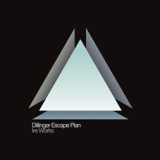
After Miss Machine, Dillinger Escape Plan fans were divided. Many of the folks who were attached to the screaming mathematical metal of Calculating Infinity bailed on the band, disapproving of the experimental musical direction and the meathead appearance of new singer/screamer Greg Puciato. Open-minded listeners were excited about the progressive journey they were taking and many critics hailed the group as a true innovator of metalcore. Ire Works succeeds in many of the same ways that their previous album did, while branching out creatively. They continue to toy with technical metal, blistering hardcore, jazz breaks, and post-punk, but here they evolve again by adding more twists and turns with additional electronic elements. While the merging of too many styles in hardcore can make for a convoluted result (see Avenged Sevenfold's self-titled release), the added instruments and genre changeups enhance the result rather than acting as ornamental distractions. Edgy Aphex Twin-style drill'n'bass drum breaks and stretched and squeezed electro blips feel strangely at home next to the psychotic time-signature changes and manic riffs, especially on the tracks "Sick on Sunday," "Dead as History," and "When Acting as a Wave." Violins, pianos, and trumpets sit nicely in the mix, and the group's willingness to take chances leads to stunning artistic endeavors rather than stale attempts at crossing genres just for the sake of being clever. Original vocalist Dimitri Minakakis makes an appearance, as does Mastodon guitarist Brent Hinds, but the most notable inclusion is drummer Gil Sharone, who proves himself an expert at picking up the slack after the departure of founding member Chris Pennie to play in Coheed and Cambria. Undoubtedly, this act added anger to fuel the fire of their heavier numbers. "82588," "Fix Your Face," and "Party Smasher" are as wicked and manic as their most difficult earlier stuff; conversely, the melodic hooks and falsetto of "Black Bubblegum" and the watery ambience of "Mouth of Ghosts" balance out the album nicely. It can be inaccessible and terrifying all at once, but in a genre overly saturated with formulaic groups, Ire Works is a true standout. If DEP aren't careful and continue down this innovative path, they could easily be labeled the Radiohead of metalcore
Emil Amos (Grails, OM and podcaster plus) decommissions pieces originally bound for the KPM library. A personal interpolation of "music for films (& television)" expounds upon diverse sounds: synthy 80s soundtracks, contemporary hip-hop beatmaking, ambient music, and The Hulk"s "Lonely Man Theme". Emil"s dark visions are full of noirish shadows and eerie neon glow - mood music for drug trips spent dreaming up new soundtracks to take drugs to! Emil Amos" forthcoming Zone Black album is a fully inhabitable world, its episodic narrative divided into an improbable balance between morbid ambient anthems and insouciant hip-hop instrumentals. Emil hadn"t heard it done quite this way before, so he took it upon himself. And it sounds real! Straight out of Madlib"s kitchen sink, and with a sense of brooding dread, "Jealous Gods" features throbbing beats, low synth paired with high vocal melody, layered together into something even more impossibly bizarre than the sum of their parts - like say, monks singing from on high, over a battleground littered with remnants of the old guard. Emil warps evocative tones, taking familiar sounds into new dimensions, reaching for the kind of depth and resonance that defines moments with an almost invisible touch.
- A1: Libe Menta Hone (My Divided Heart)
- A2: Hedech Gara Zura (She Left Across The Mountain)
- A3: Tereterkush Betam (I Suspect You Are Unfaithful)
- A4: Harrar Dire-Diwa (Harrar Dire-Diwa)
- A5: Yecew Neger (Amazed By Humanity)
- B1: Konjo Lidge Nat (She's A Beautiful Girl)
- B2: Yetembelel-Loga (Tall And Graceful)
- B3: Che Belew (March Forward)
- B4: Ho Bilo Hede (He Went Marching)
- B5: Zebeder (Mesmerizing)
Ayalew Mesfin stands aside the likes of Mulatu Astake, Mahmoud Ahmed, Hailu Mergia and Alemayehu Eshete as a legend of 1970s Ethiopia.
Mesfin’s music is some of the funkiest to arise from this unconquerable East African nation. Mesfin’s recording career, captured in nearly two dozen 7” singles and numerous reel-to-reel tapes, shows the strata of the most fertile decade in Ethiopia’s 20th century recording industry, when records were pressed constantly by both independent upstarts and corporate behemoths, even if they were only distributed within the confines of this East African nation. Though Mesfin was forced underground by the Derg regime that took control of Ethiopia in 1974, he has returned almost 50 years later with this triumphant set albums – the first time that his music has been presented in this form.
These albums give us a chance to discover a rare and beautiful moment in music history, in anthologies built from Mesfin’s uber-rare 7” single releases and from previously unreleased recordings taken from master tapes. Che Belew gives us a chance to discover a rare & beautiful moment in music history, in an anthology built from his uber-rare 7” single releases.
Das Comeback der finnischen Melodic Metal Vorreiter BEFORE THE DAWN!
Nach ihrer zehnjährigen Pause meldet sich die finnische Melodic Death Metal Band BEFORE THE DAWN zurück! Gegründet 1999, waren BEFORE THE DAWN eine der erfolgreichsten finnischen Metal Bands der frühen 2000er Jahre. Obwohl sie 2013 das Projekt auf Eis gelegt haben, wurde ihre Musik von hunderttausenden neuen Fans auf Streaming-Plattformen entdeckt, ganz ohne Promotion oder den Support eines Labels. Ob die Musik die Leute gefunden hat oder die Leute die Musik ist nicht zusagen, aber nach fast einem Jahrzehnt beenden BEFORE THE DAWN nun ihre Pause und kehren mit dem neuen Studioalbum Stormbringers zurück - und das stärker denn je! Ursprünglich war die Band ein Soloprojekt des finnischen Metal Award-Gewinners Tuomas Saukkonen (Wolfheart), doch im Laufe der Jahre gab es mehrere Besetzungswechsel. Mit einem gänzlich neu aufgestellten Lineup steht die Band aktuell vor ihrer bisher größte Veränderung. Der frühere Gitarrist und Sänger Saukkonen sitzt mittlerweile hinter dem Schlagzeug und der talentierte Voice Of Finland 2022-Finalist Paavo Laapotti konnte als Sänger gewonnen werden, während Juho Räihä (Swallow The Sun) - der seit 2006 bei BEFORE THE DAWN spielt - die Leadgitarre übernommen hat. Mit diesem starken Line Up haben die Finnen nun voll und ganz ihre neue Kraft erreicht und sind bereit, die Szene zurückzuerobern!
With the release of the Gospel album, His Hand In Mine during December
1960, Something For Everybody was the first non-religious Presley album
to be released since Elvis Is Back! and the contrast couldn't have been
greater. None of the songs had ever been previously released in any form
and were divided equally into 'the ballad side' and 'the rhythm side'. With all
of the tracks recorded at RCA Studios, Nashville, in March 1961, except for
I Slipped, I Stumbled, I fell, which was recorded at 20th Century Fox
Studios in Hollywood six months earlier in October 1960.
Somewhere in the Lower-Franconian vineyards lies a hidden and mostly unknown canyon, a place that often returns to the thoughts and dreams of Läuten der Seele’s Christian Schoppik. Though a much rarer occurrence now as a consequence of environmental change, chance encounters upon the area in the past would sometimes reveal small ponds amongst the reeds, teeming with life and populated by colonies of newts and the now endangered yellow bellied toad. The transience of the water and the wildlife it hosts, dependent on season or climate, lends the area an almost fantastical, dream-like quality. Was it ever even there at all? A secret place that may or may not be present holds vast appeal to some enquiring minds… Ertrunken Im Seichtesten Gewässer, the third Läuten der Seele album in two years, is inspired directly by these experiences. Translating as ‘drowned in the shallowest stretch of water’, a title as pregnant with dread as it is wonder, the themes present speak both to personal memories and a wider understanding of place and time, and how we might interpret our own position within an ever-changing, sometimes disappearing world.
The record is presented as two long-form pieces divided into four separate movements, each titled so as to reflect this natural environment and its intersection with imagination, relying on processes of collage that draw from myriad indeterminable samples, field recordings and various recorded instruments. Those familiar with Schoppik’s work, both as Läuten der Seele and with Brannten Schnüre, will find present many of his signature tropes - the way deeply layered collages render abstracted visions of the past alive in the present - though what is always significant about his approach is not so much aesthetic as the wider concepts it attempts to express and emote. Indeed, emotional response is key to the Läuten der Seele sound, how overlapping notions of nostalgia, memory and identity calibrate experience and understanding of who we are and the world around us, whether it’s a world that’s gone or another imagined into being. If you observe the artwork closely enough, you may find a clue as to the canyon’s location, though such specifics are besides the point. The music itself infers a wider sense of the impermanence that characterises hidden worlds, wherever they might be or whoever they might belong to.
Deepriver is the recently formed intercontinental project of Cape Town-based Jason van Wyk and long time Stockholm-based collaborator Joni Ljungqvist.
Having worked previously in collaboration mining the more introspective side of trance, Deepriver’s inaugural aural statement, “Volume One”, finds the two experimenting with atmosphere and composition to maximal effect. Van Wyk's recent viscerally experimental direction seamlessly coalesces with Ljungqvist's conceptually reflective approach in a way that recalls the sounds and nostalgia of electronic music from decades past.
The album Symposium Musicum is developed from field recordings, interviews, and observations collected in the villages of Podolínec, Lomnička, Levočské Vrchy, and Kolačkov - all areas of the eastern and north-eastern Slovakia with significant Romani enclaves. The pieces resulting from these interactions encourage the listener to tune in for a delicate negotiation of language, (audible) gesture, and storytelling.
The collaboration with the local participants appears lighthearted and whimsical on the records, but this seeming easiness is clearly a result of devoted fieldwork planning and committed post-production. The curated compositions represent and emphasize not only performative aspects of the acoustic activities but also point attention to seemingly non-productive aspects of creation, such as silence, hesitation, observation, perception, or waiting.
Sound experiment and preservation is not the only goal of the project. Some of the records capturing acoustic activities in peculiar places but also carry an element of social novelty that accompanied their making - according to the locals in Lomnička, the recording visitors were the first non-Romani persons who spent the night in the village.
In many instances, these recordings explore liminal spaces that have lost their original function (a church ruin or an out-of-business grocery store) and became a lively territory for acoustic exploration and playful reciprocity. For instance, in track 7, "Kavka", local children used crackling leaves as percussion devices.
Such moments betray a high level of engagement in the subtle details of the recorded spaces and their social ecologies. According to the creators, their creative processes involve "a social sound practice" as an attitude towards exploring sound in its social setting.
Symposium Musicum leaves behind many aesthetic conventions of sound capture and what is considered "musical", including the usual notions of a linguistic unit, narrative, memoir, and play. Instead, it engages in a self-reflective questioning of the way we listen to the world around us.
This project invites us to experience places outside the divided sociolinguistic provinces, resulting from multigenerational displacement and neglect of the Romani communities from the explored areas. The result is in many ways revelatory and poetically impactful.
Part 2[14,08 €]
The long-awaited debut LP from Romanian duo Khidja is finally coming via Malka Tuti Records.
The album ‘Transmission’ will be divided into two separate releases - Part 1 & Part 2. Part 1, presented here, will be released on June 16th, while Part 2 will be released in the 2nd half of September 2023. The album, which contains 10 new tracks from the duo (5 on each part) was written and produced by Khidja over the last several years.It was mastered by Enrico Mercaldi and distributed world wide by One Eye Witness, with a fresh fresh artwork by Angus Plunkett & Morey Talmor @ &talmor Part 1 consisted of 5 gems showcasing the diversity in the Romanian duo’s production - from shuffle to slow-mow, through chugging disco-not-disco to 4th world and beyond.
Foundation is set in the future when the world is barely remembered and humans have colonized the galaxy. The record introduces Donnie Ozone, a brilliant visionary rapper and psychohistorian whose job is to use lyrics and rhymes to predict the future. It is divided into six chapters, each showing a part of the bigger picture portrayed on the outstanding cover by Infidel.
Teslasonic gathers together the galaxy's top scientists and artists on a bleak outer planet and sets out to preserve the accumulated knowledge of humankind and begin a new human galactic empire based on Art, Science and Technology. He calls his sanctuary the Foundation and designs it to withstand a dark age of ignorance, barbarism, and warfare that he predicts will last for a long time.
- A1: A Beautiful Thought (Pt 1)
- A2: Harry Dreams The Dream
- A3: A Wolf Of The Steppes
- A4: Interlude
- A5: The Title On The Cover
- B1: Divided
- B2: Magic Theatre
- B3: Soul Track
- B4: The Mothers And The Fathers
- B5: A Beautiful Thought (Pt 2)
- C1: Stupid Steppenwolf (Pt 1)
- C2: Stupid Steppenwolf (Pt 2)
- C3: Human Avatars (Pt 3)
- D1: Human Avatars (Pt 1)
- D2: Human Avatars (Pt 2)
Factory Benelux presents the very first vinyl edition of the only soundtrack album recorded by The Durutti Column, the Factory Records ensemble fronted by lauded guitarist and composer Vini Reilly. A limited edition of 1000 copies on 180gm black vinyl have been pressed for Record Store Day 2023. (NonReturnable) Treatise on the Steppenwolf is a soundtrack to the performance piece of the same name by experimental theatre group 12 Stars, written and directed by Gerard McInulty (of fellow Factory band The Wake), first staged in Glasgow in May 2003. Freely adapted from the celebrated counter-culture novel by Hermann Hesse, the performance is a portrait a divided character in an ongoing state of conflict.
‘Steppenwolf was something I’d read recently and when we approached Durutti Column with the idea it turned out they were interested too,’ explained McInulty. ‘People have described their music as ambient, although that’s a description they don’t care much for. It’s certainly atmospheric and there’s something about their sunny-sounding guitar that seemed appropriate to a book that, although published in 1927, didn’t become popular in America until the 1960s.’
This expanded vinyl edition combines the studio recordings of the 12 pieces performed live by The Durutti Column during the Glasgow run, along with 3 long and previously unreleased tracks from the Human Avatars art installation at Manchester MOSI in 2005.
Newly mastered for vinyl by Peter Beckman at TechnologyWorks, this limited Record Store Day edition also features new gatefold artwork by Howard Wakefield.
"The Last Supper", original erschienen 2005, war das 12. Studioalbum der Band. Mit einem Chartentry auf #39 war es zudem das zweit erfolgreichste in der bisherigen Karriere von Grave Digger.
Das Konzeptalbum beschäftigt sich mit den letzten Tagen von Jesus Christus. Für das Artwork war erstmalig der international renommierte Künstler Gyula Havancsak verantwortlich.
Der nun vorliegende Re-Release erscheint als Ltd. Edition Grün Transparentes Vinyl und enthält neue Liner Notes von Chris Boltendahl.
After the success of their first full length album Midnight Ensemble, it's now time for a massive remixpack divided in 2 EP's; Part 1 followed by Part 2 (which will be follow soon after this).
The Dynamic duo asked some of their close friends, label residents and inspirators to rework all of the tracks taken from the original album.
On Part 1 you will find remixes from DJ Nobu, Rrose, Jeroen Search on the 12" added by 2 Digital Bonus tracks bij Pyramidal Decode and Hitam.
Expect a diverse range of techno cuts and ambient drones as you are used to
from Dynamic Reflection.
Tori Amos spielt live, seit sie dreizehn Jahre alt ist. Sie verbringt ihr Leben zwischen Cornwall, Florida, und unterwegs. Ihre Songs schreibt sie auf Reisen und beim Beobachten. Mit dem Lockdown brach all dies weg.
Ohne Live-Musik, Reisen und überhaupt, ohne viel zu beobachten, glitt Amos während der Pandemie in eine schwere Krise.
Doch die US-amerikanische Sängerin besann sich auf ihre Musik und schrieb und schrieb. Das Ergebnis ist „Ocean to Ocean“, Amos’ persönlichstes Werk seit Jahren - ein Album voller Wärme und Verbundenheit, mit tiefen Wurzeln in ihrem frühesten Songwriting.
Future Jazzers, notorious experimentalists and outfield eccentrics stumble onto the dancefloor. In the 90s. In the UK.
From an electronic music perspective, the period 1992 to 1996 in the UK that this compilation celebrates, was one of dizzying sonic diversification.
It was also a particularly turbulent time in the UK, not only politically and economically, but also culturally too. Economic catastrophe in ‘92 was followed by widespread poverty, a cost of living crisis and countless political scandals. Meanwhile, John Major’s Tory government pandered to its political base via unpleasant, authoritarian legislation that seemingly sought to crush rave culture, alternative lifestyles, and traveller communities. The UK was not so much a ‘Happy Land’ – to quote the name of this compilation – as an angry and divided one. Sounds familiar, doesn’t it?
Throughout, the music created by producers based across these Isles remained uniquely British, speeding up a process begun in the late 1980s through the emergence of street soul, bleep & bass and breakbeat hardcore – musical styles whose roots in multicultural inner-city communities made them distinctly different from the Black American sounds that had inspired their creators. It was here, rather than in the indie pubs of Camden, that real musical revolutions were taking place.
This deep diving selection brings together some truly adventurous and original electronic music from this period, much of it very hard to find. Major label outings connect with white label oddities with ease. Perhaps it could even be argued that many of these unearthed gems fit more easily into DJ sets in 2023 than they ever did at the time. The off-kilter swing of Richard D James’ obscure and highly sought after Strider B outing, ‘Bradley’s Robot’ is joined by further rare cuts from Cabaret Voltaire and the Black Dog, and artists as diverse as Ultramarine, Herbert, Fretless AZM, and Radioactive Lamb, amongst others.
This collection has been lovingly selected, compiled and mastered for maximum sonic playback. This very special release boasts sublime pastoral themed artwork, as well as informative and passionate liner notes by celebrated music scribe Matt Anniss (‘Join The Future’).
Faitiche presents the album Exq I by Berlin underground techno legends Muellie Messiah & Punk not Punk, mainly known under their 100Records moniker. Weighing in at 36 minutes, the track was recorded in 2010, effortlessly intermingling dub, drone and collage, a blend achieved thanks to the duo’s jazz-inspired approach to improvisation.
_
100records is one of the last undiscovered treasures of the Berlin underground of the 1990s and 2000s. Like Elektro Music Department, 100records is unthinkable without techno and the club scene, but with a few exceptions the duo’s tracks are not aimed at the dancefloor. With a claim to universality and a broader frame of reference, 100records developed a more extensive understanding of sound that rests on three pillars: the understated analogue drums of the Roland TR-808, a blurred, dubby sound, and improvisation.
On first hearing, Exq I has little in common with the groovy, detailed, variation-rich sound usually associated with 100records. Recorded at the end of a highly productive decade, it is an echo speaking of exhaustion in which dub, drone and collage converge to form something whose jazz sensibility makes it readily identifiable as the work of 100records.
100records was founded in 1994 by Muellie Messiah (Dirk Budde) and Ekki 808 (Ekkehard Rau), who were joined in 1999 by Punk not Punk (Martin Osti). Around 2002, Ekki departed, leaving Budde and Osti to continue as a duo. Since then, their relationship has shaped 100records: Budde is the driven lone genius doggedly pursuing sounds, Osti the pragmatist who turns ideas into music.
As well as making music, Budde is also a musicologist. In 1997 he published his PhD thesis entitled Take Three Chords... Punk Rock and the Development to American Hardcore. As well as being his specialization, punk is also part of his identity: in the 1980s he sang and played keyboards in various punk bands in Kassel, the best known being Haunted Henschel.
After the fall of the Wall, attracted by the freedom of the newly reunited Berlin, Budde packed his bags and drove to the formerly divided city, having already become acquainted with techno at Kassel’s influential Stammheim club.
“This music is staggeringly original and innovative, and while it’s possible to locate it in a chain of circumstance that links it to ‘Industrial’ music, P16.D4 indulged in none of the empty cliches associated with the genre, worked incredibly hard, and seem to have been aiming at a form of sound art that was much more profound, varied, subversive, and potentially dangerous. Kuhe In 1/2 Trauer’s accompanying credits indicate their radical approach to making music: lots of improvisation, lots of live electronics, extensive use of tape-loops, some conventional instrumentation, and much that isn’t – like the milk churn on ‘Paris, Morgue’ or the use of baking tray and washing machine elsewhere. Even when guitars, drums or keyboards are used, they’re played very weirdly. It’s not even made clear who was doing what; the main credit is ‘Concept,’ which I assume means that one of the three devised the framework in which the noise would operate itself, and while RLW gets the lion’s share of these credits, a lot of the cuts are evenly divided among the team and I have no doubt that the group operated in a very democratic or libertarian manner. None of this prepares you for the insane and troubling sounds that reach your ears, composed with scant regard for conventional logic and following an exciting, absurdist path, especially in the matter of tape edits and juxtapositions of recordings.” - Ed Pinsent, The Sound Projector.
“Though this German group started out as a the new wave band P.D., by the time of Kuhe in 1/2 Trauer, their first LP under the P16.D4 name from 1984, they had developed far beyond into extremely experimental music similar to other post-industrial artists working with abstract avant-garde soundscapes. There’s a bleak industrial feel to the gritty, lo-fi electronics and tape loops, while the group throws in enough curve balls to keep it interesting. On some pieces, strange, looped choirs bubble out of throbbing pulses and drones of feedback, while others have clanging and clattering, and elements of musique concrète and improvisation blur the boundaries even further. The opening track, “Default Value,” is one of those disorienting pieces with noises flying everywhere, while “Paris Morgue” takes excerpts from one of their old P.D. tracks and messes it up with additional instruments, while the ungainly titled fourth track throws in a heavy texture of percussive noises to create an edgy ambience about to teeter off the edge, and the even darker and more ambient title track takes the tension even further. Arrhythmic and amorphous and capable at moments of becoming quite noisy and abrasive, while at others far more somber and quiet, Kuhe in 1/2 Trauer is quite a fascinating release.” - Rolf Semprebon / AMG
P16.D4 was a German electronic noise music collective, active primarily from 1980 to 1988. P16.D4 embraced tape cut-ups, musique concrète, endless recycling and transformation of previously published material, and many long-distance collaborations with like-minded artists such as DDAA, Vortex Campaign, Nurse With Wound, and Merzbow. Their active participation in the international industrial tape scene yielded collaborative output such as their release Distruct, where bands such as Nurse with Wound, Nocturnal Emissions, Die Tödliche Doris, and The Haters provided the source material. The longest-term collaboration was with the installation and conceptual artist Achim Wollscheid, who used P16.D4 sounds as the basis for LPs he recorded under the name SBOTHI. Ralf Wehowsky, the only constant member of the group, later released solo material under the alias RLW.
Members of P16.D4 were also involved with Selektion, a collective of people involved with sound as well as the visual arts. Selektion published LPs, CDs, books, visual art and design.
The collective worked in a strongly improvised, spontaneous and anti-professional way, using acoustic and electronic instruments, using existing sound fragments, duplicating and alienating them, using repetition, distortion, changes in speed and playing direction. For this they used not only sounds of other artists but also their own material from earlier productions. Late works of the collective are associated with musique concrete.
- A1: The Devil
- A2: Freedom For A Promise
- A3: War-Torn Wasteland
- A4: Wretched Woodland
- A5: Wedding Dance Macabre
- A6: A Mute Reunion
- A7: The Devil Fits - God In His Youth
- A8: Through The Door - Theador
- A9: Your Father Is Dead Young Lord (Be Cursed)
- A10: Broken Boudoir
- A11: Theador And The Rifles
- A12: The Bordel
- A13: Mother
- A14: Daughter Of The Sin
- A15: Zakonnica
- A16: Rope Him To The Horse
- A17: Around You Is A Void Circle Save For The Stinking Corpses
- B1: Understand Nothing
- B2: No Blackberries In Winter
- B3: Cancel The Evil Gently
- B4: Mother Snake
- B5: The Fiery Sword
- B6: The Duel
- B7: Not The Horse
- B10: Theador Go Back To God
- B11: The Black Dog
- B8: The Quill - What’s Not Written Does Not Exist
- B9: The World Is Beautiful (Climb The Tree)
Wipe your blade clean. The bloodline of Eastern European kosmische and groundbreaking, grinding cinematic psych rock finally emerges from fifty years of forbidden forestland to fill your thirsty grails. Poland’s prime progressive provocateurs Żuławski and Korzyński finally expose the jagged roots of Possession and The Silver Globe and give the devil his due via this historical vinyl release.
If an opening strapline that reads “Forget everything that you thought you knew about the history of psychedelic rock and horror movies” appeals to you, then further potentially hyperbolic phrases like “Lost Grail” and “Banned Forever” will surely clinch the deal, leaving the hugely significant wider context of this dream come true release surplus to requirement. But as we hope you have come to expect from Finders Keepers releases “The devil is in the detail” and the fact that any mention of the perpetually elusive original master tapes to a 1972 project entitled Diabeł and the phrase “Holy Grail” have become synonymously associated only adds the twisted irony that surrounds this genuine masterpiece of both aforementioned fields.
For those fastidious enough to pursue the hunt, these unearthed recordings represent the crowning glory of the lifelong unison of Maestro Andrzej Żuławski and filmmaker Andrzej Korzyński, two genuine mavericks of Polish experimental cinema who challenged artistic and societal norms, on both sides of a politically restricted regime and on an international artistic stage, without compromise. Friends since childhood, Korzyński and Żuławski may have become divided by limelight and geography (Żuławski the intrepid emigre), but they remained united in their kaleidoscopic creative vision, resulting in a fractured stream of troublesome and mind-bending golden era collaborations such as Possession, The Silver Globe, and Third Part Of The Night. This long-awaited liberation of the psychedelic masterpiece known as Diabeł finally completes the duo’s full vista with what many consider the most vital piece of the prism.
After stellar releases on Ilian Tape and Nostro Hood Soundsystem among others, ,,Mutualism” represents the much-awaited return of Atrice on their own label Miras. The follow-up EP reflects the culmination of a year-long exploration of compositional techniques and sound design, and acts as a first step towards a debut album. The result is a complete work, divided into eight chapters, that applies previous artistic research on textures, harmonics and rhythms in a rigorous yet playful manner. Whilst continuing to touch upon a broad spectrum of uptempo reference points, ,,Mutualism” offers a first glimpse into the pairs underlying pliancy next to the ever-present intricate complexities in their output.
That's all, hasta abajo!
- A1: Alan Fitzpatrick & Reset Robot - Alpha
- A2: Red Axes - First Look
- A3: Ak Sports - Accept That All Things End And Your Life Will Improve In These Five Ways
- B1: Lis Sarroca - Oasis Floor
- B2: Laurence Guy & Miller Blue - My Heart Still Leans On You
- B3: Marc Brauner & Tender Games - Iss
- C1: Main Phase - All The Girls
- C2: Soul Mass Transit System - Take Me To Xtc
- C3: Borai - Seafoam Green
- D1: Coldpast & Tuff Trax - Wilder
- D2: Killjoy & Kwam - Active
- D3: Peaky Beats - Cats From The Back
- E1: Testpress - On My Own
- E2: Ams - Rue Du Transvaal
- E3: Kassian - Burst Mode
- F1: Module One & Soela - If I Only Knew
- F2: Kaysoul - Woodward Avenue
- F3: Alex Virgo & Benjamin Groove - Relie
blue + red + pink vinyl
It's a huge link-up. We proudly present our fifth compilation, celebrating seven years of service. Over the course of the 18 tracks, divided across 3 discs, a whopping 25 individual artists show us what they can do, repping the distinct sound they bring to the label.
On the first disc, techno giant Alan Fitzpatrick teams up with Drumcode affiliate Reset Robot on a big-room techno slammer before Israeli duo Red Axes take us into the big room of our mind with a transcendental techno cut. Laurence Guy guides us in a different direction completely, joining Lis Sarroca, Marc Brauner and Tender Games in creating a groove that you can sit back into, losing yourself amongst Lis' syrup-smooth house, Miller Blue's soul-stroking vocals and MB & TG's piano tickles.
Before you get too comfortable, the Time Is Now lot come through with a suitable dose of ruffage, from Main Phase and Soul Mass Transit System's giddy UKG and speed garage, to the '90s-inspired atmospheric garage house of Borai and Coldpast & Tufftrax.
Closing proceedings are SNF's melody specialists. Ams, Kassian and Kaysoul each offer their take on blissed-out deep house whilst Module One & Soela and Alex Virgo & Benjamin Groove infuse stripped-back garage and breaks instrumentals with contemplative atmosphere.
Order SNFLP013 now
- A1: Hall Of Fame
- A2: Hour Of 1
- A3: G.i
- A4: Puppet On A String
- A5: Sheer Terror
- A6: Happy People
- A7: Lost In Limbo
- A8: Plain To See
- A9: Party Line
- A10: Here’s The Rope
- A11: Insomniac
- B1: Fashionite
- B2: Religious Ripoff
- B3: Asshole
- B4: No Rights
- B5: No Way Out
- B6: Twisyed Views
- B7: Snubbing
- B8: Teenager In A Box
- B9: Bored To Death
- B10: Georgetown Blues
Color Vinyl[19,96 €]
In November of 1982, I went into the studio with Government Issue to record what was to be their first full-length album. Up until that time, they had only released the Legless Bull 7”EP, and the tape they recorded early 1982 would take over a year and a half to be released as the Make An Effort 7”EP. The members of G.I. excelled at driving each other crazy and there was a lot of arguing, but still we had a great session at Inner Ear and we managed to track 20 songs in one day. From the beginning the band had been divided on what to record, and it was only after much debate that they decided to leave off the material they had recorded with the earlier line-ups and only put out 10 new songs.
In early 1983 Dischord was strapped for cash, meaning that we could only work on one release at a time. Since all of our money was tied up with the manufacturing of Minor Threat’s Out of Step 12” EP, the G.I. record would have to wait. A new DC label, Fountain of Youth, expressed an interest in releasing Boycott Stabb, so it was decided to do a ‘split-label’ record. In this case, Fountain of Youth put up the money and we let them use the Dischord Records name to help with context and distribution. It has since been reissued on a number of different labels and formats, but after coming across the master tapes and hearing the songs that had been left off, we thought it would be cool to release the complete session, and to finally release the record on Dischord proper.
In going through the tapes, I discovered that most of the outtake songs were never mixed, so earlier this year I took the recordings back into the studio. Hearing the separated tracks amazed me. Such great playing and songs! With the technological advances in the recording world made multi-tracking and overdubbing so common, it’s easy to forget that studios could also be used as something more akin to a photo-booth, capturing what was happening at that very moment. Most of the early Dischord sessions were essentially ‘live’ recordings, so the bands had to be able to play, and because the budgets were minuscule, they had to get the songs down in short order. G.I. stepped up on both counts. -Ian MacKaye, August 2010
- A1: Hall Of Fame
- A2: Hour Of 1
- A3: G.i
- A4: Puppet On A String
- A5: Sheer Terror
- A6: Happy People
- A7: Lost In Limbo
- A8: Plain To See
- A9: Party Line
- A10: Here’s The Rope
- A11: Insomniac
- B1: Fashionite
- B2: Religious Ripoff
- B3: Asshole
- B4: No Rights
- B5: No Way Out
- B6: Twisyed Views
- B7: Snubbing
- B8: Teenager In A Box
- B9: Bored To Death
- B10: Georgetown Blues
Black Vinyl[18,45 €]
In November of 1982, I went into the studio with Government Issue to record what was to be their first full-length album. Up until that time, they had only released the Legless Bull 7”EP, and the tape they recorded early 1982 would take over a year and a half to be released as the Make An Effort 7”EP. The members of G.I. excelled at driving each other crazy and there was a lot of arguing, but still we had a great session at Inner Ear and we managed to track 20 songs in one day. From the beginning the band had been divided on what to record, and it was only after much debate that they decided to leave off the material they had recorded with the earlier line-ups and only put out 10 new songs.
In early 1983 Dischord was strapped for cash, meaning that we could only work on one release at a time. Since all of our money was tied up with the manufacturing of Minor Threat’s Out of Step 12” EP, the G.I. record would have to wait. A new DC label, Fountain of Youth, expressed an interest in releasing Boycott Stabb, so it was decided to do a ‘split-label’ record. In this case, Fountain of Youth put up the money and we let them use the Dischord Records name to help with context and distribution. It has since been reissued on a number of different labels and formats, but after coming across the master tapes and hearing the songs that had been left off, we thought it would be cool to release the complete session, and to finally release the record on Dischord proper.
In going through the tapes, I discovered that most of the outtake songs were never mixed, so earlier this year I took the recordings back into the studio. Hearing the separated tracks amazed me. Such great playing and songs! With the technological advances in the recording world made multi-tracking and overdubbing so common, it’s easy to forget that studios could also be used as something more akin to a photo-booth, capturing what was happening at that very moment. Most of the early Dischord sessions were essentially ‘live’ recordings, so the bands had to be able to play, and because the budgets were minuscule, they had to get the songs down in short order. G.I. stepped up on both counts. -Ian MacKaye, August 2010