
Search:divini

4

4
Redsonja Records brings to light reference number 16, held back until now, as to date 18 of our catalog has already been released. Visionary 01 is an EP by VVAA released on vinyl and digital format which showcase new a graphic identity of Redsonja Records: the warrior. In addition, RS16 also includes a future reference: Visionary 02. The four producers that participate coincide in several aspects related to the concept we believe in as a label. They all possess a kind of "divine touch" when producing their tracks, you can tell they all work from their soul. Jose Rico presents a track title ‘Discotime’, deep rhythmic cadences in the purest Detroit style; clean, bright, and delightfully mischievous sounding. Analogies intentionally created, synths that cross each other with elegance and leave space for all the necessaries. The result is an essential track in any relevant music collection. It takes us to other worlds that are more relaxed, more divinized, more colorful, more leisurely ...

- A1: Rose Skies
- A2: Brilliance
- A3: Eternal Dreams
- A4: Blue Wind
- B1: Crystal Flight
- B2: Starglider
Suzanne Doucet was born in Tuebingen, Germany where as a three year old, Doucet discovered her innate artistic gifts. Instinctively, she was always drawing, playing music, singing, and writing. By the age of 18, Suzanne was an established pop star in Germany with several #1 hits. She also made her mark as a composer, actress, TV moderator, director, engineer, and producer. At age 25. she took a sabbatical from the music business to go on a spiritual odyssey. In 1970 she released a triple album of field recordings and mind-expanding psychedelia under the name Zweistein. For the next ten years, she developed her own style of New Age music while exploring many areas of metaphysics and spiritual practices, including astrology, music therapy, tarot, yoga and the Kabbalah.
In 1979, Doucet launched a record label in West Germany named Isis, after the Egyptian goddess of feminine divinity. She formed the duo New Age with her musical partner Christian Bühner, and released the 1982 cassette album ‘Transformation’ and the follow-up ‘Transmission’, released on cassette in 1983. After this release, Bühner and Doucet moved to Los Angeles, hoping to find more kindred spirits in the burgeoning New Age scene there. Doucet met Tajalli (William Wichman). William had a small home studio and they played music together almost every day. William had a Juno 60 and Suzanne had her SD-1 keyboard. Their album ‘Brilliance’ was released in 1984 on cassette with the critically acclaimed track "Crystal Flight," which was featured in several Visionary Videos. All songs have been remastered by George Horn at Fantasy Studios and each album is housed in jackets using the original cassette artwork.

7
Soundwalk Collective is a multi-disciplinary audio-visual collective founded by Stephan Crasneanscki, including members Simone Merli and Kamran Sadeghi.
The Collective's approach to composition combines anthropology, ethnography, non- linear narrative, psycho-geography, the observation of nature, and explorations in recording and synthesis. The source material of their works is always linked to specific locations, natural or artificial, and requires long periods of investigative travel and field work.
Their recent projects include a collaboration with Patti Smith and reworking the archive of recordings on Jean-Luc Godard's film set.
For the 8th Marionette publication, Soundwalk Collective present 'Death Must Die'. A sound piece that began in 2004 and ended up as a composition for the PS1 radio in NY. For this New release the Collective has revisited the piece in a more musical way.
'Death Must Die' is based on Stephan Crasneanscki's multiple visits to the sacred Indian city of Varanasi, originally known as Kashi and Banares. Sacred texts maintain that Varanasi isn't even a city, but rather a lingam of celestial light, the subtle and cosmic form of Lord Shiva which manifested itself as a city for the sake of seekers of liberation. To bathe in the holy Ganga is to be purified of your sins. To die in Varanasi, is to attain liberation and to bring an end to the cycle of rebirth known as transmigration. Determined to capture the elusive reality of this ancient city, Stephan has day by day recorded and re-imagined his understanding of how to perceive the continuously moving stream of the holy Ganga; performing a simple form of sadhana, which request is to be very alert but also to allow your mind to be quiet, making it easier to slip into the streams, and into the current that both the city and the river are offering.
'Death Must Die' begins before the rising of the sun and reproduces the cycle of a day in Varanasi, going down the river that is believed to be the divinity descended to this Earth in the form of water. She grants us happiness and salvation. The composition attempts to emulate the vibration of Kashi that encourages the kind of interiority that enables a person to get a better perspective on reality than one might have, while constantly being in the current of human life. A vibration dedicated to eliminating the distinction between human and non-human, between alive and dead, between light and dark.

- A1: A Min We Vo Nou We - Les Sympathics De Porto Novo
- A2: Asaw Fofor - Ignace De Souza & The Melody Aces
- A3: Dja Dja Dja - Stanislas Tohon
- B1: L´enfance - Elias Akadiri & Sunny Black´s Band
- B2: Mé Adomina - Picoby Band D´abomey
- B3: Nounignon Ma Klon Midji - Antoine Dougbé
- B4: Moulon Devia - Orch. Poly-Rythmo De Cotonou
- C1: Paulina - Black Santiago
- C2: Glenon Ho Akue - Lokonon André Et Les Volcans
- C3: Sadé - Sebastien Pynasco And L´orchestre Black Santiago
- C4: Baba L´oke Ba´wagbe - Super Borgou De Parakou
- D1: Gangnidodo - Cornaire Salifou Michel Et L´orchestre El Rego & Ses Commandos
- D2: How Much Love Naturally Cost - Gnonnas Pedro And His Dadjes Band
- D3: Idavi - Orchestre Poly-Rythmo De Cotonou
14
African Scream Contest 2
A great compilation can open the gate to another world. Who knew that some of the most exciting Afro-funk records of all time were actually made in the small West African country of Benin Once Analog Africa released the first African Scream Contest in 2008, the proof was there for all to hear, gut-busting yelps, lethally well- drilled horn sections and irresistibly insistent rhythms added up to a record that took you into its own space with the same electrifying sureness as any favourite blues or soul or funk or punk sampler you might care to mention.
Ten years on, intrepid crate-digger Samy Ben Redjeb unveils a new treasure- trove of Vodoun-inspired Afrobeat heavy funk crossover greatness. Right from the laceratingly raw guitar fanfare which kicks o Les Sympathics' pile-driving opener, it's clear that African Scream Contest II is going to be every bit as joyous a voyage of discovery as its predecessor. And just as you're trying to get o the canvas after this one-punch knock out, an irresistible Afro-ska romp with a more than subliminal echo of the Batman theme puts you right back there. Ignace De Souza and the Melody Aces' Asaw Fofor" would've been a killer instrumental but once you've factored in the improbably-rich-to-the-point-of-being-Nat-King-Cole-influenced lead vocal, it's a total revelation.
The screaming does not stop there, in fact it's only just beginning. But the
strange thing about African Scream Contest II's celebration of unfettered Beninese creativity is that it would not have been possible without the assistance of a musician who had been trained by the Russian secret services to "search and destroy" enemies of the country's (then) Marxist-Leninist president Mathieu Kerekou.
Already familiar to fans of the first African Scream Contest as a mainstay of ruthlessly disciplined military band Les Volcans de la Capitale, Lokonon André vanished in a cloud of dust at Ben Redjeb's behest with a list of names and some petrol money, only to return a few days later having miraculously tracked down every single name he'd been given. The source of this Afrobeat bounty-hunter's impressive people-finding skills - his training with the KGB - highlights the tension between encroaching authoritarian politics and fearless expressions of personal creative freedom which is the back-story of so much great African music of the 60s and 70s. Happily, in this instance, Lokonon was tracking the artists down to oer them licensing deals, rather than to arrest them.
Where some purveyors of vintage African sounds seem to be strip-mining the
continent's musical heritage with no less rapacious intent than the mining companies and colonial authorities who previously extracted its mineral wealth, Samy Ben Redjeb's determination to track this amazing music to its human sources pays huge karmic dividends.
Like every other Analog Africa release, African Scream Contest II is illuminated by meticulously researched text and eortlessly fashion-forward photography supplied by the artists themselves. Looming large - alongside Lokonon André - in the cast of biopic-worthy characters to emerge from this seductive tropical miasma is visionary space-nerd Bernard Dohounso, who laid the foundations for Benin's vinyl predominance by importing and assembling the turntables that would play the products of his Bond villain-acronymed pressing plant SATEL, a factory that would revolutionise the music industry in the whole region.
The scene documented here couldn't have been born anywhere else but in the Benin Republic , and the prime reason for that is Vodoun. It's one of the world's most complex religions, involving the worship of some 250 divinities, where each divinity has its own specific set of rhythms, and the bands introduced on the African Scream Contest series and other compilations from that country were no less diverse than that army of dierent Gods. At once restless pioneers and masters of the art of modernising their own folklore, the mystic sound of Vodoun was their prime source of inspiration.
One especially irascible Vodoun-adept was Antoine Dougbe, who styled himself The devil's prime minister' while turning ancestral rhythms into satanically alluring modern beats. As Orchestre Poly-Rythmo songwriter Pynasco has observed sagely, Evil is not elsewhere, evil extends into the house'. And African Scream Contest II is a gloriously cinematic road-trip through an undiscovered realm of music lore whose familiarity is every bit as thrilling as its otherness.
Written by Ben Thomson, March 2018
12
- Printed Inner Sleeve and Heavy Weight Outer
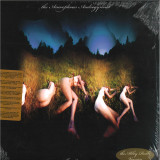
The now legendary ' Abbey Road' version of 'the Isness' was the originally conceived version before last minute wholesale changes resulted in new tracks , different mixes and/or edits appearing in a wholly different order for the commercial release of 'the Isness ' in 2002 . The 'Abbey Rd 'version had been initially promo'd to ecstatic reviews, receiving an unprecedented 6/5 stars from Mixmag 'it's like a beam of white light from heaven'.
This is the first time the Abbey Road version has been officially and commercially available .The band themselves ' the Amorphous Androgynous ' ( a psychedelic supergroup conceptualized and produced by the Future Sound Of London ) are said to have always regretted the last minute changes to the album ,the creation of which took five years from 1996-2001 post production of the FSOL album ' DEAD CITIES' and marks an important chapter in the production duos history and 5 year disappearance where rumours of madness and disbandment were rife among fans of the band only for them to finally appear with this radical new vision and what is now considered something of a psychedelic masterpiece which along with subsequent albums ' Alice In Ultraland ' ( on Harvest Records ) and their 'A Monstrous Psychedelic Bubble ( Exploding In Your Mind )' Dj series ( which chronicle and redefine the history of psychedelia from the 60s to the present ) did much to activate a third wave of global psychedelic sonic revolution .
The Isness is a vast samplerdelic sonic galaxy where a huge range of instruments ( from sitars and numerous eastern instruments to flutes, banjos and conventional rock n roll instrumentation) and countless musicians are employed ,collaged and twisted using the studio as instrument ( much in the tradition and lineage of the Beatles and other 60s exponents) to form a startling new vision of cosmic space music and to redefine the possibilities of what ' the song ' could be in the new millennia with its by turn : cosmic , wildly surreal , absurdist lyrics on epic songs such as ' the Galaxial Pharmaceutical ' ' the Mello Hippo Disco Show ' ' Divinity ' and many others !


Fire in the hole! Luca Agnelli's Etruria Beat hits its 40th release and it's a truly historic affair with two very top remixers : Slam and Truncate! Now seven years deep into the label's innovative techno trip, Etruria has made nurturing exciting new Italian talent one of its key signatures. Bastinov, Dast, Reform, Kaiser, Diego Amura and Toms Due are just some of the progressive creators Etruria have supported over the last two years alone. But for this release it's down to the label bossman himself... And he's made sure it's a deeply Etruscan affair. Released in the wake of his mass-scene-supported 'Metamorphosis' EP and building on a body of work that boasts tastemaker labels such as Soma, Drumcode and Planet Rhythm, Luca lays down two slabs of absolute dynamite that not only bang, but also tie his sound, vision and inspiration back to his deepest roots with rich mythology... 'Voltumna' pays homage to the supreme god of Etruscan people. Not just in name and honour, but also in its powerful dynamic and touching balance of shades thanks to its atmospheric, rhythmic chord. 'Aplu' continues this spiritual theme with a dedication to another Entruscan divinity. An offering to the god of thunder and lightning, once again it lives up to its name with a barbed rolling dynamic that suddenly cracks open into a cosmos of light and emotion before hurling you back into the dark drum drama. Thunderous isn't the half of it. It comes complete with two exceptional remixes of 'Voltumna' by Slam and Truncate. Soma bosses Slam add their signature Glaswegian grit with distorted textures that loop in a hypnotic frenzy while Truncate strips the groove back to a jacking dynamic that becomes progressively bouncier with raw machine funk insistency. Across the originals and remixes there's not a corner in techno that isn't exceptional

British producer Pris preps his sophomore EP for Avian.
Love, Labour, Loss marks the Berlin-based producer's second outing on Guy Brewer's Avian label, and a further refinement of a production aesthetic that pitches caustic, heads down tool Techno & greyscale IDM against more meditative Ambient & Drone recordings.
AVN026 tackles familiar themes, and the same low slung, deep-seated sense of unease found on earlier offerings, released via both Avian itself & Unbeknown To Us - the producer's own outlet, winds its way in and amongst the work. There's a lightness of touch to this most recent effort though, and experimentation with more overtly musical sequences proves fruitful, drawing on a previously untapped energy to great effect. The same goes for forays into more complex rhythmic structures - taught, processed percussion sits bright in the mix, working to generate an anxiety that is fast becoming a hallmark of the artist's work.
Whilst the material maintains a keen focus on the crushed, droning sonics that have come to characterise the label's output, Love Labour Loss, is an impressive development - offering at once both a new dimension to the artist's work, but also a congruent, streamlined addition to the Pris discography.
11
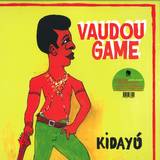
When faced with the decision to take a different direction at the risk of getting lost in a synthetic sound or to further explore the same musical path, Vaudou Game didn't need to consult the oracle for very long when putting together their new album. Since their first acclaimed album, Apiafo and its irresistible single "Pas Contente", these Lyon natives never turned down the heat on over 130 stages across Europe, Africa, America and Asia. Peter Solo has displayed his amulets, charisma and yellow pants around the globe.When time came for them to harness their Afro-Funk sound for the second time, they turned their attention once again to their analog strengths. Vintage material, instruments produced in the 70's and cassette tapes were the "grigris" (or lucky charms) which proved most effective to ward off digital corruption of their music and return them to a tight-knit group with a solid groove.This unbeatable trance rhythm, inherited from James Brown and Fela, icons of Funk and Afrobeat, becomes trident when joined by Mawu, the creative voodoo divinity hidden in each of the group's notes. This inspiration transcends their spirit of communion, plunges them deeply into Mother Earth and results in the telepathic trance which is directly connected to Togo Peter's native Togo.Each song then becomes a celebration where the listener becomes the group's voodoo doll, embraced by the rhythm, submitting itself to the mercilessly metronomic cutting of guitars, struck by the copper-colored flashes of lightning forged by the African voodoo deity Hevioso, pierced by the psychedelic visions generated by the organs and a six-string guitar, cheerful songs, and hypnotic incantations.KIDAYU means "sharing" in Kabye, the language spoken in northern Togo. Sharing, is the philosophy of Vaudou Game - both in their recorded music and on stage.Vintage African funk tinged with voodoo chanting: Togolese Peter Solo and his fellow musicians from Lyon electrify us in a frenzied ceremony" - Télérama

