
non in magazzino
Ordina ora e ordineremo l'articolo per te presso il nostro fornitore.
6,29 €
Ordina ora e ordineremo l'articolo per te presso il nostro fornitore.

dovrebbe essere pubblicato su 05.09.2008

Following the success of the first volume, "BOY Records - Timeless Technology 2 (1989-1993)" delves even deeper into the catalogue of one of Germany's most influential independent techno labels.
While the first volume focused primarily on the label's formative years and its pioneering tekkno traxx, this second chapter explores a broader spectrum of the BOY Records sound. Alongside overlooked classics from the 1989-1991 period, it extends the scope up to 1993, years in which the label embraced the rapidly evolving electronic music landscape.
As the sound matured, the raw energy of early German techno began to merge with harder techno rhythms, acid-infused productions, and the first waves of European trance. Featuring 24 carefully selected tracks, many of them long-forgotten gems, "Timeless Technology 2" captures both the diversity and forward-thinking spirit that made BOY Records a key player during the golden age of underground dance music, while documenting the label's continued evolution and lasting contribution to the scene.
This deluxe 4LP set is housed in a reverse-board printed gatefold sleeve and includes one BOY Records logo sticker.

This is the very limited marbled vinyl version of the repressed Lords of The Null Lines EP.
Here we have the beautifully remastered Foul Play and Foul Play ft Randall remixes of Lords Of The Null Lines. There is little to say about these definitive classics that has not already been said. You know ‘em, you love ‘em, they are essentials. However, the Danny Styles remixes are perhaps deserving of some explanation. There were created in the early 90s, and were cut, but quickly stopped by Moving Shadow as they were not really official remixes. A few test presses got out, and the result has been these remixes reaching a near mystical status in the passing decades, and the vinyl changing hands on discogs for absurd prices.
So it was with great pleasure that Hyper-On Experience and myself managed to broker a deal with Moving Shadow and Danny Styles to bring these amazing remixes to a legal and official release! It took over 25 years, but they can finally be bought...
Questo articolo non è stato ancora rilasciato. È possibile pre-ordinare il prodotto ora.

Renée was born out of The Hague-based rock ‘n roll band René And His Alligators, founded by René Nodelijk in 1959. Throughout the 60s they were moderately successful both on stage and in the studio and served as an inspiration for many bands associated with the burgeoning beat scene in the coastal city. From 1967 onwards they performed under a few different names before going on a hiatus. In 1977 he made a comeback, this time joined by his wife Anja Nodelijk, née Exterkate. To reflect this fresh feminine impulse the band name was changed to simply Renée and recorded four full-length albums and a host of singles before disbanding in 1982 to make way for Anja’s solo career.
Reaching For The Sky from 1980 is their second and has been likened to many different things: Fleetwood Mac, Dire Straits, or even a fantasy collaboration between Pat Benatar’s guitarist, Heart’s Ann Wilson, and Steely Dan. Sprinkle some reggae and funk in the mix and it is no surprise that some of the tunes on this album ended up in niche YouTube algorithms, a Japanese book about obscure records, and in DJ sets by big names like Prins Thomas, who even released an extended edit of “Change Your Style” on a 12” single. This is obscure sophisti-pop at its best. Reaching For The Sky is available as a 45th anniversary edition on translucent magenta coloured vinyl.
Disponibile in Stock e pronto per la spedizione

"I have two new records, just full of smells. "
from Scanners Live in Vain by Cordwainer Smith
Lutto Lento's new 2568 E.P. is an album in 7-inch single form. Lutto, real name Lubomir Grzelak, has for years been one of the most acclaimed sonic storytellers around. His first outing on Meakusma is another trip beyond the constraints of musical logic, interweaving elements from industrial music, early avant-garde influences, post-club tendencies, and more, conjuring up a mini-album of huge scope.
Not unlike The Residents, 2568 E.P. touches upon stories from the deep, with an absurdist touch that is at the same time forgiving and inviting. It has a hauntological feel to it, but contradicts it at the same time. It is purring and cold, whispering and layered. Beatific and up close. There is a space ship in the swimming pool, but the cocktail party goes on, kind of. On the edge of industrial music, with a choir thrown in for good measure. On the fringes of club music. Toss the wire-sphere into the air and pay the price for space. Fake composure and dive in.
Lutto Lento is Lubomir Grzelak, a sound artist, composer, music producer, and DJ. Known for his idiosyncratic productions and eclectic sets that break barriers between genres, he has steadily built a reputation for adventurous electronic music that resists easy categorization. Beyond records, he composes for theatre, film, and contemporary dance, weaving diverse influences into a distinctive sonic language.
Disponibile in Stock e pronto per la spedizione

Vol.2[28,78 €]
25 killer library music cuts by the German film music maestro on audiophile pressing in deluxe 2x10" set. Uberrare and never released before material from 1968-1976, sourced from Peter Thomas' personal reel-to-reel tape archive. Limited edition of 500 pieces.
From brassy big band funk, space jazz, krauty synth experiments to proto-hiphop, cosmic schlagers, heavy easy listening, soulful soundtrack moods and absurdly dreamy LSD ballads, this compilation encompasses the composer's most obscure and yet most transcendent work.
Peter Thomas is widely acknowledged as Germany's most inventive film music composer of the 1960s and 1970, best known for his iconic soundtrack work. He scored over 600 films and episodes, from the crime blockbusters of Jerry Cotton and Edgar Wallace to indie arthouse films like Playgirl, Bruce Lee's The Big Boss and the extraterrestrial Space Patrol and Chariot of the Gods.
His recordings for music libraries often provided an even more leftfield approach. Their visionary 'dope beats' appeal provoked a keen interest from vinyl aficionados, beatmakers and rare groove DJs alike. Unavailable for the public, the original "for professional usage only" albums are now sought-after collector's items that fetch astronomic prices on the 2ndhand market.
This double 10" album is the definite selection of Thomas' best library cues from the Golden Ring Records, KPM and DeWolfe catalogues, many of them available publicly for the first time - plus four recently unearthed "lost" tracks from Warner Chappell's CPM Archive series that have never been released on vinyl before. All music was carefully transferred from Peter Thomas' private master tapes and cut in full dynamics, housed in a beautiful fold-out cover with liner notes and private pictures. The compilation was realised in cooperation with Peter Thomas' son Philip who takes care of the Peter Thomas Sound Orchester catalogue after his father's death in 2020.
Disponibile in Stock e pronto per la spedizione

In ein paar Jahren kann viel passieren. Für Jarred Beeler von DJ Plead bedeutet das, ein ganz neues Album aufzunehmen, es dann wegzuwerfen und schließlich etwas völlig Anderes zu veröffentlichen. ,Please" wurde zusammengestellt aus einem Ordner mit 120 Demos und Skizzen, die zwischen 2023 und 2025 entstanden sind, und präsentiert die unverwechselbare musikalische Palette des libanesisch-australischen Produzenten, die Techno, House und Dub aus dem Club mit den Dabke-, Mijwiz- und Shaabi-Klängen eines levantinischen Tanzkreises verbindet. ,Please" folgt auf ,Relentless Trills" aus dem Jahr 2020. Veröffentlicht als Teil von Boomkats ,Documenting Sound"-Reihe war diese Veröffentlichung eine Offenbarung, die über die hochintensiven Hard-Drum-Kracher hinausging, die über Livity Sound, Nervous Horizon und sein eigenes Label Sumac erschienen waren, hin zu einem eher ambienten Ausbruch seiner markanten Percussion und gewundenen Maqam-Melodien. ,Please" ist ein noch intimeres Werk, dessen Cover eine Nahaufnahme von Beeler zeigt , der in der einen Hand eine Tasse Kaffee hält, in der anderen seine Habseligkeiten. Handy, Schlüssel, Tabletten, Tiger Balm. Es ist eine zutiefst persönliche Darstellung des Alltags, die die gemächliche emotionale Resonanz der Trackliste des Albums widerspiegelt. Ein melancholischer Ambient folgt auf das verzierte Dahintuckern von ,Seven Eight, Too Late", das von Downtempo-Atmosphären heimgesucht wird. Das sanft groovende Klavier, die Gitarre und der Bass des Abschlussstücks ,Traffic" verschmelzen mit dem organischen Nachhall und Verklingen von Raum und Zeit. ,Ich fühle mich nicht ganz wohl dabei, diese Tracks zu veröffentlichen. Ich fühle mich verletzlich", sagt Beeler, der Smalltown Supersound-Labelchef Joakim Haugland als entscheidend für die Verwirklichung von ,Please" würdigt. ,Ich bezweifle, dass diese Demos jemals von jemandem gehört worden wären, wenn er sie nicht aus dem Ordner geholt hätte." Aber haben wir nicht Glück, dass er es getan hat? Die schwülen Keyboard-Improvisationen des Albums bei Höhepunkten wie ,Right On Time", ,Pa700" und ,Open Era" sind eingebettet in eine Mischung aus schwankenden Found Sounds und mikrotonalen Läufen. ,Bei einigen Songs spiele ich auch einfach nur Keyboard über einem Loop, den ich erstellt habe. Da gibt es nicht viel Produktion oder Glanz, hinter dem man sich verstecken könnte", erklärt Beeler. ,Gerade diese Tracks wirken ziemlich roh." Diese behutsamen Schritte außerhalb von Beelers ästhetischer Komfortzone aus Kontrolle und Funktion hin zu ungefilterter Offenheit erzeugen eine spannende Spannung. ,Please" nähert sich gekonnt jenem schwer fassbaren Punkt zwischen Distanziertheit und Sentimentalität, wo das Alltägliche, das Spezifische und das leicht Absurde auf das Tief empfundene und aufrichtig Bewegende treffen.
Ordina ora e ordineremo l'articolo per te presso il nostro fornitore.

Cassette[17,23 €]
Es sind fünf hektische, chaotische, zermürbende, völlig durcheinander gewirbelte Jahre. Es sind all die mühsamen Missverständnisse einer fünfjährigen Beziehung, verzerrt und zu einer absurden schwarzen Comedy-Miniserie auf Vinyl gedehnt. Es ist der Klang all unserer Streitgespräche, die gleichzeitig erklingen. Es sind mehrere aufeinanderfolgende Sprachnachrichten, die nicht angehört, sondern stattdessen als Transkript gelesen wurden. Es sind fünfzehn Songs des ikonoklastischen Rappers Mike Eagle und des innovativen Produzenten Kenny Segal. Es ist das weltweit erste halb skurrile Trennungsalbum. Es ist "DOOMED!", es ist auch LA. Vielleicht nicht in erster Linie, aber Los Angeles ist tief in der Gegenwart und der Geschichte dieses Albums verwurzelt. Die Geschichte jeder Großstadt ist auch eine Geschichte von Zugezogenen. DJ Premier in New York, Tupac in Kalifornien. Wenn man es aufbaut, werden sie kommen. Mike und Kenny kamen beide als junge, aufstrebende Künstler nach LA, angezogen von der Szene rund um die bahnbrechende Rap-Crew Project Blowed. Sie sind seit fast zwanzig Jahren befreundet - und arbeiten gelegentlich zusammen. Trotzdem ist "DOOMED!" das erste Mal, dass die beiden ein komplettes Werk gemeinsam geschaffen haben. Aber alles geschieht zu seiner Zeit, und das Schicksal hat sie genau in dem Moment zusammengeführt, der es dem Duo ermöglichte, etwas Außergewöhnliches zu schaffen. Mike, der gerade eine Reihe von Alben mit mehreren Produzenten hinter sich hatte und das Ende einer turbulenten Beziehung verarbeitete, brauchte eine kreative Katharsis. Kenny hingegen hatte sich nach einer Reihe von hochgelobten Kollaborationen - nicht nur mit Rappern wie billy woods und K-the-I??? - sondern auch mit dem Jazz-Trio Human Error Club und dem bluesigen Indie-Rocker Benjamin Booker - auf seine nächste Herausforderung festgelegt. "In den letzten Jahren machte Kenny sehr deutlich, dass er nicht einfach weiterhin ein oder zwei Beats für meine Projekte beisteuern wollte; er wollte etwas aufbauen", erklärt Open Mike Eagle. "Ich konnte ihn davon überzeugen, mir ein paar Beats für Neighborhood Gods Unlimited zu überlassen, mit der Maßgabe, dass wir uns als Nächstes auf unser gemeinsames Projekt konzentrieren würden. Dann zerbrach meine Beziehung, gerade als wir mit der Arbeit begannen, und ich dachte mir: Perfekt, dazu habe ich eine Menge zu sagen."
Ordina ora e ordineremo l'articolo per te presso il nostro fornitore.

Black Vinyl[32,35 €]
Es sind fünf hektische, chaotische, zermürbende, völlig durcheinander gewirbelte Jahre. Es sind all die mühsamen Missverständnisse einer fünfjährigen Beziehung, verzerrt und zu einer absurden schwarzen Comedy-Miniserie auf Vinyl gedehnt. Es ist der Klang all unserer Streitgespräche, die gleichzeitig erklingen. Es sind mehrere aufeinanderfolgende Sprachnachrichten, die nicht angehört, sondern stattdessen als Transkript gelesen wurden. Es sind fünfzehn Songs des ikonoklastischen Rappers Mike Eagle und des innovativen Produzenten Kenny Segal. Es ist das weltweit erste halb skurrile Trennungsalbum. Es ist "DOOMED!", es ist auch LA. Vielleicht nicht in erster Linie, aber Los Angeles ist tief in der Gegenwart und der Geschichte dieses Albums verwurzelt. Die Geschichte jeder Großstadt ist auch eine Geschichte von Zugezogenen. DJ Premier in New York, Tupac in Kalifornien. Wenn man es aufbaut, werden sie kommen. Mike und Kenny kamen beide als junge, aufstrebende Künstler nach LA, angezogen von der Szene rund um die bahnbrechende Rap-Crew Project Blowed. Sie sind seit fast zwanzig Jahren befreundet - und arbeiten gelegentlich zusammen. Trotzdem ist "DOOMED!" das erste Mal, dass die beiden ein komplettes Werk gemeinsam geschaffen haben. Aber alles geschieht zu seiner Zeit, und das Schicksal hat sie genau in dem Moment zusammengeführt, der es dem Duo ermöglichte, etwas Außergewöhnliches zu schaffen. Mike, der gerade eine Reihe von Alben mit mehreren Produzenten hinter sich hatte und das Ende einer turbulenten Beziehung verarbeitete, brauchte eine kreative Katharsis. Kenny hingegen hatte sich nach einer Reihe von hochgelobten Kollaborationen - nicht nur mit Rappern wie billy woods und K-the-I??? - sondern auch mit dem Jazz-Trio Human Error Club und dem bluesigen Indie-Rocker Benjamin Booker - auf seine nächste Herausforderung festgelegt. "In den letzten Jahren machte Kenny sehr deutlich, dass er nicht einfach weiterhin ein oder zwei Beats für meine Projekte beisteuern wollte; er wollte etwas aufbauen", erklärt Open Mike Eagle. "Ich konnte ihn davon überzeugen, mir ein paar Beats für Neighborhood Gods Unlimited zu überlassen, mit der Maßgabe, dass wir uns als Nächstes auf unser gemeinsames Projekt konzentrieren würden. Dann zerbrach meine Beziehung, gerade als wir mit der Arbeit begannen, und ich dachte mir: Perfekt, dazu habe ich eine Menge zu sagen."
dovrebbe essere pubblicato su 14.08.2026
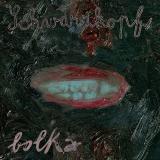
Bolka is known as the man with the cap. His cap has lived through a lot: his glitchy and microtonal experiments, studies at Institute of Sonology in The Hague or through countless performative works. A few years ago, Bolka’s cap fell apart. By that time he was already a fixture on the slovak experimental scene, but only releasing his debut album, “smutné stropy.” He started wearing new caps from then: somehow reminiscent of the old one, but much more varied — same as “smutné stropy,” bubbling with motifs, charming humour and pop sensitivity layered over detailed soundscapes popping with surprises.
On schwarzkopf, Bolka returns wishing for a thick black hair. With his charming love songs, that are positioned somewhere between a tightly run freak folk orchestra, deconstructed ballads and colorful ecstatic melancholy, he creates an album that thrives on juxtapositions that are completely unique, yet strangely familiar. Bolka’s songwriting is at once tender and irreverent — lovestruck whispering suddenly tripping over absurdist jokes and surreal images that fizz like soda. His songs move in that strange space between vulnerability and mischief, where intimate confessions collide with radical playfulness and the poetic rubs shoulders with the delightfully ridiculous.
On schwarzkopf, Bolka expands his world with a wide circle of collaborators and an even richer sonic palette. The album is meticulously detailed yet carefree: delicate moments sit next to sudden explosions, drifting from gentle pop to bursts of noise. Toward the end, the album even slips into a footwork-infused remix by Kodiki, passes through Julek ploski’s signature neon-baroque string perspective, and briefly wanders into Lénok’s cinematic sonic world. Bolka sings that he wants to dissolve into a healing ointment, to be ground in a mortar with calendula — and he invites us into this musical spa with him: a place that stings a little but ultimately soothes, a gorgeous soundscape that is both painful and joyful at the same time.
dovrebbe essere pubblicato su 05.06.2026

Belgian minimalist, Dutch-language new wave/synth pop, since 1981! The historic album ‘Jonge Helden’ (1981) brought them instant eternal fame, the single ‘Lekker Westers’ (1983) a Belpop classic & the line-up changed wildly with icons such as Luc Van Acker (Revolting Cocks), Dani Klein (Vaya Con Dios), Willy Willy (The Scabs) or Andrew Chi Claes (Stuff) ...
However, MARCEL VANTHILT (lyrics & music) continues to rock the anarcho-Dadaist-electro-super-tronica scene to this day. Side note: Vanthilt often strayed into TV land (BRT, VPRO, MTV-EUROPE, BBC) and is now a DJ at Radio WILLY with the alternative ‘De M-Show’.
AA! is once again performing frequently in the best clubs (Depot, Casino, Macca) and on major stages (Pukkelpop, Villa Pace, Paulus Oostende). This will also be the case in 2026! This is due to the fresh and spicy new album ‘AA!PKPP’ in collaboration with PARKAPARAPLU.
PARKAPARAPLU: New dark wave duo from Antwerp. With ...
> EMMA ROTSAERT, singer and actress. She plays the lead role in the Ensor-nominated TV drama series ‘How To Kill Your Sister’ (2025). And comes from the same absurd planet as Vanthilt.
> GEERT VANBEVER, veteran of Wizards Of Ooze, Rudy Trouvé Septet, Dead Man Ray, Tuff Guac, among others... worked with Hugh Cornwell (The Stranglers) and Budgie (The Banshees), among others. Together, Emma & Geert also have a Sisters Of Mercy tribute band: Body Electric.
dovrebbe essere pubblicato su 17.04.2026

Introducing the 4th instalment of the Pacific Coast House rebirth. We bring back another much sought-after 12” from The Coastal Commission & Jesse Outlaw. “Bring down the Walls” was a nod to Raze’s “Break for Love”, Robert Owens “Bring Down the Walls” and Ritchie Hawtin’s use of the Roland 606 throughout “Sheet One”. Long out of reach and fetching $100+ on Discogs, Atjazz’s freshly remastered editions are finally available .. “Let it Go” was never mastered & only ever cut to dub-plate. It has now been mastered & available in all it’s glory.
Coastal Commission “Bring Down the Walls” “Bring down the Walls” was a nod to Raze’s “Break for Love”, Robert Owens “Bring Down the Walls” and Ritchie Hawtin’s use of the Roland 606 throughout “Sheet One.” We gave the tune a Californian psychedelic twist with conga laden drums, a moody synth, low pulsing 303 patterns + Benjamin Zephaniahs patois call to “Move the Body Rhythmwize!” The first PCH releases had dropped Worldwide to International acclaim from DJ’s far and wide across the Globe with support in London, Paris & New York. However the local scene here in L.A that preached “Love, inclusion & Unity” was anything but that. L.A at that time was very tribal & divided up into 3 camps. If you weren’t affiliated with any of them (aka independent) then you were pretty much locked out of getting any kind of gig support or the Dj’s from those camps actually playing the music. The local feedback from Dj’s was that what we were making wasn’t “house,” but “Techno” which was absurd to me. “Bring Down the Walls” was a mantra to “move the bod”y and in doing so “bring down the walls” of separation not just in L.A but throughout society in general. Thank goodness for support from people like Terry Francis, Eddie Richards, DJ Deep & Philly Stalwart King Britt. After years of copies going for upward of $100+ on Discogs the now freshly remastered copies by At Jazz’s Martin Iveson are finally hitting the platters this Spring.
Jesse Outlaw “Let it Go” I met Jesse at Beatnonstop Records on Melrose Ave with Miguel Placencia in the late 90’s. Miguel (RIP) was a mainstay in the Underground scene and had always been very supportive of my endeavors. He had had success with a huge release on Yellow Orange and was working with Jesse under the moniker “When Worlds Collide.” I signed “Brighter Days” & “Set you Free” from them and released the tracks on my Seductive imprint. They told me that they were making the tracks on a Sony Playstation “Music Now” program and I was like FFS “What.s more Underground than that!?” Later Jesse gave me some of his solo work. The track “Let it Go” was never mastered & only ever cut to Dub-plate and featured on my 1st PCH mix “Pacific Coast House Sounds.” It has now been mastered by Martin Iveson and is available in all it’s glory. The dreamy vocal “You need to let it go” beckons over the top of driving percussive Latin beats and church organ which is a great compliment to the flip side of “Bring down the Walls.” All in all two West Coast stompers now finally available remastered on PCH in Orange vinyl.
Ordina ora e ordineremo l'articolo per te presso il nostro fornitore.

Don’t believe your ears - Pepper’s Ghost is the latest offering from NYC project Nuke Watch.
Whatever you think it is - it is not. By the same token it really can be whatever you want - electronica, jazz, improv, noise, new age, ambient - it’s none and all of these. Like the primitive visual illusion it’s named for - Pepper’s Ghost is a projection of a thing, it’s not the thing.
The Nuke Watch method - like that of Aaron Anderson and Chris Hontos’ other primary project Beat Detectives - leans almost entirely on live improvisation, with some advanced studio alchemy in post. Where the Beat Detectives palette draws from club music tropes, Nuke Watch blends recognizable tones (hand drums, woodwinds, keys, fretless bass) with sounds of providence unknown, the line between organic and synthesized instrumentation unintelligibly smudged. What is real and what is projection? It’s hard to say. What do our ears tell us? This is where we arrive at Pepper’s Ghost.
Warped as the sounds may be, the playing belies a crew of deeply expressive, learned improvisers who have their craft honed. Their friendship and psychic connection enhances the ritualistic rhythms, mutant modular synthesis, nimble keyboard runs, absurdist sampling and unidentified skronk. They’re wonderfully complemented across several tracks on this set by Cole Pulice’s levitational, sublime saxophone.
As unhinged as this might all appear, once the mind and music meet on the same wavelength this is profoundly moving, energizing and uplifting Alive Music that recalibrates the sense of what music can be.
Nuke Watch is Aaron Anderson and Chris Hontos, with an array of friendly guests. They’ve released records as Nuke Watch on The Trilogy Tapes, Commend and Moon Glyph. As Beat Detectives they’ve released records on Not Not Fun, 100% Silk and their own studio imprint NYPD Records.
Pepper's Ghost was written and produced by Aaron Anderson and Chris Hontos. Additional instrumentation on these recordings by Cole Police, Leonard King, Eric Timothy Carlson, Chris Farstad and William Statler. It was mixed by Chris Hontos and mastered by Jack Callahan. Painting on the cover is “The Unity Of Being” (2020), by Ry Fyan. Design and layout by Aaron Anderson.
RIYL - Musical illusions, puzzles and magic tricks, downtempo, music of the spheres, good journey, Eddie Harris, Ketron, "world building", orange sunshine, suspension of disbelief.
Ordina ora e ordineremo l'articolo per te presso il nostro fornitore.

The journey through French-speaking pop archives continues with this fifth volume, packed with fuzz, gimmicks, and dissent. Far from the charts, the selected tracks display a great creative freedom, often backed by corrosive humor. Welcome to the surprising, kaleidoscopic, and colorful world of the late sixties and early seventies, Wizzz!
Born in Montauban, Robert Pico stumbled into music by chance when he met René Vaneste, then artistic director at Pathé-Marconi. René brought him to Paris to record his first 45 RPM EP in 1964. A year later, Pierre Perret introduced him to Vogue, where he recorded his second album with Claude Nougaro’s orchestra. Sylvie Vartan then introduced him to RCA, where he recorded four singles, including the astonishing "Chien Fidèle," a track backed by a hair-rising fuzz guitar. Alongside his solo career, he also composed for other artists like Alain Delon (the song was recorded but remains unreleased), Magali Noël, Bourvil, and Georges Guétary. In the Paris of the sixties, he mingled with Mireille Darc, Elsa Martinelli, Marie Laforêt, France Gall, Françoise Hardy, Petula Clark, Régine, Dani, Serge Gainsbourg, Joe Dassin, Franck Fernandel, Charles Level, and Roland Vincent. Despite his efforts and winning a Grand Prix Sacem for his final record, Robert Pico didn’t achieve the expected success in show business and decided to leave Paris and return to the Southwest, where he devoted himself to writing. He is the author of 23 books (including Delon et Compagnie, Jean-Marc Savary Editions 2025, a memoir about his youth and his many encounters). Today, he is relieved to never have become a celebrity and devotes himself to his work with passion.
In 1969, the Franco-Italian movie Erotissimo was released, directed by Gérard Pirès (who later directed Taxi in 1998, written and produced by Luc Besson). This pop comedy features Annie Girardot, Jean Yanne, Francis Blanche, Serge Gainsbourg, Nicole Croisille, Jacques Martin, and Patrick Topaloff. The soundtrack was written by Michel Polnareff and William Sheller, with lyrics by Jean-Lou Dabadie. "La Femme Faux-cils," performed by Annie Girardot. It recounts the feelings of a rich CEO's wife who seeks to develop her sex appeal under the influence of advertisement and magazines. Groovy, sparkling and light, this track, with ITS lush arrangements humorously critiques consumer society and feminine beauty standards.
“Je suis l’Etat” (1967) is the flagship track of the first EP by singer-songwriter Spauv Georges, aka Georges Larriaga, better known as Jim Larriaga (1941-2022). Born into a family of bakers, the young man was initially planning to become a hairdresser when he discovered English-speaking music through Elvis Presley and the Beatles. After this revelation, he decided he would become a songwriter and gave himself five years to succeed. He recorded his first two EP’s independently for RCA under the pseudonym Spauv Georges; meaning “that poor George”, a nickname given to him by the mother of her friend Jean-Pierre Prévotat (future drummer of the Players, Triangle, or Johnny Hallyday). Portraying a depressed and eccentric young man, Spauv Georges created corrosive and amusing songs that didn’t reach a wide audience, despite a TV appearance with Jean-Christophe Averty.
Supported by his loyal friend and fellow songwriter Jean-Max Rivière, Georges Larriaga met the future singer Carlos in the early '70s, then Sylvie Vartan’s assistant. He wrote songs for Carlos, including the popular "La vie est belle," "Y’a des indiens partout," and "La cantine", which went onto become a huge hit in 1972. He also composed for Claude François (“Anne-Marie”, 1971), Charlotte Julian (“Fleur de province”, 1972), helped launch child singer Roméo (who sold 4 million records), and later wrote the hit "Pas besoin d’éducation sexuelle" (1975) for the young Julie Bataille. In 1971, Jim recorded an album for Disc'Az: “L’univers étrange et fou de Jim Larriaga”, which featured pop gems like “La maison de mon père”.
The story of the song "Zoé" began when Pierre Dorsay, artistic director at Vogue Records, asked Swiss singer and musician Pierre Alain to write a song for a new female singer. The inspiration came when he realized that Zoé (the artist's name) was also the name of France's first atomic battery, created in 1948, which consisted of uranium oxide immersed in heavy water! The lyrics reflect a bubbling energy that must be handled with caution, while the instrumentation echoes this atomic theme, notably with the use of a theremin.
Zoé’s career lasted only as long as a single 45 RPM, but it seems Christine Fontane was the vocalist behind this pseudonym, who is known for several EPs, a good "popcorn" album in 1964, and a handful of children’s singles in the '70s. Regardless, the photograph on the cover is of a different girl entirely.
Later, Pierre Alain continued his career, writing songs for himself, Marie Laforêt, Danièle Licari, Alice Dona, Arlette Zola (3rd place in Eurovision 1982), and achieving multiple gold and platinum records in Canada. Also an inventor with several patents, president of the Romande Academy, and head of the French Alliance in Geneva, he now composes atonal music, books, and poetry. Moreover, he is also the host of "Les Mardis de Pierre Alain" at "Le P'tit Music'Hohl" in Geneva.
Filled with oriental choruses and fuzz guitar, "Fou" is from Jacques Da Sylva's only EP released by Vogue in 1967. Despite the quality of this recording, all traces of this singer disappear after this first effort.
Valentin is a baroque pop singer born in Belgium. He is the songwriter and composer of most of the tracks on his three singles released in the late 60s in Canada. A legend says that he reincarnated himself as Jacky Valentin during the 1970s for a rock'n'roll revival career in Belgium, but his older brother sadly debunked this story. Valentin's first two singles were arranged by Claude Rogen, a Parisian session pianist who had come to Canada to promote the song “Mister A Gogo”, a cover of David Bowie’s “Laughing Gnome”, adapted by singer Delphine, his wife at the time. Far from his usual network, Claude Rogen arranged music for Polydor, including the arrangements for “Je suis un vagabond” in 1969, a jerk tune with string arrangements and a furious optimism.
Jacques Malia wrote, composed, and recorded his only 45 EP for Festival in 1966. “Histoire de gitan” is an incredible beat track with bohemian scat that tells the story of a gypsy musician who came to Paris to make it in the Music-Hall, to no avail. The hero of the song and its author probably shared a similar fate, as Jacques Malia faded into anonymity after this remarkable attempt.
Bernard Jamet recorded two EPs for Barclay in the late sixties and co-wrote several songs with Christine Pilzer, Pascal Danel, and prolific songwriters Michel Delancray and Mya Simile. The track “Raison Légale” (1968), his masterpiece, immerses the listener in a courtroom right when a murderer is being judged, with jerk rhythm and free arrangements. A unique, paranoid, judicial, and psychedelic oddity.
Jean-Pierre Lebrot-Millers started his career in show business in 1967 as a singer and songwriter for the Philips label. After three singles, he wrote several songs of a new kind with his friend Pierre Halioche, in the midst of the sexual liberation movement and the democratization of drugs. With provocative lyrics, “Les filles du hasard” and “Barbara au Chapeau Rose” were released on a Philips singles in 1968. The character of Barbara was inspired by a queen of Parisian nightlife during the psychedelic years: model Charlotte Martin, who dated Eric Clapton from 1965 to 1968, then Jimmy Page from 1970 to 1983. Jean-Claude Petit’s arrangements, with a table-filled intro, soul brass, and Hendrixian guitar, emphasize the flamboyance of a hedonistic and sexy character, whose dog is named Junkie because “Junkie est un nom exquis”! The track was recorded live in three takes with a full orchestra.
Upon its release, the record was censored by Europe 1 and RTL due to its references to drug use. Jean-Pierre Lebrot was then banned from the airwaves and later dismissed by his record label. He changed his artist name to Jean-Pierre Millers, while his companion Pierre Halioche became D. Dolby for a new dreamy composition, “Chilla”, which Jean-Pierre produced himself with arrangements by Jean Musy. Once again, the song was immediately censored everywhere. After this setback, he decided to stop singing and started taking on odd jobs to support his Swedish wife and their son until the day he met Jean-Pierre Martin, then production manager at Decca, who had worked with Manu Dibango. Martin offered Jean-Pierre Lebrot-Millers, then employed at Rank Xerox, the position of artistic director at Decca. He accepted and became, a year later, promotion director (radio, press, TV). He worked on Julio Iglesias’s first album for Decca, which became a massive hit and allowed him to meet Claude Carrère. The latter asked him to write new songs and find their performers, much like a “talent scout.” It’s through him that Jean-Pierre discovered Julie Pietri and Corinne Hermès. He composed “Ma Pompadour” for Ringo, Sheila’s husband, and took the microphone again for the syncope hit “Rendez-Vous” in 1982.
That same year, Jean-Pierre Lebrot-Millers tried to release a track for which he had heavily gone into debt: “Si la vie est un cadeau”. Having recorded it in London, he presented it to numerous professionals, all of whom refused to get involved. The same thing happened with Antenne 2 and the Sacem when he proposed the song as France’s entry for Eurovision. He then met Haïm Saban, who was producing cartoon soundtracks and had just launched the Goldorak theme song. Saban, having listened to the song, declared it had the potential to become a hit. He sent Jean-Pierre and Corinne Hermès to meet the CEO of the Luxembourg radio and television network. The latter received them, asked to hear a verse and chorus a cappella in his office, and immediately hired them to represent Luxembourg at Eurovision 1983. They reworked the arrangements and recorded a new version with Haïm Saban as co-producer. The song ended up winning Eurovision 1983, a great comeback for our hero. He continued producing and hung out with the band Nacash in Belgium when a couple came to introduce their daughter for an impromptu audition in a hotel room. The girl sang “Les démons de minuit” while dancing to a radio cassette. Impressed, he had her take singing lessons for a year and composed a song for her (for which he had the melody and title, but no lyrics). This required him to go on the hunt for a lyricist, who ended up being Guy Carlier. They recorded the song, which was initially a ballad, at Bernard Estardy’s CBE studio, and gave the singer a new name: Melody. They showed the song around their industry network without success. Later, Estardy called Jean-Pierre to suggest changing the rhythm and making it pop-rock. Orlando, Dalida’s brother, liked the result and decided to co-produce the track. “Y’a pas que les grands qui rêvent » became a classic hit. The song has since been covered by Juliette Armanet (as a ballad, like the original) and Valentina.
Born into an aristocratic Breton family, Hervé Mettais-Cartier worked as a DJ at Queen Kiss, a nightclub in Poitiers, where he formed the band Les Concentrés with Michel (an actor) and Christian (a radio technician). Together, they created a repertoire of whimsical songs (“Ma bique est morte”, “J’suis un salaud”, “Fils de dégénéré”...) that they performed on stage dressed in white (in homage to “concentrated milk”). They performed at Bliboquet and Olympia in 1968 for the 10th edition of the “Relais de la chanson Française” organized by L’Humanité-Dimanche and Nous les Garçons et les Filles, sponsored by Pepsi Cola. Winners in the author-composer category, alongside Danish singer Dorte, their visibility allowed them to record a 45, and appear on television in Jean-Christophe Averty’s show. The A-side of the disc features Bruno le ravageur, a casatchok dedicated to Bruno Caquatrix, the director of Olympia, nicknamed in the song “Coq Atroce” or “croque-actrices”. The B-side is dedicated to “Fils de dégénéré”, a quirky tribute to Hervé's aristocratic roots, mixing absurdity with sophisticated vocal harmonies.
After Les Concentrés, Hervé Mettais-Cartier formed the duo La Paire et sa Bêtise with his friend Olivier Robert. They performed in Parisian cabarets and toured with Pierre Vassiliu. In the late 1970s, Hervé began a solo career. He recorded two albums for the Motors label in 1978 and 1979, which did not achieve their anticipated success due to lack of promotion. In 1980, he met Bernadette, with whom he started a family and created a “Chansons à voir” (songs to see) show that he performed until his death at the end of 2024.
Publicité comes from the final EP by the Missiles (Ducretet Thomson, 1966), a disc that also includes “La (nouvelle) guerre de cent ans”, featured on Volume 4 of our Wizzz! series. Please refer to the booklet for the story of the band.
“He’s 1.82 meters tall, 28 years old, weighs 135 kg, is black and Belgian”: this is the description of singer Hegesippe on the back of his sole single (Decca, 1967). He appears on the album cover wearing a Greek toga, like a hippie gag – we are at the end of the year 1967. In “Le crédo d’Hegesippe”, this former bodyguard of Antoine and the Charlots plays the delightful card of the thick brute converted to Flower-Power and non-violence, with arrangements by Jean-Daniel Mercier, aka Paul Mille.
“Ethéro-disco” was released on a promotional record for clients of the Maréchal company (Liège, Belgium) for the New Year 1979. Over a funky rhythm, celebrity impersonations (Brigitte Bardot, Jacques Dutronc, Fernandel…) deliver an enigmatic text about pharmaceutical products like ether, bismuth, and aspartate. The track was composed by Dan Sarravah (responsible for Joanna's “Hold-up inusité” featured on Wizzz! Volume 3) and Tony Talado, who was also a singer (one 45 in 1967), songwriter (with over a dozen credits between 1964 and 1985 in various styles from surf music to disco), author (Devenez Végétarien, Dricot Editions, 1985), ad designer, and psychologist.
Décollez-les is on the A-side of Mamlouk's only single, a pseudonym for Marsel Hurten, who is known for his work on several EPs in the late sixties, as well as composing music for Hervé Vilard’s “Capri, c’est fini”, Claude Channes' “La Haine”, Annie Philippe’s “On m’a toujours dit”, and Nancy Holloway’s “Panne de Cœur”.
This strange song, with Afrobeat horns and absurd dialogues between a chef and his kitchen staff, is the result of a collaboration between Marsel Hurten and one of his neighbors, a photographer from Pavillon-sous-Bois (93), where the musician settled after returning from the Algerian War. A music video was shot to promote the record.
Marsel Hurten was born in Tourcoing (59) into a musical family. At a young age, he joined the brass band founded by his grandfather, playing the piston before studying trumpet at the conservatory, as well as teaching himself how to play the guitar. As an orchestra musician, he toured in France, Belgium, Germany, and England. He released a series of solo 45’s between 1965 and 1968 for the DMF and Az labels before stopping recording to focus on working for other artists (Gilles Olivier, Noëlle Cordier…).
“L’amour nu” (Vogue, 1971) is the work of the short-lived Belgian band Mozaïque. The track, written by singer Jacques Albin, closely resembles another of his compositions, “Carré Blanc”, which he recorded in 1969 for Disc’AZ.
Represented by the Lumi Son micro-label based in Marignane (Côte d'Azur), Jean-Marc Garrigues released two 45 RPMs in the late sixties, defending the French jerk sound. The song “Je dis Non” is a short, joyful ode to youth, pop music, and rebellion.
Songwriter and performer Jacques Penuel released three singles. The first one, “Astronef 328” (Fontana, 1969), features a dizzying series of chords punctuated by sound effects, a sci-fi story, and arrangements by Jean-Claude Vannier.
We would like to sincerely thank Pierre Alain, Moon Blaha, Marsel Hurten, Bastien Larriaga, Jean-Pierre Lebrot-Millers, Bernadette Mettais-Cartier, Robert Pico, Olivier Robert, Claude Rogen, Micky Segura.
Ordina ora e ordineremo l'articolo per te presso il nostro fornitore.

‘Absurd Matter’ is a labyrinthine sonic conundrum that spirals around the two poles of extreme noise and hiphop. It's Berlin-based Italian producer Shapednoise's first album in four years and confidently advances his narrative into the next chapter, building on the groundwork of his prior abstractions to emerge with a coherent genre-warped fusion of urgent rap, crushing bass weight and idiosyncratic sound design. After spending years scrupulously deconstructing club music, Nino Pedone has rebuilt it brick by brick in his image.
The album is the first release on Pedone's brand new imprint WEIGHT LOOMING, a multidisciplinary label platform that's set to explore the depths of bass music, textured noise and abrasive transcendence. It follows a slew of acclaimed releases for Numbers,
Opal Tapes, Type and his own Cosmo Rhythmatic label, and forward thinking collaborations with Kenyan beat alchemist Slikback and Hyperdub-signed Angolan producer Nazar. Pedone's most ambitious project to date, ‘Absurd Matter’ taps into kinetic energy from a hand-picked selection of collaborators, including New York rap duo Armand
Hammer, French DJ/producer Brodinski, Bruiser Brigade's ZelooperZ and vanguard Philly poet, musician, and activist Moor Mother.
On ‘Family’, Billy Woods and Elucid weave a dismal, apocalyptic landscape with their razor-sharp anecdotes. The duo’s macabre imagery is given artificial life by Pedone's industrial scrapes and rattles that curl around their worlds like thick smoke. It's still rap, just about, but lodges itself in the back room of a factory, machines running themselves to an early death. Pairing with techno-rap trailblazer Brodinski, Pedone edges further towards the sound system, spatializing rhythms in four dimensions around Detroit rapper
ZelooperZ's playful expressions. This is the Italian producer's sci-fi tinged liquefaction of radio echoes, a way to fire familiarity into the void and sublime the human voice into weightless mist. When Moor Mother arrives shouting "me me me" on the aptly-titled 'Poetry', it sounds as if all of Pedone's loose threads are being tightened into a knot. His misshapen neo-grime beats sound like a broken jet engine, but smartly cede power to Moor Mother's resonant rhymes. "You can't cancel me" she assures. ‘Absurd Matter’ is a defining personal development for Pedone that not only appraises his career so far, but diverts its logic into frighteningly new sonic territory. From great loss, the producer has determined his work's cardinal themes, and sounds more strident and far heavier than ever before.
Ordina ora e ordineremo l'articolo per te presso il nostro fornitore.

2023 Repress
DJ Koze - with his friendly and sometimes slightly melancholic take on the world - is one of the greatest auteurs of club music today, and one of the few internationally active DJs who dares to make music that has relevance beyond the dance floor. During the 70-minute journey on his DJ Kicks - the 50th edition - Kosi
Kos manages to establish a uniform color even though genres alternate in a way that is rarely heard on a mix CD: the stripped down hip hop of Madlib, brutalist Berghain techno, timeless songwriting, floating indie-pop and outlier numbers that oscillate between absurdity andmelancholy. Koze's disregard for the stylistic yoke presents him with an immense challenge. Hence, almost all the tracks are more or less edited, and one is fully rhymed (Session Victim: Hyuwee).Koze rambles on here himself: "I didn't want to kick around ophisticated knowledge, but rather try and weave together some good gems that would make sense to anyone, even people who aren't necessarily music nerds". But this is blabbing that you can count on, also because he approaches the term "mix" from a different angle and doesn't even try to make something fit that doesn't fit: "During the day, I don't need to hear anything that's mixed on the beat. I put the focus on making sure that it works harmoniously - the idea is more to create the impression of a radio show, like people such as John Peel did so uniquely. There is a giant cosmos of music and it runs through my filter".
Ordina ora e ordineremo l'articolo per te presso il nostro fornitore.

A noughties classic, an earworming anthem, an eventual schoolyard ringtone favourite; Roman Flügel’s once inescapable ‘Geht’s Noch?’ celebrates turning 21 on Running Back, refreshed and remixed by a scene-spanning set of artists paying keen tribute to its absurdist energy.
Casually released as part of a Cocoon Records compilation in 2004, ‘Geht’s Noch?’ rose from the depths with the support of Sven Väth, becoming an international phenomenon, conquering and uniting the dominant scenes of minimal and electroclash alike. Some have said it laid the foundations for the ‘Dirty Dutch’
house scene, albeit from over the border in Germany.
Well known for injecting much-needed levity into the contemporary club landscape via her Live From Earth parties, DJ Gigola adds additional firepower to ‘Geht’s Noch?’, inducing a planet-shaking kick drum, before sending the track’s signature bleeps into nonsensical Morse code for even greater pleasure. Another rave
culture connoisseur, Luca Lozano, offers two alternate takes; his ‘Technocs’ mix rolls deep with additional cowbells, robotic voice commands and stadium-sized claps. Meanwhile, the ‘Gehts Garage Remix’ draws a savvy connection with the original’s as-yet-untapped UK funky potential.
Peder Mannerfelt, who straddles the line between innovation, functionality, humor and seriousness quite like its original author, takes ‘Geht’s Noch?’ to truly wuthering heights. His remix builds unexpected drama and catharsis around the enduring riff, before a collaboration with studio partner Par Grindvik as Aasthma
spins the club out with a glossy, anime-tinted take, full of whimsy and colour.
And while the digital release of Geht’s Noch? also spans interpretations from Audion, Domnik Eulberg & Moguai, this vinyl release presses Steve Angello vs Who’s Who remix to wax, that which helped take ‘Geht’s Noch?’ out of the underground and into the stratosphere. Twenty years on, and Flügel’s offbeat hit is always ascending. Love it or hate it, ‘Geht’s Noch?' will still get you good.
Words by John Loveless
Ordina ora e ordineremo l'articolo per te presso il nostro fornitore.

From Sweden with Italo to Dresden with love. Stockholm's DJ City drops his first release on Dresden's Uncanny Valley with the COSMICOMICS EP, a 100% fun record for all the senses, deeply inspired by Italo Calvino's iconic short story collection.
The stories have inspired DJ City to a record that aesthetically draws from 80s Italo Disco and 70s science fiction films. In the book, each story is based on a scientific fact about the world and the cosmos whilst using fiction to ask how we understand it. Where Calvino's stories are comical and absurd, DJ City surrenders to the sublime and romantic and moves further into the metaphysical world that Calvino created to come up with three energetic and melodic tracks bursting heavily with fantasy and drama. Deeply rooted in dance music's history, they shine with Hi-NRG-vibes, strict dancefloor commitment and little easter eggs like that Drexciya-reference in COSMICOMICS.
The cover of the record is a painting from 2020 by Swedish artist Jens Faenge called THE INN. The picture seems to have been broken up into several dimensions, and abstract details make it difficult for the viewer to know exactly what and when the scene is taking place. When shown in Shanghai, the painting was censored by government agents and had to be taken down. A testament to the power of the image. Perhaps it shows our main character, perhaps it shows us the author or the artist. Depending on who listens, who reads and who looks, a multitude of universes open.
Ordina ora e ordineremo l'articolo per te presso il nostro fornitore.

Set for release at the height of the season it’s dedicated to, ‘Music For Autumn Lovers’ by Adam Scrimshire is an eight track album of lush, mostly acoustic based, minimal instrumentals eliciting a mixture of feelings for this special time of year.
Four tracks originally released on an EP in 2022 are joined by new compositions ‘Hawthorn’, ‘Hazel’, ‘Willow’ and ‘Blackthorn’. Gently finger-picked acoustic guitars cosy up alongside pianos, synthesisers, strings and horns; filtered through an autumnal hue of susurrous production and effects. In turns comforting, melancholic and evolutionary; it feels like an album that can be kept being made and remade forever, like a season in itself.
Both a relentless creator and inspiring champion of new music; South London based Scrimshire has been recording, producing and DJing since the mid 2000s. Amongst his credits, he was featured by the Guardian as one of three producers behind the new wave of UK soul, alongside Inflo (Michael Kiwanuka, Sault, Lil Simz) and Swindle (Joel Culpepper, Greentea Peng, Kojey Radical). His bold 2023 album ‘Paroxysm’ was a response to the absurdity of the breakdown in the UK government, picking up an Album of the Week award on Huey Morgan’s BBC 6 Music show, and 2021’s beautiful ‘Nothing Feels Like Everything’ received an Album of the Year nomination at the Gilles Peterson Worldwide Awards. Scrimshire also somehow finds the time to support a wealth of talent on his label Albert’s Favourites, formed with Dave Koor and Jonny Drop, where they have recently released albums by And Is Phi, Huw Marc Bennet, Inês Loubet, Irini Arabatzi, Jonny Drop & Andrew Ashong, and Qwalia.
Radio Support: Gilles Peterson (BBC Radio 6 Music), Tom Ravenscroft/Deb Grant – New Music Fix (BBC Radio 6 Music), Huey Morgan (BBC Radio 6 Music) Guy Garvey (BBC Radio 6 Music)
Ordina ora e ordineremo l'articolo per te presso il nostro fornitore.

Boudica is proud to present their first record of 2024, featuring an artist who holds a special place within the platform - none other than DJ and producer Wallis.
DJ, live-act and former mastering engineer, Wallis speaks for a generation searching for novelty and emotion in the electronic music realm.
Sharp engineering skills coupled with a unique approach to sound design allowed her to develop a trademark sound. Using an array of synthesisers, effects units, and experimental studio techniques, Wallis produces melancholic electronic music rapidly shifting between different patterns and atmospheres.
She tours as a DJ and Live Act around the world, having played large festivals such as DGTL or renowned clubs like Berghain, and will happily play at a large stage one day but at a small intimate sweaty basement the next.
In 2024, she started producing music for fashion shows and debuted that project by creating the music for the entire Natasha Zinko runway show at London Fashion Week February 2024.
The EP's opening track, "Hell is a Girl from Before (Rainy Summer Mix)," introduces a stirring blend of emotions. Starting with an emotional melody, accompanied by synths and a plucked instrument, it swiftly transitions into energetic segments driven by the drums. Vocals emerge, their words almost imperceptible, adding an intimate layer to the experience. The track maintains a steady pace, evoking the ambience of a rainy summer day. This creates a melancholic yet hopeful mood, transporting listeners through a journey of introspection.
As "Protect Me From My Friends" unfolds, it feels like being whisked away to a new dimension, greeted by otherworldly, robotic sounds. The introspective journey of the previous track mutates into raw emotions, driven forward by a relentless bassline. Clear vocals take the forefront, guiding the listener through the sonic landscape, only to be interrupted by the commanding presence of the bassline, which assumes the main character role.
In "Sleeping Pills Are Gone," an atmospheric and gloomy introduction is abruptly interrupted by an acid and hefty bassline that dynamically evolves throughout the track, plunging the listener into an eyes-open dream born of a sleepless night. The vocals echo the track's title, creating a haunting repetition. Wallis strategically grants brief breaks, constructing a powerful crescendo that heightens the experience. These are momentary escapes before immersing the listener once more into the hypnotic trance induced by the solid four-to-the-floor march.
Closing the EP with a striking finale, "Teenage Apocalypse" introduces a clunky melody that encapsulates the signature sound of the record. Characteristic vocals weave throughout, guiding the listener towards the track's crescendo. Driven by a flawless fusion of drums, the song transitions seamlessly into a powerful breakbeat moment, accompanied by yet another impeccable bassline. True to its title, it evokes the intensity of a day of judgment, leaving a lasting impact as the EP draws to a close.
This EP is a testament to Wallis's growth as a producer and her fantastic storytelling ability through sound.
In the artist's words: "Sometimes life takes a weird turn. Angry, confused and dealing with moral: this EP targets the pain and absurdity of attachment and strongly themes Gregg Araki's teenage apocalypse trilogy. The artwork poem plastered on the wall was written by wallis."
Ordina ora e ordineremo l'articolo per te presso il nostro fornitore.

Club music reduced to its essential elements, those elements then pushed to their limits! Dangerously malfunctioning DJ tools! The Feeling of Power!
All that and much more on this striking new record from the one and only Barnt, the great reductional absurdist finally appearing on Studio Barnhus, providing concrete proof of the secret, decade-long love-affair between artist and label, after a bunch of Barnt b2b Boman DJ sets over the years, Kornél Kovács’ legendary “disco edit” of classic Barnt track “Chappell”, endless “Studio Barnthus” jokes, etc.
Ordina ora e ordineremo l'articolo per te presso il nostro fornitore.

Das neue Album der französischen Reggae-Legende Big Red, eine Hälfte des Duos Raggasonic, ist ein Trip in die Welt der Soundsysteme und des modernen Dub, ein gekonntes Navigieren zwischen Roots-Reggae und heutiger Bassmusik. Begleitet wird er von der jungen Generation französischer Dub/Reggae-Produzenten wie OnDubGround (ODG), Little Lion Sound, Radikal Vibration, Bisou Dub, Irie Ites und DJ Absurd, die den Tracks ihre eigene Note verleihen. Mit seinem unnachahmlichen Flow befasst sich Big Red mit sozial engagierten Themen wie institutionellen Rassismus, Polizeigewalt und die Exzesse unserer Gesellschaft.
dovrebbe essere pubblicato su 13.09.2024

Dubstep's origins lie in dark 2-step mutations that evolved on dancefloors and in studios in the early 2000s. That same fusion of swing and space and subs can be found by the bucketload throughout the new EP by one of DNO’s staples, Kercha.
Skippy speed garage hats and slippery globules of bass animate the otherwise sparse production on the opening track ‘Feature’, while the wild beat on ‘Absurd’ could catch out any DJs not giving it their full attention. Wrapped in Kercha’s signature sonic debris, it delivers three and a half minutes of rattling, clicking, squelching wizardry.
The B-side gives us ‘Stimulate’, a collaboration with new-gen rising star Hypho. Indebted to trap, it’s full of militant 808 hi-hat rolls and the kind of firing synth tones that spell doom in a sci-fi movie (and tear up festival stages).
Finally, ‘Saturday’ is classic Kercha: sub-bass from the Seventh Circle, and so many suspicious chirps, whistles and hoots that it could soundtrack a nighttime stroll through the woods just as easily as skanking in a smoked-out sweatbox. The track is peppered with voice notes from a friend — snatches of funny, halfcut chatter, as random in content as Kercha's non-vocal sampladelia. The final snippet, which translates to “Saturday dictates its rules”, gives the track its name. A statement that can be read in all sorts of ways, it could even confer a motto for this whole collection, reflecting Kercha’s trademark originality.
The ‘Absurd’ EP is one of Kercha’s most dancefloor-directed releases to date, and whether conjuring the ghosts of club nights past or envisioning the raves of the future, it’ll be dominating sound systems for a long time to come.
Rhythms of postmodern realism at the very bottom of the DNO.
Ordina ora e ordineremo l'articolo per te presso il nostro fornitore.

Aim 2 Pleez was a label made primarily for N-Zo & DJ Invincible to have an outlet for jungle in the early days of the genre but they definitely leaned more towards the more musical side of the sound. The label didn’t last that long but the end result is that the few releases on the label are now very sought after, fetching absurd prices on second hand websites, and this EP is in particular demand.
They are two tracks of immense proportions, that not only appeal to the junglists but to breakbeat hardcore lovers alike. A proper crossover EP that has stood the test of time, sounding just as fresh today as it did back in 1994!
Ordina ora e ordineremo l'articolo per te presso il nostro fornitore.

Pink Vinyl
Canadian producer Dylan Khotin-Foote has kept his Khotin alias going for the better part of a decade; the impressionistic electronic project shifts with the movements in his life. Sometimes it leads, like when the club-friendly grooves of 2014's Hello World immersed him in the heart of Vancouver's underground dance scene, and sometimes it follows, like 2018's Beautiful You, a downtempo salve for DJ fatigue His melodic sensibility and playful ear for atmosphere remain the rippling core of the project's fingerprint; whether beat-driven or ambient, a foggy smear or a dusted and pristine print, a Khotin track has a distinct and instantly recognizable swirl. During and after the 2020 release of Finds You Well, his second LP on Ghostly International, Khotin-Foote settled back into a slower vibe in his hometown of Ed- monton. Even before the pandemic, his pivots to softer production, and away from DJing, left him with fewer opportunities in Vancouver and club bookings overall, and as a self-identifying introvert, he was fine with that. But the change of pace did open space for Khotin-Foote to grapple with concepts of adulthood and career. At his lowest, he almost walked off this musical path altogether; instead, he doubled down on the craft _ the tone, pacing, and dynamism of new material _ arriving at a definitive full-length. With Release Spirit, Khotin releases himself from the pressure of expectation, fusing and refining everything we know about his music. The warmth and familiarity of Khotin's dreamy, dulcet style meet new ideas and frameworks, a natural progression, a modest revelation; Khotin confirms it is okay to move slowly and he's never sounded better doing it. The album title borrows from the "release spirit" mechanic in the video game World of Warcraft. When players die, they are prompted to release their spirit and return as ghosts to find their corpses and come back to life. Khotin sees it as a worthy metaphor for the impending change his return home presented and the resulting process of purging artistic expectations to find his creative self again. On this go- around, he is freer, more playful, and more intentional within his palette of warped synth, breakbeats, and piano sounds _ including the classic Casio SK-1 presets he's used since the start _ mingling with wistful samples, field recordings, and other abstract snippets. For the first time, he enlisted Nik Kozub to do the mix and assist with sequencing. Khotin-Foote has long worked with the Edmonton-based musician and engineer in the mastering phase, as well as their days co-running the label Normals Welcome, and this time was able to involve his ears earlier given their newfound proximity. "I think it's my best sounding record to date." We begin on "HV Road" or Happy Valley Road, where Khotin-Foote spent time during a family vacation in British Columbia's Okanagan Lake. His plans to record crickets at night are quickly foiled by his younger siblings; the cute exchange orients the listener to a core memory of sorts, setting the tone of universally understood warmth and wonder that has defined some of Khotin's most transportive tracks. Hazy percussion takes hold, and we are swept further into the wisp of "Lovely," a grooving, melodic standout built on the interplay between the beat and human voice-like hums. Khotin knows this zone well; equally suited for a reverie or a club warm-up. The bubbling atmosphere and absurdity of "3 pz" offer a cosmic/comic interlude and also speak to reflections on his family's move to Canada two generations ago, and the audio tutorials they used to learn English. "I can only imagine my grandpar- ents repeating some of the bizarre phrases." "Fountain, Growth" finds Khotin in collaboration with Montreal's Tess Roby (Dawn to Dawn) for the project's first-ever vocal track. Roby's soft cadence echoes atop spiraling air pockets of rhythmic production, lending a breezy, almost shoegaze pop feel. Throughout the single and the album, wind gusts between the compositional layers, akin to the roaming spirits of its namesake, curving around the birdsong of "Life Mask" and seamlessly reaching "Unlimited <3." The latter bumps in slow motion; disembodied whirrs from his Casio collide with 808 drums and sub-bass for a vibe that teeters on trap and instrumental hip-hop. Release Spirit rests in a dream sequence. Oscillating synth lines dance around the heartbeat of "Techno Creep," a hyperactive REM state before the digitized ambient sprawl of "My Same Size." In the final pass, Khotin imagines transcontinental travel from the glow of his screen. He recorded "Sound Gathering Trip" to soundtrack a genre of YouTube videos he's taken to that follows train routes through Europe and Japan. The scene is serene and moving; piano keys warble as static-filled sound design shimmers off the rails, from cityscapes to the countryside, an introspective ride through a world beyond his bedroom. It doubles as an apt parting image for Khotin's project as a whole: dreaming big but happiest when riffing on the details, shaping environments from the inside out. Over the last decade, he has stretched from his core in Edmonton, leaving a trace in Vancouver and beyond; but when all signs point home, he loops back to see it all from a different vantage, revitalized, refined, and free.
Ordina ora e ordineremo l'articolo per te presso il nostro fornitore.

Canadian producer Dylan Khotin-Foote has kept his Khotin alias going for the better part of a decade; the impressionistic electronic project shifts with the movements in his life. Sometimes it leads, like when the club-friendly grooves of 2014's Hello World immersed him in the heart of Vancouver's underground dance scene, and sometimes it follows, like 2018's Beautiful You, a downtempo salve for DJ fatigue. His melodic sensibility and playful ear for atmosphere remain the rippling core of the project's fingerprint; whether beat-driven or ambient, a foggy smear or a dusted and pristine print, a Khotin track has a distinct and instantly recognizable swirl. During and after the 2020 release of Finds You Well, his second LP on Ghostly International, Khotin-Foote settled back into a slower vibe in his hometown of Ed- monton. Even before the pandemic, his pivots to softer production, and away from DJing, left him with fewer opportunities in Vancouver and club bookings overall, and as a self-identifying introvert, he was fine with that. But the change of pace did open space for Khotin-Foote to grapple with concepts of adulthood and career. At his lowest, he almost walked off this musical path altogether; instead, he doubled down on the craft _ the tone, pacing, and dynamism of new material _ arriving at a definitive full-length. With Release Spirit, Khotin releases himself from the pressure of expectation, fusing and refining everything we know about his music. The warmth and familiarity of Khotin's dreamy, dulcet style meet new ideas and frameworks, a natural progression, a modest revelation; Khotin confirms it is okay to move slowly and he's never sounded better doing it. The album title borrows from the "release spirit" mechanic in the video game World of Warcraft. When players die, they are prompted to release their spirit and return as ghosts to find their corpses and come back to life. Khotin sees it as a worthy metaphor for the impending change his return home presented and the resulting process of purging artistic expectations to find his creative self again. On this go- around, he is freer, more playful, and more intentional within his palette of warped synth, breakbeats, and piano sounds _ including the classic Casio SK-1 presets he's used since the start _ mingling with wistful samples, field recordings, and other abstract snippets. For the first time, he enlisted Nik Kozub to do the mix and assist with sequencing. Khotin-Foote has long worked with the Edmonton-based musician and engineer in the mastering phase, as well as their days co-running the label Normals Welcome, and this time was able to involve his ears earlier given their newfound proximity. "I think it's my best sounding record to date." We begin on "HV Road" or Happy Valley Road, where Khotin-Foote spent time during a family vacation in British Columbia's Okanagan Lake. His plans to record crickets at night are quickly foiled by his younger siblings; the cute exchange orients the listener to a core memory of sorts, setting the tone of universally understood warmth and wonder that has defined some of Khotin's most transportive tracks. Hazy percussion takes hold, and we are swept further into the wisp of "Lovely," a grooving, melodic standout built on the interplay between the beat and human voice-like hums. Khotin knows this zone well; equally suited for a reverie or a club warm-up. The bubbling atmosphere and absurdity of "3 pz" offer a cosmic/comic interlude and also speak to reflections on his family's move to Canada two generations ago, and the audio tutorials they used to learn English. "I can only imagine my grandpar- ents repeating some of the bizarre phrases." "Fountain, Growth" finds Khotin in collaboration with Montreal's Tess Roby (Dawn to Dawn) for the project's first-ever vocal track. Roby's soft cadence echoes atop spiraling air pockets of rhythmic production, lending a breezy, almost shoegaze pop feel. Throughout the single and the album, wind gusts between the compositional layers, akin to the roaming spirits of its namesake, curving around the birdsong of "Life Mask" and seamlessly reaching "Unlimited <3." The latter bumps in slow motion; disembodied whirrs from his Casio collide with 808 drums and sub-bass for a vibe that teeters on trap and instrumental hip-hop. Release Spirit rests in a dream sequence. Oscillating synth lines dance around the heartbeat of "Techno Creep," a hyperactive REM state before the digitized ambient sprawl of "My Same Size." In the final pass, Khotin imagines transcontinental travel from the glow of his screen. He recorded "Sound Gathering Trip" to soundtrack a genre of YouTube videos he's taken to that follows train routes through Europe and Japan. The scene is serene and moving; piano keys warble as static-filled sound design shimmers off the rails, from cityscapes to the countryside, an introspective ride through a world beyond his bedroom. It doubles as an apt parting image for Khotin's project as a whole: dreaming big but happiest when riffing on the details, shaping environments from the inside out. Over the last decade, he has stretched from his core in Edmonton, leaving a trace in Vancouver and beyond; but when all signs point home, he loops back to see it all from a different vantage, revitalized, refined, and free.
Ordina ora e ordineremo l'articolo per te presso il nostro fornitore.

Aim 2 Pleez was a label made primarily for N-Zo & DJ Invincible to have an outlet for jungle in the early days of the genre but they definitely leaned more towards the more musical side of the sound. The label didn’t last that long but the end result is that the few releases on the label are now very sought after, fetching absurd prices on second hand, and this EP is in particular demand. They are two tracks of immense proportions, that not only appeal to the junglists but to breakbeat hardcore lovers alike. A proper crossover EP that has stood the test of time, sounding just as fresh today as it did back in 1994!
Ordina ora e ordineremo l'articolo per te presso il nostro fornitore.

Deluxe Edition is on 180g transparent green vinyl, gatefold sleeve, printed inner-sleeve.
Los Angeles-based experimental producer Al Lover will release his new studio album ‘Cosmic Joke’ on May 27th via Fuzz Club Records.
A staple of the global psychedelic scene, Lover has spent nearly a decade fine-tuning a broken, abstracted form of electronica that pools together a tapestry of trip-hop, synthesised krautrock, dub and dark ambient. Utilising an arsenal of samples, drum machine, analogue synths and live instrumentation, Lover’s is a kaleidoscopic sound that’s J-Dilla, DJ Shadow and Lee Scratch Perry by way of Brian Eno, Kraftwerk and Kluster. Central to Lover’s music is a desire to explore the fringes of psychedelic music and the common threads that run through its far-reaching styles, drawing elements from the past and connecting them to the future. Through the years he has released a number of studio albums and beat tapes, remixed the likes of Osees and Night Beats, been resident DJ for the Levitation and Desert Daze festivals and collaborated with the likes of Goat, Anton Newcombe, Cairo Liberation Front and White Fence. Now, Lover returns with his latest studio album, ‘Cosmic Joke’ – a series of synthesised philosophical meditations on modern life, in all its tragicomic absurdity. "'Cosmic Joke' came from observing the rising, compounded absurdity in recent years and seeing structures of normalcy dissolving. It’s my attempt to view these things as part of a higher-order process, through a metaphysical lens rather than an ideological one. It’s been an exercise in holding the paradoxical relationship of comedy and tragedy, joy and pain, growth and decay, scale and decline as part of an interlocked system that, at a deep level, is essential to how we interface with the world.”
dovrebbe essere pubblicato su 27.05.2022

Los Angeles-based experimental producer Al Lover will release his new studio album ‘Cosmic Joke’ on May 27th via Fuzz Club Records.
A staple of the global psychedelic scene, Lover has spent nearly a decade fine-tuning a broken, abstracted form of electronica that pools together a tapestry of trip-hop, synthesised krautrock, dub and dark ambient. Utilising an arsenal of samples, drum machine, analogue synths and live instrumentation, Lover’s is a kaleidoscopic sound that’s J-Dilla, DJ Shadow and Lee Scratch Perry by way of Brian Eno, Kraftwerk and Kluster. Central to Lover’s music is a desire to explore the fringes of psychedelic music and the common threads that run through its far-reaching styles, drawing elements from the past and connecting them to the future. Through the years he has released a number of studio albums and beat tapes, remixed the likes of Osees and Night Beats, been resident DJ for the Levitation and Desert Daze festivals and collaborated with the likes of Goat, Anton Newcombe, Cairo Liberation Front and White Fence. Now, Lover returns with his latest studio album, ‘Cosmic Joke’ – a series of synthesised philosophical meditations on modern life, in all its tragicomic absurdity. "'Cosmic Joke' came from observing the rising, compounded absurdity in recent years and seeing structures of normalcy dissolving. It’s my attempt to view these things as part of a higher-order process, through a metaphysical lens rather than an ideological one. It’s been an exercise in holding the paradoxical relationship of comedy and tragedy, joy and pain, growth and decay, scale and decline as part of an interlocked system that, at a deep level, is essential to how we interface with the world.”
dovrebbe essere pubblicato su 27.05.2022

“This is the time. And this is the record of the time.”
Laurie Anderson’s 1982 debut album, Big Science, will return to vinyl for the first time in 30 years with a new red vinyl edition on Nonesuch Records. The release includes the re-mastered original album first released on CD for the 25thanniversary in 2007.
In the early 1980s, Laurie Anderson was already respected as a conceptual artist and composer, adept at employing gear both high-tech and homemade in her often violin-based pieces, and she was a familiar figure in the cross-pollinating, Lower Manhattan music-visual art-performance circles from which Philip Glass and David Byrne also emerged. While working on her now-legendary seven-hour performance art/theater piece United States, Part I–IV, she cut the spare ‘O Superman (For Massenet)’, an electronic-age update of 19th century French operatic composer Jules Massenet’s aria ‘O Souverain’, for the tiny New York City indie label 110 Records. In the UK, DJ John Peel picked up a copy of this very limited-edition 33⅓ RPM 7” and spun the eight-minute-plus track on BBC Radio 1. The exposure resulted in an unlikely #2 hit, lots of attention in the press, and a worldwide deal with Warner Bros. Records.
’Cause when love is gone, there's always justice.
And when justice is gone, there's always force.
And when force is gone, there's always Mom. Hi Mom!
At the time of its original release, the NME wrote of Big Science, ‘There’s a dream-like, subconscious quality about her songs which helps them work at deeper, secret levels of the psyche.’ With instrumentation ranging from tape loops to found sounds to bag pipes, Big Science anticipated the tech-savvy beats, anything-goes instrumentation and sample-based nature of much contemporary electronic and dance music. On the album’s 25th anniversary, Uncut noted, ‘The broader themes of alienation and disconnection still resonate, while Anderson’s use of loops and traditional/synthesized instrumentation is prescient.’
“In the ’70s I travelled a lot,” Anderson recounts. “I worked on a tobacco farm in Kentucky, hitchhiked to the North Pole, lived in a yurt in Chiapas, and worked on a media commune. I had my own romantic vision of the road. My plan was to make a portrait of the country. Big Science, the first part of the puzzle, eventually became part two of United States I–IV (Transportation, Politics, Money, Love). My goal was to be not just the narrator but also the outsider, the stranger. Although I wasfascinated by the United States, this portrait was also about how the country looked from a distance. I was performing a lot in Europe, where American culture was simultaneously booed and cheered. But the portrait was also a picture of a culture inventing a digital world and learning to live in it. Big Science was about technology, size, industrialization,shifting attitudes toward authority, and individuality. It was sometimes alarmist, picturing the country as a burning building, a plane crash. Alongside the techno was the apocalyptic. The absurd. The everyday. It was also a series of short stories about odd characters – hatcheck clerks and pilots, preachers, drifters and strangers. There was something about Massenet’s aria ‘O Souverain’ – which inspired ‘O Superman’ – that almost stopped my heart. The pauses, the melody. “O souverain, ô juge, ô père” (O Lord, o judge, o father). A prayer about empire, ambition, and loss.”
Laurie Anderson is one of America's most renowned – and daring – creative pioneers. Her work, which encompasses music, visual art, poetry, film, and photography, has challenged and delighted audiences around the world for over 40 years. Anderson released her first album with Nonesuch Records in 2001, the critically lauded Life on a String. Her subsequent releases on the label include Live in New York (2002), Homeland (2010), the soundtrack to Anderson’s acclaimed film Heart of a Dog (2015), and her Grammy-winning collaboration with Kronos Quartet, Landfall (2018). Additionally, Anderson’s virtual-reality film La Camera Insabbiata, with Hsin-Chien Huang, won the 2017 Venice Film Festival Award for Best VR Experience, and, in 2018, Skira Rizzoli published her book All the Things I Lost in the Flood: Essays on Pictures, Language and Code, the most comprehensive collection of her artwork to date.
Ordina ora e ordineremo l'articolo per te presso il nostro fornitore.

The first vinyl LP by Moscow-based Boris Solomatin also known as DJ Kassir. An outsider from the beginning, this singular producer has shaped his universe around the denial of common sense. Obsessed with absurdity, confusion and weirdness in everyday life, he creates his own narrative where low quality is part of the message. His layering of obscure sound artifacts into psychedelic collages makes the music seem like a sonic counterpart to Russian meme culture. He acts as a modern ragman pursuing the documentation of this delirious post-reality using the language of sound. The album consists of the works created by him and his fellow producers around 2015-2017 and it's truly a blessing that these haven't been lost and are finally available on vinyl.
Ordina ora e ordineremo l'articolo per te presso il nostro fornitore.

When Yiğit Bülbül knocked on our door and put his debut album on the table, Fever took our hearts in a storm. The Turkish born, London based musician and producer knows how to craft his own contemporary avant-garde pop projections with a rich musical heritage shining through from the 1980s and 90s. His style erupts into silly, absurd moments of synth blurps, percussive extravaganza and psyched horns, It’s always colourful and trippy, but in a light way. It’s exactly what we want to release in a year of distress. The album is framed by two contemplative tracks, which are reminiscent of Holger Czukay’s oeuvre. The saxophone in the opening track "The Heath" undulates like an introvert leading voice in a meditation. The long and meticulously crafted ambient outro "Txalaparta" features a spoken word sample by the Basque folk musician Txomin Artola from 1978. The four tracks at the heart of the album are beat driven, percussion-heavy, loaded with synths and random horn samples. "Alo?" sounds like Snakefinger tries to get on a Skype call with Serge Gainsbourg. "Cacti All Over My Head" could well be a Ween instrumental with long arching synth lines over a slowed down bossa nova beat. Fever is a frivolous album which bursts with exalted charm and guest musicians. This is not another greetings-from-the-lockdown album, but with the obvious reference in the title it’s almost a tongue-in-cheek name about creative obsessions of our times. It's the debut album by the multi-instrumentalist Y Bülbül who has learned his trade working with various interesting artists and bands in London in the past 10 years. He is also a passionate crate digger and DJ. His own radio show is unerringly titled "Bülbül's Gemüsement Park", which airs on Netil Radio, a community broadcasting station in Hackney. Bonus fact, Bülbül is the Turkish name for a brown-eared passerine bird, one that's into singing.
Ordina ora e ordineremo l'articolo per te presso il nostro fornitore.

The specially designed game and accompanying music video pertains to the overall theme of the EP, which shows an absurd society obsessed with social media descending into a dystopian world. It is a paranoid graphic vision, set in Brussels, Strapontin’s hometown, that puts you in control of a role playing game as you march round the city collecting social points with scant regard for others.
Besides being a dancer, performer and on-and-off “Madame pipi”, French-born, Brussels-based Strapontin is also a DJ and producer who mixes up slow and rough techno with thrilling soundtracks and groove driven disco. He has released on Nein and I’m Single amongst others and marks this 10th Hard Fist release in fine style.
Opening up the EP is ‘Nervous Days’, a gallivanting techno-disco groove with rugged loops and jumbled percussion that sounds like a rampage through a cityscape, as per the video. Then comes ‘But The Nice One!’, a stomping and rough and ready ride on lumpy drums and bass that is dark but playful. The quality continues on ‘Miss Mickey the Dumbs’, with some brilliantly heavy and reverberating drums making you jerk your body while sci-fi effects float and drift about up top.
Blindetonation label regular and esteemed modern disco man Thomass Jackson remixes ‘But The Nice One!’ In his capable hands it becomes a melon twisting workout with spangled synth lines, psyched-out synths and percolating drums that are finished with a vulnerable and eerie vocal. Last of all is a Damon Jee remix of ‘Miss Mickey the Dumbs’, His music can be heard on the underground’s most sought-after labels including Roam, Hafendisko, Suara and Sincopat to name just a few. His version is a more direct affair, with searching laser synths and a hypnotic space-techno vibe that carries you off to the stars at increasingly high speeds.
This is a fittingly brilliant EP from the vital Strapontin on ever-excellent Hard Fist.
Ordina ora e ordineremo l'articolo per te presso il nostro fornitore.

In the horror genre, sequels are perfunctory. As the insufferable film bro Randy explains in Scream 2, "There are certain rules that one must abide by in order to create a successful sequel. Number one: the body count is always bigger. Number two: the death scenes are always much more elaborate-more blood, more gore. Carnage candy. And number three: never, ever, under any circumstances, assume the killer is dead." Last Halloween, Los Angeles experimental rap mainstays Clipping ended their three-year silence with the horrorcore-inspired album There Existed an Addiction to Blood. This October, rapper Daveed Diggs, and producers Jonathan Snipes and William Hutson return with an even higher body count, more elaborate kills, and monsters that just won't stay dead. Visions of Bodies Being Burned is less a sequel than it is the second half of a planned diptych. It turns out, Clipping took to the thematic material of horrorcore like vampires to grave soil. Before the release of There Existed an Addiction to Blood, Clipping and Sub Pop Records divided the material up into two albums, designed to be released only months apart. However, a global pandemic and multiple cancelled tours pushed the release of the project's "part two" until the following Halloween season. Visions of Bodies Being Burned contains sixteen more scary stories disguised as rap songs, incorporating as much influence from Ernest Dickerson, Clive Barker, and Shirley Jackson as it does from Three 6 Mafia, Bone Thugs-N-Harmony, and Brotha Lynch Hung. Clipping's angular, shattered interpretations of existing musical styles are always deferential, driven by fandom for the object of study rather than disdain for it. Clipping reimagine horrorcore-the purposely absurdist hip-hop subgenre that flourished in the 1990s-the way Jordan Peele does horror cinema: by twisting beloved tropes to make explicit their own radical politics of monstrosity, fear, and the uncanny. The album features a host of collaborators: Inglewood's Cam & China, fellow noise-rap pioneers Ho99o9, Tortoise guitar genius Jeff Parker, and experimental LA drummer Ted Byrnes. The final track, "Secret Piece," is a performance of a Yoko Ono text score from 1953 that instructs the players to "Decide on one note that you want to play/Play it with the following accompaniment: the woods from 5am to 8am in summer," and features nearly all of the musicians who appeared on both albums. Since their last album, Daveed Diggs-the group's Tony and Grammy Award-winning rapper-has starred in the TNT science fiction series, Snowpiercer, voiced a character in Pixar's Soul, and portrayed Frederick Douglass in Showtime's The Good Lord Bird. Writer Rivers Solomon's novella based on Clipping's Hugo-nominated song "The Deep" has been nominated for the Nebula, Hugo, and Locus Awards, and won the Lambda Literary Award for best LGBTQ SF/Fantasy/Horror novel. Clipping's song "Chapter 319"-a tribute to George Floyd (AKA Big Floyd) the former DJ-Screw affiliated rapper who was murdered by police officers in May of 2020-was released on Bandcamp on June 19th and raised over $20,000 for racial justice charities. A clip of the song also became a popular meme on TikTok, generating over 50,000 videos in which teenagers rapped the song's lyrics ("Donald Trump is a white supremacist, full stop_") directly into the frowning faces of their conservative parents. The band also contributed a Skinny Puppy-esque rework of J-Kwon's "Tipsy" to Save Stereogum: An '00s Covers Comp.
Ordina ora e ordineremo l'articolo per te presso il nostro fornitore.

In the horror genre, sequels are perfunctory. As the insufferable film bro Randy explains in Scream 2, "There are certain rules that one must abide by in order to create a successful sequel. Number one: the body count is always bigger. Number two: the death scenes are always much more elaborate-more blood, more gore. Carnage candy. And number three: never, ever, under any circumstances, assume the killer is dead." Last Halloween, Los Angeles experimental rap mainstays Clipping ended their three-year silence with the horrorcore-inspired album There Existed an Addiction to Blood. This October, rapper Daveed Diggs, and producers Jonathan Snipes and William Hutson return with an even higher body count, more elaborate kills, and monsters that just won't stay dead. Visions of Bodies Being Burned is less a sequel than it is the second half of a planned diptych. It turns out, Clipping took to the thematic material of horrorcore like vampires to grave soil. Before the release of There Existed an Addiction to Blood, Clipping and Sub Pop Records divided the material up into two albums, designed to be released only months apart. However, a global pandemic and multiple cancelled tours pushed the release of the project's "part two" until the following Halloween season. Visions of Bodies Being Burned contains sixteen more scary stories disguised as rap songs, incorporating as much influence from Ernest Dickerson, Clive Barker, and Shirley Jackson as it does from Three 6 Mafia, Bone Thugs-N-Harmony, and Brotha Lynch Hung. Clipping's angular, shattered interpretations of existing musical styles are always deferential, driven by fandom for the object of study rather than disdain for it. Clipping reimagine horrorcore-the purposely absurdist hip-hop subgenre that flourished in the 1990s-the way Jordan Peele does horror cinema: by twisting beloved tropes to make explicit their own radical politics of monstrosity, fear, and the uncanny. The album features a host of collaborators: Inglewood's Cam & China, fellow noise-rap pioneers Ho99o9, Tortoise guitar genius Jeff Parker, and experimental LA drummer Ted Byrnes. The final track, "Secret Piece," is a performance of a Yoko Ono text score from 1953 that instructs the players to "Decide on one note that you want to play/Play it with the following accompaniment: the woods from 5am to 8am in summer," and features nearly all of the musicians who appeared on both albums. Since their last album, Daveed Diggs-the group's Tony and Grammy Award-winning rapper-has starred in the TNT science fiction series, Snowpiercer, voiced a character in Pixar's Soul, and portrayed Frederick Douglass in Showtime's The Good Lord Bird. Writer Rivers Solomon's novella based on Clipping's Hugo-nominated song "The Deep" has been nominated for the Nebula, Hugo, and Locus Awards, and won the Lambda Literary Award for best LGBTQ SF/Fantasy/Horror novel. Clipping's song "Chapter 319"-a tribute to George Floyd (AKA Big Floyd) the former DJ-Screw affiliated rapper who was murdered by police officers in May of 2020-was released on Bandcamp on June 19th and raised over $20,000 for racial justice charities. A clip of the song also became a popular meme on TikTok, generating over 50,000 videos in which teenagers rapped the song's lyrics ("Donald Trump is a white supremacist, full stop_") directly into the frowning faces of their conservative parents. The band also contributed a Skinny Puppy-esque rework of J-Kwon's "Tipsy" to Save Stereogum: An '00s Covers Comp.
Ordina ora e ordineremo l'articolo per te presso il nostro fornitore.

Repress!
Summer's in the air, and with impeccable timing, Bawrut returns with his fourth EP for Ransom Note Records! From ‘Ciquita’ to ‘Rumba’ to ‘Three Sounds’, the Madrid-based producer has been providing DJs with off-kilter dance floor ammunition for years now, amassing a dedicated following in the process. Out 13th September on 12” and digital, the Pronto Arpeggio EP is arguably his biggest and best collection to date. It’s certainly his silliest, kicking things off with a frankly absurd title track. Clocking in at almost 11 minutes, ‘Pronto Arpeggio’ is a prog techno labyrinth of fakeouts, tempo switches, thwacking kickdrums, and huge synths like if Giorgio Moroder did the music for Tomorrow’s World . So yeah, not your average mid-set toilet break tool (although if you want to use it for that, we won’t judge you). ‘Shooreee’ is classic Bawrut with a psychedelic twist, like spiking your own Negroni with mescaline. This sweaty, slow-burn acid weapon bides its time before erupting into a potent payoff. ‘Atchu’ carves its way through laser bleeps and dub FX, built around an unforgettable vocal sample that’ll be lodged in your skull for months whether you like it or not.
When it came to the remixes, we thought it was only right to enlist some of Bawrut’s biggest supporters. KiNK chisels ‘Pronto Arpeggio’ into a vlean slab of high-velocity machine funk, while Ruf Dug teases out the gentler side of ‘Shooreee’, resulting in a melodic track that feels tailor- made made for Mediterranean sunsets.
Bawrut absolutely ruled the festivals in 2018 with ‘More Cowbell’ and we’re expecting more of the same this year as he continues to go from strength to strength. Forza!
Ordina ora e ordineremo l'articolo per te presso il nostro fornitore.

Amnesia Scanner announces Tearless, the Berlin-based duo’s second LP. As Amnesia Scanner founders, Ville Haimala and Martti Kalliala watch their icy home country of Finland thaw, the staggering scale of political recalibration and the worldwide climate crisis to come blows open old norms. This album reflects what it feels to experience Earth at a time when collapse is emerging as the prevailing narrative.
The musical scope of the record is expansive, with guest vocalists—the Peruvian artist Lalita and the Brazillian DJ/producer LYZZA—descending into a vast uncanny valley of sound. Tearless follows the 2014 AS Live [][] mixtape, 2015 audio play Angels Rig Hook, two EP’s for Young Turks, and their 2018 debut album, Another Life (PAN).
“There’s a looming sense of radical change,” they note, connecting the present to a fin de siecle horror and curiosity regarding what new world is being ushered in. Someone called Tearless a “breakup album with the planet.” To which Amnesia Scanner responds, on the LP’s closing track: “Youwill be fine, if we can help you lose your mind.”
With the crossfader on Tearless sitting closer to pop than abstraction, so too does the audience for this record widen in scope. Listening through: Opener “AS Enter” sets a sombre tone until the fucking riffs of the second track(the titular, Lalita-helmed “Tearless”) make clear there’s plenty of roaring to come. A feature from metalcore band Code Orange on “AS Flat” follows, along with “AS Trouble” (feat. Oracle, the third, machinic ghost-member of Amnesia Scanner) and together they hit as black-metal-gaze dirges. At the album’s midpoint, Lalita returns for the beautiful, operatic breakdown of “AS Acá” (released as a single in 2019), before “Call of the Center” guides listeners through three club ready tracks—the grain-processed dembow of “AS Too Late” and “AS Going” with LYZZA, and then the ambientheadbanger “AS Labyrinth.” Closing “Tearless” is the sadboy grunge of “AS U Will Be Fine” with a clear statement of intent: doom, despair, insanity, absurdity, it’s all natural, all cathartic, and all OK. Refuse like the ‘90s and party like the ‘20s—if that seems senseless, you are doing it right.
Ordina ora e ordineremo l'articolo per te presso il nostro fornitore.
- Printed Inner Sleeve and Heavy Weight Outer
The now legendary ' Abbey Road' version of 'the Isness' was the originally conceived version before last minute wholesale changes resulted in new tracks , different mixes and/or edits appearing in a wholly different order for the commercial release of 'the Isness ' in 2002 . The 'Abbey Rd 'version had been initially promo'd to ecstatic reviews, receiving an unprecedented 6/5 stars from Mixmag 'it's like a beam of white light from heaven'.
This is the first time the Abbey Road version has been officially and commercially available .The band themselves ' the Amorphous Androgynous ' ( a psychedelic supergroup conceptualized and produced by the Future Sound Of London ) are said to have always regretted the last minute changes to the album ,the creation of which took five years from 1996-2001 post production of the FSOL album ' DEAD CITIES' and marks an important chapter in the production duos history and 5 year disappearance where rumours of madness and disbandment were rife among fans of the band only for them to finally appear with this radical new vision and what is now considered something of a psychedelic masterpiece which along with subsequent albums ' Alice In Ultraland ' ( on Harvest Records ) and their 'A Monstrous Psychedelic Bubble ( Exploding In Your Mind )' Dj series ( which chronicle and redefine the history of psychedelia from the 60s to the present ) did much to activate a third wave of global psychedelic sonic revolution .
The Isness is a vast samplerdelic sonic galaxy where a huge range of instruments ( from sitars and numerous eastern instruments to flutes, banjos and conventional rock n roll instrumentation) and countless musicians are employed ,collaged and twisted using the studio as instrument ( much in the tradition and lineage of the Beatles and other 60s exponents) to form a startling new vision of cosmic space music and to redefine the possibilities of what ' the song ' could be in the new millennia with its by turn : cosmic , wildly surreal , absurdist lyrics on epic songs such as ' the Galaxial Pharmaceutical ' ' the Mello Hippo Disco Show ' ' Divinity ' and many others !
Ordina ora e ordineremo l'articolo per te presso il nostro fornitore.
