Suche:dj alone

Styles
Alle
Various - We Are Not Alone - Part 9 LP 2x12"

BPitch Berlin setzt die Erweiterung seiner Klangwelt fort und präsentiert die neunte Ausgabe von WE ARE NOT ALONE, einer 12-Track-Compilation, die eine Brücke zwischen verschiedenen Formen und Rahmen schlägt, die von einer echten Liebe für den Underground zusammengehalten werden.

Jede WE ARE NOT ALONE-Compilation ist ein Beweis für die stilistische und genreübergreifende Vielfalt, die BPitch ausmacht, und bietet einen Einblick in verschiedene Subkulturen und verbindet Künstler aus aller Welt mit einer gemeinsamen Vision. Von Acid bis Industrial, von EBM bis Trance - Genrebezeichnungen verpuffen und machen einem Gefühl Platz, das jedem Künstler die Möglichkeit gibt, seine eigene Interpretation einer Energie zu dokumentieren, die das Label und die Veranstaltungsreihe seit ihren Anfängen getragen hat. Verspielt wie immer, ohne dabei den funktionalen Kern von Techno aus den Augen zu verlieren, ist WE ARE NOT ALONE pt. 9 ein Versuch, ein Gefühl zu dokumentieren, und eine wichtige Momentaufnahme einiger der aufregendsten Stimmen der elektronischen Musik.

nicht am Lager

Bestelle jetzt und wir bestellen den Artikel für dich beim Lieferanten.

24,33

Last In: vor 6 Monaten
Stimulator Jones - Cool Green Trees (1999-2005) (LP)

"Chasing the funky symphonies that filled my head and my dreams..."

December 25th, 2023 - an Instagram post. Stimulator Jones shared half a dozen FIRE tracks from his beat tape archive. We were immediately drawn to the rough hewn boom bap.

"I'd release that", Rob commented.

Hours of material was shared and the result is this: Cool Green Trees (1999-2005). A collection of beats and loops Stimulator Jones created between the ages of 14-20 at home in his basement, bedroom and computer room in Roanoke, Virginia.

You will not believe the profound soulful genius contained within these naive schoolboy melodies.

December 25th, 1998 - 25 years ago to the day and his much-coveted Yamaha SU10 sampler was finally bestowed upon young Stimmy AKA Sam Lunsford: "I immediately hooked up a CD Walkman to the input jack and looped the beginning two bars of Grover Washington Jr.'s "Mercy Mercy Me". I don't know what exactly was so thrilling about hearing two measures of music repeating over and over but it was so infectious and hypnotizing and enthralling to me. I'll never forget that ecstatic rush of making my first loop - an uncontrollable, gleeful smile plastered all over my face." When you hear the pocket breakbeat symphonies featured here on Cool Green Trees, you'll feel the same sense of frisson.

In the wake of his Stones Throw breakthrough - Exotic Worlds & Master Treasures - Stimulator Jones was pegged by many as a 90s throwback artist. However, he literally IS a 90s artist. He's been recording music most of his life and he's now 40. He created the bulk of Cool Green Trees as a teenager. Everything before 2004 was recorded when Sam was still in school. He was in 8th grade when he made the 1999 tracks - he didn't even have his learner's permit. This album is a snapshot of a young man in a simpler time. Things were still mysterious back then and he was flying blind, relying on his ears and having to figure things out for himself: "I had no road map for becoming a beatmaker. I have been collecting music since I was a kid, I am a lifelong digger and seeker of cool and interesting sounds. I was there in the golden age of Hip Hop, and while I may have been a suburban white kid in Roanoke, Virginia, I was tuned in and I bought so many classic albums when they came out. I was attracted to Hip Hop because of the musical and poetic quality. I was hypnotized by the rhythms, partially because I was a drummer. I didn't brag about collecting my breakbeat records or making beats - it was something I did in isolation. It wasn't something I generally wanted to bring attention to and it didn't really score me any cool points. I certainly wasn't flexing on social media about it."

Hell, he can do that now!

Opener "Pharoah Jones" was inspired by Yesterday's New Quintet and Madlib's ability to capture that classic 70s sound whilst playing all the instruments. Sam created this one stoned afternoon by laying down a 2 bar loop and a shaker loop on his Yamaha SU700 sampler. He hung a microphone from the ceiling and played his Yamaha Stage Custom drum kit over the top before adding ender Rhodes and playing his dad's Selmer tenor sax through an Electro Harmonix Memory Man echo pedal. Yes! Up next, "Ghost Gospel" utilises a dope loop from a gospel record and adds some soul-funk drums overtop, whilst working that filter knob. Says Sam: "The loop reminded me of something Ghostface would rap over. The sample was in 3/4 waltz time but I flipped it for a 4/4 groove, a technique I picked up from RZA. "Ill Feeling" uses sped-up pieces from a dusty old funk record and putting them over a classic NOLA drum loop; gain chopping up a slow, bluesy 3/4 time signature and bending it to a 4/4 groove. Classy shit. "Capital Punishment" features drums tapped in live, inspired by MF Doom's Special Herbs series. "Do Not Adjust" consists loops found on a compilation of 70s French music at Happy's Flea Market, a classic Roanoke digging spot.

The sublime, evocative title track, "Cool Green Trees" was created when Sam was still living at home. He dumped samples off his SU10 into the family desktop and arranged them in a demo version of Pro Tools: "This track was sort of my ode to the DJ Shadow style of sample based production. Super spacey, slow, and moody. The heavily filtered drums were inspired by Alec Empire's 'Low on Ice' album. I later added some scratches and sounds from a Spider Man storybook record." "Chill Scratch" snags the final bit of a bossanova record and pairs it with a drum loop before adding experimental scratching run through an Electro Harmonix Memory Man echo pedal. "Poisonous Fumes" was made using a sampler, mixer and a turntable; a kind of mixtape beat collage with added scratches and sounds from various records. Using dialogue from superhero records was a nod to Madlib. "Welcome Aboard The Starship" is dark, downtempo trip-hop with a spooky bent. Sam paired a slow, hard drum loop with a guitar sample grabbed off a psychedelic rock record. To finish, he added various backwards sounds and weird atmospheric effects and a little scratching. Swoon.

Side B opens with "Keep On Runnin", made on a borrowed Roland SP202 sampler. Having always loved the sound of the Lo-Fi filter on those machines, reminiscent of the Emu SP1200, Sam always imagined Del or another of the Hieroglyphics crew rapping over this beat. You can certainly hear why. "Sounds Impossible" sees Sam experimenting with layering multiple kick samples at different volumes to create patterns similar to those heard by Showbiz and Lord Finesse during their God-level 1995 period. "Painted Faces" was made by chopping up a REDACTED record which he had gotten from Happy's Flea Market and paired it with a REDACTED drum loop. By the time Sam recorded "The Knew Style", he had acquired a shitty old 1960s portable turntable off eBay. It didn't function properly when he bought it but his brother opened it up, cleaned it out and got it working: "I remember he told me that there was a bunch of sand inside of it when he opened it up, as if its previous owner had taken it to the beach. I would take that turntable on my Happy's Flea Market digs so I could preview records...that's how I found this loop."

"Chicken Wing Blues Sauce" loops up a classic blues joint and pairs it with some REDACTED drums. A bit of filtering and arranging et voilà! "Kool Breeze", from 1999, is one of Sam's oldest surviving beats, as is "Sexx Bullets". The Roots sampled the same record, leaving Sam frustrated yet vindicated. "Soul Child" was an early SU10 creation, looping a dusty old Soul Children 45 and pairing it with 70s rock drum loops to great effect. "Take Off Runnin" was another loop found digging with a portable turntable. Paired with some boom bap drums it makes for a hypnotic head-nod groove. "Centurian" was intended to be a little beat interlude a la Pete Rock. The sample is from a sun-dappled soft-psych record and it's paired with a Robin Trower drum loop that just happens to fit perfectly. Sometimes you slap things together kind of haphazardly and magic happens. "Bozack" was the first beat Sam made using Pro Tools, his first foray into using chopped sounds instead of loops, an exciting new world. "Church" is beat interlude using a Phil Upchurch loop with the "Long Red" drums - a favourite break of Dilla et al. Sam was really on a tear in late 2004, probably because he was unemployed and phoneless and able to just make beats all day. He made "Splash One" on a borrowed Yamaha SU700 and again was experimenting with tapping the drums in live with his fingers, instead of using a loop or sequenced pattern. Channeling 9th Wonder, Sam used a water splash sound effect from a Batman record as a percussive element, hence the title (also a 13th Floor Elevators reference). The main loop is a backwards portion of one of his favourite Roy Ayers songs.

"Hank" is another fun little beat interlude thing, created on a borrowed Roland SP202 sampler with the fantastic Lo-Fi effect that resembled the Emu SP1200 at a fraction of the price. "73 goatee", from 99, is another of his oldest surviving beats, created in his bedroom with his Yamaha SU10 and his brother's Vestax MR-300 4-track recorder: "This one will always feel special. I can remember having a feeling all the way back then on the night that I created it that this was a solid beat with a catchy loop. There was something in the Fender Rhodes melody that resonated with me emotionally, and I had never heard a producer sample that portion before. I felt like I had found my own unique sound, my own unique loop. It came from an Ahmad Jamal '73. I actually even recorded myself rapping and scratching over this beat way back then, I still have that version in all its imperfect sloppy glory."

Sam explains just how much these tracks mean to him: "They all have immense historical and sentimental value and I'm proud of them. These beats come from an innocent, simple time when I was just figuring out how to craft these sounds. They're something very personal to me. They are the initial part of a journey that I really was taking *alone*. There was no YouTube. I couldn't Google shit. I didn't even know any other beatmakers, producers or DJs in my town that could teach me anything. It was always just me, alone, in a room with some equipment - chasing the funky symphonies that filled my head and my dreams. What I was doing wasn't cool. Most of my peers thought I was a weirdo and couldn't care less. Creating these sounds was an anti-social endeavour. In a sense, I felt like it was me against the world, and all I had to instruct and assist me were the recordings produced by my heroes - RZA, DJ Premier, Erick Sermon, Beatminerz, Showbiz, Diamond D, Beatnuts, Prince Paul, The Bomb Squad, Pete Rock, Q-Tip, E-Swift, Mista Lawnge, DJ Shadow, Cut Chemist, Peanut Butter Wolf, El-P and so many more...I dedicate this collection to them, and to my older brother Joe who has always been a musical and technical guiding light for me.

This was a time before every kid was a self-described producer and beatmaker, before everyone had a DAW, before Kanye and "chipmunk soul", before Red Bull beat battles, before there was any social media beyond chat rooms and AOL Instant Messenger, before Soundcloud, before SP-404 mania, before lo-fi beats to study to, before Splice, before targeted ads for MIDI chord packs, etc. In 99 when I told people that I had a sampler and made beats I was mostly met with bewildered confusion and indifference. Kids and adults alike would wonder why I got this weird machine for Christmas instead of something worthwhile like a Playstation or a mountain bike or even a guitar for that matter because at least that could be used to make "real music". Back then, sampling was still not widely respected as an art form - it was seen as lazy, talentless and unoriginal at best and outright criminal theft at worst. I had gotten respect for playing drums and guitar and things of that nature but this was a step in the wrong direction in the eyes of many."

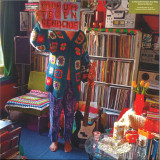
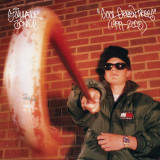
The cover photo is a picture of Sam standing on his back porch in the latter part of 1998, just before he got his first sampler. He was 13 years old, in 8th grade. His dad took the picture with his 35mm film camera: "I actually wanted to be pointing my dad's .22 pistol at the camera lens but he wouldn't let me. He gave me an old walking cane to use instead. The Tommy Hilfiger puffer jacket came from the lost and found at William Fleming High School where my mom worked as a secretary. I was thrilled when she brought it home because we never spent money on expensive name brand clothing like that - we were for the most part strictly a sale rack, bargain bin, thrift store, yard sale, flea market kind of family when it came to clothes. My watch is some cheap off-brand fake gold department store watch." Mastering for this vinyl edition was overseen by Be With regular Simon Francis and it was cut by the esteemed Cicely Balston at Abbey Road Studios to be pressed in the Netherlands by Record Industry.

nicht am Lager

Bestelle jetzt und wir bestellen den Artikel für dich beim Lieferanten.

25,63

Last In: vor 11 Monaten
Dummy Thicc & Friends - Aw Shit! (LP)
  • In My Head
  • Alone Again
  • Where Are You Going?
  • The L’s Feat. Ivan Ave
  • 123: Ah
  • 303: ?
  • Ode Til Djh
  • Life Can Get In Your Ass
  • Aw Shit
  • Headnodder
  • Dabada
  • Mmmm?
  • Yezir
  • Lease Ft. Vuyo
  • Never Forget Purple?
  • Right On Schedule Ft. Vuyo
  • Kawaii Leonard
  • 16: Mm?
  • The Cat
  • So Long Purple
  • Exodus?
  • Sleep Is The Cousin
  • By Now Feat. Vuyo
  • Poly M8?
  • Golden Hour
  • Purple Summers Last Feat. Vuyo

One of Norways most acknowledged and established drummers, is finally ready to unleash his debut album as an
solo artist. DUMMY THICC - who’s real name is Sigmund Vestrheim - has played for acts such as Boy Pablo,
AURORA and with his own R&B/Soul-group Giddy Gang.

This album tells the story of DUMMY THICC, with crisp
snares and drums being the focal point of the soundscape. He invites a bunch of his friends in on the
journey, members from Giddy Gang, Ivan Ave and Vuyo jumps on the mic and instruments to help DUMMY
THICC complete his awaited debut album. The album is a travel in sound, and a perfect introduction to the world
of DUMMY THICC as a producer and artist.

Sit back and enjoy 44 minutes of beautiful beats, R&B and hiphop in the spirit of DJ Harrison, Ohbliv, Madlib and other inspirational figures that have been a key source
for Sigmund.

vorbestellen27.06.2025

erscheint voraussichtlich am 27.06.2025

27,31
DJ Marcelle & Another Nice Mess - SORRY, NO SILENCE

"High urgency music with a very personal expression of the artist: in one way or another", this has always been the important or maybe even the core factor of every Cortizona release so far.

So it was just a matter of time until DJ Marcelle/Another Nice Mess, longtime fan of The Fall and Jiskefet, topnotch producer, dj wizard with three turntables (and a lovely person in general) - and myself - would collaborate towards a Cortizona release.

I guess the initial idea of working together with DJ Marcelle/Another Nice Mess dates back to 2019. One day she called me four times in five minutes just to hear Mark E. Smith's voice message on my phone. Since then there has been no going back. I mean: what's not to love about her?

Some time ago, she sent me the digital files of her new LP 'Sorry, No Service'. One of the tracks, 'Sorry, No Silence', features the Nan Goldin sample: 'this is clearly ethnic cleansing', taken from Goldin's impressive speech to which the audience cheered in support at the opening of her exhibition at the Neue Nationalgallerie in Berlin end of 2024.
Two weeks later Marcelle contacted me again: her German label refused to release the track. This was the moment we had both been waiting for: at last Cortizona and Marcelle would work together!

The album is due to be released later this year, but, with things as they are in Gaza, it is important to issue 'Sorry, No Silence' as a stand-alone track as soon as possible.
Talking about urgency!

'Sorry, No Silence' resonates feelings of global despair over the genocide in Gaza and the moraland political bankruptcy of 'western values'. It does so over a repetitive, militant tribal beat, complete with heavy basslines. The spirits of Mark Stewart, On-U Sound and Muslimgauze loom over the track, but as is always the case with Marcelle, both on stage and in the studio: she has an authentic style of her own, where playfulness meets courage and - also in this case - anger meets rhythm.

'Sorry, No Silence' is a track I didn't know I was waiting for. A track reflecting the sign of the times. The 12'' also features an even more heavy (and faster) dub version and the avant garde track 'Never Again Means', featuring more Nan Goldin samples: 'never again means never again for everyone'.
For obvious reasons the proceeds of this 12 inch and the digital Bandcamp release will be donated to PCRF, Palestine Children's Relief Fund.

Support more than welcome.


(written by Philippe Cortens)

nicht am Lager

Bestelle jetzt und wir bestellen den Artikel für dich beim Lieferanten.

18,91

Last In: vor 11 Monaten
BILLY WOODS - GOLLIWOG LP 2x12"

GOLLIWOG is billy woods' first album in two years, preceded by 2023's Maps, his second collaboration with producer Kenny Segal. That nimble travelogue has little in common with woods' newest work, despite the fact that Segal shows up a couple times in the credits. GOLLIWOG is a haunting collection that weaves horror, humor, surrealism and Afropessimism into a cinematic tapestry, aided and abetted by a murderer's row of producers. African zombies, time traveling trap cars, malevolent ragdolls and a dying Frantz Fanon are just a few of the revelers in woods' danse macabre. GOLLIWOG features production from The Alchemist, Kenny Segal, EL-P, Conductor Williams, Preservation, Messiah Musik, Sadhugold, Ant (Atmosphere), Shabaka Hutchings, Steel Tipped Dove, DJ Haram, Willie Green, Jeff Markey, Saint Abdullah, and LA-based experimental jazz trio Human Error Club. Meanwhile, woods is joined on the mic by Backwoodz labelmates ELUCID and Cavalier, along with rappers Bruiser Wolf, Despot, Al.Divino, and singer-songwriter Yolanda Watson. GOLLIWOG is another triumph in the woods oeuvre, as layered and compelling as anything he has ever done. A black carnival pitched in a muddy field overnight, empty rides whirring and clattering in the dark.

nicht am Lager

Bestelle jetzt und wir bestellen den Artikel für dich beim Lieferanten.

39,71

Last In: vor 9 Monaten
Various - We Are Not Alone - Part 8 (LP 2x12")

BPitch präsentiert die nächste Ausgabe ihrer WE ARE NOT ALONE Compilation-Reihe - ein vielfältiges Paket mit Sounds, die den Geist der WE ARE NOT ALONE-Partys widerspiegeln und einen Einblick in eine Szene von Künstlern geben, die sich dem Underground verschrieben haben. WE ARE NOT ALONE pt. 8 bietet zwölf unverzichtbare Tracks für DJs, Raver und Musikfans, die eine breite Palette an Genres abdecken und dabei nie den Dancefloor aus den Augen verlieren. Die neue Compilation spannt die Fäden zwischen den Genres und dokumentiert mit der gewohnten Qualität des Berliner Labels das nächste Kapitel in seinem stetig wachsenden Beitrag zur Kultur.

WE ARE NOT ALONE pt. 8 zeigt, dass das Label keine Pläne hat, die Hitze zu drosseln, mit einer weiteren Runde reinstem Hedonismus für die Ewigkeit.

BPitch present the next iteration of their WE ARE NOT ALONE compilation series - a diverse package of sounds reflecting the spirit of the WE ARE NOT ALONE parties, and offering a glimpse into a community of artists that have committed themselves to the underground.

Touching on a wide range of genres whilst never losing sight of the dancefloor, WE ARE NOT ALONE pt.8 offers twelve essential cuts for DJs, ravers, and music heads alike. Tying the threads between genres, and with the mark of quality expected from the Berlin label, this new compilation documents the next chapter in its ever-growing contribution to the culture.
Returning to the label appearances on both BPitch and its accompanying label UFO Inc. - Turin-based duo Boston 168 open the club doors with a masterful fusion of trance build-ups and stripped back pointillism on ‘Feeling You’. Another member of the BPitch roster having just released an EP on the label, Tigerhead steps up with heavy kickdrums and uncanny pads on the aptly-titled ‘Alice Through The Looking Glass’. Stepping into more minimal territory, Sina XX - founding member of the Paris rave collective Subtyl - offers a warm, bouncing cut that teeters between the dark and euphoric with a masterful balance. Taking a swift 180 into the darkest industrial spaces, Endlec serves up a gritty percussive workout on the formidable ‘Panther’.

Theo Nasa - a South London-based purveyor of weird, melodramatic techno - moves into hazier spaces on ‘Sex and Acid Pleasure’, an eccentric dose of acid for the senses. Shaleen - a resident of the WE ARE NOT ALONE event series - continues into the warmth with a headspin of analogue sounds and modular experimentalism with ‘Vernalagnia’. Öspiel, the French-Korean producer and label head known for his cinematic sounds weaves together angular rhythms underpinned by a strong sense of minimalism. In hot pursuit, Puglia’s Raho comes through with a cyclone of bouncing kicks and harsh leads.

Diana May, a Berlin-staple and resident at KitKat offers us a welcoming spiral on ‘Just Shut The F*** Up’. Plunging into deep industrial caverns, KRTM ’s ‘Küss Mich Jetzt’ is a pounding glitch of hardcore techno for the biggest speakers. VUUDUU’s ‘SNAXX’ shifts the speed up a gear with an expansive gothic rave banger. Rounding things off is madwoman’s ‘Chaos Theory’, a sparse but unrelenting cut of atmospheric techno from deep inside a warehouse.

WE ARE NOT ALONE pt.8 shows the label have no plans on lowering the heat in 2024, with another round of pure hedonism for the ages.


j d1 | KRTM - Küss Mich Jetzt (04 05)

nicht am Lager

Bestelle jetzt und wir bestellen den Artikel für dich beim Lieferanten.

24,33

Last In: vor 43 Tagen
JOŚE JAMES - 1978: Revenge of The Dragon

José James just can’t leave the ’70s alone. Or maybe it’s the other way around. The singer, songwriter, bandleader, and producer was born in 1978, after all, but over his past 17 years of fundamentally forward-looking, blessedly mercurial music, he keeps getting pulled back in. His 2013 Blue Note breakthrough No Beginning No End revisited the hooky, funky, jazz-streaked songcraft of the time through a modern crate-digger’s ears. On 2020’s No Beginning No End 2 — James’ debut on his own Rainbow Blonde Records — he went back through the portal with a small army of fellow celebrated eclecticists. Just last year, there was the album 1978, a richly layered love letter to said year that felt deep, luxe, and cool. It’s as if — vested with the restless fluidity of jazz, the tuned-in sensitivity of soul, and the revisionist grit of hip-hop — he is trying to play his way into the exact moment when, culturally speaking, everything was about to change.

“I'm still so fascinated by the tension in that era of all these seemingly clashing things happening at once,” says James. “The loft scene, the jazz scene, Elton and Billy, Bob Marley, the Isleys, Funkadelic, disco being this behemoth in a way I don't think we even understand today… And then there’s where everybody went from there — into hip-hop, into punk rock, exploding jazz. It's like a summation of the ’70s, and it's about to transform. It's the peak of the rollercoaster.”

Literally breaking into history is impossible, of course, but James’ new LP, 1978: Revenge of the Dragon, does feel like breaking through or bursting out. In loving contrast to its predecessor, the fresh set plays hot, like a Friday night out at the Mudd Club in its prime. Though he’s dreamt up albums with collaborator counts approaching the dozens, James gathered a tight crew for this one. Himself and Taali on vocals. BIGYUKI on keys and analog synth. Jharis Yokley on drums. Bass split between David Ginyard (Blood Orange, Terence Blanchard) and Kyle Miles (Michelle Ndgeocello, Nick Hakim). And an all-star brass lineup: Takuya Kuroda on trumpet, young lion Ebban Dorsey on alto sax, and genre-spanning ronin Ben Wendel on tenor sax. They set up in Dreamland Studios near Woodstock, a restored 19th century church, and recorded live to tape, two tracks, drums pushed to the max — “a small homage to the rise of punk,” says James.

In that place out of time, the band laid down a handful of choice covers and some wild originals, like the single “They Sleep, We Grind (for Badu),” a decades-collapsing cut powered by an ugly groove. Steeped in dub, funk, and sampledelia, James chants an artists’ mantra (“They sleep, we grind / Man, f--- your nine to five”), makes lyrical callouts to Marley and Nas, and channels everything from George Clinton to J Dilla, not to mention the earthy mysticism of Erykah Badu. In 2023, James released and toured his Badu covers LP, On & On. “Living in her musical house for a year was transformative,” he says. “This is my summary of everything I learned through her, tying it to this idea that artists move differently. We are in society but we are outside, too, looking out and in at the same time. Our hours are different, our schedules are different.”

To that point, James and co. actually began each day in the woods, filming the album’s visual companion piece, Revenge of the Dragon, an honest-to-God kung-fu short complete with bad overdubs, training montages, camera tricks, and plot twists. The film pays tribute not only to the genre’s greatest year (1978, of course), but also its cinematic exchange with Blaxploitation, plus James’ own recent Shaolin training and admiration for Bruce Lee as a culture-bridging force (the LP’s cover recreates an iconic shot of Lee). On top of that, says James, “We had this immediacy in the studio. Live, one take, no overdubbing. I feel like that's where the martial arts piece comes in, where it's about being relaxed but also aware, and there's immediacy in your movements.”

Across the project, tribute takes that refracted, multifaceted form. From his personal late-’70s playlist, James chose four covers reflecting the era’s disco-fied churn: the MJ-meets-Quincy dancefloor masterpiece “Rock With You”; Herbie Hancock’s prescient vocoder fever dream, “I Thought It Was You”; and a pair of Black-radio hits from two bands whose fans typically wouldn’t have been caught dead in the same stadium: “Miss You” by the Rolling Stones and the Bee Gees’ “Inside and Out.” All of it gets filtered through a contemporary Black (and beyond) lens, coming out loud, free, funky, and buzzing — dynamic, yes, but also of a joyous piece.

1978: Revenge of the Dragon transports you to a crowded room where all this is playing out in real time. That feeling is helped out by opener “Tokyo Daydream,” a bass-driven swan dive into a neverending night of boutique bar-hopping and neon revelry. Later, “Rise of the Tiger” finds James bringing rare braggadocio to a propulsive track with growling synth lines and a hunger for whatever comes next. And then there’s the closer, “Last Call at the Mudd Club,” which with its upbeat energy and string of Stevie-inspired pickup lines, evokes the sort of unabashedly elated track the DJ throws on at 3:56 a.m. before everyone is kicked out. “I wanted to leave the album on that note,” says James. “If this was a night out in New York, this would be the last thing you hear before you get in that taxi and go back to your apartment.” Or, perhaps, back to 2025.

nicht am Lager

Bestelle jetzt und wir bestellen den Artikel für dich beim Lieferanten.

32,35

Last In: vor 12 Monaten
E-BONY - DIGITAL DAWN LP 2x12"

E-bony joins the INDUSTRIAS MEKANIKAS family to present DIGITAL DAWN, an album that defines his identity as an artist. Twelve tracks in which electro and techno intertwine to create a unique and personal sound. A sonic manifesto composed of twelve tracks that explore the darkest textures and the most hypnotic rhythms of underground electronic.

In this work, E-bony is not alone. The talent of Noamm is woven into four of the tracks, adding an additional layer of complexity and experimentation. The collaboration between both artists creates a unique synergy, elevating the DIGITAL DAWN proposal to a new level.

DIGITAL DAWN is released in 2×12″ format, a format that is still preferred by DJs and lovers of high-quality sound, guaranteeing a quality and sound pressure that will explode on the dance floor.

nicht am Lager

Bestelle jetzt und wir bestellen den Artikel für dich beim Lieferanten.

28,36

Last In: vor 7 Monaten
Lenxi - Did you get the dream I sent you?

Nous'klaer Audio proudly presents Lenxi and her debut album: 'Did you get the dream I sent you?' A personal 10-track long player balancing IDM, indie pop and techno, which was written in and about a period of life where heartbreak and threats reinforced each other, creating an inescapable loop of isolation. Attempting to regain confidence and hope, a process of dreaming up a fictive emotional escape emerged. Paintings, sketches, voice notes, and a first few synth-lines took shape--laying the groundwork for this very album. In the tail of the storm, the London-born, Amsterdam-based producer and DJ refined her ideas further in places that carried hopeful memories. Places that felt familiar. Revisiting studios in beloved locations from the past --in London and Paris-- and seeking for the new --in studios and the Westcoast waters of L.A.-- all helped to shape those purest ideas into full songs forming a story that demanded closure. Lenxi's debut album is a stunning sequence of dreams hinting at hope combined with nostalgia--built on a strong force battling the vulnerability of being alone--and ultimately finding a way out and onto the dance-floor. The album is pressed on 180g vinyl and comes with a download-card.

nicht am Lager

Bestelle jetzt und wir bestellen den Artikel für dich beim Lieferanten.

17,86

Last In: vor 11 Monaten
Betty Boo - Boomania LP

Betty Boo

Boomania LP

12inchBOOCATLP1
Betty Boo Records
25.05.2025
  • A1: Where Are You Baby?
  • A2: Hey Dj / I Can't Dance (To That Music You're Playing)
  • A3: Boo Is Booming
  • A4: Boo's Boogie
  • A5 24: Hours
  • A6: Valentine's Day
  • B1: Doin The Do (King John 7'' Mix) Remix – King John
  • B2: Doin' It To Def
  • B3: Don't Know What To Do
  • B4: Shame
  • B5: Mumbo Jumbo
  • B6: Leave Me Alone
vorbestellen25.05.2025

erscheint voraussichtlich am 25.05.2025

28,99
RANIL Y SU CONJUNTO TROPICAL - SONIDO AMAZÓNICO
  • A Ranil Y Su Conjunto Tropical
  • B Los Wembler’s De Iquitos

Prepare yourself to be amazed by these two stunning Peruvian cumbias by two central figures of the Amazonian music scene: Ranil y su Conjunto Tropical and Los Wembler’s de Iquitos. Their recordings of the classic ‘Sonido Amazónico’ are packed with psychedelic guitars and hard-hitting percussions. First time 45 reissue. Raúl Llerena, aka Ranil, was one of the central figures of the Amazonian music scene. Based in Iquitos, he founded his own record label –Producciones Llerena– and shaped what is now known as the psychedelic sound of Amazonian cumbia. The few LPs and 45s released on his label are legendarily hard to find, let alone the condition… Some of them were issued under the name Ranil y su Conjunto Tropical. They recorded this hypnotic and percussive version of ‘Sonido amazónico’ that was released as an LP-only track. We're now pleased to release it for the first time as a 45, to the delight of DJs and 7”s collectors. On the flipside we find Los Wembler’s de Iquitos, responsible for some of the most popular songs of the psychedelic cumbia genre, including the outstanding ‘Sonido Amazónico’. Prepare yourself to be amazed by these two stunning Peruvian cumbias packed with psychedelic guitars and hard-hitting percussions. First time 45 reissue.

vorbestellen23.05.2025

erscheint voraussichtlich am 23.05.2025

15,76
VARIOUS - ROAD FEVER LP

Various

ROAD FEVER LP

12inchSNDWLP183
SOUNDWAY RECORDS
21.05.2025

New Generation Carnival Riddims from St. Lucia and Dominica A hurricane of turbo-charged, body-buzzing tracks collide on Road Fever, a compilation of razor-produced, road-tested instrumental riddims from St. Lucia, Dominica & Guadeloupe that showcases the producers forging the future of Caribbean music in 2025. Road Fever draws together instrumental Dennery Segment and Bouyon riddims originally made for vocalists, presented for the first time as stand alone pieces of music. Distilling carnival riddims down to the bare bones, producers push minimal 150+bpms, FL-percussion packs, DJ/vox samples & synth riffs, bridging trap, drill, dancehall, sped-up Haitian konpa & Angolan kuduro. Ricocheting at the intersection of TikTok culture, best heard blasted through walls of speakers travelled by stage-sized carnival trucks or via bluetooth car speakers, St.Lucia"s "Dennery Segment" sound, (as iconic producer, G6 described in an interview), "sparks your inside; a sound you can"t hear and not move". Amsterdam-based, Curaçao-raised compiler Rozaly echoes G6: "Once you hear it, you can"t unhear or unfeel it. This is a musical movement with an entire history with so many relevant reasons why it still exists, and why it exists the way it exists right now". Rozaly concludes, "there is nothing more simple, let the artists speak."

nicht am Lager

Bestelle jetzt und wir bestellen den Artikel für dich beim Lieferanten.

22,65

Last In: vor 12 Monaten
Jimi Tenor & Kabu Kabu meets DJ Sotofett - No Warranty Dubs LP 2x12"

"No Warranty Dubs" is made by a logic powerhouse combination, Jimi Tenor & Kabukabu meets DJ Sotofett, with most of what you can expect from all parts involved. You're served Afro Dub & Jazz in a bold and classic sonic execution. Through all 15 cuts the echoes are real and rhythms upfront, with proper extended Disco Dubs and versions of Afrobeat and Free Jazz contrasting body and soul. The album is tuneful and rugged, some cuts have vocals & synth swimming alone, while others glue the drummers groove to slick piano from beginning till end.

Followers of Jimi Tenor's life in music will be able to dive into his trademark song writing, signature flute breathing and indistinguishable style of saxophone playing, as well as his tender and electrifuingly psychedelic vocals known from early days of Puu/Sähkö and Warp releases. Kabukabu's heavyweight instrumental performance trancends regular studio recordings with joy and precision as a core element. Kabukabu's Ekow Alabi Savage aka Ekowmania (from last years "Dr.Afrodub" album) embeds deep rhythm knowledge throughout the entire musical landscape. Last in the chain is DJ Sotofett, producing and mixing his probably most classically crafted output to date. With silky gloves and clanking wrenches every element has been tweaked, re-mixed & dubbed excessively to justify a fully musical, psychedelic, warm and rhythmically rich experience.

"No Warranty Dubs" is as warm as the chords of "Money Palaver (Extra Warm Mix)", and as bombastic as opening track "Fujitronic (Flute Mix)". The album reaches it's most tender moments with the sweet "Musical Message (Disco Dub)" and dives straight into obscurity when guest drummer Ilmari Heikinheimo contributes to "Otto Part 4", a rare freejazz cut with TR-909 tickering from start til end. The simplicity of "Tronic Rhythms (Flute Dub)" is worthy a tear in an eye, while brittle souls can scatter to the thunderous horns and drenched rhythms of "Kabu Anthem (Cosmic Dub)".

nicht am Lager

Bestelle jetzt und wir bestellen den Artikel für dich beim Lieferanten.

15,34

Last In: vor 14 Monaten
Various - ECHOES OF ITALY – THE BIRDS OF PARADISE – EARLY 90S HOUSE VIBES VOL.2 (2x12")

Googling “paradise house”, the first results to pop up are an endless list of European b&b’s with whitewashed lime façades, all of them promising “…an unmatched travel experience a few steps from the sea”. Next, a little further down, are the institutional websites of a few select semi-luxury retirement homes (no photos shown, but lots of stock images of smiling nurses with reassuring looks). To find the “paradise house” we’re after, we have to scroll even further down. Much further down.

It feels like yesterday, and at the same time it seems like a million years ago. The Eighties had just ended, and it was still unclear what to expect from the Nineties. Mobile phones that were not the size of a briefcase and did not cost as much as a car? A frightening economic crisis? The guitar-rock revival?! Certainly, the best place to observe that moment of transition was the dancefloor. Truly epochal transformations were happening there. From America, within a short distance one from the other, two revolutionary new musical styles had arrived: the first one sounded a bit like an “on a budget” version of the best Seventies disco-music – Philly sound made with a set of piano-bar keyboards! – the other was even more sparse, futuristic and extraterrestrial. It was a music with a quite distinct “physical” component, which at the same time, to be fully grasped, seemed to call for the knotty theories of certain French post-modern philosophers: Gilles Deleuze, Félix Guattari, Paul Virilio... Both those genres – we would learn shortly after – were born in the black communities of Chicago and Detroit, although listening to those vinyl 12” (often wrapped in generic white covers, and with little indication in the label) you could not easily guess whether behind them there was a black boy from somewhere in the Usa, or a girl from Berlin, or a pale kid from a Cornish coastal town.

Quickly, similar sounds began to show up from all corners of Europe. A thousand variations of the same intuition: leaner, less lean, happier, slightly less intoxicated, more broken, slower, faster, much faster... Boom! From the dancefloors – the London ones at least, whose chronicles we eagerly read every month in the pages of The Face and i-D – came tales of a new generation of clubbers who had completely stopped “dressing up” to go dancing; of hot tempered hooligans bursting into tears and hugging everyone under the strobe lights as the notes of Strings of Life rose up through the fumes of dry ice (certain “smiling” pills were also involved, sure). At this point, however, we must move on to Switzerland.

In Switzerland, in the quiet and diligent town of Lugano, between the 1980s and 1990s there was a club called “Morandi”. Its hot night was on Wednesdays, when the audience also came from Milan, Como, Varese and Zurich. Legend goes that, one night, none less than Prince and Sheila E were spotted hiding among the sofas, on a day-off of the Italian dates of the Nude Tour… The Wednesday resident and superstar was an Italian dj with an exotic name: Don Carlos. The soundtrack he devised was a mixture of Chicago, Detroit, the most progressive R&B and certain forgotten classics of old disco music: practically, what the Paradise Garage in New York might have sounded like had it not closed in 1987. In between, Don Carlos also managed to squeeze in some tracks he had worked on in his studio on Lago Maggiore. One in particular: a track that was rather slow compared to the BPM in fashion at the time, but which was a perfect bridge between house and R&B. The title was Alone: Don Carlos would explain years later that it had to be intended both in the English meaning of “by itself” and like the Italian word meaning “halo”. That wasn’t the only double entendre about the song, anyway. Its own very deep nature was, indeed, double. On the one hand, Alone was built around an angelic keyboard pattern and a romantic piano riff that took you straight to heaven; on the other, it showcased enough electronic squelches (plus a sax part that sounded like it had been dissolved by acid rain) to pigeonhole the tune into the “junk modernity” section, aka the hallmark of all the most innovative sounds of the time: music that sounded like it was hand-crafted from the scraps of glittering overground pop.

No one knows who was the first to call it “paradise house”, nor when it happened. Alternative definitions on the same topic one happened to hear included “ambient house”, “dream house”, “Mediterranean progressive”… but of course none were as good (and alluring) as “paradise house”. What is certain is that such inclination for sounds that were in equal measure angelic and neurotic, romantic and unaffective, quickly became the trademark of the second generation of Italian house. Music that seemed shyly equidistant from all the rhythmic and electronic revolutions that had happened up to that moment (“Music perfectly adept at going nowhere slowly” as noted by English journalist Craig McLean in a legendary field report for Blah Blah Blah magazine). Music that to a inattentive ear might have sounded as anonymous as a snapshot of a random group of passers-by at 10AM in the centre of any major city, but perfectly described the (slow) awakening in the real world after the universal love binge of the so-called Second Summer of Love.

For a brief but unforgettable season, in Italy “paradise house” was the official soundtrack of interminable weekends spent inside the car, darting from one club to another, cutting the peninsula from North to centre, from East to West coast in pursuit of the latest after-hours disco, trading kilometres per hour with beats per minute: practically, a new New Year’s Eve every Friday and Saturday night. This too was no small transformation, as well as a shock for an adult Italy that was encountering for the first time – thanks to its sons and daughters – the wild side of industrial modernity. The clubbers of the so-called “fuoriorario” scene were the balls gone mad in the pinball machine most feared by newspapers, magazines and TV pundits. What they did each and every weekend, apart from going crazy to the sound of the current white labels, was linking distant geographical points and non-places (thank you Marc Augé!) – old dance halls, farmhouses and business centres – transformed for one night into house music heaven. As Marco D’Eramo wrote in his 1995 essay on Chicago, Il maiale e il grattacielo: “Four-wheeled capitalism distorts our age-old image of the city, it allows the suburbs to be connected to each other, whereas before they were connected only by the centre (…) It makes possible a metropolitan area without a metropolis, without a city centre, without downtown. The periphery is no longer a periphery of any centre, but is self-centred”.

“Paradise house” perfectly understood all of this and turned it into a sort of cyber-blues that didn’t even need words, and unexpectedly brought back a drop of melancholic (post?)-humanity within a world that by then – as we would wholly realise in the decades to come – was fully inhuman and heartless. A world where we were all alone, and surrounded by a sinister yellowish halo, like a neon at the end of its life cycle. But, for one night at least, happy."

nicht am Lager

Bestelle jetzt und wir bestellen den Artikel für dich beim Lieferanten.

28,99

Last In: vor 38 Tagen
Armin Van Buuren - A State Of Trance Year Mix 2024 LP 3x12"
 
104

f11 FLRNTN, Benjamin Duchenne - "Last Man Standing" (feat Sivan) (1:08)
f12 Nicholas Gunn & Harshil Kamdar - "Here I Am" (feat Alina Renae - Richard Durand remix) (1:08)
f13 DJ TH X TH3 ONE X Sue McLaren - "Everything To Me" (1:08)
f14 Matty Ralph - "Te Adoro" (1:08)
f15 Armin Van Buuren & Vini Vici - "Sarabande" (feat Anna Timofei) (1:08)
f16 Lilly Palmer - "Hare Ram" (1:08)
f17 David Forbes - "Techno Is My Only Drug" (1:08)
f18 Armin Van Buuren - "Blah Blah Blah" (Lilly Palmer remix) (1:08)
f19 Armin Van Buuren - "The Road To Your Destination" (A State Of Trance Year mix 2024 outro) (1:14)

nicht am Lager

Bestelle jetzt und wir bestellen den Artikel für dich beim Lieferanten.

46,64

Last In: vor 12 Monaten
Bruce - The Price / Mimicry

Bruce

The Price / Mimicry

7"-VinylPORK001
Poorly Knit
13.02.2025

Bruce is back!! Unveiling his new label Poorly Knit with two warped club creations on 7" vinyl... In Bruce we trust.

Hessle Audio and Timedance alumni Bruce, is cast out of the heavens following his dream-pop-heartbreak excursions, coiling back to the mortal and old faithful dance floor once more.

Fallen in fury, he treads alone on his new imprint, Poorly Knit, lashing out with two twisted and tangling tracks, The Price & Mimicry. Obscure sound design and unhinged samples are stitched into bass-bin-devastating rhythm and melody, cementing and serenading the burial of all DJs brave enough to step up.

Cut to small but deadly hand-stamped 7”, each side taunts a different flavour of his snickering, singular, soundsystem homecoming.

A true and ever-evolving artist, Bruce welcomes us back into his brave new world once again, a wholly refreshing release to start the year, and the new chapter has only just begun…

nicht am Lager

Bestelle jetzt und wir bestellen den Artikel für dich beim Lieferanten.

14,08

Last In: vor 15 Monaten
Various - ECHOES OF ITALY - ARTISTS IN WONDERLAND – EARLY 90S HOUSE VIBES VOL.1 LP 2x12"

Volume 1 of this expertly curated project of 90s Italian House - put together by Don Carlos.

If Paradise was half as nice… by Fabio De Luca.

Googling “paradise house”, the first results to pop up are an endless list of European b&b’s with whitewashed lime façades, all of them promising “…an unmatched travel experience a few steps from the sea”. Next, a little further down, are the institutional websites of a few select semi-luxury retirement homes (no photos shown, but lots of stock images of smiling nurses with reassuring looks). To find the “paradise house” we’re after, we have to scroll even further down. Much further down.

It feels like yesterday, and at the same time it seems like a million years ago. The Eighties had just ended, and it was still unclear what to expect from the Nineties. Mobile phones that were not the size of a briefcase and did not cost as much as a car? A frightening economic crisis? The guitar-rock revival?! Certainly, the best place to observe that moment of transition was the dancefloor. Truly epochal transformations were happening there. From America, within a short distance one from the other, two revolutionary new musical styles had arrived: the first one sounded a bit like an “on a budget” version of the best Seventies disco-music – Philly sound made with a set of piano-bar keyboards! – the other was even more sparse, futuristic and extraterrestrial. It was a music with a quite distinct “physical” component, which at the same time, to be fully grasped, seemed to call for the knotty theories of certain French post-modern philosophers: Gilles Deleuze, Félix Guattari, Paul Virilio... Both those genres – we would learn shortly after – were born in the black communities of Chicago and Detroit, although listening to those vinyl 12” (often wrapped in generic white covers, and with little indication in the label) you could not easily guess whether behind them there was a black boy from somewhere in the Usa, or a girl from Berlin, or a pale kid from a Cornish coastal town.

Quickly, similar sounds began to show up from all corners of Europe. A thousand variations of the same intuition: leaner, less lean, happier, slightly less intoxicated, more broken, slower, faster, much faster... Boom! From the dancefloors – the London ones at least, whose chronicles we eagerly read every month in the pages of The Face and i-D – came tales of a new generation of clubbers who had completely stopped “dressing up” to go dancing; of hot tempered hooligans bursting into tears and hugging everyone under the strobe lights as the notes of Strings of Life rose up through the fumes of dry ice (certain “smiling” pills were also involved, sure). At this point, however, we must move on to Switzerland.

In Switzerland, in the quiet and diligent town of Lugano, between the 1980s and 1990s there was a club called “Morandi”. Its hot night was on Wednesdays, when the audience also came from Milan, Como, Varese and Zurich. Legend goes that, one night, none less than Prince and Sheila E were spotted hiding among the sofas, on a day-off of the Italian dates of the Nude Tour… The Wednesday resident and superstar was an Italian dj with an exotic name: Don Carlos. The soundtrack he devised was a mixture of Chicago, Detroit, the most progressive R&B and certain forgotten classics of old disco music: practically, what the Paradise Garage in New York might have sounded like had it not closed in 1987. In between, Don Carlos also managed to squeeze in some tracks he had worked on in his studio on Lago Maggiore. One in particular: a track that was rather slow compared to the BPM in fashion at the time, but which was a perfect bridge between house and R&B. The title was Alone: Don Carlos would explain years later that it had to be intended both in the English meaning of “by itself” and like the Italian word meaning “halo”. That wasn’t the only double entendre about the song, anyway. Its own very deep nature was, indeed, double. On the one hand, Alone was built around an angelic keyboard pattern and a romantic piano riff that took you straight to heaven; on the other, it showcased enough electronic squelches (plus a sax part that sounded like it had been dissolved by acid rain) to pigeonhole the tune into the “junk modernity” section, aka the hallmark of all the most innovative sounds of the time: music that sounded like it was hand-crafted from the scraps of glittering overground pop.

No one knows who was the first to call it “paradise house”, nor when it happened. Alternative definitions on the same topic one happened to hear included “ambient house”, “dream house”, “Mediterranean progressive”… but of course none were as good (and alluring) as “paradise house”. What is certain is that such inclination for sounds that were in equal measure angelic and neurotic, romantic and unaffective, quickly became the trademark of the second generation of Italian house. Music that seemed shyly equidistant from all the rhythmic and electronic revolutions that had happened up to that moment (“Music perfectly adept at going nowhere slowly” as noted by English journalist Craig McLean in a legendary field report for Blah Blah Blah magazine). Music that to a inattentive ear might have sounded as anonymous as a snapshot of a random group of passers-by at 10AM in the centre of any major city, but perfectly described the (slow) awakening in the real world after the universal love binge of the so-called Second Summer of Love.

For a brief but unforgettable season, in Italy “paradise house” was the official soundtrack of interminable weekends spent inside the car, darting from one club to another, cutting the peninsula from North to centre, from East to West coast in pursuit of the latest after-hours disco, trading kilometres per hour with beats per minute: practically, a new New Year’s Eve every Friday and Saturday night. This too was no small transformation, as well as a shock for an adult Italy that was encountering for the first time – thanks to its sons and daughters – the wild side of industrial modernity. The clubbers of the so-called “fuoriorario” scene were the balls gone mad in the pinball machine most feared by newspapers, magazines and TV pundits. What they did each and every weekend, apart from going crazy to the sound of the current white labels, was linking distant geographical points and non-places (thank you Marc Augé!) – old dance halls, farmhouses and business centres – transformed for one night into house music heaven. As Marco D’Eramo wrote in his 1995 essay on Chicago, Il maiale e il grattacielo: “Four-wheeled capitalism distorts our age-old image of the city, it allows the suburbs to be connected to each other, whereas before they were connected only by the centre (…) It makes possible a metropolitan area without a metropolis, without a city centre, without downtown. The periphery is no longer a periphery of any centre, but is self-centred”.

“Paradise house” perfectly understood all of this and turned it into a sort of cyber-blues that didn’t even need words, and unexpectedly brought back a drop of melancholic (post?)-humanity within a world that by then – as we would wholly realise in the decades to come – was fully inhuman and heartless. A world where we were all alone, and surrounded by a sinister yellowish halo, like a neon at the end of its life cycle. But, for one night at least, happy.

nicht am Lager

Bestelle jetzt und wir bestellen den Artikel für dich beim Lieferanten.

28,99

Last In: vor 38 Tagen
Medline - The Edge LP

Medline

The Edge LP

12inchMBLP007
My Bags
03.02.2025

Welcome into the world of scarse music for the ultimate connoisseurs, fine taste beatmakers and holy grails collectors.
You made a step close to The Edge.
From cult Italian soundtrack and 80's iconic anime, English and French library music, to tunes that made Hip Hop iconic anthem, Medline picked 10 compositions to cover, among his favorite crate diggers treasures.

With a 30 years Dj's culture, he unite on vinyl a collection of underground classics.
When other musicians sample, as former beatmaker, he found his fulfillment by playing the entire tracks, as homage to these composers.

In 2018 Solstice has set the corner stone of this unique artwork at the cross road of Jazz, Funk, Soul and Hip Hop worldwide culture.
With The Edge, the out of boundaries producer, placed the level even more higher.
The whole work is incredible, for a man alone, without music theory knowledge but playing flutes, horns, keyboard, guitar and many more instruments... creating in his little home studio the sound of a 70's orchestra.

Challenging and epic:
Epic for covers like A Day In The Life, Beatles cover by Les Demerle, took by Buck Wild for O.C. Time's Up and of course the eponym David Axelrod's The Edge on David McCallum album.

Challenging, for library anthem like Hot Dog, Ghetto or Keep Quiet by Jacky Giordano, sharp and definitely audacious.
Despite the variety of the ten themes, the man's touch is present each time, into the texture, sound taste and balance. Like a chef bringing up to date magical recipes.

The archetypal type of records My Bags loves to release, "The Edge" is built as a crate digger paradise, a timeless record linking past and present into a highly concentrate of divine grooves.

nicht am Lager

Bestelle jetzt und wir bestellen den Artikel für dich beim Lieferanten.

19,75

Last In: vor 15 Monaten
Various - SOUND SYSTEM ROCKERS KINGSTON SOUNDS 1969-1975'
  • A1: Satta Massa Gana-Ken Booth
  • A2: Guiding Star-Horace Andy
  • A3: Shame&Pride-Leroy Smart
  • A4: Stick By Me-Dennis Brown
  • A5: Can’t Get Me Out-Cornell Campbell
  • A6: Riding For A Fall-John Holt
  • A7: Once Upon A Time-Delroy Wilson
  • A8: The Village-Gregory Isaacs
  • B1: Ride On Girl-Johnny Clarke
  • B2: Mighty King -Freddie Mcgregor
  • B3: Whip Them King-Linval Thompson
  • B4: Lead Us Jah Jah-Barry Brown
  • B5: Everybody Needs Love-Pat Kelly
  • B6: Alton Ellis - Play It Cool
  • B7: Count Prince Millar - Mule Train
  • B8: Owen Grey - Natty Bongo

The Sound System has become part of today’s musical/cultural heritage, playing the people’s favourite hits or just as important, breaking some new tunes.
But perhaps less known are the roots of the Sound System, which began way back when…in Kingston….

Around the late 1940’s the Sound System began to overtake the big bands that usually played at the dances in Kingston.

The American Rhythm and Blues records that were so popular at the time would find their way to Jamaica via the merchant sailors and migrant workers returning from their stints in America. For economical reasons alone it would pay to have a DJ on hand to play these hits rather than a 10 piece band that could eat and drink the promotor out of the house and on curried goat!!

The early Sound Systems were basic affairs built around a single record deck, a valve amp and a speaker.

But by the 1950’s they had grown to purpose built speakers the size of wardrobes that could be heard blocks away.

Record producer Bunny ‘Striker’ Lee would remember the time ‘Sound Systems was like our radio station…not many people on the island would own a wireless, so it was the way for the people to hear their music.

So this selection of Lovers, Ballads, Root’s classic’s made the Sound Sytems of Jamaica the place to be.

So sit back and enjoy the ride….SOUND SYSTEM ROCKERS …one and all

nicht am Lager

Bestelle jetzt und wir bestellen den Artikel für dich beim Lieferanten.

13,40

Last In: vor 16 Monaten
Crash Course In Science - Near Marineland LP

Dark Entries celebrates its 15th anniversary with legendary synth-punk deviants Crash Course in Science. Dale Feliciello, Mallory Yago, and Michael Zodorozny formed CCIS in 1979 after meeting at art school in Philadelphia. As a gesture born of equal parts punk irreverence and brute necessity, the band incorporated toy instruments and kitchen appliances into their aggressive, angular sound. Their anthems “Cardboard Lamb” and “Flying Turns” from 1981’s Signals From Pier Thirteen EP have been staples in adventurous DJ sets for over 40 years - yet some of their finest work is to be found on Near Marineland, a full-length LP recorded in 1981 but remained unreleased in its time. Near Marineland shows the band moving into more diverse and polished territory (although it’s still as abrasive as sandpaper). Tracks like “No More Hollow Doors” and “Jump Over Barrels” highlight CCIS’s singular knack for embedding infectiously monotone hooks in their stiff-yet-funky grooves. Elsewhere we see CCIS going fully unhinged, like on the searing “Someone Reads” or the demented “Pompeii Spared”, where a spray of honks is barely glued together by a frantic synthetic pulse. While this masterwork of malfunctioning analog electronics has surfaced on a few occasions - this first time stand alone remaster includes four never-before-released bonus tracks and includes a lyric sheet. Near Marineland is crucial listening for all devotees of synth-punk and minimal electronics.

nicht am Lager

Bestelle jetzt und wir bestellen den Artikel für dich beim Lieferanten.

20,59

Last In: vor 11 Monaten
Artikel pro Seite:
N/ABPM
Vinyl