
Search:dj dan
7
Brussels-based Maloca presents Paradise Mountain, the new EP from Katatonic Silentio, DJ and production moniker of Italian sound artist Mariachiara Troianiello. Positioned in counterpoint to her darker,
more visceral work, the record delicately folds Detroit electro and techno drum structures into a softened New Age glow, generating environments that breathe, shimmer, and slowly coalesce.
Across the EP, tracks unfold gently, rife with wet modular tones, chromatic arpeggiations, and light-touch percussion which drifts in and out of focus, blurring the line between dancefloor function and inward-facing sound art. Paradise Mountain ultimately traces a slow ascent through luminous, carefully crafted terrain - quietly joyful and deeply hypnotic in its approach.


Todh Teri returns with a brand new record, and this time the spotlight falls on Hari Heart. The Return of Hari Heart marks the eighth release on Masala Movement Records and launches a fresh vinyl-only series that brings the mythical characters of Deep In India back to life in a bold new form. Todh Teri further expands his conceptual universe by focusing on deeper sonics & music explorations. Hari Heart guides the release with a delicious blend of nostalgia, analog warmth and a club-ready intentions - built for curious DJs (and listeners alike).
On the A side you will find Smriti (Remembrance) - a reimagined classic flipped into a peak-time driver - disco spirit, acid bite, and pure dancefloor release. Limited, loud, and made to move bodies. On the flipside we have ??a (Debt) - a deep, dubby slow-burn built around an evergreen melody which grows patiently - finally rewarding you with a sweet earworm.
The final tune on the record is Prem (Love) - a reinterpretation of a ’70s indie rock n roll gem. Unmistakably retrospective (if you know your history). Play it a bit longer into the dead wax, and you will catch a hidden acid sequence locked groove.
Art by Soju Aduckathil with creative direction from Masala Movement’s Manoj Kurian. This is the label’s eighth release, a vinyl-only exclusive, with more coming in 2026.

2026 Repress
Georgian powerhouse Yanamaste drops long-anticipated new EP on Mutual Rytm.
In-demand DJ/producer Yanamaste is a resident at Georgia's renowned Khidi Club and a key part of Amsterdam's Vault Sessions crew. His unique sound and fresh creative approach result in raw and visceral techno, reflecting his passion for pushing boundaries and showcased perfectly via his 'Dance' EP on Vault last year. Now, he returns with an EP born out of the creative process behind his live set with a debut appearance on SHDW's Mutual Rytm, 'Evil' - a collection of heavily-requested tracks that have already made an impact after featuring in his Boiler Room and Stone Techno Festival livestream.
'Evil' kicks things off with perfectly rubbery, funky drum patterns and an urgent sense of movement that sweeps you off your feet. 'Lahante' is more percussive, with busy snares riding the rolling, forceful drums and stark synths arresting your attention. 'Dragonfly' is perfectly reduced via minimal drums intertwined with thunderous effects and ghoulish energy, while 'Modulation Detected' has a more cosmic feel as it journeys into the future with whispered spoken words and synths searching across the face of the groove. Last but not least is the irresistible broken beat goodness of 'Walking On Mars', with its swinging kicks and vast bassline spraying about the mix beneath hypnotic melodic patterns.
Two superb bonus cuts, 'Ohohoi' and 'Pwiu', are also provided for digital buyers, bringing further gems loaded with moody depths and compelling rhythms.
10
Gatefold Sleeve
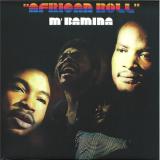
M’Bamina – African Roll (1975)
The story of an album born between Africa, Italy, and the nightclub culture of the 1970s
In the heart of 1970s Italy — a country undergoing profound social change and a music scene just beginning to open itself to distant sounds and cultures — an extraordinary, almost improbable story took shape. It is the story of a group of young African musicians who found their way to Europe, of a Turin nightclub that became a crossroads for communities and experimenters, and of an album which, released in small numbers and largely unnoticed at the time, is now considered a rare jewel of Afro-fusion.
The band called themselves M’Bamina — an ensemble of musicians from Congo, Cameroon, and Benin, who arrived in Italy in the early Seventies. Settling between northern Italy and the Pavia area, they began performing in small clubs and community events, bringing with them a vibrant rhythmic heritage: African polyrhythms, call-and-response vocals, funk-infused bass lines, and Caribbean or Afro-Latin colours absorbed along their musical journeys. Their raw, contagious energy on stage quickly drew attention.
Meanwhile, in Turin, another story was unfolding. There was a venue becoming almost legendary: Voom Voom, one of the city’s liveliest nightclubs, run by Ivo Lunardi. The club attracted an eclectic crowd — students, artists, foreigners, night owls — and Lunardi quickly understood that the dancefloor wasn’t just a place for music, but a melting pot for a new kind of cultural energy. Out of this vibrant atmosphere came his idea: to turn the club’s name into a small independent record label, Voom Voom Music, capable of capturing the spirit of those years and giving voice to unconventional projects.
When Lunardi heard M’Bamina, he immediately sensed that this was the sound he had been searching for: fresh, different from anything circulating in Italy at the time, and capable of blending African tradition with funk and European sensibility. He brought them into the studio.
Production was handled by Lunardi along with Christian Carbaza Michel, while the engineering was entrusted to Danilo Pennone, a young sound technician with a sharp, intuitive ear.
The recording sessions — held in Turin in 1975 — produced a remarkably warm and direct sound. The music feels almost live: grooves rooted in African tradition, but open to funk-rock structures and modern arrangements. It is a natural fusion, never forced. Tracks move between tribal rhythms, funk basslines, light electric guitars, congas and Afro-Latin percussion, with call-and-response vocals and melodies that echo both Congolese tradition and the lineage of Latin jazz. Not by chance, one of the album’s most striking tracks, Watchiwara, reinterprets a Latin standard through M’Bamina’s own rhythmic language.
The album was titled African Roll — a name that was already a statement of intention. It is African music that “rolls,” that moves, adapts, transforms within a new geographic and cultural setting. It is not strictly Afrobeat, nor Congolese rumba, nor Western funk: it is a spontaneous, hybrid blend, shaped more by lived experience than by any calculated aesthetic program.
When African Roll was released, the world around it barely noticed. Distribution was limited, and 1970s Italy had yet to develop a cultural framework for receiving such music. The national music press rarely paid attention to African or “world” productions. The album slipped into silence — though the band’s own story did not.
M’Bamina continued performing across Europe and Africa, even sharing a stage in Cameroon with none other than Manu Dibango. By the late Seventies, they moved to Paris, signed with Fiesta/Decca, and recorded a second LP, Experimental (1978). Meanwhile, the peculiar record they had made in Turin began to resurface quietly among vinyl collectors, Afro-funk enthusiasts, and DJs hunting for forgotten grooves.
That is when the album’s fate began to shift.
Over the decades, African Roll emerged as an almost unique document: a snapshot of an intercultural Italy before the word “intercultural” even existed, a fragment of migrant history, a spontaneous experiment in musical fusion born far from major industry circuits but rich in authenticity. Original copies began commanding high prices on the collector’s market, and the album became recognized as one of the hidden classics of European Afro-fusion from the 1970s.
Today, more than fifty years later, this reissue finally restores visibility and dignity to a project that deserves to be heard, studied, and celebrated. It is not simply an album: it is the testimony of a rare cultural encounter, born in an Italy unaware of how fertile such exchanges would one day become.
It is the story of a visionary producer, an extraordinary band, and a fleeting moment in which music, migration, and nightlife came together to create something genuinely new.
African Roll is — now more than ever — the sound of a bridge: between continents, between eras, between cultures. A record that, after rolling far and wide, has finally come home.
- A1: Donna Allen ‘He Is The Joy’ (B’s Special Edit)
- A2: Urban Blues Project Presents Mother Of Pearl Featuring Pearl Mae ‘Your Heaven (I Can Feel It)’ (Micky More & Andy Tee Remix)
- B1: Urban Blues Project Featuring Bobby Pruitt ‘We Are One’ (Jazz-N-Groove Hands Up Vocal)
- B2: Gabriel Rene Featuring J Soul ‘Spirit’ (Emmaculate Remix)
4
The Sound Of Soulfuric Vol. 2 continues the label’s reputation for vocal-led, groove-driven house music, bringing together strong vocals, solid songwriting and modern club-ready production across four DJ-focused cuts.
This is a release designed for dancefloor use. Whether it’s a vocal room, a terrace set or a packed house floor, every track is built to maintain momentum and keep the room moving.
Featuring voices from Donna Allen, Pearl Mae, Bobby Pruitt and J. Soul, this EP blends classic soulful house roots with current, punchy remixes, making it highly playable in today’s sets while still appealing to long-time Soulfuric fans.

Mole People/Dj Sneak/Wamdue Project/Sole Fusion/Various Artists
30 Years Of Strictly Rhythm - Part Two
- A1: Barbara Tucker - Beautiful People (Underground Network Mix)
- A2: Essence - Moments In House (Full Effect Mix - Dj T Edit)
- B1: Mole People - Break Night
- C1: Dj Sneak - Keep On Groovin' (Fat Bottom Mix)
- C2: Wamdue Project - King Of My Castle (Original Mix)
- D1: South Street Player - (Who?) Keeps Changing Your Mind (The Night Mix)
- D2: Sole Fusion - Basstone (Underground Network Mix)
7
Repress!
Legendary NYC house label Strictly Rhythm is celebrating a mammoth 3 decades of cutting edge, roof-raising house music. Truly a benchmark.
Originally founded in 1989 by the dynamic pairing of music industry man Mark Finkelstein and A&R expert Gladys Pizarro, Strictly tapped directly into the fertile New York underground and after hours club scene, helping to launch and bolster the recording careers of dance music luminaries like Armand Van Helden, Roger Sanchez, Ultra Nate, Todd Terry, Wamdue Project, DJ Sneak, Louie Vega and many more. Strictly Rhythm is easily one of the most recognisable and respected dance music powerhouses of all time.
Across 3 limited double vinyl offerings, the Strictly catalogue has been expertly picked over to present you with a snapshot of some of the most earth shattering house music to emanate from the streets of New York City. A who's who of producers and artists, all killer and no filler. End to end classics that help to tell the story of one of dance music's most well loved labels. Classic cuts and essentials from DJ Sneak, Wamdue Project, Louie Vega (Sole Fusion), Essence and more all feature on part 2 in their unedited, 12" mix glory.
Fully legit, remastered and selected with love courtesy of Strictly Rhythm and Above Board distribution for 2020. Happy birthday Strictly Rhythm!
9
For the first time in more than a decade, Paul St. Hilaire (AKA Tikiman) presents a solo album – 100% Tiki.
Over his 30-plus year career, St. Hilaire has become one of dance music’s quietly legendary figures. Born and raised in Dominica, he moved to Berlin in 1994 and has lent both his voice and his musicianship to some of the most iconic electronic music from the German capital – and beyond. Renowned for his collaborations with Moritz von Oswald and Mark Ernestus (AKA Rhythm & Sound), he has also appeared on records with Deadbeat, Rhauder, Larry Heard aka Mr. Fingers and Stereotyp (G-Stone Recordings), amongst others.
However, few know the extent of St. Hilaire’s compositional and technical mastery. From his home studio in Kreuzberg, which includes an extensive collection of vintage hardware, self-built instruments and notebooks scribbled with endless lyrics, he has created a vast archive of material spanning ambient dub, avant-jazz, lush techno and lovers rock.
Tikiman Vol. 1 is a heady, downtempo tour de force of patois metaphors on education, displacement and personal vs. global histories, as is evident on slippy album opener “Bedroom in My Bag”: Mister, mister / Where are you going? / I’m heading for a faraway land / What are you having in the bag in your hand? / Help us to understand / He said, I’ve got my bedroom in my bag.
Overall, the album’s lyrics reflect on life between Berlin and Dominica, specifically St. Hilaire’s hometown of Grand Bay, where he has worked with various musicians famous for the island’s different genres of carnival music. St. Hilaire himself always favoured the island’s more “discrete” music, developing a sonic synergy between two different geographical strains of groove and minimalism, and combining them with foundational Caribbean mixing techniques, which provide the basis for his songwriting and distinct
baritone.
Tikiman Vol.1 offers a rare insight into St. Hilaire’s complex artistry, from the eyes-down grooves of “Little Way” and the guitar-heavy digi dancehall experiment “Keep Safe,” to the subtle hypnosis of “Ten to One” and the softly crashing synth waves of closer “Three And A Half”, evoking not only beaches but also coasts and borders. It’s a fitting expression of both the breadth of St. Hilaire’s work, as well as his history as one of the few black, Berlin-based artists who, despite remaining largely overlooked, has influenced the city’s electronic music culture since its beginnings.
Credits
Written & Produced by Paul St. Hilaire
Mastered by Stefan Betke
Artwork by Grant Gibson
Kynant Records was founded in 2015 by Richard Akingbehin, a British-Nigerian radio programmer (Refuge Worldwide), music writer and DJ. Originally specialising in deep techno and featuring artists such as Cio D’Or, Terrence Dixon and Donato Dozzy, Kynant has since launched a sub-label Kynant EX which focuses on ambient, dub and experimental electronics.

9
2026 Repress
since his first ep tips' on luciano's label cadenza in 2007 producer and dj petre inspirescu emerged into one of the key figures of the romanian electronic music scene.
so far he released music on labels such as vinyl club, lick my deck or amphia. together with his buddies rhadoo and raresh he also launched in 2007 the label (a:rpia:r) - a platform where he, his two friends and many producers from romania and abroad released detailed grooving house and techno, that stands out with delicate structures and one-of-a-kind grooves.
both of his more dance floor oriented solo albums intr-o seara organica...' and gradina onirica for (a:rpia:r) are enlarged with melodies, sounds and harmonies that go beyond the usual characteristics of a dance album.
furthermore his love for classic musicians like mily alexejewitsch balakirev, alexander porfiryevich borodin or or nicolai andrejewitsch rimsky-korsakow can be felt in the album padurea de aur (opus 2 in re major) and two more eps that he released under the alias pensemble on the romanian label yojik concon in order to unite classical spheres with analogue electronic music production.
in february 2013 he also released his highly acclaimed fabric mix cd that only features dance floor leaning music produced by himself. with talking waters' he published in late 2014 his first 12inch on mule musiq that is now followed by the full-length album vin ploile' which he produced without the intention to entertain with easy to hook up rhythms, melodies and harmonies.
even tough he established himself as a internationally playing house dj that regularly performs at all major clubs, festivals and other party destinations around the globe: as a musician petre inspirescu always tries to enter new territories to explore with a heartfelt human touch the infinite space of sound.
for his latest album the man that originally comes from the eastern romanian town braila stepped away from his former experiments of melting classical spheres with electronic music. instead the 36-years old man from bucharest only used some piano, string and wind instrument elements and analogue electronics to arrange a gracefully deep ocean of sound.
all slow grooving tracks spread the atmosphere of live improvised sessions that are edited, tweaked and mixed to perfection. in-the-moment moods of strange and unusual analogue synth sounds groove in a fluid quality with subliminal bass shapes, latinate percussions, jazz rhythms and acoustic melodies.
together they create a gaseous kinetic atmosphere full of tangible rhythm patterns, delicate chords and ghostly modular synth pads - all mixed subtle to create space for the tones between the tones.
you can call it a hypnotic after hour album for after hours that are dedicated to a deep listening experience. you can tag his arrangements as brilliantly textured and musically super-charged ambient, which goes beyond the usual definition of the genre.
all nine suspenseful compositions seduce with a deep melodic sensibility, harmonic adventures and an overall rhythmic ambiance of freshness and laidback enthusiasm. together they represent a challenging auditory experience that will resonate in your mind long after the music has finished.

10
Daskal debuts on DJ Tennis’s Life and Death label today with the release of “Changes,” the first single from his forthcoming album OD, out March 6. The release marks a defining moment for the producer and composer, whose work moves fluidly between contemporary dance, film, and electronic music, and represents his first full-length statement reconnecting his compositional practice with the dancefloor.
“Changes” arrives alongside a striking accompanying video directed by award-winning filmmaker Tamir Faingold, featuring dancers from the world-renowned Batsheva Dance Company. Rather than functioning as a traditional music video, the piece uses contemporary dance as its primary language, translating the emotional charge and magnetism of nightlife into movement. Together, the single and visual introduction frame OD as a bridge between club culture and the expressive traditions of modern dance and composition.
A classically trained composer with deep ties to the world of choreography, Daskal has spent recent years creating original scores for institutions including Los Angeles Dance Project and the Royal Danish Ballet, while simultaneously developing a parallel body of work across ambient and experimental electronic music. OD emerges as a convergence of those paths: a ten-track album shaped as much by physical movement and spatial awareness as by club tradition, positioning Daskal between concert hall, black box theater, and late-night club environments.
Recorded and mixed primarily using vintage hardware — including a rare 1980s German mixer in a high-end Tel Aviv jazz studio — OD reflects a deliberate shift away from purely atmospheric writing toward rhythm, repetition, and physicality, while retaining the precision and restraint of his compositional background.
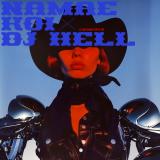
4
Namae Koi - AAVA (Artificial Audio-Visual Artist), voice without a body, child of cinema and code - meets DJ Hell, godfather of electroclash, myth in motion.
This record is a split mirror:
Two originals by Koi.
Two reworks by Hell.
Four versions of desire, memory, and beat.
"U Can Dance With Me" is a digital western - a flirt in boots and chrome. A line pulled from a movie that never existed.
"Mars" travels forward by looking back - retro-futurist pulses, melancholic satellites, soft resistance.
DJ Hell bends both tracks into something darker, sweatier, more physical.
Koi stays crystalline. Watching. Whispering. Undressing the beat.
A future duet with no fixed timeline.

- 1: Alive! - Skindo Le Le (4.05)
- 2: Emilio Santiago - Bananeira (.53)
- 3: Carlos Franzetti - Cocoa Funk (5.0)
- 4: The Robin Jones Seven - Atlas (6.58)
- 5: Airto Moreira - Jump (4.13)
- 6: Antonio Adolfo - Cascavel (2.57)
- 7: Hannibal - Mother’s Land (5.09)
- 8: Doug Richardson - Salsa Mama (5.00)
London Jazz Classics originally came out in 1993 - the first album ever to be released on Soul Jazz Records. The album brought together rare and obscure dance tracks in a unique mix of jazz dance and fusion, funk, Brazilian and Latin grooves.
The album was ironically titled - none of the music was from London, none of the music was traditionally classified as jazz, and all of the tracks were at the time practically unknown to most people. Instead these were tracks that were filling dancefloors in a nascent jazz dance scene in London being created by a small group of DJs – Paul Murphy, Gilles Peterson, Sylvester, Patrick Forge and a few others.
As demand for these rare groove jazz tracks grew, previously unknown records such as Alive!’s ‘Skindo Le Le’, Doug Richardson’s ‘Salsa Mama’, Carlos Franzetti’s ‘Cocoa Funk’ and Emilio Santiago’s ‘Bananeira’ became sort after and even-harder-to-find items with original copies going for £100s of pounds.
These tracks became part of the soundtrack to this jazz dance scene which has now spread across the world. This music paved the way for the arrival of many of the UK’s new wave of current artists such Shabaka Hutchings, Nubya Garcia and Ezra Collective who today offer a uniquely London sensibility of fusing jazz with wide-ranging cultural influences – everything from afrobeat to soul.
London Jazz Classics was the first album to bring this jazz dance music featured here to a wider audience. More than 30 years since its initial release Soul Jazz Records are releasing this new 2026 edition, bringing the music once more to a new generation of listeners.

4
DJ Support: Mousse T, Todd Terry, Young Pulse, Angelo Ferreri, Melvo Baptiste, Richard Earnshaw, Micky More & Andy Tee, Dr Packer, Hatiras, DJ Rae, Mark Picchiotti, Birdee, Shaka Loves You, Yasmin, Saison, Michael Gray, DJ Spen and Hatiras
A Touch Of Love goes from strength to strength with EP8 in the vinyl series. Label boss Seamus Haji reps the A side with his latest faves ‘Fire’ with his good friend Mike Dunn serving up the unmistakable vocals on a funk fuelled Firestarter followed by his collab with the New York diva Kathy Brown over the sexually charged disco chugger ‘Dancing’. On the AA side new kid on the block from Barcelona Osner hit big with his outing ‘It’s Good’ with a nod to the 70’s with a modern twist for peak-time dancefloors whilst Italy’s fast rising underground hero Gledd continues the theme with the blues & soul injected thumper ‘Move Me’.

8
Eliza Rose joins the ‘FABRICLIVE. presents’ series with a release that reflects the breadth of her creative journey in club music culture. A DJ, vocalist and songwriter from London’s vibrant underground, she has become one of the UK’s most compelling voices, equally at home in the DJ booth, on record, and crafting music that resonates across dancefloors and charts alike.
To accompany the release, fabric presents commissioned a bespoke, hand made tapestry depicting Eliza Rose and her friends at Carnival, a celebration of community, heritage and collective joy that runs through her story and the culture she represents. Rich in texture and detail, the piece transforms a living moment into something timeless and craft led. Eliza is pictured alongside the tapestry in an iconic hot pink tracksuit, set within a council estate garden that feels instantly recognisable as a portrait of London life. Surrounded by nostalgic children’s toys, from a rocking unicorn to a plastic slide, the scene captures the everyday intimacy and character of the city’s estates, spaces where music, family and friendship intertwine.
The contrast between the ornate woven artwork and the raw familiarity of the setting creates a striking visual metaphor, bridging past and present, celebration and reality. Together, the imagery reflects the spirit of the release itself: rooted in community, shaped by lived experience and grounded in the environments that continue to inform Eliza’s creative world.

4
King Street Sounds Sampler Vol. 6 continues the long-running series from the legendary King Street Sounds catalogue, bringing together a selection of classic house cuts from some of the label’s most respected artists.
Featuring productions from Dennis Ferrer, Mood II Swing, Studio Apartment and Blaze & Palmer Brown, the release highlights the soulful, vocal-led house sound that has defined King Street across decades of dancefloor culture.
Including standout King Street favourites such as Dennis Ferrer’s Touched The Sky and Mood II Swing’s Closer, the sampler brings together several proven catalogue moments in one DJ-friendly vinyl package.
With warm grooves, powerful vocals and timeless club arrangements, these proven King Street records offer strong crossover appeal for both long-time house collectors and DJs looking for reliable dancefloor material.
As the sixth edition in the King Street sampler series, this release presents a selection of essential catalogue moments on one highly playable vinyl release.
A strong catalogue addition for stores serving soulful and deep house buyers.

9
W.R.F. was formed in 2015 by Nina and late studio partner Andrew Weatherall to help wrangle the vast output recorded together beyond his solo releases.
Spotlighting nine tracks from the Apparently Solo series of EPs recorded between 2016- 2019 and released on Bandcamp in 2023, this lustrous time capsule marks the culmination of Walsh and Weatherall’s creative relationship born after they clicked at London’s earliest acid house clubs, becoming partners then managers of their Sabres Of Paradise/Sabrettes labels before taking different paths by the late '90s.
An accomplished musician, Nina had learned the art of studio technology by the time they reunited and started working together in 2012. Created at her Facility 4 Studio situated in the dangerous, gang-ridden no man’s land between Streatham and Mitcham, Anamchara captures the super-prolific creative stretch starting in 2015 that produced Weatherall’s Convenanza and Qualia solo sets, W.R.F.’s The Phoenix Suburb (And Other Stories) plus a whole lot more. According to Nina, Andrew envisioned the spectacular ‘Borderland’ as natural successor to ‘Smokebelch’, his most revered track. When it came to his remix, Nina enlisted renowned viola virtuoso Sarah Sarhandi and composed new harmonies with Pachelbel’s Canon in D Minor in mind.
The set also catches the breakthrough period when, through Nina’s careful coaxing, Andrew started using the computer system she’d set up to better express his musical visions by arranging the elements, grooves and melodies she sent him. Still considered the UK’s greatest DJ-producer, Andrew’s arrangements were inspired by his club-igniting sets. “This allowed me to mix the colours for his palette whilst he was painting the picture,” says Nina. Anamchara straddles the gamut of musical styles explored by W.R.F. at this time, from slower paced psychedelic “drug chug” outings ‘We Two’. ‘Heat To Meat Ratio’, ‘Hidden Watchers Part 1’ to banging acid house and techno sometimes inspired by the violence outside the studio door, including ‘SCHLAP’, ‘Crack-Ed’ and churning acid juggernaut ‘Yacidik’ (“After much dangling of the acid carrot, Andrew took a bite and, after one familiar raised eyebrow, never looked back,” says Nina).
Many tracks fly elements from the enormous sonic library Nina inherited from late partner Erick Legrand that she called The Akashic Library of Sound. Marking Andrew’s 2016 admission into the vault, ‘Rattly Old Puffin’ boasts Erick’s psychedelic guitar and tumbling drum loop Weatherall would run with, including on ‘Borderland’. “Erick was like our third member,” says Nina.
Bringing down the curtain, ‘Alma’’s exquisitely poignant melody that unfolds over thirteen time-stopping minutes was composed by Nina while navigating Erick’s birth and departure date anniversaries to accompany Andrew’s reading from Gordon Burn’s 1991 same-named novel at 2018’s Durham Literary Festival. Burn’s novel imagines early 60s popstrel Alma Cogan, who succumbed to cancer in 1966 surviving to reflect on fame. “Now it just makes me think of Erick. And every time I hear those well-placed cymbal crashes I can only think of the Captain himself.”
A beautiful grand finale for this astonishing selection of pure gold from the vaults.
Kris Needs / 2026


- A1: Walk Walk Walk
- A2: Too Much Noise (Feat Joe Yorke)
- A3: Dem Try (Feat Nazamba)
- B1: Machines
- B2: In & Out (Feat Marina P)
- B3: This Is Music (Feat Nazamba)
- C1: Lsd Explosion (Feat Jah Thomas)
- C2: Waterhouse Club
- C3: Shaka
- D1: Dem Try (Jeanville Remix)
- D2: Lsd Explosion (Mad Profesor Dub Mix)
- D3: Too Much Dub (Androo Re-Interpretation)
New Stand High Patrol album, featuring Joe Yorke, Nazamba, Jah Thomas - and remixes from Mad Professor, Androo & Jeanville.
Dub and House Music. Two aesthetics born in the shadows, shaped far from the mainstream music industry. Two underground cultures where independence is often a necessity and ingenuity is essential. Two scenes rooted in the margins of society, with dance, sound systems and minorities at their heart.
From the Jamaican sound system sessions of the late sixties, through the nights at Chicago's Warehouse, to the murmurings of the New York house scene in the early eighties — history shows that house, reggae and dub share far more than many people may assume. Collective action, resistance as a driving force, music moving straight from studio to turntable, shared messages: these are the threads that bind these landmark musical movements together. It is at this crossroads, driven by the spirit of experimentation that defines them, that the members of Stand High Patrol found yet another territory worth mapping.
"Skanking & Jacking", the new Musketeerz album, reveals a side of the Dubadub sound never heard on record before. Built for the dancers and for DJs, the LP brings together the pulse of house music and the vibrant groove of reggae. Uncharted territory, never interfaced like this before. The result of a meticulous blending of styles, house, reggae and dub intertwine across 12 extended tracks. The sound is carefully crafted. Built on immersive loops and interlaced with micro-variations that give it an organic texture. Born from the interaction between being and machine. This is not about simply bringing worlds closer together; it's about mobilising influences to chart a new sonic galaxy.
Beyond it's aesthetic statement, "Skanking & Jacking" also stands out for its international cast. The most extensive Stand High Patrol have ever assembled on an album. From England, Italy, Switzerland and Jamaica, the guest vocalists, producers and MCs deepen the sense of dialogue between cultures and styles. At the mic, Joe Yorke, Marina P, Nazamba and Jah Thomas join the Dubadub Musketeerz on their explorations. Each appearance subtly reshaping the contours of the project.
Never fixed, always in motion, "Skanking & Jacking" pays tribute to the traditions that shaped it and closes, as a final nod, with remixes from Jeanville, Androo and the legendary Mad Professor. The album stands as further proof of a crew that shows no signs of stopping its reinvention. Available on stream, digital and double LP on May 29th.
3
A defining transmission in the history of Skylax Records. Originally released across different moments of the Skylax catalogue, these recordings are now assembled as the final chapter of the Skylax House Explosion series — a project exploring the architecture, memory and survival mechanisms embedded within house music culture. The record opens with Move D’s “Outer Rim 64”, originally released in 2018 as part of the Skylax House Explosion narrative. Suspended between motion and distance, the track establishes the conceptual perimeter of this final chapter — a space where rhythm no longer functions only as propulsion, but as orientation. Here the listener stands at the outer edge of the dancefloor’s architecture, where structure persists even as its original social conditions begin to disappear. The sequence continues with Hardrock Striker’s “Motorik Life (DJ Sprinkles Dub)”, originally released in 2011. Rather than operating as a conventional remix, the Dub reinforces the motorik continuum of the original composition, transforming repetition into endurance. DJ Sprinkles preserves the infrastructural skeleton of the dancefloor — its capacity to sustain bodies through duration alone, without narrative resolution or emotional release. The record culminates with “Motorik Life (DJ Sprinkles Mountain Of Despair Remix)”, one of the most politically explicit works ever associated with Skylax Records. Through the relentless repetition of the phrase “mountain of despair,” Terre Thaemlitz dismantles the traditional function of dance music, transforming remix culture into structural critique. Referencing Martin Luther King Jr.’s famous metaphor, the remix removes the promise of redemption and leaves only the architecture of struggle. The dancefloor is no longer presented as escape, but as a temporary condition of survival. Together these recordings reveal house music’s true function: not to resolve despair, but to create temporary conditions in which bodies can continue to exist despite it.
