Search:dj eco

Styles
All
Borusiade - Fortunate Isolation LP

We are proud to release ‘Fortunate Isolation’ the sophomore album from Borusiade. Born and raised in Bucharest, Romania, Borusiade aka Miruna Boruzescu started DJ-ing in 2002 as one of the very few female DJs in the city’s emerging alternative clubbing scene. Influenced by a classical musical education, a bachelor in film direction and fascinated by raw electronic sounds, Borusiade first combined these universes in the construction of her DJ sets and starting 2005 also in her music production. A sound of her own has slowly crystallized, often dark with poignant bass lines, obsessive themes and by all means melodic. She has released EPs on labels like Pinkman, Unterton, Cititrax, Correspondant and Cómeme, who released her debut album ‘A Body’ in 2018.

‘Fortunate Isolation’ is perhaps Borusiade’s most personal release to date. Eight songs that capture a bystander witnessing the world as it undergoes drastic changes. We have disconnected ourselves from ecology, humanity, preservation, care for what surrounds us, for what is still alive. Borusiade adds, “| know that this place, our home has went through so many other extinctions, but | believe things will find their own way on this planet only once we are gone. Entropy creates a time-line but also a transformation - a new beginning.” The album’s sound is gloomy and powerful mixing sonic film sequences, rhythmic excursions and soothing yet obsessive vocals that touch one’s deepest senses. Lyrically the songs tackle themes of forgotten memories, spirituality, mortality, and destruction. All songs have been mastered by George Horn at Fantasy Studios in Berkeley. Each copy is housed in a jacket designed by Eloise Leigh with decaying daguerreotypes against a rust color palette and includes an insert with lyrics.

In Stock

On Stock and ready to ship

15,08
ANNIE & THE CALDWELLS - WRONG / I MADE IT REMIXES

The history of house and disco music is full of gospel soul singers creating anthemic bangers for the dance floor. Annie and the Caldwells, a family band from West Point, Mississippi, are the latest to join their ranks.

============================

This collection — featuring remixes from musclecars, Kornél Kovács, Alexis Taylor (of Hot Chip), and disco icons Nicky Siano and Justin Strauss — follows the release of the Caldwells’ wildly acclaimed debut Can’t Lose My (Soul) Luaka Bop, Spring 2025. Hailed as “a masterpiece” by The Guardian (★★★★★), and one of the best albums of the year by The Times, MOJO, UNCUT, and The Economist, Can’t Lose My (Soul) found fans all over the world — like Sir Elton John, who called their album “A great, great record that I insist you go out and buy.”

“I was blown away when I first heard the original version of ‘Wrong’,” says Kornel Kovács, whose remix of “Wrong” appears on this white label. “Deborah’s voice floored me, as well as the background singers. One of the greatest vocal performances I’ve heard, let alone worked with. The result is a club-ready take that’s become a highlight in my recent DJ sets.”

Producers Brandon Weems and Craig Handfield (of musclecars) had a similar experience when they heard the family for the first time: “We quickly fell in love with the groovy bassline and the choir vocals,” said Craig. “We thought it’d be fitting to put our own spin on it, while paying homage to those jive brothers from Tulsa. The uplifting keys paired with the punch of the drums, rounded out with that organ…this one is sure to bring a joyful noise!”

Annie Caldwell and her family have since performed in more than twenty countries on four continents, and recently made a star turn on the UK's preeminent music program Later... with Jools Holland. They’re hitting the road again in 2026. Watch this space.


[c] Wrong [You Dropped a Bomb] - Extended Wooden Dance Floor Mix (A Nicky Siano Production) 6:48

out of Stock

Order now and we will order the item for you at our supplier.

16,77

Last In: 3 days ago
Don Leisure - Tyrchu Sain

Don Leisure

Tyrchu Sain

12inchSAIN2864
Sain Recordiau
20.02.2026
  • 1: Y Dechrau (Feat. Boy Azooga, Jessy Allen, Earl Jeffers, Andy Brown & Amanda Whiting)
  • 2: Chware Teg
  • 3: Thema Osian
  • 4: Tyrchu (Feat. Gruff Rhys)
  • 5: Dŵr Y Mynydd
  • 6: Geiriau
  • 7: Tynged
  • 8: Trac Piano
  • 9: Cynnau Tân (Feat. Carwyn Ellis)
  • 10: Anturiaethau Pellach Capten Idole
  • 11: Pino Ar Y Bâs!! (Feat. Darkhouse Family)
  • 12: Brân Swît
  • 13: Thema Nia (Ahmed)
  • 14: Sidan Torri
  • 15: Erlid Y Ddraig
  • 16: Dwyrain Cymru
  • 17: Un I Dewi (Feat. Andy Brown)
  • 18: Maen Llia
  • 19: Tad A Mab (Feat. Dafydd Brynmor Davies)
  • 20: Diolch A Nos Da (Feat. Dafydd Iwan)
 
1

Don Leisure has cemented his name as one of the most forward-thinking and experimental beatmakers & producers within the current musical ecosystem. As well as being 50% of Darkhouse Family (alongside Earl Jeffers) he has collaborated with the likes of Angel Bat Dawid, Gruff Rhys, DJ Spinna and First Word label-mates Amanda Whiting & Tyler Daley (Children of Zeus). Garnering serious support from Lauren Laverne, Tom Ravenscroft, Huw Stephens, Gilles Peterson, Huey Morgan, The Vinyl Factory, Clash, Uncut and many more. Following the release of ‘Cynnau Tân (feat. Carywyn Ellis)’ (which gained support across BBC Radio from Tom Ravenscroft, Zakia & Huw Stephens) Welsh beatmaker Don Leisure announces the release of a new album ‘Tyrchu Sain’) as he returns with a new single ‘Tyrchu’ due for release on 22nd January 2025. ‘Tyrchu’ features the soft-spoken vocal stylings of Gruff Rhys over a gently rolling, tape saturated and expertly chopped instrumental, creating (in Gruff’s own words) ‘Shiny new beat-treasures with ghostly reflections of Welsh pop’s past - skillfully dug from Sain Records’ deepest veins’

A dedicated student of music, over the years, Don has amassed a vast encyclopaedic knowledge of music genres and subcultures, including a fascination with Welsh psychedelic folk music from the mid-20th century. This introduction was made by respected musician, producer & selector Andy Votel’s 2005 two-part compilation series ‘Welsh Rare Beat’ (in collaboration with Gruff Rhys and Don Thomas), comprising twenty-five tracks from Sain Records’ back catalogue. Now the oldest independent record label in Wales, Sain is a wildly influential bastion of home-grown Welsh talent, co-founded by Welsh-language folk singer Dafydd Iwan, whose music has seen a cultural resurgence in recent years with his 1983 song Yma o Hyd (We’re Still Here) becoming a huge anthem for Wales football fans. Set up in the Welsh capital, many of Sain’s early releases were recorded at Rockfield Studios in Monmouthshire, but in the early 1970s the record company moved to the Caernarfon area and opened their first recording studio in 1974 near Llandwrog. Announcing a huge digitisation project throughout 2024, Sain Records took on the mammoth task of painstakingly digitising their entire back catalogue spanning 55 years, working in partnership with the National Library of Wales the resulting archive then be submitted for to the National Library of Wales in Aberystwyth, preserving them for future generations to enjoy. Taking this period of rediscovery as an opportunity to reimagine their impressive inventory, Sain invited Don Leisure to dig into their musical treasure chest, creating a sprawling sonic tapestry from the dusty gems within. On this exhilarating excursion, Sain Records founder Dafydd Iwan explains: ‘Imagine someone gave you access to over 50 years of Welsh popular music – almost all of it unknown to you before. It would be a strange experience of discovery, an unknown territory which could baffle and excite. This happened to Jamal (Don Leisure) – and he was captivated by a world of music he barely knew existed, and when he was asked to distill the experience into one album, he immediately warmed to the idea. And this is the result – a kaleidoscope of sounds to encapsulate a half century of Welsh music. To call it unique would be superfluous: no-one could ever recreate this album. Listen, and enjoy.’.

The resulting product is ‘Tyrchu Sain' (translating to ‘Digging Sain’), a fearless and exploratory album, which sees Don put his signature unparalleled and unpredictable skills to work, weaving together moments of forgotten beauty into celestial and otherworldly compositions. The record features appearances by artists from Wales who have a similar obsession as Don Leisure in these classic Welsh rarities including Gruff Rhys, Carwyn Ellis, Earl Jeffers Amanda Whiting and Boy Azooga. A shimmering patchwork quilt of sound, ‘Tychru Sain’ traverses a shifting landscape of acid folk, eerie vocal melodies and interstellar soundscapes, propelled forth by crisp, head nod-inducing drums and grainy textures. Breathing new life into compositions lost to time, and paving a path for new listeners to discover the magic that lies within.

pre-order now20.02.2026

expected to be published on 20.02.2026

26,01
ATABASCA - Cacopoulos / Kundela Mawedi 7"

Killer Groove Records proudly presents the debut 45 by Italian cinematic funk trio Atabasca. A syncopated journey where funk, psychedelia, and cinematic groove merge into a timeless narrative suspended between rhythm and vision.


"Cacopoulos" and "Kundela Mawedi" mark the birth of Atabasca's sonic universe: the first two singles from the upcoming self-titled debut album,which will be released on March 27 in limited-edition LP, CD digipack, and digital formats.

On the A-side, "Cacopoulos" is an impetuous, visionary ride that fuses the power of instrumental groove with the evocative imagery of library music and Italian golden-age soundtracks. From the first beat, listeners are drawn into a dry, dusty landscape driven by a primal drum groove and the acid twang of a guitar that evokes the spirit of classic Westerns. Indeed, "Cacopoulos" pays homage to I Quattro dell'Ave Maria (Ace High) and to the legendary Eli Wallach, the sly outlaw who turns deception into revenge, a subtle yet powerful nod that ties the trio's sound to imagery steeped in dust, dreams, and redemption.


On the flip side, the sound of an old lap steel guitar evokes the gentle waves of the sea, opening the doors to "Kundela Mawedi", a dreamy track with exotic tones and heavenly atmospheres. The sonic journey unfolds through hypnotic rhythms and echoes of ancient cultures, where ethereal voices and warm, entrancing bass lines intertwine with psychedelic riffs and evocative guitar melodies, merging into a soundscape rich in warmth and mystery. The chorus, with its unexpected choral chant, adds a spark of magic. An elegant twist that gently stirs the dreamlike mood and transports the listener into a new sonic dimension, steeped in mysticism and tribal vibrations. "Kundela Mawedi" is more than just a song: it's a sensory experience, a musical ritual where tradition meets psychedelia, sand meets sea, and the soul dances upon the waves of time.


Recorded in a single take, the session captures the raw energy and natural atmosphere of the performance. Artistic production was handled by the trio alongside Andrea Fabrizii (digger, musician, producer, and catalogue curator for CAM Sugar), while Riccardo Ricci mastered the tracks at Velvet Room Mastering Studio in Brighton.


A killer double-sider, blending psychedelic and funk moods with percussive, jazzy textures. A must-have gem for every groove-loving DJ.


Like a desert blooming within the evergreen forests of the planet's far north, a unique, alien, disruptive environment: this is the vision behind Atabasca, the project of Luca Mongia (guitars, lap steel, keyboards, vocals), Paolo Mazziotti (bass, keyboards, vocals), and Valerio Pompei (drums, percussion, vocals). Individually active for over twenty years on both national and international scenes, the three musicians came together in 2023 to create a project that merges experience, experimentation, and creative freedom. Their music is imaginative and at times dreamlike, blending the classic concept of the instrumental trio with the worlds of film scoring and sound design.


Atabasca's sound moves through jazz-funk, world, and cinematic territories, weaving together afrobeat, desert, and psychedelic influences into a personal and timeless language. Each piece is a scene; each sound, a fragment of a world, a journey between reality and imagination where groove, texture, and organic timbre merge into a singular sonic ecosystem: a perpetually shifting balance that generates new inner landscapes.


Fans of Khruangbin, Surprise Chef, and instrumental psych-funk, take note!

out of Stock

Order now and we will order the item for you at our supplier.

13,87

Last In: 65 days ago
Debit - Desaceleradas

Debit

Desaceleradas

12inchLOVE141
Modern Love
26.01.2026

A chopped-and-screwed love letter to the sounds of rebajada – half-speed cumbia, pioneered by Sonido Dueñez in the 1990s, and born from an overheated turntable motor that didn’t make the crowd stop dancing. With Debit’s treatment, rebajada becomes an ethereal, at times intense ambient tapestry that’s also a history lesson.

Spend any amount of time pacing the streets of Monterrey, the bustling city in the north of Mexico where Delia Beatriz, aka Debit, grew up, and you’ll be sure to catch traces of cumbia echoing from Bluetooth speakers, DIY soundsystems, or car stereos. An Afro-Latin dance form and »practica cultural« originating in Colombia in the early 19th century, cumbia evolved rapidly in the early 1900s, as a localised sound played on drums and flutes quickly modernised to integrate European instrumentation like the accordion. When it reached Mexico in the 1940s, the sound shifted again, fusing with mariachi styles and integrating further vallenato folk elements. Eventually, cumbia spread across the entirety of Latin America, splintering into a spectrum of different musical styles such as chicha in Peru, and cumbia villera in Argentina. And over in Monterrey, cumbia inadvertently found its own idiosyncratic groove.

From the 1950s to the 1970s, waves of immigrants from across Mexico and Latin America headed to Monterrey to find work, making a home in Colonia Independencia. Colombian cumbia records, shipped in from Mexico City, Houston, and Miami, became the soundtrack of the neighbourhood, relaying familiar stories to a rural working class adjusting to their new industrial reality. The sound struck a chord with locals, and huge street parties hosted by ramshackle soundsystems known as sonideros unified the diverse community. So when cumbia rebajada materialised serendipitously in the 1990s, it emphasised and highlighted the memory distortions at the heart of the immigrant experience. Local record collector, selector, and sonidero Gabriel Dueñez had been playing cumbia for hours one night when disaster struck: his turntable’s motor overheated and slowed down, turning the music into a warped groan, with half-speed voices echoing over wobbly accordion drones and splashy drums. But the crowd kept dancing, and Sonido Dueñez realised he’d struck gold – cumbia rebajada was born.

Over the next few years, he dubbed a popular series of mixtapes, hawking them at the flea market on the dried-up Santa Catarina riverbed beneath El Puente del Papa, the bridge that links downtown Monterrey with Independencia. These woozy archives became the stuff of legend, poetically but subconsciously shadowing DJ Screw’s series of epochal cassettes that appeared over the border in Houston. Beatriz uses Sonido Dueñez’s first two tapes as the starting point for »Desaceleradas«, entering into a dialogue with time, culture, and geography as she recalls the sonic ecosystem that surrounded her decades ago, long before she emigrated to the USA. If 2022’s acclaimed »The Long Count« was an attempt to recover concealed pre-Columbian history in the face of colonisation, »Desaceleradas« jumps forward, figuring out how memory and shared celebration can resist a more contemporary form of cultural erasure. As AI systems scrape, blend, and decontextualise culture around us, leaving vapid slop, »Desaceleradas« proposes a slower, more careful, and ultimately more human kind of engagement. It’s an archive with a pulse.

out of Stock

Order now and we will order the item for you at our supplier.

28,15

Last In: 57 days ago
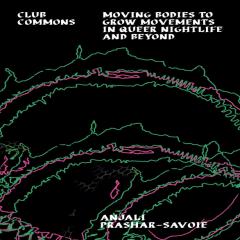
Anjali Prashar-Savoie - Club Commons: Moving Bodies to Grow Movements‬ ‭in Queer Nightlife & Beyond‬

Queer communities have long transformed parties into something powerful: spaces where care flourishes, injustice gets challenged, and new worlds are danced into being. But today, DJs command huge fees while behind-the-scenes workers earn below minimum wage. Corporations profit from our culture while communities that created these spaces are displaced. As venues shut and workers burn out, it’s clear that something has gone deeply wrong.

Club‬‭ Commons: Moving Bodies to Grow Movements‬ ‭in Queer Nightlife & Beyond‬‬‭ by Anjali Prashar-Savoie takes you inside hidden stories of resistance and reinvention. We meet the people reshaping nightlife from below: abolitionist security teams creating safety without police, sober raves doubling as mental health support, radical childcare at parties, venues becoming worker cooperatives, and free party crews reclaiming public space. Through their work, we see how party-throwing skills build movements, how refusing to play changes everything, and why protecting queer nightlife means transforming who owns it.

Quotes

“When‬‭ Anjali‬‭ shines‬‭ her‬‭ perceptive‬‭ light‬‭ on‬‭ dancefloor‬‭ culture,‬‭ everything‬‭ is‬ ‭ better illuminated. I can’t wait to read this book. It’s one we need.” ‭ Emma Warren (author of Dance Your Way Home/Up the Youth Club)

“Anjali’s‬‭ one‬‭ of‬‭ the‬‭ most‬‭ exciting‬‭ and‬‭ insightful‬‭ voices‬‭ writing‬‭ about‬‭ dance‬ ‭ music‬‭ today,‬‭ bringing‬‭ fresh‬‭ perspectives,‬‭ intellectual‬‭ rigour‬‭ and‬‭ emotive‬‭ power‬ ‭to‬‭ a‬‭ conversation‬‭ that’s‬‭ too‬‭ often‬‭ homogenous,‬‭ superficial‬‭ or‬‭ cynically‬ ‭commercial.‬‭ Club‬‭ Commons‬‭ promises‬‭ to‬‭ be‬‭ an‬‭ essential‬‭ and‬‭ overdue‬‭ book:‬‭ a‬ ‭ chance‬‭ to‬‭ reexamine‬‭ the‬‭ queer‬‭ history‬‭ of‬‭ club‬‭ culture,‬‭ celebrate‬‭ and‬‭ critique‬ ‭its‬‭ present,‬‭ and‬‭ map‬‭ out‬‭ radical‬‭ possibilities‬‭ for‬‭ its‬‭ future.‬” Ed Gillett (author of Party Lines)

“Beautifully written and unique, Anjali Prashar-Savoie’s behind-the-scenes journey through queer nightlife is as thorough as it is fascinating. Documenting a world that commercial interests are rapidly destroying, Club Commons is proof that queer culture holds the key to a better future for the dancefloor and beyond.” Professor Sam Parsley (author of Minor Keys, coach, DJ and founder of In the Key, a directory and platform championing the careers of women, trans and non-binary electronic music producers)

“Club Commons: Moving Bodies to Grow Movements in Queer Nightlife & Beyond is a vital reminder of how important the dance floor is to connect, unfurl and envision new futures. The text highlights the historic and existing care work entangled with the club space, particularly in providing temporary sites of refuge and embodied joy for Black and LGBTQIA+ communities. This is juxtaposed with research on the corporate and carceral commodification of nightlife in recent years, which exposes the false premise that club spaces are always radical. This book affirms my belief that the non-commercial nightlife ecosystem is an essential part of our social change infrastructure, rather than a luxury. Club Commons is a call to action to reclaim this space on our own terms and revive the underground.” Camille Sapara Barton, (author of Tending Grief: An Embodied Guide to Being with Grief Individually and in Community)

pre-order now12.01.2026

expected to be published on 12.01.2026

17,44
Soulwax - All Systems Are Lying LP 2x12"

Soulwax 's first new album in 8 years, entitled "All Systems Are Lying" and set for October 17th release. Available on CD & various 2LP fromats . The campaign will kick off July 9th with a double single “All Systems Are Lying / Run Free”, album announcement + pre-order launch. Since 1995, David and Stephen Dewaele have consistently pushed the boundaries of music into new and innovative territory by diversifying into many different guises. They are a band (Soulwax), djs (2manydjs), a record label (DEEWEE) and a sound system (Despacio, created along with James Murphy from LCD Soundsystem).

They are also widely renowned as one of the most innovative remix and producer teams around. They have released 7 studio albums to date, including the critically acclaimed ‘Any Minute Now’ and ‘Nite Versions’. Some of their already cult remix credits include the Grammy nominated “Work It” by Marie Davidson, as well as Peggy Gou, Fontaines DC, Roisin Murphy, Robyn, Arcade Fire, The Rolling Stones, Tame Impala, Metronomy, Daft Punk, The Gossip, Hot Chip, MGMT and Warpaint, among many others.

Stephen and David Dewaele are familiar to millions as 2manydjs, a project which undoubtedly moved the needle for modern DJing. Alongside like-minded allies such as Erol Alkan, Tiga and Jacques lu Cont, 2manydjs swept international dancefloors into delirium, gifting a rock ‘n roll attitude to club culture.

out of Stock

Order now and we will order the item for you at our supplier.

33,19

Last In: 55 days ago
Djeuhdjoah and Lieutenant Nicholson - Danses Divines

Divine Dances. In plural form.
The fourth album from DjeuhDjoah & Lieutenant Nicholson couldn't have a more explicit title.


Masters of emotions and feelings, the duo has always known how to express melancholy and nostalgia with precision. Yet this time, all their efforts have concentrated on a single goal: taking listeners by the hand—no, by the ear, obviously!—to bring everyone back to the dance floor and explore a variety of atmospheres together.


And naturally, a variety of styles. Funk, ndombolo, electro, hip hop or zouk, each new vibration discovered carries away the previous one to form a dancefloor where all eventually come together.
Divinely light.


The body, surrendered to this call to dance in all its forms, has been so caught up in the whirlwind of groove that the mind has fallen in behind it to continue as one. Words explode into syllables that metamorphose into notes, then perfectly align with those from the score.


One second. A bit of attention. Caught by an irrepressible groove, then comes the moment to slalom through melodies to discover, at the turn of a rhyme, a new meaning. Approached head-on, certain overly serious themes would empty the room and bring the atmosphere down to lead levels. The diagonal approach, humor, and apparent nonchalance of the two men are the best weapons at their disposal. Their Trojan horse to put substance into their form(s). To evoke transidentity, consent, economic malaise as well as the spiritual, or to tell little stories of frustrated loves, seemingly insoluble but which will end well.


Anthony Hilaire for Creole words, Sarah Solo for hip-swiveling soukous, Patrick Bebey for pygmy flute notes, and Grégoire Mahé to bring electricity to DjeuhDjoah & Lieutenant Nicholson's songs; styles blend in a musicality worked into its smallest interstices.


Gathered on this dance floor illuminated with 80s disco brilliance, you observe brassy notes slithering under the electronic veneer, synthesizer keys splashed by furious hip movements. To raise your eyes to connect with the spiritual is to watch the sky become constellated with crystalline Fender Rhodes notes, destined to fall like rain on the heavy bass of afrobeat groove.
Smiles attached to faces, no one should think they can get through the ten tracks of Divine Dances while remaining seated : he's doomed to fail.


OUT MAY 2025 DELUXE WHITE VINYL 180 G /CD / DIGITAL

out of Stock

Order now and we will order the item for you at our supplier.

23,32

Last In: 45 days ago
Angelo Debarre, Serge Camps & Frank Anastasio - Gypsy Guitar 2 LP
  • 1: The Sheik Of Araby
  • 2: Sans Toi Je N'ai Plus Rien (Bei Dir War Es Immer So Schon)
  • 3: Suite Hongroise
  • 4: Manege
  • 5: Souvenir De Toronto/Frischka
  • 6: Charleston
  • 7: Valse Des Ecoliers
  • 8: La Manouche
  • 9: Suite Roumaine : Babouchka/Sirba Din Dolj
  • 10: Hopla
  • 11: Le Vase
  • 12: Cousin Django

Angelo Debarre's extraordinary guitar technique has long been the tree that hid the forest of his profound musicality and above all, his talent as a composer. Belonging to the family of Django Reinhardt's heirs, Debarre has become a legend among Gypsy Jazz fans, one of those rare musicians, who can enchant a room and make hearts beat in unison.

The New Dictionary of Jazz (Nouveau Dictionnaire du Jazz) describes Angelo Debarre as supersonic, and indeed, he is with mad virtuosity. His left hand moves up and down the fine neck of his gypsy guitar, with speed but always with musicality. But it would be an understatement to speak only of his dexterity; he has a marvellous ability to play with subtlety, and his improvisational possibilities seem endless; all done with great ease and apparent composure. Solos, counterpoint, he's everywhere.

A child from the gypsy community, Angelo started playing guitar with his family at the age of eight. In 1984, he formed the first "Angelo Jazz Quintet". In 1985, he became one of the pillars of the famous Parisian cabaret, "La Roue Fleurie" and participated in numerous tours and recordings, including the famous Gypsy Guitars, a reference album of the genre.

Very comfortable in several gypsy styles, Debarre can be found alongside fellow guitarist Petro Ivanovitch and singer and balalaika player Raya from the group Arbat. As a guest, DeBarre can be heard with the band Bratsch, in dialogue with the pianist Bojan Z, percussionist Xavier Desandre-Navarre, the violinist Florin Niculescu and other leading figures of the gypsy guitar.

Angelo Debarre: guitar
Serge Camps: guitar
Frank Anastasio: bass

pre-order now30.05.2025

expected to be published on 30.05.2025

27,69
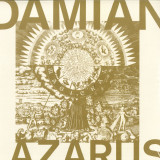
Damian Lazarus - Magickal LP 3x12"

Audio alchemist Damian Lazarus continues to redefine the boundaries of electronic music with his fifth studio album, ‘Magickal’.

Renowned for his unparalleled ability to craft transformative sonic journeys, Damian Lazarus is a master of rhythm, melody, and vibration—a true pioneer among his generation’s visionary artists. Damian’s broad depth of experience encompasses a variety of disciplines: tastemaker, selector, label owner, A&R and a Grammy-nominated artist in his own right - each informed by his unique ear for sound. He is chief wizard of the hugely influential and culture-defining Crosstown Rebels label, a globally renowned DJ with a penchant for exotic outdoor locations and a highly regarded recording artist with four albums and a plethora of solo cuts, collaborations and remixes in his sprawling discography.

With his fifth album, ‘Magickal’, Damian steps into his next evolutionary phase, combining his newly found sobriety with a more mature outlook while still pushing boundaries and creating unforgettable moments. At the root of it all is the magical power of togetherness and human connection that only music can facilitate. Driven by this core ethos, Damian continues on his mission to share his heartfelt music, taking the dance floor into unexplored realms of experience, facilitating moments of transcendence, bliss and pure, unadulterated magic.

Damian Lazarus, the avant-garde architect of spiritually nourishing sounds, is joined by a stellar lineup of collaborators on his latest excursion. It’s imaginative and mystical, rhythmically captivating and daring in its own way, as is typical of Damian’s approach. Taking consideration of his past, the album references his previous work to create a tapestry of compositions that tap into the energy of key moments from his discography. Drawing on his existing catalogue creates cohesive through lines and thematically serves as a continuation of previous stories. November’s single, ‘Sunrise Generation’, for instance, works as a companion to ‘Vermillion’, which was recorded by Damian with his band The Ancient Moons and vocalist Moses Sumney back in 2015. ‘Sunrise Generation’, featuring the beautiful vocals of Fink, was Damian’s first major release since his Grammy-nominated 2021 collaboration ‘Don’t Be Afraid’ with Diplo and Jungle, and continues to take inspiration from global gatherings at solstice and those moments of collective awe at sunrise.

Indeed, the album’s themes of mental elevation and psychedelic sonic journeys are evident throughout. Damian channels this energy through tracks like the soulful ‘So Low’, featuring the incredible Zoe Kypri, and the luminous ‘Searchin’, with Jem Cooke, whose collaboration with Damian dates back to ‘Flourish’ (2020) and lead single ‘Into The Sun’. Uplifting is the operative word here, as Damian aims straight for our hearts and inner selves, stripping away the layers to take us on a trip inwards, and out into the ether all at once. There’s a clear nod to Damian’s appreciation of amapiano when he teams up with Ghanaian interdisciplinary healer Jojo Abot on ‘Warrior Dance’. Old friend and inspirer Mathew Jonson brings his virtuoso touch to ‘Are You Dreaming?’, while TEED and A-Trak form an awesome alliance for ‘Falling Down’ with its heartrending vocals. ‘Alive’ features the Bloom Twins, and also additional production from acclaimed producer Mark Ralph, who incidentally worked on Damian’s debut album ‘Smoke The Monster Out’ in 2009 and forms another throughline to the past. ‘Alive’ blends pop sensibilities and song structure with Damian’s inimitable sound - and could become one of Damian’s biggest moments to date. ‘La Hija De Juan Simon’ delves into the Latin energy synonymous with vibrancy and self-expression as Damian teams up with acclaimed Spanish flamenco-influenced duo Mëstiza. On a solo tip, he rolls out with the eight-minute-plus soulful funk flex ‘Why Don’t U’.

In a suitably aligned instance of serendipity, the arrival of ‘Magickal’ comes at a pivotal period in Damian’s life, just as it has been with previous album concepts. Albums made and released during big shifts in his life speak to the correlation between growth, personal evolution, creativity, catharsis and sharing that process musically. The last album ‘Flourish’, for instance, was recorded and released in the space of a few months during the first summer of the global pandemic. As a result, there’s a kind of vulnerability in the music, a subtle story that’s being told with emotional touchpoints that will be relevant to anyone listening. The universal human experience and spectrum of emotions are things almost everyone can relate to. With the enhanced clarity of his sobriety, Damian’s compositions embody the uplifting nature of simply being alive, connected and unified in our love for music and one another.

Day Zero, Damian’s iconic annual festival, is intrinsically linked to ‘Magickal’. It’s the setting for his imagination when producing the music, it’s the launchpad for each year’s kaleidoscopic adventures around the world, and this year’s edition will be the backdrop to the release of ‘Magickal’. As the pinnacle of Damian’s annual experiences, Day Zero marks a vital milestone for his artistry, an extension of his inner realm, carefully curated and created for his global family of lovers and dancers to revel in the awe-inspiring beauty of Mother Nature. Central to the ethos of Day Zero is its sustainability practices and deep consideration for the locality within which it is held. Connections with local elders embolden its depth, cultivating a strongly aligned purpose with the ritual, customs and energy of the land and its people.

‘Magickal’ will be released in the same week as Day Zero, tying the two projects together in a neat dovetail. 12 years since it started, Day Zero continues to play a significant role in the music Damian makes, curates and plays. For him, it’s the epitome of his vision: a stunning natural setting, the very best party people from around the world, an unparalleled lineup of friends and family, high production values, eco-centric policies and music from another dimension. With these interdimensional transmissions, Damian channels his inner alchemist, which, in turn, permeates into the vibrational framework of ‘Magickal’.

Never one to adhere to convention, Damian has opted for a disruptive album release. ‘Magickal’ is to be kept under wraps and then announced and released on Crosstown Rebels on 8th January 2025, bypassing the modern trend of prolonged single drops and ‘tombstone’ album releases. ‘Magickal’ is the embodiment of Damian and his intentional, against-the-grain approach and reinforces the album as a complete artistic statement, offering listeners the full cohesive experience from the very beginning. This is a return to the album as the pinnacle moment and not the afterthought. Singles, edits and remixes will follow the ‘Magickal album’ release, and, of course, there will be a world tour to promote the album (including Glastonbury and Coachella) and a chance to present the album in exciting, innovative and unique ways.

Forever dreaming, a sincere student of magic, new and old, social sorcerer, lover of nature and master of musical wizardry, Damian Lazarus is a potent force. With ‘Magickal’, he reaffirms his place as one of electronic music’s most influential figures, taking listeners on a profound journey into sound, spirit, and connection.

out of Stock

Order now and we will order the item for you at our supplier.

40,76

Last In: 16 days ago
Andy Crysell - Selling The Night: When Club Culture Meets Brands, Advertising and the Creative Industries

They say nothing good happens after midnight, but in the case of creativity, that’s just not so. The night fosters a different kind of creativity: something urgent, spontaneous, carved out of necessity. Tracking the past, present and future of this complex dynamic, Selling The Night explores what happens when after-dark creativity influences wider culture and converges with everything from media, advertising, design and to gaming, fashion, hospitality, alcohol, beauty, tourism and far beyond. Also, as importantly, the implications of brands taking space within dance music as sponsors and supporters.

Author Andy Crysell speaks to DJs, promoters, marketers, academics, activists, archivists, policymakers, photographers, writers and designers. He samples KFC through to Fiorucci, Absolut and Red Bull, and moves from New York disco to the modern global underground.

Selling The Night witnesses how ideas migrate from subculture to influence the creative industries. It searches for lessons in improving the value exchange between dance music and brands, seeking something more symbiotic and less parasitic. All the while, it celebrates what makes after-dark ideas so special – the unique and democratising role they play.

“So much has changed in dance music over the decades. Selling The Night offers a very timely look at the role that brands and culture marketing have played in the past and will play in the future.” Kazim Rashid (Resident Advisor)

“The friction created when youth subcultures meet corporate cultures is long overdue a deconstruction, Selling The Night is necessary reading on how and why there is a transfer of time and money between consumer brands and cultural ecosystems; and what both sectors have to gain and lose through these relationships.” Finlay Johnson (Association For Electronic Music)

out of Stock

Order now and we will order the item for you at our supplier.

18,28

Last In: 12 months ago
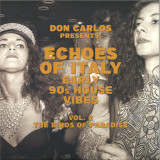
Various - ECHOES OF ITALY – THE BIRDS OF PARADISE – EARLY 90S HOUSE VIBES VOL.2 (2x12")

Googling “paradise house”, the first results to pop up are an endless list of European b&b’s with whitewashed lime façades, all of them promising “…an unmatched travel experience a few steps from the sea”. Next, a little further down, are the institutional websites of a few select semi-luxury retirement homes (no photos shown, but lots of stock images of smiling nurses with reassuring looks). To find the “paradise house” we’re after, we have to scroll even further down. Much further down.

It feels like yesterday, and at the same time it seems like a million years ago. The Eighties had just ended, and it was still unclear what to expect from the Nineties. Mobile phones that were not the size of a briefcase and did not cost as much as a car? A frightening economic crisis? The guitar-rock revival?! Certainly, the best place to observe that moment of transition was the dancefloor. Truly epochal transformations were happening there. From America, within a short distance one from the other, two revolutionary new musical styles had arrived: the first one sounded a bit like an “on a budget” version of the best Seventies disco-music – Philly sound made with a set of piano-bar keyboards! – the other was even more sparse, futuristic and extraterrestrial. It was a music with a quite distinct “physical” component, which at the same time, to be fully grasped, seemed to call for the knotty theories of certain French post-modern philosophers: Gilles Deleuze, Félix Guattari, Paul Virilio... Both those genres – we would learn shortly after – were born in the black communities of Chicago and Detroit, although listening to those vinyl 12” (often wrapped in generic white covers, and with little indication in the label) you could not easily guess whether behind them there was a black boy from somewhere in the Usa, or a girl from Berlin, or a pale kid from a Cornish coastal town.

Quickly, similar sounds began to show up from all corners of Europe. A thousand variations of the same intuition: leaner, less lean, happier, slightly less intoxicated, more broken, slower, faster, much faster... Boom! From the dancefloors – the London ones at least, whose chronicles we eagerly read every month in the pages of The Face and i-D – came tales of a new generation of clubbers who had completely stopped “dressing up” to go dancing; of hot tempered hooligans bursting into tears and hugging everyone under the strobe lights as the notes of Strings of Life rose up through the fumes of dry ice (certain “smiling” pills were also involved, sure). At this point, however, we must move on to Switzerland.

In Switzerland, in the quiet and diligent town of Lugano, between the 1980s and 1990s there was a club called “Morandi”. Its hot night was on Wednesdays, when the audience also came from Milan, Como, Varese and Zurich. Legend goes that, one night, none less than Prince and Sheila E were spotted hiding among the sofas, on a day-off of the Italian dates of the Nude Tour… The Wednesday resident and superstar was an Italian dj with an exotic name: Don Carlos. The soundtrack he devised was a mixture of Chicago, Detroit, the most progressive R&B and certain forgotten classics of old disco music: practically, what the Paradise Garage in New York might have sounded like had it not closed in 1987. In between, Don Carlos also managed to squeeze in some tracks he had worked on in his studio on Lago Maggiore. One in particular: a track that was rather slow compared to the BPM in fashion at the time, but which was a perfect bridge between house and R&B. The title was Alone: Don Carlos would explain years later that it had to be intended both in the English meaning of “by itself” and like the Italian word meaning “halo”. That wasn’t the only double entendre about the song, anyway. Its own very deep nature was, indeed, double. On the one hand, Alone was built around an angelic keyboard pattern and a romantic piano riff that took you straight to heaven; on the other, it showcased enough electronic squelches (plus a sax part that sounded like it had been dissolved by acid rain) to pigeonhole the tune into the “junk modernity” section, aka the hallmark of all the most innovative sounds of the time: music that sounded like it was hand-crafted from the scraps of glittering overground pop.

No one knows who was the first to call it “paradise house”, nor when it happened. Alternative definitions on the same topic one happened to hear included “ambient house”, “dream house”, “Mediterranean progressive”… but of course none were as good (and alluring) as “paradise house”. What is certain is that such inclination for sounds that were in equal measure angelic and neurotic, romantic and unaffective, quickly became the trademark of the second generation of Italian house. Music that seemed shyly equidistant from all the rhythmic and electronic revolutions that had happened up to that moment (“Music perfectly adept at going nowhere slowly” as noted by English journalist Craig McLean in a legendary field report for Blah Blah Blah magazine). Music that to a inattentive ear might have sounded as anonymous as a snapshot of a random group of passers-by at 10AM in the centre of any major city, but perfectly described the (slow) awakening in the real world after the universal love binge of the so-called Second Summer of Love.

For a brief but unforgettable season, in Italy “paradise house” was the official soundtrack of interminable weekends spent inside the car, darting from one club to another, cutting the peninsula from North to centre, from East to West coast in pursuit of the latest after-hours disco, trading kilometres per hour with beats per minute: practically, a new New Year’s Eve every Friday and Saturday night. This too was no small transformation, as well as a shock for an adult Italy that was encountering for the first time – thanks to its sons and daughters – the wild side of industrial modernity. The clubbers of the so-called “fuoriorario” scene were the balls gone mad in the pinball machine most feared by newspapers, magazines and TV pundits. What they did each and every weekend, apart from going crazy to the sound of the current white labels, was linking distant geographical points and non-places (thank you Marc Augé!) – old dance halls, farmhouses and business centres – transformed for one night into house music heaven. As Marco D’Eramo wrote in his 1995 essay on Chicago, Il maiale e il grattacielo: “Four-wheeled capitalism distorts our age-old image of the city, it allows the suburbs to be connected to each other, whereas before they were connected only by the centre (…) It makes possible a metropolitan area without a metropolis, without a city centre, without downtown. The periphery is no longer a periphery of any centre, but is self-centred”.

“Paradise house” perfectly understood all of this and turned it into a sort of cyber-blues that didn’t even need words, and unexpectedly brought back a drop of melancholic (post?)-humanity within a world that by then – as we would wholly realise in the decades to come – was fully inhuman and heartless. A world where we were all alone, and surrounded by a sinister yellowish halo, like a neon at the end of its life cycle. But, for one night at least, happy."

out of Stock

Order now and we will order the item for you at our supplier.

28,99

Last In: 6 months ago
Yukimi - For You (LP+MP3)

Yukimi

For You (LP+MP3)

12inchZEN313
Ninja Tune
28.03.2025
  • A1: Prelude For You
  • A2: Make Me Whole
  • A3: Break Me Down
  • A4: Runaway
  • A5: Elinam
  • A6: Stream Of Consciousness (Feat. Lianne La Havas)
  • A7: Rules Of School
  • B1: Sad Makeup
  • B2: Peace Reign
  • B3: No Prince
  • B4: Winter Is Not Dead
  • B5: Jaxon (Feat. Pos From De La Soul)
  • B6: Feels Good To Cry (Feat. Yusuke Nagano)

Yukimi, die gefeierte Sängerin und Mitbegründerin der Grammy-nominierten Band, Little Dragon, veröffentlicht ihr Debütalbum „For You“ am 28. März 2025 bei Ninja Tune.

Mit ihrem Debüt-Soloalbum löst sie sich von einer Band und schafft einige ihrer schönsten und intimsten Werke, die es bisher gab: sehr persönlich und brillant nachvollziehbar. Auf „For You“ verwebt Yukimi auf elegante Weise Musikstile von Jazz über Soul und elektronischen Pop bis hin zu Hiphop, Folk und Psychedelic, aber die Themen ihrer Solosongs gehen tiefer als je zuvor und umfassen Liebe, Verlust, weibliche Energie und angeborene Widerstandsfähigkeit. Die Zusammenarbeit mit Erik Bodin (Schlagzeug bei Little Dragon) und Lianne La Havas war für Yukimi das erste Mal, dass sie mit einer anderen Frau Musik schreibt und kreiert, was ihr erlaubt, ihre weibliche Energie auf eine befreite und persönliche Weise auszudrücken. Passenderweise geht es in den Texten des Songs um die Erforschung ihrer inneren Stärke während herausfordernder Lebenserfahrungen. Es ist ein bemerkenswertes Statement einer Künstlerin, die eine neue Phase ihrer Karriere als Solokünstlerin einleitet, jedoch mit der Gelassenheit und Intuition einer „alten Häsin“ mit jahrelanger Erfahrung im Musikbusiness. Yukimis markante und anmutige Stimme hat seit der Gründung von Little Dragon ihre Fans in ihren Bann gezogen. Der Erfolg der Band führte dazu, dass sie auf einigen der größten (und kleinsten) Bühnen der Welt auftrat - von Coachella bis zu NPRs Tiny Desk - und mit Künstler:innen wie u.a. KAYTRANADA, Killer Mike, Gorillaz, Tinashe, Mac Miller, De La Soul, BADBADNOTGOOD, DJ Shadow, ODESZA, Kali Uchis, Faith Evans, Dave Sitek, Big Boi, Flume und JID zusammenarbeitete.

- Format: 140G schwarzes Eco Vinyl mit bedruckter Innenhülle und Downloadcode-Sticker

pre-order now28.03.2025

expected to be published on 28.03.2025

23,95
AYA - IM HOLE

Aya

IM HOLE

12inchHDBLP061
Hyperdub
10.03.2025

Limited vinyl release for aya's 2021 Hyperdub-debut album, a one-time pressing on Ecomix random colour-mix recycled vinyl. Originally released in 2021 as a book and digital album, im hole is now presented on ecomix splatter-effect vinyl. A welcome reminder ahead of new aya music in 2025. On im hole, aya distilled the incisive sonic experimentation of her early run of releases, the tongue-in-cheek giggles of her DJ sets and edits, and the identity-fluxing lyricism of her live shows. The album was immediately championed from all corners, 'Best New Music' in Pitchfork to DJ Mary Anne Hobbs Album of the Year, followed by incredible live shows which drew new listeners further into the net. Contorting language, dialect, gender and sexuality between intermittently controlled bursts of rhythm, noise and aural goop, aya sculpted a set of autobiographical vignettes that challenge established norms, question supposed truths, and affirm a spectrum of interlocking experiences. But while it's wide open and personal, im hole also challenges queer art's tendency to veer towards repetitive solipsism. Even the title itself references the unwieldy mix of self-actualization and sexualization that bogs down cultural perceptions of the trans experience. It's neither one thing nor t'other, just as much a sly nod to dissociative afterparty sloppiness as it is any self-congratulatory pinkwashed grandstanding. The music follows suit, fragmenting familiar sounds, twinned with familiar words, assembled in unfamiliar ways, full of sharp humour, even in the middle of despair. Stories are muddled with phonetics just as dubstep is macrodosed with microtonal drone.


j B4. If [redacted] Thinks He's Having This As A Remix He Can Frankly Do One

out of Stock

Order now and we will order the item for you at our supplier.

20,80

Last In: 13 months ago
MAGMA - SOLID BLAZE CABIN TROLLEY

Introducing the first 4-wheel DJ trolley designed for ultimate convenience. The SOLID BLAZE CABIN-TROLLEY allows DJs and music producers to easily navigate airports, train stations, and more while traveling to gigs. Safely transport essential gear like laptops, mixers, drum samplers, DAW controllers and 12“records with ease.

Made from recycled plastic bottles, this sustainable trolley also features interchangeable wear-and-tear components, including the trolley handle and wheels, for long-lasting performance.

Travel smart and eco-friendly with the new SOLID BLAZE CABIN-TROLLEY, perfectly sized to meet cabin luggage standards of most airlines

Outer dimensions (H/B/T):
55 x 39 x 23 cm / 21.6 x 15.3 x 9 inch

Inner dimensions:
45 x 36 x 15 cm (main compartment) / 17.7 x 14.17 x 5.9

pre-order now07.03.2025

expected to be published on 07.03.2025

201,60
Various - ECHOES OF ITALY - ARTISTS IN WONDERLAND – EARLY 90S HOUSE VIBES VOL.1 LP 2x12"

Volume 1 of this expertly curated project of 90s Italian House - put together by Don Carlos.

If Paradise was half as nice… by Fabio De Luca.

Googling “paradise house”, the first results to pop up are an endless list of European b&b’s with whitewashed lime façades, all of them promising “…an unmatched travel experience a few steps from the sea”. Next, a little further down, are the institutional websites of a few select semi-luxury retirement homes (no photos shown, but lots of stock images of smiling nurses with reassuring looks). To find the “paradise house” we’re after, we have to scroll even further down. Much further down.

It feels like yesterday, and at the same time it seems like a million years ago. The Eighties had just ended, and it was still unclear what to expect from the Nineties. Mobile phones that were not the size of a briefcase and did not cost as much as a car? A frightening economic crisis? The guitar-rock revival?! Certainly, the best place to observe that moment of transition was the dancefloor. Truly epochal transformations were happening there. From America, within a short distance one from the other, two revolutionary new musical styles had arrived: the first one sounded a bit like an “on a budget” version of the best Seventies disco-music – Philly sound made with a set of piano-bar keyboards! – the other was even more sparse, futuristic and extraterrestrial. It was a music with a quite distinct “physical” component, which at the same time, to be fully grasped, seemed to call for the knotty theories of certain French post-modern philosophers: Gilles Deleuze, Félix Guattari, Paul Virilio... Both those genres – we would learn shortly after – were born in the black communities of Chicago and Detroit, although listening to those vinyl 12” (often wrapped in generic white covers, and with little indication in the label) you could not easily guess whether behind them there was a black boy from somewhere in the Usa, or a girl from Berlin, or a pale kid from a Cornish coastal town.

Quickly, similar sounds began to show up from all corners of Europe. A thousand variations of the same intuition: leaner, less lean, happier, slightly less intoxicated, more broken, slower, faster, much faster... Boom! From the dancefloors – the London ones at least, whose chronicles we eagerly read every month in the pages of The Face and i-D – came tales of a new generation of clubbers who had completely stopped “dressing up” to go dancing; of hot tempered hooligans bursting into tears and hugging everyone under the strobe lights as the notes of Strings of Life rose up through the fumes of dry ice (certain “smiling” pills were also involved, sure). At this point, however, we must move on to Switzerland.

In Switzerland, in the quiet and diligent town of Lugano, between the 1980s and 1990s there was a club called “Morandi”. Its hot night was on Wednesdays, when the audience also came from Milan, Como, Varese and Zurich. Legend goes that, one night, none less than Prince and Sheila E were spotted hiding among the sofas, on a day-off of the Italian dates of the Nude Tour… The Wednesday resident and superstar was an Italian dj with an exotic name: Don Carlos. The soundtrack he devised was a mixture of Chicago, Detroit, the most progressive R&B and certain forgotten classics of old disco music: practically, what the Paradise Garage in New York might have sounded like had it not closed in 1987. In between, Don Carlos also managed to squeeze in some tracks he had worked on in his studio on Lago Maggiore. One in particular: a track that was rather slow compared to the BPM in fashion at the time, but which was a perfect bridge between house and R&B. The title was Alone: Don Carlos would explain years later that it had to be intended both in the English meaning of “by itself” and like the Italian word meaning “halo”. That wasn’t the only double entendre about the song, anyway. Its own very deep nature was, indeed, double. On the one hand, Alone was built around an angelic keyboard pattern and a romantic piano riff that took you straight to heaven; on the other, it showcased enough electronic squelches (plus a sax part that sounded like it had been dissolved by acid rain) to pigeonhole the tune into the “junk modernity” section, aka the hallmark of all the most innovative sounds of the time: music that sounded like it was hand-crafted from the scraps of glittering overground pop.

No one knows who was the first to call it “paradise house”, nor when it happened. Alternative definitions on the same topic one happened to hear included “ambient house”, “dream house”, “Mediterranean progressive”… but of course none were as good (and alluring) as “paradise house”. What is certain is that such inclination for sounds that were in equal measure angelic and neurotic, romantic and unaffective, quickly became the trademark of the second generation of Italian house. Music that seemed shyly equidistant from all the rhythmic and electronic revolutions that had happened up to that moment (“Music perfectly adept at going nowhere slowly” as noted by English journalist Craig McLean in a legendary field report for Blah Blah Blah magazine). Music that to a inattentive ear might have sounded as anonymous as a snapshot of a random group of passers-by at 10AM in the centre of any major city, but perfectly described the (slow) awakening in the real world after the universal love binge of the so-called Second Summer of Love.

For a brief but unforgettable season, in Italy “paradise house” was the official soundtrack of interminable weekends spent inside the car, darting from one club to another, cutting the peninsula from North to centre, from East to West coast in pursuit of the latest after-hours disco, trading kilometres per hour with beats per minute: practically, a new New Year’s Eve every Friday and Saturday night. This too was no small transformation, as well as a shock for an adult Italy that was encountering for the first time – thanks to its sons and daughters – the wild side of industrial modernity. The clubbers of the so-called “fuoriorario” scene were the balls gone mad in the pinball machine most feared by newspapers, magazines and TV pundits. What they did each and every weekend, apart from going crazy to the sound of the current white labels, was linking distant geographical points and non-places (thank you Marc Augé!) – old dance halls, farmhouses and business centres – transformed for one night into house music heaven. As Marco D’Eramo wrote in his 1995 essay on Chicago, Il maiale e il grattacielo: “Four-wheeled capitalism distorts our age-old image of the city, it allows the suburbs to be connected to each other, whereas before they were connected only by the centre (…) It makes possible a metropolitan area without a metropolis, without a city centre, without downtown. The periphery is no longer a periphery of any centre, but is self-centred”.

“Paradise house” perfectly understood all of this and turned it into a sort of cyber-blues that didn’t even need words, and unexpectedly brought back a drop of melancholic (post?)-humanity within a world that by then – as we would wholly realise in the decades to come – was fully inhuman and heartless. A world where we were all alone, and surrounded by a sinister yellowish halo, like a neon at the end of its life cycle. But, for one night at least, happy.

out of Stock

Order now and we will order the item for you at our supplier.

28,99

Last In: 6 months ago
Various - SOUND SYSTEM ROCKERS KINGSTON SOUNDS 1969-1975'
  • A1: Satta Massa Gana-Ken Booth
  • A2: Guiding Star-Horace Andy
  • A3: Shame&Pride-Leroy Smart
  • A4: Stick By Me-Dennis Brown
  • A5: Can’t Get Me Out-Cornell Campbell
  • A6: Riding For A Fall-John Holt
  • A7: Once Upon A Time-Delroy Wilson
  • A8: The Village-Gregory Isaacs
  • B1: Ride On Girl-Johnny Clarke
  • B2: Mighty King -Freddie Mcgregor
  • B3: Whip Them King-Linval Thompson
  • B4: Lead Us Jah Jah-Barry Brown
  • B5: Everybody Needs Love-Pat Kelly
  • B6: Alton Ellis - Play It Cool
  • B7: Count Prince Millar - Mule Train
  • B8: Owen Grey - Natty Bongo

The Sound System has become part of today’s musical/cultural heritage, playing the people’s favourite hits or just as important, breaking some new tunes.
But perhaps less known are the roots of the Sound System, which began way back when…in Kingston….

Around the late 1940’s the Sound System began to overtake the big bands that usually played at the dances in Kingston.

The American Rhythm and Blues records that were so popular at the time would find their way to Jamaica via the merchant sailors and migrant workers returning from their stints in America. For economical reasons alone it would pay to have a DJ on hand to play these hits rather than a 10 piece band that could eat and drink the promotor out of the house and on curried goat!!

The early Sound Systems were basic affairs built around a single record deck, a valve amp and a speaker.

But by the 1950’s they had grown to purpose built speakers the size of wardrobes that could be heard blocks away.

Record producer Bunny ‘Striker’ Lee would remember the time ‘Sound Systems was like our radio station…not many people on the island would own a wireless, so it was the way for the people to hear their music.

So this selection of Lovers, Ballads, Root’s classic’s made the Sound Sytems of Jamaica the place to be.

So sit back and enjoy the ride….SOUND SYSTEM ROCKERS …one and all

out of Stock

Order now and we will order the item for you at our supplier.

13,40

Last In: 14 months ago
ABOUBAKAR TRAORÉ & BALIMA - SABABU

The album SABABU is a vibrant ode to the quest for the opportunities that shape our existence. We are invited to seize the infinite chances open to us, capable of leading us to unsuspected horizons if we know how to recognize them. SABABU is a captivating blend of haunting rhythms and deep ballads, combining traditional heritage with contemporary sounds.

Aboubakar Traoré's heartfelt cries are both passionate and demanding, and he takes on universal themes of injustice, love, heritage and the quest for freedom. Through powerful lyrics, he denounces the exploitation of African resources, political and economic domination, while celebrating the resilience of peoples and the richness of traditions.

But SABABU is also an ode to life, love and the strength of family and community ties. Carried along by a deep groove, the album takes the listener on a musical journey where intimate emotions and collective reflections mingle, creating a bridge between past and present where each rhythm resonates as an invitation to move, to come together, and to celebrate life.

Debut album "Tama Tama" was nomitad by Octaves de la Musique 2021 and the band was selected to showcase at Visa For Music (2023) in Morocco and Belgian Worldwide Music Night (2023) in Brussels.

pre-order now29.11.2024

expected to be published on 29.11.2024

21,22
Gavin Vanaelst - Takeaway Loops (TAPE)

Gavin Vanaelst runs the space Aboli Bibelot in Antwerp where exhibitions and musical performances can happen side to side with dealings in centuries-old furniture and unique pieces of folk art or volkskunst. Gavin makes music under the aliases DJ Charme, Kassett and So Sorry. This is the first album under his birth name. Takeaway Loops cycles back to the days when Gavin was working as a courier for .

is a food delivery company. Their couriers - ehm, brand ambassadors, as the company prefers to call them - dressed in bright orange, they race their bikes around the city. They deliver meals and groceries for all sorts. Thanks to them, the privileged can stay tucked in their private spaces. Interaction between the two groups - the privileged and the brand ambassadors - is mostly kept to the bare minimum. And sparse communications are often driven by annoyances - “my Coke is warm because you kept it too close to the French Fries.” And on the streets the general public dis-approaches the brand ambassadors with pity. We tell our peers: “That’s not a good job,” and “stay away from the Sharing Economy.” Because, you know, in our capitalistic dollhouse we all stand our grounds and play our parts wholeheartedly.

During his shifts for , Gavin recorded location sounds on his phone at fast food restaurants while waiting on the orders he had to pick up and deliver. Later in his home studio Gavin added piano and electronics to this source material. The result: a gloomy soundtrack for a shadow world. Seven songs in evening blue with a bright orange glare.

A few years ago, our favorite Belgian publishing house Het Balanseer released Seizoenarbeid by Heike Geissler (available in English trough Semiotext(e)). Geissler writes about her job at Amazon in Leipzig. Because her writing and freelance work did not pay the bills any longer, she was forced towards this underprivileged shadow-world of unwanted jobs. Seizoenarbeid shed a light on freedom in an unfree world. A monument of ‘we are all in this, but not together’. Takeaway Loops gives us a similar peak in a world that is at the same time so visible, but then also very veiled for many. A world that we prefer to use, yet that most of us prefer not to see - a world that we don’t like to enter.

Last year at Harbourland subway station in Kobe i was mesmerized by its sound design, created by Hiroshi Yoshimura. For each part of the subway station he composed a short phrase. While walking trough the station, a full composition grows in your head. The looping melodies guide you trough a microworld. Trough a blue world of commuters, of the homeless, of the lonely, of the fast paced, of the tourist. Gavin creates a similar effect with Takeaway Loops. The tonality somehow corresponds to Yoshimura’s work. Yet instead of being guided trough a building, we are now taken to the after dark. You feel the concrete evening heat of the city. You hear the rain. Stiff fingers during cold winters’ nights. You are alone on the bike, cruising. Your maps app telling you where to go. You just left the fake leather bench of the well-lit pastiche interior of a fast food restaurant.

Next order, number ECN44! Please wait outside, sir?

pre-order now22.11.2024

expected to be published on 22.11.2024

14,08
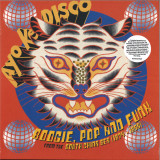
VARIOUS - Ayo Ke Disco - Boogie, Pop&Funk From The South China Sea (1974-88)

‘Ayo Ke Disco’ (meaning ‘Let’s go to the disco’ in Malay
and Indonesian) celebrates the musical identities
emerging from the newly independent countries in
South-East Asia during the 1970s and 80s.
Soundway general manager Alice Whittington, aka
Norsicaa (DJ), selects 10 deep cuts from local labels,
officially reissued on vinyl for the first time – forming a
snapshot of the vibrant discotheques and live scenes
across Indonesia, Singapore, Thailand, Malaysia, Hong
Kong and the Philippines.

The artists featured here were known for exploring
traditional sounds alongside funk, disco, city-pop and
even political psych-rock, genres that were indicative
of the exciting but often turbulent period. But despite
the post-war backdrop of instability there came
unprecedented levels of economic prosperity. With a
hopeful buzz filling the air, the music scene was helping
lead the way in reshaping the new identities of the
region.
OVERVIEW:
FOR FANS OF:
Sound of Siam compilations, Priscilla Chan, Lovin’ Mighty
Fire compilation, Tanamur City compilation

out of Stock

Order now and we will order the item for you at our supplier.

20,59

Last In: 49 days ago
Items per Page:
N/ABPM
Vinyl