
Suche:dj electric

Cream Colored Reissue
Kolonel Djafaar"s "Cold Heat" packs a mighty punch, combining the irresistible charm of Ethio jazz and psych rock with the power of a big band brass section, that has made them a formidable live force across Belgium. As they come into their own cinematic sound, now is the time for them to be enjoyed more widely, thanks to masters of exotic groove, Batov Records. Kolonel Djafaar"s debut release for Batov is an all-killer-nofiller EP. On "Bactrian Camel"" the four-man brass section picks up a thundering groove, only for the organ-led rhythm section to answer with their own snaking retort. Joris Wendelen"s electric guitar riffing adds a further Middle Eastern flavour to the stew. Written by trombonist Willem De Mol, who delivered the song after two months alone in Russia, "Lamentation" continues the Ethio vibe with a little Latin panache. The brass-led tone here is mysterious, the melody lingers. An almost surf-esque guitar solo transports the listener before the main groove on organ and brass recalibrates us to the solid rhythm.

6
Dublin-based producer Moving Still further blends both his Saudi Arabian and Irish heritage on 'Kalam Hub', a triumphant new EP that marks the fifth release on CWPT/Cooking With Palms Trax. Following a series of 12” edits and original productions that have put his sounds in the record bags of DJs including Hunee, Nabihah Iqbal and Esa Williams, 'Kalam Hub' presents an ambitious expansion of the Moving Still sound, delving into his identity and background to open up imaginative, universal new corners for club culture.
This potent musicality is immediately evident from the first notes of 'Kunafa King'. Taking its title from a traditional Arabic dessert, analogue midi sounds deliver a skewed take on the traditional Saudi rhythms of the artist's youth, before expanding into a wistful diversion for any self-respecting dance floor. It's a trick Moving Still pulls off again on the pulsing 'Hayati 89', which transforms from a traditional aesthetic into a blistering, neon-tinted Italo banger, the kind of track designed to compliment an accelerated spin in the car gracing the eye-catching cover of ‘Kalam Hub’, a collaboration with the artist alongside Manchester-based graphic design studio, Dr. Me.
Concluding the record's A-side, the rhythms take a trippier turn for the duration of 'La Titasil Feeya'. Translating to “don't call me!” and making sonic reference to teenage years immersed in rock, metal and general angst, it unfolds as something akin to Middle East-tinted techno with a formidable kick drum, before exploding in colourful, organic breakbeats. Immediately on the flip, the sense of wonder returns in a sonic mirage for 'My Bosa Is For You', weightless rhythms blending with an electric organ and charming, lightly psychedelic breakdowns.
Further sonic tricks fall from Moving Still's delicately-tailored sleeves on 'Haram Odyssey', where an almost impossibly tight bass line provides the function for contrasting synthesis and unpredictable percussion, drawing parallels between the sometimes confusing aspects of the artist's dual-cultural life as a child, through to the music he makes as an adult. Fittingly, the record concludes with ‘Kalam Hub', a triumph of minimalist percussion and traditional instrumentation that pays tender tribute to the Moving Still's grandmother, translating simply to “Love Talk”.
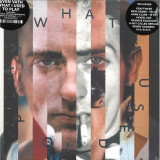
- A1: Logic System - Unit
- A2: Kraftwerk - Computerwelt (2009 Remastered
- B1: Whodini - Magic's Wand
- B2: Rocker's Revenger - Walking On Sunshine (Feat Donnie Calvin
- C1: Klein & Mbo - Dirty Talk (European Connection
- D1: Liaisons Dangereuses - Los Niños Del Parque
- D2: Yello - Bostich
- E1: The The - Giant
- F1: The Residents - Kaw-Liga
- G1: Clan Of Xymox - Stranger
- G2: A Split - Second - Flesh
- H1: Severed Heads - Dead Eyes Opened
- H2: The Weathermen - Poison!
- I1: New Order - Blue Monday
- J1: Anne Clark - Our Darkness
- J2: 16 Bit - Where Are You?
- K1: Phuture - We Are Phuture
- K2: Model 500 - No Ufo's (Vocal
- L1: Frankie Knuckles Feat Jamie Principle - Your Love
- L2: Quest - Mind Games (Street Mix
- M1: Jasper Van't Hof - Pili Pili
- N1: Guem Et Zaka Percussion - Le Serpent
- N2: Hugh Masekela - Don't Go Lose It Baby
- O1: Sly & Robbie - Make 'Em Move
- Q1: The Ecstasy Club - Jesus Loves The Acid
- R1: Foremost Poets - Reason To Be Dismal?
- S1: Lhasa - The Attic
- S2: A Guy Called Gerald - Voodoo Ray
- T1: M/A/R/R/S - Pump Up The Volume - Usa 12" Mix
- T2: Bobby Konders - Nervous Acid
- U1: Meat Beat Manifesto - Helter Skelter
- V1: Raze - Break 4 Love
- W1: Sueño Latino With Manuel Goettsching Performing E2-E4 - Sueño Latino (Paradise Version
- X1: Off - Electrica Salsa
- O2: Brian Eno - David Byrne - Help Me Somebody
- P1: Primal Scream - Loaded (Andy Weatherall Mix
36
For this uniquely personal retrospective spread over twelve vinyl discs, Sven Väth takes us back to the early days of his DJ career. On What I Used To Play we meet great pioneers of electronic music, gifted percussionists, obscure wave bands, and innovative producers of a bygone 'new electronic' era. Rough beats and irresistible grooves from the identification stage of house, techno, and acid remind us not just how far electronic music has evolved over the past four decades, but how great it was to dance to EBM, techno, and house for the very first time.
If there is one protagonist of the electronic music scene who has remained curious, innovative and at the very cutting edge of music for over four decades, it's Sven Väth. His multi-layered artist albums and Sound of the Season mix compilations have been defining the genre for over two decades, and even today, he is constantly on the lookout for the next top tune to add to the highlights of his next set. At least, that's the case when he's not producing them himself as an artist or remixer. "Actually, it's always been part of my DNA to think ahead," and nothing had been further from his mind than looking back at his past, but when in spring of 2020 the international DJ circuit had to be scaled down to virtually zero, the 'restless traveler' suddenly had time. Time to stop and reflect on "how it actually was back then, at the very beginning of my career..."
"It was a great trip and with every track, beautiful memories came flooding back".
In the London apartment, he had just moved into, Sven has set up a "little music room", where he cocooned himself for several days, "to look way back for the first time and review my musical journey through the eighties, so to speak."
The interim result was six thematically oriented playlists with a grand total of 120 tracks from 'early 80s' to 'Balearic late 80s', together with excursions into afrobeat, European new wave, and EBM sounds and a few epochal techno/house tracks from the USA in between. From these 'Best of Sven Väth's favorites', the project What I Used To Play crystallized. Sven remembers how the Cocoon team reacted to his proposal: "They found the idea of making a compilation out of it MEGA from the beginning and everyone said 'Sven, go for it', but then, of course, the work really started, namely, to clear the rights and to get clean sounding masters of the up to 40-year-old tracks. There was also disappointment, of course. We couldn't clear certain titles because the rights holders in the USA had fallen out with each other or simply disappeared from the scene. In short, it wasn't easy, but now I can safely say we got the most important tracks."
Finally, after two years of research, curation, design, and administrative fine-tuning, the "little retrospective" from 1981 to 1990 is available. The exquisitely packaged, and three-kilo heavy box set is not only physically impressive, WIUTP is also the definitive record of Sven Väth's musical development. On each of the twenty-four sides of vinyl, you can trace track by track, what influenced him during which phase, and how he took off as a DJ from his parents' Queen's Pub straight into the spotlight at Dorian Gray. There and at Vogue (later OMEN), Sven became the style-defining player in the DJ booth that he still is today.
1981 - 1990: Future Sounds of Now
In the early eighties, the crowd in clubs like Vogue and Dorian Gray danced to what nowadays we call 'dance classics' - mainly disco, funk, soul, and chart pop. It was up to a new generation of DJs, including Sven Väth, the youngest protagonist in the Rhine-Main area at the time, to create their own club-ready music mix. Good new tracks and potential floor-fillers were rarities that had to be sought out and found, in order to prove oneself worthy.
Without MP3s, internet streaming, or other digital download possibilities, music didn't just gravitate to the DJ, instead, it had to be tracked down. In well-stocked record stores in Frankfurt and Wiesbaden or even in Amsterdam, London, or New York, Sven and friends sourced the material for countless magical nights. On WIUTP we can follow Sven's very personal journey through this wild, innovative era in which synth-pop, funk, hip-hop, and disco were successively replaced as 'club music' by house, techno, acid, and breakbeat. By the end of the decade, it was clear to see that these once exotic 'fringe' phenomena would soon become 'mass' phenomena.
Early 80s
Dirty Talk by the Italian-American duo Klein & M.B.O. represents the most innovative phase of the Italo-disco genre in the early eighties like no other track. Mario Boncaldo (I) and Tony Carrasco relied entirely on the original synthetic drum and percussion sounds of the Roland TR-808, coupled with the raunchy vocals of Rossana Casale and guitar accents of Davide Piatto. Of course, other tracks from this period were also influential in style, most notably Unit by Logic System, which worked as the perfect soundtrack to the laser lighting system at the legendary Dorian Gray club. With stomping beats and robotic rap interludes, Bostich by Yello also belongs on Sven's eternal playlist - after all, it caught the attention of Afrikaa Bambaataa, who invited the Swiss duo to perform at the Roxy in New York in 1983.
EBM Wave - Mid 80s
From today's point of view, the almost ten-minute-long, downtempo track Giant by Matt Johnson's band project The The, would probably not be considered an obvious club classic. However, a closer (re)listen reveals the rhythmic intricacies of the percussion overdubs by JG Thirlwell (aka Foetus) on Johnson's composition, and it becomes clear why this exceptional piece of music is one of Sven's absolute favorites. Other classics from this phase include Kaw-Liga by the mysterious The Residents, the hypnotic-synthetic Our Darkness by Anne Clark (and David Harrow), and last but not least, the somber, monotonous anthem Where Are You? by 16Bit, one of Sven Väth's projects together with Michael Münzing, Luca Anzilotti from 1986.
US House - Late 80s
You certainly can't talk about Chicago house without mentioning Frankie Knuckles. The resident DJ at the Warehouse not only gave the name to an entire genre, but also produced epochal floor fillers on the Trax label like the timeless Your Love, sung (and moaned) by Jamie Principle. Acid house protagonists Phuture also hail from Chicago, and on We Are Phuture (also released on Trax) we hear the chirping acid sounds of the legendary Roland TB-303 in full effect. Another featured classic is No UFO's by Detroit's Model 500 aka Juan Atkins, who is rightly considered the 'Godfather of Techno' even if the genre-defining track from 1985 still breathes with the spirit of hip-hop and electro from the first breakdance era.
Afrobeat
Le Serpent, by Algerian-born Abdelmadjid Guemguem, is a track that sounds completely different from everything else on WIUTP. Made in 1978, it's a monumental, rousing groove created without bass or synths, just with five congas! Even though Guem sadly passed away in 2021, his immortal, acoustic beats are understood all over the world and will continue to enrich many thousands of DJ sets for years to come. Another classic that not only Sven appreciates beyond measure is Hugh Masekela's Don't Go Lose it, Baby. In addition to being one of the most important jazz pioneers, the trumpeter and freedom fighter from Johannesburg was very experimental, integrating electronic sounds into his music in later years, in a similar vein to Miles Davis and Herbie Hancock. Dutch jazz pianist Jasper van't Hof's afrobeat project Pili Pili has also aged well. The trance-like, almost sixteen-minute-long track of the same name, manages to fill a whole side on the seventh of twelve vinyl discs in the WIUTP box.
UK-US-Euro - Late 80s
Time for a change of scene, in the truest sense of the word, and from a musical perspective, this section is like landing on another planet. First up is Andrew Weatherall's classic remix of Primal Scream's Loaded, featuring the iconic Peter Fonda sample (lifted from the 1966 biker film Wild Angels) that came to personify the mood triggered by the British Second Summer of Love in the late eighties: "We wanna be free to do what we wanna do, and we wanna get loaded...". This period also saw the emergence of M/A/R/R/S whose only single, 1987's Pump Up The Volume, became a club classic with support from DJ legend CJ Mackintosh. In this most eclectic of sections, we also encounter New York house and reggae producer Bobby Konders and his seminal Nervous Acid.
Balearic - Late 80s
Those who know him, know that Sven had already lost his heart to the 'magic island' of Ibiza as a teenager, so with that in mind, the WIUTP project couldn't end without a Balearic chapter. Inspired by Manuel Göttsching's E2-E4, the immortal, eponymously titled Sueño Latino belongs in there without question. Equally popular on the island was, and still is Break 4 Love by Raze, which thinking about it, would also fit perfectly into the house chapter. Last, but not least, there's an overdue reunion with Sven Väth himself, in his role as frontman of the successful Frankfurt trio OFF. Together with Michael Münzing and Luca Anzilotti (later of Snap!) this 'Organization For Fun' created the off-the-wall club hit Electric Salsa in 1986 which incidentally turned into an international chart smash, putting Sven in the enviable position of having to decide between pop stardom and a DJ career. Well, we all know how that decision turned out and the rest, as they say, is history. A not insignificant part of his story is What I Used To Play. Enjoy!

- A1: Emnete (Live) – Imperial Tiger Orchestra
- A2: Mambo De La Pinta – Art Pepper**
- B1: Boogie Stop Shuffle – New York Ska Jazz Ensemble
- B2: 4Beat Cha Cha Cha – Lucas Van Merwijk & His Cubop City Big Band
- B3: Yatra-Ta – Terje Terasmaa*
- C1: African Mailman – Rhythmagic Orchestra
- C2: Foot In The Door – Onward International
- C3: Smells Like Teen Spirit – Blue Mode
- D1: Koumba Fri Fri – Mamelon
- D2: Zombie – Art Ensemble Of Chicago
- D3: Sorrow, Tears And Blood – Shola Adisa-Farrar & Florian Pellissier Quintet
- D4: Tribute To Mulatu – Patchworks*
12
UK jazz dance hero Paul Murphy teams up with BBE Music to deliver his first compilation on the label: a blazing selection of up-tempo jazz titled ‘The Jazz Room’.
Lauded by none other than Gilles Peterson as “the original messenger of jazz who found almost every dancefloor classic”, Paul began DJing in 1970s London. His passion and unique playing style placed him at the epicentre of an emerging jazz-dance scene in the city, popping off in spots like The Horseshoe (aka Jaffas), The Wag, The 100 Club, The Blue Note and The Electric Ballroom, where he founded the now famous ‘Jazz Room’, after which this album is named.

12
Over the last decade-and-a-half, C Joynes has ploughed a singular furrow through solo guitar, with a body of work incorporating English folk-tunes alongside North & West African music, and lifting proto-minimalist and improvised techniques from the European classical and avant-garde traditions.
His new release, ‘Poor Boy On The Wire’, is his first full album dedicated wholly to the electric guitar. Through a typically wide-ranging set, Joynes exploits the instrument’s potential by placing intricate parlour music alongside overdriven garage blues throw-downs, wiry electric folk and the brittle ringing tones of free improvisation. However, these explorations of the tones and timbres of close-mic’d guitars and amplification retain an overall coherence and unity through the deliberate use of a limited palette of budget instruments and vintage equipment.
With ‘Poor Boy On The Wire’, Joynes has released 9 albums to date, including ‘The Borametz Tree’ (2019), recorded with long-term fellow travellers Dead Rat Orchestra, and ‘The Wild Wild Berry’, a collaboration with singer Stephanie Hladowski (MOJO Top 5 Folk Albums 2012, fROOTS Editors Choice Album Of The Year 2012). He has played extensively across the UK, Europe and the USA, sharing bills with performers including: Shirley Collins, Martin Carthy, A Hawk And A Hacksaw, Marc Ribot, Alasdair Roberts, Richard Dawson, Jack Rose, Josephine Foster, Sir Richard Bishop, Six Organs Of Admittance and 75 Dollar Bill.
“As much Conlon Nancarrow and Ali Farka Toure as Blind Lemon Jefferson, the compositional mind at work here can take apparently disparate threads of modernism and ethnic tradition and treat them as though they were all archaic blues styles learnt from dusty 78s.”
BRUCE RUSSELL, THE WIRE
“An inheritor to Davy Graham; a lone operator prone to unexpected collaborations, with a repertoire that crosses continents and timezones with consummate ease, and dashed off with a phenomenal, yet lightly applied technique.”
ROB YOUNG, THE WIRE
“His epigrammatic re-castings and re-readings of widely-travelled folk melodies and rhythms from a variety of traditions suggest shared memories that might be intensely universal while seeming strangely out of reach.”
KEVIN MACNEIL BROWN, DUSTED MAGAZINE

2nd installment in RZA's brandnew 2022 Bobby Digital Trilogy on Electric Blue vinyl! Rza returns with the second of his three record Bobby Digital Trilogy, coming on the heels of his critically acclaimed first installment "Saturday Afternoon Kung Fu Theatre Rza vs Bobby Digital, Produced by DJ Scratch! The album is also the soundtrack and addition to the new Bobby Digital comic of the same name. "Dating back to the 1990's RZA has been using Bobby Digital as a pseudonym for various solo projects. These are not strictly outside of the Wu-Tang Clan diaspora as various members make cameos or co-produce, but they've allowed Diggs to explore musical and lyrical ideas that fight better with his alter ego. Bobby Digital can be considered a comic book superhero, fighting evil in both the physical realm and the virtual world of cyberspace, achieving a "meta" reality long before Facebook thought to trademark the term." - rap revies 2022 2022 release. The founding member of the multimedia supergroup, The Wu-Tang Clan, introduced the world to his alter-ego in his 1998 album Bobby Digital in Stereo. With lush digital orchestral sounds and inventive beats, he was putting the love of comic books on full display through it's concept and execution. Now, exactly 23 years since it's original release, RZA announces a partnership with Z2 Comics to give the character a story in the medium which inspired his creation! Bobby Digital: Pit Full of Snake pairs RZA with White Noise Studios member Ryan O'Sullivan, whose last collaboration with Poppy was widely celebrated by fans and critics alike, with Sound & Fury artist Vasilis Lolos rounding out the team to bring the world of Bobby Digital to life.

11
In 2003, Pisco Crane assembled a six-piece band from motivated and talented like minds in the Kinshasa slums where he grew up. Pisco had been involved with a handful of local rap acts when he was younger, but after meeting legendary instrument builder Bebson De La Rue, he was inspired to follow a new path. He set about building instruments from the discarded trash that surrounded his city: bits of old computers or oil cans were fashioned into bass guitars and drums, and keyboards were bashed together using springs, metal pipes, and offcuts of tubing. If there was a core philosophy that guided Pisco at this stage in his journey, it was that everyone should have access to instruments, no matter where they come from or what their budget might be. And following in the footsteps of Bebson, Pisco locked into a Congolese tradition that touches on the eccentric genius of globally lauded artists like Konono Nº1 and Staff Benda Bilili. Over the years, Fulu Miziki's notoriety grew in the Kinshasa underground - their utopian vision of the future was infectious. Eventually, they were joined by performance artist, sculptor and fashion designer Lady Aisha, who offered the band unique colour and a soulful central focus. Influenced by Kinshasa's street performance scene, Aisha helped the band devise vivid masks and costumes that were as electric and singular as the instruments they played, and the scene was set. In 2020, as the world was plunged into lockdown, footage of Fulu Miziki went viral and their star began to grow exponentially, with a video of the band preforming the track 'Tikanga' racking up millions of views on Facebook. The band used this opportunity to work on documenting their sound, and shored up at the Nyege Nyege studios in Kampala for a year to assemble a definitive album. Recorded by HHY & The Macumbas' Jonathan Saldanha, this record captures the band's furiously innovative mixture of industrial sonics, spiritual jazz, punk, and Congolese soukous pressure. At their best, Fulu Miziki sound almost completely out of time, curving pounding rhythms around microtonal clanks, rousing chants and spiky sonics. On 'Mutangila', there's a hint of disco in the 4/4 stomp, but it's been shifted into a post-punk ritual, adorned with complex bell percussion and overlapping vocals. 'Congo' is even harder to define; electrified buzzes form a bassline, but it's the mindboggling rhythms that shuttle the track into psychedelic realms, led confidently by Lady Aisha's limber rhymes. Fulu positively slither on the sultry, industrial-influenced 'Sebe', while 'Tikanga' reminds of Congo's rumba-derived soukous traditions, materializing the sounds into the future with tight, pounding percussion and head-melting fx. The story of Fulu Miziki is sprawling and complex and constantly evolving, with various offshoots and band iterations. Two members left the band in 2016 to form KOKOKO! with French producer Débruit. Not long after they recorded this magnum opus album, several other original members left to form a similarly named outfit currently based in Europe. This other incarnation recently released an EP of electronic productions without the band founder Pisko Crane and lead vocalist Lady Aicha, on the UK based Moshi Moshi records. Pisco and Lady Aicha currently lead a different outfit in Kinshasa made up of completely new musicians. This full-length is the remaining proof of Fulu Mziki at their most vital and most complete - it won't be repeated - and can never be recreated. It's an essential portrait of one of the Democratic Republic of Congo's most innovative contemporary outfits, and some of the most surprising hybrid music you're likely to hear.

- A1: Bem Vindo (Feat Dj Satelite)
- A2: Hmmm (Feat Bonga)
- A3: Bom Bom (Feat Mayra Andrade)
- A4: Ah (Feat Pote)
- A5: Farramenta (Feat Nastio Mosquito)
- B1: Sr Mandao (Feat Ikonoklasta, Octa Push & Dj Dolores)
- B2: Tem Dor (Africa De Itamaraca) (Africa De Itamaraca)
- B3: Sou Eu (Feat Joao Morgado)
- B4: Batida Botto (Feat Botto Trindade & Pedro Da Linha)
- B5: Electrico (Feat Branko)
10

Ian Pooley returns to Rekids with Studio A Pt.3 this September.
The third and final entry in a three-part release series based on his studio, Ian Pooley’s ‘Studio A Pt. 3’ for Radio Slave’s imprint sees him drop yet another set of bumping, hardware-focussed tracks.
Leading the A-side, ‘PSS480’ combines swinging drums, modulated low end, and trippy bleeps for a party-starting house track. ‘SP12 Electric Mistress’ brings flanged-out drums and lush pads together for a wonky yet driving cut. On the flip, ‘Viola’ sees Pooley heading toward heavier territories with rumbling kicks and heaving synths forming a pumping techno track before the ‘303 Version’ of ‘SP12 Electric Mistress’ closes out the EP, introducing tweaked-out acid lines and freaky FX to the original version.
Active since the early 90s, the German DJ/producer has released on the likes of Force Inc, V2 Records, and his own Pooledmusic, remixing for the likes of Deee-Lite, Carl Cox and many more, as well as being one of the few to be remixed by Daft Punk.

8
Gianluca Petrella is one of the most internationally renowned Italian musician, composer and producer, winner of the Down Beat Critics Poll in the "Rising Stars" category for two years in a row. Cosmic Renaissance is a music collective led by Ganluca with Mirco Rubegni (trumpet), Riccardo Di Vinci (electric bass, double bass), Simone Padovani (percussion) and Federico Scettri (drums, samplers), with Soweto Kinch (vocals and tenor sax) as special guest among others. Cosmic Renaissance's aim is to write and play music that actually starts from jazz and reaches new heights and music genres, in the name of unity, discovery, connection, understanding and other beautiful things that make us human. Try to imagine all this into music, and you'll have an idea of how "Universal Language" really sounds!

We return with the second Glenn Davis” 12”, a year on from his last Yore twelve-inch “Soul On My Side”, Dublin-based DJ and producer Glenn Davis returns with its sequel, the as-stellar Better Daze. The EP's melodic, soulful sound. The dynamic title cut locks in instantly with a pumping kick drum and builds layer by layer thereafter. Percussion, hi-hats, electric piano chords, and synthesizers add to the thrust of the production as it grows ever more urgent. As the track advances, Davis drapes a jazzy keyboard solo across the booming base as the swing swells to a near-ecstatic level. “Your Time” rounds out the A-side with a cut that suggests pure energy at its outset before quickly morphing into a sleek house strut. With percussion included and late-night synth atmospherics folded in, the breezy tune starts to sound like something you'd hear banging out on the Dancefloor thats surrounding you.
On the flip, Davis brings the skipping house groove of "Inner Monologue” to a fever while. Moody chords, hand drums, and a snappy groove set the scene. The female vocalist's soulful delivery and vibes-like earworm that make the tune the standout it is. Think of a dark Room and a red light bulb & House Music forever and a day.

- A1: St Pauli Second Line (Live)
- A2: Something's Missing (Live)
- A3: Arabesque Breakin&Apos; Suite (Live)
- A4: Theme From Beverly Hills Cop (Axel F)
- A5: Four Two Three (Live)
- A6: Silent Heroes (Live)
- B1: Carry On (Live)
- B2: Munich Psycholympics (Live)
- B3: Ghost Walk (Live)
- B4: Let The Music Play (Live)
- B5: Where Do We Go From Here (Live)
11
A unique longplayer by Germany's Funk champions The Mighty Mocambos: 'Scénarios' is a wild journey through iconic performances captured on 8-track tape, including celebrated versions of breakdance favourites like 'Axel F.' And 'Let The Music Play' as well as brand new original material composed especially for recordings in unusual settings.
Hamburg's deep funk chefs are known for their intuitive recordings that capture the energy of a live performance, and with this record they go all the way.
Just before the pandemic, the group recorded an in-store live session at legendary Hamburg record shop Groove City and taped an impromptu performance at JAM PDM! breakdance battle in Potsdam. Both were released on vinyl 45s, quickly sold out and became secret weapons for DJs. While most bands shifted their stage to the studio in 2020, producing an abundance of isolated lockdown-inspired material, the Mighty Mocambos – never shy of an antidote - took the mobile version of their recording studio on the road.
With no audience allowed at the Pitt Hopkins Music Session charity concert, the group used the occasion to compose meditative folk-soul instrumentals to be performed exclusively on stringed instruments. Sweaty funk does not work via video stream, but the format provided a welcome opportunity to create something entirely different. Even without electricity and drums, the cinematic "Four Two Three" and "Silent Heroes" are unmistakably recognizable as Mocambo themes.
When you follow Nina Simone's credo that an "artist's duty is to reflect the times", it became evident that once the world slowly started opening up again, further concerts would be captured on the group's portable Fostex R-8 tape machine. Luckily, restrictions fell on the very evening that the band hit the open air stage at the Import Export in Munich on September 11th 2021. The extended afrobeat-inspired jam on J.J. Cale's "Carry On" witnesses people celebrating and dancing together again for the first time after a year and the manic "Munich Psycholympics" unleashes all bottled-up energies that had being lying dormant.
The slightly kafka-esque "Ghost Walk" was taped during a soundcheck for a concert that was eventually called off for safety reasons, reflecting once more the uncertainty of the time. The last scénario sees the Mighty Mocambos returning to a packed indoor venue, playing "Let The Music Play" to a audience of b-boys and -girls – a testament to the sheer power of music. Featured as an encore here, an acoustic version of "Where Do We Go From Here?" (originally recorded with Lee Fields) closes the record and its restless voyage through unusual recording situations.
"Scénarios" differs drastically from other live albums as it does not seek to replicate existing material from studio albums. All songs were written or arranged especially for the live recordings in order to combine the group's DJ-friendly trademark sound with added vibes and momentum from the audience. Most of them were recorded while they were performed in public for the first time ever.
Comes in gatefold sleeve & includes download voucher.
d 04: Theme from Beverly Hills Cop (Axel F) Live
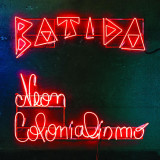
- 1: Bem Vindo Feat. Dj Satelite
- 2: Hmmm Feat. Bonga
- 3: Bom Bom Feat. Mayra Andrade
- 4: Ah! Feat. Poté
- 5: Farramenta Feat. Nastio Mosquito
- 6: Sr Mandao Feat. Ikonoklasta, Octa Push & Dj Dolores
- 7: Tem Dor (Africa De Itamaraca) Feat. Lia De Itamaraca &
- 8: Sou Eu! Feat. Joao Morgado
- 9: Batida Botto Feat. Botto Trindade & Pedro Da Linha
- 10: Eléctrico Feat. Branko
10
'Neon Colonialismo' is the new album -the first under his name since 2014- by musical agitator Batida, aka Pedro Coquenao, one of the main catalysts of the Afro-electronic scene. Carried by a subtle and refined electronic production, the eleven tracks (equally divided between songs and instrumentals), travel through the Portuguese-speaking world, from Portugal to Angola through Cape Verde and Brazil. They feature the presence of many distinguished guests: Mayra Andrade, Branko, DJ Satelite, Poté, Botto Trindade, Bonga, Ikonoklasta, Octa Push, Lia de Itamaracá, DJ Dolores, Joao Morgado, Pedro da Linha & Nástio Mosquito.

10
Unlearn is the long awaited fourth album of DJ and producer 2econd Class Citizen. It marks the artist's return back to the newly relaunched label Equinox Records. Their previous collaborations achieved high acclaim for their genre bending fusion of hip hop, electronica and folk music.
The new album is an exploration of an artist journeying beyond their conventional confines. It is a musical adventure peppered with vintage samples concerning the perception of reality and our struggles with conforming to a broken society.
Unlearn is the most musically accomplished work of 2econd Class Citizen to date. As one would expect the drum programming, scratching and production is on point. Several tracks feature soothingly melodic and energetic passages of jazz saxophone from Leroy Horns and electric guitar riffs provided by long term collaborator Paul Drury.
2econd Class Citizen, real name Aaron Thomason, resides in Brighton, UK. He is also a painter and visual artist fascinated with abstraction and the chaos of mixing colours. His musical approach on the new LP draws many parallels to this creative process. An original painting from the artist forms the albums striking cover.
Equinox Records is run by DJ Scientist in Germany. The Unlearn project marks the 51st release and provides the perfect launch vehicle for the dormant label to rise again. The vinyl release of Unlearn as well as the single Be Together signify the first stops in a release plan which will please fans of the label.
FEEDBACK:
"Woah! It's sounds rad! Really heavy and cinematic!"
Kid Koala
"A dark and deep dive into a world of dense and diced samples and moody muted melodies. Would sit well next to Shadow's freakier forays into fractured funk. Or Format's last psychy LP, for sure."
DJ Moneyshot of The Allergies
"I love it. The new treatments with the additional instruments sound great, especially the horns. Glad to see that Equinox is back in action. Dope cover art."
Dday One
"It sounds like 2econd Class Citizen has been at a mountaintop retreat studying and meditating and came back with some superpowers."
Buddy Peace

11
Beautifully drunken it hums, the piano in “PianoPiano”, the last tune of “How to Spread Lies”, the first EP by Roman Flügel for the Hamburg based label Dial in the year 2010. Or take “Strich”, a peculiar electrical slow-motion grinder, out on his “Mutter” EP for Klang Electronic in 2006. Since long, the renowned Berlin based DJ and producer is investigating in spheres beyond the dance, the groove, the ecstasy. Zones, where the molecules harmonize, senses relieve, and the soul quietens. All his last albums, “All The Right Noises” (Dial), “Themes I-XIII” (ESP Institue), “Eating Darkness” (Running Back) have moments of tension and relaxation in a deep harmonious connection.
Now “Balmy Evening”, a sundown record for sunup’s. Eleven notions in adventurous journey music, embracing the freedom of structure, blurring the musical pulse into harmonic meditation and mysteriously grooving zones, leaving all unnecessary accessories behind. A quality, that many of his collaborative and solo productions from past 30 years comprise. Still, most of them squint on the dance floor, where jack is king. Not so “Balmy Evening”, where real party bangers are absent. There are moving tunes like the slow Kraftwerk-melody-leaning funkateer “Duftschulter”, or the artificially jacking “Greenhouse”, where nervous Synth patterns ball along soft breaks and decreet kicks. Also, “Super Sonne”, an odd, seemingly improvised synth conversation might ask some souls out for a dance.
But all others, like “Atmosphere”, “Frei”, Dolphins, “Goth”, or “Ambienteuse”, rather seek for the tranquil in each one’s spirit. Listeners need be ready for surprises. Ready for impulsive ideas, linked to a harmonious flow, always ready to grow. An album full of silence, utterly loud, beautifully diverse humming, displaying a playful, exploratory side of a celebrated club music producer, to whom atoms dance in manifold ways.

14
Durty Geeks are a band at the boundary between Soul, Funk and Hip Hop born in 2013. The lineup is quite uncommon in the Italian
music scene, despite the usual four elements: Federico “Piezo” Pezzotta, on the electric piano, keyboards and synths; Francesco “Frenz” Crovetto, founding member and drummer of OTU; Gregorio "Greg" Conti, bass player also part of Verbal and Bangarang!; Edoardo “DJ Edo” Fumagalli, on the turntables and samplers.
The Durty Geeks sound universe is an illegitimate son of Hip Hop, but without the main element ‐ the voice ‐ replaced by scratches and
samples. This produces an instrumental form that winks at the American soul and funk of the 60s and 70s, as well as the Italian compo‐ sers who in those same years signed cult movie soundtracks: Piccioni, Nicolai, Bacalov, Trovaioli to name a few.
From “La Dama Rossa uccide sette volte" to "The Mack", the sound flows like a second feature film screening. A sequence shot that
does not indulge in the past but that leads straight into modernity thanks to the more contemporary interventions of synth and scrat‐
ches, and to sporadic experimentations in electronics.
The first EP "We Gun Make It" was released in 2014, an exploration of the american imaginary linked to weapons, between urban and
rural contexts, containing 3 tracks, self‐produced and printed by CORPOC.
The first full length album is "Also Starring", 9 tracks plus 5 skits mixed by Tommaso Colliva (Muse, Afterhours, Caliber 35 etc.) which
constitutes an instrumental journey through B‐movies filmography, citing cinema subgenres such as wuxia, blaxploitation and italo hor‐
ror.

4
Contemporary DIY Street Soul, New Jack, Electro Funk studio project from Parisian DJ Raphaël Top-Secret & Antoine Kogut (Syracuse).
For lovers of Loose Ends, Larry Heard, Mad Professor, Strafe or Sade. This EP includes two smash-hit A-side remixes by LA and Vancouver underground celebrities Benedek and Pender Street Steppers (PPU / Mood Hut) that sound like 1986 or 1992 !
Original versions are found on the B-side with “Give It Up”, a smooth and romantic 112 bpm G-Funk jam that is the perfect track for your drive to the coast, while “The Way They Do …”, a 98 bpm dreamy electronic AOR indie-pop dubby, will take you to an island.
Using original vintage gear as the TR-808, Emulator II, DX-7 and Rhodes, electric guitar, studio bass arrangements, the release shows sophisticated skills in the production stages, while being a very refreshing pop and dance release.
A stunning debut for the Cachette label !

4
Oli Stewart is Casbah 73. American-born, Madrid-based DJ, producer, vinyl collector and selector extraordinaire with several decades of experience under his belt.
Classic soul, funk and disco at its finest, with releases on mainstay outlets such as Glitterbox and Lovemonk, we're extremely proud to have him in the Boogie Angst record bins.
Casbah 73's Boogie Angst debut is a two-sided live band funk workout reminiscent of early 70's acts and labels such as 24 Carat Black, Black Heat and Strata East, but also connects to the current sounds of Black Jazz Chronicles, Sault and Nu Genea.
Let's Invade the Amazon is a highly grooved piece of live musical wizardry, with vocal performances to match. Beautifully extended and ongoing, the steady backbone interplay with funky electric pianos, with the occasional synth riff popping up for a breath of fresh air. And in the words of Casbah himself: "Quite possibly - no, definitely, the only soul-disco track ever to be inspired by Michael Mann's book "The New Climate War", The Clash, Sun Ra... and Dr Seuss".
On the B-side we find Pale Splash of Blue; some top shelf live Moog-, Rhodes- and Hammond featuring jazz funk. Punchy organs stab away alongside Casbah 73's signature electric piano sprinkles, bouncing around his unique rhythmic groove. All resulting in a driving pace and attractive up-tempo moment; more than worthy of that evening beach club get-together.
Casbah 73's sound is a clear amalgamation of his broad range of influences, and the two songs on this release are a definite showcase of his love for funk, soul and disco.
With some excellent remixes on their way, keep an eye out for the upcoming limited edition vinyl release.
'Casbah 73 – Let's Invade the Amazon' is out on all digital portals on May 20, 2022, via Boogie Angst

With arrangements and piano by Alfredo Linares, this is a thrilling double-sider sought after by collectors and DJs because of the funky dancefloor cuts 'Enyere Kumbara' (covered by Quantic a few years back) and 'INS-Rock'. Proper Afroantillano party business melting Cuban, Nuyorican and Colombian tropical traditions. First time reissue on 7" vinyl. Julián y su Combo was founded in 1962 by left-handed guitarist Julián Angulo Ponce, who was originally from Guapi, Cauca, Colombia and made his name in Cali and Buenaventura, signing initially with Bogotá's Sello Vergara in 1966. During a 20-year period Julián y su Combo released eight records (with several band name variations). Angulo was part of the first generation of artists from the Colombian Pacific who migrated to Bogotá in the 1970s, and his combo enjoyed popularity in his adopted city as well as in Medellín and Mexico. The band also travelled to Venezuela and the US. Angulo described his sound as Afroantillano, combining Cuban, New York Latin and Puerto Rican elements with Colombia's own tropical traditions. The combo's arrangements were distinguished by the bandleader's funky, jazzy electric guitar work (Angulo played without changing the order of the strings), a hot rhythm section and the potent brass line-up of two saxophones and a trumpet (much like Cortijo y su Combo). At that time Alfredo Linares was musical director at INS and this album -the first one Julián Angulo recorded for the label- bears his influence in the funky 'Mambo Rock' sections (breaks and handclaps galore!) and hot Cuban and Latin jazz piano styles that also graced his own records.
