Fun Fun was an Italian Euro disco band produced by Dario Raimondi Cominesi and Alvaro Ugolini. The group was fronted by models, while the vocals were recorded by
original singers Antonella Pepe, Angela Parisi, and Ivana Spagna. Spagna left after the release of their first album in 1983.
Their breakthrough came with the hit “Happy Station (Scratch Remix),” by Ben Liebrand which climbed the charts in several European countries, including the Netherlands, Germany, and Belgium.
The track became a staple in the hottest discos of the era. The Greatest Fun compilation album brings together their biggest hits, including “Happy Station (Scratch Remix),”
“Give Me Your Love,” “Baila Bolero,” and “Living in Japan.” Additionally, the album features the Fun Fun “Mega Hit Mix,” a special mix by
Dutch producer and DJ Martin Boer of 2 Brothers on the 4th Floor fame, along with many more Euro disco tracks.
Search:dj fun
YES! Originally released in 2000, Mark de Clive-Lowe's Six Degrees captures the early essence of what would later be known as broken beat, club-jazz and future soul; bridging the sounds of 70s jazz-fusion, jungle, hip-hop, house and Afro-Cuban rhythms. With fender rhodes, synths and an MPC2000 at the core of his production, de Clive-Lowe blended live musicianship with beat-driven sensibilities in a way that was ahead of its time.
Originally released in New Zealand via Kog Transmissions, the album found its way onto the global stage when Universal Jazz UK picked it up. Now, 25 years later, Be With is proud to present a special anniversary vinyl reissue, celebrating a landmark album that laid the foundation for an international career spanning continents, collaborations, and countless musical evolutions. Limited to just 400 copies for the world, these are gonna fly.
In 1998, a 23-year-old Mark de Clive-Lowe set off on a year-long journey that would shape his career and musical identity. Fuelled by an insatiable curiosity and a grant from New Zealand supporting emerging artists, he traveled across the globe — digging through record stores in San Francisco, immersing himself in the rhythms of Havana, collaborating in London’s underground studios and experiencing the jazz legacy of New York. Along the way, he crossed paths with pioneers, mentors and kindred spirits who would deeply influence his sound.
Six Degrees is the sonic diary of that transformative year — a musical world tour distilled into one groundbreaking album. It's both a snapshot of a pivotal moment in de Clive-Lowe’s life and a timeless statement of creative exploration.
The jazzy jungle vibes of "Roundtrip" opens proceedings, inspired by de Clive-Lowe's deep love of drum & bass. It kicks off with a rhythm pattern picked up in Havana, combined with Lonnie Liston Smith-style Rhodes textures and a rolling jungle breakbeat. Sublime. Up next, "La Zorra" is a moving tribute to the folkloric 6/8 rhythms he was surrounded by in Cuba. Afro-Cuban music had a huge impact on his sound and this track reflects those deep grooves brilliantly. Hip-hop has also been a major influence since de Clive-Lowe's teenage years and Manuel Bundy’s scratches bring an essential turntable element to "Melodious Funk", giving it that raw boom-bap edge.
Underground favourite "El Día Perfecto" came about by de Clive-Lowe wanting to write something as catchy as Incognito’s "Colibri", combined with his deep love for Lonnie Liston Smith. Effortless as it sounds, it pretty much wrote itself, seemingly. "Cosmic Echoes" is a nod to house music, but on the chiller side. Named after Lonnie Liston Smith’s band, with bouncy bass, a steady 4/4 groove and chopped tabla percussion, the mood this track conjures up is special. The deeply soulful "Day By Day" became the biggest track from the album, partly thanks to DJ Spinna’s remix and Café del Mar featuring it on their compilation. Cherie Mathieson’s vocals shine here. The lyric came to de Clive-Lowe while hanging out at Cause Célèbre in Auckland: “Day by day, side by side, hand in hand, no turning back.”
"Restless" is a jazz-funk jam built on a classic drum break, heavily influenced by Roy Ayers and the Mizell Brothers. Named in homage to Phil Asher’s Restless Soul moniker, his impact on de Clive-Lowe's journey can’t be overstated. Following on, "Mindscape" is a darker, rawer drum & bass track. The chopped-up drum break and moody synths channel everything he loved about the deeper, more atmospheric side of the genre. "Control" continues the jungle influence — this one’s all about the heavy grooves and deep bass, inspired by nights out listening to Jumping Jack Frost and Grooverider in packed basement clubs.
"Por La Mañana" is a musical snapshot of walking the Malecón in Havana in the morning sun. The city had such a profound impact on de Clive-Lowe and this track captures some of that energy and movement. Penultimate gem "Motherland" is a nod to his Japanese heritage. The melody draws from Japanese scales, shifting between moody introspection and uplifting harmony. Built on a chopped live drum break he recorded in Tokyo years earlier. We end with "El Día Perfecto (Reprise)", a stripped-down reprise featuring percussion, vocoder, Rhodes and synths — leaving the listener with a warm, uplifting final moment.
Speaking to Be With, de Clive Lowe explained just how much celebrating the 25-year anniversary of this album means to him: "Since then, I’ve released so much more music, but Six Degrees still resonates — it captures a really special moment in my life. A turning point, a fork in the road that ultimately changed everything. It’s amazing to reflect on where this journey has taken me, and I’m incredibly grateful for it. I still remember the night I finished "El Día Perfecto". I took a minidisc of it to my friend Cian’s DJ set at Galatos in Auckland. He plugged it in, and I watched the dancefloor move to something I’d just created hours earlier — it was a magical moment.
When Six Degrees was first released, the internet was still in its early days. There was no YouTube, no streaming, no instant global access to new sounds. The album was my way of bringing together all the music and places I had experienced over that year, blending them into something uniquely mine. It introduced me to listeners around the world and opened the doors to a career that would take me to more countries, collaborations and experiences than I ever imagined.
25 years later, I’m so grateful for everything this record set in motion. It’s a document of a moment in time, but it still feels alive — and I’m thrilled to share it again in this special anniversary edition."
Mastering for this 25 year vinyl edition was overseen by Be With regular Simon Francis and it was cut by the esteemed Cicely Balston at Abbey Road Studios to be pressed in the Netherlands by Record Industry. The original artwork has been lovingly brought back to life by de Clive-Lowe himself, with updated liner notes written specially for this landmark reissue.
Produced in eastern Sicily between Mount Etna and Ionian seashore, Oltremare recalls the idea of what’s beyond the sea, evoking the dialogue between Northern and Southern Italy, Europe and America, and all the extremes that are divided by the sea, in a constant -yet inspiring conversation that can only lead to contamination. Franco Corica and Andrea Normanno join forces with multi-talented and revered dj and producer Byron The Aquarius, who infuses his blissful touch to this jazz-funk inspired house record.
Breakbeat Paradise Recordings is back with another funky edition of their Toxic Funk series – this time welcoming back a true Nu Funk legend Umbo who has cocked up 2 massive funky soul nuggets. Umbo has been around since the early Nu Funk days with releases on labels like Good Groove Records & Timewarp under his belt as well as featuring on the Christmas Bootleg Bells Vol. 4 right here on BBP. The grooves and breaks are center stage on both cuts of this Toxic Funk Vol. 18 - with No Sugar taking on a classic soul jam while the Saoco Root goes all in on jazz meets the funky drummer and catchy Beastie rhymes. The timeless sounds of both these funky bangers are sure fit in nicely in any funky DJ crate. BBP is on point once again delivering you the funky beats and breaks on the planet.
Erik Rico returns to Cosmocities with The Rare Groove Project, a limited-edition EP featuring funk-heavy, soulful covers of groove gems from Matt Soulie’s vinyl vault, alongside standout remixes from Gerd, DJ Nature, and Aroop Roy.
The EP opens with a brassy, high-energy take on P.J. City’s Straight Forward, followed by Gerd’s Chicago house-inspired remix and a funkier alternate version full of disco-era charm. Rico then revamps Franklyn’s Future Love into an electrified P-funk boogie blast, while NYC’s DJ Nature turns out a synth-laced, bass-driven after-hours groove.
Rico also reworks Star Lighters’ Disco Funk into a high-impact, slap-bass purple tinged stomper, with UK house and jazz funk expert Aroop Roy rounding things out with a dancefloor house flavoured summer anthem.
Limited pressing—act fast.
Swollen Members rose in the underground Hip Hop scene with a series of classic albums that made them one of the genre's brightest stars. Founded by Madchild, Prevail, and DJ Rob the Viking, Swollen Members have stayed independent under their own label Battle Axe Records. The have returned in 2009 stronger than ever with Armed to the Teeth, which features appearances from Talib Kweli and Tech N9NE.
- A1: Chupacabra (Feat The Game)
- A2: Dern & Spruce
- A3: Eazy Call (Feat The Game & Big Hit)
- A4: Cold Ass 2 Step (Feat The Game & Suga Free)
- A5: Meet The Whoops (Feat Meet The Whoops)
- A6: She's Not Around Pt Ii (Feat The Game)
- A7: Gurbs & Youngs (Feat Larry June & Jay Worthy)
- A8: Workout (Feat Lil Jon & Rodney O)
- A9: Chupa’s Groove (Feat Thundercat & Channel Tres)
- B1: Two Hi (Waves)
- B2: Fresh White T (Feat Shiro & D. Blake)
- B3: A Quik Message (Feat Dj Drama)
- B4: Since I Was Lil (Feat Curren$Y, Bun B & Jay Worthy)
- B5: Money, Cars & Guns (Feat Dom Kennedy)
- B6: Ayo (Feat Kaytranada & Barney Bones)
- B7: Ditto (Feat Ceelo Green, Shiro & Gwen Bunn)
- B8: Soul Circus/Chupacabra Outro (Feat. Ab-Soul)
DJ Quik & JasonMartin (formerly known as Problem), are back with their second collaborative project, Chupacabra. As can be the fear with fan-favorite follow-ups, Chupacabra refuses to copy the formula laid out on Rosecrans yet shares the same soul, steeped in the cores of West Coast G-Funk, but alive and grown up, in a more sophisticated tone. With an album that is LA to it’s core (sans a few tasteful features from artists that would get the nod despite not being from there), Chupacabra provides the sounds to a golden summer in the city of Angels. Like the chupacabra, JasonMartin & DJ Quik are both enigmatic and mystical figures in the hip-hop space. A star-studded list of features include The Game, Suga Free, Jay Worthy, Larry June, Channel Tres, Bun B, DOM KENNDEY, & more. 1xLP, pressed on Blue Vinyl.
j B1 | TWO HI (WAVES) feat Wiz Khalifa, Channel Tres, Free Nationals & George Clinton
Born from a virtual encounter in lockdown between two Parisian neighbors, the DJ/producer Prosper and saxophonist Le Marabout, this new playful and joyous project is pulling freely from the Afro, Funk, Disco, Hip-Hop, Oriental and Electro influences of the two artists.
The iconoclastic DJ Romain “Prosper” Coolen, fervent purveyor of no holds barred euphoria on the dance floor, and the versatile saxophonist, composer and jack-of-all-trades Johann “Le Marabout” Guihard offer us a lavish, eclectic, uninhibited, coherent and furiously groovy listening experience.
First single “C’est Vrai“, from their forthcoming album ‘Le Moustache Conspiracy’ (released October 2022) is a banging Electro Afro Funk joint featuring Fou Malade and Niagass, two luminaries of the Senegalese Hip-Hop scene.
Over the bouncing beat and snarling horns, these two juggle lyrics back and forth in Wolof (Senegal’s most widely spoken language), calling out those fake friends who smile in your face before stabbing you in the back.
DUVEL & GIT HYPER - De Rode Draad
Duvel is een pionier binnen de Nederlandse Rap-scene. Met z'n herkenbare stijl en vooruitstrevende visie heeft hij menig artiest geinspireerd en is zijn naam in steen gehouwen. Dit geldt eveneens voor DJ en producer Git Hyper, wiens naam sinds de 'golden era' van de Rap niet is weggeweest. De samenwerking van Duvel & Git Hyper vormt dan ook een nieuwe HipHop mijlpaal. De solide productie ligt in handen van Duvel en Git Hyper en vormt de fundatie voor de scherpe teksten van Duvel, ondersteund door klinkende namen als $keer&Boo$, Faberyayo, Nosa en Maximilli. Het album wordt uitgebracht door Redrum Recordz, het underground label wat Duvel ooit z'n eerste wapenfeiten bracht. Tezamen met de geschiedenis die hij met Git Hyper heeft, is de muziek het kloppende hart en HipHop 'De Rode Draad'.
Satya is excited to welcome Sweden’s very own Chris Llopis, a veteran of electronic music, with his highly anticipated EP Echo Ridge, to its vinyl only catalog.
Chris has been a prominent figure in electronic music since the late ‘90s, releasing on respected labels like Fabric Records, Tooloop, and Micronica. Inspired by a trip to Spain at age 13, Chris began DJing on Technics SL1210 turntables and later immersed himself in Copenhagen’s vibrant techno scene. His first vinyl release on Tatsu in 1998 brought him global recognition. Today, Chris’s sound blends timeless influences with modern techniques.
Echo Ridge is inspired by Chris’s love for funk-driven bass lines and the energy of underground raves. “I wanted to create tracks with strong rhythms and a playful edge,” he says. “The bass line is the soul of a track, and this EP captures the vibe of late-night moments when everything clicks.” The EP combines the groove-heavy minimal style of the late ‘90s with a fresh, contemporary edge, delivering tracks that energize the dance floor.
Chris’s creative process thrives during early morning studio sessions. “It’s the perfect time for clarity and creativity,” he shares. For Echo Ridge, Chris used iconic gear like the Juno 106, Elektron Analog Four, Eventide H3000, and Roland Space Echo RE-201, alongside Ableton 12 and Max for Live, to craft its warm, textured sound.
Out on the shelves June 13, 2025, the EP is a celebration of Llopis’s evolution as an artist and his deep connection to the dance floor. With its groove-driven energy and meticulous attention to detail, the release is a must-have for fans of minimal house and vinyl enthusiasts alike.
DCTL is a unit formed by Masafumi Onishi, aka TELLY, the label owner of Troop Music Works, and DJ DUCT, who is renowned for his turntable skills that span a wide range of genres, from Hip Hop and Rare Groove Funk to Detroit Techno and Deep House. The raw warmth of analogue equipment, rough sequences mainly using samplers and rhythm machines, familiar nostalgic samples, and adorable DIY output that clearly conveys that it has been carefully crafted by hand.
- A1: Say Ahhh
- A2: Mind Melt
- A3: Buttersweet Loving
- A4: River Of Freedom
- B1: Somebody
- B2: When You Told Me You Loved Me
- B3: Stay In Bed, Forget The Rest
- B4: Call Me
- C1: Music Selector In The Soul Reflector
- C2: Sampladelic
- C3: Bring Me Your Love
- C4: Picnic In The Summertime
- D1: Apple Juice Kissing
- D2: Party Happening People
- D3: Dmt (Dance Music Trance)
- D4: What Is This Music?
When one makes mention of Deee-Lite, the 90's house-funk trio of Lady Miss Kier, and DJs Dmitry and Towa Tei, invariably their Billboard smash single “Groove Is In The Heart” will come up, and for good reason. With its Herbie Hancock-sampling bassline, some classic rhymes from Q-Tip, and guest vocals by Parliament-Funkadelic legend Bootsy Collins, the song became an indelible classic of 90s music, a massive commercial hit for Deee-lite and is widely considered one of the greatest dance songs of all time. Although a massive success for the group, “Groove Is In The Heart” led to some pigeonholing from critics and reviewers, who had specific expectations for future records. Rather than deliver more of the same free-wheeling, breezy dance music of World Clique, Deee-lite took a more politically-minded approach with their second album, spurred largely by front-woman Lady Miss Kier, who had a lengthy history of political activism prior to forming the group. 1992's Infinity Within rendered several Dance-chart hit singles, but was not as commercially or critically lauded as its forebear. Deee-lite were undaunted by their change in commercial fortune, regrouping with the addition of junglist DJ Ani, replacing the absent Towa Tei to record their third record. 1994's Dewdrops In The Garden was the result of their efforts, which struck a remarkable balance between the celebratory grooves of World Clique, and the social justice-driven Infinity Within. Lady Miss Kier had done a lot of world-traveling in the time between albums, and the material in Dewdrops was a reflection of her experiences, applying a spirit of global togetherness to their house-funk grooves. Regrettably, Dewdrops In The Garden was not a commercial success, yet it still managed to render its share of #1 Dance Chart singles; the atmospheric techno bounciness of “Bring Me Your Love”, and the spacious funk-house track “Call Me.” Though Deee-lite would disband soon after Dewdrops In The Garden's release, the record remains an unheralded favorite among dance music devotees for its coupling infectiously bright, and soulful melodies, with banging dance-floor grooves, and unshakably optimistic vibes.
DJ Goce is once again coming with the super funky goods and takes these 2 all time dancefloor classics down a different lane. On the A side he goes back to where LL didn’t think he was gonna go back to in ’89, but in a straight Brooklyn way, yet he picks up that west coast pop lock feelin’ and injects new life into this notorious bouncer. The B side gets down and dirty as Goce rocks this upbeat Staten Island classic with a funky twist takin’ it straight to the dancefloor. Both of these reworks will kill in the dance and are guaranteed to have people moving back and forth and all over the place!
José James just can’t leave the ’70s alone. Or maybe it’s the other way around. The singer, songwriter, bandleader, and producer was born in 1978, after all, but over his past 17 years of fundamentally forward-looking, blessedly mercurial music, he keeps getting pulled back in. His 2013 Blue Note breakthrough No Beginning No End revisited the hooky, funky, jazz-streaked songcraft of the time through a modern crate-digger’s ears. On 2020’s No Beginning No End 2 — James’ debut on his own Rainbow Blonde Records — he went back through the portal with a small army of fellow celebrated eclecticists. Just last year, there was the album 1978, a richly layered love letter to said year that felt deep, luxe, and cool. It’s as if — vested with the restless fluidity of jazz, the tuned-in sensitivity of soul, and the revisionist grit of hip-hop — he is trying to play his way into the exact moment when, culturally speaking, everything was about to change.
“I'm still so fascinated by the tension in that era of all these seemingly clashing things happening at once,” says James. “The loft scene, the jazz scene, Elton and Billy, Bob Marley, the Isleys, Funkadelic, disco being this behemoth in a way I don't think we even understand today… And then there’s where everybody went from there — into hip-hop, into punk rock, exploding jazz. It's like a summation of the ’70s, and it's about to transform. It's the peak of the rollercoaster.”
Literally breaking into history is impossible, of course, but James’ new LP, 1978: Revenge of the Dragon, does feel like breaking through or bursting out. In loving contrast to its predecessor, the fresh set plays hot, like a Friday night out at the Mudd Club in its prime. Though he’s dreamt up albums with collaborator counts approaching the dozens, James gathered a tight crew for this one. Himself and Taali on vocals. BIGYUKI on keys and analog synth. Jharis Yokley on drums. Bass split between David Ginyard (Blood Orange, Terence Blanchard) and Kyle Miles (Michelle Ndgeocello, Nick Hakim). And an all-star brass lineup: Takuya Kuroda on trumpet, young lion Ebban Dorsey on alto sax, and genre-spanning ronin Ben Wendel on tenor sax. They set up in Dreamland Studios near Woodstock, a restored 19th century church, and recorded live to tape, two tracks, drums pushed to the max — “a small homage to the rise of punk,” says James.
In that place out of time, the band laid down a handful of choice covers and some wild originals, like the single “They Sleep, We Grind (for Badu),” a decades-collapsing cut powered by an ugly groove. Steeped in dub, funk, and sampledelia, James chants an artists’ mantra (“They sleep, we grind / Man, f--- your nine to five”), makes lyrical callouts to Marley and Nas, and channels everything from George Clinton to J Dilla, not to mention the earthy mysticism of Erykah Badu. In 2023, James released and toured his Badu covers LP, On & On. “Living in her musical house for a year was transformative,” he says. “This is my summary of everything I learned through her, tying it to this idea that artists move differently. We are in society but we are outside, too, looking out and in at the same time. Our hours are different, our schedules are different.”
To that point, James and co. actually began each day in the woods, filming the album’s visual companion piece, Revenge of the Dragon, an honest-to-God kung-fu short complete with bad overdubs, training montages, camera tricks, and plot twists. The film pays tribute not only to the genre’s greatest year (1978, of course), but also its cinematic exchange with Blaxploitation, plus James’ own recent Shaolin training and admiration for Bruce Lee as a culture-bridging force (the LP’s cover recreates an iconic shot of Lee). On top of that, says James, “We had this immediacy in the studio. Live, one take, no overdubbing. I feel like that's where the martial arts piece comes in, where it's about being relaxed but also aware, and there's immediacy in your movements.”
Across the project, tribute takes that refracted, multifaceted form. From his personal late-’70s playlist, James chose four covers reflecting the era’s disco-fied churn: the MJ-meets-Quincy dancefloor masterpiece “Rock With You”; Herbie Hancock’s prescient vocoder fever dream, “I Thought It Was You”; and a pair of Black-radio hits from two bands whose fans typically wouldn’t have been caught dead in the same stadium: “Miss You” by the Rolling Stones and the Bee Gees’ “Inside and Out.” All of it gets filtered through a contemporary Black (and beyond) lens, coming out loud, free, funky, and buzzing — dynamic, yes, but also of a joyous piece.
1978: Revenge of the Dragon transports you to a crowded room where all this is playing out in real time. That feeling is helped out by opener “Tokyo Daydream,” a bass-driven swan dive into a neverending night of boutique bar-hopping and neon revelry. Later, “Rise of the Tiger” finds James bringing rare braggadocio to a propulsive track with growling synth lines and a hunger for whatever comes next. And then there’s the closer, “Last Call at the Mudd Club,” which with its upbeat energy and string of Stevie-inspired pickup lines, evokes the sort of unabashedly elated track the DJ throws on at 3:56 a.m. before everyone is kicked out. “I wanted to leave the album on that note,” says James. “If this was a night out in New York, this would be the last thing you hear before you get in that taxi and go back to your apartment.” Or, perhaps, back to 2025.
Nace Surcos Sounds: un sello techno con alma social
Surcos Sounds es un nuevo sello discográfico independiente enfocado en raw e hypnotic techno, fundado por el productor y DJ VanLL. Con una clara vocación artística y social, el sello debuta con un primer recopilatorio en vinilo y digital que reúne a artistas veteranos y emergentes en un manifiesto sonoro contundente.
Los artistas:
• Adri G: Raw techno mental con carácter progresivo.
• Drucal: Emergente del circuito techno profundo.
• Azogiar: Oscuro, denso, hipnótico.
• Unkle Fon: Figura clave en la escena techno experimental española.
• Tadeo: Maestro del minimalismo techno, con décadas de trayectoria.
• VanLL: Fundador de Surcos Sounds, con una visión activista y creativa del techno.
Compromiso Social:
Surcos Sounds es un proyecto sin ánimo de lucro.
Todos los ingresos digitales serán donados íntegramente a ONG.
La edición en vinilo está limitada a 200 copias numeradas, ideales para coleccionistas yamantes del sonido analógico.
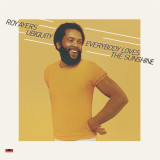
- A1: Hey, Uh-What You Say Come On
- A2: The Golden Rod
- A3: Keep On Walking
- A4: You & Me My Love
- A5: The Third Eye
- B1: It Ain't Your Sign (It's Your Mind)
- B2: People & The World
- B3: Everybody Loves The Sunshine
- B4: Tongue Power
- B5: Lonesome Cowboy
In "Everybody Loves the Sunshine" (1976), Roy Ayers seamlessly blends genres, creating a timeless sound that continues to influence musicians and DJs around the world. He makes the vibraphone the central instrument, a jazz-funk approach that defines his unique style. Over time, the album has remained an essential reference in Roy Ayers' discography and in the history of 70s Black music. Summertime soul classic! 180g vinyl.
In 1976, legendary musician and composer Roy Ayers released one of the most iconic albums of his career: "Everybody Loves the Sunshine." This album not only solidified Ayers as a key figure in the world of jazz-funk but also marked a milestone in soul music and contemporary jazz. It features a sophisticated blend of irresistible grooves, smooth melodies, and a unique sound that has endured over the years, becoming a reference for multiple generations of musicians and listeners.
By the mid-70s, Ayers had already established his reputation with his band, Roy Ayers Ubiquity, and his distinctive use of the vibraphone, which became his personal trademark. However, with this album, Ayers ventured into a smoother, more accessible sound, partly in response to the rise of disco music and the growing interest in more experimental sounds within the music scene. Throughout its ten tracks, Ayers managed to create a sonic atmosphere that evoked both the warmth of summer and the sophistication of jazz from that era, set against a backdrop of modern soul. The production was carried out by Ayers himself, along with his producer and friend, David R. Williams, and features the wonderful sound of Phillip Woo's Fender Rhodes and the powerful energy of the rest of the band, achieving an unmistakable authenticity and freshness. Some of its most well-known songs include the title track, ‘Everybody Loves the Sunshine,’ ‘The Golden Rod,’ and ‘The Third Eye,’ which quickly became classics of jazz-funk and soul. This album is crucial in Roy Ayers' career, as it demonstrates his ability to remain relevant and creative in an ever-changing music industry. Over the years, "Everybody Loves the Sunshine" has become a cult album, frequently featured in DJ sets by artists like Gilles Peterson, Theo Parrish, and Lefto. Summertime soul classic!
Divine Dances. In plural form.
The fourth album from DjeuhDjoah & Lieutenant Nicholson couldn't have a more explicit title.
Masters of emotions and feelings, the duo has always known how to express melancholy and nostalgia with precision. Yet this time, all their efforts have concentrated on a single goal: taking listeners by the hand—no, by the ear, obviously!—to bring everyone back to the dance floor and explore a variety of atmospheres together.
And naturally, a variety of styles. Funk, ndombolo, electro, hip hop or zouk, each new vibration discovered carries away the previous one to form a dancefloor where all eventually come together.
Divinely light.
The body, surrendered to this call to dance in all its forms, has been so caught up in the whirlwind of groove that the mind has fallen in behind it to continue as one. Words explode into syllables that metamorphose into notes, then perfectly align with those from the score.
One second. A bit of attention. Caught by an irrepressible groove, then comes the moment to slalom through melodies to discover, at the turn of a rhyme, a new meaning. Approached head-on, certain overly serious themes would empty the room and bring the atmosphere down to lead levels. The diagonal approach, humor, and apparent nonchalance of the two men are the best weapons at their disposal. Their Trojan horse to put substance into their form(s). To evoke transidentity, consent, economic malaise as well as the spiritual, or to tell little stories of frustrated loves, seemingly insoluble but which will end well.
Anthony Hilaire for Creole words, Sarah Solo for hip-swiveling soukous, Patrick Bebey for pygmy flute notes, and Grégoire Mahé to bring electricity to DjeuhDjoah & Lieutenant Nicholson's songs; styles blend in a musicality worked into its smallest interstices.
Gathered on this dance floor illuminated with 80s disco brilliance, you observe brassy notes slithering under the electronic veneer, synthesizer keys splashed by furious hip movements. To raise your eyes to connect with the spiritual is to watch the sky become constellated with crystalline Fender Rhodes notes, destined to fall like rain on the heavy bass of afrobeat groove.
Smiles attached to faces, no one should think they can get through the ten tracks of Divine Dances while remaining seated : he's doomed to fail.
OUT MAY 2025 DELUXE WHITE VINYL 180 G /CD / DIGITAL