In its second venture into reissuing hidden gems of electronic music produced in Eastern Europe in the 20th Century, LITTLE BEAT DIFFERENT ISSUES focuses on the work of a Czech composer, musician and producer, Alexander Goldscheider. Born in Prague in 1950, Goldscheider started as a music orrespondent in New York in 1968/69, went onto reading Music at Charles University whilst continuing as a music critic and radio/club DJ, before becoming a record producer at the top Czech label, Supraphon. As a composer, he pioneered the use of synthesizers in his songs for major Czech pop/rock singers as well as in his own instrumental tracks. After moving to London in 1981, he first recorded two albums at the renowned Red Bus Studios, then proceeded to work at the legendary BBC Radiophonic Workshop, before co-founding and establishing Romantic Robot, a software and hardware design and manufacturing company which later moved into music recording and publishing. Of the many original products, THE MUSIC TYPEWRITER was ground-breaking software enabling the writing and printing of real notation on the Sinclair ZX Spectrum. Similarly TEREZÍN: THE MUSIC 1941-44 was the first ever release of CDs with music written in the Theresienstadt Concentration Camp during World War II. Goldscheider's 1980s LPs THEMES FOR A ONE-MAN BAND Vol I & II reflect his work as a solo artist, always writing, recording and producing single-handedly. He had, though, a team of technical aficionados and inventors back in Prague, who adapted and developed his electronic music equipment incl. synthesizers, sequencers and even a Studer multitrack recorder, thus creating a revolutionary set-up, on par with the much later MIDI.This LP samples Alexander Goldscheider's music produced for records, films, TV and even an art exhibition in the space of 25 years starting from 1975.
Cerca:dj origin
Three years after presenting an original idea of arranging his own music live by using a standard DJ setup and a drum machine, Strahil Velchev alias KiNK is ready to premiere the very first EP-outing of his new project entitled kirilik.
Created with obscure studio equipment and backed by an array of sonics out of his extensive line-up of machinery, Kirilik successfully transfers to the record that unique level of levity and immediacy that his live act has already become renowned for.
Loopy and thus infinite in nature, sometimes seemingly spiraling themselves out of control even, these tracks are as versatile as they are just fun to play around with! Fittingly enough, Infinity Is Not A Number comes complete with an added bonus of four additional endless loops, edged into the final grooves of each side...
After bursting onto the scene in late 2017, Hyperloop makes his Drumcode debut with Green Velvet in toe.His 'Mentalizm' EP is a classy example of his versatility, a trio of original works, accompanied by two DJ tools. Beginning on a menacing tip, 'In Your Mind (Reflections)' is a low-end brew of industrial stabs, eerie melodies and subterranean vocals.
'S-Sound' is his collaboration with Chicago legend Green Velvet and is a percussive masterstroke of loops and drum riffs which drive the eight-minute track with all the puffing ferocity of a steam train. 'Spring on the Battlefield' is the perfect contrasting accompaniment, as a warm rush of strings covers a bed of intricate analogue effects and stomping kicks.
For its third release, Here To Hell welcomes Melbourne (via Adelaide) veteran, Rambl, and his incredible groover 'Doss'.
This third release on the label happened purely by surprise, and what a discovery! The track itself is no accident, but the signing took place after a chance encounter. Richard Campbell aka Rambl, who is one of Melbourne's best and most consistent DJs since the last two decades, had developed a small cult following of viewers via facebook, where he had been providing live video coverage of Australia's wild weather in a kind of comedy-weatherman format. Once these updates caught our attention, the magical facebook algorithm placed all of his content at the top of our feed.
One day his video moved away from the wild South Australian coast and into the studio. Rich - who we also know for his huge stature akin to an NBA basketballer, and his brain for Mathematics and Computational Biology - was bopping that giant brain up and down and making his 'bass face', with a mixing desk and some speakers (and some beers) in the background. The soundtrack to this video was completely mesmerising. We sent him a private message immediately: 'what the hell is THIS!!!'
His reply: 'This is one of mine, it's not finished yet but it feels good'. Our reply: 'It feels INCREDIBLE!!! Finish it and let's put it on wax!'
So today we bring you 'Doss' and we expect you'll love it.
On the flipside we've invited another Melbourne man, Sly Faux, to demonstrate why he's appearing in the playlists of Richie Hawtin and Maceo Plex, and why his EP on Nicole Moudaber's Mood was a bestseller. He's also just remixed The Presets and continues to impress with his tight productions. Sly Faux's remix takes the original Detroit-inspired techno-funk and twists it into a different kind of main room banger.
Who Do You Go To For Your Very First Session When You Have Just Been Gifted Your Very Own Top-flight 'stradivarius Of Synth Based Studios' Enter 'the Grid' ...mr David Ball: One Man Band Of Pioneering Electro-pop Distorters Soft Cell, Part Time Psychic Tv Personality, Film Soundtrack Composer And All Round Synth Afficionado & Richard Norris: Eclectic Beat-meister & Ambient Dj, Record Producer, Commited Psychedelicist From 'beyond The Wizard's Sleeve'. The 1990's Saw Worldwide Commercial Success As The Grid Scored 10 Uk Chart Hits, Many A Euro Hit Including 1994's International Mega-hit 'swamp Thing' Featuring A Twisted Use Of Sampled Banjos Lifted From The 1970's Okie Shocker Movie 'providence. In 1996 The Grid Went On A Holiday And They Didn't Return Till 2005. In The Initial Week Of The Moog Sound-lab In Early 2015 As The Studio Was Literally Put Together Around Them, Our Abiding Memory Was Their Absolutely Delighted Grins As Each Moog Unit Was Added To The Lab. Dave & Richard Created This Benchmark Album Of Deluxe 'tronic Trax That Showcased Their Prarie Wide Knowledge Of Electronica & Their Ocean Deep Skills As Both Technicians & Original Soundscapers - Kraftwerk-ian Werk-outs, Space Noise Jams, And Slinky Grooves With Subtle Pop-tones.
As I'm sure you're aware D&B doesn't pass through state51 that often but here we have a 12" that can quite rightly sit proudly amongst our more usual esoteric offerings.
With legendary label Juice, Rhythm Rollers present these 2017 remixes of Undercover Agent's 1994 classic 'Babylon'. The original is without a doubt one of the most highly rated jungle tracks and this time round DJ Future has delivered an absolute tearing remake and brought it into the 21st century. On side B, for the original heads who loved the first press Blade Runner has rebuilt the original masterpiece from scratch.
DJ support: Andy C, Randall, Uncle Dugs, Ray Keith and many more.
Extremely hot on the heels of 'A Library Excursion', Earl Jeffers teams up again with Don Leisure, his partner-in-beats for another EP of Darkhouse Family goodness. Following on from their highly acclaimed debut album 'The Offering' from late last year on First Word, the Cardiff duo have hand selected a group of friends, dons and legends (including DJ Spinna & Kaidi Tatham) to serve us up 'An Extra Offering'. Five remixes curated by the crew.
For the refix of 'The Accession' (which originally featured Kamaal Williams, Dave Newington and Daf Davies from Boy Azooga), label-mate Kaidi Tatham kicks off with some down-low bottom-heavy boom bap, before switching up the tempo mid-way for a blast of his inimitable jazz-funk bruk boogie.
Next up we're honoured to have not one, but TWO tracks from the Brooklyn legend, DJ Spinna. His Galactic Soul rub of 'Another World' flips the original into a deep soulful 4/4 house cut, featuring the lush vocals of Esther (and one Charlotte Church on backing vocals, pop fact fans).
Then there's DJ Spinna's Galactic Funk take on 'Just So You Know' with the marvellous Vanity Jay on vocals. This one is on the same mid-tempo tip as the original, but with that unmistakable Polyrhythm Addict flavour of big kicks, crisp snares, hench bassline and sweet spacey synths.
For the 'GAEA' remix we keep it Cardiff and introduce the man like Alfie Swan. Doubling up the tempo of the original, this adds some seriously wavy sonics and flips the groove entirely, creating a seriously innovative cocktail of riddims. One for those not shy of some jazz ethics in the dance.
And to close out this offering, Andromeda Jones lays down a ridiculously delectable broken beat mix of 'Journey To Love', this one again featuring Vanity Jay. No messing with this one, this is straight dancefloor fire, transforming the hip hop soul track into a future boogie heater. One for the ravers.
This EP illustrates once again Darkhouse Family's wide range of influences and sounds, as selectors and as music makers themselves, and is no doubt one that will stay in your box for a very long time...n
Norm De Plume has been quietly making a name for himself the last eight years with remixes for Tornado Wallace and Ben La Desh and EP's for Kolour LTD and his own vinyl only imprint Plumage winning him a solid fol- lowing along the way. His passion for all things disco and deep, dubby, un- derground house inspired by his musical hero Ron Hardy feeds through into his production style as well as his recently formed Peaches & Prunes party which boasts an audiophile sound system and vinyl-only sets from the DJ's. So when the opportunity arose to do a full EP with Norm we jumped at it. Here we present you with the Castlecrag EP, a nod to the Londoner's new adoptive home of Sydney, Australia, and whilst his sound may be more akin to the recent musical movements of Melbourne, the laid-back sun-kissed melting pot of The Harbour City certainly shine through in the two originals and Folamour remix on offer here.
Title track Castlecrag leads the charge with a deep mood-setter driven by a cowbell riff and filtering pads. The spacious mix and less is more arrange- ment ensures that the drums and rolling bassline punch through making for a track that sounds both unique yet accessible and demonstrates Norm's sense of musicality as well as DJ instinct for setting the right mood on the dancefloor. Next up we have Whole In One which treads a similar path whilst dropping the BPM's a touch and building up layers of synth strings to create a subtle yet engaging track to immerse yourself in. Finally, man of the moment Folamour gets busy on the remix of Whole In One working his magic by upping the tempo and going heavy on the jazz- inspired drums. By laying down a driving groove and pushing the string stabs to the fore, the Lyonnais producer behind the wonderful Moonrise Hill Material label has delivered a fresh-sounding take that will work like magic on discerning dance floors out there.
Reminiscent of the infamous quote 'There are four lights", the release kicks off with an homage to the will of resistance. From Captain Picard to Orwell - may the (referential) chain of command is not as evident as H4L's sci-fi passion, the title track's power structure couldn't be wielded more efficiently: While stomping kick drums and subtle hi-hats build up a foreplay full of suspense, the witty melody with its warped and distorted sounds grants 'Four Lights' the perfect authority. Following a similar approach, 'Fesch' with its bouncy and mantra-like groove, in which synths playing a ping-pong game, completes the swinging A-side. Deep'a & Biri, the Israeli DJ and producer duo from Tel Aviv, start the flip side with their interpretation of 'Four Lights". By using breaks and greater attention for details, the remix not only redirects the originals' energy into more hypnotic realms, Deep'a & Biri extract the melody's keys in order to create a moody and dense version. Resonating from two decades of warehouse reverberation experience, 'Disc 2 Dysnomia' finishes the release with an IDM-drenched workout, full of UK bass knowledge, unpolished electro grooves, and swirling synth poetry. Absolute freedom means absolute lawlessness.
Another record by another alias of a well-known electronic artist - when they're gone they're gone.
- A1: The Hell Raisers - Syd Dale
- A2: The Eyelash - Johnny Hawksworth
- A3: Walk In A Nightmare - Syd Dale
- A4: Beat Street - Johnny Hawksworth
- A5: Walk And Talk - Syd Dale
- A6: Big Bass Guitar - Bill Martin / Phil Coulter
- A7: Mr. Chestertons Dog - Bill Martin / Phil Coulter
- A8: Mods & Rockers - Bill Martin / Phil Coulter
- A9: L.s.d. - Bill Martin / Phil Coulter
- B1: Stand By - David Lindup
- B2: Take A Goosie Gander - Syd Dale
- B3: Juggernaut - David Lindup
- B4: Grand Prix - Johnny Pearson
- B5: Veiled Threat - David Lindup
- B6: Sixth Sense - David Lindup
- B7: Funky Flight - Keith Mansfield
- B8: Raver - Alan Hawkshaw
- B9: The Washington Affair - Syd Dale
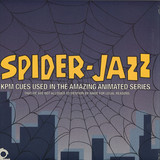
Way back in 1967, an animated superhero cartoon was released into the world. It was created by Grantray-Lawrence Animation and was based on a web-spinning, crime fighting blue and red dressed character that had originated in1962, in Marvel Comics by Stan Lee and Steve Ditko. This amazing series (that we're not allowed to mention the name of for legal reasons) ran on ABC TV in the USA, then Canada, then a few years later started to spread its web further, running here in the UK throughout summer holidays, after school and possibly early mornings at weekends in the late 1970s. The series then got released on VHS video (and probably Betamax too) in the mid 1980s and still continues to spin its animated magic around the world through further broadcasts, YouTube and DVDs.
The series was notoriously low budget, with animated errors everywhere and numerous scenes, sequences and backgrounds being re-used all the time, often across the same episode. Even a certain spider logo on a costume would appear with six legs, then eight legs later on, then back to six again in the same show.
Series One opened with a newly written spider theme, a classic, hooky song all about doing whatever spiders can, and had, as Big George (RIP) once pointed out to me, a set of session singers falling slightly out of time with the backing track after the first verse. Series One also featured background music by jobbing composers Bob Harris and Ray Ellis but these cues and master tapes are now believed to be lost.
After Series One the company Grantray-Lawrence went bankrupt, so the amazing spider series (that we're not allowed to mention for legal reasons) was taken on by producer Steve Krantz. He brought in new talent, including animation director Ralph Bakshi who later went on to turn a Robert Crumb strip cartoon into the feature Fritz The Cat. Krantz also slashed the already cripplingly small spider budget, and brought in the idea of using economic library music. Here, thanks possibly to an independent sync agent (it has been suggested that a company called Music Sound Track Services may have been the one) production turned to the KPM catalogue. This was one of the few really established library catalogues around at the time with a modern edge, it was full of fabulous, modern dramatic music tracks - often all on the same LP. But more importantly all the tracks were far longer than the one minute musical cuts that many of the fledgling USA library companies were issuing at the time. Not only would this KPM music be efficient, affordable and very easy to use, it would also mean syndication worldwide would not be held up by any future musical issues. Krantz produced two amazing spider series (that we're not allowed to mention for legal reasons), and both were smothered with KPM music. In fact barely a spider second goes by without music playing in either the background or foreground.
For many years I - and many nostalgic others - have been thinking about putting this vinyl album together. For many enthusiasts this really is formative music - a junior foray into hip swinging crime jazz and esoteric musical grooviness. I've also read on line accounts by DJs from WFMU on the trail of original spider master tapes, and there's even a whole forum dedicated to Spidey-Jazz'. Then recently I was looking at an old spider tracklist and realized that several of my favourite KPM cues were there including Syd Dale's Hell Raisers' and Walk And Talk', both from one of the most elusive and desirable KPM albums of all time (yes, you just try and find yourself a copy of KPM 1002 right now), so I decided to push on and get the album made.
So, what features on this Spider-Jazz Lp Well it's music from the amazing TV series we are not allowed to mention for legal reasons, BUT, not music from Series One. No, but it is all from Series Two and Series Three. From looking at archival cue sheets, over 50 tracks from various early KPM 1000 series albums were used across episodes. I've distilled this down into one exciting and enthralling LP, and if this works a further Spider Jazz album may well swing in to production. If you're interested (and I'm sure you may well be) cues here came from KPM1001, KPM1002, KPM1015, KPM1017, KPM1018 and KPM1043 and were composed by master library composers of the era - Dale, Hawkshaw, Hawksworth, Mansfield etc.
And if you are listening over there in the USA, you may well recognize many of the cues here not just from the amazing TV series (that we're not allowed to mention for legal reasons) but also from classic 1960s and 1970s NFL highlight shows that we are allowed to mention.
They don't get much more anthemic than Idris Muhammad's 'Could Heaven Ever Be Like This' and who better to rework it than edit royalty, Late Nite Tuff Guy. Subtle in his touches yet incorporating a more DJ friendly, dancefloor orientated beat and tension building intro which teases elements of this classic, before that instantly recognisable bass riff and staccato guitar chords come into play.That subtlety is key when it comes to handling a record as epic as this, elements are accentuated and looped, delicate effects are woven in, but the soul and feeling of Idris' music is lovingly maintained by LNTG.
And for the purists out there, the flip houses the original mix so you've got two paths to heaven to choose from.
Crosstown Rebels celebrate their fifteenth year with their monumental 200th release. American DJ and producer Arthur Baker reunites with Rockers Revenge for the first time in thirty years. To complete the package, dance music heavyweights Francois K and Michael Mayer take on remix duties.
On A Mission is exactly that, 'a mission of love, a mission of peace'. The positive vocals hark back to those of early 90s house tracks, which created unity through music and clubbing. The rhythmic beat of the drum is determined, as percussive layers build and the vocals bleed into the synths. Francois K provides two variations of the track. His remix features more prominent drumbeats driven by a growling bassline. On his rockers dub version, Francois goes all out and dubs us into the stratosphere. Up next is the Michael Mayer remix, with a more electronic take on the original with driving synths and a whirring, throbbing bass-line.
Created in 1982, Rockers Revenge was the brainchild of Arthur Baker and Donnie Calvin. Donnie provided lead vocals with Baker's wife, Tina B, Dwight Hawkes and Adrienne Dupree Johnson on backing vocals. Their most prominent track, Walking On Sunshine, was a post-disco hit reaching #1 in the US dance charts and #4 in the UK charts.
Three years ago Baker and Hawkes reconnected through social media with Baker sending through his original Mission idea. Baker is known for his work with hip hop artists like Afrika Bambaataa, Planet Patrol, and New Order whilst also remixing the Pet Shop Boys' 1986 hit In The Night. Fast forward to 2018 and the group performed a monumental live show at Get Lost Miami, and are currently in the studio working on new material. This Summer they will shoot a new documentary and perform live at various events.
Miss Kittin & The Hacker are the Electro duo of Caroline Hervé and Michel Amato from Grenoble, France. The pair met during the early 90s at a rave and soon after bought turntables and began DJing. In 1996, they started writing music heavily influenced by 1980s synthpop and post-punk bands like Fad Gadget, DAF, Liaisons Dangeuresues, and Yazoo, as well as Italo Disco. Bored by the techno scene at the time, they set out out to lighten the serious tone and bring a campy sexiness to the dour musical landscape. Upon hearing their demos DJ Hell signed them to his Munich-based International DJ Gigolo label and released their first 2 EPs in 1998 and 1999. Their debut album 'First Album" was released in 2001 followed by . in .
Lost Tracks Vol. 2' contains 4 previously unreleased demos recorded between 1997 and 1999. The duo fused 80's European New Wave/Italo Disco with 90's Detroit Electro acts like Le Car and Dopplereffekt. By utilizing verse-chorus structures, they playfully shook up the loop based hard techno and electro that was popular at the time. Their studio set up at the time was a Korg MS-20, Roland SH-101, TR-606, TR-808, Siel DK80, and Boss DR-660 drum machine. The songs are direct, spontaneous, seemingly improvised in places. Miss Kittin sings about falling in love in the new millennium, snuff movies and controlling the unknown trip to death, all in her cheekily derisive French accent.
All songs have been transferred from the original DAT tapes by the band and remastered for vinyl by George Horn at Fantasy Studios. The vinyl comes housed in a glossy jacket featuring a black and white photo of the duo taken in 1996. Each LP includes a postcard with liner notes from Miss Kittin and The Hacker designed by Eloise Leigh. As Miss Kittin says of these demos, We were naive, innocent, adventurous and we didn't expect anything in return'
Twenty-eight Years Ago, Pissed-off Twelve-year-olds Around The Universe Discovered A New Planet, A Black Planet. Public Enemy's Aggressive, Benihana Beats And Incendiary Lyrics Instilled Fear Among Parents And Teachers Everywhere, Even In The Border Town Of Laredo, Texas, Home Of The Future Founders Of The Latin-funk-soul-breaks Super Group, Brownout. The Band's Sixth Full-length Album (out May 25th) Fear Of A Brown Planet Is A Musical Manifesto Inspired By Public Enemy's Music And Revolutionary Spirit.
Chuck D., The Bomb Squad, Flava Flav And The Rest Of The P.e. Posse Couldn't Possibly Have Expected That Their Golden-era Hip Hop Albums Would Sow The Seeds For Countless Public Enemy Sleeper Cells, One That Would Emerge Nearly Three Decades Later In Austin, Texas. Greg Gonzalez (bass) Remembers A Kid Back In Junior High Hipped Him To The Fact That Public Enemy's bring The Noise' Is Built On James Brown Samples, While A Teenaged Beto Martinez (guitar) Alternated Between Metal And Hip-hop In His Walk-man, And Adrian Quesada (guitar/keys) Remembers Falling In Love With Public Enemy's Sound At An Early Age. when I Got Into Hip Hop, I Was Looking For This Aggressive Outlet . . . And I Didn't Even Understand What They Were Pissed Off About, Because I Was Twelve And Lived In Laredo . . . But I Loved It And I Felt Angry Along With Them.'
Joseph Abajian (fat Beats' Owner) Must Have Sensed The Deep Hip-hop Well Lying Beneath The Versatile Band's Latin-funk Veneer. i Thought Their Sound Would Work Covering Public Enemy Songs,' Abajian Says, And, it Was Good To Know They Were P.e. Fans . . . We Came Up With A Track Listing And They Went To Work.' Despite The Band's Eagerness To Work On New Original Material (an Album Of Original Songs Is Slated For Next Year), They Couldn't Pass Up The Opportunity To Pay Homage To This Iconic And Influential Posse.
Translating Sample-based Music To A Live Band Turned Out To Be More Of A Challenge Than They Anticipated. Adrian Tried To Get Inside The Bomb Squad's (public Enemy's Producers/beat-making Team) Head In Order To Find The Inspiration To Reinterpret P.e.'s Songs: imagine The Bomb Squad Going Back In Time And Getting The J.b.s (james Brown's Funky Backing Band) In The Studio And Setting Up A Couple Analog Synths And Then Playing Those Songs.' While Some Songs Closely Follow The Original Musical Blueprint, Others Use The Source Breakbeats As Jumping-off Points Later Sweetened By Trombonist Mark speedy' Gonzales' Horn Arrangements, Synth Wizardry Courtesy Of Friend-of-the-band Peter Stopschinski, And Dj Trackstar's Turntable Scratches. But Don't Listen Expecting To Hear Paint-by-numbers Recreations Of Classic Public Enemy Jams. our Approach Is Never In The Tribute Sense,' Adrian Explains. we've Always Taken It And Made It Our Own, Whether It's The Brown Sabbath Thing Or This Public Enemy Thing.' Coming Off Numerous Tours As Brown Sabbath And Even A Stint Backing The Late Legend Prince, Brownout Is Arguably The Tightest And Funkiest Band On The Road Today And They're Psyched To Bring This Revolutionary Music To The People. For A Band Without An Overt Political Agenda, They Collectively Couldn't Resist The Opportunity To Play This Music Live, Especially Now. if There's Any Way That We Can Use The Already Political And Protest Nature (of P.e.'s Music), We Would Like To Try,' Beto Says. the Album's Title, Fear Of Brown Planet Is Definitely A Relevant Idea Today And We're Not Afraid To Put It Out There, Because We Want To Speak Out.' By Reinterpreting These Hip Hop Classics In Their Unique Style And Channeling The Spirit Of Public Enemy That First Echoed Around The World And Captured Their Imaginations All Those Years Ago, Brownout Is Doing Exactly That.
For its seventh offering, Sol Power Sound taps into the pulse of the French Antilles for Tambours de Martinique, a blistering EP of original and remixed versions of rare, drum-centric dance floor workouts. Licensed directly from the legendary Martiniquan label Hibiscus Records, the EP features cuts by Eugène Mona and Max Ransay, two of Martinique's most storied musicians. With reworks by Spanish DJ and producer Kiko Navarro and the Sol Power All-Stars, this one will be in the record bags of discerning DJs all summer long.
The A side features 'Lizo' by Eugène Mona, an essential figure in the folkloric music of Martinique based on the bamboo flute, bèlè drums, and the island's specific variant of Antillean creole. Lizo was originally released in 1990 on Mona's Blanc Mangé Blan Manjé LP and is anchored by frenetic percussion, a driving bassline, and house-evocative key stabs. Kiko Navarro's remix takes an already dynamic cut to deep Afro-space with thumping drums and a bubbling synth-bass groove that will put dancers through their paces.
With its powerful combo of urgent brass and ensemble vocals, Max Ransay's 1988 recording of the traditional Martiniquan folk song 'Ti Kanno' fills the B-side. 'Ti Kanno' was previously recorded by Ti Émile, Ransay and Mona's legendary forebear. Full of surprises, Ransay's version is a sonic melting pot of hand percussion, horns, unexpected synth lines, and bass. The Sol Power All-Stars edit fills out the low-end thump and teases out the groove for maximum impact.
Katharsis was originally a regular party organized at the infamous Contact, Tokyo, the home of the electronic music scene in Japan.
In 2017 Katharsis Recordings was launched, with the first release being touted by many in the Japanese techno scene and played by the
likes of DJ Nobu at Dekmantel.The second release will be scripted with another compilation of 4 Japanese artists.
The first on the A side, Mikuni Kaido by head honcho Masafumi Take, is a fresh track that combines nostalgic arps and analogue bass.
The other main member Kannabi's track 'Shoka' on the B side is an abstract rhythmical piece that evolves slowly.
The second track on the A side 'Kirisame' is by a new member O-Ma. A modular synth enthusiast, his unique analogue sounds are a trademark
of his tracks.
The last track on the EP is 'Yoake' by veteran Ryogo Yamamori. The rolling beat and spacey synth sound gradually build up to a climax and
makes this track perfect for the dance floor.
All 4 tracks are distinctly different showcasing the identity of each artist. This new movement represents a fresh approach to the Japanese
techno scene.
Having debuted with a fine EP by Job Sifre, Artificial Dance has returned to the source for release number two. The 12' pays tribute to one of the most influential figures of original DIY electronic music scene of Holland, Hanjo Erkamp.
During the first half of the 1980s, Erkamp had a hand in some of the most experimental and forward-thinking releases on the now legendary cassette label, Trumpett. Famously, he was a member of two of the label's key bands - industrial outfit Doxa Sinistra and new wave combo Ende Shneafliet - but during the period he also recorded a swathe of solo tracks as C. Stein, most of which only saw the light of day decades later.
La Bombe Plastique', a thrillingly spacey and futurist cut rich in proto-techno rhythms, intergalactic electronic motifs and drowsy choral vocals. For this timely reissue, the superb original version comes accompanied by a fresh re-edit created primarily for DJ use.
Back in stock!
Kornél Kovács Debuts On Unknown To The Unknown With Three Original Cuts - Reportedly Named After Legendary Nightlife Spots Remembered From The Studio Barnhus Man's Years Spent As An Underage Clubber In Stockholm, Sweden. Loud, Proud And Slightly Subversive Club Music For All The Daredevil Djs Out There.