Archeo Recordings is a record label. Old, lost, obscure and forgotten gems and a boundless focus on the new Balearic scene for a wider audience of collectors, DJs and music lovers. All releases are limited edition. This release is a Limited Edition EP (100 on Pink Marbled vinyl). New life and an expanded treatment for the magical Free Disco - You Are My Sculpture with the Original 2010 Heterosexual Mix + the Zion Heat Version (an obscure raw unreleased demo from that period that will light up all the dancefloors on the planet) + 2 special Balearic Remixes by label boss Manu Archeo.
quête:dj origin
Archeo Recordings is a record label. Old, lost, obscure and forgotten gems and a boundless focus on the new Balearic scene for a wider audience of collectors, DJs and music lovers. All releases are limited edition. This release is a Limited Edition EP (100 on Pink Marbled vinyl). New life and an expanded treatment for the magical Free Disco - You Are My Sculpture with the Original 2010 Heterosexual Mix + the Zion Heat Version (an obscure raw unreleased demo from that period that will light up all the dancefloors on the planet) + 2 special Balearic Remixes by label boss Manu Archeo.
Beat Machine Records is proud to drop the sixteenth chapter of its iconic Swinging Flavors series, starring Newcastle’s own Nectax — a breakbeat alchemist pushing jungle and D&B into jagged, unpredictable territory — backed with a remix from forward-thinking bass manipulator Fracture.
Cool Runnings is exactly that: a hypnotic, mid-nineties-tinged jungle cut stripped back and dubbed out, but sharpened with modern production techniques that give every snare and sub-bass a punchy, alive quality. Razor-sharp breaks collide with rolling basslines, weaving a track that’s at once nostalgic and fully of-the-moment.
The B-side flips the energy with Fracture’s remix, injecting fractured percussion, jagged fills, and high-octane bass tweaks. It’s a modern take that preserves the original’s laidback groove while kicking it into full-blown club chaos. Together, the two tracks form a high-voltage 7” that bridges classic jungle aesthetics with contemporary sonic experimentation. “Cool Runnings is my take on a laidback mid-nineties tipped Jungle track. Stripped back, dubbed out, but with a subtle focus on modern production techniques to tie it all together,” says the artist.
Following recent Swinging Flavors contributors like Ac1d Vicious, DJ Sofa, and Ornette Hawkins, Nectax marks the next evolution for the series: tense, textured, and unafraid to push the floor into new territory.
The release continues Beat Machine Records’ mission to highlight forward-thinking club music rooted in underground culture, with a sharp focus on physical formats and hybrid rhythms.
Originally released in 2004, this record now fetches up to 50 euros for a used copy on Discogs. It has recently regained attention and support from current DJs and featured on Paramida’s mix for The Mudshow.
Da Sunlounge handles the A side with a funky, jacked-up track, while the B side features a collaboration with Office Gossip (Winding Road / Urban Tourq) for some deep, twisted tech house music. This release was initially supported in 2004 by Inland Knights, The Lawnchair Generals, Hipp-e, The Littlemen, and David Duriez.
Analog Fingerprints Vol. 0 is a compilation bringing together the early 2000s works of Marco Passarani under his Analog Fingerprints alias, collecting key tracks originally released on Rome’s Plasmek and Pigna labels.
For Numbers, the story starts long before the label itself. In their formative years, digging in Glasgow’s Rubadub, Passarani’s records felt like dispatches from a future city. Releases on his own Nature Records and on labels such as Generator and Interr-Ference Communications were mind blowing: rooted in Detroit techno, Chicago house and electro, yet pushing somewhere new. Much like fellow travellers Autechre, who would remix him in 2001, Passarani’s music balanced machine funk with restless experimentation.
Information was scarce, and you would hear these records first on the dancefloor or at listening stations in shops like Rubadub. Print fanzines like Ear and early web outposts such as Forcefield offered only fragments. But there was a palpable axis forming between Detroit techno and a new European wave of record labels including Skam, Rephlex, Clone, Viewlexx and Nature itself. It was the sound that defined Saturday nights at Rubadub’s ‘69’ parties in Paisley, just outside of Glasgow.
Passarani’s records, in particular, were instrumental in bringing together the future Numbers co-founders. Richard had already booked him pre-Numbers; meanwhile Calum (Spencer) and Jack (Jackmaster), then 16/17 year olds working alternate Saturdays in Rubadub, were so enamoured with the Roman sound that they travelled to Rome for the Bitz Festival in 2003 to seek out Passarani and Lory D at their source.
The first Analog Fingerprints release landed as a 12” on Plasmek in 2001, following the fractured, IDM-leaning 6 Katun material. For Passarani, the project marked a recalibration. A DJ first and foremost, he had moved into production via early computer setups, from a Commodore Amiga through primitive PC audio, Cubase and Logic, later experimenting with Ableton. The IDM scene had offered a playground for trial and error, but there was always a tension between abstraction and the dancefloor. Analog Fingerprints became the bridge: still intelligent, but with more dance than distance. After years of broken beats and complex arrangements, he wanted directness without surrendering identity.
Working closely with Francesco de Bellis and Mario Pierro in the Pigneto district, the trio formed Pigna as a vehicle for reclaiming a more accessible dance sound, deliberately steering away from the minimal wave beginning to dominate Europe. Sessions were fast, instinctive, often stretching late into the night with friends dropping by. It was a studio as social space, production as collective energy.
“In that constant search for balance, Analog Fingerprints was my way of expressing something closer to the classic dance floor. The track 'Tribute' - a tribute to my favourite early Detroit techno track of all time, 'First Bass' by Separate Minds - came after I realised I had almost lost my connection with the dance floor. The simplest step was to take inspiration from early Chicago and Detroit and twist it in our Roman ‘Pigna’ way. My goal was to create more accessible dancefloor tracks by mixing my unconscious Italo roots with my teenage love for that early US sound, ensuring the result was as far as possible from the minimal sound that was starting to dominate everywhere.” - Marco Passarani
Technically, the Analog Fingerprints tracks span a transitional era: Roland TR-909, SH-101 and Alpha Juno hardware met early software experiments. A Novation Drumstation rack stood in for the unattainable TR-808, syncing with TB-303 and TR-606. Yet the true secret weapon was Jeskola Buzz, a tracker-style modular environment that allowed step-by-step parameter control and strange melodic constructions, later exported into the audio sequencer. Even the lead on ‘Tribute’ came from an early PPG Wave-style plugin. It was hybrid thinking at a moment when digital tools still felt unstable but full of possibility for technologists like Passarani.
Behind the music sat Finalfrontier, a loose Roman collective orbiting Nature and Plasmek. Distribution and production were intertwined; importing obscure records into Italy built connections with like-minded outsiders across Europe and the US. Expensive phone bills and fax machines forged an “electronix network” that linked Rome to Clone, Viewlexx, Skam, Rephlex, Rubadub and Detroit’s Underground Resistance. There was a shared sense of survival and resistance, of operating against commercial systems.
Passarani recalls “The first time I found a sheet of paper inside an Underground Resistance 12” with info about upcoming releases... and a huge picture of Spock on the back. Imagine that: you love the music, you love Star Trek, and there’s someone on the other side of the ocean sharing those same values and sounds. It was the perfect match. We even gave our original company the suffix ‘Finalfrontier’: that says it all.”
Feedback in that era arrived physically: distributor faxes, conversations with visiting DJs, the experience of playing abroad and meeting kids who had connected with the records. Glasgow became a key node in a scattered outlier network. Passarani personally brought the first two Nature releases to Fat Cat in London, playing them in-store. Shortly after, a fax arrived from Rubadub in Glasgow requesting copies.
“I still remember that phone buzz and the fax paper slowly sliding out, with someone I didn’t know saying they wanted 75 copies of Nature 001. Or like the time we got a fax from the Rephlex crew just saying, “Hello Nature Records, Keep up the good work.” That was how we knew the message was getting through. It was a fantastic feeling; just one piece of thermal fax paper as an analog notification - the mood for the entire week would change.” - Passarani
The connection to Glasgow has since stretched across generations. As Passarani reflects, links often fracture as scenes renew themselves, but in Glasgow something different happened. New and old mixed seamlessly. There was a visible trust in what came before, and a willingness to carry it forward rather than discard it. Observed from Rome, it was deeply encouraging.
Analog Fingerprints Vol. 0 captures that moment of exchange: Rome to Glasgow, Detroit to Europe, experiment to dancefloor. It documents an artist recalibrating his sound and a network of scenes discovering one another in real time, connected by vinyl, faxes and shared intent.
Still Music are proud to present the reissue of “A Message For The DJ” by one of Detroit’s finest, Delano Smith featuring the distinct vocals of Diamondancer. Featuring the now legendary remix by Jimpster, that has constantly been played since it’s initial release in 2005 by DJ’s across all scenes within the House spectrum.
Original copies of this Deep House classic are hard to come by on the second-hand market, regularly changing hands for close to £70, if you’re lucky enough to find one! Here’s your chance to get one over on those pesky Discogs sharks. Don’t delay!
- A1: Dam Swindle Feat. Dj Minx - Back To The Old School
- A2: Supershy - Pyrenees
- A3: Dan Ivy Feat. Biyi - Location
- B1: Kolter - Need U, Want U
- B2: Cinthie - U Gotta Believe
- C1: Folamour Feat. Lyma - Won't Let U Down
- C2: Kerri Chandler - Kerriousity
- C3: Fouk - Head Spin
- D1: Dam Swindle Feat. Haile Supreme - Not Enough (Two Soul Fusion Aka Louie Vega & Josh Milan Remix)
- D2: Lolu Menayed - After Sax
- E1: Riva Starr Feat. Ziyon - Take Up The Space
- E2: Dam Swindle Feat. Jungle By Night - Call Of The Wild (Makèz Remix)
- E3: Elisa Elisa - Coco Coco
- F1: Life On Planets & Plaisance - Keep Going
- F2: Dj Sneak - Lovin' Me
- F3: Ossie - My Heart, Your Heart
Dam Swindle tap Kerri Chandler, Louie Vega, Folamour, Cinthie & more on 100th Heist release.
The ‘House of House’ V/a takes in nineteen all-new tracks from some of house music’s most revered names and new-school talent.
Dam Swindle present ‘House of House’, a triple vinyl V/a compilation marking the one-hundredth release milestone on Heist Recordings, landing on 8th May 2026. Across nineteen all-new tracks, ‘House of House’ reads like a roll call of modern house royalty.
The compilation features contributions from scene legends and contemporary torchbearers alike, including Kerri Chandler, Two Soul Fusion (AKA Louie Vega & Josh Milan), Folamour, Cinthie, Kolter, DJ Sneak, and Supershy, the dance music alias of Tom Misch, alongside rising talents like Papa Nugs, Lolu Menayed, and many more.
From the old-school magic of tracks like Dam Swindle’s ‘Back to the Old School’ feat. DJ Minx and Kolter’s ‘Need U, Want U’, to the jazzy, soulful depths of Kerri Chandler’s ‘Kerriousity’ and Superhy’s ‘Pyrenees’, to the peak-time energy of Papa Nugs & Mixolydian’s ‘Let Go’ and Elisa Elisa’s ‘Coco Coco’, the compilation captures the full spectrum of house sounds that have shaped the world of Heist Recordings over the past 13 years.
Launched in 2013, Heist Recordings has become a high benchmark for quality house music – a home for legendary artists like Cinthie and DJ Sneak, and a breeding ground for new talent from Kassian to Make`z. Dam Swindle have cemented their place among the upper echelons of modern house, with three critically acclaimed LPs, collaborations with the likes of Kerri Chandler, Tom Misch, and a relentless tour diary.
‘House of House’ reflects the ethos that has defined our label since day one: a home for house heads who bring genuine soul to club music, whether they’re legendary originators or new-school up-and-comers. Heist’s one-hundredth release is more than just a number – it’s a testament to the community, creativity, and legacy we’ve built, release after release.
As always enjoy the music and play it loud.
Much love, Heist HQ
Frequencies Rhythm Life proudly presents the new release from Berlin-based DJ Merci. The Orbit EP is a powerful journey through deep grooves and Brazilianinspired rhythms, featuring three original tracks crafted for the dancefloor.
Completing the release is an outstanding remix by Chicago house legend Glenn Underground, who injects his unmistakable acid-driven touch into ‘Test’, pushing the track into a bold new dimension.
Lady Jane Beach land on Slacker 85 with their lo-slung label debut, ‘Binman’. A short, sharp shot of minimal rhythm and rhyme, ‘Binman’ is the sound of the enigmatic London-based trio soundtracking their trips around the capital’s outer ringroads seeking adventure, trouble and corrupted drum machines. Blessed with loose, confident production and verses like glue, Slacker boss Seth Troxler doubles down on his support with a beefed-up, roadtested club edit.
An undisputed trailblazer of UK rave, Zed Bias fires up his studio for two contrasting takes on ‘Binman’, each capturing split sides of the soundsystem culture he helped define. Zed’s ‘Weighty Dub’ goes unapologetically raw, transitioning between skippy beats, heavy bass drops and a fusebox melody out of the darkness. From the basement straight through to the beach club, the ‘Nostalgia Mix’ makes good on its promise of misty-eyed reverie, recalling the first-wave of UKG domination with lush strings and steppin’ drums that still sound like a bright future.
From one generation to the next, fast-rising DJ and producer HalfPint is already familiar to dancers of Circoloco's famed Terrace and Garden. His take on ‘Binman’ finds a fresh frequency, converting the rhymes of the original into a precision-tooled tech house groove, primed for the summer season.
Dr. Silberman makes a welcome return to Atom Trance Force and kicks things off in 2026 with his EP 'Welcome To The Future'. Two mixes of the title track are included: The fast paced original and the trance mix. The original is a serious ode to the late 90s Hamburg hard trance sound, and you can hear the influence of labels like EDM, Tunnel & Spaceflower. For the trance mix, he brings the tempo back down to 140 and moves more towards older Positiva energy. Rounding off the EP is Friends & Enemies, keeping the energy high but the quality to match.
From Atom - we thank you for your continued trust, and bigups to those supporting this release:
1995 Trance Sessions, Adam (Last Of The Mohicans) [Apple FM], Adam Bellew [Global Hard House Radio], Angie (FR), Busho, Choci, Digital Devil, Dimitri Kechagias, DJ Brisk [Stimulant DJs], DJs Present, Evolving Suns Audio [Cohesion / The Attic], Giuseppe Ottaviani, J.O.E [Tomorrows World], Jake Ayres, Jake Grace [TranceUnite / FCM Live], Jake Nicholls [Uprising], Loki [Terminal Trax], Louk / Hidden Identity, Mat Phat & Fugee Show [Newport City Radio], Mind Control [Noise Pollution], Mindflux, Paul Nineham [Brisk], Pete Morton [Harderfaster], Remnis, Renegade System, Rennz [Distorted Dreams], Rightsound [Dancesation / Timewarp], Rocco Jonsson [Collide / The Carnival Sweden], Spaceman [Tuned Flow], Spektral Noise, Suzy Solar, Tjerk Coers
2026 Repress
- Linen Paper, Foil Printed Box Set
- Includes 6 Double LPs + 1 Single LP, 13 Discs In Total
- All LPs Pressed on Coloured Vinyl
-Each Disc is Housed in a Printed Inner with PMS Print, Finished with Spot Gloss Printing. Each Sleeve Features an Abstract of the Original Album’s Artwork
- Also included are a 4 page Insert + Poster
Skintone Edition commemorates the singular talent of this music pioneer with the re-release of all of his albums released via his own Skintone label.
Over a 20 year period Yokota released 30 albums and countless 12s under a variety of aliases, across more than a dozen pre-eminent labels. Yokota received domestic and international acclaim as a house and techno DJ and producer throughout the nineties. Part of the vanguard of the Tokyo scene, his influential release Acid Mt. Fuji inspires techno artists to this day.
In 1998 though, at the height of his success, he established his Skintone imprint, which came to eclipse all of his previous achievements. Skintone shone a light on the diverse new directions in which his creativity had blown, from delicate, cyclical tape-loop meditations to neo-classical compositions. It also gave him the autonomy to combine his visual and music-making practices and, importantly, to create at his own pace. The label was a great success and his experiments proved foundational in the global 00s ambient canon.
Skintone Edition will be available as 2 box sets - the first volume coincides with the 10th anniversary of Yokota’s untimely death and the 30th year of Lo Recordings. All music has been fully re-mastered. This edition is presented with the generous assistance of the Yokota family.
Albums Included:
Magic Thread 1998
Image 1983-1998 [1998]
Sakura [1999]
Grinning Cat [2001]
Will [2001]
The Boy and the Tree [2002]
Laputa [2003]
Mannequin Records presents Electronic Corporation 1998–2006, a compilation bringing together rare and long unavailable recordings by the German electronic projects H.E.I.M. Elektronik and MAS 2008.
Active around the turn of the millennium, both projects share the involvement of producer Ive Müller while developing distinct collaborations and approaches to electronic music. H.E.I.M. Elektronik was founded in 1996 by Holger Erlenwein and Ive Müller (after the two artists split in 1999, Müller continued using the name), while MAS 2008 is the project of Ive Müller together with René Kirchner. Though separate entities, the two projects explored a similar sonic territory: stripped-down electro, minimal electronics and machine-driven body music shaped by analog hardware and a raw DIY production ethos.
The roots of Müller’s work go back to the final years of the DDR. As a teenager he worked as a licensed DJ — officially known as a “Schallplattenunterhalter” — operating a travelling disco across Saxony. With limited access to official Western releases, music circulated through cassette recordings taped from West German radio stations such as RIAS Berlin, NDR2 and Bayern3. Together with friends he travelled between youth clubs and discos around Leipzig with a “rolling discotheque”: a Russian Wolga pulling a trailer loaded with Electro-Voice sound systems sourced through the black market.
At the turn of the 2000s this background in underground electronic culture resurfaced in a series of recordings rooted in electro, EBM and minimal machine music. The tracks collected on Electronic Corporation 2000–2002 capture this moment: cold sequences, driving rhythms and stark synthetic textures produced with a direct and uncompromising approach.
Compiled and remastered by Rude 66 from the original sources, Electronic Corporation 2000–2002 documents a small but fascinating chapter of German underground electronics from the early digital era.
shubostar, originally from south korea and currently based in germany, began releasing her own works in 2018. she quickly attracted attention with releases on prins thomas’s label internasjonal.
this work, her debut release on mule musiq, presents a new disco sound that updates elements of cosmic, italo disco, and new wave for a contemporary context.
a1, “abbiamo,” is an electric disco piece reminiscent of the french disco classic magic fly by space.
a2, “gambi,” can be described as a cosmic disco track akin to a disco version of klaus schulze that might be played by dj daniel baldelli.
b1, “starlight arcade,” offers a more dub-oriented, club-friendly new wave disco sound.
b2, “tip top” appears to draw influence from artists such as jah wobble, combining uk new wave with ebm elements into a proto-house style track.
her refined production style, which stands apart from typical disco-oriented artists, may be attributed to a distinct sensibility.
this release marks the emergence of a notable new artist.
- A1: Talla 2Xlc - Into The Wormhole (Ext Ended Mix)
- A2: Talla 2Xlc - Transmission (Extended Mix)
- A3: Talla 2Xlc - No Fate (Extended Mix)
- B1: Talla 2Xlc & Yakooza - City 2 City (Talla 2Xlc Extended Mix)
- B2: Talla 2Xlc Ft Bogart & Gable - The Dragon (Extended Mix)
- B3: Ultra - Free (Talla 2Xlc & Para X Extended Mix)
Vol. 1[18,28 €]
Techno Club Retro Vol. 2 – Vinyl Edition
Sechs legendäre Trance-Tracks aus den 90ern & 2000ern – in den erfolgreichen Talla 2XLC Reworks – auf exklusiv farbiger, streng limitierter Vinyl! Mit seinem Label Technoclub Retro! lässt Talla 2XLC unvergessene Trance-Klassiker mit viel Liebe zum Detail kraftvoll und emotional neu aufleben. Vol. 2 präsentiert die ersten sechs erfolgreichen Veröffentlichungen des Labels:
Side A:
• Dito – Shadows (Talla 2XLC Remix): Das Original aus 2000 – melancholisch und hypnotisch – erhält eine treibende Dynamik mit Gänsehautmomenten.
• Triple Concept – Tonetwister (Talla 2XLC Remix): Von 1998, bekannt für das ikonische NASA-Sample. Der Remix liefert eine wuchtige Bassline und modernes Clubfeeling.
• Alpha Breed – Epic Future (Talla 2XLC Remix): Ralphie B’s Meisterwerk von 1999, jetzt mit psytrancigen Akzenten – energetisch und atmosphärisch zugleich.
Side B:
• Talla 2XLC – Follow The Meteor: Ein Remake des Vectrex-Hits von 2004 – zwischen mystischem Drive und Adrenalinschub, perfekt für die Peak-Time.
• Plastic Angel – Schatten 2021 (Talla 2XLC & Para X Remix): „Schatten“ von 2001, neu aufgelegt von zwei Trance-Veteranen – emotional, druckvoll und voller Tiefe.
• Traveller – Bright Sign (Talla 2XLC Remix): Hardtrance trifft Psy – der 2002er Kulttrack bekommt fette Breaks, bunte Strings und kompromisslose Energie.
Techno Club Retro Vol. 2 ist eine kraftvolle Zeitreise durch die Trance-Geschichte – neu gedacht von einem Pionier des Genres. Für Liebhaber, DJs und Sammler gleichermaßen ein Statement auf Vinyl!
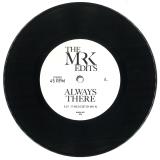
The latest from master editor Mr. K, a jazz-funk classic backed by a Philly sure shot!
Debuting in 1975, the jazzy RnB instrumental ‘Always There’ from original Earth Wind and Fire saxophonist Ronnie Laws was a hidden gem until Side Effect’s vocal version took off the following year, one of many cover versions to come (Incognito’s hit the pop top ten in the ’90s). Mr. K's edit streamlines the original, mimicking Side Effect’s distinctive horn stab intro and adding a DJ-friendly drums-only outro. With original 7-inch releases being either fragile styrene or unreasonably short, this extended vinyl pressing is very welcome.
A song that needs no introduction—coming from the very best there is—the O’Jays backed by MFSB! ‘For the Love of Money’ rides one of the most immense bass lines ever committed to wax and, while that would be enough to carry a track on its own (see the Armada Orchestra’s cover), here we have the talents of the timeless O’Jays vocals to top things off. Mr. K has found the perfect balance between the Lp and single versions, giving us the very best DJ-friendly 7" mix that should never leave your bag.
Different strokes for different folks. The celebrative 11-track 'xoxo' compilation, originally pressed as a 3xLP, is now also available as three separate EPs. Oceanic takes EP 3 into euphoria on Dala, with sounds that pinch and prickle. Don't DJ follows with nos(e)care, his no-nonsense polyrhythmic signature that'll put your soundsystem's low-end to the test. And there's nothing like a little melancholia to close it out: Haron's De Papaverparade is a tearjerker for the dancefloor
Is the result of an unexpected and powerful connection between Meeks and Jedsa Soundorom.
Both have spent over 25 years immersed in music, coming from very different backgrounds but combining them to create something completely original.
Meeks, an experienced producer and beat-maker, made his mark during the French Touch boom of the early 2000s.
He worked with artists like Hernest Saint Laurent and Scratch Massive, earning respect for his attention to detail and his love of exploring sounds and textures.
Jedsa Soundorom, meanwhile, is a DJ and producer who’s traveled the world, always bringing new influences into his music and growing his unique style.
When they met a year and a half ago, it clicked right away. That connection became BUG DIVIsion, a project that blends Meeks’ careful precision with Jedsa’s raw energy, creating electronic music that feels both deep and natural.
Gatefold Sleeve
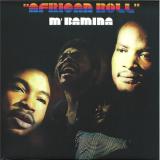
M’Bamina – African Roll (1975)
The story of an album born between Africa, Italy, and the nightclub culture of the 1970s
In the heart of 1970s Italy — a country undergoing profound social change and a music scene just beginning to open itself to distant sounds and cultures — an extraordinary, almost improbable story took shape. It is the story of a group of young African musicians who found their way to Europe, of a Turin nightclub that became a crossroads for communities and experimenters, and of an album which, released in small numbers and largely unnoticed at the time, is now considered a rare jewel of Afro-fusion.
The band called themselves M’Bamina — an ensemble of musicians from Congo, Cameroon, and Benin, who arrived in Italy in the early Seventies. Settling between northern Italy and the Pavia area, they began performing in small clubs and community events, bringing with them a vibrant rhythmic heritage: African polyrhythms, call-and-response vocals, funk-infused bass lines, and Caribbean or Afro-Latin colours absorbed along their musical journeys. Their raw, contagious energy on stage quickly drew attention.
Meanwhile, in Turin, another story was unfolding. There was a venue becoming almost legendary: Voom Voom, one of the city’s liveliest nightclubs, run by Ivo Lunardi. The club attracted an eclectic crowd — students, artists, foreigners, night owls — and Lunardi quickly understood that the dancefloor wasn’t just a place for music, but a melting pot for a new kind of cultural energy. Out of this vibrant atmosphere came his idea: to turn the club’s name into a small independent record label, Voom Voom Music, capable of capturing the spirit of those years and giving voice to unconventional projects.
When Lunardi heard M’Bamina, he immediately sensed that this was the sound he had been searching for: fresh, different from anything circulating in Italy at the time, and capable of blending African tradition with funk and European sensibility. He brought them into the studio.
Production was handled by Lunardi along with Christian Carbaza Michel, while the engineering was entrusted to Danilo Pennone, a young sound technician with a sharp, intuitive ear.
The recording sessions — held in Turin in 1975 — produced a remarkably warm and direct sound. The music feels almost live: grooves rooted in African tradition, but open to funk-rock structures and modern arrangements. It is a natural fusion, never forced. Tracks move between tribal rhythms, funk basslines, light electric guitars, congas and Afro-Latin percussion, with call-and-response vocals and melodies that echo both Congolese tradition and the lineage of Latin jazz. Not by chance, one of the album’s most striking tracks, Watchiwara, reinterprets a Latin standard through M’Bamina’s own rhythmic language.
The album was titled African Roll — a name that was already a statement of intention. It is African music that “rolls,” that moves, adapts, transforms within a new geographic and cultural setting. It is not strictly Afrobeat, nor Congolese rumba, nor Western funk: it is a spontaneous, hybrid blend, shaped more by lived experience than by any calculated aesthetic program.
When African Roll was released, the world around it barely noticed. Distribution was limited, and 1970s Italy had yet to develop a cultural framework for receiving such music. The national music press rarely paid attention to African or “world” productions. The album slipped into silence — though the band’s own story did not.
M’Bamina continued performing across Europe and Africa, even sharing a stage in Cameroon with none other than Manu Dibango. By the late Seventies, they moved to Paris, signed with Fiesta/Decca, and recorded a second LP, Experimental (1978). Meanwhile, the peculiar record they had made in Turin began to resurface quietly among vinyl collectors, Afro-funk enthusiasts, and DJs hunting for forgotten grooves.
That is when the album’s fate began to shift.
Over the decades, African Roll emerged as an almost unique document: a snapshot of an intercultural Italy before the word “intercultural” even existed, a fragment of migrant history, a spontaneous experiment in musical fusion born far from major industry circuits but rich in authenticity. Original copies began commanding high prices on the collector’s market, and the album became recognized as one of the hidden classics of European Afro-fusion from the 1970s.
Today, more than fifty years later, this reissue finally restores visibility and dignity to a project that deserves to be heard, studied, and celebrated. It is not simply an album: it is the testimony of a rare cultural encounter, born in an Italy unaware of how fertile such exchanges would one day become.
It is the story of a visionary producer, an extraordinary band, and a fleeting moment in which music, migration, and nightlife came together to create something genuinely new.
African Roll is — now more than ever — the sound of a bridge: between continents, between eras, between cultures. A record that, after rolling far and wide, has finally come home.