Поиск:dj para

Стили
Все
Deltron 3030 - Deltron 3030 LP 2x12"
  • A1: State Of The Nation Featuring – Damon Albarn
  • A2: 3030
  • A3: The Fantabulous Rap Extravaganza Featuring – Prince Paul
  • A4: Things You Can Do
  • B1: Positive Contact
  • B2: St. Catherine St. Featuring – Beans, Mr. Lif, P. Wingerter, Peanut Butter Wolf, Verna Brown
  • B3: Virus
  • B4: Upgrade (A Brymar College Course)
  • B5: New Coke Featuring – Mark Ramos-Nishita
  • C1: Mastermind
  • C2: National Movie Review Featuring – Brad Roberts
  • C3: Madness
  • C4: Meet Cleofis Randolph The Patriarch Featuring – Mc Paul Barman
  • C5: Time Keeps On Slipping Featuring – Damon Albarn
  • C6: The News (A Wholly Owned Subsidiary Of Microsoft Inc.) Featuring – Hafdis Huld
  • D1: Turbulence (Remix) Remix – Mark Bell
  • D2: The Fantabulous Rap Extravaganza Part 2 Featuring – Prince Paul
  • D3: Battlesong
  • D4: Love Story
  • D5: Memory Loss Featuring – Sean Lennon
  • D6: The Assman 640 Speaks

Following the release of Deltron 3030, all three members participated in the Gorillaz' self-titled debut album. With Del aka Deltron Zero on vocals, Dan the Automator aka The Cantankerous Captain Aptos on production, and Kid Koala aka Skiznoid the Boy Wonder on turntables, this album takes the listener on a paranoid journey set in a dystopian year 3030 dealing with viruses, the apocalypse, an oppressive government, and a war waged against a huge company called the Corporate Bank of Time that rules the universe, all to the well-crafted and consistent musical backing of the Automator. Appearances by Damon Albarn (The Gorillaz, Blur), Prince Paul, Peanut Butter Wolf, DJ Money Mark, Paul Barman, Mark Bell (Bjork, production), Sean Lennon, and Mr. Lif compliment Del's vocal style and add the right amount of flavor to this classic period piece.

Сделать предзаказ06.02.2026

он должен быть опубликован на 06.02.2026

34,41
Naibu - Abandon

Naibu

Abandon

12inchMINAT002
Minato Music
02.02.2026
  • A1: Youth
  • A2: Concave
  • A3: Convex
  • A4: Belong
  • B1: Martial
  • B2: Enemy
  • B3: Warface
  • B4: Abandon

Naibu is a well respected artist with 6 critically acclaimed solo albums and releases on prominent labels like
Creative Source, Soul:R, Hospital and Paradox Music

The album takes influences from dnb's greatests (Photek, Paradox…) blending them with flavours of electronica and experimental music. A unique combination of sounds that will please home listeners and DJs alike, with cuts like 'Martial' shaking dancefloors worldwide.

Record comes with fully printed inner sleeve featuring original artwork by Japanese artist Hitomi Ito
⁃ Only 200 copies worldwide

Following up on the success of 'Sans Soleil' on Minato Music, Naibu brings out 'Abandon', a new and intimate album that showcases his talent not only as producer but also as singer / songwriter.

Probably his most personal release to date, this is a project that brings opposites together and champions
experimentation. From classic d’n’b stylistic references in tracks like 'Concave' and 'Convex', to the soft minimal tones of 'Belong', the album steps into uncharted territory with 'Martial' and its military paced drums, a track that will leave a mark on any dancefloor.

Naibu’s music is supported by a wide range of DJs, from Fabio to Loxy, and is regularly featured on Laurent
Garnier's radio show

На складе от22.04.2026

18,45

Последний логин: 22 дн. назад
Various - Hot Creations Spring Sampler 2025

Hot Creations latest Vinyl Sampler featuring four of the Hottest recent release on Hot Creations.

Fresh off his Paradise debut with ‘Way U Move’ alongside Jamie G, Manchester’s Goosey steps up solo on Jamie Jones’ Hot Creations with ‘Funky Shit’ featuring Dope Earth Alien, with wobbly subbass
pulses and Dope Earth Alien’s catchy vocals, sweeping you into a full-body groove!

Murphy’s Law return to Jamie Jones’ Hot Creations, joined by label debutant Sam Curran and Harry Unsworth,on the collaborative banger, ‘Proper Whopper’. ‘Proper Whopper’ brings booming low-end that demand attention while soaring sirens and charismatic vocals build the track’s energy and pave the way for a thundering bassline to command dancefloors.

London-based DJ/producer Sidney Charles is back on Hot Creations with ‘Disco Bumping,’ a slick House cut that blends Aleya Mae’s lush vocals with Sidney’s warping sonic textures and immersive synth work.

Brazilian nocapz delivers the huge anthem ‘Getting Heard’, driving forward with quick, bouncy
beats and heavy synths that build a wave of intensity to the dancefloor.

нет на складе

Закажите сейчас, и мы закажем товар для вас у нашего поставщика.

14,08

Последний логин: 8 дн. назад
Modern Sound Quartet - Italian Library Breaks (5x7")
  • 01: Imprevedibile
  • 02: Confabulante
  • 03: Melissa
  • 04: Mais
  • 05: Aglio
  • 06: Genziana
  • 07: Bucaneve
  • 08: Papaveri
  • 09: Campanule
  • 10: Taurus
  • 11: Il Diavolo

The Modern Sound Quartet represents one of the most treasured, yet least documented, outfits in the history of Italian library music. An exceptional studio band of session musicians with a formidable groove, they released only a handful of albums under this name in the second half of the 1970s. However, their sound indelibly shaped dozens of "invisible" soundtracks, often without ever receiving an official credit on the back sleeve.

Led by pianist and composer Oscar Rocchi, and featuring Andrea Surdi (drums), Luigi Cappellotto (bass), and Ernesto Verardi (guitar), the quartet embodies the more jazz-funk, cinematic, and irresistibly groovy side of the 1970s Milan scene. They established themselves as a compelling alternative to the already established groups operating primarily out of Rome, such as I Marc 4 or I Gres.

Juggling late-night club jam sessions, tours supporting Italian pop giants like Ornella Vanoni, and creating rhythmically intense library records, the Modern Sound Quartet forged a unique sonic aesthetic: sophisticated, electric, and profoundly metropolitan.

This boxset celebrates their funkiest side—an irresistible combination of incandescent drum breaks, tight grooves, and high-intensity fusion passages—bringing together some of the most sought-after tracks from legendary LPs like Erbe Selvatiche (1977), Floreama (1977), Horoscope (1978), and I Tarocchi (1980). The selection also delves further back to the roots of their sound, including two powerhouse tracks from Pop-Paraphrenia (1973), a project where Oscar Rocchi—backed by a young, lethal Tullio De Piscopo on drums—sowed many seeds that would fully blossom in the subsequent Modern Sound Quartet output.

Created with DJs, beatmakers, and collectors of Italian library music in mind, this boxset deliberately features tracks that were never previously released on 7 inch—an ideal format for maximizing the rhythmic punch of the quartet's sound.

Available in a limited worldwide edition (500 copies), enriched by iconic 70s-style artwork conceived and designed by Eric Adrian Lee.

Сделать предзаказ30.01.2026

он должен быть опубликован на 30.01.2026

79,79
Various - Wizzz! French Psychorama Volume 5 (67-75)

The journey through French-speaking pop archives continues with this fifth volume, packed with fuzz, gimmicks, and dissent. Far from the charts, the selected tracks display a great creative freedom, often backed by corrosive humor. Welcome to the surprising, kaleidoscopic, and colorful world of the late sixties and early seventies, Wizzz!
Born in Montauban, Robert Pico stumbled into music by chance when he met René Vaneste, then artistic director at Pathé-Marconi. René brought him to Paris to record his first 45 RPM EP in 1964. A year later, Pierre Perret introduced him to Vogue, where he recorded his second album with Claude Nougaro’s orchestra. Sylvie Vartan then introduced him to RCA, where he recorded four singles, including the astonishing "Chien Fidèle," a track backed by a hair-rising fuzz guitar. Alongside his solo career, he also composed for other artists like Alain Delon (the song was recorded but remains unreleased), Magali Noël, Bourvil, and Georges Guétary. In the Paris of the sixties, he mingled with Mireille Darc, Elsa Martinelli, Marie Laforêt, France Gall, Françoise Hardy, Petula Clark, Régine, Dani, Serge Gainsbourg, Joe Dassin, Franck Fernandel, Charles Level, and Roland Vincent. Despite his efforts and winning a Grand Prix Sacem for his final record, Robert Pico didn’t achieve the expected success in show business and decided to leave Paris and return to the Southwest, where he devoted himself to writing. He is the author of 23 books (including Delon et Compagnie, Jean-Marc Savary Editions 2025, a memoir about his youth and his many encounters). Today, he is relieved to never have become a celebrity and devotes himself to his work with passion.
In 1969, the Franco-Italian movie Erotissimo was released, directed by Gérard Pirès (who later directed Taxi in 1998, written and produced by Luc Besson). This pop comedy features Annie Girardot, Jean Yanne, Francis Blanche, Serge Gainsbourg, Nicole Croisille, Jacques Martin, and Patrick Topaloff. The soundtrack was written by Michel Polnareff and William Sheller, with lyrics by Jean-Lou Dabadie. "La Femme Faux-cils," performed by Annie Girardot. It recounts the feelings of a rich CEO's wife who seeks to develop her sex appeal under the influence of advertisement and magazines. Groovy, sparkling and light, this track, with ITS lush arrangements humorously critiques consumer society and feminine beauty standards.
“Je suis l’Etat” (1967) is the flagship track of the first EP by singer-songwriter Spauv Georges, aka Georges Larriaga, better known as Jim Larriaga (1941-2022). Born into a family of bakers, the young man was initially planning to become a hairdresser when he discovered English-speaking music through Elvis Presley and the Beatles. After this revelation, he decided he would become a songwriter and gave himself five years to succeed. He recorded his first two EP’s independently for RCA under the pseudonym Spauv Georges; meaning “that poor George”, a nickname given to him by the mother of her friend Jean-Pierre Prévotat (future drummer of the Players, Triangle, or Johnny Hallyday). Portraying a depressed and eccentric young man, Spauv Georges created corrosive and amusing songs that didn’t reach a wide audience, despite a TV appearance with Jean-Christophe Averty.
Supported by his loyal friend and fellow songwriter Jean-Max Rivière, Georges Larriaga met the future singer Carlos in the early '70s, then Sylvie Vartan’s assistant. He wrote songs for Carlos, including the popular "La vie est belle," "Y’a des indiens partout," and "La cantine", which went onto become a huge hit in 1972. He also composed for Claude François (“Anne-Marie”, 1971), Charlotte Julian (“Fleur de province”, 1972), helped launch child singer Roméo (who sold 4 million records), and later wrote the hit "Pas besoin d’éducation sexuelle" (1975) for the young Julie Bataille. In 1971, Jim recorded an album for Disc'Az: “L’univers étrange et fou de Jim Larriaga”, which featured pop gems like “La maison de mon père”.
The story of the song "Zoé" began when Pierre Dorsay, artistic director at Vogue Records, asked Swiss singer and musician Pierre Alain to write a song for a new female singer. The inspiration came when he realized that Zoé (the artist's name) was also the name of France's first atomic battery, created in 1948, which consisted of uranium oxide immersed in heavy water! The lyrics reflect a bubbling energy that must be handled with caution, while the instrumentation echoes this atomic theme, notably with the use of a theremin.
Zoé’s career lasted only as long as a single 45 RPM, but it seems Christine Fontane was the vocalist behind this pseudonym, who is known for several EPs, a good "popcorn" album in 1964, and a handful of children’s singles in the '70s. Regardless, the photograph on the cover is of a different girl entirely.
Later, Pierre Alain continued his career, writing songs for himself, Marie Laforêt, Danièle Licari, Alice Dona, Arlette Zola (3rd place in Eurovision 1982), and achieving multiple gold and platinum records in Canada. Also an inventor with several patents, president of the Romande Academy, and head of the French Alliance in Geneva, he now composes atonal music, books, and poetry. Moreover, he is also the host of "Les Mardis de Pierre Alain" at "Le P'tit Music'Hohl" in Geneva.
Filled with oriental choruses and fuzz guitar, "Fou" is from Jacques Da Sylva's only EP released by Vogue in 1967. Despite the quality of this recording, all traces of this singer disappear after this first effort.
Valentin is a baroque pop singer born in Belgium. He is the songwriter and composer of most of the tracks on his three singles released in the late 60s in Canada. A legend says that he reincarnated himself as Jacky Valentin during the 1970s for a rock'n'roll revival career in Belgium, but his older brother sadly debunked this story. Valentin's first two singles were arranged by Claude Rogen, a Parisian session pianist who had come to Canada to promote the song “Mister A Gogo”, a cover of David Bowie’s “Laughing Gnome”, adapted by singer Delphine, his wife at the time. Far from his usual network, Claude Rogen arranged music for Polydor, including the arrangements for “Je suis un vagabond” in 1969, a jerk tune with string arrangements and a furious optimism.
Jacques Malia wrote, composed, and recorded his only 45 EP for Festival in 1966. “Histoire de gitan” is an incredible beat track with bohemian scat that tells the story of a gypsy musician who came to Paris to make it in the Music-Hall, to no avail. The hero of the song and its author probably shared a similar fate, as Jacques Malia faded into anonymity after this remarkable attempt.
Bernard Jamet recorded two EPs for Barclay in the late sixties and co-wrote several songs with Christine Pilzer, Pascal Danel, and prolific songwriters Michel Delancray and Mya Simile. The track “Raison Légale” (1968), his masterpiece, immerses the listener in a courtroom right when a murderer is being judged, with jerk rhythm and free arrangements. A unique, paranoid, judicial, and psychedelic oddity.
Jean-Pierre Lebrot-Millers started his career in show business in 1967 as a singer and songwriter for the Philips label. After three singles, he wrote several songs of a new kind with his friend Pierre Halioche, in the midst of the sexual liberation movement and the democratization of drugs. With provocative lyrics, “Les filles du hasard” and “Barbara au Chapeau Rose” were released on a Philips singles in 1968. The character of Barbara was inspired by a queen of Parisian nightlife during the psychedelic years: model Charlotte Martin, who dated Eric Clapton from 1965 to 1968, then Jimmy Page from 1970 to 1983. Jean-Claude Petit’s arrangements, with a table-filled intro, soul brass, and Hendrixian guitar, emphasize the flamboyance of a hedonistic and sexy character, whose dog is named Junkie because “Junkie est un nom exquis”! The track was recorded live in three takes with a full orchestra.
Upon its release, the record was censored by Europe 1 and RTL due to its references to drug use. Jean-Pierre Lebrot was then banned from the airwaves and later dismissed by his record label. He changed his artist name to Jean-Pierre Millers, while his companion Pierre Halioche became D. Dolby for a new dreamy composition, “Chilla”, which Jean-Pierre produced himself with arrangements by Jean Musy. Once again, the song was immediately censored everywhere. After this setback, he decided to stop singing and started taking on odd jobs to support his Swedish wife and their son until the day he met Jean-Pierre Martin, then production manager at Decca, who had worked with Manu Dibango. Martin offered Jean-Pierre Lebrot-Millers, then employed at Rank Xerox, the position of artistic director at Decca. He accepted and became, a year later, promotion director (radio, press, TV). He worked on Julio Iglesias’s first album for Decca, which became a massive hit and allowed him to meet Claude Carrère. The latter asked him to write new songs and find their performers, much like a “talent scout.” It’s through him that Jean-Pierre discovered Julie Pietri and Corinne Hermès. He composed “Ma Pompadour” for Ringo, Sheila’s husband, and took the microphone again for the syncope hit “Rendez-Vous” in 1982.
That same year, Jean-Pierre Lebrot-Millers tried to release a track for which he had heavily gone into debt: “Si la vie est un cadeau”. Having recorded it in London, he presented it to numerous professionals, all of whom refused to get involved. The same thing happened with Antenne 2 and the Sacem when he proposed the song as France’s entry for Eurovision. He then met Haïm Saban, who was producing cartoon soundtracks and had just launched the Goldorak theme song. Saban, having listened to the song, declared it had the potential to become a hit. He sent Jean-Pierre and Corinne Hermès to meet the CEO of the Luxembourg radio and television network. The latter received them, asked to hear a verse and chorus a cappella in his office, and immediately hired them to represent Luxembourg at Eurovision 1983. They reworked the arrangements and recorded a new version with Haïm Saban as co-producer. The song ended up winning Eurovision 1983, a great comeback for our hero. He continued producing and hung out with the band Nacash in Belgium when a couple came to introduce their daughter for an impromptu audition in a hotel room. The girl sang “Les démons de minuit” while dancing to a radio cassette. Impressed, he had her take singing lessons for a year and composed a song for her (for which he had the melody and title, but no lyrics). This required him to go on the hunt for a lyricist, who ended up being Guy Carlier. They recorded the song, which was initially a ballad, at Bernard Estardy’s CBE studio, and gave the singer a new name: Melody. They showed the song around their industry network without success. Later, Estardy called Jean-Pierre to suggest changing the rhythm and making it pop-rock. Orlando, Dalida’s brother, liked the result and decided to co-produce the track. “Y’a pas que les grands qui rêvent » became a classic hit. The song has since been covered by Juliette Armanet (as a ballad, like the original) and Valentina.

Born into an aristocratic Breton family, Hervé Mettais-Cartier worked as a DJ at Queen Kiss, a nightclub in Poitiers, where he formed the band Les Concentrés with Michel (an actor) and Christian (a radio technician). Together, they created a repertoire of whimsical songs (“Ma bique est morte”, “J’suis un salaud”, “Fils de dégénéré”...) that they performed on stage dressed in white (in homage to “concentrated milk”). They performed at Bliboquet and Olympia in 1968 for the 10th edition of the “Relais de la chanson Française” organized by L’Humanité-Dimanche and Nous les Garçons et les Filles, sponsored by Pepsi Cola. Winners in the author-composer category, alongside Danish singer Dorte, their visibility allowed them to record a 45, and appear on television in Jean-Christophe Averty’s show. The A-side of the disc features Bruno le ravageur, a casatchok dedicated to Bruno Caquatrix, the director of Olympia, nicknamed in the song “Coq Atroce” or “croque-actrices”. The B-side is dedicated to “Fils de dégénéré”, a quirky tribute to Hervé's aristocratic roots, mixing absurdity with sophisticated vocal harmonies.
After Les Concentrés, Hervé Mettais-Cartier formed the duo La Paire et sa Bêtise with his friend Olivier Robert. They performed in Parisian cabarets and toured with Pierre Vassiliu. In the late 1970s, Hervé began a solo career. He recorded two albums for the Motors label in 1978 and 1979, which did not achieve their anticipated success due to lack of promotion. In 1980, he met Bernadette, with whom he started a family and created a “Chansons à voir” (songs to see) show that he performed until his death at the end of 2024.

Publicité comes from the final EP by the Missiles (Ducretet Thomson, 1966), a disc that also includes “La (nouvelle) guerre de cent ans”, featured on Volume 4 of our Wizzz! series. Please refer to the booklet for the story of the band.

“He’s 1.82 meters tall, 28 years old, weighs 135 kg, is black and Belgian”: this is the description of singer Hegesippe on the back of his sole single (Decca, 1967). He appears on the album cover wearing a Greek toga, like a hippie gag – we are at the end of the year 1967. In “Le crédo d’Hegesippe”, this former bodyguard of Antoine and the Charlots plays the delightful card of the thick brute converted to Flower-Power and non-violence, with arrangements by Jean-Daniel Mercier, aka Paul Mille.
“Ethéro-disco” was released on a promotional record for clients of the Maréchal company (Liège, Belgium) for the New Year 1979. Over a funky rhythm, celebrity impersonations (Brigitte Bardot, Jacques Dutronc, Fernandel…) deliver an enigmatic text about pharmaceutical products like ether, bismuth, and aspartate. The track was composed by Dan Sarravah (responsible for Joanna's “Hold-up inusité” featured on Wizzz! Volume 3) and Tony Talado, who was also a singer (one 45 in 1967), songwriter (with over a dozen credits between 1964 and 1985 in various styles from surf music to disco), author (Devenez Végétarien, Dricot Editions, 1985), ad designer, and psychologist.

Décollez-les is on the A-side of Mamlouk's only single, a pseudonym for Marsel Hurten, who is known for his work on several EPs in the late sixties, as well as composing music for Hervé Vilard’s “Capri, c’est fini”, Claude Channes' “La Haine”, Annie Philippe’s “On m’a toujours dit”, and Nancy Holloway’s “Panne de Cœur”.
This strange song, with Afrobeat horns and absurd dialogues between a chef and his kitchen staff, is the result of a collaboration between Marsel Hurten and one of his neighbors, a photographer from Pavillon-sous-Bois (93), where the musician settled after returning from the Algerian War. A music video was shot to promote the record.
Marsel Hurten was born in Tourcoing (59) into a musical family. At a young age, he joined the brass band founded by his grandfather, playing the piston before studying trumpet at the conservatory, as well as teaching himself how to play the guitar. As an orchestra musician, he toured in France, Belgium, Germany, and England. He released a series of solo 45’s between 1965 and 1968 for the DMF and Az labels before stopping recording to focus on working for other artists (Gilles Olivier, Noëlle Cordier…).
“L’amour nu” (Vogue, 1971) is the work of the short-lived Belgian band Mozaïque. The track, written by singer Jacques Albin, closely resembles another of his compositions, “Carré Blanc”, which he recorded in 1969 for Disc’AZ.
Represented by the Lumi Son micro-label based in Marignane (Côte d'Azur), Jean-Marc Garrigues released two 45 RPMs in the late sixties, defending the French jerk sound. The song “Je dis Non” is a short, joyful ode to youth, pop music, and rebellion.
Songwriter and performer Jacques Penuel released three singles. The first one, “Astronef 328” (Fontana, 1969), features a dizzying series of chords punctuated by sound effects, a sci-fi story, and arrangements by Jean-Claude Vannier.

We would like to sincerely thank Pierre Alain, Moon Blaha, Marsel Hurten, Bastien Larriaga, Jean-Pierre Lebrot-Millers, Bernadette Mettais-Cartier, Robert Pico, Olivier Robert, Claude Rogen, Micky Segura.

нет на складе

Закажите сейчас, и мы закажем товар для вас у нашего поставщика.

23,11

Последний логин: 77 дн. назад
Luka Lickshot - Shots Fired (TAPE)

Introducing Luka Lickshot aka Luke Palmer aka the Wolverhampton Wolverine, prolific reggae DJ and genre warping producer of all things low end inclined.

In previous incarnations Luke has released hypnagogic house for labels such as Workshop and Third Ear, but with his debut LP release ‘Shots Fired’ he takes a sharp turn into the leftfield.

Sonically triangulating early 80s Manc post punk existentialism, 90s darkside trip hop and UK (On-U) sound system culture, the result is something like a more ruffneck Massive Attack jamming with Dome in the Black Ark.

‘Shots Fired’ was forged in an underground Peckham hideout, under strict parameters of time and space, fusing conventional instrumentation with digi know-how, improvised vocals, one take licks and dub fx. Pretty much impossible to pigeonhole the ten tracks but adjacent to / resonant with Giulio Erasmus, DJ Marcelle, Tricky, ‘Hex’….

Сделать предзаказ23.01.2026

он должен быть опубликован на 23.01.2026

14,71
MULUKEN MELLESSE - MULUKEN MELLESSE WITH THE DAHLAK BAND (ETHIOPIQUES)

Swan Song

The vinyl LP at the heart of this éthiopiques 31 tracks 2 to 11 was one of the very last vinyl records ever released in Ethiopia. But above all it represents, we felt, the absolute masterpiece of the Ethiopian Groove – the Swan Song of Swinging Addis. The album leaves a clear idea for posterity of the level of sophistication and mastery that modern Ethiopian music had achieved, before being crushed under the Stalino-military heel of the Derg – as the bloody revolution that was unfolding came to be called.

Ethiopia1976.

The Revolution that broke out in February 1974 rolled on in a ruthless march. The whole of Ethiopian society was utterly stunned. The bouquets of flowers handed joyfully to the first tanks of the coup d'état were to wilt very rapidly. From September 1976 to February 1978, 18 months of Red Terror (the name given by the junta itself) spilled blood throughout the country. This fratricidal conflict took its heaviest toll among students and youth. The shift from feudalism to a cruel and primitive Stalinism left the country's citizens deeply traumatised, and snuffed out any pretence of activism, whatever the sector of society. This ice age was to last for seventeen long years.

ሙሉቀን፡መለሰ Mulukèn Mellèssè Muluqän Mälläsä

It was three tracks by Muluken that served as the opener for éthiopiques-1 more than 25 years ago. Seven more tracks appeared on éthiopiques-3 and 13, all accompanied by The Equators, which was soon to become the Dahlak Band.

The first track, Hédètch alu, also the very first piece that Muluken ever recorded, left audiences both unsettled and amazed. Reflecting the singer's extremely young age (he was just 17 at the time), this angelic voice mystified many, who thought they were in fact listening to a feminine voice. He was not yet 22 when he released his last vinyl record in 1976 with Kaifa Records (KF 39LP), one of the very last to be issued in Ethiopia, before the cassette tape became the dominant medium for music distribution – and before the new revolutionary regime put a stop to all independent musical life, via an unspeakable barrage of prohibitions and other persecutions.

Mulu qèn, literally, “A well filled day”. This tender maternal intention wasn't enough to ward off the cruelty of fate. His mother's premature death drove Muluken to leave his native Godjam, in northeast Ethiopia, to live with an uncle in Addis Ababa. Born Muluken Tamer, he took his uncle's last name – Mèllèssè.

The spelling Muluken appeared in his administrative records. Transcription of Amharic to the Latin alphabet, both in Ethiopia and for scholars, gives rise to controversies and quibbles that can never be neatly settled. French allows for a closer approximation of the original pronunciation, thanks to its battery of accent marks, confusing as they may be to anglophones.

Between rather accommodating administrative record-keepers and the various versions that pop up in interviews given by the artist, Muluken's year of birth oscillates between 1953 and 1955…

1954? One thing is certain: the artist's talent made itself known very early indeed, because he got his start in 1966-67, at the age of 13 or 14. Photos from the period attest to his extreme youth. It's a strange sort of initiation for a very young teenager to become a sensation in the heart of Addis's nightlife at the time, Woubé Bèrèha – the Wilds of Woubé. And what's more, in the club of the Queen of the Night, the Godjamé Assègèdètch Alamrèw herself, the very same that was portrayed by Sebhat Guèbrè-Egziabhér in his novel-memoir Les Nuits d’Addis Abeba2… The legendary female club owner who is remembered to this day by the capital's ageing boomers.

Muluken first tried his hand at the drums, before he grabbed the microphone. He emigrated briefly to the Zula Club, across the street from the old Addis Post Office, one of the ground-breaking bars of the burgeoning musical scene, before joining the Second Police Band in 1968, for around three years. He spent a few months with the short-lived Blue Nile Band founded by saxophonist Besrat Tammènè. As the musical scene grew increasingly successful, and pulled slowly but decisively away from its institutional ties, Muluken released his first 45rpm single in February 1972 (Amha Records AE 440). It was included in two LP Ethiopian Hit Parade compilation albums in September of the same year. All in all, Muluken released eight two-track 45s and the same number of original cassette tapes between February 1972 and 1984, the year that he departed for permanent exile in the USA. After converting to Pentecostalism in 1980, Muluken gradually abandoned all secular musical activity. In 1985, at the end of a concert in Philadelphia, he decided to quit concerts and recording for good. Mèlakè Gèbré, the historic bass player from the Walias band who was playing with him that night, recalls that everything appeared so irredeemably diabolical in Muluken's eyes, that it was to be the end of his contribution to Ethiopian Groove.

The end of the story, the beginning of a legend.

Dahlak Band, forgotten by History

Aside from his personal history and vocal talents, it must be remembered that Muluken Mèllèssè was one of the biggest names in the musical innovations that marked the end of the imperial period. These éthiopiques aim to convince those who are just discovering this hidden gem... As for Ethiopians themselves, they are to this day captivated by this singular and atypical figure in the Abyssinian pop landscape – even though he withdrew from public life some 40 years ago. Incorrigible devotees of poetic twists, of more or less hidden meanings, Ethiopians appreciate above all the care Muluken took in choosing his lyrics and the writers who penned them, such as Feqerte Haylou, Alemtsehay Wodajo and, here, Shewalul Mengistu (1944-1977). Love songs, written by women, a far cry from the conventional drivel that pleases sappy sentimentalists.

Muluken is equally acclaimed for his perfectionism when it came to music, the opposite of the overly casual approach that is all too common. He remained a faithful partner of musicians who came from a lineage that borrowed from several inventive and pioneering bands (Venus, Equators, Dahlak). Amongst them were certain artists who began their musical lives with Nersès Nalbandian at the Haile Sellassie Theatre and who come of age in around 1973 – at just the wrong time, you might say. Among them were the pillars Shimèlis Bèyènè (trumpet), Dawit Yifru (keyboards) and Tilayé Gèbrè (sax & flute). Most notably Tilayé Gèbrè, certainly one of the most important musicians, composers and arrangers of his generation, of the end of the imperial era, and of the early years of the Derg.

It was only in 1981 that a miraculous opportunity arose for Tilayé to escape the Stalinist paradise of the dictator Menguistou Haylè-Maryam. Once again it was Amha Eshèté (1946-2021) who provided a solution. The spirited and courageous producer, who had been in exile in Washington since 1975, succeeded, thanks to his incredible perseverence, in bringing the Walias Band to the USA. It was, in fact an extended Walias Band comprising ten musicians3, six of whom chose to slip away after a few concerts and the recording of an LP (The Best of Walias, WRS 100). Tilayé Gèbrè was one of these. He has been living in the USA ever since. There he joined the then-nascent Ethiopian diaspora, which lived largely unto itself, and was making only very modest headway in the American musical market. It seems unfair that Tilayé Gèbrè and the Dahlak Band were not able to benefit earlier from the public recognition that they do deserve.

A similar draining away of the top-rate talents would lead to the reorganization of the major groups of the “Derg Time”. The remaining artists spread themselves around between Ibex Band (renamed Roha Band), Ethio Star Band and a remodeled Walias Band. That spelled the end of the Dahlak Band.

With this record, produced by the essential Ali Abdella Kaifa a.k.a. Ali Tango, we can appreciate everything that the Derg not only destroyed, but also prevented from flourishing. This gem of Ethiopian-style afrobeat came out in 1976 (and, by way of a parenthesis, before the FESTAC 1977 in Lagos, which was attended by an impressive delegation of Ethiopian musicians — although Fela was already personna non grata in his own country). Despite everything that might distinguish this ethio-groove from Fela’s music – no colonial axe to grind, no question of political confrontation with the authorities, no claims to negritude or Africanism for the Ethiopian musicians, and less extrovertion! –, this LP fits beautifully into the saga of intense and electrified soul of the new “African” groove that Fela and Manu Dibango embodied so well from that point onwards.

In restoring this record to its place in the afrobeat epic, it can be seen that, if nothing else, the timeline bestows a legitimate pedigree and a historical primacy to works that had no international impact when they were originally released.

Warning! Masterpiece!

нет на складе

Закажите сейчас, и мы закажем товар для вас у нашего поставщика.

20,59

Последний логин: 3 мес. назад
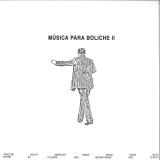
Various - Música Para Boliche Vol. II (LP)

Our journey through “Música Para Boliche” literally “music for the club” from Argentina’s underground scene doesn’t stop. We dug even deeper, right into the ’90s.
Four tracks plus one, all visionary even at the time of their release. Once again, you can feel the magical touch of the Italian and Argentine DJs who worked on it.
Jack Bulgaro did his part, bringing home an instrumental unreleased version of Podés Seguir Sin Arriesgarte, taken from the album Undermalabia, produced by El Signo, pioneers of electronic music in Latin America.
The version will be officially released for the first time, vinyl only, by Maledetta Discoteca Records.

нет на складе

Закажите сейчас, и мы закажем товар для вас у нашего поставщика.

20,97

Последний логин: 46 дн. назад
Retron 0ne vs. DJ Mindhunter - Project 5

With this release, I think I'll be the only one to have released something from every single one of Kenny's solo jungle aliases!

A few years back, he started on an album project where he would combine the works of 2 of his aliases for his Amiga productions, DJ Mindhunter for the hardcore tracks & Retr0n One of the jungle tracks.

If I remember right, I think the plan was to originally release it on his label Green Bay Wax, but he was too preoccupied in the work being put into other projects of his at the time. The release was then going to be coming out on Parallax Recordings, a label based in Berlin, run by Vali, who I've worked with many times in the past for releases on his label but then Vali was also focused on other releases he had scheduled for his label. The tracks sat in limbo for quite a while, whilst I had been playing some of them on radio & in club sets and eventually, Kenny offered for me to release the tracks on Future Retro London.

I asked Vali if he would be OK with this, since the tracks are meant to come out on Parallax & I also wanted him to do the artwork for it (he does all the artwork for his label). He was unsure if he could do the artwork as his capacity for design was quite taken up by his own outlet, but he floated the idea of doing this release as a joint label project so that it would be a bit more able to fit in with his workload.

And like that, the project is now finally out, after some of the featured tracks having been sat around for many years! Big up to Kenny for his wicked tunes & to Vali for co-releasing this project with me, as well as handling the design.

нет на складе

Закажите сейчас, и мы закажем товар для вас у нашего поставщика.

26,85

Последний логин: 4 мес. назад
Mixrace - Session One

Mixrace

Session One

12inchOSH42
Over/Shadow
12.12.2025
 
2

Mixrace return to Over/Shadow with Session1–DM2 + Oak. Part 1 of a 2 part series that showcases the 30 year deep sonic friendship of the production duo made up of DJ Trax and Paradox. Tick ALL of the boxes that you would expect from 2 of the finest producers in Jungle/ DnB.

нет на складе

Закажите сейчас, и мы закажем товар для вас у нашего поставщика.

14,50

Последний логин: 3 мес. назад
Heejay Dealer, DJ Game$top, Boy Paradise - The Transformation of Material Things Vol. 2

Fuzzy Blanket Recordings out of Portland returns with a mesmerizing Various Artists EP, weaving together four deep excursions into house and dub-infused atmospheres. Each track unfolds like a story - warm, textured, and deeply hypnotic. From glowing deep house grooves to magical, dub-touched explorations, this collection captures the label’s unique spirit: intimate, timeless, and endlessly inviting. A record made for dreamers and dancers alike.

нет на складе

Закажите сейчас, и мы закажем товар для вас у нашего поставщика.

11,72

Последний логин: 4 мес. назад
Maldido Primitivo - Atmosphere Tropical

Sun-soaked Italo-House vibes, freshly reissued. Step into a melodic ambience drenched soundscape with Atmosphere Tropical, the reissue of Maldido Primitivo’s 1992 deep-house / Italo-house gem of an EP. Whether you’re a collector, a DJ, or someone who just loves those warm, immersive grooves - this is one record that transports you straight to a tropical paradise, without leaving the dancefloor. Having been fetching collectors prices online for a number of years, this newly minted pressing breathes life back into this shimmering slab of Italian deep house goodness. File under 'Essential'.

Repackaged, refreshed, and fully endorsed by Expanded Music, this is the perfect repress edition of a true deep house underground classic.

нет на складе

Закажите сейчас, и мы закажем товар для вас у нашего поставщика.

14,08

Последний логин: 4 мес. назад
Apparat - Dj-kicks (2x12")

Apparat

Dj-kicks (2x12")

2x12inchKLP727040
!K7 Records
12.11.2025

Sascha Ring aka Apparat’s work as a producer, artist, musician, live act and DJ has always been in a constant state of metamorphosis, while simultaneoulsy always managing to stay true to his trademark musical sound.

There is a unique spirit that lives within his projects and productions or rather they all have this special vision of music which becomes more distinctive with every release and spans his ‘Multifunktionsebene’ and ‘Walls’ albums on Shitkatapult, his ‘Moderat’ album made together with the boys from Modeselektor on Bpitch Control and his DJ-Kicks mix for !K7.

Following on from Kode9 and his friend James Holden, Apparat offers a wonderful mix and insight into the tracks that have influenced and roused his passion for club productions over the years as well as his current favourites in his box.

The mix includes an exclusive track ‘Sayulita’. Together with this mix, it also symbolises a nice reference point in an important chapter in Apparat’s own history – club music. This is a chapter that is by no means finished, for the more he succeeds in re-writing the narrow parameters of techno music, the more important it remains as the driving force in his life.

нет на складе

Закажите сейчас, и мы закажем товар для вас у нашего поставщика.

30,46

Последний логин: 4 мес. назад
MANTECA - OYE

MANTECA

OYE

12inchGR38
GROSSO RECORDINGS
07.11.2025
  • Que Pasa
  • Oye
  • Groovy Samba
  • Descarga China
  • Bomba Chévere
  • Para Pello
  • The Jody Grind
  • Como Fue
  • Descarga China (Groove Version)

Manteca’s 2014 album, first time on vinyl. Manteca, the London Latin jazz/salsa funk combo, are back with a first-time vinyl release of their brilliant digital album “Oye” from 2014. “Oye” is a collection of heavy-duty Latin music that reaches well beyond the standard salsa or Cuban dance-band style, appealing to anyone and everyone, from mambo dancers to B-boys, jazz brothers to soul sisters! Led by Colombian singer Martha Acosta and bassist Javier Fioramonti, who have played with everyone from Roberto Pla and Candela, to Alex Wilson’s groups and Salsa Celtica, as well as backing Latin legends such as Joe Bataan, Jack Costanzo, Henry Fiol and Azuquita, this band really cooks! “Que Pasa” is smoking Latin funk, this will get your head nodding and foot tapping for sure.“Oye”, a lovely mid-tempo Afrobeat/Latin jazz fusion number with punching brass and super-funky kit playing. There are three cover versions on the album: Horace Silver’s “The Jody Grind”, a 1960s Blue Note Records soul jazz classic. Manteca does it justice, taking the original and turning it into a heavy Mongo Santamaria style funky Latin soul belter. Sergio Mendes’s “Groovy Samba” is also given the 1960s Mongo “Watermelon Man” style Latin soul jazz treatment. Very hip arrangement, and some fantastic brass soloing in there too. The last one is a brave choice. It’s the timeless bolero standard “Como Fue”, which the band plays beautifully. “Para Pello” (“For Pello”), a conga-style big percussive beat that evolved from Afro-Cuban street carnivals. Secondly, “Bomba Chevere”, a blend of Puerto Rican bomba and Colombian cumbia. The big Afro-Cuban track of the album is “Descarga China”, which has two different mixes. One is a descarga funk mix with some heavyweight kit playing and smoking trumpet soloing, while the other is a more straight-ahead Latin jam with Javier’s upright bass playing underpinning the whole number in a very Cachao way. Big shouts to the whole band, which features some of the best musicians from the London Latin music scene of the last three decades. These cats are as good as you’ll get in Latin music from anywhere across the world.This London Latin music gem has been crying out for a vinyl release for over a decade. At last, it's here. Slap it on the turntable, drop the needle on track one, turn the volume up, press play and be ready to dance. Standing still is NOT an option! DJ Lubi (One Jazz / Totally Wired Radio)

Сделать предзаказ07.11.2025

он должен быть опубликован на 07.11.2025

25,42
Awkward Corners - A book of imaginary beings (TAPE)

Chris Menist pares his sound right back for A book of imaginary beings, his fourth Awkward Corners outing with a project of electronic and abstracted global grooves. Experimenting with simple melodies and uncluttered arrangements, as well as taking inspiration from the Borges' short stories alluded to in the title, the project took shape in the early part of 2025, in the shorter days and dark evenings of January.

The initial challenge was to knock a basic track into shape each evening after work, then refine it later. There's a melancholy in the air in late winter, compounded by the creeping threat of national and geopolitical instability. Ulla, Natural Information Society, Jabu, Torso and Dawuna formed some of the background soundtrack as each tune took shape.

The track titles came after sitting with the sounds for a while, giving shape to images of people, creatures and their stories for a book that is yet to be written.

Two former friends sets the tone for the album perfectly as a minimal electronic piece with a slowly simmering synth bassline underpinning the groove whilst the trademark Awkward sound of the Shahi Baaja enters drenched in effects. It's the first demonstration of Chris' unique ability to create a world from apparently very little.

Dance of the silver beetles is completely unique in that we can hear chopped up Illimba samples seemingly playing backwards and forewords sometimes alone, sometimes together in duet with Chris' conga rhythms. Add to that a more conventional Illimba melody and added shaker percussion and you have one of A book of imaginary beings most curious chapters.

Anxious shadow puppets is closer to the Awkward Corners sound from previous albums as electronic pulses move around the arrangement with the urgency that the track title suggests. Chris' percussive roots move to the fore with the congas that tie down the Paradise Bangkok Molam International Band's sound. Here, the bassline is more playful and works together with one of Chris' many African Illimbas.

Fans of Chris' adventures on his Roland 808 will dig A leopard with no spots, although the minimal mood continues to flow through on this track. The lolloping, but hard-hitting rhythm track provides the grounding for strange and twisting feedback-sounding tones to work the soundscape.

Abandoned boy (left in charge of the family business) is Awkward Corners at his atmospheric best. Drift off to the sublime sounds of Chris exploring the Shahi Baaja, whilst a soft, repetitive synth line and abstracted pads give the listener that feeling of meditation and peace.

Flamingo with bandaged neck is A book of imaginary beings' perfect coda and is exclusively Shahi Baaja draped in reverbs and delays. It feels like the resolution and the closing of a book that – as of yet – remains unwritten.

Awkward Corners is Chris Menist, a musician, DJ and writer. It started life as a small project in Islamabad, where Chris was living at the time. Initial recordings were made with local musicians in Pakistan and then subsequently in Thailand. This culminated in the Sweet Decay LP that came out on Finders Keepers' Disposable Music in 2014, and in turn led to a limited tape release on Boomkat/Reel Torque of original compositions and re-edits of Thai 45s the same year. Chris released – Dislocation Songs – his second LP proper with Shapes of Rhythm in May 2020, collaborating on many of the tracks with award-winning performer Sarathy Korwar. The LP was picked up by many radio stations including NTS, Resonance FM, BBC 6 Music, Balamii and many more. It made Tom Ravenscroft's LPs of 2020. Amateur Dramatics, Chris' second LP arrived just a year later in 2021 and was a more ambitious project featuring more jazz-focussed compositions and featuring Tamar Osborn and Kitty Whitelaw. Shortly after that came another pivot with the heavier, dancefloor-friendly EP Somebody Somewhere. Somebody Somewhere is Dancing in a Field brought the House (yes House!) vibes, whilst Hector Plimmer turned in a remix of No Words in the same club mood.

As one of NTS Radio's longest-standing presenters, Chris continues to hold down the Paradise Bangkok show. Playing drums and percussion since he was a kid, Chris is the percussionist for The Paradise Bangkok Molam International Band as well as co-founding the record label of the same name. Chris has curated compilations for labels such as Finders Keepers, Soundway and Dust-To-Digital. He has been featured on the Boiler Room, Vinyl Factory Collections, played at the Four Tet curated Nuits Sonores festival, and has put together an edition of Volumes which featured unreleased Awkward Corners compositions.


[d] 04: All the Goodbyes (You Tried to Defer) [Original]


[j] 10: Abandoned Boy (Left in Charge of the Family Business) [Original]

Сделать предзаказ31.10.2025

он должен быть опубликован на 31.10.2025

10,04
Josi Miller - 4 stages of sleep LP
  • A1: I Could Sleep All Day Ft Beachpeople
  • A2: The Night (Bad Moves)
  • A3: Flames Rise High
  • A4: Dreams Are My Reality
  • A5: That Liminal Moment Between Dreaming And Waking
  • A6: Sleepless Ft Barking Continues
  • B1: Run
  • B2: I Hope My Dreams Don't Come Tru Ft Matt Mendo
  • B3: I See All My Girls
  • B4: Hide & Seek Ft Lambert & Torky Tork
  • B5: Sober Ft Greedo
  • B6: You Have A Drug Problem Ft Philo Tsoungui
  • B7: Freakshow

Josi Miller aus Leipzig-Connewitz macht parallel zu ihrem Studium an der Bauhaus-Universität Weimar erste DJ-Erfahrungen in der ostdeutschen Subkultur. 2017 zieht sie - längst Protagonistin des Homegirls-Podcasts - nach Berlin. Sie begleitet Trettmann jahrelang als Tour-DJ und ist solo ständig auf Achse - von Kapstadt bis London, vom about:blank bis zum Institut für Zukunft, vom MELT bis zur Fusion. Mit KLAN-Musiker Stefan Heinrich gründet Josi das Elektropop-Duo Import Export, veranstaltet unzählige Workshops für Flinta* und beaufsichtigt Produktionen für befreundete Künstler*innen à la Jolle oder Zugezogen Maskulin. Seit etwa zwei Jahren hostet Josi das ARTE-Format "Chat with a DJ", in dem sie regelmäßig Künstler*innen wie Marlon Hoffstadt, Anja Schneider oder Acid Pauli empfängt. Im Herbst 2023 beschließt Josi während eines Kreativcamps in Frankreich ein Soloalbum in Angriff zu nehmen. Im Kreis vertrauter Musiker*innen wie Fatoni, Aywing, Lambert, Torky Tork und BEACHPEOPLE entstehen die ersten Fragmente. 2024 zieht Josi im Rahmen eines Förderprogramms für mehrere Wochen zu Post-Punk-Ikone Gudrun Gut in die Uckermark, wo sich ihr Vorhaben konkretisiert. Am Ende einer intensiven Auseinandersetzung mit der eigenen Psyche und unzähligen Stunden zwischen Synthesizern und Beat-Software steht "4 Stages Of Sleep" - ein Debütalbum, das Breakbeat, Pop und Electronica miteinander fusioniert.

Сделать предзаказ24.10.2025

он должен быть опубликован на 24.10.2025

26,26
Chris Carrier - Perfect Encounter

Amsterdam label Spectral Bounce recruits French club stalwart Chris Carrier for SPEC06 — Perfect Encounter. Active since 1994, the Parisian artist has released a wellspring of records on Robsoul, Slapfunk and his own Sound Carrier recordings, parallel to his longtime career as a DJ. Characterised by swirling delays and progressive arrangements, Perfect Encounter shows the producer exploring the mesmeric corners of tech house, ideally fitted to the Spectral Bounce aesthetic.

Opener “XLR8” starts with rolling toms that make way for fluid, modulated tones; each bar ebbs and flows to the sweeping synths set in motion by Carrier. Processed with a multitude of delays, rhythmic FX boldly swish above the drums, making for an immersive soundstage. Second track “Light Side” retains the billowing echoes but moves more nimbly, cutting things back to make for a spacious and breezy number. Its croaking synths hop around the stereo field, accompanied by tight percussion and a walking bassline.

The hallucinogenic “Third Moon” sees Carrier step further into trance-inducing territory. The track’s pulsing, syncopated bass note thrums underneath an arpeggio that evolves into a heady prismatic drone. While the chugging beat is ever-present, melodic refrains rise up and evaporate like wisps of vapour, alongside a vocal that fades away as quickly as it appears. The EP’s eponymous “Perfect Encounter” dials up the tension and closes the record with a mysterious touch. Speedy 16th note patterns propel the beat, creating shifty rhythms that rattle and hiss. A rasping, gelatinous synth and squeaky detuned tones resemble extraterrestrial signals — alien morse code for an enraptured dancefloor.

Credits:

нет на складе

Закажите сейчас, и мы закажем товар для вас у нашего поставщика.

13,03

Последний логин: 3 мес. назад
Reviver - Optimal Lifeform

Reviver

Optimal Lifeform

12inchCRVT008
Curvature
17.10.2025

Debuting on Curvature with an impressively deep EP, Reviver delivers a sound that aligns perfectly with the core ethos of the Spatial family - incredible atmospherics and classic breakbeats.

A1 - Call From Space
Opening the EP we are treated to a DJ-friendly intro with thick breaks and crackly backdrops reminiscent of classic sci-fi movies with a slightly oppressive aura. A tapestry of melodies created from intertwining synths and samples follows, as Reviver tells a story of intrigue and redemption through this wonderful medium - a
stunning, rousing melody soon develops and elevates things to otherworldly levels for the latter stages. Quite simply, you've got to hear this.

A2 - Way Of Paradox
Old-school, finely edited breaks open a DJ-friendly intro to Way Of Paradox, a track which quickly builds a darkly suspenseful vibe through synths and pads, rising and swirling across the soundscape with mystique and a sullen vigor, before a mournfully intense earworm melody joins the proceedings. The atmosphere builds and envelops the listener like gathering storm clouds leaving this one etched firmly in the memory.

B1 - Define Or Destroy
Strap in as there is no let up with the intensity - Reviver unleashes Define or Destroy which sees that classic amen break deftly programmed with a variety of filtering and editing techniques on show, while sumptuous operatic female vocals add further depth along with melodic keys. This track rolls and rolls with the best of
them as you appreciate the subtleties of Reviver's varied edits with each listen.

B2 - Journey Alone
Generating an immediate sense of unease straight out of The X Files with delicate pads and synths, Reviver closes the EP in style, serving up a track dripping with atmosphere and intrigue. A wonderfully old-school breakbeat drives proceedings along with sparse kicks and excitable snares, patterns filtered to perfection with swirling micro melodies adding layer upon layer to an already impressive piece. A fitting end to an incredibly intense EP.

нет на складе

Закажите сейчас, и мы закажем товар для вас у нашего поставщика.

13,87

Последний логин: 6 мес. назад
Senses - Convex Reflex

Senses

Convex Reflex

12inchCRVT007
Curvature
17.10.2025

Returning to Curvature for his eagerly awaited second EP, Senses brings an impressively varied array of atmospheric jungle to the table, drawing from a multitude of influences across the musical spectrum with Convex Reflex.

A1 - Ratio
A break-laden intro lays the groundwork for a considered foray into the old-school - Senses flecking the mix liberally with synths and female vocal hits of yesteryear, before the welcome crunch of thunderous amens takes over. A cascade of rip-roaring edits
floods the track taking you on an epic ride through the ages, breaks chopped with riotous energy confirming this track as a perfect DJ tool for the dancefloor.

A2 - Sun Runner
Beautifully crisp drums open a DJ-friendly intro to Sun Runner, delightfully clear sounding with distinctive cymbals, a thick snare and subtle bongos. An airy soundscape soon washes into the mix with calming synths and flutes, creating a delicately jazzy blend of styles with soothing melodies contrasting perfectly with the breaks. More pronounced synthwork follows to spice things up as the bassline rumbles along below.

B1 - Spirit Vector
Dense atmospherics are the order of the day as Senses deploys Spirit Vector, opening with an array of synths and strings to create an intro reminiscent of Intense's work in the late 90's. Soon we are treated to a paradoxical assortment of heavy amens that work impeccably in the mix - thundering forth with pads soaring high and a heavy sub bass below. Various instrument samples litter the breakdown before a vocal sample declares "Yes". Yes indeed.

B2 - Still
Closing the EP in style, Still opens with sparse breaks, lightly building with extremely subtle apache breaks in the backdrop with sporadic keys and smooth pads. The drop arrives with warm, room-filling basslines and synths to elevate the atmosphere alongside luscious flute samples.Layers are added to the excellent breaks as Senses sprinkles instrument samples, keys and a classic female vocal, completing a joyous composition for Curvature.

Words by Chris Hayes (Spatial / Red Mist)

нет на складе

Закажите сейчас, и мы закажем товар для вас у нашего поставщика.

13,87

Последний логин: 6 мес. назад
Valesuchi - Futuro Cercano

Valesuchi

Futuro Cercano

12inchDNTB007
Discos Nutabe
17.10.2025

Many Amerindian cultures share the belief that the future lies behind us, while the past is what we face ahead. This challenge to Western chronology is, however, rooted in common sense: the open possibilities of what is to come are, in theory, what we cannot see—the uncertain—whereas the events that have already happened unfold before our eyes and are available for us to learn from.


This second album by Chilean producer, live performer, and DJ Valesuchi could be described as an experiment with time through music. Some years after relocating to Rio de Janeiro, she released Tragicomic LP (2019) on MAMBA rec—a label founded by the boundary-pushing Brazilian party Mamba Negra—and the self-released EP Cascada (2024). In both works, we can already appreciate her musical imprint: rhythmic and emotional timbral lines—wet, filtered, mathematical,

devotional, multilingual, fantastic, and unreal. However, in Futuro Cercano (Discos Nutabe, 2025), we can hear a leap: the sedimentation of her lived experiences in electronic communities across Latin America, her search for a universal yet personal language to convey emotion and new spiritual meaning, finds in this release a consistency and spontaneity that is rarely heard these days.


In a time when all cultural expression is not only expected to be taggable, but is also increasingly produced from templates that precondition our perception—favoring categorization and connections to works or scenes of the past—the tracks on this album are generically unclassifiable. They represent an openness to experiment without prejudice with electronic instruments and rhythms that are asancestral as they are futuristic. They publicly reveal an intimacy born from the compositional process, a bond formed through the encounter—sometimes tense, sometimes harmonious—between human will and that of the machines themselves. Or, as Valesuchi put it, "cyborging my friendship with the machine and becoming a tempest." Tempest as an eruption of the unknown into the present, the result of opening oneself to a nearly meditative state to uncover the deepest feelings through improvisation on cybernetic feedback and loops. And in that improvisation, to develop “técnicas para estirar o medir el tiempo”

“techniques to stretch or measure time” as she sings in 22, the album’s first track. “Connecting knowledges” as a portal to access that future so near it lies behind us, and to anticipate it as intuition and prospection.


That’s why Futuro Cercano is more than just electronic music: it is a technological ritual, an immersion into the secrets that machines hold as artifacts of human and non-human knowledge, as mysterious objects that allow us to connect with our own otherness—the personal alien hiding beneath the skin that opens us up to uncertainty as possibility rather than catastrophe.

Сделать предзаказ17.10.2025

он должен быть опубликован на 17.10.2025

23,11
Продуктов на странице:
N/ABPM
Vinyl