Search:dj para

Styles
All
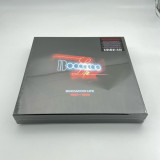
Various - BOCCACCIO LIFE - 1987-1993 10x12" LP (Boxset)
 
40

(10x12" box set, limited to 1000 copies, with premium finishing, uniquely numbered, incl. 10 records in individually printed sleeves, a booklet detailing the club's history & exclusive stickers) Boccaccio has secured its place among legendary venueslike Paradise Garage in New York and The Hacçinda in Manchester. Its bold fusion of emerging electronic genres such as New Beat, Acid, House, and Techno was way ahead of its time, drawing music lovers and clubbers from across Belgium and beyond.


Belgian label Music Man Records presents Boccaccio Life 1987-1993, a new compilation offering a fresh perspective on the legacy of the iconic Belgian club Boccaccio - often associated with the short-lived New Beat movement. The 40-track compilation highlights the raw and futuristic early house and techno sounds that were heard in the pioneering club.

Located in rural Destelbergen (Belgium), just a stone's throw from Ghent, Boccaccio has secured its place among legendary venues like Paradise Garage in New York and The Hacçinda in Manchester. Its bold fusion of emerging electronic genres such as New Beat, Acid, House, and Techno was way ahead of its time, drawing music lovers and clubbers from across Belgium and beyond. Sundays at Boccaccio were unlike anywhere else-offering sounds you couldn't hear anywhere else.

Boccaccio Life 1987-1993 is carefully curated by resident DJ Olivier Pieters and club regular Stefaan Vandenberghe, standing as the ultimate testament to a club that was more than just a venue. For those who experienced it, it was a community - a way of life. Hence the club's full name: Boccaccio Life.

This compilation stands as a testament to an innovative time in electronic music, capturing the raw, futuristic sounds of early house and techno. It sheds light on another side of Boccaccio, one that goes far beyond the short-lived New Beat scene. A carefully curated selection of 40 tracks, resonating with those who were there by offering familiar classics, while also reaching a new generation-those who never experienced it firsthand.

With tracks from Blake Baxter, Virgo, Frankie Knuckles, Tyree, and A Guy Called Gerald, the unmistakable influence of black American pioneers is clear-the originators of the firstanalog house and techno sounds. On the other hand, UK sound innovators such as The Orb and LFO bring both sharp textures and rough breakbeats to the table.

Club staple tracks include dreamy excursions from Roger Sanchez under his Egotrip moniker, the relentless basement house of Circus Bells by Robert Armani on Dance Mania, an uplifting take on a hip-house cut from The D.O.C. (Portrait of A Masterpiece in the CJ Ed-Did-It Mix), a timeless remix of UK Formation's Age of Chance from 1994, and an alternate take on The Tape by Boccaccio club regular and Belgian producer Frank De Wulf, taken from his B-Sides project.

While not always the obvious hits, these tracks have gracefully withstood the test of time, and were exclusive to Sundays at Boccaccio. Now, they are finally available to experience together in one collection, offering a timeless snapshot of a unique era.

out of Stock

Order now and we will order the item for you at our supplier.

168,03

Last In: 10 months ago
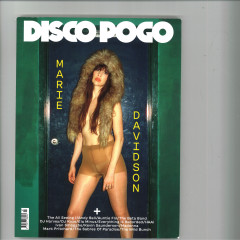
Disco Pogo - Issue #7

Disco Pogo

Issue #7

BooksDISCOPOGO7
Disco Pogo
16.04.2025

Our Spring/Summer ‘25 issue features a deep dive on Madonna’s New York nightclub roots and her links with the dancefloor ever since plus a rare interview and photo shoot in LA with DJ Harvey and our third cover is the super cool Marie Davidson.

Plus we have features on Auntie Flo, Pan Amsterdam, Ela Minus, Tryouts, Mark Pritchard & Thom Yorke, DJ Koze, Andy Bell, Everything Is Recorded, The Sabres of Paradise, The Wild Bunch, Kevin Saunderson, HAAi and lots more.

184 pages of quality music journalism by the world’s best music writers plus beautiful photography and design in a glossy print magazine.

Issue 6 is completely sold out and we expect this issue to do the same so please order asap to secure copies.

out of Stock

Order now and we will order the item for you at our supplier.

16,39

Last In: 61 days ago
DJ Narciso - Diferenciado

Dj Narciso

Diferenciado

12inchP056LP
Príncipe
11.04.2025

Narciso has been running parallel to most of his contemporaries, staying close to the main lane but researching in his own distinctive way. He takes pride in "being free from limitations and conventions. To me, music doesn't follow fixed rules; it is a field for experimentation, where any sound can be transformed into something pleasing to the ear". Depending on what one considers "pleasing", this is a pretty challenging set of tracks. The artist never loses the balance, though, mindful of a certain "dance" context in which this music thrives, but it is also that same context that is being constantly twisted and reshaped into other forms. Some of those provide fresh ground for others to follow; some are of such individuality that no one else dares disturbance; some quickly return to a safer way of communication.

"Diferenciado" does communicate, but like words can be changed to sound different and still mean the same, such are music and sound with Narciso. It's not about alienation of the listener nor alienation of the self from the surrounding areas. "I believe music is present in everything around us." And if anyone can say her/his/their music "reflects vision, experience and perception", you know the end result is not often surprising or even that different from previous examples. Well, we stand by "Diferenciado" in its obvious distinctiveness, and if all the blurb so far may read like a nervous justification it's just because of the excitement in helping put this out into the world.

As a founding element of RS Produções, where Nuno Beats, DJ Lima, DJ Nulo and Farucox are also found, Narciso has been contributing to a spiritual and creative atmosphere that permeates the environs of Lisbon where that golden, inspired air has to fight for space with many kinds of instability. The beauty and drama of opening tracks "Ziu Ziu" and "Cabelinho" (this one with mate Farucox) should be able to touch any sensitive soul that appreciates the quirkiness often attached to pure expression. As in "Pipipi" too, for example, where melody and rhythm gently and moodily lead you into a brief but sudden interruption feeling like a change into another state of being. Do not shy away. Narciso steps up as himself, not as representative of whatever or whoever.

pre-order now11.04.2025

expected to be published on 11.04.2025

25,17
Andy Crysell - Selling The Night: When Club Culture Meets Brands, Advertising and the Creative Industries

They say nothing good happens after midnight, but in the case of creativity, that’s just not so. The night fosters a different kind of creativity: something urgent, spontaneous, carved out of necessity. Tracking the past, present and future of this complex dynamic, Selling The Night explores what happens when after-dark creativity influences wider culture and converges with everything from media, advertising, design and to gaming, fashion, hospitality, alcohol, beauty, tourism and far beyond. Also, as importantly, the implications of brands taking space within dance music as sponsors and supporters.

Author Andy Crysell speaks to DJs, promoters, marketers, academics, activists, archivists, policymakers, photographers, writers and designers. He samples KFC through to Fiorucci, Absolut and Red Bull, and moves from New York disco to the modern global underground.

Selling The Night witnesses how ideas migrate from subculture to influence the creative industries. It searches for lessons in improving the value exchange between dance music and brands, seeking something more symbiotic and less parasitic. All the while, it celebrates what makes after-dark ideas so special – the unique and democratising role they play.

“So much has changed in dance music over the decades. Selling The Night offers a very timely look at the role that brands and culture marketing have played in the past and will play in the future.” Kazim Rashid (Resident Advisor)

“The friction created when youth subcultures meet corporate cultures is long overdue a deconstruction, Selling The Night is necessary reading on how and why there is a transfer of time and money between consumer brands and cultural ecosystems; and what both sectors have to gain and lose through these relationships.” Finlay Johnson (Association For Electronic Music)

out of Stock

Order now and we will order the item for you at our supplier.

18,28

Last In: 14 months ago
Inner Life - I Like It Like That

Legendary hit 'I Like It Like That' by Inner Life & Jocelyn Brown gets a bold new remix by Michael Gray, releasing on Mark Knight's unstoppable Fool’s Paradise. Fool's Paradise, helmed by Mark Knight, has become a beacon for innovative new music and timeless classics, revitalized for modern listeners. Originally released in the early '80s, 'I Like It Like That' featuring Jocelyn Brown's powerhouse vocals, quickly became a dancefloor classic, and now continues to resonate with audiences worldwide. Gray’s remix carefully preserves the song’s original vibe while adding his own signature flair—creating a punchy, sleek, and uplifting sound. Set to become a staple in DJ sets around the world, this release brings Fool’s Paradise’s soulful House energy to audiences everywhere.

stock from19.06.2026

14,50

Last In: 6 days ago
Various - EINE STADT WIRD BUNT. (Schuber-Edition) (LP 3x12"

Wie Hip-Hop nach Hamburg kam
Die Compilation ist als Zeitreise zu den Anfängen der Hamburger Hip-Hop-Kultur konzipiert und umfasst über 100 weitgehend unveröffentlichte Songs und Skits. Begleitet wird das Triple-Vinyl von einem 96-seitigen Booklet, das von den frühen Jahren von Hip-Hop, Rap und DJing in Hamburg erzählt. Präsentiert wird das Werk von den Herausgebern des Buchs und den Kuratoren der Museumsausstellung EINE STADT WIRD BUNT.

Kennt eigentlich noch jemand Easy Business? Was wie ein Ratgeber Video auf YouTube klingt, ist der Name einer der ersten Hamburger Rap-Gruppen. Die vierköpfige Formation aus Steilshoop gründete sich schon in den späten 1980er Jahren und begann bald erste englischsprachige Texte zu schreiben. 1989 nahmen sie gemeinsam mit Mario von Hacht den Song „Money“ in einem Jenfelder Jugendzentrum auf.
Als House-Produzent verfügte Von Hacht über ein vergleichsweise schon recht ansehnliches Produktions-Equipment. Selbst die legendäre Roland TR-808, analoger Drumcomputer und Allzweckwaffe von Hip-Hop-Produzenten, war bereits 1989 Teil seines Maschinenparks. Nur hatte er sie eben nicht für Rap genutzt – bis Easy Business anklopften. Und so öffnete ein Musik-Nerd und Technik-Freak dem Hip-Hop eine Tür in Hamburg. Von Hachts Offenheit für den neuen Musikstil sollte sich auszahlen: 1995 produzierte er mit „Nordisch by Nature“ den ersten Chartstürmer von Fettes Brot.

Es sind Geschichten wie diese aus der Gründerzeit des Rap in Hamburg, um die sich die 3-Vinyl-Compilation EINE STADT WIRD BUNT dreht. Unter den über 100 Songs und Skits aus den frühen Jahren des Rap in Hamburg finden sich neben dem Song „Money“ von Easy Business auch ein Mitschnitt eines Auftritts der Gruppe in der Fabrik im Mai 1991.
Von frühen Aufnahmen von MC Africa True, der später unter dem Namen Nana einige Hits landen würde, bis zu den Britcore-Veteranen von Readykill, von 2 Ruff, deren Mitglied Simple Simon zu den ersten Hip-Hop-Produzenten der Stadt gehörte, bis zu den Reim Banditen, die als eine der ersten hiesigen Bands mit einem Majorlabel-Vertrag als Hamburger Antwort auf die Fantastischen Vier positioniert werden sollten, vereint das Triple-Vinyl eine einzigartige Sammlung musikhistorischer Zeitdokumente. In Kombination mit dem begleitenden Booklet vermitteln sie ein authentisches – und überaus unterhaltsames – Bild von den Anfängen des Rap in Hamburg.

Nach dem preisgekrönten, 2021 erschienenen Buch „EINE STADT WIRD BUNT. Hamburg Graffiti History 1980-1999“ und der gleichnamigen Ausstellung, die bis Anfang Januar 2024, als eine der erfolgreichsten aller Zeiten, im Museum für Hamburgische Geschichte gezeigt wurde, folgt mit der Compilation nun also eine weitere Dokumentation Hamburger Subkultur Geschichte der 1980er und 1990er Jahre. Im Fokus diesmal: die Pioniere des Rap in der Hansestadt.
Zum Team hinter dem Triple-Vinyl gehören neben den vier Herausgebern von EINE STADT WIRD BUNT. Oliver Nebel, Frank Petering, Mirko Reisser und Andreas Timm drei ausgewiesene Kenner der deutschen Hip-Hop-Szene. Oliver Herbst, einst DJ der Hip-Hop-Band City Nord, betreibt heute ein Musiklabel, auf dem die Platte erscheint, und konnte im Zuge der Recherche an viele alte Kontakte anknüpfen. Ebenfalls mit an Bord: der langjährige Chefredakteur des Hip-Hop-Magazins Backspin Dennis Kraus und der Musikjournalist und Moderator Falk Schacht.
Über einen Zeitraum von über zwei Jahren hinweg hat sich das Team auf Recherche begeben. Sie nahmen Kontakt zu Bands, Rapper*innen, DJs und Produzenten auf, die in den 1980er und 1990er Jahren in und um Hamburg aktiv waren. Sie sichteten und archivierten unzählige Stunden von Radio-Shows, Tapes, Demo-DATs und Live-Mitschnitten und führten Interviews mit Hip-Hop-Pionieren aus der Hansestadt. „Unser Ziel war es, ein kaum beleuchtetes Kapitel Hamburger Subkulturgeschichte zu erzählen“, sagt Mirko Reisser.
Begleitet werden die Platten deshalb von einem rund 80-seitigen, reich bebilderten Booklet im Vinyl-Format, das in aufwändig recherchierten Texten nachzeichnet, wie der neue Musikstil ab Mitte der 1980er Jahre in Hamburg langsam heimisch wurde. Zu den zentralen Themen dieser Erzählung gehört die Abwesenheit von technischem Equipment – und der Umgang der jungen Szene mit diesem Mangel.
Ein Vierspur Kassettenrekorder musste für die ersten Aufnahmen im Kinderzimmer reichen. Und wer DJ werden wollte, übte Scratchen mit dem Plattenspieler der Eltern. Anders als heute, wo man mit einem Smartphone in der Hand theoretisch ein Millionenpublikum erreichen kann, stellte die Aufnahmetechnik damals eine große Hürde dar. Wer jedoch über die technischen Voraussetzungen verfügte, Songs aufzunehmen, wurde schnell zur Anlaufstelle für die junge Rap-Szene.
Parallel zu dieser Ära der Technik-Autodidakten, öffneten die Rapper*innen der frühen 1990er Jahre ebenfalls ein Fenster in eine neue Welt: Indem sie anfingen, auf Deutsch zu rappen, grenzten sie sich bewusst von den amerikanischen Vorbildern ab und schufen ein ganz neues Selbstbewusstsein der jungen Subkultur. Und ganz nebenbei auch ein ganz neues Bewusstsein für die Möglichkeiten der deutschen Sprache. „Hier wurde etwas gänzlich Neues erschaffen“, sagt Oliver Herbst.

Viele Künstler, die auf der Compilation vertreten sind, dürften heute nur noch echten Hip-Hop-Nerds bekannt sein. Doch es finden sich auch bekannte Namen auf der Tracklist. Jan Eißfeldt etwa, der heute solo als Jan Delay oder als Teil der Beginner Konzerthallen füllt. Oder Fettes Brot, die von einem Hip-Hop-Trio aus dem Hamburger Umland zu einer der erfolgreichsten deutschen Popbands der Gegenwart heranwuchsen. Oder Deichkind, die zu einem massentauglichen Universal Kunstprojekt avanciert sind.

Wie schon das gleichnamige Buch und die Museumsausstellung, so blickt auch die Compilation EINE STADT WIRD BUNT. hinter die Kulissen einer jungen Subkultur – und erzählt parallel spannende Kapitel Musik-, Technik- und Stadtgeschichte aus der Hip-Hop-Hochburg an der Elbe.

INTERPRETEN
Fettes Brot, Absolute Beginner, Deichkind, Das Bo, Ferris MC, Mr. Schnabel, Sleepwalker, Kastrierte Philosophen, Mellow Mark, David Fascher, Easy Business, Reim Banditen, Readykill, TobiTob, I.L.L. Will, City Nord, MK Cram (Poets of Peeze), Dialektik, 2 Ruff, Nina, Flashmaster Ray, Dennis Deutschland, 2BIAS, MC Africa True alias Nana, Vers Chaoten, Die Erstausgabe, THC (Ter Hartchor), R.A.F. (Reimende Antifaschisten), Direkt Aktion, Fogmoor, Syren, Mental Disorda (Crime Code Barets), Dennis the Menace, Selma, 08/15, Hamburg Royal, Skunk Funk, B-Low, Gizmo, AJ, SMG, Phantom Black, Leon Le Pro alias EL’OMC, Paolo 77, Monti, Hanseknaller, Schlechta Umgang u.v.a.

ZITATE VON
André Luth, Jan Eißfeldt, Mathias Arfmann, Ale Dumbsky, David Fascher, Fatih Akin, Carsten Bohn, Schiffmeister (Björn Beton), Pasha Kamber (DJ MPK), Boris Ekambi, Sleepwalker, Mr. Schnabel, Nana Abrokwa, Simon Vegas u.a.

PRODUCER
Mario von Hacht (Super Mario), Sleepwalker, B-Base, Bubblez, TobiTob, X-Ray, Simple Simon

pre-order now04.04.2025

expected to be published on 04.04.2025

93,24
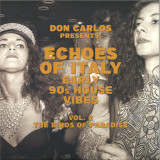
Various - ECHOES OF ITALY – THE BIRDS OF PARADISE – EARLY 90S HOUSE VIBES VOL.2 (2x12")

Googling “paradise house”, the first results to pop up are an endless list of European b&b’s with whitewashed lime façades, all of them promising “…an unmatched travel experience a few steps from the sea”. Next, a little further down, are the institutional websites of a few select semi-luxury retirement homes (no photos shown, but lots of stock images of smiling nurses with reassuring looks). To find the “paradise house” we’re after, we have to scroll even further down. Much further down.

It feels like yesterday, and at the same time it seems like a million years ago. The Eighties had just ended, and it was still unclear what to expect from the Nineties. Mobile phones that were not the size of a briefcase and did not cost as much as a car? A frightening economic crisis? The guitar-rock revival?! Certainly, the best place to observe that moment of transition was the dancefloor. Truly epochal transformations were happening there. From America, within a short distance one from the other, two revolutionary new musical styles had arrived: the first one sounded a bit like an “on a budget” version of the best Seventies disco-music – Philly sound made with a set of piano-bar keyboards! – the other was even more sparse, futuristic and extraterrestrial. It was a music with a quite distinct “physical” component, which at the same time, to be fully grasped, seemed to call for the knotty theories of certain French post-modern philosophers: Gilles Deleuze, Félix Guattari, Paul Virilio... Both those genres – we would learn shortly after – were born in the black communities of Chicago and Detroit, although listening to those vinyl 12” (often wrapped in generic white covers, and with little indication in the label) you could not easily guess whether behind them there was a black boy from somewhere in the Usa, or a girl from Berlin, or a pale kid from a Cornish coastal town.

Quickly, similar sounds began to show up from all corners of Europe. A thousand variations of the same intuition: leaner, less lean, happier, slightly less intoxicated, more broken, slower, faster, much faster... Boom! From the dancefloors – the London ones at least, whose chronicles we eagerly read every month in the pages of The Face and i-D – came tales of a new generation of clubbers who had completely stopped “dressing up” to go dancing; of hot tempered hooligans bursting into tears and hugging everyone under the strobe lights as the notes of Strings of Life rose up through the fumes of dry ice (certain “smiling” pills were also involved, sure). At this point, however, we must move on to Switzerland.

In Switzerland, in the quiet and diligent town of Lugano, between the 1980s and 1990s there was a club called “Morandi”. Its hot night was on Wednesdays, when the audience also came from Milan, Como, Varese and Zurich. Legend goes that, one night, none less than Prince and Sheila E were spotted hiding among the sofas, on a day-off of the Italian dates of the Nude Tour… The Wednesday resident and superstar was an Italian dj with an exotic name: Don Carlos. The soundtrack he devised was a mixture of Chicago, Detroit, the most progressive R&B and certain forgotten classics of old disco music: practically, what the Paradise Garage in New York might have sounded like had it not closed in 1987. In between, Don Carlos also managed to squeeze in some tracks he had worked on in his studio on Lago Maggiore. One in particular: a track that was rather slow compared to the BPM in fashion at the time, but which was a perfect bridge between house and R&B. The title was Alone: Don Carlos would explain years later that it had to be intended both in the English meaning of “by itself” and like the Italian word meaning “halo”. That wasn’t the only double entendre about the song, anyway. Its own very deep nature was, indeed, double. On the one hand, Alone was built around an angelic keyboard pattern and a romantic piano riff that took you straight to heaven; on the other, it showcased enough electronic squelches (plus a sax part that sounded like it had been dissolved by acid rain) to pigeonhole the tune into the “junk modernity” section, aka the hallmark of all the most innovative sounds of the time: music that sounded like it was hand-crafted from the scraps of glittering overground pop.

No one knows who was the first to call it “paradise house”, nor when it happened. Alternative definitions on the same topic one happened to hear included “ambient house”, “dream house”, “Mediterranean progressive”… but of course none were as good (and alluring) as “paradise house”. What is certain is that such inclination for sounds that were in equal measure angelic and neurotic, romantic and unaffective, quickly became the trademark of the second generation of Italian house. Music that seemed shyly equidistant from all the rhythmic and electronic revolutions that had happened up to that moment (“Music perfectly adept at going nowhere slowly” as noted by English journalist Craig McLean in a legendary field report for Blah Blah Blah magazine). Music that to a inattentive ear might have sounded as anonymous as a snapshot of a random group of passers-by at 10AM in the centre of any major city, but perfectly described the (slow) awakening in the real world after the universal love binge of the so-called Second Summer of Love.

For a brief but unforgettable season, in Italy “paradise house” was the official soundtrack of interminable weekends spent inside the car, darting from one club to another, cutting the peninsula from North to centre, from East to West coast in pursuit of the latest after-hours disco, trading kilometres per hour with beats per minute: practically, a new New Year’s Eve every Friday and Saturday night. This too was no small transformation, as well as a shock for an adult Italy that was encountering for the first time – thanks to its sons and daughters – the wild side of industrial modernity. The clubbers of the so-called “fuoriorario” scene were the balls gone mad in the pinball machine most feared by newspapers, magazines and TV pundits. What they did each and every weekend, apart from going crazy to the sound of the current white labels, was linking distant geographical points and non-places (thank you Marc Augé!) – old dance halls, farmhouses and business centres – transformed for one night into house music heaven. As Marco D’Eramo wrote in his 1995 essay on Chicago, Il maiale e il grattacielo: “Four-wheeled capitalism distorts our age-old image of the city, it allows the suburbs to be connected to each other, whereas before they were connected only by the centre (…) It makes possible a metropolitan area without a metropolis, without a city centre, without downtown. The periphery is no longer a periphery of any centre, but is self-centred”.

“Paradise house” perfectly understood all of this and turned it into a sort of cyber-blues that didn’t even need words, and unexpectedly brought back a drop of melancholic (post?)-humanity within a world that by then – as we would wholly realise in the decades to come – was fully inhuman and heartless. A world where we were all alone, and surrounded by a sinister yellowish halo, like a neon at the end of its life cycle. But, for one night at least, happy."

out of Stock

Order now and we will order the item for you at our supplier.

28,99

Last In: 40 days ago
Kapote - Para Mytho Disco  LP 2x12"

Toy Tonics Music Berlin presents "Para Mytho Disco". The 2nd "Kapote" album of label founder and creative director Mathias Modica.
Keyboarder, DJ, producer, music nerd, graphic designer, multi-instrumentalist, sub-culture impressario and artist (formerly known as Munk of Gomma records.)

Kapote & Toy Tonics
In the last years Kapote was in the spotlight mainly for building the Toy Tonics label with his friends. Developing a platform for new positive quality dance music with a human touch. Toy Tonics is the opposite of the dark, druggy Techno and Trance sounds of the last years.
The warm inclusive music of Toy Tonics represents a new vibe that a young generation of diverse, stylish and culturally intersted generation of dancers loves now. Kapote's Toy Tonics became the key label for that vibe. (In 2024 Toy Tonics made 150 Toy Tonics events in 18 countries. With more than 150.000 people dancing. 90 millions streams on their music.)
Toy Tonics is more than a music label: It's a audio - visual universe. A community, almost a movement.
Based on a new positive attitude and aesthetic diversity. Mixing musicianship with DJ culture, analogue music with electronic, ideas from the past with sounds from now. To create something new. Connecting dance music with graphic design, art and underground fashion.
Kapote and his gang release vinyl, posters, shirts, art fanzines and make exhibitions and partys.

Toy Tonics started in Berlin as a underground niche project. But now became the key label of the new house, wild style disco and organic dance music scene.
Probably one of Berlin's biggest electronic music phenomena along with Keinemusik and Live from Earth.

It went fast: 2020 Kapote's crew started to make small parties in Berlin's off spaces. The "Toy Tonics Jams". The parties became "talk of the town", and Berlin clubs like Griesmühle and Panorama Bar invited the crew. Then international clubs and festival called. Toy Tonics were invited to SONAR (playing the mainstage with Kaytranada and DJ Tennis), KALA festival, Montreux Jazz festival.
Now TT has a residency at Panorama Bar Berlin and sold out events in Europe leading clubs like Phonox in London, Rex Club in Paris, Tunnel in Milan.
Toy Tonics now is the reference brand of a new generation of music loving dancers. Similar to Gomma records, Kapote's former label (2003 - 2015) that was one of the key labels of the "indie dance" scene of the Y2K years (along with DFA and Output Records).

Kapote created a multi-cultural movement with graphic designers, photographers, illustrators from the Berlin scene.
They publish the Toy Tonics Pocket Poster magazine, posters and design shirts. They organize the Toy Tonics Pop Up Galleries mixing music and art. In underground venues in Berlin and in new gallery spaces and museums around Europe.
Toy Tonics has been invited by Palais de Tokio museum in Paris, Triennale Museum Berlin, Design week Milano to create events.
The new Kapote album
The 12 tracks have a very own style. Based on dance music, but going much further. "Para Mytho Disco' is a futuristic mix of sounds. It's far away from the dark monotone techno and trance music from Kapote's hometown Berlin. Instead, he creates warm friendly atmospheres full of sonic colours and little musical surprises.
Kapote's knowlege of music history and his backround as a jazz piano student and son of classic music composer is clearly inside this music. Before turning into a DJ and electronic music producer he has been playing in bands since he was 13 years old.
The album is full of emotional chord progressions played by Kapote on various keyboards. Sometimes reminding music from the past, without being retro at all. The basslines and melodies are inspired by jazz fusion from the 1970ies. And he programmed syncopated grooves that come from afro-american dance music. There are influences from Japanese electronic music (Yellow Magic Orchestra), from 1980s Synthwave and from 1990s electronica (like Squarepusher and Luke Vibert).

Kapote plays keys, bass, flutes and percussions, he plays synth solos and sings on a few tracks. The complexity of the arrangements makes this music never boring. Lot of melodies and solos that catch the listener. Colourful soundscapes that make you want to listen or dance to this album more, and discover details also after you heard it several times.

Kapote background

Before starting Toy Tonics, Kapote used to run a label called Gomma. He produced four albums under the name Munk and music for other artists.
He produced music with Peaches, Franz Ferdinand founder Nick McCarthy, with New York street art legend The Rammellzee, Italian actress Asia Argento, the first three albums of WhoMadeWho and worked with LCD Soundsystem (listen to "Kick out the chairs", the Munk song with James Murphy )
In those "Gomma days" Kapote aka Munk was also one of the main DJs for VICE magazine parties and made music for art projects and fashion brands (Margiela, Prada, Colette).
In 2015 he stopped Munk and Gomma and started Toy Tonics. He found young producers and helped to develop their sound (Coeo, Cody Currie, Gee Lane, Barbara Boeing, Sam Ruffillo). Later he founded the sublabel Kryptox to release music by Berlin based bands that make new forms of jazz or neo classical sounds.

Under the name Kapote Mathias didnt release much:
Only his Kapote debut album "What it is" (2019) and an EP called "Electric Slide" (2022) and a collabo EP with Italian producer Sam Ruffillo ("Robot Salsa").

An although his Munk and Kapote music was an underground phenomena his music has always been a favourite of many great people from the scene.
Supported by DJs like Harvey, Chromeo, Moodymann, Jennifer Cardini, Gerd Janson, MYD, Andrew Weatherall to Blessed Madonna, Justice and Laurent Garnier… to name just a few.

out of Stock

Order now and we will order the item for you at our supplier.

20,59

Last In: 9 months ago
Collage - Mit den Puppen tanzen

We are thrilled to announce another underground gem on our label. This time, it's Collage's incredible 4-track EP "Mit den Puppen tanzen" (Dancing With The Puppets). Originally released in 1984 on the small FMusic label, the 12" EP is a true highlight in German Electro and NDW history, becoming a sought-after item among collectors. It features intense lyrics by singer Katrin A. Kunze, with music composed by Markus Kammann and Jürgen Grah.

Kammann and Grah, both originally from Solingen - a small city near Wuppertal - had previously collaborated on the new wave project Schwarze Bewegung with a different singer. Their self-titled LP was released in 1982 on Bacillus/Bellaphon. During this period, the electro sound pioneered by Kraftwerk evolved into electro-funk, sparked by the release of Afrika Bambaataa's groundbreaking track "Planet Rock", which achieved global acclaim. The iconic Roland TR-808 drum machine, masterfully employed by Arthur Baker's production team, revolutionized dance music with further hits like "Looking for the Perfect Beat" and collaborations with Planet Patrol. Markus Kammann cites these tracks, along with black music as a whole, as key influences on his work. In contrast, much of the electronic music emerging from Germany at the time rather leaned towards the styles of artists like Klaus Schulze and Tangerine Dream. Kammann's influences are evident in Collage's EP, which incorporates elements of early electronic hip-hop, such as the scratching sounds in the title track (created with tape rather than turntables) and short rap segments in "Niemals zurück".

By this time, Kammann and Grah had acquired their own Roland 808 as well as a JUNO-60 keyboard. Grah, originally a drummer, played keyboards and vibraphone, while Kammann, primarily a guitarist, also played bass. All the lyrics on the EP were written and performed by Kathrin A. Kunze, who hailed from Cuxhaven, a northern German city. She moved to Wuppertal around 1983 to study literature, and the group Collage was born.

Through Uwe Bauer, drummer of Fehlfarben, and their manager Horst Lüdge (of Profil), Collage connected with Werner Lambertz, a legendary sound technician from Düsseldorf. Lambertz's state-of-the-art studio featured custom-built sequencers capable of triggering the JUNO-60, as well as expensive equipment like a vocoder. Over the course of a week, the group completed all four tracks.

The EP's hard yet playful electro beats were complemented by Kunze's distinctive performance and introspective lyrics, which lent the songs a uniquely German and wavy touch. Her subtle songwriting conveyed a sense of paranoia and sorrow, as seen in lines like "Ich glaub mir selber nicht. Wer hält denn schon, was er verspricht?" ("I don't believe myself. Who stays true to their word, anyway?").

Unfortunately, the EP was never properly promoted and was distributed solely through the independent market via EFA. Despite this, Collage continued working on new material and pre-recorded an album that garnered label's attention. Polydor expressed interest but proposed using the compositions for a solo project with singer Inga Humpe (of Neonbabies), who was already signed to their roster. This would have required replacing Kunze as the vocalist, an idea the group firmly rejected. As a result, the album was never released. In 1987, Kammann, Grah, and Kunze launched another project called Cold End, which released another brilliant and highly sought-after 12" single, Metropolitan Jungle, originally issued on Tam Tam and recently re-released.

The first-ever reissue of "Mit den Puppen tanzen" is limited to only 400 copies - 200 on classic black vinyl and 200 on blue transparent vinyl. The cover art remains true to the original 12" release, designed by the aforementioned Uwe Bauer (aka Bimbo Art). This reissue is a must-have for DJs and collectors alike

out of Stock

Order now and we will order the item for you at our supplier.

16,77

Last In: 14 months ago
Midan - Letter To Brazil LP
 
4

Midan’s new album pays homage to the beautiful music of Brasil. The young producer, DJ and digger from Cologne channels his deep love for Bossa Nova, Samba and MPB (Música Popular Brasileira) into a 17 track strong album entitled “Letter To Brasil”. Accompanied by his good friends FloFilz, Saib, Mr.Käfer and Lesky. Artwork by Sao Palo-based illustrator André Cast.
Born and raised in Paris, the half German-half Algerian producer is one the most exciting new jacks on the German beatmaker scene. At the age of 23 Midan has already released a bunch of albums for renowned labels like Casual Low Grind, Mutombo Recods and Beat Jazz International.

pre-order now21.03.2025

expected to be published on 21.03.2025

18,91
Collage - Mit den Puppen tanzen

We are thrilled to announce another underground gem on our label. This time, it's Collage's incredible 4-track EP "Mit den Puppen tanzen" (Dancing With The Puppets). Originally released in 1984 on the small FMusic label, the 12" EP is a true highlight in German Electro and NDW history, becoming a sought-after item among collectors. It features intense lyrics by singer Katrin A. Kunze, with music composed by Markus Kammann and Jürgen Grah.

Kammann and Grah, both originally from Solingen - a small city near Wuppertal - had previously collaborated on the new wave project Schwarze Bewegung with a different singer. Their self-titled LP was released in 1982 on Bacillus/Bellaphon. During this period, the electro sound pioneered by Kraftwerk evolved into electro-funk, sparked by the release of Afrika Bambaataa's groundbreaking track "Planet Rock", which achieved global acclaim. The iconic Roland TR-808 drum machine, masterfully employed by Arthur Baker's production team, revolutionized dance music with further hits like "Looking for the Perfect Beat" and collaborations with Planet Patrol. Markus Kammann cites these tracks, along with black music as a whole, as key influences on his work. In contrast, much of the electronic music emerging from Germany at the time rather leaned towards the styles of artists like Klaus Schulze and Tangerine Dream. Kammann's influences are evident in Collage's EP, which incorporates elements of early electronic hip-hop, such as the scratching sounds in the title track (created with tape rather than turntables) and short rap segments in "Niemals zurück".

By this time, Kammann and Grah had acquired their own Roland 808 as well as a JUNO-60 keyboard. Grah, originally a drummer, played keyboards and vibraphone, while Kammann, primarily a guitarist, also played bass. All the lyrics on the EP were written and performed by Kathrin A. Kunze, who hailed from Cuxhaven, a northern German city. She moved to Wuppertal around 1983 to study literature, and the group Collage was born.

Through Uwe Bauer, drummer of Fehlfarben, and their manager Horst Lüdge (of Profil), Collage connected with Werner Lambertz, a legendary sound technician from Düsseldorf. Lambertz's state-of-the-art studio featured custom-built sequencers capable of triggering the JUNO-60, as well as expensive equipment like a vocoder. Over the course of a week, the group completed all four tracks.

The EP's hard yet playful electro beats were complemented by Kunze's distinctive performance and introspective lyrics, which lent the songs a uniquely German and wavy touch. Her subtle songwriting conveyed a sense of paranoia and sorrow, as seen in lines like "Ich glaub mir selber nicht. Wer hält denn schon, was er verspricht?" ("I don't believe myself. Who stays true to their word, anyway?").

Unfortunately, the EP was never properly promoted and was distributed solely through the independent market via EFA. Despite this, Collage continued working on new material and pre-recorded an album that garnered label's attention. Polydor expressed interest but proposed using the compositions for a solo project with singer Inga Humpe (of Neonbabies), who was already signed to their roster. This would have required replacing Kunze as the vocalist, an idea the group firmly rejected. As a result, the album was never released. In 1987, Kammann, Grah, and Kunze launched another project called Cold End, which released another brilliant and highly sought-after 12" single, Metropolitan Jungle, originally issued on Tam Tam and recently re-released.

The first-ever reissue of "Mit den Puppen tanzen" is limited to only 400 copies - 200 on classic black vinyl and 200 on blue transparent vinyl. The cover art remains true to the original 12" release, designed by the aforementioned Uwe Bauer (aka Bimbo Art). This reissue is a must-have for DJs and collectors alike

out of Stock

Order now and we will order the item for you at our supplier.

17,61

Last In: 14 months ago
Daigos - 桃源郷 (Tougen-Kyo)

Daigos

桃源郷 (Tougen-Kyo)

12inchTEETH004
Teeth
06.03.2025

In late 2023, Tokyo-based musician, Daigo Sakuragi, temporarily relocated to London, where he revisited material recorded with fellow Japanese musicians in Tokyo, drawing inspiration from the city’s energy, music, and atmosphere. This new perspective culminated in Togenkyo, a 28-minute work blending early 2000s folktronica and contemporary ambient styles. Sakuragi crafts immersive sonic textures with synthesisers and spatial production, while the organic groove of drums and bass anchors the piece, subtly inviting physical movement. Floating above this foundation, the saxophone weaves through the soundscape, leading the music with an elegant yet exploratory presence.

The session took place at aLive recording studio in Tokyo, with the following personnel:

Daigo Sakuragi: synthesiser, guitar, post-production
Jinya Ichikawa: bass
Shoei Ikeda: saxophone
Kazuya Ooi: drums

The lineup reflects a network of notable Japanese artists: Ichikawa, Sakuragi’s longtime collaborator in D.A.N.; Ikeda, known for his work with Maya Ongaku; and Ooi, a drummer for yahyel.

Sakuragi is best known for his band project D.A.N., where he contributes vocals, guitar, and production alongside bassist Jinya Ichikawa and drummer Teru Kawakami. Since its formation in 2014, D.A.N. has gained recognition for their unique fusion of indie rock/pop, dub, and electronic music. Under his solo moniker Daigos, Sakuragi explores electronic dance music through DJing and production, experimenting with Eurorack modules and samples in a refined, microscopic aesthetic. Recently, his creative output has expanded into diverse fields, including advertisements, artist collaborations, and films.

The term Togenkyo resonates with the concept of utopia, yet it diverges—it does not symbolise a flawless paradise but rather an attainable state of peace within oneself. Sakuragi reflects on finding his own Togenkyo in London, far from his hometown of Tokyo. The EP brings a sense of comfort and calm, reminding listeners that such a space exists not far from reach.

out of Stock

Order now and we will order the item for you at our supplier.

17,23

Last In: 15 months ago
Jay Vegas, Tenacious, Sgt Slick and Tommy Glasses - Fool's Paradise Sampler Vol. 5

DJ Support: Mousse T, Michael Gray, Sam Divine, Black Legend, Sgt Slick, CASSIMM, Grant Nelson, Steve Angello, Mark Knight and Carl Cox.

Another 4 tracks from Toolroom’s House imprint; Fool’s Paradise.

stock from19.06.2026

14,09

Last In: 13 days ago
Crash Party - Toxic Funk Vol. 16

As the new year kicks off its time to return to the party bangers and who better to invite for than the awesome Crash Party. After releasing his debut album Everything Happens for a reason on his own Big Beat Sunday label – we were able to convince the busy producer to return for a 2-track party drop for our infamous Toxic-Funk series.

Kicking off things with instant intoxicating classic break with some timeless "wonder"-ful groove with an equally legendary rap-flows. Now what does that mean? Instant party classic A-side named Tribe Called Wonder!

On the flip-side Crash Party slows down the beats a bit but leaves it equally toxic with some big grooves on the Break On jam. Like the A-Side this jam features some legendary rap hooks which goes smoothly with the oldskool vibes.

Breakbeat Paradise Recording delivers yet another belter for the crate for the funky DJs keeping it real and keeping it vinyl!

out of Stock

Order now and we will order the item for you at our supplier.

13,24

Last In: 14 months ago
Various - Lost Paradise: Blissed Out
Breakbeat Hardcore 1991-94  LP 2x12"

With an intrigue for a particular niche of old UK hardcore which takes cues from Sheffield bleep ambience, heady rave futurism and soft, almost new age synth pads, Blank Mind presents ‘Lost Paradise: Blissed Out Hardcore 91-94’. Though the records gathered for the compilation span a short three-year period and bridge the gap between scenes, the collection manages to find a sweet spot where the influence of Warp’s Artificial Intelligence, back room chill out sonics and the nascent jungle boom meet with elements of Italian piano house and slower breakbeat cuts.

Opting to focus on atmosphere to highlight shared connections; in this case the duality of often serene and calming soundscapes with frenzied breaks and bass (see Hedgehog Affair’s ‘Parameters’ and Luxury’s ‘Twirl’ respectively); Lost Paradise is a formidable collection of tracks plucked from a thriving time for British dance music experimentation. The general themes of ascension and escapism channelled through digital samplers are also inescapably linked to a turbulent time in politics, beginning in the post-Thatcher years and culminating in the year the harshest anti-rave Criminal Justice Act came into force.

Initially building the compilation around DJ Mayhem’s track ‘Inesse’, Blank Mind label founder Sam Purcell and Amsterdam based producer Tammo Hesselink began a process of swapping favourites and deep cuts to spread across this 2x12” doublepack. The compilation avoids any obvious centrepieces through masterful sequencing, allowing for moments of refrain and tempo changes in a way that helps add to their overall vision of what this music is and can be; “We wanted to frame hardcore in a different light, looking at this idea of ecstasy through the traditional meaning of the word and exploring that symbolism”. By drawing from what some might consider the softer edges of the movement, the pair offer a look into the relevance of these tracks in the contemporary era, where the past years have seen both an explosion in popularity of old ambient/new-age music and a certified jungle revival.

out of Stock

Order now and we will order the item for you at our supplier.

33,82

Last In: 8 months ago
Various - ECHOES OF ITALY - ARTISTS IN WONDERLAND – EARLY 90S HOUSE VIBES VOL.1 LP 2x12"

Volume 1 of this expertly curated project of 90s Italian House - put together by Don Carlos.

If Paradise was half as nice… by Fabio De Luca.

Googling “paradise house”, the first results to pop up are an endless list of European b&b’s with whitewashed lime façades, all of them promising “…an unmatched travel experience a few steps from the sea”. Next, a little further down, are the institutional websites of a few select semi-luxury retirement homes (no photos shown, but lots of stock images of smiling nurses with reassuring looks). To find the “paradise house” we’re after, we have to scroll even further down. Much further down.

It feels like yesterday, and at the same time it seems like a million years ago. The Eighties had just ended, and it was still unclear what to expect from the Nineties. Mobile phones that were not the size of a briefcase and did not cost as much as a car? A frightening economic crisis? The guitar-rock revival?! Certainly, the best place to observe that moment of transition was the dancefloor. Truly epochal transformations were happening there. From America, within a short distance one from the other, two revolutionary new musical styles had arrived: the first one sounded a bit like an “on a budget” version of the best Seventies disco-music – Philly sound made with a set of piano-bar keyboards! – the other was even more sparse, futuristic and extraterrestrial. It was a music with a quite distinct “physical” component, which at the same time, to be fully grasped, seemed to call for the knotty theories of certain French post-modern philosophers: Gilles Deleuze, Félix Guattari, Paul Virilio... Both those genres – we would learn shortly after – were born in the black communities of Chicago and Detroit, although listening to those vinyl 12” (often wrapped in generic white covers, and with little indication in the label) you could not easily guess whether behind them there was a black boy from somewhere in the Usa, or a girl from Berlin, or a pale kid from a Cornish coastal town.

Quickly, similar sounds began to show up from all corners of Europe. A thousand variations of the same intuition: leaner, less lean, happier, slightly less intoxicated, more broken, slower, faster, much faster... Boom! From the dancefloors – the London ones at least, whose chronicles we eagerly read every month in the pages of The Face and i-D – came tales of a new generation of clubbers who had completely stopped “dressing up” to go dancing; of hot tempered hooligans bursting into tears and hugging everyone under the strobe lights as the notes of Strings of Life rose up through the fumes of dry ice (certain “smiling” pills were also involved, sure). At this point, however, we must move on to Switzerland.

In Switzerland, in the quiet and diligent town of Lugano, between the 1980s and 1990s there was a club called “Morandi”. Its hot night was on Wednesdays, when the audience also came from Milan, Como, Varese and Zurich. Legend goes that, one night, none less than Prince and Sheila E were spotted hiding among the sofas, on a day-off of the Italian dates of the Nude Tour… The Wednesday resident and superstar was an Italian dj with an exotic name: Don Carlos. The soundtrack he devised was a mixture of Chicago, Detroit, the most progressive R&B and certain forgotten classics of old disco music: practically, what the Paradise Garage in New York might have sounded like had it not closed in 1987. In between, Don Carlos also managed to squeeze in some tracks he had worked on in his studio on Lago Maggiore. One in particular: a track that was rather slow compared to the BPM in fashion at the time, but which was a perfect bridge between house and R&B. The title was Alone: Don Carlos would explain years later that it had to be intended both in the English meaning of “by itself” and like the Italian word meaning “halo”. That wasn’t the only double entendre about the song, anyway. Its own very deep nature was, indeed, double. On the one hand, Alone was built around an angelic keyboard pattern and a romantic piano riff that took you straight to heaven; on the other, it showcased enough electronic squelches (plus a sax part that sounded like it had been dissolved by acid rain) to pigeonhole the tune into the “junk modernity” section, aka the hallmark of all the most innovative sounds of the time: music that sounded like it was hand-crafted from the scraps of glittering overground pop.

No one knows who was the first to call it “paradise house”, nor when it happened. Alternative definitions on the same topic one happened to hear included “ambient house”, “dream house”, “Mediterranean progressive”… but of course none were as good (and alluring) as “paradise house”. What is certain is that such inclination for sounds that were in equal measure angelic and neurotic, romantic and unaffective, quickly became the trademark of the second generation of Italian house. Music that seemed shyly equidistant from all the rhythmic and electronic revolutions that had happened up to that moment (“Music perfectly adept at going nowhere slowly” as noted by English journalist Craig McLean in a legendary field report for Blah Blah Blah magazine). Music that to a inattentive ear might have sounded as anonymous as a snapshot of a random group of passers-by at 10AM in the centre of any major city, but perfectly described the (slow) awakening in the real world after the universal love binge of the so-called Second Summer of Love.

For a brief but unforgettable season, in Italy “paradise house” was the official soundtrack of interminable weekends spent inside the car, darting from one club to another, cutting the peninsula from North to centre, from East to West coast in pursuit of the latest after-hours disco, trading kilometres per hour with beats per minute: practically, a new New Year’s Eve every Friday and Saturday night. This too was no small transformation, as well as a shock for an adult Italy that was encountering for the first time – thanks to its sons and daughters – the wild side of industrial modernity. The clubbers of the so-called “fuoriorario” scene were the balls gone mad in the pinball machine most feared by newspapers, magazines and TV pundits. What they did each and every weekend, apart from going crazy to the sound of the current white labels, was linking distant geographical points and non-places (thank you Marc Augé!) – old dance halls, farmhouses and business centres – transformed for one night into house music heaven. As Marco D’Eramo wrote in his 1995 essay on Chicago, Il maiale e il grattacielo: “Four-wheeled capitalism distorts our age-old image of the city, it allows the suburbs to be connected to each other, whereas before they were connected only by the centre (…) It makes possible a metropolitan area without a metropolis, without a city centre, without downtown. The periphery is no longer a periphery of any centre, but is self-centred”.

“Paradise house” perfectly understood all of this and turned it into a sort of cyber-blues that didn’t even need words, and unexpectedly brought back a drop of melancholic (post?)-humanity within a world that by then – as we would wholly realise in the decades to come – was fully inhuman and heartless. A world where we were all alone, and surrounded by a sinister yellowish halo, like a neon at the end of its life cycle. But, for one night at least, happy.

out of Stock

Order now and we will order the item for you at our supplier.

28,99

Last In: 40 days ago
Mark Knight, Grant Nelson, Deepshakerz, Richard Earnshaw, Sebb Junior - Fool's Paradise Sampler Vol . 4

DJ Support: Mousse T, Michael Gray, Sam Divine, Black Legend, Sgt Slick, CASSIMM, Grant Nelson, Steve Angello, Mark Knight and Carl Cox

Another 4 tracks from Toolroom’s House imprint; Fool’s Paradise. Includes the number one hits ‘Do It Ya’ll’ from Grant Nelson & Mark Knight alongside Richard Earnshaw’s reimagining of Fonda Rae’s classic ‘Touch Me’

out of Stock

Order now and we will order the item for you at our supplier.

14,71

Last In: 34 days ago
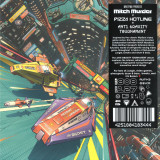
Mitch Murder x Pizza Hotline - Anti Gravity Tournament (LP)

WRWTFWW Records is honored to present a one of a kind collaboration release between buzzing UK producer and DJ Pizza Hotline and Swedish electronic and synth icon Mitch Murder, delivering 3 gigantic tracks each for the Anti Gravity Tournament album, now available as a limited-edition LP housed in a heavyweight 350gsm sleeve illustrated by the legendary junkboy. It is also available in digital formats.

Inspired by the classic WipEout video game series, this high-energy boosted split-album transports listeners into the futuristic world of anti-gravity racing, a colorful turbo adventure soundtracked by 6 mega tracks of fast-paced atmospheric jungle, thunderous breaks, and liquid drum & bass. The adrenaline-fueled collection delivers maximum energy and dreamy vibes, a true paradise for fans of 90s/Y2K video games, LTJ Bukem, Peshay, Soichi Terada, and previous efforts by Mitch & Pizza.

Anti Gravity Tournament follows 2 critically-acclaimed albums by Pizza Hotline – Level Select and Polygon Island, both still available on WRWTFWW Records, as well as the limited Low Poly Breaks cassette series which sold out in a few minutes.

Mitch Murder is known as one of the originators of synthwave and has released timeless albums on Rosso Corsa Records, Mad Decent, and My Pet Flamingo (TimeSlave Recordings). He is also the man behind the Kung Fury soundtrack and has collaborated with…David Hasselhoff himself!

The astonishing exclusive artwork comes from the one and only junkboy, creative director at Mojang Studios (Minecraft) and all-around design grandmaster.

Fasten your seatbelt and join the fun.

out of Stock

Order now and we will order the item for you at our supplier.

25,00

Last In: 4 months ago
Medline - The Edge LP

Medline

The Edge LP

12inchMBLP007
My Bags
03.02.2025

Welcome into the world of scarse music for the ultimate connoisseurs, fine taste beatmakers and holy grails collectors.
You made a step close to The Edge.
From cult Italian soundtrack and 80's iconic anime, English and French library music, to tunes that made Hip Hop iconic anthem, Medline picked 10 compositions to cover, among his favorite crate diggers treasures.

With a 30 years Dj's culture, he unite on vinyl a collection of underground classics.
When other musicians sample, as former beatmaker, he found his fulfillment by playing the entire tracks, as homage to these composers.

In 2018 Solstice has set the corner stone of this unique artwork at the cross road of Jazz, Funk, Soul and Hip Hop worldwide culture.
With The Edge, the out of boundaries producer, placed the level even more higher.
The whole work is incredible, for a man alone, without music theory knowledge but playing flutes, horns, keyboard, guitar and many more instruments... creating in his little home studio the sound of a 70's orchestra.

Challenging and epic:
Epic for covers like A Day In The Life, Beatles cover by Les Demerle, took by Buck Wild for O.C. Time's Up and of course the eponym David Axelrod's The Edge on David McCallum album.

Challenging, for library anthem like Hot Dog, Ghetto or Keep Quiet by Jacky Giordano, sharp and definitely audacious.
Despite the variety of the ten themes, the man's touch is present each time, into the texture, sound taste and balance. Like a chef bringing up to date magical recipes.

The archetypal type of records My Bags loves to release, "The Edge" is built as a crate digger paradise, a timeless record linking past and present into a highly concentrate of divine grooves.

out of Stock

Order now and we will order the item for you at our supplier.

19,75

Last In: 15 months ago
Items per Page:
N/ABPM
Vinyl