On June 5th, Tectonic Recordings will release Beatrice M.’s debut LP, Sinking, on a vinyl triple pack and digital download. The vinyl edition will be split across 3 separate 12” vinyl releases, packed in matching printed disco bags. This is part 2 of 3.
Beatrice M. pushes the needle forward for a sound and scene that nestles among a niche that blends UK dubstep, techno, and the golden era of tech house. The Paris-born artist is in their mid-20s and has been building up a grassroots following and plenty of momentum over the last few years, through their Bait label and its output of sonically resonant artists, alongside numerous remixes and collaborative and solo releases for labels such as Tectonic, Tempa, and Rinse. There are plenty of accolades coming in for Beatrice's work too, with notable DJ mixes for respected heavyweights such as Mixmag as well as featuring in Resident Advisor’s best mixes of 2025.
Beatrice is known for making deep explorations into the history of the scenes that have interested them, tracking and highlighting connections between dubstep, tech house, jungle and beyond across various self-produced, one-off radio shows, often taking a journalistic approach to subjects of true passion. They travel across Europe on a packed-out DJing schedule, avoiding air travel, and doing it mainly by train. Many of the LP's tracks started life as sketches put together on these long journeys, as the sights of different countries rolled past the window.
Having taken inspiration from Tectonic artists such as 2562, the label – a home to music that was originally placed in the dubstep-techno crossover spectrum—feels like the perfect place to host Beatrice M.'s debut album Sinking, beginning a new chapter for this kind of sound.
The album's lead single and sole vocal track, ‘In Touch’, showcases Beatrice M.’s split UK-France upbringing. The track unites French MC Kaba and UK MC Jinnal for a bass-driven anthem that seamlessly trades French and English lyrics. Next up is a vinyl exclusive track: the ‘Remedy Mix’ VIP of ‘Poison’, a rolling, bass-driven tech house/techno crossover version of a track originally released on the Tectonic Sound collection from last year.
‘Here’ sees Beatrice M. collaborating with Jay Carder to create a soulful broken-beat flavoured track as ‘Years’ rounds off the journey with contemplative melancholy, providing a deep and dubby closer.
Buscar:dj pla
Good Life sees Detroit icons Inner City return on KMS with one of the most celebrated house records of all time, presented here on fresh 12” vinyl.
A defining track of the late 80s and early house movement, Good Life remains a timeless anthem, driven by uplifting melodies, soulful vocals and unmistakable Detroit energy.
This edition features a remastered version of the original alongside an Inner City edit of the Carl Craig remix, plus a Dub Mix, offering both classic playback and updated DJ functionality.
As a cornerstone release from the KMS catalogue, the record continues to resonate across generations of DJs and listeners, maintaining its place as an essential dancefloor staple.
Back on fresh 12" vinyl, this repress offers strong appeal for both collectors and DJs looking to stock a truly iconic house record.
An essential catalogue piece for stores supporting classic house and Detroit heritage releases.
[c] B2: Good Life (Remastered) [Dub Mix]
Phosphor’s fourth release connects two promising talents from Barcelona’s underground scene: French producer Vince Void and Mexican DJ Gamba. Together, they deliver a finely crafted EP that blends punchy club dynamics with dreamy, psychedelic touches. From electro with 80s Italian accents to glitchy grooves and spacey breaks, PHP004 stands as a floor-ready release, moving with a subtle balance of tension and elevation.
Vince Void takes the A-side with two effective cuts. “Thunder” builds on a saturated Italo-style bassline and crisp, stripped-back drums, creating a steady tension that works perfectly at the start of a set. “Fashion Victim” switches the mood with acid-tinged grooves, glitchy stabs and a playful swing. It’s less linear but just as effective, adding contrast and movement to any DJ set.
On the B-side, DJ Gamba goes deeper. “The Universe”, in collaboration with Quim, weaves lush pads and shimmering arps into a rolling club structure, with subtle breakbeat accents that add lift and fluidity. To close, “Your Vision” slows the pulse slightly, blending filtered melodies, melancholic textures and a steady groove, locking in emotion without losing the club energy.
DJ Tennis expands the universe of his recent single ‘Playa Paradiso’ featuring vocals by multifaceted British artist Eliza with a deep-diving Club Mix, retooling “Playa Paradiso” into a darker, longer-burning version aimed squarely at the dance floor.
Stripping back the sun-kissed gloss of the original, the Club Mix leans into his precision production instincts; elongating the groove, tightening the rhythm, and letting the low-end shine. With the vocal weaving in and out like a guiding light through the haze, it’s a hypnotic take that trades coastal charm for heady club
elevation. A masterclass in tension and release, the Club Mix underscores DJ Tennis’s ability to balance emotional depth with dance floor functionality. The remix is a reframing of “Playa Paradiso” for the night shift: smoke-filled rooms, peak-time crescendos, and sunrise afterglows. Both versions capture different corners of the
same world, one that basks in the Balearic sun, and the other pulsing in the strobe.
Together, they mark a full-circle return for DJ Tennis’s first solo material in three years as an artist whose sonic world has always defied simple categorization.
- A1: Bicep – Chroma 001 Helium
- A2: B.d.b – Chroma 002 L.a.v.a
- A3: Dove – Chroma 003 Bi83
- B1: Bicep – Chroma 004 Rola
- B2: B.d.b – Chroma 005 A.l.o.e
- B3: Bicep & Hammer – Chroma 007 Steall
- C1: Bicep & Eliza – Chroma 008 Tangz
- C2: Dove & Kehina – Chroma 009 Kr36
- C3: Bicep – Chroma 010 Brillo
- D1: B.d.b – Chroma 011 A.l.o.e Ii
- D2: Bicep & Eliza – Chroma 012 Tangz Ii
BICEP – das nordirische Duo Andy Ferguson und Matt McBriar – kündigt „CHROMA 000“ an, eine limitierte Sammler-Vinyl-Edition mit einer Sonderverpackung, die Tracks ihres Labels CHROMA zum Abschluss der Serie zusammenfasst und zwei neue Bonusversionen enthält. Sie umfasst zwei Schwarze Schallplatten (140g) mit maßgeschneiderten „Terrain6“-6-Wege-Hyperfarbdruck-Außenhüllen. Jede Einheit enthält außerdem eine 12-Zoll-Neon-Acrylplatte mit Lasergravur (eine von vier einzigartigen Versionen, die zufällig mit jedem Produkt geliefert werden), die alle in einer durchsichtigen braunen Mylar-Hülle mit Pantone-Siebdruck untergebracht sind. Wie bei allen visuellen Produkten von CHROMA basiert das Design des Boxsets auf der einzigartigen und unverwechselbaren visuellen Identität von CHROMA, die in Zusammenarbeit mit David Rudnick und seinem Terrain Studio entstanden ist. Diese basiert auf einem maßgeschneiderten visuellen System und einer Typografie, die sich durch alle Aspekte des CHROMA-Projekts ziehen, vom Artwork über die Pressefotos bis hin zu den visuellen Elementen, die von Zak Norman, dem visuellen Partner von BICEP LIVE, entwickelt wurden und die er in die unglaubliche CHROMA AV-, Licht- und Lasershow integriert hat. Die Veröffentlichung von „CHROMA 000“ bildet nur einen Teil des ehrgeizigen, weitreichenden CHROMA-Projekts von BICEP, das sich über fast zwei Jahre hinweg über ihr eigenes CHROMA-Plattenlabel, eine Reihe kuratierter Veranstaltungen und eine sich ständig weiterentwickelnde hybride DJ/ Live-CHROMA-AV-Show entwickelt hat, die rund um den Globus getourt ist und über 70 Shows vor mehr als 500.000 Menschen gespielt hat, darunter Prime-Slots bei legendären Festivals wie Glastonbury, Parklife und Coachella sowie zwei ausverkaufte Takeovers im Londoner Finsbury Park, Brighton Beach und aufeinanderfolgende jährliche Takeovers im Londoner Drumsheds mit einer Kapazität von 15.000 Besuchern.
After a series of successful outings alongside sidekicks Ofofo and Zongamin, studio wizard MYTRON turns in his debut solo full-length for Multi Culti World Records. With contributions on Invisible Inc, Calypso, Bongo Joe, Kalahari Oyster Cult, LYO, Codek Records and Earthly Measures, Mytron has carved out a name for himself in a carefully-curated left-field quadrant of the indie-dance galaxy. Tuning his oscillators to myriad sounds — from dub and disco to krautrock — the London-based producer perhaps most notably channels the pristine compositional style of Kraftwerk. While most apparent in the use of vocoder, there’s a consistent efficiency of arrangement that recalls the man-machine in effervescent, idealistic fashion. Mytron manages to keep it simple, funky and musical — whimsical tunes that bop along with analog grit, wilderness, and wonk. There’s a warmth and wit that shine through every synth line, an understated confidence that speaks of years spent tangled in wires and waveforms, with an inclusive sonic eclecticism that flattens hierarchies between genres, geographies, and generations. Each influence is invited to the table, treated not as pastiche but invited to dine and dance in a space where kosmische dub disco and Afro rhythms can coexist without borders. The sleeve design echoes this philosophy: video-feedback patterns hinting at our modern screens, both portals and filters — coloured, distorted intermediaries through which we perceive the world. In the trippiest sense, the record is both reflection and refraction — a sonic mirror held up to an interconnected, glitchy reality. Tailored equally for DJ use and home-listening head trip, the album is meticulous, mischievous and merry.
BanBanTonTon review:
On Mytron’s debut long-player for Multi Culti groovy 21st Century leftfield house gear collides with Daniele Baldelli and Beppe Loda’s hugely influential `80s afro / cosmic. The 9 tracks are chunky, chugging and full of funky, funny noises. Old school B-lines mixing with eccentric electronics. Spinning, spiralling sounds.
Sugar is an electro-pop, vocoder confection, cut from the same sonic cloth as cult classics like Codek’s Tam Tam. Created from tough trap drums, splashing effects and a mutant Giorgio Moroder bass arpeggio. The title track, Propellor, pits Kraftwerk-esque hardware harmonised vocals against a bongo loop and a whistling hook. Playground has simian shrieks surround tumbling tom-toms. Highway Maintenance adds kosmische synths to a dance of woodblocks and buzzing bottom end. Keep On Dubbing is an organ-led, clip clopping percussive canter.
Tracks such as Speaker Can Talk, shot through with disco lasers blasts and recalling Curt Cress’ Dschung Tek, also lift the tempo up, but the bulk of the music here is a mid-tempo, techno drum circle. Squelchy sequences gurgling in and out of programmed percussion. On Quasar, spiky acid edges in and slowly takes over.
Key references that come to mind are Baldelli’s own turn-of-the-2000s Cosmic Sound Project productions, and Wolf Müller’s scene shaking sides on Themes For Great Cites, from around a decade later.
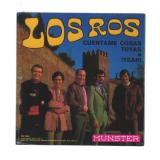
'Cuéntame cosas tuyas' is perfect pop with flawless arrangements; it's crossed over into the international soul scene, made its way into playlists by DJs like Gilles Peterson, and was even covered in the early 2000s by La Costa Brava-proof of its appeal among an ever-broader audience. On the B-side you'll find the superb '¡Yeah!', packed with soul and funk flair. Two irresistible tracks that, after years out of print, we're putting back into circulation with the reissue of this essential record-one that's practically impossible to find in its original pressing. Few late-'60s Spanish pop songs have reached the status that 'Cuéntame cosas tuyas' has earned decades after its original 1969 release. The single, put out by Barcelona label Belter, has become one of the most coveted gems for collectors of '60s sounds. 'Cuéntame cosas tuyas' is perfect pop with flawless arrangements-a sure-fire dance-floor killer, right up there with Elia y Elizabeth's 'Alegría' in any imaginary ranking of Spanish-language pop anthems. Although originally from Valencia, Los Ros (formerly Los 4 Ros) built their career in Palma de Mallorca and released nearly twenty singles on Belter. Between 1968 and 1970, their friendly, commercial pop started weaving in bolder elements drawn from soul, funk, and even psychedelia-something you can also hear on the B-side of this very single, featuring the superb '¡Yeah!'
Yeong Die would typically be described as DJ, musician, or “experimental” composer, but in reality she is a sculptor. Between the rapidly disintegrating boundaries of composition and sound design, her work employs a hunting and gathering of intangible material—bursts of memory, fragments of liminal space, interstitial banalities—materializing as boundless expressions that evade genre constructs. As an integral presence among Seoul’s most forward thinking sound artists, Yeong is in a constant uphill battle rejecting the reverence that so quickly creeps in and infects contemporary craft, that relegates even the most audacious attempts of her peers to pigeon-hole pastiche. Given this style-agnostic starting line, her ESP Institute debut 'Uncapturable' exudes non-urgency, an unfettered pace that allows breathing room, affording the listener freedom to mentally isolate and explore elements without fear of missing a “bigger picture.” There is a warm and welcoming feeling that invites repetitive, even studied listening. While half the work is somewhat singular in presentation—'1km', 'Like Your Flaw', or 'Burnt'—there are moments of meticulous complexity—'Morning Rum Punch' (featuring vocals by Cifika) and 'Did' (featuring a smattering of spoken words by icecream drum), both underground Korean peer artists. These moments feel more of like an acute focus on execution that compliments the overall shape of the album, rather than a dynamic contrast. Cifika’s vocals, in particular, command the listener’s periphery in a playful and refreshing way, exaggerating negative space and in-between moments that not only the paint an arresting stereo field but a remarkable sense of depth, not easily achieved without production sorcery. It is, without a doubt, these beautiful fleeting moments that we describe as 'Uncapturable'.
- A1: E Mto Fod3 E Mnto Mete Feat Mc Barbi & Mc India
- A2: Piquezin Do Nelhe Feat Dj Nelhe
- A3: Ta Me Machucando Feat Mc Dibizinha & Me Xangai
- A4: Ele Vai Bota Feat Mc Dl 22
- A5: Xota Piska Feat Wr Original & Mc Pl Alves
- A6: Zn Da Porra Feat Mc Kitinho, Mc Vk Da Vs, & Mc Luis
- B1: Respira Feat Mc Lean
- B2: Sei Q Tu Gosta Feat Dj Leal Original & Mc Vuk Vuk
- B3: Cuidado Bandida Feat Meno Saaint & Mc Torugo
- B4: Qvts Feat Mc Zkw
- B5: Vem Tacando Feat Mc Vk Da Vs & Mc Mr Bim
- B6: No Grelinho (Brothers Na Brisa) Feat Dj Gomes & Mc Vuk Vuk
Born to Dominican and Brazilian parents, xavi grew up bouncing from place to place, picking up inspiration wherever he landed. His first love was baile funk, but he was raised on classic hip-hop, eventually notching up production and songwriting credits for Vince Staples, Demi Lovato and Ariana Grande. But the major label life wasn’t giving; sick of the industry, he headed back to São Paulo to soak up the atmosphere and connect with artists on the ground. Before long, he started uploading quickfire bangers to SoundCloud – at this point there are over 350 of them on his feed – an »evolutionary playlist« in his own words, bursting with ideas.
»balança e paixão« is his debut release, proper, a 12-cut snapshot of chaotic, trailblazing, turbulent genius – bending thrashed rhythms into relentless vocal chops from a laundry list of young brazillian MCs. Built on ear-zizzing »tuin« hits and razor’s edge cuts, he creates hypnotic ripples that wedge themselves between São Paulo’s weirdo fringe (artists like JLZ and Iguana) and the percussive, MC-heavy sound of funk ritmado, one of the contemporary scene’s most vital and recognisable strains. Crucially, you can hear a Photek-like approach to space in his productions too, filling the gaps with metallic clangs to lend his rhythms their own unique dimension. The flipside takes it slower, deeper. On »sei q tu gosta« (I know you like it), DJ Leal Original and MC Vuk Vuk’s voices are transformed into ghosted sibilances next to xavi’s sonar pings and woodblock hits with an almost avant-dancehall slant, like some choice Equiknoxx dub, while on »cuidado bandida« (be careful bandit), he deploys bone-rattling trills that bite down on atmospherics that wouldn’t be out of place on Akira Yamaoka’s »Silent Hill« OST.
As the so-called “Latin boom” becomes a new anchor for hard-swung club sounds, it is crucial to recognize that the region’s musical culture extends far beyond dembow edits and the pop-trap hybrids that have edged into the mainstream. Monterrey-born, New York City-based producer and DJ Delia Beatriz, aka Debit, returns to NAAFI with Potpourri, a generous and kinetic collection of dancefloor-oriented tracks filled with percussive flourishes, squelching 303 basslines, and rhythmic mutations that actively challenge the status quo. Rather than rebuilding “Latin sounds” as a fixed category, the album rethinks their internal logic, tracing the evolution of techno and house in cities like Detroit, Chicago, and New York alongside parallel innovations emerging in Mexico, Colombia, and across the wider Latin world. Positioned on the bridge between Mexico and the US, Potpourri does not seek synthesis as a gesture of smooth fusion, but as a site of disruption.
The album can be heard as a loose follow-up to System (2018), Debit’s NAAFI-released EP that expanded the sonic potential of tribal guarachero through triplet-driven rhythms, industrial pressure, and noisy reconstruction. Potpourri retains guaracha as a structural backbone while drawing further influence from veteran DJ and producer Javier Estrada—who also appeared on System—and particularly from his fast-paced, nonlinear style of mixing. That approach becomes a formal principle here: canonical structures are dismantled, repetition is avoided, and tracks evolve without sacrificing propulsion. Coming after the introspective temporal inquiry of Desaceleradas and the speculative historical acoustics of The Long Count, Potpourri arrives as a deliberate surge of energy. As Beatriz explains: “It’s a manifesto for rethinking form and sound in dance music. By stepping outside traditional structures and embracing the potpourri approach, I’m creating new meaning with familiar rhythms. I’ve also been applying this to my DJ sets, using it as a tool to break free from established norms and explore new narrative possibilities.”
Years in the making, Potpourri imagines an alternate timeline in which the psychedelic squelch of acid—echoing pioneers such as DJ Pierre and Mr. Fingers—and the dub-inflected atmospheres of Basic Channel entered into direct and sustained contact with Latin American club mutations. Those references are legible, but never merely quoted. Instead, they are folded into syncopated hi-hats, overdriven kicks, and unstable arrangements that absorb both the intensity of the parties Beatriz remembers from Monterrey and the abrasive edge she sharpened at DIY noise shows in New England. The result is unmistakably a dancefloor record—heard in tracks as forceful as “Pero like” and the peak-time pressure of “tuvesuerte”—but one saturated with grotesque, psychedelic atmospheres, where sounds dissolve into hoarse croaks, acidic smears, and anxiety-inducing growls. Here, the rave becomes not simply a site of release, but a platform for navigating identity, hybridity, and artistic formation across borders. Moving through peaks and ruptures, Potpourri reveals a party narrative that is not linear but multidimensional.
By folding together the fluidity of DJ culture, the experimental charge of acid, and the rhythmic vitality of guaracha, Potpourri proposes a space of formal and political innovation within Latin America’s rapidly expanding electronic music landscape. It is a record that refuses containment, pushing against the templates through which Latin electronic music is often consumed, and insisting instead on friction, instability, and transformation as generative conditions for the dancefloor.
Melbourne / Naarm stronghold Butter Sessionsclock 15 years in the game with a trilogy of 12"s, sustaining their uncompromising streak of peak-form electronics. The family-style V/A binds friends, collaborators, former studio neighbours and DJ booth allies, capturing a label that exists as community as much as catalogue.
Disc Two lifts off with recurring contributor Rory McPike's first label outing as Rings Around Saturn, a blissed-out cosmic floater skimming the periphery. Booked in the early days of the label's formative Mania residency, Japanese don Gonno twists freestyle, techno and breaks into pure ecstasy, before the unerringly bold Jennifer Loveless spikes the punch with a hallucinatory mix of drums, disembodied voice and jazz club keys.
On the flip, Boorloo's Guy Contact rolls out Dance In The Grey, a shadowy prog churn pitched between new-romantic vocal sheen and EBM muscle, with Kate Miller completely rewiring the script on Sub Series E - a masterfully minimal, double-time meditation. suki presents his Sniper1 alias to close with a demonic body-jacking groove loaded for the system.
Whether taken alone or folded into the three-disc triptych, each instalment stands as a bag-ready constant, charged with Butter Sessions' curatorial finesse.
- A1: From Loch Raven To Fells Point
- A2: Calliope Wailer
- A3: Tightroping
- B1: Critical Masses
- B2: Reservoir Drop > The Summer Song
Jeffrey Alexander and the Heavy Lidders return with their best album yet, and a UK tour this August. Press by Silver PR
‘’On the alternate timeline where the Meat Puppets inherited the bulk of the Grateful Dead’s tourheads when Jerry Garcia died in 1995, none of this would be necessary, because Jeffrey Alexander and the Heavy Lidders are a household name for evolving their own musical space that overlays dusty folk, cosmic jazz, deep psych, free improv, and even (gasp!) indie rock, building an audience that ranges from open-eared curiosity seekers to deep committed music weirdos that’s also yielded the Heavy Lidders, an infamous sub-cult of concert tapers that you’re already sick of hearing about. A lot of other things are better over on that timeline, too.
But in this consensus reality (and probably the other one, too), Liquid Donnon catches the Lidders at their heaviest, “heavy” in the Lidderverse being far from a monolithic musical idea. There’s heavy like the album-opening “From Loch Raven to Fells Point,” one of several tracks with elegant and gnarled conversational jams featuring the core Lidders lineup of Alexander alongside guitarist Drew Gardner and bassist Jesse Sheppard (both of Elkhorn) and drummer Scott Verrastro. But there’s heavy, too, like “Calliope Walker” and “Tightroping,” featuring Gardner shifted to dream-space vibraphone, the former with saxophonist Tacuma Bradley, the latter with Christina Carter of Texas noise-psych legends Charalambides on veil-crossing wordless vocals, her first collaboration with Alexander in some 20 years.
But then there’s also heavy like the cover photo of Alexander’s late friend and album namesake Donnon, taken at a Dead show at Rich Stadium in Buffalo in 1989, a spirit threading through the songs and weaving unexpectedly into Alexander’s life decades later, emerging especially when Alexander passed through a near-death experience of his own. But, taken together, the different heavies of Liquid Donnon add up into a state of musical grace, where all the Heavy Lidders from all the universes come together as one. Just, like, imagine.
Convened in 2019 on Alexander’s relocation back to his native east coast, the Heavy Lidders are the latest hard-touring expression for the guitarist’s music, joining a vast and tangled discography (and tape list) that includes the beloved long-running west coast Dire Wolves Just Exactly Perfect Sisters Band and, before them, the Iditarod and Black Forest/Black Sea, as well as a bushel of solo play-all-the-instruments projects, a stint with Jackie-O Motherfucker, sessions with Kemialliset Ystävät and Avarus and others, and you’ll have to keep digging for the rest.
And while it’s not hard to find tapers at Lidders gigs (and they encourage you to be one), or to track themes and songs over Alexander’s many live releases, Liquid Donnon makes a new primary text, the original versions of six new pieces for the repertoire. The album closes with a devastating pairing of “Reservoir Drop” into “The Summer Song,” floating into a duo between Alexander’s guitar and Carter’s voice. Catch a half-dozen Lidders shows this summer, and you might not ever catch them playing it like that again, but you just might open the doorway back to that better place." - Jesse Jarnow (writer, WFMU DJ, producer and host of The Good Ol’ Grateful Deadcast)
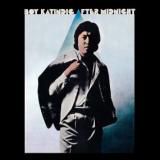
Jazz-fusion, disco-funk, Latin jazz and batucada rhythms get the Filipino treatment onAfter Midnight, the sublime second album from keyboardist Boy Katindig. Originally released in 1980, After Midnight draws heavy influence from soul and funk contemporaries in the US as well as Latin America, in particular the famed Brazilian percussionist Paulinho da Costa.
It’s a testament to his musical prowess that Katindig weaves effortlessly between styles and tempos. His reverence for Paulinho da Costa extends far, with covers of several songs from the latter’s 1979 Happy People album. This includes slow-burner ‘Déjà Vu’ written by Isaac Hayes originally for Dionne Warwick; on the Filipino instrumental version, local legends Jun Regalado and Roger Herrera (from Regalado’s ‘Pinoy Funk’ single) are reunited on drums and bass respectively.
But Katindig’s original compositions hold just as much weight and unique personality: title track ‘After Midnight’ opens with a sultry funk serenade reminiscent of The Isley Brothers, and quickly transforms into a catchy, blistering, saxophone chorus that brims with swagger. Hidden B-side gem ‘Got The Need’ is an uptempo tribute to batucada that would not be out of place in a jazzy house set, and boasts increasingly elaborate and psychedelic solos from Katindig on keys and Ben Concepcion on soprano sax.
Meanwhile, ‘Love Till the End of Time’ is a masterclass in instrumental disco funk, penned by the prolific Greg Phillanganes who at that same time was writing for many of the greats including Chaka Khan, George Benson, Stevie Wonder, The Jacksons and Cheryl Lynn.
This album is lovingly reissued by Sama Sama Records, a boutique label from DJ and collector Norsicaa, who ran the esteemed Soundway Records for 8 years and released the compilation Ayo Ke Disco in late 2024.
- A1: Independent Woman (Part 1)
- B1: Independent Woman (Part 2)
Back on Celestial Echo Records with a true modern soul classic — Jan Jones “Independent Woman”, finally given the treatment it deserves.
A record that’s been circulating in DJ sets and collector circles for years, often via bootlegged pressings as the originals are incredibly rare, this is the first fully licensed reissue, presented properly and with both sides intact - something the bootleggers didn’t do.
A-side Part 1 delivers the track in its purest form — tight, uplifting, and driven by that unmistakable modern soul groove. On the flip, Part 2 stretches things out into a longer, more open version, letting the arrangement breathe and giving the dancefloor the 6 minutes it deserves.
Musically, it sits right in that sweet spot for us — rich vocals, warm keys, and a rhythm section that just grooves. It’s one of the ultimate modern soul tracks.
Licensed officially, as always. Celestial Echo is here to put proper soul records back into circulation — respectfully cut, properly pressed, and ready to play.
Concrete City's two residents re-emerge with 'Serious Coin', the second long-player from label head DJ Superherb and long-time collaborator Ten Years Lost. Where their 2023 debut basked in heat-hazed hedonism, this follow-up sharpens the focus. At times deeper, and consistently drawing from the pair's shared language, Serious Coin is an unmissable entry in the Full Dose catalogue.
Across eight tracks, the duo lean further into their soulful instincts, balancing weighty low-end pressure with a distinctly human emotional warmth. Vocoded vocals, coalescing with dungeon synths, being carried by heavily swung rhythms represent a new strand in the pair's musical DNA.
The album captures the stillness of early morning city streets, yet still manages to push rhythmic elements forward. Barely-present samples and subtly detuned synths give the tracks a lived-in feel, as if they’ve already soundtracked a hundred late nights before reaching your speakers.
Like the first, this album has one foot firmly in dancefloor utility and the other in headphone introspection. Don't miss this dustier and deeper evolution to the Full Dose sound!
NYC's Afro-Latin house player Doug Gomez, who was also half of the defunct Drrtyhaz, leans into club weight and musical detail on Signals 3, a confident new drop built on persuasive rhythms. 'The Space Between Us' introduces his vocal production with Fe Malefiz, who has a sultry, stylised tone that drifts between deep house and Afro-soul with great control. 'The Red Room' shifts gears into peak-time territory with a groove shaped by late-night exchanges with DJ Loka. Closing cut 'To Do Good Na Em Dem Pay' widens the palette further, pulling from Afrobeat's restless rhythmic energy and layering in some bold and brassy horns.
Whatever The Reflex is on at the moment, we want some - he's rolling out the jams left, right and centre across several different styles. For this drop, he has revisited his own revision: ten years after first dropping this and without countless plays from legends like Kerri Chandler, he retouches a disco-house fusion classic that rides big vocal hooks and smooth, breezy grooves. On the B-side he takes aim at another soulful gem and go-to DJ favourite with real invention. 'Nobody' has persuasive drum breaks and slithering synths that shimmer like heat waves and allow the acing, singalong vocal room to work its magic up top.
Kanyon (John) is a NYC based producer/dj who has cut his teeth in the underground US techno scene through raw live sets, and dynamic djing. Keeping the quality high with his signature no-bs style of production and performing, he has played live supporting legends like Steve Poindexter, DJ Hyperactive, and Francois K. His productions have garnered support from Ben Sims, Akua, Ron Like Hell, Kush Jones and many others.
The Duplex EP is a split record featuring John's house alias DJ John Brooklyn on the A side (A1, A2, locked groove) & techno alias Kanyon on the B side (B1, B2). Exploring NY house and trippy, dubby minimal techno respectively, Duplex EP is a heady start to 2026.
Absolutely killer 11 track double pack of raw techno missiles from Bari, Italy's hero, DJ Plant Texture. Ultimate club gear that will do total damage anytime, anywhere. No nonsense, committed to the art of music..no false idol worship...just blistering cuts made to mix and send em' into a frenzy. Big tip!
This release represents the musical union of two friends who, despite the distance, have always found in music the place where they stay close. This EP is the proof that when the connection is real, sound becomes common ground - a space to share moments, ideas, and energy beyond geography.
Both artists have been devoted to physical formats from the very beginning, especially vinyl. They have always been record collectors, and that passion shapes the intention behind this project: a work conceived with the depth, respect, and materiality that only vinyl can convey. This EP is more than music; it is a cultural object that preserves a way of understanding techno.
Creatively, Truncate and Pushmann set out to merge their sonic identities. The result is an EP charged with strength, built for the dancefloor, and defined by a clear aesthetic: raw energy, firm rhythm, and a contemporary reading of hardgroove and jackin. These are intense, direct tracks - the kind that emerge when two visions complement each other effortlessly.
In a scene often driven by speed and overstimulation, this release stands out for its authenticity. It is fast, funky techno, yes, but crafted with soul, intention, and emotional depth. It does not chase trends; it delivers groove, substance, and a recognisable sonic character from the first bar.
Inspired by rave culture and the pure roots of hardgroove, this EP offers a journey that blends functionality, sensitivity, and force. A project that reinforces LILA's philosophy: preserving the essence of techno and supporting those who create it with passion.