Crystal Green Coloured Repress !
Recut & Represed!
As always Kling Klong gives space for new artists and supports upcoming talents. This time Martin Eyerer & Rainer Weichhold had no doubts signing this debut release from Stuttgart's dj/producer Ninetoes as 'Finder' is obviously a massive stand-out track which has the words 'summer hit' written all over it. So it was just easy to convince Leon and Re-UP from Italy to do the remixes and help to make this release even more oustanding.
Support from:
Matthias Tanzmann, Loco Dice, Adam Beyer, Nick Curly, Butch, Riva Starr, Popof, Kaiserdisco
DJ Feedbacks:
Adam Beyer: like the leon mix!
Loco Dice: Will try. Please send me the WAV. Thanks
Nick Curly: schöner release....leon remix gefällt mir am besten, danke!
Matthias Tanzmann: woher kenne ich denn die Melodie Coole Tracks auf jeden Fall.
Davide Squillace: Nice one..
Monika Kruse: der leon remix rockt.
Tiefschwarz (Ali): nice nice :) re-up rmx is my favorite.
Butch: leon rocks
Riva Starr: leon rmx for me thx
Claptone: supersonniger tune das original
Ramon Tapia: Leon mix is cewl !
Gregor Tresher: Leon mix sounds cool.
Chus: Leon and Re-Up mixes for me.
Popof: Great remix from re up ! love it
Kaiserdisco: Original mix is nice, will try it out.
Wally Lopez: Leon remix are huge!! Support
Shinedoe: I'll try it out.
Search:dj roc
As the tenth candle flickers atop the torta alla panna, Archeo Recordings play the Uno reverse card, breaking with tradition to give us a gift in celebration of its birthday: the first in a series of exquisite EPs on which the label's favourite contemporaries pay homage to past masters. Each re-polished gem is plucked either directly from the beatific back catalogue of the fine Florentine label or is at least Archeo-adjacent, perhaps a sign of future wonders to come. Like a musical version of Janus, who can be found at the heart of Bertoldo di Giovanni's frieze in the Medici villa, Archeo Recordings will continue to look forwards and backwards to provide sublime sounds for us all.
Pepe Maina officially joined the Archeo family in 2019 with the much-needed reissue of his 1979 masterpiece Scerizza (AR015), but his astounding music has been a constant companion to label head Manu for much longer. An inter-dimensional, multi-instrumental maverick, Maina weaves the frayed edges of prog rock, new age, organic jazz and global minimalism into a shimmering tapestry all of his own. The results are spread across fifty years and almost as many albums, largely self-released and always absolutely untarnished by commercial concerns.
Based in a small village in the hills of Brianza, just north of Milan, Maina translates the beauty of his surroundings into transformative tone poems, and the folkloric fusion of "The Infinite", originally released on his 2014 CD Tales From The Hill, is the perfect example of his practice. It opens with a recitation of Giacomo Leopardi's 1825s poem "L'Infinito" by famed Italian actor Vittorio Gassman. A leading figure in the romantic movement, Leopardi explores the idea of time and space within the natural world, and the peace that comes with an appreciation of the immensity of eternity. Manu, longtime digger and now a burgeoning producer, expands upon the original with tribal percussion, chirping electronics and a spheric bassline, folding Maina's elegant strings and gossamer pads into a new arrangement suited for a slow dance under the stars.
Unless you had a well-trained ear tuned to Italy's avant-jazz scene, chances are your first encounter with innovative flautist Roberto Aglieri came via the 2017 Archeo reissue of hisalmost untraceable LP Ragapadani (AR011). It's a true testament to Manu's digging credentials that he snatched this masterpiece out of the esoteric atmosphere and brought it attention it so richly deserved. A delicate union of digital synthesis and versatile flute - be it soft and silvery or
brilliant and clear - the 1987 album was a shapeshifting masterpiece, replaying scenes from Virgil, Verdi, Visconti and Pasolini with a neon glow. Quintessentially Italian, but uncanny and previously unimagined - Penthouse and Portico perhaps. Powered by a percolating prototechno sequence, cascading keys, hallucinogenic vocal snippets and a variety of tonal timbres from Roberto's reed, "Danza N. 1" long deserved the praise reserved for Jean-Luc Ponty's pinnacle, so many thanks to Manu for our collective introduction. The tall task of reinterpreting this particular paragon falls to Perugian polymath Daniele Tomassini AKA Feel Fly, whose peerless skills as both producer and musician have delighted DJs and dancers alike. Hot on the heels of his diverse and definitive remixes of Tony Esposito for AR027, Daniele delivers a radical rework of "Danza N. 1" perfect for both day rave sunshine and full moon party alike. Enhanced by snapping breaks and a rattling kick, the bassline gurgle emerges as a progressive powerhouse, laying the foundation for the trilling flute and circular keys to cast a psychedelic spell. As the slow-Goa revival picks up pace, this one is way ahead of the pack.
Archeo take us all the way back to the start of its story here - well almost. Though it bore the stamp AR001 (2015), this Radio Band reissue actually hit shelves months after Tony Esposito's "Je-Na' / Pagaia"; a false start perhaps but a true classic all the same. Radio Band were a group of DJs from Florence who all sailed the airways of Radio Fantasy in 1984 and whose one and only release was this super groovy slice of Italo-boogie. Following the example of Milanese DJs Band of Jocks but far surpassing their formulaic funk fizzle, Radio Band employed an intergalactic bassline, cosmic keys and that undeniably Italian style of rapping to deliver a sophisticated party-starter which even found its way to disco deity Ron Hardy. Back to the here and now, and if you've found yourself pumping an ecstatic fist to a supercharged Italian epic of late, chances are its from the mind of the mysterious Radiomarc. Operating on the ascendent Popcorn Groove imprint, this shadowy figure steers his country's lost classics into peaktime territories, finding a sweet spot between late Italo-disco, early Italo-house and contemporary cool. Pushing the tempo with a club-ready 4/4, setting the sequencer to stun and supplementing the original melodies with a series of synth riffs, the mystery producer send this one into orbit. Radio Band - Radio Rap - Radiomarc, the circle is complete.
Few have done more to develop cross-cultural musical exchange than Futuro Antico. A collaborative venture from musician, archeologist and ethnomusicologist Walter Maioli, keyboardist and tonal theoretician Riccardo Sinigaglia and multi-disciplinary artist and composer Gabin Dabiré, Futuro Antico formed in Milan in 1979, combining ancient international folkloric traditions with otherworldly electronics. The result is an arresting melange of Mediterranean, African and Asian instrumentation, mimicked by esoteric synth tones and hypnotic minimalism, which the group perfected on their acclaimed 1990 LP Dai Primitivi All'Elettronica. The meditative and transportive "Pan Tuning" belongs to their largely overlooked 2005 CD only release Intonazioni Archetipe, and has been amongst Manu's most loved tracks from the first moment he heard it. Who else is better placed to reshape this evocative opus into an immersive, transcendental dance floor journey than label favourites Mushrooms Project? The duo sows the original elements into a sprawling fifteen minute fusion of séance and science, at times propulsive with a ritualist rhythm of tuned percussion and crunching drum machine at others drifting off into ethereal ambience. Mushrooms Project continue to push the boundaries of the Afro-cosmic style, and this remix marks a new zenith.
Inedited tracks recorded at Kracklite Studio (Alessandria, IT) in 1998, without mistreating any DAW, only Macintosh and midi instruments mixed live.
Urbanatribù is a project born in 1994 by Flavio Gemma and Massimiliano Bocchio, both based in Alessandria (IT).
They started producing for the Minus Habens/Disturbance label in 1994/95, debuting in the compilation "Outer Space Communications V.3.01-T1". Their first self-titled album was released immediately after and in '96 "The Mix" with a remix by Francesco Zappalà. In the same year they were contacted by Digital Boy, releasing their second CD "Mondotondo". Also for D-Boy Records, two E.P.s were released under the name "Biomontana", dedicated only to DJs and fans of the goa genre. Since '97 they have been under SONY Edizioni, doing many gigs in that period in the best Italian clubs, including: Maffia, Lustando, Casalone, Leoncavallo, and remixing, together with Roberto Vernetti of Aereoplanitaliani, Elisa's first success "Labyrinth".
They continue to work on new unreleased songs, moving with Vernetti's mobile studio from London to Bologna with Maurizio Liguori of Technogod. In that period a song is released for Easy Tempo together with DJ Lele Sacchi. Their tour continues in 2001 performing live in historic clubs such as Cocoricó and Jaisse with their new project "Selenita", which sees them together with Francesco Zappalà. They also participated with him in "Planet Rock", RAI radio program with Luca De Gennaro.
Here at Mr Bongo we have been inundated with people asking us to reissue this release. Ana Frango Elétrico's petit cult classic masterpiece 'Little Electric Chicken Heart' from 2019, which was only ever released on vinyl and CD in Brazil and Japan, has fast become a collector's item.
Well received by fans, DJs, and reviewers on release, The Needle Drop expressed "Ana Frango Elétrico's authentically vintage fusion of chamber pop, rock, samba and jazz is a real blast!" listing it as one of its Top 50 Albums of 2019. The album's reputation has been slowly building ever since, gaining a Latin Grammy nomination in 2020, and now solidly cementing itself as a gem of contemporary Brazilian music.
Across the albums nine tracks, Ana blends elements and influences from MPB, Tropicália, indie rock, punk and pop, forging them together with a sumptuous dose of her signature style. The finesse of 'Saudade' kicks off the LP, one of Ana's most known tracks to a non-Brazilian audience. A sublime opener, beginning with a spellbinding piano solo before transcending into a beautiful dream-laden slice of warmth, complete with luscious jazzy horns and deft vocal delivery. ‘Promessa e previsões’ follows, the only track on the album not to be written by Ana, instead being penned by Chico França. It’s a swelling and sweeping twilight groover, building and breaking across absorbing peaks.
Other highlights on the album include the anthemic 'Chocolate', which was a firm favourite with a packed sing-along crowd when we heard Ana perform it live. Elsewhere, 'Se No Cinema' hits with its quirky allure, charm and catchy melodies before transforming into a carnival spirit.
Tapping into the richness of Brazil’s new wave of musical energy, the album also includes a heavyweight lineup of collaborations with artists such as Dora Morelenbaum (Bala Desejo), Tim Bernardes, Antonio Neves and Guilherme Lirio to name but a few.
A short, sweet and refreshing record, that leaves nothing to waste, marrying playful ideas with poignant themes. 'Little Electric Chicken Heart' is a future classic and will beguile fans of ‘70s Brazilian recordings, Gal Costa, Mac DeMarco, Stereolab, Superorganism, Caetano Veloso and more.
- A1: Vajolet Feat Lukas Lauermann, Wolfgang Pfistermüller & Flip Philipp
- A2: Autostrada Del Brennero Feat Diggory Kenrick
- A3: Latzfonser Kreuz Feat Mamadou Diabate & Hamidou Koita
- A4: Lago Di Garda Feat Roger Robinson
- A5: Alfa Romeo 145 Feat Kwame Yeboah
- B1: Feltuner Hütte Feat Osman Murat Ertel
- B2: Avrupa Köprüsü Feat Osman Murat Ertel
- B3: Europabrücke Feat Susanna Gartmayer
- B4: Ancient Atoll Feat Reinhilde Gamper, Martin Mallaun & Flip Philipp
Cassette[14,92 €]
Ulrich Troyer has been producing music now solidly for over twenty years within a largely genre free framework, but whilst navigating forms such as avant-garde, techno, leftfield, field recording, electronica, glitch and ambient it is the aesthetics of dub that guide his creative direction. Not really recognisable in an orthodox form as remixed versions of roots reggae songs but in the way sonics are manipulated with space, the application and layering of delay, reverb and echo that fixes his output well within the scope of what might be called futurist dub.
The nearest comparisons to his new album TRANSIT TRIBE can only be established by a synthesis of some of the more adventurous explorations in modern music such as African Head Charge, Jon Hassell, Pole (Stefan Betke), Bill Laswell or even Miles Davis; featuring a diverse selection of artists and friends not only from Vienna and environs but also from around the world, sounds are not so much fused but allowed to float along the continuous flowing tide of warm waves of bass.
Rather than to allow the names of Ulrich Troyer's collaborators be merely listed in the album credits, what they bring to this joyful affair needs to be outlined, albeit briefly: Co-producer credits go to Osman Murat Ertel from Istanbul, who employed a variation on the old foolproof Nick Lowe method for checking out the impact quality of his own sound productions by playing tracks through his car sound system speakers!
Murat is a member of the electro-psych-folk group Baba Zula where he plays electric saz, oscillators and theremin and played a key part in the creative development of the album. Mamadou Diabate, the balafon master originally from Burkina Faso and now resident in Vienna, has developed his own unique technique of playing solos that replicate the sound of three instruments playing in unison; however the multi-talented Mamadou is engaged here on singing and playing the talking drum. From South Tyrol Reinhilde Gamper is a member of the experimental trio Greifer who are bringing the sound of the zither into the twenty-first century using new playing techniques and electronic gadgets. Susanna Gartmayer is an Austrian composer and bass clarinetist specialising in improv and multimedia sound research. Diggory Kenrick has been engaged with creating new dub fusions and also re-energising classic rocksteady and roots reggae classics, renowned for his interventions on flute. Didi Kern is an electronic dance musician and drummer from Vienna with a focus on free improvised music. Hamidou Koita, a singer and multi-instrumentalist, is from a traditional Griot family in Burkina Faso but now resident in Vienna and a regular musical partner of Mamadou Diabate playing drums and calabash. Austrian Lukas Lauermann is both a studio and live musician playing cello, also working on electronic sound design and writing string arrangements. He has recorded extensively and appeared on stage with both Mark Lanegan and Hans-Joachim Roedelius. Martin Mallaun is a Tyrol-born specialist in both the development of the zither in modern music and also as a researcher in the effects of climate change on the vegetation of Alpine ecosystems. After studying classical percussion Flip Philipp is now a jazz vibraphone player and member of the Vienna Symphony Orchestra. Wolfgang Pfistermüller is a member of the Vienna Trombone Quartet and the developer of the incredible bass-trombone Aurora with its uniquely warm and resonant sound. Roger Robinson is a renowned British poet, winner of many contemporary poetry prizes and member of the experimental music group King Midas Sound. Kwame Yeboah is a Ghanaian born UK based keyboard wizard who tours regularly with Yusuf / Cat Stevens, Ms. Dynamite and Pat Thomas.
So contained on the album is an astonishing mix of musicians and instruments: sounds of cowbells recorded in the South Tyrolean alps processed by modular synthesizers and heavy analogue bass synths combined with instruments such as zither, bass-zither, electro saz, flute, talking drum, trombone, cello, marimba, djembe, contra-alto clarinet, Farfisa - all bound together by organic live-drums and dub effects.
Michael Mayer albums don’t come round too often, which is one of many reasons why his fourth collection, The Floor Is Lava, is a genuine event. It’s been eight years since his last one, the collaborative & released on !K7; its predecessors, Mantasy (2012) and Touch (2004), took their sweet time, too. It’s no real surprise, given the many hats Mayer wears – globetrotting DJ, revered remixer, inveterate collaborator, and boss of both Kompakt and Imara – that his solo productions are relatively sparing. But this also speaks to their quality: Mayer’s name on a record sleeve is a sign of quality, of music that’s both looking to the future and calling back to the past, that balances the imperatives of the dancefloor and the loungeroom, that’s as exploratory as it is functional.
On The Floor Is Lava, Mayer seems to be taking the temperature of both the music that surrounds him (past and present), and the ides of the industry he works within. There’s that iconic album title, for a start. “The album’s mindset,” he says, reflecting on those four words together. For Mayer, it’s partly a critique of the way the industry boxes in both producer and listener, focuses them on genre, on market, on the next new thing: “Being a free minded spirit that transcends genres has become an uphill battle.” A battle worth fighting, though, and with The Floor Is Lava, the result is an album that’s varied, quixotic, idiosyncratic, charming, and deeply, addictively listenable.
Throughout, Mayer finds thrills in exploration and juxtaposition, allowing unexpected things to blossom and giving them their life, their platform, throwing the listener exciting curveballs: “It’s a DJ album by a DJ that’s easily bored.” Either easily bored, or endlessly curious, The Floor Is Lava is rich with ideas. It opens with “The Problem”, which looks back to look forward, embracing the rickety way early house productions threw samples together with gleeful abandon. Mayer mentions Pal Joey, and the scene around Rockers Hi-Fi and their Different Drummer imprint, as reference points, and you can hear that freewheeling spirit throughout.
It’s followed by “Vagus”, a slinky, sensual minimal house number that Mayer describes as his “musical catnip”. The flow of these two opening cuts defines the dynamic of The Floor Is Lava, defining the dialectical drive at its core: thesis and antithesis leads to synthesis, but with a welcome prickliness that means you’re always excited, always engaged. It’s also productive in the way it derives energy from rubbing genres and sounds against each other, in unexpected ways, for maximum musical frisson. There’s psychedelic techno on “Feuerstuhl”, more minimal techno with “Ardor” (Mayer mentions ‘Immer 1’ era 90s minimal as inspiration), slippery, Shepard-tone breakbeat through “Sycophant”, a lovely, lush vocal turn on the poppy “The Solution”.
The album closes with the melancholy “Süßer Schlaf”, where Mayer sets a poem by Goethe to one of his most haunted, moving pieces of music yet, in abstract tribute to a lost friend. It’s one of the most affecting moments on The Floor Is Lava. There’s also an update on 2020’s wild Brainwave Technology EP, with the surrealist glitter-stomp of “Brainwave 2.0” (check out those handclaps!),where Mayer’s thinking about the socio-political precipice of the now: “I’m reading with great interest about this whole complex of how humanity is about to cross so many lines and the implications that the resulting financial and educational inequality will bring.”
That’s The Floor Is Lava: then and now, brainwaves and nerve structures, problems and solutions, genres on fire; the real, the unreal, and the surreal. An album for the easily bored and the endlessly curious. Mayer has the last word, telling us all you need to know about the album’s spirit: “Burning for the cause, being zealous, being addicted to the heat of the night, the exuberant powers of music.”
Michael Mayer veröffentlicht nicht oft Alben, was einer von vielen Gründen ist, warum ‘The Floor Is Lava’ ein echtes Ereignis ist. Es sind acht Jahre vergangen seit seinem letzten Werk, dem Kollaborationsalbum &, das auf !K7 erschien; seine Vorgänger, Mantasy (2012) und Touch (2004), ließen ebenfalls auf sich warten. Es überrascht nicht wirklich, da Mayer viele Rollen gleichzeitig erfüllt – weltreisender DJ, vielbeschäftigter Remixer, unermüdlicher Kollaborateur und Chef von sowohl Kompakt als auch Imara – weshalb seine Solo-Produktionen eher sparsam ausfallen. Doch das spricht auch für deren Qualität: Ein Album mit Mayers Namen auf dem Cover steht für Qualität, für Musik, die sowohl in die Zukunft blickt als auch auf die Vergangenheit verweist, die das Gleichgewicht zwischen den Anforderungen des Dancefloors und des Wohnzimmers hält, die genauso erforschend wie funktional ist.
Auf The Floor Is Lava scheint Mayer sowohl die Musik um ihn herum (vergangen und gegenwärtig) als auch die Strömungen der Branche, in der er arbeitet, zu reflektieren. Da wäre zunächst der ikonische Albumtitel. „Die Grundhaltung des Albums“, sagt er, drückt sich in diesen vier Worte aus. Für Mayer ist es teilweise eine Kritik daran, wie die Industrie sowohl Produzenten als auch Hörer in Schubladen steckt, sie auf Genres, auf den Markt und auf das nächste große Ding fokussiert: „Ein freier Geist zu sein, der Genres überschreitet, ist zu einem steinigen Weg geworden.“ Ein Kampf, der sich jedoch lohnt, und mit The Floor Is Lava ist das Ergebnis ein Album, das vielfältig, eigenwillig, charmant und tiefsinnig, aber auch süchtig machend ist.
Im gesamten Album findet Mayer Freude an der Erforschung und Gegenüberstellung von Stilen, lässt unerwartete Dinge erblühen und gibt ihnen Raum, überrascht den Hörer mit spannenden Wendungen: „Es ist ein DJ-Album von einem DJ, der sich schnell langweilt.“ Entweder langweilt er sich schnell oder er ist unendlich neugierig – The Floor Is Lava ist reich an Ideen. Es beginnt mit „The Problem“, das in die Vergangenheit blickt, um nach vorne zu schauen, und die wilde Art, wie frühe House-Produktionen Samples mit fröhlicher Unbekümmertheit zusammenwarfen, aufgreift. Mayer nennt Pal Joey und die Szene um Rockers Hi-Fi und ihr Label Different Drummer als Referenzpunkte, und dieser freie Geist zieht sich durch das gesamte Album.
Es folgt „Vagus“, eine sinnliche Minimal-House-Nummer, die Mayer als seine „musikalische Katzenminze“ beschreibt. Der Fluss dieser beiden Eröffnungstracks definiert die Dynamik von The Floor Is Lava und den dialektischen Antrieb im Kern: These und Antithese führen zu einer Synthese, jedoch mit einer willkommenen Schärfe, die dafür sorgt, dass man immer aufgeregt und engagiert bleibt. Zudem gewinnt das Album Energie, indem es Genres und Klänge auf unerwartete Weise aneinanderreibt, um maximalen musikalischen Nervenkitzel zu erzeugen. Es gibt psychedelischen Techno in „Feuerstuhl“, mehr Minimal Techno mit „Ardor“ (Mayer erwähnt ‘Immer’ Ära Minimal als Bezugspunkt), gleitenden Shepard-Ton-Breakbeat in „Sycophant“ und einen lieblichen, üppigen Vocal-Auftritt im poppigen „The Solution“.
Das Album schließt mit dem melancholischen „Süßer Schlaf“, in dem Mayer ein Gedicht von Goethe vertont und eine seiner bisher eindringlichsten und bewegendsten musikalischen Kompositionen schafft, als abstrakten Tribut an eine verschiedene Freundin. Es ist einer der ergreifendsten Momente auf The Floor Is Lava. Ebenfalls gibt es ein Update der wilden Brainwave Technology-EP von 2020, mit dem surrealistischen Glitzer-Stampfer „Brainwave 2.0“ (hör dir diese Handclaps an!), in dem Mayer über den sozio-politischen Abgrund der Gegenwart nachdenkt: „Ich lese mit großem Interesse über diesen ganzen Komplex, wie die Menschheit dabei ist, so viele Grenzen zu überschreiten und welche Auswirkungen die daraus resultierende finanzielle und bildungstechnische Ungleichheit haben wird.“
Das ist The Floor Is Lava: Damals und heute, Gehirnwellen und Nervengeflechte, Probleme und Lösungen, brennende Genres; das Reale, das Unreale und das Surreale. Ein Album für die schnell Gelangweilten und die unendlich Neugierigen. Mayer hat das letzte Wort und sagt uns alles, was wir über den Geist des Albums wissen müssen: „Brennen für die Sache, leidenschaftlich sein, süchtig nach der Hitze der Nacht, den überschwänglichen Kräften der Musik.“
Moodena & Charles Levine drop ‘Badman’ on Rekids. Radio Slave and Cratebug remix the track, with the EP landing this October.
‘Badman’ sees Moodena & Charles Levine team up on Rekids this October, including remixes from label founder Radio Slave, and Cratebug. The vocal mix of Moodena & Charles Levine’s ‘Badman’ is up first, a high-energy dance track with classic house strings and an infectious bassline, telephone-like samples dialling the keypad, and a big vocal to top it off. Chicagoan edit royalty Cratebug steps up to remix ‘Badman’ first, turning the track into a hypnotic after-hours cut with plenty of dub echo, the original faintly shining through its rolling elements.
On the B-side, Moodena & Charles Levine’s ‘Badman’ is then remixed by Rekids’ own Radio Slave, who in turn transforms the track with a more low-slung vibe, cruising along with tripped-out sonics and traces of the vocals while bringing the dial-up sounds forward. Closing out the EP, there is also a dub which loses the original ‘Badman’ vocal but maintains the classy house heat.
Moodena has been active in the Disco and Nu-Disco scenes for over thirty years, earning accolades via releases on Midnight Riot, Nervous Records, and his own Tropical Disco Records. Following a twenty-year-long friendship, he collaborates with one-half of Soul Clap, Charles Levine, for the first time for the ‘Badman’ EP on Radio Slave’s Rekids. With Soul Clap, Levine influenced the House and Nu-disco scenes through varied tracks on labels like Defected and Crosstown Rebels while releasing tracks from artists like Jkriv, Josh Wink and DJ Rocca on their eponymous Soul Clap Records label.
Grover Washington Jr, Hydra. This jazz classic finds its first time on 45. Released in 1975 with arrangement and keys by Bob James it’s no surprise to hear an infectious head nod groove under
GWJ’s sublime sax licks. The drums have been sampled over 100 times from ATCQ to Biggie, but
most will recognise the bass hook obviously sampled by Black Moon
for their underground hip hop classic “How Many MC’s”.
Seals & Crofts, Sweet Green Fields. Never before on 45, the Californian soft rock duos’
album cut can easily slip by most diggers. The familiar staccato bassline will have your neck snapping, while a proggy folky riff floats over head. A slightly extended DJ friendly intro showcases the
bass and drum hook sampled for Busta Rhymes’ 1997 hit “Put Your Hands Where My Eyes Could
See”.
DJ Support: Gilles Peterson, Yogi Haughton, Rocky, Greg Belson
Moton takes its time to select the best tracks for it’s loyal but hungry fan base, however, this EP was worth the wait. A killer 3 tracker cleverly edited from vaults of much respected don of the scene, Ghosted Edits, aka David Hill. The A side is an 80’s style boogie disco dancer to destroy the better floors, flipped with an infectious gospel vocal dancer that will have you singing out loud, alongside a wonderful soul 2 stepper with a touch of Balearic goodness! Proper pool side vibe. Enjoy.
A New Musical Portal for Latin America: ROCK THA HOUSE TRAXX.
Born from the iconic Rock Tha House party, which celebrates 20 years this year, the brand now evolves into a vinyl-only label led by legendary Chilean DJ and producer Camilo Gil, alongside Mario Flores in Mexico City. Their mission is to focus on musical culture, recreating soundscapes that have left a lasting impact on time and influence.
For the first release, they bring together a fusion of styles and global sounds, featuring artists like Mihai Popoviciu from Romania, Swiss legend Quenum, seasoned Ibiza-based producer Nima Gorji, and Australia’s own Carlo Gambino.
This is not just about the party—it’s about creating and celebrating musical schools, styles, and artistic vision. ROCK THA HOUSE TRAXX is born today, bringing Chilean talent to the world.
- A1: Kobza– Bunny
- A2: Shapoval Sextet– Oh Get Ready Cossack There Will Be A March
- A3: Vodohrai– Remembrance
- A4: Кирило Стеценко– Play The Violin Play Featuring – Tetiana Kocherhina
- B1: Vadym Khrapachov– Dance
- B2: Krok– Breath Of Night Kyiv
- B3: Кирило Стеценко– Oh How How? Featuring – Наталья Гура
- B4: Valentina Goncharova– Silence
- B5: Radiodelo– 90
- B6: Цукор Бiла Смерть– The Great Hen-Yuan' River
- C1: Er Jazz– Tea Ceremony
- C2: Iury Lech– Barreras
- C3: Yarn– Viella
- D1: The Hostilnia– Sick Song
- D2: Svitlana Nianio– Episode Iii
- D3: Omi – Transference
- D4: Ihor Cymbrows'kyj– Beatrice
Color Vinyl[56,26 €]
Die erste umfassende Compilation ihrer Art, "Even the Forest Hums: Ukrainian Sonic Archives 1971-1996" erforscht die blühende ukrainische Musikszene des späten 20. Jahrhunderts. Von subtil vom politischen Kurs abweichenden Singles aus der Sowjet-Ära bis hin zu DIY-Aufnahmen aus der pulsierenden Kiewer Underground-Szene zeichnet die Zusammenstellung die Entwicklung der reichen ukrainischen Musiklandschaft anhand seltener Folk-, Rock-, Jazz- und Elektronikaufnahmen nach. Sorgfältig kuratiert in Zusammenarbeit mit dem ukrainischen Label Shukai Records und mit voller Unterstützung der einzelnen Künstler. Vitalii "Bard" Bardetskyi, ein in Kiew lebender Filmemacher, DJ und Autor, führt die Hörer durch die physischen Ausgaben des Albums mit aufschlussreichen Linernotes und Track-by-Track-Details. Die 2xLP ist in einer wunderschönen Klappverpackung untergebracht, die die geliebten und ikonischen Folk-Gemälde der ukrainischen Künstlerin Maria Prymachenko präsentiert. Die Vinylausgabe enthält ein 20-seitiges Booklet mit Künstlerfotos und Linernotes in Englisch und Ukrainisch, gepresst auf Clear Blue Sky & Sunflower Yellow Wachs; die CD-Ausgabe enthält Bonusmaterial in einem 64-seitigen, gebundenen Deluxe-Buch. Ein Teil des Erlöses wird an Livyj Bereh gespendet, eine in Kiew ansässige Freiwilligengruppe, die sich für den Wiederaufbau in den vom anhaltenden Krieg in der Ukraine betroffenen Regionen einsetzt.
TrioRox is a project born from the meeting of three protagonists of the Italian music scene (and not only): pianist Giovanni Guidi, bassist Joe
Rehmer and electronic musician DJ Rocca (Luca Roccatagliati). Three characters who boast an eclectic and consistent curriculum. Guidi, enfant prodige of Jazz piano, has published several albums for the prestigious ECM label, and has collaborated with the best jazz and electronic musicians, from Enrico Rava to Matthew Herbert, from Joe Lovano to Ricardo Villalobos. Joe Rehmer, an American transplanted to Italy, is one of the most sought-after bass players, sharing stages and recording studios together with authorities such as Bob Mintzer, James Moody and Danny Gottlieb.
DJ Rocca is a DJ and musician active since the nineties, and boasts numerous albums, singles and remixes with, and for key protagonists of the alternative dance scene (Andrew Weatherall, Dimitri From Paris and Howie B), as well as a militancy in the jazz scene with several albums together with Franco D’Andrea.
The music that the trio proposes is a mix of electronic, dance, Jazz and pop, with groove impulses in the field of house and techno music, without neglecting mixes between electro, classical and minimalism. A melting pot of styles between Keith Jarrett and Carl Craig.
Album to be released by IRMA Records in October 2024, with guests Luigi Di Nunzio, Gianluca Petrella, Dan Kinzelman and Jacopo Fagioli.
“Moods” is the debut album of Triorox that represents the photograph of the ‘Here and Now’. All the music was born from a studio session that lasted a few days, in which the mood of the three musicians gave the album its sound imprint. What came out of it became incandescent material to elaborate the musical flow of the entire work, which had three different phases.
The first, in which the tracks were born from the recordings, some developed as creations with a common denominator (the three moments of Mood), some as thematic suggestions (Angels, Corea and Next To Canada), and others as a stylistic challenge (the techno of Space Rain, or the drum and bass of Sax & The City).
The second phase, where the compositions were subjected to the test of live concerts, in which it was understood how the tracks could be better arranged, optimizing them and keeping the best ones. The last phase was the choice and insertion of the guests, reasoning according to the type of suggestion that we wanted to give to the specific song. So we gave free rein to Luigi Di Nunzio, who also participated in phase two, playing with us on stage on some occasions. In the same way, Gianluca Petrella chose the piece where he felt most at ease, also contributing to the arrangement.
Dan Kinzelman, a historic collaborator of both Guidi and Rehmer, was included because we wanted his bass clarinet in a specific suggestive situation. Finally, we wanted Jacopo Fagioli (the Tuscan reincarnation of Don Cherry), we wanted him in a specific episode of Mood, for his particular style, impeccable in determining the mood that the piece needed.
DJ support - Jeremy Underground, Alex Kassian, DJ Sprinkles, Willie Graff, Severino Panzetta, Rimarkable, Ella Knight
After a short hiatus To The Rock are back and it’s a lively one!
A repress of the definitive Danny J Lewis UKG classic Best Friends, this time around accompanied by 3 new remixes coming by the way of Chicago’s Garett David, newcomers Late Nite City and multi-instrumentalist Mom Tudie.
If you’re a Garage head, then you already know what the Spreadlove remix is saying. But for those hearing it for the first time it’s the sound of London 1999. Stripped back drums, choppy vocals, dubby synths that’ll transport you straight “back in the day”.
Garett David has done what he does best. Bringing Best Friends straight into 2024 with his unique style of garage and house influences. The elements hit hard on this, coupled with a full vocal it’s already getting love in all the right places
Late Nite City’s remix is a fresh 4x4 take on the original, giving a nod to the old (think 94 MK). Swinging drums, bright keys, thick choppy snares coupled with an organ that rings true of the glory days.
Last but by no means least, Mom Tudie flips the release on its head. This one takes us into new era soul territory that perfectly complements the preceding 3. Mom’s take gives the remix more space to breathe and in true Mom Tudie fashion the trumpet solo hits the spot.
DJ Funny and Bojvck, who are of the same age as
the zodiac sign of the horse, the two wild horses that
awaken their unstoppable galloping instinct,
and their heart rate begins to speed up as
they hear the sound of the horses’ hooves. 'Horse To Horse',
the 4th Vinyl-Only release of Sambo Records,
with the theme of 'music that runs at a tempo as fast as a horse',
including Electro, Breakbeat, Ghettotech, and Footwork."
- A1: Folamour - Ya Just Need 2 Believe In Yaself
- A2: Jean Tonique - Beach Break
- A3: Salomé De Bahia - Outro Lugar (Synapson Remix)
- A4: Kiko - World Cup
- A5: Bob Sinclar - Gym Tonic
- B1: Africanism Feat Bob Sinclar, David Guetta, Joachim Gar
- B2: Lake Soul Feat Mathilde - Autour De Toi
- B3: Dj Gregory Feat Salomé De Bahia - Tourment D'amour
- B4: St Germain - What's New
- C1: Tour-Maubourg - Amicalement Vôtre
- C2: De Pompidou - Can't Be With You
- C3: Soha - Les Enfants Du Bled
- C4: Leo Pol - Chantal
- D1: Lifelike - Night Patrol
- D2: Dj Deep - Learn 2 Love
- D3: Aleem - Filtri Organi
- D4: Kazy Lambist - Doing Yoga
Die "French Touch Collection" ist eine Doppel-LP-Serie, die der französischen elektronischen Musikszene gewidmet ist. Beeinflusst von neuen Musikgenres wie House, Hip-Hop, Techno und den Rave-Partys, beteiligten sich Mitte der 90er Jahre mehrere französische Produzenten an der Demokratisierung der elektronischen Musik. Ihre Musik, die der britische Journalist Martin James "French Touch" nannte, wurde 1996 zu einem neuen, international bekannten Musikgenre, das sich durch elektronische Produktionen und Musiksamples aus Hip-Hop, Funk oder Disco auszeichnete. Anfang der 2000er Jahre erfand sich die "French Touch"-Szene mit einer neuen Generation ungehemmter Künstler neu, getragen von einem rohen, rocknahen Sound. Die 2010er Jahre brachten eine neue "French Touch"-Welle mit sich, die von der Popmusik beeinflusst war und sich mehr auf Melodien und Oneiric Universes konzentrierte. Dieses neue Werk ist dem House gewidmet, mit Künstlern und Tracks, die zur Entwicklung des "French Touch" beigetragen haben: "Bon voyage"!
how do we live in times when nothing seems safe, how do we listen to music when rockets and bullets make the air scream, how do we produce music when the building with our studio is simply no longer there?
over the last 2 years, AMAS and KONSTANTIN KOST have been trying to produce a techno EP across the borders of the war in ukraine. KONSTANTIN KOST was never able to leave ukraine for this, while we were able to move freely through europe.
this ambivalence is part of this album, it is part of every note and every line of the poems that can be heard here. we all associate techno with bass-heavy and dancing through the night, but ODESSA is more, it is a journey without being able to travel, an experience without being able to experience, an escape without being able to escape and a life without really being able to live ...
neither AMAS was able to travel to odessa during this time, nor KONSTANTIN KOST to europe, neither was able to experience the other personally. however, the exchange of music and lyrics has built up a relationship to a country at war, as well as to its people, musicians, women and children.
while we were dealing with our everyday problems in germany, the situation in ODESSA became increasingly confusing. the constant fear of being drafted and producing videos and images for the album at the same time were extremely ambivalent moments.
how do you deal with your counterpart in such moments and what do you say to someone in a situation that we can hardly imagine? we often talked about friends simply disappearing and corrupt officials and soldiers embezzling money and in the next sentence it was straight back to the vinyl production. these conversations were very rational and at the same time extremely surreal.
this EP is not meant to be a political EP, it is meant to be a human album and to take away the feeling of powerlessness from the people who were and are involved. this production and its music is a triumph over the destructive and dark side of war, it is meant to show that art is boundless and that people are connected all over the world even in the darkest times.
in the first track RED GLOW our guest TANYA (musician and djane from Odessa) stoically repeats the words LOVE and FEAR, followed by the words: “i meet you with red glow, in your eyes i quickly dissolve!” the track is part of everyday life, everywhere you meet this red glow and yet everything has to flow on and yet people still live and dance ...
in NIGHTCALL we walk through the streets and follow the call of darkness. the words “through the night” are used here repetitively like a percussion. but the highs and lows also give us hope and the belief that we will wake up again tomorrow and start a new day. in the dark there is always light, which must be preserved and found.
OLD KINGS is also the title of the poem we have written, based on the poem OZYMANDIAS by percy bysshe shelley. OLD KINGS determine our times and our political systems, seemingly unteachable old men hold the world in a stranglehold and it seems as if there are an infinite number of them. yet we continue to fight against these people, we cannot and do not want to do otherwise ...
in TALK TO GOD, KONSTANTIN KOST reads from the well-known ukrainian poem “a cloud floating behind the sun” by TARAS SHEVCHENKO, a famous ukrainian poet and writer. he is considered the founder of modern ukrainian literature and, in part, of the ukrainian language. it is about red fields, the fog and its darkness, as well as the sea and the calmness of the heart in nature, the longing for peace and peace with god.
in addition to poetry and music, all photographs and videos are original recordings by KONSTANTIN KOST of his city ODESSA. although we cannot visit each other, we still share strong visual impressions of a city that, in all its beauty and resilience, will hopefully soon be open to the world again. the cover is therefore also a picture of the port of odessa, a place where people and goods from all parts oft he world will soon be able to sail in and out again.
- A1: Documentation
- A2: Block Rocker
- A3: Corals In Space
- A4: Meeting: Palermo
- A5: Astral Snow
- A6: Tooty Cutie
- B1: Coordinates Meeting
- B2: Mars Close Up
- B3: Alarm
- B4: Hammond A Lolo
- B5: Under Control
- B6: Lazer
- B7: Galaxy Fall-Out
- C1: Funky Flower
- C2: Power Boost
- C3: Lobby And Supercomputer
- C4: Schwarze Spinne
- C5: Wings
- C6: The Real Mccoy
- D1: Evening Air A
- D2: International Espionage
- D3: Milky Way
- D4: Electric Cats
- D5: Nightmare On Lsd
- D6: Cruising Crooner
Vol.2[28,78 €]
25 killer library music cuts by the German film music maestro on audiophile pressing in deluxe 2x10" set. Uberrare and never released before material from 1968-1976, sourced from Peter Thomas' personal reel-to-reel tape archive. Limited edition of 500 pieces.
From brassy big band funk, space jazz, krauty synth experiments to proto-hiphop, cosmic schlagers, heavy easy listening, soulful soundtrack moods and absurdly dreamy LSD ballads, this compilation encompasses the composer's most obscure and yet most transcendent work.
Peter Thomas is widely acknowledged as Germany's most inventive film music composer of the 1960s and 1970, best known for his iconic soundtrack work. He scored over 600 films and episodes, from the crime blockbusters of Jerry Cotton and Edgar Wallace to indie arthouse films like Playgirl, Bruce Lee's The Big Boss and the extraterrestrial Space Patrol and Chariot of the Gods.
His recordings for music libraries often provided an even more leftfield approach. Their visionary 'dope beats' appeal provoked a keen interest from vinyl aficionados, beatmakers and rare groove DJs alike. Unavailable for the public, the original "for professional usage only" albums are now sought-after collector's items that fetch astronomic prices on the 2ndhand market.
This double 10" album is the definite selection of Thomas' best library cues from the Golden Ring Records, KPM and DeWolfe catalogues, many of them available publicly for the first time - plus four recently unearthed "lost" tracks from Warner Chappell's CPM Archive series that have never been released on vinyl before. All music was carefully transferred from Peter Thomas' private master tapes and cut in full dynamics, housed in a beautiful fold-out cover with liner notes and private pictures. The compilation was realised in cooperation with Peter Thomas' son Philip who takes care of the Peter Thomas Sound Orchester catalogue after his father's death in 2020.
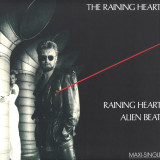
Raining Heart is a studio project originally created by the German musicians Peter Heckmann and Tobias Freund in 1986 in Frankfurt. Very much in the same vein as Art of Noise with its studio sound experimentalism, but with a Kraut edge to it. If there was one track that could be played for everyone at the G20 Summit whilst on LSD in hopes of achieving world peace, it might be “Raining Heart”, the first track on this EP, it’s just one of those tracks that makes you wonder what these people were eating for breakfast at the time. Nothing technically mind blowing, just crafted to perfection in terms of all the elements coming together in therapeutic beauty, (also clearly exposing Peter’s relationship with theatrical production). A downtempo chugger with the dreamiest of sounds, effortlessly transporting the listener to another dimension, the vocals are unthinkable, by Yucca Rose, an East Javanese Jazz singer, almost as if she was broadcasting from a radio station in a parallel universe. “Alien Beat” takes a more aggressive turn into some kind of neo rock direction generously decorated with a wide range of studio tricks that might have been ground breaking at the time. B-side offers two new remixes by Castro, a “K-hole Collage” version of “Raining Heart” taking the original theme to another dubbed out realm, and a “Bonus Beat” extension of “Alien Beat” that dissects the key elements of the original track in efforts to develop a more dancefloor oriented DJ tool. Remastered with original artwork.
Fortunea Records is thrilled to present 2 great Italian producers for its 33rd record. DJ Rocca & Mike Riviera will release their 4 tracks packed Night Jamz EP this spring on the Austrian label to shake up the dancefloors with their combined power of raw and snappy warehouse grooves.
The former is a living legend! He began his career in the late 1990s with drum’n’bass-, breakbeat- and future jazz productions under the brand Maffia Soundsystem, which was also a club in Italy where he was the main resident dj. What followed was an impressive work history in the house and disco scene with many memorable tracks and collaborations with artists such as Dimitri From Paris as Erodiscotique or Marcello Giordani under the moniker Supersonic Lovers.
Michele Tessadri aka Mike Riviera resides in Berlin and is mostly known for his italo disco inspired productions with Luc Sauvage. But he released also solo under pseudonyms such as Fratelli Riviera on the labels Slow Motion and Bear Funk and occasionally works on impressive edits of disco- and funk records.
The Night Jamz EP will come out on all the digital stores and streaming services on may 24, 2024 and will be available on limited vinyl shortly after.