Sometime in 2005, a lone box of master tapes escaped an estate sale and made its way through a network of collectors, record dealers, and “junkers” into the hands of leading Ohio soul expert Dante Carfagna, who linked them to Columbus, Ohio’s mysterious Prix label (See: Eccentric Soul: The Prix Label). A bit of research turned up Prix proprietor George Beter, who identified most of the unlabelled material. All it took was an endless series of phone calls and letters and two fields trips in Columbus. But one complete mystery wended its way onto our final Prix compilation. “You and Me,” a simple but irrepressible demo credited only to Penny & the Quarters, was found tacked onto a mixed studio reel. Our survey of every willing lifer left on the Columbus soul scene, including retired DJs, producers, and important local artists, produced not so much as a glimmer of recognition at the name Penny & the Quarters. Though we loved the song from the first play, it may’ve ended up a bit buried on our original compilation, as #18 of 19 tracks.
Поиск:dj sim
Все
- A1: Progetto Tribale - The Sweep
- A2: Onirico - Echo Giomini
- A3: Open Spaces - Artist In Wonderland
- B1: Alex Neri – The Wizard (Hot Funky Version)
- B2: M C.j. Feat. Sima - To Yourself Be Free - Instrumental Mix Energy Prod
- B3: Mato Grosso - Titanic Expande
- C1: Dreamatic - I Can Feel It (Part 1)
- C2: Carol Bailey - Understand Me Free Your Mind (Dream Piano Remix)
- C3: The True Underground Sound Of Rome - Secret Doctrine
- D1: Don Carlos - Boy
- D2: Lazy Bird – Jazzy Doll (Odyssey Dub)
Vol 2[28,99 €]
Volume 1 of this expertly curated project of 90s Italian House - put together by Don Carlos.
If Paradise was half as nice… by Fabio De Luca.
Googling “paradise house”, the first results to pop up are an endless list of European b&b’s with whitewashed lime façades, all of them promising “…an unmatched travel experience a few steps from the sea”. Next, a little further down, are the institutional websites of a few select semi-luxury retirement homes (no photos shown, but lots of stock images of smiling nurses with reassuring looks). To find the “paradise house” we’re after, we have to scroll even further down. Much further down.
It feels like yesterday, and at the same time it seems like a million years ago. The Eighties had just ended, and it was still unclear what to expect from the Nineties. Mobile phones that were not the size of a briefcase and did not cost as much as a car? A frightening economic crisis? The guitar-rock revival?! Certainly, the best place to observe that moment of transition was the dancefloor. Truly epochal transformations were happening there. From America, within a short distance one from the other, two revolutionary new musical styles had arrived: the first one sounded a bit like an “on a budget” version of the best Seventies disco-music – Philly sound made with a set of piano-bar keyboards! – the other was even more sparse, futuristic and extraterrestrial. It was a music with a quite distinct “physical” component, which at the same time, to be fully grasped, seemed to call for the knotty theories of certain French post-modern philosophers: Gilles Deleuze, Félix Guattari, Paul Virilio... Both those genres – we would learn shortly after – were born in the black communities of Chicago and Detroit, although listening to those vinyl 12” (often wrapped in generic white covers, and with little indication in the label) you could not easily guess whether behind them there was a black boy from somewhere in the Usa, or a girl from Berlin, or a pale kid from a Cornish coastal town.
Quickly, similar sounds began to show up from all corners of Europe. A thousand variations of the same intuition: leaner, less lean, happier, slightly less intoxicated, more broken, slower, faster, much faster... Boom! From the dancefloors – the London ones at least, whose chronicles we eagerly read every month in the pages of The Face and i-D – came tales of a new generation of clubbers who had completely stopped “dressing up” to go dancing; of hot tempered hooligans bursting into tears and hugging everyone under the strobe lights as the notes of Strings of Life rose up through the fumes of dry ice (certain “smiling” pills were also involved, sure). At this point, however, we must move on to Switzerland.
In Switzerland, in the quiet and diligent town of Lugano, between the 1980s and 1990s there was a club called “Morandi”. Its hot night was on Wednesdays, when the audience also came from Milan, Como, Varese and Zurich. Legend goes that, one night, none less than Prince and Sheila E were spotted hiding among the sofas, on a day-off of the Italian dates of the Nude Tour… The Wednesday resident and superstar was an Italian dj with an exotic name: Don Carlos. The soundtrack he devised was a mixture of Chicago, Detroit, the most progressive R&B and certain forgotten classics of old disco music: practically, what the Paradise Garage in New York might have sounded like had it not closed in 1987. In between, Don Carlos also managed to squeeze in some tracks he had worked on in his studio on Lago Maggiore. One in particular: a track that was rather slow compared to the BPM in fashion at the time, but which was a perfect bridge between house and R&B. The title was Alone: Don Carlos would explain years later that it had to be intended both in the English meaning of “by itself” and like the Italian word meaning “halo”. That wasn’t the only double entendre about the song, anyway. Its own very deep nature was, indeed, double. On the one hand, Alone was built around an angelic keyboard pattern and a romantic piano riff that took you straight to heaven; on the other, it showcased enough electronic squelches (plus a sax part that sounded like it had been dissolved by acid rain) to pigeonhole the tune into the “junk modernity” section, aka the hallmark of all the most innovative sounds of the time: music that sounded like it was hand-crafted from the scraps of glittering overground pop.
No one knows who was the first to call it “paradise house”, nor when it happened. Alternative definitions on the same topic one happened to hear included “ambient house”, “dream house”, “Mediterranean progressive”… but of course none were as good (and alluring) as “paradise house”. What is certain is that such inclination for sounds that were in equal measure angelic and neurotic, romantic and unaffective, quickly became the trademark of the second generation of Italian house. Music that seemed shyly equidistant from all the rhythmic and electronic revolutions that had happened up to that moment (“Music perfectly adept at going nowhere slowly” as noted by English journalist Craig McLean in a legendary field report for Blah Blah Blah magazine). Music that to a inattentive ear might have sounded as anonymous as a snapshot of a random group of passers-by at 10AM in the centre of any major city, but perfectly described the (slow) awakening in the real world after the universal love binge of the so-called Second Summer of Love.
For a brief but unforgettable season, in Italy “paradise house” was the official soundtrack of interminable weekends spent inside the car, darting from one club to another, cutting the peninsula from North to centre, from East to West coast in pursuit of the latest after-hours disco, trading kilometres per hour with beats per minute: practically, a new New Year’s Eve every Friday and Saturday night. This too was no small transformation, as well as a shock for an adult Italy that was encountering for the first time – thanks to its sons and daughters – the wild side of industrial modernity. The clubbers of the so-called “fuoriorario” scene were the balls gone mad in the pinball machine most feared by newspapers, magazines and TV pundits. What they did each and every weekend, apart from going crazy to the sound of the current white labels, was linking distant geographical points and non-places (thank you Marc Augé!) – old dance halls, farmhouses and business centres – transformed for one night into house music heaven. As Marco D’Eramo wrote in his 1995 essay on Chicago, Il maiale e il grattacielo: “Four-wheeled capitalism distorts our age-old image of the city, it allows the suburbs to be connected to each other, whereas before they were connected only by the centre (…) It makes possible a metropolitan area without a metropolis, without a city centre, without downtown. The periphery is no longer a periphery of any centre, but is self-centred”.
“Paradise house” perfectly understood all of this and turned it into a sort of cyber-blues that didn’t even need words, and unexpectedly brought back a drop of melancholic (post?)-humanity within a world that by then – as we would wholly realise in the decades to come – was fully inhuman and heartless. A world where we were all alone, and surrounded by a sinister yellowish halo, like a neon at the end of its life cycle. But, for one night at least, happy.

Mr Bongo is proud to present an official reissue of Zé Rodrix E A Agência De Mágicos ‘O Esquadrão Da Morte’. Written, arranged and composed by the genius of Zé Rodrix and performed by his band 'Agência de Mágicos’, this Brazilian library funk beauty is the soundtrack to Carlos Imperial's 1975 film of the same title. Echoing European soundtrack maestros such as Roy Budd and Ennio Morricone, but with a Brazilian swagger, Zé Rodrix's score is a sublime gem that needs rediscovery.
Rich in 70's soundtrack cool, the score is packed with orchestrated jazz, chase scene-funk, breaks, psychedelic freakouts and plenty of drama. The loose and quirky break-beat jazz-funk of 'Assalto' feels almost tailor-made for today's hip-hop production aesthetic. The opening drum break of 'Esconderijo' is a sampler’s dream and has already been reinterpreted by the Turkish Rapper Anıl Piyancı, as well as Brazil's DJ Caique.
Carlos Imperial was a jack of all trades. As a songwriter and music producer, he created a highly impressive back catalogue. It includes working with or writing songs for Tim Maia, Elza Soares, Brigitte Bardot, and Wilson Simonal. He also co-wrote the rare cult Brazilian 7" compacto 'Lindo Sonho Delirante (L. S. D') by Fábio. Carlos Imperial wrote liner notes and was an actor, filmmaker, television presenter, and media figure. His film 'O Esquadrão da Morte' is a violent heist movie starring Beto Bandeira, Claire Chevalier, and Baby Conceicao; in the vein of exploitation films and gritty, raw B-Movie cinema of the day. Both the film and album share striking, macabre artwork by artist Benicio.
The instrumentalist, arranger, and singer-songwriter Zé Rodrix has a musical achievements list that is also one to admire. He’s worked with the cream of Brazilian music, having written songs covered by the greats, including Quarteto Em Cy, Ronald Mesquita, Elis Regina, Karma, and Célia, to name just a few. His written arrangements have graced the music of Luli Lucinha E O Bando and Helio Matheus. He was a member of the iconic group Som Imaginário and played piano and synthesizer on Secos & Molhado's classic 1973 album.
We are super pleased to make this dusty treasure available again. It is a wonderful soundtrack score that more than holds its own with its European and American counterparts of the era.
Since the late 90"s, Jakob "Dino" Dinesen has become a stalwart of the Danish jazz scene, performing with nearly everyone of note in the country as well as internationally celebrated names such as Kurt Rosenwinkel, Jeff "Tain" Watts, Jakob Bro and Paul Motian. Finding joy and inspiration in the building of bridges between genre boundaries, his career in music has seen him travel and perform all over the world, enriching his sound and soul with every new experience. His new record seeks to convey his dream of a future world at peace with itself. "Slow Flow" is set to release on January 25th on April Records. "I envision a world where people from every corner of the globe come together, dancing, sharing meals, and finding joy through my music. My children are a blend of Africa and Denmark, and I hope they"ll carry the traditions and wisdom of both their mother and father as they navigate their path. I would love for music like this to be the soundtrack to their journey through life." Rooted in the playful live sound of an atypical quintet featuring cello and djembe, Slow Flow sits in a unique space somewhere between earthy, simplistic, and acoustic and contemporary, electronic, and unexpected. The record"s sound is soft spoken and full of compassion-a dark-timbred music where the intimate, warm breath of his tenor saxophone intertwines with the crisp, organic tones of the cello. Together, they float over smooth, analog synths and electronic loops, while the carefully crafted lines of the bass and the gentle rhythm of hands on drum skins carry the music forward. Occasional erratic, quirky bursts from an affected keyboard and weaving improvisations offer moments of energy and contrast. Each of the album"s nine original compositions paint musical pictures of contentment that are dear to Dino, as well as offering musical tributes to four of his heroes in Yusef Lateef, Wayne Shorter, Coleman Hawkins and Eddie "Lockjaw" Davis". Drawing on modern European jazz, African rhythms, Italian circus music, and reggae, Slow Flow plays as a deeply personal exploration of Dino"s identity, whilst providing a dream-like message of global peace that promises to resonate with like-minded people all around the world..
Makin’ Moves kick of 2025 with four hot tracks from Detroit producer Javonntte that will certainly warm you up from your winter slumber !
Detroit native Javonntte Garrett, better known simply as Javonntte.
Javonntte has been producing music and DJing since the early ’90s. Having had a love for music since he was a child growing up, he turned himself into an independent singer, songwriter, producer and even a dancer, where he once toured with Aretha Franklin’s troupe.
Having collaborated with legendary producers Blake Baxter, Amp Fiddler and Andres in his formative years, Garrett has since spread his wings as a solo producer, with a steady string of releases on such labels as Traxx Underground, Quintessentials and Kai Alce’s NDATL.
This fresh four tracker, has been hand selected by us and each track brings something different to the dance floor, from the soulful vibes of WHAT? to the the bouncier and more melodic sounds of Good Vibration and Chicago.
Studio, the influential project of Swedish musicians Dan Lissvik and Rasmus Hägg, presents their legendary 2006 debut in remastered form, in partnership with Ghostly International. Available in limited edition "Fog Machine Vinyl", CD, and cassette. "One of the finest pieces of electronic music you'll hear this year.” - The Guardian (2006). Included in year-end best-of write-ups by Pitchfork, FACT Magazine, and Rough Trade. Physical copies have long been out of print for West Coast, and the album has also been notably absent from most streaming services until now.
“Somehow, I knew I wanted to make a conceptual record that, although only imaginary at that point, could represent or define how our city sounded,” says Lissvik of Gothenburg's influence on West Coast. Some called Studio, the project of Swedish musicians Dan Lissvik and Rasmus Hägg, “the missing link between The Cure and Lindstrøm,” Pitchfork heard Durutti Column and Can, as the duo’s story became swept up in a loosely developing scene — adjacent first to the label Service (Jens Lekman, The Whitest Boy Alive) and later Sincerely Yours (The Tough Alliance, jj) — and a precursor to the 2010s boom at the axis of electronic and psychedelic music guided by indie greats like Caribou, Four Tet, and Darkside.
West Coast, their seminal 2006 debut, captured a faraway romanticism of Balearic brushed up against Krautrock, disco, dub, and afrobeat, with pop lyricism lifted from new wave, all made modern by two art school grads in Gothenburg. First pressed in a small vinyl-only run via their own Information label, the album has been notably absent from most streaming services, and the internet’s record of its initial impact is all but fossilized from a bygone blog era, while its sound is simply untraceable to any one moment in music.
Outside of three 7” releases, they’d keep the music to themselves for several more years. In 2005, Hägg remembers, “We got our degrees and were kicked out of our studio spaces so all these recordings were just piled up. A year later we dusted them off and started to deconstruct and assemble them in a more drawn-out fashion.” In the same breadth, they cite DJ Screw, J Dilla, and Joy Division, along with early ‘80s European live DJ sets from the likes of Beppe Loda, Dj Mozart, and Baldelli as reference points.
“The anything-goes mentality was very encouraging and was a big cornerstone to the Studio sound,” says Hägg. “But there’s so much more to the picture, we were not that young then and had lots of musical baggage in our suitcases, the new thing was that we finally let it all come through, not bound by any borders that was often the case with music identity in Sweden during the 90s.” In the afterglow of the record’s 2007 reception, Studio receded from view, clouded behind a mountain of remix requests (including one for Kylie Minogue that saw release) and label bureaucracy. “It’s easy to wish we would have done some proper recordings of our own instead,” Hägg reflects. But both artists, now well into respective careers beyond Studio, have come to peace with West Coast as their most enduring effort together. Lissvik adds, “It serves as a good reminder for me to keep to that decision and promise and to continue exploring and growing
After a first record with techno legends Ben Sims, Mark Broom, DJ Deeon, Seclusion returns for the second release of the year with a fresh current techno package.
An EP from the Irish producer Cult (Molekul / Aktivv) and various remixes by Elyas (Seclusion), Isaiah (Frenzy) & Specific Objects (Twice Infinity)
15 Years Anniversary Edition of the debut full length from French producer/DJ Rone. Printed on Neon Pink Transparent bio-vinyl.
In 2009, Rone released Spanish Breakfast, an album that marked the first step of an extraordinary musical journey. Today, as we celebrate its 15th anniversary, we’re thrilled to announce a special edition reissue — sustainably crafted on vibrant neon pink vinyl, created as a tribute to the album that started it all. This limited release isn’t just a record; it’s a piece of history and a celebration of where it all began.
A record of simmering techno bubbles and gentle wells and releases swimming elegantly over its duration. A playful and woozy effort, Rone fills up the stereo field with widescreen synthscapes and dreamy bleeps popping from every audio crevice. In Spanish Breakfast the young Frenchman has crafted a player that is primed for hazy Spring afternoons bathed in sunshine. bleep like this alot...
- A1: Django Reinhardt - Minor Swing
- A2: Dave Brubeck - Take Five
- A3: Nina Simone - My Baby Just Cares For Me
- A4: Roy Hargrove - Strasbourg Saint Denis
- A5: Stan Getz & Joao Gilberto - The Girl Of Ipanema
- B1: Nat King Cole - L-O-V-E
- B2: Ahmad Jamal - Poinciana
- B3: Wayne Shorter - Black Orpheus
- B4: Quincy Jones - Soul Bossa Nova
- B5: Peggy Lee - Fever
- C1: Ray Charles - Georgia On My Mind
- C2: Herbie Hancock - Cantaloupe Island
- C3: Errol Garner - Misty
- C4: Horace Silver - Song For My Father
- C5: Miles Davis - Ascenseur Pour L'echafaud
- D1: Sidney Bechet - Petite Fleur
- D2: Weather Report - Birdland
- D3: Sonny Rollins - Saint Thomas
- D4: John Coltrane - Naima
- D5: Louis Armstrong - What A Wonderful World
- A1: Stumblin' In
- A2: Fall At Your Feet (With Dean Lewis)
- A3: True (With Kita Alexander)
- A4: Way Down Low
- A5: The Power Of Love
- A6: Somebody Else (With Alon - Feat Blair)
- A7: Stumblin' In (Extended Version)
- B1: Disturbed - Sound Of Silence (Cyril Remix)
- B2: Before I Let You Go (Feat Marclo)
- B3: Put Your Records On
- B4: We Don't Need
- B5: Ain't No Mountain High Enough
- B6: America - A Horse With No Name (Cyril Remix)
- B7: Dance Like U (With Riley Pearce)
- B8: Disturbed - Sound Of Silence (Cyril Remix)
Black[28,36 €]
CYRIL is the Aussie-born artist, DJ, mulit-instrumentalist and producer behind two of the world’s hottest records at the moment, “Stumblin’ In” and his remix of Grammy-nominated artist Disturbed’s “Sound of Silence.”. He is signed to the Dutch record label Spinnin’ Records, known for its smash hits in the EDM genre.
His biggest moment thus far came in late 2023 with the release of “Stumblin’ In,” which initially exploded on TikTok before dominating the worlds of streaming and radio. It became the #1 most played song on air in countries like Germany, Poland, Australia, New Zealand, and more, as well as covering some of Spotify and Apple’s biggest playlists.
Shortly afterwards, a remix of Disturbed’s cover of the Simon & Garfunkel song “The Sound of Silence” was released and reached the Top 10 in several countries.
CYRIL’s debut album, From Down Under-To The World , features tracks such as “True” with Kita Alexander, alongside extended versions of “Stumblin’ In” and “The Sound of Silence.”
From Down Under - To The World is available as limited edition of 1000 copies on white coloured vinyl.
--The fourth outing on Spray’s Punctuality imprint comes in the form of the much anticipated Ode to Beachball EP by Eoin DJ. The release is a fully realised vision of moods and grooves inspired by Nalin & Kane’s 1997 chart topper ‘Beachball’.
Sparse, organic percussion, simple basslines and lush atmospherics form the bedrock of the EP, placing it firmly at the intersection of starry-eyed euphoria and heads-down club-stomp, lending the tracks a timeless but contemporary feel.
Those with their ears to the ground will know that the title number has been somewhat of a sleeper hit for the past two summers. Ode to Beachall’s understated stabs, rolling bass and transcendental vocals have soundtracked many sunsets and have bore the brunt of numerous failed shazam attempts via spins in mixes by trendsetting auteurs like Job Jobse, Sally C and label head Spray.
Bliss Inc’s remix turns up the energy dial with a club-focussed remix of Ode To Beachball, adding extra dynamics to the rhythm and low end, propelling the original into a modern hard-house roller complete with big-room breakdowns and euro-centric stabs, firmly aimed at the dancefloor.
On the flip both Infinite Well and On Lilac Skies stick to the beachball brief- swung bongos and congas, undulating low end and mercurial vocal chops add to the balearic beach techno mood of the entire EP. Both tracks are exemplary practices in dancefloor restraint and are sure to be staples in bags and sticks of discerning DJs for many summers ahead. Another stellar release from Irish atlantean Eoin DJ.
The Acidboychair music project started in the early noughties as a commentary on what journalist Simon Reynolds would summarise a few years later as Retromania. Initially conceived by Thomas Baldischwyler and Andreas Diefenbach as a performative revival travesty with large-format drum computers and synthesizers reconstructed from cardboard, everything took a surprising turn when DJ Mooner (the man behind the now defunct Munich music label Erkrankung Durch Musique) took an interest in the adventurous audio material produced by Baldischwyler. In 2005, the LP 1987 (EDM1016), produced almost exclusively with long-forgotten software (SoundEdit 16, RB-338, etc.), was released on Mooner's label. As a result of the growing number of bookings, Baldischwyler had to think about improving the performability of his intentionally amateurish productions. Fortunately, the Ableton Live programme became a DAW with a MIDI sequencer and support for VST plug-ins as early as 2004 - and this made it easier for him to execute his intuitive, error-friendly version of acid house. This can be heard on the first two sample-heavy tracks on the A-side of Come Down Easy, which were recorded in 2005 and 2006 respectively at Acidboychair gigs at Hamburg's Golden Pudel Club and Munich's Registratur. The first two tracks on the B-side (produced sometime between 2006 and 2008) were actually supposed to be part of a solo release on the Acido label run by Dynamo Dreesen, but this never materialised. However, the final tracks and the 133.3 BPM lock grooves that follow are the title and central to this catalogue number TBG123: Through ethno-musicologist Arthur Boto Conley, who had already released a one-sided 12 on his label with material from one of Baldischwyler's audio installations, he met Florian Meyer (Don't DJ) and Marc Matter (Spoken Matter), who introduced him to their collaborative project Institut F?r Feinmotorik (IFFM). Baldischwyler's attempt to approach the sound aesthetics of IFFM led to the tape 60 Minutes Of Barely Modified Lock Grooves (TCCC06), recorded in Rome in 2018. A buyer of this tape introduced him to the Detroit collective Pure Rave, which he immediately contacted and introduced to the work of the IFFM. It was important for Baldischwyler to have an analogue update made and so both the Detroiters and IFFM, who now live in Berlin, were given 8 copies of EDM1016's backstock to remix the material in their own way. At their jam in Detroit, Pure Rave opted for the almost identical material that IFFM had also used for a live performance in the Hamburg project space Beek. The dominant jumps in both arrangements come from the track Eightyseven, produced in the early 2000s for the LP 1987, an awkward remix of the Spacemen 3 track Come Down Easy, which is also referred to in the liner notes on the inner sleeve of TBG123. The almost two-decade-old revival idea thus turns into false memory syndrome and runs into a - in keeping with our times - clean-cut (endless) groove. Kassem Mosse (The KM of MM/KM) on Come Down Easy after a first listening session: I think it all works very well as a mix, no matter where you start it carries you further forward back in the loop. if I understand the liner notes correctly, it's about the music's turn from tradition preservation (doing everything right) to ecstatic delusion (not doing everything right when intoxicated). Now that I'm reading again instead of listening, the titles give me a different understanding of the connections; how the skipping belongs together, which playtime is connected. Now I can name my favourites. Thank you for the journey!
Cartridge & Stylus
Frequenzbereich 20 to 18,000 Hz
Kanaltrennung 20 dB (1 kHz)
Vertikaler Abtastwinkel 20 degrees
Schaftform der Nadel Bonded Round Shank
Empfohlene Lastimpedanz 47,000 Ω
AT-XP3/H
Audiophile DJ cartridge mounted on AT-HS6BK Headshell
Tonabnehmer der Serie AT-XP sind perfekte Partner für alle Vinyl-DJs, denn sie kombinieren die Features robuster DJ-Tonabnehmer mit erstklassigem HiFi-Sound – ideal für Live-Auftritte und alle Club-DJs, die Wert auf eine hervorragende Klangqualität legen.
Audiophiler DJ-Tonabnehmer AT-XP3, vormontiert auf Headshell AT-HS6BK
VM-Dualmagnetsystem
Robustes, langlebiges System für anspruchsvolle DJ-Einsätze
Carbonfaser-verstärkter ABS-Nadelträger und Nylon-Aufhängung für präzises Tracking
Upgrade-fähig: Kompatibel mit Ersatznadeln ATN-XP5 und ATN-XP7
Lieferbare Konfigurationen: Tonabnehmer, einzeln (AT-XP3), Ersatznadel (ATN-XP3) und Komplettsystem mit Headshell AT-HS6BK (AT-XP3/H)
Serie VM95 – Kompatibilitätsübersicht Tonabnehmer
Selbst die beste Diamantnadel verschleißt nach einiger Zeit – konische Nadeln nach ungefähr 500 Stunden, elliptische nach 300 Stunden, Microlinear-Nadeln nach 1000 Stunden und Shibata-Nadeln nach rund 800 Stunden.
Aus diesem Grund haben wir unsere Dual-Moving-Magnet-Tonabnehmer der VM95-Serie so konzipiert, dass sich die Abtastnadeln untereinander austauschen lassen und der Tonabnehmer selbst fast unbegrenzt eingesetzt werden kann. Ist die Abtastnadel abgenutzt, brauchen Sie also keinen neuen Tonabnehmer zu kaufen, sondern nur die passende Ersatznadel – oder können Ihr System mit einer anderen, höherwertigen Abtastnadel aufwerten.
Our VM95 Series dual moving magnet cartridges can be used almost forever by replacing the interchangeable stylus. It is no longer necessary to purchase a complete cartridge when your diamond is worn out, you can simply buy the matching replacement stylus, but also enjoy the experience of upgrading your cartridge with a different stylus.
Alle sechs VM95-Tonabnehmermodelle verfügen über die gleiche elektromagnetische Antriebseinheit (Gehäuse). Daher sind auch die sechs Abtastnadeln dieser Serie 100% kompatibel.
AT-VMN95C
AT-VMN95E
AT-VMN95EN
AT-VMN95ML
AT-VMN95SH
AT-VMN95SP
Konische, gefasste Nadel
Der Vorteil konischer Nadeln (selbst bei „schlanken“, günstigeren Systemen) besteht darin, dass die gerundete Oberfläche die Rillen von Vinylschallplatten sehr präzise abtastet.
Vormontiert auf Headshell AT-HS6BK
Dieses Komplettsystem umfasst den Tonabnehmer AT-XP3 und die Headshell AT-HS6BK mit Druckgussaluminium-Gehäuse (9 g).
- 01: Mokum Daze (Feat. Swtrppl& In Da Woods)
- 02: Co Tam Czytasz? (Feat. Solo Gemini & M.stone)
- 03: Apparent Similarity (Feat. Aflo & Bknd)
- 04: Szukaj Wyjść (Feat. Otherhood, Memfiz & Blumhoff)
- 05: You And I (Feat. Spear Oh & Sez)
- 06: W Nieskończone (Feat. Baklu & Biały Falochron)
- 07: Strachu Deszcz (Feat. Bodziers On & Rakraczej)
- 08: Znowu (Feat. Steps, Prykson Fisk & Dj Chederac)
- 09: Zaułek (Feat. Ifs & 600V)
- 10: Your Hands (Feat. Tapchan & Niebienie)
- 11: Wisetetryk (Feat. Printempo & Brak Oczu)
- 12: Spirit (Feat. Bitykradne & Karolina Wilgus)
Coloured[27,69 €]
Album was made in two version (with two different covers). Classic black vinyl and limited (hand numbered 100 copies) with color vinyl. Both versions has 180g vinyl records.
Himalaya Collective is probably the biggest crew of beatmakers in Poland (more than 30 official members). Collaborations are the theme of this third album for U Know Me Records, resulting in a multi-genre album that showcases Himalaya Collective's strength in all its glory.
"After two years since "Latawce", we are back with our third vinyl album released by U Know Me Records. We have been working on a unique, fully collaborative project for over a year. Each track is a result of cooperation - without restrictions on the choice of artists and collaborators.
The idea was simple: each member of the collective was to enrich their track with the vision of another person. They could be producers, vocalists, instrumentalists - both from within the collective and from further corners of the world. This is how a network of artistic connections was created, which reflects the way in which Himalaya Collective has been growing since 2016 - as a team united by passion, inspiring each other and involving other exceptional people in cooperation.
Thank you for your patience, see you again."
- 01: Mokum Daze (Feat. Swtrppl& In Da Woods)
- 02: Co Tam Czytasz? (Feat. Solo Gemini & M.stone)
- 03: Apparent Similarity (Feat. Aflo & Bknd)
- 04: Szukaj Wyjść (Feat. Otherhood, Memfiz & Blumhoff)
- 05: You And I (Feat. Spear Oh & Sez)
- 06: W Nieskończone (Feat. Baklu & Biały Falochron)
- 07: Strachu Deszcz (Feat. Bodziers On & Rakraczej)
- 08: Znowu (Feat. Steps, Prykson Fisk & Dj Chederac)
- 09: Zaułek (Feat. Ifs & 600V)
- 10: Your Hands (Feat. Tapchan & Niebienie)
- 11: Wisetetryk (Feat. Printempo & Brak Oczu)
- 12: Spirit (Feat. Bitykradne & Karolina Wilgus)
Black[27,69 €]
Album was made in two version (with two different covers). Classic black vinyl and limited (hand numbered 100 copies) with color vinyl. Both versions has 180g vinyl records.
Himalaya Collective is probably the biggest crew of beatmakers in Poland (more than 30 official members). Collaborations are the theme of this third album for U Know Me Records, resulting in a multi-genre album that showcases Himalaya Collective's strength in all its glory.
"After two years since "Latawce", we are back with our third vinyl album released by U Know Me Records. We have been working on a unique, fully collaborative project for over a year. Each track is a result of cooperation - without restrictions on the choice of artists and collaborators.
The idea was simple: each member of the collective was to enrich their track with the vision of another person. They could be producers, vocalists, instrumentalists - both from within the collective and from further corners of the world. This is how a network of artistic connections was created, which reflects the way in which Himalaya Collective has been growing since 2016 - as a team united by passion, inspiring each other and involving other exceptional people in cooperation.
Thank you for your patience, see you again."
- Hoy Voy A Asesinarte
- Ponte En Mi Lugar
- (Aunque Esté En El Frenopatico) Te Tiraré Del Atico
- Mario (Encima Del Armario)
- Gusanos En Tu Alcoba
- Ayatolah!
- Juegas Al Palé
- No Me Gusta Bailar
- Emilio Cao
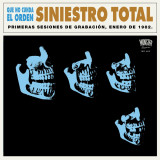
"Que no cunda el orden" comprises the first demos recorded by this iconic Spanish punk band in January 1982, seven original songs and two versions that would also become the band's live repertoire in their early years. Among these songs we find the only studio version of `Emilio Cao' and the previously unreleased `No me gusta bailar'. The sound of the original tape has been mixed and mastered for this very special edition. Siniestro Total were a Spanish punk band formed in Vigo in 1981. A big commercial success accompanied the band for over a decade, until the mid-late '90s, when the popularity of the groups from the so-called "movida madrileña" and other similar scenes from other parts of Spain such as Galicia, where Siniestro Total were formed, faded away. Many of their best and most popular songs, reflecting the punk and fun essence of the band, were written and recorded in the early days of Siniestro Total. This album comprises their very first recording sessions, unearthed here for the first time, when the early demo versions of some of those songs were captured. The band's lack of studio experience was balanced with tons of fun and laughter. This demo was sent to a radio DJ and all the songs were aired on his show at the most popular music station in Spain, Radio 3. In fact, the demo was awarded demo of the year (Maqueta de Oro del Diario Pop 1982). Four decades later, the sound of the original tape has been mixed and mastered for this very special release that Munster Records are honored to bring to fruition.
- A1: Flying Easy
- A2: Cloudy
- A3: Do Like You Do In New York
- A4: Jojo
- B1: Breakdown Dead Ahead
- B2: Simone
- B3: Mind Flower
- B4: Home Work
First vinyl reissue since its original release in 1980! Track A2 - Cloudy is featured in WAMONO A to Z Vol. I - Japanese Jazz Funk & Rare Groove 1968-1980 (Selected by DJ Yoshizawa Dynamite & Chintam) compilation. A rich groove crafted by a rhythm section featuring Harvey Mason on drums and eight trombones. This Jazz Funk/Fusion album is a mix of original compositions by Chikara Ueda and covers of Boz Scaggs' tracks.
Bienvenue Recordings is back on wax with two originals and a deep driving remix from the home base. We are delighted to present Gratts ‘The Lifestyle EP’ via the label, a high quality addition to his plentiful repertoire of dance delights.
Gene Tellem met Gratts in the South Australian city of Adelaide in 2022 while visiting family and touring the country for some gigs. Gratts, originally from Belgium, also finds himself in the sun for similar reasons. Being from two different French speaking parts of the world, able to communicate in a familiar way but in a whole new place really laid down the vibe for this release. Songs as much for the radio as the club, for a cold wintry night or on the shores of an Australian sunset.
'Sunsets (FBI Mix)' is Gratts & Biancolato's tribute to Sydney veteran DJ Simon Caldwell's long running 'Sunsets' radio show on FBI Radio. Gratts and Caldwell DJ'ed together in Sydney on various occasions, whereas Biancolato is a veteran Melbourne DJ and producer. The track was inspired by the dubby West-Coast deep house sound from the turn of the millennium. Adelaide's Lesley Williams provides the vocal mantra.
'Sundays With U (Neapolitan Mix)' is a jazzy and percussive venture, loosely inspired by the West London bruk sound and Charles Webster. Andreas Poppelbaum, Gratts' studio neighbour in Berlin can be heard on soprano sax. The lyrics are performed by Italian friend Ambra, who delivers them in the Neapolitan dialect.
'Sundays With U (GT Remix)’ is Gene Tellem pulling at all the elements that make the original a scorcher, stretching it out, turning the stomp up, and offering a version for a deep dance floor moment. The voice, sax, atmosphere with the snap on the one. One moment it starts, and soon you won’t know how long it’s been that your eyes are closed, body moving through the room.
- A1: Salinas - "Tenha Fe, Pois Amanha Um Lindo Dia Vai Nascer" (2 52)
- A2: Elza Soares - "Pulo, Pulo" (2 08)
- A3: Sonia Santos - "Speed" (4 15)
- A4: Osmar Milito - "Rita Jeep" (2 20)
- A5: Wilson Simonal - "Zazueira" (3 10)
- A6: Osmar Milito - "Quem Mandou" (2 27)
- B1: Doris Monteiro - "Se Voce Quiser Mas Sem Bronquear" (3 00)
- B2: Wilson Simonal - "Que Pena" (2 54)
- B3: Osmar Milito - "Morre O Burro, Fica O Homem" (2 31)
- B4: Os Originais Do Samba - "La Vem Salgueiro" (3 23)
- B5: Os Brazoes - "Carolina, Carol Bela" (2 06)
- B6: Wilson Simonal - "Crioula" (3 18)
- C1: Claudette Soares - "Eles Querem E Amar" (2 43)
- C2: Os Incriveis - "Vendedor De Bananas" (3 46)
- C3: Wilson Simonal - "Brasil, Eu Fico" (2 15)
- C4: Cyro Aguiar - "Rei Do Maracatu" (2 02)
- C5: Wilson Simonal - "Resposta" (3 09)
- C6: Elza Soares - "Mas Que Nada" (2 25)
- C7: Wilson Simonal - "Pais Tropical" (3 30)
- D1: Os Originais Do Samba - "Cade Tereza" (4 34)
- D2: Marijo - "Fio Maravilha" (3 53)
- D3: Os Originais Do Samba - "Tenha Fe, Pois Amanha Um Lindo Dia Vai Nascer
- D4: Os Brazoes - "Que Maravilha" (2 26)
- D5: Os Mutreteiros Grilados - "Cosa Nostra" (4 31)
- D6: Os Originais Do Samba - "Falador Passa Mal" (3 13)
Jorge Ben is surely one of the world’s greatest all-round musical artists. He is internationally renowned and vastly influential as a vocalist, musician, performer and phenomenal songwriter. Famed for penning ‘Taj Mahal’, which was the source for Rod Stewart’s ‘Do You Think I’m Sexy?’, and also ‘Mas Que Nada’, one of Brazil’s most iconic anthems, Jorge Ben is a powerful musical force. A simple glance at his impressive back catalogue reveals a master of his craft, with a depth and quality that is seldom paralleled.
For 'Tudo Ben' we take a side-step, focusing on Jorge Ben’s songs that have been performed by other artists. Complied by Mr Bongo, Greg Caz and Sean Marquand, this collection features the Brazilian legends Elza Soares, Claudette Soares, and Wilson Simonal, alongside prodigious artists such as Marijô, Os Brazoes, and Doris Monteiro to name but a few. The selection covers a wide range of genres including samba, bossa nova, MPB and batacuda workouts. Many of the songs featured have become staples in Mr Bongo DJ sets over the years and are some of our most loved classics. As with many of history’s great songwriters, Jorge Ben’s songs transcend genres and styles, they can be covered and reinterpreted, yet the quality of the writing holds up to the standard of the original.
In the dark days of the mid to late 2000s when the end of vinyl seemed inevitable, Mr Bongo released 'Tudo Ben' on CD only. Years later, we finally get to put this right and present it for the first time on vinyl with alternative artwork by Mr Krum.
- A1: Jacob Velez & La Mambanegra Feat Nidia Gongora - Manama
- A2: Tonada - Manezco
- A3: El Hijo Del Buho Feat Los Gaiteros De Bueblo Santo - La Danza Del Espiritu
- A4: De Mar Y Rio - Bailen Y Gocen
- B1: Umu Obiligbo - Udemba
- B2: Amadou Balake - Massa Kamba
- B3: Joi N'juno - Samemala
- C1: Conjunto Latinos - Koemanoe Sami
- C2: Mendes Brothers - Balumuka Palops!
- C3: Gaby Moy - Ene Alengue
- D1: Poirier Feat Waahli -Teke Fren
- D2: Timothee Et Pot & Corentre Dans Tom Hlm
- D3: Locobeach - Idea Desperada
"Because it's the passion for music that drives the person behind the decks, a dj's debut is bound to exude authenticity. It's often themselves they're recounting in music, posing on the slip mats their DNA and what makes them who they are.
When you're just starting out, you're faced with a multitude of routes to take and styles to play. When you know just how devastating it can be to step out of line and empty the dance floor even faster than it filled up, it often takes a lot of audacity to break the unity of a funk evening with a punk track.
Over time, to evolve is to find oneself facing only two roads.
On the first one, to satisfy the greatest number of people and not lose the credit for his fees, the dj adapts to the trend. Whether he likes what he's playing or not, the road has become a freeway and, indeed, a very comfortable one. The audience already knows everything there is to hear and doesn't come to hear anything else. Thirty seconds, or even a minute of each track, is more than enough. Everything has to flow quickly. Everything is marked out and secured. Those who respect the regulations will (normally) make the journey without accident. Several times a week, several times a month, several times a year. Curiosity disappears altogether.
And then there's the other road. Where nothing is expected nor sometimes even ever heard. The road of an unquenchable passion for diggin' and the desire to always know more and more. A passion billed at the price of hours of research-finding spent in the discomfort and possible disappointment of never coming across anything exciting, as well as nights exploring platforms and multiplying clicks resulting in a good old headache. Until that moment of grace happens when, after thousands of fruitless shakes, the nugget stands alone in the sieve, without the slightest doubt as to its quality.
Coming from places never mentioned for their music, sometimes classics of their genre, they are also rarities miraculously saved from total disappearance, as much as current marvels, but threatened to never leave the immensity of the web. Even if the possibility of a text with substance is never excluded, they can tell long stories or be destined solely to make you dance till you're dehydrated. Scintillating with spirituality, some can also vaporize energy and replace it with a pure emotion capable of touching hearts in the bareness of simple percussions.
This road is marked by sincerity, singularity and surprises, but always in a communion between the dj and the audience, who embark on it together, with mutual confidence in the promise of hours of sharing and discovering. "