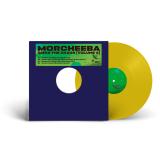
In the heart of an ancient forest deep in Europe, the Council, a secretive assembly of goblins and trolls, convenes under the light of the dancefloor. These beings, often misunderstood by the outside world, harness the power of music and sound to weave potent magick. Their rituals, held on hidden sound systems resonate with the echoes of nature. As the goblins fiddle their enchanted samplers and the trolls beat their massive drumbreaks, the air shimmers with vibrant energy. drawing the attention of mystical forces. Bound by ancient traditions, the Council safeguards the balance of the hardcore.
Search:dj sofa]
Helsinki based newcomer DJ Sofa debuts on Up Ya Archives Records with the release of 'Lionheart’, the title track to their forthcoming EP, landing on the 12th November 2025.
Drawing inspiration from pioneering duo Digital & Spirit, ‘Lionheart’ channels a moody, mysterious energy. Driven by an organic-meets-machine dub sensibility, the track weaves hypnotic chants and meditative basslines into a soundscape that’s both harsh and mesmerizing. Letting the amen break breathe, ‘Lionheart’ captures an emotional intensity that runs throughout the wider EP.
Rooted in a love for 90s and early 2000s jungle, DJ Sofa’s production pays homage to the era’s raw sound and spirit whilst pushing it forward. Conceptually, the record explores bravery, self-determination, and finding strength in uncertainty. It’s a personal statement of resilience and creative growth from an artist carving out their own path.
Despite operating under this alias for only a few years, DJ Sofa has already made waves with standout releases on Future Retro, with a Tim Reaper collaboration titled ‘Helsinki to London Connection’ and N4, Straight Up Breakbeat, and Ruff n Tuff. Alongside other statement releases which are reminiscent of nineties jungle and their childhood love of The Prodigy, their performances at iconic nights such as Rupture London have cemented their rising status in the scene.
I know that people love to read the stories related to the background of each release on Future Retro London & how they came together, but I'll be honest, I have no recollection at all about how this release came into existence????
Sorry that I can't give much insight on anything to do with this release, I imagine that DJ Sofa pitched me the idea to get remixes done of our collab from her FR011 release and one thing led to another...
Rather than try and piece together the process of what happened to make this release into a thing, I'll just skip to the big ups. Thanks to Soeneido, Cheetah & Janaway for their remix work, to DJ Sofa for the idea (I think?) for this release and for her work on the original and to my memory for failing me in this moment where I was hoping it would come through for me.
I had known of Ontology for a few years now, for her releases on Meditator Music & some of the sublabels of Amenology, but I got to know her a bit better last year, when she helped me & Dwarde get a booking in Nashville, Tennessee, where she is based & we got to meet her, work on some music with her and also see her DJ.
Since then, she's been sending me some wicked tunes of hers that she's been making and "This Music Belongs To All Of Us" was a track she sent me, which I absolutely could not refuse. I had to have it for release on Future Retro London and that led to FR038, which also has remixes from DJ Sofa, me & a VIP mix that Ontology had made shortly after finishing the original.
Big up to Ontology for the wicked beats, for DJ Sofa for her quality work on the remix & a special shout to all the people me & Dwarde hung out with in Nashville (Nicholas Latiff, Sterbo, Digimon, Lapilli & everyone else I've forgotten to mention!)
Marking the fourteenth chapter in the Swinging Flavors series, Beat Machine Records proudly unveils a gripping release by Helsinki-based producer DJ Sofa. Packed with deep, nostalgic energy, this installment delves into the darker side of drum and bass, with a sound inspired by the genre’s golden era of the late 90s and early 2000s.
DJ Sofa, known for their emotive and intricate productions, brings a raw, jungle-infused energy to the forefront. Drawing inspiration from jungle and breakbeat hardcore, their sound reflects a deep connection to the classic UK rave era while maintaining a forward-thinking edge. Known for captivating listeners with rich atmospheres and complex breakbeats, DJ Sofa’s music resonates strongly with audiences far beyond their Finnish roots, particularly within the UK underground scene.
“Drums For The Lost,” the lead track on Swinging Flavors #14, exemplifies this blend. A menacing roller, it marches forward with unwavering determination, offering a guiding light through shadowy soundscapes. With its haunting basslines, intricate percussion, and mysterious atmosphere, the track is a testament to DJ Sofa’s ability to create immersive and emotionally charged music.
The journey doesn’t stop there. Swinging Flavors #14 also features a remix of “Drums For The Lost” by Siu Mata. The Parisian producer reinterprets the track with their signature style, adding pulsating rhythms and hypnotic layers that elevate it to a peak-time dancefloor weapon. Siu Mata’s remix infuses the original with a modern edge, creating a vibrant and dynamic sound that bridges the gap between tradition and innovation.
Swinging Flavors #14 is available in both digital format and as a limited edition 7” vinyl, ensuring it finds its way into the hands of collectors and music lovers alike. DJ Sofa and Siu Mata’s contributions to the Swinging Flavors series underscore Beat Machine Records’ commitment to showcasing the best of underground electronic music. With its bold exploration of drum and bass and an eye on the future, this release is set to captivate audiences worldwide.
Anyone that's been checking my sets of recent will probably have heard the tunes on this release, it's no secret that I'm a big fan of DJ Sofa's work and I'm very pleased to have a full EP from her on the label.
Her style is versatile, ranging from hardcore to melody focused jungle to dancefloor style ruffness & much more and she covers all of that on this release, alongside a remix from Dev/Null of 8205 Recordings and a collaboration I did with her.
TufStuf Records is a Jungle, Hardcore & Jungle Techno vinyl and digital record label from London UK. Run by head honcho Arkyn. The sounds of the label are heavily influenced by the authentic 1992 - 1994 rave vibes. But have a modern and cutting edge take on the original energy of the early 90's. Expect raw and hard hitting drum breaks, low pressing sub bass and ravey and emotive synths.
We proudly welcome DJ SOFA to the Bukva Sound camp. As 005 the Finnish wonder gal drops us an amazing EP.
DJ Sofa is a truly rising star within the jungle scene, with releases on iconic labels such as Future Retro London, Myor, AKO Beatz, N4, Straight Up Breakbeat, Ruff 'N Tuff.
Danger Management EP shows DJ Sofas production diversity, playfulness and her special feel for the craft that is Jungle.
Last but not least the legend that is Dwarde blesses us on a remix of the track Transmission. Enjoy!
DJ Sofa has been making waves with tunes on labels as Future Retro, Myor Massiv and Straight Up Breakbeat.
The A-side track "Dilemma" brings us excellent break editing in combination with melancholic strings and piano, whistling birds, digi dancehall basslines and a massiv reese. Smooooth and lovely vibes!
B-side is by TufStuf head honcho Arkyn. "Together" brings melancholic vibes with R&B vocal snippets combined with uplifting breaks builds up to a goosebumps inducing breakdown in true Arkyn fashion.
Myor proudly welcome DJ Sofa to their ever expanding roster of talent. A swiftly rising star within contemporary jungle, her tracks have already found their way into the sets of scene stalwards like Double O, Sully and Tim Reaper.
On her first offering for Myor Massiv she delivers two choice cuts of melodic, beautifully crafted, uptempo dancefloor business.
Beat Machine Records is proud to drop the sixteenth chapter of its iconic Swinging Flavors series, starring Newcastle’s own Nectax — a breakbeat alchemist pushing jungle and D&B into jagged, unpredictable territory — backed with a remix from forward-thinking bass manipulator Fracture.
Cool Runnings is exactly that: a hypnotic, mid-nineties-tinged jungle cut stripped back and dubbed out, but sharpened with modern production techniques that give every snare and sub-bass a punchy, alive quality. Razor-sharp breaks collide with rolling basslines, weaving a track that’s at once nostalgic and fully of-the-moment.
The B-side flips the energy with Fracture’s remix, injecting fractured percussion, jagged fills, and high-octane bass tweaks. It’s a modern take that preserves the original’s laidback groove while kicking it into full-blown club chaos. Together, the two tracks form a high-voltage 7” that bridges classic jungle aesthetics with contemporary sonic experimentation. “Cool Runnings is my take on a laidback mid-nineties tipped Jungle track. Stripped back, dubbed out, but with a subtle focus on modern production techniques to tie it all together,” says the artist.
Following recent Swinging Flavors contributors like Ac1d Vicious, DJ Sofa, and Ornette Hawkins, Nectax marks the next evolution for the series: tense, textured, and unafraid to push the floor into new territory.
The release continues Beat Machine Records’ mission to highlight forward-thinking club music rooted in underground culture, with a sharp focus on physical formats and hybrid rhythms.
- A1: Cantoma - Way To The Sun (Calm’s Mellow Mellow Acid Dub)
- A2: Aura Safari - Sur Mon Balconnet (Calm’s Mellow Mellow Acid Remix)
- B1: Dream Baby Dream - Banana Trance (Calm’s Mellow Mellow Acid Remix)
- B2: Michele Mininni - Vertigo (Calm Remix)
- C1: Meitei Mahi - Dounika Kounika (Calm's Mellow Mellow Acid Remix)
- C2: Gallo - Abysso (Calm’s Beatless Dub)
- D1: Seahawks - Blue Surround (Calm's Mellow Mellow Acid Remix)
- D2: Yuichiro Kato - Kiss Of Life (Calm Remix)
To honour the enduring appeal of a great musical rework, Hell Yeah is launching The Art of Remix. This essential new series collects the best remixes from a range of label favourites. First up is Japanese downtempo master Calm with exclusive, never-before-on-vinyl versions of originals by Cantoma, Aura Safari, DJ Sofa’s Dream Baby Dream, Seahawks, Gallo, Yuichiro Kato and more. The release comes with rich liner notes by the authoritative Dr Rob from Ban Ban Ton Ton, and a second volume from Is It Balearic's Coyote will follow soon.
Remixes have always been at the heart of Hell Yeah's output as a way of reworking classic sounds into different contexts, allowing artists to explore outside their usual remit and also to introduce new talents. Clam has long perfected the art with his famously laidback takes on all sorts of Balearic, house, dub and acid under the Mellow Mellow Acid subtitle. He's remixed many a Japanese legend but also a wealth of artists from across the world, and eight of those reimagined gems balance euphoria with solitude on this first volume.
First, his take on Cantoma's 'Way To The Sun' infuses drones and chimes with bubbly acid. 'Sur Mon Balconett' shimmers with Spanish guitar and sultry sax, ghosts of yesterday still shuffling. 'Banana Trance' jolts with breakbeats while taking a Balearic leap into hedonism. Mininn’s 'Vertigo' drifts dubwise, from monastic chants to operatic bursts. Maho’s 'Bakuhatsu' growls dark and sleazy as acid and riffs collide, 'Abysso' floats with strings and sirens in symphony, 'Blue Surround' lulls before exploding with jazz fire and Kato’s 'Kiss of Life' closes with a cosmic, romantic serenade. Calm's The Art of Remix sets a high standard for a series which will soon turn to Coyote and Scandi-house great Bjorn Torske.
Call it soulful dream pop, proto-trip hop or downtempo jazz - "Tender Rain" is the follow-up LP to the successful "This Is" album and continues to deliver Ghia's unmistakable sonic magic. On this release, the band shares a selection of previously unreleased vocal songs alongside instrumental pieces, all carried by their trademark chilled and almost meditative atmosphere. Most of the recordings date from the early 1990s, while early demo versions of "New Love" and "Teardrops in Your Eyes" may reach back as far as the late 1980s.
The album opens with the title track "Tender Rain," where smooth vocal jazz harmonies merge effortlessly with soulful pop elements. The track originally appeared only on CD in 1993 on the small Mikado label run by renowned German guitarist Ulli Bögershausen. The band recalls that the piece was first pre-recorded using MIDI equipment and a Tascam 16-track recorder before being completed in the studio with drums by legendary drummer Mickie Stickdorn (Carsten Bohn's Bandstand, Cyklus, Elephant, Lake), percussion by Corinna Ludzuweit, and the final touch-Lisa Ohm's remarkable vocals.
At the time, Mikado was also looking for instrumental material for radio and synchronization use. They selected the track "Tropfstein" for a sampler CD and requested more pieces. In response, "und recken ihre schlanken Glieder" (roughly translated as "and stretching their slender limbs") was composed especially for the project, as Frank Simon remembers. Both tracks appeared on the now rare Mikado sampler CD under the alias z. Zt., short for "zur Zeit" ("at present" or "these days").
Several further pieces in a similar vein were created during this period, including the previously unissued "Auf unserm grünen Sofa," "Reise bei Nacht," and "Was ich Dir noch sagen wollte." These tracks are beautifully crafted downtempo pieces featuring smooth, jazzy piano lines combined with touches of ambient and New Age aesthetics. "Auf unserm grünen Sofa" stands out in particular and will likely resonate with all downtempo enthusiasts. Lutz Boberg recalls that many of these recordings were captured during a single afternoon in the studio, fueled by spontaneous ideas and creative momentum.
On tracks such as "Teardrops in Your Eyes," "New Love," and the haunting Dark Spirits Mix of Ghia's song "What's Your Voodoo?", singer Lisa Ohm delivers soulful pop performances with her clear and captivating voice. "Change Your Sex," the third track previously featured on the Mikado sampler, leans more toward late-1980s funk and was aimed at radio and DJs at the time. Its subject matter was relatively daring for the period, telling the story of someone contemplating a change of sex "to get rid of the troubles."
Together with "This Is" and "Curacao Blue", "Tender Rain" forms another essential chapter in the rediscovery of the band's work. More than thirty years after their creation, these recordings still sound strikingly fresh, reflecting a unique style that in many ways anticipated the rise of trip-hop in the early to mid-1990s.
Beat Machine Records is proud to present the fifteenth chapter of its iconic Swinging Flavors series, starring Ac1d Vicious—a brutalist force in underground jungle and acid rave—backed with a remix from high-speed specialist Samurai Breaks.
“Screamer” is exactly that: a hardware-driven sonic assault that draws from 90s breakbeat chaos and acid techno ferocity. Think distorted amen breaks colliding with tortured 303 riffs, all arranged on glitchy hardware gear with no safety nets. Every snare slices through, every bass stabs deep—it’s raw, unstable, and unapologetically intense.
The B-side flips the script with Samurai Breaks’ signature footwork‐meets-jungle rework. Twitchy, fast-paced and percussively scattered, his remix injects hypermodern energy while preserving the original’s rave DNA. The two tracks together form a high-pressure 7” that captures both the nostalgia of old-school warehouse violence and the momentum of cutting-edge club experiments.
Following artists like DJ Sofa, Ornette Hawkins and naco, to name a few recent ones, Ac1d Vicious marks a new evolution for the Swinging Flavors series—one where tempo and texture are weapons, and the dancefloor is a war zone.
This release continues Beat Machine Records' mission to highlight forward-thinking club music rooted in global underground culture, with a sharp focus on physical formats and hybrid rhythms.
b b1. Screamer Samurai Breaks Remix
- A1: Guakacvo X Ron Carroll - I’m Alive (Touch The Sky) (Glenn Underground Extended Vocal Mix)
- A2: Shawn Christopher - He’s Got It (Richard Earnshaw Extended Mix)
- B1: Terry Dexter X Sweet Georgie - You Saved Me (Marc Cotterell Plastic Factory Vocal Mix)
- B2: Aires Adora - Magic Carpet Ride (Eric Kupper Mix)
Category 1 Music Sampler - Vol. 3 illustrates how the world’s most talented artists, producers and remixers come together to create great house music.
Beginning with 'I’m Alive (Touch the Sky)' featuring 2 of Chicago’s most iconic figures, Ron Carroll and Glenn Underground, it contains all of the elements that represent the ultimate Chicago soulful house production.
Shawn Christopher, another Chicago mainstay, has teamed up with the UK’s Richard Earnshaw and Ron Carroll to deliver a rousing Gospel inspired gem, 'He’s Got It'. This track will get everybody moving, whether it’s onto the dancefloor or off the sofa!
Terry Dexter’s hit, 'You Saved Me' is given a hard driving Garage infusion by UK born Marc Cotterell. It’s a fresh approach that’s been universally acclaimed. Lastly, the world-renowned DJ, Eric Kupper is the force behind Ron Carroll’s production of Aires Adora 'Magic Carpet Ride'. Eric’s big room touch is unmistakable throughout this masterful remix
DJ Support: Midland, Craig Richards, Vladimir Ivkovic, Benji B, Emerald, Cici, Darwin, Jossy Mitsu, I JORDAN, Daria Kolosova, Alienata, Carl Craig, Paula Tape, OK Williams, Hammer, Kassian
Kilig Unveils New Era with Air In The Dark / Back To Sofa Surfing
Elusive leftfield electronica producer Kilig emerges from the shadows to unveil a new era on Cross Country with Air In The Dark and Back To Sofa Surfing—two tracks that signal a matured, exploratory sound, balancing introspective ambience with subtle rhythmic propulsion.
In a celebration of London’s enduring spirit of community, experimentation, and unity - fabric resident Bobby. and FOLD’s own Voicedrone join forces to rework Air In The Dark. Bobby. crafts an epic, psilocybin-inspired reinterpretation; Voicedrone - a hard-hitting high BPM electro reinterpretation; and cult favourite RAMZi offering a warm, deep ambient cut.
Back To Sofa Surfing receives its own forward-facing treatment from Manami and Dufraine — two voices at the cutting edge of London’s bass and electro underground. Hailing from a shared studio space , the remixes are infused with raw dub, bass, acid, and electro infused energy.
- A1: Montego Bay - Everything (Paradise Mix) 04 59
- A2: Atelier - Got To Live Together (Club Mix) 06 06
- A3: Golem - Music Sensations 04 56
- B1: The True Underground Sound Of Rome Feat. Stefano Di Carlo - Gladiators 05 26
- B2: Eagle Parade - I Believe 04 26
- C1: Dj Le Roi - Bocachica (Detroit Version) 05 28
- C2: Green Baize - Synthetic Rhythm 01 41
- C3: M.c.j. Feat. Sima - Sexitivity (Deep Mix) 05 30
- D1: Kwanzaa Posse Feat. Funk Master Sweat - Wicked Funk (Afro Ambient Mix) 06 31
- D2: Progetto Tribale - The Bird Of Paradise 06 29
- D3: Mbg - The Quite 06 59
Vol 1[28,99 €]
Googling “paradise house”, the first results to pop up are an endless list of European b&b’s with whitewashed lime façades, all of them promising “…an unmatched travel experience a few steps from the sea”. Next, a little further down, are the institutional websites of a few select semi-luxury retirement homes (no photos shown, but lots of stock images of smiling nurses with reassuring looks). To find the “paradise house” we’re after, we have to scroll even further down. Much further down.
It feels like yesterday, and at the same time it seems like a million years ago. The Eighties had just ended, and it was still unclear what to expect from the Nineties. Mobile phones that were not the size of a briefcase and did not cost as much as a car? A frightening economic crisis? The guitar-rock revival?! Certainly, the best place to observe that moment of transition was the dancefloor. Truly epochal transformations were happening there. From America, within a short distance one from the other, two revolutionary new musical styles had arrived: the first one sounded a bit like an “on a budget” version of the best Seventies disco-music – Philly sound made with a set of piano-bar keyboards! – the other was even more sparse, futuristic and extraterrestrial. It was a music with a quite distinct “physical” component, which at the same time, to be fully grasped, seemed to call for the knotty theories of certain French post-modern philosophers: Gilles Deleuze, Félix Guattari, Paul Virilio... Both those genres – we would learn shortly after – were born in the black communities of Chicago and Detroit, although listening to those vinyl 12” (often wrapped in generic white covers, and with little indication in the label) you could not easily guess whether behind them there was a black boy from somewhere in the Usa, or a girl from Berlin, or a pale kid from a Cornish coastal town.
Quickly, similar sounds began to show up from all corners of Europe. A thousand variations of the same intuition: leaner, less lean, happier, slightly less intoxicated, more broken, slower, faster, much faster... Boom! From the dancefloors – the London ones at least, whose chronicles we eagerly read every month in the pages of The Face and i-D – came tales of a new generation of clubbers who had completely stopped “dressing up” to go dancing; of hot tempered hooligans bursting into tears and hugging everyone under the strobe lights as the notes of Strings of Life rose up through the fumes of dry ice (certain “smiling” pills were also involved, sure). At this point, however, we must move on to Switzerland.
In Switzerland, in the quiet and diligent town of Lugano, between the 1980s and 1990s there was a club called “Morandi”. Its hot night was on Wednesdays, when the audience also came from Milan, Como, Varese and Zurich. Legend goes that, one night, none less than Prince and Sheila E were spotted hiding among the sofas, on a day-off of the Italian dates of the Nude Tour… The Wednesday resident and superstar was an Italian dj with an exotic name: Don Carlos. The soundtrack he devised was a mixture of Chicago, Detroit, the most progressive R&B and certain forgotten classics of old disco music: practically, what the Paradise Garage in New York might have sounded like had it not closed in 1987. In between, Don Carlos also managed to squeeze in some tracks he had worked on in his studio on Lago Maggiore. One in particular: a track that was rather slow compared to the BPM in fashion at the time, but which was a perfect bridge between house and R&B. The title was Alone: Don Carlos would explain years later that it had to be intended both in the English meaning of “by itself” and like the Italian word meaning “halo”. That wasn’t the only double entendre about the song, anyway. Its own very deep nature was, indeed, double. On the one hand, Alone was built around an angelic keyboard pattern and a romantic piano riff that took you straight to heaven; on the other, it showcased enough electronic squelches (plus a sax part that sounded like it had been dissolved by acid rain) to pigeonhole the tune into the “junk modernity” section, aka the hallmark of all the most innovative sounds of the time: music that sounded like it was hand-crafted from the scraps of glittering overground pop.
No one knows who was the first to call it “paradise house”, nor when it happened. Alternative definitions on the same topic one happened to hear included “ambient house”, “dream house”, “Mediterranean progressive”… but of course none were as good (and alluring) as “paradise house”. What is certain is that such inclination for sounds that were in equal measure angelic and neurotic, romantic and unaffective, quickly became the trademark of the second generation of Italian house. Music that seemed shyly equidistant from all the rhythmic and electronic revolutions that had happened up to that moment (“Music perfectly adept at going nowhere slowly” as noted by English journalist Craig McLean in a legendary field report for Blah Blah Blah magazine). Music that to a inattentive ear might have sounded as anonymous as a snapshot of a random group of passers-by at 10AM in the centre of any major city, but perfectly described the (slow) awakening in the real world after the universal love binge of the so-called Second Summer of Love.
For a brief but unforgettable season, in Italy “paradise house” was the official soundtrack of interminable weekends spent inside the car, darting from one club to another, cutting the peninsula from North to centre, from East to West coast in pursuit of the latest after-hours disco, trading kilometres per hour with beats per minute: practically, a new New Year’s Eve every Friday and Saturday night. This too was no small transformation, as well as a shock for an adult Italy that was encountering for the first time – thanks to its sons and daughters – the wild side of industrial modernity. The clubbers of the so-called “fuoriorario” scene were the balls gone mad in the pinball machine most feared by newspapers, magazines and TV pundits. What they did each and every weekend, apart from going crazy to the sound of the current white labels, was linking distant geographical points and non-places (thank you Marc Augé!) – old dance halls, farmhouses and business centres – transformed for one night into house music heaven. As Marco D’Eramo wrote in his 1995 essay on Chicago, Il maiale e il grattacielo: “Four-wheeled capitalism distorts our age-old image of the city, it allows the suburbs to be connected to each other, whereas before they were connected only by the centre (…) It makes possible a metropolitan area without a metropolis, without a city centre, without downtown. The periphery is no longer a periphery of any centre, but is self-centred”.
“Paradise house” perfectly understood all of this and turned it into a sort of cyber-blues that didn’t even need words, and unexpectedly brought back a drop of melancholic (post?)-humanity within a world that by then – as we would wholly realise in the decades to come – was fully inhuman and heartless. A world where we were all alone, and surrounded by a sinister yellowish halo, like a neon at the end of its life cycle. But, for one night at least, happy."
- A1: Jeff Mills - Step To Enchantment
- A2: The Advent - Quadrant One One Two
- B1: James Ruskin - Alfa Lift
- B2: Ben Sims - Light The Fuse (Firecracker Mix)
- C1: Planetary Assault Systems - Catch 23
- C2: Setaoc Mass - Fire In Sand
- D1: Steffi - Heavy Knock
- D2: Rødhad - Fever Fm
- E1: Rebecca Delle Pianne - Sharp Taint
- E2: Phara - Sorry, I Overslept
- F1: Adriana Lopez - Broken
- F2: Oscar Mulero - Rb208
- G1: Dj Nobu - Sg 108
- G2: Donato Dozzy - Purificazione
- H1: Dvs1 - Escape
- H2: Nihad Tule - Self Supply
- I1: Altinbas - Unit 2
- I2: Gigi Fm - U8
- I3: Border One - Resonant Shape
- J1: Deniro - Esuf
- J2: Kr!Z - Step Into Tomorrow
- K1: Kerrie - Cyclone101
- K2: Downside - Cosmos In Motion
- K3: Matrixxman - Boss Loop V69
- N1: Voiski - Look In, Look Out
- N2: Arthur Robert - Lightspeed
- L1: Yanamaste - Swing
- L2: Initial Code - Orange Sofa
- M1: Stephanie Sykes - Tic Tac Hoe
- M2: Jakojako - Diazed
2025 Repress
30 years of Fuse means 30 years of road paving.
An ode to the past and a hint to the future, Fuse shares this milestone with its original guests from 1994 all the way to its fresh party goers of the past years as a promise to keep its dance floor focused on quality music and timeless moments.
In over a quarter century, the Brussels club has stood the test of time by rooting itself in ageless music and employing pioneering artists - large or small, international or local - to command the decks of Belgium's longest running dance floor. A celebration of this legacy and the renewed imprint is in order, coming in the form of a 30 track compilation of techno's best and brightest from around the world. One track for one year, this collection of recordings highlights the status quo of enduring club music, beginning with a nod to the past: a re-release of Jeff Mills iconic 'Step to Enchantment' from 1993. This glance to the past quickly shoots us forward into the current state of techno with legendary artists like Planetary Assault Systems, DVS1, Steffi, Rodhad, Donato Dozzy, DJ Nobu and many others who headlined the club in recent years. Cementing itself as a respected escapist institution, Fuse also calls on its growing local scene to prove why Brussels continues to remain a reference in the scene even outside of its own borders.
Mere months after launching his very own Ruff 'N Tuff imprint Stekker drops his second vinyl EP of the year on fellow Breda based hardcore junglist Coco Bryce's Myor Massiv label.
Another 4 cuts of drum & bass wise Amiga choppage and exquisite rave breakbeat euphoria, teaming up with the likes of DJ Sofa and the inimitable, illustrious Phineus II.
Fresh takes on 90’s jungle and atmospheric drum & bass by Finland’s ODJ Pirkka. Starting track ‘OMG’ combines soulful R&B vibes with blunt basslines, radical samples programming and hard hitting beats. DJ Sofa remixes ‘OMG’ into a dope Bristol style roller with infectious bassline and some hi-energy buildups and cuts. Flipside ‘Bookworm’ is an atmospheric roller with memorable sunrise synths and a sneaky dark section in the middle that slams you with a crazy reese bassline and some red hot amens. Lastly Msymiakos from Norway uses the supplied atmospherics to remix ‘Bookworm’ into an intricate and brooding drum workout.
- A1: Radio Hito - Credo
- A2: Sam Media - Simple As Fuck
- A3: Seytan Tuyu - Anita
- B1: Volga - Na Gorushke (Live At Dom 2002)
- B2: Electronic Body Girl - Walk Away
- B3: Dame Area - Dis-Umani
- C1: Cilin - An Abhainn Mhor
- C2: Op - Fifty Fifty (Anatolian Weapons Rework)
- C3: Romain Fx - Guanmu Cong
- D1: Mytron & A Von F - Confiture
- D2: Tagliabue - Riso Amaro
- D3: Eylul Deniz - She Can't Die (Twin Peaks Cover)
Exploring hybrid music styles and outernational, borderless musical influences, DJ soFa’s Elsewhere compilation series continues with a sixth instalment, and the second to appear on Kalahari Oyster Cult.
Always ahead of the tide, the Kalahari Oyster is a fine specimen when it comes to the discipline of next-level sound-snooping. Meticulously curated by Belgian sonic globetrotter soFa, Elsewhere XX showcases a dozen outstanding tunes, each dwelling in their own personal space between the imaginary worlds of post-kraut, DIY synth-punk and odd-pop ballads.
Melting these genres with contemporary club music is the mission here. Doused in a thick fog of arcane machine talk, tribal rhythms and cosmic synths, Elsewhere XX is an invitation to escape the hall of LED-backlit mirrors that we’ve so mistakenly come to call our “reality”.
Gathering artists from all corners of the globe – including Radio Hito, Anatolian Weapons, Eylul Deniz, Dame Area and Electronic Body Girl – soFa’s curation lays the groundwork for a unique and thoroughly immersive listening and dancing experience. Through a carefully selected suite of like-minded, yet diverse joints, we run the gamut from distorted funk (“Anita”, “Confiture") and cross-pollinated electroid blueprints (“Walk Away”, “An Abhainn Mhor") to oddball synthpop (“Credo” & Twin Peaks cover "She Can't Die"), reverb-soaked audio safaris (“Fifty Fifty (Anatolian Weapons Dub)") and static-filled postpunk (“Umani”).
soFa's Elsewhere series started in 2017 and this is the sixth compilation to date. Shifting focus with every new instalment, the compilations have previously appeared on labels likes Music For Dreams, Emotional Response and Crevette Records.
Berlin club and party-starters Sameheads return to black wax on April 10th with “ZEUG!”, a 4-track EP from various celebrated artists, who join forces in new and unheard ways for a stack of outernational and spaced-out dancefloor jams for creative dance floors worldwide and beyond.
Berlin-based CROSSLUCID, AKA Sylwana Zybura and Tomas C. Toth, have delivered another stunning example of their perception-bending otherworldly viewpoint with the artwork for the release. A purely analog production, fusing clever lighting tricks, hand-made props, and a healthy dose of shaving foam and dry ice… This “Cult of the Cosmic Swamp” chimes with the weird tribal rhythms contained on the record.
First up is Mameen 3 (a side-project from Brussels selector DJ Sofa) & Romanian pioneer Rodion G.A with ‘Planet Cluj’, a suitably off-world excursion through a fun-packed disco hall in some far-off colony where layered synths are stacked, elements seeping through one another to form a mesh of groove.
Anatolian Weapons’ cosmic fireside ritual, ‘Chant 3’, heats up the A2 with vibrant and punchy percussion loops woven together with a worldwide chorus of chanters. Building continuously, the tough workout is dosed up with a bassline saturated in attitude for a high-energy finish.
Picking up on the B side are KRENG (a morphic form composed of Don’t DJ and Dane Close), who slow the pace down with a latticed beatwork combining robust dance formulas and blasting syncopation. Letting the rhythm do the legwork for the first half of the track, the pair then pour out a sludged mess of grime-infused bass over the percussive chaos.
Silvia Kastel and Wilted Woman close proceedings as SHAKEY with a dubwise workout that straddles b-side house obscurity and stoned live dub improvisation: steel drums patter at the windows of Paradise Garage as Larry Levan fights off the vampires alongside Scientist.
The release is celebrated at Sameheads on April 10th with an extremely rare live show from Rodion G. A., an appearance from INVERSIONS label owner Milo Smee, and a b2b from Don’t Dj & Dane Close. Limited to 300 pieces, this record will find a home in the stacks of DJ’s willing to step outside genre and convention.
- A1: Roni Size - Heroes Kruder's Long Loose Bossa
- A2: Alex Reece - Jazz Master K&D Session Tm
- B1: Bomb The Bass - Bug Powder Dust K&D Session Tm
- B2: Lamb - Trans Fatty Acid K&D Session Tm
- C1: Count Basic - Speechless Drum 'N' Bass
- C2: Rocker's Hi Fi - Going Under K&D Session Tm
- D1: Depeche Mode - Useless K&D Session Tm
- D2: Count Basic - Gotta Jazz Richard Dorfmeister Remix
- E1: Aphrodelics - Rollin' On Chrome Wild Motherfucker Dub
- E2: Knowtoryous - The Revenge Of Bomberclaad K&D Session Tm
- F1: Rainer Trüby Trio - Donaueschingen Peter Kruders - Donaudampfschifffahrtsgesellschaftskapitänskajütenremix
- G1: David Holmes - Gone K&D Session Tm
- G2: Sofa Surfers - Sofa Rockers Richard Dorfmeister Remix
- H1: Mama Oliver - Eastwest Stoned Together
- H2: Bomb The Bass - Bug Powder Dust Dub
- H3: Kruder & Dorfmeister - Boogie Woogie
- I1: Sin - Where Shall I Turn K&D Session Tm Vol. 2
- I2: Bone Thugs 'N' Harmony - 1St Of Tha Month K&D Session Tm
- I3: Kruder & Dorfmeister - Lexicon
- J1: Knowtoryous - Bomberclaad Joint K&D Session Tm
- J2: Rocker's Hi Fi - Going Under Evil Love And Insanity Dub
- J3: Strange Cargo - Million Town K&D Session Tm
25 Anniv Boxset[97,44 €]
Originally released on Studio !K7 Records in 1998, Peter Kruder and Richard Dorfmeister's groundbreaking release, 'The K&D Sessions' reset the bar for what could be achieved in a compilation. Across an array of original tracks, dubs and infamous 'K&D Session' remixes, the DJ and producer duo took the listener on a smoke-filled blunted journey that flowed flawlessly.
Often compared to DJ Shadow's 'Endtroducing' for it's similarly deft craft of rhythm and quoted by Allmusic as "the most blissfully blunted music the world has ever heard", the album has sold over 1,000,000 copies to date and was included in Spin's 'Top 20 albums of 1999'.The album has long since been deleted on Vinyl with original 4LP sets changing hands for €300+ on the collectors market and even a bootleg vinyl copy will set a buyer back over €100. Sixteen years later, this legendary album will be available as a long overdue 5LP reissue remastered by Bernie Grundman Mastering in Hollywood.
In November 2023, I played an event in Stockholm, put on by Bojan aka Boj Lucki, who runs a label called Bukva Sound, which I had done a remix for earlier that year. DJ Sofa was also on the lineup with me, as well as someone I had never heard of called Gustav Ejstes.
A lot of people I was talking to at the event and on the day were telling me about Gustav and how much of a spectacle it was that he would be DJing tonight, and explaining about a band he is a part of called Dungen (pronounced Doon-yen) which is very well known & respected in psychedelic rock.
I checked his set out and was very impressed by how confident he was with his vinyl mixing & selection, as well as some of the tracks on digital he was playing that I'd never heard before. I told him afterwards how much I enjoyed his set and he seemed quite happy about that, because he had been a long time vinyl buyer of my music & other releases on Future Retro London.
The day after, Bojan took me & DJ Sofa to meet Gustav at his home & we got to chat with him about music, see his record collection & hear some jungle/hardcore tracks that he had been making. Turns out a lot of the tracks I liked from his set that I'd not recognised were ones that he made!
I thought it'd be really cool to be able to release some of them as he's never put anything out like this & since he's a fan of the label, so I asked if he'd up for it and here we are!
Big thanks to Gustav for the wicked music, his manager Oskar for his co-operation in helping to put his release together, to Bojan for introducing me to Gustav's work & to The Tribes for doing the artwork.
- Vv Overture
- Strange Visions (Ft. Aj Suede)
- 40: Winks (Ft. Nahreally)
- Dreams (Ft. Blu & Stik Figa)
- What It Looks Like (Ft. Buck 65)
- Take A Trip (Ft. Dillon, Donwill, Nahreally, Rob Cave & Dj Jus'me)
- Acid Test (Ft. Penpals)
- A Different Reality (Ft. Milc)
- Mind Of A Maniac (Ft. Duncecap)
- My Logic
- Electric Kool-Aid House Band (Ft. Shrapknel)
- Running (Ft. Andrew & Defcee)
- Comfortable Blue Sofa (Ft. Regular Henry)
- Remember The Summer (Ft. Defcee & Jehst)
- Head In The Trees (Ft. Lungs)
- Carrie (Laugh At You) (Ft. Anwar Highsign)
- In The Style Of Bigg Jus (Ft. Defcee)
- Perfect Trip
Vivid Visions ist eine psychedelische Reise durch modernen Indie-Rap, kreiert vom irischen Produzenten The Expert. Inspiriert von surrealen Traumlandschaften wie Twin Peaks und The Monkees' Head verbindet das Album abwechslungsreiche Klangwelten mit rauen Texten von 21 Gast-Rappern aus verschiedenen Generationen und Ländern. Das Ergebnis ist ein kaleidoskopisches Soundbild - mal luftig und geheimnisvoll, mal bunt und verspielt - getragen von The Experts markantem Bass. Ob Blu, Buck 65 oder aufstrebende Talente wie AJ Suede, jede Stimme bringt eine eigene Facette in diesen klanglichen Trip ein. Mehr als nur eine Beat-Kompilation fühlt sich Vivid Visions wie ein audiovisueller Film an: atmosphärisch, cineastisch und voller Persönlichkeit. Es ist eine Feier des Indie-Raps gestern, heute und morgen, zusammengeführt von einem der kreativsten Produzenten der Szene.
I have been playing Eternal a lot in my DJ sets & it all started with Dev/Null posting a video clip of a tune he was working on, in a Skype group chat we're both a part of. It was probably the best thing I'd ever heard from him and I hassled him relentlessly to finish this track so I could start playing it and then potentially signing it for Future Retro London. That tune he was working on ended up being Eternal & I had no hesitation towards taking the tune for the label. I asked him who he would like to remix Eternal for the release and he picked DJ B (who's had tunes out on Demolition Squad & Brazen) and he did a nice 4x4 version, taking the track down a stompier path (I don't know if stompier is a word but can't think of a better word to use).
Watch The Spin is a tune I first heard when I was in Helsinki, playing at a night called 20hz, organised by DJ Sofa & ODJ Pirkka. Pirkka played after me and during his set, I heard him play this track which had a wicked 90s Bristol jump-up flavour, but with new twists & style to it. I went into the booth and asked him who it was by, and he told me it was by him & another guy called Onni and that they'd recently started making music together under the alias of Unlimited Vibes. When I got back to London the next day, I asked him to send the tune and he did and I really liked the track, so decided to sign it for Future Retro London, to fit alongside Eternal on this release. And to complete the release, Ricky Force has done an exceptional remix of Watch The Spin, bringing his modern jungle sound to the table.
- A1: Dj Europarking - Faze Swapp (04 26)
- A2: Bec - Tibetan Monks (04 32)
- A3: Aida Arko - May Be Life Maybe Death (05 07)
- B1: Sarah Sommers - Industrial Espionage (07 04)
- B2: Anne - A Tear In The Sofa (04 30)
- B3: Gabby Diaz - Bloody Dance (04 25)
- C1: Dj T-1000 - Unfeminine Woman (05 01)
- C2: Byron Alvarado - I Wish You Had Listened To My Music (04 27)
- C3: Omon Breaker - Interpreting Scars (Feat Garden Krist) (04 48)
- D1: X-Alox - Sexy Sexy (04 30)
- D2: Rebecca Delle Piane - Ammore (04 00)
- D3: Dr Rubinstein X Blind Observatory - Express Lane (04 22)
BPitch Berlin setzt die Erweiterung seiner Klangwelt fort und präsentiert die neunte Ausgabe von WE ARE NOT ALONE, einer 12-Track-Compilation, die eine Brücke zwischen verschiedenen Formen und Rahmen schlägt, die von einer echten Liebe für den Underground zusammengehalten werden.
Jede WE ARE NOT ALONE-Compilation ist ein Beweis für die stilistische und genreübergreifende Vielfalt, die BPitch ausmacht, und bietet einen Einblick in verschiedene Subkulturen und verbindet Künstler aus aller Welt mit einer gemeinsamen Vision. Von Acid bis Industrial, von EBM bis Trance - Genrebezeichnungen verpuffen und machen einem Gefühl Platz, das jedem Künstler die Möglichkeit gibt, seine eigene Interpretation einer Energie zu dokumentieren, die das Label und die Veranstaltungsreihe seit ihren Anfängen getragen hat. Verspielt wie immer, ohne dabei den funktionalen Kern von Techno aus den Augen zu verlieren, ist WE ARE NOT ALONE pt. 9 ein Versuch, ein Gefühl zu dokumentieren, und eine wichtige Momentaufnahme einiger der aufregendsten Stimmen der elektronischen Musik.
‘SUN SHONE’ is a multidisciplinary music and art project of Istanbul-born, Amsterdam-based Deniz Omeroglu AKA Loradeniz,. ‘SUN SHONE’ marks the arrival of her debut full-length album: eight tracks of ambient electronic music painted masterfully with a palette of synthesizers, effects, percussion and ethereal voice.
‘SUN SHONE’ was conceived in two parts: the first tracks coming spontaneously to life in the aftermath of heartbreak, with Omeroglu trusting the creative flow and using it as a method of self- healing. What was initially planned as an EP release grew into a full-length album as she spent one month consciously working on the perfect B-side to complement the music.
Omeroglu wrote, performed and produced everything on the album, drawing on her deep knowledge of music theory and production; in addition to studying classical piano in the Conservatory from an early age, she holds both a Bachelor’s degree in Composition Studies and a Masters degree in Sound Design.
Many of the compositions on ‘SUN SHONE’ centre around interplaying synth arpeggios, oscillators expertly tuned for an equal degree of menace and sweetness that balances on a knife-edge. This ambiguity is echoed lyrically across the record, with its recurring themes of love lost and memories revisited. From the spoken word of opener ‘Saint Odds’ and ‘Swimmer’ to the layered choral swells of ‘No Moon’ and the melodic hooks of ‘Brick House’, Omeroglu’s voice is central to ‘SUN SHONE’, employed with impressive versatility. At times, it feels simultaneously fragile and powerful, perhaps nowhere more so than in the yearning swells of “Cloud Sofa’, a healing lullaby for lost love that offers up one of the most delicate moments on the album.
Whilst this may loosely be referred to as an ‘ambient’ album, Loradeniz’s knowledge of modern day production techniques and experience as both a sound designer and seasoned DJ (both in clubs and on radio) makes its presence felt throughout; echoes of Artificial Intelligence-era IDM appear in the dancing arpeggios and rhythmic pulses of ‘Sea Serpent’ and ‘Waterbear’, while the album closer ‘Aftersun’ could easily be imagined working as the euphoric last tune of a club set at sunrise.
With her debut album, Loradeniz weaves together an impressive breadth of styles and sounds, all held seamlessly together by a feeling; a cathartic desire to bring out all the melancholia from within. The album opens with the words ‘The search of love continues in the face of great odds’ a suitable mantra for a record that manages to combine melancholy with intense rushes of positivity and hopes for the future.
The Irish producer t-woc makes his return to Rudimentary Records with Scenes, Journeys & Colors, his second LP for the label. The bones of the album was made during the 'quiet time' starting with a track that didn’t make the cut on this release but had provided the blueprint to that project titled ‘Street Soul Osaka’. It was a recent chance encounter with a lone boombox playing actual street soul on a pavement in Osaka that it became clear the project needed to be released and the album was completed in Dublin in 2024.
This album is crafted through a blend of samples, live instrumentation, field recordings and studio experimentation. The tracks are a mix of the slow and low, interspersed with minimal ambient pieces with a pronounced dub undercurrent, and a tip of the hat to the cosmos. There are also some vocoders and a fair dose of weirdness.
Since his 2016 LP for Rudimentary - ‘Sentinelas’, t-woc has released with Strangelove Records, Emotional Response, Macadam Mambo amongst others and is a regular contributor to DJ Sofa’s Elsewhere compilation series.
- A1: Demented Soul - So Tired
- B1: Shay - Soundbwoy Melody 1
- B2: Scooby And Shaggy - Catch It
- C1: Waterproof - Luv Count Down
- D1: The Last Ronin & Tim Reaper - Make It Last
- D2: Dj Sofa - Wing Cap
- E1: Decibella - Six Dimensions Deep
- F1: Fez The Kid - The Longest Time
- F2: Enjoy - Blaze In
- G1: Coco Bryce - Lovin U (Stretch & Enjoy Remix)
- G2: Culture Kutoshi - Piece Of Body (Vip Mix)
- H1: Specialist X - Delmar Soul
- H2: The Guyver - Take Me As I Roll
Swedish talent Dold drops nuanced techno cuts on 10" via SHDW's Mutual Rytm X.
Stockholm-based Patrik Eriksson, aka Dold, is a cultured producer known for crafting hypnotic loops with a minimalist, emotive touch-bridging underground dancefloors and introspective listening.
As a DJ, producer, and co-founder of Arsenik, Dold has championed raw, unembellished techno since 2015. His releases on Key and Fuse blend Detroit techno's legacy with IDM's intricacy and ambient's ethereal tones, creating a style that is both timeless and forward-thinking. Whether it's crafting tapestry's recorded via hardware in the studio or performing live, Dold continues to innovate, honouring techno's roots while exploring its future, and his talent is on full display across his label debut on Mutual Rytm X.
'Grainy' opens the EP and showcases Dold's ability to craft deep and loopy techno with a stripped-back, emotive
edge. It's deft but enthralling, with innovative synths rising and falling through the minimal drums. 'Surface' is another compelling deep cut with hurried drum funk and subtle synth pulses, adding a futuristic edge to the groove. The fantastic 'Blush' brings smears of warm synth and machine soul to a dynamic dub techno rhythm that bends the
past with the present. Digital bonus cuts 'Dub at Heart (Club Version)' and 'Dub at Heart (Sofa Version)' offer
contrasting perspectives of the same track, with the first aiming directly for peak-time sessions, while the latter closes the package on a laid-back tip.
- A1: Progetto Tribale - The Sweep
- A2: Onirico - Echo Giomini
- A3: Open Spaces - Artist In Wonderland
- B1: Alex Neri – The Wizard (Hot Funky Version)
- B2: M C.j. Feat. Sima - To Yourself Be Free - Instrumental Mix Energy Prod
- B3: Mato Grosso - Titanic Expande
- C1: Dreamatic - I Can Feel It (Part 1)
- C2: Carol Bailey - Understand Me Free Your Mind (Dream Piano Remix)
- C3: The True Underground Sound Of Rome - Secret Doctrine
- D1: Don Carlos - Boy
- D2: Lazy Bird – Jazzy Doll (Odyssey Dub)
Vol 2[28,99 €]
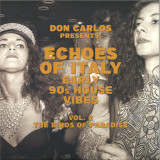
Volume 1 of this expertly curated project of 90s Italian House - put together by Don Carlos.
If Paradise was half as nice… by Fabio De Luca.
Googling “paradise house”, the first results to pop up are an endless list of European b&b’s with whitewashed lime façades, all of them promising “…an unmatched travel experience a few steps from the sea”. Next, a little further down, are the institutional websites of a few select semi-luxury retirement homes (no photos shown, but lots of stock images of smiling nurses with reassuring looks). To find the “paradise house” we’re after, we have to scroll even further down. Much further down.
It feels like yesterday, and at the same time it seems like a million years ago. The Eighties had just ended, and it was still unclear what to expect from the Nineties. Mobile phones that were not the size of a briefcase and did not cost as much as a car? A frightening economic crisis? The guitar-rock revival?! Certainly, the best place to observe that moment of transition was the dancefloor. Truly epochal transformations were happening there. From America, within a short distance one from the other, two revolutionary new musical styles had arrived: the first one sounded a bit like an “on a budget” version of the best Seventies disco-music – Philly sound made with a set of piano-bar keyboards! – the other was even more sparse, futuristic and extraterrestrial. It was a music with a quite distinct “physical” component, which at the same time, to be fully grasped, seemed to call for the knotty theories of certain French post-modern philosophers: Gilles Deleuze, Félix Guattari, Paul Virilio... Both those genres – we would learn shortly after – were born in the black communities of Chicago and Detroit, although listening to those vinyl 12” (often wrapped in generic white covers, and with little indication in the label) you could not easily guess whether behind them there was a black boy from somewhere in the Usa, or a girl from Berlin, or a pale kid from a Cornish coastal town.
Quickly, similar sounds began to show up from all corners of Europe. A thousand variations of the same intuition: leaner, less lean, happier, slightly less intoxicated, more broken, slower, faster, much faster... Boom! From the dancefloors – the London ones at least, whose chronicles we eagerly read every month in the pages of The Face and i-D – came tales of a new generation of clubbers who had completely stopped “dressing up” to go dancing; of hot tempered hooligans bursting into tears and hugging everyone under the strobe lights as the notes of Strings of Life rose up through the fumes of dry ice (certain “smiling” pills were also involved, sure). At this point, however, we must move on to Switzerland.
In Switzerland, in the quiet and diligent town of Lugano, between the 1980s and 1990s there was a club called “Morandi”. Its hot night was on Wednesdays, when the audience also came from Milan, Como, Varese and Zurich. Legend goes that, one night, none less than Prince and Sheila E were spotted hiding among the sofas, on a day-off of the Italian dates of the Nude Tour… The Wednesday resident and superstar was an Italian dj with an exotic name: Don Carlos. The soundtrack he devised was a mixture of Chicago, Detroit, the most progressive R&B and certain forgotten classics of old disco music: practically, what the Paradise Garage in New York might have sounded like had it not closed in 1987. In between, Don Carlos also managed to squeeze in some tracks he had worked on in his studio on Lago Maggiore. One in particular: a track that was rather slow compared to the BPM in fashion at the time, but which was a perfect bridge between house and R&B. The title was Alone: Don Carlos would explain years later that it had to be intended both in the English meaning of “by itself” and like the Italian word meaning “halo”. That wasn’t the only double entendre about the song, anyway. Its own very deep nature was, indeed, double. On the one hand, Alone was built around an angelic keyboard pattern and a romantic piano riff that took you straight to heaven; on the other, it showcased enough electronic squelches (plus a sax part that sounded like it had been dissolved by acid rain) to pigeonhole the tune into the “junk modernity” section, aka the hallmark of all the most innovative sounds of the time: music that sounded like it was hand-crafted from the scraps of glittering overground pop.
No one knows who was the first to call it “paradise house”, nor when it happened. Alternative definitions on the same topic one happened to hear included “ambient house”, “dream house”, “Mediterranean progressive”… but of course none were as good (and alluring) as “paradise house”. What is certain is that such inclination for sounds that were in equal measure angelic and neurotic, romantic and unaffective, quickly became the trademark of the second generation of Italian house. Music that seemed shyly equidistant from all the rhythmic and electronic revolutions that had happened up to that moment (“Music perfectly adept at going nowhere slowly” as noted by English journalist Craig McLean in a legendary field report for Blah Blah Blah magazine). Music that to a inattentive ear might have sounded as anonymous as a snapshot of a random group of passers-by at 10AM in the centre of any major city, but perfectly described the (slow) awakening in the real world after the universal love binge of the so-called Second Summer of Love.
For a brief but unforgettable season, in Italy “paradise house” was the official soundtrack of interminable weekends spent inside the car, darting from one club to another, cutting the peninsula from North to centre, from East to West coast in pursuit of the latest after-hours disco, trading kilometres per hour with beats per minute: practically, a new New Year’s Eve every Friday and Saturday night. This too was no small transformation, as well as a shock for an adult Italy that was encountering for the first time – thanks to its sons and daughters – the wild side of industrial modernity. The clubbers of the so-called “fuoriorario” scene were the balls gone mad in the pinball machine most feared by newspapers, magazines and TV pundits. What they did each and every weekend, apart from going crazy to the sound of the current white labels, was linking distant geographical points and non-places (thank you Marc Augé!) – old dance halls, farmhouses and business centres – transformed for one night into house music heaven. As Marco D’Eramo wrote in his 1995 essay on Chicago, Il maiale e il grattacielo: “Four-wheeled capitalism distorts our age-old image of the city, it allows the suburbs to be connected to each other, whereas before they were connected only by the centre (…) It makes possible a metropolitan area without a metropolis, without a city centre, without downtown. The periphery is no longer a periphery of any centre, but is self-centred”.
“Paradise house” perfectly understood all of this and turned it into a sort of cyber-blues that didn’t even need words, and unexpectedly brought back a drop of melancholic (post?)-humanity within a world that by then – as we would wholly realise in the decades to come – was fully inhuman and heartless. A world where we were all alone, and surrounded by a sinister yellowish halo, like a neon at the end of its life cycle. But, for one night at least, happy.
Scientists from Stereo 45 headquarters have finally translated the warp code sequence, opening up a parallel-time-rift connection across the vast known universe. They've enlisted the help of Tim Reaper, Dwarde, DJ Sofa, Nectax & Sketchy Rida to venture into the portal and report back their findings in the form of club-ready atmospheric Jungle.
![The Council [Stekker & DJ Sofa] - We Must Proceed / On One](https://www.deejay.de/images/l/2/8/1126128.jpg)