Pittsburgh synth wonder and beatmaker BusCrates presses two brand new tracks onto translucent vinyl for this cutting 7". On the A side, Anda channels her inner Gwen Guthrie on "Drift," with an anthem for the uncompromising types who will never hide their bright burning light. Lifted from BusCrates upcoming EP Altitude, "Drift" finds Buscrates and DJ Epik combining their arsenal of vintage synthesizers to produce a sophisticated, yet lowrider-ready boogie jam that recalls Deodato's overlooked work with the aforementioned Guthrie. On the back side, vinyl-exclusive "Serenity" is an instrumental offering that picks up the pace without disturbing the Minimoog meditation session.
Suche:dj synthesizer
Mr Bongo is proud to present an official reissue of Zé Rodrix E A Agência De Mágicos ‘O Esquadrão Da Morte’. Written, arranged and composed by the genius of Zé Rodrix and performed by his band 'Agência de Mágicos’, this Brazilian library funk beauty is the soundtrack to Carlos Imperial's 1975 film of the same title. Echoing European soundtrack maestros such as Roy Budd and Ennio Morricone, but with a Brazilian swagger, Zé Rodrix's score is a sublime gem that needs rediscovery.
Rich in 70's soundtrack cool, the score is packed with orchestrated jazz, chase scene-funk, breaks, psychedelic freakouts and plenty of drama. The loose and quirky break-beat jazz-funk of 'Assalto' feels almost tailor-made for today's hip-hop production aesthetic. The opening drum break of 'Esconderijo' is a sampler’s dream and has already been reinterpreted by the Turkish Rapper Anıl Piyancı, as well as Brazil's DJ Caique.
Carlos Imperial was a jack of all trades. As a songwriter and music producer, he created a highly impressive back catalogue. It includes working with or writing songs for Tim Maia, Elza Soares, Brigitte Bardot, and Wilson Simonal. He also co-wrote the rare cult Brazilian 7" compacto 'Lindo Sonho Delirante (L. S. D') by Fábio. Carlos Imperial wrote liner notes and was an actor, filmmaker, television presenter, and media figure. His film 'O Esquadrão da Morte' is a violent heist movie starring Beto Bandeira, Claire Chevalier, and Baby Conceicao; in the vein of exploitation films and gritty, raw B-Movie cinema of the day. Both the film and album share striking, macabre artwork by artist Benicio.
The instrumentalist, arranger, and singer-songwriter Zé Rodrix has a musical achievements list that is also one to admire. He’s worked with the cream of Brazilian music, having written songs covered by the greats, including Quarteto Em Cy, Ronald Mesquita, Elis Regina, Karma, and Célia, to name just a few. His written arrangements have graced the music of Luli Lucinha E O Bando and Helio Matheus. He was a member of the iconic group Som Imaginário and played piano and synthesizer on Secos & Molhado's classic 1973 album.
We are super pleased to make this dusty treasure available again. It is a wonderful soundtrack score that more than holds its own with its European and American counterparts of the era.
The Acidboychair music project started in the early noughties as a commentary on what journalist Simon Reynolds would summarise a few years later as Retromania. Initially conceived by Thomas Baldischwyler and Andreas Diefenbach as a performative revival travesty with large-format drum computers and synthesizers reconstructed from cardboard, everything took a surprising turn when DJ Mooner (the man behind the now defunct Munich music label Erkrankung Durch Musique) took an interest in the adventurous audio material produced by Baldischwyler. In 2005, the LP 1987 (EDM1016), produced almost exclusively with long-forgotten software (SoundEdit 16, RB-338, etc.), was released on Mooner's label. As a result of the growing number of bookings, Baldischwyler had to think about improving the performability of his intentionally amateurish productions. Fortunately, the Ableton Live programme became a DAW with a MIDI sequencer and support for VST plug-ins as early as 2004 - and this made it easier for him to execute his intuitive, error-friendly version of acid house. This can be heard on the first two sample-heavy tracks on the A-side of Come Down Easy, which were recorded in 2005 and 2006 respectively at Acidboychair gigs at Hamburg's Golden Pudel Club and Munich's Registratur. The first two tracks on the B-side (produced sometime between 2006 and 2008) were actually supposed to be part of a solo release on the Acido label run by Dynamo Dreesen, but this never materialised. However, the final tracks and the 133.3 BPM lock grooves that follow are the title and central to this catalogue number TBG123: Through ethno-musicologist Arthur Boto Conley, who had already released a one-sided 12 on his label with material from one of Baldischwyler's audio installations, he met Florian Meyer (Don't DJ) and Marc Matter (Spoken Matter), who introduced him to their collaborative project Institut F?r Feinmotorik (IFFM). Baldischwyler's attempt to approach the sound aesthetics of IFFM led to the tape 60 Minutes Of Barely Modified Lock Grooves (TCCC06), recorded in Rome in 2018. A buyer of this tape introduced him to the Detroit collective Pure Rave, which he immediately contacted and introduced to the work of the IFFM. It was important for Baldischwyler to have an analogue update made and so both the Detroiters and IFFM, who now live in Berlin, were given 8 copies of EDM1016's backstock to remix the material in their own way. At their jam in Detroit, Pure Rave opted for the almost identical material that IFFM had also used for a live performance in the Hamburg project space Beek. The dominant jumps in both arrangements come from the track Eightyseven, produced in the early 2000s for the LP 1987, an awkward remix of the Spacemen 3 track Come Down Easy, which is also referred to in the liner notes on the inner sleeve of TBG123. The almost two-decade-old revival idea thus turns into false memory syndrome and runs into a - in keeping with our times - clean-cut (endless) groove. Kassem Mosse (The KM of MM/KM) on Come Down Easy after a first listening session: I think it all works very well as a mix, no matter where you start it carries you further forward back in the loop. if I understand the liner notes correctly, it's about the music's turn from tradition preservation (doing everything right) to ecstatic delusion (not doing everything right when intoxicated). Now that I'm reading again instead of listening, the titles give me a different understanding of the connections; how the skipping belongs together, which playtime is connected. Now I can name my favourites. Thank you for the journey!
The Equatoguinean Norberto de Nöah established in Madrid in the early 80s, where he became a firebrand of African culture in the vibrant Movida. In 1988 he self-released his first solo album, a blend of homeland sounds —modern and traditional— with new synth and drum machine touches. The vanished album finally gets its well-deserved reissue.
Edition of 500 albums on vinyl (Bandcamp download code included) - Original artwork with new 14 pages insert and poster
In the mid-1980s, the European media, music industry and public became increasingly interested in African music. This was a period of international success for King Sunny Adé, Salif Keita, Youssou N’Dour, Ray Lema, Touré Kunda, etc. Spain, with its own particular conditions, wasn’t oblivious to the phenomenon and the Equatoguinean Norberto de Nöah may be its best exponent.
Norberto moved in the early eighties from his hometown in the island Fernando Po (now known as Bioko) to its former colonial capital, Madrid. While studying dramatic arts, he created and led the band Nohkis, made up of African and Spanish musicians. In 1985 they released the maxi-single “Mujer española” / “África, ¿dónde está tu gloria?”, and the song “El loco”, was released on a compilation LP called Esto es increíble, both on the label Lollipop. According to the journalist Patricia Godes, they were first artists to record an African music record in Spain. It received positive reviews and a great impact on the most independent side of Madrid’s La Movida movement. Very soon afterwards, Nohkis’ band split up.
Afterwards, Norberto would concentrate on his solo career, and Norberto de Nöah and The Böhöbé Spirits Müsic was released in 1988, definitely a solo album. Norberto created his own label, Kilimandjaro Productions, and composed, arranged and produced all the songs of the LP. Moreover, he sang and played all the instruments: a vast selection of organic instruments, a Yamaha RX-5 drum machine and a Roland D-50 synthesizer.
In the album he exposed his deepest roots, updating the lexicon of traditional Bubi music, the musician’s ethnic group, a compendium of ceremonial melodies that ancient troubadours composed for the court. Doing so he showed new possibilities to one of the oldest ethnic groups in the world. Besides all this, he was also inspired by American music such as funk, R&B, Latin American music and also by a wide range of African and Caribbean rhythms.
Mixing the traditional and the avant-garde in a spontaneous and natural way, the music contained in the record’s grooves flows freely and takes you to places full of magic and mystery, while still transmitting new and exciting sensations. Even more, according to the Equatoguinean musician and writer Baron Ya Búk-Lu based in Madrid, the album’s sound was “the perfect combination of all characteristics that defined the Equatoguinean Afropop music made in Madrid during the 1980s”, a story that still needs to be told in all its depth and intensity!
Following the release of two LPs and several singles, the activity of Norberto de Nöah and Kilimandjaro Productions (and the subsequent Bananas Podridas) ceased. Nevertheless, Norberto’s links to music continued, as a promoter and DJ in Madrid’s nightlife.
Norberto de Nöah contributed greatly to changing Spain’s musical landscape, breaking barriers and mental frameworks. He was the first to make contemporary and popular Guinean music known to the Spanish public.
The repercussions in the African market of a Spanish (and Bube) speaking African musical project, where English and French dominate, was very difficult. In addition, the passage of time and changes in phonographic formats have diluted the memory of Norberto's legacy. Now it’s time to reverse the situation and break all the outdated frontiers!
Norberto de Nöah and The Böhöbé Spirits Müsic, as every important music piece, was at the same time part of a universal phenomenon of recognition of African music and a very personal project, based on the artist’s nostalgic and heartfelt need to show and homage his ethnic group, the Bubis. In this process he also refreshed his hometown music legacy, giving it a new air and opening the door to lots of other great Equatoguinean artists coming afterwards, as well as being an inspiration for many musicians in Spain.
- A1: For The Highest Quality Listener Testing The Limits
- A2: Sound Within Sound
- A3: Surfing, In Manhattan
- A4: Excellent Traveler Theme
- B1: Infinite Places Of Possibility / Horse
- B2: Continually Cresting
- B3: I Am In The Fire Place
- B4: Worlds Beyond (Into It)
- B5: Worlds Upon Worlds
- C1: Watershed, In Oakland
- C2: Ears As Eyes (Benton, Tujunga, Mayer)
- C3: Immersive Realization Landscape
- C4: From One Place To Another
- C5: Juniper's Theme
- D1: Djinn
- D2: Sky Spine Curving Into The Horizon
- D3: Awayness
Red vinyl[29,37 €]
Der Multi-Instrumentalist Nate Mercereau hat sein neues Album Excellent Traveler auf Third Man Records angekündigt. Das phantasievolle Album
besteht aus einer Vielzahl von Sounds, die Mercereau auf seinen Reisen, in seinem Alltag und bei seinen Studiosessions mit Künstlern wie André
3000, Shabaka Hutchings, Kamasi Washington, Carlos Niño und anderen aufgenommen hat.
Als kreativer Künstler an der Spitze des modernen Klangs setzt Mercereau gitarrengesteuerte Samples und Synthesizer ein, um eindringliche,
multidimensionale Landschaften zu schaffen, und lädt den Hörer ein, unendliche Räume der Möglichkeiten zu erkunden.
For the DJs we present a 7" single of Gorjeios b/w Jararaca Snake (Remix)! The a-side, Gorjeios, is a hypnotic blend of Brazilian rhythms and dreamy melodies. Zé Nigro’s ethereal vocals intertwine seamlessly with Arthur Verocai’s instrumental magic. The b-side, a remix version of Jararaca Snake, is a pulsing dub synthesizer journey featuring Zé Nigro’s effected vocals describing his endless quest for knowledge of why we are here.
Repress!
You know it's going to be a heavy record when DJ / collector Mr Thing asks you to keep a look out for a copy on your next digging trip to Brazil. Add on top of that, being sampled by Madlib on the track 'Curls’ on his Madvillain album!
Taken from Waldir Calmon's 'Waldir Calmon E Seus Multisons' album on Copacabana (1970), from looking at this unassuming record cover featuring a middle-aged man sporting an impressive pair of glasses you wouldn't expect it to become the fabric to one of the songs from the iconic 'Madvillain’ album. But… like many things in life, you shouldn’t judge a book by its cover. 'Airport Love Theme’, like its name suggests, falls into full-on lounge territory. It’s feel-good music made to be the soundtrack for a utopian world that never really was. Yet behind the silky-smooth groove is an addictive earworm waiting to be heard.
'Afro Son' taken from the same album, pushes things in a different direction towards a sound that is more firmly rooted in the Brazilian tradition. This quirky 60's-breakbeat-funk groove is reminiscent of French artist Jean Jacques Perrey's 'E.V.A.', also from 1970, in its melody and backbeat, where the Moog synthesizer of Perrey is replaced with a more orchestrated sound by Calmon. This track is magical, cinematic and breakbeat-laden with a hidden unknown exoticism.
Waldir Calmon had an active career in music working from the '50s right up until his passing in 1982. His career started early, forming his first ensemble at the age of fourteen, originally working in bands in nightclubs and writing jingles. He progressed in the early '50s to a long-running career working in television. In addition to his television work, he had success with his recording vocation, mixing in the same musical circles as greats such as Tom Jobi, João Gilberto and Doris Monteiro.
• Next installment in BRAZIL 45 Series.
• Sampled by Madlib on the track ‘Curls’ from his ‘Madvillain’ album.
• Quirky, cinematic, breakbeat-laden exoticism.
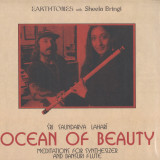
Multi Culti World Records venture deeper into the new new age with the release of 'Ocean of Beauty - Meditations for Synthesizer and Bansuri Flute,' a collaboration between California-based artist/DJ Earthtones and Indian classical musician Sheela Bringi. Earthtones, fresh off his genre-defying debut album on Wonderwheel, here dives into the deep end of the ocean of ambient. With music that traverses cultures,he’s known for bridging influences from Cumbia to hip hop and house music. Here he presents his most consciousness-expanding work yet, no doubt influenced by his involvement in Ojai new age culture,years living in ashrams, practicing Shaktism,+ spending as much time curating sounds suitable foraural healing and meditation as for dance-floors. He’s found a perfect muse in Boulder-based Sheela Bringi, whose virtuosity in Indian classical music sets the tone of the record with her bansuri (Indianbamboo flute) & harp, blending traditional instrumentation with more contemporary influences. Bringi was a direct disciple of bansuri master GSSachdev, and represents a devotional musical lineage. She has released two solo albums, 'Shakti Sutra' and 'Incantations,' and her work has been featured on over 50 world and ambient records, plus publicly on outlets from NPR to NBC News, & more. 'Ocean of Beauty' is the English translation of an ancient Sanskrit text devoted to the divine mother, the Sri Saundarya Lahari, The song titles are taken from verses in that text, and the album is in fact a dedication to the goddess Lalita Devi. It creates a serene, meditative space which seamlessly blends traditions; synth-driven ragas with a spirit of tranquility that nurtures Multi Culti’s philosophical bent towards ‘music without borders.’
Lennon & McCartney. Simon & Garfunkel. Ralf & Florian. Enema & GeJonte. The inventors of modern pop music as we know it. Joining forces in 1988, Orebro duo Kai Parviainen and Jonas Ohlsson put out four cassettes and a split album with Frak under the Enema & GeJonte guise, all teeming with clever and funny electronic pop songs. The sound? Imagine Duet Emmo jamming out with the Residents on a wheat field on Narkeslatten. Or picture early Severed Heads covering lost Philemon Arthur & The Dung tapes. Kai pushes his Sequential Circuits Pro-One synthesizer to its limits while Jonas makes discerning observations on everyday life in a Swedish small town. Mostly sung in Swedish, sometimes in English, but always with a touch of sweet naivety and innocence on par with lo-fi punk/pop geniuses Dan Treacy and Daniel Johnston. Typical song subjects: A friendly game of five-a-side football. The joy of rising at the crack of dawn to get on with the tasks of the day. A bus journey to Odensbacken to savour a semla at a local cafe and some small talk with the gas station manager. All delivered with a playfulness and ecstasy more commonly found on the records with Swedish Christian music Kai so devotedly collects than in contemporary industrial or electronic music. When Jonas moved to Amsterdam in 1996 the boys ceased making music together, leaving behind a treasure trove of unreleased material, some of which appeared on a couple of cassettes in the 00's. But the best stuff has remained buried until now. How dada pop gems like ''Joxa med trasan'' and ''Underground'' could dwell in obscurity for thirty-ish years beggars belief. Other standout tracks on this compilation: ''Plan 714 till NYC'', a wonderful waltz time instrumental performed in the vein of a drunken Bob Hund, and the En Halvkokt I Folie style cut up experiments of ''Gasten Harry''. So get ready for a glorious blast from the past, as the Swedish pioneers of the hypnotic groove cordially invite you to a sonic journey as adventurous and memorable as a trip on the lansbuss to Odensbacken. Get on board, grab a seat and enjoy the ride. Liverpool. New York City. Dusseldorf. Orebro. // Ulf Osterstrom
The Boysnoize Records catalogue contains more than a decade of milestones in the life of Angeleno DJ and producer PILO. His signatures—a focus on sound design, and a digital crunch evocative of hardware rather than software—are present from the very beginning, but the evolution of Pilo’s skill and sophistication is clear as he stretches from electro to experimental to techno and back again in a slowly oscillating gradient. Yet despite his dozen or so releases in just as many years, G.L.A.M. (dropping November 8th, 2024 from BNR) is Pilo’s first proper album. That the record embraces the cyclical nature of time is apropos; the artist’s journey towards self-actualized mastery always ends with a new beginning.
Over the eight tracks of G.L.A.M., Pilo reaches deep into the dream that first ignited the passion that has driven him since. For a chosen few internet-connected American teens in the aughts, the sounds of European electro (and electroclash) trickled down their ethernet cables and instilled a fantasy of exotic, sartorial, sexually-fluid hedonism that felt a world away from the hard-edged masculinity of the hip-hop and skate cultures dominant at home. Pilo opens G.L.A.M. expressing this idealized fantasy with the track “Superstar DJ,” channeling the tongue-in-cheek self-celebritizing of Miss Kitten and The Hacker’s seminal work. “I’m a superstar, come meet me at the bar,” hiss Pilo’s heavily effected vocals, over a bassline of chopped mentasm synths driven by a swift, club-ready rhythm. The fingerprint of 2000’s electro a la International Deejay Gigolo Records is recognizably present, yet Pilo is too adept, too confident in his studio abilities to let his tracks rely on the retro. A great joy of this album is the future-facing richness of its production, always nodding to its spiritual guide of the past, while constantly breaking new sonic ground.
G.L.A.M. continues with “Girls Rule The World,” its vicious, droning bassline and sticky, titular hook making it the perfect electroclash soundtrack for a revenge plot on an ex-boyfriend. “What you Want” offers an instrumental exercise in “synthesizers are the new guitars,” and Pilo’s FX chops really shine as he warps and distorts his sounds into an undiscovered dimension existing somewhere between both. “Loverboy” enters the more melodic, Legowelt-inspired realm of electro, pushing above and beyond the foundation of analogue minimalism with flourishes of impressive sound design to construct something both climactic and cathartic. Scopa lends her perfect coldwave sprechgesang to titular track “G.L.A.M.,” with Pilo’s vocal processing offering surprises throughout and his FX chains wielded as instruments unto themselves.
On the track “A Slow Thinning Halo,” Pilo might be conjuring the haunting vocal chops and chiptune simplicity of early Crystal Castles, but the whiplash snap of his drums and sizzling production are all his own. “Spend the Night” is G.L.A.M.’s least nostalgic—and most unashamedly pop—offering, with the mic being passed between Sana and DEEVIOUS (previously featured on Pilo and Boys Noize’s 2023 track “Pvssy.”) DEEVIOUS’ sultry singing rides atop the bassline as it hypnotically struts across the floor, while Pilo’s skillful arrangement, deft rhythm programming, and atmospheric control elevate the songcraft into full-spectrum worldbuilding.
As the penultimate track, the contemporaneity of “Spend the Night” serves as transition away from the album’s previous, past-leaning exercises, allowing Pilo to step fully into the future with “One Last Embrace.” The closing track still references aughts sounds, but it borrows so widely and prolifically that Pilo’s reassemblage can only be described as singular. Here, Pilo pushes his engineering into psychoacoustic territory, as the eerie, beautiful melancholy of “One Last Embrace” explodes into a thrashing bassline that warbles like a drowning memory, struggling against the sinking weight of time. Pilo allows it to survive for 16 electrifying, gut-wrenching bars before letting go. In G.L.A.M., as in Pilo’s career, as in life, every ending can only be a new beginning.
Unbound by place or genre, mercurial, experimental pop duo Soft as Snow find freedom to intuitively reflect the disarray of human connection with their intricate, shape-shifting pop production. With each successive release, the duo evolves, unfurling into their own poetic sound, now fully realized on their intimate, third full-length, Metal.wet.
The oft-present trappings of male-female duos are eschewed here as the Berlin-based Oda Starheim and Øystein Monsen contribute equally across a canvas of analogue synthesizers, samplers, live drums, and processed guitars. At once a part of and yet apart from the zeitgeist, their forward-thinking modernity stretches the limits of expectations across Metal.wet's ten insouciant tracks. Fans of Tirzah, Hype Williams, and even Angelo Badalamenti will find much to love in this haunting work peppered with ASMR moments and rough sampling wrapped in high production –– twinkling glasses and sirens in the distance, rhythms and voices up front. The result is synth-driven, noisy, and dripping with laidback, confident sensuality.
Although Starheim's voice begins the album in a whisper, it quickly becomes apparent that the group has jettisoned their previous tendency to bury and distort her vocals. Nested in a bed of thorny electronics and broken rhythms, her multifaceted vocals might bring to mind Kazu Makino of Blonde Redhead or Hope Sandoval fronting Massive Attack. London MC Brother May (Mica Levi, CURL) makes an appearance on the driving and ethereal “Whip,” while Øystein’s own voice appears for the first time in a state of languid background haze.
Soft as Snow create and record across Europe. Defiantly averse to genre, the pair become vessels for their “electronic music pushed to the brink of collapse” (The Wire), previously released by Infinite Machine and Houndstooth. Informed by backgrounds in film and performance art, “there’s a surrealism that comes with watching Soft as Snow in the flesh,” (Vice) as seen at L.E.V. and Lunchmeat Festivals. Collaborations with visual artist Guynoid, designer AGF Hydra, and sculptor Camilla Steinum add depth to the corporeality of their “strange, mesmerising and utterly unforgettable” electronic experimentations. (DJ Mag).
- For The Highest Quality Listener Testing The Limits
- Sound Within Sound
- Surfing, In Manhattan
- Excellent Traveler Theme
- Infinite Places Of Possibility / Horse
- Continually Cresting
- I Am In The Fire Place
- Worlds Beyond (Into It)
- Worlds Upon Worlds
- Watershed, In Oakland
- Ears As Eyes (Benton, Tujunga, Mayer)
- Immersive Realization Landscape
- From One Place To Another
- Juniper's Theme
- Djinn
- Sky Spine Curving Into The Horizon
- Awayness
Black vinyl[26,68 €]
Der Multi-Instrumentalist Nate Mercereau hat sein neues Album Excellent Traveler auf Third Man Records angekündigt. Das phantasievolle Album
besteht aus einer Vielzahl von Sounds, die Mercereau auf seinen Reisen, in seinem Alltag und bei seinen Studiosessions mit Künstlern wie André
3000, Shabaka Hutchings, Kamasi Washington, Carlos Niño und anderen aufgenommen hat.
Als kreativer Künstler an der Spitze des modernen Klangs setzt Mercereau gitarrengesteuerte Samples und Synthesizer ein, um eindringliche,
multidimensionale Landschaften zu schaffen, und lädt den Hörer ein, unendliche Räume der Möglichkeiten zu erkunden.
This release documents the coming together of two fallible musical instrument systems and their creator-operators. In June 2023, Graham Dunning's Mechanical Techno and Sam Underwood's Acoustic Modular System took a train journey to Galerie Paradise in Nantes, France. Following a period of exploration, points of cohesion, jeopardy and happenstance were exploited to create these nine unruly pieces that appeared initially on the ultra-limited vinyl release on the gallery’s record label. Now they celebrate a new pressing of Beaux Timbres on Accidental.
Using innovative methods, they create abstract, rhythmical and textural experimental soundscapes. Graham uses an extended turntable: a regular DJ turntable with numerous sensors, modified vinyl records and synthesizers creating irregular rhythmic patterns. Sam presents his Acoustic Modular System: a device for creating acoustic sounds with bellows, feedback and chaotic sequencers.
Unreleased themes from Kornelije Kovac for commissioned documentary short 'Raport iz Sarajeva', directed by Miodrag Zdravkovic in 1982. This music themes precede the official songs, idents and audio logos for the XIV Winter Olympic Games Sarajevo 1984 opening ceremony made by Kornelije Kovac in his Belgrade based studio from 1982 to 1984. Sourced from the original master tapes with full color artwork by Eric Adrian Lee. Includes insert with photographs from Kornelije Kovac private collection and liner notes by Zeljko Luketic. XIV Winter Olympic Games in Sarajevo 1984 had immeasurable status in the history of Yugoslavia and is widely recognized by organizing committee to be the best in recent history of the Games. However, they were also the pop-culture melting pot of the times, with posters by Andy Warhol and famed local designers and the music by Kornelije Kovac, leading the selected best-of-the-best composers of the times. The recordings on this release share the same musical approach to melody and structure Kornelije Kovac (1942 - 2022) was using at the beginning and the mid of 1980s: while exploring the possibilities of synthesizer, fresh from his collaborations in London with famed composer Hans Zimmer, and almost a decade since he shared Eurovision Song Contest stage with ABBA in Brighton with his Korni Grupa, He also collaborated with Bernie Marsden (Whitesnake), Paul Jones (Manfred Mann) and Andy Pask (Landscape) among others. Kornelije Kovac always insisted on the freshness of the harmony layers combined with DJ friendly rhythm backing track. With the warm analogue feel that resonates in today's digital world this was chosen for a purpose to be an old-school 12'' maxi-single, as it was intended to be, cut loudly for the sakes of all lost and existing discotheques in Sarajevo and all over the world.
- A1: Jun Sato - Lorang
- A2: Fumihiro Murakami - Miko
- A3: Tadahiko Yokogawa - Stop Me
- A4: Love Peace Trance - Yeelen
- B1: Ichiko Hashimoto - Lete
- B2: Yosui Inoue - Pi Po Pa
- B3: Eiki Nonaka - Phlanged Vortex Clip
- C1: X Cara - Night In Aracaju
- C2: Poison Girl Friend - Nobody
- C3: Dream Dolphin - Take No Michi
- D1: Keisuke Sakurai - Harai Cd Version
- D2: Hiroki Ishiguro - Unity
- D3: Dido Shizuru Ohtaka Michiaki Kato - Mermaid
- D4: Keisuke Kikuchi - Retro Electric
2024 repress
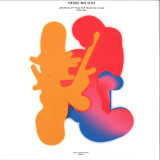
Music From Memory is excited to announce a special compilation that they’ve been working on for some time now; MFM053 – VA – Heisei No Oto – Japanese Left-field Pop From The CD Age (1989-1996). Compiled by long-time friends of the label, Eiji Taniguchi and Norio Sato, Heisei No Oto delves into a world of music released almost exclusively on CD and brings together a fascinating selection of discoveries from a little known and overlooked part of Japan’s musical history.
The last ten or so years have seen a global wave of interest in Japanese music encompassing ambient, jazz, new wave and pop records from the 1980s, some of which is increasingly considered the most innovative and visionary music of that time. Although some music from this period, in the form of ‘City Pop’ or ‘rare groove’ records, had been coveted by collectors and DJs for a number of years, most Japanese music from the time was little known outside and often even within Japan.
Sometime around the mid 2000s, two Osaka record store owners, Eiji Taniguchi of Revelation Time and Norio Sato of Rare Groove, along with a handful of deep Japanese diggers such as Chee Shimizu of Organic Music records in Tokyo, began to explore beyond the typical ‘grooves’ or ‘breaks’. Much like their counterparts in Europe and the US, they began delving into home-grown ambient, jazz, new wave and pop records, discovering visionary music, often driven by synthesizers or drum computers, that broke beyond the typical confines of their genres.
Spending tireless hours in local record stores and embarking on digging trips across the country, Eiji Taniguchi and Norio Sato, much like Chee Shimizu, have been at the forefront of unearthing and introducing many of the very Japanese records now loved and sought after around the world. Yet as YouTube algorithms and vinyl reissues would transport such music into the global consciousness and demand and therefore scarcity intensified for such records, so Eiji and Norio have recently begun to turn their attention to CDs.
The title of the compilation Heisei No Oto refers to the sound of the Heisei era, which began in 1989 and corresponds to the reign of Emperor Akihito until his abdication in 2019. Marking the culmination of one of the most rapid economic growths in Japanese history, 1989 also coincided with the music industry’s final shift away from vinyl in favour of CDs. And, although compact discs were first introduced seven years earlier it wasn’t until late into the ‘80s that, beyond dance music labels, CDs became the exclusive format for major and independent labels in Japan and throughout the world.
This however didn’t signal the end of the innovation in Japan. Many of those same musicians who have become known for their work in the ‘80s would continue to produce outstanding music well into the mid ‘90s, as greater innovation and advances in musical equipment allowed Japanese musicians and producers to refine and explore new sounds. While musicians such as the seminal Haruomi Hosono, whose productions feature on a number of tracks, would continue to push the boundaries of these new technologies, these technological advances also meant less established musicians were able to make use of increasingly affordable but state-of-the-art equipment.
Including music by Haruomi Hosono as well as Yasuaki Shimizu, Toshifumi Hinata and Ichiko Hashimoto who have become known and loved around the world in recent years, Hesei No Oto also features Japanese pop star Yosui Inoue, producers Jun Sato and Keisuke Kikuchi in aaddition to less established artists from the contemporary, jazz, new wave, pop and dance music scenes. Bringing together a selection of tracks that seem to define these specific genres and in fact move fluidly between a number of them, the music on the compilation is again underscored by experimentations with synthesizers and drum computers though with something of a gentle Pop sensibility. Reimagined here then under the encompassing term ‘Left-field Pop’, this is an exciting chapter in Japanese musical history that has only just begun to be fully explored.
VA - Heisei No Oto - Japanese Left-field Pop From The CD Age (1989-1996) is a 2xLP/2xCD that includes liner notes by Chee Shimizu and artwork by Hagihara Takuya and is released on February 28th.
Bereiten Sie sich darauf vor, mit der kommenden Veröffentlichung von Iptamenos Discos aus Berlin in ein Reich der klanglichen Verzauberung entführt zu werden. Boys' Shorts, das dynamische Queer-Duo aus Griechenland, bestehend aus Vangelis (ehemals LAGASTA) und dem in London lebenden Tareq, wird seine neue "Something To Forget" EP veröffentlichen, begleitet von fesselnden Remixen von Gabe Gurnsey und Whitesquare.
Nach ihrer von der Presse hochgelobten "New Era" EP, welche bei RBB Radioeins Monatelang auf höchster Rotation lief, und dem Remix für Local Suicide’s "Eros Anikate" sind Boys' Shorts mit "Something To Forget" zurück auf Iptamenos Discos. Das Duo besteht aus Vangelis und Tareq, die seit über einem Jahrzehnt befreundet sind und ein äusserst erfolgreiches Jahr hinter sich haben, mit einer Reihe von Veröffentlichungen auf Permanent Vacation, Live At Robert Johnson, HE.SHE.THEY & Pets Recordings und DJ-Sets in angesehenen Venues wie dem Londoner E1 und dem Berliner Berghain sowie einem offiziellen Remix für Alison Goldfrapp und als Support auf ihrer Tour. "Something To Forget", die erste Single und gleichzeitig Titeltrack, beginnt mit einem starken Kick und einer markanten Snare, die durch den Mix drückt und zu einer treibenden Kraft wird, die den Track verankert. Die federnde und energiegeladene Bassline steht im Kontrast zu den Texten, die etwas melancholisch sind, jedoch auf eine Art und Weise vorgetragen werden, die ihnen ein unterschwelliges Gefühl von Optimismus verleiht.
Der äußerst talentierte Produzent Gabe Gurnsey, ein regelmäßiger Gast bei Phantasy Sound und Mitglied von Factory Floor, legt einen tanzflächenorientierten Remix von "Something To Forget" vor, der das Tempo erhöht und den Fokus auf die Bassline verlagert, wobei er die Vocals anfangs nur bruchstückhaft anreißt und sie erst nach dem Break für einen Moment in voller Länge erklingen und entfalten lässt. "Flying Away" zeichnet sich durch verwaschene Synthesizer mit viel Hall und verträumte, emotionale Vocals aus, die einem im Kopf herumschwirren und zwischen fröhlich und traurig schwanken, wobei sie nie ganz auf einer der beiden Seiten landen und es dem Hörer überlassen, sie zu interpretieren. Der in Rom ansässige DJ und Produzent Whitesquare ist für den grandiosen Remix von "Flying Away" verantwortlich und wirft mit der Einführung einer euphorischen und nostalgischen Pianomelodie im Breakdown, die jedem ein Lächeln ins Gesicht und eine Welle positiver Energie auf die Tanzfläche zaubert, alle Fragen über den weiteren Verlauf des Tracks weg.
Die komplette EP mit beiden Remixen wird am 14. Juni 2024 auf allen Digital-/Streaming-Plattformen verfügbar sein und zusätzlich auf weissem 12"-Vinyl (gestempelt & nummeriert) erscheinen.
Format: Limitiertes nummeriertes & gestempeltes Color-Vinyl (weiss) im schwarzen Outersleeve mit Sticker
- A1: 2 Unlimited - No Limit
- A2: Cappella - U Got 2 Let The Music
- A3: Mc Sar & The Real Mccoy - It's On You
- A4: Haddaway - What Is Love
- A5: La Bouche - Be My Lover
- A6: E-Type - This Is The Way
- A7: Vengaboys - Boom, Boom, Boom, Boom!!
- B1: Captain Jack - Captain Jack
- B2: 2 Brothers On The 4Th Floor - Dreams (Will Come Alive)
- B3: Ice Mc - Think About The Way
- B4: B G. The Prince Of Rap - The Colour Of My Dreams
- B5: Whigfield - Saturday Night
- B6: Dj Bobo - Let The Dream Come True
- C1: Snap! - Rhythm Is A Dancer
- C2: Maxx - Get A Way
- C3: Twenty 4 Seven - Slave To The Music
- C4: Technotronic - Pump Up The Jam
- C5: Mr President - Coco Jamboo
- C6: Corona - The Rhythm Of The Night
- C7: E-Rotic - Max Don't Have Sex With Your Ex
- D1: Captain Hollywood Project - More And More
- D2: Strike - U Sure Do
- D3: Jam & Spoon Feat Plavka - Right In The Night (Fall In L
- D4: Solid Base - Mirror Mirror
- D7: Playahitty - The Summer Is Magic
- D5: T-Spoon - Sex On The Beach
- D6: N-Trance Feat Ricardo Da Force - Stayin' Alive
The vibrant genre Eurodance originated in the late Eighties in Europe and combines many elements of rap and rich melodic vocals with strong bass rhythms and cutting-edge synthesizers. The 2LP Eurodance Collected compiles the best hits from Eurodance, including Snap! ""Rhythm Is A Dancer"", Technotronic's worldwide smash ""Pump Up The Jam"", catchy sing-a-long self-titled Captain Jack track, Dutch group Vengaboys' ""Boom, Boom, Boom, Boom!!, Belgium's hit-wonder 2 Unlimited's ""No Limit"" plus 22 other guaranteed dancefloor fillers. Eurodance Collected is available on black vinyl and includes an insert.
Der Produzent, DJ, Songwriter und Musiker Roosevelt veröffentlicht sein mit Spannung erwartetes neues Album auf Counter Records! „Embrace“ ist der Nachfolger seines gefeierten Albums, „Polydans“, aus dem Jahr 2021 und ein klanglich lebendiges und zutiefst persönliches kreatives Statement des deutschen Multiinstrumentalisten, der sich schnell einen Ruf als eines der innovativsten Musiktalente der Welt erarbeitete.
„Embrace“ wurde komplett von Roosevelt (bürgerl. Marius Lauber) geschrieben, aufgenommen und produziert. Das Album enthält zutiefst persönliche Texte und gefühlvolle Instrumentalstücke, wie man sie bislang von früheren Roosevelt-Veröffentlichungen noch nicht kennt. Da er sich von der Musikindustrie entfremdet fühlte und mit dem Impostor-Syndrom kämpfte, nahm Lauber sein Heimstudio mit auf Tour, um sich wie nie zuvor voll und ganz in den Schreibprozess zu vertiefen. Mit improvisierten Setups in Städten auf der ganzen Welt hat Lauber ein Album geschaffen, das gleichermaßen intim und groß klingt, mit kaleidoskopischen Synthesizer-Arrangements und süchtig machenden Disco-Basslines. Der Titel des Albums entstammt Laubers Erkenntnis, dass viele seiner Freunde aus der Kindheit mit 30 Jahren „richtige Jobs" gefunden hätten, während er immer noch on the road war und den Lebensstil eines Künstlers lebte - der Titel „Embrace“ fungiert dabei als Hinweis an den Künstler selbst - eine Erinnerung daran, die unvorhersehbaren Wendungen des Lebens zu akzeptieren. Roosevelts ohnehin schon sehr geschäftiges Jahr 2023 folgt auf frühere hochkarätige Kollaborationen mit Nile Rodgers, Classixx und Washed Out sowie auf wichtige Remixe für Künstler:innen wie Taylor Swift, CHVRCHES, Glass Animals und Charlotte Gainsbourg.
DJ Subaru has already made their name exciting dancers with offbeat anthems and obscurities as part of their luminous Pleasuremaxxx parties, alongside similarly inclined soirees in Leeds, London, Berlin and beyond. Making their accomplished production debut on CWPT with 'Lots of Love', DJ Subaru instinctively mines the expressive, outsider strains of disco, Italo and pop pleasures in their record bag, revealing an EP that throbs with the pleasures, pain and potential of a life in strobes and smoke.
Vocalist and muse Tiss Vampiric emerges from London’s shadowy underground to lend their voice to the brooding, disco-Gothic track, ‘My Love’. Stalking a moody paradise amongst DJ Subaru’s EBM-oriented synthesizers, their baroque lyrics conjure an atmosphere that bridges the energies of subversive pioneers such as Soft Cell and Ministry, a sensual maze where denial only leads to more devotion, as well as more dancing.
Keeping the lights dim but brightening the corners, the prolific cosmic disco pioneer Prins Thomas reinvigorates his legendary ‘Discomiks’ approach for a euphoric remix of ‘My Love’. Incorporating DJ Subaru and Tiss Vampiric into a dancefloor canon that also includes Lana Del Rey, Pet Shop Boys and the Chemical Brothers, this classic arrangement has been road-tested to build euphoria, joyfully reflecting menace from mirrorballs.
The latter portion within 'Lots of Love' leaves us entirely in DJ Subaru’s musical visions. The only voice on ‘I <3 You’ is soft and robotic, intoning the track’s simple title over a lush, caramelized groove that’s pure circuits and sentiment. In contrast, the moody pads of ‘Just Visiting’ build to a crescendo of breaks and basslines that capture more urgent early hours energy, while ‘She’ provides a beautifully naive melody and a slightly balearic touch for a wide-eyed kiss goodbye.
„Prism Of Pleasure“ wurde in 18 Monaten geschrieben und fasst Elkkas Wesen als eine LGBTQI+-Künstler:in zusammen, die Freiheit und Sinnlichkeit in den Vordergrund ihrer Arbeit stellt. Das war nicht immer so: Geboren und aufgewachsen in Südwales, wo es so gut wie keine Queer-Community in ihrer unmittelbaren Umgebung gab, musste Elkka ihre Identität langsam und neugierig zusammensetzen und dabei allmählich zu sich selbst finden. Nachdem sie sich geoutet hatte und in ihren 20ern nach London zog, begann die Musikerin mit dem Auflegen, Schreiben und Produzieren, was schließlich dazu führte, dass sie ihr eigenes Plattenlabel, femme culture, gründete und ihre eigenen queeren Clubnächte veranstaltete. „Prism Of Pleasure“ ist wie ein weiblicher Blick in einen dampfenden Raum voller Wunder (ein Konzept, das sich wunderbar im pinkfarbenen Albumcover widerspiegelt, das von Elkkas Frau und langjähriger kreativer Mitarbeiterin Alex Lambert fotografiert wurde), das sich um den Begriff der queeren Intimität dreht. Von den sanften, seidigen Vocals von „Crushhh“ bis zu den sich langsam entwickelnden, gehauchten Beats von „Your Skin“ („I'm breathing you in, I want to taste every inch of your skin“) und den gleichmäßigen, wogenden Synthesizer-Mustern von „surrender2me“ entfaltet sich „Prism Of Pleasure“ wie ein Patchwork aus schweißtreibenden Nächten, emotionaler Verbundenheit und versteckten Freuden. Elkka wurde von vielen Kolleg:innen unterstützt, darunter Four Tet, Floating Points, TSHA, Caribou, Sofia Kourtesis, Jon Hopkins, Ben UFO und SHERELLE, und gewann kürzlich einen AIM Award in der Kategorie „Bester Remix“ für ihre Überarbeitung von Ela Minus' „Megapunk“. Letztes Jahr veröffentlichte Elkka eine 4-Track-EP mit energiegeladenen Club-Tools unter dem Titel „DJ Friendly“ und trug auch zur bahnbrechenden DJ-Kicks-Reihe mit einem fesselnden Mix bei, der ihre Liebe zu Frauen und der LGBTQI+-Dance-Community zum Ausdruck brachte, zu der Elkka gehört und regelmäßig in intimen Räumen und auf Queer-Partys wie in der Panorama Bar und FEEL IT auftritt.