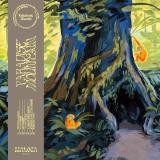
A chopped-and-screwed love letter to the sounds of rebajada – half-speed cumbia, pioneered by Sonido Dueñez in the 1990s, and born from an overheated turntable motor that didn’t make the crowd stop dancing. With Debit’s treatment, rebajada becomes an ethereal, at times intense ambient tapestry that’s also a history lesson.
Spend any amount of time pacing the streets of Monterrey, the bustling city in the north of Mexico where Delia Beatriz, aka Debit, grew up, and you’ll be sure to catch traces of cumbia echoing from Bluetooth speakers, DIY soundsystems, or car stereos. An Afro-Latin dance form and »practica cultural« originating in Colombia in the early 19th century, cumbia evolved rapidly in the early 1900s, as a localised sound played on drums and flutes quickly modernised to integrate European instrumentation like the accordion. When it reached Mexico in the 1940s, the sound shifted again, fusing with mariachi styles and integrating further vallenato folk elements. Eventually, cumbia spread across the entirety of Latin America, splintering into a spectrum of different musical styles such as chicha in Peru, and cumbia villera in Argentina. And over in Monterrey, cumbia inadvertently found its own idiosyncratic groove.
From the 1950s to the 1970s, waves of immigrants from across Mexico and Latin America headed to Monterrey to find work, making a home in Colonia Independencia. Colombian cumbia records, shipped in from Mexico City, Houston, and Miami, became the soundtrack of the neighbourhood, relaying familiar stories to a rural working class adjusting to their new industrial reality. The sound struck a chord with locals, and huge street parties hosted by ramshackle soundsystems known as sonideros unified the diverse community. So when cumbia rebajada materialised serendipitously in the 1990s, it emphasised and highlighted the memory distortions at the heart of the immigrant experience. Local record collector, selector, and sonidero Gabriel Dueñez had been playing cumbia for hours one night when disaster struck: his turntable’s motor overheated and slowed down, turning the music into a warped groan, with half-speed voices echoing over wobbly accordion drones and splashy drums. But the crowd kept dancing, and Sonido Dueñez realised he’d struck gold – cumbia rebajada was born.
Over the next few years, he dubbed a popular series of mixtapes, hawking them at the flea market on the dried-up Santa Catarina riverbed beneath El Puente del Papa, the bridge that links downtown Monterrey with Independencia. These woozy archives became the stuff of legend, poetically but subconsciously shadowing DJ Screw’s series of epochal cassettes that appeared over the border in Houston. Beatriz uses Sonido Dueñez’s first two tapes as the starting point for »Desaceleradas«, entering into a dialogue with time, culture, and geography as she recalls the sonic ecosystem that surrounded her decades ago, long before she emigrated to the USA. If 2022’s acclaimed »The Long Count« was an attempt to recover concealed pre-Columbian history in the face of colonisation, »Desaceleradas« jumps forward, figuring out how memory and shared celebration can resist a more contemporary form of cultural erasure. As AI systems scrape, blend, and decontextualise culture around us, leaving vapid slop, »Desaceleradas« proposes a slower, more careful, and ultimately more human kind of engagement. It’s an archive with a pulse.
Cerca:dj trace
- 01: Funky Raver
- 02: Get The Groove
- 03: I Misplaced You
- 04: Funky Raver (Victor Muerte Remix)
- 05: Get The Groove (A.fruit Remix)
- 06: I Misplaced You (Nite Fleit Remix)
Belgian producer and DJ Ethan Fawkes returns with Funky Raver, a vibrant six-track vinyl release that channels the spirit of 70s funk and disco through a modern electronic lens. It features three originals alongside remixes from Victor Muerte, A.Fruit and Nite Fleit.
Fawkes, known for pairing raw rhythm with emotional punch, dives headfirst into the golden age of groove and rebuilds it for today's dance floor. The result feels warm and energetic, fresh take that nods to disco's roots while pushing forward.
Each remixer takes the core idea in a new direction without losing its heartbeat.
Victor Muerte takes "Funky Raver" track into a remix out a driving techno rework marked by hypnotic whiper repetition. It taps into the darker side of the groove, building steady pressure and giving the release a powerful late-night edge.
A.Fruit flips her version of "Get the Groove" into a fast, broken beat-driven workout full of tight percussion and futuristic low-end, giving the original a kinetic bass-forward storm that keeps the momentum surging.
Nite Fleit, the producer with a reputation for bold, genre-blending club tracks, injects her remix with electro pressure. She delivers a high-voltage version of "I Misplaced You" to take that turns the funk foundations into pure rave.
Taken together, the originals and remixes trace a full arc, from glittering disco lights to the throb of the warehouse. Funky Raver is a celebration of groove, motion and emotion. A reminder of how timeless dance-floor energy can be.
From the heart of his own Safe Space imprint, Ackermann returns with a powerful new statement that traces a high-voltage line between techno and house. Known for his raw yet precision-tooled club cuts and a sound that moves from warehouse grit to late-night euphoria, the Stuttgart-based producer once again delivers tracks that are direct, functional and full of character, built for DJs who like it tight, driving and emotional at the same time.
On remix duties, Berlin icon Anja Schneider flips Ackermanns ideas into elegant, rolling peak-time material, balancing subtle tension with her trademark sense of groove and warmth. Rising force Confidential Recipe pushes things further into raw, percussive territory, upping the pressure with jacking drums and rave-soaked energy made for smoke-filled rooms and redlined sound systems.
True to the Safe Space motto, this release is all about the dancefloor: no filler, just stripped-back, high-impact tracks that lock you in and don’t let go.
2025 Repress
At the end of the day, it's about human touch, personal connection and emotional reactions.
With great pleasure we are more than happy to welcome Session Restore and Bernhard Hudalla to the family with a superb debut 12" for the Mojuba sublabel a.r.t.less. A friendship and collaboration that connects musical dots between Hanover and Leipzig resulting in this release called Pathfinder EP. Session Restore might be familiar to some of you through his label rauh, from the party series he's doing in and around Hanover over the last couple of years or as one of the finest vinyl DJs the city has to offer. The debut EP for the Mojuba sub label is a true love letter in four parts to deep and dubby Techno with an emotional touch. As always, let the music do the talking and enjoy! Limited edition in hand-pulled screen-printed cover.
- Skyfall (Reg+Fast)
- Sk Web Web Sk Feat Nofuturesk
- Disheveled
- Pleading
- Goin Pro
- Txts Red On Imessage (Reg+Fast)
- Crochet - I Swear Feat Tnotsobad
- Offwrld
- Playboy (Reg+Fast)
- Enough
- Is That Watchu See In Mysele (Reg+Slowed)
- Vip (Reg+Slowed)
- Otr Feat Tnotsobad
- Fantasize (Reg+Fast)
- Crazy Keepyaclose (Fast+Reg)
- Whattitdo
- 007: (Reg+Slowed)

- Yw Sa
- Phone
In syrupy slow pursuit of a strong 2023 debut, Yungwebster's somnolent sequel is bolstered by pitch-perfect production from Space Afrika and Nathan Melja, who vaporise the rapper's auto-tuned post-Future drawl with euphoric orchestral drones, brittle micro-trap beats and weightless pads.
Over a decade ago at this point, Future released 'Codeine Crazy', the decelerated finale of 'Monster', one of his best-loved mixtapes. The track neatly summarised themes the Atlanta rapper had been circling for years at that point, layering his slurred, lean-dizzy rhymes over producer TM88's rubbery, melancholy synths. "Take all my problems and drink out the bottle," he moaned robotically, using the track's minor key bounce to represent the crushing delirium that followed fame and its tasting menu of intoxicants. It's still Future's high water mark creatively, and its traces can be observed in a full spectrum of contemporary sounds, from 6LACK's downtrodden, self-aware R&B to Lil Uzi Vert's feverish trap. But it's Yungwebster who's taken the haze to its logical conclusion, reimagining the Magic City-sculpted bumps as hypnagogic Actavis- 'n Xanax-hued ambient music. You could argue it was bound to happen - the more you sip, the slower it gets - and plays as a cracked mirror to cloud rap's long-smoked hybrid of Southern psychedelia and post-OutKast eccentricity.
Webster's opiated POV is clearer than ever before on 'II'. Just peep the cracks in his voice on the Space Afrika-produced opener 'Skyfall' as he coughs and splutters over watery samples, booming subs and SA's patented collage of soundtrack-ready strings and sirens. Presented at regular speed and in chipmunked form, it sets the pace for an album that, like its predecessor, constantly fucks with the timeline, pitching the whole master into doubletime or slowing it down to a crawl to present a curved, inebriated narrative rather than a straight line. Even without the tempo switches, Webster singles out beats that accent his warbled rhymes that sound as if they'll fall apart at any moment. French DJ and producer Nathan Melja backs 'Disheveled' with Black Ark-styled oscillations and airlock'd echoes, filtering the bassline until it almost disappears entirely; with room to breathe, Webster's able to take the lead - you might not be able to pick out the words, not entirely at least, but you get the message.
In fact it's Webster's voice that's the revelation on 'II' - with a coherent mix from producer tnotsobad, the nuances and fluttering tonalities emerge more vividly than they have before. It makes the flip between the regular speed and fast on 'Txts Red on iMessage' a textural decision, the different pace shifting the warbled cadences so Webster's voice becomes far more important than the additional elements. And on the album's Space Afrika-produced eight-minute centerpiece 'Crochet / I Swear', Webster's mumbled bio-mechanical whines create a much-needed foil for the decelerated boom-clack and suspended save room ambience. We get to encounter a personality here, not just an aesthetic, so as the album moves into its twilit fourth side, the beatless, voice-led somniferousness of 'YA SA' and ululating 'Phone' come off like a descent into tranquillised sedation. Rap has rarely sounded so chimeric.
Metatone is a tonic-containing substance used to help restore health and vitality after illnesses or when you are feeling tired. A metaphor, which perfectly describes Ement's debut album - a mixture of peak-time electro/techno tunes spiced up with the modern traces of EBM, which perfectly fits clubs and festivals. It is a personal dancefloor experience materialization of a non-stop party rebel, who started his music production journey in the periphery and got inspired by his brother's hard dance production experiments. After an intensive exploration of the local and foreign club scene through years of intensive djing, remixing and never-ending afterhours, Ement finalized his recent definition of dance, which launches on the new co-curated PZ Records label.
An unexpected break and a long-lasting limbus of the dancefloor consumption turned out as a perfect slot to reveal one of many underestimated Lithuanian producers, who are too shy and too critical to themselves. It's no fiction, as "How Much Is Too Much" was already noticed and compiled by Dave Clark in his "Whitenoise" radio show.
The Vestige is the first fruit of a new intergenerational collaboration between Giuseppe Ielasi, a quietly prolific key contributor to the European experimental music scene for over twenty years, and Jack Sheen, a young composer-conductor-sound artist from Manchester whose recent projects have seen him moving seamlessly from enigmatic chamber music composition and installations to conducting the London Symphony Orchestra. Their materials and working methods differ significantly, with Ielasi having focussed for many years on electro-acoustic techniques alongside his ongoing commitment to the guitar, and Sheen primarily composing for traditional instruments. More important, though, is what they share: a fascination with what Sheen calls “mysterious, liminal musical material,” using irregular repetition and cyclical forms to create structures at once alive with activity and almost static, as well as a rigorous exploration of spatial diffusion and the interaction of sound event and environment. Working individually with a library of acoustic instrument sounds from Sheen’s recent projects and Ielasi’s guitar, the pair eventually met for several days at Ielasi’s home studio in Monza, sculpting the fourteen pieces that make up The Vestige. Like Ielasi and Sheen’s solo works, the record shows an exquisite attention to details of sequencing and pacing, the sound palette and compositional approach consistent throughout while each piece asserts its own identity. The twenty-five seconds of the opening piece serve as an entrée into the record’s distinctive world of sound: repeated chirps fluctuate in volume as they move across the stereo spectrum, woven between strangled snatches of string glissando against a backdrop of percussive ticks, long tones, and white noise. Across the remaining thirteen pieces, Ielasi and Sheen sketch further dimensions of the ambiguous space, where distinctions between pitch and noise, repetition and irregularity, electronic and acoustic remain pointedly unclear. As the record’s title suggests, the origins of the sounds we hear have become remote: while at moments we get flashes of timbres and attacks that could come from wind instruments, bowed strings, or prepared guitar, these remain vestigial traces, glimpsed through a veil of shifting white noise textures. These textures are themselves difficult to trace, suggesting artefacts of the recording process, electronic synthesis, amplified room sound, rubbed instruments or objects. The Vestige shows an unusual degree of attention to frequency range as a compositional tool, something it shares with the hyper-subtle variations of Ielasi’s electroacoustic works and the deliberately ‘unbalanced’ midrange-heavy ensemble of Sheen’s Sub. Here, movement between episodes is as much about adding or removing a frequency band as it is about changes in density, harmonic content, or instrumental texture. Tracks are marked by the sudden appearance of subbass or exaggeration of high frequencies in otherwise similar material, contributing to our sense that these fourteen pieces are like different views on a scene that we can never quite see clearly. While calling up a range of past music, from the early works of Rolf Julius to Simha Arom’s recordings of layered polyrhythms embedded in the background sounds of central African villages to the temporal distortions and layered hiss of DJ Screw, the alluring and disconcerting world of The Vestige is entirely its own.
This new "Experimental Chapter" by DJ Narciso comes as no surprise, really. Autonomous in the motorization of his music, pushing for progress within the framework of an undeniable (inescapable?) heritage. Twisting and bending sound every step of the way, Narciso definitely keeps in touch with the dancefloor, offering the always much needed transcendence through distinctive, non-linear melodies and patterns. The artist pursues a direct link with bodies in motion but seldom in the expected, institutionalized way club culture is being largely promoted.
This is challenging dance music, proud statements of difference. Narciso's previous record was named "Diferenciado". Now we get "Dificuldades", a track that simultaneously carries the weight of being somewhat odd and the difficulties of life. Check how the piano is venting, freestyle, communicating a feeling, and then lets itself get stuck in a loop, but that's exactly when the groove really starts flowing. And then another layer. It's like direct speech.
A common assertion of pride is found in the origin of the artists. The ghetto as a place where any transformation projects more power precisely because of... inherent difficulties. As others (including himself) did in more or less obvious ways, Narciso clearly states "I come from the ghetto" ( "Não Sabes" ). Twice the value. At least. Almost every segment of music in this album ends up sounding heavily emotional, reaffirming what may be - perversely - a well-known characteristic of Portuguese music: melancholy.
"Não Quero" begins side B as a march maybe more significant than a thousand words, such is the ominous tone of its texture. Next track is another lunar tarraxo, pulling down the shades. Then, "Dor de Barriga" lets things loose again, steering clearly off road, shouting this way and that until a peaceful resolution comes. In "Livra-me Desta", vocal snippets blend into synth snippets, disembodied voices abandon all traces of humanity and finally mutate into different entities that, towards the end, again sound vaguely human but now we find ourselves doubting. Closer "Bob" is a rather classic percussion track with plenty of echo, reverb and an unconscious nod to dodecaphonic music. Unlikely? No, the structural ADN of this music is made up of elements western and eastern, southern and northern. To say all-over-the-place is usually not flattering but in this case the expression translates as wonder, surprise, The Unexpected, and reveals Narciso perfectly at ease inside the nucleus of creation.
The second instalment of the remixes from J:Kenzo's 'Taygeta Code' sees two absolute heavyweight producers from the world of Drum & Bass collide on this 2 track EP.
Kid Drama brings through dub techno funk and soul in his remix of 'Guilty' encompassing the beautiful drifting groove matched with dirty filtered mids.
On the flip the legend DJ Trace drops a harder sinister edge to the tribal stepper 'Token Image' keeping the dubbed out licks and hypnotic percussion whilst adding nasty gritty synth lines harking back to his signature sound.
Berlin-based French-Irish multimedia artist Zoe Mc Pherson levels up on their third full-length "Pitch Blender", mangling years of experience DJing and performing live into a tight set of cybernetic soundsystem experiments that flicker between the rave and the art space.
Cast your mind back to February 2020 for a moment, when Mc Pherson released their last album "States of Fugue". The world seemed less tangled somehow, and yet Mc Pherson's precision-engineered fusion of exploratory sound design and visceral club pressure seemed to hint at a cataclysmic event none of us were really expecting. Only a few weeks after its release the world changed forever, and the majority of us were grounded - forced to consider our lives and the movement (or lack thereof) surrounding us. The philosophy of this extended time period is welded into the bones of "Pitch Blender", Mc Pherson's supple third album. They have learned plenty in the last two years, and infuse all of that anxiety and spiky emotionality into a spread of tracks that sound as powerful in headphones as they do over a well-tweaked soundsystem, soldering vocals, environmental recordings and instrumental flourishes to unpredictably pneumatic, cybernetic beats.
Anyone that's caught one of Mc Pherson's energetic live performances over the last few months will have an idea of what "Pitch Blender" is made of. They're an artist who's somehow able to match the raw energy of post-punk and no-wave music with the brain-altering potential of the best experimental club tracks, vocalizing an incongruous post-lockdown reality over beats that sound as if they're in a permanent state of flux. 'On Fire' splutters to life in a frenetic patter of drums that blur into oddly soothing hoover sounds, snaking lysergically towards a drop that's teased constantly, and never comes. We're forced to wait until 'The Spark' for that, fighting through choppy, pitch-mangled guitar and rolling beats until a gruesome kick drum forces its way through the psilocybin mists and heaving Bristol-inspired bass clonks. Backed up with just the inverted traces of recognizable breaks, this vigorous pulse lies at the heart of "Pitch Blender", the driving force that powers Mc Pherson's sound even when it's only hinted at.
'Blender' is the moment where Mc Pherson show their full hand, using crackling sound effects, ghost vocals and uneven rhythms to build a textural landscape that's so evocative you can almost taste it. Squealing modular synth effects sound like gameshow buzzers being triggered in another dimension and propel the track forward - it's club music, just about, but Mc Pherson's motivation is world-building, and their world is colorful, abstract, and dizzyingly surreal. "Obsolete user," their voice echoes over driving airlock kicks. But they take a swift left turn with 'Lamella', reducing the kinetic club rhythms to a longing simmer and letting loose with powerful vocals, intoning with robotic, gender-fluxed intensity. On 'Wait', New York City's clacking crosswalk signal - already an effective club track on its own - is transformed into a reminder to slow down, juxtaposed with booming sub-heavy kicks, acidic synths and effervescent percussion that rattles in time with the vibrations. It's foley rave, built for pure psychedelic intensity to blur the line between real life and sonic fiction.
One of the album's most galvanic tracks, 'Power Dynamics' curves a double-time rhythm around breathless HQ sound design squiggles until it hits a polyrhythmic crescendo, striking a queasy balance between rave hedonism and ritualistic hand drum energy. It all builds towards eerie closing track 'Outside' that acts as an important wind down, spotlighting Mc Pherson's ability to operate outside of the rhythmic spectrum, using cinematic scrapes and flickering neon synths to create music that's tense but never terrifying. The track feels like the end credits of a particularly bewildering movie - something between the cyberpunk dystopia of "Ghost in the Shell" and the vivid, sky-scraping beauty of "Koyaanisqatsi". Mc Pherson has managed something special with "Pitch Blender": mashing together genres with rare focus, and sharpening their engineering skills to a fine point, they've concocted an antidote to contemporary malaise - a wakeup call that's begging us to loosen our limbs and move.
Detroit house and techno staple DJ Holographic launches her new label, Through The Veil, with the release of her newest 12” EP with influences that trace back to the Detroit funk of the ‘60s. ‘House In The Dark’ part of a new body of work that will channel Holographic’s deep ties to astrology.
DJ Holographic’s spiritual journey has taken her deep into the practice of shadow work, a type of psychotherapy that allows her access to repressed parts of herself, finding answers about everything from her childhood experiences to romantic relationships to creative blocks. Born and raised in Detroit, this experience of inner exploration has educated and empowered her and serves as the inspiration behind her new project.
Holographic will debut this extremely personal work fully uninhibited on her new label. The releases correspond to each zodiac sign and will arrive monthly alongside her busy tour dates as she bears the flag of Detroit through global electronic music’s most regarded spaces/parties.
Exclusively designed E.T. character on top and "THUD RUMBLE" and "OSGEMEOS" tags on both sides of the cartridge. Features the exact "industry standard" audio specifications of DJ Q.Bert's Concordes with the deluxe allure of Gold.
The Q.Bert has a supreme ability to trace the grooves of your records and it is tailored specifically for scratch.
Due to its enomous output, it is perfect for scratch of all music with deep bass frequences.
Q.Bert Gold stylus Technical data
- Output voltage at 1000Hz, 5cm/sec. - 11 mV
- Channel balance at 1kHz - 1,5 dB
- Channel separation at 1kHz - 22 dB
- Frequency range at -3dB - 20-18.000 Hz
- Frequency response - 20-20.000 Hz -3 dB
- Tracking ability at 315 Hz at recommmended tracking force - 980 μm
- Compliance, dynamic lateral - 12 μm/m N
- Stylus type - Spherical
- Stylus tip radius - R 18 μm
- Tracking force range - 2,0-4,0 g (20-40 mN)
- Tracking force recommended - 3,0 g (30 mN)
- Tracking angle - 20°
- Internal impedance, DC resistance - 1.680 Ohm
- Internal inductance - 920 mH
- Recommended load resistance - 47 kOhm
- Recommended load capacitance - 200-400 pF
- Cartridge weight - 18,5 g
Compatible with cartridges - Q.Bert Gold Anniversary (discontinued and no longer available) and Q.Bert
- A1: Sven Väth – Ritual Of Life (Adam Port 108 Mix)
- B1: Sven Väth – Ballet-Fusion (Speedy J Remix)
- B2: Metal Master – Spectrum (Bart Skills & Weska Reinterpretation)
- C1: Sven Väth – The Beauty And The Beast (Eric Prydz Re-Edit)
- C2: Off Feat Sven Väth – Electrica Salsa (Roman Flügel Remix)
- D1: Sven Väth – Cala Llonga
- D2: Sven Väth – Sounds Control Your Mind
- E1: Sven Väth – Dein Schweiss
- E2: Sven Väth – Robot (Kölsch Remix)
- F1: Sven Väth – L’esperanza (Hardspace Mix)
- F2: Sven Väth – Privado
- G1: Sven Väth – Mind Games (Roman Flügel Remix)
- G2: Sven Väth – Face It
- H1: Astral Pilot – The Day After
This retrospective is not merely a celebration—it’s a legacy. Sven Väth’s unparalleled life and pioneering spirit, as well as the defining moments that inspired an entire generation, are distilled into a profound tribute. A musical retrospective that captures the evolution of a visionary whose art has defined, inspired, and reimagined electronic music culture and retells it with zeitgeist.
Sven Väth is more than a DJ, he is a force of nature. A trailblazer whose work is not just music, it’s a philosophy of life: ecstasy, freedom, and a fearless pursuit of creativity, all wrapped in a knowing wink of craziness and rebellion.
Spanning over three decades, this carefully curated collection invites listeners to trace special moments of Sven’s musical work. From his electrifying beginnings to modern interpretations that pulse, This collection is a tribute to a life dedicated to music, every beat a moment frozen in time. Beyond the timeless anthems lies an unreleased treasure—a hidden gem by Roman Flügel that promises to surprise even the most ardent followers.
Alongside Sven’s timeless originals, this release showcases visionary remixes by some of the most revered names in electronic music. Beginning with Adam Port’s hypnotic reimagining of Ritual Of Life to Eric Prydz’s cinematic take on The Beauty and the Beast and Roman Flügel’s unique interpretations, each remix pays homage to Sven’s legacy while channeling a bold, contemporary edge. Speedy J, Bart Skils & Weska, and Kölsch further elevate the collection, showcasing the influence of Sven’s work across generations and styles.
More than a retrospective, this is a living contemporary document that makes techno and club culture tangible. It’s a sonic time capsule for those who lived through the golden nights when Sven set dancefloors ablaze - a musical legacy that connects past, present, and future in a shared pulse that transcends boundaries.
For those who want to experience Sven Väth's incomparable energy and passion over and over again. The perfect opportunity to rediscover Sven Väth's legacy in music history or perhaps even experience it for the first time.
It's more than just a look back - it's an experience. A celebration of nights without end, of passion without limits, and Sven himself, of course.
dreamcastmoe is the recording project of singer, songwriter, producer, and DJ Davon Bryant, a lifelong resident of Washington, DC. His music moves freely between moods and modes, hypnotic, romantic, traversing electronic, R&B, funk, soul, and hip-hop... Resident Advisor dubs it "soulful, cross-genre dance music." This ability to adapt and finesse, to twist in different directions while staying true and coherent in vision, can be traced to his home city and its complex cultural history. "Most Black kids in DC don't ever get to this point," he says. "This is what I am making this music for, in the DC tradition of soul and empathy and love that is rooted in this city. My music is for real people dealing with shit every day." A versatile, modern artist and collaborator, dreamcastmoe has thrived in the underground since his first uploads to Soundcloud and Bandcamp in 2017 and subsequent releases with labels like People's Potential Unlimited, Trading Places, and In Real Life Music. Bryant's laid-back personality, emotional honesty, and infectious energy shine through his work and how he talks about it, as Crack Magazine notes in their 2021 Rising feature: "a steady combination of confidence, creativity, and calmness." He grew up playing drums in church; he's worked dead-end jobs, had ups and downs, even sold off all his gear one time, but never stopped reinvesting in himself. He is quick to praise his co-producers, rattle off influences _ the visual feel of NBA 2K, the comedic timing of Bernie Mac, the savvy legacy of Duke Ellington, for starters _ and credit resourceful DC breakouts like Ankhlejohn that showed him the roadmap. His voice, a steady instrument, seemingly connects it all, capable of slow falsetto flow, swaggering talk-rap, and outright croon. His storytelling style is choppy yet fluid, like a mixtape, which is how Bryant sees Sound Is Like Water, his debut on Ghostly's International's freeform label, Spectral Sound. The two-part project culminates as a full-length LP release in November 2022. The first side, released as Part I, opens on the blurred beats of "El Dorado," which dreamcastmoe dedicates to his journey. It's a head-nodder, an off-kilter earworm co-produced by Max D (Future Times, RVNG Intl, etc.), with Bryant harmonizing hooks with synth jabs and a pitched-down presence. "Complicated" is the slow jam, delivered smoothly from a Saturday night crossroads. dreamcastmoe is contemplative and committed... gliding and locking ad-libs into skittering rhythms courtesy of co-producer Zackary Dawson _ but also willing to let something go, "acknowledging that everything in life IS NOT easy." "RU Ready" takes off from the jump as a tribute, challenge, and promise to his partner and his city ("The times you sat with me when I needed you the most / Told me the things that I needed to see / Young black man, really trying to be what I can be / And I'm really from DC). In its potent two-plus minutes, the sonics (co-produced by ZDBT) press the message, all cymbal crashes, breakbeats, and serrated synth lines. "Cloudy Weather, Wear Boots" is a blitzing dance-punk track made in collaboration with Jordan GCZ on Bryant's first trip to Amsterdam. The album's flipside opens on "Much More," the first of two synth-and-beat ballads co-produced by ZDBT. Later on "Long Songz," he claims, "I'm not writing love songs no more," prioritizing the vibe with "all my day ones." He calls it "a cry for more normal moments. Everything doesn't have to be a fantasy love story, more time spent getting to the money, growing, and making a way." He saves two of his most propulsive cuts for the finale, co-produced by Sami, co-founder of DC dance label 1432 R. As their titles suggest, "Take A Moment" and "Make Ya Mind" operate as anthems for movement, with Bryant free-flowing commands above wildly-styled percussion. Per Bryant, the latter is both "wake & bake jam" and a "dance floor bomb." His parting line: "Action / You got to show me action / Reaction." The world of dreamcastmoe straddles virtual reality and the realness of DC, images both imagined and lived-in. Bryant has a knack for unexpected melodies but what makes his music so exciting is his capacity to defy the expectations of genre and image. A fluid ingenuity and vulnerability bottled by Sound Is Like Water, and this is just the beginning.
30 years of Fuse. That’s 1,560 weekends of love, techno, I LOVE TECHNO, Motion Room, party flyers, La Demence, renovations, label nights, sound isolations, Jeu de Balle, long shifts, noise complaints, stylus replacements, after-hours, legendary b2bs, compilations, resident DJs, On The Beach, emergency loops, and an unfathomable amount of tickets boisson.
2024 marked the nightclub Fuse’s 30th year of continuous operation on Rue Blaes in Brussels. Belgium is home to cultural visionaries, break-the-mould characters, and prolific producers who helped shape the foundations of the electronic music scene we enjoy today. As a result, Fuse’s story traces the outlines of the house and techno history at large. Through striking visuals, quotes, research, and storytelling, this book connects the dots between the rise of renowned artists and uniquely Belgian characters that crystallised Fuse as a temple of underground dance music.
From Detroit to the Marolles, Ricardo Villalobos to DJ Pierre, Carl Craig to Trish Van Eynde, Daft Punk to Deg, Laurent Garnier to Charlotte de Witte, Warp to Music Man Records, even Depeche Mode to Björk, this book documents not only the iconic performances and moments over the years but also the stories of those who took the risk of running a nightclub and the tens of thousands of dancers who poured their love, sweat, and tears into the labyrinthine walls of Fuse.
An essential for any raver or lover of electronic music history, this book is an archival work dedicated to the music heads who have kept their minds and ears open since 1994.
- A1: Heaven, Or Paradise; And Hell (Ft Adrien Soleiman)
- A2: Our Dead Can’t Rest (Old Jugha Flute Dance)
- A3: Miracle
- A4: The Crane Has Lost Its Way Across The Heaven
- A5: Unraveling (Interlude)
- B1: Zephyr
- B2: Far From The Eye, Far From The Heart
- B3: What Solace Can I Give (Ft Adrien Soleiman)
- B4: …Nothing Matters More Than Touching You Although I Haven’t Touched You Yet
Lara Sarkissian’s long-awaited debut full-length, ‘Remnants’ is an ornate patchwork of ancient and modern sonic shapes that uses the vernacular of electronic music to reformulate Armenian traditions and memories. Taking digitally modeled instruments (such as the kanun, a large zither, and the duduk, an ancient double reed woodwind instrument), vocals, davul and dhol drums, tenor saxophone (from acclaimed Paris-based player Adrien Soleiman) and myriad electronic elements and techniques, Sarkissian tangles the old and the new, creating an immersive, narrative-driven experience that’s powered by history, mythology and her own familial connection to the West Asian landscape. It’s an album that’s best absorbed like a film; only multiple encounters can reveal its layered themes and references to industrial music, noise, various club styles, ambient and traditional folk.
Born and raised in San Francisco and currently based in Los Angeles, Sarkissian has developed her unique approach to composition over years of relentless experimentation across various disciplines. Her interest in music production initially stemmed from her filmmaking and video editing work, when she began to sculpt her own sound collages and scores to accompany the visuals. Since then, she’s constantly blurred the boundary between dance and experimental music, DJing around the world, producing AV installations and scoring film and video projects that have been exhibited in Berlin’s Gropius Bau, Montréal’s Musée d’art contemporain, the Music Center Los Angeles and other prestigious institutions, and releasing music with labels such as Tresor, Knekelhuis, All Centre, Silva Electronics and CLUB CHAI, the label and event series she co-founded. In recent years, she’s also been able to advance the theory behind her art, publishing a conversation with ethnomusicologist Sylvia Alajaji in the Journal of the Society of Armenian Studies in 2021, and unveiling her methodology in Norient’s ‘This Track Contains Politics – The Culture of Sampling in Experimental Electronica’ a year later.
‘Remnants’ is a new stage in Sarkissian’s evolution as an artist; not only is it her first proper album, but it’s the inaugural release on her new platform btwn Earth+Sky. She sees the label as a place to encourage collaborations between musicians and producers and prioritize sound in visual arts realms, and ‘Remnants’ is the ideal proof of concept. It opens with ‘Heaven, or Paradise; and Hell’, a track that’s inspired by the layout of the Armenian sharakan (or hymn) ‘Aravot Luso’. Sarkissian imagines the original piece’s harmonies and melodies as parts of a dreamy electronic opera, using digital kanun sounds to punctuate her woozy, evocative synths. Soleimen joins on tenor sax in the third act, while Sarkissian repeats the chant and Jace Akira adds ghostly traces of electric guitar and bass. And on the rousing ‘Our Dead Can’t Rest (Old Jugha Flute Dance)’, Sarkissian chops urgent davul and dhol drum rhythms with spine-chilling shvi woodwind sounds lifted from a documentary about Old Jugha. The title is a reference to the moving of graves by Armenian families; the area initially housed over 10,000 elaborately carved khachkars (cross stones), one of which is pictured on the album’s cover, provided by historian Argam Aivazian’s archive.
On ‘Miracle’, Sarkissian samples atmospheres from the post-Soviet Armenian comedy film ‘Կիսանդրի’ (Kisandri). She takes this opportunity to lighten the mood a little, powdering her smudged samples with tightly edited breaks and bass thumps. It’s not until the album’s middle section that the duduk, perhaps Armenia’s best-known instrument, makes its appearance. Its familiar reedy tones, popularized by Djivan Gasparyan on his many Hollywood soundtrack appearances, emerge on ‘Unraveling (Interlude)’, weaving through the acidic ‘Zephyr’ and ‘Far from the eye far from the Heart’, a post-punk inspired stomper. Sarkissian mutates the instrument almost beyond recognition, pitching and layering it into a voice-like wail that creeps between her woody, dancefloor-primed percussion on the former, and turning it into a gentle, ghostly moan on the latter. And she brings ‘Remnants’ to a close with two of her most cryptic tracks, marrying digital kanun strings with Soleiman’s resonant tenor hums on ‘What Solace Can I Give’, and looping the same saxophone sounds until they dissolve into the air on the beatless closer ‘…nothing matters more than touching you although i haven’t touched you yet’.
It’s an album that ties up Sarkissian’s various interests and experiences, finding a romantic, poetic glimmer of light in history’s darkness. But most of all, ‘Remnants’ is about the optimism of starting anew, and rebuilding a life from the pieces of everything that’s been left behind.
Moodena & Charles Levine drop ‘Badman’ on Rekids. Radio Slave and Cratebug remix the track, with the EP landing this October.
‘Badman’ sees Moodena & Charles Levine team up on Rekids this October, including remixes from label founder Radio Slave, and Cratebug. The vocal mix of Moodena & Charles Levine’s ‘Badman’ is up first, a high-energy dance track with classic house strings and an infectious bassline, telephone-like samples dialling the keypad, and a big vocal to top it off. Chicagoan edit royalty Cratebug steps up to remix ‘Badman’ first, turning the track into a hypnotic after-hours cut with plenty of dub echo, the original faintly shining through its rolling elements.
On the B-side, Moodena & Charles Levine’s ‘Badman’ is then remixed by Rekids’ own Radio Slave, who in turn transforms the track with a more low-slung vibe, cruising along with tripped-out sonics and traces of the vocals while bringing the dial-up sounds forward. Closing out the EP, there is also a dub which loses the original ‘Badman’ vocal but maintains the classy house heat.
Moodena has been active in the Disco and Nu-Disco scenes for over thirty years, earning accolades via releases on Midnight Riot, Nervous Records, and his own Tropical Disco Records. Following a twenty-year-long friendship, he collaborates with one-half of Soul Clap, Charles Levine, for the first time for the ‘Badman’ EP on Radio Slave’s Rekids. With Soul Clap, Levine influenced the House and Nu-disco scenes through varied tracks on labels like Defected and Crosstown Rebels while releasing tracks from artists like Jkriv, Josh Wink and DJ Rocca on their eponymous Soul Clap Records label.
Mike Paradinas, veteran producer and Planet Mu label owner has written a new album called 'Grush' and it's full of weird bangers that reclaim the 'dance' part of the woeful term IDM. A back-to-first-principles record, inspired in part by the group of artists IDM was coined for; melodic dance music that didn't come out of urban scenes, but interpreted them from a distance. The tracks on 'Grush' are all road-tested live favorites developed with feedback from Mike's touring partner and visuals guy Mora (Jan Moravec). It's a detailed and energetic journey which replicates the flow of a live gig. A lot of the tracks have been made in hotel rooms in response to shows, 'Imperial Crescent' is named after a Japanese Hotel, as is 'Belvedere' in Prague, while some tracks such as 'Hyper Daddy' were created specifically to play live. Drums are confidently at the fore here and the album feels like it traces Mike's musical history and interests neatly around his sweetly nostalgic melodies, with atmospheres and structures which twist and turn with a charming softness which contrasts with the tension in the drums. Take 'Hyper Daddy's' spiralling notes and twinkling piano which remind one of early Black Dog or Omni Trio rushing alongside splashy jungle drums, or the aquatic acid footwork of the title track with its drums softly bubbling and kicking. Elsewhere there's territory which harks back to his Tusken Raiders pseudonym, like the heads down Drexciyan funk of 'Windsor Safari Park,' which transforms from moody electro into a sunny hardcore track midway. The album is interspersed with Reticulum A, B and C at the start middle and end of the album which suggest a theme which carries across the music in an effortless and joyful way. 'Grush' is a strong album that works both for listening and DJing and a great snapshot of where Mike Paradinas musical head is at in 2024.Tracklist Vinyl A: 1/Reticulum A 2/Hyper Daddy 3/Fogou B: 1/Magic Pony Ride (Pt.4) 2/Imperial Crescent 3/Reticulum B 4/Grush C: 1/Belvedere 2/Raver 3/Windsor Safari Park 4/Hastings D: 1/Manscape 2/Metaphonk 3/Reticulum C
2024 repress
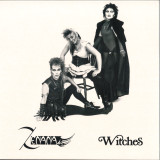
Rush Hour’s RSS series excels in unearthing buried treasure, offering a second chance for artists and releases that have long been overlooked. That’s certainly the case with ‘Witches’, the superb sole single by British 1980s wave trio Zenana.
Originally released on seven-inch by the tiny PRM label in 1986, ‘Witches’ was the product of a sister-brother songwriting team whose music was mostly recorded in the front room of a terraced house in Nanpean, a small industrial village in Cornwall, England’s most south-westerly county. While the single was infectious, impeccably produced and dancefloor-ready, it sold in limited quantities at the time.
Zenana’s story can be traced back to the early 1980s, when singer-songwriter Anita Tedder founded the all-female trio as a vehicle for her musical ambitions. To bring her songs to life, she joined voices with her brother Mike, an early adopter of electronic music who had built a studio – nicknamed MFR, short for ‘Mike’s Front Room’ – in his Cornish home.
Countless Zenana tracks were recorded at ‘MFR’ between 1984 and ’86, with the resultant demo cassette securing the band a management contract, a slew of live bookings, a video shoot and even a television appearance. Buoyed by this underground success, they headed to the remote Sawmills Studio in Cornwall – famously only accessible by boat – to re-record ‘Witches’, a song inspired by local folk tales of witches gathering near Mike’s home.
While this version of ‘Witches’ failed to make an impact at the time, it has become something of a cult classic following its’ rediscovery by crate digger Kiernan Abbott – and subsequent championing by other dusty-fingered DJs including Antal, Skyrager, Trevor Jackson and Luke Una – in early 2023. The buzz inspired Zenana to perform live again for the first time in decades, with the story of their surprise comeback being covered by British media outlets including the BBC and (more surprisingly) the Daily Mail.
Now presented in re-mastered form, ‘Witches’ is a genuinely slept-on gem. Propelled forwards by punchy drum machine beats, a killer synth bassline and fizzing keyboard sounds, the song benefits greatly from strong vocals and an extra-percussive middle eight layered with vocalisations, cosmic spoken word sections and swirling noises.
It comes backed by a brand-new extended ‘spell of love’ courtesy of Bristol duo Bedmo Disco, AKA music journalist Matt Anniss (author of Join The Future: Bleep Techno and the Birth of British Bass Music) and DJ/production partner Gareth Morgan. Anniss is a long-time friend of Mike and Anita Tedder who has fond memories of visiting Mike’s home studio with his family around the time that ‘Witches’ was recorded.
Working from Zenana’s original MFR eight-track recording (tapes of the single version were lost years ago), Anniss and Morgan have turned in the extended ‘dance mix’ the track never had first time around. More atmospheric, clandestine and dancefloor-focused, it offers authentic nods to New York proto-house, mid-80s Shep Pettibone dubs, and the pioneering synth-pop productions and dub mixes of Factory Records regular Martin Rushent.
Ltd. Purple & Black Splatter Vinyl. It's been four years since Zach Saginaw, aka Shigeto, returned home to Michigan from a stint in Brooklyn, NY, and since then, the multi-faceted musician has become a part of the fabric of Detroit's music scene. While always having a personal approach to his projects, Saginaw's influences for his third album, The New Monday are more about the community of Detroit than anything else. Named after a weekly DJ event called Monday is the New Monday that Saginaw does at the unassuming Motor City Wine with a group of friends, The New Monday is the result of Saginaw diving into the city's deep record culture, where there legacy of artist's of the past help Saginaw embrace his own contributions. "It's focused on a couple things and they all kind of come together to represent dierent things," explains Saginaw. "My time back in Detroit, back living in Michigan and spending time with a lot of kind of original people who have always been here, learning from them, hearing stories from them, being influenced by them, and inspired by them." While, in the past, projects like Lineage or No Better Time Than Now were rooted in strong personal messages, family and relationships respectively, The New Monday represents a communal eort where solidarity is the key. Going for a simplified approach of just trying to make good tracks, The New Monday is diverse in its styles leaning more into a dance music direction - new ground for a Shigeto project. A new air of confidence in Saginaw has expanded his horizons since his return to Detroit, but traces of his past work will continue to be present. "I don't want people to think I'm leaving anything," says Saginaw. "I'm still me. It's a result of me being immersed in the culture, and inevitably making music that is influenced by that culture whether it be house, techno, jazz, rap. It doesn't matter. It's all coming from what I love about Michigan." While The New Monday still features the jazz textures long associated with Shigeto projects, the varied elements that make up the album cohesively come together to show the distinct inspiration that Saginaw has drew from since his return home to Detroit. Like on "Barry White", which features Detroit hip-hop artist ZelooperZ (a member of Danny Brown's Bruiser Brigade crew who Saginaw also has a side project with called ZGTO), Saginaw captures everything he's been doing all on one track. As much as it's hip-hop influenced, it's a mutant that encompasses elements of dance music, jazz, and ambient sounds. Throughout The New Monday, Saginaw poignantly references the musical influences that have either always been with him or newly discovered. It is Saginaw's interpretation of Detroit's rich culture of innovative artistry, but done so with respect for the history and to contribute, not disrupt. "I think over the past four years, I can confidently say that I found my place here," describes Saginaw. "I'm happy here and I feel that I have the respect from the people I need respect from, that I want respect from. It's all of the result of embracing it and embracing, not Detroit, but embracing community, embracing family,
f A2D (FT. ZEELOOPERZ & SILAS GREEN) AAPV
f A2D (FT. ZEELOOPERZ & SILAS GREEN) [AAPV]
030/313 – Berlin/Detroit, the fundamental techno union. Now Carhartt WIP, whose roots can be traced to Detroit, Michigan, join forces with Tresor for a collaboration that celebrates the enduring spirit of two music metropolises. Referencing the early 90s compilations like “Tresor II – A Techno Alliance”, they present a 12” mini compilation with exclusive material from both cities.
The compilation opens with “I.D.L.E.”, a lost Model 500 track, of essential funk that touches the techno soul of The Motorcity, with trippy melodies and cosmic drilling traversing electrified Mojo freeways. It’s followed by another true Detroiter: Ectomorph’s “Searching (Live At Globus)”, a first extract from their live set at Globus in 2021, which BMG and Erika played on borrowed equipment after Erika’s case was lost on a flight. The A-Side stays in Detroit and finishes with “Your Body”, an exclusive track by AMX, also known as The AM, one of Detroit’s freshest funk techno sensations. She carries on the mentorship mindset by having learned from two of the greatest: D.I.E. and Scan 7. “Your Body” is a classic techno feel swinger, where subtle chords meet drum machine funk in the spirit of early Detroit techno.
DJ Stingray 313 opens the B-Side with a bang. Precisely hacked techno, full of dark funk and that special industrial jack, that the man in the mask has made his own. A total “Dynamic Instability”. Magic & furious. The thrill continues with “Metal Goat”, by JakoJako, one of Berlin’s brightest synth sensations. She provides an introspective grower that slowly evolves into a fast-paced techno grinder, laden with micro shifts and magic twists. The final tune comes from Erik Jabari, a newcomer from the 030 zone, emerging from the Hard Wax peers with haunting modular synth techno–a feverish minimalistic trip of motorized kicks. DJ Pete performed as spiritual guidance on this one. It’s floor proven. An overall cachet of “030313” - the small compilation with a huge techno heart.
Having built a loyal local Antwerp following off of the success of their 2019 debut self released album, ‘Forgotten Kingdom’, and growing reputation for electrifying stage performances, Kolonel Djafaar achieved worldwide recognition in 2021 for the ‘Cold Heat’ EP on Batov Records, attracting praise from Music Is My Sanctuary (“triumphant), and support from Gideon Coe on BBC 6 Radio Music, and DJs across Worldwide FM, Soho Radio, Le Mellotron, and KEXP.
The group overcame busy schedules and frequent quarantine periods to hit the studio in February 2022 to lay down four tracks. However, the creative itch persisted, leading to an intense writing session in August, deep in the heart of a tranquil forest. From noon until midnight, the band immersed themselves in the creative process, embracing the freedom to make noise without restraint.
Fueled by hearty breakfasts, unwavering focus, and the ambient clucking of chickens roaming the studio, Kolonel Djafaar crafted the majority of ‘Getaway’. This period marked a pivotal shift as a number of new band members joined just in time for the August sessions.
Membership changes, including Emiel Lauryssen joining on trumpet, alongside guitarist Philip Matthhijnssens, the band's palette has broadened and new sounds are able to break through. From psychedelic rock and soul influence of the Daptone Records’ affiliated Budos Band, surf rock (“Urban Dweller”), Morricone Spaghetti Western guitar, and Afro Cuban (“Kelmendi”), alongside the brassy Afrobeat and Ethio jazz vibes the group have been known for.
The broader dynamics of ‘Getaway’, and the band’s more cinematic and experimental approach, is particularly apparent on "Siren’s Glitch" and "Phil’s First Tear". The latter, first conceived by drummer Anton Van Hove, features the lead guitar doubling up with the bass guitar for added impact. Whilst the origins of "Convoi Exceptionnel", a brass & synths stomper of a march, trace back to a jam session during the band's Hungarian tour, another vital period of prolonged time together, capturing the organic essence of their experiences on the road.
Each track on ‘Getaway’ holds a unique connection to at least one band member, and all benefit from a collaborative approach to songwriting. "Sparking Clover'', an Ethio-inspired psych & soul groover penned by tenor saxophonist Doyin Smith, carries a poignant undertone inspired by personal loss, while psych rock leaning tracks like "Apologies in Advance" showcase the band's evolution and increasing professionalism in crafting a distinct sonic experience.
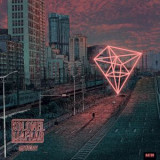
The curious cover art depicts a lone individual heading down an empty city street towards a large mysterious glowing object, evoking the common emptiness and struggle of urban life, and the search for meaning or just something better. The band envision the object to represent this album, offering a beacon to like-minded listeners. Kolonel Djafaar invite music enthusiasts on an immersive journey, to ‘Getaway’ from the daily grind of life, on an album reflecting diverse influences and marking a new chapter in their musical exploration.
Feels as if we're stepping outside the known universe of Nigga Fox but simultaneously being invited in. It's not about being hermetic, shutting out followers of his trademark dance beats or making an experimental statement per se. All this music comes effortlessly during sessions such as any other, so don't throw away valuable time searching for a concept.
"Chá Preto" sounds revolutionary but not so much in his discography, accustomed as we are to game-changing compositional solutions in the afro musical continuum but - never forget - also in Dance Music taken as a broad genre. But is it Dance? Certainly a fair amount of suffering and introspection comes clear throughout the album, namely in the sequence made up of "Má Rotina" and "Mutadoree Leonor". "Mutadoree" is a free, alternative spelling of "much pain" and each listener can process the info as s(h)e pleases. The music is also strikingly beautiful, so there's really no final word on this.
Beats come sparse, a very personal phraseology, the dancefloor a memory. Or just something to keep in mind for a future night out. Presently there's no lack of adventure or excitement in these grooves, a uniquely themed one-person show of musical skills and bare emotion. It ends in a snap, not a trace of embellishment. Pragmatic and out of the loop. Rewind and feel it all over again. Any comparison in mind? Flip through History books and you won't find this chapter.
"L'idée nous est venu lors d'une conversation un peu arrosée dans un pub du sud de Londres avec Philippe du label Tapeworm" dixit François Kirmann Gamaury alias Franz Kirmann alias Dj Salinger – producteur français établi à Londres depuis plus d'une vingtaine d'années.
"Voyage voyage voyage" est une mixtape. Mais pas dans le sens traditionnelle du terme. Kirmann l'appelle une mixtape subjective, où les morceaux ne sont pas joués tels quels mais présentés tels qu'ils sont ressentis par l'artiste.
Un peu comme le DJ Vladimir Ivkovic qui ralentit certain morceaux sur ses platines pour en révéler un autre aspect, Kirmann zoom dans l'étoffe même des enregistrements, étire les notes et les sons à l'infini, pour en mettre à jour un sens caché, altérer notre perception de ces chansons qui peuvent parfois sembler un peu désuètes. Ici elles sont transformées en nappes fantomatiques et envoutantes qui évoquent un souvenir d'une période de sa vie, une trace sonore d'une époque un peu naive, qui revient aujourd'hui sous forme d'echo, une musique nostalgique trempée dans la reverb et la distortion.
Kirmann a grandit au Sénégal pendant les années 80 et il se souvient des étés de son enfance passé chez ses grand parents, les chansons à la radio, dans le bus du centre aéré, dans un Prisunic en Dordogne, où une fête de camping en Alsace: Catherine Lara, Elsa, Veronique Jeannot et bien sûr Desireless et son fameux tube "Voyage voyage".
Les chansons sélectionnées pour la cassette ont toutes en commun une incitation au départ, une recherche de l'ailleurs, un amour perdu, un souvenir, les thèmes de predilection d'une certaine pop française que l'on nommait variété.
Ces idées d'évasion sont accentuées ici par le traitement sonore qui leur est appliqué. Les chansons sont paralysés dans le temps, figées dans le son, comme si l'on avait souligné certain passages dans un roman pour les détacher du texte intégral.
Distortion, écho, réverbération et autres effets sont appliqués et donnent à la musique et au son une qualité rêveuse et distante. Certains passages reconnaissables se dévoilent et sortent de la brume sonore, ils se révèlent plus net, d'autres sont noyés dans un brouillard imprécis, une musique proche de l'ambient qui enveloppe l'auditeur.
Kirmann: "Chaque track est basé sur une chanson de variété française des années 80, je voulais re-créer une impression de distance, quelque chose de lointain. Les morceaux deviennent des sortes de tapisseries sonores mais dont l'essence de la chanson originelle est toujours présente. Il y'a un roman de Patrick Modiano où les personnages lancent des avis de recherche pour la France à partir d'une station de radio d'un pays lointain. Le son est brouillé, les voix étouffées. J'avais un peu cette idée en tête de faire quelque chose de similaire, comme si les chansons étaient entendus sur un vieux poste de radio mais émises d'une station lointaine et d'un autre temps."
Le résultat est un voyage nostalgique, une musique ambient et nébuleuse façonnée à partir de tubes synthétiques 80's. Imaginez Fennesz ou My Bloody Valentine jouant des reprises de Laurent Voulzy et vous y êtes presque…
Loveless non, Desireless oui!
DJ Salinger. Voyage Voyage Voyage – Disponible en cassette uniquement. 100 exemplaires sur le label Tapeworm.
—
Franz Kirmann is a French music producer living in London. He has made albums for various labels including Denovali, Bytes, Mercury KX. He also writes music for film and TV and is a lecturer in music production at Point Blank Music school.
Suburban Architecture are pleased to announce the third in their 'Architecture Dubs' series of limited edition 10" vinyl releases, which sees some of the most revered names active during the mid 90s golden era of Drum & Bass deliver remixes of Suburban Architecture material in homage to that most innovative of periods.
Following on from the now sold out release of Architecture Dub #001 (featuring remixes from Peshay and DJ Trax), and #002 (featuring Blame and DJ Trace), edition #003 features remixes from two further legends in the scene, Nookie and DJ Crystl.
Nookie needs little introduction. From early 90s Hardcore through to present day heavy hitters via a string of mid 90s classics, Nookie has had an enviable career in the genre. Having recorded for seminal labels that heavily influenced the Suburban Architecture sound: Reinforced, Moving Shadow and Good Looking, Nookie was an obvious choice for this remix package. On this release he takes 2021's 'Renegade Horns' to more dancefloor oriented territory with an energetic roller that marries classic drum breaks with a contemporary production feel.
DJ Crystl is also a name with a storied history in Drum & Bass. Also releasing music since the early 90s, Crystl has seen releases on influential labels, Lucky Spin, Dee Jay Recordings, Moving Shadow and iconic US Hip Hop imprint Payday. Crystl's remix of 2020 Suburban Architecture cut 'New Horizons' carries classic 1994 flavour, delivering an extended, Amen-laced rework of the original, full of classic Intelligent sonics.
Pressed on 10" vinyl and housed in brown Kraft paper sleeves, the series makes visual reference to the exclusive dubplate pressings which introduced so many classic cuts to the UK's dancefloors in the 90s.
Paperback: 304 pages
Product Dimensions: 12.9 cm x 19.8 cm x 2.1 cm
• Details the story of the legendary DiY Collective in all their eclectic, outrageous and occasionally deranged glory from early acid house to DJ collective, sound system and record label.
• The first autobiographical account of the remarkable and historically overlooked nineties free party/festival movement from someone who played a pivotal role and was involved from the start.
• Covers truly historic events such as the huge Castlemorton free festival and Criminal Justice Bill riots via wild stories of Britain’s rave counter-culture and mass trips to Ibiza, Amsterdam and San Francisco.
Emerging from Nottingham in the summer of 1989, the DiY Collective were one of the first house sound systems in the UK. Merging the anarchic lineage of the free festival scene, the cultural and political anger of bands like Crass with the new, irresistible electronic pulse of acid house, they bridged the idealistic void left by the moral implosion of the commercial rave scene.
From Castlemorton to the Café del Mar, the DiY sound and DJs became internationally renowned and beneath their banners of liberty, collectivism and untrammelled hedonism achieved an underground cult status that endures to this day. Having celebrated their thirtieth anniversary in 2019, DiY continue to challenge the idea that dance music is apolitical and to celebrate the ideology of liberation through fun.
Written by Harry Harrison, one of DiY’s founding members, this book traces their origins back to early formative experiences, describing in detail the seminal clubs, parties, festivals and records that forged the collective. Dreaming in Yellow is an attempt to distil the story of DiY’s tumultuous existence and the remarkably eclectic, outrageous and occasionally deranged story of them doing it themselves.
“Culturally, the most dangerous people in the country.”
Tony Wilson’s In the City Music Festival brochure 1997
The first bunch of remixes for Kito Jempere's Green Monster. The album itself was a versatile journey thought all music styles and patterns you can imagine, remixes are keeping the same direction.
EP opens with a remix from multi-talented and prolific studio genius Ewan Pearson, the man behind hundreds of remixes, production and studio engineering duties for artists like Tracey Thorn, Pet Shop Boys, Depeche Mode, The Chemical Brothers and many many more. And Mr Pearson is taking Kabwato on a journey! Originally recorded as two and half minutes as some say mid-album filler, this boat (kabwato in chewa language) is going deep down the tropical river and through breezy morning rainforest valleys. A perfect trip for your midday staying home alone errands or for your early morning ray of light at the bar with a beautiful panorama.
Same track is getting treatment from the mighty Cable Toy! Unmistakable peak time euphoria manifest - going back to my roots-esque piano meets 90s cable tv dance show house party!
On the flip is the remix by The Dawless. The Dawless are Ramil' Goddeem from LAUD and Sergey Gol'd, producer and owner of GoldxFish Music studio. They recently released their debut album "Broken Aux" on System 108, got remixed by DMX Crew and became residents of LOUD BOYZ label. The project has simple ethics: computers not allowed, only real gear and vibes. The duo has created a true rage rave anthem for Kito Jempere now. Having already been played in a lot of DJ-sets blasting through packed warehouses, now it became available to everyone.
EP closing opus is by Kito's frequent collaborator - UK born and Japan based producer Max Essa. Every Kito's album was accompanied by Max's remixes and this time he's delivering pure beauty again. Creating some Golden-era "8 1/2 weeks" vibes, Max transforms the track into a post-summer voyage anthem.
- A1: Kesunyian Jiwa (Emptiness Of Soul)
- A2: Untuk Bungamu (For Your Flower)
- A3: Harapan Hampa (Empty Hope)
- A4: Ratapan Anak Tiri (Wailing Of Adopted Child)
- A5: Djangan Menggoda (Don’t Tease)
- A6: Hilang Tak Berkesan (Gone Without A Trace)
- A7: Pantun Nasehat (Words Of Wisdom)
- B1: Renungkanlah (Think About It)
- B2: Penggoda Djiwa (Seducer Of Soul)
- B3: Peristiwa Lama (Past Incidence)
- B4: Tudjuan Bersama (Common Goal)
- B5: Djangan Mengharap (Don’t Hold Out Hope)
- B6: Pesta Tjahaja (Party Of Light)
- B7: Seloka Gembira (Poetry Of Joy)
"Robert Johnson" of Indonesia's Orkes Melayu music finally comes out from the shadows. Between 1961 and 1964, Kelana Ria recorded 48 songs that were spread over four records, Kafilah, Yam El Shamah, Ya Mahmud and Ya Hamidah, which become the primary sources for this compilation.
Nu Groove spotlights the artists that made the legendary NYC label a firm favourite of crate diggers then and now with a series of their vital tracks re-edited by leading industry figures and choice selectors of today. ‘Nu Groove Edits, Vol. 3’ continues to celebrate Rheji Burrell’s output, who was instrumental in defining the sound of Nu Groove alongside his brother Rhano under a slew of monikers.
Up first, Metro’s ‘Turnstyle Turbulance’ gets a fresh edit from respected remixers, the Italian duo NiCe7. What follows is another take on the celebrated house track ‘APT. 2B’ by Rheji’s N.Y. House’n Authority alias, this time by Mark Broom. Tracer’s ‘Love Fantasy’, the collaboration by Luie Rivera and one of the original Paradise Garage DJs, Joey Llanos, is given an edit by Dirty Channels, another established Italian duo and frequent collaborators of NiCe7.
Completing the collection is another edit from the unstoppable production duo Honey Dijon & Luke Solomon as they take on ‘Guitarz’ by Rheji Burrell as Asylum.
Synth pioneer and musical polymath, Wally Badarou is a genius. But you know that already. A vinyl version of his majestic Colors Of Silence has been craved by the Balearic cognoscenti ever since its low-key 2001 release. Indeed, when we first started work on Be With, we asked some pals with exquisite taste what their dream release would be. We asked Balearic legend Moonboots and, without hesitation, he said Colors Of Silence by Wally Badarou. We didn't know Wally had made this album. And most still don't. But that's about to change.
Colors Of Silence is ostensibly a new age album. As ever though, Wally's sophisticated synth textures and expressive keyboard runs are so full of character, so full of life, that this work of art transcends any easy genre categorisation. It's simply stunning, throughout. It sounds like A.r.t. Wilson or Suzanne Kraft, with traces of CFCF and Jonny Nash. But it was made a good decade earlier than the work of these modern giants. Sometimes, it doesn't seem far from some Larry Heard albums.
Island Records founder Chris Blackwell's friend Nathalie Delon asked Wally to provide music for the yoga DVD she was to release. Lack of time on both sides made them agree on using "quality demos" Wally had in his ideas bank. It's understandable why Colors Of Silence remains somewhat of a lost gem. As Wally explains: "Total lack of promotion made it an 'intimate' release, which was exactly what I was looking for: just a buzz-maker and time-buyer that would allow me to concentrate on the real thing as soon as I'd have time, which could also turn into a rare collecting item later, once the final versions made their way to success. You never know."
Over the years, Colors Of Silence has become a true cult record for the ambient/Balearic heads.
The beguiling but brief "Dance In The Dust" is the shuffling, hyper-percussive, hypnotic opener. It gives way to the deep serenity of "Amber Whispers". It's a gliding, divine, mini melodic masterpiece. It'll make you swoon in its extreme beauty. The bright and breezy "Where Were We" follows, a tropical, reggae-tinged bounce through the islands.
The uptempo groove is maintained on the keys-drizzled soca-funk of "The Lights Of Kinshasa" before Side A is rounded out with "Pictures Of You". It starts with stately, melancholic, unadorned piano and this alone would make for a beautiful song. But Wally always gives us that bit extra and he effortlessly introduces warm, dreamy pads and minimal, slo-mo percussion to augment a frankly stunning piece of work.
Ushering in Side B, Wally's mesmeric piano playing is to the fore again, in the intro to uber-chilled "Serendipity For Two". The playing becomes more mellifluous as the track progresses and adds warmth through exotic percussion, woodwind, sweeping synths and digi-drums. It has echoes of, er, Echoes. It segues seamlessly into the more propulsive, wavy "Smiles By The Millions". If you're not nodding and grinning along widely to the gently throbbing bassline underpinning this, we can't help you. The meditative "Higher Still" follows, cinematic in feel and ever so slightly sinister with the strings. It sounds particularly Badalamenti-esque, if you ask us.
That unmistakable, almost peculiar Badarou funk - so lyrical, so texturally rich and so rhythmically spacious - is all over "Oriental". Next up, "Days To Wonder" brings the serenity back, insistent yet melodic keys, as if played in a place of worship, coupled with birdsong, conjure a kind of instant nostalgia for halcyon days of youth. The contemplative "Dawn Of Europa" is a sombre, beatless, ambient journey whilst the glorious, too-brief "Crystal Falls" features soft percussion and sparkle before fully glistening with some gentle head-nod beats. Wally brings this incredible collection to a mellow, tender close with the graceful "Purple Lines".
There can be few artists more under-appreciated given their vast influence than Wally Badarou. His solo work practically defined the sound of the Balearic DJs of the 1980s, and thus the more sophisticated sound of dance culture thereafter. A synth specialist, Badarou was the long-time associate of Level 42. He was one of the Compass Point All Stars (with Sly and Robbie, Barry Reynolds, Mikey Chung and Uziah "Sticky" Thompson), the in-house recording team of Compass Point Studios responsible for a series of albums in the 1980s recorded by Grace Jones, Tom Tom Club, Mick Jagger, Black Uhuru, Gwen Guthrie, Jimmy Cliff and Gregory Isaacs. Badarou's keyboard playing could also be heard on albums by Robert Palmer, Marianne Faithfull, Herbie Hancock, M (Pop Muzik), Talking Heads, Manu Dibango and Miriam Makeba. He also produced Fela Kuti. Phew!
Meticulously remastered and cut by both Simon Francis and Cicely Balston respectively, it has been pressed to the highest possibly quality at Record Industry in Holland. Special thanks must go to Apiento from Test Pressing who first introduced us to Wally and facilitated all those early zoom meetings. It couldn't have happened without his help. Not least on pulling the art together, too, which features striking original photography by Mads Perch. Benji Roebuck of Roebuck Press did his thing brilliantly in art working the whole package to completion. All in all: essential.
- A1: The Is No Motorways In Space
- A2: Rock'n'roll Baby
- A3: Last Sunset Ever
- A4: Nighthunter
- A5: Post Nine Days
- A6: Cyclop Ohne Puppe
- B1: The Dices
- B2: What's A Dj Anyways
- B3: Post Trauma
- B4: When Covid Gave Me Time
- B5: Earthpeople
- B6: The Blue Hole In The Sky
- B7: The Garden Of Uglyness
- B8: Unfollow Me Prayer
- B9: Calmin' More
- C1: The Cute Woman You Don't Want Reggae
- C2: Super Rainy Morning
- C3: Lost Love
- C4: Smoky Disco Test
- C5: Ambient Wet End
- C6: Funkypunk
- C7: Strawberries & Cheese
- C8: Lil Boi
- C9: Djing Killed Itself
- D5: Cosmic Egg
- D6: Morning Modytation
- D1: The Urge To No
- D2: Magic From The Gabin
- D3: Glitter Morning
- D4: Why So Serious
Fake Yourself is an act of revolt as much as it is a celebration of life and an expression of human alienation. As usual in most of his work, soFa here reflects contrasts and contradictions as our existence so often does. It’s about sadness and joy, ups and downs and the fine line which connects them to tell a story. Fake Yourself comes as a spontaneous output of an artist escaping a scene of which the constant superficiality is unavoidable. Mistakes and wrong production with a strong DIY flavor are a conscious choice to not lose the spontaneous feeling which defines these recordings. A pure and direct self, exploring a realm of sound with sharp curiosity, emotion and humour. Where simplicity and complexity marry. This album is a good example on how some of the most authentic musical explorations are the most personal ones. soFa leaves all boundaries behind and let many of his influences confluence. Unconsciously or not, traces of IDM, Disco, New Beat, Dub and mostly Krautrock cross heavenly paths, followed by ironic and confronted vocals and his hypnotic signature basslines. Everything seems to make sense, to fill the chapters of an adventurous short novel. What makes Fake Yourself remarkable is not the deep blend of genres, but the definition of one man shaping and finding his authentic sound. Killing boundaries to create this journey in his very own "style-no-style". All tunes were improvised, recorded and arranged within 10 days in a wooden cabin, isolated in the middle of the nature in Alentejo/Portugal in 2022. This album was not meant to happen and one can strongly feel its spontaneous soul. No overdubs.
- A1: Zoos Of The World
- A2: The Big Game Hunters See The Cheetah
- A3: Western Dragon (Pt 3)
- A4: Western Dragon (Pt 2)
- A5: Moon Journey
- B1: Music For Advertising #6
- B2: Black Eye (Main Theme)
- B3: Western Dragon (Pt 1)
- B4: Music For Advertising #7
- B5: Captain Dj Disco Ufo (Pt Ii)
- B6: Three Tv Ids
- B7: Music For Advertising #8
- B8: Love Is A Garden
- B9: The D-Bee's Cat Boogie
- B10: Black Eye (End Credits)
red LP[24,79 €]
LP includes Poster.
When Sacred Bones first began their Mort Garson reissue project in 2019 with a proper reissue of Plantasia, the Garson-naissance began in earnest. Soon after, you could hear Mort Garson and his Moogs bubbling up on TV shows, documentaries, podcasts, hip-hop tracks, or anywhere else, the man a cultural phenomenon once more.
Like a perennial that returns with each new spring, the Mort Garson archives have brought to bear yet another awe-inspiring bloom.
Journey to the Moon and Beyond finds even more new facets to the man's sound. There's the soundtrack to the 1974 blaxploitation film Black Eye (starring Fred Williamson) alongside some newly unearthed music for advertising. Just as regal is "Zoos of the World," where Garson soundtracks the wild, preening, slumbering animals from a 1970 National Geographic special of the same name.
The mind reels at just what project would have yielded a scintillating title like "Western Dragon," but these three selections were found on tapes in the archive with no further information. The crown jewel of the set is no doubt Garson's soundtrack to the live broadcast of the 1969 Apollo 11 moon landing, as first heard on CBS News. That's one small step for man, one giant leap for Moogkind. But for decades, this audio was presumed lost, the only trace of it appearing to be from an old YouTube clip. Thankfully, diligent audio archivist Andy Zax came across a copy of the master tape while going through the massive Rod McKuen archive.
So now we get to hear it in all its glory. Across six minutes, Garson conjures broad fantasias, whirring mooncraft sounds, zero-gravity squelches, and twinkling études. It showcases Mort's many moods: sweet, exploratory, whimsical, a little bit corny, weaving it all together in a glorious whole.
Maybe at the time it scanned as crass and opportunistic for Garson to apply his keyboards to subjects like astrological signs, the occult, hippiedom, houseplants, or the moon landing. But more than most other electronic music pioneers of his ilk, Garson foresaw the integration of such electronics into our daily lives, how they would allow us to engage with the world.
- A1: Zoos Of The World
- A2: The Big Game Hunters See The Cheetah
- A3: Western Dragon (Pt 3)
- A4: Western Dragon (Pt 2)
- A5: Moon Journey
- B1: Music For Advertising #6
- B2: Black Eye (Main Theme)
- B3: Western Dragon (Pt 1)
- B4: Music For Advertising #7
- B5: Captain Dj Disco Ufo (Pt Ii)
- B6: Three Tv Ids
- B7: Music For Advertising #8
- B8: Love Is A Garden
- B9: The D-Bee's Cat Boogie
- B10: Black Eye (End Credits)
black LP[21,22 €]
LP includes Poster.
When Sacred Bones first began their Mort Garson reissue project in 2019 with a proper reissue of Plantasia, the Garson-naissance began in earnest. Soon after, you could hear Mort Garson and his Moogs bubbling up on TV shows, documentaries, podcasts, hip-hop tracks, or anywhere else, the man a cultural phenomenon once more.
Like a perennial that returns with each new spring, the Mort Garson archives have brought to bear yet another awe-inspiring bloom.
Journey to the Moon and Beyond finds even more new facets to the man's sound. There's the soundtrack to the 1974 blaxploitation film Black Eye (starring Fred Williamson) alongside some newly unearthed music for advertising. Just as regal is "Zoos of the World," where Garson soundtracks the wild, preening, slumbering animals from a 1970 National Geographic special of the same name.
The mind reels at just what project would have yielded a scintillating title like "Western Dragon," but these three selections were found on tapes in the archive with no further information. The crown jewel of the set is no doubt Garson's soundtrack to the live broadcast of the 1969 Apollo 11 moon landing, as first heard on CBS News. That's one small step for man, one giant leap for Moogkind. But for decades, this audio was presumed lost, the only trace of it appearing to be from an old YouTube clip. Thankfully, diligent audio archivist Andy Zax came across a copy of the master tape while going through the massive Rod McKuen archive.
So now we get to hear it in all its glory. Across six minutes, Garson conjures broad fantasias, whirring mooncraft sounds, zero-gravity squelches, and twinkling études. It showcases Mort's many moods: sweet, exploratory, whimsical, a little bit corny, weaving it all together in a glorious whole.
Maybe at the time it scanned as crass and opportunistic for Garson to apply his keyboards to subjects like astrological signs, the occult, hippiedom, houseplants, or the moon landing. But more than most other electronic music pioneers of his ilk, Garson foresaw the integration of such electronics into our daily lives, how they would allow us to engage with the world.
Second album from Elias Mazian.
While his debut album Vrij Van Dromen hinted at the work of a bedroom producer, Elias Mazian never was the person to hide. After becoming a resident DJ at the now gone club Trouw ten years ago, he spent many nights playing records at clubs, and today he is as visible during the day as selector and host on FM radio. With this follow-up record he does one more step out of obscurity: moving from low to high fidelity, into more sincerity.
The songs on Alleen Bij Mij comfortably sit next to the songs he shares with friends on Private Hearts, Mazian's radio show dedicated to pop melodies. Like classic sixties records, the LP clocks just above thirty minutes, while also sharing their harmonic approach. Additional influences can be traced back to seventies krautrock, Dutch disco dub from the eighties and the storytelling of mid-2000's Dutch rap. Channeling these sounds into his own after hour tales, Elias Mazian created the perfect album for late bike rides and night trains alike.
Seconded by his good friend and multi-instrumentalist Anton Pieete and the all-knowing engineer Eelco Bakker, the album is produced and mixed for Mazian's melodies to shine. Combining observations from daily life with the big themes of pop music, this mixture results in eight songs ready for radio play.
For the last twenty years, Sami Yenigun has DJed, thrown parties, released records and built community in Washington DC. He lived in and helped produce the underground event space Subterranean A. He's a co-founder of the DC mega party ROAM. He started the label 1432 R alongside Joyce Lim and Dawit Eklund. He's made music for Future Times, World Building, Rhythm Section, and Ghostly International. He’s produced for Dreamcastmoe and jammed with the Lifted crew.
Sami's also an award-winning journalist and Executive Producer of the largest afternoon news broadcast in radio, All Things Considered. He's won a Peabody, a Murrow, A World Press Photo Award and a National Press Club Award for his work, which includes creating a show with the legendary DJs Stretch and Bobbito, serving as editor of NPR's podcast about race, Code Switch, and covering elections, epidemics, insurrections, and of course, music.
It’s a lot, but whether finding a flute that fits, an extra battery for his Marantz, or the energy to make beats after a week of telling stories, Sami's enthusiasm for life, and the people in it, make it work.
The latest record, Elevate, is a testament to that enthusiasm. Four tracks that crackle and pulse with the same electricity that runs through all of what he makes. Just as Sami's interests in his personal and professional life are ranging, so are his tastes for club fare, and you can hear it on this release.
Four views of mother nature: a forest and a mountain range; a wicked city and a well. Traced from house and techno, through a lens and back.
It's a body of work that continues to branch and build. Elevate is a step into Sami's next chapter: Where flutes, stories, queerness and truth curve together.
La Escuela Moderna launches with a retrospective revisiting the UK electro and breaks scene at the turn of the millennium. A double album featuring eight tracks, Tactical Shifts covers the years 1995 - 2003, presenting a vibrant era celebrating the creativity and innovation that characterised this pivotal era in British electronic music.
The compilation opens with the starry-eyed Ayemooth, an early transmission from The Wee Paton (The Wee Djs, Distorto). Followed up by The Illistines channelling the free spirited Castlemorton. Re-Incarnated sees the trio on a percussive funk roll. Opening the B-side, System UCS (Neil Keating and Harold Slater) provide a growling electro track with Memory Trace, first released on Break/Flow. The first record closes with a rugged breakbeat number by Milo Smee AKA Kruton.
Rag and Bone co-founder NoYeahNo opens the B-side with the rollicking Pushing Percussion, an early entry in the seminal label. Nick Philphin and John O'Donnell's Orphic project brings the relentless beat science of Obvious Intruder. Lunar builds momentum with the bleepy breaks of Orbiting Ganymede and Phil Holmberg AKA Schematix wraps up the comp with the sinuous pads of Magnum Six.
Rule of Thirds is the debut album from Nine Windows, a collaborative project between Kid Drama & DJ Trace.
The album pulls inspiration from the golden era of atmospheric jungle with the focus on labels like Good Looking, Deejay Recordings and Lucky Spin.
Expect deep nostalgia and euphoria as the pads wash over you and breaks skitter over subsonic 808 basslines as these two veterans take you on a journey into 90s bliss.
To top it off there are features with the Pioneer of the new Jungle movement - Tim Reaper and the legendary Skream making an appearance on the album.
So sit back, reminisce and listen to the sounds of Nine Windows.
Brazilian soul, psych, bossa and jazz, reimagined from Berlin, via the Dead Sea, on Moriah Plaza’s dreamy first album for Batov Records.
Moriah Plaza co-founders Tamir Chen and Moosh Lahav first encountered and fell in love with the beautiful and hypnotic sounds of Brazilian bossa nova and samba as children in Tel Aviv in the nineties, via the many local bands and tribute groups that had sprung up since the first wave of bossa had hit swept across the world. Likewise
they developed a fascination with elevator muzak, film soundtracks, and even the hotel pianist performing day-by-day in the lobby of the Sheraton Moriah where Tamir’s mother worked, overlooking the Dead Sea.
Relocating years later to the vastly different environment of Berlin, capital of a country that enjoyed its own Brazilian moment, Tamir and Moosh’s shared passion for Brazilian music would encourage them to create their own songs inspired by the warm pulse of Brazil, albeit a world apart, through a vastly different lens.
Whilst the initial inspiration for Moriah Plaza can be traced back to Tel Aviv and the Dead Sea, the band itself was conceived by Tamir and Moosh in Solarium Studio, Berlin, from the broken fragments of their former shoegaze band, Soda Fabric, who had the honour of backing outsider legend Daniel Johnston. They would go on to write and record their debut album in close collaboration with two Brazilians and fellow Berlin residents,, poet and singer Cecília Erisman, and singer, songwriter, synth operator and Tropical Disco Club founder Flavia Annechini.
The album opens with “Desendereçada”. Dirty drum machine beats thud away under flutes and extraneous noises and a spoken word commentary. The oddness and allure of the intro is a perfect introduction to the world of Moriah Plaza.
The pace picks up on “Mais Amor”. A beautiful Brazilian soul jazz number with a sublime vocal from Flavia Annechini that will surely appeal to the global dancefloor jazz scene. “Te Peço” daws us in deeper with sweetest jazz vocal over an irresistible bassline and bossa drums that transforms halfway through into a modern soul rhythm crowned by flute and horns. A flute solo from Moosh Lahav leads us into the final uplifting refrain.
The Pharoah Sanders meets Ravi Shankar in Rio grooves of “Estelar”
have that fresh feeling that will certainly appeal to fans of modern favourites Rebecca Vasment and Ruby Rushton. Next up, the mysterious “Lagoon de Merim” is practically two songs in one, the first half an atmospheric string-topped number somewhere between Arthur Verocai and Cinematic Orchestra, before snappy drums beats and playful organ chords introduce a slow brassy samba that fills the whole sonic room.
“Teu Porto” is a must for all DJs, mixing calypso, highlife and house, lilting guitars and smooth vocals by Cecilia Erismann.. The deep samba house grooves of “Samba Moosh” close us out. The rich blend of sweet vocals, soaring flute and gritty synths carry us off into the sunset.
Moriah Plaza’s self-titled debut album is a major addition to the global soul and jazz scene. providing the perfect summer soundtrack for music lovers around the world.
- A1: Tao - Makin Love
- A2: Larry Yanez - Xai Jua Jua
- A3: Phil Mcdonnell - America
- A4: Regis Tareau - Music Magic
- B1: Reboshaze - 2Nd Movement
- B2: Yma - Tempted
- B3: Daniel Sofer - Dewdrops
- B4: Noel Stone - Dream Girl
- C1: Brenda Kane - French Kissing
- C2: Michael - Bluebird Of Heaven
- C3: Gregory Paul - Sun
- C4: Rhythm & Bliss - Song Of Earth & Sky
- D1: The Bob Bath Band - Traces Of Illusion
- D2: Teatron - Swing
- D3: Scott Fraser - Communique
After a bit of down-time, Spacetalk Records returns with something special: a stunning compilation of obscurities, rare cuts and secret weapons compiled by label co-founder Danny McLewin under his Skyrager alias.
Although most widely known as one half of Psychemagik, McLewin has long been regarded as one of the UK’s most decorated crate-diggers – a DJ and record dealer recognised for his ability to unearth slept-on gems, private press obscurities and campfire-friendly curios. He’s already showcased his curatorial skills on a string of acclaimed and now sought-after comps – see Psychemagik’s Magik Cyrkles, Magik Sunrise and Magik Sunset Pt 1 & 2 – but Traces of Illusion marks the first time McLewin has put together a collection as Skyrager.
There’s no grand concept behind Traces of Illusion, though McLewin’s selections are universally tactile, sun-baked and effortlessly summery, evoking images of nights spent camped out in the Californian desert or beneath the vibrant canopy of an English forest at dusk. As you’d expect, there are no well-known anthems or ‘big tunes’ here, just an inspired selection of largely unknown musical nuggets oozing in quality.
For now, the track list is under wraps but you can be sure there are plenty of highlights to savour amongst the 15 tracks which all add up to an eye-opening, head-soothing journey through the dustiest corners of McLewin’s record collection.