Search:do easy records

Styles
All
Wiz Khalifa - Star Power (15th Anniv.) LP 2x12"

Commemorating the 15th anniversary of Wiz Khalifa's 2008 mixtape, Star Power, Rostrum Records is releasing the mixtape’s first-ever vinyl pressing! The limited-edition package features retro video game inspired artwork and outer space colored vinyl discs, housed in a NES cartridge style die-cut inner sleeve. Also included is a lyrics insert resembling a video game instruction booklet.

Originally released on September 17, 2008, Star Power is an essential document from Wiz Khalifa's early career, helping develop his lush sound and establish his reputation as the game's hardest-working and most talented stoner. Hosted by DJ Deez, the tape features multiple guest appearances from Wiz's close associate Chevy Woods, then known as Kev Da Hustla, and production sculpted at the legendary I.D. Labs by Pittsburgh natives like Sledgren, E. Dan, Johnny Juliano, Rocky Fontaine, and Big Jerm, who produced hits for Wiz, Mac Miller, and more during his career. Spanning 23 tracks, Star Power exhibits the melodic mastery and strong songwriting that soon made Wiz Khalifa a superstar, acting as a crucial stepping stone from Pittsburgh prominence to worldwide recognition.

In Stock

On Stock and ready to ship

41,13
RUFFY & TUFFY - IF THE 3RD WORLD WAR IS A MUST

Earl Lindo production from 1984... TIP!

Teenage twins Ruffy & Tuffy deliver an apocalyptic slab of synth drenched Rub a Dub with what could be the first use of Vocoder in Reggae for 1982’s If The 3rd World War Is A Must. This release draws from both the original 12” and the master tapes combining the best vocal cut and dub versions.

Though not prolific musicians, many may recognize the twins sparring in matching red Pony track suits in Ted Bafaloukos’ iconic 1978 film Rockers. Ahead of its time in almost every way, the lyrics dealing with global war and the nefarious use of technology, sadly seem as relevant now as they did in 1982 though some of the actors may have changed. Surrounded by elite reggae musicians from childhood it was nothing unusual for the brothers to be in the presence of elders like Gregory Isaacs, Burning Spear, Augustus Pablo, Jacob Miller and especially Bob Marley at recording sessions and in daily life.

If The 3rd World War was their first venture into the studio as solo artists in 1982 first at Channel One and then Tuff Gong where Wailers alumni Earl Wire Lindo and Tyrone Downie (keys and Vocoder) laid down their space age additions to the track creating a genre bending Reggae /Electro/ Dub concoction that still sounds fresh 41 years later. Wire Lindo & the twins took the mastertapes to Texas based mechanical engineer and producer Stephen “Iya” James who ran Marcus Garvey Records and the label African Unity Productions in the unlikely Reggae hub of Austin Texas. The track was not released until two years later in 1984 as a 12” which had a run of only 500 copies and is no easy find these days.

In Stock

On Stock and ready to ship

13,24
Various - BOSCONI STALLIONS VOL.III (2x12")

The Stallions compilations have become a benchmark of Bosconi's position as one of the leading house and techno labels operating out of Italy. This third instalment marks a shift in sound which also comes full circle to the music that first inspired founder Fabio Della Torre as a DJ and producer around the turn of the millennium, when punchy electro production was driving European house and techno into new zones.

All the artists featured on Vol. III are Italian, holding true to Bosconi's commitment to supporting local talent from Florence and across the country. Amongst the familiar faces is Della Torre's own Minimono collaboration with Ennio Colaci, which indulges a proudly manic palette of tweaked bleeps and dirty low-end. Elsewhere, recent additions to the Bosconi fold include veritable legends Alexander Robotnick and Marco Passarani, who infuse their unpredictable approaches to electro-techno and italo disco with ear-snagging synth-pop and driving analogue box jams respectively to create vibrant, impassioned dancefloor monsters.

The Mechanical Man is an alias from Nicola Altieri, who leans in on a classic Italo arpeggio to create a seductive club sound which builds on his recent Bosconi EXV EP, while Cixxx J switches from the mood of his own Bosconi appearance for a new alias Queen Of Coins and a pivot towards heads-down electro-techno-trance with a whiff of International Deejay Gigolos. Lapucci builds on the promise of his 2021 Bosconi 12" with a sentimental fusion track which lands somewhere between old school Italo house, the snappy pulse of EBM and crisp 00s-era electro house. Meanwhile modern day Italian techno legend Lucretio of The Analogue Cops makes his first appearance on Bosconi with the playful video game stylings of 'Gradius'.
A great deal of space on Vol. III is given over to emergent talent, ranging from Miguel Herr's twitchy detroitian synth-pop braindance and Twovi's vocoder-charged electro funk to DJ Rou's jacking ghetto house flavour. Giammarco Orsini and Jacopo Latini appear as Data Memory Access and deliver an emotive, punchy strain of machine soul. Feel Fly rounds the compilation off in bombastic style with an epic, cinematic workout which draws on Moroder-inspired drama without losing the forthright peak-time focus which binds the whole collection together.

Even the artwork on Vol. III serves as an opportunity to celebrate Italian creativity, as pioneering crypto artist Niro Perrone builds on his accomplished work in the field of NFTs and a background in music production to respond intuitively to the vibrant, synthetic sound of the compilation. For all the futurism in the music though, there remains a strong sense of human feeling which has marked Bosconi out since the beginning. The label remains as inspired and inspiring as ever, celebrating the fertile crossover when people manipulate technology to express themselves in an honest, playful way. Independent of wider trends or fashions, Bosconi remains true to its own idiosyncratic passions, and so Bosconi Stallions Vol. III stands proud as a compilation like no other.

In Stock

On Stock and ready to ship

24,16
DEPECHE MODE - SOUNDS OF THE UNIVERSE 7x12"
 
33

Sounds Of The Universe | The 12" Singles, a deluxe collector's
edition box set, contains seven 12" vinyl discs presenting
singles--including Wrong, Peace, the double A-side Fragile
Tension/Hole To Feed--alongside B-sides, remixes, dub
versions and other recordings contemporaneous to Depeche
Mode's 12th studio album, Sounds Of The Universe, originally
released by Mute Records in April 2009.
Sounds Of The Universe | The 12" Singles offers a full range of
ear-grabbing mixes--radio, club, dub and more--of Depeche
Mode originals with three discs (Discs Two, Four and Seven)
newly compiled for this collection, bringing together B-sides
and mixes first released across CD and maxi-singles
contemporaneous to the album's release.
When it came time to record the Sounds Of The Universe
album, DM's classic core (Dave Gahan, Martin Gore, Andrew
Fletcher) returned to the studio to make their second album
with producer Ben Hillier, whose intuitive contributions to
their previous studio album, 2005's Playing The Angel, had
created new sonic possibilities for the band expanding
Depeche Mode's vision and repertoire while continuing their
tradition of issuing monumental 12“ singles.

In Stock

On Stock and ready to ship

137,77
Natural Wonder Beauty Concept - Natural Wonder Beauty Concept LP

The life of the solo electronic artist is equal parts privilege and loneliness. You hurtle across the sky to spend a few hours in a dark club, behind the decks or on stage at the microphone. A brief grasp at transcendence, then the lights are on. Afterwards, you chat with friends you made last month, last year, or an hour ago. Back on the train, the plane. A couple weeks of this, then home. Repeat. It was against this backdrop that Ana Roxanne and DJ Python (Brian Piñeyro) struck up a singular friendship and collaboration, culminating in the shared musical language of their new project, Natural Wonder Beauty Concept. Brian and Ana met in New York City in the winter of 2020. They’d respectively put out critically acclaimed albums but due to extenuating global circumstances, the real-world implications of those records were yet to be seen. Ana’s debut LP, Because of a Flower, released in fall 2020, trades in both ethereality and directness, stretching timeless pop and R&B forms into shimmering ambient magic. When the Bay Area-born, Mills-trained artist sings, on record or live, time slows down and we enter a languorous yet ecstatic present. The second album from Queens-based deep reggaeton innovator DJ Python, Mas Amable, also subverts easy temporality. Released in spring 2020, Mas Amable floats in liminal space—not quite a dance record, a downtempo record, nor an ambient record—unfurling at a wistful pace, naturally suited for a strange period when each day felt the same yet wildly different.

In Stock

On Stock and ready to ship

23,95
Veil Of Light - Sundancing LP

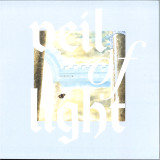
Two years after their previous effort, regular as clockwork, Swiss throbbing synth pop duo Veil Of Light is back with a new album and what can we say? These guys keep on getting better and better.

If you have followed the Zurich-based outfit over the past few years, you must have noticed the constant moving towards 80’s FM new wave and synthpop tones – without losing their electro/body music outline – that have marked the band’s parable, especially since their latest Landslide LP.

Sundancing is their sixth full-length and it stays the course, bringing what we’ve just said to the next step. Nine new dancy and bright tunes with emotional depth that blend lush instrumentation and robust rhythms, guided by funky and rubbery basslines. Syncopated rhythm sections match suburban cool synths in the lead single Apricot Kiss and Hypersleep, while Raindancing and Tonight summon a sinuosity long gone since the mid Eighties. The musical backdrop here serves as the fundament for emotional vocals delivering lyrics dealing with the fragility of love, joy and loneliness.

There’s some subtle addictiveness to these songs, one that will gently grab you by the collar of your coat and stick the refrains from Sundancing inside your head for good.
Veil Of Light might make it look easy to keep it neat without being minimalist, intimate without being depressing, romantic in the most true sense of the word, but we know that’s possibly the hardest thing to do.

In Stock

On Stock and ready to ship

16,77
SHAKEENA - Dance Music

SHAKEENA

Dance Music

12inchMISSYOU020
MISS YOU
09.12.2022

Another one from the fruitful collaboration with LA's highly regarded Patrick Houchen aka Shakaman. After Shakeena's “I bet you” 12" re-issue flying off the shelves, we deepen the exploration within Shakaman's treasure chest of Reggae/Dub gems with Shakeena's first and last album on Majicaa Records. Originally released in 1987, this album is a proper act of musical generosity, not so easy to point out the “hit” track here – clearly a case of all killer no filler. Unlike too many albums where the format length sadly gets the best of the artists' work, rest assured with this one you can play from the beginning to end and you'll only have to come back to flip it. The professional execution of what is hands down an ensemble of highly seasoned musicians sets the tone for the dreamy lyrics and arrangements to unravel. Besides expected reggae rhythms, Shakaman brings in other influences with subtle electro/freestyle hints that might have been hard to ignore in LA at the time. New remastered version sounding especially big and cozy on the low end. Can't go wrong!

In Stock

On Stock and ready to ship

15,92
Various - Nervous Records 30 Years (Part 2) 4x12"
 
17
also available

Black Vinyl[33,57 €]


Nervous Records, the iconic label synonymous with the rise of house from the streets of New York City, will mark 30 years in the music industry by releasing the celebratory compilation LP ‘Nervous Records: 30 Years’ on October 1st (Part 1) and October 15th (Part 2).

Featuring original mixes of the label’s biggest tracks, plus remixes by some of its most celebrated acts, ‘Nervous Records: 30 Years’ is both a celebration of the past and of the future. Featuring a who’s who of electronic dance music, the long player sees names including Louie Vega, David Morales Darius Syrossian, Tensnake, Monki, Franky Rizardo, Danny Howard and more take on iconic Nervous cuts: ‘You Make Me Feel Mighty Real’, ‘Treat Me Right’, ‘Future Groove’, ‘Feel Like Singing’, ‘Get Up Everybody’, ‘Break You’, ‘Hot’, ‘End This Hate’, ‘Unspeakable Joy’, ‘Can Ya Tell Me’, ‘Jerk It’, ‘The Anthem’, ‘It Makes A Difference’, ‘Learn 2 Luv’ and ‘Don’t You Ever Give Up’.

The album marks one of the most enduring, extraordinary legacies to grace America’s illustrious music history, not just in electronica but far beyond. Founded in 1991 by Michael and his father Sam Weiss, and recognizable immediately by its distinctive character logo, the label grew rapidly, in no small part due to Michael Weiss’ practically unmatched passion for discovering new music.

“Louie Vega and Kenny Dope woke me at 4am on Tuesday night, Wednesday morning from their studio telling me they had something really different that I needed to hear,” Michael recollects. “I asked if they could play it over the phone. They said if I wanted to hear it I had to come to the studio. So of course I got myself up, got dressed and went there. That “really different track” ended up being ‘The Nervous Track’, a tune that became our signature release and was also highly instrumental in the emergency of London’s ‘Broken Beat’ movement.”

The label’s willingness to take chances on fresh sounds and innovative concepts rising up from the melting pot sidewalks of NYC ensured a body of work that has become a living musical history of the city. House cuts ‘Unspeakable Joy’ and ‘Nitelife’ (Kim English), ‘Get Up (Everybody)’ (Byron Stingily) and ‘Feel Like Singing’ (Sandy B) bump up against hip-hop anthems like ‘Who Got Da Props’ (Black Moon) and “Bucktown” (Smif-n-Wessun) and reggae cut ‘Take It Easy’ (Mad Lion); soulful flows from Mood II Swing (Kim English ‘Learn 2 Luv’, Loni Clark “Rushing”), Armand Van Helden (‘The Anthem’) and Nuyorican Soul (‘Mind Fluid’) sit alongside seminal techno singles like Winx’ ‘Don’t Laugh’. The young artists and producers who joined the Nervous Records’ family have gone on to become some of the most hallowed and celebrated dance acts of all time: Louie Vega, Kenny Dope, David Morales, Tony Humphries, Roger Sanchez, Armand Van Helden, Kerri Chandler, Kim English, Byron Stingily, Josh Wink, to name just a handful.

“We did a release with Josh Wink under his Winx alias entitled ‘Nervous Build-Up’,” Michael said. “It did well and it was obvious how talented Josh was. Subsequent to that release I was pretty persistent in asking him to continue to play me his new demos. During one phone conversation he said, “Mike I’m gonna play you something over the phone but don’t laugh when you hear it.” That demo ended up being ‘Don’t Laugh’, which became one of our biggest international hits and still to this day is one of America’s earliest and most impactful techno hits.”

As much a celebration of the label’s future as it is of their past, Nervous Records: 30 Years is but a marker in the imprints’ history, a clear sign of where they’ve been and also where they’re going. With 30 years behind them, the label’s determination to unearth new raw diamonds in the rough is as unwavering as ever.

“I’ve always been one to look at what others are doing (the industry at large) and think, “ok, are they doing this specific thing for a reason, or doing it because everyone else is doing the same thing” and make my decision based on that,” says Nervous Records’ General Manager Andrew Salsano. “In an age where data metrics and analytics reign supreme, I remain steadfast that they should be complementary to your decision and not the sole indicator to make one. So many songs today are written with 15 second hooks in mind for social media, and while there’s nothing wrong with that business model you will always be chasing the wave instead of carving out your own path and identity.

“My primary focus for the sound of the label has and will continue to revolve around signing good songs and music that has the ability to react at the street level first. The best results come from artists that are firstly given a bit of local love that grows into a global impact. Fresh ideas that express child-like curiosity and artists showing vulnerability in their music are also something I look for, artists and producers that are not making music with certain markets in mind, but rather their own style and signature that is unique but able to straddle the fine line of underground and overground.”

Still as raw, as underground and as finely tuned to the dance floor as they ever have been, perhaps the secret to the success - and the longevity - of Nervous Records has something to do with that hard, dogged, no-holds-barred NYC edge that runs through the veins of the label. With the next generation of producers rising from the clubs of New York, one thing is certain; Nervous Records will be there to find them, nurture them and bring them to the world at large, over the next decade and beyond.

In Stock

On Stock and ready to ship

37,77
Souldynamic - West-Side Of Afrika

Italian Duo Souldynamic have been turning the heat up considerably over the last couple of years. Releasing a steady stream of original track, remixes and their well loved disco reworks they have popped up on some of the most respected labels out there from King Street and Tribe to BBE. Consequently their remixes have adorned the releases of some of the most legendary performers from across the electronic scene including Louie Vega and Dennis Ferrer.
Their latest release the ‘West Side of Afrika’ EP see’s them land on the irrepressible Samosa Records. They are having a glorious couple of years with one sell out chart topping release after another so it’s a well made match.

Comprising four tracks of afro centric house music it’s a wonderfully warm and inviting release if you love your percussive African disco.

Lead track Guinée fuses easy going percussion with an effervescent bassline and a wonderfully expressive vocal. It’s a track which is easy to get lost in, one for those communal loved up dancefloor moments.

Faranah is a more laid back affair again leading off with layers of percussion its swirling dual vocals and brass stabs give it tons of feel-good zest

Over on the flip Bamako is the deepest cut on the release. It’s pounding bassline cuts through the speakers, creating immeasurable straight to the dancefloor energy. Wonderfully succinct playing and a ridiculously hooky vocal top matters off perfectly..

Final track Beyla is the perfect way to see the release out. Energetic brass stabs power the track. Couple those with some brilliant looped up percussion and it’s a track which will fit a variety of situations from the more laid back to the peak time. Indeed the percussive break down midway through is worth buying two copies for.

Another powerful release from the Samosa stable!

In Stock

On Stock and ready to ship

11,72
Kalter Ende - Mujo - Impermanence

In these turbulent times we have managed to release six pieces of wax to date.This is something to be proud of, and of course we are.

For this sixth slice of plastic we have Kalter Ende on board and it’s a real pleasure. From his bunker hidden somewhere in the middle of the peninsula, he runs his label Concerns Music and his mastering studio Reborn.

On the production side he has lately gone into modular, and you can clearly feel the machines in his productions and in his amazing live act.

For this release he has cooked up five cuts of modern and complex techno, carefully crafted, nothing easy or predictable. Mujo, the opening track, is a clear example.

Jōshahissui follows slow paced grooves, crispy analogue percussion, linear hypnotic sequences and a wise and dynamic arrangement. You can feel the circuits singing in this one.

Sengoku introduces distortion and harshness, a diffused kick drum and processed synth lines running together from the beginning until flanged sequences come on top, a weird marriage of overdrive and deepness.

Closing the release, Senran explores the profound side of techno, clear synthetic drums, liquid synths, elastic bleeps, again on a complex and wise arrangement.

As digital bonus we include the track Ran, again a precise electronic workout made of continuous synth lines and sharp rhythms.

Five timeless pieces of danceable electronic music, away from trends, far from the easiness, done by professionals for professionals. Touchable, collectable and physical as every piece of vinyl is.

In Stock

On Stock and ready to ship

10,71
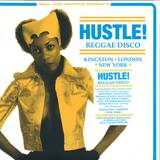
Soul Jazz Records Presents - Hustle! Reggae Disco: Kingston, London, New York

Soul Jazz Records' are releasing their long-out-of-print album 'Hustle! Reggae Disco' in a new expanded 2017 edition which now features five extra tracks. This ground-breaking album features non-stop killer reggae versions of original funk and soul classics in a disco style. Reggae disco updates of seminal classics by Anita Ward ('Ring
My Bell'), Chaka Khan ('I'm Every Woman'), Michael Jackson 'Don't Stop 'til You Get Enough,' Sugarhill Gang ('Rappers Delight' here performed by Derrick Laro and Trinity for producer Joe Gibbs) and more, all showing the hidden but inseparable link between the dance floors of New York, Kingston and London.

New bonus tracks to this collection include Derrick Harriott's funky take on Eddie Drennon's 'Do It Nice and Easy', the classic disco reggae of Risco Connection's take on McFadden and Whitehead's 'Ain't No Stopping Us Now' and the London rare groove lovers rock take on Barbara Acklin's soul classic 'Am I The Same Girl'.
'Hustle! Reggae Disco' has been one of Soul Jazz Records' best-selling releases since its first release 15 years ago (and subsequently featured heavily in the early Grand Theft Auto games!). This new edition comes complete fully re-mastered and with all original titles plus new tracks. This new expanded edition now comes a triple album (+ download code), CD and digital album.

'The effect of American R&B and soul music on Jamaican reggae is well documented, but the story doesn't stop there, for disco (and more so now for rap and hip-hop) have also been subsumed into the reggae mix, and while one might suspect that the resulting hybrid would die of its own implausibility, the feral mix of disco with reggae rhythms is so darn infectious that it hardly matters. Once you take your brain out of the frame and just let your feet go, this collection is a dancer's delight all done up in full-blown disco style, but with huge dub-style rhythm tracks ... if you're looking for an impossibly infectious dance collection, this is
it.' All Music

In Stock

On Stock and ready to ship

36,77
ASOK - MISTRESS 14

ASOK

MISTRESS 14

12inchMISTRESS014
Mistress Recordings
27.02.2020

The Liverpool-based DJ and producer ASOK returns to DVS1's Mistress Recordings with his most diversified EP yet: "Mistress 14" unfolds ASOK's raw, analog-heavy sound aesthetic full of broken kick drum patterns, stepping basslines, and lush synths.


With 25 years of record collecting, DJing, and promoting parties around the UK, there is little of the dance music spectrum that Stu Robinson has not been involved with. The Liverpool-based artist has amassed a fine understanding of a wide array of scenes, styles and sounds from drum & bass to electro-funk, disco to house and techno – underpinned by a love of breakbeat. The music under his alias ASOK is an amalgamation of this diversity that has found favor with labels like M>O>S, Lobster Theremin, Crème Organization, and Mistress Recordings.


"Mistress 14" opens with "Space Rockets" which is a nod to his breakier love affairs without using actual breakbeats. While second track "Is Anyone" displays his take on classic Chicago House with a little Roland JD-800 euphoria thrown in. On the flip, "Last Refuge" explores driving, rhythmical techno with ASOK's typical ravey pad-like break in the middle until "The Alchemist" closes the 12-inch by laying more focus on melody and texture with a growing, always changing bassline and an ethereal synth that carries the track's energy. The digital bonus track "Apano Sin" concludes the package with a scruffy somewhere in between everything vibe.


ASOK about Mistress 14:


"Mistress 14 is probably the most important EP I have ever made in terms of showing all the different things I am into. I’m difficult to pin down because I’m not really a techno DJ, or a house DJ, or anything like that. I like all forms of electronic dance music. As a DJ, I mix up old and new, familiar with unfamiliar, playing everything from Italo disco to really dark high-bpm breakbeat. As a producer, it’s not easy to put an EP together that covers a little of everything, yet still sounds cohesive. Especially considering that all my tracks were recorded in long live takes, then edited down with no ability to change parts. Sometimes that requires some pretty heavy editing, but that’s one of the good things you get when making music this way. I’m in control of the creative process, rather than feeling like some kind of colored block administrator drawing blocks out on arrangement view of my computer."

In Stock

On Stock and ready to ship

12,56
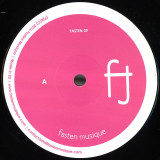
Monsieur Georget - Double Lune EP

Monsieur Georget

Double Lune EP

12inchFASTEN09
Fasten
25.05.2016

For its nineth installment Fasten Musique welcomes mysterious French artist Monsieur Georget from Ultrastretch,Do Easy Records and the 2 remixes are served by 2 talented producers.One is the New York based phenomenon Kamran Sadeghi is known for his work with Son of Rose and with Soundwalk Collective and anther is italian artist Third_Child is a new project aimed to mix sounds micro-house and house music.All tracks are a representation of the artists personal take on finely crafted grooves and sound designed elements.Vinyl Only release.

In Stock

On Stock and ready to ship

8,70
BCUC - The road is never easy

BCUC – Bantu Continua Uhuru Consciousness – have been channeling the spirit of Soweto for over twenty years. Indigenous funk, hip-hop consciousness, and punk rock energy fused into something utterly original and deeply rooted. Their mantra: Music for the people, by the people, with the people. From humble beginnings rehearsing in a shipping container, a stone's throw from the church where Desmond Tutu organized the escape of the most wanted anti-Apartheid activists, they kept believing in their dream of self-empowerment. Today they command festival stages worldwide: Glastonbury West Holts, Roskilde, Afropunk Brooklyn, WOMAD, Fusion, Sziget, FMM Sines, Beaches Brew, Boomtown, Colours of Ostrava, Couleur Café – to name just a few. In 2023, BCUC were honoured with the prestigious WOMEX Artist Award, an accolade usually reserved for more established artists, in recognition of their fearless work and transcendent live performances.

THE ROAD IS NEVER EASY

The Road Is Never Easy is BCUC's fifth album and their debut on Outhere Records. On this new offering, BCUC take listeners on another Afro-psychedelic journey into the soul of Soweto. It feels like a gospel sermon colliding with a punk concert, "guaranteed to touch untapped corners of your soul" (OkayAfrica). BCUC's music is deeply rooted in history and echoes the voices of the ones who came before. The road was never easy for the people of Soweto who originally came to work in the mines of Egoli, the City of Gold, Johannesburg. When apartheid finally ended after a long struggle, it was hoped that life would improve. But more than 30 years later, many of those initial hopes and dreams are still waiting to be fulfilled. This album is about that struggle. The album contains 10 brand new songs – a record for BCUC, whose previous albums featured an average of 3 songs. It represents the culmination of more than two decades of performing together and building a reputation as a powerful live act. These ten songs encapsulate that same live energy, each one building gradually and drawing you into BCUC's Afro-psychedelic stream of consciousness. It's a seismic tour de force through life in Soweto today. Songs like Amakhandela (Breaking All the Chains) connect history to daily life: "How is this precious metal inflicting so much pain in us," sing BCUC, "this government has been telling us we are free, but we don't benefit from being free." The album also talks about all the hopes and dreams that remain: "I have too many wishes and dreams in my head," BCUC sing in Um duma khanda, "I think I am losing my mind". The album ends with the soothing Matla a rona ke Bophelo, "our strength is life", praising the spirits and thanking the elders for protection. The Road Is Never Easy is about the harsh reality of life in Soweto, where "people always carry heavy loads". BCUC are street poets trying to deal with that burden: sometimes revolutionary, sometimes soothing, but always hopeful and compassionate. "When you are from Soweto you can't retreat nor surrender." (Sebenzela)

RECORDING

The album was largely recorded in Munich, Germany during tour breaks over two sessions, each three days long. It took place in a small studio located in a German WW II bunker converted into rehearsal spaces. The songs were recorded in one take altogether in one room, with only a few overdubs added, mainly backing vocals, by BCUC at Fourways studio in Johannesburg. BCUC have created their own distinctive way of writing, or rather, finding and creating their songs. The recording process is like an improvised live performance. They bring their ideas into a zone where the music, the rhythm and the spirits take over until the song starts to form. In this Afro-psychedelic zone BCUC create their unique poetry that feeds on the dreams still dreamt, the hopes, the fears and the temptations lingering everywhere. BCUC's songs need to breathe and time to build. The right take was the one when the song took over, and just like their live performances, no one knew beforehand where the song would take them. During the recording, BCUC just let it all flow out: inner turmoil, cries of rebellion, but also resilience and a search for healing, love, unity and compassion. You don't have to be from Soweto to feel the deep meaning and impact of this music. In these times of so much hate and division, BCUC are like a campfire for people to gather around.

PRODUCTION & ARTWORK

"BCUC have a unique magic," says Outhere's Jay Rutledge, who produced the album. "It blew our minds. It's like punk and pure gospel at the same time. Their music can make you dance and it can make you cry, all at the same time. And when the song is over, you feel you're not alone in this world anymore. We felt compelled to do this." The album cover is based on a matchbox design, matches being a common household item in South Africa even today. "These were the matches people used to burn government buildings and cars," explain BCUC. Little messages, addresses, or phone numbers used to be scribbled on the back of these boxes; each one a reminder of the strength, resilience, and resistance that once drove the struggle for freedom in Soweto. BCUC keep this flame burning. The Road Is Never Easy is a heavy spiritual road trip, a deep dive into the subconscious of Soweto and a quest for truth, justice and sanity in this crazy world. BCUC tackle the harsh realities of the voiceless, guided by the spirit world of their ancestors. Rather than reinforcing stereotypes of poverty, BCUC's portrayal of Africa is one rich in tradition, rituals and beliefs. "We bring fun and Afro-psychedelic fire from the hood," says vocalist Kgomotso Mokone.

out of Stock

Order now and we will order the item for you at our supplier.

19,75
Guilty Razors - Complete Recordings 1977 - 1978

UILTY RAZORS, BONA FIDE PUNKS.


Writings on the topic that go off in all directions, mind-numbing lectures given by academics, and testimonies, most of them heavily doctored, from those who “lived through that era”: so many people today fantasize about the early days of punk in our country… This blessed moment when no one had yet thought of flaunting a ridiculous green mohawk, taking Sid Vicious as a hero, or – even worse – making the so-called alternative scene both festive and boorish. There was no such thing in 1976 or 1977, when it wasn’t easy to get hold of the first 45s by the Pistols or the Clash. Few people were aware of what was happening on the fringes of the fringes at the time. Malcolm McLaren was virtually unknown, and having short hair made you seem strange. Who knew then that rock music, which had taken a very bad turn since the early 1970s, would once again become an essential element of liberation? That, thanks to short and fast songs, it would once again rediscover that primitive, social side that was so hated by older generations? Who knew that, besides a few loners who read the music press (it was even better if they read it in English) and frequented the right record stores? Many of these formed bands, because it was impossible to do otherwise. We quickly went from listening to the Velvet Underground to trying to play the Stooges’ intros. It’s a somewhat collective story, even though there weren’t many people to start it.
The Guilty Razors were among those who took part in this initial upheaval in Paris. They were far from being the worst. They had something special and even released a single that was well above the national average. They also had enough songs to fill an album, the one you’re holding. In everyone’s opinion, they were definitely not among the punk impostors that followed in their wake. They were, at least, genuine and credible.

Guilty Razors, Parisian punk band (1975-1978). To understand something about their somewhat linear but very energetic sound, we might need to talk about the context in which it was born and, more broadly, recall the boredom (a theme that would become capital in punk songs) coupled with the desire to blow everything off, which were the basis for the formation of bands playing a rejuvenated rock music ; about the passion for a few records by the Kinks or the early Who, by the Stooges, by the Velvet mostly, which set you apart from the crowd.
And of course, we should remember this new wave, which was promoted by a few articles in the specialized press and some cutting-edge record stores, coming from New York or London, whose small but powerful influence could be felt in Paris and in a handful of isolated places in the provinces, lulled to sleep by so many appalling things, from Tangerine Dream to President Giscard d’Estaing...
In 1975-76, French music was, as almost always, in a sorry state ; it was still dominated by Johnny Hallyday and Sylvie Vartan. Local rock music was also rather bleak, apart from Bijou and Little Bob who tried to revive this small scene with poorly sound-engineered gigs played to almost no one.
In the working class suburbs at the time, it was mainly hard rock music played to 11 that helped people forget about their gruelling shifts at the factory. Here and there, on the outskirts of major cities, you still could find a few rockers with sideburns wearing black armbands since the death of Gene Vincent, but it wasn’t a proper mass movement, just a source of real danger to anyone they came across who wasn't like them. In August 1976, a festival unlike any other took place in Mont-de-Marsan – the First European Punk Festival as the poster said – with almost as many people on stage as in the audience. Yet, on that day, a quasi historical event happened, when, under the blazing afternoon sun, a band of unknowns called The Damned made an unprecedented noise in the arena, reminiscent of the chaotic Stooges in their early adolescence. They were the first genuine punk band to perform in our country: from then on, anything was possible, almost anything seemed permissible.

It makes sense that the four+1 members of Guilty Razors, who initially amplified acoustic guitars with crappy tape recorder microphones, would adopt punk music (pronounced paink in French) naturally and instinctively, since it combines liberating noise with speed of execution and – crucially – a very healthy sense of rebellion (the protesters of May 1968 proclaimed, and it was even a slogan, that they weren’t against old people, but against what had made them grow old. In the mid-1970s, it seemed normal and obvious that old people should now ALSO be targeted!!!).
At the time, the desire to fight back, and break down authority and apathy, was either red or black, often taking the form of leafleting, tumultuous general assemblies in the schoolyard, and massive or shabby demonstrations, most of the time overflowing with an exciting vitality that sometimes turned into fights with the riot police. Indeed, soon after the end of the Vietnam War and following Pinochet’s coup in Chile, all over France, Trotskyist and anarcho-libertarian fervour was firmly entrenched among parts of the educated youth population, who were equally rebellious and troublemakers whenever they had the chance. It should also be noted that when the single "Anarchy in the UK" was first heard, even though not many of us had access to it, both the title and its explosive sound immediately resonated with some of those troublemakers crying out for ANARCHY!!! Meanwhile, the left-wing majority still equated punks with reckless young neo-Nazis. Of course, the widely circulated photos in the mainstream press of Siouxsie Sioux with her swastikas didn’t necessarily help to win over the theorists of the Great Revolution. It took Joe Strummer to introduce The Clash as an anti-racist, anti-fascist and anti-ignorance band for the rejection of old-school revolutionaries to fade a little.

The Lycée Jean-Baptiste Say at Porte d’Auteuil, despite being located in the very posh and very exclusive 16th arrondissement of Paris, didn’t escape these "committed" upheavals, which doubled as the perfect outlet for the less timid members of this generation.
“Back then, politics were fun,” says Tristam Nada, who studied there and went on to become Guilty Razors’ frontman. “Jean-Baptiste was the leftist high-school in the neighbourhood. When the far right guys from the GUD came down there, the Communist League guys from elsewhere helped us fight them off.”
Anything that could challenge authority was fair game and of course, strikes for just about any reason would lead to increasingly frequent truancy (with a definitive farewell to education that would soon follow). Tristam Nada spent his 10th and 11th unfinished grades with José Perez, who had come from Spain, where his father, a janitor, had been sentenced to death by Franco. “José steered my tastes towards solid acts such as The Who. Like most teenagers, I had previously absorbed just about everything that came my way, from Yes to Led Zeppelin to Genesis. I was exploring… And then one day, he told me that he and his brother Carlos wanted to start a rock band.” The Perez brothers already played guitar. “Of course, they were Spanish!”, jokes their singer. “Then, somewhat reluctantly, José took up the bass and we were soon joined by Jano – who called himself Jano Homicid – who took up the rhythm guitar.” Several drummers would later join this core of not easily intimidated young guys who didn’t let adversity get the better of them.

The first rehearsals of the newly named Guilty Razors took place in the bedroom of a Perez aunt. There, the three rookies tried to cover a few standards, songs that often were an integral part of their lives. During a first, short gig, in front of a bewildered audience of tough old-school rockers, they launched into a clunky version of the Velvet Underground's “Heroin”. Challenge or recklessness? A bit of both, probably… And then, step by step, their limited repertoire expanded as they decided to write their own songs, sung in a not always very accurate or academic English, but who cared about proper grammar or the right vocabulary, since what truly mattered was to make the words sound as good as possible while playing very, very fast music? And spitting out those words in a language that left no doubt as to what it conveyed mattered as well.
Trying their hand a the kind of rock music disliked by most of the neighbourhood, making noise, being fiercely provocative: they still belonged to a tiny clique who, at this very moment, had chosen to impose this difference. And there were very few places in France or elsewhere, where one could witness the first stirrings of something that wasn’t a trend yet, let alone a movement.

In the provinces, in late 1976 or early 1977, there couldn’t be more than thirty record stores that were a bit more discerning than average, where you could hear this new kind of short-haired rock music called “punk”. The old clientele, who previously had no problem coming in to buy the latest McCartney or Aerosmith LP, now felt a little less comfortable there…
In Paris, these enlightened places were quite rare and often located nex to what would become the Forum des Halles, a big shopping mall. Between three aging sex workers, a couple of second-hand clothes shops, sellers of hippie paraphernalia and small fashion designers, the good word was loudly spread in two pioneering places – propagators of what was still only a new underground movement. Historically, the first one was the Open Market, a kind of poorly, but tastefully stocked cave. Speakers blasted out the sound of sixties garage bands from the Nuggets compilation (a crucial reference for José Perez) or the badly dressed English kids of Eddie and the Hot Rods. This black-painted den was opened a few years earlier by Marc Zermati, a character who wasn’t always in a sunny disposition, but always quite radical in his (good) choices and his opinions. He founded the independent label Skydog and was one of the promoters of the Mont-de-Marsan punk festivals. Not far from there was Harry Cover, another store more in tune with the new New York scene, which was amply covered in the house fanzine, Rock News (even though it was in it that the photos of the Sex Pistols were first published in France).
It was a favorite hang-out of the Perez brothers and Tristam Nada, as the latter explained. “It’s at Harry Cover’s that we first heard the Pistols and Clash’s 45s, and after that, we decided to start writing our first songs. If they could do it, so could we!”
The sonic shocks that were “Anarchy in the UK”, “White Riot” or the Buzzcocks’s EP, “Spiral Scratch” – which Guilty Razors' sound is reminiscent of – were soon to be amplified by an unparalleled visual shock. In April 1977, right after the release of their first LP, The Clash performed at the Palais des Glaces in Paris, during a punk night organised by Marc Zermati. For many who were there, it was the gig of a lifetime…
Of course, Guilty Razors and Tristam were in the audience: “That concert was fabulous… We Parisian punks were almost all dressed in black and white, with white shirts, skinny leather ties, bikers jackets or light jackets, etc. The Clash, on the other hand, wore colourful clothes. Well, the next day, at the Gibus, you’d spot everyone who had been at this concert, but they weren’t wearing anything black, they were all wearing colours.”

It makes sense to mention the Gibus club, as Guilty Razors often played there (sometimes in front of a hostile audience). It was also the only place in Paris that regularly scheduled new Parisian or Anglo-Saxon acts, such as Generation X, Siouxsie and the Banshees, the Slits, and Johnny Thunders who would become a kind of messed-up mascot for the venue. A little later, in 1978, the Rose Bonbon – formerly the Nashville – also attracted nightly owls in search of electric thrills… In 1977, the iconic but not necessarily excellent Asphalt Jungle often played at the Gibus, sometimes sharing the bill with Metal Urbain, the only band whose aura would later transcend the French borders (“I saw them as the French Sex Pistols,” said Geoff Travis, head of their British label Rough Trade). Already established in this small scene, Metal Urbain helped the young and restless Guilty Razors who had just arrived. Guitarist for Metal Urbain Hermann Schwartz remembers it: “They were younger than us, we were a bit like their mentors even if it’s too strong a word… At least they were credible. We thought they were good, and they had good songs which reminded of the Buzzcocks that I liked a lot. But at some point, they started hanging out with the Hells Angels. That’s when we stopped following them.”

The break-up was mutual, since, Guilty Razors, for their part, were shocked when they saw a fringe element of the audience at Metal Urbain concerts who repeatedly shouted “Sieg Heil” and gave Nazi salutes. These provocations, even still minor (the bulk of the skinhead crowd would later make their presence felt during concerts), weren’t really to the liking of the Perez brothers, whose anti-fascist convictions were firmly rooted. Some things are non-negotiable.
A few months earlier (in July 1978), Guilty Razors had nevertheless opened very successfully for Metal Urbain at the Bus Palladium, a more traditonally old-school rock night-club. But, as was sometimes the case back then, the night turned into a mass brawl when suburban rockers came to “beat up punks”.

Back then, Parisian nights weren’t always sweet and serene.

So, after opening as best as they could for The Jam (their sound having been ruined by the PA system), our local heroes were – once again – met outside by a horde of greasers out to get them. “Thankfully,” says Tristam, “we were with our roadies, motorless bikers who acted as a protective barrier. We were chased in the neighbouring streets and the whole thing ended in front of a bar, with the owner coming out with a rifle…”
Although Tristam and the Perez brothers narrowly escaped various, potentially bloody, incidents, they weren’t completely innocent of wrongdoing either. They still find amusing their mugging of two strangers in the street for example (“We were broke and we simply wanted to buy tickets for the Heartbreakers concert that night,” says Tristam). It so happened that their victims were two key figures in the rock business at the time: radio presenter Alain Manneval and music publisher Philippe Constantin. They filed a complaint and sought monetary compensation, but somehow the band’s manager, the skilful but very controversial Alexis, managed to get the complaint withdrawn and Guilty Razors ended up signing with Constantin with a substantial advance.

They also signed with Polydor and the label released in 1978 their only three-track 45, featuring “I Don't Wanna be A Rich”, “Hurts and Noises” and “Provocate” (songs that exuded perpetual rebellion and an unquenchable desire for “class” confrontation). It was a very good record, but due to a lack of promotion (radio stations didn’t play French artists singing in English), it didn’t sell very well. Only 800 copies were allegedly sold and the rest of the stock was pulped… Initially, the three tracks were to be included on a LP that never came to be, since they were dropped by Polydor (“Let’s say we sometimes caused a ruckus in their offices!” laughs Tristam.) In order to perfect the long-awaited LP, the band recorded demos of other tracks. There was a cover of Pink Floyd's “Lucifer Sam” from the Syd Barrett era – proof of an enduring love for the sixties’ greats –, “Wake Up” a hangover tale and “Bad Heart” about the Baader-Meinhof gang, whose actions had a profound impact on the era and on a generation seeking extreme dissent... On the album you’re now discovering, you can also hear five previously unreleased tracks recorded a bit later during an extended and freezing stay in Madrid, in a makeshift studio with the invaluable help of a drummer also acting as sound engineer. He was both an enthusiastic old hippie and a proper whizz at sound engineering. Here too, certain influences from the fifties and sixties (Link Wray, the Troggs) are more than obvious in the band’s music.

Shortly after a final stormy and rather barbaric (on the audience’s side) “Punk night” at the Olympia in June 1978, Tristam left the band ; his bandmates continued without him for a short while.

But like most pioneering punk bands of the era, Guilty Razors eventually split up for good after three years (besides once in Spain, they’d only played in Paris). The reason for ceasing business activities were more or less the same for everyone: there were no venues outside one’s small circuit to play this kind of rock music, which was still frightening, unknown, or of little interest to most people. The chances of recording an LP were virtually null, since major labels were only signing unoriginal but reassuring sub-Téléphone clones, and the smaller ones were only interested in progressive rock or French chanson for youth clubs. And what about self-production? No one in our small safety-pinned world had thought about it yet. There wasn’t enough money to embark on that sort of venture anyway.

So yes, the early days of punk in France were truly No Future!

out of Stock

Order now and we will order the item for you at our supplier.

21,43

Last In: 7 days ago
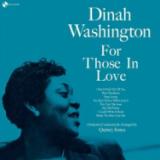
Dinah Washington - For Those In Love LP
  • Get A Kick Out Of You
  • Blue Gardenia
  • Easy Living
  • You Don't Know What Love Is
  • If I Had You
  • This Can't Be Love
  • My Old Flame
  • I Could Write A Book
  • Make The Man Love Me
  • Ask A Woman Who Knows

Classic album by Dinah Washington, one of America's most versatile singers of the 1950's who moved effortlessly between pop to gospel to jazz to blues. She teamed with the great Quincy Jones , For Those in Love is an essential album for any collection. Dinah Washington (1924-1963) recorded many albums for EmArcy Records and during the period 1954 to 1961 she worked with Quincy Jones, including the release presented here, For Those in Love, which was the first of their recorded collaborations. Featuring three brilliant small group sessions, taped on three consecutive days in March of 1955, the arrangements were by Jones, who also conducted the band and played a trumpet solo on 'Ask a Woman Who Knows'. The group of heavyweight players includes such stars as Clark Terry, Jimmy Cleveland, Paul Quinichette, Cecil Payne, Wynton Kelly, and Jimmy Cobb.

pre-order now10.04.2026

expected to be published on 10.04.2026

21,43
Skeptical - Blimp LP

Skeptical

Blimp LP

12inchRUBI004
Rubi Records
09.04.2026

Ashley Tindall, AKA Skeptical, returns in peak form with Blimp EP — the fourth release on his Rubi Records imprint — delivering four meticulously crafted cuts of uncompromising drum & bass.

Opening with the title track, Blimp sets the tone with a deep, steppy wobbler that nods subtly to the title track from his second Rubi Records release, Capsize EP. All the signature Skeptical hallmarks are here: hypnotic, pared-back metronomic drums and shimmy-inducing, undulating subs that demand movement. Yet this time there's a noticeable shift — warm, underlying melodic pads bring an unexpected emotional depth. It's not dreamy, but it is more introspective than we're used to, showing another layer to his sonic palette.

So Good flips the script entirely. A dark, cinematic growler, it leans into ghosted vocal fragments and a futuristic film-noir aesthetic. Tense, claustrophobic rhythms and sinister textures create an unsettling atmosphere — tailor-made for those lights-out, pressure-heavy dancefloor moments.

Third comes the undeniable monster of the EP, Technology. Trademark "stink-face" Skeppiness is in full effect from the first bar. Disjointed sci-fi stabs and eerie pads collide with clinical, almost militaristic drum programming, all anchored by a devastatingly weighty bassline. Movement isn't optional — this is pure Skeptical, uncompromising and lethal.

Closing the EP is Bad Generation, a sound system–influenced weapon that finds Skeptical operating at his dubwise best. Fusing minimal D&B with heavyweight, roots-inspired rhythms is no easy task, but here it's executed with effortless authority. It's equally suited to shelling down a rave or getting lost in a deep, eyes-closed session.

Four tracks. Four distinct moods. 100% Skeptical.
Blimp EP confirms once again that his sound continues to evolve — sharper, deeper, and more refined with every release.

Support: Ben UFO, Joy Orbison, Gilles Peterson, dBridge, Break, DLR, Doc Scott, Mefjus, Kasra, Kings of the Rollers, Alix Perez, Jubei, Dub Phizix, Flight, Tasha, Loxy, Lens.

out of Stock

Order now and we will order the item for you at our supplier.

16,39

Last In: 7 days ago
The Expanders - The Expanders LP

The Expanders began playing reggae music together in the summer of 2003, and today are one of the hardest working reggae bands in Southern California. They have come to be known for their vintage style of reggae, played in the tradition of classic 1970s Jamaican groups like The Ethiopians, The Gladiators and The Mighty Diamonds. Their music is centered in three- part vocal harmonies and strong song writing, with lyrics that range from socially heavy to playful and upbeat. The music on the self- titled debut album (2011) was recorded between 2006 and 2010. The band took the time to develop this recording with the goal that the music have an authentic vintage Jamaican sound. To achieve this type of recording, they enlisted the mixing skills of engineer Jay Bonner, original bass player for The Aggrollites, who now runs the JanDisc record label. The initial tracks were all laid down to analog tape at the famous Killion Studios, owned and operated by engineer Sergio Rios, himself an in-demand musician (most notably as guitarist for Orgone, The Lions, and Breakestra)

pre-order now03.04.2026

expected to be published on 03.04.2026

23,49
PARIAH - Blaze of Obscurity Re-Issue
  • 1: Missionary Of Mercy
  • 2: Puppet Regime
  • 3: Canary
  • 4: Blaze Of Obscurity
  • 5: Retaliate!
  • 6: Hypochondriac
  • 7: Enemy Within
  • 8: The Brotherhood

Pariah’s cult album re-issued! “Blaze of Obscurity” brings you pure Thrash Metal fury! Satan changed their name to Pariah in 1988-1989. There’s Heavy Metal, Power Metal, Thrash Metal, Death Metal, the list seems almost endless. Sub-genres are important in metal and bands are quickly classified and labeled. Pariah (the last re-incarnation of Satan) is one of few bands that are difficult if not impossible to classify. Is it Heavy metal? NWOBHM? Thrash Metal? Pariah did not make it easy to describe their sound. It might be too sophisticated to simply label it Heavy Metal, which in its infancy was a rather simple affair.

They don’t sound like any Metal band out there, perhaps discounting some of the more aggressive and technical ones, and then the signature NWOBHM sound is added. The guitar playing by Russ Tippins and Steve Ramsey is undeniably what defines Pariah as well as Satan in the past. Undeniably, Satan has gone a long way; from humble NWOBHM beginnings, to Experimental/Melodic Mettal (in Blind Fury) and something that could be described as a NWOBHM/Thrash Metal hybrid (“The Kindred”). It’s as if they’ve been experimenting trying to find their identity, and theyfinally found it. Stylistically, “Blaze of Obscurity” could be seen a step back to “Suspended Sentence”, but this time around they got everything right, down to the last note. Those who have heard Satan know what to expect: great guitar playing.

And sure enough, “Blaze of Obscurity” is a demonstration of guitar mastery and is overall a very guitar-driven album, with plenty of mind-boggling riffs and solos are all over the place, but more importantly, it’s a demonstration of some amazing songwriting as well. This is easily Pariah/Satan’s creative peak and one of the most consistent albums I’ve ever heard, featuring eight great and conceptually perfect songs with lyrics that come across as sophisticated and thought-provoking. It is not fair to put the entire spotlight on Tippins and Ramsey though since the drumming and bass work from Sean Taylor and Graham English really shines. The rhythm is fast and tight, keeping it focused, aggressive and intense till the end. Vocalist Michael Jackson (yes, that’s his name) has to be commended too as this is easily his careers best performance.

The verdict: “Blaze of Obscurity”: the level of musical genius expressed here, along with near flawless songwriting, is more than enough to skyrocket it to heights reserved only for classics. Probably not your choice for some light listening those quiet Sunday evenings, but those who take a more serious, intellectual approach when selecting their music will find very much to appreciate here.
Tracklisting

pre-order now27.03.2026

expected to be published on 27.03.2026

28,99
LEROY HUTSON - THANK YOU / THE GHETTO ‘74 (7")

Whilst considering the “Hutson Sevens” series, there was a LeRoy Hutson record that stood out like a sore thumb for us when sifting through the amazing LeRoy Hutson portfolio to identify which pieces of music had not yet been made available on 7-inch vinyl. Many of you will know the story of LeRoy Hutson and Donny Hathaway being roommates at Howard University and together writing the legendary rare groove track "The Ghetto". In 1974, LeRoy Hutson used his artistic licence and adapted the track to feature on his album "The Man!" and subtly retitled the track "The Ghetto '74".
Home of The Good Groove Records are delighted to include this magnificent track on 7-inch vinyl for the very first me.

We are always trying our best to compliment each side of the 7-inch records we are releasing in the "Hutson Sevens" series. For the A-side on our third release we have chosen an outstanding track, which again is previously unreleased. Recorded at the Curtom studios in April 1977 "Thank You" is a fabulous “easy to the ear” piece of smooth soul music that has the classic Hutson groove. One for the soul music lovers, and a possible future sing along favourite to end a night of dancing.

out of Stock

Order now and we will order the item for you at our supplier.

18,07

Last In: 24 days ago
Items per Page:
N/ABPM
Vinyl