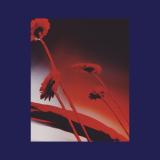
Time for something a little different from Cosmic Pint Glass' secret weapon Dom IV. Nothing Happens is a strangley poignant DIY/pop song, with two versions of the title track. Its the first in a series of 7 from CPG. Ltd to 200 with painted sleeves by Liam Buckley.
quête:dom iv
- 1: Brand New God
- 2: Little Whip
- 3: Cantspeak
- 4: Going Down To Die
- 5: Until You Call On The Dark
- 6: Dominion
- 7: Bringer Of Death
- 8: Sadistikal
- 9: Son Of The Morning Star
- 10: I Don't Mind The Pain
- 11: Stalker Song
- 12: Let It Be Captured
- 13: Invocation (Unlisted Track)
‘White Series #4’ marks the debut EP of Marc Feldmann and Dominik André as a producer duo. The record opens with ‘Natural Oscillation’
, a hypnotic techno piece where flowing percussion meets subtle trance influences. ‘A Breeze of Mistral’ builds on this energy with layered repetition and a deep pulse that unfolds gradually, drawing the listener further in. On the flip side, Audrey Danza reinterprets Natural Oscillation with a direct, dancefloor-focused approach. She sharpens the groove, raises the tempo, and pushes the track forward with her signature, driving drums and a tightly locked kick, transforming the original’s hypnotic flow into a no-frills cut. The EP slows the pace with ‘Discernible Rhythms’, a reflective, 80s-influenced synth chugger that adds warmth and restraint to the record. Released as a hand-stamped white label on Subject To Restrictions Discs, White Series #4 reflects and continues the label’s contribution to the more understated forms of electronic club music.
The first release to document the solo cello work of musician and composer Lucy Railton, the 40-minute composition Blue Veil recorded at Église du Saint-Esprit in Paris invites listeners into the realm of precision-tuned states of resonance: states made manifest through Railton's careful traversal of her cello's most subtle acoustic characteristics as they harmonically interlock with mind's embodied modalities of attention and imagination. Blue Veil arises out of, is sustained in and finally dissolves back into Railton's momentary presence with her intimate connection to the cello, a way of hearing that allows for a deeper engagement with harmonic resonance, one that opens a space for immediate encounters of mind and sound. Railton's exploratory practice of harmonic perception emerges from a focus on the physical qualities of intervallic and chordal sounds, their textural qualities, degrees of friction, and inner pulsations. Composing in the moment guided by resonances within the cello's body, her own, and their shared vibrational space, Railton moves through Blue Veil by giving sounds what they ask for: sounds of pure texture manifesting as a move through temporal transparency, sounds of rough texture marking regions of dimensionally dense space. Railton's creative and highly refined use of just intonation harmony deforms sound's inner movements in ways that suggest a mode of listening that actively supplies imagery of sounds implied or completely absent rather than merely savouring those fully present. This active mode of "listening-with", playfully and semi-metaphorically referred to by Railton as "sing-along music", allows listening to reflexively participate in the music's movement as it gradually passes through richly saturated domains of harmonic imagination. And just as the precision-tuned tones of Blue Veil lose their individuality when fusing multifaceted uniformity, listening's structures of reference and recognition dissolve into nameless waves of intensity, continuously unfolding themselves upon and merging with the listener. Blue Veil is the result of a deep exploration of the inner worlds of tuning, an undertaking in turn informed by and emerging out of Railton's realisations of the music of Catherine Lamb and Ellen Arkbro, her collaborative work with Kali Malone and Stephen O'Malley as well as her interpretive practice in performing the work of Maryanne Amacher, Morton Feldman and others.
Since its founding back in 2014, Blume has carved a unique place in cultural landscape, issuing free-standing works, spanning the historical and contemporary, that represent singular gestures of creativity within the field of experimental sound. Joining their broad efforts in building networks of context and understanding that already includes the works by Werner Durand, Sarah Hennies, Bruce Nauman, John Butcher, Jocy de Oliveira, Mary Jane Leach, Valentina Magaletti, Alvin Curran, Julius Eastman, Alvin Lucier, and others, Blume return with the first ever vinyl release to attend to James Tenney’s legendary “Postal Pieces”, Marking the first ever appearance of five of the suite’s works - “Maximusic, for Max Neuhaus” (1965), “Having Never Written a Note for Percussion, for John Bergamo” (1971), “FFor Percussion Perhaps, or... Night, for Harold Budd” (1971), “Cellogram, for Joel Krosnick” (1971), and “Beast, for Buell Neidlinger” (1971) - on vinyl, drawing upon recordings made in 2003, by the Amsterdam based ensemble, The Barton Workshop, under the direction of James Fulkerson. Among the most important and highly regarded efforts in Tenney’s canon of compositions, as well as within the history of 20th Century music, these five pieces represent a crucial bridge between Fluxus-oriented conceptualism, minimalism, and the microtonal complexities that would emerge in their wakes. Issued in a highly limited vinyl edition of 300 copies, it includes exact replicas of the original postcard graphic scores, and features newly commissioned liner notes by Bradford Bailey, Blume’s brand new edition takes great steps to centring Tenney at the eye the storm during some of experimental music’s most important years.
A student of composition under Carl Ruggles, John Cage, Harry Partch, and Edgard Varèse - remaining close to all of them, and later performing in both Cage and Partch’s ensembles - as well as acoustics, information theory, and tape music composition under Lejaren Hiller, James Tenney carved a wide path within the contexts of experimental and avant-garde music during the second half of the 20th Century. Not only was he a tangible bridge between the generations of composer’s who laid much of the groundwork and the later movements of Fluxus, Minimalism, and the broader practices of experimental music, but Tenney is credited as having contributed one of the earliest applications of gestalt theory and cognitive science to music in 1961, before helping to pioneer the field of computer music at Bell Labs, during the following years.
Over the course of his career, Tenney produced music of such complexity and sophistication - paying little mind to the seductions of taste or dominant tropes of its own moment - that his work and legacy have largely remained under-recognised by the broader publics that have attended to most of his peers. Perhaps more pertinently, the body of work he produced can be perceived as too varied and complex to fit neatly within standard creative histories or critical frameworks, comprising harmonically complex works for acoustic instrumentation, musique concrète, the groundbreaking 1961 “plunderphonic” composition, “Collage No.1 (Blue Suede) (for tape)” - sampling and manipulating a recording of Elvis Presley - as well as algorithmic and computer synthesized music. Even here, within this single decade, a clear image of Tenney’s endeavours remains elusive. In addition to penning important theoretical texts, he collaborated and / or played with Max Neuhaus, La Monte Young, Steve Reich, Philip Glass, Michael Snow, Terry Riley, and numerous others; was an active member of Fluxus; starred in and composed music for Stan Brackage’s films; regularly worked with the Judson Dance Theater; co-founded and played in the ensemble, Tone Roads, with Malcolm Goldstein and Philip Corner; was a vocal advocate of the works of Conlon Nancarrow and Charles Ives, playing a significant part in the revival of both of their legacies; and regularly collaborated as a composer, musician, and actor with his then-partner, the artist Carolee Schneemann, notably co-starring in her film, “Fuses” (1965) and her legendary 1964 performance, “Meat Joy”, as well as creating sound collages for her films “Viet Flakes” (1965) and “Snows” (1970). Curiously, for a relatively absent figure in the historical and critical narratives, Tenney seems to have been the thread that bound multiple generations and disciplines of avant-garde practice in New York during this period.
Tenney was deeply invested in the quality and perception of sound. By 1970, this led him back to composing exclusively for acoustic instrumentation (though sometimes processed with tape delay) - in most cases utilising non-well tempered tuning systems to explore harmonic perception - a practice that he would remain steadfast to for the remainder of his life. This development roughly corresponded with his relocation to California, at the outset of the 1970s, following an invitation to teach at the newly founded music department at California Institute of the Arts (CalArts) in Valencia. Finding himself in regular contact with the harpist Susan Allen and the artist Allison Knowles, as well as at a great distance from many of his friends, in 1971 he completed (with the assistance of Knowles and Marie McRoy) “The Postal Pieces”, a project he had begun in 1965.
A suite of eleven compositions, “The Postal Pieces”, stands among Tenney’s well known and celebrated compositions, and illuminates the dualities embraced by the composer, notably his use of sound to develop consciousness in and of others, and his willingness to draw on elements and observations of everyday life; citing his strong dislike of writing letters as being the primary inspiration for their inception. In lieu, he conceived to send his friends - John Bergamo, Allison Knowles, Pauline Oliveros, La Monte Young, Harold Budd, Philip Corner, Joel Krosnick, Buell Neidlinger, Susan Allen, Max Neuhaus, and Malcolm Goldstein - short scores on the back of postcards. The suite is composed around three themes: Tenney’s concept of swell form (utilizing repetition and progressing through a structurally symmetrical arch), intonation, and the desire to produce “meditative perceptual states”.
A hugely important addition to Blume’s ever expanding efforts in context building and networks of creative practice, James Tenney’s “Post Pieces” is issued in a highly limited vinyl edition of 300 copies, which includes a exact replicas of the original postcard graphic scores, and features newly commissioned liner notes by Bradford Bailey.
The flesh withers to the pulses of thunderous cave reverberations, while the spirit is united with the psalms of the Glorious Dead, the Ancient Entities that have conquered Death and become Life, dominant, absolute and victorious. This Work consists of a ritual deriving from the darkest corners of the Mind, the deathlike spheres of the Netherworld and the truest essence of the Afterlife, to become a homage to the Force of Life Eternal.
Guided by Her Luminous rays, it is dictated to be experienced solely in chamber-like conditions, below the waxing Moon, accompanied with Myrrh and lunarian incenses and agharbattis, to be properly roamed within its uncharted corridors. Listen, experience and conquer, setting aside the mundane aspects of realities, explore the unmapped pathways, with every preconception burnt to the altars of this Magnum Opus.
SHIBALBA's music is saturated with the mysticism of the East. It's richly detailed and multidimensional, while layered with chanting and broadly defined elements of traditional ritual and shamanic music. Apart from contemporary synths and guitar drones, the band makes use of bones and skulls as percussion instruments, Tibetan Horns, Tibetan Singing Bowls, bone & horne trumpets, Darbuka's (goblet drums) as well as ceremonial bells and gongs, to name a few. The Spirits behind the Shamanic Halls of Shibalba are V.P. Adept & Aldra-Al-Melekh.
CD edition of 300 copies in 6 panel Digisleeve, Matt Lamination. 7 Tracks. Running Time: 43:04
Vinyl LP edition of 300 copies in 3mm sleeve with printed innesleeve, Matt Lamination. 7 Tracks. Running Time: 43:04
"Tonight" is a captivating, extraordinarily song written and arranged by Paolo Gianolio (one of Mauro Malavasi's most valid collaborators), who strongly wanted Ivana Spagna as a vocalist. In those very early 80s Spagna used to lend her refined voice.to successful productions using various pseudonyms: Mirage, Carol Kane and Yvonne Kay and precisely Barbara York The piece released in 1982 with Delirium Records was then released in 1983 on Smash One Music by Pino Toma who jealously preserved it making it one of the many rare gems of Italo-Disco. Now after 40 years here it is revived by Best Record in all four original versions, perfectly remastered by Dom Scuteri.
start of the miditonal sub-label for reduced techno music - supported by gabriel ananda, troy pierce, paco osuna, dominik eulberg, ivan smagghe, holgi star, remute (denis karimani), renato figoli, tim xavier, perc, blood & tears, nudisco, chris fortier, joseph capriati, da fresh, david keno, xpansul and many many more !!!
- 01: Nyl - Nyl
- 02: Etron Fou Leloublan - Face A L&Apos;Extravagante Montée Des Ascenseurs, Nous Resterons Fideles A Notre Calme Détermination
- 03: Lard Free - Acide Framboise
- 04: Heldon - Perspective Iv (Excerpt)
- 05: Jacques Berrocal / Dominique Coster / Roger Ferlet - Pièce À Lanam
- 06: Delired Chameleon Family - Raganesh
France's near-revolution of May '68 was the zenith of that generation's struggle for a new kind of life. It kicked the country's small, but vibrant, counter-culture into overdrive, and birthed a local underground music scene. The bands it spawned made music with much less rock purity than groups from the UK and US. Their musical and cultural influences foregrounded improvisation, disjunction, and genre-blending: Soft Machine, Pink Floyd, Frank Zappa, free jazz, and radical politics. The introduction of the synthesiser in the early 1970s added fuel to the fire.
This collection of French underground music inaugurates a series to accompany "Synths, Sax & Situationists", the first English-language book to investigate this movement. It focuses on the music of the second wave of bands that emerged in 1972/3, which saw radicalised psychedelic and jazz influences merge with the future-music possibilities offered by new technology. The next volume will investigate the politically-charged bands that erupted in immediate aftermath of May '68.
Hello Spiral returns to the same North London block, the same triangulated geometry of balconies and courtyard, but with a shift of orientation. His previous record looked outward from the eighth floor, these four new recordings move inside, into the building’s arteries. Joe explores the hallways of the complex where he has lived and listened for years, using the same tool as before, an iPhone and its voice memo app. The recordings were made in situ, each exactly eleven minutes, captured without ceremony.
The hallways feel different. Less private, less scenic, more neutral. They are the connective tissue between hundreds of domestic units, a space of transit rather than rest. The carpet absorbs certain frequencies. The fire doors catch and release pockets of air. The lights hum. Elevators drone in soft cycles of arrival and departure. These are the institutional sounds of shared living, yet once recorded they begin to behave strangely. A kind of internal weather appears.
As with the previous album, Joe remains attentive to what is often overlooked, irrelevant or discarded. The hallways, with their scuffs and signage, their coded access and polite functionalism, provide an unexpectedly rich field. The ambience is not shaped by storms or scaffolding, not by birds or street spill. Instead the material is the building’s own breath, its mechanical rhythms, the low frequency traces of neighbours, the occasional shuffle of footsteps that pass but do not return.
Joe talks about this record as a possible middle chapter in a trilogy. If so, it sits between the exposed openness of the balcony and whatever comes next. A hinge point. These recordings continue Joe’s long practice of defamiliarization, sharpening attention to the unnoticed while withholding narrative. They invite repeated listening, not for revelation, but for the subtle shifts that occur when a familiar space is treated as an instrument.
»Hug of Gravity« is the second solo album by Raphael Loher and his first for Hallow Ground. The Swiss pianist and composer uses piano preparations, tape machines, and digital means to forge an aesthetic of playful reduction and rhythmic abstraction. The source material for these four sprawling pieces was culled from recordings of the artist performing the album’s predecessor, 2022’s »Keemuun.« Loher used them in a painstaking two-part working process to create an album that is both a product of and an ode to transformation, exploring themes of alternative temporalities and spatialities. »Hug of Gravity« oscillates between experimental electronic music, ambient, and minimal music and calls to mind the work of artists like William Basinski, Linda Catlin Smith, or label mate Andrius Arutiunian.
Loher laid the foundation for »Hug of Gravity« in 2020 with ten solo performances at his studio, during which he presented the pieces from his debut album. For these intimate concerts, he prepared the piano with modelling clay in order to move beyond the well-tempered tuning that dominates most of Western music. He then used a consecutive three-month residency in the Blenio Valley to refine the recordings. »I cut up and rearranged the material, then transferred the results—around 30 pieces—to a varispeed tape machine and then back to the computer. After that was done, I cut them up and rearranged them again,« he laughs. By radically reworking the material, he created an album that eschews traditional notions of time and space.
Loher points out the influence that his surroundings had on him. »The process created the music—and the place was essential to the process.« he says. He wandered through the mountains for up to nine or ten hours a day, which gave him a sense of what he calls expanded temporality. »Time just felt longer, my experiences seemed more diverse and nuanced, and it was as if I perceived my environment more clearly,« he explains. This shift in Loher’s perception of time and space—the latter also expressed in the album’s title—influenced his work with the varispeed tape machine. It allowed him to change the pitch of different recordings while layering them to let interference patterns emerge and emphasise the emotional qualities of the unconventional tunings he had used.
In this way, Loher constructed numerous interlocking narrative arcs throughout »Hug of Gravity,« an album that is ever-changing; an exercise in calm ecstasy that provides its audience with the feeling of being removed from conventional time and space. This approach is also reflected in the artwork for »Hug of Gravity,« which is based on drawings Loher made during his residency at Blenio Valley. Their fine hand-drawn lines run in parallel and let incidental patterns emerge, an effect that is only multiplied when the six different drawings that accompany each vinyl copy of the album are overlapping, forming ever-new visual constellations.
- A1: Ambition Of Men- Reuben Anderson
- A2: Come Down- Lord Tanomo
- A3: Yard Broom- Roland Alphonso & Don Drummond
- A4: Good News- The Skatalites
- A5: Birds And Bees- Ferdie Nelson
- A6: Please Beverly- Bibby And The Astronauts
- B1: Eastern Standard Time- Lord Tanamo
- B2: Lonely And Blue Boy- Ferdie Nelson
- B3: Let George Do It- Rico Rodriguez
- B4: Ska Down Jamaica Way- Ferdie Nelson & Ivan Jap
- B5: Sweet Dreams- Bibby & The Astronauts
- B6: Valley Of Green- Jackie Opel
SKA was the name given to the music that came out of Jamaica between 1961-1966. Based on the American R&B and Doo-wop records that the Sound Systems in Kingston Town used to play. However, the American records style started to mellow out, while the Jamaicans preferred a more upbeat sound. So the Sound System bosses became record producers to cater for this demand. Sir “Coxonne” Dodd and Duke Reid led the way putting the top musicians on the Island in the studio to make music unmistakably Jamaican. A lot of their early recordings were cut at Federal Records before they built their own studios.
Federal Records was the first domestic Jamaican studio, based at 220 Foreshore Road, Hagley Park, Kingston. It opened it’s doors in 1961 owned by Ken Khouri who first licensed American records to the island of Jamaica, before cutting his own tunes, which were some of the first Jamaican RnB and Ska singles. Ken Khouri initial studio was Records Limited but very basic so with the help of engineer Graeme Goodall built the new studio complex at 220 Foreshore Road which also contained a pressing plant and disc cutting room. The studio was not only the forerunner for Ska music but the music that followed and in 1981 Ken Khouri sold the complex now on the renamed road Marcus Garvey Drive to Bob Marley who renamed the premises Tuff Gong Studios whose legacy carries on today.
We have compiled some of the best SKA SOUNDS that came out of the Federal Vaults, with some of the best artists, musicians from the time. The great Lord Tanomo, Don Drummond, Rico Rodriguez, Roland Alphonso, alongside some lesser known artist. However, one thing is for sure, the quality never drops on this fine collection of Ska Hot Tunes……
- A1: Cadux Plectere I
- A2: Lacinia Off Axis
- A3: Maris Stella Plectere Ii
- A4: Ere
- B1: Arborea Plectere Iii
- B2: Eve
- B3: Sidereus Plectere Iv
- B4: Lacinia In Axis
- C1: Veris Plectere V
- C2: Nova Pt I
- C3: Eve For String Orchestra
- C4: Nova Pt Ii
- D1: Matrix Plectere Vi
- D2: Maris Stella Plectere Vii
- D3: Lacinia Off Axis
- D4: Cycle Plectere Viii
Returning to Die Schachtel with his fourth full-length with the label, the Genoa born, Bologna based, guitarist and electroacoustic composer, Stefano Pilia, delivers “Lacinia”, a new, immersive cycle of compositions, delving deeper into the realm of metaphysical, spiritual, and divine meaning, weaving astounding arrangements of sonority from a palette of synths, strings, brass, organ, various electroacoustic instruments, and percussion. Resting at a refined intersection of the acoustic and electroacoustic, drone, and chamber music - overwhelmingly beautiful, delicate, and bold, - “Lacinia” stands as a high-water mark in Pilia’s already remarkable and forward-looking career.
Since its founding in Milan during the early years of the new millennium, Die Schachtel has occupied a singular place in the landscape of experimental music, issuing a carefully curated body of reissues and archival releases by historically significant figures and projects like Christina Kubisch, Luciano Cilio, Marino Zuccheri, Prima Materia, Claudio Rocchi, Lino Capra Vaccina, Gruppo di Improvvisazione Nuova Consonanza, Roland Kayn, and numerous others, balanced against bristling contemporary counterparts by the likes of Jim O'Rourke, Giovanni Di Domenico, Nicola Ratti, Luigi ArchettI, Valerio Tricoli, etc. Running like a spine through the label’s output is a deep dedication to the work of the Italian guitarist and electroacoustic composer Stefano Pilia. Now Die Schachtel returns with “Lacinia”, Pilia’s forth full-length with the label and their first release of 2024. Building on the ground of deeply personal engagement with metaphysical, spiritual, and divine meaning, explored within his previous LP with Die Schachtel, 2022’s “Spiralis Aurea”, “Lacinia” encounters the composer working in close calibration with various ensembles, including the Bologna based Ensemble Concordanze and Comunale di Bologna String Orchestra, weaving synths, strings, brass, organ, various electroacoustic instruments, and percussion into an astounding reconfiguration of immersive, contemporary minimalism that stands among Pilia’s most noteworthy releases to date. Issued by Die Schachtel in two special double vinyl editions and a CD edition, “Lacinia” features artwork by Bruno Stucchi/Dinamomilano, and is an absolute marvel that draws you in and doesn’t let go.
First emerging during the early 2000s, over the past two decades – via solo releases and numerous collations with artists like Oren Ambarchi, Valerio Tricoli, Alessandra Novaga, Z'EV, Andrea Belfi, David Grubbs, and numerous others - the Genoa born, Bologna based, guitarist and electroacoustic composer, Stefano Pilia has presented a singular voice within Italian experimental music, harnessing visceral energy and hands-on immediacy within delicately woven tapestries of sonority, each investigating the sculptural properties of sound and illuminating its relationship to space, memory, and the suspension of time. “Lacinia”, Pilia’s forth solo venture with Die Schachtel, encounters the composer reentering his longstanding practice of collaboration with various ensemble forms, including the Bologna based Ensemble Concordanze, for the albums central piece, “Lacinia Off Axis”, spinning stunning string confirmations by Pietro David Carami and Elena Maury on violin, Alessandro Savio on viola, and Mattia Cipolli on cello.
A new, important cycle of compositions by Pilia, “Lacinia” (meaning "lace" in Latin) builds upon the exploration of the metaphysical, spiritual, and divine dimensions through numbers, geometry, and the creation of tonal forms explored by 2022’s “Spiralis Aurea”, mirroring archetypal, immutable forms at the juncture of the abstract realm of mathematics and architectural structures in the physical world, expands the poetics and compositional ideas featured in its predecessor. Regraded by Pilia as both a series of individual compositions and a single work, “Lacinia” was conceived to “define a circular path (a sort of "rhizomatic lace") where the beginning and end touch, suggesting the concept of time not only as linear but also cyclical and ritualistic—an eternal return, a process of transformation where matter changes, its state changes, but without altering the invisible internal principle of mutation”, embarking upon a a series of “steps, degrees, and energetic quanta in a progression of archetypal whole numbers and transcendent creation.”
The resulting 16 tracks unfold as a series of complex sonic meditations. While deeply resonant with the minimalism of composers like Arvo Pärt, LaMonte Young, Pauline Oliveros, and Eliane Radigue, Pilia digs deep and moves far beyond the predictable tonal relationships and structures of that idiom, echoing the ancient liturgical and devotional music of composers like Gesualdo da Venosa, Monteverdi, and John Dowland, at a refined intersection of the acoustic and electroacoustic, drone, and chamber music.
Fascinatingly structured as a whole to include a number of motif returns, across which we encounter works like “Lacinia Off Axis” appearing in slightly different rendering, states, or evolutions three times, and compositions like “Eve” appearing twice in subtly different forms and arrangements - first for four oscillators, guitar and voice and then for string orchestra - as well “Maris Stella”, which similarly makes two appearances, first for horn trio, organ and percussion, and then for string orchestra, with “Lacinia” Pilia delves further into the world of chamber music than ever before, creating a deeply inward, mediative body of work the totality of which, guided by its rich string arrangements of arching, sorrowful tone, feels almost like a mass for some unproclaimed loss; simultaneously locked in the nuances of a moment, while managing to suspend time.
Perhaps most remarkable is Pilia's ability to create a remarkable sense of sonic cohesion while using such a varied number of ensembles and instrumentation. From the sprawling string arrangements delivered by Comunale di Bologna String Orchestra, under the direction of Paolo Mancini, and Ensemble Concordanze, and a flute trio (Cadux / Plectere) brilliantly played by Manuel Zurria, to pieces for sax, organ and percussion, violin duo and percussion, organ and percussion, Pilia manages to create a sense of singular, encompassing world that flows forward like a shifting stream.
Overwhelmingly beautiful, delicate, and bold, “Lacinia” is unquestionably a high-water mark in Stefano Pilia’s already remarkable, forward-looking career. Nothing short of a marvel of contemporary Minimalism that, through its shifting arrangements of harmonics, tonality, and texture draws flickering images of ancient forms of music into the present day, “Lacinia” is Issued by Die Schachtel in two special editions on double vinyl and a CD edition, featuring artwork by Bruno Stucchi/Dinamomilano. This is an immersive all-consuming listen that can’t be missed.
"Na Rua, na Chuva, na Fazenda" is a landmark 1975 album by Hyldon, a key figure in Brazilian soul music. His debut release was one of the top-selling albums that year, capturing the vibrant musical spirit of the 1970s and reflecting the influence of the black power movement alongside artists like Tim Maia and Cassiano. With a mix of MPB, soul, and funk, Hyldon brought his unique sound to life, collaborating with influential artists and contributing to the Brazilian music scene. With a mix of MPB, soul, and funk, Hyldon brought his unique sound to life, collaborating with influential artists like Azymuth. The album, which features the iconic title track, is a celebration of love with timeless songs like 'As Dores do Mundo', 'Na Sombra de uma Arvore' and 'Meu Patuá.' Produced by Guti Carvalho with arrangements by Hyldon and Waldir Arouca Barros, the studio band included the talented musicians from Azymuth (José Roberto Bertrami, Alex Malheiros and Ivan Conti "Mamao"), making it a memorable piece of Brazilian musical history. This album has earned cult status over the years, securing its place as one of the most coveted Brazilian records of all time. Once incredibly rare and expensive, it's now at the top of every serious collector's wishlist. After being unavailable outside of Brazil for years, it's finally been reissued - don't miss your chance to own this legendary piece of music history.
Written and performed entirely by ELLiS
D himself (aka Ellis Dickson) at Hackney Road studios with Shuta Shinoda (Hot Chip,
Jenny Beth), 'Spill' is a seven song jetstream ofrocket-fuelled, goth-tinged glam-punk,
infested with 21st century paranoia:
"The Spill EP is a not so subtle expression of conflict between personality and
character", Ellis explains, "An uneasy alliance of nervous apprehension and joyful
abandon. Throwing myself dramatically onto the funeral pyre one moment, only to get up
and frantically twist my limbs about the next."
The brainchild of drummer-turned-solo musician Ellis Dickson, ELLiS.D has garnered a
growing reputation in the past 12 months for a tireless touring schedule and
increasingly electric live shows, recently described as"one of the most exhilarating live
sets I've seen in months."byFar Out Magazine.
Backed by continuously shifting set of Brighton musicians - in addition to playing
drums across the world with Fat Dog andJohnny Borrell's Jealous Nostril project - his
solo show has performed with the likes ofRazorlight (at Brighton Dome and Eventim
Apollo) The Goa Express , Flip Top Head , Melts , Plantoid, Vinyl Williams , Youth
SectorandThe DSM IV.
- The Midnight Hour
- Fragile People
- Mystery Girl
- Traces Of You
- The Great Unknown
- Say You Will
- Heartbreak
- Lose It All
- Wasting Time
- Hate That It's True
Nach dem frühen Tod von Adam Schlesinger durch COVID-19 im Jahr 2020 dachte das IVY-Trio nie, dass es ein weiteres Album geben würde. Aber die Band hatte einen großen Fundus an unfertigen Songs und Demos in einem Lagerraum in Rhode Island aufbewahrt, der bis zu den Anfängen der Band zurückreicht. Als Andy Chase und Dominique Durand im Jahr 2023 die letzten Vinyl-Veröffentlichungen ihres Katalogs vorbereiteten, reisten sie nach Rhode Island und hörten sich die Bänder an, die sie dort vor all den Jahren zurückgelassen hatten; Bänder, die mit Notizen wie ,Adam's Wacky Idea 1997" beschriftet waren, ,Stupid Cat 2005" oder ,Das hier könnte gut für Shallow Hal sein`. Zusammen mit ihrem langjährigen Freund Bruce Driscoll (Freedom Fry) beschlossen die beiden, ins Studio zurückzukehren und an diesen Aufnahmen zu feilen. Obwohl sie sich nie wohl fühlen würden ein Album unter dem Namen IVY ohne Adam zu veröffentlichen, wurde ihnen klar, dass sie das nicht mussten. Adam hatte seine Parts bereits geschrieben und aufgenommen - er ist auf jedem Song zu hören. Das Trio holte sich auch Freunde ins Studio, die über die Jahre an Ivys Platten mitgewirkt hatten, um diese Songs zum Leben zu erwecken. "Traces of You" enthält alles, was wir an Ivy lieben und immer geliebt haben. Könnte da noch mehr kommen? (Ja, das könnte es.)
Woo, formed in 1975 by brothers Mark and Clive Ives in London, is known for its experimental blend of folk, jazz, ambient, and electronic music. Their sound, characterised by the delicate integration of acoustic and electronic elements, has earned them recognition in ambient and healing music spheres. Over decades, the duo has produced over 1,500 tracks, evolving a unique style that evokes dream-like atmospheres and a meditative, soothing quality perfect for moments of reflection.
Dedicated to intertwining the serene beauty of music with the nurturing process of planting seeds when the first new signs of life emerge in the growing season. A carefully crafted collection of ambient & minimalist soundscapes, occasionally branching into the new age. A soundtrack for quiet moments of sowing, nurturing, & witnessing the slow reward of growth.
Each artist will release a recycled cassette and digital format. We plan to release one cassette each month from November through June, aligning our releases with the ideal growing period. Each physical release will precede its digital counterpart by a few months, allowing the music to be experienced in its intended form first, with the tangible connection of a cassette and seeds before becoming accessible to a broader audience in the online sphere. This staggered release allows listeners to engage with the music more profoundly and intentionally, akin to the patience and care required in gardening. Best get that portable cassette player on eBay!
Each release will serve as a soundtrack to quiet moments of sowing, nurturing, and witnessing the slow, rewarding growth process, both in plants and in the listeners' lives. Whether tending to a window sill garden or simply seeking a peaceful retreat in sound, "Music to Watch Seeds Grow By" is an invitation to pause, listen, and cultivate.
Early DJ support including Tom Ravenscroft, Deb Grant, Vladimir Ivkovic,Ruf Dug, Eva Geist, Domenic Cappello, Fergus Clarke & Sofie K.
When you love a record too damn much, you will soon discover whether you "got what it takes” to make it yours. Such is the case with Turbo label head Tiga, who has played 11Schnull & Newinfluenzer’s 2023 underground hit “Ich und meine Ubahn” in each and every one of his DJ sets since its non-Turbo release. But unbridled track-passion is not always enough, and sometimes one must take a step back and recognize that the music business is also a business. So our in-house Corporate Development team, which has of late been entirely focused* on figuring out how best to monetize Tintin entering the public domain, set to work, successfully licensing the original while also creating the fun and potentially life-saving opportunity to visualize just how amicable the licensing process was.
All of which brings us to the remix pack at hand. The essentially perfect electro programming and vocal performance of the 2023 original leaves virtually no angle for improvement, save for the fact that the 4:20 runtime not enough for the median touring DJ to satisfy their chatbot mistress before they must begin the exacting work of selecting and mixing the next track. As such, we enlisted producers who could interpret the song from different planes of existence, namely Chilean-German wizard Matias Aguayo, French hardstyle prodigy Krarmpf, German aesthetes Extrawelt, Hamburg electro master DJ MELL G, and Asturian highbrow god Architectural. For reference, the planes conjured by these remixes are as follows: blacked out on Ivermectin; finally beat a pay-to-win mindfulness game; voted the Greatest Living Teen Artist by the readers of US Weekly; transformed into an expressionless little muscleman as if by magic; going viral; and curing jet lag in our lifetime. It is not for us to say which remix corresponds to which realm of human experience, but we do know that it is limited to those options.
Finally, please do not invite a chatbot lover into your marriage. Your spouse cannot hope to compete. And know that this advice comes from our best understanding of current world affairs, and does not represent what a repressed British man would calling “taking the pee.” At their very best, jokes are funny, and the fate of the human bedroom is no laughing matter at all.
*Like a laser!
- A1: Tiger Cage Ii
- A2: Small Victories, Featuring – Dom Chronicles
- A3: Hoes Mad, Featuring – Brittney Carter, Jazstarr
- A4: Iykyk, Featuring – Ivan Ave
- A5: Lobster Spaghetti, Featuring – Brainorchestra
- A6: Jutsu, Featuring – Namir Blade
- A7: Tuscany
- B1: Spirit Of Richard Wright, Featuring – Skyzoo
- B2: Carnival, Featuring – Es (22), Mathematik, Solar C
- B3: Away, Featuring – Chester Watson
- B4: Mercedes Kairi
- B5: No Man Is Safe From, Featuring – John Wells
- B6: Vintage Dior, Featuring – Sonnyjim
- B7: I Made You A Song
- A1: Mamaoism
- A2: Barumba
- A3: Anna De Amsterdam Interlude
- A4: Praça Da Republica
- A5: Papaia
- B1: Brasilian Sugar
- B2: Sao Paulo Nights
- B3: Xibaba
- B4: Upa Neguinho (Feat. Thalma De Freitas)
- C1: Casa Forte
- C2: Amazon Stroll
- C3: Berimbau
- C4: Anna De Amsterdam Reprise
- C5: Waiting On The Corner
- D1: Tijuca Man
- D2: Nao Tem Nada Nao
- D3: Sunset At Sujinho
- D4: Segura Esta Onda (Feat. Mamao On Vocals)
When Madlib went to Brazil in 2002 with Mochilla to participate in the production of Brasilintime his one mission was to meet Ivan “Mamao” Conti the drummer of the legendary trio Azymuth. Madlib had made an Azymuth tribute record he wanted to play for him. On a rainy night in Rio Mamao and Madlib went in the studio. Several hours later the rhythm tracks that make up Sujinho were laid and the process began. Featuring the music of Madlib, Mamao, Edu Lobo, Chico Buarque de Hollanda, Luiz Eca, Baden Powell, Vinicius De Moraes, Marcos Valle, Joao Donato, Dom Um Romao, Airto Moreira and even George Duke… and with guest vocals by Thalma De Freitas — Jackson Conti is a unique and classic record. Filled with the angularity and edge of a Madlib production and underwritten by the polyrhythmics of Mamao — Sujinho takes Brazilian music into places it has never been, bringing oft forgotten classics like Upa Neguinho to 21st century ears.
- A1: Mamaoism
- A2: Berumba
- A3: Anna De Amsterdam (Interlude)
- A4: Praca Da Republica
- A5: Papaya
- B1: Brasilian Sugar
- B2: Sao Paulo Nights
- B3: Xibaba
- B4: Upa Neguinho
- C1: Casa Forte
- C2: Amazon Stroll
- C3: Berimbau
- C4: Anna De Amsterdam (Reprise)
- C5: Waiting On The Corner
- D1: Tijuca Man
- D2: Nao Tem Nada Nao
- D3: Sunset At Sujinho
- D4: Segura Esta Onda
Madlib Invazion reissues Madlib’s collaboration with legendary Brazilian drummer Ivan “Mamao” Conti, propellant for lauded jazz fusion archetypes Azymuth. 5000 pressed for worldwide. Debuts on Black Friday. First released in 2008 on CD by the US based Mochilla imprint with vinyl being issued only in Europe on the Kindered Sprits label. Both formats are out of print with vinyl unavailble since its initial run. Alternate cover artwork, photography by B+. When Madlib went to Brazil in 2002 with Mochilla to participate in the production of Brasilintime his one mission was to meet Ivan “Mamao” Conti the drummer of the legendary trio Azymuth. Madlib had made an Azymuth tribute record he wanted to play for him. On a rainy night in Rio Mamao and Madlib went in the studio. Several hours later the rhythm tracks that make up Sujinho were laid and the process began. Featuring the music of Madlib, Mamao, Edu Lobo, Chico Buarque de Hollanda, Luiz Eca, Baden Powell, Vinicius De Moraes, Marcos Valle, Joao Donato, Dom Um Romao, Airto Moreira and even George Duke… and with guest vocals by Thalma De Freitas — Jackson Conti is a unique and classic record. Filled with the angularity and edge of a Madlib production and underwritten by the polyrhythmics of Mamao — Sujinho takes Brazilian music into places it has never been, bringing oft forgotten classics like Upa Neguinho to 21st century ears.
Immersed in the encounters of Afro-Brazilian cultures and in the influences of yoga philosophy, Brazilian singer-songwriter Alvaro Lancellotti drew inspiration to create his new album: “Arruda, Alfazema e Guiné”. The songs merge the spiritual and musical realms as fundamental elements of its conception, yet remaining free from any fixed aesthetic. With a percussive strength connected to its sound, “Arruda, Alfazema e Guiné” was released by the American label Amor in Sound, led by Mario Caldato Jr. (Beastie Boys) and Samantha De Lucena-Caldato.
Alvaro Lancellotti is a multifaceted artist whose songs have been recorded by renowned artists such as Marcos Valle and Maria Rita. Among his collaborators are Rogê, Wado, Davi Moraes, his brother Domenico Lancellotti, and legendary artists spanning generations, such as Mateus Aleluia and his father, Ivor Lancellotti.
At the border of genres, OGIVES is an ambitious musical project, initiated and led by composer and musician Pavel Tchikov. This large ensemble leads us onto a path to a sacred universe, to a cathedral of sounds, whose foundations are rock and classical music. Born in Liège (Belgium), OGIVES offers a resolutely intense personal and poetic work, dominated by layers of melodious, polyphonic, shouted or lyrical voices. This first album from OGIVES, 'La mémoire des orages' (The Memory of Storms), is build and orchestrated around poems written by two members of the group. These texts revolve around the themes of the perception of time and the perspective of death. We find here all the group's influences, ranging from post-rock, prog' to contemporary music, baroque and medieval music, through electronic music and noise, all exploited to forge a homogeneous and singular material. From the first choral notes to the last sharp riff, it is a dense and melancholic epic, carried by inhabited and versatile musicians. The album was mixed by Steve Albini.
- Anonymous Iv
- Blest Age!
- Richmond Rd
- Courante
- Anonymous V
- Materiadiscipuli
- Novus Lumen
- Pentaarc
- Flit
- Arislei Bone
- Strewn
T. Gowdy returns with a major statement and luminous stylistic expansion on his third album for Constellation. Trill Scan is an exquisite suite of songs literally and figuratively about alchemy, where Gowdy melds his background in choral and medieval music with his trademark analogue electronics. Following the acclaimed Miracles (Bleep Album of the Week / Albums of the Year 2022), Gowdy's bar-raising new LP centers human voice for the first time. Choral set-pieces and solo lead vocals, along with his own lute playing, are novel elements in Gowdy's work, and draw on strains of Middle Ages polyphony and the Baroque "broken style" to further distinguish Trill Scan from anything in his discography to date. Gowdy sees "the modal language of medieval Europe as a less distant cousin to indigenous traditional music practice" compared to a Classical-colonial "patriarchal order of tonality that honours a system of domination." The 12th century Notre Dame School of choral music and 17th century style brisé each carry tonal materiality, heterodox technique, and cultural-historical symbolism central to Trill Scan's conceptual and compositional alchemy. Gowdy coheres these beautifully into his palette of serpentine slowburn electronics, a minimal analogue-driven techno shaped by aleatory strategies and tinged with post-punk grit. Gowdy's sound has been aptly described as "gently transportative, flickering like a busted halogen lamp" and his overriding pursuit of psychoacoustic immanence likened to "getting your brain massaged" and praised as "blissful work that bristles with effervescent energy, like brain waves coming in and out of focus." Trill Scan expands this sonic sensibility with more conspicuous harmonic complexity, stylistic variety, and humanistic narrative arc. Alternately sacramental and intimately personal vocals, sometimes wordless and sometimes lyrical, are worked into superlative instrumental tracks, yielding a warmly immersive concept album that's equally Gowdy's most musical. Gowdy sings explicitly of alchemy on the hypnotic album centerpiece "Novus Lumen" with lyrics that gesture at these medieval processes of material investigation. The tension between the scientific and esoteric is crucial; the separation and synthesis of physical substances in medieval alchemy maps onto his fixation with the interplay between the materiality of sound and psychoacoustics. Gowdy follows the Jungian interpretation of classic alchemical texts as an historical bridge to theories of the psyche, where consciousness itself is treated as materiality and similarly subjected to methodical analysis and experimentation, to deconstruction, dissolution, transformation, reintegration, metamorphosis. Song titles like "Arislei Bone" and "Materiadiscipuli" further reference these mythopoetic throughlines from medieval alchemy to modern psychology. Gowdy chooses disruptive forms from the history of Western music that symbolize and prefigure the modern psychological subject and its struggle for/against order, even as they also evoke liturgy and the Renaissance court. The sacramental adds a potent dimension to his pursuit of psychoacoustic activation, meditation, and transcendence, as choral passages intersperse with electronic drone and pointillism throughout the album. His gorgeous Fennesz-meets-lute rendition of the Baroque composition "Courante" by François Dufault offers idiomatic salon-secular counterpoint. Album closer "Strewn" is bookended by a final recurrence of choral invocation, with pulsing earworm motorik techno in between, over which Gowdy whisper-sings a dreamlike vision quest of mythic-alchemical imagery: "as I washed my eyes they turned to metal / and the memories melted to the metal / the metal of my heart." A mesmerizing final song that explicitly invokes Gowdy's search for materialized abstraction and substantive musical immanence wrought from his own psycho-therapeutic subjectivity, and encapsulates the album's turn towards more harmonic, historicized, and humanistic elements. Trill Scan commingles empyrean and earthly electronic songcraft to genuinely original and absorbing effect. Thanks for listening. RIYL: Coil, Nicolás Jaar, Alessandro Cortini, Pantha Du Prince, Fennesz, Visible Cloaks, Actress,
The enigmatic masked producer DJ Jackum makes his highly anticipated debut on Shall Not Fade's sister label, Time Is Now, delivering four hard-hitting, genre-defying bangers that are set to dominate the bass music scene.
With an incredibly fast rise to the top in 2024, DJ Jackum has quickly proven himself as one of the most exciting and innovative voices in bass music. His bold, fresh approach breaks free from the conventional, making his sound impossible to ignore in a crowded genre. The Jack It EP is a testament to his skill, featuring four meticulously crafted tracks designed to make an explosive impact on the dancefloor.
Already garnering support from bass music titans like DJ EZ, Anz, Ivy Lab, and receiving radio play from Tom Ravenscroft, Jackum's Jack It EP is poised to create waves this winter. This high-energy release is sure to light up clubs worldwide.
- 1: Jack Daniel's And Pizza
- 2: Angry Neurotic Catholics
- 3: S.m.d
- 4: Ground Zero Brooklyn
- 5: Race War
- 6: Inner Conflict
- 7: Jesus Hitler
- 8: Technophobia
- 9: Manic Depression
- 10: Usa For Usa
- 11: Five Billion Dead
- 12: Sex And Violence
- 13: World Wars Iii And Iv - Bonus Track
- 14: Carnivore - Bonus Track
- 15: The Subhuman - Bonus Track
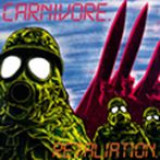
CARNIVORE is an American crossover / thrash metal band from Brooklyn, New York founded by singer and bassist Peter Steele, and was formed out of the breakup of the Brooklyn metal group FALLOUT in 1982. The first CARNIVORE album was heavily influenced by the contemporary New York metal scene. It also drew inspiration from BLACK SABBATH and early JUDAS PRIEST, whereas the second album had significant crossover influences. The "post-apocalyptic" theme that dominated the first album and was carried onto parts of the second album was apparently inspired by a dream Pete Steele had and which became the basis for the lyrics of "Predator", the first song from the original album. The lyrical theme was then expanded on to describe human society ( or the lack of one ) between imaginary World Wars III, IV and possibly V (as referenced in the song "World Wars III & IV"). Other lyrical themes included nihilism, anti-religious sentiment, cynicism, and explicit but tongue-in-cheek depictions of gore and despair. Song titles such as "Jesus Hitler", "Race War", "Thermonuclear Warrior" and "God is Dead" reflect these themes. In August 2017, it was announced that CARNIVORE would officially be reformed as CARNIVORE A.D., featuring original drummer Louie Beato and guitarist Marc Piovanetti along with secondary drummer Joe Branciforte sharing drum duties and also introducing new member Baron Misuraca as the bassist/vocalist. The band then made their live festival debut at the 2018 edition of Hellfest. CARNIVORE's "Retaliation" is a legendary and authentic metal/hc crossover album and an admittedly very heavy devastating wall of music with very much tongue in cheek lyrics. It became an absolute classic in the metal genre. It has remained unreleased for too many years and has now become very much in demand, now available again in Deluxe exclusive Limited edition 2LP vinyl and Digipack with no less than 3 bonus tracks ! ESSENTIAL CLASSIC !
- 1: Jack Daniel's And Pizza
- 2: Angry Neurotic Catholics
- 3: S.m.d
- 4: Ground Zero Brooklyn
- 5: Race War
- 6: Inner Conflict
- 7: Jesus Hitler
- 8: Technophobia
- 9: Manic Depression
- 10: Usa For Usa
- 11: Five Billion Dead
- 12: Sex And Violence
- 13: World Wars Iii And Iv - Bonus Track
- 14: Carnivore - Bonus Track
- 15: The Subhuman - Bonus Track
CARNIVORE is an American crossover / thrash metal band from Brooklyn, New York founded by singer and bassist Peter Steele, and was formed out of the breakup of the Brooklyn metal group FALLOUT in 1982. The first CARNIVORE album was heavily influenced by the contemporary New York metal scene. It also drew inspiration from BLACK SABBATH and early JUDAS PRIEST, whereas the second album had significant crossover influences. The "post-apocalyptic" theme that dominated the first album and was carried onto parts of the second album was apparently inspired by a dream Pete Steele had and which became the basis for the lyrics of "Predator", the first song from the original album. The lyrical theme was then expanded on to describe human society ( or the lack of one ) between imaginary World Wars III, IV and possibly V (as referenced in the song "World Wars III & IV"). Other lyrical themes included nihilism, anti-religious sentiment, cynicism, and explicit but tongue-in-cheek depictions of gore and despair. Song titles such as "Jesus Hitler", "Race War", "Thermonuclear Warrior" and "God is Dead" reflect these themes. In August 2017, it was announced that CARNIVORE would officially be reformed as CARNIVORE A.D., featuring original drummer Louie Beato and guitarist Marc Piovanetti along with secondary drummer Joe Branciforte sharing drum duties and also introducing new member Baron Misuraca as the bassist/vocalist. The band then made their live festival debut at the 2018 edition of Hellfest. CARNIVORE's "Retaliation" is a legendary and authentic metal/hc crossover album and an admittedly very heavy devastating wall of music with very much tongue in cheek lyrics. It became an absolute classic in the metal genre. It has remained unreleased for too many years and has now become very much in demand, now available again in Deluxe exclusive Limited edition 2LP vinyl and Digipack with no less than 3 bonus tracks ! ESSENTIAL CLASSIC !
Pianist, Composer, Multi-Instrumentalist Eva Novoa Releases First Album from Her Newly Forged Trio with Sax Legend Daniel Carter and Beloved Drummer Francisco Mela
"It’s not a rumor. Brooklyn’s Eva Novoa has formed a new trio! Novoa / Carter / Mela Trio, Vol. 1 marks their first sparkling album together (which is also Eva’s third with 577 Records). The group performed live for the first time in Cambridge (Boston) in 2022 and at the NY Forward Festival in August 2024.
In an invigorating creative explosion recorded at New York City’s Sear Sound in 2021, the multi-talented instrumentalist unites with sax legend Daniel Carter and beloved drummer Francisco Mela. Prepare to be reawakened when you experience Novoa tickling the ivories, dominating the Fender Rhodes, and wowing with the electric harpsichord and Chinese gongs. Even her whistling will linger in your mind!
As captured in the electrifying tracks “Aire” and “Fuego", Novoa / Carter / Mela Trio, Vol. 1 is inspired by the four elements (earth, wind, fire, and water). “Hasta Mañana Vida Mia” weaves together Cuban tradition with soulful lyrics (sung by Francisco) and high-energy, rhythmic conversations with horns and drums. The musicians’ free interplay approach defines this eclectic trio and their sonic universe.
Born in Barcelona, Spain, Eva Novoa is a pianist and composer who’s been mastering her talents since childhood. Calling NYC home since 2012, she has rocked countless local venues with her thrilling performances and has played with many adored artists all over the globe.
Her new album drops on November 22, 2024, and will be available on vinyl, CD, and digital download. Don’t miss the stunning cover art by Novoa’s friend and collaborator, acclaimed street photographer Richard Sandler, and stay tuned for Volumes 2, 3, and 4!"
Piano, Fender Rhodes, Cinese gongs, percussion & whistling by Eva Novoa.
Tenor, alto & soprano saxophones, trumpet, flute, clarinets by Daniel Carter.
Frums & vocals by Francisco Mela.
Recorded April 18, 2021.
Recorded, mixed and mastered by Jeremy Loucas at Sear Sound, New York City.
Photography by Richard Sandler.
Graphic design by Sergio Vezzali.
Graphic support by Mark Smith.
In their first bout of new music since 2022"s critically celebrated Mondays at Enfield Tennis Academy, Jeff Parker and his ETA IVtet find themselves exploring the depths of improvised jazz grooves on The Way Out of Easy. Featuring long time members Anna Butterss (Jason Isbell, SML) on upright bass, Josh Johnson (Meshell Ndegeocello, SML) on saxophone, and Jay Bellerose (Elton John, Punch Brothers), the selections are honed and focused to bring the atmosphere of one specific night"s setlist. The delight of the space (now sadly defunct) helped Parker build a beautifully multi-textured, gently-shifting four-dimensional construction out of simple ideas.
Solomun & CASSIM remix two of the track rake from Radio Slave’s Venti album released earlier this year
Diynamic boss and Ibiza titan Solomun remixes Radio Slave ‘The Lunatics’ on Rekids, following the original’s inclusion in Matt Edwards’ acclaimed ‘Venti’ album in May. The original, a rework itself, reimagined the 1981 Fun Boy Three track ‘The Lunatics Have Taken Over The Asylum’, with Edwards’ ode to the band’s late lead vocalist and The Specials frontman Terry Hall winning support from Saoirse, Erol Alkan, Jennifer Cardini, Laurent Garnier, Paul Woolford, and Honey Dijon.
Solomun’s remix of ‘The Lunatics’ is sparkling aural nostalgia executed with total joy. Crisp 80s drums, Stranger Things-esque Jupiter 8 synth swells, the vocoded titular vocal, and a gloriously rich sliding bassline combine to drag the listener back to 1983 in the best possible way. As the track builds, rousing guitars join the ensemble, completing what is a hypnotic, melodic trip to the 80s via what’s set to be a 2024 anthem.
CASSIMM’s remix of Radio Slave vs Audion’s ‘Mouth To Mouth’ continues the story of Matthew Dear’s classic, which Radio Slave revived and reinvented as part of his 2024 LP, ‘Venti’.
Radio Slave’s hi-NRG disco cover of Audion’s minimal/maximal 2006 and era-defining anthem has dominated dancefloors since it emerged as a single in late 2023, with the likes of Erol Alkan, Job Jobse, Sean Johnston, Jennifer Cardini and Eats Everything continuing to play it today and the latter awarding it an Essential New Tune whilst sitting in for Pete Tong on BBC Radio 1.
Now, recent Rekids alum CASSIMM continues his huge run of form with a chunky, main-room house interpretation that shows just why his recent release, ‘House of Moves,’ won DJ support from the likes of Tong, Arielle Free, Paul Woolford, Honey Dijon, and Jennifer Loveless.
CASSIMS’s remix of Radio Slave vs Audion quickly follows Lindstrom and Solomun’s remixes of the ‘Venti’ LP’s tracks, which have seen support from the likes of Ivan Smagghe, Chloé Caillet, Nightmares On Wax, and more.
Directed in 1972 by Romano Scavolini, "Un Bianco Vestito Per Mariale'" features a cast with some familiar faces from the Italian thriller genre like Evelyn Stewart and Ivan Rassimov. The film was scored by a great name of the Italian film music scene, Fiorenzo Carpi, whose music was superbly arranged and conducted with his own and unique great style by Bruno Nicolai. Originally released on vinyl by Gemelli in 1975, three years after the release of the movie, this score is dominated by the Mariale' theme both with Piano and orchestra and Edda Dell'Orso's voice and orchestra versions, and also features several lounge and tensive themes. Long out of print, we are proud to bring this beautiful soundtrack back on vinyl as a limited edition of 500 copies, including the instrumental version of "Mariale'" and an alternative arrangement of "Garden Party", available on vinyl for the first time.
Jon Hopkins' neues Album RITUAL ist ein 41-minütiges Epos, das das musikalische Bindeglied zwischen seinen Vorgängeralben Immunity von 2013 und Singularity von 2018 und dem Music For Psychedelic Therapy von 2021 ist. Es besteht aus Subs die klingen, also of sie aus einer Höhle kämen, hypnotischem Schlagzeugspiel und transzendenten Melodien. Das spannungsgeladene, eindringliche und letztlich triumphale Werk ist ein Höhepunkt der Themen, die er in seiner 22-jährigen Karriere erforscht hat, und bildet das kinetische Gegenstück zu Music For Psychedelic Therapy von 2021.
RITUAL ist ein einziges Stück, das sich in acht Kapiteln entfaltet und durch Tiefe und Kontrast besticht. Mit Zeremonien, spiritueller Befreiung und der Reise des Helden als Inspiration, zapft es eine uralte und ursprüngliche Energie an und wird am 30. August von Domino veröffentlicht.
SIDE D:
Etched / BLANK
Jon Hopkins' neues Album RITUAL ist ein 41-minütiges Epos, das das musikalische Bindeglied zwischen seinen Vorgängeralben Immunity von 2013 und Singularity von 2018 und dem Music For Psychedelic Therapy von 2021 ist. Es besteht aus Subs die klingen, also of sie aus einer Höhle kämen, hypnotischem Schlagzeugspiel und transzendenten Melodien. Das spannungsgeladene, eindringliche und letztlich triumphale Werk ist ein Höhepunkt der Themen, die er in seiner 22-jährigen Karriere erforscht hat, und bildet das kinetische Gegenstück zu Music For Psychedelic Therapy von 2021.
RITUAL ist ein einziges Stück, das sich in acht Kapiteln entfaltet und durch Tiefe und Kontrast besticht. Mit Zeremonien, spiritueller Befreiung und der Reise des Helden als Inspiration, zapft es eine uralte und ursprüngliche Energie an und wird am 30. August von Domino veröffentlicht.
SIDE D:
Etched / BLANK
Repress!
Far Out Recordings proudly presents the first and only album from the mysterious Brazilian vocal sensation Dila (pronounced “Jee-la”). Having reportedly died in a car crash shortly after the album’s release in 1971, there is very little known about the woman behind the voice. But the joyous music Dila left behind, gives us a picture as good as any, of a powerful feminine soul at the top of her game.
The liner notes on the elusive original LP, written by composer Arnoldo Medeiros attest: “Friend, look out! Because when this girl starts to sing, you’re in trouble. Hold the railing so you don’t fall down the stairs, because she’s coming this way and shaking up everything.”
Arranged and produced by Durval Ferreira, alongside his studio band affectionately known as “Os Grillos” (The Crickets), Dila (1971) is a rare glimpse into the authentic soulful Samba sound of Rio’s favelas in the late sixties and early seventies.
A blast of funky, percussive Brazilian breaks, scorching hot brass and swing-laden piano, the music is as iconic as the album’s stark cover, as is clear on opener ‘Inez’, composed by The Crickets’ bassist Romildo. There’s a fantastic interpretation of the Ivan Lins classic ‘Madalena’ (made famous by Elis Regina), a moving version of the Tom Jobim and Vinicius De Moraes classic ‘O Morro Não Tem Vez’, and a number of sunny original compositions by Arnold Madeiros, who’s other writing credits include music for Marcos Valle, Wanderlea, Evinha and Dom Salvador.
With original LPs extremely hard to come by, this rare treasure of Brazilian soul, which fans of Gal Costa, Celia, Evinha and Elis Regina will love, gets a much-deserved official reissue: remastered and pressed to 180g vinyl.
- A1: Dj Looney Tune - Beatbox (Remastered Tick Mix) 05’51”
- A2: Dj Bountyhunter - Urban Feelings (Remastered Original Mix) 05’11”
- A3: X-Change - Drug-War (Remastered Original Mix) 05’55
- B1: Trax Star - Explosive 1 (Remastered Original Mix) 04’09”
- B2: Zone 1 - Zebra Crossing (Remastered Original Mix) 04’34”
- B3: B.w.p. Experiments - Organic (Remastered Love Mix) 07’40
- C1: Dj Marko - Crystal Dark (Remastered La Rocca Mix) 07’41”
- C2: The Disciples - Underrave (Remastered Original Mix) 04’46”
- C3: D&S - It’s Not Over (Remastered Original Mix) 05’11
- D1: Trancial-X-Tion - Dead Bodies (Remastered Remix) 05’02
- D2: 3Xxx - Disappear (Remastered Original Mix) 05’58”
- D3: Chain-Dance - Chain-Reaction (Remastered Original Mix) 07’22”
The wait is over for dance music enthusiasts and vinyl collectors! The legendary Bonzai compilation series from the 90s is back with its fourth installment. Presenting the fully remastered Bonzai Compilation IV - The Fourth Level, now available as an exclusive yellow vinyl package in a gatefold sleeve. This iconic collection features an array of timeless tracks that dominated dance floors and defined an era. Don't miss your chance to own a piece of electronic music history and relive the magic of this unique and vibrant release. Get your hands on it now and experience the beats that started it all!
- Gabriel Huentemil - Por David
- Ema Madariaga - Por Sodoma Y Gomorra
- Javier Salinas - Por Despedimiento De Angelito
- Santos Rubio - Por Nacimiento
- Osvaldo _Chosto_ Ulloa - Por Salomón
- Domingo Pontigo - Por Padecimiento
- José Millahuino Castro - Por Noé
- Iván Saavedra - Por Muerte
- Alfonso Rubio - Por José
- Honorio Quila - Por Nacimiento
'Quintela', the debut album by Carme López, a performer, teacher and researcher of traditional oral music from Galicia, is a new experimental work for Galician bagpipe. Influenced by the approach of composers like Éliane Radigue or Pauline Oliveros, the Spanish composer creates slowly modulating sound environments, and stretches the sonic the possibilities of the bagpipe to its absolute limit. 'Quintela' is structured in four movements, plus a prologue and an epilogue, which serve as a link to the contemporary language of the instrument.
The bagpipe is strongly tied to traditional musics; its use in different genres and musical contexts is extremely limited and unimaginative. 'Quintela' brings it to a wholly unknown field, decontextualising the bagpipe in order to elevate a personal approach, and leaving behind its male-dominated past (in which it relates to ideas of prestige, dominance or carries even sexual connotations). López expertly demonstrates its grandeur and breadth; the music on 'Quintela' ranges from barely audible sounds of air passing through the hide bag through rhythmical use of its reeds to all-encompassing drones with complex harmonic structures and vibrant overtones.
The narrative arc focuses on the composer's past, its people and places, and could be conceived as a journey in and of itself. A homage to those in our memories, but also a step into the unknown, 'Quintela' is an ambitious, graceful and captivating debut.
"The debut longplayer from Washington, DC-based Ekko Astral is a complex mesh of bubblegum noise punk and no-wave art rock that holds an elastic space for the knotty, tangled horrors of living in the imperial core. Their songs thrash with intense, necessary defiance against codified gender-based violence, their distortion and sibilance a direct response to the dangers outside our front doors.
pink balloons opener “head empty blues” specifically bites back against the terrors of the normative male gaze that dominates so much of American culture. Over a post-punk passage that plays call and response with a wall of harsh noise, frontwoman Jael Holzman belts playfully morbid details of the head-exploding anxieties that haunt her daily: “is it bon eye-ver or bon iver? / i don’t care / i’ve got stalkers outside / not going out tonight / gonna sit and take pics / in my underwear.”
Holzman formed the band in 2021 with best friend Liam Hughes (guitar), and eventually rounded out the band’s lineup with Miri Tyler (drums), Guinevere Tully (bass), and Sam Elmore (guitar). Ekko Astral’s local scene quickly welcomed the band for their wildly fierce live presence, emboldened by the community-building message behind the band’s mascara mosh pit brand.
Ultimately, Ekko Astral are here to uplift, a mission exemplified by the frenetic and bewitching pre-release singles “baethoven” and “devorah,” cornerstones of pink balloons in both style and theme. The former serves as a reminder to keep your larger than life personality in a world that wants to downsize you, where the latter proclaims urgent solidarity with missing and murdered people. Such crucial messages of upliftment are the foundation of pink balloons, and, by extension Ekko Astral, whose thrashing debut leaves no stone of solidarity unturned."
You get older, you have a family, and you start to slow down-that's how things are supposed to go, right? Not for Montreal band Corridor, who have returned on their fourth album, Mimi, with a sound and style that's more widescreen and expansive than anything that's preceded it. The follow-up to 2019's Junior is a huge step forward for the band, as the members themselves have undergone the type of personal changes that accompany the passage of time; even as these eight songs reflect a newfound and contemplative maturity, however, Corridor are branching out more than ever with richly detailed music, resulting in a record that feels like a fresh break for a band that's already established themselves as forward-thinkers. Mimi immediately recalls the best of the best when it comes to indie rock-Deerhunter's silvery atmospherics immediately come to mind, as well as the spiky effervescence of classic post-punk-but despite these easy comparisons, Corridor remain impossible to pin down from song to song, which makes Mimi all the more thrilling as a listen. "The goal was to work differently, which is the goal we have every time we work on a new album-to build something in a new way," Robert explains. "This time, we took our time." And so in the summer of 2020, Corridor's members-Robert, vocalist/bassist Dominic Berthiaume, drummer Julien Bakvis, and multi-instrumentalist Samuel Gougoux-holed away in a cottage to engage in the sort of creative experimentation that would lead to Mimi's ultimate creation. Corridor tinkered with the songs' raw parts digitally and remotely over the next few years, with co-producer Joojoo Ashworth (Dummy, Automatic) lending their own specific talents in the theoretical booth. The process was a byproduct of not having access to their rehearsal space due to the COVID-19 pandemic, but also a result of the four-piece leaning harder into incorporating electronic textures than on previous records. "For a long time, we identified as a guitar-oriented band, and the goal of making this whole record was trying to get away from that," Berthiaume states. Berthiaume also describes Mimi as a record about "getting older" and "figuring out new parts of life"-but despite any claims of transitional growing pains from the band, Mimi is a record bursting with new energy and life, a vibrance that's owed in no small part to Gougoux joining the band full-time after pitching in on live performances in the past. "I come more from a background of electronic music, so it was nice to involve that with the band more," he explains, and Mimi contains a distinct rhythmic pulse reminiscent of classic era-post-punk's own melding of dance and rock textures. Over bright, chiming guitars and ascending synths, Robert addresses his looming mortality on "Mourir Demain": "I wrote it when my girlfriend and I were shopping for life insurance," he laughs. With our little daughter growing up, we also considered making our will. I said to myself, 'Oh shit, from now on I'm slowly starting to plan my death." Don't mistake this as music about dead ends, though, as Mimi embraces and champions unfettered creativity while paving a way for Corridor's own bright future. "We just focused on making a record that sounded the way we wanted," Gougoux exclaims while discussing the band's aims. "There were no limitations when it came to what was possible."
Recorded on
10th March 1980 (Tracks 1, 3, 8, 9, 10)
16th March 1980 (Tracks 1, 2)
1st April 1980 (Tracks 2, 4, 5, 7, 9)
Produced: B.C. Gilbert : G. Lewis
Engineer: Eric Radcliffe.
Asst. Engineer: John Fryer
Recorded at Blackwing Studio
B.C. Gilbert: Voices, Guitars, Bass, Percussion, Tapes, Drums
G. Lewis: Voices, Guitars, Bass, Percussion, Tapes, Synthesiser
A.M.C.: Voice: Cruel When Complete
Floating-point re-master by Russell Haswell, August 2011
Cut at Dubplates & Mastering by Rashad Becker, August 2011
New artwork and layout: Dave Coppenhall
With the demise of the group Wire in 1980, founder members Bruce Gilbert and Graham Lewis joined forces to create Dome. With the assistance of engineer Eric Radcliffe and his Blackwing Studio Dome took the ethic of "using the studio as a compositional tool" and recorded and released three Dome albums on their own label in the space of 12 months: DOME (July 1980), DOME 2 (October 1980) and DOME 3 (October 1981). A final fourth album, WILL YOU SPEAK THIS WORD: DOME IV was released on the Norwegian Uniton label in May 1983.
These albums represent some of the most beautifuly stark and above all timeless exercises in studio experimentation from early 1980s alternative music scene.
Previously issued in the out of print DOME 1-4+5 box set in 2011. Now available as standalone LP with download card.