Prolific beat pharmacist par excellence Brendon Moeller continues his hot streak with a return to Samurai to serve up the exquisite craftsmanship of Shadow Language. Across 15 fresh productions the seasoned house and techno producer demonstrates yet more variations on his rejuvenated sound since pivoting towards 160 tempo zones. Heavyweight dub techno pulses collide with D&B pressure and dubstep snarl, delivered with devastating restraint and mediative warmth.
Moeller's dub-informed, high-grade production hit a hot streak as he started to experiment with faster tempos and more broken rhythms, reaching into thrilling new sound fields where fast-slow rhythmic intrigue meets with spatial subtlety and constantly evolving synth voices. The past year has seen him release a swathe of albums, from Further on Samurai to outings on Constellation Tatsu, ESP Institute and Quiet Details that all burst with inspiration, each distinct from the last and offering an original perspective on this rich seam of crossover electronics.
Shadow Language shows Moeller burrowing even deeper into this new era of his work, continuing the hypnotic approach set out on Further while edging more forthright ingredients into the mix. From the outset 'Division By Zero' hits with immediacy even as it dips into a dubwise breakdown, with snatches of vocal and even the iconic loom bird making the slightest of appearances. 'Feral Hymn' finds a curious kind of uplift in the synth chord that twists in and out of the mental techno murmurations of the rhythm section. 'Impermanence' has some snarling bass that belongs in the gnarliest tech-step, while the nagging hats ticking through 'Junkyard Syntax' hint at a shockout without resorting to brute force. The majestic dub techno chords of 'Driftform' create a through-line across Moeller's extensive catalogue, but here they dominate the mix above a spongy bed of sub bass throb and framed by the tiniest slithers of percussion.
Throughout the album, it's the implications Moeller suggests with the tools at his disposal that create a powerful energy. Restraint governs the delivery, guiding the listener in deeper until they find a maximal experience from each elegantly understated roller. The weight and presence is abundant across every track, fuelled by the invigorating power of each tone and frequency while avoiding the clutter of overloaded arrangements.
Finding the notes in between and half-hidden rhythms, Moeller himself perfectly summed up his latest opus as he continues to develop his own compelling Shadow Language.
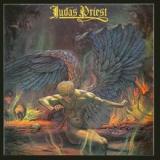
Suche:domin
- 1: Prelude
- 2: Tyrant
- 3: Genocide
- 4: Epitaph
- 5: Island Of Domination
- 6: Victim Of Changes
- 7: Ripper
- 8: Dreamer Deceiver
- 9: Deceiver
Kommen Sie mit auf die Reise mit den Masters Of Metal, deren Schicksal es weit nach ihrem zweiten Album war, zu Legenden zu werden.
Anfangs waren sie traurig und kämpften im 1976 noch nach Ruhm und Anerkennung, was sich heute in 2011 ganz anders darstellt und sie nun nach einer erfolgreichen Karriere mit ihrem massiven "Epitaph" eine weltweite Abschiedstournee feiern.
Dieses Album mit dem klassischen Line-Up mit KK. Downing und Glenn Tipton an den Gitarren und im Mittelpunkt mit dem souveränen Sänger Rob Halford, ebnete Judas Priest den Weg als eine der einflussreichsten und manchmal auch umstrittenen Band. Dieses Album der jugendlichen Band enthält neun aufregende Tracks, unter anderem Meilensteine wie "Victim Of Change" und "The Ripper" und natürlich den mächtigen Song "Epitaph".
- A1: Grayt
- A2: Bitch I’m Scared
- A3: No Gods
- A4: Icecream (Interlude)
- A5: Slinky (Feat. Alex Zhang Hungtai)
- B1: Bwv 639 (Feat. Iris Moldiz)
- B2: Techno 127 Bpm
- B3: Medicine
- B4: Mcarthur (Feat. Alex Zhang Hungtai)
Berlin-based composer and vocalist FRANKIE, also known as Franziska Aigner, and Dominican-American producer Kelman Duran meet at the Twelve Apostles Church, in the Berlin district of Schöneberg, sometime in 2022, at the beginning of the spring season. They were each asked to engage the space’s solemnity, and its reverence, through distinct performances. Their chance encounter, abounding with mutual curiosity towards each other’s practices, smoothened the path for a years-long collaboration, culminating in McArthur, their first joint album. Following a period of exchanging musical fragments and prompts at a distance, Aigner and Duran come together in Athens, and later in Los Angeles, to prepare the stuff and material for the album, slowly developing a body of work informed by shared hauntings, and a commitment towards the disjointed and the residual. Aigner describes her process as writing “into the negative space” of Duran’s beats—filling in, if not invigorating, their thudding and inflections, but without rearranging the integrity of the whole. The result is an album where time and geography are made elastic, and where sonic improvisations become a site for quiet, and cryptic, articulations of intimacy.
- A1: Rai Rai
- B1: Kanashiyana
Since 2018, BBE Music’s J Jazz Series of compilations and album reissues has been at the forefront in focussing attention on the hitherto cloistered and rarified world of Japanese jazz. True to the ethos of the series, curators Tony Higgins and Mike Peden have once again dug up a truly rare gem in the form of a 45 from the mysterious Christal Zone, originally released in 1971 only as a promo and reissued here for the very first time. Several years before pianist Tohru Aizawa and brothers Tetsuya and Kyoichiro Morimura formed the now-celebrated Tohru Aizawa Quartet — whose 1975 private- press spiritual jazz LP Tachibana Vol 1 has become a cornerstone of the J Jazz canon and previously reissued by BBE — they were already venturing into bold, experimental territory. Their 1971 single Rai Rai, released as a promotional 7-inch on Liberty Records under the short-lived moniker Christal Zone was written and arranged by koto player and composer Hideakira Sakurai. An almost unclassifiable hybrid of jazz, Japanese folk, Algerian raï, and free improvisation. Sakurai’s visionary approach dominates the track, blending traditional Japanese instrumentation with a dense polyrhythmic groove that evokes not only avant-garde jazz but also the raw street energy of Algerian raï — celebratory, unfiltered, and joyfully unrestrained. The story behind the recording of Rai Rai is as spontaneous as the music itself. While casually rehearsing at Sakurai’s villa, the group was overheard by producer Kunihiko Murai, who was so stunned by what he heard that he arranged a studio session for them the very next day. The resulting 7-inch — Rai Rai / Kanashiyana, released under the one-off Christal Zone name — is now one of the rarest artefacts in Japanese jazz, with original copies fetching astronomical prices among collectors. BBE Music has faithfully reproduced the original artwork and packaging to celebrate this extraordinary and super rare piece of J Jazz history. A piece that bridges the ancient and the future, Japan and North Africa, in under four minutes of controlled chaos. A truly one-of-a-kind artefact, Rai Rai is a manifesto from a generation unafraid to rip up the rulebook and follow their own path.
'In 2023, sound artist and composer Weston Olencki toured across the American South. Beginning in their hometown in South Carolina, they snaked a circuitous path from the mountains of West Virginia to the banks of the Mississippi River. As the miles accumulated, so did the initial seeds of new work.
'Instruments and artifacts they acquired hitched a ride in the backseat, while songs and sounds filled their portable recorder: water in its various states, the familiar insectoid buzz of those summer nights, trains cutting through the landscape, the traditional music that lived alongside the communities that kept it. Olencki took it all in, and over time, found ways that these experiences coalesced into a bramble-like perspective of time, where past, present, and future intersect in ways both barbed and beautiful.
'Broadsides, Olencki’s newest solo full-length is the multilayered result of this journey. The album follows their landmark release Old Time Music from 2022, which presented radical interpretations of traditional tunes from Appalachia and throughout the South alongside original compositions that drew significantly on archival recordings. On Broadsides, Olencki rejects delineations between the unmoored avant-garde and the rootedness of one’s cultural heritage, revealing their porous and intertwined nature. “My mother was a quilter. Her mother before that,” they write in the album’s liner notes. “Quilting, like music, is a practice of embedding knowledge and remembrance into the very core of the thing you are making. It’s not just about the materials, but how they’re reassembled, recontextualized, stitched, woven to form new patterns - the minutiae of craft holding significance to those looking to find it. Stories woven from stories, never told the same way twice.”
'Like all great road trips, Broadsides unfolds slowly and continuously, with moments of dramatic reverie punctuating the endless melt of highway in the rearview. We’re immediately confronted by the uncanniness of revisiting old haunts, as Southern storms break through the initial churn of the freight locomotives of Alabama. Olencki’s interpretation of the bluegrass standard “Foggy Mountain Breakdown” captures the euphoria of melancholy in motion. The permutational plucks of banjo are bounced around the frame by a computer, its pitches determined within algorithmic sequences and transcriptions of classic three-finger licks. The tonalities of old-time are smeared and stretched until all that’s audible is the insistence that Heaven might be real.
'In the album’s second half, “Omie Wise,” a murder ballad made famous by Doc Watson, follows an interlude recorded on the river in North Carolina in which the titular character’s body was laid. Ghostly echoes of a dozen other renditions float through the substrata as Tongue Depressor’s Henry Birdsey accompanies them on the pedal steel guitar. The album’s central composition, “all my father’s clocks,” is a profound meditation on entropy and impermanence. The sound of their father’s extensive clock collection ticks away as Olencki pulls a bow across the length of an autoharp sourced from a rural strip mall. The instrument was left as detuned as it was found, the resonance of its deep bass drone and clanging high-end the result of years of neglect and the warping effects of Southern humidity.
'Historically, broadsides were an early form of broadcasting, an often- musicalized telling of current news pasted in the public square. The name was later taken up by Sis Cunningham and Gordon Friesen in the 1960s, whose Broadside magazine published songs and social commentary when American folk music resurfaced as an urgent way of communicating the multifaceted politics of its time.
'Olencki borrows the phrase to recall both this old form of songmaking and that later prominent reexamination of traditional music’s role in modern life, but also to draw attention to the fragmented and machine- mediated way heritage is diffused in this very different, but no less pivotal, moment.
'As a sanitized past is used as justification for current violence and domination, we can turn to these artifacts to better understand the history of ourselves, but only if they are consciously pushed to evolve. Broadsides represents one personal, striking vision of what far-flung futurisms could be respun from = these high, lonesome sounds: a reflection of the unbridled joy and deep sorrow inherent to living together through time, and a desire to push further into the untold and unknown.'
- 1: Hollow Dominion
- 2: Marathon
- 3: Forsaken Tarn
Sacramento (CA) Heavyweight Crushers Return! Oromet presents atmospheric funeral doom with a melodic emphasis without surrendering the all-encompassing heaviness that is the genre's hallmark. Where some seek to immiserate and drown the listener, Oromet explores the complete nature of sorrow as the band weaves the choke of despair and the lightness of serenity. The Sinking Isle focuses on the inevitability of collapse and the cycles of ruin and rebirth. Adrift on cataclysmic seas, melody remains the compass—a hopeful light guiding the listener through themes of loss, nostalgia, and pessimism. For fans of Mournful Congregation, Bell Witch & Esoteric. Dan Aguilar: Guitar, Vocals Patrick Hills: Drums, Bass, Synth, Backing Vocals Recorded, Mixed, and Mastered by Patrick Hills at Earthtone Studios Cover Artwork: Ted Nasmith Design, Layout, Illustration: Dan Aguilar Additional Backing Vocals: Chris Lemos
- 1: Seven Roads
- 2: Bright (V1)
- 3: Masquerade
- 4: Bright (Fast)
- 5: Drive
- 6: Champagne
- 7: East Of Eden
- 8: Domino
- 9: It's Made Of Teak
- 10: In Your Arms
- 11: Bvs
- 12: Exorcist Ii
- 13: Campfire Masquerade
- 14: Bright (Take 22)
Will Butler, known for his work with Arcade Fire, has composed the original score for the Broadway play Stereophonic. The play, set in the 1970s, explores the dynamics of a rock band on the brink of success or collapse. Butler’s score authentically captures the era, using period-specific instruments and recording techniques to evoke the raw energy of 1970s rock.. He recorded the parts with the original cast from Stereophonic, including Will Brill, Andrew R. Butler, Juliana Canfield, Eli Gelb, Tom Pecinka, Sarah Pidgeon, and Chris Stack. The production received acclaim from critics and no less than 13 nominations at the 77th Tony Awards, taking home five, including Best New Play. Stereophonic now holds the record for the most Tony nominations by a play. Stereophonic is available as a limited edition on translucent yellow coloured vinyl and includes an insert.
- 1: Death Jokes
- 2: Ian
- 3: Joyrider
- 4: What I Want
- 5: Rugby Child
- 6: Boys
- 7: Exodus
- 8: Predator
- 9: Solo Tape
- 10: Purple Land
- 11: I Don't Mind
- 12: Mary Anne
- 13: Round The World
- 14: Poor Cops
Ltd. Coke Bottle Green Vinyl
Die LP-Erstauflage kommt als Sub Pop Loser Edition auf Coke-Bottle-transparent-grünem Doppel-Vinyl im Klappcover mit speziellen Innenhüllen und mit Inlay. Die 14 Songs des Albums verteilen sich auf die ersten drei LP-Seiten, denn Seite 4 des Albums enthält ein Etching. Mit "Death Jokes" wendet sich der in New York City lebende Damon McMahon, zum ersten Mal seit der Gründung des Amen Dunes Projekts im Jahr 2006, mit seinen spirituellen Reflexionen und Meditationen von sich selbst ab und wendet sich direkt der Welt zu. Das Album ist auch musikalisch und thematisch eine drastische Wendung, verwurzelt in der elektronischen Musik der Raves und der Rap-Musik, mit der er aufgewachsen ist, von der er sich aber nie vorstellen konnte, dass er sie machen könnte. Durch Samples und Texte wirkt es wie ein vernichtendes elektronisches Essay über Amerikas Kultur der Gewalt, der Dominanz und des zerstörerischen Individualismus. Die Arbeit an "Death Jokes" begann nur wenige Wochen vor der ersten Nachricht von der Pandemie im Winter 2019; sie wurde drei Jahre später abgeschlossen. Die Bedeutung des Albums wandelte sich mit dem Fortschreiten der Pandemie, zunächst als Reflexion über unsere Verbundenheit mit der Form und mit uns selbst, dann als feierliche Anklage gegen die blinden Flecken unserer Kultur, wenn wir falsch urteilen und angreifen, wenn sich Egozentrik und Selbstgefälligkeit als Moral ausgeben. "Death Jokes" ist das erste Album von Amen Dunes seit "Freedom" aus dem Jahr 2018, das von Pitchfork als ein "bestes Album des Jahrzehnts" bezeichnet wurde.
- A1: Original
- B1: Extended Version
Psyché is an eclectic project rooted in the Neapolitan music scene. Conceived in 2018, the project includes Marcello Giannini (Nu Genea Live Band, Guru, Bassolino, La Famiglia), Andrea De Fazio (Nu Genea Live Band, Parbleu, The Funkin Machine), and Paolo Petrella (Nu Genea Live Band, Fratelli Malibu). They were recently joined by Roberto Porzio (Parbleu, Fitness Forever, 24 Grana, The Funkin Machine).
"Hurriya (We Must Resist)" is a sonic bridge crossing the Mare Nostrum, connecting the shores of Naples and Tunisia.
At the heart of this fusion is the voice and soul of Tunisian musician Ziad Trabelsi, whose Arab roots intertwine with the psychedelic, Mediterranean sound of Psyché.
In this track, Afrobeat and Arabic sonorities meet to create a hypnotic journey, one where Ziad's oud weaves an evocative groove that gallops like horses in the desert.
The song carries the echo of the ancient dominations and cultural exchanges that have shaped Naples—a millennia-old crossroads of civilization—where traces of Arab and North African influences continue to resonate in its streets and, most notably, in its music.
"Hurriya"—the Arabic word for freedom—is an anthem of resistance and resilience, a dialogue between East and West that dissolves the rigid boundaries of geography and politics. It is a collective song for the freedom of all peoples, against oppression, abuse, and injustice everywhere in the world. As Psyché emphasize: "Even if life tests us severely, and we often feel like giving up in the face of injustice, we must resist. We must refuse to disappear."
The single is available digitally and physically, on January 23rd, as a 7" vinyl. The B-side of the physical release includes an exclusive, extended version of "Hurriya (We Must Resist)", available only in this format.
Repress!
Undoubtedly one of the most addictive records of 2017, CamelPhat & Elderbrook's 'Cola' has been a defining musical moment of the year. Growing exponentially since its release, the track has captivated tastemakers, DJs and clubbers alike, topping charts and blowing up worldwide to become a true modern anthem. Leading on from the success of the original and some heavyweight remixes, three of which hit the Beatport top ten - for the first time on vinyl, comes a remix package set to continue 'Cola's' dance floor domination.
Rising superstar Franky Rizardo's suitably heavyweight remix comes correct with a club-friendly update that elevates the unmissable vocal hook and bottoms out the breakdown. Dario D'Attis' vinyl exclusive mix continues the club feel with rolling grooves, teasing breakdowns and shuffling hi-hats in a remix which packs a punch, guaranteed to get people moving from the get-go. Mousse T. flips the track completely, bringing those Glitterbox vibes to Defected, taking 'Cola' to the next level and going straight to Traxsource #1 in the process.
Childhood Intelligence’s 18th release by ADSR aka. Todd Nickolas & Dominic Paterson from Toronto, Canada. The 2x12” album presents mostly tracks written and produced by Todd, with A1/D1 being in collaboration with Paterson. "Give a teenager in a rural Canadian setting an analog synthesizer, a drum machine and a four-track cassette recorder and feed him a steady diet of 80s EBM, Post-Punk, Synthpop, Electro, Dub, Acid, Hip Hop and House, and you’ll get the kind of genre melding electronic-based music that Todd Nickolas has been known for since his early days of writing and producing." The end result is a versatile one, with “Passive Articulation” presenting abstract Techno - House - Electro visions, and fusing all the elements of vintage Intelligent Dance Music that we cherish so much: warm basslines, beautiful chord progressions, diverse and surprising arrangements infused with haunting melodies, hypnotic cyber sounds, detached vocal cuts and dubbed percussion.…Overall fresh & timeless classiness for the present, past & future.
Recorded various locations New Hamburg, Kitchener-Waterloo, Ottawa, Toronto, San Francisco and Los Angeles. ADSR greatly thanks those who were there from the start, those who joined along the journey and those here now.
- A1: Criola (Jorge Ben)
- A2: Domingas (Jorge Ben)
- A3: Cadê Teresa (Jorge Ben)
- A4: Barbarella (Jorge Ben)
- A5: País Tropical (Jorge Ben)
- B1: Take It Easy My Brother Charles (Jorge Ben)
- B2: Descobri Que Eu Sou Um Anjo (Jorge Ben)
- B3: Bebete Vãobora (Jorge Ben)
- B4: Quem Foi Que Roubou A Sopeira De Porcelana Chinesa Que A Vovó Ganhou Da Baronesa? (Jorge Ben)
- B5: Que Pena (Jorge Ben)
- B6: Charles, Anjo 45 (Jorge Ben)
Jorge Ben’s 1969 self-titled LP is a bright, energetic landmark of Brazilian music. Mixing samba, soul, and pop with effortless charm, the album captures Ben at a moment of bold creativity.
His warm guitar lines, catchy melodies, and rhythmic drive shape songs that feel both relaxed and full of life. This masterpiece helped define a modern, upbeat sound that influenced generations of artists. More than fifty years later, this LP still stands out for its simplicity, groove, and unmistakable style—an essential snapshot of an artist who transformed Brazilian popular music.
- Throw It Away
- Beat Coin Aka Waltz For Rh Feat. Ludovic Louis
- Soeur Felix Aka Beehive
- Trip To Ghana Feat. Mawuena Kodjovi
- Shorter Way To Marrakech Feat. Malika Zarra
- Dessalinienne Ayiti Liberated
- Okap To Mindelo
- Jupiter Feat. Jonathan Jurion
- Throw It Away - Full Of Love Remix
- Lettre Du Mali Pour Jonathan
- Miles Convoy
- Should I Smile? Feat. Dominique Fils- Aimé
- Yambere
- O' Look Misery
- Se Formó El Bochinche
- Shrimp & Gumbo
- Santa Isabel De Las Lajas
- A Pali Papá
- Mambo Calypso
- Cumbia Sobre El Mar
- Cumbia Del Caribe
- Jamaicuba
- Strip Tease
- Baila Yemayá
- Peanut Vendor
- Ahora Sí Hay Melao
- Besitos De Coco
- Los Chucos Suaves
Zombie Club presents a re-edition (new sleeve art) of "Mambo Calypso" another volume of sonic Caribbean Cruise. Following the approach of the first volume and understanding the Caribbean as a region is not limited to a strictly geographical demarcation but rather a demographic and cultural space where countries, islands and coastal areas may fall into a common Mare Nostrum even arrives in New Orleans. The influence of African drum and the "Cuban clave" makes different music beyond its specific components be they Latinos, Anglos or Frenchie's - look at themselves and recognize a certain family. This is not a coincidence, since the slave trade brought African music from the port of Havana to Cartagena de Indias, Nassau, Port-au-Prince, Salvador de Bahía and the southern United States. The same Blackness, the same rhythm, the same festive mood, spirit of resistance and struggle. And so, Arsenio Rodriguez can be heard without jumps next to a Calypso of Blind Blake, or a tasty Pacho Galán's coastal Cumbia crossover with Dave Bartholomew's Mambo or a Latin Swing of Lalo Guerrero, where the Dominican Merengue sounds Joseíto Mateo in line with that of its Haitian neighbor Nemour Jean Baptiste. A very spicy musical "melting pot," a gumbo of percussion and languages, to enjoy and dance. Re-board the Zombie Club Cruise, mixing different genres of Caribbean music with a high dance and rhythmic component. This selection designed for collectors, Dj's & calypsofied zombie dancers.
- A1: Wieder Da 2:14
- A2: Melodrama 2:26
- A3: Liebst Mich 2:16
- A4: Nächste Nacht 2:16
- A5: Tristesse 2:40
- A6: Was Du Nicht Siehst 2:19
- A7 24: 7 2:46
- A8: Sie Weiß (Betty Draper) 2:02
- B1: Tagebuch 3:23
- B2: Bis Wir Fallen 3:26
- B3: St.tropez 1:58
- B4: Vanille With Dominik Hartz 2:10
- B5: Für Immer 2:21
- B6: Lovers To Enemies 2:26
- B7: Morgen Ist Auch Noch Ein Tag (Draft) 1:29
LP[27,69 €]
- A1: Wieder Da 2:14
- A2: Melodrama 2:26
- A3: Liebst Mich 2:16
- A4: Nächste Nacht 2:16
- A5: Tristesse 2:40
- A6: Was Du Nicht Siehst 2:19
- A7 24: 7 2:46
- A8: Sie Weiß (Betty Draper) 2:02
- B1: Tagebuch 3:23
- B2: Bis Wir Fallen 3:26
- B3: St.tropez 1:58
- B4: Vanille With Dominik Hartz 2:10
- B5: Für Immer 2:21
- B6: Lovers To Enemies 2:26
- B7: Morgen Ist Auch Noch Ein Tag (Draft) 1:29
LP[27,69 €]
- 1: Tião Carreiro & Pardinho - Bully 02 4
- 2: Lambarí & Laranjinha - I Was Called To A Party 0 47
- 3: Nhô Pires & Pirangueiro - Product Of The Cane 02 5
- 4: Xerém & Bentinho - Little White Hawk 02 32
- 5: Flauzino & Florêncio - Orange Fashion 02 8
- 6: Mandi & Sorocabinha - What A Beautiful Girl 02 5
- 7: Raul Torres & João Pacífico - Festival Of Bugs 02 41
- 8: Irmãos Kurimori - Burned Horse 02 5
- 9: Retrato & Retrói - New Love 03 13
- 10: Irmãos Falsetti - Disappointment 01 57
- 11: João Goiano & Goiazinho - Heartless Son 02 48
- 12: Riachão & Riachinho - The Life Of Aleijadinho 03 15
- 13: Nizio & Nézio - Lady Of Aparecida 02 35
- 14: Zé Carreiro & Carreirinho - Canoeist 02 50
- 15: Laranjinha & Zequinha - Ugly Boy 03 01
- 16: Leôncio & Leonel - Saying Goodbye 02 42
The second volume in Death Is Not The End's survey of a form of Brazilian country music known as música caipira ("hillbilly music") - a stripped-back forerunner to música sertaneja, the Brazilian equivalent to US country & western which in it's contemporary form has come to dominate the domestic music industry in recent decades. This collection covers some of the earliest recordings made by the pioneering folklorist Cornélio Pires at the end of the 1920s, through to records from the 30s, 40s & 50s and the beginning of the 60s.
Somewhat rooted in Portuguese troubadour folk traditions, música caipira is typically performed by a duo singing in parallel thirds and sixths, drawing upon a Portuguese-Brazilian style known as moda de viola - with the viola being the viola caipira, a Brazilian-style ten-string guitar that is the core instrument of the music. Born out of the "outback"-style region in north-eastern Brazil, these songs tell stories of pain, love, loss & betrayal - often backed by homemade guitars using invented tunings. Away from the polished pop country & western-stylings of the sertaneja, these recordings could be viewed as the Brazilian equivalent to the roots music of the American dustbowl or Appalachia.
Over the past year, No Drama, the label founded by Roy Rosenfeld, has established itself as a space for creative independence and artistic authenticity. Known for his refined fusion of house, techno, and downtempo, Rosenfeld channels the same principles into his imprint, prioritizing artistic freedom, emotional resonance, and sonic exploration.
The label's fourth release, No Drama V.2, delivers a cohesive four-track EP spanning over twenty-six minutes of forward-thinking electronic music.
Opening with Dubi, Rosenfeld crafts a composition built on contrasts and playful percussion set against a wistful melodic backdrop. Over nearly seven minutes, the track unfolds gradually, expanding into a hypnotic crescendo that captures both dance floorintensity and introspective depth.
Next comes Coral by Dulus, a Colombian-born artist, based in Santiago, Dominican Republic. With roots in guitar and vocal performance, his understanding of musical structure permeates the composition. Layers of subtle vocal textures, resonant basslines, and scattered sonic details create a sense of depth and movement. The track's hypnotic progression rewards close listening, revealing intricate nuances beneath its steady groove.
The third track, Pink Hearts, by Sydney-based producer Luka Sambe, draws from his experience in Australia's festival scene. Sambe blends melodic house structures with acid-tinged flourishes and offbeat sonic details. Each element lands with intent, building an infectious energy that feels effortless yet deeply crafted.
Closing the release is Oscar Wave by Darco, a rising artist celebrated for his immersive live performances that blend electronic textureswith organic instrumentation. The track channels early trance influences and Middle Eastern tonalities into an uplifting, psychedelic journey. Its central section bursts into a wave of euphoric release, bringing a fitting conclusion to a compilation that celebrates both diversity and unity in sound.
No Drama V.2 stands as a testament to Rosenfeld's curatorial vision and sincerity. Each track resonates with purpose, offering a glimpse into a global community of artists united by their shared pursuit of creation.
At a time when Hawaiians were reclaiming their language and most new music was written in Hawaiian, Teresa boldly revisited the largely forgotten hapa-haole style - Hawaiian-themed songs in English that once dominated American radio in the early 20th century.
From her earliest work in the 1980s, she treated the genre as serious art, not nostalgia, reviving classics like “My Little Grass Shack,” “Sadie, The South Seas Lady,” and her own modern hit “Uwehe, ‘Ami, and Slide,” which won Song of the Year at the 1988 Na Hoku Hanohano Awards. Her voice brought sophistication and sensuality to songs once considered dated, giving them new life.
With Tropic Rhapsody (2008), created alongside arranger Kit Ebersbach, she perfected that vision. Blending Hawaiian warmth with jazz and Latin rhythms, the album moved gracefully from the shimmering “Lei of Stars” to the lively “Pagan Love Song” and the tender closing of “Aloha ‘Oe.”
In an era dominated by Hawaiian-language releases, Teresa’s decision to make a primarily English-language album was both confident and heartfelt. Tropic Rhapsody remains a modern classic - elegant, adventurous, and unmistakably Hawaiian, just like Teresa herself.
Cloud Holding is NYC-based Bryce Hackford's fifth album, and first for Futura Resistenza. Seven sound sculptures are coaxed out of recorded improvisations by a group of musicians--Ka Baird, Shelley Burgon, Alice Cohen, Michael Hurder, Dominika Mazurova, Camilla Padgitt-Coles--and worked into formless figures that express an always drifting present. Guided by the Suzuki Nobara--a kind of electric koto with many traditional instrument sounds and unique pitch adjustment controls--and the lyric-less utterances of the human voice, Cloud Holding traces delicate outlines in a collaborative sound world that shines with mysterious, searching affinity.