pdqb is an entity without a fixed form, moving through multiple timelines at once, performing in all of them simultaneously.
Every tone on this record was sampled somewhere else: in collapsed futures, unfinished pasts, and inside stress loops that never resolved. The tracks are not composed - they are retrieved, stitched together from moments that already happened and moments that haven't happened yet.
The music is unstable, dependent on who listens, and in which dimension, the tracks re-arrange themselves, revealing different harmonics, different fears, different exits. No two listeners hear the same, even if they play it at the same time.
The überskilled Detroit remixers provide a solution for Earthbound listeners - those unable to time-travel or shapeshift: By filtering pdqb's multidimensional signal through machine discipline, they force a temporary alignment - a version of a track that sounds the same to most listeners. Only then does collective rhythm become possible, a shared timeline where bodies on a dancefloor move to the same future at once.
---
Dr. Paul Dominic Quentin Bernard defines Future Traumatic Stress Disorder as a cognitive condition marked by a reversal of mnemonic orientation. Memory, in this model, no longer operates retrospectively but functions prospectively, encoding anticipated survival outcomes rather than past experience. Affected subjects do not recall what has been lived through; instead, they retain anticipatory memory structures of what will be survived. Bernard notes that this temporal inversion produces sustained psychological stress and warrants further empirical investigation.
Continuum - Vol. 16.219, Peer-Reviewed Scientific Journal
Поиск:domin
Все
With their upcoming album Waves, Moonchild enters a bold new chapter. A deeply personal and emotionally raw project, Waves explores themes of grief, healing, resilience, and self-worth, eschewing the love songs that once dominated their catalog. "This album is about processing loss and stepping into your power," says Amber. "It's a lyrical departure, but it reflects what I've been going through these past few years."
The project also marks a return to in-person collaboration and a new embrace of sampling and sonic experimentation. The result is an album that feels more vulnerable and grounded than ever, while still pushing the boundaries of their signature sound.
f 06: Fear (Hey Friend) feat. PJ Morton
f 06: Fear (Hey Friend) [feat. PJ Morton]
With their upcoming album Waves, Moonchild enters a bold new chapter. A deeply personal and emotionally raw project, Waves explores themes of grief, healing, resilience, and self-worth, eschewing the love songs that once dominated their catalog. "This album is about processing loss and stepping into your power," says Amber. "It's a lyrical departure, but it reflects what I've been going through these past few years."
The project also marks a return to in-person collaboration and a new embrace of sampling and sonic experimentation. The result is an album that feels more vulnerable and grounded than ever, while still pushing the boundaries of their signature sound.
f 06: Fear (Hey Friend) feat. PJ Morton
[f] 06: Fear (Hey Friend) [feat. PJ Morton]
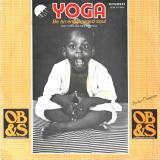
The rare and deeply funky LP "Yoga – Be An Enlightened Soul – Stay Young And Pure With Yoga"
by Osunfisan Brothers & Sisters is set to return to vinyl in an official reissue, marking the first
authorized repress of one of Nigeria’s most elusive spiritual records.
Originally released in limited circulation, Yoga occupies a unique place in many collectors grail list.
According to Mr Femi Osunfisan, the album was conceived by his senior brother and bandleader, "We
chose yoga to as a concept to channel our music, but it was not intended to practise yoga with the
music". Neither pop record nor conventional boogie LP, the album is highly sought-after for the amazing
production by the Sound master Odion Iruoje and for the heavy afro-disco workouts.
At a time when Nigerian music was dominated by Afrobeat, highlife, and disco, Osunfisan Brothers &
Sisters charted a more introspective path—using rhythm, voice, and repetition as tools for enlightenment
and personal grounding.
The fifteenth release from electro label Gladio Operations once again brings us a multi-artist format, featuring new faces and a distinctly Spanish flavour.
This EP opens with the return of producer Cycloplex, with his characteristic minimalist sound.
This track, titled ‘EP01-A’, once again showcases his powerful and aggressive bass lines.
From Gerona comes one of the new and talented artists on the Spanish electro scene. David Pasajero makes his debut on Gladio Operations with ‘Dislektro’, a fluid journey of melodies and warm textures infused with acidic touches.
On the B-side we find Barcelona producer Dark Vektor, who needs no introduction, as he is one of the Spanish icons of electro sound. This artist also makes his debut on the label with ‘Te Voy A Dar Ahhhhh’, a dizzying track with suspenseful melodies and a powerful bass line that will keep you on the dance floor no matter what.
The Spanish duo Slit Observers is another of the label’s new faces and treats us to this vibrant track titled ‘Green Machine’, where we encounter dark passages with a perfect dose of acid and embellished with subtle vocoders.
The EP closes with a collaboration between German producers Intergalactic Noize Commander and Elektrotechnik, the latter an artist who has released music previously. ‘Informationen’ is a rough track, created in the most hidden German bunkers, featuring arpeggios and robust bass lines that dominate throughout the whole track, accompanied by gloomy vocals.
StandUP Records returns with its second release, welcoming a respected name Konerytmi with the 1999 EP.
Across five tracks, Konerytmi pulls listeners straight into the golden era of 80s electronic music. Steering clear of formulaic kicks and basslines, the EP embraces eerie nostalgia, raw textures, and dim-lit atmospheres, the elements that defined the genre’s earliest identity. It’s a deep dive into the past, capturing the authentic sound, spirit, and experimental edge of early electronic music.
- A1: Can I Live Feat. Precious Okoyomon 02:36
- A2: M32 Riddim 04:06
- A3: One Exists Or Agrees To Exist 05:00
- A4: Don't Panic Feat. Ms. Carrie Stacks 02:58
- B1: Duppy Know Who Fi Frighten 06:31
- B2: Helicopter Hovers Over My Crown Heights Apartment 05:19
- C1: Exorcise The Language Of Domination Feat. Juliana Huxtable 06:12
- C2: B2B Feat. Suutoo 05:32
- D1: Effects Of Resistance Feat. Khanyisile Mbongwa 06:12
- D2: Black Trans Masculine Experience (Instrumental) 08:55
May 2026 marks the arrival of TYGAPAW (aka Dion McKenzie)’s first full-length album on Tresor Records, entitled Together You Gather All Power Applied Worldwide. An acronym of its creator’s name, TYGAPAW’s third studio album is a deeply personal collection of music building worlds where Black queer and trans siblings can thrive, while unifying dancefloors worldwide. A proposition that collective wisdom liberates us from the matrix of domination we live within. The album unfolds as the latest chapter in TYGAPAW’s ongoing techno opera opus, continuing to center the voices of Black women, which surface as layered incantations rather than lyrics - powerful, haunting, sensual, activating.
With the process of creating the album starting in 2023, as TYGAPAW (Dion McKenzie) was in the first year of their transition, the music reflects the intensity of that period, where they were experiencing deplatforming as a response to the shift in their physical appearance: Tracks like ‘M32 Riddim’ and ‘Helicopter hovers over my Crown Heights Apartment’ feature high-paced rhythms intersecting with intense siren-like synths to form demanding compositions echoing a heightened sense of alert. Yet throughout the album, relief comes in the form of TYGAPAW’s vocal features, co-conspirators, and chosen family, whose voices are treated with reverb and echo, a sonic fingerprint that leads back to the pioneers in the legendary studios of TYGAPAW’s native land, Jamaica, an important reminder that the past will always inform the future. It is an album for dancers first and foremost, where joy, defiance, and integration with the natural body coexist, and every drop feels less like a climax than a transformation. Expect a bass that permeates your soul and melodic synthesized sequenced phrases echoing the dancehall eras of TYGAPAW’s youth, reshaped into hypnotic melodies that glow over industrial kicks designed to command attention, reasserting Jamaica's pioneering yet often overlooked contribution to electronic music.
In the opening track, ‘Can I Live’, Precious Okoyomon’s words feel like the beginning of a ritual; setting the intentions for the rest of the proceedings. As McKenzie puts it, their “work is about regeneration, resetting, getting integrated into nature, and about rebirth. That’s the tone I wanted to set at the outset of the album.” Ms Carrie Stacks continues this thread of support in ‘Don’t Panic’ with heavily processed vocals on top of a beat that takes inspiration from another important ingredient in the antidote to the oppression of isolation: Ballroom culture. “ I feel like I found my queerness in Ballroom, that’s why this track is very important to me.”
Echoes of NYC Black queer nightlife scene also permeate in the energetic drums of ‘Exorcise the Language of Domination’, in which Julianna Huxtable’s spoken performance complements the various movements and tones of the music. “My producer brain thought this was the one that Juliana’s vocals would be best suited for. I hinted: ‘what do you think of this one?’ She just went into her notes and picked some passages to go with the first section of the track. From there, it was a year-long process of development. It required time and space for this thing to evolve, but I think it’s one of the most powerful tracks on the album.” London’s SUUTOO contributes the album’s only musical collaboration on ‘B2B’, a track that emerged from sessions in McKenzie’s New York studio where the real objective was to connect and have fun; a time out from the demands of life outside.
The album closes out with a double hit of emotion in the form of ‘Effects of Resistance and Black Trans Masculine Experience’. The former features South African scholar Khanyisile Mbongwa drawing connections that exist between Africa and the Black diaspora, whilst looking to the future and calling for a shared sense of community.
The latter piece, an instrumental version of the piece which featured on the IMMIGRANT E.P. of 2025 is a gentle and deeply affecting end to the record, a place of peace and acceptance. This end-of-cycle tone is mirrored in the sleeve photography, which also ties back to IMMIGRANT by finally revealing what was hidden: a portrait of the artist fully self-actualized; a step towards true inner liberation. TYGAPAW is sonically defiant across this album; bass frequencies feel tactile — less heard than inhabited — infectious lead synth melodies remain with you long after the track ends. An overall sound that leaves asserting an urgent need for connection. From Detroit to New York to Berlin to Jamaica, despite geographic distance, this album reminds us that we remain in solidarity, recognising that meaningful world-building requires collective input and action, both personal and communal, if we are to move toward liberation.
Lady Jane Beach land on Slacker 85 with their lo-slung label debut, ‘Binman’. A short, sharp shot of minimal rhythm and rhyme, ‘Binman’ is the sound of the enigmatic London-based trio soundtracking their trips around the capital’s outer ringroads seeking adventure, trouble and corrupted drum machines. Blessed with loose, confident production and verses like glue, Slacker boss Seth Troxler doubles down on his support with a beefed-up, roadtested club edit.
An undisputed trailblazer of UK rave, Zed Bias fires up his studio for two contrasting takes on ‘Binman’, each capturing split sides of the soundsystem culture he helped define. Zed’s ‘Weighty Dub’ goes unapologetically raw, transitioning between skippy beats, heavy bass drops and a fusebox melody out of the darkness. From the basement straight through to the beach club, the ‘Nostalgia Mix’ makes good on its promise of misty-eyed reverie, recalling the first-wave of UKG domination with lush strings and steppin’ drums that still sound like a bright future.
From one generation to the next, fast-rising DJ and producer HalfPint is already familiar to dancers of Circoloco's famed Terrace and Garden. His take on ‘Binman’ finds a fresh frequency, converting the rhymes of the original into a precision-tooled tech house groove, primed for the summer season.
Analog Fingerprints Vol. 0 is a compilation bringing together the early 2000s works of Marco Passarani under his Analog Fingerprints alias, collecting key tracks originally released on Rome’s Plasmek and Pigna labels.
For Numbers, the story starts long before the label itself. In their formative years, digging in Glasgow’s Rubadub, Passarani’s records felt like dispatches from a future city. Releases on his own Nature Records and on labels such as Generator and Interr-Ference Communications were mind blowing: rooted in Detroit techno, Chicago house and electro, yet pushing somewhere new. Much like fellow travellers Autechre, who would remix him in 2001, Passarani’s music balanced machine funk with restless experimentation.
Information was scarce, and you would hear these records first on the dancefloor or at listening stations in shops like Rubadub. Print fanzines like Ear and early web outposts such as Forcefield offered only fragments. But there was a palpable axis forming between Detroit techno and a new European wave of record labels including Skam, Rephlex, Clone, Viewlexx and Nature itself. It was the sound that defined Saturday nights at Rubadub’s ‘69’ parties in Paisley, just outside of Glasgow.
Passarani’s records, in particular, were instrumental in bringing together the future Numbers co-founders. Richard had already booked him pre-Numbers; meanwhile Calum (Spencer) and Jack (Jackmaster), then 16/17 year olds working alternate Saturdays in Rubadub, were so enamoured with the Roman sound that they travelled to Rome for the Bitz Festival in 2003 to seek out Passarani and Lory D at their source.
The first Analog Fingerprints release landed as a 12” on Plasmek in 2001, following the fractured, IDM-leaning 6 Katun material. For Passarani, the project marked a recalibration. A DJ first and foremost, he had moved into production via early computer setups, from a Commodore Amiga through primitive PC audio, Cubase and Logic, later experimenting with Ableton. The IDM scene had offered a playground for trial and error, but there was always a tension between abstraction and the dancefloor. Analog Fingerprints became the bridge: still intelligent, but with more dance than distance. After years of broken beats and complex arrangements, he wanted directness without surrendering identity.
Working closely with Francesco de Bellis and Mario Pierro in the Pigneto district, the trio formed Pigna as a vehicle for reclaiming a more accessible dance sound, deliberately steering away from the minimal wave beginning to dominate Europe. Sessions were fast, instinctive, often stretching late into the night with friends dropping by. It was a studio as social space, production as collective energy.
“In that constant search for balance, Analog Fingerprints was my way of expressing something closer to the classic dance floor. The track 'Tribute' - a tribute to my favourite early Detroit techno track of all time, 'First Bass' by Separate Minds - came after I realised I had almost lost my connection with the dance floor. The simplest step was to take inspiration from early Chicago and Detroit and twist it in our Roman ‘Pigna’ way. My goal was to create more accessible dancefloor tracks by mixing my unconscious Italo roots with my teenage love for that early US sound, ensuring the result was as far as possible from the minimal sound that was starting to dominate everywhere.” - Marco Passarani
Technically, the Analog Fingerprints tracks span a transitional era: Roland TR-909, SH-101 and Alpha Juno hardware met early software experiments. A Novation Drumstation rack stood in for the unattainable TR-808, syncing with TB-303 and TR-606. Yet the true secret weapon was Jeskola Buzz, a tracker-style modular environment that allowed step-by-step parameter control and strange melodic constructions, later exported into the audio sequencer. Even the lead on ‘Tribute’ came from an early PPG Wave-style plugin. It was hybrid thinking at a moment when digital tools still felt unstable but full of possibility for technologists like Passarani.
Behind the music sat Finalfrontier, a loose Roman collective orbiting Nature and Plasmek. Distribution and production were intertwined; importing obscure records into Italy built connections with like-minded outsiders across Europe and the US. Expensive phone bills and fax machines forged an “electronix network” that linked Rome to Clone, Viewlexx, Skam, Rephlex, Rubadub and Detroit’s Underground Resistance. There was a shared sense of survival and resistance, of operating against commercial systems.
Passarani recalls “The first time I found a sheet of paper inside an Underground Resistance 12” with info about upcoming releases... and a huge picture of Spock on the back. Imagine that: you love the music, you love Star Trek, and there’s someone on the other side of the ocean sharing those same values and sounds. It was the perfect match. We even gave our original company the suffix ‘Finalfrontier’: that says it all.”
Feedback in that era arrived physically: distributor faxes, conversations with visiting DJs, the experience of playing abroad and meeting kids who had connected with the records. Glasgow became a key node in a scattered outlier network. Passarani personally brought the first two Nature releases to Fat Cat in London, playing them in-store. Shortly after, a fax arrived from Rubadub in Glasgow requesting copies.
“I still remember that phone buzz and the fax paper slowly sliding out, with someone I didn’t know saying they wanted 75 copies of Nature 001. Or like the time we got a fax from the Rephlex crew just saying, “Hello Nature Records, Keep up the good work.” That was how we knew the message was getting through. It was a fantastic feeling; just one piece of thermal fax paper as an analog notification - the mood for the entire week would change.” - Passarani
The connection to Glasgow has since stretched across generations. As Passarani reflects, links often fracture as scenes renew themselves, but in Glasgow something different happened. New and old mixed seamlessly. There was a visible trust in what came before, and a willingness to carry it forward rather than discard it. Observed from Rome, it was deeply encouraging.
Analog Fingerprints Vol. 0 captures that moment of exchange: Rome to Glasgow, Detroit to Europe, experiment to dancefloor. It documents an artist recalibrating his sound and a network of scenes discovering one another in real time, connected by vinyl, faxes and shared intent.

- A1: Manha De Liberdade Feat. Jorge Bezerra
- A2: Float Feat. Octavio N. Santos
- A3: Be My Shelter Feat. Dominique Fils-Aimé
- A4: Conquest
- B1: Language
- B2: Line In The Sand Feat. Ernesto & The Basement Gospel
- B3: Water To Fire Feat. Clyde Beats
- B4: Good Night
The creative bond between Atjazz and Fred Everything is a story decades in the making. It began in 1998 at The Bomb in Nottingham during a DiY label night—a label through which they both released music. That first encounter sparked a lasting friendship and a steady exchange of ideas that would continue for many years. While they collaborated regularly and remixed each other’s work, it wasn’t until the summer of 2022 that they committed to making a full-length album.
The project took shape during an 8-day stay at Martin’s (Atjazz) home in the Midlands of England, where they set themselves the challenge of writing one track per day. Their shared musical language allowed ideas to move quickly, with some tracks forming in under an hour. Over the next three years, the material was carefully developed alongside their respective album projects: Atjazz’s Starbase 17, Fred Everything’s JUNO Nominated Love, Care, Kindness & Hope, and All Is Well’s A Break In Time.
A final session in Montreal in 2024, coinciding with Fred’s 50th birthday, brought the album into focus. From there, the duo invited a select group of world-class collaborators, including Jorge Bezerra (The Joe Zawinul Syndicate / St Germain), Octavio N. Santos (SiR, Lupe Fiasco), Clyde Beats, Ernesto & The Basement Gospel, and Dominique Fils-Aimé.
The result is a personal, well-constructed record that draws on the spirit of 90s deep house while applying three decades of experience to a deeply rooted, forward-thinking sound. It is a sonic testament that honours their mutual love of synthesizers, beat making, and sound design.
It is a project that took 8 days to start, 3 years to finish, and 30 years to perfect.
- 1: John Holt - You’ll Never Find Another Love Like Mine (3.48)
- 2: Cornell Campbell - Be Thankful (3.58)
- 3: Elizabeth Archer & The Equators - Feel Like Making Love (.4)
- 4: The Chosen Few - People Make The World Go Round (3.22)
- 5: Dave & Ansel Collins - Single Barrel (3.17)
- 6: The Now Generation - Shaft (3.19)
- 7: The Marvels - Some Day We’ll Be Together (3.05)
- 8: The Darker Shades Of Black - War (2.41)
- 9: Winston Curtis - Private Number (3.42)
- 10: Lee Perry & The Upsetters - Bathroom Skank (4.30)
- 11: Slim Smith - Watch This Sound (2.43)
- 12: Winston Francis - Sitting In The Park (3.29)
- 13: The Sensations - If I Don’t Watch Out (2.57)
- 14: Carl Bert & The Cimarons - Slipping Into Darkness (3.04)
- 15: The Darker Shades Of Black - Ball Of Confusion (3.10)
- 16: Jah Youth - Ain’t No Sunshine (2.35)
Sixteen killer 70s reggae funk and soul cuts from the likes of John Holt, Lee Perry, Cornel Campbell, The Cimarons, The Chosen Few and more featuring superb reggae takes on songs by artists including The Jackson 5, William DeVaughn, Diana Ross and The Supremes, War, The Temptations, Roberta Flack, The Stylistics and others!
Well-documented is the influence of American black music on Jamaican styles of the 1960s – from the birth of ska music, when The Skatalites ska-ified the jump-up southern USA rhythm and blues music of Rosco Gordon, Louis Jordan and Fats Domino, through to the creation of rocksteady when Jamaican artists like The Techniques, The Paragons, Alton Ellis and The Melodians turned to the slower rhythms and soulful harmonies of groups such as The Impressions and The Drifters for inspiration.
Less-well established is that in the 1970s Jamaicans didn’t (shock!) stop listening to American black music styles, with many 70s reggae artists as invested in soul, funk and the proto-disco sounds of Philadelphia, as was the case with rhythm and blues in the previous decade. In the 1970s, while Jamaica promoted its own roots reggae styles around the world, powerhouse USA soul labels such as Motown, Philadelphia International and Stax Records were at the same time all popular on the island.
This interaction between American and Jamaican music was not limited to Jamaica. In Britain, first-generation Caribbean-émigré children in the 1960s and early 70s grew up with an equal love of both soul and reggae, which manifested itself in the home-grown arrival of lovers rock in the mid-1970s.
Soul Jazz Records’ new ‘Reggae Island Soul’ tells this story of how soul and funk-infused reggae in the 1970s united the sounds of Jamaica, USA and the UK into a highly addictive cultural hybrid of styles.
- 1: Die In Cleveland
- 2: High Resolution
- 3: Don?T Wear Me Out
- 4: Fear Of The Living
- 5: Sanctuary
- 6: Dead Alive
- 7: Public Meltdown
- 8: Depression Song
- 9: One And Only Girl
- 10: Pill
- 11: The World Doesn?T Need Your Jive
San Diego’s Mrs. Magician has always bent surf music and punk into something delightfully off-kilter — sun-soaked, hook-heavy power pop with a lyrical fixation on life’s darker undercurrents. Their 2012 debut, Strange Heaven, was a nihilistic pop statement that grew into a cult classic. The 2016 follow-up, Bermuda, sharpened the edges with punchy, nervy songwriting. Both records were produced by John Reis (Rocket From The Crypt, Hot Snakes, Drive Like Jehu), cementing the band’s place in Southern California’s underground lineage. Now, in 2026, Mrs. Magician reemerges with their long-awaited third LP, Spiritual Hangover. Recorded at Dave Grohl’s Studio 606 and Singing Serpent Studios with producer Christian Cummings, Spiritual Hangover finds songwriter Jacob Turnbloom trading youthful nihilism for something more reflective. Where earlier records wrestled with existential dread through anthemic defiance, this new collection embraces uncertainty — an admission of ignorance in the face of the human condition, paired with a genuine longing for connection and understanding. The humor remains. The hooks are sharper than ever. But the perspective has shifted.
These songs feel less like a declaration of dominance and more like a celebration of fragility — an acknowledgment that life is fleeting, confusing, and still worth enjoying. The album features Andrew Montoya (drums) and Mark Rivera (bass) of The Sess, Ian Fowles (guitar) of The Aquabats, and John Reis (guitar). Spiritual Hangover channels the bright urgency of late-’70s power pop through a distinctly Californian lens — warm, melodic, and irresistibly alive. “Super fun, well crafted, with great melodies. It gives me that late ’70s power pop energy I loved so much as a kid. Every track has something joyous to grab onto. In a world full of bleak news, Spiritual Hangover is a warming blast of California sunshine.” — Walter Schreifels (Gorilla Biscuits/Quicksand)
Nach ihrer gemeinsamen Interpretation von I See A Darkness mit Perfume Genius kündigt Anna Calvi die neue EP Is This All There Is? an, die am 20. März erscheint. Die vier Songs versammeln Kollaborationen mit Perfume Genius, Iggy Pop, Laurie Anderson und Matt Berninger.
Eröffnet wird die EP von God’s Lonely Man, in dem Calvi Iggy Pop die Stimme eines zerstörerischen inneren Monologs überlässt. Der Song ist von nervöser Energie getragen: kantige Gitarren, antreibende Drums, eine direkte Konfrontation mit emotionaler Stagnation. Pop verkörpert dabei genau jene rohe Präsenz, die Calvi für die Erzählung suchte.
Seht und hört "God´s Lonely Man" HIER.
Is This All There Is? bildet den ersten Teil einer geplanten Trilogie, die Identität als etwas Veränderliches begreift, geformt durch Nähe, Liebe und biografische Brüche. Ausgangspunkt ist Calvis eigene Erfahrung des Mutterwerdens, die ihren Blick auf Sicherheit, Verantwortung und Möglichkeiten verschoben hat. Die EP kreist um grundlegende Fragen moderner Existenz: Wie lässt sich Intimität neu denken? Was bedeutet es, sich wirklich verbunden zu fühlen? Und wann fühlt man sich wach?
Neben dem bereits veröffentlichten I See A Darkness interpretiert Calvi gemeinsam mit Laurie Anderson Kraftwerks Computer Love neu. Mit Andersons Stimme im Zentrum und choralen Arrangements entsteht ein Stück über digitale Nähe und emotionale Distanz. In ihrer Gesamtheit wirkt die EP wie ein zusammenhängender filmischer Bogen – vier Songs, vier Perspektiven, eine fortlaufende Erzählung.
Is This All There Is? versteht Kollaboration nicht als Zusatz, sondern als Strukturprinzip: Die Stimmen der Beteiligten werden zu Figuren innerhalb eines gemeinsamen Klangraums, in dem Fragen offen bleiben dürfen.
In the rapidly shifting tectonic plates of the global Afrobeats scene, few arrivals have been as seismic as that of Ahmed Ololade—better known to the world as Asake. With his breakout project Mr. Money With The Vibe, the artist didn’t merely debut; he effectively recalibrated the tempo of the Nigerian pop soundscape. The EP functions as a masterclass in synthesis, pulling from the ornate, percussive history of Fuji music and grafting it onto the driving, bass-heavy architectures of contemporary Amapiano. It is a calculated, deeply rhythmic hybridization that manages to feel both nostalgic and jarringly modern.
From a critical vantage point, Mr. Money With The Vibe is defined by its brevity and density. Asake treats each track as a focused vignette, utilizing a vocal delivery that oscillates between a melodic, almost liturgical chant and the staccato urgency of a Lagos street orator. The production—characterized by sharp, frenetic percussion and deceptively simple melodic loops—creates a high-intensity atmosphere that mirrors the relentless pace of urban life. He avoids the pitfall of bloated experimentation; instead, he doubles down on a "street-pop" ethos, prioritizing accessibility without sacrificing the complex rhythmic interplay that gives the genre its distinctive texture.
Ultimately, Mr. Money With The Vibe stands as a pivotal document of the current era, capturing the transition of Afrobeats from a regional powerhouse to a dominant global force. By blending the aspirational "hustle culture" narrative with an increasingly sophisticated sonic palette, Asake established a blueprint that has since influenced a new wave of artists. The project is a testament to the idea that authenticity, when paired with relentless precision, remains the most effective currency in contemporary music.
- A1: Back From Beyond
- A2: Left For Dead
- A3: Roadkill
- A4: Hangin' In The Hood
- A5: Dominant Submission
- B1: Face The Fight
- B2: Will Work For Food
- B3: Cold Fire
- B4: Dazed And Confused
- B5: Finger First
- B6: It Can Happen
Uncle Slam, featuring former members of Suicidal Tendencies and Warrior, was a politically-minded thrash act from the 90's. Their list of influences shouldn’t surprise anyone with a passing familiarity of the genre: early Corrosion of Conformity, Dark Angel, Testament, Megadeth and of course Suicidal Tendencies.
Will Work for Food, originally released in 1993 by Roadrunner Records in Europe, with cover art by the legendary Ed Repka, will now be a available on vinyl for the first time ever.
This album features an iconoclastic take on Led Zeppelin’s “Dazed and Confused” which is one of the record’s highlights, These guys are turning that song’s proto-punk into actual punk. The rest of the album is a blast of antigovernment aggression, and is ready to be rediscovered 30-odd years later!
Will Work For Food is for the first time available on vinyl as a limited edition of 750 individually numbered copies on purple vinyl and includes an insert.
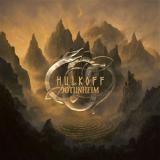
- 1: Till Jotunheim
- 2: Det Gamla Blodet
- 3: Thrym
- 4: Loke
- 5: Blódughadda
- 6: Jättarna
- 7: Surtr
- 8: Ur Ginnungagap
- 9: Sigurd
- 10: Nordstjärnan
- 1: To Jotunheim
- 2: The Old Blood
- 3: Thrym
- 4: Loke
- 5: Blódughadda
- 6: The Giants
- 7: Surtr
- 8: Out Of Ginnungagap
- 9: Sigurd
- 10: Northstar
On May 15, HULKOFF returns with his fifth studio album; Jotunheim - a towering new chapter that bends space and time, and throws you back to the very darkest void where the nordic sagas began - Etunaheimar. The first spiritual landscape known in the blood-memory of Fennoscandia, today referred to as Jotunheim - the realm of Giants. Founded by the former frontman of Raubtier, HULKOFF has dominated Swedish charts with multiple #1 releases, including Pansarfolk (2020), Ragnarök (2021), and Hersir (2023). As with some of the previous releases, HULKOFF once again drops a double album. With 20 tracks split across two discs -one in Swedish, one in English- the album invites the world into the frostbitten heart of the North, expanding the saga without loosing its roots. With Jotunheim, HULKOFF delivers what has become his hallmark: iron-hard riffs over folky melodies and thunderous drums. Often described as "Music for the Viking hearted", Jotunheim once again presents the established HULKOFF sound - Metal refined and enhanced by the primal organic sound from Talharpa and violin - wood, horsehair and steel. A symbiosis that is adding an earthy, ritualistic texture to the otherwise dark and heavy sonic landscape.
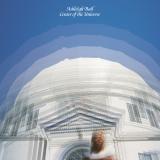
Spiritual World presents: Ashleigh Ball — Center of the Universe, a transcendental flute journey from the singer and flutist of Teal. Center of the Universe is a 32-minute improvisational odyssey recorded inside the Dominion Astrophysical Observatory (DAO), a National Historic Site on Vancouver Island, in British Columbia Canada..
Inspired by the pioneering work of Paul Horn and his Inside series, the recording channels a similar spirit of reverent exploration within a space rich in history and resonance. Completed in 1918, the observatory is home to the Plaskett Telescope - once among the largest and most powerful in the world - playing a key role in mapping the Milky Way.
Following months of coordination, three hours of private access were granted on the morning of August 25, 2025. Beneath the observatory’s towering telescope, Ball performed a wordless meditation, moving between alto flute and soprano concert flute, allowing each note to merge with the chamber’s vast natural reverb. Tones bloom, linger, and return, carried along the massive curved steel walls.
Captured using a minimalist recording approach, Center of the Universe preserves the purity of the moment—its warmth, stillness, and the architecture’s subtle mechanical resonance. Here, the observatory itself becomes an instrument, shaping the sound into something elemental, timeless, and deeply human. Center of the Universe will be released as a limited-edition vinyl LP (300 copies) with a printed insert on May 15, 2026, via Rubadub, Forced Exposure, and HiFi in Sheep’s Clothing.
Don Toliver katapultiert sich mit seinem neuen Meisterwerk OCTANE direkt an die absolute Weltspitze und liefert das bislang dominanteste Chart-Debüt des Jahres 2026. Mit beeindruckenden 162.000 verkauften Einheiten und über 423 Millionen Streams pulverisiert er seine eigenen Rekorde und sichert sich souverän die Nummer 1 der Billboard 200 sowie der globalen Streaming-Charts. Das Album fungiert als akustischer Adrenalinkick, der die Grenzen des modernen Hip-Hop sprengt und Don Toliver endgültig vom Hitmacher zum globalen Headliner transformiert. Inspiriert von der Hochgeschwindigkeit der Rallye-Kultur, liefert er einen futuristischen, genre-übergreifenden Sound, der die stagnierende Szene mit purer Elektrizität wiederbelebt. Wer OCTANE hört, erlebt nicht nur Musik, sondern die kreative Evolution eines Künstlers auf seinem absoluten Zenit.
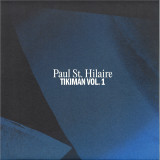
For the first time in more than a decade, Paul St. Hilaire (AKA Tikiman) presents a solo album – 100% Tiki.
Over his 30-plus year career, St. Hilaire has become one of dance music’s quietly legendary figures. Born and raised in Dominica, he moved to Berlin in 1994 and has lent both his voice and his musicianship to some of the most iconic electronic music from the German capital – and beyond. Renowned for his collaborations with Moritz von Oswald and Mark Ernestus (AKA Rhythm & Sound), he has also appeared on records with Deadbeat, Rhauder, Larry Heard aka Mr. Fingers and Stereotyp (G-Stone Recordings), amongst others.
However, few know the extent of St. Hilaire’s compositional and technical mastery. From his home studio in Kreuzberg, which includes an extensive collection of vintage hardware, self-built instruments and notebooks scribbled with endless lyrics, he has created a vast archive of material spanning ambient dub, avant-jazz, lush techno and lovers rock.
Tikiman Vol. 1 is a heady, downtempo tour de force of patois metaphors on education, displacement and personal vs. global histories, as is evident on slippy album opener “Bedroom in My Bag”: Mister, mister / Where are you going? / I’m heading for a faraway land / What are you having in the bag in your hand? / Help us to understand / He said, I’ve got my bedroom in my bag.
Overall, the album’s lyrics reflect on life between Berlin and Dominica, specifically St. Hilaire’s hometown of Grand Bay, where he has worked with various musicians famous for the island’s different genres of carnival music. St. Hilaire himself always favoured the island’s more “discrete” music, developing a sonic synergy between two different geographical strains of groove and minimalism, and combining them with foundational Caribbean mixing techniques, which provide the basis for his songwriting and distinct
baritone.
Tikiman Vol.1 offers a rare insight into St. Hilaire’s complex artistry, from the eyes-down grooves of “Little Way” and the guitar-heavy digi dancehall experiment “Keep Safe,” to the subtle hypnosis of “Ten to One” and the softly crashing synth waves of closer “Three And A Half”, evoking not only beaches but also coasts and borders. It’s a fitting expression of both the breadth of St. Hilaire’s work, as well as his history as one of the few black, Berlin-based artists who, despite remaining largely overlooked, has influenced the city’s electronic music culture since its beginnings.
Credits
Written & Produced by Paul St. Hilaire
Mastered by Stefan Betke
Artwork by Grant Gibson
Kynant Records was founded in 2015 by Richard Akingbehin, a British-Nigerian radio programmer (Refuge Worldwide), music writer and DJ. Originally specialising in deep techno and featuring artists such as Cio D’Or, Terrence Dixon and Donato Dozzy, Kynant has since launched a sub-label Kynant EX which focuses on ambient, dub and experimental electronics.
Catapult yourself back to the early-'90s raves with this limited edition vinyl of Human Resource's 'Dominator'. Including legacy-championing renditions from Klubbheads, Frank De Wulf and Rebuke alongside the UK-charting original mix, this multi-track pressing represents the sound that's proven to be rougher and tougher than any other.