Pushing his sound further into leftfield-leaning horizons and textured atmospheric reliefs, Pfirter highly-anticipated debut long-player 'The Empty Space' finds the Argentinian-born, Barcelona-based producer steering across shape-shifting sonic rapids with poise and panache. Inspired by a fractal of elements including physics, sci-fi and Lovecraftian flicks, amongst many other things, 'The Empty Space' is a record that revolves around the experience of the voyage itself rather than the destination, throbbing with a vital pulse that acutely transcends all categories and genres, as Pfirter adroitly recombines techno's DNA into something truly and definitely his own. From the false quiet of gloomy lakeshores and riverbanks to post-industrial cityscapes, through barren no-go zones and tiny basements packed to the rafters, welcome into Pfirter's personal "empty space".
This is MindTrip!
quête:dominant
SOV is glad to welcome aboard the new family member for it's 12th cat. The Mole is a Canadian artist known for his music boutique interpreting elements of disco, jazz, hip hop and funk. Since this kind of game is also the core of our soul, we are happy to present 4 special tracks from him.
- A1: The End
- A2: Polonium
- A3: It's All Over
- A4: Addis Abba Ft. Vinnie Paz
- A5: Imminent Danger (Interlude) Ft. Sunez Allah
- B6: Black Caesar Ft. General Steele & Maitre D
- B7: Spilled Sphinx Ft. Nejma Nefertiti
- B8: Bombardians Ft. Cf & Dontique
- B9: Think Dominant Ft. Skam2, Innocent & Maitre D
- B10: Water Seeds (Interlude) Ft. Eloh Kush
- B11: Masked Assassin
- C12: Tough Skin - Napoleon Da Legend Ft Skyzoo
- C13: Break The Chains Ft. Gregg Green
- C14: Kill Bots Ft. Passport Rav
- C15: Star Wars Ft. Crazy Dj Bazarro & Maitre D
- C16: Sinners And Saints
- C17: Mind War Ft. Goretex
- D18: G.a.m.o
- D19: System Error (Interlude)
- D20: Ultimate Power
- D21: Alan Wattage Ft. Ghost Machine
- D22: Save Point
- D23: The Beginning Ft. Bbass
G.A.M.O. (Gods Against Man's Oppression) recounts events leading to Napoleon Da Legend transformation after being bestowed a metal helmet, which is a weapon against our modern dystopia. The album features a blend of soulful and dystopic grit featuring the likes of Vinnie Paz, Goretex, General Steele, Skyzoo, Passport Rav, Nejma Nefertiti, Innocent?, SKAM2?, Eloh Kush, CF, Dontique and more. It has production from Dub Sonata, Maitre D, Homage Beats, Passport Rav Proffeny and Napoleon Da Legend. The result is 23 tracks that blend retro-sci fi "Noir Wave" and modern Boom Bap. It features an exclusive 2 page comic illustrated by UK's Dan Lish. Limited to 300 copies only.
- 1: Through Darkened Glass
- 2: Very Heavy Greening
- 3: Wet Skull
- 4: The Magus
- 5: Exodus
- 6: Music For Mandrax
- 7: Return To Earth
- 8: The Middle Way
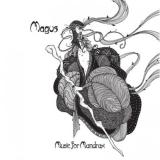
A magus is a wizard…a sorcerer. Magus, the band, is certainly interested in such things (who isn’t), but the name is especially apt due to the band’s approach to alchemy, the blending of rock, gothic, proto metal, and psychedelic styles to create a sound that is, ultimately, unique. Part of that uniqueness comes from the instrumentation. While guitar is often a dominant instrument of the rock oeuvre, the Fender Rhodes generally plays a supportive role. Not so here, where Jessica Weeks’ deft use of the keyboard dovetails with Greg Weeks’ more standard six-string approach. Not standard is the band’s sound. Doomy yet inspirational, dour yet vibrant, the duo’s tunes map sinister realms whose subjects span metaphysical creatures to enigmatic portals. You know, the typical stuff that rubs elbows with a magus.
Formed in late 2024, Magus sprung from a desire by both artists to experiment with darker, heavier sounds. Long enamored of artists like Flower Travelling Band,, Black Sabbath, and Deep Purple, the duo delved deeply into trance like riffs and euphoric solos to create the backbone of what has become their debut album, Music for Mandrax. This thirteenth Language of Stone offering features grounded, metronomic grooves, organic, lugubrious synth lines, and tandem vocals (supplied by both Weekses) that, in total, weave a heavy, trancelike spell sure to entice fans of bands as disparate as Sabbath is to Pink Floyd. Recorded at Weeks’ Hexham Head studio (to analog tape, of course), the band enlisted long-time counterparts Jesse Sparhawk (bass) and Ben McConnell (drums) to round out their sound and lock down the grooves that propel the album.
Mixed by Brian McTear and Amy Morrisey at Miner Street in Philadelphia, the band’s fully realized vision came to fruition, which left only the album art to contemplate. The band, wishing to further the gothic aesthetic of their sound, enlisted fashion designer and artist extraordinaire Hogan McLaughlin (Game of Thrones) to create the starkly beautiful line drawings of the front and back covers. The duo travelled to Salem, MA to complete the package with Courtney Brooke Hall, who shot the moody and evocative photographs that grace the gatefold release’s inner panels.
- A1: Dick Morrissey Quartet - Bang!
- A2: Emcee Five - Mike's Dilemma
- A3: Michael Garrick Quintet - Vishnu
- A4: Vic Lewis & His Bossa Nova All Stars - Last Minute Bossa Nova
- A5: Johnny Burch Octet - Early In The Morning
- B1: Pony Poindexter - 4-11-44
- B2: Terrell Prude - Princess
- B3: Johnny Hartsman - Soppin
- B4: Eddie Kochak & Hakki Obadia - Jazz In Port Said
- B5: Charles Kynard With Clifford Scott - Where's It At
- B6: Gene Ammons - Jungle Soul
Compare the best of British jazz circa 1963 with American sounds from labels such as Prestige, Tangerine and World Pacific. This album captures the period when rhythm and blues is emerging as the dominant club sound, forcing Soho jazz clubs to change their music policy in order to survive. On the British side, you’ve got Ronnie Scott’s arrangement of Last Minute Bossa Nova; Bang!, taken from Dick Morrissey Quartet’s first session for the BBC’s World Service, recorded around the time of the release of their first album Have You Heard? The version here is take two. You can hear take one along with the rest of the eleven-track session on R&B18 Jazz For Moderns.
Early In The Morning is a Ginger Baker/Jack Bruce arrangement of the traditional work song realized as a repeated blues riff, and is the first ever recording that is recognizably British Blues. Graham Bond features on alto sax along with Bruce and Baker together as members of the Johnny Burch Octet heard playing live at a BBC staff party from March 1963. Side Two features Jazz Stateside, such as West Coast guitarist Johnny Hartsman, Gene Ammons veering into proto jazz-funk on Jungle Soul, aka Ca' Purange plus a couple of top notch Hammond workouts from Terrell Prude and Charles Kynard.
,,Hologramm" is the new EP by Schwefelgelb.
Remix contributions by Nastia Reigel and Norbak make it a 5 track Techno heavyweight.
An intriguing combination of positive, joyful atmosphere and gritty, pushy sound aesthetic spans all over the record. "The Show" and its euphorigenic rising stabs appears like what could be transformed into an Euro Dance anthem easily.
Yet the aware and well curated production holds it firmly in the zone of Techno and House underground. Speaking House, here's "In Mein Glas" - a sportive track with an irresistible bounce foiled by a lackadaisical vocal line, which gives it a comic twist.
As "Fieber" keeps the bounce we're getting a little more aggressive again: a delicate distortion, a dominant bass and a groovy drive. In all these 3 original tracks it's the melange of melodic motives, vocal highlights, crispy production as well as versatile creative details, which creates this specific sound that gets you hooked. It is lightness however wrapped in an Industrial musical language.
That said, the remixes proof how a new energy can be revealed by more minimal re-interpretations. Nastia Reigel, getting hands on "The Show", pushes drums and a fresh rhythmic play of vocal chops into the foreground. A sparse break followed by a powerful drop adds a strong climax. Norbak's approach on "In Mein Glas" takes the melodic motive and embeds it into a dubby space, not giving up on the hard-hitting kick.
"Hologramm" will be released on 140 g colored vinyl and digitally, April 10th, on n-PLEX.
Błoto has never cared much for dominant aesthetics. Instead, the band has consistently chosen paths less travelled, unexplored territories and uncharted routes where experimentation is not so much a conscious decision as a natural state of being. After years of a rather hermetic approach to recording their albums, the time for change has come. A trip to Bucharest and the opportunity to collaborate with the community of musicians associated with the underground label Future Nuggets, led by Ion D, resulted in many hours of recordings, which will be presented by Astigmatic Records in a series of releases across 2026. It opens with a 7-inch vinyl titled Zmiany / Schimbări, recorded in collaboration with Ion D and Plevna.
Regal delivers his first full EP on Backspin, marking a defining moment for the label he founded. More than just another release, the Forgotten Heroes EP captures the essence of Regal's vision: groovy, forward-moving techno that balances raw club energy with atmosphere, emotion and narrative.
The title track 'Forgotten Heroes' sets the EP in motion with a sense of controlled urgency. A rolling, slightly breaktinged groove pushes forward relentlessly, while an eerie, almost nostalgic synth melody hovers in the background, giving the track an emotional pull. 'Concentrate' shifts the focus inward_ bleeping motifs, tight claps and restless hihats circle around spoken fragments that feel like thoughts caught between the peak of the night and the quiet hours before sunrise.
On the B-side, 'Forte' accelerates into pure momentum: sharp, bleep-led sequences and forward pressure combine into a rush that feels like racing through the city at night. 'Soft Killer' deepens the mood with a darker, dominant edge, its stripped back power and razor-sharp sounds cutting clean through the mix. Closing track 'Wild Magic' offers a final release of tension, slowing the pace into a lighter, more house-leaning groove. Warm pads and a catchy, uplifting melody bring a sense of air and openness, letting the EP drift out on a hopeful, almost euphoric note.
Regal's comeback EP 'Forgotten Heroes' stands as a personal statement and a cornerstone release for Backspin. It's techno built on groove, contrast and character, made to leave a lasting impression on the dancefloor.
In the rapidly shifting tectonic plates of the global Afrobeats scene, few arrivals have been as seismic as that of Ahmed Ololade—better known to the world as Asake. With his breakout project Mr. Money With The Vibe, the artist didn’t merely debut; he effectively recalibrated the tempo of the Nigerian pop soundscape. The EP functions as a masterclass in synthesis, pulling from the ornate, percussive history of Fuji music and grafting it onto the driving, bass-heavy architectures of contemporary Amapiano. It is a calculated, deeply rhythmic hybridization that manages to feel both nostalgic and jarringly modern.
From a critical vantage point, Mr. Money With The Vibe is defined by its brevity and density. Asake treats each track as a focused vignette, utilizing a vocal delivery that oscillates between a melodic, almost liturgical chant and the staccato urgency of a Lagos street orator. The production—characterized by sharp, frenetic percussion and deceptively simple melodic loops—creates a high-intensity atmosphere that mirrors the relentless pace of urban life. He avoids the pitfall of bloated experimentation; instead, he doubles down on a "street-pop" ethos, prioritizing accessibility without sacrificing the complex rhythmic interplay that gives the genre its distinctive texture.
Ultimately, Mr. Money With The Vibe stands as a pivotal document of the current era, capturing the transition of Afrobeats from a regional powerhouse to a dominant global force. By blending the aspirational "hustle culture" narrative with an increasingly sophisticated sonic palette, Asake established a blueprint that has since influenced a new wave of artists. The project is a testament to the idea that authenticity, when paired with relentless precision, remains the most effective currency in contemporary music.
- A1: Back From Beyond
- A2: Left For Dead
- A3: Roadkill
- A4: Hangin' In The Hood
- A5: Dominant Submission
- B1: Face The Fight
- B2: Will Work For Food
- B3: Cold Fire
- B4: Dazed And Confused
- B5: Finger First
- B6: It Can Happen
Uncle Slam, featuring former members of Suicidal Tendencies and Warrior, was a politically-minded thrash act from the 90's. Their list of influences shouldn’t surprise anyone with a passing familiarity of the genre: early Corrosion of Conformity, Dark Angel, Testament, Megadeth and of course Suicidal Tendencies.
Will Work for Food, originally released in 1993 by Roadrunner Records in Europe, with cover art by the legendary Ed Repka, will now be a available on vinyl for the first time ever.
This album features an iconoclastic take on Led Zeppelin’s “Dazed and Confused” which is one of the record’s highlights, These guys are turning that song’s proto-punk into actual punk. The rest of the album is a blast of antigovernment aggression, and is ready to be rediscovered 30-odd years later!
Will Work For Food is for the first time available on vinyl as a limited edition of 750 individually numbered copies on purple vinyl and includes an insert.
Don Toliver katapultiert sich mit seinem neuen Meisterwerk OCTANE direkt an die absolute Weltspitze und liefert das bislang dominanteste Chart-Debüt des Jahres 2026. Mit beeindruckenden 162.000 verkauften Einheiten und über 423 Millionen Streams pulverisiert er seine eigenen Rekorde und sichert sich souverän die Nummer 1 der Billboard 200 sowie der globalen Streaming-Charts. Das Album fungiert als akustischer Adrenalinkick, der die Grenzen des modernen Hip-Hop sprengt und Don Toliver endgültig vom Hitmacher zum globalen Headliner transformiert. Inspiriert von der Hochgeschwindigkeit der Rallye-Kultur, liefert er einen futuristischen, genre-übergreifenden Sound, der die stagnierende Szene mit purer Elektrizität wiederbelebt. Wer OCTANE hört, erlebt nicht nur Musik, sondern die kreative Evolution eines Künstlers auf seinem absoluten Zenit.
- A1: State Of Grace
- A2: Holy Ground
- A3: Red
- A4: The Lucky One
- B1: Mean
- B2: 22
- B3: Mine (Acoustic)
- B4: You Belong With Me
- C1: Sparks Fly
- C2: I Knew You Were Trouble
- C3: All Too Well
- D1: Love Story
- D2: We Are Never Ever Getting Back Together
A decade ago, Taylor Swift was already a world-renowned and dominant force in the pop world. In 2014, she was on a world tour that took in a stop at Tokyo Saitama Arena on June 1st and the recording of it captures the electrifying energy of her sold-out performance during the iconic "Red" world tour. This live album showcases Swift at her early peak and delivering heartfelt ballads and powerful pop anthems with her signature charm and stage presence. Fan favourites resonate with emotion and live energy, while quieter moments like 'All Too Well' highlight her storytelling prowess. The Saitama Arena crowd adds to the magic throughout.
RASTER MEDIA 30 YEARS ANNIVERSARY EDITION REPRESS / 180 G VINYL
Ich bin meine Maschine features remixes by Boys Noize, Function and AtomTM himself.
to underline this tryptic statement (and to demonstrate the diversity) of one of atom™'s compositions that appeared on his 2013 'HD' album, raster-noton now releases a vinyl ep featuring remixes by boys noize, function and atom™ himself. 'ich bin meine maschine', in an elaborate manner, illustrates uwe schmidt´s main musical concern - the exploration of electronics in pop music. inspired by a statement of the cybernetician heinz von foerster, atom™ constructed/generated a message that is playing around with a widely-cited kraftwerk quotation, turning 'ich bin eine maschine' into 'ich bin meine maschine' (i am my machine). besides the album version of 'ich bin meine machine,' the ep features some dominantly techno infuenced versions that perfectly connect the pop attitude of 'HD' with dancefoor functionality. the boys noize remix shows off alexander ridha´s deft skills for translating atom™´s futuristic pop into his own rough and driving electronic language. on the other hand, atom™'s 'linear remix' breaks down the original structure of the song and turns it into a reduced and much straighter, forward looking composition. function - one of techno's true underground heroes - provides a remix that is breathing the air of solid and hypnotic club music, in which just the essential elements are streamlined and ondensed into perfection. all 3 remixers adapt the track to their particular universe. by doing so, they prepare the 12' vinyl for its fnal destination - the club.
“Crazy Funky” marks the official debut of Tommy Soul as a producer — a track born from the desire to blend the groove of 80s funk and disco with a contemporary sonic approach. A warm, dominant funky bassline drives the track alongside a vintage-flavoured, punchy drum groove, supported by modern electronic synths and sound details that firmly place it in the present.The lyrics and vocal melody sung by Tommy Soul, reveal an unexpected falsetto, especially in the harmonic tension of the hook “make me crazy!” The goal was to reinterpret the spirit of original disco productions and bring it into a modern, more electronic and club-oriented dimension, while preserving the analogue soul and authentic warmth of the sound. The result is a track with a strong character: a relentless bassline, gritty vocals, an infectious groove, and an energy built for the dancefloor.
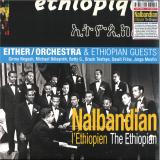
The Éthiopiques series returns! Essential archive recordings from an extremely fruitful period in Ethiopian music.
Before “Swinging Addis” took over the world, there was Moussié Nerses Nalbandian — the Armenian-born composer who shaped modern Ethiopian music. Mentor, arranger, and pioneer, he laid the foundations of Ethio-jazz.
This Éthiopiques volume revives his forgotten legacy, recorded live by Either/ Orchestra First issue ever with new exclusive photos and in depth liner 8-page insert.
“Ethiopian jazzmen are the best musicians that we have seen so far in Africa.
They really are promising handlers of jazz instruments.”
Wilbur De Paris
(1959, after a concert in Addis Ababa)
አዲስ፡ዘመን። *Addis zèmèn* **A new era.**
The time is the mid-1950s and early 1960s, just before "Swinging Addis" bloomed – or rather boomed – onto the scene. Brass instruments are still dominant, but the advent of the electric guitar, and the very first electronic organs, are just around the corner. Rock’n'Roll, R’n’B, Soul and the Twist have not yet barged their way in. Addis Ababa is steeped in the big band atmosphere of the post-war era, with Glenn Miller's *In the* *Mood* as its world-wide theme song, neck and neck with the Latin craze that was in vogue at the same period. Life has become enjoyable once again, with the return of peace after the terrible Italian Fascist invasion of Ethiopia (1935-1941). The redeployment of modern music is part and parcel of the postwar reconstruction. *Addis zèmèn* – a new era – is the watchword of the postwar period, just as it was all across war-torn Europe.
The generation who were the young parents of baby boomers** were the first to enjoy this musical renaissance, before the baby boomers themselves took over and forever super-charged the soundtrack of the final days of imperial reign. Music is Ethiopia's most popular art form, and very often serves as the best barometer for the upsurge of energy that is critical for reconstruction. Whether it be jazz in Saint-Germain-des-Prés or the *zazous* who revolutionised both jazz and French *chanson* after the *Libération*, be it Madrid's post-Franco Movida, or Dada, the Surrealists and *les années folles* that followed World War I, the periods just after mourning and hardship always give rise to brighter and more tuneful tomorrows. Addis Ababa, as the country's capital, and the epicentre of change, was no exception to this vital rule.
**Two generations of Nalbandian musicians**
Nersès Nalbandian belonged to a family of Armenian exiles, who had moved to Ethiopia in the mid-1920s. The uncle Kevork arrived along with the fabled "*Arba Lidjotch*", the** "*40 Kids*", young Armenian orphans and musicians that the Ras Tafari had recruited when he visited Jerusalem in 1924, intending to turn their brass band into the official imperial band. If Kevork Nalbandian was the one who first opened the way of modernism, pushing innovation so far as to invent musical theatre, it was his nephew Nersès who would go on to become, from the 1940s and until his death in 1977, a pivotal figure of modern Ethiopian music and of the heights it. Going all the way back to the 1950s. Nothing less. And it is Nersès who is largely to thank for the brassy colours that so greatly contributed to the international renown of Ethiopian groove. While the younger generations today venture timidly into the genealogy of their country's modern music, often losing their way amidst a distinctly xenophobic historiographical complacency, many survivors of the imperial period are still around to bear witness and pay tribute to the essential role that "Moussié Nersès" played in the rise of Abyssinia's musical modernity.
Given the year of his birth (15 March 1915), no one knows for sure if Nersès Nalbandian was born in Aintab, today Gaziantep (Turkiye/former Ottoman Empire) or on the other side of the border in Alep, Syria... What is certain is that his family, like the entire Armenian community, was amongst the victims of the genocide perpetrated by the Turks. Alep, the place of safety – today in ruins.
Before Nersès then, there was uncle Kevork (1887-1963). For a quarter of a century, he was a whirlwind of activity in music teaching and theatrical innovation. *Guèbrè Mariam le Gondaré* (የጎንደሬ ገብረ ማርያም አጥቶ ማግኘት, 1926 EC=1934) is his most famous creation. This play included "ten Ethiopian songs" — a totally innovative approach. According to his autobiographical notes, preserved by the Nalbandian family, Kevork indicates that he composed some 50 such pieces over the course of his career. This shows just how much he understood, very early on, the critical importance of song as Ethiopia's crowning artistic form. Indeed, for Ethiopian listeners, the most important thing is the lyrics, with all their multifarious mischief, far more than a strong melody, sophisticated arrangements or even an exceptional voice. (This is also why Ethiopians by and large, and beginning with the artists and producers themselves, believed for a long time — and wrongly — that their music could not possibly be exported, and could never win over audiences abroad, who did not speak the country's languages).
Last but not least, one of Kevork's major contributions remains composing Ethiopia's first national anthem – with lyrics by Yoftahé Negussié.
Nersès Nalbandian moved to Ethiopia at the end of the 1930s, at the behest of his ground-breaking uncle. Proficient in many instruments (pretty much everything but the drums), conductor, choir director, composer, arranger, adapter, creator, piano tuner, purveyor of rented pianos,... he was above all an energetic and influential teacher. From 1946 onwards, thanks to Kevork's connexion, Nersès was appointed musical director of the Addis Ababa Municipality Band. In just a few years, Nersès transformed it into the first truly modern ensemble, thanks to the quality of his teaching, his choice of repertoire, and the sophistication of his arrangements. It was this group that would go on to become the orchestra of the Haile Selassie Theatre shortly after its inauguration in 1955, which was a major celebration of the Emperor's jubilee, marking the 25th anniversary of his on-again-off-again reign.
At some point or other in his long career, Nersès Nalbandian had a hand in the creation of just about every institutional band (Municipality Band, Police Orchestra, Imperial Bodyguard Band, Army Band, Yared Music School…), but it was with the Haile Selassie Theatre – today the National Theatre – that his abilities were most on display, up until his death in 1977. To this must be added the development of choral singing in Ethiopia, hitherto unknown, and a sort of secret garden dedicated to the memory of Armenian sacred music, and brought together in two thick, unpublished volumes. Shortly before his death (November 13, 1977), he was appointed to lead the impressive Ethiopian delegation at Festac in Lagos, Nigeria (January-February 1977).
His status as a stateless foreigner regularly excluded him from the most senior positions, in spite of the respect he commanded (and commands to this day) from the musicians of his era. Naturally gifted and largely self-taught, Nerses was tirelessly curious about new musical developments, drawing inspiration from the very first imported records, and especially from listening intensely to the musical programmes broadcast over short-wave radio – BBC *First*. A prolific composer and arranger, he was constantly mindful of formalising and integrating Ethiopian parameters (specific “musical modes”, pentatonic scale, and the dominance of ternary rhythms) into his “modernisation” of the musical culture, rather than trying to over-westernise it. It even seems very probable that *Moussié* Nerses made a decisive contribution to the development of tighter music-teaching methods, in order to revitalise musical education during this period of prodigious cultural ferment. Flying in the face of all the historiographical and musicological evidence, it is taken as sacrosanct dogma that the four musical modes or chords officially recognised today, the *qǝñǝt* or *qiñit* (ቅኝት), are every bit as millennial as Ethiopia itself. It would appear however that some streamlining of these chords actually took place in around 1960. It was only from this time onward that music teaching was structured around these four fundamental musical modes and chords: *Ambassel*, *Bati*, *Tezeta* and *Antchi Hoyé*. A historical and musical “details” that is, apparently, difficult to swallow, especially if that should honour a *foreigner*. Modern Ethiopian music has Nersès to thank for many of its standards and, to this day, it is not unusual for the National Radio to broadcast thunderous oldies that bear unmistakable traces of his outrageously groovy touch.
Since the late 1960s, jazz drummer Takeo Moriyama has been a dominant force in the free jazz scene, initially with the Yosuke Yamashita Trio, and more recently, collaborating with the KYOTO JAZZ SEXTET, earning respect from past to present. Recorded in 1980 with his quartet featuring Fumio Itabashi, this album is renowned for being the first to include the emotionally rich Japanese masterpiece "Watarase". Other highlights include the spirited "Exchange" and the beautifully poignant "Goodbye". Each track is a standout, offering a grand-scale performance where tranquility and movement organically intertwine, making it one of the top albums in the history of Japanese jazz.
Takeo Moriyama (Drums)
Yoshio Kuniyasu (Tenor & Soprano Sax)
Fumio Itabashi (Piano)
Hideaki Mochizuki (Bass)
Koichi Matsukaze (Alto & Tenor Sax, Flute)
After a busy summer on the road, Silverlining launches Forgotten Chorus, a new imprint for deep, hypnotic and abstract body music. The idea was born at a festival, where low frequencies drifting through the natural filter of English woods prompted him to mentally fill the gaps of the higher registers. Three weeks later, he wrote ‘Salvaged Chimes (From the Rubble of Sound)’, an almost verbatim recreation of the track he’d imagined. For Silverlining, this moment of embracing discarded sound became emblematic of how overlooked voices, such as those of the oppressed and forgotten, can still resonate if we choose to listen differently.
This concept led to experimentation with flint-knapper John Lord and conceptual artist Antonia Beard, whose recordings he sampled of the ancient practice of striking flint, humanity's first technology. Those sounds were then cut and made into all the instruments, save for the TR-909, that comprise 'Attuned To Detune'. The EP’s lead track, ‘Folk Dust’, pushes high-tempo breakbeats through Silverlining’s own lens on UK broken techno, balancing raw energy with ethereal melodies.
Forgotten Chorus seeks to celebrate the beauty in sounds and stories that fall outside the dominant narrative. Its debut release, a fast-paced, three-track techno EP by Silverlining, embodies this spirit and marks another step in his evolving exploration of new sonic ground.
East Kilbride’s Scott Fraser finally comes good on a 25 year promise to his younger self with his debut solo album on his own label DX Recordings out of London. This record represents the closing of this chapter and the opening of a new one.
A truly international and collaborative project pulling together the help and talent of friends around the world with mastering by Radioactive man Keith Tenniswood, cut by Frank Merritt at The Carvery and world class US visual art and design legends, Tim Saccenti and Nick Martin on photography, artwork and design.
Limited to 300 solid red heavyweight vinyl copies, brown kraft sleeves; individually hand stencilled and numbered by the artist, printed inserts feature a collection of moments and images from the last 25 years - the studio, the equipment, the people and the places that came together to make this release. Japanese rice paper inner sleeves.
Limited edition hand printed screen print by Niall Greaves at Newbridge Print Studios in Newcastle on the first 30 copies exclusively available via the DX Recordings Bandcamp page.
Musically diverse, crossing styles, flavours and moods, threaded meticulously with razor sharp Roland TR606 programming and glued together with a Space Echo, Expanded opens with the sub aquatic funk of ‘Eden And After’. Side one takes you through banging electro on ‘Energy In Constitution’, the dark dub techno of ‘To The Letter Of My Oath’, leaves you disappearing through a black hole on ‘The Path Of Helium Rain’ and the sound of aliens talking through FM synthesis on ‘Collected Stills’. On side two: a slice of dark, heavy instrumental hip hop gets things started with ‘Where Is That Perception? ‘. Next we get into some straight 4/4 club techno with cut up drums and bumping baseline in ‘Mi Dominante’ before moving through some blissed out Detroit vibes on ‘Earth Looking Inwards’, a rough as you like TR606 driven experimental electro groover ‘Object of Life’ and finally closing out with the Ectomorph inspired stark electro of ‘Steel (NB_BLOOD cut)’.
Mastered by: Keith Tenniswood at Curve Pusher, Hastings
Cut By: Frank Merritt at The Carvery, London
Distributed by: Rubadub, Glasgow
Artwork by: Timothy Saccenti, Nicholas Martin, Scott Fraser
Photography by: Kate Green, Javier Gonzalez, Scott Fraser, Timothy Saccenti
Solid red vinyl (300 copies), 30 coming with a limited edition screen print designed by Timothy Saccenti, Nicholas Martin and Scott Fraser, hand screen printed by Niall Greaves at Newbridge Print studios in Newcastle.
“Where Animals Play” is the second General Dynamics album, arriving two years after their successful debut LP “Weaponize Your Dreams”. This second manifestation is the logical and brutal continuation of their distinct sound; menacing vocals splayed across an array of precision sampling, destructive percussion and finessed synth work. The duo (consisting of members SARIN + QUAL) embodies, assimilates and re-interprets the ethos & defiance of industrial & cyberpunk culture, taking their approach to new, harsh extremes. Their most recent hallucinatory output is a broad rejection of the current & dominant global trajectory; one that seeks to enslave and destroy humankind via an unhinged amalgamation of fascism, deregulated capitalism & the exploitative use of emerging technology.
- 01: Tafese Tesfaye - The Dove &Amp; The Pigeon
- 02: Yetemwork Mulat - Heathen &Amp; Earth
- 03: Alemu Aga - The World Is But A Place Of Survival
- 04: Sosena Gebre Eyesus - Save Us From Our Death
- 05: Abiy Seyoum - The Last Judgement
- 06: Tafese Tesfaye - You Who Take Good Care Of Me
- 07: Sosena Gebre Eyesus - When I Say Your Name
- 08: Akalu Yossef - Who Can Doubt
- 09: Abiy Seyoum - We Are All Mortals
- 10: Yetemwork Mulat - The Second Coming Of Christ
- 11: Akalu Yossef - Our Father
- 12: Alemu Aga - Song Of Praise Played With A Plectrum
LP 2x12"[28,36 €]
The begena is a large ten-stringed lyre which is part of the traditional Amharic heritage of Ethiopia. The Amharas, who have long formed the politically and culturally dominant people of Ethiopia, mainly inhabit the central and northern part of the country. In the majority, they follow the monophysite Orthodox Tewahido Church established in the early fourth century AD.
Music plays a very important part in the life of the church. Most of the liturgy is sung and, contrary to secular music, it is accompanied by percussion instruments only. The begena occupies a special place because it is the one melodic instrument exclusively dedicated to the spiritual repertory. Because of its mythical origin, it is highly respected. Tradition holds that the begena was given to king David by God, and brought to Ethiopia by Menelik I, together with the Ark of the Covenant. It has always been the instrument of kings and nobles. Played by pious men and women of letters, it never became widespread. But it never disappeared either, not even under the Derg regime (1974-1991) which had banned the instrument.
Among Amhara string instruments, the begena is the most carefully crafted, especially with regard to the ornately sculpted crossbar. Its ten gut strings are cleaned and twisted several times. The characteristic buzzing timbre equalled by no other Amhara instrument is due to the enzirotch, that is, small bits of leather placed between each string and the bridge. This plays an important part in the sound production by creating a brief contact between the string and the upper rim of the bridge, thus modifying the vibrating properties of the string. In this manner, the spectrum of the sound is considerably enhanced (up to over 10 kHz).
The begena is a very powerful instrument, it keeps the devil thirty steps away, and its presence in the home wards off malicious spirits. Priests and preachers recommend its presence, especially during Lent (Fassika Tsom) when the Orthodox Amharas ponder their sins and repent. Because of its spiritual import, the begena generates intense emotion. According to some musicians, playing the begena brings them into direct contact with God or the Virgin Mary. The religious role of the begena is underscored by the shape of the instrument, each part symbolises an important element of the faith. The crossbar for instance, which reaches across the entire width of the instrument, represents God who is above all things. The belly which "gives birth" to the sound represents the Virgin Mary, and the ten strings recall the Ten Commandments.
Recorded by Stéphanie Weisser in Addis Ababa, Ethiopia, March 2002-December 2005.
Mastered by Renaud Millet-Lacombe.
Issued under license from VDE-Gallo, Switzerland.