Repress!
Originally released in 1973, Black Pearl’s overall sound is the epitome of cool, orchestral funk / dramatic styles of the 1970s (e.g. “Next Stop LA”, “Collect”, “Oh! Militia”, “Choctaw”, “Black Pearl”, and “Blue Shadow”). Also featured are several more romantic, laid-back, emotive pieces such as “Miraculous Dream”, “Tryst”, “Sunny Monday”, “Melody and Lace”, “Monochrome”, “No Return”. Not to mention a couple of surprise solo honky-tonk piano jaunts – “The Vamp” and “Night of the Garter”.An eclectic mix that is sure to pique anyone’s interest. The album was produced by Alan Parker and Alan Hawkshaw, who is perhaps best-known for composing “The Champ”, which has been widely sampled and emulated by hip hop artists.“Library records are a collection of little one-minute pieces for soundtracks recorded by session musicians for movies, TV, student films, whatever. I don’t actually know the story behind when, why, or where they were made but…there were a bunch of different labels that made them and still probably do, and I was on the hunt for any recorded between 1969 and 1976. They all have random song titles like “Bouncy Strut” with descriptions like “hard-driving beat with percussion.” So imagine how much funky shit is on them. For me, De Wolfe Music was the best.”– Adam “Ad-Rock” Horovitz of the Beastie Boys
Buscar:don ́t know
- A1: Here Lies Love Feat. Florence Welch (Florence & The Machine)
- A2: Every Drop Of Rain Feat. Candie Payne & St. Vincent
- A3: You'll Be Taken Care Of Feat. Tori Amos
- A4: The Rose Of Tacloban Eat. Martha Wainwright
- A5: A Perfect Hand Feat. Steve Earle
- B1: Eleven Days Feat Cyndi Lauper
- B2: When She Passed By Feat. Allison Moorer
- B3: Walk Like A Woman Feat. Charmaine Clamor
- B4: Don't You Agree? Feat. Róisín Murphy
- B5: Pretty Face Feat. Camille
- B6: Ladies In Blue Feat. Theresa Andersson
- C1: Dancing Together Feat Sharon Jones
- C2: How Are You? Feat. Nellie Mckay
- C3: Men Will Do Anything Feat. Alice Russell
- C4: The Whole Man Feat. Kate Pierson
- C5: Never So Big Feat. Sia
- C6: Please Don't Feat. Santi White
- D1: American Troglodyte
- D2: Solano Avenue Feat. Nicole Atkins
- D3: Order 1081 Feat. Natalie Merchant
- D4: Seven Years Feat. Shara Worden (My Brightest Diamond)
- D5: Why Don't You Love Me? Feat. Tori Amos & Cyndi Lauper
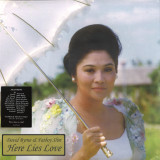
David Byrne & Fatboy Slim’s acclaimed 2010 album Here Lies Love receives its first-ever vinyl release to coincide with a new production opening on Broadway this summer. Here Lies Love is a double-disc song cycle – improbably poignant, decidedly surreal, surprisingly thought provoking – about the rise and fall of the Philippines' notorious Imelda Marcos. It was conceived by David Byrne; composed by Byrne and DJ/recording artist Fatboy Slim, AKA Norman Cook; and performed by a dream cast drawn from the worlds of indie rock, alt country, R&B and pop. Byrne's taste in collaborators is as imaginative as it is impeccable, including Cyndi Lauper (who recounts, to lighthearted disco beats, Imelda's courtship with Ferdinand Marcos), Steve Earle (as the power-hungry Ferdinand), Dap-Kings vocalist Sharon Jones (recalling Imelda's introduction into New York society) and Natalie Merchant (as spurned Imelda confidante Estrella, anticipating the onset of martial law). Along with vocals turns from such stars as Tori Amos and the B-52's Kate Pierson, Byrne works with rising indie rockers St. Vincent and My Brightest Diamond; New York chanteuses Nellie McKay and Martha Wainwright; and dance-music divas Róisín Murphy and Santigold. Byrne himself appears as the voice of imperialistic America on ‘American Troglodyte’, a send-up that wouldn't have seemed out of places in Talking Heads' True Stories.
Byrne originally envisioned this as a musical theatre piece, to be mounted in disco and nightclub settings, reflecting the globe-trotting Marcos' taste for such velvet-roped spots as Studio 54 and Regine's. In 2006, he performed work-in-progress versions to enthusiastic audiences at New York City's Carnegie Hall and the Adelaide Festival in Australia. While plans for a US theatrical production continued to evolve, he delivered this unique recording. The award-winning theatrical production eventually premiered at The Public Theater in New York in 2013, travelled to London’s National Theater for a sold-out run (2014–15), and was remounted at the Seattle Repertory Theater (2017).
Here Lies Love has an effervescent disco feel, redolent of Fatboy Slim's own dance-floor anthems, with warm undercurrents of the Latin rhythms that have percolated through Byrne's recent solo work. The sunny arrangements act in counterpoint to the reality of the Marcos' increasingly repressive regime, reflecting the imagined inner life of the glamour-obsessed Imelda. Explains Byrne, "For me, the darker side of the excesses are, for the most part, a matter of record. A lot of the audience is going to come with that knowledge already. What's more of a challenge is to get inside the head of the person who was behind all of that, and understand what made them tick." Byrne offers no judgment and avoids the obvious – there is no mention of Imelda's infamous shoe collection.
Many of Byrne's lyrics are, astonishingly enough, constructed from actual Imelda quotes, including the project's title, the words that Imelda, now returned to the Philippines from US-assisted exile in Hawaii, would like to have inscribed on her gravestone. In addition to his new liner note, Byrne illustrates the story with archival photos. In a detailed preface, he reveals what drew him to this subject and the bumpy route he took to launch the project and, ultimately, record this album. The booklet is indeed a page-turner, just as Here Lies Love is a wonderfully old-school album that rewards start-to-finish listening. Once again, Byrne – beloved as musician, thinker and bicyclist-about-town – reveals the breadth and singularity of his vision.
The new production of Here Lies Love will premiere at the Broadway Theatre in New York City. Performances begin June 17, ahead of an official opening night on July 20. Tony Award winner Alex Timbers (direction) and Olivier Award nominee Annie-B Parson (choreography) reunite with Byrne (concept, music, and lyrics) and Fatboy Slim (music) to bring Here Lies Love to Broadway, continuing a ten-plus year collaboration on the project. Tom Gandey and J Pardo contribute additional music. Here Lies Love is produced on Broadway by Hal Luftig, Patrick Catullo, Diana DiMenna for Plate Spinner Productions, Clint Ramos, and Jose Antonio Vargas. The staging at the Broadway Theatre will transform the venue’s traditional proscenium floor space into a dance club environment, where audiences will stand and move with the actors. A wide variety of standing and seating options will be available throughout the theatre’s reconstructed space. The producers of Here Lies Love said, “As a team of binational American producers – Filipinos among us – we are thrilled to bring Here Lies Love to Broadway! We welcome everyone to experience this singularly exuberant piece of theatre. The history of the Philippines is inseparable from the history of the United States, and as both evolve, we cannot think of a more appropriate time to stage this show. See you on the dance floor!”
David Byrne’s recent works include the launch of Reasons to be Cheerful, an online magazine focused on solutions-oriented stories about problems being solved all over the world (2019); Joan of Arc: Into the Fire, a theatrical exploration of the historical heroine that premiered at the Public Theater in New York (2017); The Institute Presents: NEUROSOCIETY, a series of interactive environments created in conjunction with PACE Arts + Technology that question human perception and bias (2016); Contemporary Color, an event inspired by the American folk tradition of color guard and performed at Brooklyn’s Barclays Center and Toronto’s Air Canada Centre (2015); Here Lies Love; Love This Giant, a studio album and worldwide tour created with St. Vincent (2012); and How Music Works, a book about the history, experience, and social aspects of music (2012).
Byrne curated Southbank Centre’s annual Meltdown festival in London in 2015. A co-founder of the group Talking Heads (1976–88), he has released eight studio albums as a solo artist and worked on multiple other projects, including collaborations with Brian Eno, Twyla Tharp, Robert Wilson, and Jonathan Demme, among others. He also founded the highly respected record label Luaka Bop. Recognition of Byrne’s various works include Obies, Drama Desk, Lortel, and Evening Standard awards for Here Lies Love; an Oscar, Grammy, and Golden Globe for the soundtrack to Bernardo Bertolucci’s The Last Emperor; and induction into the Rock and Roll Hall of Fame with Talking Heads. Byrne’s work as a visual artist has been published and exhibited since his college days, including photography, filmmaking, and writing. He lives in New York City. In addition to 2019’s cast album for American Utopia on Broadway, Nonesuch has released eight other David Byrne records since 2003, including 2018’s American Utopia studio album and two versions of his musical Here Lies Love.
q C6. Please Don't feat. Santi White Santigold
- A1: Giving Up
- A2: Either Way I Lose
- A3: (There Will Never Be) Another Love
- A4: Lovers Always Forgive
- A5: Daybreak
- A6: If I Ever Should Fall In Love
- B1: Tell Her You're Mine
- B2: Why Don't You Love Me
- B3: Maybe Maybe Baby
- B4: Who Knows (I Just Can't Trust You No More)
- B5: Go Away, Stay Away
- B6: Stop And Get A Hold Of Myself
Released in 1965, this is Gladys Knight and The Pips’ first and only studio album for Maxx Records. Gladys and this family foursome signed with Larry Maxwell’s label in 1964, and after several successful singles, Maxwell was responsible for taking the group to Motown. Pressed here for the first time in almost six decades, 12 soul sides full of grace and grit, remastered and reissued on heavyweight virgin vinyl.
The recordings that springboarded Gladys Knight and the Pips to Motown Records. First ever reissue since the original Maxx LP in 1965 (six decades later!) Pressed on black virgin vinyl, with original artwork. Beautiful soul recordings - remastered for superior quality.
As it celebrates its 50th anniversary, Bill Withers' Still Bill remains true to its title – and stands as the greatest male-fronted soul album not made by a singer named Marvin, Al, Sam, James, or Ray. Though the saying "keeping it real" did not exist in popular parlance when Withers released his sophomore effort on Sussex Records, no words better capture the music's approach, mindset, and value. Every facet of Still Bill radiates honesty, truth, and emotion.
These characteristics – along with Withers' strong singing, hybrid arrangements, and deceptively simple songwriting – have allowed the album to endure to the point where it sounds as fresh today as in 1972.
After rising into the Top 5 of the Billboard Album charts and attaining gold status within a year of release, Still Bill has long been evaluated not by sales – but according to its merit, spirit, and agelessness. Included by The Guardian on its "1,000 Albums to Hear Before You Die" list (2007) as well as in Tom Moon's 1,000 Recordings to Hear Before You Die book (2008), its contemporary standing as one of history's most venerated soul efforts eclipses the positive reception it enjoyed in the early ‘70s.
Still Bill walks the same hallowed ground as What's Going On, Call Me, Night Beat, and Genius + Soul = Jazz. Like those landmarks, Still Bill plays with a mix of consistency, effortlessness, and complexity that rewards repeat listening and transcends categorization.
In combining four of the era's predominant styles – Philly soul, sweaty funk, Southern-reared blues, acoustic-based folk – and melding them with standout production borrowed from both minimalist affairs and sophisticated singer-songwriter albums, Still Bill occupies a distinct universe.
Its rhythmic fare is equally laidback and invigorating; relaxing and rollicking; eloquent and muscular; soft and tough. Withers' calm, self-assured voice hovers above it all, doubling as a warm blanket that adds comfort and grace to lyrics steeped in maturity, perspective, and compassion.
Withers' balanced outlook on human desires, needs, and situations stem from his own existence as a former blue-collar employee who believed his time as a musician would soon end. That grounding forever separates Withers from other contemporary soul greats – and stamps Still Bill with a conversational nature and egoless approachability.
"I mean look, I'm really a factory worker," said Withers in 1972. "That's a real job." There's that word again: real. The songs on Still Bill are tethered to modesty and actuality, wedded to a belief in simplicity, and connected to universal truths that link us all – independent of our economic or social standing. No track better exemplifies those principles than "Lean on Me," a feel-good paean to brotherhood and community that hit No. 1 on the pop and R&B charts en route to becoming a mainstream staple.
Withers approaches the plainspoken insight on "Lonely Town, Lonely Street" and heartbreaking vulnerability of "I Don't Want You on My Mind" with similar sincerity and straightforwardness. His proclivity for authenticity extends to the record's other big hit: the sexual, funk-laden "Use Me," which reached No. 2 and reflects the singer's everyman persona. It's an identity couched in keeping it real, the very inclination that ultimately led Withers to retire in the mid-'80s rather than bend to industry pressures or risk credibility.
That commitment to truthfulness and realism helps make Still Bill feel as unaffected as the air we breathe. Looking back on "Lean on Me" years later, Withers said it seemed like "something that was there before I got here" – the kind of song that could be 100 or 10 years old, or one we encounter anew 10 years into the future. The same can be said for every note on Still Bill.
You know Krash Slaughta right? The man behind the recent wildly successful DOOM/Sugacubes mash-up LP Sugar-Coated DOOM, not to mention his unofficial remixes of the Wu’s K.R.E.A.M. and P.L.O. Style and collab. 45 with Phill Most Chill, Rebel Base? ‘Is he at it again?’ the monkey hears you ask. Yes, he is at it again, though the closest of the the three aforementioned releases to what he’s about to drop is the Wu remix 45. And what he’s about to drop is Diggin Deeper, not a single this time but a whole remix album of one of his (and the monkey’s!) all-time favourite hip-hop LPs – to wit, Niggamortis – more usually known as Six Feet Deep (especially in the U.S., though minus the best track under that name) by hip-hop supergroup Gravediggaz.
As many will know, this LP with its horror-movie fixated lyrics gave birth to a whole hip-hop sub-genre – that of ‘horrorcore.’ However, none of those who came after seemed to manage the lyrical humour of The RZArector, The Grym Reaper and The Gatekeeper (a.k.a. RZA, Poetic and Frukwan) and the only bit of production by The Undertaker (a.k.a. Prince Paul) that they seemed interested in was the sub-metal rap sludge of the shouty Bang Your Head – i.e. the LP’s one weak spot. But don’t worry, Krash isn’t interested in that sort of thing. Not only does he avoid rap-metal beats for Bang Your Head, he doesn’t use any on the LP at all – hurrah! What he does do is employ, arguably, as eclectic an array of sample sources as Prince Paul on the original – though with an entirely different end result. Bang Your Head with its apparently sixties garage band-derived beat for example is one of the standouts. The skeletal piano skank of 6 Feet Deep is another, while a beat featuring spaced-out eighties synths forms the new musical backdrop to Constant Elevation. Two more of the monkey’s favourites on this one are Here Comes The Gravediggaz, now underpinned by double-bass-led funk and the glorious inappropriately joyous bounce of Blood Brothers. The result? Your favourite cuts on this one might not be the same as your favourite cuts on the original. Two different versions of a much-loved LP, then; it’s why people remix hip-hop. All the vocal stems were created by Krash and the ultimate intention is to do a limited vinyl release. Cover art is by the Dead Residents’ Junior Disprol.
“This device isn’t a spaceship, it’s a time machine. It goes backwards, and forwards… it takes us to a place where we ache to go again. It’s not called the wheel, it’s called the carousel. It lets us travel the way a child travels - around and around, and back home again, to a place where we know we are loved.”
(Don Draper)
Call Back Carousel is an audio time-travelogue, a slideshow of the mind’s eye - projecting Kodachrome memories directly into the listener’s mind by means of sound alone. It is a way of travelling without ever having to leave the home. A vicarious vacation for the imagination. Pure audio escapism.
Each episode is based on a found tape of a pre-recorded slideshow commentary. Most of these tapes were made by amateur tape recording enthusiasts and hobbyist photographers of the 60s and 70s. Their recorded commentaries would at one time have been used in conjunction with a sequence of 35mm slides but only the taped voices now remain. The recordings themselves come from Vernon's own archive of found reel-to-reel tapes that he has collected over the past twenty years.
Using these found slideshow commentaries as a framework, a series of musical soundscapes have been created to bring the absent images to life, activating the listeners’ imagination in the classic tradition of ‘cinema for the ears’. It’s a little like looking through a family photo album where only the hand written captions and mounting corners remain; the photographs themselves have all been removed. The evocative rattle and clack of the projector shuffles through different slides as the fragile voices of our tour guides accompany us on a sonic journey that fractures time - and through the cracks, the past bleeds through into our present.
Black Magic Woman, birthed out of the production outfit of Ron Trent featuring Harry Dennis most known for his previous work with Larry Heard. Harry Dennis one of the leading poets to come out of house and contemporary music in the 80's and 90's.
Being on the forefront of songs by storefront groups powered by both Larry Heard and Marshall Jeffereson The IT and Jungle Wonz critically acclaimed dance classics "Donnie" and "Time Marches on" helped revolutionize dance inteligenca world wide . Together with Trent's production they weave a spell with this ode to the power of the feminine form " Black Magic Woman".
Previously released and powering dance floors globally, Sacred Medicine brings you a set of revisions by production and DJ master Joe Jouquin Claussell who's edit and revision has been highly sought after for the past 4 years along with our young and upcoming talent producer and DJ Coflo. By the introduction of Casmena from Ocha records Coflo first approached us with his remix 4 years ago and now under our direction we are putting it to work. These magical forms are now ready for you to explore and generate power into your world.
"Don't DJ is back with his new album sampler to teach the imitators how it is done.
Leftfield tribalism at it's best, with a pinch of Martin Denny and Les Baxter exotica for some flavour and a little bit of Zoviet France fourth world voodoo for the 5am crew that wants to get hazy in the dance. Florian knows how to incorporate percussion sounds that at first you think that they wouldn't work but it always works and this is only a taste of what is gonna come with the release of his album (soon come).
Morgan Buckley of the mighty Wah Wah Wino crew, takes this deep and intense trip and he goes ballistic while he is playing a live Bodhran to invoke the ancient spirits of Ireland. If the essence of a remix is to keep the original vibe of the tune and add a different flavour to it then Morgan Buckley nailed it in a big way.
Two drum wizards at their best and it's an honour to have them together in one record."
Illustrations by Non Yung Hoon.
Design by NMR.
The Belgian vibraphonist Guy Cabay has played with Toots Thielemans, Philip Caherine or Raoul Faisant. Composer, arranger, musicologist and singer, he also wrote and recorded two extraordinary albums in Liege Walloon. Tricatel is happy to make them available at last, 46 years after their publication.
"Gravity kills us. Perhaps that is the meaning of Adam's Fall. We are condemned to be Newton's apple, not the balloon carried away by the wind. But it happens nevertheless that, by the grace of music in particular, we escape gravity, that time escapes time, that another breath inflates our lungs, so much lighter than the one that usually suffocates us.
We don't take light music seriously, and that's good. Only serious music deserves to be treated so badly. Guy Cabay's music flows from a purer source and speaks to us in a more tender voice. One can obviously describe it as one labels export product. Origin: Belgium. Ingredients: jazz, bossa nova, tropicalism, song - proportions may vary. Calorific value: none.
Non-perishable product. But this would say as much about what this music really is as if, in. order to evoke what the foggy blue of a Norman sky inspires, one were to take note of the variations in the percentage of humidity in the atmosphere at Etretat and make a learned presentation on the laws of refraction.
Guy Cabay did pass through Brazil and still lives there a little, a Brazil that is not the one ofcartographers or travel agencies, a Brazil that is as real as the Far West in which Fenimore Cooper's child readers lived, as blurred and limpid as a dream. It is not the Amazon thatflows through this Brazil, but the Ourthe, a tributary of the Meuse, which makes it morefamiliar, stranger and even more poetic.
To let oneself be bathed in this melancholichappiness, to let oneself be carried by this river is sweet, as sweet as the fluid consonants of the Walloon language, this 'd' which becomes 'dj' in his mouth, as in Portuguese, by the way. To know how to create melodies that hold on a note like Jobim's samba, like a fildeferist above a waterfall of chords, is not given to everyone. It is a gift. Knowing how to lace others on dozens of points, as on Tot a-fet rote cou d'zeur cou d'zos, a poignant encounter between Randy Newman and Robert Wyatt, is another. These are not the only ones that the fairies offered to Guy Cabay and that, by an almost miracle, he offers us again today. Hearts up."
Bertrand Burgalat
“I’ve always loved mistakes; it’s the hidden beauty in all art” - Andrew Weatherall
Transparent Sound are the original dons of UK electro, not exactly household names yet an act with so many under-repped classics that once you dive into their catalogue you might end up emptying your bank account on Discogs.
To save you going down this calamitous path as well as to finally, raise TS to the level of notoriety they deserve, Tresor Records is very proud to announce the release of Accidents 1994-2023. Formed by Orson Bramley and Martin Brown in Bognor Regis in 1994, Transparent Sound have managed to create 30 years’ worth of some of the best electro from the British Isles, despite claiming to not know what they were doing nor how their instruments work.
It’s likely that it’s this lack of knowledge that led to the quality and longevity of their output - the pair experiment and tinker with the machines until something pleasing appears then follow that sound
down whatever path seems fruitful: “the confidence of ignorance” as a slightly more-famous Orson, Orson Welles, once put it.
This tactic has paid o well and found them stumbling into many notable adventures, from remixing The Cure to performing during an intermission between two halves of a lecture - none of which they understood as it was in Spanish.
The compilation collects a lucky-for-you 13 of their most glorious electrical accidents on a three-disc set including the dancefloor hits Punk Mother Fucker (a mainstay of Villalobos sets at the time of release), and No Call From New York (as heard on Helena Hau’s perfect 2017 Essential Mix). The package also comes with ‘Windows To Your Sole’ from the unreleased white label Transparent Sound 007, other unreleased tracks, and special 2023 edits as well as six digital bonus tracks.
DONNA SUMMER gained prominence during the 1970s disco
era, propelled by her incessant and creative driving force
behind the genre’s global popularity, rightly earning the title
“Queen Of Disco” and becoming one of the most
successful recording artists of the entire decade, now
having sold more than 130 Million records worldwide
Donna’s ‘80s close-out album was 1989’s ‘ANOTHER PLACE AND TIME’, which paired her with multi-hit making,
multi-million-selling UK producers Stock Aitken Waterman. The album is widely regarded as the best album they
produced, and which was heavily featured in the recent two-part TV documentary Stock Aitken Waterman:
Legends of Pop.
• The album’s lead single ‘This Time I Know It’s For Real’ was an uplifting, club floorfiller and radio-friendly hit,
peaking at #3 in the UK (#7 on the US Billboard Hot 100), giving Donna her highest charting solo single for more
than a decade.
• Four further singles were released from the album including the two Top 20 hits, ‘I Don’t Wanna Get Hurt’ and
‘Love’s About To Change My Heart’, giving Donna back-to-back UK Top 10 hits for the first time since 1977, as
well as remixed versions of ‘When Love Takes Over You’ and ‘Breakaway’.
• This special Picture Disc edition has a zoetrope effect on Side 2 that incorporates elements from the ‘This Time I
Know It’s For Real’ promo video and which gives a continuous dancing effect. It is best experienced using a
smartphone running a third party stroboscope app.
- A1: Dance Macabre
- A2: Keep On Searching
- A3: Bobby & Whitney
- A4: Hold Back Love (Feat Lex Empress)
- A5: I Don't Know Why (Feat Mayer Hawthorne)
- B1: Squeeze Me (Feat Ben Westbeech)
- B2: Money In The Bag
- B3: All For Love (Feat Durand Jones)
- B4: Sweet Time (Feat Izo Fitzroy)
- B5: One Of These Days (Kraak & Smaak Remix)
- C1: Stumble (Feat Parcels)
- C2: Man Of Constant Sorrow
- C3: Good For The City (Feat Sam Duckworth)
- C4: I'll Be Loving You (Feat Ivar)
- C5: Dynamite (Feat Sebastian)
- D1: Hands Of Time (Feat Alxndr London)
- D2: Don't Want This To Be Over (Feat Satchmode)
- D3: How We Gonna Stop The Time (Feat Stee Downes)
- D4: The Future Is Yours
- D5: Let's Go Back (Feat Romanthony)
Kraak & Smaak, eine treibende Kraft der elektronischen Musikszene der letzten zwei Jahrzehnte, Meister des Nu-Disco, Funk und allem, was mit Electronic zu tun hat, feiern 2023 ihr 20-jähriges Bestehen - mit einer handverlesenen Auswahl ihres herausragenden Katalogs auf Jalapeno Records und dem eigenen Label Boogie Angst. Das Doppelabum mit dem schlichten Namen TWENTY bringt 20 Band- und Fanfavoriten und viele der unglaublichen Gäste, mit denen das niederländische Duo im Laufe der Jahre zusammengearbeitet hat: von Lee Fields bis Parcels, Romanthony bis Mayer Hawthorne, Ben Westbeech bis Durand Jones. TWENTY ist von Anfang bis Ende ein abgefahrener Hörgenuss, der nie enttäuscht.
*MILKY CLEAR VINYL - 300 COPIES ONLY FOR WORLD!!* Technology + Teamwork’s fizzling synths, interweaving textures and punchy rhythms are beguiling on their long-awaited debut album We Used To Be Friends. However, at the heart of it all it’s the connection between the group’s two members, Anthony Silvester and Sarah Jones, the friendship the much-travelled duo have managed to maintain for nearly 15 years and a showcase of the slow-burning construction of the electronic world that they’ve surrounded themselves with. We Used To Be Friends is ultimately the tale of two storied artists in their own right, holding onto each other through personal and career twists and turns, relocations and broader movements through respective phases of their lives. Silvester and Jones first met and then collaborated as part of biting post-punk five-piece XX Teens in 2008, eventually breaking off to forge their own path together even as the latter’s demand as a drummer grew. Performing with everyone from Hot Chip, Harry Styles and Bloc Party among many others, Jones has been a constant percussive presence across the sphere of alternative UK pop music – she’s also found time for her own solo project Pillow Person and played on records by the likes of Puscifer and Kurt Vile. Silvester meanwhile has performed in art galleries across Europe including: Fridericianum in Kassel, Kölnischer Kunstverein in Cologne, and Vleeshal in Middelburg, as well as providing sound design and composing work for several art films. Technology + Teamwork is the constant throughout all of that though. “Technology + Teamwork's name perfectly describes how we work” Silvester explains. “Sometimes the teamwork is between each other and sometimes it’s between us and the technology.” Although going by the name Technology + Teamwork as far back as 2014, two events conspired that pulled the project into focus for the pair of them: firstly, Silvester spent a year constructing a soundproof studio shed on the border of London and Essex where he lives. Secondly, inevitably, the pandemic brought the globe-trotting Jones back home to just seven miles away from her long-time collaborator and friend. “We probably hung out more than we had for a few years” says Silvester. “Also, after all her Pillow Person releases Sarah had gotten really good with recording vocals and knowing what did and didn’t work and had a really good home studio set up. We still worked separately though, exchanging ideas via email and WhatsApp.” As with many artists through 2020 and early 2021, working separately was a new necessity that they were forced to adapt to. However, it became clear that there were creative benefits to it. “It really changed our sound and our sounds became a lot more focused as a result” Jones says. “I wanted to use the same ideas of improvisation that I might use while playing the drums for myself and apply that to melodies and lyrics.” The album bristles with hyperpop modernity. You can hear it in the manipulated vocals most prominently on Big Blue’s disco strut and on Moving Too’s heady mix of pitched up voice and burrowing sub bass. However, the pair also looked to San Francisco and the West Coast synthesis movement of the 60s, Silvester inspired by the likes of Suzanne Ciani and Don Buchla. The plaintive lo-fi and melancholy of Amsterdam incorporates Mutable Instrument’s Marbles by Émilie Gillet which – inspired by Buchla’s own synthesis work – outputs random voltages to give the track an air of unpredictability. It’s something that occurs throughout the album, the duo revelling in the happy accidents that disrupt the flow of their hook-laden pop. “The ‘Buchlian’ ideas of music having randomness and uncertainty, completely freed us up” Silvester explains. “It felt a bit like having more members in the band, machines that didn't do what you expected or intended.” Perhaps more subtly, is the influence of 17th and 18th century Baroque music, with Silvester drawing a line between it and the 90’s R’n’B he and Jones both love – exemplified perhaps best on K+B’s percussive claps and sultry grooves. The portentous juddering synthpop of the title track, meanwhile, alludes specifically to Handel’s Sarabande. It’s typical of an album that only needs a scratch of its seemingly glossy surface to unearth a myriad of contorted touchstones and reference points that’ve fermented beneath it. Thematically there’s an anxious sense to the record, with tracks often balancing above a quiet sense of unerring tension even at their most bombastic. Moving Too is the result of an existential doubt that hit Silvester while out cycling, with the outro refrain "it's not enough to die you also have to be forgotten" a take on something Samuel Beckett once said. These worries are echoed on the album’s closing track What A Year, which borrows a lot of lines from the late drag performer and fashion designer Dorian Corey including the grimly defiant "you're gonna leave your mark somewhere in this world just by getting through it”. Those clouds offer a counter point to We Used To Be Friends, but then isn’t that what great pop albums do? Technology + Teamwork undoubtedly love the craft of the hook and the song, but they always position themselves left of centre, prepared to scuff things up, pull something out of shape or manipulate something to leave it sounding warped. Much like their friendship, nothing here is particularly linear – and it’s all the better for it. Bio: Anthony Silvester & Sarah Jones first collaborated as part of biting post-punk five piece XX Teens in 2008, eventually breaking off to forge their own path together even as the latter's demand as a drummer grew. Performing with everyone from Hot Chip, Bat for Lashes, Harry Styles and Bloc Party (among many others), Jones has been a constant percussive presence across the sphere of alternative UK pop music - she's also found time for her own solo project Pillow Person and played on records by the likes of Puscifer and Kurt Vile. Silvester meanwhile has performed in art galleries across Europe including Fridericianum in Kassel, Kölnischer Kunstverein in Cologne, and Wleeshal in Middelburg, as well as providing sound design and composing work for several art films. Technology & Teamwork is the constant throughout all of that though. "We Used To Be Friends" proves that Technology & Teamwork undoubtedly love the craft of the hook and the song, but they always position themselves left of centre, prepared to scuff things up, pull something out of shape or manipulate something to leave it sounding warped. Much like their friendship, nothing hear is particularly linear - and it's all the better for it.
Dam-based don Retromigration steps into the big leagues letting loose his debut album on WOLF Music. An LP that has long been in the works and for good reason too. Fourteen expertly executed tracks that range from hazy beats and jazz-tinged broken rhythms to club-ready groovers, deep excursions, soulful footwork and even some jungle energy. A flavour for every occasion and damn it tastes good.
With an envious run of releases on the likes of Handy, Healthy Scratch, wewillalwaysbealovesong and WOLF in a relatively short space – Retormigration is hot property and it’s clear to see why. A distinctive style and energy permeate his tracks with a breadth of influences on offer, from hip hop, to jazz, soul to funk. You just know a long player from this player is going to cover all bases.
His debut LP, Straight Foxin’, is a carefully curated and crafted journey showcasing the creative explosions firing off in Retromigration’s brain. Joining the dots between genres, taking elements from here, ideas from there – twisting and turning yet never out of place. Take the opening three tracks, all tied together by a deep fondness for jazz but served up in different styles, ‘Kunta’ with that hazy beatsy blend, ‘Formant’ leaning into the realms of broken beat and DnB and ‘Be Someone’ cruising with the off-kilter house.
Elsewhere there’s prime examples of Retromigration’s signature sample-laden house with deeper cuts like ‘Mada’ and ‘Bouncer’, sitting side by side with more soulful explorations such as ‘New Cribs’ and ‘ITWT’.
Not one to be pigeonholed, another course of Retromigration’s expansive taste gets served up with four high energy hits. The bouncing footwork flavours of ‘Kush Love’ ft. Passion Deez and ethereal excursion ‘What If’ lead into a captivating nod to the heydays of jungle and DnB on ‘Mild Fever’ and ‘Bad Knees’ respectively.
Straight Foxin’, mad flexin’ – Retromigration has laid down the law with this LP, a debut album done right.
Radio Slave double header with the A side featuring Dixon’s anthemic edit of Radio Slave ft. Nez ‘Wait A Minute’ and the monstrous ‘You Don’t Know’ on the flip!
Innervisions boss Dixon was the only artist to receive a super upfront copy of the track in early Summer 2022 and went on to hammer the release across countless festivals and club shows over the season. Dixon being Dixon, he didn’t stop there and went on to edit the track into a six and half minute groover that draws out Radio Slave’s production and NEZ’s raucous vocals perfectly. Now, this ‘Track ID’ favourite, which in its original vocal form has already been championed by Jennifer Cardini, Roman Flugel, Kolsch, I. JORDAN and more.
On the flip ‘You Don’t Know’, Radio Slave enters House mode, employing hooky vocal snippets,
chunky drum hits, and filtered synths to hypnotic effect across the deep 9-minute track. Championed by Honey Dijon, Gerd Janson, Paul Woolford, Ame and Laurent Garnier amongst others.
- A1: Begrüßung Und Buntspecht
- A2: Afraid Of Seeing Stars? (Heimische Gefilde Edit)
- A3: Uhu
- A4: Adler (Heimische Gefilde Edit)
- A5: Rote Waldameise
- A6: Klangteppichverleger Wolle (Heimische Gefilde Edit)
- B1: Goldammer
- B2: Die Alpenstrandläufer Von Spiekeroog
- B3: Feldgrille
- B4: Björn Borkenkäfer (Heimische Gefilde Edit)
- B5: Eistaucher
- B6: Der Hecht Im Karpfenteich (Heimische Gefilde Edit)
- C1: Gelbbauchunke
- C2: Die Rotbauchunken Vom Tegernsee (Heimische Gefilde Edit)
- C3: Nachtigall
- C4: Gasthof "Zum Satten Bass" (Heimische Gefilde Edit)
- C5: Rauhhautfledermaus Und Großer Abendsegler
- C6: Der Buchdrucker (Heimische Gefilde Edit)
- D1: Waldkauz
- D2: Harzer Roller (Heimische Gefilde Edit)
- D3: Ein Stelldichein Des Westerwälder Vogelchores
2026 Repress
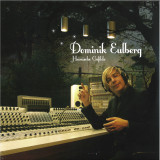
Originally released in 2007 on CD and now re-released on double vinyl. "Heimische Gefilde" was the second full-length release on Traum at that time from Westerwald based DJ, producer and park ranger, Dominik Eulberg. Dominik has since then expended his activities enormously now appearing as a book author with best selling books in the German official bestseller list. He ist he ambassador of the most popular Conservation Union in Germany NABU, he has created a bird quartet and a hand made insect hotel and appears on national German TV regularly next playing in clubs world wide and producing stunning music. "Heimische Gefilde" includes spoken words by the man himself and the release won the price of the German critic awards for music. It is the only compilation that comprises a selection of Dominik Eulberg’s best early works and it is for the first time available on vinyl now.
As Dominik Eulberg says in his own words: „After more than 16 years, "Heimische Gefilde" is finally released on vinyl. At that time it was still a daring experiment to combine music with lustful science communication. Quickly one was thrown into the pot of the "weird eco-techno sound owl". Today, we are increasingly finding that we cannot stop the impending ecocide in a cognitive way. For more than 60 years we have known about the concrete threats to humanity from global warming and species extinction; yet nothing changes. Many alarmist efforts fail miserably, red lists grow longer and longer each year, and global temperatures continue to rise unchecked. It is becoming clearer and clearer that we have to reach out to our fellow human beings in a positive emotional way in order to make a difference, because we only protect what we love. Then sentimental minorities become majorities that change something. Art and culture are low-threshold vectors to make things majority-friendly. They are a fertile and valuable breeding ground to sensitize people outside the eco-bubble and to let their environment become a co-environment again. Today my transdisipilnary work is inseparable. I write books, develop games, lecture, make film, and am a visiting scholar at museums. "Heimische Gefilde" was a valuable cornerstone for my creative work, a very intrinsic work to go my very own way.“
We would also like quote here the description of Forced Exposure done at the time when the album was originally recorded and released to keep the authentic feel: „The influence of nature (bird twitters, owl hoots, flowing water, crunching leaves) and other domestic sounds has made his music easy to identify with. „Heimische Gefilde" means "native habitat," and this release takes the concept of his debut a step further and at the same time is a retrospective of his major hits. Tracks like "Die Rotbauchunken vom Tegernsee" and "Björn Borkenkäfer" are included here in unreleased edits that are even stronger than the originals, and as a bonus, previously vinyl-only
- A1: Everything I Own
- A2: Silver Words
- A3: I Wish It Could Be Peaceful Again
- A4: Artibella
- A5: Lady With The Starlight
- A6: Walk Away From Love
- A7: Why Baby Why
- B1: Is It Because I'm Black?
- B2: Freedom Street
- B3: Live Good
- B4: Let Go
- B5: Can't Fight Me Down
- B6: Your Feeling & Mine
- B7: You're No Good
- C1: Crying Over You
- C2: It's Gonna Take A Miracle
- C3: Who Gets Your Love
- C4: Say You
- C5: (That's The Way) Nature Planned It (That's The Way)
- C6: Now I Know
- C7: I'm Not For Sale
- D1: Freedom Day Aka Freedom Time
- D2: Love & Unity
- D3: Somewhere
- D6: Got To Get Away
- D7: Love Don't Love Nobody
- D4: Rasta Never Fails (Feat Lloyd Charmers)
- D5: Satta Massagana
Ken Boothe, der wohl begabteste jamaikanische Musiker seiner Generation, gilt heute als lebende Legende, dieüber einen Zeitraum von rund 60 Jahren unzählige Ska-, Rock-Steady- und Reggae-Klassiker aufgenommen hat.
Nach seinem Aufnahmedebüt im Jahr 1962 erlebte Ken Boothe eine äußerst erfolgreiche Karriere in Jamaika, bevor er 1974 mit seiner Interpretation von "Everything I Own" und dem Top-10-Nachfolger "Crying Over You" internationalen Ruhm erlangte.
Diese beiden äußerst beliebten Titel sind auf dieser Sammlung enthalten, die Teil der neuen "Essential Artist"-Serie von Trojan Record ist und die beliebtesten Aufnahmen einiger der größten
Musiktalente Jamaikas präsentiert.
Erhältlich als 28-Track-Doppel-Vinyl-LP und als umfassende 2CD-Compilation, zeigen beide Veröffentlichungen das außergewöhnliche Gesangstalent eines der besten und gefühlvollsten Interpreten, die der modernen Popmusikszene seit den Sechzigern ihren Stempel aufgedrückt haben.
In the words of Bill Brewster - DJ History
‘At the turn of the 1990s, there were few more successful New York house producers than Victor Simonelli. Under a dizzying array of aliases – Solution, NY’s Finest, Groove Committee, Critical Rhythm and Cloud 9 being amongst the better-known – the Brooklyn-born DJ/producer delivered a string of underground club hits during the city’s early ’90s house boom.’
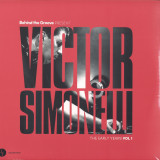
BTG presents “Victor Simonelli: The Early Years Vol 1” a collectors edition double Vinyl release - 2 X 12’s in each Vol
Launching the first Behind The Groove collectors edition vinyl series is New York’s finest Victor Simonelli with ‘The Early Years Vol 1 & 2’ double Vinyl releases. Featuring seminal house tracks such as Cloud 9’s ‘Do You Want Me’, Solution’s ‘Feel So Right’, Instant Exposure’s ‘Wanna Be With You’ and rare mixes of Raiana Page and EZ-AL, this collection brings together classic and rare Victor Simonelli cuts that reflect the early raw energy and buzz of the New York House scene. With ‘Vol 2” scheduled to follow shortly after, this is the most comprehensive collection of rare Simonelli cuts that firmly establishes his esteemed role in 90s House Music as well as introducing new fans to his inimitable sound.
Victor Simonelli is one of the early kings of NYC sampling In house music. The real deal - Victor danced at the legendary David Mancuso’s Loft sessions and developed a serious appreciation for good music. He interned for Arthur Baker at his renown Shakedown Studios (where Arthur worked with the iconic Afrika Bambatta on the seminal dance floor ’Planet Rock’ track) and went on to release hugely influential releases on seminal NYC labels 4th Floor and Nu Groove. Victor’s music was championed by the hugely celebrated iconic House Music DJ pioneers, Larry Levan and Tony Humphries at Paradise Garage & Zanzibar/WBLS/Kiss FM respectively.
Revered as a New York house heavyweight and prolific producer since the turn of the 1990s, Victor Simonelli grew up in Brooklyn, NYC, nurtured by a music loving family, with an avid record collecting father who also worked as a local party DJ. He took music lessons in piano, drums, guitar and bass, before discovering his first love, tuning into NY’s Radio Mix Shows on WBLS, WKTU and WRKS,98.7 Kiss FM) where he discovered the art of mixing and in his own words, ’I just simply got lost in the music’.
Graduating from NYC’s Centre For Media Arts, Victor got an internship in the legendary producer, Arthur Baker’s Shakedown Studios. Soon graduating to editing, mixing and then producing he worked for artists David Bowie, Quincy Jones, Debbie Harry, Sinead O’Connor and Talking Heads. Teaming up with fellow NYC producer Lenny Dee to become the Brooklyn Funk Essentials, they released records ‘Critical Rhythm’ and ‘Subliminal Aurra’ on 4th Floor before Victor went solo as Groove Committee releasing the classic ‘I Want You To Know’ on the legendary Nu Groove Records. Paradise Garage legend, Larry Levan broke ‘I Want You To Know’ rocking 2 copies on his last tour of Japan whilst King of NY House Music,Tony Humphries broke Victor’s new ‘Feels So Right’ across New York on his WBLS/Kiss FM Mastermix show and at his legendary Zanzibar club sessions. It was only a matter of time before Victor’s name became synonymous with quality House music ensuring a worldwide platform for his productions.
In the early 90s alongside his own productions, Victor Simonelli worked on high profile projects, including James Brown’s album, “Love Overdue” BeBe and CeCe Winans single featuring Mavis Staples “I’ll Take You There” and Quincy Jones’ “I’ll Be Good To You” featuring Chaka Khan and the legendary Ray Charles. Never straying too far from his clubland roots, Victor worked with Danny Tenaglia on his classic “The Harmonica Track”.
DJ gigs across the world started flooding in and Victor found himself recording for a dizzying array of labels including Tribal America, Sub-Urban, Bassline, King Street Sounds and Vibe, under a wide range of aliases. He also produced, wrote and remixed for artists such Nile Rodgers (Chic), Afrika Baambata, Hall & Oates, Frankie Knuckles, Kerri Chandler, Madonna and Michael Jackson. Famed for his own productions “It’s So Good” by Creative Force, “I Know A Place” as Sound Of One - the first release on Roger Sanchez One Records -, “Dirty Games” as well as the “Street Players Vol 1 EP”, Victor went on to set up Suburban Records with Tommy Musto and Bassline Records with two other partners. Notable releases on this label include “Do You Feel Me”, Connie Harvey’s gospel inspired, “Thank You Lord”, Urban Blues Project’s “Deliver Me”, Colonel Abrams “Not Gonna Let”, and Mone’s “Better Way”. Never ceasing to produce, DJ, run his own label and host radio shows like Groove Lift, Victor has worked with virtually every NYC producer and has nurtured a next generation talents including Angel Moraes, Jazz ‘N’ Groove, Urban Blues Project, Harlem Hustlers, Jay Jay and Julius Papp. Victor’s releases have also been used on M&S’s “Salsoul Nuggett” hit and Eddie Amador’s underground smash ‘House Music’.
In the late 90’s Victor launched his new Westside Productions, notable for the “Latin Impressions 1 & 2” releases, opened up a studio in Italy as he found himself increasingly working in Europe and now divides his time between New York and Italy. Suffice to say his unique sound of uplifting and spiritual music has kept him at the forefront of House Music and he is credited as one of its leading exponents with his string of classic releases and remixes.
Behind the Groove, branches out from its digital platform to embark on a programme of releases from the iconic pioneer producers of House Music. Esteemed for their high quality features and mixes that continue to explore, celebrate and venerate the contributions of highly respected, scene-shaping Labels, Artists, DJs and Special Events, BTG seeks to bring these talents and tales to the attention of the wider community. Unlocking the stories surrounding the pivotal roles they played and continue to play today in shaping the underground music scene we have come to know and love.
BTG presents “Victor Simonelli: The Early Years Vol 1” a collectors edition double Vinyl release, released on May 12th 2023. ‘Vol 2” follows on May 26th 2023 . These releases are the most comprehensive collection of rare Victor Simonelli cuts that firmly establish his esteemed role in 90s House Music and introduces new fans to his carefree sound.
- A1: Om Mani Padme Hum
- A2: Bohemia After Dark
- A3: Companionship
- A4: Stoned Ghosts
- A5: Jay-Jay
- B1: Dijar
- B2: Con Alma
- B3: Ct & Cb
- B4: The Turk's Bolero
- B5: Talk Some Yak-Ee-Dak
- C1: Calypso Blues
- C2: Balafon
- C5: I'm A Fool To Want You
- C4: Insensatez
- C5: Invitation
- D1: Yah-Yah Blues
- D2: Serenata
- D3: Just Give Me Time
- D4: Birn To Be Blue
- D5: Sconsolato
Jazz music has more than its fair share of overshadowed figures that whilst contributing much to the music have little presence in its collective conscious. One such musician is the talented multi-reedist, Sahib Shihab. Born Edmond Gregory, as he was known before he adopted the Muslim faith in 1946, Sahib Shihab's music background shows a deep and significant evolution, influenced by Thelonious Monk, Dizzie Gillespie (his experience in Dizzie's band marked Sahib's switch to Baritone, the instrument he became most readily associated with), and above all by Charlie Parker's Bop. Had it not been for the post-war migration of many top American jazz musicians to Europe, it is quite likely that the legendary Clarke-Boland Big Band might never come into existence. Sahib, one of this musicians disillusioned with the politics and racism of the United States, accepted to join the band of Quincy Jones for an European tour in 1959. When the tour ended, Shihab he remained in Europe where he joined, in 1961, the Clarke-Boland Big Band. The collection 'Companionship', whose line up consists of seven elements which derives from this original band, spotlights the consummate musicianship and individuality of Sahib Shihab and is testimony to his special musical gifts - not only as a top-rank flautist and baritone saxophone but also as a composer. Furthermore, it provides a welcome reminder of the high quality of the Clarke-Boland Big Band's rhythm section, the lively style of vibraphonist Fats Sadi and the power and personality of two of the C-BBB's horn-playing stalwarts, Benny Bailey and Ake Persson. Here's a real rarity, surely a desert island disc. This double album has it all from frantic banging percussive workouts to modal numbers to beautiful ballads. It's a staggeringly good piece of music and worth every penny of the price tag it commands. Let's have a look to the most significant pieces. Francy Boland's "Om Mani Padme Hum", taken from a Tibetan prayer, shows Shihab in exuberant mood, playing against a vigorous percussion background and making dramatic use of his special technique of combining voice and flute. Boland contributes an incisive, effervescent solo. "Bohemia After Dark", a classic original by bassist Oscar Pettiford which he first recorded back in August 1955, finds Shihab in exultant form on baritone. "Companionship" has a Bossa Nova beat and features Bailey on flugelhorn and Shihab on flute, playing with a limpid, floating sound. Bailey's minor-key original, "Stoned Ghosts" was, he says, inspired by listening to some music written by Bela Bartok before he emigrated to the United States. The piece has an infectious back-beat pulse and showcases the superb walking technique of Jimmy Woode. In "Con Alma" Shihab's mellow flute set against a churning 12/8 beat in this stylish Boland arrangement. Woode's performance of the superb Mei Torme ballad, "Born To Be Blue", reveals his great affection for the song. "lt is the perfect combination," he says, "a beautiful melody married to a great lyric. I really love that tune." It is a song of rueful resignation, putting a brave face on the blues. "Balafon" is an up-tempo Francy Boland original written for the French mime artist, Marcel Marceau. The rhythm section really cooks on this track with Kenny Clarke's cymbal work outstanding. Boland's solo here is notable for its neat, left hand punctuations. "Calypso Blues" has been written by Nat King Cole and Don George. lt tells the wry and wistful tale of a Trinidadian in New York desperately homesick for the land where everything 5 so much cheaper (in New York "a dollar buy, a cup of coffee and a ham on rye") and the girls more natural than the artificial, painted beauties of New York. Woode's composition, "Sconsolato" is a haunting theme in A minor and it brings to a close a truly fascinating album. This is dynamic music played with vigour, verve and vitality - and it is an enormous pleasure to rediscover it. A shadowy fugitive from his home in the land of jazz, Sahib Shihab remains a true unsung figure, worthy of more attention. With his equally expert technique on Baritone, Flute, Alto and Soprano saxophones and his capacity to adapt easily to a variety of musical settings. His warm, individual, singsong sound in improvisation and his unusual and interesting compositions mark him out as a hidden treasure in the dusty corners of jazz archive.
The city of Rome once again confirms the excessive abundance of records produced for the music industry, television and, even, shopping malls. The mistery that surrounds the musicians involved in these sessions makes the journey even more interesting and tense. “Was really that drummer involved in that record?” – “I don’t know” or, of course, “I don’t remember…”. Certainly, a new distinctive brick has now been added to the Italian Jazz-Fusion heritage.