Opening 4 intense stories EP in side A1 is Giuseppe Angeloro, a talented young Italian producer with one of his tracks that has already ignited several European dancefloors. He will share this side with one of the co-founders of the Offenbach-based HWSD collective Cedrik Dekowski and his strong jamming Roayal, spinning the record will be done by label cofounder Luca Piermattei with Italian voices inside the track, in company with a techno groove and melodic track by the other talented HWSD producer now based in South Korea, Thilo dietrich. These are four different tracks but with a minimum common determiner , that of having a killer instinct for your dancefloor!
Поиск:don angelo
Все
"Mane Attraction is the fourth studio album from the New York-based glam metal band White Lion. The album featured the singles “Love Don’t Come Easy”, the eight-minute heavy rock epic track “Lights and Thunder”, and a re-recorded version of their debut single “Broken Heart”. It was the last album that featured both Greg D’Angelo and James Lomenzo in the line-up. For the first time since its original release in 1991, the album is getting a reissue. Mane Attraction is available as a limited edition of 1500 individually numbered copies on silver coloured vinyl and includes an insert. "
- A1: Intro
- A2: Conant Garden
- A3: I Don't Know Feat Jazzy Jeff
- A4: Jealousy
- A5: Climax (Girl Shit)
- A6: Hold Tight Feat Q-Tip
- B1: Tell Me Feat D'angelo
- B2: What's All About Feat Busta Rhymes
- B3: Fourth And Back Feat Kurupt
- B4: Untitled (Fantastic)
- B5: Fall In Love
- C1: Get Dis Money
- C2: Raise It Up
- C3: Once Upon A Time Feat Pete Rock
- C4: Players
- C5: Eyes Up
- D1: 2U 4U
- D2: Cb4
- D3: Go Ladies
- D4: Thelonious (Bonus Cut)
- D5: Fall In Love (Remix-Bonus Cut)
The contributions of the late Detroit producer James DeWitt Yancey -better known to the world as J Dilla- to the world of hip-hop can't be overstated, and nowhere is his legacy more apparent than his work as a member of Slum Village. A founding member of the trio, (Alongside rappers T3 and Baatin) Dilla provided the group's distinctly esoteric, free-wheeling sound, built around winding basslines, quirky drumbeats, subtle low-end frequencies, and classic jazz & soul samples. Against the backdrop of Dilla's rich production, T3 and Baatin's free-flowing style of rhyming would also earn wide critical praise, leading to comparisons as the successors to A Tribe Called Quest. (A label they themselves have rejected.) After the success of Slum's 1997 studio debut, Fan-Tas-Tic Vol. 1, the group went to work on their follow up. Though the project was completed in '98, label turmoil kept the project on ice until 2000. By the time Fantastic Volume II hit Dilla was well on his way to his status as a hip hop legend having produced cuts for Common, Busta Rhymes, Erykah Badu, A Tribe Called Quest and many more. Later works from Slum Village may have had more of an impact sales-wise (in the immediate) but Fantastic Vol. 2 had fans and many critics saying that Slum Village, and Dilla in particular, may single-handedly save rap music.' Perhaps that statement is hyperbole but many consider Fantastic Volume II to be Slum Village's finest work ever to this day. Ne'Astra Media Group now presents the album reissued on vinyl, for the first time in several years. Every wobbling bass note of J Dilla's production has been preserved to maintain the legacy of this hip hop rap classic and maintain the legend of one of hip-hop's greatest beatsmiths.
Gold farbenes Vinyl! De Augustines erstes Soloalbum seit seinem dritten Album, dem von Thomas Bartlett produzierten Tomb (2019), und dem Nachfolger von A Beginner's Mind (2021), einer von der Kritik gefeierten Kollaboration mit Sufjan Stevens, ist eine Rückkehr des südkalifornischen Künstlers zu dem in sich geschlossenen Ansatz seines Debüts Spirals of Silence (2015) und Swim Inside the Moon (2017). De Augustine verbrachte fast drei Jahre damit, allein zu arbeiten und die unendlichen Weiten seiner Vorstellungskraft zu erforschen, um ein allumfassendes Werk zu schaffen, das nach seiner eigenen quixotischen Logik existiert und eine psychische Landschaft bewohnt, die so sublim und mystisch ist wie ein Fiebertraum oder ein Märchen. Er schrieb, arrangierte, nahm auf, produzierte und mischte Toil and Trouble allein und formte den kunstvollen, detaillierten Sound des Albums, indem er auf 27 verschiedenen Instrumenten spielte (darunter so seltsame Dinge wie ein Xylophon aus Glas). Inmitten dieses höchst experimentellen Prozesses durchlebte er eine ephemere, aber alptraumhafte Zeit mit jenseitigen Empfindungen und übernatürlichen Visionen - eine Erfahrung, die die Entstehung des Albums kurzzeitig unterbrochen hat, aber letztendlich dazu beitrug, die immense emotionale Tiefe von Toil and Trouble zu bereichern. "Dieses Album entstand aus dem Nachdenken über den Wahnsinn der Welt und wie überwältigend das sein kann", sagt De Augustine. "Ich habe eine Art Gegenwelt als Leitfaden benutzt, um zu verstehen, was hier eigentlich vor sich geht - ich musste mich selbst aus der Realität herausnehmen, um zu versuchen, die Realität zu verstehen." Das Ergebnis ist das bisher visionärste Werk eines einzigartigen Songwriters, das abwechselnd betörend, niederschmetternd und unaussprechlich schön ist und seine tiefe Fähigkeit offenbart, Schmerz in außergewöhnliche Schönheit zu verwandeln.
Lewis II was the follow up to Lewis Taylor's epochal, self-titled debut album. It was initially released in 2000 and this double LP release, its first ever vinyl edition, has been heavily anticipated for nearly a quarter of a century. It's often years before most listeners catch up with an album's breathtaking vision and devastating execution, and so it has proved with Lewis II; it stands up exceptionally well today.
After Island rejected Lewis Taylor's second release (later released as The Lost Album), he returned to the studio to record Lewis II. Less esoteric than Lewis Taylor, Lewis II is a more polished, sophisticated funk and mature uptempo soul than the dark psych-soul of his debut. The production, whilst slicker, is a bit tougher, with more crisp, R&B-flavoured grooves and head-nod beats and more bass pumping up his voice. The vocal intensity present on album number one doesn't abate. Indeed, as Lewis himself noted, "my voice is better on Lewis II and the vocals are high in the mix."
The moody funk of "Party" sounds like a mad blend of Riot-era Sly Stone and Brian Wilson. It rides a stuttering drum machine groove with acapella harmony vocals arriving halfway through to stay for the duration. "My Aching Heart", with its clean, slick, late 90s R&B drums, could surely have been a single. Perhaps Lewis's idiosyncratic melodies would've been too challenging for the charts. Lewis *had hoped* "You Make Me Wanna" would be a single but the dank, organ-drenched groove, coupled with the growling eroticism of Lewis's vocals would've, again, made this beyond the pale for most mainstream music fans. Somewhat incongruous acidic synths and bleeps give way to a laconic summertime groove on breezy highlight "The Way You Done Me", all funky acoustic guitars and stunning, good-time vocals. Sumptuous ballad "Satisfied", a real fan favourite, marries unusual instrumentation with classic soul-ballad structure and closes with a monster guitar solo which almost out-Princes Prince in its gritty melodicism, set against sweeping strings of real majesty. Prog-Funk-Rock!
The dubbed-out, spaced-out "Never Gonna Be My Woman" is the closest the album comes to classic D’Angeloesque neo-soul, with echoes of the esoteric funk featured across Maxwell's contemporaneous Embrya. But what follows is on some next level business. As Lewis's biggest fan, Geoffrey Scull, noted, "the "I'm On The Floor" / "Lewis II" / "Into You" song cycle stacks up against any other consecutive 15 minutes of recorded music, ever!" And who are we to argue with that? These could've been hits for Justin Timberlake during his fascinating Timbaland-collaborating days, such is the sonic and textural pop experimentation at play here. The extraordinary title track sounds like an outtake from Marvin Gaye’s Trouble Man and spends its last third as a searingly dark piano-led psychedelic-guitar-crunching soul instrumental. Just astounding. And then. AND THEN! The way it segues into, er, "Into You" is just straight up genius. Goosebumps galore on this one, no words can describe its celestial brilliance. Just kick back and be beguiled by the "Let me come on over again" refrain that ornately adorns its sensational coda. Phew.
The swoonsome, lovelorn ballad "Blue Eyes", apparently written in the spirit of Marvin’s "Vulnerable", is a lush, slow swinger with some gorgeous noir touches. To close, Lewis completely retools Jeff Buckley’s beloved, beautiful "Everybody Here Wants You" and, while talking some liberties, even manages to surpass the original. Yes, really! With soaring, fiery vocals set against icy piano and psychedelic guitars, Lewis recasts Buckley's effort as dramatic, ethereal soul.
When it came to translating the original CD booklet into a 12 inch LP sleeve, thanks to some suggestions from Cally Callomon (head of Island’s art department, who designed all the sleeves for Lewis’s two Island albums and their singles) and his trusting us with his “Lewis Taylor” folder full of various negatives, test prints and whatever else he was able to salvage from the old Island art department, we’ve gotten pretty close to what the original LP sleeve would’ve looked like if it existed. Simon Francis’s vinyl mastering, presents the eleven tracks over a double LP so, as ever, the record sounds outstandingly good. The records have been cut by Cicely Balston at Air Studios and pressed at Record Industry.
Nothing compares to Lewis Taylor and nobody crafts a "B-Side" quite like him. Indeed, his long deleted B-Sides are the stuff of legend. So, gathered together for the first time on one slice of wax, we present The Damn Rest: an album's worth of B-Sides from the era of the 1996 Lewis Taylor ("Damn") album. More off-the-wall and abstract than the album proper, these rare, underheard tracks burst with Lewis's uncompromising genius. A lot more experimental, the music is still drop dead beautiful. The Damn Rest is the essential bridge between Lewis Taylor and Lewis II.
Lewis Taylor's self-titled masterpiece from 1996 was to be originally called Damn. You can see the word right there on the from cover. However, concerns over distribution in the US scuppered this desired title. When thinking about what to call this collection of essential B-Sides from the era of that first album, we thought The Damn Rest would be appropriate. But these tracks aren't simply throwaways or outtakes, as Lewis himself states: "each little group were recorded specifically for the release of each 'single'." These B-Sides were simply the next thing to happen after self-titled, and before Lewis II. In other words, you need this!
The collection opens with "Asleep When You Come", the A2 on the original "Lucky" 12". It's a slow-mo string-drenched soul offering, cast in cinematic soft-focus with a vocal performance from the heavens set against wonky, shuffling drums and delicate instrumental flourishes. Beautiful. Also from the "Lucky" single, "You Got Me Thinking" may actually be Lewis' funkiest moment and is definitely one of our favourites, a great, gently psychedelic funky club track, that's for sure. Next, the gorgeous, meandering "I Dream The Better Dream" is just sheer, metronomic bliss, with shades of Stevie Wonder. Just ask D’Angelo, who included the track on his Feverish Phantasmagoria show for Sonos. Not only a celebrity-fan-favourite, it's Lewis's, too: "My favourite has always been this track. In my fantasy it’s what early Soft Machine would’ve sounded like if Marvin Gaye was their lead singer."
As we move to the B-sides from the "Whoever" single, the first to feature is "Pie In The Electric Sky / If I Lay Down". It's a brilliantly sprawling classic. A head-nod funk workout in two parts; part psychedelic heavy soul jam, part breezy Marvin-esque near-instrumental of the deeply lush variety. It needs to be heard to be believed. Astonishing! Flip over for "Waves", a shimmering, dramatic, sweeping string-led fan favourite. The climax of the song is just too stunning for words. It's followed by the deep wyrd-soul of "Trip So Heavy" the final, dizzying track from the "Whoever" single and another celestial funk delight featuring strings, organ, twisted bass and heavy drums. From the "Bittersweet" 12", "A Little Bit Tasty" is a building, schizophrenic soul-jazz epic that starts out with Lewis performing a call and (distant) response with himself over a gentle mid-90s drum loop before snatches of heavy, crunching metal guitars blast apart the otherwise neat song structure. Ultimately, it's unarguable that The Damn Rest is worth it for the inclusion of the jaw-dropping "Lewis III" alone. A dazzlingly lush and stunningly sophisticated prog/soul hybrid that owes as much to "Pet Sounds" as "What's Going On" with arrangements that grow and unfold in layers. Just sparkling.
A compilation like this feels like one of those promo-only rarities they used to give out to a select few back in the good old days, so when it came to the artwork it only made sense to follow what Cally Callomon (head of Island’s art department) had done for the singles and promos back in the 90s. He even did us some fresh scribbles of “The Damn Rest” to match his handwriting that’s all over the first album and its singles. We hope you like it as much as the music contained within. Simon Francis’s vinyl mastering ensures these classic recordings sound as great as they deserve to. The record has been cut by Cicely Balston at Air Studios and pressed at Record Industry. We've lost Prince. We still have Lewis.
Lost soul phenomenon Lewis Taylor's Numb finally arrives on double vinyl! One of UK soul’s most fascinating artists, most enigmatic figures and most under-appreciated talents, Andrew Lewis Taylor is a prodigious multi-instrumentalist and eclectic polymath. He enjoys a fiercely loyal following which, over the years, has included celebrity champions like Bowie, Elton and D'Angelo. Numb is Taylor's sixth album, initially released on his own label Slow Reality (an anagram of his name) and licensed to Be With for this long-awaited physical edition. It captures Taylor's wholly unique, intoxicating take on lush, late-night psychedelic soul music.
Lewis wrote and recorded these 10 brand new tracks after a 17 year break from making music, although the album came together over a two-year period. The years away have done nothing to dull Taylor's unique musical vision. He still astounds. The lyrical themes, however, have shifted. Understandably, more than a decade and a half of soul searching and unflinching self-examination cannot fail to influence this most honest of songwriters, and boy does it show. Numb marks a return to the darker, more mysterious side of his output: "Brian Wilson-channels-Smokey Robinson atmospheres", as Mojo put it recently.
After playing a rapturously received gig at the Bowery Ballroom in NYC in 2006, Lewis unceremoniously walked away from music and disappeared completely. An interview in 2016 shed light on some of the reasons for Taylor’s withdrawal from the business, but there was no hint of a return anytime soon. Then in June 2021, news emerged out of the blue that he was readying new music alongside Sabina Smyth with whom he had worked first time around.
On Numb, Lewis deftly balances stark, soul-bearing lyrics with moody mid-tempo pop-soul sheen. He deals candidly with depression, mental turmoil, even thoughts of suicide - clearly more personal than Taylor's earlier songs. The music is rich, warm and layered, with infectious melodies and hooks that stick with you. A true grower of an LP, it really does reward repeated listens. As Jim Irvin in Mojo reflected, "despite the depths these plumb, it's a curiously uplifting experience, unfurling like a concept album about life's challenges with an optimistic beauty at its heart."
Triumphant dubwise horns ring out yet, almost instantly, “Final Hour” takes on a dark, downbeat vibe. With lyrics that confront (and, seemingly, confound) death head-on, Lewis ensures the groove is still there, the beats still swing and your head still nods, strings glissade. Woven around delicate yet insistent piano and subtle strings over a killer bassline, the title track “Numb” is a good example of the lyrical themes throughout the album. As Taylor reflects, "So removed I feel no pain / And for all I know I could be having the time of my life" with a coda that feels very much in conversation with Brian Wilson's finest harmonies. "Feels So Good" is sophisticated 90s-sounding soul of the highest order. The music and vocals feel simultaneously optimistic and despondent. Downlifting. A neat trick, and one Lewis has been so adept at over the years. "Apathy" is a mini-epic, a symphonic-soul gem which builds and glides and, eventually, soars. “Worried Mind" is another slow-builder, creeping out the gate in a sketchy, discordant fashion before climbing to half-crescendo but never quite breaking free of its disorientating restraint.
The brighter "Please" presents a more hopeful mood, with the refrain "I still believe" ringing out as Lewis harmonises with himself. "Brave Heart" quietly struts from step one, as Lewis's falsetto swaggers over a downtempo backdrop with ace echoey drums, beautiful strings and serene electric guitar. Closing out Side C, "Is It Cool" answers its own (non-) question with a spellbinding five and a half minutes of swoonsome deep soul that oscillates between a restrained, barely-there backdrop and a lushly full musical accompaniment of acoustic and electric guitar and organ over bass and slick drums. The penultimate track "Nearer" is a magical, soul-stirring ballad in which Lewis sings of reaching a sweet salvation and achieving a peace of mind. If the hairs on the back of your neck aren't standing up by the midway point, you might need to check your pulse. Album closer and true tear-jerker "Being Broken" places Lewis's gorgeous voice high in the mix and the wordless falsetto and melodies invite you to ponder what Pet Sounds might sound like if it were refashioned as a dubby 21st Century electronic soul album. Astonishing.
Simon Francis’s vinyl mastering spreads out the ten tracks over a double LP so, as ever, nothing is compromised. And as usual, the records have been cut by Cicely Balston at Air Studios and pressed at Record Industry. Turn it up and let the Lewis Taylor sound envelop you.
Ghost Producer aka Badawi (aka Raz Mesinai aka Bilal ibn Yakub al-Badawi) is a prolific producer and artist who has been on the forefront of underground experimental jazz and electronic music scenes around the world for over thirty years, with a catalog of albums on labels as ROIR, Asphodel and Tzadik under various monikers dating back to the late 1980s.
Ghost Producer released his first albums starting in the late 80’s under the monikers Psy Co. and Ruff Riddim Productions, selling his cassette tapes in NYC. He produced, on average, at least one album per week since 1988 until today. One of the twenty or so monikers was Badawi, later being signed to ROIR Records and releasing the seminal experimental dub, punk albums »Bedouin Sound Clash« and later »The Heretic of Ether« on Asphodel. Spending time as a child between Occupied Jerusalem, the West Bank (Balata) and New York City (Rock Steady Park) during the height of the B-Boy era in the 70s and 80s informed Ghost Producer’s singular sound of heavy driving Sufi rhythms, sonic experiments, percussion, piano playing and sound design which has connected him to a wide variety of artists ranging from Maryanne Amacher to John Zorn, to added elements of darkness to music by such artists as Hanz Zimmer (Black Hawk Down) and rappers Danny Brown (Pneumonia) and Skepta and Double D (Don) among many others.
At age 14, Ghost Producer was discovered by visionary jazz and rock musician, Juma Sultan (Jimi Hendrix) whom later trusted Ghost Producer with producing the archive of over 2000 hours from recordings from »Studio We« and the Free Jazz Loft Movement in NYC in the 60s and 70s. As a composer, he has worked with Kronos Quartet and has had premiers at Carnegie Hall (Cross Fader, The Echo of Decay) and Lincoln Center (String Quartet For Four Turntables). In addition, Ghost Producer has released several albums on John Zorn’s Tzadik label, where he explored producing to the books of Franz Kafka (Before The Law, Resurrections for Goat Skin, Cyborg Acoustics)
As a composer for film, he coined the term »score design» to describe his work in conceiving and producing scores for films with particularly demanding needs, working on such films as A Late Quartet (director Yaron Zilberman composer: Angelo Badalamenti), The Fountain, Black Swan and The Wrestler (Darren Aronofsky/Clint Mansel), Black Hawk Down (Ridley Scott/Hans Zimmer) and many more. In 2014, he was awarded as a fellow in the Sundance Composers Lab.
In 2015, Ghost Producer formed the Underground Producers Alliance, a unique program for developing producers, performers and composers, with co-founders Scotty Hard (Wu Tang Clan, Medeski Martin and Wood, De La Soul), HPrizm aka High Priest (Anti Pop Consortium), Honeychild Coleman (the 1865, The Slits) and Prince Paul (Jungle Brothers, De La Soul), where Ghost Producer produces entire albums with student participation in his master course.
This album, »The Book of Jinn«, is one of many productions done within the course, featuring players/mentors Juma Sultan (percussion), Chandenie (voice) and Shahzad Ismaily (electric bass), with additional student participation from Adam Culbert and Jonah Sollins (aka Goodnight 1500) on synths and percussion as well, then all remixed and rearranged by Badawi into what you hear here, The Book of Jinn.
- In The Air Tonight
- Story Of My Life
- Johnny B
- Time After Time
- Where The Streets Have No Name
- Ain't No Sunshine
- Red Baron
- Don't Look Back In Anger
- Mat Piano Song
- Hotel California
- Dancing Queen
- Dream On
- Drum Solo
- Flugzeuge Im Bauch
- Change
- Livin' On A Prayer
- Still Haven't Found
- Seven Nation Army
- When I Was In Town
- Fields Of Gold
”MIXTAPE Live” zum ersten Mal auf Vinyl!
Angelo Kelly ging 2014 das erste Mal auf MIXTAPE-Tour und die daraus entstandenen Liveaufnahmen sind mittlerweile legendär. Zum allerersten Mal wird dieser Klassiker von ihm als Vinyl-Edition erscheinen.
Mit insgesamt 20 Songs wird dieses legendäre Livealbum auf 2 LPs zu hören sein. Beide Schallplatten sind in einem mega coolen White & Black Splattered-Vinyl. Das ganze kommt dann noch in einem Gatefold Cover.
Viele haben danach gefragt und jetzt ist es endlich soweit: ”MIXTAPE Live“ zum ersten Mal auf Vinyl!
- A1: Fantastic
- A2: Keep It On (This Beat)
- A3: I Don't Know
- A4: How We Bullshit
- A5: Fat Cat Song
- A6: The Look Of Love
- B1: Estimate
- B2: Hoc N Pucky
- B3: Beej N Dem
- B4: Pregnant (T3)
- B5: Forth & Back (Rock Music)
- B6: Fantastic 2
- B7: Fantastic 3
- C1: Keep It On
- C2: 5 Ela Remix
- C3: Give This Nigga
- C4: Players
- C5: Look Of Love (Remix)
- C6: Pregrent (Baatin)
- D1: Things U Do (Remix)
- D2: Fat Cat (Remix)
- D3: Fantastic 4
- D4: What's Love Gotta Do With It (Look Of Love Remix)
- D5: 2 You 4 You
Available again. Note price increase. The contributions of the late Detroit producer James DeWitt Yancey –better known to the world as J Dilla to the world of hip-hop can't be overstated, and nowhere is his legacy more apparent than his work as a member of Slum Village. A founding member of the trio, (Alongside rappers T3 and Baatin) Dilla provided the group's distinctly esoteric, free-wheeling sound, built around winding basslines, quirky drumbeats, subtle low-end frequencies, and classic jazz & soul samples. Against the backdrop of Dilla's rich production, T3 and Baatin's free-flowing style of rhyming would also earn wide critical praise, leading to comparisons as the successors to A Tribe Called Quest. (A label they themselves have rejected.) It's on Slum Village's 1997 studio debut, Fan-Tas-Tic Vol. 1, that all these elements come together in the most proficient manner. An instant hit among Detroit's underground hip-hop scene, the album seemed to combine all the best elements of the reigning alternative and gangsta styles of hip-hop into one cohesive style that was a hit among critics. Fan-Tas-Tic's influence extended far beyond Detroit, as its sound heavily influenced the sounds of D'Angelo, Erykah Badu, and The Roots just to name a few. (Roots drummer ?uestlove has even declared that: "Hands down this album birthed the neo-soul movement.") Ne'Astra Media Group now presents the album reissued on vinyl, for the first time in several years. Every wobbling bass note of J Dilla's production has been preserved and every freestyle line of T3 and Baatin has been re-created, to maintain the legacy of a late-90s rap classic, and the legend of one of hip-hop's greatest beatsmiths.
French vocalist, beatboxer, songwriter and producer Sly Johnson unveils 55.4, his much- anticipated fourth studio album, released on BBE Music. Hailing from Paris, Sylvère Johnson (Sly Johnson) is a major force on the French Hip-Hop, Soul and Jazz scenes, both as a solo artist and as a member of super-group SAIAN SUPA CREW for over a decade, where he was known by the moniker Sly The Mic Buddah. When the crew broke up in 2007, Johnson began to carve out an impressive career, releasing on Blue Note and Universal Jazz, as well as collaborating with Larry Gold, Roddy Rod, T3 & Elzhi from Slum Village, Georgia Ann Muldrow, Dudley Perkins, FINALE, Erik Truffaz, and legendary French rapper Oxmo Puccino among many others. Written and recorded during the first COVID lockdowns between March and May 2020, Sly Johnson’s fourth album blends Soul and Hip-Hop, twinning vocal arrangements reminiscent of Prince and D’Angelo with loose, supple, beats and jazzy chords. Most of the musical heavy lifting is done by Johnson himself, but the album features bass by Laurent Salzard, guitar by Ralph Lavital and Anthony Jambon, keys by Nicholas Vella & Laurent Coulondre and a spellbinding guest vocal by Jona Oak. Why 55.4? “It took 55 days of creation to make the songs of this 4th solo album” says Sly.
- A1: Triston Palma - Bad Boys
- A2: Tony Tuff - Never Trouble Trouble
- A3: Robert Ffrench - Single Life
- A4: Michael Palmer - String Up The Sound System
- A5: Puddy Roots - Champion Bubbler
- A6: Ashanti Waugh - Police Police
- A7: Triston Palma - Fancyness
- B1: Phillip Frazer - A Little Bit Of Love
- B2: Bill Blast - Barrel Mentality
- B3: Cutty Ranks & Triston Palma - Inner City Blues
- B4: Michael Forbes - Reggae Fever
- B5: Tony Carver - Ethiopia
- B6: Eddie Constantine - Strawberry
- B7: Rod Taylor - The Lord Is My Light
At the beginning of the eighties reggae music became increasingly in tune with what was happening in Kingston’s dance halls… probably more so than at any time since the sound system operators had started to make their own shuffle and boogie recordings in the late fifties. The international audience and the critics were too busy looking for a new Bob Marley to appreciate what was happening downtown and failed to acknowledge that this was a return to the real, raw roots of the music. Brash, confident, young record producers who were totally in tune with the youth audience stepped forward and seized the moment…
Oswald ‘Ossie’ Thomas began his apprenticeship in the music business at the age of fourteen and served his time as a record salesman for Bunny ‘Striker’ Lee and Winston ‘Niney The Observer’ Holness before moving on to Miss Sonia Pottinger’s Tip Top Records.
“I ended up working in three record stores on Orange Street from 1976 to 1981… Yeah man! Me deh ‘pon me bicycle till I buy my motorcycle! Them days records were coming out left, right and centre… every day!” Ossie Thomas
It was during his time with Miss Pottinger that Ossie began to produce records for himself and in 1979 Ossie and Phillip Morgan began the Black Solidarity label based deep in the Kingston ghetto on Delamere Avenue. Phillip initially inspired Ossie to start the label and soon Triston Palma, Phillip Frazer and “a youth named Gary Robertson” joined in although Gary later left for Canada.
The Soul Syndicate rehearsed in the Delamere Avenue area and Tony Chin gave Ossie a cut of a rhythm that he used for Triston Palma’s ‘A Class Girl’… the label’s inaugural release. The record was a sizeable success and paved the way for hit after hit after hit on Black Solidarity. Ossie worked with just about everybody who was anybody during this critical period of the music’s development including vocalists Robert Ffrench, Little John, Sugar Minott, Frankie Paul and most notably Triston Palma.
“But Delamere must be considered as a music street sheltering as it does such artists as Junior Byles, Don Angelo, Triston Palma, Phillip Frazer and producer Ossie of the Black Solidarity label…” Beth Lesser
And the man who had made his name in the business selling other people’s records now became one of the most important and influential record producers of the era.
With grateful thanks to: Paul Coote, Nick Hodgson & Hasse Huss
Limited Edition Vinyl LP – 1971 album cover, thick tip-on sleeve, 700 copies only
Finally putting an end to a long wait for library music lovers, Four Flies Records is proud to present the first reissue of Piero Umiliani's Paesaggi – a record that, despite remaining for many years pretty obscure compared to other titles in the maestro's discography, is now regarded by collectors and experts as the gold standard in Italian library music.
Originally released in two versions with different sleeves, the first on Liuto Records in 1971 and the second on Ciak Record in 1980, the album features tracks composed by the maestro himself (under his alias Zalla) and performed by the legendary super-group of Italian session players I Marc 4, this time with Angelo Baroncini instead of Carlo Pes on guitars (which probably explains the name being spelled with a 'k' instead of a 'c' on the album cover).
The Italian word paesaggi means "landscapes", and that is exactly what the music in the album has been designed to evoke – a journey of moods and emotions, through exotic and pastoral scenery, with loungey sounds that caress your ears like the song of an enchanted nightingale. Mysterious yet captivating soundscapes transport you to a faraway and peaceful place, possibly somewhere in rural Asia. While listening to the record, you'll feel as if you are sitting under a pavilion, right in the middle of a tea plantation, enjoying a freshly brewed green tea and watching the calm sunset.
In addition, Paesaggi is paradigmatic of Italian library music and its genre-defying nature. By using a multitude of instruments, such as flute, vibraphone, harpsichord, sitar, gong and others, it brings together a variety of arrangements, styles, and genres spanning from bossa nova to jazz, easy listening to psychedelic, Latin, exotica, and many more.
Under Umiliani's brilliant direction, the pianos and keyboard instruments of Antonello Vannucchi, the guitars of Angelo Baroncini, the bass of Maurizio Majorana, and the drums of Roberto Podio dance together and – enriched by other instruments played by top session musicians like Bruno Battisti D'Amario (sitar), Franco De Gemini (harmonica), or Franco Chiari (vibraphone) – create the sound that makes Paesaggi so unique.
With the honour of reissuing this masterpiece so many decades since its release comes a responsibility to do full justice to one of the greatest Italian composers of the 20th century and his now celebrated legacy. Four Flies have done their best to put out a record that replicates as closely as possible the value of the original as a cultural artefact, providing Italian library connoisseurs and novices alike with an exquisite sonic, and tactile, experience.
Fast fünfzehn unerträglich lange Jahre ließ Grammy-Preisträger D'Angelo seine Millionen Fans auf ein neues Album warten - am 15. Dezember 2014 überrascht er die Welt mit der Veröffentlichung des Longplayers "Black Messiah", der AB SOFORT erhältlich ist. Die erste Single aus "Black Messiah" trägt den Titel "Really Love".
Die Aufnahmen zum dritten Longplayer des 40-jährigen US-Amerikaners fanden in den vergangenen fünfzehn Jahren in Zusammenarbeit mit seiner Band The Vanguard statt. Darüber hinaus waren Pino Palladino, James Gadson and Questlove an einigen der zwölf Songs beteiligt. An den Texten schrieben neben D'Angelo auch Q-Tip und Kendra Foster mit. Aufgrund der Qualität der Musiker konnte im Studio komplett auf digitale Plug-Ins verzichtet werden. Die Aufnahmen, Bearbeitung, Effekte und Abmischen erfolgten analog auf Band, zum größten Teil wurde altes (Vintage) Equipment verwendet.
After more than a year of strengthening our bodies through workout, our poetic endeavors via the discovery of our inner worlds, and also the life of plants and mushrooms, insects, arachnids, birds and wild mammals, after a year and a half that saw us in lockdown, shattered around the planet, after one a and a half year in which we deepened our production skills and also the meaningfulness of our work, Cómeme returns to a new planet with new music.
The beginning is this unique collaboration between Medellín based musician and DJ Julianna, and Matias Aguayo aka “The Don” himself.
In this deep therapeutical exploration of rhythm and sound, these artists established a magical dialogue on distance, leading up to this EP called “Que si el mundo”, roughly translated: “What if the world”.
Between soulful industrial expressions, emotional breakdowns but also discoveries free of any grids and algorithms, Julianna and Aguayo have created a beautiful piece of work, intense as the movements that we had to experience mentally and economically. “Que si el mundo” is state of the art electronic music of today, a work that is both introspective but also extremely open to the outside world and the universe. Compositions reminiscent of Coil, Angelo Badalamenti, Closer Musik, Steve Pointdexter or Mark Broom, shaped this EP that can be considered a short album in its conceptual layout and narrative. Let’s dive into it...
A1. Hiedra
One of the more danceable tunes, ideal for both a sensual warmup or the very late night to the rising sun sensitivity, is polyrhythmical melancholy and hypnotic inevitability, slow dance, deep trance.
A2. Primer Paso
A fat, slick and modern synth sequence, accompanied by heavy drumming and celestial drops that seem to fall onto the body of the listener or dancer, this post EBM stomper is a manifestation of elegant minimalism and reason. As if Liaisons Dangereuses reincarnated in a cloudy forest, to then pause towards the end of the track, with sentimental and gloomy synth chords that open the view towards the horizon.
B1. Que Si El Mundo
The title track keeps up the more melodic approach - somewhere between ambient, avant- garde and late night jazz. Morphing melodies that are both disturbing and soothing at a time encounter smooth free jazz drumming with drums that seem to have travelled from the sixties to today’s world.
B2. Bajo Tierra
This track continues the deep drumming experience that this record means, between laid back rides and intense taikoesque drumming. Distorted dark pads and subterranean choirs build up to a heavy sadness and intensity. Again, a therapeutical track to send those demons fly.
B3. Micelio
A more hopeful conclusion of the EP is “Micelio”. Open chords, soothing and melancholic, spread over profound drum grooves of champed and house. Nothing seems as it was before. A new life has begun.
Brian Owens is a soul singer, a writer and a dedicated community activist from Illinois, USA.
At Visions HQ they fell in love with his album” Love came down” from 2019, and in particular with the 2 tracks “Sparrow “and “Cool water“ ( unreleased before on vinyl ).
They got in touch with him and after nice chats and lovely exchanges, they decided to licence these two soul gems and give them a new life on a proper 2x 12” with a new mastering and some great remixes from the likes of Kaidi and Dego, Soul Supreme and Sohan Wilson.
These new versions are wonderful and kept the essence of Brian’s music but what is amazing too is to have the original versions on one side for maximum quality and loudness play. This is music, pure new soul with the respect of tradition of the 70’s soul music that we love.
The first edition with full sleeve designed by Angelo Benedetto is limited to 300 copies only. Collector’s item here, don’t sleep!
- A1: Reanimation Music
- A2: War Music, 1St Perspective
- A3: Fairytale Music, 1St Perspective
- A4: Dance Music, 1St Perspective
- A5: Death Music, 1St Perspective
- A6: Dance Music, 2Nd Perspective
- B1: War Music, 2Nd Perspective
- B2: Festivity Music
- B3: Art Music
- B4: Fairytale Music, 2Nd Perspective
- B5: Consolation Music
- B6: War Music, 3Rd Perspective
- B7: Death Music, 2Nd Perspective
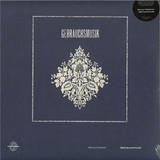
Marcus Fjellström's second album Gebrauchsmusik, initially released a decade and a half ago, is a bizarre sound document that deserves a closer look. Listening back to it now only re-confirms the unique mind of the Swedish composer, who sadly died in September 2017, only 37 years old.
"Gebrauchsmusik" is German for 'Utility Music', and his second excursion into post-classical experimentation is exactly that; thirteen tracks with each one written to suit a certain theme. War, art, festivity, sadness, death and resurrection are all interpreted by Fjellström in his unique style, taking a classical framework and distorting, confusing and manipulating them into far fetching scenarios that is only limited by ones own imagination.
Marcus worked with the Swedish Royal Ballet, the Scottish Chamber Orchestra and Sinfonietta Cracovia as well as numerous other orchestras, ensembles and soloists, artists and filmmakers. He spent the last half year of his life scoring the AMC series The Terror. In his works, Marcus often aimed to combine opposites so that they don’t contradict each other, but rather fuse into a natural, third element - “High” and “low” culture, the naïve and the sophisticated, good and bad taste. These are all elements that comfortably blend together in his works. Musical influences range from electronic acts such as Aphex Twin and Autechre to 20th century composers such as György Ligeti and John Cage. Further influences include impressionist composers Maurice Ravel and Claude Debussy as well as film music composers Bernard Herrmann, Angelo Badalamenti and Zdeněk Liška.
Vinyl edition ltd. to 300 copies, incl. 8-page 12" booklet with drawings by Marcus Fjellström.
“A genius” - Nai Palm
“One of the most incredible live performances I’ve seen” - Gilles Peterson
“He's like a human centipede sewn out of all the greatest musicians from the past 80 years” - Liam Pieper
Emerging from Brisbane’s music-art bohemian West End in 2008, self-taught, prodigious musician Lachlan Mitchell aka Laneous, began his eclectic and colourful journey in music as the leading member of funk band KAFKA, stamping his trademark falsetto croon on an Australian music landscape that wasn’t quite ready for an artist whose standout influence was D’Angelo’s ‘Voodoo’. Word of their talent soon reached UK’s perennial tastemaker Gilles Peterson who featured the band on his compilation, Brownswood Bubblers Four alongside other breakthrough acts at the time, Mayer Hawthorne, Floating Points and Lone. A world-class guitarist, vocalist, composer, visual artist and – significantly - muse, Mitchell’s unique ability to shine, create and inspire across genres was his obvious forte, even then. Regularly sought after to provide features for other bands and cover art for Hiatus Kaiyote albums Tawk Tomahawk and Choose Your Weapon, he worked diligently to support his community. But while Hiatus’ Nai Palm told media Laneous was “a genius” he often credited music and drawings to pseudonyms.
In 2016, after 8 years of humbly dominating the Australian underground art, soul and jazz scene [with ‘mutant-soul/croon punk’ cult group Laneous & The Family Yah, reggae band Kooii and improv-jazz-beat trio, Vulture Street Tape Gang] Mitchell relocated to Melbourne - a move that would instigate and inspire the long-awaited debut solo LANEOUS record that fans and peers had been craving for nearly a decade. Excited to create new music with an artist they’d previously referenced as an inspiration, Paul Bender and Simon Mavin (Hiatus Kaiyote) came on board swiftly, joined by Hudson Whitlock (Cactus Channel) on drums and Donny Stewart (Jazz Party) on vibraphone and flugelhorn - a key element in bringing Mitchell’s vision of an exotica/soul infused album to life. In classic Laneous fashion, the musical references for the record run deep, winding through an eclectic array of artists from Martin Denny, Burt Bacharach and The Beach Boys to Shuggie Otis, Wild Cookie and Wu-Tang.
The debut single Modern Romance was unleashed in October 2018 with a kinky, captivating visual accompaniment that marked the return of the Laneous legacy. After selling out the Melbourne launch of the single, the band was invited to headline Gilles Peterson’s Worldwide FM x Northside Records live Melbourne broadcast, teasing exclusive album cuts and drawing high praise from Peterson, stating it was “..one of the most incredible live performances I’ve seen’.
Out May 10 via Soul Has No Tempo, Mitchell’s MONSTERA DELICIOSA stands as a sublime genre work, peerless in Australia - his magnum opus bears the name that’s backed him from day one:
The new album by Juno Award and Polaris Music Prize-nominated Canadian soul star Tanika Charles.
Produced by a stable of some of Canada's finest musical minds including among the others Chin Injeti (DJ Khalil, Eminem, Drake, Aloe Blacc..), Record Kicks proudly presents "The Gumption" the awaited new album by Canadian soul star Tanika Charles that will hit the streets worldwide on May 10.
"What gave you the gumption?" Tanika Charles rhetorically asks during the introductory notes of her sophomore album appropriately titled The Gumption. While the apprehensive lover at the receiving end of that inquisition should feel slighted by the remark, it also alludes to the assuredness Tanika has gained since the release of her Juno Award and Polaris Music Prize-nominated debut Soul Run. The Gumption picks up where Soul Run left off, continuing her tradition of marrying classic soul with modern production styles. Across a dozen songs spanning 38 minutes, Tanika addresses moments of vulnerability, vindication, uncertain love, forbidden fruit and the state of the world today. "It's a little more mature. It's not feeling guilty about being up front, not being afraid to address situations that aren't comfortable for me. I'm comfortable in my skin now in a way I never was before. The overall theme is growth. I feel the music reflects that, and my words reflects that. Even the album cover tries to convey the feeling too. I'm not putting up with unnecessary nonsense anymore."
Predominately guitar-driven mid-tempo soul, with a handful of dance floor friendly tunes and some psychedelic leanings, The Gumption was indirectly influenced by the likes of Alabama Shakes, The Supremes, Khruangbin, D'Angelo, and Moses Sumney. It is sonically moody at times, but with consistent silver-lining arcs. "I've grown up and learned to deal with situations significantly better. We have a tendency to hold back our innermost feelings for fear of hurting others. Even when we're happy we worry about over-sharing, as if joy is a competition you don't want to gloat about."
The success of Soul Run propelled Tanika in front of new audiences far and wide, with extensive touring in North America and Europe. "I've been touring, experiencing new places and meeting new people. And in that time also worked on completing this album". While criss-crossing Canada with festival appearances on both the east and west coasts, Tanika also embarked upon four overseas tours for a combined 45 European shows within a one year period. This included performances at the prestigious Trans Musicales Festival in France, the Lärz, Germany Fusion Festival, Mostly Funk & Soul and Jazz Festival in UK, the Holy Groove Festival in Switzerland, and the Canarias Jazz Festival in Spain.