Buscar:don disco

Estilos
Todo
Guilty Razors - Complete Recordings 1977 - 1978

UILTY RAZORS, BONA FIDE PUNKS.


Writings on the topic that go off in all directions, mind-numbing lectures given by academics, and testimonies, most of them heavily doctored, from those who “lived through that era”: so many people today fantasize about the early days of punk in our country… This blessed moment when no one had yet thought of flaunting a ridiculous green mohawk, taking Sid Vicious as a hero, or – even worse – making the so-called alternative scene both festive and boorish. There was no such thing in 1976 or 1977, when it wasn’t easy to get hold of the first 45s by the Pistols or the Clash. Few people were aware of what was happening on the fringes of the fringes at the time. Malcolm McLaren was virtually unknown, and having short hair made you seem strange. Who knew then that rock music, which had taken a very bad turn since the early 1970s, would once again become an essential element of liberation? That, thanks to short and fast songs, it would once again rediscover that primitive, social side that was so hated by older generations? Who knew that, besides a few loners who read the music press (it was even better if they read it in English) and frequented the right record stores? Many of these formed bands, because it was impossible to do otherwise. We quickly went from listening to the Velvet Underground to trying to play the Stooges’ intros. It’s a somewhat collective story, even though there weren’t many people to start it.
The Guilty Razors were among those who took part in this initial upheaval in Paris. They were far from being the worst. They had something special and even released a single that was well above the national average. They also had enough songs to fill an album, the one you’re holding. In everyone’s opinion, they were definitely not among the punk impostors that followed in their wake. They were, at least, genuine and credible.

Guilty Razors, Parisian punk band (1975-1978). To understand something about their somewhat linear but very energetic sound, we might need to talk about the context in which it was born and, more broadly, recall the boredom (a theme that would become capital in punk songs) coupled with the desire to blow everything off, which were the basis for the formation of bands playing a rejuvenated rock music ; about the passion for a few records by the Kinks or the early Who, by the Stooges, by the Velvet mostly, which set you apart from the crowd.
And of course, we should remember this new wave, which was promoted by a few articles in the specialized press and some cutting-edge record stores, coming from New York or London, whose small but powerful influence could be felt in Paris and in a handful of isolated places in the provinces, lulled to sleep by so many appalling things, from Tangerine Dream to President Giscard d’Estaing...
In 1975-76, French music was, as almost always, in a sorry state ; it was still dominated by Johnny Hallyday and Sylvie Vartan. Local rock music was also rather bleak, apart from Bijou and Little Bob who tried to revive this small scene with poorly sound-engineered gigs played to almost no one.
In the working class suburbs at the time, it was mainly hard rock music played to 11 that helped people forget about their gruelling shifts at the factory. Here and there, on the outskirts of major cities, you still could find a few rockers with sideburns wearing black armbands since the death of Gene Vincent, but it wasn’t a proper mass movement, just a source of real danger to anyone they came across who wasn't like them. In August 1976, a festival unlike any other took place in Mont-de-Marsan – the First European Punk Festival as the poster said – with almost as many people on stage as in the audience. Yet, on that day, a quasi historical event happened, when, under the blazing afternoon sun, a band of unknowns called The Damned made an unprecedented noise in the arena, reminiscent of the chaotic Stooges in their early adolescence. They were the first genuine punk band to perform in our country: from then on, anything was possible, almost anything seemed permissible.

It makes sense that the four+1 members of Guilty Razors, who initially amplified acoustic guitars with crappy tape recorder microphones, would adopt punk music (pronounced paink in French) naturally and instinctively, since it combines liberating noise with speed of execution and – crucially – a very healthy sense of rebellion (the protesters of May 1968 proclaimed, and it was even a slogan, that they weren’t against old people, but against what had made them grow old. In the mid-1970s, it seemed normal and obvious that old people should now ALSO be targeted!!!).
At the time, the desire to fight back, and break down authority and apathy, was either red or black, often taking the form of leafleting, tumultuous general assemblies in the schoolyard, and massive or shabby demonstrations, most of the time overflowing with an exciting vitality that sometimes turned into fights with the riot police. Indeed, soon after the end of the Vietnam War and following Pinochet’s coup in Chile, all over France, Trotskyist and anarcho-libertarian fervour was firmly entrenched among parts of the educated youth population, who were equally rebellious and troublemakers whenever they had the chance. It should also be noted that when the single "Anarchy in the UK" was first heard, even though not many of us had access to it, both the title and its explosive sound immediately resonated with some of those troublemakers crying out for ANARCHY!!! Meanwhile, the left-wing majority still equated punks with reckless young neo-Nazis. Of course, the widely circulated photos in the mainstream press of Siouxsie Sioux with her swastikas didn’t necessarily help to win over the theorists of the Great Revolution. It took Joe Strummer to introduce The Clash as an anti-racist, anti-fascist and anti-ignorance band for the rejection of old-school revolutionaries to fade a little.

The Lycée Jean-Baptiste Say at Porte d’Auteuil, despite being located in the very posh and very exclusive 16th arrondissement of Paris, didn’t escape these "committed" upheavals, which doubled as the perfect outlet for the less timid members of this generation.
“Back then, politics were fun,” says Tristam Nada, who studied there and went on to become Guilty Razors’ frontman. “Jean-Baptiste was the leftist high-school in the neighbourhood. When the far right guys from the GUD came down there, the Communist League guys from elsewhere helped us fight them off.”
Anything that could challenge authority was fair game and of course, strikes for just about any reason would lead to increasingly frequent truancy (with a definitive farewell to education that would soon follow). Tristam Nada spent his 10th and 11th unfinished grades with José Perez, who had come from Spain, where his father, a janitor, had been sentenced to death by Franco. “José steered my tastes towards solid acts such as The Who. Like most teenagers, I had previously absorbed just about everything that came my way, from Yes to Led Zeppelin to Genesis. I was exploring… And then one day, he told me that he and his brother Carlos wanted to start a rock band.” The Perez brothers already played guitar. “Of course, they were Spanish!”, jokes their singer. “Then, somewhat reluctantly, José took up the bass and we were soon joined by Jano – who called himself Jano Homicid – who took up the rhythm guitar.” Several drummers would later join this core of not easily intimidated young guys who didn’t let adversity get the better of them.

The first rehearsals of the newly named Guilty Razors took place in the bedroom of a Perez aunt. There, the three rookies tried to cover a few standards, songs that often were an integral part of their lives. During a first, short gig, in front of a bewildered audience of tough old-school rockers, they launched into a clunky version of the Velvet Underground's “Heroin”. Challenge or recklessness? A bit of both, probably… And then, step by step, their limited repertoire expanded as they decided to write their own songs, sung in a not always very accurate or academic English, but who cared about proper grammar or the right vocabulary, since what truly mattered was to make the words sound as good as possible while playing very, very fast music? And spitting out those words in a language that left no doubt as to what it conveyed mattered as well.
Trying their hand a the kind of rock music disliked by most of the neighbourhood, making noise, being fiercely provocative: they still belonged to a tiny clique who, at this very moment, had chosen to impose this difference. And there were very few places in France or elsewhere, where one could witness the first stirrings of something that wasn’t a trend yet, let alone a movement.

In the provinces, in late 1976 or early 1977, there couldn’t be more than thirty record stores that were a bit more discerning than average, where you could hear this new kind of short-haired rock music called “punk”. The old clientele, who previously had no problem coming in to buy the latest McCartney or Aerosmith LP, now felt a little less comfortable there…
In Paris, these enlightened places were quite rare and often located nex to what would become the Forum des Halles, a big shopping mall. Between three aging sex workers, a couple of second-hand clothes shops, sellers of hippie paraphernalia and small fashion designers, the good word was loudly spread in two pioneering places – propagators of what was still only a new underground movement. Historically, the first one was the Open Market, a kind of poorly, but tastefully stocked cave. Speakers blasted out the sound of sixties garage bands from the Nuggets compilation (a crucial reference for José Perez) or the badly dressed English kids of Eddie and the Hot Rods. This black-painted den was opened a few years earlier by Marc Zermati, a character who wasn’t always in a sunny disposition, but always quite radical in his (good) choices and his opinions. He founded the independent label Skydog and was one of the promoters of the Mont-de-Marsan punk festivals. Not far from there was Harry Cover, another store more in tune with the new New York scene, which was amply covered in the house fanzine, Rock News (even though it was in it that the photos of the Sex Pistols were first published in France).
It was a favorite hang-out of the Perez brothers and Tristam Nada, as the latter explained. “It’s at Harry Cover’s that we first heard the Pistols and Clash’s 45s, and after that, we decided to start writing our first songs. If they could do it, so could we!”
The sonic shocks that were “Anarchy in the UK”, “White Riot” or the Buzzcocks’s EP, “Spiral Scratch” – which Guilty Razors' sound is reminiscent of – were soon to be amplified by an unparalleled visual shock. In April 1977, right after the release of their first LP, The Clash performed at the Palais des Glaces in Paris, during a punk night organised by Marc Zermati. For many who were there, it was the gig of a lifetime…
Of course, Guilty Razors and Tristam were in the audience: “That concert was fabulous… We Parisian punks were almost all dressed in black and white, with white shirts, skinny leather ties, bikers jackets or light jackets, etc. The Clash, on the other hand, wore colourful clothes. Well, the next day, at the Gibus, you’d spot everyone who had been at this concert, but they weren’t wearing anything black, they were all wearing colours.”

It makes sense to mention the Gibus club, as Guilty Razors often played there (sometimes in front of a hostile audience). It was also the only place in Paris that regularly scheduled new Parisian or Anglo-Saxon acts, such as Generation X, Siouxsie and the Banshees, the Slits, and Johnny Thunders who would become a kind of messed-up mascot for the venue. A little later, in 1978, the Rose Bonbon – formerly the Nashville – also attracted nightly owls in search of electric thrills… In 1977, the iconic but not necessarily excellent Asphalt Jungle often played at the Gibus, sometimes sharing the bill with Metal Urbain, the only band whose aura would later transcend the French borders (“I saw them as the French Sex Pistols,” said Geoff Travis, head of their British label Rough Trade). Already established in this small scene, Metal Urbain helped the young and restless Guilty Razors who had just arrived. Guitarist for Metal Urbain Hermann Schwartz remembers it: “They were younger than us, we were a bit like their mentors even if it’s too strong a word… At least they were credible. We thought they were good, and they had good songs which reminded of the Buzzcocks that I liked a lot. But at some point, they started hanging out with the Hells Angels. That’s when we stopped following them.”

The break-up was mutual, since, Guilty Razors, for their part, were shocked when they saw a fringe element of the audience at Metal Urbain concerts who repeatedly shouted “Sieg Heil” and gave Nazi salutes. These provocations, even still minor (the bulk of the skinhead crowd would later make their presence felt during concerts), weren’t really to the liking of the Perez brothers, whose anti-fascist convictions were firmly rooted. Some things are non-negotiable.
A few months earlier (in July 1978), Guilty Razors had nevertheless opened very successfully for Metal Urbain at the Bus Palladium, a more traditonally old-school rock night-club. But, as was sometimes the case back then, the night turned into a mass brawl when suburban rockers came to “beat up punks”.

Back then, Parisian nights weren’t always sweet and serene.

So, after opening as best as they could for The Jam (their sound having been ruined by the PA system), our local heroes were – once again – met outside by a horde of greasers out to get them. “Thankfully,” says Tristam, “we were with our roadies, motorless bikers who acted as a protective barrier. We were chased in the neighbouring streets and the whole thing ended in front of a bar, with the owner coming out with a rifle…”
Although Tristam and the Perez brothers narrowly escaped various, potentially bloody, incidents, they weren’t completely innocent of wrongdoing either. They still find amusing their mugging of two strangers in the street for example (“We were broke and we simply wanted to buy tickets for the Heartbreakers concert that night,” says Tristam). It so happened that their victims were two key figures in the rock business at the time: radio presenter Alain Manneval and music publisher Philippe Constantin. They filed a complaint and sought monetary compensation, but somehow the band’s manager, the skilful but very controversial Alexis, managed to get the complaint withdrawn and Guilty Razors ended up signing with Constantin with a substantial advance.

They also signed with Polydor and the label released in 1978 their only three-track 45, featuring “I Don't Wanna be A Rich”, “Hurts and Noises” and “Provocate” (songs that exuded perpetual rebellion and an unquenchable desire for “class” confrontation). It was a very good record, but due to a lack of promotion (radio stations didn’t play French artists singing in English), it didn’t sell very well. Only 800 copies were allegedly sold and the rest of the stock was pulped… Initially, the three tracks were to be included on a LP that never came to be, since they were dropped by Polydor (“Let’s say we sometimes caused a ruckus in their offices!” laughs Tristam.) In order to perfect the long-awaited LP, the band recorded demos of other tracks. There was a cover of Pink Floyd's “Lucifer Sam” from the Syd Barrett era – proof of an enduring love for the sixties’ greats –, “Wake Up” a hangover tale and “Bad Heart” about the Baader-Meinhof gang, whose actions had a profound impact on the era and on a generation seeking extreme dissent... On the album you’re now discovering, you can also hear five previously unreleased tracks recorded a bit later during an extended and freezing stay in Madrid, in a makeshift studio with the invaluable help of a drummer also acting as sound engineer. He was both an enthusiastic old hippie and a proper whizz at sound engineering. Here too, certain influences from the fifties and sixties (Link Wray, the Troggs) are more than obvious in the band’s music.

Shortly after a final stormy and rather barbaric (on the audience’s side) “Punk night” at the Olympia in June 1978, Tristam left the band ; his bandmates continued without him for a short while.

But like most pioneering punk bands of the era, Guilty Razors eventually split up for good after three years (besides once in Spain, they’d only played in Paris). The reason for ceasing business activities were more or less the same for everyone: there were no venues outside one’s small circuit to play this kind of rock music, which was still frightening, unknown, or of little interest to most people. The chances of recording an LP were virtually null, since major labels were only signing unoriginal but reassuring sub-Téléphone clones, and the smaller ones were only interested in progressive rock or French chanson for youth clubs. And what about self-production? No one in our small safety-pinned world had thought about it yet. There wasn’t enough money to embark on that sort of venture anyway.

So yes, the early days of punk in France were truly No Future!
No en stock

Haga su pedido ahora y le encargaremos el artículo en nuestro proveedor.

21,43

Ültimo hace: 11 Días
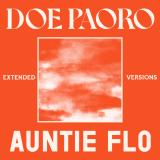
Auntie Flo x Doe Paoro - Extended Version

Auntie Flo delivers two extended versions of Costa Rica based singer-songwriter Doe Paoro. If you liked Auntie Flo's 'Green City', check these...

Doe Paoro approached Brian d’Souza aka Auntie Flo to do a remix for her album 'Living Through Collapse' last year. He loved the parts she sent so much he asked her if he could do two remixes, press onto vinyl and release via A State Of Flo.

We're doing a limited run of 300 copies only, orange vinyl - so buy today if you don't want to miss out.

The tracks... Teach Us Of Endings - a classic balearic groove, gloriously uplifting disco-style strings and complete with Green City-style drum rolls and a killer Ziggy Funk bass line ... just waiting for those strings to come in...bliss

Maya - exotic, deep, hypnotic. Centred around a Ziggy Funk groove with analogue washes and Middle Eastern sounding instrumentation.

A State of Flo supports Earth Percent. 10% of the revenue generated from this release will be paid to environmental charities.

Support from Colleen ‘Cosmo’ Murphy, Luke Una, Dar Disku, Paula Tape, Sean Johnston, Gabriels, Batida etc

No en stock

Haga su pedido ahora y le encargaremos el artículo en nuestro proveedor.

20,13

Ültimo hace: 14 Días
GOAT - WORLD MUSIC LP

GOAT

WORLD MUSIC LP

12inchLAUNCHB358
Rocket Recordings
03.04.2026
  • 1: Diarabi
  • 2: Goatman
  • 3: Goathead
  • 4: Disco Fever
  • 5: Golden Dawn
  • 6: Let It Bleed
  • 7: Run To Your Mama
  • 8: Goatlord
  • 9: Det Som Aldrig Förändras / Diarabi

2026 black vinyl, 2022 Abbey Road remaster, original 2012 artwork! When the mysterious masked collective calling themselves Goat first emerged in 2012, armed with an incendiary debut album 'World Music' - there was, and there still isn't, anyone else on earth quite like them. With their enticing mythology, music full of sinuous grooves and manic explosions of fuzz, Goat were outliers from the very beginning. 'World Music', received an avalanche of acclaim with critics, psych heads, outernational crate diggers etc, all left enraptured by its thunderous intensity, conjured from a singular mix of sounds from across the globe. 'World Music' is brimming with tracks now seen as 'classic' Goat live favourites. Tracks that have been wowing audiences all over the world; the afrobeat stomp of 'Disco Fever', the fuzz abuse of 'Goathead', the post-punk groove of 'Let it Bleed', the sing-along repetitive pop of 'Run to your Mama'... From the first note to the last, 'World Music' oozes with a sonic confidence rarely seen on a debut album. What Goat have is unique - they've managed to create a sound unrestrained by genre or any other boundaries. So if you haven't done so already, then it is now time you joined the Goat commune.

Reservar03.04.2026

debe ser publicado en 03.04.2026

28,53
LAPA DULA - AGUA LP

Repress.

Step into a journey through time with Lapa Dula's debut album "Agua", proudly presented by the Early Sounds team. “Agua” is a sonic and aesthetic collage, a tribute to the sounds and memories of Naples and its surroundings in the vibrant cultural and social scene of the mid 1980s, not just a reflection of producer’s Alessandro La Padula childhood memories, but also a nod to the myths and legends of Partenope. Written between Rome and Naples and co-produced by label head Pellegrino, "Agua" is the latest addition to the imprint’s distinctive "Mediterranean sound" blending funk, Latin, world music, and disco, with songs like the balearic title track "Agua" and the nostalgic ode to rural life "Sibilla", also inspired by the myth of the Sibyl of Cumae, this album takes you on a journey of emotions and experiences.

From vernacular "Scemanfu", a fun play on the French expression "je m'en fous" (I don't care), to the contemplative "Navigante", dedicated to those who have found solace in the sea or in the virtual world, and the final track "Baibai", inspired by the adventurous and licentious affairs of English nobleman Sir Nathaniel Thorold, who lived on the island of Capri, each song tells a story and adds a piece to this mosaic of sounds, images, and places.

No en stock

Haga su pedido ahora y le encargaremos el artículo en nuestro proveedor.

16,85

Ültimo hace: 2 Años
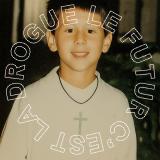
Christophe Clébard - Le futur c'est la drogue LP

Le Futur c’est la drogue, which should here be translated as The Future Is the Drug, is not to be read as a promise, but as a statement of fact. The present is no longer an experience, but pure consumption. Life itself has taken the form of a dependency.

With this sixth album, Christophe Clébard goes straight to the point, driven by a free and repetitive form of writing, stripped of any syntactic rigidity. Words strike like balls against a wall, revealing darker zones of his mind where guilt, fear, and existential anxiety coexist.

The sound composition, equally minimal, sustains a dense and obsessive mental space, a vortex in which trance appears as the only escape. Driving drum machines, relentlessly hammered electronic loops, and a battered synthesizer, his music unfolds within a physical, strangely hypnotic synth-punk aesthetic that hits viscerally.

The Future Is the Drug is his sixth album.

Reservar03.04.2026

debe ser publicado en 03.04.2026

21,22
Smay, Tio Toni, Alex Punto, Chief303, Vic Zee - Smash The Statues EP

Outsider Records UK presents their first Vinyl & Digital Release, and they're coming out storming with this one, including slamming tracks from Smay & Tio-Toni, Punto, Chief303 & Vic-Zee, this one has every base covered and is guaranteed to have the rigs rockin'! Don't miss out on this absolutely killer release! Only 150 copies pressed !!

Reservar30.03.2026

debe ser publicado en 30.03.2026

15,55
Gruppo Sportivo - Vinylly (2x12")
  • A1: My Old Cortina
  • A2: My Favourite Song
  • A3: Blue Moon
  • A4: Beep Beep Love
  • A5: Up To Date
  • A6: Ramona
  • A7: Mexican Radio E
  • A8: (Gimme A) Break
  • B1: Very Nice
  • B2: Cats Hiss (The Buddy Odor Stop)
  • B3: Buddy Odor Is A Gas! (The Buddy Odor Stop)
  • B4: Teardrops And Two Broken Hearts (The Buddy Odor Stop)
  • B5: Watch Your Boy!
  • B6: It's Too Late
  • B7: Happily Unemployed
  • B8: Sucker Of The Century
  • C1: Holland Now
  • C2: A Girl Like You
  • C3: Sleeping Bag
  • C4: I Don't Love You
  • C5: Hey Girl
  • C6: Real Teeth Are Out
  • C7: I I I (Ay Ay Ay)
  • D1: Rhythmisaconstantbeat
  • D2: If Beauty Is
  • D3: Disco Really Made It!
  • D4: I Don't Know
  • D5: Rock 'N Roll
  • D6: I Shot My Manager
  • D7: She Was Pretty (Normal Then)

Step back into the irresistible world of Dutch pop legends Gruppo Sportivo with Vinylly! (Selected Songs '78-'91). a vibrant, limitededition celebration of the band's most iconic tracks. This double LP is the ultimate collector's item for fans of clever pop, quirky humor, and timeless hooks.

Featuring standout songs like ''Beep Beep Love,'' ''My Old Cortina,'' ''Up to Date,'' and cult favorites from The Buddy Odor Stop, Vinylly! captures the band's golden era with crisp remastered sound and a beautifully designed sleeve and 4-page booklet. A complete overview of a group that defined an era with their playful lyrics, sharp arrangements, and unmistakable charm.

The band is touring throughout 2026 to celebrate the 50th birthday of Gruppo Sportivo.

Reservar27.03.2026

debe ser publicado en 27.03.2026

44,75
PARIAH - Blaze of Obscurity Re-Issue
  • 1: Missionary Of Mercy
  • 2: Puppet Regime
  • 3: Canary
  • 4: Blaze Of Obscurity
  • 5: Retaliate!
  • 6: Hypochondriac
  • 7: Enemy Within
  • 8: The Brotherhood

Pariah’s cult album re-issued! “Blaze of Obscurity” brings you pure Thrash Metal fury! Satan changed their name to Pariah in 1988-1989. There’s Heavy Metal, Power Metal, Thrash Metal, Death Metal, the list seems almost endless. Sub-genres are important in metal and bands are quickly classified and labeled. Pariah (the last re-incarnation of Satan) is one of few bands that are difficult if not impossible to classify. Is it Heavy metal? NWOBHM? Thrash Metal? Pariah did not make it easy to describe their sound. It might be too sophisticated to simply label it Heavy Metal, which in its infancy was a rather simple affair.

They don’t sound like any Metal band out there, perhaps discounting some of the more aggressive and technical ones, and then the signature NWOBHM sound is added. The guitar playing by Russ Tippins and Steve Ramsey is undeniably what defines Pariah as well as Satan in the past. Undeniably, Satan has gone a long way; from humble NWOBHM beginnings, to Experimental/Melodic Mettal (in Blind Fury) and something that could be described as a NWOBHM/Thrash Metal hybrid (“The Kindred”). It’s as if they’ve been experimenting trying to find their identity, and theyfinally found it. Stylistically, “Blaze of Obscurity” could be seen a step back to “Suspended Sentence”, but this time around they got everything right, down to the last note. Those who have heard Satan know what to expect: great guitar playing.

And sure enough, “Blaze of Obscurity” is a demonstration of guitar mastery and is overall a very guitar-driven album, with plenty of mind-boggling riffs and solos are all over the place, but more importantly, it’s a demonstration of some amazing songwriting as well. This is easily Pariah/Satan’s creative peak and one of the most consistent albums I’ve ever heard, featuring eight great and conceptually perfect songs with lyrics that come across as sophisticated and thought-provoking. It is not fair to put the entire spotlight on Tippins and Ramsey though since the drumming and bass work from Sean Taylor and Graham English really shines. The rhythm is fast and tight, keeping it focused, aggressive and intense till the end. Vocalist Michael Jackson (yes, that’s his name) has to be commended too as this is easily his careers best performance.

The verdict: “Blaze of Obscurity”: the level of musical genius expressed here, along with near flawless songwriting, is more than enough to skyrocket it to heights reserved only for classics. Probably not your choice for some light listening those quiet Sunday evenings, but those who take a more serious, intellectual approach when selecting their music will find very much to appreciate here.
Tracklisting

Reservar27.03.2026

debe ser publicado en 27.03.2026

28,99
The Brides of Funkenstein - Never Buy Texas from a Cowboy LP
  • A1: Never Buy Texas From A Cowboy
  • A2: I'm Holding You Responsible
  • B1: Smoke Signals
  • B2: Mother May I?
  • B3: Party Up In Here
  • B4: Didn't Mean To Fall In Love

Last year Ace Records were delighted to reissue The Brides of Funkenstein’s debut LP from 1978, “Funk Or Walk”. Featuring their hit single ‘Disco To Go’, this album put the Brides on the map and sold strongly.

Before sessions commenced for a second album, Lynn Mabry left the group before sessions commenced for a second album, leaving Dawn Silva alone at the altar. George Clinton added P-Funk backing singers Jeanette McGruder and Sheila Horne to the mix, creating a three-pronged vocal attack.
Sessions featured the cream of the P-Funk players including keyboard wizard Bernie Worrell, bassist Bootsy Collins and guitarist Garry Shider. The resulting album, released in 1979, was even better that their debut.

The title track ran for over 15 minutes on side one, showcasing the vocal and musical prowess of all concerned. Other tracks included ’Party Up In Here’, ‘Smoke Signals’, ‘Mother May I?’ and the gorgeous ballad ‘Didn’t Mean To Fall In Love’.
Although it did not spawn a hit single, “Never Buy Texas From A Cowboy” sold as strongly as “Funk Or Walk” and over time has been hailed as a classic P-Funk album.
With liner notes from Ace’s Ian Shirley, we are delighted to release it on orange vinyl and CD. You don’t need your mother’s permission to buy it either.

Reservar27.03.2026

debe ser publicado en 27.03.2026

25,84
Various - Edits 7"

Various

Edits 7"

7"-VinylSOLO504
SOLO /500
23.03.2026

Solo 500 delivers another irresistible donut that takes the form of this 2-sided celebration of afro-latin & jazz-funk classics. GSC dusts off 2 deep catalog selections here — & part of the appeal is that neither side is a played-out sample cliché. This one is for heads who already burned through the obvious joints.

Side A digs into Manu Dibango beyond the endlessly flipped “Soul Makossa” universe. “The Panther”, from the 1973 album “Africadelic”, isn’t one of his commonly sampled tracks — & that’s exactly why it hits so hard. Low-slung Afro-funk, stalking bass & suspense-building horns that feel like a break record even if they haven’t been rinsed by every golden-era producer. Selectors who chase texture over recognition will understand the power here immediately. It’s the kind of cut hip-hop heads love not because they’ve heard it before — but because they haven’t.

Side B moves into Latin jazz-funk royalty. Ray Barretto is one of the most sampled percussionists of all time, but “Together” (from the 1969 album of the same name) sits slightly off the obvious break-beat path. Instead of a clean, isolated drum loop, you get rolling congas, warm keys & a communal groove that’s been DJ-tested far more than it’s been sampled. This is the type of Barretto cut that crate-diggers pull when they want rhythm to breathe — bridging jazz floors, disco-leaning sets & hip-hop selectors who think like musicians, not beat miners.

No en stock

Haga su pedido ahora y le encargaremos el artículo en nuestro proveedor.

10,50

Ültimo hace: 29 Días
DISCO IN SOCHI - ROM COM LP

DISCO IN SOCHI

ROM COM LP

12inchNXN045LP
NINE X NINE
20.03.2026
  • A1: Summer Rolls
  • A2: Shut Me Up
  • A3: On My Mind
  • A4: Vagues ? Montmarte
  • A5: Shake! Discoteque Mix
  • B6: Good Company
  • B7: Differences
  • B8: Rimbombo
  • B9: Everybody?S Dancing Discoteque Mix

Rom Com is the debut album from Disco In Sochi; a Liverpoolborn duo injecting full-throttle glam rock theatrics into modern pop. Built on strutting guitars, neon synths, & unapologetically huge hooks, their sound is loud, glossy, and engineered for the spotlight. Drawing from the lineage of glam’s excess and pop’s instinct for spectacle, Disco in Sochi trade subtlety for swagger. Their songs are designed to hit hard and fast — all attitude, amplification, and choruses made to be yelled back from the front row. It’s music that treats the stage like a catwalk. Disco in Sochi make pop music for outsiders who dress loud, move louder, and don’t believe in playing it cool. Equal parts flash and force, they arrive with the confidence of a band ready to turn volume into a statement.

Reservar20.03.2026

debe ser publicado en 20.03.2026

25,17
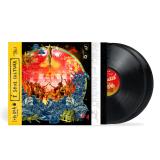
LUKE UNA pres. E SOUL CULTURA - VOL 3 LP

LUKE UNA pres. E SOUL CULTURA

VOL 3 LP

12inchMRBLP328
Mr Bongo
20.03.2026

With two deeply cherished compilations already in the bag, Luke Una steps up for the third volume in his É Soul Cultura series on Mr Bongo. A love letter to the dancefloor and its power to unite people from all corners of society amid growing division and extremist politics. Genre-spanning in nature, the 15 tracks travel between cosmic soul, boogie, proto-house, slo-mo technoid grooves, drum machine afro, astral bass-bugging futurism, jazz funk, dance, and disco. Each having the ability to move the body as much as the heart.
 
From his formative years in Sheffield to co-founding Manchester’s much-fabled Electric Chair with Justin Crawford, through to helming the iconic LGBTQ institutions of Homoelectric / Homobloc, Luke has spent 40 years immersed in dance music. His latest outlet, É Soul Cultura, has grown from a label to a globe-spanning events series with Luke holding residencies and embarking on tours across the world from Japan and Australia to America and Europe. 
 
“For me, the dancefloor was never about a one-dimensional, thudding, 130 BPM beat only. It's a much more dynamic, broader vision than that. I cut my teeth in an era where a 100 BPM record had as much impact, excitement, and energy as a 134 BPM dancefloor jazz funk or techno record”, Luke mentions. É Soul Cultura Volume 3 is the perfect embodiment of that notion: “It’s about four decades in the trenches playing dance music, the late-night afters, the shebeens, the basements, warehouse parties, the eight-hour journeys in East London, through to festival sets at Houghton and We Out Here. It’s music unconstrained by genre or tempo and more about making your body move”. 

But this isn’t simply a collection of disparate dance tracks; they carry meaning and soul. “It’s less about escapism, more about reconnection. My experience of post-covid has been the coming together of all the clans in various clubs and gatherings. A reaction to a very toxic world out there, where the aggro rhythms of division have sought to divide us, and people don't meet as often. The coming back together face-to-face in clubs has encouraged a real love in the air, there's a real togetherness and collective spirit”.
 
Opening up the compilation is a track that channels that very message, the transcendental, soul-rousing Harris & Orr ‘Spread Love’. Joining the dots from there, to the low-slung deep house closer of Fatdog ‘Remember’, you’ll find electronic drum machine Nigerian funk, sitting side by side with dancefloor Cape Verdean brilliance, a post-punk cover of Fela Kuti, rubbing shoulders with cosmic electro, and an Una-championed, 8-minute, kickless DJ Harvey remix. There’s jazz funk in various guises moving from boogie synth to astral travelling, slo-mo acidic raw techno, and a ‘79 soul stepper, alongside swirling percussive Italo disco and tribal-charged house. All infused with an innate ability to bring people together.
 
As society becomes increasingly fractured, É Soul Cultura Volume 3’s message is more than movement. It’s about dance music’s power to unify people from all walks of life and break down the barriers that divide us.

No en stock

Haga su pedido ahora y le encargaremos el artículo en nuestro proveedor.

28,36

Ültimo hace: 11 Días
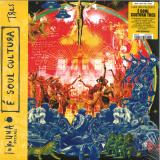
LUKE UNA pres. E SOUL CULTURA - VOL 3 LP

LUKE UNA pres. E SOUL CULTURA

VOL 3 LP

12inchMRBLP328I
Mr Bongo
20.03.2026

With two deeply cherished compilations already in the bag, Luke Una steps up for the third volume in his É Soul Cultura series on Mr Bongo. A love letter to the dancefloor and its power to unite people from all corners of society amid growing division and extremist politics. Genre-spanning in nature, the 15 tracks travel between cosmic soul, boogie, proto-house, slo-mo technoid grooves, drum machine afro, astral bass-bugging futurism, jazz funk, dance, and disco. Each having the ability to move the body as much as the heart.
 
From his formative years in Sheffield to co-founding Manchester’s much-fabled Electric Chair with Justin Crawford, through to helming the iconic LGBTQ institutions of Homoelectric / Homobloc, Luke has spent 40 years immersed in dance music. His latest outlet, É Soul Cultura, has grown from a label to a globe-spanning events series with Luke holding residencies and embarking on tours across the world from Japan and Australia to America and Europe. 
 
“For me, the dancefloor was never about a one-dimensional, thudding, 130 BPM beat only. It's a much more dynamic, broader vision than that. I cut my teeth in an era where a 100 BPM record had as much impact, excitement, and energy as a 134 BPM dancefloor jazz funk or techno record”, Luke mentions. É Soul Cultura Volume 3 is the perfect embodiment of that notion: “It’s about four decades in the trenches playing dance music, the late-night afters, the shebeens, the basements, warehouse parties, the eight-hour journeys in East London, through to festival sets at Houghton and We Out Here. It’s music unconstrained by genre or tempo and more about making your body move”. 

But this isn’t simply a collection of disparate dance tracks; they carry meaning and soul. “It’s less about escapism, more about reconnection. My experience of post-covid has been the coming together of all the clans in various clubs and gatherings. A reaction to a very toxic world out there, where the aggro rhythms of division have sought to divide us, and people don't meet as often. The coming back together face-to-face in clubs has encouraged a real love in the air, there's a real togetherness and collective spirit”.
 
Opening up the compilation is a track that channels that very message, the transcendental, soul-rousing Harris & Orr ‘Spread Love’. Joining the dots from there, to the low-slung deep house closer of Fatdog ‘Remember’, you’ll find electronic drum machine Nigerian funk, sitting side by side with dancefloor Cape Verdean brilliance, a post-punk cover of Fela Kuti, rubbing shoulders with cosmic electro, and an Una-championed, 8-minute, kickless DJ Harvey remix. There’s jazz funk in various guises moving from boogie synth to astral travelling, slo-mo acidic raw techno, and a ‘79 soul stepper, alongside swirling percussive Italo disco and tribal-charged house. All infused with an innate ability to bring people together.
 
As society becomes increasingly fractured, É Soul Cultura Volume 3’s message is more than movement. It’s about dance music’s power to unify people from all walks of life and break down the barriers that divide us.

No en stock

Haga su pedido ahora y le encargaremos el artículo en nuestro proveedor.

28,15

Ültimo hace: 32 Días
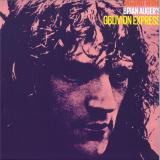
Brian Auger’s Oblivion Express - Second Wind LP

Strut Records highlights a landmark in British jazz-rock with Second Wind, the 1972 album from keyboard visionary Brian Auger and his powerhouse group Oblivion Express. Capturing a fully matured lineup, the record finds Auger expanding his fusion language - bridging jazz sophistication, funk-driven rhythm, and soul-infused songwriting with the clarity and fire that defined his early ’70s work.

Though Auger’s roots lie in the lineage of hard-swinging jazz organ and the improvisational fire of the ’60s British scene, he has never been an artist content with tradition. With Second Wind, he moves further into a hybrid language that fuses rhythm with harmonic depth and groove, without sacrificing sophistication. His playing is expansive yet precise, translating the electricity of live performance into a studio work that breathes with immediacy.

At the heart of this era of Oblivion Express is the telepathic rapport among its members. Vocalist Alex Ligertwood (in one of his earliest major recordings before Santana fame) brings a soulful intensity that feels both grounded and forward- looking. Second Wind contains tracks that have become deeply significant in Auger’s discography - original compositions Second Wind, and Truth to name a few - but it was Auger's high octane revisioning of Eddie Harris' Freedom Jazz Dance, (adding new lyrics to the original instrumental) that genuinely broke barriers. The track became a DJ friendly classic and highlighted the groups deeply original approach.

The rhythm section of Barry Dean and Robbie McIntosh balances weight and fluidity, giving Auger the space to stretch across Hammond organ, Rhodes, and keys with characteristic boldness. Their collective sound is one of seamless motion: jazz-inflected lines swelling into rock-driven crescendos, funk-leaning grooves locking with vocal hooks, moments of quiet clarity emerging between bursts of improvisation.

Second Wind stands as a pivotal moment in Auger’s discography: a record that bridges the exploratory spirit of his earlier projects with the more groove-oriented approach that would soon bring international attention. More than five decades later, it remains a vivid document of a band carving out its own language. Music born of instinct, collaboration, and a restless desire to push beyond the expected.

No en stock

Haga su pedido ahora y le encargaremos el artículo en nuestro proveedor.

23,11

Ültimo hace: 33 Días
Asha Puthli - Disco Mystic: Select Remixes Volume 1 LP

2026 Repress

Turbotito and Ragz's electrifying Naya Beat label has curated a cultured list of remixers to add their spin to the work of legendary Indian vocalist Asha Puthli. This essential remix album features Yuksek, Maurice Fulton, Psychemagik, Kraak & Smaak, Jitwam, and Turbotito & Ragz.

Naya Beat, which translates from Hindi as 'new beat', is focused on uncovering foundational electronic sounds from the subcontinent and South Asian diaspora through reissues, remixes and compilations. It found quick success with its first release, 'Naya Beat Volume 1: South Asian Dance and Electronic Music 1983 - 1992', followed by a rare 1985 Hindi New Wave album by Pinky Ann Rihal and more recently a ground-breaking compilation ‘Awaaz’ uncovering Bollywood electro and leftfield 80s original soundtrack recordings.

Hot off their highly sought after EP of Dimitri From Paris’ seminal remixes of Asha Puthli’s iconic track ‘Space Talk’, the label now offers up the first of two full-length releases based around her music. Cosmic disco pioneer, Studio 54 icon and jazz improviser Asha Puthli has recorded, sung or shared the stage with the likes of Roy Ayers, Alice Coltrane, Grace Jones, Barry White, Andy Warhol and many more. From David Mancuso's The Loft, to Giorgio Moroder's early work with Donna Summer, to hip-hop where she has been sampled extensively, Asha's musical influence and impact is profound. She was the first artist of South Asian descent to successfully crossover and make a mark on dance, jazz and pop culture in the West.

For this LP, Naya Beat tracked down the long mythologised original stems and recordings of Puthli's most seminal albums, including ‘The Devil is Loose’, and working closely with Asha, they have tasked a series of producers inspired by her work to remix her music.
Yuksek opens up with a pumping disco remix of 'I Am Song (Sing Me)' awash with uplifting synths and big claps next to the original vocals, which soar to the heavens. The seminal 'Space Talk' is remixed by Maurice Fulton into super steamy and late-night territory. The live drums and jumbled percussion are lit up with soulful chords as Puthli's carefully delivered vocals seduce up top. 'Lies' (Kraak & Smaak Remix) rides on fat-bottomed drums and bass that unfold with a dub swagger beneath a nebulous eco-system of cosmic synths and dramatic vocals. Label heads Turbotito & Ragz flip 'One Night Affair' into a leggy disco celebration with sweeping synths and bright effects, and Psychemagik's 'Right Down Here' is a pulsating mix of dark, snaking bass and drums with deep space ambience and raw hits making for a turbulent and tense atmosphere. Lastly, Jitwam closes out with a smooth disco sound laced with dynamic drums and cruising chords next to another sensuous top line from Asha Puthli.

No en stock

Haga su pedido ahora y le encargaremos el artículo en nuestro proveedor.

18,28

Ültimo hace: 39 Días
Monsieur Van Pratt - Illegal Disco 008

The king of cheeky edits of timeless disco and funk is back with a wicked trip through obscure French grooves, flipped, filtered, and fired up for contemporary dancefloors. These three edits from Monsieur Van Pratt on Illegal Disco 008 don't just nod to the past, they grab it by the collar and drag it under the mirrorball. The opener 'Danse Danse' struts in a sunny groove built for open-air euphoria, 'Pas Chez Toi' slides deeper, a go-go-soaked funk jam with razor-sharp percussion then 'Ombre De Plaisir' detonates with horns blaring, rhythm pumping and pure disco adrenaline. Another gem from Mr Pratt.

Disponible a partir del22.04.2026

14,08

Ültimo hace: 39 Días
VARIOUS - WHERE SOUTHERN SOUL BEGAN
  • A1: Cigarettes & Coffee Al 'Tnt' Braggs
  • A2: You're Gonna Miss Me Shirley Raymond
  • A3: Shout Bamalama Otis Redding
  • A4: I've Been Wrong For So Long Bobby Bland
  • A5: Backtracking Little Junior Parker
  • A6: That's Cuz I Love You Louis Jones
  • A7: You Don't Have To Cry Little Bob & The Lollipops
  • A8: Please Think It Over Roscoe Shelton
  • A9: If I Don't See You Again Ted Taylor
  • B1: Too Many Tears Roy Lee Johnson
  • B2: What Can I Do For You Elmore Morris
  • B3: You Don't Miss Your Water William Bell
  • B4: I Cried Joe Medwick
  • B5: Blessed Are These Tears Joe Tex
  • B6: Best Of Luck Baby Earl Gaines
  • B7: My Love Belongs To You Sam & Dave
  • B8: I Don't Hurt Anymore Fontella Bass
  • B9: Please, Please, Please James Brown

The Golden Age of southern soul lasted from about 1962 to 1975, when disco ripped the heart out of it. And although it may seem as though the blend of country, gospel and R & B that emerged from the great studios in Memphis and Muscle Shoals in that decade was entirely fresh and new, like any other genre classic, southern soul picked up musical cues and absorbed influences from a whole variety of sources: horn lines from Louisiana's swamp pop, lyrical themes from the blues, songs from country music, and of course so, so much from the black churches. Part of the 'History of Soul' series, this LP reveals the musical antecedents that gave southern soul its inspiration. The music here will tell you the real story - and it will knock your socks off too! Notes by John Ridley.

Reservar13.03.2026

debe ser publicado en 13.03.2026

9,45
ALI RENAULT - CIRCLE OF SINS EP

ALI RENAULT

CIRCLE OF SINS EP

12inchVIVOD026
Vivod
13.03.2026

Ali Renault re ignites the Vivod catalogue after a four year hiatus with Circle of Sins — a solo EP built for italo fiends, horror romantics, and synth obsessives alike. You already know the vibe: detective-noir disco, low-slung BPM swagger, basslines that churn like midnight fog, and those unmistakably icy Renault melodies slithering through the mix.

Four tracks, one ultra-limited 12″, just 150 copies on the planet — each hand-numbered. They’re going to vanish faster than you can say “don’t sleep,” so get that pre-order in before they’re gone to the underworld.

No en stock

Haga su pedido ahora y le encargaremos el artículo en nuestro proveedor.

13,40

Ültimo hace: 14 Días
Futvrst - Keep On & Moment Of Weakness 7"

FUTVRST & DANKE are blasting off with the flashy stepper "KEEP ON" flexing an elegant rapport reminiscent of LUTHER VANDROSS & CHANGE or DONALD BYRD & 125th St NYC. On the flip, De LEON steps into the mix for an all-out disco throwdown, bringing soaring vocals & nighttime intensity.

No en stock

Haga su pedido ahora y le encargaremos el artículo en nuestro proveedor.

11,56

Ültimo hace: 5 Días
SAXOPHONE - SOUVENIR

Vintage Pleasure Boutique once again dives deep into the vast catalogue of super-productions by Roberto Zanetti, better known as Robyx and Savage. This time, the journey takes us back to 1984, unearthing a true gem created at the suggestion of Marco Bresciani, Italian DJ and producer, and the same creative force involved with Radiorama. Zanetti delivered flawlessly. He transformed the elegant, high-grade British synth-pop original by OMD into a first-class Italo disco weapon, infused with that unmistakable sweet, melodic touch and fat kick that blended perfectly in clubs alongside genre-defining tracks of the era. “Souvenir” by Saxophone quickly became a classic, a staple of the sound and a cornerstone in countless old-school DJ record bags.

Today, original copies are scarce, highly sought after, and often prohibitively expensive on the secondary market. This reissue is both a tribute to long-time fans of the record and a nod to devotees of Robyx’s unmistakable sound. The vinyl also features a special remix of “Souvenir”, sonically aligned with Savage classics such as “Radio,” “Fugitive,” “Only You,” and “Don’t Cry Tonight.”

A true feast for lovers of this timeless Italo disco aesthetic, equal parts nostalgia, elegance and dancefloor power.

No en stock

Haga su pedido ahora y le encargaremos el artículo en nuestro proveedor.

18,91

Ültimo hace: 39 Días
Artículos por página
N/ABPM
Vinyl