Search:don philippe

Styles
All
  • 1
DON PHILIPPE - VELVET BREAKS
  • Velvet Breaks
  • A Rip
  • Fibers Displaced
  • Displacement
  • Edges
  • Torn
  • Unraveling
  • Exposed
  • Tension
  • At The Seams
  • Stiff
  • A Rupture
  • Of Composition
  • A Clear Thread
  • Entanglement
  • Velvet Is Broken

Sonar Kollektiv proudly announces the new album by lo-fi veteran Don Philippe. With its textured production, broken rhythms, and a distinctly analog warmth, Velvet Breaks is a slow-burning, introspective work - a meditation on fragility, erosion, and beauty in decay.

pre-order now10.10.2025

expected to be published on 10.10.2025

21,81

Last In: 2026 years ago
Max Herre - Mtv Unpluged Kahedi Radio Show 4x12"
 
42

Max Herre hat ein MTV Unplugged aufgenommen. Das rückt ihn in eine Tradition mit Udo Lindenberg, Eric Clapton, Lauryn Hill, Jay Z. Mehr noch als ein konsequenter Karriereschritt und popkultureller Ritterschlag aber ist das Konzert eine Rückkehr zu seinen Wurzeln. Denn lange bevor er als Texter und MC einer ganzen Generation eine neue Stimme geben sollte, war er vor allem der Junge mit der Gitarre, der einfach nur spielen wollte. Das Gefühl, das er als 15-Jähriger im Proberaum suchte, hat er nun im 'Großen Saal'des altehrwürdigen Funkhaus Berlin Nalepastraße wiedergefunden.

Die Geschichte dieses besonderen Abends beginnt vor knapp 25 Jahren in einem Keller in Stuttgart-West. Dort jammte er mit Freunden zu dem Funk, Soul und Reggae, den er liebte - und legte, ohne es zu wissen, den Grundstein für das, was da kommen sollte. Zwei klassische Alben mit Don Philippe und DJ Friction als Freundeskreis zum Beispiel, die sich nicht nur weit über 500.000 mal verkauften, sondern eine ungehörte Musikalität in die deutsche Rap-Landschaft einführten. Drei Soloplatten, die den Bogen spannten von der '1sten Liebe' HipHop zu fragilem Folk im Stile eines Singer-Songwriters (und zurück). Eine Zweitkarriere als Labelbetreiber und Produzent. Und dazwischen immer wieder Auftritte, bei denen all diese Erfahrungen und Einflüsse auf fast magische Weise zusammenliefen.

Max Herre hat Rap immer in einem Bandkontext gedacht, HipHop stets in einem Kollektivgedanken gelebt. Das war Anfang der Neunziger so, als er als Kind der Kolchose seine ersten Live-Auftritte in süddeutschen Jazzclubs hatte. Das war später so, als er aus Freundeskreis die FK Allstars erwachsen ließ und mit ihnen über die größten Festivalbühnen des Landes tourte. Und das ist heute nicht anders, wenn er wie 2012 auf seinem fulminanten Gold-Album Hallo Welt! alte wie neue Inspirationen zu seelenvoller Rapmusik mit Ewigkeitsanspruch bündelt.

So ist es nur konsequent, dass für MTV Unplugged / KAHEDI Radio Show zahlreiche Featuregäste und Freunde nach Berlin gekommen sind: wichtige Weggefährten wie Joy Denalane, Afrob, Sékou, Gentleman, Samy Deluxe, Patrice, Sophie Hunger, Philipp Poisel oder US-Ausnahmesänger Gregory Porter, aber auch das 26-köpfige, eigens für den Abend zusammengestellte KAHEDI RADIO ORCHESTRA. Unter der Führung des musikalischen Leiters Lillo Scrimali kommen so mehr als 40 Musiker aus drei Generationen zusammen. Produzent Samon Kawamura und Host Fab 5 Freddy, einst erster Moderator der wegweisenden HipHop-Sendung Yo! MTV Raps, ziehen im Regieraum zusätzlich dramaturgische Fäden.

'Ich bin sehr dankbar und glücklich, dass ich für dieses Projekt mit einigen der besten arbeiten durfte: viele davon langjährige Freunde und Wegbegleiter', so Max über das mehr als zweistündige, komplett akustische Konzert. 'Sie alle haben nicht nur ihr Spiel und ihre Fähigkeiten eingebracht, sondern ihr Herz und ihre musikalische Vision.'

Den passenden Rahmen bietet das Funkhaus Berlin Nalepastraße am Köpenicker Spreeufer. In dem ehemaligen Hauptsitz des DDR-Hörfunks, in dem schon Barenboim und die Bartoli, aber auch Portishead und Sting gearbeitet haben, vereinen sich Feierlichkeit und funktionelle Strenge auf ganz erstaunliche Weise. Max Herre hat diesen geschichtsträchtigen Ort für MTV Unplugged / KAHEDI Radio Show neu erdacht, indem er seine ursprüngliche Funktion als Aufnahmeraum unterstrichen hat. Vom Publikum umgeben spielen die Musiker in einer 360°-Konstellation zueinander und empfinden gemeinsam nach, wie in den siebziger Jahren Soulmusik gemacht wurde.

MTV Unplugged / KAHEDI Radio Show ist ein erlebtes Experiment mit offenem Ausgang und maximaler künstlerischer Freiheit. Eine kollektive Verneigung vor Soul, Jazz, Funk, Reggae und Rap. Und die in Musik gefasste Botschaft, dass Zukunft stets auch ein Stück Vergangenheit in sich trägt.

Zumindest, wenn sie so klingt wie die Musik von Max Herre.

out of Stock

Order now and we will order the item for you at our supplier.

26,04

Last In: 6 years ago
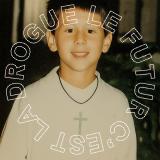
Christophe Clébard - Le futur c'est la drogue LP

Le Futur c’est la drogue, which should here be translated as The Future Is the Drug, is not to be read as a promise, but as a statement of fact. The present is no longer an experience, but pure consumption. Life itself has taken the form of a dependency.

With this sixth album, Christophe Clébard goes straight to the point, driven by a free and repetitive form of writing, stripped of any syntactic rigidity. Words strike like balls against a wall, revealing darker zones of his mind where guilt, fear, and existential anxiety coexist.

The sound composition, equally minimal, sustains a dense and obsessive mental space, a vortex in which trance appears as the only escape. Driving drum machines, relentlessly hammered electronic loops, and a battered synthesizer, his music unfolds within a physical, strangely hypnotic synth-punk aesthetic that hits viscerally.

The Future Is the Drug is his sixth album.

pre-order now27.03.2026

expected to be published on 27.03.2026

21,22

Last In: 2026 years ago
Guilty Razors - Complete Recordings 1977 - 1978
  • A1: Hurts And Noises
  • A2: Wake Up
  • A3: I Don't Wanna Be A Rich
  • A4: Terrorist Bad Heart
  • A5: Provocate
  • A6: Lucifer Sam (Pink Floyd)
  • B1: Happy!?
  • B2: So Lazy
  • B3: I Feel Down
  • B4: Stupido
  • B5: Guilty
  • B6: Caroline Says (Loo Reed)

UILTY RAZORS, BONA FIDE PUNKS.


Writings on the topic that go off in all directions, mind-numbing lectures given by academics, and testimonies, most of them heavily doctored, from those who “lived through that era”: so many people today fantasize about the early days of punk in our country… This blessed moment when no one had yet thought of flaunting a ridiculous green mohawk, taking Sid Vicious as a hero, or – even worse – making the so-called alternative scene both festive and boorish. There was no such thing in 1976 or 1977, when it wasn’t easy to get hold of the first 45s by the Pistols or the Clash. Few people were aware of what was happening on the fringes of the fringes at the time. Malcolm McLaren was virtually unknown, and having short hair made you seem strange. Who knew then that rock music, which had taken a very bad turn since the early 1970s, would once again become an essential element of liberation? That, thanks to short and fast songs, it would once again rediscover that primitive, social side that was so hated by older generations? Who knew that, besides a few loners who read the music press (it was even better if they read it in English) and frequented the right record stores? Many of these formed bands, because it was impossible to do otherwise. We quickly went from listening to the Velvet Underground to trying to play the Stooges’ intros. It’s a somewhat collective story, even though there weren’t many people to start it.
The Guilty Razors were among those who took part in this initial upheaval in Paris. They were far from being the worst. They had something special and even released a single that was well above the national average. They also had enough songs to fill an album, the one you’re holding. In everyone’s opinion, they were definitely not among the punk impostors that followed in their wake. They were, at least, genuine and credible.

Guilty Razors, Parisian punk band (1975-1978). To understand something about their somewhat linear but very energetic sound, we might need to talk about the context in which it was born and, more broadly, recall the boredom (a theme that would become capital in punk songs) coupled with the desire to blow everything off, which were the basis for the formation of bands playing a rejuvenated rock music ; about the passion for a few records by the Kinks or the early Who, by the Stooges, by the Velvet mostly, which set you apart from the crowd.
And of course, we should remember this new wave, which was promoted by a few articles in the specialized press and some cutting-edge record stores, coming from New York or London, whose small but powerful influence could be felt in Paris and in a handful of isolated places in the provinces, lulled to sleep by so many appalling things, from Tangerine Dream to President Giscard d’Estaing...
In 1975-76, French music was, as almost always, in a sorry state ; it was still dominated by Johnny Hallyday and Sylvie Vartan. Local rock music was also rather bleak, apart from Bijou and Little Bob who tried to revive this small scene with poorly sound-engineered gigs played to almost no one.
In the working class suburbs at the time, it was mainly hard rock music played to 11 that helped people forget about their gruelling shifts at the factory. Here and there, on the outskirts of major cities, you still could find a few rockers with sideburns wearing black armbands since the death of Gene Vincent, but it wasn’t a proper mass movement, just a source of real danger to anyone they came across who wasn't like them. In August 1976, a festival unlike any other took place in Mont-de-Marsan – the First European Punk Festival as the poster said – with almost as many people on stage as in the audience. Yet, on that day, a quasi historical event happened, when, under the blazing afternoon sun, a band of unknowns called The Damned made an unprecedented noise in the arena, reminiscent of the chaotic Stooges in their early adolescence. They were the first genuine punk band to perform in our country: from then on, anything was possible, almost anything seemed permissible.

It makes sense that the four+1 members of Guilty Razors, who initially amplified acoustic guitars with crappy tape recorder microphones, would adopt punk music (pronounced paink in French) naturally and instinctively, since it combines liberating noise with speed of execution and – crucially – a very healthy sense of rebellion (the protesters of May 1968 proclaimed, and it was even a slogan, that they weren’t against old people, but against what had made them grow old. In the mid-1970s, it seemed normal and obvious that old people should now ALSO be targeted!!!).
At the time, the desire to fight back, and break down authority and apathy, was either red or black, often taking the form of leafleting, tumultuous general assemblies in the schoolyard, and massive or shabby demonstrations, most of the time overflowing with an exciting vitality that sometimes turned into fights with the riot police. Indeed, soon after the end of the Vietnam War and following Pinochet’s coup in Chile, all over France, Trotskyist and anarcho-libertarian fervour was firmly entrenched among parts of the educated youth population, who were equally rebellious and troublemakers whenever they had the chance. It should also be noted that when the single "Anarchy in the UK" was first heard, even though not many of us had access to it, both the title and its explosive sound immediately resonated with some of those troublemakers crying out for ANARCHY!!! Meanwhile, the left-wing majority still equated punks with reckless young neo-Nazis. Of course, the widely circulated photos in the mainstream press of Siouxsie Sioux with her swastikas didn’t necessarily help to win over the theorists of the Great Revolution. It took Joe Strummer to introduce The Clash as an anti-racist, anti-fascist and anti-ignorance band for the rejection of old-school revolutionaries to fade a little.

The Lycée Jean-Baptiste Say at Porte d’Auteuil, despite being located in the very posh and very exclusive 16th arrondissement of Paris, didn’t escape these "committed" upheavals, which doubled as the perfect outlet for the less timid members of this generation.
“Back then, politics were fun,” says Tristam Nada, who studied there and went on to become Guilty Razors’ frontman. “Jean-Baptiste was the leftist high-school in the neighbourhood. When the far right guys from the GUD came down there, the Communist League guys from elsewhere helped us fight them off.”
Anything that could challenge authority was fair game and of course, strikes for just about any reason would lead to increasingly frequent truancy (with a definitive farewell to education that would soon follow). Tristam Nada spent his 10th and 11th unfinished grades with José Perez, who had come from Spain, where his father, a janitor, had been sentenced to death by Franco. “José steered my tastes towards solid acts such as The Who. Like most teenagers, I had previously absorbed just about everything that came my way, from Yes to Led Zeppelin to Genesis. I was exploring… And then one day, he told me that he and his brother Carlos wanted to start a rock band.” The Perez brothers already played guitar. “Of course, they were Spanish!”, jokes their singer. “Then, somewhat reluctantly, José took up the bass and we were soon joined by Jano – who called himself Jano Homicid – who took up the rhythm guitar.” Several drummers would later join this core of not easily intimidated young guys who didn’t let adversity get the better of them.

The first rehearsals of the newly named Guilty Razors took place in the bedroom of a Perez aunt. There, the three rookies tried to cover a few standards, songs that often were an integral part of their lives. During a first, short gig, in front of a bewildered audience of tough old-school rockers, they launched into a clunky version of the Velvet Underground's “Heroin”. Challenge or recklessness? A bit of both, probably… And then, step by step, their limited repertoire expanded as they decided to write their own songs, sung in a not always very accurate or academic English, but who cared about proper grammar or the right vocabulary, since what truly mattered was to make the words sound as good as possible while playing very, very fast music? And spitting out those words in a language that left no doubt as to what it conveyed mattered as well.
Trying their hand a the kind of rock music disliked by most of the neighbourhood, making noise, being fiercely provocative: they still belonged to a tiny clique who, at this very moment, had chosen to impose this difference. And there were very few places in France or elsewhere, where one could witness the first stirrings of something that wasn’t a trend yet, let alone a movement.

In the provinces, in late 1976 or early 1977, there couldn’t be more than thirty record stores that were a bit more discerning than average, where you could hear this new kind of short-haired rock music called “punk”. The old clientele, who previously had no problem coming in to buy the latest McCartney or Aerosmith LP, now felt a little less comfortable there…
In Paris, these enlightened places were quite rare and often located nex to what would become the Forum des Halles, a big shopping mall. Between three aging sex workers, a couple of second-hand clothes shops, sellers of hippie paraphernalia and small fashion designers, the good word was loudly spread in two pioneering places – propagators of what was still only a new underground movement. Historically, the first one was the Open Market, a kind of poorly, but tastefully stocked cave. Speakers blasted out the sound of sixties garage bands from the Nuggets compilation (a crucial reference for José Perez) or the badly dressed English kids of Eddie and the Hot Rods. This black-painted den was opened a few years earlier by Marc Zermati, a character who wasn’t always in a sunny disposition, but always quite radical in his (good) choices and his opinions. He founded the independent label Skydog and was one of the promoters of the Mont-de-Marsan punk festivals. Not far from there was Harry Cover, another store more in tune with the new New York scene, which was amply covered in the house fanzine, Rock News (even though it was in it that the photos of the Sex Pistols were first published in France).
It was a favorite hang-out of the Perez brothers and Tristam Nada, as the latter explained. “It’s at Harry Cover’s that we first heard the Pistols and Clash’s 45s, and after that, we decided to start writing our first songs. If they could do it, so could we!”
The sonic shocks that were “Anarchy in the UK”, “White Riot” or the Buzzcocks’s EP, “Spiral Scratch” – which Guilty Razors' sound is reminiscent of – were soon to be amplified by an unparalleled visual shock. In April 1977, right after the release of their first LP, The Clash performed at the Palais des Glaces in Paris, during a punk night organised by Marc Zermati. For many who were there, it was the gig of a lifetime…
Of course, Guilty Razors and Tristam were in the audience: “That concert was fabulous… We Parisian punks were almost all dressed in black and white, with white shirts, skinny leather ties, bikers jackets or light jackets, etc. The Clash, on the other hand, wore colourful clothes. Well, the next day, at the Gibus, you’d spot everyone who had been at this concert, but they weren’t wearing anything black, they were all wearing colours.”

It makes sense to mention the Gibus club, as Guilty Razors often played there (sometimes in front of a hostile audience). It was also the only place in Paris that regularly scheduled new Parisian or Anglo-Saxon acts, such as Generation X, Siouxsie and the Banshees, the Slits, and Johnny Thunders who would become a kind of messed-up mascot for the venue. A little later, in 1978, the Rose Bonbon – formerly the Nashville – also attracted nightly owls in search of electric thrills… In 1977, the iconic but not necessarily excellent Asphalt Jungle often played at the Gibus, sometimes sharing the bill with Metal Urbain, the only band whose aura would later transcend the French borders (“I saw them as the French Sex Pistols,” said Geoff Travis, head of their British label Rough Trade). Already established in this small scene, Metal Urbain helped the young and restless Guilty Razors who had just arrived. Guitarist for Metal Urbain Hermann Schwartz remembers it: “They were younger than us, we were a bit like their mentors even if it’s too strong a word… At least they were credible. We thought they were good, and they had good songs which reminded of the Buzzcocks that I liked a lot. But at some point, they started hanging out with the Hells Angels. That’s when we stopped following them.”

The break-up was mutual, since, Guilty Razors, for their part, were shocked when they saw a fringe element of the audience at Metal Urbain concerts who repeatedly shouted “Sieg Heil” and gave Nazi salutes. These provocations, even still minor (the bulk of the skinhead crowd would later make their presence felt during concerts), weren’t really to the liking of the Perez brothers, whose anti-fascist convictions were firmly rooted. Some things are non-negotiable.
A few months earlier (in July 1978), Guilty Razors had nevertheless opened very successfully for Metal Urbain at the Bus Palladium, a more traditonally old-school rock night-club. But, as was sometimes the case back then, the night turned into a mass brawl when suburban rockers came to “beat up punks”.

Back then, Parisian nights weren’t always sweet and serene.

So, after opening as best as they could for The Jam (their sound having been ruined by the PA system), our local heroes were – once again – met outside by a horde of greasers out to get them. “Thankfully,” says Tristam, “we were with our roadies, motorless bikers who acted as a protective barrier. We were chased in the neighbouring streets and the whole thing ended in front of a bar, with the owner coming out with a rifle…”
Although Tristam and the Perez brothers narrowly escaped various, potentially bloody, incidents, they weren’t completely innocent of wrongdoing either. They still find amusing their mugging of two strangers in the street for example (“We were broke and we simply wanted to buy tickets for the Heartbreakers concert that night,” says Tristam). It so happened that their victims were two key figures in the rock business at the time: radio presenter Alain Manneval and music publisher Philippe Constantin. They filed a complaint and sought monetary compensation, but somehow the band’s manager, the skilful but very controversial Alexis, managed to get the complaint withdrawn and Guilty Razors ended up signing with Constantin with a substantial advance.

They also signed with Polydor and the label released in 1978 their only three-track 45, featuring “I Don't Wanna be A Rich”, “Hurts and Noises” and “Provocate” (songs that exuded perpetual rebellion and an unquenchable desire for “class” confrontation). It was a very good record, but due to a lack of promotion (radio stations didn’t play French artists singing in English), it didn’t sell very well. Only 800 copies were allegedly sold and the rest of the stock was pulped… Initially, the three tracks were to be included on a LP that never came to be, since they were dropped by Polydor (“Let’s say we sometimes caused a ruckus in their offices!” laughs Tristam.) In order to perfect the long-awaited LP, the band recorded demos of other tracks. There was a cover of Pink Floyd's “Lucifer Sam” from the Syd Barrett era – proof of an enduring love for the sixties’ greats –, “Wake Up” a hangover tale and “Bad Heart” about the Baader-Meinhof gang, whose actions had a profound impact on the era and on a generation seeking extreme dissent... On the album you’re now discovering, you can also hear five previously unreleased tracks recorded a bit later during an extended and freezing stay in Madrid, in a makeshift studio with the invaluable help of a drummer also acting as sound engineer. He was both an enthusiastic old hippie and a proper whizz at sound engineering. Here too, certain influences from the fifties and sixties (Link Wray, the Troggs) are more than obvious in the band’s music.

Shortly after a final stormy and rather barbaric (on the audience’s side) “Punk night” at the Olympia in June 1978, Tristam left the band ; his bandmates continued without him for a short while.

But like most pioneering punk bands of the era, Guilty Razors eventually split up for good after three years (besides once in Spain, they’d only played in Paris). The reason for ceasing business activities were more or less the same for everyone: there were no venues outside one’s small circuit to play this kind of rock music, which was still frightening, unknown, or of little interest to most people. The chances of recording an LP were virtually null, since major labels were only signing unoriginal but reassuring sub-Téléphone clones, and the smaller ones were only interested in progressive rock or French chanson for youth clubs. And what about self-production? No one in our small safety-pinned world had thought about it yet. There wasn’t enough money to embark on that sort of venture anyway.

So yes, the early days of punk in France were truly No Future!

pre-order now22.05.2026

expected to be published on 22.05.2026

21,43

Last In: 2026 years ago
LAURENT BARDAINNE & TIGRE D’EAU DOUCE - LOVE IS EVERYWHERE

Musician, composer, bandleader and musical rubik’s cube, Laurent Bardainne is a saxophonist who trained at The Paris Conservatory.
He’s collaborated with Pharrell Williams, Cassius and Philippe Katerine to name just a few and presents here his latest project, ‘Tigre d’eau Douce’ Also co-founder of electro rock band Poni Hoax (Tigersushi Records), Limousine, a duet with Camelia Jordana and more recently Sabrina & Samantha for Ed Banger. This album, sees a return to his first love of jazz, The Tigre d’eau Douce, represents a species doomed to disappear. So using melodies, chants and solos as an escape guide, his tenor saxophone takes us to a higher place,
one where John Coltrane and the great figures of jazz reside. These LP tracks bounce between the grooves and soul of the 1970’s, where
percussion and saxophone pave the way. ‘Marvin’ allows the fluffy keys of the Hammond organ to open out into a pensive melody that feels familiar. Carrying on the journey, the tough asphalt of hip hop is visited on tracks like ‘Bachibouzouk’ and ‘Felin M chant’, whereas more tropical themes are explored on tracks like ‘Kinshasa’.

In Stock

On Stock and ready to ship

26,47
Fiorious - I'm Not Defeated (Cassius Remix)

Following the tragic passing of Philippe Zdar last summer, Ed Banger and Glitterbox Recordings have come together to release the final collaborative Cassius production, with the blessing of Hubert Boombass and Philippe’s family. This special vinyl only release features their remix of Fiorious’ powerful call-to-resistance anthem ‘I’m Not Defeated’, a record that captures the energy of historical protest songs, and inspired remixes from Honey Dijon and Catz ‘N Dogz with critical acclaim. The B-side has been specially etched, and the release will be limited to just 2000 pressings, making this a true collector’s item. Described by Fiorious as “an inspiring eight-minute tour de force and the most bittersweet gift to all of us,” all profits from the 12” will be donated to Rainbow Railroad, a Canadian charity working to help the LGBTQ+ community escape persecution and violence.

Speaking of the record, Ed Banger founder Pedro Winter said “Zdar played me the remix while we were heading to the last gig we would ever played together. He knew he and Boombass had delivered a banging remix. The original song was already one of the strongest of the year and adding Cassius’ powerful groove, hypnotic drums and these unifying chords would make this remix an instant classic.”

In Stock

On Stock and ready to ship

13,87
Various - Wizzz! French Psychorama Volume 5 (67-75)

The journey through French-speaking pop archives continues with this fifth volume, packed with fuzz, gimmicks, and dissent. Far from the charts, the selected tracks display a great creative freedom, often backed by corrosive humor. Welcome to the surprising, kaleidoscopic, and colorful world of the late sixties and early seventies, Wizzz!
Born in Montauban, Robert Pico stumbled into music by chance when he met René Vaneste, then artistic director at Pathé-Marconi. René brought him to Paris to record his first 45 RPM EP in 1964. A year later, Pierre Perret introduced him to Vogue, where he recorded his second album with Claude Nougaro’s orchestra. Sylvie Vartan then introduced him to RCA, where he recorded four singles, including the astonishing "Chien Fidèle," a track backed by a hair-rising fuzz guitar. Alongside his solo career, he also composed for other artists like Alain Delon (the song was recorded but remains unreleased), Magali Noël, Bourvil, and Georges Guétary. In the Paris of the sixties, he mingled with Mireille Darc, Elsa Martinelli, Marie Laforêt, France Gall, Françoise Hardy, Petula Clark, Régine, Dani, Serge Gainsbourg, Joe Dassin, Franck Fernandel, Charles Level, and Roland Vincent. Despite his efforts and winning a Grand Prix Sacem for his final record, Robert Pico didn’t achieve the expected success in show business and decided to leave Paris and return to the Southwest, where he devoted himself to writing. He is the author of 23 books (including Delon et Compagnie, Jean-Marc Savary Editions 2025, a memoir about his youth and his many encounters). Today, he is relieved to never have become a celebrity and devotes himself to his work with passion.
In 1969, the Franco-Italian movie Erotissimo was released, directed by Gérard Pirès (who later directed Taxi in 1998, written and produced by Luc Besson). This pop comedy features Annie Girardot, Jean Yanne, Francis Blanche, Serge Gainsbourg, Nicole Croisille, Jacques Martin, and Patrick Topaloff. The soundtrack was written by Michel Polnareff and William Sheller, with lyrics by Jean-Lou Dabadie. "La Femme Faux-cils," performed by Annie Girardot. It recounts the feelings of a rich CEO's wife who seeks to develop her sex appeal under the influence of advertisement and magazines. Groovy, sparkling and light, this track, with ITS lush arrangements humorously critiques consumer society and feminine beauty standards.
“Je suis l’Etat” (1967) is the flagship track of the first EP by singer-songwriter Spauv Georges, aka Georges Larriaga, better known as Jim Larriaga (1941-2022). Born into a family of bakers, the young man was initially planning to become a hairdresser when he discovered English-speaking music through Elvis Presley and the Beatles. After this revelation, he decided he would become a songwriter and gave himself five years to succeed. He recorded his first two EP’s independently for RCA under the pseudonym Spauv Georges; meaning “that poor George”, a nickname given to him by the mother of her friend Jean-Pierre Prévotat (future drummer of the Players, Triangle, or Johnny Hallyday). Portraying a depressed and eccentric young man, Spauv Georges created corrosive and amusing songs that didn’t reach a wide audience, despite a TV appearance with Jean-Christophe Averty.
Supported by his loyal friend and fellow songwriter Jean-Max Rivière, Georges Larriaga met the future singer Carlos in the early '70s, then Sylvie Vartan’s assistant. He wrote songs for Carlos, including the popular "La vie est belle," "Y’a des indiens partout," and "La cantine", which went onto become a huge hit in 1972. He also composed for Claude François (“Anne-Marie”, 1971), Charlotte Julian (“Fleur de province”, 1972), helped launch child singer Roméo (who sold 4 million records), and later wrote the hit "Pas besoin d’éducation sexuelle" (1975) for the young Julie Bataille. In 1971, Jim recorded an album for Disc'Az: “L’univers étrange et fou de Jim Larriaga”, which featured pop gems like “La maison de mon père”.
The story of the song "Zoé" began when Pierre Dorsay, artistic director at Vogue Records, asked Swiss singer and musician Pierre Alain to write a song for a new female singer. The inspiration came when he realized that Zoé (the artist's name) was also the name of France's first atomic battery, created in 1948, which consisted of uranium oxide immersed in heavy water! The lyrics reflect a bubbling energy that must be handled with caution, while the instrumentation echoes this atomic theme, notably with the use of a theremin.
Zoé’s career lasted only as long as a single 45 RPM, but it seems Christine Fontane was the vocalist behind this pseudonym, who is known for several EPs, a good "popcorn" album in 1964, and a handful of children’s singles in the '70s. Regardless, the photograph on the cover is of a different girl entirely.
Later, Pierre Alain continued his career, writing songs for himself, Marie Laforêt, Danièle Licari, Alice Dona, Arlette Zola (3rd place in Eurovision 1982), and achieving multiple gold and platinum records in Canada. Also an inventor with several patents, president of the Romande Academy, and head of the French Alliance in Geneva, he now composes atonal music, books, and poetry. Moreover, he is also the host of "Les Mardis de Pierre Alain" at "Le P'tit Music'Hohl" in Geneva.
Filled with oriental choruses and fuzz guitar, "Fou" is from Jacques Da Sylva's only EP released by Vogue in 1967. Despite the quality of this recording, all traces of this singer disappear after this first effort.
Valentin is a baroque pop singer born in Belgium. He is the songwriter and composer of most of the tracks on his three singles released in the late 60s in Canada. A legend says that he reincarnated himself as Jacky Valentin during the 1970s for a rock'n'roll revival career in Belgium, but his older brother sadly debunked this story. Valentin's first two singles were arranged by Claude Rogen, a Parisian session pianist who had come to Canada to promote the song “Mister A Gogo”, a cover of David Bowie’s “Laughing Gnome”, adapted by singer Delphine, his wife at the time. Far from his usual network, Claude Rogen arranged music for Polydor, including the arrangements for “Je suis un vagabond” in 1969, a jerk tune with string arrangements and a furious optimism.
Jacques Malia wrote, composed, and recorded his only 45 EP for Festival in 1966. “Histoire de gitan” is an incredible beat track with bohemian scat that tells the story of a gypsy musician who came to Paris to make it in the Music-Hall, to no avail. The hero of the song and its author probably shared a similar fate, as Jacques Malia faded into anonymity after this remarkable attempt.
Bernard Jamet recorded two EPs for Barclay in the late sixties and co-wrote several songs with Christine Pilzer, Pascal Danel, and prolific songwriters Michel Delancray and Mya Simile. The track “Raison Légale” (1968), his masterpiece, immerses the listener in a courtroom right when a murderer is being judged, with jerk rhythm and free arrangements. A unique, paranoid, judicial, and psychedelic oddity.
Jean-Pierre Lebrot-Millers started his career in show business in 1967 as a singer and songwriter for the Philips label. After three singles, he wrote several songs of a new kind with his friend Pierre Halioche, in the midst of the sexual liberation movement and the democratization of drugs. With provocative lyrics, “Les filles du hasard” and “Barbara au Chapeau Rose” were released on a Philips singles in 1968. The character of Barbara was inspired by a queen of Parisian nightlife during the psychedelic years: model Charlotte Martin, who dated Eric Clapton from 1965 to 1968, then Jimmy Page from 1970 to 1983. Jean-Claude Petit’s arrangements, with a table-filled intro, soul brass, and Hendrixian guitar, emphasize the flamboyance of a hedonistic and sexy character, whose dog is named Junkie because “Junkie est un nom exquis”! The track was recorded live in three takes with a full orchestra.
Upon its release, the record was censored by Europe 1 and RTL due to its references to drug use. Jean-Pierre Lebrot was then banned from the airwaves and later dismissed by his record label. He changed his artist name to Jean-Pierre Millers, while his companion Pierre Halioche became D. Dolby for a new dreamy composition, “Chilla”, which Jean-Pierre produced himself with arrangements by Jean Musy. Once again, the song was immediately censored everywhere. After this setback, he decided to stop singing and started taking on odd jobs to support his Swedish wife and their son until the day he met Jean-Pierre Martin, then production manager at Decca, who had worked with Manu Dibango. Martin offered Jean-Pierre Lebrot-Millers, then employed at Rank Xerox, the position of artistic director at Decca. He accepted and became, a year later, promotion director (radio, press, TV). He worked on Julio Iglesias’s first album for Decca, which became a massive hit and allowed him to meet Claude Carrère. The latter asked him to write new songs and find their performers, much like a “talent scout.” It’s through him that Jean-Pierre discovered Julie Pietri and Corinne Hermès. He composed “Ma Pompadour” for Ringo, Sheila’s husband, and took the microphone again for the syncope hit “Rendez-Vous” in 1982.
That same year, Jean-Pierre Lebrot-Millers tried to release a track for which he had heavily gone into debt: “Si la vie est un cadeau”. Having recorded it in London, he presented it to numerous professionals, all of whom refused to get involved. The same thing happened with Antenne 2 and the Sacem when he proposed the song as France’s entry for Eurovision. He then met Haïm Saban, who was producing cartoon soundtracks and had just launched the Goldorak theme song. Saban, having listened to the song, declared it had the potential to become a hit. He sent Jean-Pierre and Corinne Hermès to meet the CEO of the Luxembourg radio and television network. The latter received them, asked to hear a verse and chorus a cappella in his office, and immediately hired them to represent Luxembourg at Eurovision 1983. They reworked the arrangements and recorded a new version with Haïm Saban as co-producer. The song ended up winning Eurovision 1983, a great comeback for our hero. He continued producing and hung out with the band Nacash in Belgium when a couple came to introduce their daughter for an impromptu audition in a hotel room. The girl sang “Les démons de minuit” while dancing to a radio cassette. Impressed, he had her take singing lessons for a year and composed a song for her (for which he had the melody and title, but no lyrics). This required him to go on the hunt for a lyricist, who ended up being Guy Carlier. They recorded the song, which was initially a ballad, at Bernard Estardy’s CBE studio, and gave the singer a new name: Melody. They showed the song around their industry network without success. Later, Estardy called Jean-Pierre to suggest changing the rhythm and making it pop-rock. Orlando, Dalida’s brother, liked the result and decided to co-produce the track. “Y’a pas que les grands qui rêvent » became a classic hit. The song has since been covered by Juliette Armanet (as a ballad, like the original) and Valentina.

Born into an aristocratic Breton family, Hervé Mettais-Cartier worked as a DJ at Queen Kiss, a nightclub in Poitiers, where he formed the band Les Concentrés with Michel (an actor) and Christian (a radio technician). Together, they created a repertoire of whimsical songs (“Ma bique est morte”, “J’suis un salaud”, “Fils de dégénéré”...) that they performed on stage dressed in white (in homage to “concentrated milk”). They performed at Bliboquet and Olympia in 1968 for the 10th edition of the “Relais de la chanson Française” organized by L’Humanité-Dimanche and Nous les Garçons et les Filles, sponsored by Pepsi Cola. Winners in the author-composer category, alongside Danish singer Dorte, their visibility allowed them to record a 45, and appear on television in Jean-Christophe Averty’s show. The A-side of the disc features Bruno le ravageur, a casatchok dedicated to Bruno Caquatrix, the director of Olympia, nicknamed in the song “Coq Atroce” or “croque-actrices”. The B-side is dedicated to “Fils de dégénéré”, a quirky tribute to Hervé's aristocratic roots, mixing absurdity with sophisticated vocal harmonies.
After Les Concentrés, Hervé Mettais-Cartier formed the duo La Paire et sa Bêtise with his friend Olivier Robert. They performed in Parisian cabarets and toured with Pierre Vassiliu. In the late 1970s, Hervé began a solo career. He recorded two albums for the Motors label in 1978 and 1979, which did not achieve their anticipated success due to lack of promotion. In 1980, he met Bernadette, with whom he started a family and created a “Chansons à voir” (songs to see) show that he performed until his death at the end of 2024.

Publicité comes from the final EP by the Missiles (Ducretet Thomson, 1966), a disc that also includes “La (nouvelle) guerre de cent ans”, featured on Volume 4 of our Wizzz! series. Please refer to the booklet for the story of the band.

“He’s 1.82 meters tall, 28 years old, weighs 135 kg, is black and Belgian”: this is the description of singer Hegesippe on the back of his sole single (Decca, 1967). He appears on the album cover wearing a Greek toga, like a hippie gag – we are at the end of the year 1967. In “Le crédo d’Hegesippe”, this former bodyguard of Antoine and the Charlots plays the delightful card of the thick brute converted to Flower-Power and non-violence, with arrangements by Jean-Daniel Mercier, aka Paul Mille.
“Ethéro-disco” was released on a promotional record for clients of the Maréchal company (Liège, Belgium) for the New Year 1979. Over a funky rhythm, celebrity impersonations (Brigitte Bardot, Jacques Dutronc, Fernandel…) deliver an enigmatic text about pharmaceutical products like ether, bismuth, and aspartate. The track was composed by Dan Sarravah (responsible for Joanna's “Hold-up inusité” featured on Wizzz! Volume 3) and Tony Talado, who was also a singer (one 45 in 1967), songwriter (with over a dozen credits between 1964 and 1985 in various styles from surf music to disco), author (Devenez Végétarien, Dricot Editions, 1985), ad designer, and psychologist.

Décollez-les is on the A-side of Mamlouk's only single, a pseudonym for Marsel Hurten, who is known for his work on several EPs in the late sixties, as well as composing music for Hervé Vilard’s “Capri, c’est fini”, Claude Channes' “La Haine”, Annie Philippe’s “On m’a toujours dit”, and Nancy Holloway’s “Panne de Cœur”.
This strange song, with Afrobeat horns and absurd dialogues between a chef and his kitchen staff, is the result of a collaboration between Marsel Hurten and one of his neighbors, a photographer from Pavillon-sous-Bois (93), where the musician settled after returning from the Algerian War. A music video was shot to promote the record.
Marsel Hurten was born in Tourcoing (59) into a musical family. At a young age, he joined the brass band founded by his grandfather, playing the piston before studying trumpet at the conservatory, as well as teaching himself how to play the guitar. As an orchestra musician, he toured in France, Belgium, Germany, and England. He released a series of solo 45’s between 1965 and 1968 for the DMF and Az labels before stopping recording to focus on working for other artists (Gilles Olivier, Noëlle Cordier…).
“L’amour nu” (Vogue, 1971) is the work of the short-lived Belgian band Mozaïque. The track, written by singer Jacques Albin, closely resembles another of his compositions, “Carré Blanc”, which he recorded in 1969 for Disc’AZ.
Represented by the Lumi Son micro-label based in Marignane (Côte d'Azur), Jean-Marc Garrigues released two 45 RPMs in the late sixties, defending the French jerk sound. The song “Je dis Non” is a short, joyful ode to youth, pop music, and rebellion.
Songwriter and performer Jacques Penuel released three singles. The first one, “Astronef 328” (Fontana, 1969), features a dizzying series of chords punctuated by sound effects, a sci-fi story, and arrangements by Jean-Claude Vannier.

We would like to sincerely thank Pierre Alain, Moon Blaha, Marsel Hurten, Bastien Larriaga, Jean-Pierre Lebrot-Millers, Bernadette Mettais-Cartier, Robert Pico, Olivier Robert, Claude Rogen, Micky Segura.

out of Stock

Order now and we will order the item for you at our supplier.

23,11

Last In: 54 days ago
DJ Marcelle & Another Nice Mess - SORRY, NO SILENCE

"High urgency music with a very personal expression of the artist: in one way or another", this has always been the important or maybe even the core factor of every Cortizona release so far.

So it was just a matter of time until DJ Marcelle/Another Nice Mess, longtime fan of The Fall and Jiskefet, topnotch producer, dj wizard with three turntables (and a lovely person in general) - and myself - would collaborate towards a Cortizona release.

I guess the initial idea of working together with DJ Marcelle/Another Nice Mess dates back to 2019. One day she called me four times in five minutes just to hear Mark E. Smith's voice message on my phone. Since then there has been no going back. I mean: what's not to love about her?

Some time ago, she sent me the digital files of her new LP 'Sorry, No Service'. One of the tracks, 'Sorry, No Silence', features the Nan Goldin sample: 'this is clearly ethnic cleansing', taken from Goldin's impressive speech to which the audience cheered in support at the opening of her exhibition at the Neue Nationalgallerie in Berlin end of 2024.
Two weeks later Marcelle contacted me again: her German label refused to release the track. This was the moment we had both been waiting for: at last Cortizona and Marcelle would work together!

The album is due to be released later this year, but, with things as they are in Gaza, it is important to issue 'Sorry, No Silence' as a stand-alone track as soon as possible.
Talking about urgency!

'Sorry, No Silence' resonates feelings of global despair over the genocide in Gaza and the moraland political bankruptcy of 'western values'. It does so over a repetitive, militant tribal beat, complete with heavy basslines. The spirits of Mark Stewart, On-U Sound and Muslimgauze loom over the track, but as is always the case with Marcelle, both on stage and in the studio: she has an authentic style of her own, where playfulness meets courage and - also in this case - anger meets rhythm.

'Sorry, No Silence' is a track I didn't know I was waiting for. A track reflecting the sign of the times. The 12'' also features an even more heavy (and faster) dub version and the avant garde track 'Never Again Means', featuring more Nan Goldin samples: 'never again means never again for everyone'.
For obvious reasons the proceeds of this 12 inch and the digital Bandcamp release will be donated to PCRF, Palestine Children's Relief Fund.

Support more than welcome.


(written by Philippe Cortens)

out of Stock

Order now and we will order the item for you at our supplier.

18,91

Last In: 8 months ago
Armin Van Buuren - A State Of Trance Year Mix 2024 LP 3x12"
 
104

f11 FLRNTN, Benjamin Duchenne - "Last Man Standing" (feat Sivan) (1:08)
f12 Nicholas Gunn & Harshil Kamdar - "Here I Am" (feat Alina Renae - Richard Durand remix) (1:08)
f13 DJ TH X TH3 ONE X Sue McLaren - "Everything To Me" (1:08)
f14 Matty Ralph - "Te Adoro" (1:08)
f15 Armin Van Buuren & Vini Vici - "Sarabande" (feat Anna Timofei) (1:08)
f16 Lilly Palmer - "Hare Ram" (1:08)
f17 David Forbes - "Techno Is My Only Drug" (1:08)
f18 Armin Van Buuren - "Blah Blah Blah" (Lilly Palmer remix) (1:08)
f19 Armin Van Buuren - "The Road To Your Destination" (A State Of Trance Year mix 2024 outro) (1:14)

out of Stock

Order now and we will order the item for you at our supplier.

46,64

Last In: 9 months ago
CASSIUS - BEST OF 1996-2019 LP 2x12"

Best of 1996-2019” , the very first Cassius Best Of.
Cassius , one of the seminal & most exciting French Touch pioneers.
20 track / 2LP Black gatefold sleeve with
Liner notes by Hubert ‘Boombass” Blanc-Francard about the story of Cassius and his beloved mate Philippe” Zdar”Cerboneschi who sadly passed away 5 years ago.
Covering all classics of all albums : from Cassius 1999 – I < 3 U So - Feeling For You – Toop Toop to Go Up & The Sound Of Violence & Don’t Let Me be.
Including some Boombass’sx favourites with some rarities.

out of Stock

Order now and we will order the item for you at our supplier.

30,21

Last In: 5 months ago
DJ Salinger - Voyage Voyage Voyage MC

"L'idée nous est venu lors d'une conversation un peu arrosée dans un pub du sud de Londres avec Philippe du label Tapeworm" dixit François Kirmann Gamaury alias Franz Kirmann alias Dj Salinger – producteur français établi à Londres depuis plus d'une vingtaine d'années.

"Voyage voyage voyage" est une mixtape. Mais pas dans le sens traditionnelle du terme. Kirmann l'appelle une mixtape subjective, où les morceaux ne sont pas joués tels quels mais présentés tels qu'ils sont ressentis par l'artiste.

Un peu comme le DJ Vladimir Ivkovic qui ralentit certain morceaux sur ses platines pour en révéler un autre aspect, Kirmann zoom dans l'étoffe même des enregistrements, étire les notes et les sons à l'infini, pour en mettre à jour un sens caché, altérer notre perception de ces chansons qui peuvent parfois sembler un peu désuètes. Ici elles sont transformées en nappes fantomatiques et envoutantes qui évoquent un souvenir d'une période de sa vie, une trace sonore d'une époque un peu naive, qui revient aujourd'hui sous forme d'echo, une musique nostalgique trempée dans la reverb et la distortion.

Kirmann a grandit au Sénégal pendant les années 80 et il se souvient des étés de son enfance passé chez ses grand parents, les chansons à la radio, dans le bus du centre aéré, dans un Prisunic en Dordogne, où une fête de camping en Alsace: Catherine Lara, Elsa, Veronique Jeannot et bien sûr Desireless et son fameux tube "Voyage voyage".

Les chansons sélectionnées pour la cassette ont toutes en commun une incitation au départ, une recherche de l'ailleurs, un amour perdu, un souvenir, les thèmes de predilection d'une certaine pop française que l'on nommait variété.

Ces idées d'évasion sont accentuées ici par le traitement sonore qui leur est appliqué. Les chansons sont paralysés dans le temps, figées dans le son, comme si l'on avait souligné certain passages dans un roman pour les détacher du texte intégral.

Distortion, écho, réverbération et autres effets sont appliqués et donnent à la musique et au son une qualité rêveuse et distante. Certains passages reconnaissables se dévoilent et sortent de la brume sonore, ils se révèlent plus net, d'autres sont noyés dans un brouillard imprécis, une musique proche de l'ambient qui enveloppe l'auditeur.

Kirmann: "Chaque track est basé sur une chanson de variété française des années 80, je voulais re-créer une impression de distance, quelque chose de lointain. Les morceaux deviennent des sortes de tapisseries sonores mais dont l'essence de la chanson originelle est toujours présente. Il y'a un roman de Patrick Modiano où les personnages lancent des avis de recherche pour la France à partir d'une station de radio d'un pays lointain. Le son est brouillé, les voix étouffées. J'avais un peu cette idée en tête de faire quelque chose de similaire, comme si les chansons étaient entendus sur un vieux poste de radio mais émises d'une station lointaine et d'un autre temps."

Le résultat est un voyage nostalgique, une musique ambient et nébuleuse façonnée à partir de tubes synthétiques 80's. Imaginez Fennesz ou My Bloody Valentine jouant des reprises de Laurent Voulzy et vous y êtes presque…

Loveless non, Desireless oui!

DJ Salinger. Voyage Voyage Voyage – Disponible en cassette uniquement. 100 exemplaires sur le label Tapeworm.


Franz Kirmann is a French music producer living in London. He has made albums for various labels including Denovali, Bytes, Mercury KX. He also writes music for film and TV and is a lecturer in music production at Point Blank Music school.

pre-order now08.03.2024

expected to be published on 08.03.2024

9,20

Last In: 2026 years ago
STUART MOXHAM & LOUIS PHILIPPE - THE DEVIL LAUGHS LP

Much has been written about Young Marble Giants' small, perfect catalogue, which contained roughly two-dozen songs, nearly each one a perfect gem. Less is known about his long wilderness years after the break-up of his first professional band. His next project, The Gist, chopped YMG's minimalism into a new sound. This Is Love, Public Girls and Fool For A Valentine showed his songs to be razor-sharp, but the album's fragmented pieces were a step too far for some, though even the strangest, Carnival Headache, when cast in sunlight by Alison Statton's combo Weekend, was as fine a song as any he'd written - and Love At First Sight became a million-seller when covered by Etienne Daho. Then Stuart disappeared. A rmid-90s resurgence led to fine albums done on low budgets, before more silence followed. The Gist's 2018's release Holding Pattern - unexpected and then quickly followed by YMG singer Alison Statton's first new album with her accompanist Spike in two decades, adding fuel to public interest. The Devil Laughs, recorded a few years back, is a compelling addition to the canon of the 21st century songwriting. Stuart's generally unadorned musical presentation does not hinder his appreciation for the skills of Louis Philippe, whose iconic arrangements across an array of Él label albums inspire the fierce devotion of aficionados around the world. Nor does the unvarnished solidity of Stuart's arrangements deter Louis from hearing possibilities for their presentation in styles which take inspiration from the perfection of 1960's studio technology that led to the rise of Brian Wilson, Burt Bacharach, along with less-recognised names such as Bones Howe and Roy Halee. Tidy Away is Young Marble Giants redux, though the backing vocals hint at maturity which band didn't live to see. Fighting To Lose, written with producer Ken Brake, would pass as a worthy b-side to Bridge Over Troubled Water, and although the songs are otherwise Stuart's, Louis fans will delight at several, like Love Hangover and Sky Over Water, which display his style and production genius as succinctly as anything on his own albums. The Devil Laughs is as out of its time as Colossal Youth was - its subtle but immediate beauty, devoid of "rock", is a recording best understood in the light of those obscure groundbreakers who inspired it - the faux barbershop vocals of Smile-era Beach Boys, the studio lustre of Tom Wilson's work with Simon & Garfunkel, a dash of The Swingle Sisters and French chanson - along with enough hints of Young Marble Giant's modernist folk abstraction to satisfy longtime fans. The Devil Laughs is a small masterpiece of pure expression.

pre-order now27.11.2023

expected to be published on 27.11.2023

27,69

Last In: 2026 years ago
MASAHIKO TOGASHI - DON CHERRY CHARLIE HADEN "Oasis" FROM SONG OF SOIL (1979)

Wewantsounds is delighted to announce a special edition of the legendary 1979 Masahiko Togashi album "Song of Soil," recorded in Paris with Don Cherry and Charlie Haden and released on Japanese label Paddle Wheel. Supervised by Parisian producer Martin Meissonnier - then Don Cherry"s right hand man - "Song of Soil" reaches heights of spirituality mixing Eastern influences with jazz and deep ambient soundscapes. The album is reissued here with its original artwork and remastered by King Records in Japan. It includes the original Japanese 2-p insert plus a deluxe 8-page booklet featuring new notes (Eng/Fr) by Martin Meissonnier in conversation with Jacques Denis and also an Togashi Biography by Paul Bowler and never-seen photos by cult French photographer philippe gras who witnessed this unique session.

pre-order now01.09.2023

expected to be published on 01.09.2023

35,25

Last In: 2026 years ago
The Spinners - The Spinners LP

The timeless music and expert arrangements are about the only things smoother than the powder-blue suits sported by the Spinners on the cover of their resplendent self-titled 1972 record. The band's first album for Atlantic after departing Motown, Spinners ranks as an all-time soul classic – a filler-free set boasting immaculate harmonies, sweet melodies, and impeccably matched vocals. Thom Bell's flawless production puts it all over the top. Yielding an ideal balance of lushness and grit, the collaboration between the Detroit-based group and studio veteran yielded a record that birthed the celebrated Philadelphia Sound. Now, you can finally experience it in audiophile-grade sonics.

While the career-defining performances within the grooves cannot be overlooked, Spinners remains equally notable for its historical importance. At the dawn of the 70s, Motown still held sway as the dominant soul style. Yet the Spinners' decision to move to Atlantic – prompted by a suggestion by Aretha Franklin – and refashion their approach with Bell signalled a sea change that ushered in a smoother, sweeter variety of R&B punctuated with sweeping strings, jazzy flourishes, brassy replies, and funk rhythms. Few, if any, vocal groups mesh these traits more convincingly, pleasingly, and naturally than the Spinners on this watershed effort.

Anchored by Top 5 smashes like "Could It Be I'm Falling In Love," Spinners signalled the beginning of a partnership with Bell that lasted seven years and elevated the band to stardom. Indeed, even in spite of the four hit singles, the record remains defined by an artistic consistency, watertight focus, and collective unity that make everything here deserving of close attention. Flush with catchy hooks and pop accents, each song is treated as a potential anthem. Laden with depth and richness, Bell's savvy, wide-open arrangements frame the Spinners' satiny singing with sensual class and refined delicacy.

Heaven-sent voices do the rest. Making his first appearance on record as a member, Philippe Wynne treats the carefully honed material as a breakout session for his dulcet tenor on tracks such as "One of a Kind (Love Affair)." Not to be outdone, the equally measured Bobbie Smith mesmerizes with his deft phrasing, reedy timbre, and sparkling clarity, never finer than on the million-selling "I'll Be Around." Solo or paired together, Wynne and Smith's glorious leads run the gamut from upbeat and optimistic to sad and forlorn, forming the backbone of a masterwork that addresses romance ("Just You and Me Baby"), regret ("How Could I Let You Get Away"), and social ills ("Ghetto Child") with consummate passion.

pre-order now15.01.2023

expected to be published on 15.01.2023

58,78

Last In: 2026 years ago
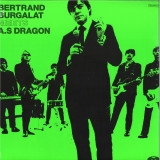
BERTRAND BURGALAT MEETS A.S DRAGON - ALBUM LIVE

Bertrand BurgalatmeetsA.s Dragon

ALBUM LIVE

12inchTRILPFR015-RP
Tricatel
05.12.2022

This album, recorded live after the release of Bertrand Burgalat's first album (The Sssound of Mmmusic, 2000), is a unique testimony of a passionate encounter, of explosive concerts and an exceptional musical adventure, a mixture of soulful rhythms, oniric keyboards and songs with chiseled lyrics and harmonies.

Out of stock on vinyl for decades, it will be reissued and published in December 2022, with a text by Philippe Manœuvre. 21 years after its first publication, it has not aged a bit. It includes tribute covers ("Follow Me" by Amanda Lear, "Tears Of A Clown" by Smokey Robinson), and a version of "Easy Tiger", recorded at the same time for Depeche Mode.

"This album brings back the great psychedelic concerts that Bertrand gave at the time. For me, Aux Cyclades électronique is in the running for the title of most beautiful song in the world, I haven't changed my mind."
Philippe Manoeuvre, excerpt from the innersleeve note, April 2022

"A.S Dragon is arguably the best French rock band of today. Nearly an hour of psyche-magnetic madness, the spectacular collision of a Gainsbourg theorist playing his melodies to a Jefferson Airplane from Clignancourt charged with pushing all galactic limits."
Philippe Manoeuvre, Rock & Folk, October 2001

"Bertrand Burgalat meets A.S Dragon could satisfy both French Touch fans and Rock'n'Roll purists. It sounds like the resurrection of a sixties garage rock band, somewhere between Detroit and Combs-la-ville. Burgalat for charity."
Philippe Barbot, Télérama, November 2001

"This is a fantastic remix! It sounds a bit like 70's funk. Bertrand has taken the song and reworked it from top to bottom, re-recording people on every part. It sounds like a James Bond song. It's really one of the best remixes we've ever done. "
Martin Gore (Depeche Mode) on "Easy Tiger", Magic, May 2001

"I wish this song could last my whole life..."
Virginie Despentes, on "Aux Cyclades électronique", "Vernon Subutex

out of Stock

Order now and we will order the item for you at our supplier.

28,53

Last In: 3 years ago
JUAN D'OULTREMONT - AVANT L'INCIDENT LP

Electro pop, the songs of Juan d'Oultremont (author of Philippe Lafontaine's famous song coeur de loup) unfold on an electric tempo, with this improbable phrasing and dark, funny and precise texts. If Daniel Johnston had taken Byrne's place among the talking heads, it would probably sound like this.

pre-order now05.08.2022

expected to be published on 05.08.2022

19,96

Last In: 2026 years ago
David Sylvian - Sleepwalkers LP (2x12")

REMASTERED

Grönland Records announce a revised, remastered reissue of “Sleepwalkers” by DAVID SYLVIAN. Available as a gatefold 2LP with exclusive art print and as a gatefold digipack CD, this new edition also features the previously unreleased track “Modern Interiors”.

in the 00s, DAVID SYLVIAN produced two of his strongest and most solitary statements, BLEMISH and MANAFON. but those records don’t tell the whole story. during that the same period, SYLVIAN created an alternate body of work: a series of collaborations and side projects with leading talents of pop and improv, electronic and contemporary classical music. the best of these recordings are gathered here on SLEEPWALKERS, meticulously sequenced and remixed: the fruits of one-off meetings and lifelong partnerships, they jump from bliss to intrigue, romance to sensuality, as arch experiments lead into the lushest pop.

the single ‘world citizen – i won’t be disappointed,’ written with RYUICHI SAKAMOTO, is a sublime example, with an impeccable melody and lyric warmed by SYLVIAN’S gorgeous tenor. SYLVIAN has worked with SAKAMOTO for close to three decades. by contrast, on ‘pure genius,’ a collaboration with CHRIS VRENNA aka tweaker, he sounds like he’s walked into a heist flick, singing the part of a delusional, dangerous bedroom genius. as sylvian explains, tracks like this ‘give me a chance to write in a way that’s completely non-personal, playful. it’s an exercise of some kind, working within the parameters of a given assignment.’

intrigue of a different kind drives ‘sugarfuel,’ with music by JEAN-PHILIPPE VERDIN, aka READYMADE FC. the lyrics offered ‘an opportunity to grapple with a more overt sexual theme than anything i’d previously attempted, as suggested by a vocal sample in the original track provided, a threateningly insistent ‘i’m on your side.’ so i took that as my point of entry and ran with it. i would love to write more on this subject should i find the right context. you’re always aware of walking a thin line exploring sexuality with language alone. the failings of the great and the good are strewn all around.’

NINE HORSES’ ‘wonderful world’ strolls in on a black tie bassline and the echoing coos of swedish chanteuse STINA NORDENSTAM, whose high chirps brush hands with SYLVIAN’S lead; there’s the blistering ‘money for all’ by FRIEDMAN and SYLVIAN, an oblique response to the fallout of 9/11 and the war on iraq. this is followed by the last known recording of SYLVIAN’S singing voice in over a decade, ‘do you know me now?’, a live studio recording later augmented by JAN BANG, EIVIND AARSET and ERIK HONORÉ. it’s certainly a title that’s become more relevant over time as SYLVIAN, in the latter stages of his career, repeatedly comes face to face with a new generation of admirers fixated on the life and times of the band formed by his younger self. SYLVIAN is one of only a handful of musicians to have successfully moved on from overt pop beginnings into a domain all his own but is consistently plagued by the misguided desires or expectations of some unfamiliar with his evolution to do a u-turn, pick up where he left off in the late 90s. although this compilation, as well as his writing for NINE HORSES, adequately shows SYLVIAN’S traditional love of melody is
intact, that it’s consistently remained part of his output, there’s no denying his focus has shifted, evolved.
the refusal to embrace complacency, the need to cover new ground ‘as older generations of popular musicians have a moral duty to explore despite, or because of, the greater possibility of failure’ will, i believe, lead to a reassessment of his later work that embraces a sightly more complex relationship with what we’re referring to as ‘melodic’, accompanied by an exploration of improvisation without dogma or beholden to any ‘givens’ for which he’s not infrequently been castigated. for SYLVIAN, there are no such boundaries. it’s obvious that different facets of his work co-exist without conflict but not necessarily for the majority of his audience. again, this places SYLVIAN in the odd, rare, unenviable(?) position of moving forwards leaving many in his devoted audience behind as, should he decide to return to music, it’s unlikely he’ll be aiming to placate an audience in love with work that preceded the 00s. in fact we’ve no idea where new work, should it surface, may lead.

SLEEPWALKERS also spotlights the innovators who contributed to MANAFON and BLEMISH. CHRISTIAN FENNESZ hangs a crackling, shimmering curtain behind the vocal on ‘transit,’ matching his signature mass of sui generis sounds to sylvian’s stately performance. and the title track began with an instrumental handed to SYLVIAN by MARTIN BRANDLMAYR of POLWECHSEL, soon after the first recording session for MANAFON. spite crackles in the gaps between the percussion, and onkyo artists TOSHIMARU NAKAMURA and SACHIKO M set the stage for the scathing lyrics in the chorus.

it cuts close to the bone and so do the two spoken word cuts, ‘angel’ and ‘thermal,’ produced by SAMADHISOUND recording artists JAN BANG and ERIK HONORÉ (and featuring ARVE HENRIKSEN on trumpet). SYLVIAN describes the latter work as a ‘love poem’ to his daughter. ‘‘thermal’ reflects on a period when our time in sonoma, ca was coming to an end. we’d stayed in temporary accommodation which had lulled us into a false sense of security. we had pear, apple, lemon, and figs trees growing in the yard. a small but exotic paradise. a cocoon. but the cracks were beginning to show in the relationship between ex-wife INGRID CHAVEZ and i which is where i think this underlying sense of anxiety, which runs throughout the poem, is derived from, coupled with the need to provide physical and spiritual stability to the children, the youngest of whom was just under two at the time. the poem is addressed to her. our world was dissipating, coming apart at the seams, but we were an island unto ourselves.’

‘five lines’ marked the start of a new partnership with acclaimed young composer DAI FUJIKURA, who at the time of recording was also working on remixes of MANAFON for what became DIED IN THE WOOL. the string quartet was performed by the celebrated ICE ENSEMBLE and written for SYLVIAN, who FUJIKURA cites as an early influence. says SYLVIAN, ‘the composition moves through numerous changes in time signature but as i had no knowledge of what these were i just relied on my gut instinct, and responded, as i always do, with what felt right to me, composing an entirely new melody in the process. some months later i was working in a studio in london and dai dropped by. i rather tentatively asked if he’d like to hear a rough mix of the song as it stood, painfully aware that my contribution might make no sense to him at all but, to my relief he loved the result.’

there’s one further new addition to this collection, the first official release of a track composed in response to the tsunami in fukushma, ‘modern interiors’, featuring SYLVIAN once again in collaboration with BANG and AARSET.

like 2000s EVERYTHING AND NOTHING, SLEEPWALKERS is a retrospective of a particular decade when SYLVIAN was free of major label interference and could follow his own instincts without having to explaining himself – but it’s also an eye-opening complement to his solo releases. as SYLVIAN explains, ‘some collaborations seem to be a one-off exchange but you can never be too certain of that fact. others have been long term. in this respect, RYUICHI comes to mind. there’s others with whom you hope to continue working as you feel you’ve barely scratched the surface. other times offers come out of the blue, welcome, inspired. regardless, it’s wonderfully explorative to have so many possibilities to juggle with. each collaboration seems timely. it’s as if there’s a rightness to the exchange at a given moment in time.’

in the meantime, we hope you enjoy the work presented here, personally selected, remixed and sequenced and entirely remastered. these are the orphans, abused, estranged, exotic, migrating from diverse corners of the globe, brought together under one roof which they're learning to share despite their differences.

‘as many of you will already be aware, despite relatively continuous work on solo albums, i’ve maintained strong ties with a number of musicians throughout my life in one context or another. on this new collection, let’s call it SLEEPWALKERS 2.0, a selection of collaborative work produced over the period encompassing blemish through to manafon, i’ve included compositions by nine horses as well as more fleeting flirtations and one-offs. neglected offspring. represented also is long term friend and writing partner, RYUICHI SAKAMOTO, as well as more recent but potentially equally productive partnerships such as CHRISTIAN FENNESZ, ARVE HENRIKSEN and contemporary classical composer DAI FUJIKURA.
i hope you enjoy the work presented here, personally selected, remixed and sequenced and entirely remastered. these are the orphans, abused, estranged, exotic, migrating from diverse corners of the globe, brought together under one roof which they're learning to share despite their differences.

we contain multitudes. we’re nothing if not contradictory.’

DAVID SYLVIAN, 2010

(consistency is contrary to nature, contrary to life: aldous huxley)

out of Stock

Order now and we will order the item for you at our supplier.

34,16

Last In: 3 years ago
Capon - Maté - Morris - Rahoerson - Capon - Maté - Morris - Rahoerson

In November 1976, Jef Gilson’s phone rang. What a surprise! It was Serge Rahoerson, one of the musicians he had met in Madagascar at the end of the 60s and who had played on his first album “Malagasy”. Rahoerson announced that he was in Paris for a few days.

Immediately, Jef wanted to organise a recording session, starting the next day. He thought of a trio including Serge, Eddy Louiss on organ and cellist Jean-Charles Capon, who had also been on one of the trips to Tananarive and so had also known Rahoerson there. Unfortunately, Eddy Louiss –who had already played with Gilson and Capon on the album “Bill Coleman Sings And Plays 12 Negro Spirituals” in 1968- had to drop out at the last minute: he was delayed by a session with Claude Nougaro. Jean-Charles Capon had also become a sought-after studio musician since his trip to Madagascar in 1969. He appeared on several key albums on the Saravah label including the now famous “Comme À La Radio” by Brigitte Fontaine, “Un Beau Matin” by Areski and “Chorus” by Michel Roques, without mentioning the album by his own Baroque Jazz Trio. He was also to be found with Jef Gilson for his album on Vogue with the ex-drummer from Miles Davis’ first great quintet, Philly Joe Jones, or also in the orchestra led by Jean-Claude Vannier for the album “Nino Ferrer & Leggs”. He also played regularly on albums by Georges Moustaki.

Jean-Charles Capon and Serge Rahoerson found themselves thus in the studio, with Jef at the controls. He had decided to record the rhythmic structure right away. He would find the soloists later, that didn’t worry him. Serge Rahoerson was on drums. Though a saxophonist by training, Jef remembered that Serge was also capable of great things behind a drum kit: he was the improvised drummer on their cover of “The Creator Has A Master Plan” on the album “Malagasy”... The great memories came flooding back (the nod on the title “Orly - Ivato”), and the old magic worked again.

Brought in momentarily from Europamerica, Gilson’s new big band, in which JC Capon also played, the saxophonists Philippe Maté, from France (another Saravah stablemate) and the American Butch Morris (soon to be a key member of David Murray’s band) were invited to record their parts later and Gilson mixed it all as if it had been one single session (as he had already done on other albums, with the tracks by Christian Vander recorded before the creation and success of Magma).

The album would not appear until 1977, on Palm, Jef’s own label, and was dedicated to the memory of Georges Rahoerson, Serge’s father, who had also played on the album “Malagasy” and who had died prematurely at the age of 51 in 1974.
“I only received my own copy of the album in 1981 when I came to live in France definitively”, a still-moved Serge Rahoerson told us in 2013. “I was playing in a club one night and Jef turned up by surprise with a copy of the album for me, I was so pleased to see him again. When I arrived in France, I told everyone that I had played with Jef Gilson a few years previously, and I was surprised to learn that so few people knew of him. For us, he was of one of the great jazz visionaries.” (Jérôme "Kalcha" Simonneau)

pre-order now26.11.2021

expected to be published on 26.11.2021

23,49

Last In: 2026 years ago
EX VITÆ - Mandarine

Ex Vitæ

Mandarine

12inchRPC044
REPLICA
20.08.2021

More than an obscure curiosity, Ex Vitae played its part pretty well during the heydays of the 70’s French underground music scene. Led by René-Marc Bini & Jean-Marc Philippe, the band mastered its own way of delivering fusion jazz where eclectism and forward thinking were perfectly blended into an insanely precise groove. Their unique album was self -released in 1978 and has been feverishly sought-after ever since. Let Replica grace you with a piece of crazy music done the French way with this original first time reissue!

pre-order now20.08.2021

expected to be published on 20.08.2021

22,14

Last In: 2026 years ago
Fitz Gore & The Talismen - Soundmagnificat

Deep spiritual jazz recorded in Germany, performed by Jamaican born saxophone player Fitz Gore and his international group The Talismen, featuring a.o. bassist Gérard Ebbo from Morocco and drummer Philippe Zobda-Quitman from Martinique. This is the first reissue of their second album, released in 1976 by the small private label GorBra from Bonn, including "Delilah" and "Requiem For Julian Cannonball Adderley". The rare LP comes in a newly mastered version with original cover design and sleeve notes. Fitz Gore's music is full of tremendous tension and movement between deep seriousness, inwardness and humility; it affects your life, it liberates and heals.

Original sleeve notes from 1976:

"Soundmagnificat" is the successor to "Soundnitia" (GorBra Records F 665 532), the first release from the Talismen, an international group with Jamaican Tenor saxophonist Fitz Gore (born1935) as founder, spiritual and musical leader, main soloist. "Soundnitia" contained concert performances of June, 1975, including compositions by John Coltrane, Horace Silver and one by Gérard "Prof. Dr. Splüm" Ebbo, bassist of the Talismen.

This second offering from the Talismen is more varied. It has four tracks recorded at four different occasions. It presents Fitz Gore as a singer, a composer, as well as, a tenor saxophonist. The opener, Requiem for Julian "Cannonball" Adderley, is a moving tribute to a great American artist, the late alto saxophonist "Cannonball" Adderley. On this track, Hungarian drummer Janos Sudy is heard with the Talismen, for the first time. The playing by the quartet on this slow lament very adequately illustrates the mood of the composition

For the next piece, a concert performance, Gore selected a gem from the American Negro Song Tradition and he displays a mighty, masculine and soulful voice in Steal Away. An example of a modern artist using an old traditional to express his own inner feelings. Delilah is taken from another concert performance, the same concert as the music on "Soundnitia". It has extensive playing by Gore, a bass solo by Gérard Ebbo, leading into some exciting conga playing by Lamont Hampton.

The final track, A Sinner Kissed An Angel, was recorded by another tenor player, Wardell Gray, in 1950, but this version is all Gore's. After the piano introduction, Gore delivers the melody with authority and with an expressive use especially of the high register of his instrument. In his improvisation, Gore's playing becomes more dissonant. Some of his playing here causes me to think of the way the late Albert Ayler sounded on his first recordings done in Sweden, in the beginning of the 60s. No drums here, but nice accompaniment and solo work of Jochen Paul on vibes.

I met Fitz Gore in Copenhagen in the fall of 1975. We were both listening to the trumpet playing of Harry "Sweets" Edison at the now defunct Café Montmartre. Prior to that time, I did not know Gore and his music, but listening to his playing on this album and the earlier one, has once more widened my musical horizon. His music has struck some chords within me. "Music is communication", John Coltrane once said. I feel sure that as you listen to the music of Fitz Gore and his Talismen, you will get the message.

In these notes, I have mentioned a couple of jazz artists and another one ought to be named primarily, because he has meant a lot to Gore: Sonny Rollins. The two met in Paris in 1966. Gore says of Rollins: "He openend my eyes ...big man … phenomenon … my man". As Sonny Rollins's artistry, the music of Fitz Gore holds many aspects, some being aggressive and even hysterical, others being those of beauty and peace. As life itself … (Roland Baggenaes, June 1976)

The music of Fitz Gore, rooted in the blues, is full of tremendous tension and movement between deep seriousness, inwardness, humility and humor, hardness and tenderness; it affects your life, it liberates and heals - a hopeful, a truly groundbreaking, a timeless, a new music - Newsic!
(Gisela Braasch, 1976)

In memory of Fitz Gore.
Mastered 2020 by Roskow Kretschmann at Audiomoto,
kindly supported by Tom Sky. Vinyl cut at SST.
Producer for reissue: Ekkehart Fleischhammer,
reproduction of original cover design by Gisela Gore:
Patrick Haase aka rab.bit.

out of Stock

Order now and we will order the item for you at our supplier.

21,81

Last In: 4 years ago
Johnny Hallyday - Essential Works 1960 - 1962

Jean Philippe Smet went to a different type school: while education came second, he spent most of his time in music halls. He began studio recording at 17 and was still there almost 60 years later, at 74. You can fool people for a long time and an audience for a brief moment, but no one could have fooled such a diverse fanbase for 57 years. There are only few examples, in France or anywhere else, of such longevity in the music industry.

Not only did Johnny Hallyday attract a horde of admirers around him, but he also never stopped growing his fans who stayed with him for 57 years. Staying at the top for five decades is only possible for an artist who combines sincerity with talent.

It is that combination of gifts and personality, along with the exceptional composers and writers surrounding him, that can explain why three years after his death, people are still looking for the slightest opportunity to get together and celebrate their idol.

There’sone word that unites everyone who loves Johnny Hallyday with the ones who don't; and this word is 'Respect'. This record is available in crystal clear with a printed inner sleeve!”

pre-order now07.05.2021

expected to be published on 07.05.2021

25,17

Last In: 2026 years ago
VARIOUS - NATIVE NORTH AMERICA (VOL. 1)
 
34

Deluxe 3LP mit 34 neu gemasterten Tracks und einem 60-seitigen Buch mit ausführlichen Linernotes, Interviews, bisher ungesehenen Archivphotos und den Texten (samt Übersetzung) in einem ,Tip On"-Schuber und drei ,Tip On"-Sleeves. Linernotes von Kevin ,Sipreano" Howes. Bisher fast nicht an die Öffentlichkeit gedrungen, kaum dokumentiert, aber im Kern ungeheuer revolutionär, nehmen die Aufnahmen verschiedenster Gemeinden amerikanischer Ureinwohner endlich in Form von ,Native North America (Vol. 1): Aboriginal Folk, Rock, and Country 1966-1985" den Platz ein, den sie verdienen. Eine Anthologie von Musik, die einst fast ausgestorben, aber nun für alle zu hören, ist ohne Frage eins der ambitioniertesten Projekte in der 12-järhigen Geschichte von Light In The Attic. ,Native Norht America (Vol. 1)" versammelt Musik der eingeborenen Völker Kanadas und der nördlichen USA, die in den turbulenten Jahrzehnten zwischen 1966 und 1985 aufgenommen wurde. Die Musik spiegelt die Zusammenführung globaler Popkultur und die Neuerweckung der eingeborenen Spiritualität und Ausdruckskraft wider. Der größte Teil dieses Materials war über Jahrzehnte lang durch fehlende Distributionskanäle und wenig Präsenz in den Massenmedien in Vergessenheit geraten - bis jetzt! Hier versammelt sich Garage Rock vom Polarkreis aus der Nunavik Region des nördlichen Quebec, melancholischer Yup'ik Folk aus Alaska und flüsternder Country Blues aus dem Wagmatcook First Nation Reservat in Nova Scotia. Man vernimmt Echos von NEIL YOUNG, VELVET UNDERGROUND, LEONARD COHEN, CREEDENCE CLEARWATER REVIVAL, JOHNNY CASH und anderen in den Songs, die jedoch mit eingeborenem Bewusstsein, Erzählkultur, Poesie, Geschichte und Zeremonie angereichert werden. Die Compilation ist gewidmet dem legendären Métis Singer/Songwriter und Dichter WILLIE DUNN, der auf der Anthologie auftritt, während der Zusammenstellung des Albums jedoch verstarb. ,Native North America (Vol. 1)" ist nur der Anfang; eine Zusammenstellung von Folk, Rock und Country aus den südlichen 48 Staaten der USA und Mexiko wird momentan in der Light In The Attic Goldmine ausgegraben.

out of Stock

Order now and we will order the item for you at our supplier.

75,42

Last In: 4 years ago
SAM GENDEL - DRM

Sam Gendel

DRM

12inch0075597922165
Nonesuch
29.03.2021

Sam Gendel’s new album, DRM, is the follow-up to his Nonesuch debut, Satin Doll, released earlier this year. DRM features Gendel’s solo musical experiments with vintage instruments such as a forty-year-old Electro Harmonix DRM32 drum machine, antique synthesizers, and a sixty-year-old nylon-string guitar — accompanied by his voice. While Satin Doll was a futuristic homage to classic jazz, DRM includes just one cover song: Lil Nas X’s ‘Old Town Road’, which Gendel interprets as an instrumental, playing the melody on an old German analogue synthesizer. The album’s accompanying short films were directed by Marcella Cytrynowicz and filmed at various locations around Gendel’s home state of California during COVID lockdown.


“I’m imagining people listening to DRM and thinking, ‘What the hell is this?’, like they’d just encountered some sailing ship in the sky,” Gendel says of the new work. “I imagine it as if someone many years into the future listened to the popular music of today and then tried to recreate it, without any of the tools or the understanding. Stylistically, it’s not too far from so much contemporary pop-rap music that you hear on the radio. A lot of those electronic backgrounds and instrumentals you hear today are tending towards something really out-there and experimental. It’s rhythmic and pointillistic, collaging different, seemingly unfitting elements together in cool ways. The visuals aren’t necessarily dictated by the music, but they both share the same slightly surreal feel, like I’m a video game character, inhabiting all these different backgrounds,” says Gendel.


Gendel is best known as a world-class saxophonist — it’s the instrument with which he’s led most of his bands, as well as the instrument on which he’s guested with the likes of Vampire Weekend, Ry Cooder, Moses Sumney, Sam Amidon, and Louis Cole’s Knower — but DRM is saxophone-free. “There was no active effort on my part not to include it; it just wasn’t part of the equation when I started recording it,” he says. “I just found a formula, working around this DRM32 drum machine, and rolled with it. I don’t consider myself just a saxophonist, I’m just someone who works in music.”


DRM was recorded in one sixteen-hour session, and then manipulated by Gendel with electronic percussionist Philippe Melanson. It was mixed by Blake Mills, and mastered by Grammy-nominated engineer Mike Bozzi. Gendel’s previous discography includes 2018’s Music for Saxofone & Bass Guitar with bassist Sam Wilkes, 4444, and Satin Doll, which the Los Angeles Times called “a woozy, blissfully twisted album.” He also performs on two other Nonesuch releases this month: Joachim Cooder’s Over That Road I’m Bound and Sam Amidon’s new self-titled album.

out of Stock

Order now and we will order the item for you at our supplier.

22,65

Last In: 4 years ago
Philippe Cam - Rotterdam

Philippe Cam

Rotterdam

2x12inchTRAUMV233
Traum Schallplatten
06.09.2019

Philippe Cam is the Thomas Pynchon of the electronic music world. Little is known about him and only a couple of pictures have been put online since he emerged on this planet to write his first and only album18 years ago. We know he worked as a sailor and that’s it. If you dig deeper you might find out that he worked as a DJ in the beginning of the 90ies in Brussels and began to study electronic music there and also began to write music for theaters and ballets.

The American distributor Forced Exposure once wrote that about him: „Philipe Cam is a star in his own field. He is among the few people who have succeeded to write hypnotic dance music without a conventional beat still conveying a thrilling, dramatic feel. Cam has developed an accurate, intense and complex formula of modulation-techno. Starting with music similar to Pan Sonic in 1996, his music turned towards a more elegant form of minimal music. Abstract soundtracks lead to an organic form of music, which was equally influenced by modern techno as Wolfgang Voigt's Studio 1/Gas or Basic Channel/Maurizio. Cam's music corresponds heavily to the Cologne scene, where his music is appreciated and played throughout the clubs by the likes of Michael Mayer, Tobias Thomas and various other DJs as well as experimental djs from the A-musik corner.“

So what’s new with his music? Basically the art of filtering is still his passion. Maybe he can be less associated with techno and the themes of his new tracks emerge in a more distinctive pattern? Well that’s hard to say, we would comment the energy of his early techno days in Brussels have returned here in a fierce way with some oft he tracks. The rhythmic movements are classy and stick with you. Whereas other tracks look for a distinctive relaxation of some kind.

We are releasing the album as a double clear vinyl with cover art by Yvette Klein who also designed the cover for his Philippe Cam’s album 18 years ago. Graphics for "Rotterdam" come from Cologne designer Daniela Thiel. We also would like to thank the cultural department of Cologne for supporting us to finance the album and to see the artistic value in this piece of minimalism.

The album kicks off with the mellow and soothing "Cocoa Beach". A Gentle beat that moves like bodies swaying in the hot summer sun. The clock moves a step forward and then a step backward as evolution takes a rest.

"Manga" feels like an acceleration to the moon, the contemplative moments come in spurts and hide in the intervals of the chords which are on the loose. Philippe Cam is the most energetic person in the world when it comes to core activity, this is head banging stuff for the ambient lounge.

"Short Summer" is a heavy and violent recognition. As intensive as it is it knows when to stop and disappear. In the ear and brain of the listeners it leaves an indisputable echo which lingers on for minutes. We suggest not to make a pause but jump directly into "Vermillions Sands".

What can be said about into "Vermillions Sands"? Be prepared some Terry Riley might lure around the corner to offer you some oranges on a silver plate, but don’t eat them. This is luring and beautiful at the same time. Maybe the best ambient track ever written and yet who can ever venture to say that without making a fool of himself. "Vermillions Sands" comes in waves and they could be longer we think.

"Rotterdam" the home of Philippe Cam for a long time but not anymore. He moved away. So that changes the perspective. But when was the track written? "Rotterdam" seems mechanical and rusty and spooky and divided. This arrangement is very different to all the other tracks so far and is almost dub in style but way more fractured. A steady stop and go emerges. But the longer it runs the better it gets. At minute 6 the brain resets itself and tries to grasp what has happened so far, reconstruction as a result of its own phantasmic imagination and hardly true at all, wonderful. Applause included!

Here comes "Bis", a short episode of a track and before we can comment on it, it is already over.

"The Game" is a mule of a track. It has a quiet stubborn sequence that bites and kicks you in the back without any change in near sight. We can hear a voice whispering, which sounds like a miniature vocoder featuring the voice of a child calling out - never stopping. This is treadmill to some extend but starts to breathe towards the middle of the track and slowly changes perspective. In fact there are some changes taking place here which go beyond a sound design that works heavily on the stereo image. Stick with it and the experience will be a great one.

"Ultimate Fly For Halloway" somehow orchestrates how you might feel after you climbed a 8000 meter high mountain and reached the top. A rejoicing off a special kind. Lava for the ears. No cheerleader murder plot sorry.

"Last Track" is a perfect example of a true minimalistic pice of music that manages to make contact with other genres and does this with elegance, determination and a lot of soul.

key selling points: The key selling point is the fact that Philippe Cam once was referred to as one of the main protagonists of the minimal music scene along with Wolfgang Voigt's Studio 1/Gas and Basic Channel/Maurizio. A true artist with a vision which is very rare.

Philippe Cam has picked up the sound he was famous for but has developed it further without selling out to any genre and expectation that rules our daily business.

Exactly this is the strength of the album to create a vivid world of impressions by using instruments in a whole different way than all software developers would suggest.

"Rotterdam" is a piece of art that can set off a firework when you listen to it and it owes nothing to anyone.

out of Stock

Order now and we will order the item for you at our supplier.

16,77

Last In: 6 years ago
Section 25 - Always Now

Section 25

Always Now

5x12inchFBN3-045
Factory Benelux
03.09.2019
 
47

Factory Benelux is proud to present a deluxe 5 disc vinyl box set edition of Always Now, the debut album by cult Factory Records group Section 25, produced by legendary sonic architect Martin Hannett and sleeved by Peter Saville.
All tracks are newly re-mastered from the original quarter-inch tapes. The first 1000 copies of the box set are pressed in coloured vinyl: disc 1 (black); disc 2 (clear); disc 3 (yellow); disc 4 (red); disc 5 (silver). The outer case in printed in PMS 123 with spot varnish.
The 16 page booklet features unseen images by noted photographer Philippe Carly and texts by founder members Larry and Vin Cassidy. Also included is the first ever interview with guitarist Paul Wiggin, whose sudden departure in late 1981 saw Tony Wilson try (and fail) to recruit pre-Smiths teenager Johnny Marr as replacement.
Recorded as a trio at Pink Floyd’s Britannia Row studio in London in January 1981, Always Now combined austere post-punk rhythm and noise with elements of Can, Krautrock and modern psychedelia. Key tracks include Friendly Fires, Dirty Disco and New Horizon, along with C.P. (a collaboration with Hannett) and Hit (extensively sampled by Kanye West for the track F.M.L. on his 2016 album The Life of Pablo).
Disc 2 gathers together several non-album singles from 1980 and 1981, including Charnel Ground, Je Veux Ton Amour and debut EP Girls Don’t Count – the latter produced by mentors Rob Gretton and Ian Curtis (of Joy Division).
Disc 3 offers a complete live show professionally recorded at Groningen (Netherlands) on 26 October 1980, as part of a Factory package tour.
Disc 4 is part-improvised second studio album The Key of Dreams, recorded and produced by the band themselves a few months after Always Now, and released by Factory Benelux in June 1982.
Disc 5 consists of further experimental material recorded in 1981 and self-released on a cassette called Illuminus Illumina. This final disc closes with an extended (and previously unreleased) live encore jam recorded with all four members of New Order at Reading University on 8 May 1981.
“One of the best albums Britain's second city has unleashed” (Uncut);
“In 1980 their bass-driven mantras were thoughtlessly dismissed as second-rate Joy Division, but hindsight judges them more kindly. The wind-dried skeins of their blasted guitar harmonics and skimped electronics gauntly cling to the songs’ skeletal frames. With telltale titles like Babies in the Bardo their Buddhist interests hang heavy over these early stirrings. But, combining a bass-led drone with a characteristic groaning vocal, Charnel Ground succinctly pins down Section 25's pre-disco appeal” (The Wire)

incl. Download Code

out of Stock

Order now and we will order the item for you at our supplier.

56,26

Last In: 6 years ago
Zombie Zombie - Livity Lp (+ Bonus 7")

SPECIAL LIMITED EDITION X 300 WITH BONUS 7 :
Limited special edition with the 7" containing the track "Lune noire", in 2 parts - one per side.
It's already been 5 years since the last Zombie Zombie album 'Rituels d'un Nouveau Monde', after which the group explored other territories by signing 2 film scores, namely 'Loubia Hamra' by Narimane Mari and 'Irréprochable' by Sébastien Marnier, as well as creating the music accompanying a contemporary circus show called 'Slow Futur' created by Martin Palisse and Elsa Guérin. Wouldn't these beautiful parentheses make you want to return to the sources After 10 years at Versatile Records, 2017 also marks the decade anniversary of the release of their first album 'A Land for Renegades' in 2007, at the time considered to be one of the 10 best albums of the year according to Rough Trade.
'Livity' - Zombie Zombie's latest opus seems to plunge us deep into science fiction, with a cover designed by the mythic cartoonist Philippe Druillet, who is also the founder of the cult Métal Hurlant comic series. The title of the album is somewhat misleading, as one could mistakenly think of a certain dub record made at
the famous Island Records Compass Point studio in the Bahamas. For the uninitiated 'Livity' or 'Life force' is actually a Rastafarian spiritual concept based on the idea that an energy exists within, and flows through, all people and all living things. The record was recorded last winter in Paris, in a very short time frame. 7 tracks played live in 7 days, by Etienne Jaumet (synthesizers / rhythm box / metallophone / sax), Cosmic Neman (drums / vocals / sound effects), and Dr. Schonberg (percussion / electronics / trumpet), recorded at the Red Bull Studios by Thibaut Javoy and Jerome Caron, 2 very competent engineers. To keep it in the family, the album was then mixed by another member of the Versatile stable, the mysterious and legendary DJ/producer I:Cube, done in the label's Victor Studio.
On this album the principles that are dear to the group rest being respected, still as far away as always from the standards of 'radio play', A living kind of music, composed of long instrumental moments recorded with analog synthesizers and drum machines, accompanied by drums and percussion. But I:Cube's touch may bring the unique energy that one may find at Zombie Zombie's concerts; on certain cuts like title track 'Livity' that the group recorded in Laos, a wild combination of 808 kick drums and bewitching jungle sounds that sound quite unlike anything else out there, and especially on 'Hippocampe', which gives the impression of hearing an old school hip hop rhythm with the power of a metal band who have replaced their guitars with an army of synthesizers: we recommend you listen to this particular track in a convertible while speeding down the highway.
As with all of Zombie Zombie's music the cinematic component is still strong, on titles like 'Ils existent..' 'Acera' which was originally composed for ciné-concerts accompanying the films of Jean Painlevé et Maurice Pialat. The energy of the beginning is still very present, as is - of course - the kraut inspiration. But it's also an album that takes new directions and sonic risks, like on 'Looose', which brings to mind the Art Ensemble of Chicago, or the groove of James Chance in New York in the early 1980's, featuring the free sax solos of Etienne Jaumet and Dr. Schonberg on the trumpet. The group also offers some slower and calmer titles, like 'Heavy Meditation' as well as exploring more experimental tracks in the line of French 70's groups such as Lard Free or Richard Pinhas, for example on the bonus track 'Black Moon'.
Please - Take your time, and enjoy listening!

out of Stock

Order now and we will order the item for you at our supplier.

17,61

Last In: 8 years ago
Zombie Zombie - Livity Lp

Zombie Zombie

Livity Lp

12inchVERLP034
Versatile
13.11.2017

It's already been 5 years since the last Zombie Zombie album 'Rituels d'un Nouveau Monde', after which the group explored other territories by signing 2 film scores, namely 'Loubia Hamra' by Narimane Mari and 'Irréprochable' by Sébastien Marnier, as well as creating the music accompanying a contemporary circus show called 'Slow Futur' created by Martin Palisse and Elsa Guérin. Wouldn't these beautiful parentheses make you want to return to the sources After 10 years at Versatile Records, 2017 also marks the decade anniversary of the release of their first album 'A Land for Renegades' in 2007, at the time considered to be one of the 10 best albums of the year according to Rough Trade.
'Livity' - Zombie Zombie's latest opus seems to plunge us deep into science fiction, with a cover designed by the mythic cartoonist Philippe Druillet, who is also the founder of the cult Métal Hurlant comic series. The title of the album is somewhat misleading, as one could mistakenly think of a certain dub record made at
the famous Island Records Compass Point studio in the Bahamas. For the uninitiated 'Livity' or 'Life force' is actually a Rastafarian spiritual concept based on the idea that an energy exists within, and flows through, all people and all living things. The record was recorded last winter in Paris, in a very short time frame. 7 tracks played live in 7 days, by Etienne Jaumet (synthesizers / rhythm box / metallophone / sax), Cosmic Neman (drums / vocals / sound effects), and Dr. Schonberg (percussion / electronics / trumpet), recorded at the Red Bull Studios by Thibaut Javoy and Jerome Caron, 2 very competent engineers. To keep it in the family, the album was then mixed by another member of the Versatile stable, the mysterious and legendary DJ/producer I:Cube, done in the label's Victor Studio.
On this album the principles that are dear to the group rest being respected, still as far away as always from the standards of 'radio play', A living kind of music, composed of long instrumental moments recorded with analog synthesizers and drum machines, accompanied by drums and percussion. But I:Cube's touch may bring the unique energy that one may find at Zombie Zombie's concerts; on certain cuts like title track 'Livity' that the group recorded in Laos, a wild combination of 808 kick drums and bewitching jungle sounds that sound quite unlike anything else out there, and especially on 'Hippocampe', which gives the impression of hearing an old school hip hop rhythm with the power of a metal band who have replaced their guitars with an army of synthesizers: we recommend you listen to this particular track in a convertible while speeding down the highway.
As with all of Zombie Zombie's music the cinematic component is still strong, on titles like 'Ils existent..' 'Acera' which was originally composed for ciné-concerts accompanying the films of Jean Painlevé et Maurice Pialat. The energy of the beginning is still very present, as is - of course - the kraut inspiration. But it's also an album that takes new directions and sonic risks, like on 'Looose', which brings to mind the Art Ensemble of Chicago, or the groove of James Chance in New York in the early 1980's, featuring the free sax solos of Etienne Jaumet and Dr. Schonberg on the trumpet. The group also offers some slower and calmer titles, like 'Heavy Meditation' as well as exploring more experimental tracks in the line of French 70's groups such as Lard Free or Richard Pinhas, for example on the bonus track 'Black Moon'.
Please - Take your time, and enjoy listening!

out of Stock

Order now and we will order the item for you at our supplier.

13,82

Last In: 7 years ago
  • 1
Items per Page:
N/ABPM
Vinyl