Gombloh’s forgotten masterpiece
What if you have Brian Wilson and Bruce Springsteen rolled into one? And what if he came of age as an poor buskers in in Surabaya, Indonesia, but then summoned enough strength to record six albums that flew in the face of everyone in the country’s rock scene back in the early 1980s?
Genius, be they Brian Wilson or Soedjarwoto “Soemarsono” Gombloh, don’t conform to rules written for us mere mortals. They have their own way of doing things and in the case of Gombloh, writing music, conducting recording session and spending cash from his music, must be conducted on his own terms and his terms only. Studio time was expensive back in the early 1980s, yet Gombloh could be three-hour late for his session, and while engineers, session musicians and producers were jittery about the prospect of another botched session, Gombloh took his time for a nap before the recording begun.
Yet, some of his greatest works came into being in the wake of this napping session. Recording session for Sekar Mayang is no exception, despite the fact there’s foreboding sense of doom with Gombloh being unsure about the possibility of selling enough units to help his label break even. This is, after all, this is his last record with his band Lemon Tree’s. No one knew that Gombloh was operating with all his cylinders running and what came out of this Indra Record session, in the waning days of 1980, were some of the best compositions ever committed to magnetic tapes (to wax, if now you’re holding this on vinyl).
This is Gombloh at the peak of his creative genius. You can argue that his debut album Nadia & Atmospheer (what’s with the spelling mistake?) is the most sprawling and complex album (both sonically and thematically), but Sekar Mayang certainly had the best songs and I can make the argument that this album’s 10 songs are strong contenders for biggest hits in blues, country, psychedelic rock charts. “Prahoro & Prahoro” is one of those impossible song which appears to have sprung from a bottomless well of inspiration, encompassing King Crimson’s sprawling epic, Deep Purple’s deepest blues and Genesis’ most progressive tendencies. Or “Sekaring Jagat”, which begins as Lennon-McCartney lullaby before launching a thousand ships traveling to the end of the rainbow with children choir singing heavenly melodies backed by droning harpsichord and synclavier, while a buzzing Hammond B3 tightly locks with Gombloh’s guitar strumming.
For many of his fans, Gombloh is known as generous man of the people. A Robin Hood type if you please. He spent his royalty checks to buy foods for beggars and buskers and dish out some more to buy undergarments for Surabaya’s prostitutes. In Sekar Mayang, Gombloh went full Springsteen mode in “Mitra Becakan,” a social commentary that cut so deep you can end up with tears in your eyes and lump in your throat (even if you don’t understand any of its Javanese language lyrics). This is one the most devastating social commentary ever recorded for a pop song, and even if you discount the greatness of its musical composition, you chalk this up as a great social-realism poetry. His years of hanging out with pedicab drivers, street vendors and street-bound prostitutes certainly gave him enough insight into their (in)human condition.
Yet, a record this stellar was largely forgotten. First, this record was a flop upon its release in 1981. Indra Records reportedly only did one pressing on cassette tape and be done with it. For those who were lucky enough to have come across one of songs from this album on the radio were likely growing up in East Java, where Gombloh had a massive cult following early in the 1980s. Nothing was heard from this record again.
There were only a handful of cassette tapes from the first pressing found on second-hand market and I recently stumbled upon one online with a price tag of Rp 50 million (US$3,500). It’s no longer available now.
In Sekar Mayang, Gombloh harbours an obsession for a long-lost utopia, Java’s distant past, where farmers have their barn full of rice and corn, where blacksmith working around the clock making tools and children singing and dancing in their seminaries. Or the fact that he opens the song with stanza from Serat Weddhatama, arguably the most monumental poem in neo-classic Javanese literature, could be his pledge of allegiance. The question for him is should a modern-day Indonesia, rife with poverty, corruption and environmental degradation not be an anathema to that utopia?
In the end, you don’t need to be someone fluent in Javanese to enjoy this majestic record. And if this record turns out to be the last in Elevation Records catalogue and we shut down this label tomorrow, we will be very happy. Mission accomplished!
quête:don tom
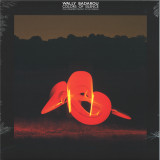
Synth pioneer and musical polymath, Wally Badarou is a genius. But you know that already. A vinyl version of his majestic Colors Of Silence has been craved by the Balearic cognoscenti ever since its low-key 2001 release. Indeed, when we first started work on Be With, we asked some pals with exquisite taste what their dream release would be. We asked Balearic legend Moonboots and, without hesitation, he said Colors Of Silence by Wally Badarou. We didn't know Wally had made this album. And most still don't. But that's about to change.
Colors Of Silence is ostensibly a new age album. As ever though, Wally's sophisticated synth textures and expressive keyboard runs are so full of character, so full of life, that this work of art transcends any easy genre categorisation. It's simply stunning, throughout. It sounds like A.r.t. Wilson or Suzanne Kraft, with traces of CFCF and Jonny Nash. But it was made a good decade earlier than the work of these modern giants. Sometimes, it doesn't seem far from some Larry Heard albums.
Island Records founder Chris Blackwell's friend Nathalie Delon asked Wally to provide music for the yoga DVD she was to release. Lack of time on both sides made them agree on using "quality demos" Wally had in his ideas bank. It's understandable why Colors Of Silence remains somewhat of a lost gem. As Wally explains: "Total lack of promotion made it an 'intimate' release, which was exactly what I was looking for: just a buzz-maker and time-buyer that would allow me to concentrate on the real thing as soon as I'd have time, which could also turn into a rare collecting item later, once the final versions made their way to success. You never know."
Over the years, Colors Of Silence has become a true cult record for the ambient/Balearic heads.
The beguiling but brief "Dance In The Dust" is the shuffling, hyper-percussive, hypnotic opener. It gives way to the deep serenity of "Amber Whispers". It's a gliding, divine, mini melodic masterpiece. It'll make you swoon in its extreme beauty. The bright and breezy "Where Were We" follows, a tropical, reggae-tinged bounce through the islands.
The uptempo groove is maintained on the keys-drizzled soca-funk of "The Lights Of Kinshasa" before Side A is rounded out with "Pictures Of You". It starts with stately, melancholic, unadorned piano and this alone would make for a beautiful song. But Wally always gives us that bit extra and he effortlessly introduces warm, dreamy pads and minimal, slo-mo percussion to augment a frankly stunning piece of work.
Ushering in Side B, Wally's mesmeric piano playing is to the fore again, in the intro to uber-chilled "Serendipity For Two". The playing becomes more mellifluous as the track progresses and adds warmth through exotic percussion, woodwind, sweeping synths and digi-drums. It has echoes of, er, Echoes. It segues seamlessly into the more propulsive, wavy "Smiles By The Millions". If you're not nodding and grinning along widely to the gently throbbing bassline underpinning this, we can't help you. The meditative "Higher Still" follows, cinematic in feel and ever so slightly sinister with the strings. It sounds particularly Badalamenti-esque, if you ask us.
That unmistakable, almost peculiar Badarou funk - so lyrical, so texturally rich and so rhythmically spacious - is all over "Oriental". Next up, "Days To Wonder" brings the serenity back, insistent yet melodic keys, as if played in a place of worship, coupled with birdsong, conjure a kind of instant nostalgia for halcyon days of youth. The contemplative "Dawn Of Europa" is a sombre, beatless, ambient journey whilst the glorious, too-brief "Crystal Falls" features soft percussion and sparkle before fully glistening with some gentle head-nod beats. Wally brings this incredible collection to a mellow, tender close with the graceful "Purple Lines".
There can be few artists more under-appreciated given their vast influence than Wally Badarou. His solo work practically defined the sound of the Balearic DJs of the 1980s, and thus the more sophisticated sound of dance culture thereafter. A synth specialist, Badarou was the long-time associate of Level 42. He was one of the Compass Point All Stars (with Sly and Robbie, Barry Reynolds, Mikey Chung and Uziah "Sticky" Thompson), the in-house recording team of Compass Point Studios responsible for a series of albums in the 1980s recorded by Grace Jones, Tom Tom Club, Mick Jagger, Black Uhuru, Gwen Guthrie, Jimmy Cliff and Gregory Isaacs. Badarou's keyboard playing could also be heard on albums by Robert Palmer, Marianne Faithfull, Herbie Hancock, M (Pop Muzik), Talking Heads, Manu Dibango and Miriam Makeba. He also produced Fela Kuti. Phew!
Meticulously remastered and cut by both Simon Francis and Cicely Balston respectively, it has been pressed to the highest possibly quality at Record Industry in Holland. Special thanks must go to Apiento from Test Pressing who first introduced us to Wally and facilitated all those early zoom meetings. It couldn't have happened without his help. Not least on pulling the art together, too, which features striking original photography by Mads Perch. Benji Roebuck of Roebuck Press did his thing brilliantly in art working the whole package to completion. All in all: essential.
The phoenix symbolizes a new beginning. The fire burns off the last vestiges of the past as the bird spreads its wings and takes flight into the future. The Polyphonic Spree harness the flames of rebirth on their 2023 full-length offering, Salvage Enterprise. Led by frontman, founder, producer, multi-instrumentalist, and visionary Tim DeLaughter, the group embark on their next season. They're reverent of their history, yet they're also ready for an even brighter tomorrow. "Across all of the music I've done, lyrically there's a sense of desperation and a moment of convincing myself I'm going to make it through regardless of how the music dresses up," notes Tim. "On this one, I struggled with the amount of vulnerability I was experiencing and was willing to share both musically and lyrically, but ultimately decided to let it play out. Now that it's done, I'm happy with the dance between the two. It's a `rising-from-theashes' record." Salvage Enterprise beckons complete immersion. Opener "Galloping Seas (Section 44)" affixes softly strummed acoustic guitar to an orchestral hum as Tim urges, "Hold on through the galloping seas." "We're all galloping through rough waters," he says. "I tried to describe the process as well as I could and encourage people to keep their heads above the storm and the waves. Ride it out. It's going to be okay. It starts off very calm and introspective, and you can envision where it's going." Flute echoes over nimbly plucked guitar during "Shadows On The Hillside (Section 48)" as keys twinkle. A glorious harmony amplifies the nostalgia of "Hop Off The Fence (Section 49)." It concludes with "Morning Sun, I Built The Stairs (Section 52)." Optimism strains through his hopeful intonation, "I learned to fly, the more that I become a new reason, I want to try," uplifted by boisterous horns and cinematic strings. It crashes into an Ennio Morricone-style crescendo bolstered even higher by operatic vocals. "There is an arc of leaving the world behind, stripping your old self away, and becoming new again," he offers. "You're shedding off this old world, and you're heading into the future. It's an epic ending. You've made it. You're going to be alright." In the end, The Polyphonic Spree are the soundtrack to that light at the end of the tunne
'Smoking in Heaven' is back! After 12 years, our second studio album is receiving its long-awaited re-issue, this time on double Pink Smoke vinyl. The tracks, each one unique, are united upon this album by a strong sense of playfulness, deep rhythmic quality and an unfailing dedication to authenticity. This fast paced album exudes the vitality that in the past has come to captivate the likes of Chris Martin, Eagles of Death Metal and the late Amy Winehouse as well as Dustin Hoffman and Ewan McGregor. In fact their rapturous reception was so strong in the case of Chris Martin that he handpicked the young trio to tour the U.S with Coldplay.
- A1: A Hard Rain's A-Gonna Fall 4:32
- A2: Repossession Blues 2:46
- A3: Ballad Of A Thin Man 4:39
- A4: To Ramona 4:39
- B1: Like A Rolling Stone 6:32
- B2: Blowin' In The Wind 4:35
- B3: All Along The Watchtower 3:38
- B4: Tomorrow Is A Long Time 4:43
- C1: Love Her With A Feeling 2:47
- C2: I Threw It All Away 5:21
- C3: Girl From The North Country 4:15
- C4: One Of Us Must Know (Sooner Or Later) 4:46
- D1: I Don't Believe You (She Acts Like We Never Have Met) 4:28
- D2: You're A Big Girl Now 4:46
- D3: The Man In Me 3:59
- D4: Forever Young 5:43
Die Bob Dylan World Tour 1978 markierte die ersten internationalen Konzertdaten des Künstlers seit 1966 und seine ersten Live-Shows seit der Rolling Thunder Revue, die 1975-76 durch Nordamerika führte. Die einjährige Tournee war ein internationales Musikereignis, bei dem Bob Dylan in großer Besetzung weltweit vor mehr als zwei Millionen Fans spielte. Die Tournee begann im Februar 1978 mit elf historischen Auftritten: Dylans allererste Konzerte in Japan, darunter acht Auftritte in der berühmten Nippon Budokan Hall in Tokio. Zwei der Budokan-Konzerte - der 28. Februar und der 1. März 1978 - wurden auf analogen 24-Kanal-Mehrspurbändern aufgezeichnet. "The Complete Budokan 1978" ist das erste Mal, dass Dylans komplette Konzerte von seiner Welttournee 1978 offiziell als 4CD-Box erhältlich sind. Die Doppel-LP "Another Budokan 1978" ist speziell für Vinyl-Fans zusammengestellt, sie enthält 16 bisher unveröffentlichte Highlight-Titel aus dieser Box.
- Stand By Me
- Save The Last Dance For Me (With The Drifters)
- He Will Break Your Heart
- Ecstasy
- Besame Mucho
- There Goes My Baby (With The Drifters)
- On The Horizon
- Tell Daddy
- Show Me The Way
- At Last
- Spanish Harlem
- Amor
- Don't Play That Song (You Lied)
- This Magic Moment (With The Drifters)
- Young Boy Blues
- It's All In The Game
- First Taste Of Love
- Perfidia
- Fever
- Will You Still Love Me Tomorrow
Ben E. King was an American soul and R&B singer and record producer. He rose to prominence as one of the principal lead singers of the R&B vocal group The Drifters, singing the lead vocals on three of their biggest hit singles "There Goes My Baby", “This Magic Moment", and "Save the Last Dance for Me". As a soloist, King is best known as the singer and co-composer of "Stand by Me", which became a Top 10 hit. Additionally, King was the original recording artist of the singles "Spanish Harlem", "Groovin'", and "Till I Can't Take It Anymore" all of which have been covered by multiple artists.
A national musical treasure" The Guardian // Steven Adams, formerly of The Broken Family Band releases new album DROPS on Fika Recordings in November 2023. Since calling time on TBFB at the height of their success, Adams has released half a dozen albums under various names (Singing Adams, Steven James Adams, Steven Adams & The French Drops), his witty, incisive lyrics and melodic sensibilities taking in DIY indie rock, folky introspection, and off-kilter pop hooks. Originally from South Wales, Adams now lives in East London. “Every record I’ve made has been in a hurry of some sort” says Adams of his new album, “and with this one I took my time”. DROPS is the first album to be credited to him as a solo artist since 2016’s Old Magick, his first new music since 2020, and his noisiest record to date. Armed with a new batch of material, he began by upping sticks to the Welsh countryside to experiment with drummer Daniel Fordham and bassist David Stewart - both formerly of psych oddballs The Drink. The trio then took the songs to Big Jelly, a converted chapel on the south coast, with co-producer Simon Trought (Comet Gain, Johnny Flynn, The Wave Pictures) to lay down the basic tracks for DROPS. Eschewing a full band set up (“I wanted to concentrate on one thing at a time”), recording sessions in East London followed with Laurie Earle (Absentee) on guitar and Michael Wood (Hayman Kupa Band, Michaelmas) on keyboards. Adams then took the recordings home and to the French countryside, to work alone. “I finally got my head around home recording in 2020, while things were a bit quiet. Once I worked out how to record things I realised I didn’t have to think about time. I could let the songs evolve and change once we had the basic tracks down. After a while I started to think of them as paintings; trying something one morning, painting over it in the afternoon and attempting something completely different… it was about enjoying the process, making some bangers, playing around... and giving Simon the producer a mess to sort out when it came to mixing the record". Whenever Tom from Fika Recordings checked in to see how the album was progressing Adams would reply, “it’s taking ages but it’ll sound like it was recorded in an afternoon”. The result is a dynamic and spirited collection of songs, with Adams's love of 90/00s US underground rock (Pavement's Bob Nastanovich is a fan) to the fore. DROPS is a sonically compelling piece of work: from bleak/exultant opener Out to Sea and the motorik Living in the Local Void to the weirdly funereal Fascists (where Adams imagines the “little skip in our steps” that we’ll have upon outliving some baddies), and Day Trip's psychedelia in miniature. There are also moments of tenderness: the avalanche of empathy on closing track Cheap Wine Sad Face, and I Tried to Keep it Light’s “worse things could happen… I don’t know how, but give me time”. Adams says: “I'm preoccupied by the passing of time and the way it affects how we feel. This record is about time and bewilderment and trying to make sense of things". “…astonishing tenderness in its simplicity … brilliant lyrics.” Q Magazine //“…the tunes are instant and uplifting, but the real wallop comes from the lyrical imagery.” The Guardian // “…barbed modern life chronicles.”
- A1: The Skatalites - Coconut Rock
- A2: Cedric "Im" Brooks & Sound Dimension - Mun-Dun-Go
- A3: Tommy Mccook & Richard Ace & Disco Height - Shockers Rock
- B1: The Soul Vendors - Ringo Rock
- B2: Jackie Mittoo & Ernest Ranglin - Jericho Skank
- B3: The New Establishment - The People Skanking
- B4: Karl Bryan & The Afrokats - Money Generator
- C1: Lester Sterling - Afrikaan Beat
- C2: Sound Dimension - Heavy Rock
- C3: Sugar Belly - In Cold Blood
- D1: Don Drummond - & The Skatalites Heavenless
- D2: The Soul Brothers - Bugaloo
- D3: Vin Gordon - Red Blood
- E1: Pablove Black - Push Pull
- E2: Jackie Mittoo & Brentford Rockers - Sidewalk Doctor
- E3: Liberation Group - Namibia
- F1: Brentford Road All Stars - Last Call
- F2: Soul Defenders - Still Calling
- F3: Karl Bryan & Count Ossie - Black Up
REPRESSED 2x12" now with bonus download code! Heavy, heavy tunes! Studio One instrumentals are the foundation of Reggae. These rhythm tracks became the basis for all Dancehall as countless artists and producers re-versioned these classic Studio One instrumentals.
REVIEWS: "Sheer volume of output from Studio One is astonishing, combined with the fact that the quality of the recordings never seem to diminish. These instrumentals touch on ska, rocksteady, dub, and begin to hint at the reggae sound of the late '70s. Each instrumental is perfect and has the feel that it could hardly be improved upon. Soul Jazz has once again put together a wonderfully rounded collection of music from Studio One" - All Music.
"I think if a nuclear family could have a soundtrack, ours would be the Soul Jazz comp Studio One: Scorcher. I wouldn't say it's the best record ever made, but if I heard it every single day for the rest of my life, I'd be 100% cool with it." DJ. & "Compilation of essential & rare Studio One instrumentals" - Hard Wax.
"Studio One Scorcher is the latest of these, collecting instrumental tracks spanning the years from the late 60's rocksteady vogue through the onset of dancehall and digital rhythms in the early 80's featuring The Skatalites, trombonist Don Drummond, Pablove Black and others." - Billboard.
- A1: She Belongs To Me - Live At The Royal Albert Hall (04:49)
- A2: Fourth Time Around - Live At The Royal Albert Hall (04:45)
- A3: Visions Of Johanna - Live At The Royal Albert Hall (09:29)
- A4: It’s All Over Now, Baby Blue - Live At The Royal Albert Hall (05:10)
- B1: Desolation Row - Live At The Royal Albert Hall (12:29)
- B2: Just Like A Woman - Live At The Royal Albert Hall (05:55)
- B3: Mr. Tambourine Man - Live At The Royal Albert Hall (06:29)
- C1: Tell Me, Momma - Live At The Royal Albert Hall (04:46)
- C2: I Don’t Believe You (She Acts Like We Never Have Met) -Live At The Royal Albert Hall (05:33)
- C3: Baby, Let Me Follow You Down - Live At The Royal Albert Hall (02:47)
- C4: Just Like Tom Thumb’s Blues - Live At The Royal Albert Hall (05:51)
- D1: Leopard-Skin Pill-Box Hat - Live At The Royal Albert Hall (03:42)
- D2: One Too Many Mornings - Live At The Royal Albert Hall (04:02)
- D3: Ballad Of A Thin Man - Live At The Royal Albert Hall (06:11)
- D4: Like A Rolling Stone - Live At The Royal Albert Hall (06:36)
Cat Power veröffentlicht am 10. November ein Live-Album Cat Power Sings Bob Dylan: The 1966 Royal Albert Hall Concert via Domino.
Cat Power Sings Dylan: The 1966 Royal Albert Hall Concert" wurde am 5. November 2022 in der berühmten Londoner Royal Albert Hall aufgenommen und zeigt Chan Marshall wie sie Song für Song eines der legendärsten und transformativsten Live-Sets aller Zeiten nachspielt. Im Mai 1966 fand das Konzert in der Manchester Free Trade Hall statt, das aufgrund eines falsch beschrifteten Bootlegs lange Zeit als "Royal Albert Hall Concert" bekannt war. Bei dem Originalauftritt wechselte Bob Dylan in der Mitte des Konzerts von der akustischen auf die elektrische Gitarre, was den Zorn der Folk-Puristen auf sich zog und den Verlauf des Rock 'n' Roll für immer veränderte. "Cat Power Sings Dylan: The 1966 Royal Albert Hall Concert" würdigt liebevoll Dylans Spuren in der Geschichte und bringt eine bezaubernde Vitalität in viele seiner am meisten verehrten Songs, einschließlich "She Belongs to Me" und "Ballad of a Thin Man"."
This is one of Tito Puente’s best original albums released under the label of Tico in the 60s. The album features one of his best hits, “Oye Cómo Va,”. Tito Puente and his orchestra lay down a driving irresistible beat that moves from beginning to end in a pulsating performance and create an added appeal with their ensemble singing which lends an authenticity to the music. Pressed on 180g black vinyl with a tip-on-jacket. US Import.
Five groups, one mythical studio - documenting the emergence of a generation!
The initial postulate was simple: five groups, one emblematic studio and 24 hours for each to imagine and record two unreleased tracks with one objective - the will to document a French jazz scene in the midst of renewal.
In these last few years, several innovative currents have shaken up the world of jazz and attracted new fans. They have bubbled up from Los Angeles, impregnated with hip-hop culture (Kamasi Washington, Terrace Martin, Thundercat), or from London, tinged with African rhythms (Nubya Garcia, Kokoroko, Ezra Collective). Meanwhile, in France, a new scene is emerging, carrying with it more of a dancefloor-oriented sound influenced by electronic music - an obvious kinship with the French Touch explosion of the late 90s.
Historically, every movement has been assimilated to a certain neighbourhood, to specific clubs where late at night, young guns stayed up to imagine the jazz of tomorrow - the Cotton Club for the jazz of the 20s, Minton’s Playhouse in Harlem for Be-Bop, the Black Hawk in San Francisco for West Coast jazz, Birdland in New York for Hard-Bop or a lot more recently, the Total Refreshment Centre which has been the playing field for the new London scene.
In Paris too, this new sound is associated with actual venues, places which have allowed these groups to form, create a repertoire and forge an aesthetic - Le Baiser Salé for Monsieur Mâlâ, La Gare/Le Gore for Photon, La Pêche in Montreuil for Ishkero, La Petite Halle for Underground Canopy and also le Duc des Lombards and le 38 Riv’ for Alex Monfort; it’s in a live context that this music will always continue to evolve.
Keeping this “live” spirit, with all its spontaneity, was actually the guiding line for the elaboration of this Studio Pigalle compilation. Each take was recorded in the most organic way possible, bringing all the musicians together in the same room to limit post-production alterations before the final cut was assembled, in just one day, by studio in-house sound engineer, Felix Rémy.
A feeling of urgency permeates a record guided by an artistic production taking care to crystalise the essence of this artistically free-range generation whose childhoods were rocked just as much by Bill Evans and Roy Hargrove as by J Dilla and Jeff Mills. One of the two tracks recorded is geared towards the dancefloor, and the other, more cosmic/ambient gives freer rein to individual interpretation.
There were therefore many possible ways of interpreting these guidelines for the five formations which number among the most distinctive on the current French musical landscape, and the occasion, for some, to rummage through their archives! With Transe (Mbappé) and Da Verdere (Vella), Monsieur
Mâlâ present us with two unreleased tracks issued from the very first rehearsals of the quintet reworked especially for this compilation. “Seen the aesthetic range of this group, it all worked out very naturally in the studio”, recounts keyboardist Nicholas Vella “Recording like they did in the sixties with all the channels live and working with small imperfections was a very interesting task, even when it came to the mix, we had to make do with the takes we had... “
“Our group is very recent, and with this session, in just two tracks, we had the opportunity to present the entirety of our musical universe,” says Photons pianist Gauthier Toux. “All too often, we assimilate this fusion between jazz and dance music to computers and post-production modifications. For “Dessine”, we kept the first take, and we must have recorded just three or four for the other track with more of a techno bent. In one day, we understood that we could play our entire repertoire live, from A to Z”.
“When the Komos label offered me this project, it immediately spoke to me”, remembers Alex Monfort “Straight away, I thought of “Since I Met You”, a track with a nine/four time signature which really is reminiscent of a new- soul groove, but with this extra cosmic vibe! I wrote the words to the chorus and Nina Tonji placed her voice on the track, adding her own verses. For “Tonight”, the up-tempo track, I wanted to head off in more of a hybrid direction inspired by Kaytranada or the Black Radio series by Robert Glasper. A cross-over between jazz and hip-hop which really does represent my world, and I also tried to place vocals centre stage (Emcee Agora)”.
“We truly resonated with the way Antoine Rajon imagined this compilation and the recording session”, confide Warren Dongué and Jérémy Tallon from Underground Canopy. “When arriving in this studio we felt as if we had gone backtothe70s! Inkeepingwiththespiritofthisera,heknewhowtoletus keep our spontaneity, without recording in too many takes, and that’s how we like to work”.
“We managed to adhere to the themes of the compilation without changing our instrumentation, we wanted to remain faithful to the sound of Ishkero on these new compositions and take them somewhere else” – says drummer TaoEhrlich -“Withoutaddinganyelectronics.Thesessionwassupervisedin a truly subtle and benevolent manner. From a human perspective, it was also a wonderful experience”.
Whether turned towards hip-hop, ethnic or electronic music, the artists featured on this Studio Pigalle compilation represent the eclecticism of a new generation in the process of writing the first chapters of its history. Open to experimentation, these artists continue to hold high an immutable love for improvisation and creation in the moment... another definition of the word Jazz!
Clear vinyl, limited to 700 copies. Upon hitting play on the opening prologue track of BATS, it's safe to assume that we're about to embark on quite the journey - with GAMA BOMB as our intrepid tour guides. From the tombs of Egypt to the faded glamour of old Hollywood, Philly, Domo, John, Joe and James lead us through new sonic landscapes and all manner of novel adventures on what they themselves call their "weirdest" album yet. Sonically, GAMA BOMB manage to stay true to their distinctive thrash sound, honed to perfection over two decades at the frontline of headbanging and fist-pumping. There are nods to heavy metal titans such as Judas Priest and Iron Maiden, there's even a sliver of Bad Brains-esque punk attitude, and more familiar influences such as Tankard and Sodom are still evident. But if you think GAMA BOMB are serving up something run of the mill then you've clearly not accounted for a blazing saxophone solo (courtesy of Irish sax man Gavin Kerins) or a star-turn from hip hop pioneer The Egyptian Lover who raps on - naturally - Egyptron. BATS is an album that could only be borne from GAMA BOMB; on this, their eighth studio album, they have embraced their inner absurdities, they've taken a trust fall into each other's arms, relying on the idiosyncratic glue that has bound them together over the last 21 years to propel them forwards.
LP SHIPPING ONLY / CD DELAYED “This is definitely the most honest and mature record Deathchant has ever made.” That’s Deathchant vocalist and guitarist T.J. Lemieux talking about the band’s third and latest album, Thrones. Think of it as not just the follow-up to 2021’s Waste, but the other side of the coin. “While Waste and our self-titled album touched on similar themes, they were sort of from a problem standpoint,” he explains. “Thrones is full of reflection, self-realization, and solutions for moving forward and conquering those problems.” Which isn’t to say that Deathchant have gone soft. Far from it, dude. In fact, Thrones just might be their heaviest record thus far. The band’s seamless swirl of classic rock guitar harmonies, syrupy sludge, blues boogie and psych bombast has reached a thrilling new apex as Lemieux spins high-powered tales of reckoning from beyond the wall of sanity. Thematically, Lemieux and his bandmates—bassist George Camacho, guitarist Doug Stuckey and drummer Joe Herzog—peel back the veneer of self-delusion to expose the fork in the road. “Thrones is meant to represent things that rule you, things you worship, things you rely on or think you need,” Lemieux says. “Sometimes those things make you feel in control, safe, on top of the world like you're in power—which over time often proves untrue.” Witness lead single “Mirror”: Kicking off with gleaming Lizzy-isms, the song rumbles into a thick groove overlaid with lysergic fireworks that conjure the shaggy European movers of decades past. “‘Mirror’ is the key to the whole Thrones theme,” Lemieux explains. “It’s about looking inward to realize what's ruling you, what's consuming you, and how delusional you've been about those things. Your sense of self is so damn important, and fully facing your truths is not an easy thing to do. It’s admitting that you’ve intentionally dulled and quieted your mind to distract, avoid and run from yourself, from memory, from loss and truth. At some point, you have to face that shit.” The languid and dreamy “Mother Mary” is also crucial to Thrones’ trajectory. “If the album was a book, ‘Mirror’ would be the first chapter and ‘Mother Mary’ would be the last chapter, though they’re not the first and last track for sonic reasons,” Lemieux explains. “‘Mirror’ is saying, ‘I’m looking inward because some things need to change,’ while ‘Mother Mary’ is saying, ‘Okay, things are fucked and have gone way too far but now we have this understanding—and acknowledging things is key to overcoming.’” Thrones was recorded live in a cabin in the remote mountain community of Frazier Park, CA, with trusty engineer Steve Schroeder (a.k.a. Schroeds). “We moved in for a week, rehearsed a bit and went for it,” Lemieux says. “Each tune got three or so takes, but we nailed ‘Mother Mary’ and ‘Canyon’ right away.” Overdubs were done at the cabin, Schroeder’s Studio 3, and Lemieux’s place. The album was produced by Lemieux and Schroeder. “Overall, it’s a pretty dark record,” Lemieux says. “It's serious and leans into heavy themes, sometimes using metaphor and imagery to soften those blows, but sometimes it hits direct. It’s positive, though—and cathartic. Forever riding on the line of total insanity and flirting with mental degradation. It’s our most realized and ambitious record to date.”
- A1: Zak Abel - No Limit
- A2: All Stand - Together
- A3: Tom Gregory - Dive
- B1: Elley Duhé, X Ambassadors - Back To You
- B2: The Feeling
- B3: Leave You In The Past
- C1: Declan J Donovan - Just Wanna Know
- C2: Calum Scott - Where Are You Now
- C3: James Arthur - Questions
- D1: Alexander Stewart - Gone
- D2: Fall At Your Feet
Nach einem monumentalen Jahr macht sich der belgische Superstar-Produzent, DJ und Live-Performer Lost Frequencies bereit, das Jahr 2023 mit einem großen Finale abzuschließen: mit seinem dritten Album 'All Stand Together', das am 10. November über Sony Music erscheint! Auf "All Stand Together" nehmen Lost Frequencies und eine Reihe von alten und neuen Kollaborateuren die Zuhörer mit auf eine Reise voller Wohlfühl-Elektronik. Vom internationalen Nr. Hit 'Where Are You Now' mit Calum Scott, über die aktuelle Soloveröffentlichung 'The Feeling' und einem Titeltrack, der die Szene zum Kochen bringen wird. Featurings mit Netsky, James Arthur, Tom Gregory und vielen anderen. Von House- und Tropical-Sounds über Einflüsse von Folk, akustischen Instrumentals und starken Gesangsdarbietungen bis hin zu tanzbaren Hymnen - "All Stand Together" wird das bisher charakteristischste Album von Lost Frequencies.
- A1: Love Me Do
- A2: Please Please Me
- A3: From Me To Yo
- A4: She Loves You
- A5: I Want To Hold Your Hand
- A6: All My Loving
- A7: Can't Buy Me Love
- B1: A Hard Day's Night
- B2: And I Love Her
- B3: Eight Days A Week
- B4: I Feel Fine
- B5: Ticket To Ride
- B6: Yesterday
- C1: Help!
- C2: You've Got To Hide Your Love Away
- C3: We Can Work It Out
- C4: Day Tripper
- C5: Drive My Car
- C6: Norwegian Wood (This Bird Has Flown) (This Bird Has Flown)
- D1: Nowhere Man
- D2: Michelle
- D3: In My Life
- D4: Girl
- D5: Paperback Writer
- E1: I Saw Her Standing There
- E2: Twist & Shout
- E3: This Boy
- E4: Roll Over Beethoven
- E5: You Really Got A Hold On Me
- E6: You Can't Do That
- F1: If I Needed Someone
- F2: Got To Get You Into My Life
- F3: I'm Only Sleeping
- F4: Taxman
- F5: Here, There & Everywhere
- F6: Tomorrow Never Knows
- G1: Strawberry Fields Forever (2015 Mix) From (2017 Mix) – 4’10”
- G2: Penny Lane (2017 Mix) – 3’01”
- G3: Sgt. Pepper’s Lonely Hearts Club Band (2017 Mix) – 2’03”
- G4: With A Little Help From My Friends (2017 Mix) – 2’46”
- G5: Lucy In The Sky With Diamonds (2017 Mix) – 3’29”
- G6: A Day In The Life (2017 Mix) – 5’03”
- G7: All You Need Is Love (2015 Mix)– 3’48”
- H1: I Am The Walrus (2023 Mix) – 4’36”
- H2: Hello, Goodbye (2015 Mix)– 3’28”
- H3: The Fool On The Hill (2023 Mix) - 3’00”
- H4: Magical Mystery Tour (2023 Mix) – 2’50”
- H5: Lady Madonna (2015 Mix) From (2023 Mix)– 2’17”
- H6: Hey Jude (2015 Mix) – 7’06”
- H7: Revolution (2023 Mix) – 3’25”
- D6: Eleanor Rigby
- D6: Eleanor Rigby (2022 Mix)– 2’07”
- I1: Back In The U.s.s.r. (2018 Mix) – 2’45”
- I2: While My Guitar Gently Weeps (2018 Mix) – 4’45”
- I3: Ob-La-Di, Ob-La-Da (2018 Mix) – 3’09”
- I4: Get Back (2015 Mix) – 3’12”
- I5: Don’t Let Me Down (2021 Mix) – 3’39”
- I6: The Ballad Of John And Yoko (2015 Mix)– 3’00”
- I7: Old Brown Shoe (2023 Mix) – 3’19”
- J1: Here Comes The Sun (2019 Mix) – 3’06”
- J2: Come Together (2019 Mix) – 4’20”
- J3: Something (2019 Mix) – 3’03”
- J4: Octopus’s Garden (2019 Mix) – 2’51”
- J5: Let It Be (2015 Mix) From (2021 Mix) – 3’53”
- J6: Across The Universe (2021 Mix) – 3’49”
- J7: The Long And Winding Road (2021 Mix)– 3’41”
- K1: Now And Then (2023) – 4’05”
- K2: Blackbird (2018 Mix) – 2’19”
- K3: Dear Prudence (2018 Mix) – 3’55”
- K4: Glass Onion (2018 Mix) – 2’18”
- K5: Within You Without You (2017 Mix) – 5’08”
- L1: Hey Bulldog (2023 Mix) – 3’12” –
- L2: Oh! Darling (2019 Mix) – 3’28”
- L3: I Me Mine (2021 Mix) – 2’26”
- L4: I Want You (She’s So Heavy) (2019 Mix) – 7’48”
- D7: Yellow Submarine (2022 Mix)– 2’39”
- D7: Yellow Submarine
The Beatles 1962 – 1966 & The Beatles 1967 – 1970 (2023 Edition) 6LP BLACK
These landmark compilations have introduced generations of fans to the incredible history of the most storied band in music. For its 50th anniversary, the collections have been expanded: ‘Red’ has 12 additional tracks, including for the first time some of George Harrison’s earliest songs and some classic Beatles versions of R&B and rock ‘n’ roll hits that were so influential on the band. ‘Blue’ has 9 additional tracks including “Blackbird” and “Glass Onion” including the last new Beatles song, “Now And Then” for a total of 21 new additions which are all compiled onto the 3rd disc, effectively creating a ‘new’ LP for each set.
Together the 6LP’s contain 75 tracks, 36 of which have new mixes for 2023. The inserts contains new sleeve notes by journalist and author John Harris. For current fans and future generations alike, the new 1962 – 1966 & 1967 - 1970 collections are a joyous celebration of The Beatles’ timeless musical legacy.
- 1: Bob Marley & The Wailers - Sun Is Shining
- 1: 2 Wayne Smith - Under Me Sleng Teng
- 1: 3 Clint Eastwood - Another One Bites The Dust
- 1: 4 Marcia Aitken - I'm Still In Love With You
- 1: 5 Max Romeo - Material Man
- 1: 6 Alborosie - No Cocaine
- 1: 7 Alpha Blondy - Sweet Fanta Diallo
- 1: 8 John Holt - Police In Helicopter
- 1: 9 Horace Andy - Ain't No Sunshine
- 1: 0 Lee "Scratch" Perry & The Upsetters - Throw Some Water
- 1: Culture - Two Sevens Clash
- 1: 2 Biga*Ranx - 7 Days (Feat. Atili)
- 2: 1 Chaka Demus & Pliers - Murder She Wrote
- 2: Sister Nancy - Bam Bam
- 2: 3 Winston Mcanuff & Fixi - Garden Of Love
- 2: 4 The Heptones - Take Me Darling
- 2: 5 Black Uhuru - Sinsemilla
- 2: 6 Gregory Isaacs - Babylon Too Rough
- 2: 7 Freddy Mcgregor - Big Ship
- 2: 8 Althea & Donna - Uptown Top Ranking
- 2: 9 Alton Ellis - It's A Shame
- 2: 10 Inna De Yard Feat. Cedric Myton - Youthman
- 2: 11 Dillinger - Cool Operator
- 2: 1 Dennis Brown - Revolution
- 3: Don Carlos - Rivers Of Babylon
- 3: 4 Johnny Osbourne - Buddy Bye Bye
- 3: 5 Eek-A-Mouse - Ganja Smuggling
- 3: 6 Ini Kamoze - World A Music
- 3: 7 Yellowman - Zungguzungguguzungguzeng
- 3: 8 Tenor Saw - Ring The Alarm
- 3: 9 Soom T - Free As A Bird (Tom Fire Version)
- 3: 10 Beres Hammond & Zap Pow - Last War
- 3: 11 The Abyssinians - Satta Amassa Gana Dub
- 3: 12 Morgan Heritage - Down By The River
- 3: 1 The Wailers - I Shot The Sheriff (Dub)
- 3: 2 The Congos - La La Bam-Bam
- Rare and Unreleased New Orleans Funk 1968
Tuff City’s Funky Delicacies imprint has issued the 7th volume in its New Orleans Funk series. This edition has a side of vocal tracks and a side of instrumental ones. These tracks have been hard to find and many were CD only bonus tracks on earlier editions of the series now out of print.
Noted guitarist Little Buck Sinegal opens the record with “Little Boy Blue.” This was first issued in 1969 on the Seven B label. Little Buck (as he was credited on the original record) passed in 2019 after a lengthy career dating back to the late 50’s as a session man for Slim Harpo & Lazy Lester. He also was a touring member of various Zydeco legends like Clifton Chenier, Rockin’ Dopsie and Buckwheat Zydeco. Drummer Chuck Conway leads the next track with the Amars, “Get On Up.” Cover feature Deacon John Moore still lives today. “You Don’t Know (How To Turn Me On)” was a 1970 B-side on the Bell label. Brotherhood issued “Suckey Suckey Feeling” as a 2-sided single in 1974. At some point the track was renamed “Sooky Feeling” and we have Part 2 here. Singer and Pianist Tommy Ridgley’s track “Fly In My Pie” was originally issued on our sister imprint Soul-Tay-Shus on The Best of International City compilation as well as a 7” on that imprint in 1968. Lonnie Jones recorded several singles for Jenmark in the early ‘70’s including the B-side “You Got To Do Better” originally released in 1972. Sam Henry of Sam and the Soul Machine closes out the side with “Loving You.” This track was originally a CD-only bonus track on our Po’k Bones and Rice compilation of that group we issued on Funky Delicacies in 2002.
Kicking off the instrumental second side is a recently located master by Anthony Butler and the Invaders covering the Otis Redding classic “Hard To Handle.” A bit of organ Funk here. Larry Jones jams out the “Funky Jaws.” The exact year is unknown, but the J.B.’s label that issued the original record put their releases out primarily from 1974-1976. Tyrone Chestnut’s B-side of 1969’s “The Bump” is called “Bumping.” Hook and Sling piano legend Eddie Bo has two appearances. The first is the second part of the “Getting To The Middle” single that came out on Bo-Sound in 1970. Louisiana Purchase have “Accept What You Expect” before they moved from New Orleans to Detroit. The Scram Band that backed vocalist Mary Jane Hooper on her “Don’t Change Nothin’” single are here in an instrumental version of that song. The album closes with a 5-minute combined version of Eddie Bo’s “If It’s Good To You (It’s Good For You)” single, issued in 1969 on Scram.
Overall, this album contains 14 previously hard-to-find tracks that would take hundreds if not thousands of dollars to track down the original singles on the used market. These tracks have been recently remastered, including tracks that were issued as CD bonus tracks on earlier volumes.
Repress!
In the mid-1970s, a force of nature swept across the continental United States, cutting across all strata of race and class, rooting in our minds, our homes, our culture. It wasn’t The Exorcist, Goodbye Yellow Brick Road, or even bell-bottoms, but instead a book called The Secret Life of Plants. The work of occultist/former OSS agent Peter Tompkins and former CIA agent/dowsing enthusiast Christopher Bird, the books shot up the bestseller charts and spread like kudzu across the landscape, becoming a phenomenon. Seemingly overnight, the indoor plant business was in full bloom and photosynthetic eukaryotes of every genus were hanging off walls, lording over bookshelves, and basking on sunny window ledges. The science behind Secret Life was specious: plants can hear our prayers, they’re lie detectors, they’re telepathic, able to predict natural disasters and receive signals from distant galaxies. But that didn’t stop millions from buying and nurturing their new plants.
Perhaps the craziest claim of the book was that plants also dug music. And whether you purchased a snake plant, asparagus fern, peace lily, or what have you from Mother Earth on Melrose Avenue in Los Angeles (or bought a Simmons mattress from Sears), you also took home Plantasia, an album recorded especially for them. Subtitled “warm earth music for plants…and the people that love them,” it was full of bucolic, charming, stoner-friendly, decidedly unscientific tunes enacted on the new-fangled device called the Moog. Plants date back from the dawn of time, but apparently they loved the Moog, never mind that the synthesizer had been on the market for just a few years. Most of all, the plants loved the ditties made by composer Mort Garson.
Few characters in early electronic music can be both fearless pioneers and cheesy trend-chasers, but Garson embraced both extremes, and has been unheralded as a result. When one writer rhetorically asked: “How was Garson’s music so ubiquitous while the man remained so under the radar?” the answer was simple. Well before Brian Eno did it, Garson was making discreet music, both the man and his music as inconspicuous as a Chlorophytumcomosum. Julliard-educated and active as a session player in the post-war era, Garson wrote lounge hits, scored plush arrangements for Doris Day, and garlanded weeping countrypolitan strings around Glen Campbell’s “By the Time I Get to Phoenix.” He could render the Beatles and Simon & Garfunkel alike into easy listening and also dreamed up his own ditties. “An idear” as Garson himself would drawl it out. “I live with it, I walk it, I sing it.”
But as his daughter Day Darmet recalls: “When my dad found the synthesizer, he realized he didn’t want to do pop music anymore.” Garson encountered Robert Moog and his new device at the Audio Engineering Society’s West Coast convention in 1967 and immediately began tinkering with the device. With the Moog, those idears could be transformed. “He constantly had a song he was humming,” Darmet says. “At the table he was constantly tapping.” Which is to say that Mort pulled his melodies out of thin air, just like any household plant would.
The Plantae kingdom grew to its height by 1976, from DC Comics’ mossy superhero Swamp Thing to Stevie Wonder’s own herbal meditation, Journey Through the Secret Life of Plants. Nefarious manifestations of human-plant interaction also abounded, be it the grotesque pods in Invasion of the Body Snatchers or the pothead paranoia of the US Government spraying Mexican marijuana fields with the herbicide paraquat (which led to the rise in homegrown pot by the 1980s). And then there’s the warm, leafy embrace of Plantasia itself.
“My mom had a lot of plants,” Darmet says. “She didn’t believe in organized religion, she believed the earth was the best thing in the whole world. Whatever created us was incredible.” And she also knew when her husband had a good song, shouting from another room when she heard him humming a good idear. Novel as it might seem, Plantasia is simply full of good tunes.
Garson may have given the album away to new plant and bed owners, but a decade later a new generation could hear his music in another surreptitious way. Millions of kids bought The Legend of Zelda for their Nintendo Entertainment System back in 1986 and one distinct 8-bit tune bears more than a passing resemblance to album highlight “Concerto for Philodendron and Pothos.” Garson was never properly credited for it, but he nevertheless subliminally slipped into a new generations’ head, helping kids and plants alike grow.
Hearing Plantasia in the 21st century, it seems less an ode to our photosynthesizing friends by Garson and more an homage to his wife, the one with the green thumb that made everything flower around him. “My dad would be totally pleased to know that people are really interested in this music that had no popularity at the time,” Darmet says of Plantasia’snew renaissance. “He would be fascinated by the fact that people are finally understanding and appreciating this part of his musical career that he got no admiration for back then.” Garson seems to be everywhere again, even if he’s not really noticed, just like a houseplant.