The term Miao is a very ancient Chinese misleading pseudo-ethnic categorisation, what we call the Hmong in western languages, a term recognised by colonial French Indochina. Miao became a generic term which does not reveal the diversity of 38 subgroups or 9 million people, mostly in Southern China Guizhou Province.
China having moved towards the market economy, a large number of minority regions have marketed a commodity available only to them: their ethnicity itself. Ethnic tourism has developed in a big way in China since the 1990s for Chinese and foreign tourists, and is often promoted as the way to create income in those areas for development. I usually stay away from ethnotouristic shows and try to get music which is not a commodity! I was based in Dali, Yunnan, China between 2006 and 2013.
Buscar:don west
- A1: Montego Bay - Everything (Paradise Mix) 04 59
- A2: Atelier - Got To Live Together (Club Mix) 06 06
- A3: Golem - Music Sensations 04 56
- B1: The True Underground Sound Of Rome Feat. Stefano Di Carlo - Gladiators 05 26
- B2: Eagle Parade - I Believe 04 26
- C1: Dj Le Roi - Bocachica (Detroit Version) 05 28
- C2: Green Baize - Synthetic Rhythm 01 41
- C3: M.c.j. Feat. Sima - Sexitivity (Deep Mix) 05 30
- D1: Kwanzaa Posse Feat. Funk Master Sweat - Wicked Funk (Afro Ambient Mix) 06 31
- D2: Progetto Tribale - The Bird Of Paradise 06 29
- D3: Mbg - The Quite 06 59
Vol 1[28,99 €]
Googling “paradise house”, the first results to pop up are an endless list of European b&b’s with whitewashed lime façades, all of them promising “…an unmatched travel experience a few steps from the sea”. Next, a little further down, are the institutional websites of a few select semi-luxury retirement homes (no photos shown, but lots of stock images of smiling nurses with reassuring looks). To find the “paradise house” we’re after, we have to scroll even further down. Much further down.
It feels like yesterday, and at the same time it seems like a million years ago. The Eighties had just ended, and it was still unclear what to expect from the Nineties. Mobile phones that were not the size of a briefcase and did not cost as much as a car? A frightening economic crisis? The guitar-rock revival?! Certainly, the best place to observe that moment of transition was the dancefloor. Truly epochal transformations were happening there. From America, within a short distance one from the other, two revolutionary new musical styles had arrived: the first one sounded a bit like an “on a budget” version of the best Seventies disco-music – Philly sound made with a set of piano-bar keyboards! – the other was even more sparse, futuristic and extraterrestrial. It was a music with a quite distinct “physical” component, which at the same time, to be fully grasped, seemed to call for the knotty theories of certain French post-modern philosophers: Gilles Deleuze, Félix Guattari, Paul Virilio... Both those genres – we would learn shortly after – were born in the black communities of Chicago and Detroit, although listening to those vinyl 12” (often wrapped in generic white covers, and with little indication in the label) you could not easily guess whether behind them there was a black boy from somewhere in the Usa, or a girl from Berlin, or a pale kid from a Cornish coastal town.
Quickly, similar sounds began to show up from all corners of Europe. A thousand variations of the same intuition: leaner, less lean, happier, slightly less intoxicated, more broken, slower, faster, much faster... Boom! From the dancefloors – the London ones at least, whose chronicles we eagerly read every month in the pages of The Face and i-D – came tales of a new generation of clubbers who had completely stopped “dressing up” to go dancing; of hot tempered hooligans bursting into tears and hugging everyone under the strobe lights as the notes of Strings of Life rose up through the fumes of dry ice (certain “smiling” pills were also involved, sure). At this point, however, we must move on to Switzerland.
In Switzerland, in the quiet and diligent town of Lugano, between the 1980s and 1990s there was a club called “Morandi”. Its hot night was on Wednesdays, when the audience also came from Milan, Como, Varese and Zurich. Legend goes that, one night, none less than Prince and Sheila E were spotted hiding among the sofas, on a day-off of the Italian dates of the Nude Tour… The Wednesday resident and superstar was an Italian dj with an exotic name: Don Carlos. The soundtrack he devised was a mixture of Chicago, Detroit, the most progressive R&B and certain forgotten classics of old disco music: practically, what the Paradise Garage in New York might have sounded like had it not closed in 1987. In between, Don Carlos also managed to squeeze in some tracks he had worked on in his studio on Lago Maggiore. One in particular: a track that was rather slow compared to the BPM in fashion at the time, but which was a perfect bridge between house and R&B. The title was Alone: Don Carlos would explain years later that it had to be intended both in the English meaning of “by itself” and like the Italian word meaning “halo”. That wasn’t the only double entendre about the song, anyway. Its own very deep nature was, indeed, double. On the one hand, Alone was built around an angelic keyboard pattern and a romantic piano riff that took you straight to heaven; on the other, it showcased enough electronic squelches (plus a sax part that sounded like it had been dissolved by acid rain) to pigeonhole the tune into the “junk modernity” section, aka the hallmark of all the most innovative sounds of the time: music that sounded like it was hand-crafted from the scraps of glittering overground pop.
No one knows who was the first to call it “paradise house”, nor when it happened. Alternative definitions on the same topic one happened to hear included “ambient house”, “dream house”, “Mediterranean progressive”… but of course none were as good (and alluring) as “paradise house”. What is certain is that such inclination for sounds that were in equal measure angelic and neurotic, romantic and unaffective, quickly became the trademark of the second generation of Italian house. Music that seemed shyly equidistant from all the rhythmic and electronic revolutions that had happened up to that moment (“Music perfectly adept at going nowhere slowly” as noted by English journalist Craig McLean in a legendary field report for Blah Blah Blah magazine). Music that to a inattentive ear might have sounded as anonymous as a snapshot of a random group of passers-by at 10AM in the centre of any major city, but perfectly described the (slow) awakening in the real world after the universal love binge of the so-called Second Summer of Love.
For a brief but unforgettable season, in Italy “paradise house” was the official soundtrack of interminable weekends spent inside the car, darting from one club to another, cutting the peninsula from North to centre, from East to West coast in pursuit of the latest after-hours disco, trading kilometres per hour with beats per minute: practically, a new New Year’s Eve every Friday and Saturday night. This too was no small transformation, as well as a shock for an adult Italy that was encountering for the first time – thanks to its sons and daughters – the wild side of industrial modernity. The clubbers of the so-called “fuoriorario” scene were the balls gone mad in the pinball machine most feared by newspapers, magazines and TV pundits. What they did each and every weekend, apart from going crazy to the sound of the current white labels, was linking distant geographical points and non-places (thank you Marc Augé!) – old dance halls, farmhouses and business centres – transformed for one night into house music heaven. As Marco D’Eramo wrote in his 1995 essay on Chicago, Il maiale e il grattacielo: “Four-wheeled capitalism distorts our age-old image of the city, it allows the suburbs to be connected to each other, whereas before they were connected only by the centre (…) It makes possible a metropolitan area without a metropolis, without a city centre, without downtown. The periphery is no longer a periphery of any centre, but is self-centred”.
“Paradise house” perfectly understood all of this and turned it into a sort of cyber-blues that didn’t even need words, and unexpectedly brought back a drop of melancholic (post?)-humanity within a world that by then – as we would wholly realise in the decades to come – was fully inhuman and heartless. A world where we were all alone, and surrounded by a sinister yellowish halo, like a neon at the end of its life cycle. But, for one night at least, happy."
Following their acclaimed debut album The Shedding of Skin (2022), the formation has deepened their relationship through numerous live jams, intense touring and story sharing, pushing both their skills and the boundaries of the project. For its successor, État Coupable, this growth has been enriched by various collaborations, including one with Lebanese-Canadian producer Radwan Ghazi Moumneh (Jerusalem in My Heart).
The first single, Freedom, Asshole, features live drums by Spooky-J from Nihiloxica. With lead vocalist Saif singing, 'I envy you because you can close your eyes, you can choose,' the track addresses those who need to be addressed in the Western world, resulting in a gutwrenching piece of raw electronica that delves into the very definition of freedom. Alongside the launch of the record , the single will be released on Bandcamp and other streaming platforms on Wednesday, January 29.
A series of live dates have been announced including gigs at Ment Festival (SL), Rewire (NL), Donau Festival (AT) and dunk!festival (BE) among others.
Belgian multidisciplinary artist and long time collaborator of the project, Youniss Ahamad, has shared a that embodies unease through distorted images, a black-and-white palette, and abstract bird loops.
“For me ‘Freedom, Asshole’ is about fighting for freedom even when everything seems bleak”
– Youniss Ahamad
- Monadnock
- The Lost Weekend
- Great Western
- Long Island Sound
- Prophet Harmonic
- Enchanted Rock
- Caretaker Of Kings
- Mountain Part 1
- Mountain Part 2
- Linger In Silence Feat. Marta Del Grandi
- The Lost Weekend (Revisited)
- Splendor Falls
Der gefeierte Komponist (A Scanner Darkly, Before Midnight, Hit Man) und musikalische Außenseiter Graham Reynolds veröffentlicht sein erstes Soloalbum für Fire Records. Gepresst auf limitiertem lila/weißem Splatter-Vinyl in einem Deluxe Die Cut Mountain Sleeve. Eine sozio-geografische Reise entlang der Sierra im Kopf. Der herausragende Titeltrack "Mountain (Part 1)" ist voll von romantischen orchestralen Schwüngen, die das Bild einer weiten Landschaft heraufbeschwören, die von einem einzelnen Gipfel unterbrochen wird, während "...Part 2" einen zerklüfteteren Weg einschlägt, der einen kantigen Bergrücken überquert, bevor er sich in einem Hermann-esken Hitchcock-Stück festigt. "Mt. Monadnock" in New Hampshire wird namentlich erwähnt, während der "Enchanted Rock" (ein donnerndes, an die Einstürzenden Neubauten erinnerndes Wiedererwachen der Sinne, das von Grahams charakteristischer dröhnender Orchestertrommel begleitet wird) etwas außerhalb von Austin, Texas, steht, wo Reynolds seit über 30 Jahren zu Hause ist. Das Album wurde von Reynolds komponiert und eingespielt, mit Beiträgen vieler seiner musikalischen Freunde. Produziert und abgemischt wurde es von geheimnisvollen englischen Duo PeterTalisman. Das Album birgt einige Überraschungen, Austin-Nachbar Jad Fair (Half Japanese) taucht mit Backing Vocals auf, ebenso die italienische Chanteuse Marta del Grandi, deren beschwörende Worte auf "Linger In Silence" das exquisite siebenminütige "Prophet Harmonic" wieder zum Leben erwecken. ,Dieses Album ist sehr persönlich. Es beginnt mit Monadnock, dem ersten Berg, den ich je bestiegen habe, oben in Neuengland. Die erste Seite endet mit dem Enchanted Rock, dem ersten Berg, den ich in meiner Wahlheimat Texas bestiegen habe. Und obwohl ich schon mein ganzes Leben lang Musik veröffentlicht habe, ist dies das erste Mal, dass ich für etwas Eigenes, das nicht an einen Film oder ein anderes Medium gebunden ist, echte Labelunterstützung bekomme. In gewisser Weise ist es also mein erstes echtes Soloalbum", so Graham Reynolds.
- A1: Intro Feat. Kool Savas & J-Luv
- A2: Check It Out Fm - Skit
- A3: Ok Feat. Kool Savas & Samy Deluxe
- A1: Oh Oh Feat. Kanye West
- A5: Don't Do It Feat. Prodigy (Of Mobb Deep) & Godfather
- B1: Dieses Mal (Sommer Unseres Lebens) Feat. Xavier Naidoo
- B2: Vorstadtpoeten - Skit 2
- B3: Real Recognize Real Feat. Afrob & Autodidakt
- B1: Hollow Tips Feat. Havoc, Chinky & Azad
- B5: M.e.l. - Skit
- C1: Killa Feat. Optik Army (Kool Savas, Amar, Sd, E
- C2: Mel+Eiz Air Feat. Mieze & Eizi Eiz
- C3: Dirty And Thirsty Feat. Dirt Mcgirt & Thirstin Howl
- C4: Malakas - Skit
- C5: Kein Wort Feat. Italo Reno, Germany & Olli Banjo
- D1: Mind, Body & Soul Feat. Tha Liks & Kool Savas
- D2 2: Bildungsweg Feat. Tone & Xavier Naidoo
- D3: R&B - Skit
- D4: Mehr Von Dir Feat. Cassandra Steen & Curse
- D5: Over The Top Feat. Shells & Graph
- D6: Outro Feat. Illmat!C
- D7: U Know! - Skit Feat. Ramus
Jetzt gibt es endlich das Debutalbum "Rapper's Delight" der Ausnahmeproduzentin Melbeatz. Obwohl Optik's First Lady bis jetzt noch keinen eigenen Release veröffentlicht hat, wählten sie die JUICE Leser zwei Jahre in Folge auf Platz 1 (2004) und Platz 2 (2003) in der Kategorie "Best Producer". Kein Wunder, da sie ja unter anderem das Top 10 Album "Der Beste Tag Meines Lebens" von Kool Savas komplett alleine produzierte.
"Rapper's Delight" sollte eigentlich ihre erste eigenständige Eintrittskarte für den deutschen Markt werden, möglicherweise beinhaltet es aber bereits das Ticket bis in die USA. Der internationalen Qualität ihrer Produktionen wegen genauso, wie dank der Unzahl höchst prominenter Gastfeatures: Kanye West (verantwortlich für diverse US-Billboard-No.1´s), Mobb Deep, die Alkoholiks, Ol´ Dirty Bastard oder Thirstin Howl (um nur einige zu nennen) haben sich alle einen höchst eigenständigen Beat der Künstlerin gepickt. Hochkarätige deutsche Gäste wie Xavier Naidoo, Curse, Cassandra Steen (Glashaus), Eizi Eiz (Beginner), Mieze von Mia, die komplette Optik Army und nicht zuletzt die lang antizipierte Berlin-Hamburg-Kollabo Kool Savas-Samy Deluxe machen das Line Up komplett.
- A1: Timber Trail
- A2: The Trail To Mexico
- A3: Ridin' Down The Canyon
- A4: Blue Prairie
- A5: The Wild West Is Where I Wanna Be
- A6: Pal O' Mine
- A7: I Ride An Old Paint
- A8: I've Got Spurs (That Jingle)
- B1: Tulsa Time/Deep In The Heart Of Texas
- B2: Philadelphia Lawyer
- B3: Lyndon Has A Bear Hug On Dallas
- B4: I'm An Old Cowhand
- B5: Sioux Indians
- B6: (Take Me Back To My) Boots And Saddles
- B7: Song Of The Bandit
- B8: My Saddle Pal And I
Don McLean's The Western Album is a 1973 release blends folk, rock, and country influences. The album features McLean's storytelling style, exploring themes like love, loss, and Americana, with a focus on Western imagery. It includes tracks like "The Good Old American Dream" and "The Legend of Andrew McCrew. The Western album remains notable for its introspective lyrics and rich sound.
- A1: Anything Is Possible
- A2: You Nasty
- A3: Pimp Shit
- A4: Just Like Dope (Feat. E-40)B1. Call Me Daddy
- B2: Recognize Game (Feat. Chyna)
- B3: She Know (Feat. The Nation Riders)
- B4: 2 Bitches
- B5: All The Time
- C1: Where They At (Feat. Captain Save ‘Em)
- C2: Don't Hate The Player
- C3: Be My Dirty Love
- C4: Nation Riders Anthemd1. Old School
- D2: You Nasty (Instrumental)
- D3: Pimp Shit (Instrumental)
- D4: 2 Bitches (Instrumental)
PRESENTED IN AN OPAQUE GREEN WITH BLACK AND ORANGE SPLATTER PRESSING HOUSED IN A DELUXE GATEFOLD JACKET
One year after coming out of early retirement and releasing his 11th studio album Can't Stay Away, Too $hort dropped his 12th studio album You Nasty in the year 2000. With over twenty years in the game, Too $hort don't stop mackin' or rappin' and spits his pimp game over West Coast funk-laden tracks with some Dirty South influences for the Y2K. Get On Down in partnership with Sony Music's CERTIFIED is proud to present You Nasty for the first time on vinyl. The album is pressed on colored vinyl with 3 bonus instrumentals and packaged in a deluxe gatefold jacket.
- 1: Got A Lot O' Livin' To Do
- All Shook Up
- Mean Woman Blues
- (I'm Having A) Party
- Hot Dog
- Lonesome Cowboy
- Blueberry Hill
- Have I Told You Lately That I Love You?
- It's So Strange
- (Let Me Be Your) Teddy Bear
- One Night Of Sin
- Don't Leave Me Now
- I Beg Of You
- One Night
- I Need You So
- Loving You
- When It Rains, It Really Pours
- Jailhouse Rock
- I Want To Be Free
- (You're So Square) Baby, I Don't Care
- Treat Me Nice
Elvis' debut LP, titled Elvis Presley, was the first rock album to reach number one on
the US charts. It was recorded for the RCA label, which had paid what was then a
king's ransom to buy his contract from Sam Phillips' Sun Records in Memphis. The
album was produced by Steve Sholes, head of RCA's Country & Western and Rhythm &
Blues division, and released in March 1956.
"This was as startling a debut record as any ever made, representing every side of
Elvis' musical influences except gospel - rockabilly, blues, R&B, country, and pop were
all here in an explosive and seductive combination. Elvis Presley became the first rock
& roll album to reach the number one spot on the national charts, and RCA's first
million dollar-earning pop album." - ***** Bruce Eder, AllMusic
- You've Got What I Need
- Don't Stop Now
- Higher
- Just Friends
- Bring It On
- Tonight
- Rainfall
- Midnight Man
- Stranger
- Last Chance
CLEAR VINYL[26,01 €]
Clear marble vinyl. Hailing from Kansas City, Missouri, Shooting Star made history as the first American band signed to Virgin Records. Their 1980 self-titled debut, produced by Gus Dudgeon (renowned for his work with Elton John), showcased a powerful blend of melodic rock, soaring harmonies, and violin-infused arrangements. Recorded in England in 1979, the album gained national attention with AOR radio staples like "You Got What I Need," "Bring It On," and "Tonight." However, it was "Last Chance" that truly stood out_later praised by AllMusic as "one of the finest songs ever." With a lineup featuring Van McLain, Gary West, Charles Waltz, Bill Guffey, Ron Verlin, and Steve Thomas, Shooting Star blended classic rock with orchestral textures, crafting a unique and memorable sound. Though they never reached mainstream superstardom, their debut album remains a hidden gem of heartland rock, capturing the energy and ambition of a band on the rise.
Clear Vinyl. Hailing from Kansas City, Missouri, Shooting Star made history as the first American band signed to Virgin Records. Their 1980 self-titled debut, produced by Gus Dudgeon (renowned for his work with Elton John), showcased a powerful blend of melodic rock, soaring harmonies, and violin-infused arrangements. Recorded in England in 1979, the album gained national attention with AOR radio staples like "You Got What I Need," "Bring It On," and "Tonight." However, it was "Last Chance" that truly stood out_later praised by AllMusic as "one of the finest songs ever." With a lineup featuring Van McLain, Gary West, Charles Waltz, Bill Guffey, Ron Verlin, and Steve Thomas, Shooting Star blended classic rock with orchestral textures, crafting a unique and memorable sound. Though they never reached mainstream superstardom, their debut album remains a hidden gem of heartland rock, capturing the energy and ambition of a band on the rise.
- A1: We Don't Care
- A2: Graduation Day
- A3: All Falls Down (Featuring Syleena Johnson) (Featuring Syleena Johnson)
- A4: Spaceship (Featuring Glc & Copnsequence) (Featuring Glc & Copnsequence)
- A5: Jesus Walks
- B1: Never Let Me Down (Featuring Jay Z & J Ivy) (Featuring Jay Z & J Ivy)
- B2: Get Em High (Featuring Talib Kweli & Common) (Featuring Talib Kweli & Common)
- B3: The New Workout Plan
- B4: Through The Wire
- C1: Slow Jamz (With Twista & Jamie Foxx) (With Twista & Jamie Foxx)
- C2: Breathe In Breathe Out (Featuring Ludacris) (Featuring Ludacris)
- C3: Two Words (Featuring Mos Def, Freeway & The Boys Choir Of Harlem) (Featuring Mos Def, Freeway & The Boys Choir Of Harlem)
- D1: School Spirit
- D2: Family Business
- D3: Last Call
2024 Backstock
15-track double album black vinyl 2-LP including the singles Through The Wire, All Falls Down and Slow Jamz. With jaw-dropping cameos from Jay-Z, Common, Mos Def, John Legend, and the Harlem Boys Choir, this 2004 album is as explosive, provocative, and complex as rap gets. Kanye magically sledgehammers home opinions on taboo topics over beats that are equally daring.
Musical powerhouse Jitwam invites listeners back into his colourful world with the Deluxe Edition of his hit album Honeycomb, marking five years since its release. Featuring a fresh art direction and behind-the-scenes photography taken from the Mumbai-filmed music video to "busstop", the Deluxe Edition is a true collectible item. Inside the vinyl cover, a download code gives fans access to all 20 digital titles, including a remix package by Max Graef and Glenn Astro and three new ambient versions of HONEYCOMB tracks by jitwam himself.
- A1: Intro
- A2: They Still Gafflin
- A3: Growin’ Up In The Hood
- A4: Wanted
- A5: Straight Checkn’ Em
- A6: I Don’t Dance
- A7: Raised In Compton
- B1: Driveby Miss Daisy
- B2: Def Wish
- B3: Compton’s Lynchin
- B4: Mike T’s Funky Scratch
- B5: Can I Kill It?
- B6: Gangsta Shot Out
Compton’s Most Wanted’s 1991 album Straight Checkn ‘Em is a classic in West Coast gangsta rap, delivering hard-hitting lyrics and gritty beats that capture the essence of early 90s Los Angeles street life. Led by MC Eiht, the group’s sophomore album, features standout tracks like “Growin’ Up in the Hood” and “They Still Gafflin’,” which offer raw commentary on urban struggles and survival. With its deep basslines, funky grooves, and unflinching storytelling, Straight Checkn ‘Em solidified Compton’s Most Wanted’s place in the gangsta rap movement alongside pioneers like N.W.A. Known for its realism and authenticity, the album is a must-listen for fans of West Coast rap history. Explore Straight Checkn ‘Em for a raw, unapologetic glimpse into the streets of Compton during a pivotal era in hip-hop.
Straight Checkn’ Em is a limited edition of 1000 individually numbered copies on yellow coloured vinyl.
- A1: Scelestic Dusk
- A2: Rat King
- A3: Hollow Man Blues
- A4: Creep On
- B1: Madagascar Tree
- B2: Brute Beast
- B3: Aruna, Sunmonger
- B4: Second Dawn
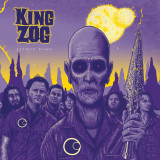
Gelobt sei das allmächtige Riff! Triumphaler, großartiger, schwerer und kraftvoller Stoner Metal.Das Debütalbum von King Zog aus dem Jahr 2017
führte einen neuen Titanen in die Unterwelt des Doom ein und erntete einseitige Fangemeinde und Kritikerlob für sein hingebungsvolles Opfer an die
Götter des Metal. Songs wie Temple's Temple, Man-sized Rotisserie und Witchsmoker klangen so, wie das ikonische Album-Artwork von Dominic
Sohor aussah: feurig und grausam.Seit dem Erscheinen dieses musikalischen Leviathans haben King Zog an einer unermüdlichen Mission gearbeitet.
Daniel Durack (Gesang/Gitarre), Connor Pitts-West (Gitarre), Martin Gonzalez (Bass) und Sean Ryan (Schlagzeug) haben keinen einzigen Tag
vergeudet, sich während der Pandemie in die Kisten gekauert, um Album Nr. 2 zu schreiben, und nach Aufhebung der Sperren unermüdlich performt.
Die Belohnung für ihre Mühen steht kurz bevor: „Second Dawn“ soll Anfang 2024 auf Hammerheart Records erscheinen. Größer, schwerer und
doomiger als sein Vorgänger, ist King Zogs zweites Album alles, was Fans sich wünschen: ein wütender Stier aus iommischen Riffs, seismischen Bässen
und donnernden Rhythmen. Downtuned und verzerrt, das erdrückende Gewicht.
Cape Verdean singer Mayra Andrade's multi-layered music embraces a blend of radiant, dancing colors, velvet beats and spicy melodies. Her voice is subtly seasoned with pepper, as if the Europe of pop had always been atropical archipelago. Andrade is arguably the front-runner of the many talents that have emerged from Cape Verde over the years.
Her vividly-hued music which is full of energy and a warm, adventurous upredictability is sung in Cape Verdean creole, English and Portuguese. Mayra’s pop spans the world’s entire vast sweep from Western romanticism, Southern sensuality, domestic reggae and African. It is topical, tropical, traveling pop that, in the words of Mayra, is “music that reflected my life”.
On this live album recorded at Union Chapel Mayra Andrade presents her new guitar and vocal collaboration ‘reEncanto’. The Cape Verdean singer performs her repertoire alongside musician Djodje Almeida, inviting us to discover the source and the essence of her songs which she was the author all along her discography – since Navega (2006), to Manga (2019).
Mayra Andrade se revisite en duo voix et guitare dans une ambiance intimiste appelée reEncanto. La chanteuse capverdienne accompagnée uniquement de son collègue musicien Djodje Almeida, nous invite à redécouvrir l’origine et l’essence de certaines de ses chansons dont elle a été l’auteur et compositrice tout au long de sa discographie – de ‘Navega’ (2006), à ‘Manga’ (2019). Cet album a été enregistré live en novembre 2023 à Union Chapel à Londres durant la tournée du même nom.
- A1: Ripper Sole - Stomp
- A2: Army Of Me - Björk
- A3: Girl U Want - Devo
- A4: Mockingbird Girl - The Magnificent Bastards
- A5: Shove - L7
- A6: Drown Soda - Hole
- B1: Bomb - Bush
- B2: Roads - Portishead
- B3: Let’s Do It - Joan Jett & Paul Westerberg
- B4: Thief - Belly
- B5: Aurora - Veruca Salt
- B6: Big Gun - Ice T
It’s a tough call which is the bigger cult classic, the Tank Girl movie or its accompanying soundtrack, but on balance, we’d have to go for the soundtrack. Yeah, the film had a cast composed of some of the most colorful characters (Iggy Pop, Ann Magnuson) and character actors (Malcolm McDowell, Ice-T, and of course the almighty Lori Petty!) in show biz.
And, its dystopic, resource-starved desert setting, intense action sequences, and lead female character mark it as a feminist (albeit funnier) precursor to Mad Max: Fury Road. But check out the soundtrack’s bona-fides: assembled by Courtney Love herself, it features a Who’s Who of ‘90s female rock including Hole, Björk, L7, Veruca Salt, and Belly among others. Plus, it even has tracks that were exclusive to its release, like a unique version of Devo’s “Girl U Want,” “Mockingbird Girl” by The Magnificent Bastards (a side project of the late Scott Weiland of Stone Temple Pilots), and a duet of “Let’s Do It, Let’s Fall in Love” between Joan Jett and The Replacements’ Paul Westerberg. In short, if there ever was a score that needs to be on wax, this would be it. We’ve done it right, too, with a gatefold jacket featuring the trademark comic book art and stills from the film, and neon coral vinyl pressing for its 30th anniversary!
- A1: Progetto Tribale - The Sweep
- A2: Onirico - Echo Giomini
- A3: Open Spaces - Artist In Wonderland
- B1: Alex Neri – The Wizard (Hot Funky Version)
- B2: M C.j. Feat. Sima - To Yourself Be Free - Instrumental Mix Energy Prod
- B3: Mato Grosso - Titanic Expande
- C1: Dreamatic - I Can Feel It (Part 1)
- C2: Carol Bailey - Understand Me Free Your Mind (Dream Piano Remix)
- C3: The True Underground Sound Of Rome - Secret Doctrine
- D1: Don Carlos - Boy
- D2: Lazy Bird – Jazzy Doll (Odyssey Dub)
Vol 2[28,99 €]
Volume 1 of this expertly curated project of 90s Italian House - put together by Don Carlos.
If Paradise was half as nice… by Fabio De Luca.
Googling “paradise house”, the first results to pop up are an endless list of European b&b’s with whitewashed lime façades, all of them promising “…an unmatched travel experience a few steps from the sea”. Next, a little further down, are the institutional websites of a few select semi-luxury retirement homes (no photos shown, but lots of stock images of smiling nurses with reassuring looks). To find the “paradise house” we’re after, we have to scroll even further down. Much further down.
It feels like yesterday, and at the same time it seems like a million years ago. The Eighties had just ended, and it was still unclear what to expect from the Nineties. Mobile phones that were not the size of a briefcase and did not cost as much as a car? A frightening economic crisis? The guitar-rock revival?! Certainly, the best place to observe that moment of transition was the dancefloor. Truly epochal transformations were happening there. From America, within a short distance one from the other, two revolutionary new musical styles had arrived: the first one sounded a bit like an “on a budget” version of the best Seventies disco-music – Philly sound made with a set of piano-bar keyboards! – the other was even more sparse, futuristic and extraterrestrial. It was a music with a quite distinct “physical” component, which at the same time, to be fully grasped, seemed to call for the knotty theories of certain French post-modern philosophers: Gilles Deleuze, Félix Guattari, Paul Virilio... Both those genres – we would learn shortly after – were born in the black communities of Chicago and Detroit, although listening to those vinyl 12” (often wrapped in generic white covers, and with little indication in the label) you could not easily guess whether behind them there was a black boy from somewhere in the Usa, or a girl from Berlin, or a pale kid from a Cornish coastal town.
Quickly, similar sounds began to show up from all corners of Europe. A thousand variations of the same intuition: leaner, less lean, happier, slightly less intoxicated, more broken, slower, faster, much faster... Boom! From the dancefloors – the London ones at least, whose chronicles we eagerly read every month in the pages of The Face and i-D – came tales of a new generation of clubbers who had completely stopped “dressing up” to go dancing; of hot tempered hooligans bursting into tears and hugging everyone under the strobe lights as the notes of Strings of Life rose up through the fumes of dry ice (certain “smiling” pills were also involved, sure). At this point, however, we must move on to Switzerland.
In Switzerland, in the quiet and diligent town of Lugano, between the 1980s and 1990s there was a club called “Morandi”. Its hot night was on Wednesdays, when the audience also came from Milan, Como, Varese and Zurich. Legend goes that, one night, none less than Prince and Sheila E were spotted hiding among the sofas, on a day-off of the Italian dates of the Nude Tour… The Wednesday resident and superstar was an Italian dj with an exotic name: Don Carlos. The soundtrack he devised was a mixture of Chicago, Detroit, the most progressive R&B and certain forgotten classics of old disco music: practically, what the Paradise Garage in New York might have sounded like had it not closed in 1987. In between, Don Carlos also managed to squeeze in some tracks he had worked on in his studio on Lago Maggiore. One in particular: a track that was rather slow compared to the BPM in fashion at the time, but which was a perfect bridge between house and R&B. The title was Alone: Don Carlos would explain years later that it had to be intended both in the English meaning of “by itself” and like the Italian word meaning “halo”. That wasn’t the only double entendre about the song, anyway. Its own very deep nature was, indeed, double. On the one hand, Alone was built around an angelic keyboard pattern and a romantic piano riff that took you straight to heaven; on the other, it showcased enough electronic squelches (plus a sax part that sounded like it had been dissolved by acid rain) to pigeonhole the tune into the “junk modernity” section, aka the hallmark of all the most innovative sounds of the time: music that sounded like it was hand-crafted from the scraps of glittering overground pop.
No one knows who was the first to call it “paradise house”, nor when it happened. Alternative definitions on the same topic one happened to hear included “ambient house”, “dream house”, “Mediterranean progressive”… but of course none were as good (and alluring) as “paradise house”. What is certain is that such inclination for sounds that were in equal measure angelic and neurotic, romantic and unaffective, quickly became the trademark of the second generation of Italian house. Music that seemed shyly equidistant from all the rhythmic and electronic revolutions that had happened up to that moment (“Music perfectly adept at going nowhere slowly” as noted by English journalist Craig McLean in a legendary field report for Blah Blah Blah magazine). Music that to a inattentive ear might have sounded as anonymous as a snapshot of a random group of passers-by at 10AM in the centre of any major city, but perfectly described the (slow) awakening in the real world after the universal love binge of the so-called Second Summer of Love.
For a brief but unforgettable season, in Italy “paradise house” was the official soundtrack of interminable weekends spent inside the car, darting from one club to another, cutting the peninsula from North to centre, from East to West coast in pursuit of the latest after-hours disco, trading kilometres per hour with beats per minute: practically, a new New Year’s Eve every Friday and Saturday night. This too was no small transformation, as well as a shock for an adult Italy that was encountering for the first time – thanks to its sons and daughters – the wild side of industrial modernity. The clubbers of the so-called “fuoriorario” scene were the balls gone mad in the pinball machine most feared by newspapers, magazines and TV pundits. What they did each and every weekend, apart from going crazy to the sound of the current white labels, was linking distant geographical points and non-places (thank you Marc Augé!) – old dance halls, farmhouses and business centres – transformed for one night into house music heaven. As Marco D’Eramo wrote in his 1995 essay on Chicago, Il maiale e il grattacielo: “Four-wheeled capitalism distorts our age-old image of the city, it allows the suburbs to be connected to each other, whereas before they were connected only by the centre (…) It makes possible a metropolitan area without a metropolis, without a city centre, without downtown. The periphery is no longer a periphery of any centre, but is self-centred”.
“Paradise house” perfectly understood all of this and turned it into a sort of cyber-blues that didn’t even need words, and unexpectedly brought back a drop of melancholic (post?)-humanity within a world that by then – as we would wholly realise in the decades to come – was fully inhuman and heartless. A world where we were all alone, and surrounded by a sinister yellowish halo, like a neon at the end of its life cycle. But, for one night at least, happy.
Jazz & Milk-Labelhead und Freestyle-DJ-Koryphäe Dusty aus München meldet sich mit seiner neuen EP "As Above So Below" zurück, die gefühlvoll, warm und grenzüberschreitend Deep-House-Grooves mit Elementen aus Jazz, Dub und westafrikanischen Rhythmen kombiniert, die einen Sound erzeugen, der ebenso introspektiv wie dancefloortauglich ist. Die EP ist eine berauschende Mischung der rohen Stimmkraft und den perkussiven Rhythmen des ghanaischen Künstlers King Owusu (Jembaa Groove), der die Bühne mit Legenden wie Ebo Taylor und Pat Thomas teilte, und erscheint zum 20-jährigen Labeljubiläum in 2025. Support kommt von Peter Kruder, Severino, Don Letts, Opolopo und dem jüngst verstorbenen DJ Harvey. Dusty legt weiterhin weltweit - Johannesburg bis Istanbul, Manila bis London - auf, veranstaltet die Jazz & Milk-Labelabende in München und Köln und eine Radiosendung auf dublab.de moderiert.
"Full support of EP!" - DJ Harvey, Klymax Bali, International Feel, Pikes
"Very nice! Thank you!" - Peter Kruder, Kruder & Dorfmeister
"Great EP! Love it!" - Ruff Stuff, Shall Not Fade
"SEXY... DEEEEEP." - Severino, Horse Meat Disco
"Warm and deep - very nice!" - Opolopo
"Good to go on Culture Clash Radio!" - Don Letts, BBC Radio 6 Music
- A1: Slaw 03 52
- A2: Dirtmouth (Feat. James Brandon Lewis) 04 42
- A3: Solanin (Feat. Brandee Younger) 03 54
- A4: Never In My Short Sweet Life (Feat. Mononeon) 03 50
- A5: Robert Pollard 01 54
- B1: Unified Dakotas (Feat. Jeff Parker) 05 04
- B2: Fast Asleep 04 34
- B3: (If You Don't Leave) The City Will Kill You (Feat. Daedelus) 05 11
- B4: Fatigue (Feat. Kurt Rosenwinkel & Telemakus) 03 20
- B5: Bad Infinity 04 44
Los Angeles-based experimental jazz collective High Pulp will release
their new album Days in the Desert in peak sweltering summer heat on
July 28
The titular desert is both literal and metaphorical: it's the Mojave Desert that the
band powers through on their many DIY tours around the country, and the band's
founder / drummer Bobby Granfelt perceives the desert as "a spiritual quest" as
well. Amid the trials of our present moment, you must look within, relying solely
on your own instincts to keep moving forward. "You're in the desert and it's a long,
lonesome process and a lot of times you have to check yourself to ask 'Is this
right? Is this good? Is it too out?'" he says.
High Pulp's Days in the Desert makes this vision come true, finding the West
Coast band fully emerging into their own sound. Rooted in the jazz tradition while
also smitten by indie- rock and electronic music, High Pulp was willing to grab
from all these sounds at once to pursue something truly their own. Their third fulllength album (following 2022's promising Anti- debut Pursuit of Ends), Days in the
Desert reveals the band realizing their strengths, deepening their own bonds, and
pushing all these skills into a thrilling new sonic vista all but unimaginable just a
few years before