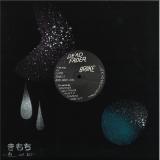
Expanding beyond the West Coast with release number three, Goodtunes invites master of the craft Rob Pearson for a dark & moody EP.
Opener “Odd Job Mischief” bends itself over dubbed out low end pressure as echoic LFOs rip through the groove. A2 “Dodgy Brass” doubles down, forcing hazy horns through truncated rhythmic cracks split from beneath its own weight.
On side B, “The Right Speed” is all gas, no breaks. A moody, stripped back weapon with detailed texture & the dark, tripped out aesthetics of Jayson Walker’s murmurs over the top. “Beautifully Mangled” wraps up the EP with a dark minimal groove & lush atmosphere that slowly builds into a warm driving force.
Third time’s certainly the charm on GT003, with Pearson pushing his productions into new territory with meaningful intention.
Поиск:double d
Все
- A1: Back To Nature (Originally By Fad Gadget)
- A2: Brand New Life (Originally By Young Marble Giants)
- A3: The Visitors (Originally By Abba)
- A4: I Can't Escape Myself (Originally By The Sound)
- A5: Goodbye To Love (Originally By Carpenters)
- B1: Rock On (Originally By David Essex)
- B2: Smoke And Mirrors (Originally By The Magnetic Fields)
- B3: Day Breaks, Night Heals (Originally By Thomas Leer, Robert Rental)
- B4: Gentle On My Mind (Originally By John Hartford)
- B5: Richard! (Originally By Ed Dowie)
- B6: End Credits (Originally By Laptop)
Depeche Mode, Yazoo, Erasure's Vince Clarke, Blancmange's Neil Arthur and the electronic producer-writer-synth-nerd Benge have joined forces to form the new project Doublespeak. Set to be released on May 29th, their self-titled debut album revisits eleven of their favourite songs from the past four decades, each reimagined and renewed in the timeless space of gleaming analogue electronica.
The 'Doublespeak' album is divided between songs from the postpunk netherworld brought blinking into the light (Fad Gadget, The Sound, Young Marble Giants), pop radio monsters ushered back down a dark stairway into the club (ABBA, David Essex, The Carpenters) and buried treasures from the 1990s onwards (The Magnetic Fields, Ed Dowie and Laptop).
Collectively, the album amounts to a shadow autobiography of the three collaborators' continuing musical education. Doublespeak is the great human songbook, synthesised.
Empathic vocals, bold arrangements and glowing analogue electronics turn familiar and forgotten songs into a personal, forward-looking electronic statement.
Maybe it was inevitable that Vilhelm Bromander and Fredrik Rasten would find each other. A symbiotic musical alliance of suggestive combinatory magic that stretches back to the interstitial two day space that separates their dates of birth and manifests here as the movement between ‘perfect’ or ‘just’ intonation and the ragged, psychoactive energy of the slippages from and towards that togetherness that render otherwise simple patterns or generally understood repetitions as wildly other and alive.
Astral Twins shares ‘twin’ works by each composer. The patiently unfolding real time retuning of Fredrik Rasten’s guitars on the a-side’s Sojourns and Vilhelm Bromander’s quickened steps and spry looping melodies on the flip’s Partially Dancing.
Both artists have history of going deep into the aesthetic and acoustic impact of intonation (how you think about what is ‘in tune’). Where their first LP (...for some reason that escapes us, 2019, Differ Records) shared a gorgeous set of sustained tone colour fields, this time they lean more explicitly into the folk music traditions of Scandinavia and further afield, whilst echoing the zoned minimalist atmosphere of Arthur Russell’s classic Instrumentals.
Recorded up close and in real time at Fylkingen’s soon-to-be-abandoned temporary location in Stockholm’s southern suburb of Bredäng, Astral Twins sings with the possibility that one plus one can equal more than two.
Fredrik Rasten:
Sojourns explores the live retuning of guitar and double bass in a sequence of just intonation harmonies. A guitar ostinato runs throughout the piece where the retuning becomes an integral part of the composition. The slow pace reveals every detail in the transition from one harmonic arpeggio to another — how interfering waves emerge and disappear as the tonal interactions settle in electric clarity. The double bass shadows the guitar's process and comments with occasional pizzicato tones and register jumps, at times providing a low foundation for the sound and sometimes soaring together with the guitar. This is music that is deeply listening; experimental and at the same time humbly inviting many kinds of being with sound.
Vilhelm Bromander:
As the title suggests, this song has a partially dancing character. The title also has a double meaning with reference to the partials and harmonics that dance together. The basic idea was to write music in just intonation that instead of being drone-based is reminiscent of a lightly dancing folk music, where the joyous feeling of just being in the music — “musicking" — is allowed to lead the way.
The double bass plays repeated overtone double stops in an open harmonic progression with subtle modulations that is inspired in equal parts by Steve Lacy's persistent repetition of phrases as east-asian khaen music. The guitars and mandolin have a freer role, with plucked retuned strings that enhance the bass's modulations and provide forward movement. The music invites to both melodic and spectral listening, suddenly halting so that other focal points can reveal themselves. For example, a chord sequence suddenly transitions to a more spectral part where Fredrik is playing a bowed guitar with a chain, several plucking guitars, voices, and pitch pipes. I wanted to make something ‘orchestral’ with just two people and no overdubs: a dance of overtones and open resonant strings, where we seamlessly take turns standing in the foreground.
Shed makes his first appearance on Dekmantel with Rave Echoes — a supple, mesmerising album of angular techno caught between the heat of peak time and the time-blurred hours after the club.
A combination of dreamlike atmospherics and rugged propulsion takes on many forms across the album. It's submerged and restrained on 'Loot 25', speckled with sharply sliced breaks on 'Everybody' and scattered across a sparse, steppy soundscape on 'Rave Predator'. Emotive, swooning strings collide with tough, squashed breakstep drums on 'Double Scoop' and 'Taking You Home' thrusts with urgency and rave romanticism in equal measure.
Wielding his signature blend of UK-school soundsystem pressure and Berlin-school techno momentum with poise and purpose, on Rave Echoes Shed offers a perfect impression of those wild, indescribable sensory overloads that leave their mark on anyone devoted to the dancefloor.
- A1: Wys X Dreamẅalker Remix - Snowman
- A2: Davz - Endgame
- A3: Leyona Music X Beach Pomodoros - New Beginning
- A4: Virtua - Chrome Mirage
- A5: Hotel Pools X Baton - Flight
- B1: Viq - Night Decoder
- B2: Krosia X Megas - Dream Engine
- B3: Boy From Nowhere - Astryne
- B4: Megas X Moxin - Nova
- B5: Akraa - Eclipse
- C1: Downtown Binary - Simulation
- C2: Soundgo - Retronox
- C3: Budsy - Beyond The City Limits
- C4: Ohladays X Neon Galaxy - Caelum
- C5: Kabes X Protocols - Magnetism
- D1: Tibeauthetraveler - Afterglow
- D2: Tarng - Off World
- D3: Sunday Museum - Grid
- D4: Tarng - City Sleeps
- D5: King Palm X Sørcery - Reach For The Sky
Inside his quiet, neon-lit room after midnight, the night settles in shades of blue and violet. Screens glow softly, shelves sit lined with dormant consoles, and the outside world feels distant beyond dark windows and sleeping streets.
4 AM Chill Session is an invitation to watch the stars flicker with each spin of the vinyl. In the quiet hours of the night, let the blend of dreamy melodies and relaxed electronic rhythms pull you into a new dawn with this early-morning synthwave compilation. The nostalgic, intimate atmosphere of these 20 tracks will keep you grounded as the hours fade toward morning.
The physical edition is a visual extension of the music: pressed on double "Starry Night" splatter vinyl, the deep blue and sparkling white patterns mirror the celestial aesthetic of the 4 AM sky.
[a] A1 WYS x dreamẅalker Remix - Snowman [dreamẅalker Remix]
- A1: Intro Lectric Chile Goat
- A2: Abierto
- A3: Organism
- A4: Thank You Mk
- B1: Tatanka
- B2: Interlude Train Of Thought
- B3: It Gets Heavy
- B4: Thin Brown Layer
- C1: Interlude So Many Years Ago
- C2: Terra Unfirma
- C3: Gettin It Together
- C4: Another Brother Gone
- C5: Broken Blood
- D1: Interlude And The Day Goes By
- D2: Lost Unfound (3:32)
- D3: The Color Of Life
- D4: Falling Awake
2026 Repress
It’s rare that a certain sound is entirely an artist’s own. Although undeniably a stew of impeccable influences – from blues to folk to Latin to dusty funk, soul and hip-hop – one cannot hear a Tommy Guerrero song without immediately recognising it as his - and his only.
The cult skater from San Francisco is globally renowned as one of the original members of the legendary “Bones Brigade” team. And as an accomplished multi-instrumentalist, his laid-back soul is beloved by all who’ve basked in its blissful glow.
There’s something elemental about this music that really stirs the soul. Strikingly beautiful and instantly addictive, it’s a kind of funk-fuelled, melody-driven, groove-based magic. There’s a serenity and heart in the playing that radiates warmth and splendour, as if crafted for endless sunsets. His albums that surfaced on Mo Wax at the turn of the century have been treasured since their release and it’s two of his most vital LPs that we’re honoured to reintroduce.
The originals were quietly pressed on to a single piece of vinyl so we’ve worked closely with Tommy this year to bring you these fresh, limited editions. They have been lovingly remastered, cut nice and loud on to heavyweight double vinyl and presented in deluxe gatefold jackets.
Soul Food Taqueria continued Guerrero’s guitar soul but represented a step forward with its polished production and greater complexity of instrumentation. Denied the promotion it deserved upon release, it flew under the radar. It is now the most wanted record of his wondrous back catalogue.
Guerrero’s atmospheric touch and subtle guitar provide lush, glimmering pieces of musical texture. Within his spacious compositions, uniquely arranged instruments flourish alongside each other to create a languid soundtrack for halcyon days.
As ever, the diversity on display is beguiling. From bossa nova, samba and cumbia rhythms to understated folk, funk and soul grooves, this is another exotic set of mellow gold; perfectly represented by ESPO’s memorable artwork. Furthermore, the title’s hybridity reflects the intoxicating sweep of stylistic flavours served up, reminding us that, however tricky it is to categorise Guerrero’s special blend, it’s always a pleasure to indulge in something so creative and adventurous.
Dubby, bass-heavy instrumentals give way to moody folk-soul – witness “It Gets Heavy”, featuring melancholic vocals from Gresham Taylor – whilst “Thank You MK” is a gentle ode to the tropics, featuring ethereal instrumentation, bright bass and warm, jazzy guitars. The second half in particular contains a number of stunning ambient tracks – check “Lost Unfound”, “Another Brother Gone” and “Broken Blood” - built around minimalist, laid-back grooves and detailed guitar orchestrations which wouldn’t be out of place on the latest Jonny Nash release.
Guerrero closes this flawless set with a moment of true beauty. Restrained and graceful, “Falling Awake” is a pared back piece containing meditative guitar melodies set against melancholic piano arrangements. It brings proceedings to the most peaceful close. Seductively good, it reminds you just how great simplicity can sound.
Justin K Broadrick (GODFLESH) and Mick Harris (Napalm Death) drop militant, hard techno on split LP.
New album doubles the track count (and runtime) of the duo's last collab.
Stalwart Birmingham, UK innovators Justin K Broadrick and Mick Harris have connected again as JK FLESH and MONRELLA to deliver the warehouse-destroying hard techno LP SHOUTING THE ODDS, five years after their last EP, SEE RED.
Featuring four tracks from each artist, SHOUTING THE ODDS invokes both the feeling of listening to late night pirate radio and sweating in a darkened warehouse as the rafters shake, complete with the perfect amount of analog wow and flutter. Brimming with gnarled, unrelenting kicks hovering between 130–140bpm, the split format deftly showcases both artist's individual strengths, while displaying undeniable commonality.
Broadrick's side leans traditional hard techno, filled with mesmerizing, minimal synth arpeggios and contrasting toplines, all aligned and maligned by shrewd transitions. Harris' section presents more experimental and house influences, using bright, distorted synth hits and a touch of forlorn melody. The tracks take on a life of their own through expert use of filters and just the right amount of delay, stutter, and glitch.
Never before has an album filled with such shining, shimmering synths been so black and threatening. JK FLESH and MONRELLA have hard techno down to a science.
“No-nonsense old school flavoured techno bangers. We're flying the flag for outsider techno." - Justin K Broadrick
Black Vinyl[14,50 €]
repressed !
It's been a busy 3 years since Danny Berman aka Red Rack'em released on his own Bergerac imprint.
Since then he's toured relentlessly, released a whole album of live music based disco/punk funk for Sonar Kollektiv as Hot Coins, managed to completely update his biggest track 'In Love Again' to make it a hit the second time around plus released spaced out, wonky party smashers on Wolf Music, Phonica, City Fly and Telefonplan.
While all this was going on Bergerac was largely on ice but now Berman is turning his energy back to the label with a vengeance.
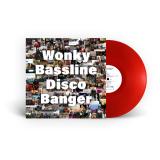
Wonky Bassline Disco Banger is accurately titled. An uplifting intro breaks down into a slamming disco house number and just when you think you know what's going on...
Then the trademark Red Rack'em wonky bass drops in. 150% Guaranteed party smasher... Jazzy House Extension is super vintage Red Rack'em from around 2004 - something for the jazz heads out there - cracked out piano and far too loud double bass come together to birth a euphoric yet banging snapshot of a producer learning his chops. Destined is a slightly demented leftfield house number featuring mangled, pitch shifting fretless bass and vocals samples discussing someone's destiny.
A woozy end to the EP.
- A1: Poetic Sands (Interlude) - Brian Jackson Feat. Wes Felton
- A2: It's Your World - Brian Jackson Feat. Raheem Devaughn, J. Ivy
- A3: We Almost Lost Detroit - Brian Jackson Feat. Moodymann
- B1: The Bottle - Brian Jackson Feat. Omar
- B2: Peace Go With You Brother - Brian Jackson Feat. Raheem Devaughn
- B3: Beautiful Dame - Brian Jackson Feat. Raquel Ra Brown
- C1: Lady Day & John Coltrane - Brian Jackson Feat. Rahsaan Patterson
- C2: The Revolution Will Not Be Televised - Brian Jackson Feat. Black Thought
- C3: Addiction (Interlude) - Brian Jackson Feat. Raquel Ra Brown
- D1: Home Is Where The Hatred Is - Brian Jackson Feat. Lisa Fischer
- D2: Madison Avenue - Brian Jackson Feat. Raheem Devaughn
- E1: Is That Jazz? - Brian Jackson Feat. Rahsaan Patterson
- E2: More Than Ever (Interlude) - Brian Jackson Feat. Raquel Ra Brown
- E3: Now More Than Ever
- E4: Home Is Where The Hatred Is
- F1: Moonshine (Live) - Brian Jackson Feat. Carl Cornwell
- F2: Racetrack In France - Brian Jackson Feat. Josh Milan, J. Ivy, Moodymann
- F3: Winter In America - Brian Jackson Feat. Rich Medina
- F4: New York City
Produced by Masters At Work (Kenny Dope and Louie Vega).
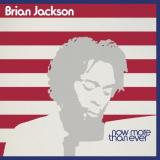
'Collaboration is stimulating, it's in my blood.' Thus speaks Brian Jackson and his philosophy for making music and it's indeed collaboration that runs through this amazing album of reimagined and revisited songs from his artistic past. Featuring artists such as Black Thought, Rahsaan Patterson, Josh Milan, Moodymann, Omar, J. Ivy and others and being produced by Masters At Work, Now More Than Ever takes the enduring classic tracks that Brian made with Gil Scott-Heron and places them in the now over nineteen tracks and across a triple vinyl LP or double CD.
Songs such as Lady Day & John Coltrane, The Revolution Will Not Be Televised, Home Is Where The Hatred Is, Winter In America, The Bottle and more soundtracked a generational movement of Black Consciousness in the 70s and 80s. As Brian says, 'This album is one way to connect to what we were about in the 70s; we were about change and this is part of the lineage of resistance. These tracks mark a period of time when resistance was essential and now a younger generation has picked them up.'
'As young men in their twenties we (Brian and Gil) just wrote about what we saw and were feeling and people interpreted these songs in ways we never thought about but as Sly stone said the song comes from me but it's for you.' This statement from Brian perfectly sums up the collaborative nature of Now More Than Ever and the relevance of these songs in a contemporary perspective can be perfectly summed up by the songs themselves. The formidable stable of artists contributing to each track and the excellent production from Louie Vega and Kenny 'Dope' Gonzalez make this album an event in itself. However, these songs are there to be enjoyed as a canon or as individual masterpieces, whether on the dancefloor or on a home system. ‘Now More Than Ever’ just has to be in everybody’s music collection.
- A1: Space Invaders
- A2: Double Jam
- A3: Aoa (The Age Of Anyone)
- A4: Planet Rhythm
- A5: Inspiration Room Interlude
- A6: Golden
- B1: Starburst
- B2: Sirens
- B3: House Alarm
- B4: Achtung! Optimism
- B5: City Of Love
- B6: Four Seasons
What do we need now more than ever? Exactly, OPTIMISM. This is the place we long for, the solution we need, and also the name of DIGITALISM's new album, which will be released on May 29. German electronic pioneers DIGITALISM spread the urgent energy of OPTIMISM with their upcoming album and live performances all over Europe. A DIY spirit, in-the-moment energy and a low boredom threshold - all have been crucial to Digitalism's practice since they built their first track in a studio inside a WWII bunker in Hamburg, 20 years ago. OPTIMISM is the logical consequence of the band's steady development.
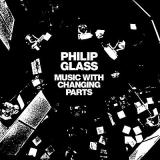
Philip Glass, the great American composer, was already in his mid-30s before his first album appeared, and then only because he produced the double LP himself. Music With Changing Parts was the inaugural release on his own Chatham Square imprint in 1971.
At this point, Einstein on the Beach, Glass' first opera, was still five years away. Yet in Changing Parts, one can already hear much of his vocabulary in full bloom: the buoyant arpeggios, the melding of electronic and acoustic instruments, the elongated drones of human voice, the primary emphasis on pulse (an interest he shared with fellow composer Steve Reich) and the ecstatic potential inherent in repetition.
The album features the original Philip Glass Ensemble – the composer himself, along with Jon Gibson, Dickie Landry, Art Murphy, Steve Chambers and Robert Prado – playing Farfisa organs and woodwinds as well as Barbara Benary on electric violin.
As Glass describes in his memoir Words Without Music, he secured a $500 interest-free loan for the recordings' initial release from the Hebrew Free Loan Society – an organization intended to help immigrants from the Old World upon arrival in the US. Though Glass was merely the grandson of immigrants, the venture wasn't far off the society's charter as Changing Parts helped usher in a new world of sound that would become known as Minimalism.
Chatham Square went on to release albums by other composers in Glass' circle, including Gibson and Landry. The label was named after the Manhattan intersection where Landry had a studio and the ensemble rehearsed.
Born in Baltimore in 1937, Glass first moved to New York to attend Juilliard at just nineteen, having already graduated from the University of Chicago. A staple of the Downtown scene, he can perhaps be appreciated as akin to the likes of sculptor Richard Serra or filmmaker Jim Jarmusch: mavericks who became major cultural figures entirely on their own terms.
This first-time vinyl reissue reproduces the original side-breaks and gatefold sleeve.
- A1: Missing Project - Poisson D'avril (Da' Future Given A Deep Soul Mix) 08:19
- B1: Virgo - First Epilogue (Tek Of 606 Remix) 05:47
- B2: Tensor - Balloon (I.d. Remix) 05:36
- C1: Penance - Cure Of Soul (Fossil Mix) 08:00
- C2: Virgo - Proxima Scope (Zanzibar Mix) 06:12
- D1: Led-M - 713Aw (Dendrobium Remix) 06:19
- D2: Missing Project - Poisson D'avril (Galaxy Dub) 07:41
WRWTFWW Records is thrilled to announce their 5th archival release taken from cult Tokyo label FORM@ RECORDS' catalogue, this time with the first-ever vinyl edition of Re-Form Ver-1.0. The remarkable, yet not widely known, 1999 remix compilation is now available as a limited edition 45rpm cut double LP housed in a heavyweight sleeve, as well as in digital format.
Originally only available on CD in extremely limited quantities, Re-Form Ver-1.0 resurfaces as a fascinating document of FORM@ RECORDS' late-1990s creative peak. Re-imagining key pieces from the label's catalogue, the remix collection offers a rare glimpse into Tokyo's electronic underground, where techno, house, ambient, and IDM breathe freely through FORM@'s soulful and exploratory vision.
Highlights include two remixes of Missing Project's adored gem "Poisson D'Avril" (including its well known ethereal ambient Galaxy Dub which appeared on Music From Memory's Virtual Dreams II) as well as the otherworldly Fossil (aka the legend Virgo) Mix of Penance's "Cure & Soul". Throughout, the compilation balances dancefloor sensibility with introspective listening, embodying the warm human approach to machine music FORM@ RECORDS excels in.
Another essential time capsule from a crucial era of underground music, Re-Form Ver-1.0 echoes the spirit of Warp's Artificial Intelligence era, alongside the forward-thinking energy of Ken Ishii, Carl Craig, The Black Dog, and Ian O'Brien, while keeping its feet and individuality firmly rooted in local context - the magic recipe for creating a universal, timeless language of electronic expression.
Re-Form Ver-1.0 follows the vinyl edition of Virgo's Landform Code (1998) and Remnants (1999), as well as the FORM@ compilations Art Form I (1997) and Art Form 2 (1998), further expanding WRWTFWW's archival series dedicated to uncovering hidden gems of late '90s Japanese electronic music.
- A1: Walk Walk Walk
- A2: Too Much Noise (Feat Joe Yorke)
- A3: Dem Try (Feat Nazamba)
- B1: Machines
- B2: In & Out (Feat Marina P)
- B3: This Is Music (Feat Nazamba)
- C1: Lsd Explosion (Feat Jah Thomas)
- C2: Waterhouse Club
- C3: Shaka
- D1: Dem Try (Jeanville Remix)
- D2: Lsd Explosion (Mad Profesor Dub Mix)
- D3: Too Much Dub (Androo Re-Interpretation)
New Stand High Patrol album, featuring Joe Yorke, Nazamba, Jah Thomas - and remixes from Mad Professor, Androo & Jeanville.
Dub and House Music. Two aesthetics born in the shadows, shaped far from the mainstream music industry. Two underground cultures where independence is often a necessity and ingenuity is essential. Two scenes rooted in the margins of society, with dance, sound systems and minorities at their heart.
From the Jamaican sound system sessions of the late sixties, through the nights at Chicago's Warehouse, to the murmurings of the New York house scene in the early eighties — history shows that house, reggae and dub share far more than many people may assume. Collective action, resistance as a driving force, music moving straight from studio to turntable, shared messages: these are the threads that bind these landmark musical movements together. It is at this crossroads, driven by the spirit of experimentation that defines them, that the members of Stand High Patrol found yet another territory worth mapping.
"Skanking & Jacking", the new Musketeerz album, reveals a side of the Dubadub sound never heard on record before. Built for the dancers and for DJs, the LP brings together the pulse of house music and the vibrant groove of reggae. Uncharted territory, never interfaced like this before. The result of a meticulous blending of styles, house, reggae and dub intertwine across 12 extended tracks. The sound is carefully crafted. Built on immersive loops and interlaced with micro-variations that give it an organic texture. Born from the interaction between being and machine. This is not about simply bringing worlds closer together; it's about mobilising influences to chart a new sonic galaxy.
Beyond it's aesthetic statement, "Skanking & Jacking" also stands out for its international cast. The most extensive Stand High Patrol have ever assembled on an album. From England, Italy, Switzerland and Jamaica, the guest vocalists, producers and MCs deepen the sense of dialogue between cultures and styles. At the mic, Joe Yorke, Marina P, Nazamba and Jah Thomas join the Dubadub Musketeerz on their explorations. Each appearance subtly reshaping the contours of the project.
Never fixed, always in motion, "Skanking & Jacking" pays tribute to the traditions that shaped it and closes, as a final nod, with remixes from Jeanville, Androo and the legendary Mad Professor. The album stands as further proof of a crew that shows no signs of stopping its reinvention. Available on stream, digital and double LP on May 29th.
- 1: O Nevado (Feat. Alexandre Andrés)
- 2: O Abraço Da Serpente (Feat. Ilessi, Flavia Huarachi, Anders Skibsted)
- 3: A Cor Da Romã (Feat. Moa Edmunds Guevara)
- 4: Vera Cruz (Feat. Mané Fernandes, Albert Karch)
- 5: Misteriosa Buenos Aires
- 6: De Regreso (Feat. Flavia Huarachi)
- 7: O Ouro De Marawa (Feat. Gus Orihuela & André Maria)
- 8: O Garimpeiro E O Curumim (Feat. Ilessi, Flavia Huarachi, Anders Skibsted)
- 9: Entre Ríos (Feat. Luciana Insfran)
- 10: El Pajarillo Y La Mariposa (Feat. Flor Bobadilla, Cecilia Pahl, Alexandre Andrés)
- 11: Patagônia (Feat. Moa Edmunds Guevara, Pancho Rangonese, Albert Karch, Stanislav Zhukovsky)
- 12: Os Muitos Nomes De Salkantay
- 13: A Safira De Igarassu (Feat. João Machala)
- 14: Isla Del Sol (Feat. Júlio Rangel, Albert Karch)
- 15: Sentido De Su Ausencia (Feat. Iamana Mari, Gabriel Milliet)
- 16: Sequóias (Feat. Gustavo Assis Brasil, Albert Karch)
Caçador de Horizontes is the fourth and most ambitious album by Brazilian composer and songwriter Raphael Gimenes. Conceived as an expansive double album, it brings together voice and acoustic guitar with richly arranged strings, brass and a wide palette of percussion, engaging with the tradition of Brazilian songwriting while evoking the harmonic sensibility of artists such as Milton Nascimento, alongside elements of modern classical music.
Inspired by travels across the American continent, the album moves between intimate moments and large-scale instrumental passages, creating a cinematic and emotionally resonant atmosphere. Produced by Lucas Delacroix, Alexandre Andrés and Gimenes himself, it features more than 30 musicians from different countries and was supported by the Danish Arts Foundation (Statens Kunstfond).
- A1: Return Of The Knödler Show 2 52
- A2: The Frogs Of Miwa - Cho (1) 4 52
- A3: Waiting (I) 5 38
- A4: An Old Friend Passes By 3 46
- A5: Coco Bolo Strip (1) 5 25
- B1: Peace And Pipe Utopia 3 14
- B2: Unidentified Dancing Object 1 44
- B3: The Call (I) 2 41
- B4: Wenn Das Rohr Dommelt 4 03
- B5: Mariahilf (Live Version) 3 36
- B6: Watching The Shades (I) 2 59
- B7: Playing The Table Music (Ii) 2 43
- C1: Could Be Nice Too 5 29
- C2: Ox Of Inner Depth 4 51
- C3: Ymir Shows Up 3 58
- C4: Could Be Nice 5 24
- C5: Playing The Table Music (I) 4 23
- D1: Coco Bolo Strip (Ii) 4 52
- D2: Locusts Looking Like Men 5 55
- D3: Waiting (Ii) ︎ 3 36
- D4: No Stove 2 29
- D5: An Old Friend Passes By Again 3 00
- D6: Heimkehr Der Holzböcke 3 16
Black Truffle is thrilled to announce Dalbergia Retusa, an extensive double LP selection of the solo guitar music of Hans Reichel, compiled by Oren Ambarchi. Last heard on Black Truffle as one quarter of the joyously anarchic Bergisch-Brandenburgisches Quartett, Hans Reichel (1949-2011) is one of the great figures of experimental guitar music. Though perhaps lesser known than peers like Derek Bailey, Fred Frith and Keith Rowe, Reichel’s rethinking of the instrument was in some ways the most radical of all. Early on, he dispensed with existing guitars to build a series of his own that explored the use of additional strings and fretboards, moveable pickups, extra bridges, special capos, and other innovations documented in the extensive booklet accompanying this release.
Reichel was a long-term resident of Wuppertal, the small Western Germany city that became an unlikely centre of European free jazz in the late 1960s, also home to Peter Brötzmann and Peter Kowald. His solo debut Wichlinghauser Blues was an early entry into the FMP discography and began a relationship with the label that stretched into the 1990s; all the solo performances heard here were first released on FMP. As Reichel says in the charming archival interview with Markus Müller included here, he was ‘always a cuckoo’s egg at FMP’, a label that began as an outlet for roaring European free jazz. What strikes the listener right from the opening selection on Dalbergia Retusa—‘Return of the Knödler show’, from 1987’s The Dawn of Dachsman—is the extraordinary beauty of Reichel’s music, at once alien in the shimmering sonorities and unconventional pitch relationships made possible by his invented instruments, and deeply lyrical, even romantic in its harmonic content. Growing up in West Germany in the 1960s, Reichel’s formative influences were mainly British and American rock bands, a background that shines through in many of the pieces included here: ‘An old friend passes by’ is haunted by the ghost of Hendrix’s rhythm guitar, and the wild closer ‘Heimkehr der Holzböcke’, taken from a rare 1975 7” and the only piece to use overdubbing, layers errant hammer-on and slide tones over a Canned Heat boogie chug.
Reichel was an important source for the development of Oren Ambarchi’s own extended approach to the electric guitar. Appropriately enough, his selection opens with the very first piece by Reichel he ever heard, on a flexidisc included with a 1989 issue of Guitar Player magazine. Though Reichel collaborated with others extensively in many settings and also performed on violin and his other major contribution to instrument invention, the daxophone, his music for solo guitar remains at the core of his oeuvre. Focusing exclusively on solo pieces recorded between 1973 and 1988, the 23 pieces on Dalbergia Retusa showcase the range and consistency of Reichel’s work, allowing the listener to see how his performances developed hand-in-hand with his instrumental inventions. On a piece from his very first LP, played on an 11-string instrument (partly strung with piano strings and using a schnapps glass a slide), we hear his intensive exploration of fret-hammering to create zither-like, chiming tone, which Reichel would hone further in later years with a double fretboard guitar specifically designed to be hammered rather than fretted and picked. On a piece from 1979’s Death of the Rare Bird Ymir, Reichel uses two steel-string acoustic guitars at once, with beautiful results: ‘some even say too beautiful’, he jokes in the interview included here. Many of the pieces from the 1980s make use of varieties of the ‘pick behind the bridge guitar’, instruments of uncanny harmonic richness primarily designed to be played on the ‘wrong’ side of the bridge. At times the unexpected behaviour of attacks, resonance, and decay can almost seem electronic, conjuring up the technology-assisted work of Henry Kaiser or even Fennesz, but realised solely through Reichel’s unorthodox techniques on his invented instruments. Extensively illustrated with photos and Reichel’s own plans and drawings of his instruments, Dalbergia Retusa is an essential introduction to the unique world of Hans Reichel. Rarely has music been at once so strange and so beautiful.
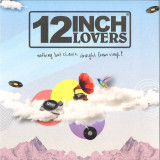
12 Inch Lovers nothing but classix, straight from vinyl! Part 1 of two double vinyl-pack incl. Sasha & Maria, Fatima Yamaha, Brahama, The Mackenzie feat. Jessy, Hatrixx, and Salif Keita & The Base Boys.
After its foundation in 2012, 12 Inch Lovers have become a household name for vinyl lovers in Belgium. Their parties sell out time and time again and focus on an adult audience that loves house and club music from the mid 90s to the present. This in combination with unique locations and DJ's that only play vinyl generates a very dedicated and passionate audience that share one big love: vinyl.
- A1: Tensnake - Coma Cat
- A2: Aqeel72 - Up In The Sky (Xpansoul Unter Pop Mix)
- B1: Afro Celt Sound System - Release (Masters At Work Dub 1)
- B2: Midnight Star - Midas Touch
- C1: Robert Babicz - Dark Flower (Joris Voorn Magnolia Mix)
- C2: Gregor Salto & Florian T - Mundocaso
- D1: Codec & Flexor - Time Has Changed
- D2: Lovebirds Feat Stee Downes - Want You In My Soul
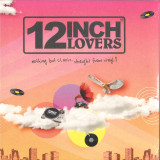
12 Inch Lovers nothing but classix, straight from vinyl! Part 2 of two double vinyl-pack incl. Tensnake, Afro celt Sound System, Midnight Star, Robert Babicz, Gregor Salto, Lovebirds, and Codec & Flexor
After its foundation in 2012, 12 Inch Lovers have become a household name for vinyl lovers in Belgium. Their parties sell out time and time again and focus on an adult audience that loves house and club music from the mid 90s to the present. This in combination with unique locations and DJ's that only play vinyl generates a very dedicated and passionate audience that share one big love: vinyl.
Battle tool repress taken from DJ Junk's infamous Second To None label.
Manchester's Andrew Hargreaves, known for Tape Loop Orchestra and as a founding member of The Boats, returns under his Beppu alias with a refined full-length for dub techno favourites Lempuyang. Fresh from a celebrated double-LP reissue on Organic Analogue, Hargreaves delivers deep, dust-textured techno that is meticulously sculpted and atmospheric. These grooves move with a slow, hypnotic gravity as rhythms become submerged yet remain gripping. The palette is warm, grainy and future-facing so perfect for the real heads. File this somewhere between Detroit Escalator Company and Bluetrain, an immersive, meditative drift that's sure to become a classic.
The label suggests these sounds are something akin to if Tim Hecker met Hudson Mohawke "in a 16-bit video arcade," and we're not going to disagree. Dead Fader is now based in Berlin, but his sound remains out of this world with vapourware trails, glossy synth textures and skeletal rhythms all drenched in trippy colours and low-key melancholy. Ambient, minimal and suspensory synthscapes all drift by with far-sighted reverie encouraged before more weighty rhythms like 'Clowning' and 'fade Out' driving things with extra momentum.