MPO is thrilled to announce the release of Jazz Sexiest Ladies, a two-LP compilation that masterfully blends the elegance of jazz with the charm of iconic pop hits from the last five decades. This unique collection features a selec- tion of sultry, jazz-inspired renditions of beloved songs, all brought to life by some of the most evocative female voca- lists in the genre. Each track offers a fresh, soulful interpretation, transforming these well-known hits into intimate, lounge-style performances.
Highlighting this compilation are stellar contributions from renowned artists such as Sarah Menescal, Karen Souza, Eve St. Jones, and Cassandra Beck. Their distinct voices and captivating styles infuse each song with warmth and sophistication, creating an experience that bridges the worlds of jazz and pop. These talented performers bring depth and allure to classics, offering listeners a new way to appreciate the enduring appeal of these hits.
Available on vinyl, Jazz Sexiest Ladies is a must-have for collectors, jazz aficionados, and anyone looking to experien- ce pop classics through a new, refined lens. This double LP promises to be a captivating addition to any music collec- tion, ideal for setting a relaxing ambiance or enhancing a lively gathering with its rich, evocative soundscapes.
Buscar:double f
Originally released and sold on their fall 2009 US tour, Flower-Corsano Duo’s “The Chocolate Cities” stands as one of the group's most spirited releases. Recorded live in Cambridge, England and Geneva, Switzerland these recordings capture the power and energy being harnessed by the duo at a time of frequent touring, just after the release of their monumental double-LP “The Four Aims.” Michael Flower is perhaps best known for his work in Vibracathedral Orchestra, along with a slew of other bands, collaborations, and solo work. Meanwhile, Chris Corsano is well known as one of the premier drummers of modern times, and a frequent collaborator of Joe McPhee, Bill Orcutt, Bill Nace, Paul Flaherty, and many more. As a duo Flower and Corsano present an endlessly shifting and transforming sound, meshing elements of free jazz, drone, and ecstatic psychedelia into something all its own. While Corsano guides with his nimble and dynamic drumming, Flower plays amplified Japan Banjo (also known as a Shahi Baaja) providing melody, lead, and drone, often simultaneously. Gripping even in its quietest passages, thoughtful even in its most unrestrained crescendos, “The Chocolate Cities” documents a duo at the height of their collective prowess. Saved from the obscurity of its original CDr format and presented for the first time on vinyl with stunning new artwork by Chris Corsano, “The Chocolate Cities” stands as testament to the power of two magnificent players even 15 years on.
We're told that inspiration for this bumper new double album of super fresh techno from the young New Palm label came in 2023 when the artists met up on the LA River armed with "a couple of generators, a Klipsch system, turntables, and a modular rig, for a day into night of music centred around various forms of dub." The results are superb, with Charles Edward opening up with the sparse, laid-back dub of 'Bogus August', Lena Deen keeping it deft with the ambient soundscapes of 'Either Ore' and Berndt's 'Solstice' exploring widescreen minimalism dub, with plenty more to love in between.
- A1: B-Rock & Mono Junk - My Mind Is Going
- A2: Orchestra Guacamole & Mika Vainio - Theme For The Lost Diamonds
- A3: Mr Velcro Fastener& Mesak - Robotic Appliances (Original Demo)
- B1: Jori Hulkkonen - Whispers (Extended Dance Version)
- B2: Markus & Kristian - Hän Malli On
- B3: Spektor - Rubic`s Cube
- C1: Imatran Voima - It`s Time To Testify
- C2: Decepticons - We Are The Decepticons
- C3: Dr Robotnik - Own Commands
- D1: Feng Shui - Hao Hao (I`m Back)
- D2: Brothomstates - Naeae Eletrok
- D3: Tero - Music
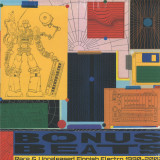
Cold Blow proudly presents Bonus Beats: Rare & Unreleased Finnish Electro 1990–2002, a landmark compilation capturing Finland's underground electro scene from the late 1990s and early 2000s. This double-LP features 9 rare and 3 previously unreleased tracks from pioneering Finnish artists, showcasing a distinctly Nordic approach to the genre. With contributions from notable names such as Jori Hulkkonen, Mr. Velcro Fastener, Mono Junk, and the late Mika Vainio, this release highlights the experimental and DIY ethos that defined Finland's electronic music scene during this period.
Carefully curated by Erkko Lehtinen, a key figure in Finland's electro scene as a DJ and promoter, the compilation explores a broad sonic palette, spanning early techno influences, robotic allure, and dark, bass-heavy tracks. Standout contributions include Decepticons and Dr. Robotnik's unreleased dark electro cuts, with the latter veering into minimal wave territory. Feng Shui feat. Monsieur delivers a striking collaboration that fuses a trance-like lead with raw, industrial beats, uniting members of Huoratron, Nu Science, Polytron, and Op:l Bastards. Keeping alive the legacy of Perttu Häkkinen (aka Randy Barracuda), this release wouldn't be complete without Imatran Voima's bass-driven anthem from their debut EP. Also featured are Spektor's retro synth experiments, Tero's Commodore 64-based creations, Brothomstates' (later a Warp signee) futuristic soundscapes, and a rare cover of Kraftwerk's The Model by the anonymous duo Markus & Kristian. Erkko's extensive liner notes provide additional insight into this culturally and musically significant era. Available in double-LP, this collection is a must-have for electronic music aficionados and vinyl collectors.
j 10: Feng Shui - Hao Hao (I`m Back) feat. Monsieur
- Monda
- Vänern
- Volda
- Laisan
- Rocks
- Rose
- Årdal
- Lofoten Sunset
- Haugesund Night Sky
- Anna
180g double vinyl, coke bottle green. One of Sweden's currently most celebrated musicians, Daniel Ögren, releases his album "Pine" on February 12th. Thanks to his solid musical background, he has established himself as one of the country's most influential and versatile creators, both as an artist, multi-instrumentalist and producer for some of Sweden's biggest names. He is one of the members of the two-time Swedish Grammy-award-winning band Dina Ögon, who have made a significant mark in the past few years. Recently, Ögren also released the four-track EP "Daniel Ögren med vänner tolkar Allan Edwall" consisting of interpretations of cultural icon Allan Edwall's musical treasure. Additionally, Ögren produced Broder John's new album "Följ inte mig". Beyond his fundamental role in Dina Ögon, Daniel has also collaborated musically with well-known artists such as Sven Wunder, Eva Dahlgren, Amason, Daniel Johnston, Anna von Hausswolff, Fatouma Diawara, The Greys and Anna Järvinen. As a member of Dina Ögon, Daniel has shaped one of the most celebrated and innovative bands in modern Swedish music.
- A1: Progetto Tribale - The Sweep
- A2: Onirico - Echo Giomini
- A3: Open Spaces - Artist In Wonderland
- B1: Alex Neri – The Wizard (Hot Funky Version)
- B2: M C.j. Feat. Sima - To Yourself Be Free - Instrumental Mix Energy Prod
- B3: Mato Grosso - Titanic Expande
- C1: Dreamatic - I Can Feel It (Part 1)
- C2: Carol Bailey - Understand Me Free Your Mind (Dream Piano Remix)
- C3: The True Underground Sound Of Rome - Secret Doctrine
- D1: Don Carlos - Boy
- D2: Lazy Bird – Jazzy Doll (Odyssey Dub)
Vol 2[28,99 €]
Volume 1 of this expertly curated project of 90s Italian House - put together by Don Carlos.
If Paradise was half as nice… by Fabio De Luca.
Googling “paradise house”, the first results to pop up are an endless list of European b&b’s with whitewashed lime façades, all of them promising “…an unmatched travel experience a few steps from the sea”. Next, a little further down, are the institutional websites of a few select semi-luxury retirement homes (no photos shown, but lots of stock images of smiling nurses with reassuring looks). To find the “paradise house” we’re after, we have to scroll even further down. Much further down.
It feels like yesterday, and at the same time it seems like a million years ago. The Eighties had just ended, and it was still unclear what to expect from the Nineties. Mobile phones that were not the size of a briefcase and did not cost as much as a car? A frightening economic crisis? The guitar-rock revival?! Certainly, the best place to observe that moment of transition was the dancefloor. Truly epochal transformations were happening there. From America, within a short distance one from the other, two revolutionary new musical styles had arrived: the first one sounded a bit like an “on a budget” version of the best Seventies disco-music – Philly sound made with a set of piano-bar keyboards! – the other was even more sparse, futuristic and extraterrestrial. It was a music with a quite distinct “physical” component, which at the same time, to be fully grasped, seemed to call for the knotty theories of certain French post-modern philosophers: Gilles Deleuze, Félix Guattari, Paul Virilio... Both those genres – we would learn shortly after – were born in the black communities of Chicago and Detroit, although listening to those vinyl 12” (often wrapped in generic white covers, and with little indication in the label) you could not easily guess whether behind them there was a black boy from somewhere in the Usa, or a girl from Berlin, or a pale kid from a Cornish coastal town.
Quickly, similar sounds began to show up from all corners of Europe. A thousand variations of the same intuition: leaner, less lean, happier, slightly less intoxicated, more broken, slower, faster, much faster... Boom! From the dancefloors – the London ones at least, whose chronicles we eagerly read every month in the pages of The Face and i-D – came tales of a new generation of clubbers who had completely stopped “dressing up” to go dancing; of hot tempered hooligans bursting into tears and hugging everyone under the strobe lights as the notes of Strings of Life rose up through the fumes of dry ice (certain “smiling” pills were also involved, sure). At this point, however, we must move on to Switzerland.
In Switzerland, in the quiet and diligent town of Lugano, between the 1980s and 1990s there was a club called “Morandi”. Its hot night was on Wednesdays, when the audience also came from Milan, Como, Varese and Zurich. Legend goes that, one night, none less than Prince and Sheila E were spotted hiding among the sofas, on a day-off of the Italian dates of the Nude Tour… The Wednesday resident and superstar was an Italian dj with an exotic name: Don Carlos. The soundtrack he devised was a mixture of Chicago, Detroit, the most progressive R&B and certain forgotten classics of old disco music: practically, what the Paradise Garage in New York might have sounded like had it not closed in 1987. In between, Don Carlos also managed to squeeze in some tracks he had worked on in his studio on Lago Maggiore. One in particular: a track that was rather slow compared to the BPM in fashion at the time, but which was a perfect bridge between house and R&B. The title was Alone: Don Carlos would explain years later that it had to be intended both in the English meaning of “by itself” and like the Italian word meaning “halo”. That wasn’t the only double entendre about the song, anyway. Its own very deep nature was, indeed, double. On the one hand, Alone was built around an angelic keyboard pattern and a romantic piano riff that took you straight to heaven; on the other, it showcased enough electronic squelches (plus a sax part that sounded like it had been dissolved by acid rain) to pigeonhole the tune into the “junk modernity” section, aka the hallmark of all the most innovative sounds of the time: music that sounded like it was hand-crafted from the scraps of glittering overground pop.
No one knows who was the first to call it “paradise house”, nor when it happened. Alternative definitions on the same topic one happened to hear included “ambient house”, “dream house”, “Mediterranean progressive”… but of course none were as good (and alluring) as “paradise house”. What is certain is that such inclination for sounds that were in equal measure angelic and neurotic, romantic and unaffective, quickly became the trademark of the second generation of Italian house. Music that seemed shyly equidistant from all the rhythmic and electronic revolutions that had happened up to that moment (“Music perfectly adept at going nowhere slowly” as noted by English journalist Craig McLean in a legendary field report for Blah Blah Blah magazine). Music that to a inattentive ear might have sounded as anonymous as a snapshot of a random group of passers-by at 10AM in the centre of any major city, but perfectly described the (slow) awakening in the real world after the universal love binge of the so-called Second Summer of Love.
For a brief but unforgettable season, in Italy “paradise house” was the official soundtrack of interminable weekends spent inside the car, darting from one club to another, cutting the peninsula from North to centre, from East to West coast in pursuit of the latest after-hours disco, trading kilometres per hour with beats per minute: practically, a new New Year’s Eve every Friday and Saturday night. This too was no small transformation, as well as a shock for an adult Italy that was encountering for the first time – thanks to its sons and daughters – the wild side of industrial modernity. The clubbers of the so-called “fuoriorario” scene were the balls gone mad in the pinball machine most feared by newspapers, magazines and TV pundits. What they did each and every weekend, apart from going crazy to the sound of the current white labels, was linking distant geographical points and non-places (thank you Marc Augé!) – old dance halls, farmhouses and business centres – transformed for one night into house music heaven. As Marco D’Eramo wrote in his 1995 essay on Chicago, Il maiale e il grattacielo: “Four-wheeled capitalism distorts our age-old image of the city, it allows the suburbs to be connected to each other, whereas before they were connected only by the centre (…) It makes possible a metropolitan area without a metropolis, without a city centre, without downtown. The periphery is no longer a periphery of any centre, but is self-centred”.
“Paradise house” perfectly understood all of this and turned it into a sort of cyber-blues that didn’t even need words, and unexpectedly brought back a drop of melancholic (post?)-humanity within a world that by then – as we would wholly realise in the decades to come – was fully inhuman and heartless. A world where we were all alone, and surrounded by a sinister yellowish halo, like a neon at the end of its life cycle. But, for one night at least, happy.

Back in stock due to popular demand, the 23rd release in our signature Brazil 45’s series served up a double header of classics from Sonia Santos and João Donato.
First up, 'Poema Ritmico Do Malandro (Balanço Do Crioulo)' is a beautiful track from the instantly recognisable Sonia Santos. A song that drifts from classic to psychedelic samba, laden with strings, horns and crowd noise. First released on 7” by Copacabana in 1971, but never on an album, originals fetch up to £100 per copy. A different version of this song also appears on the truly excellent Zito Righi Alucinolandia LP.
On the B side, 'Cala Boca Menino' is taken from João Donato’s much sought after and requested Quem É Quem LP. Quirky percussion, bubbling keys, horns and a hypnotic vocal. Donato is a hugely prolific force in Brazilian music and worked with the likes of including Tom Jobim, Astrud Gilberto, Cal Tjader, Dom Um Romao and Gilberto Gil amongst others. ‘Cala Boca Menino’ was released on a 7” in 1973 in Brazil, but is very difficult to find at a reasonable price and in good condition these days.
- A1: Dadge Von O Von Non "83
- A2: Azo Nkplon Doun Nde
- A3: Mo Ngbadun Re
- A4: Fini Les Paves
- B1: Feso Jaiye
- B2: Adigbedoto
- B3: Tu Es Tout Seul
- B4: Yiri Yiri Boum
- C1: Agbadja Moderne No2
- C2: Manzanillo
- C3: L'indomptable Gnonnas
- C4: Bailando Mi Solo
- D1: Gbeto Enon Mon
- D2: El Cochechivo
- D3: Ati Mawuin Dagamasi
- D4: Avivogbe
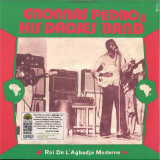
Analog Africa is back with a dedicated project celebrating Gnonnas Pedro, the king of Modern Agbadja, and they press it up on a marvellous double album that includes an eight-page booklet with a ton of extra info. Although four tracks of his have previously appeared on the 2009 Legends of Benin compilation, this bumper pack features 16 of Pedro's best works, all of which captivated Africa at the time. His vibrant blend of Agbadja, Cuban fon, jerk, highlife and more unique styles, all of which come with vocals sung in Fon, Mina, Yoruba, French, English and Spanish, add up to one hell of a rich sound. This is a great testament to the artist's extraordinary legacy.
Ploughing lesser-used breaks and finding finesse in the ruffest and tuffest rave emissions, Jason Warlock is back with more of that untouchable clout he rolls out as Hooverian Blur. Team Sneaker have been proud to platform the project plenty in the past, and so it goes on this latest four-strong salvo of blunted samples and head-threading synth hooks.
In terms of pace and sheer sonic breadth Hooverian Blur aligns with the embryonic days of hardcore, before breakbeat dogma had set in. Rather than opting for tear-out intensity, the likes of 'Hypnotizer' and 'Wacky Robot' roll with a lean-on that feels like the sweet spot between rave and rap. It's trippy, ready to take a left turn and tweak your nervous system with a plethora of zaps and pings, and it's got more than enough bassweight and mid-range snap to get bodies twisting, but edgy hysteria has been replaced by a cool and deadly demeanour which makes these joints all the more addictive.
'Project One' still slaps with a crafty one-two between rolling drum licks and machine-powered thrust, and 'Double Depths' digs deep down in the crusty edits, but yet again Warlock demonstrates an assured poise in his Hooverian Blur guise which can only come from serious skin in the game.
- Talking Haunted
- Ordinary Voices
- Wish Defense
- A Room
- Desire Path
- Sometimes Only
- You Future
BLACK & WHITE SPLIT VINYL[20,13 €]
Cassette[13,99 €]
CLEAR & BLACK SPLATTER VINYL[20,13 €]
The duality of "man" is a subject that has been explored in art for centuries, from writings of the Bible to Descartes, all the way up to filmmakers like Lynch, Cronenberg, & Carpenter. Who is your "true self" & what do they want? With their sixth studio album "Wish Defense" (again for longtime home Trouble In Mind Records), Chicago trio FACS take a good, long look in the mirror to face themselves. The return of original member Jonathan Van Herik - who stepped away from the group just before their debut album "Negative Houses" was released in 2018 - replacing longtime bassist Alianna Kalaba brings renewed vigor & a marked angularity from the band's more recent output. The songs still hit hard, but the approach is sideways - the roles have changed since Van Herik's original tenure & his previous time with Case & powerhouse drummer Noah Leger in Disappears; now on bass, Van Herik was originally the group's guitar player and features on the debut, while current guitarist Brian Case played bass. This role reversal has helped the band's dynamic, offering up a different musical perspective than before, now revisiting the trio's long-going collaboration with some distance and time. Case notes that the lyrics on "Wish Defense" revolve around doppelgängers or "doubles", tackling the idea of facing yourself and observing your ideas and motivations. Look no further than the album's title track; "Enter the mirror / Double walker / An intimate / Wish defense / Is it real? / You beside me / The detail / Terrifying / Abject self / Your grief / A public / Performance". Case lays out the entire album's theme in one stanza; Are your actions & emotions your true self? Or are they a performative aspect of that "other" person you put forward? Case says that ultimately the sentiment is "_don't let the bastards get you down, there's something beyond this moment, like hope - but not in the naive belief that ultimately people are good". "Wish Defense"s artwork is also a subtle reference to "Negative Houses"' art, returning to that album's black & white starkness & minimalism. The album's checkerboards everywhere are offset reflections of themselves, mirrored with the album's lyrics printed front & center on the cover. Everything is out in the open. A final note; "Wish Defense" is the last album engineered by Steve Albini. Two days were recorded at Electrical Audio in early May of 2024 before Steve's untimely passing, with renowned engineer & friend Sanford Parker stepping in to finish the session 24 hours later, tracking the last bits of vocals and overdubs. Longtime collaborator John Congleton mixed the album as Albini would have; in Electrical Audio's A room, off the tape, using Albini's notes about the session.
Black Vinyl[19,29 €]
BLACK & WHITE SPLIT VINYL[20,13 €]
CLEAR & BLACK SPLATTER VINYL[20,13 €]
The duality of "man" is a subject that has been explored in art for centuries, from writings of the Bible to Descartes, all the way up to filmmakers like Lynch, Cronenberg, & Carpenter. Who is your "true self" & what do they want? With their sixth studio album "Wish Defense" (again for longtime home Trouble In Mind Records), Chicago trio FACS take a good, long look in the mirror to face themselves. The return of original member Jonathan Van Herik - who stepped away from the group just before their debut album "Negative Houses" was released in 2018 - replacing longtime bassist Alianna Kalaba brings renewed vigor & a marked angularity from the band's more recent output. The songs still hit hard, but the approach is sideways - the roles have changed since Van Herik's original tenure & his previous time with Case & powerhouse drummer Noah Leger in Disappears; now on bass, Van Herik was originally the group's guitar player and features on the debut, while current guitarist Brian Case played bass. This role reversal has helped the band's dynamic, offering up a different musical perspective than before, now revisiting the trio's long-going collaboration with some distance and time. Case notes that the lyrics on "Wish Defense" revolve around doppelgängers or "doubles", tackling the idea of facing yourself and observing your ideas and motivations. Look no further than the album's title track; "Enter the mirror / Double walker / An intimate / Wish defense / Is it real? / You beside me / The detail / Terrifying / Abject self / Your grief / A public / Performance". Case lays out the entire album's theme in one stanza; Are your actions & emotions your true self? Or are they a performative aspect of that "other" person you put forward? Case says that ultimately the sentiment is "_don't let the bastards get you down, there's something beyond this moment, like hope - but not in the naive belief that ultimately people are good". "Wish Defense"s artwork is also a subtle reference to "Negative Houses"' art, returning to that album's black & white starkness & minimalism. The album's checkerboards everywhere are offset reflections of themselves, mirrored with the album's lyrics printed front & center on the cover. Everything is out in the open. A final note; "Wish Defense" is the last album engineered by Steve Albini. Two days were recorded at Electrical Audio in early May of 2024 before Steve's untimely passing, with renowned engineer & friend Sanford Parker stepping in to finish the session 24 hours later, tracking the last bits of vocals and overdubs. Longtime collaborator John Congleton mixed the album as Albini would have; in Electrical Audio's A room, off the tape, using Albini's notes about the session.
Blending influences from classical, film and electronic music, Angus MacRae's extensive musical output encompasses solo albums, concert performances, and award-winning scores for theatre, film, ballet, television and contemporary dance. His has scored internationally touring dance productions, Olivier Award winning shows heard across London's West End and on Broadway, and acclaimed films screened at international festivals. Drawing on themes of memory and imagination, his immersive solo work transcends its classical roots to create transportive, elegiac compositions of unflinching emotional honesty. Spanning three albums and a number of EPs, his work has reached a global audience.
Vivarium, his third full length studio album, is an otherworldly journey through the lost worlds of childhood imagination. A blend of intimate piano, soaring strings, ethereal voices and haunting electronic textures, Vivarium evokes what the artist describes as "a series of bell jars to be traveled between." Reflecting on the album's genesis, MacRae shares: "I spent years trying to capture the emotional resonance of my childhood imagination. As a child, the world felt as magical, mysterious, and boundless as my dreams. In time, fragments of music emerged that seemed to recapture that feeling—a glimmer in the dark, an echo of the magic, fear, and mystery of those early memories. Through Vivarium, I hope to offer a portal back into those worlds."
This exclusive double vinyl release also includes Bell Jar, an evocative bonus track on Side D, featuring a collaboration with acclaimed New York clarinetist Michael Winograd. In this new composition, MacRae reimagines themes from the album, weaving in Winograd's improvised melodies to create a fresh, expressive piece that brings a touch of Klezmer soul to Vivarium's ethereal soundscape.
- A1: Yekermo Sew - Ft Don Fe, Craig Crofton & Piotr Zabrodzki
- A2: Ethiopian Rhythym - Ft Piotr Zabrodzki, Kubix & Alex Hazas
- A3: Snake Charmer
- A4: Double Trouble
- A5: Dub Forged In Metal
- B1: Wailing Dub
- B2: Bun Dem Dub (Brass Mix) - Ft Alex Hazas
- B3: Pharaohæs Revenge - Ft Craig Crofton
- B4: Hibisco - Ft Don Fe
- B5: Caravan - Ft Piotr Zabrodzki
Turquoise Vinyl[29,83 €]
Good and smoked out rasta vibes from the new album by Dreadsquad and friends !
Jah vibes with a pinch of Ska feels, nice one guys !
- Dalbane 1:07
- My Hair Will Be Long Until Death 2:14
- Enkel Resa Till Limfabriken 1:31
- Minus Och Minus Blir Minus Och Minus 1:47
- Mosh For Mika (Waddle Waddle) 2:12
- Dying The Dream 3:06
- Life... But How To Leave It? 1:47
- We're Not Gonna Make It 2:07
- Ormer Til Tarmer, Måne På Hodet 2:18
Beaten To Death’s brutal and innovative sound is somewhat melodic, in a strange way, and that’s why their sound is often called ‘melodic grindcore’; an oxymoronic definition, some might even say a moronic definition, but still the definition that best applies to this Norwegian quintet’s music. Beaten To Death consists of members from Insense, Tsjuder, The Cumshots, Gothminister and She Said Destroy and have won fans over globally for their energetic, strangely melodic and innovative approach to grindcore. With their combination of hysterical blast beats, meaty grooves, double guitar twang attack, asshole-of-god-earthquake bass and tongue in cheek lyrical approach to the shittiness of life, Beaten To Death have dug out their very own little niche in the music world. Their new sixth album “Sunrise Over Rigor Mortis” was recorded and mixed by Tommy Hjelm, and the amazing artwork is once again by William Hay. Since their last album from 2021, all the band members have aged horribly, and this is also the theme of the album. The positive thing about getting closer to the grave, is that profound grindcore poetry comes much easier than when the member were still carefree youngster, frolicking in the Norwegian forests…
Recorded in 1997, Mountain Top features the commanding vocals of Tony Roots, backed by the legendary Firehouse Crew and produced by the visionary Fada Waz (Clifton Carnegie). This record’s release was driven by the people, evidenced and encouraged by the countless wheel-ups and sing-alongs during King Original’s international tour dates over the last three years whenever this seminal recording was dropped in the set.
Tony Roots, known for his cultural and spiritual themes, delivers a powerful vocal performance, reminding us that life’s most important journey is overcoming obstacles to find ‘Jah Love on the Mountain Top.’ This message is as relevant in today’s fast-paced, easy-come-easy-go consumer culture as it was when recorded three decades ago.
The Firehouse Crew renowned for their work with iconic acts like Luciano and Sizzla—shine brightly on this riddim, with the MPC drum machine-centered sound of 90s Jamaican roots reggae. An up-tempo 4/4 steppers beat layered with rich analogue textures and soulful instrumentation defines this timeless recording.
The first of many collaborations between Studio 55, Before Zero Records, and Footsie, the King Original legacy continues into the future, honouring the enduring contributions of Fada Waz and his collaborators.
Clifton Carnegie aka Ras Wazair aka Fada Waz - Clifton Carnegie, known as Ras Wazair, founded King Original Sound System in 1973, establishing it as East London’s foremost reggae sound. Operating under his Studio 55 moniker, he collaborated with legends like Johnny Osbourne, Barry Brown, Michael Prophet, Cornell Campbell, and Frankie Paul through imprints such as Original Sounds, Studio 55, and Original International. A mentor to many of the UK’s top sound systems and a key figure in London’s RasTafari community, Ras Wazair’s connections with prominent Jamaican artists, bands, and producers like Fattis Burrell ensured that Jamaican music remained an influential force in the UK sound system scene.
King Original
Founded in 1973 by Fada Waz, King Original Sound System shaped East London’s reggae scene for over two decades. Fada Waz and his son Footsie—a UK Grime pioneer who in later years expanded the legacy through his KO LP series and sold-out King Original mixed-genre events at London’s top venues—worked together until Footsie assumed full control following Fada Waz’s passing in 2021. Having worked with artists such as Dizzee Rascal, Arctic Monkeys, The Prodigy, D-Double E, Wiley, and Skepta, Footsie’s dedication to King Original has reinvigorated the legacy that underpins all UK bass music—the reggae sound system. Joining Footsie is his brother, Wazair’s last born Ras D also Jah Model, and long-time collaborator Sir Spyro, producer of two UK number-one hits with Stormzy and son of UK reggae stalwart Nerious Joseph. Armed with cutting-edge QSS sound system technology, King Original continues to set trends, shaping the future of UK bass music.
Tony Roots
Hailing from Manchester, Jamaica, in the 1980s, Tony Roots emerged alongside iconic figures like Garnet Silk and Tony Rebel. While his peers remained in Jamaica, Tony moved to the UK, where he went on to release ten albums and numerous singles, including hits like Grow Your Natty Dread Locks and Hola Zion. A steadfast champion of Rastafari, Tony has collaborated with legends such as the Firehouse Crew, earning worldwide respect and a devoted following within both the reggae community and the UK sound system scene.
The Firehouse Crew
Formed in 1986, The Firehouse Crew became a cornerstone of the 1990s roots-reggae revival. Initially associated with King Tubby’s Firehouse label before establishing their own, the band rose to prominence through collaborations with producer Philip “Fattis” Burrell at Xterminator Records. Their contributions to timeless albums like Luciano’s Where There is Life highlight their extraordinary musicianship. Over the years, The Firehouse Crew has backed iconic artists such as Sizzla, Buju Banton, and Beres Hammond, cementing their legacy as masters of roots reggae.
- A1: Por Toda A Minha Vida
- A2: Desafinado
- A3: Minha Namorada
- A4: Rapaz De Bem
- A5: Vou Por Aí
- A6: O Amor Em Paz
- B1: Sabiá
- B2: Meditação
- B3: Primavera
- B4: Este Seu Olhar
- B5: Outra Vez
- B6: Demais
Nara Leão’s Dez Anos Depois, released in 1971, is a stunning double album that revisits her musical journey and celebrates her contributions to Brazilian music.
Known as the “Muse of Bossa Nova,” Leão recorded this reflective and intimate collection of reinterpreted classics in both Paris and Rio de Janeiro.
The recordings also include the involvement of Tuca, renowned for her work on Françoise Hardy’s La Question, whose contributions enrich the album with her distinctive guitar playing and musical sensitivity.
Dez Anos Depois captures the essence of Brazil’s rich musical heritage while highlighting Leão’s versatility and artistry.
This album serves as both a tribute to her earlier works and a timeless introduction to her legacy, making it essential listening for fans of bossa nova and Brazilian music. Dez Anos Depois is available on black vinyl
- 1: Talking Haunted
- 2: Ordinary Voices
- 3: Wish Defense
- 4: A Room
- 5: Desire Path
- 6: Sometimes Only
- 7: You Future
Limited Indies “white split vinyl variant while supplies last. RIYL: Unwound, MBV, The Jesus Lizard, SUUNS, Preoccupations, METZ, Les Rallizes Denudes, The Dead C, Echo & The Bunnymen, Liars, This Heat, PIL. Sixth studio album from the Chicago trio. Features newly-rejoined original member Jonathan Van Herik. Recorded at Electrical Audio May 6 & 7, 2024 - final album recorded by Steve Albini. The duality of “man” is a subject that has been explored in art for centuries, from writings of the Bible to Descartes, all the way up to filmmakers like Lynch, Cronenberg, & Carpenter. Who is your “true self” & what do they want? With their sixth studio album “Wish Defense” (again for longtime home Trouble In Mind Records), Chicago trio FACS take a good, long look in the mirror to face themselves. The return of original member Jonathan Van Herik - who stepped away from the group just before their debut album “Negative Houses” was released in 2018 - replacing longtime bassist Alianna Kalaba brings renewed vigor & a marked angularity from the band’s more recent output. The songs still hit hard, but the approach is sideways - the roles have changed since Van Herik’s original tenure & his previous time with Case & powerhouse drummer Noah Leger in Disappears; now on bass, Van Herik was originally the group’s guitar player and features on the debut, while current guitarist Brian Case played bass. This role reversal has helped the band’s dynamic, offering up a different musical perspective than before, now revisiting the trio’s long-going collaboration with some distance and time. Case notes that the lyrics on “Wish Defense” revolve around doppelgängers or "doubles”, tackling the idea of facing yourself and observing your ideas and motivations. Look no further than the album’s title track; “Enter the mirror / Double walker / An intimate / Wish defense / Is it real? / You beside me / The detail / Terrifying / Abject self / Your grief / A public / Performance”. Case lays out the entire album’s theme in one stanza; Are your actions & emotions your true self? Or are they a performative aspect of that “other” person you put forward? Case says that ultimately the sentiment is “...don’t let the bastards get you down, there’s something beyond this moment, like hope - but not in the naive belief that ultimately people are good”. “Wish Defense”s artwork is also a subtle reference to “Negative Houses”’ art, returning to that album’s black & white starkness & minimalism. The album’s checkerboards everywhere are offset reflections of themselves, mirrored with the album’s lyrics printed front & center on the cover. Everything is out in the open. A final note; “Wish Defense” is the last album engineered by Steve Albini. Two days were recorded at Electrical Audio in early May of 2024 before Steve’s untimely passing, with renowned engineer & friend Sanford Parker stepping in to finish the session 24 hours later, tracking the last bits of vocals and overdubs. Longtime collaborator John Congleton mixed the album as Albini would have; in Electrical Audio’s A room, off the tape, using Albini’s notes about the session.